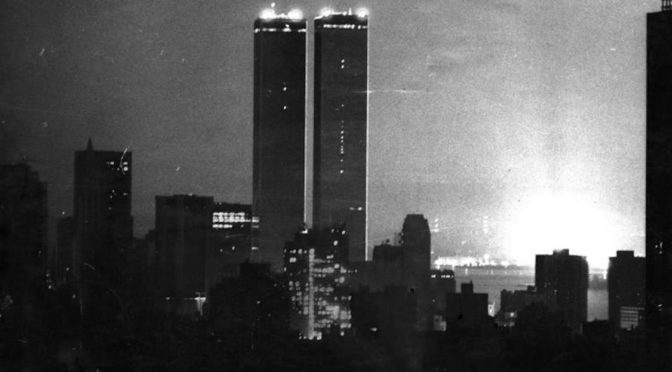
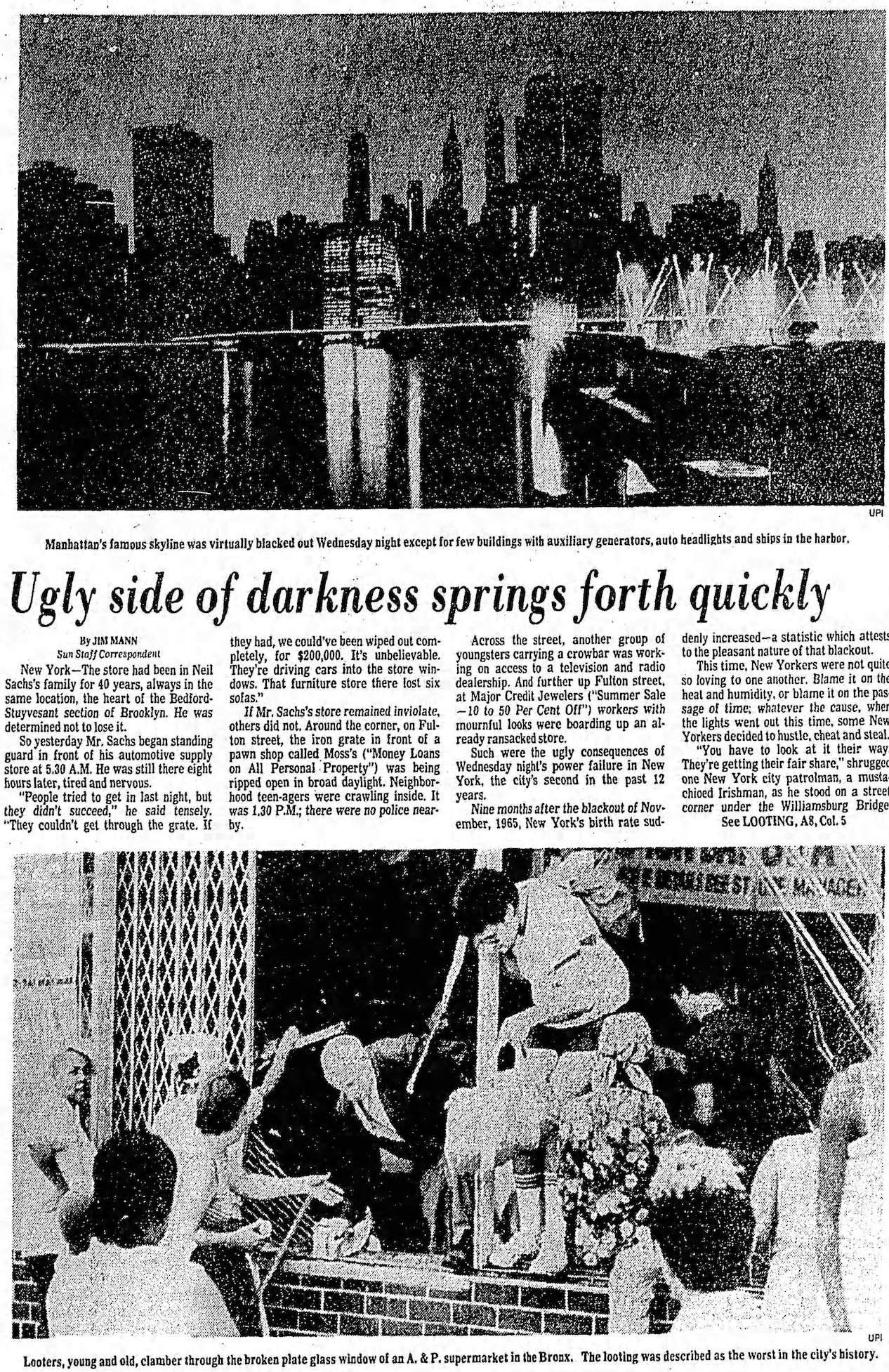
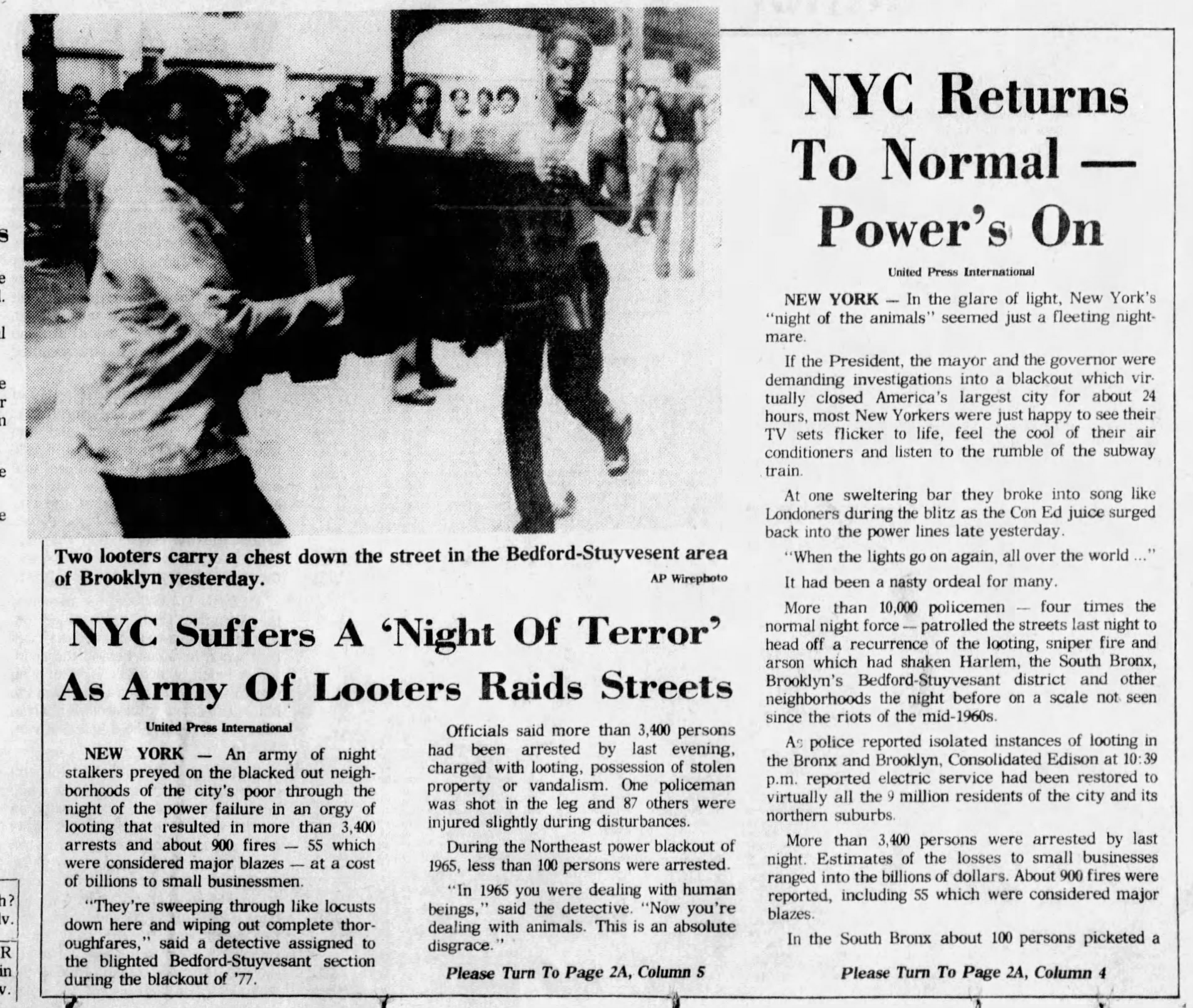
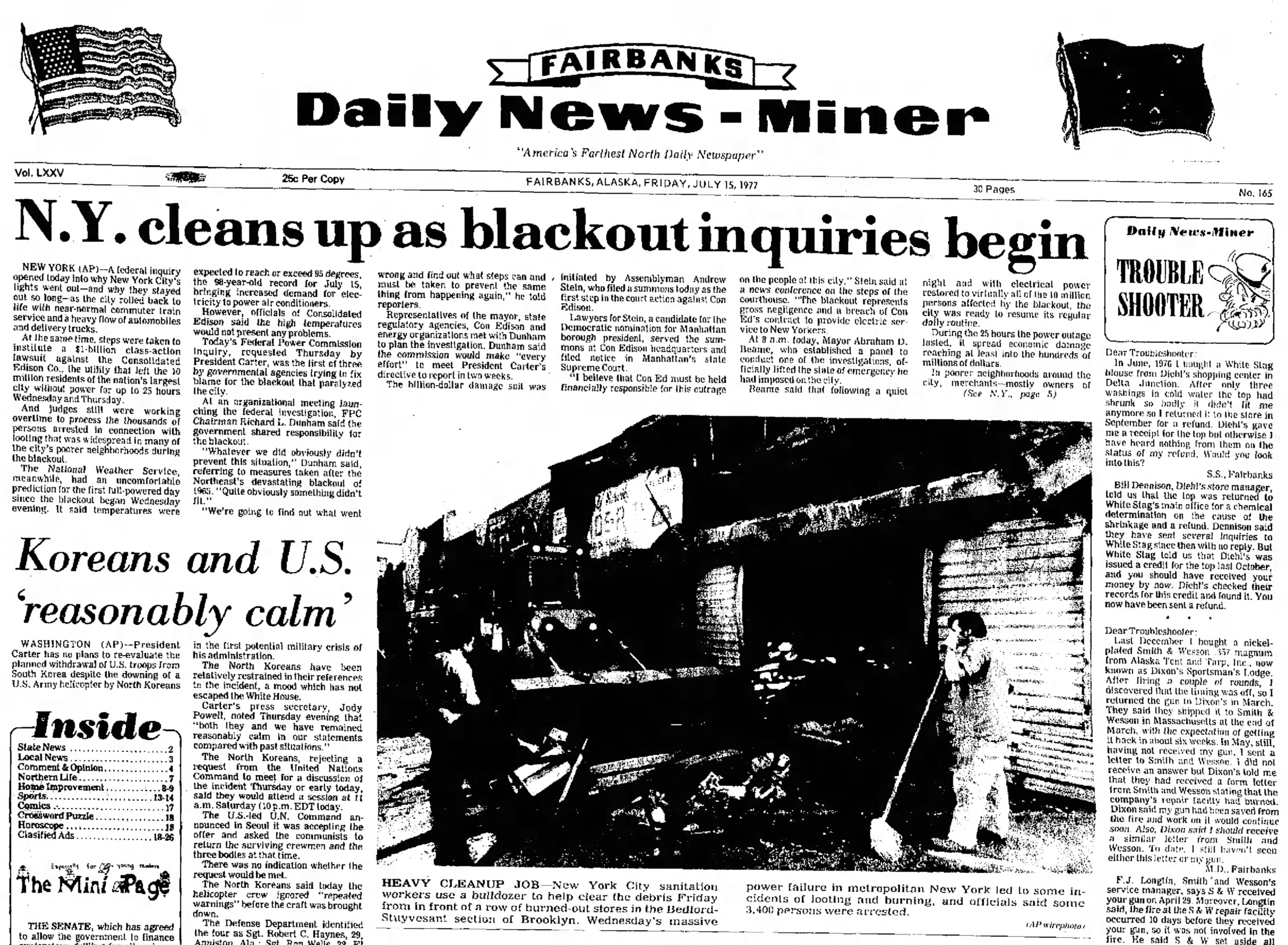
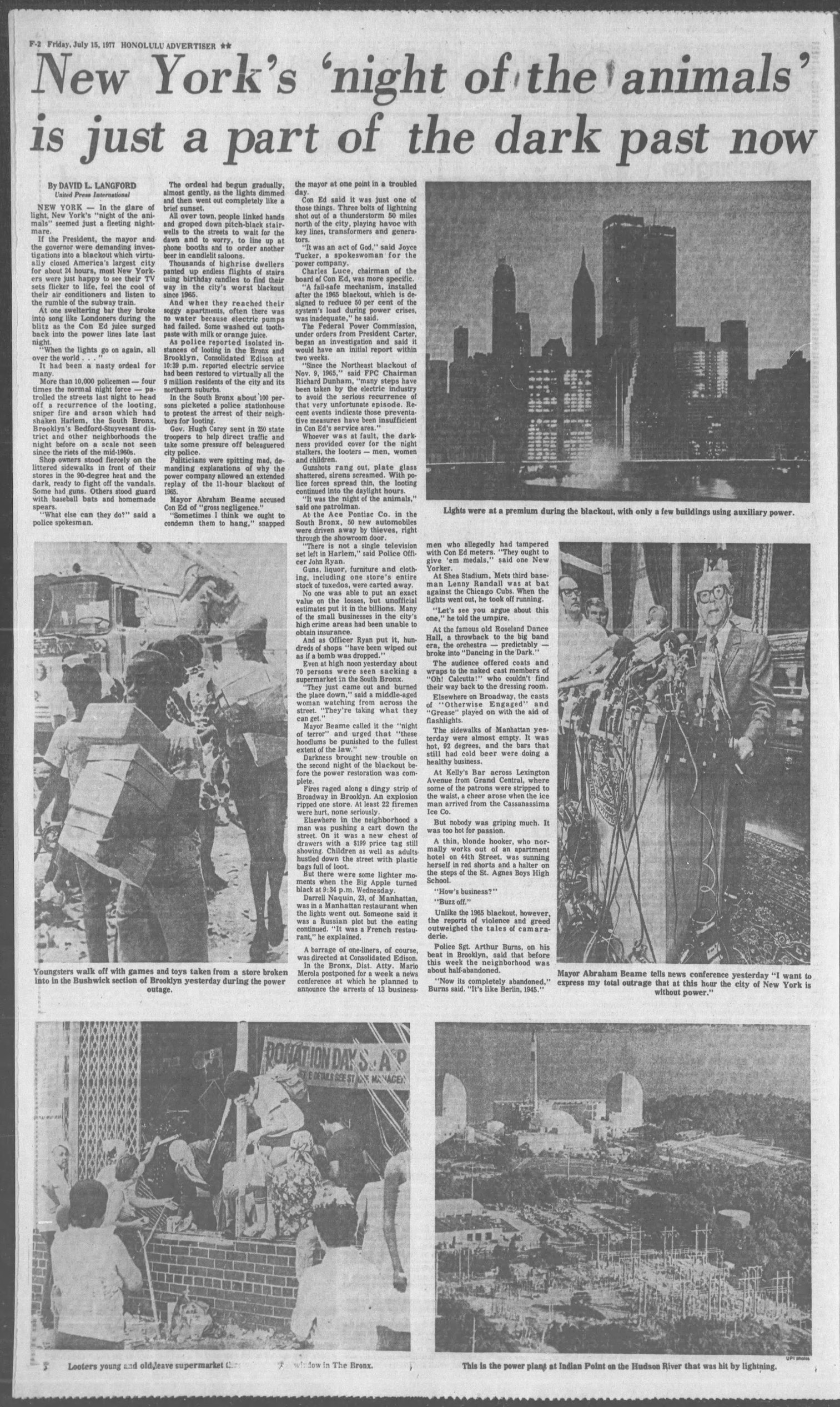
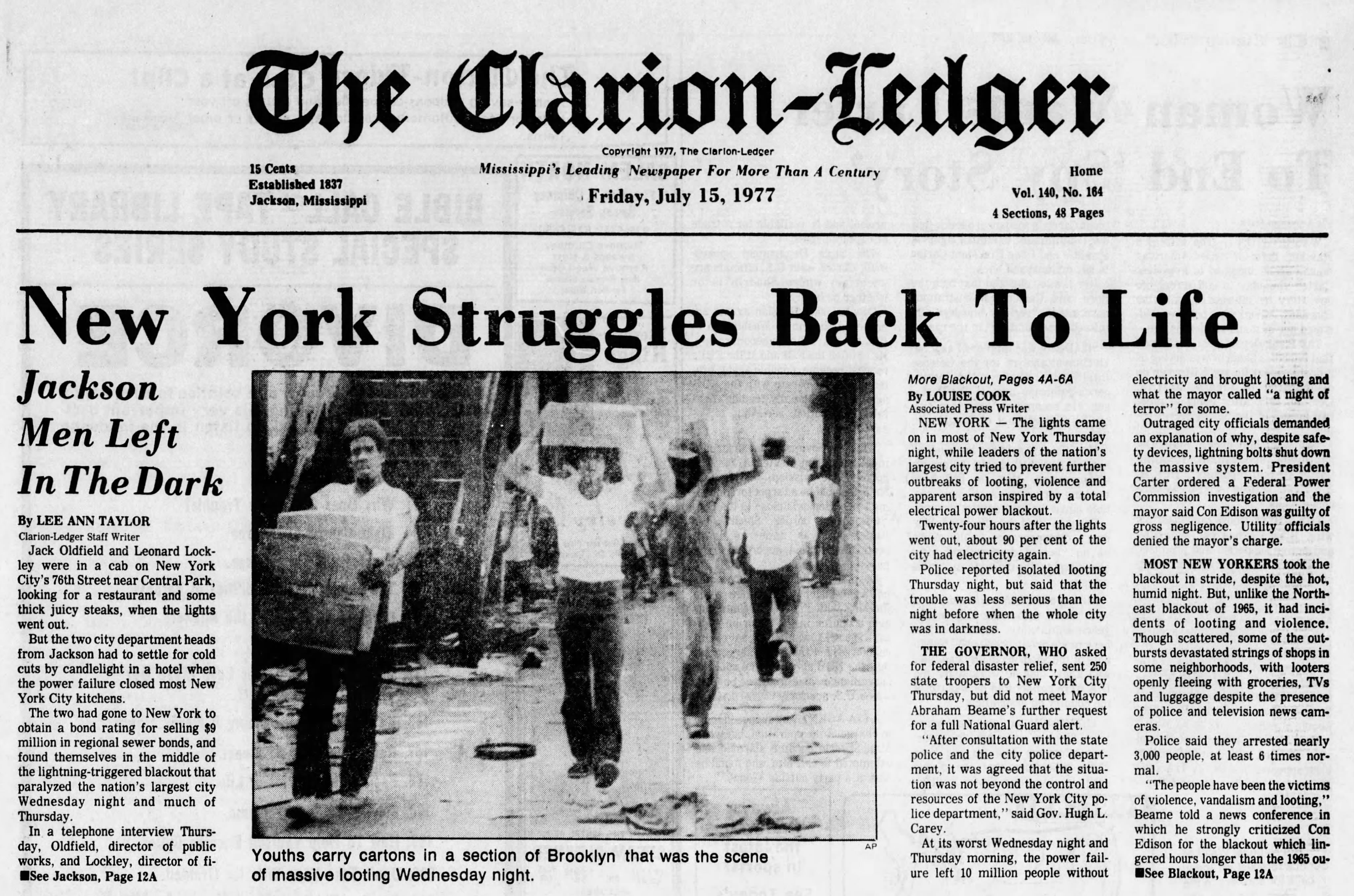
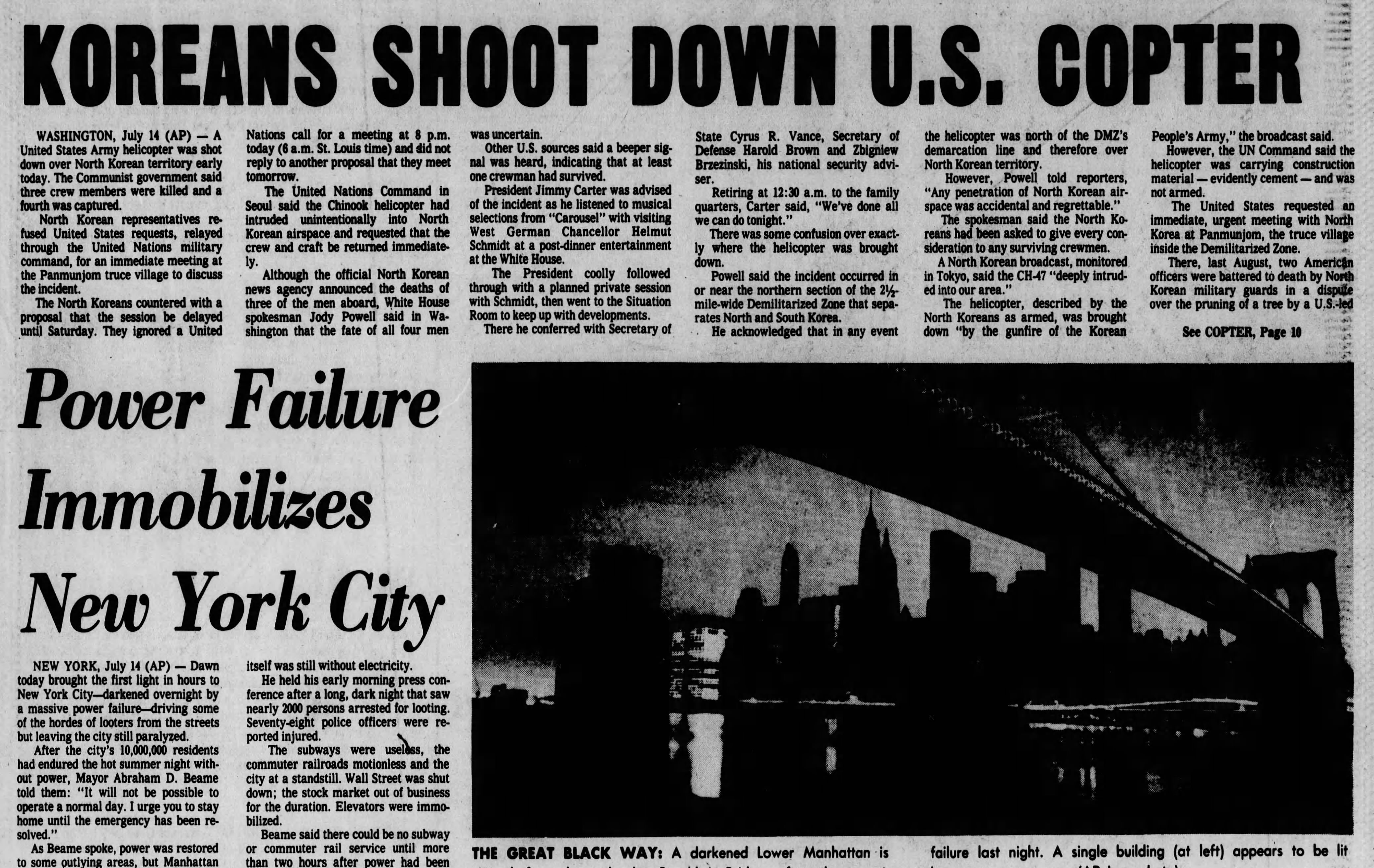
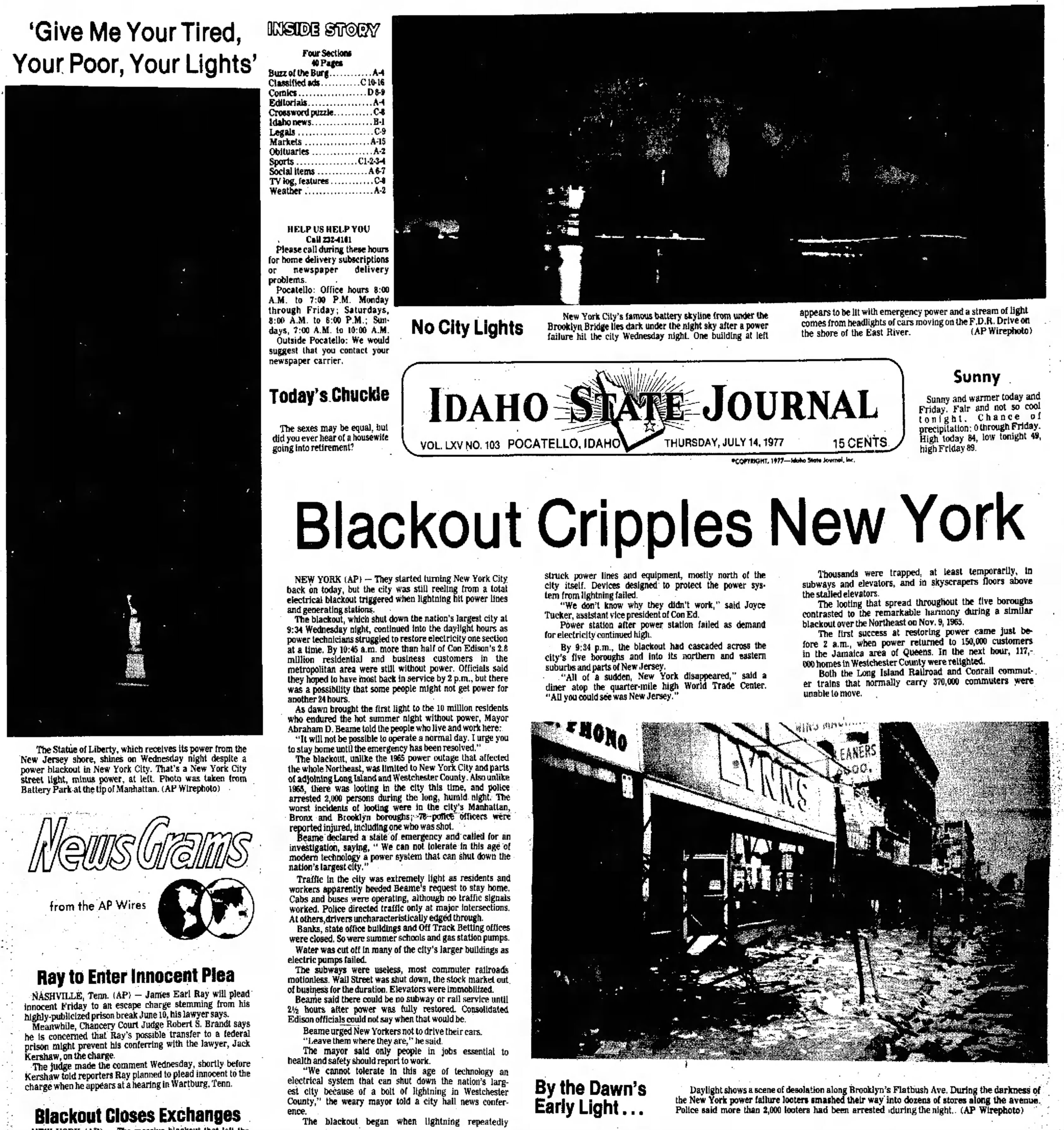
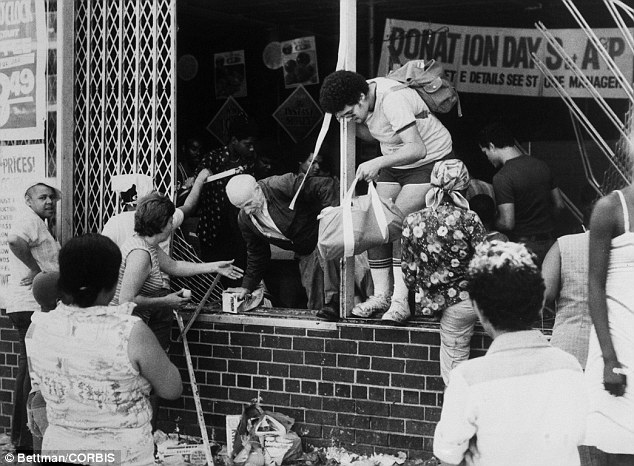
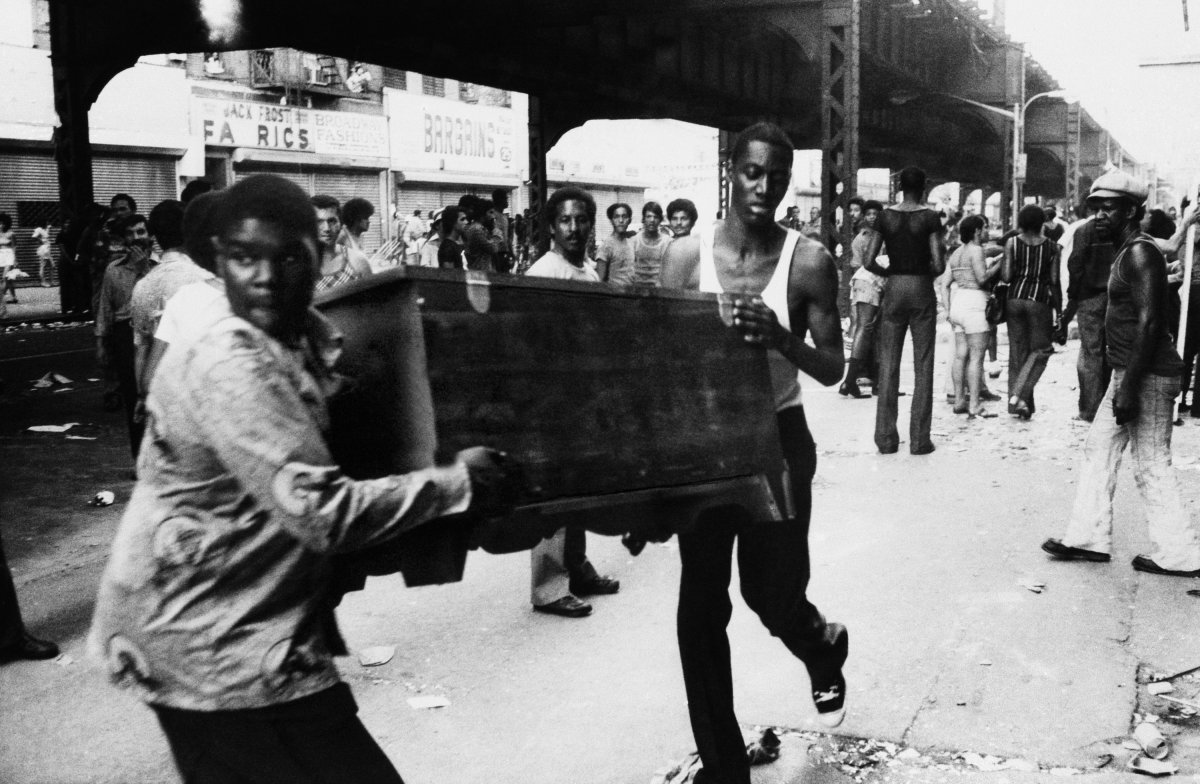
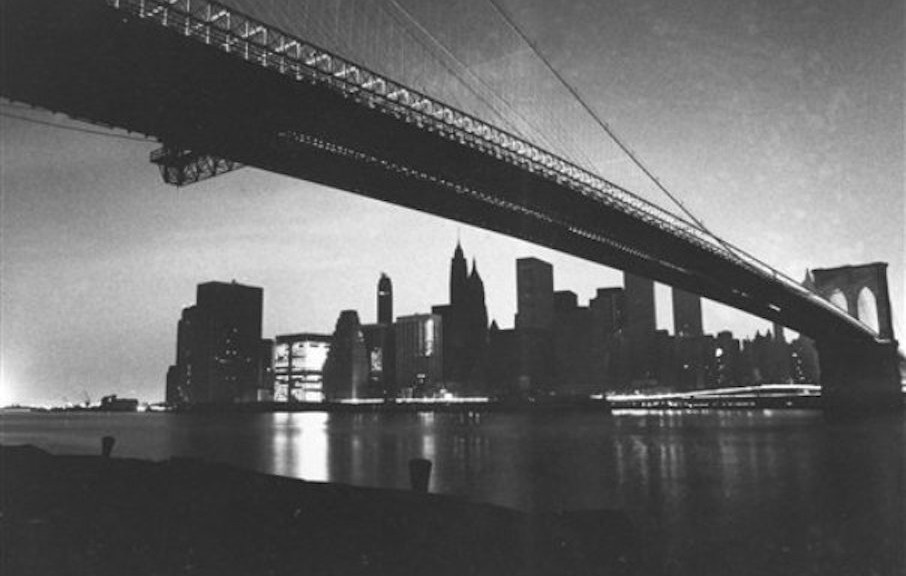
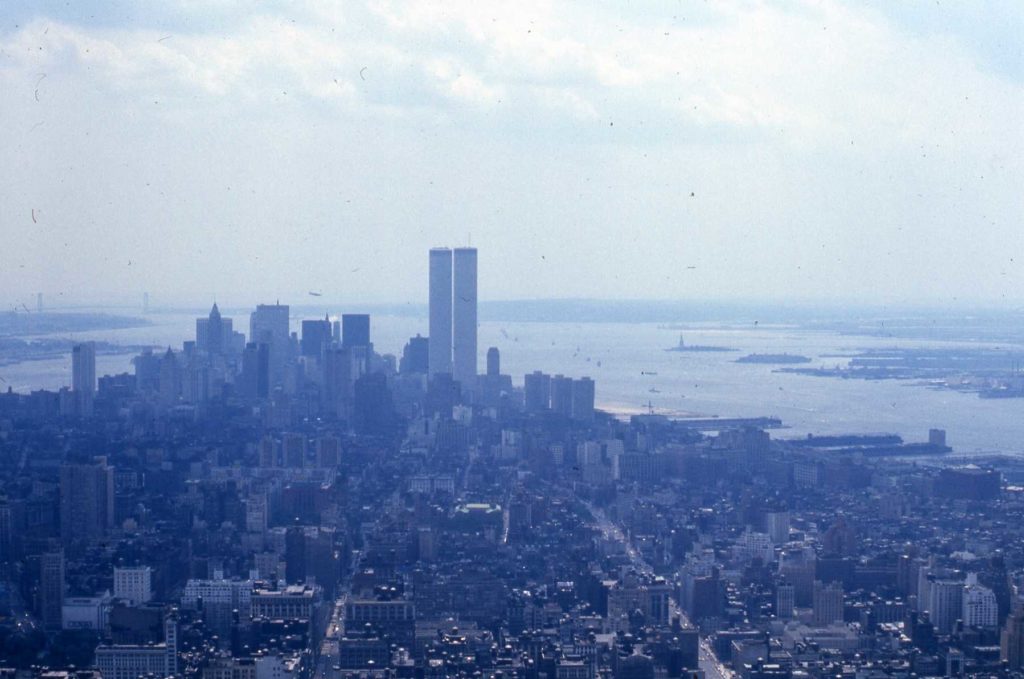
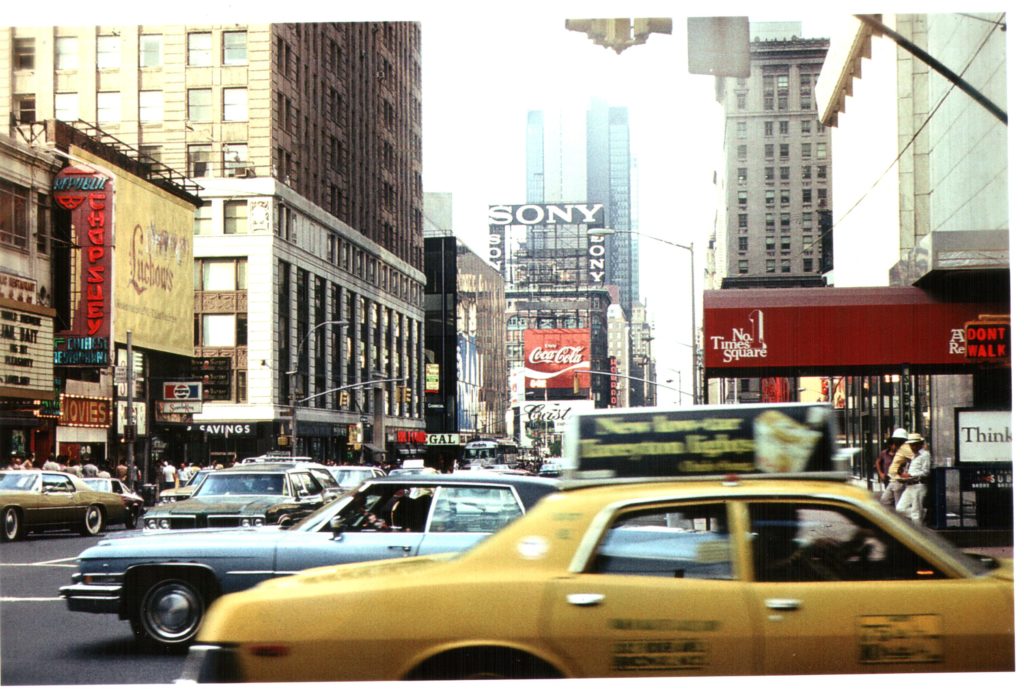
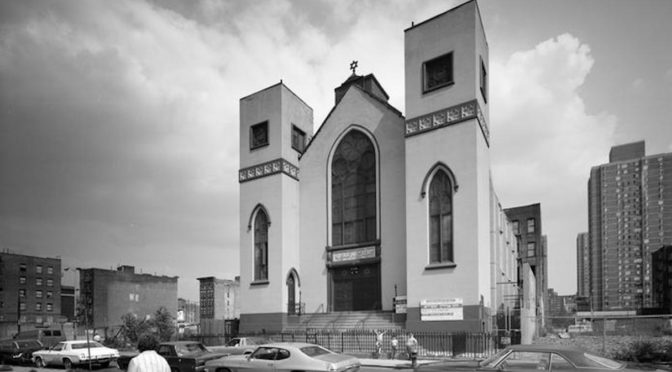
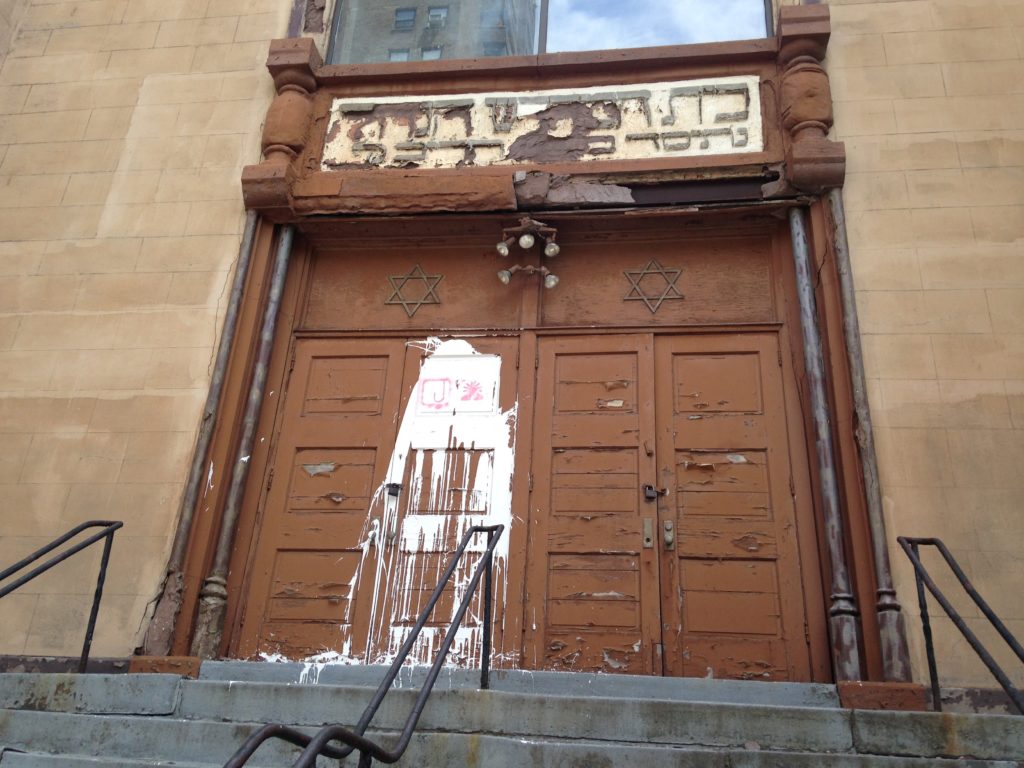
Forty years ago today, New York City was plunged into darkness. The city has certainly seen longer blackouts in its history but none as violent or as deadly in its effects than the Blackout of 1977. The deteriorating city, in the midst of a withering heat wave, was ill-equipped for such emergencies. Hundreds of stores were looted and  fires ravaged many neighborhoods.
For more details on the blackout, we have a couple podcasts which explore certain aspects of the event. The third part of our Bronx Trilogy — The Bronx Was Burning — focuses on that particular borough during the Blackout of 1977. And believe it or not, ourfifth-ever Bowery Boys podcast was also about the Blackout, recorded on the 30th anniversary:
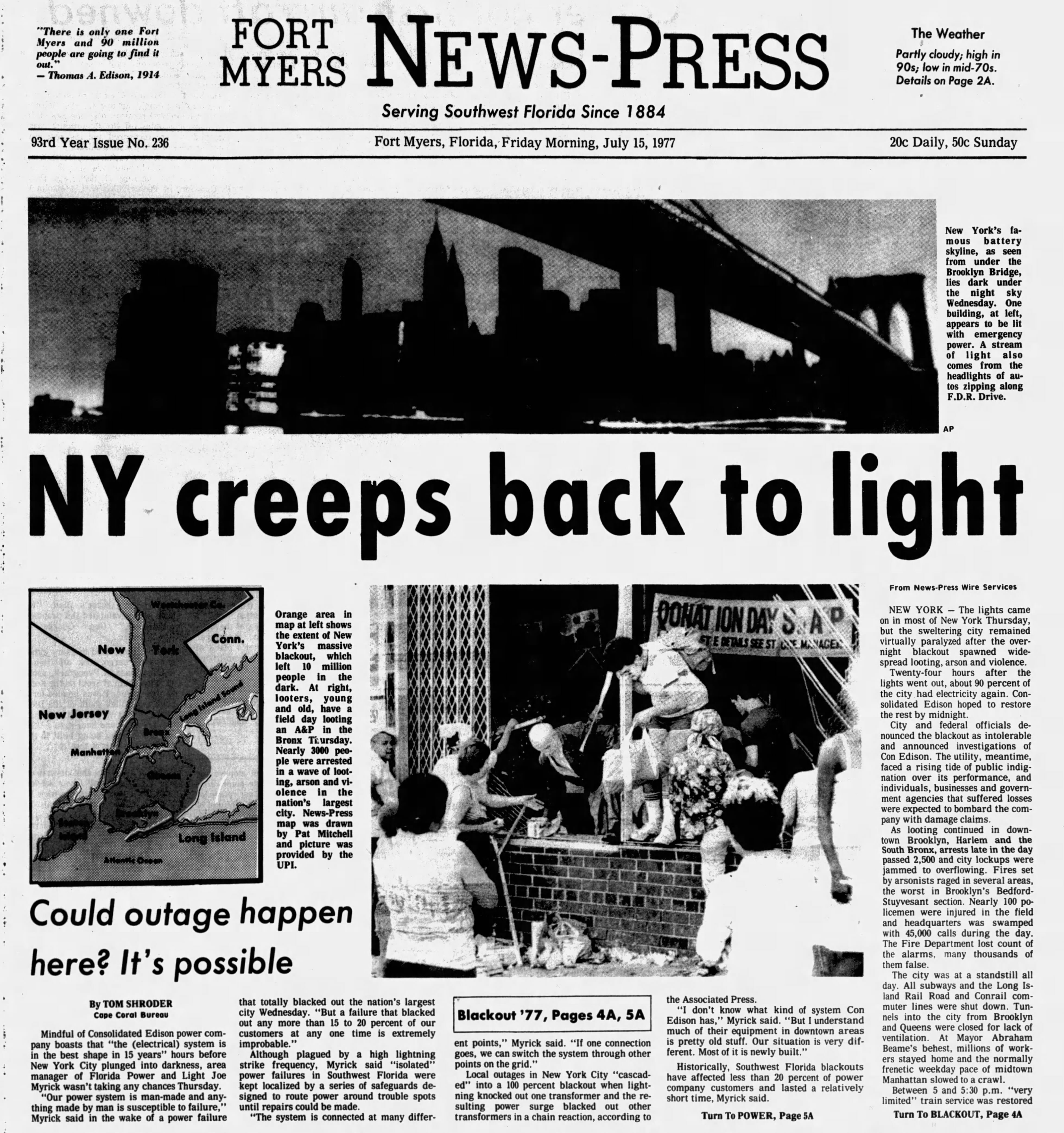
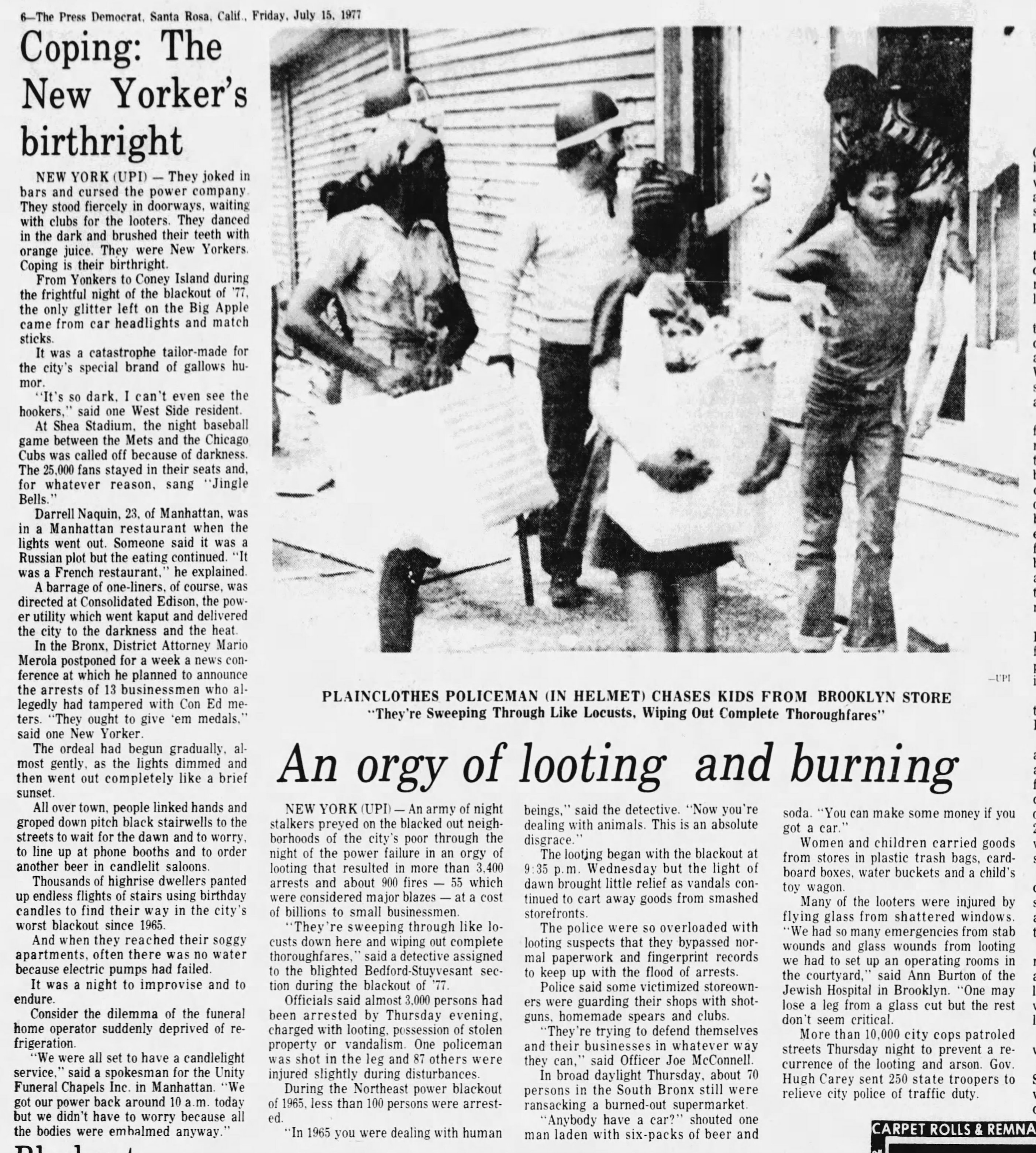
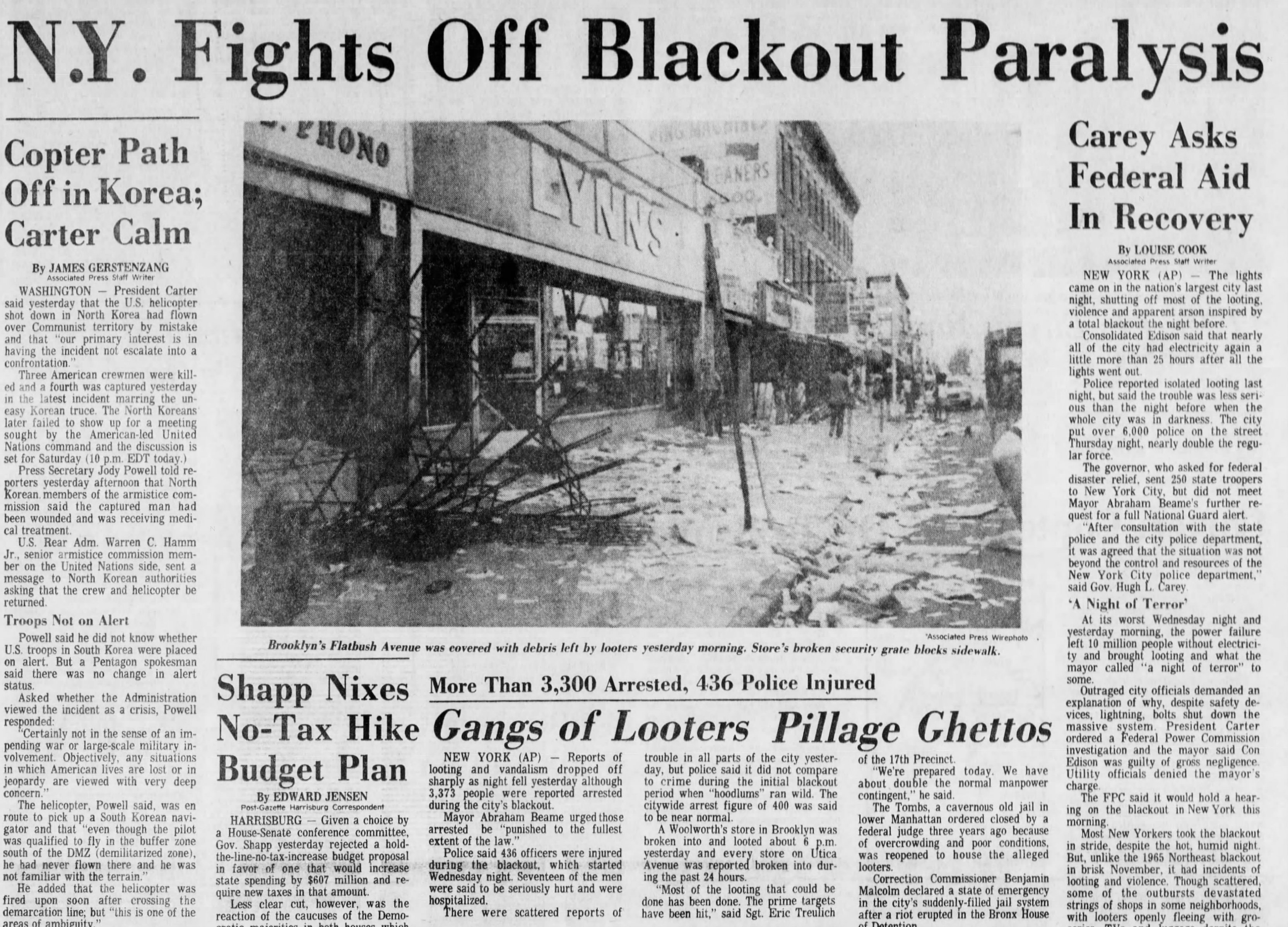
Here’s how the blackout and subsequent riots were reported in newspapers across the country in the days that followed.
While the first day’s reports focused on the basic facts, most naturally chose to zero in on the looting by the second and third days. These images of the blackout would linger in the minds of Americans far longer than images of the darkened skyline.
Surveying anumber of newspapers from across the country, I observed that the three wire-service photographs that appeared to be most frequently published were:
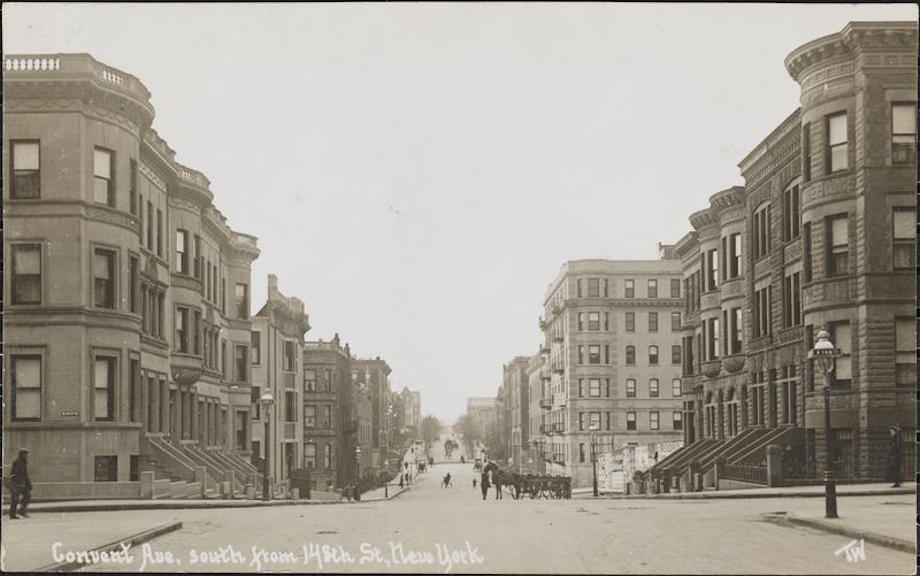
The extraordinary house at the heart of Down the Up Staircase is currently for sale. Â “411 ConventAvenue is a House located in the Hamilton Heights neighborhood in Manhattan, NY,” the blog Street Easy dryly notes. Â “411 Convent Avenue was built in 1901 and has 3 stories and 1 unit.”
Bruce D.Haynes, a professor of sociology at the University of California, Davis, grew up in this house, observing the latter years of its steady, graceful decline. His grandparents had moved into the townhouse in 1944 and his parents had remained within it their entire lives, even through a contentious marriage. Bruce grew up there with his two brothers George and Alan. One of them would meet a tragic end during the fateful summer of 1976.
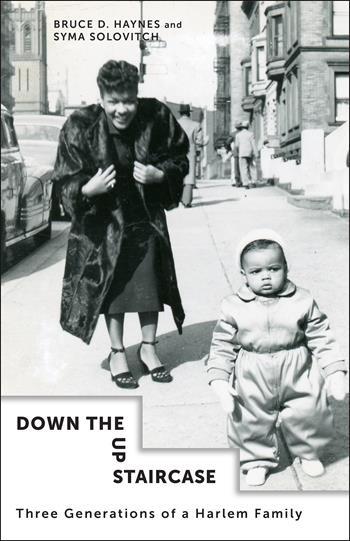
Down The Up Staircase: Three Generations of a Harlem Family
by Bruce D. Haynes and Syma Solovitch
Columbia University Press
At the start of Haynes’ remarkable memoir and social history, the gracious house on Convent Avenue has become a homey nest of memory and quirk. “The water to the basin had been shut off,” writes Haynes, “and the pipes were concealed by a Japanese tapestry as a formal living room and our parents’ bedroom.”
The house has not simply been transformed by familial necessity; it has been changed by the history of Harlem itself. Down the Up Staircase (cowritten by Syma Solovitch) documents the lives of three families who seem to have felt every tumultuous shift and been present, in some form, in every major milestone in black American life.
Every page of this historical, often unapologetically nostalgic, narrative feels personal, never letting the detours into historical context bog it down with extraneous detail.
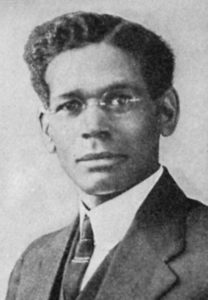
The authors have one true civil rights hero among its characters — Haynes’ grandfather George EdmundHaynes (pictured above), co-founder of the National Urban League — but it’s his flawed legacy as a husband and father that reverberate into the lives of those that follow his footsteps through the house on Convent Avenue.
More impactful to the author was a portrait of George Edmund, painted by Laura Wheeler Waring, found tucked away in the attic. “Why had [Bruce’s father] never spoken of it? Why was it consigned to the attic?”
And then there’s Daisy, Bruce’s mother, an individual who steps out from the pages and into your parlor, in her finest fur. “Everybody knew and loved Miss Daisy, as they called her, and treated her like a queen. She had the airs and manners of a grand lady, a Southern belle, and she carried herself like royalty.”
Daisy was a stunning product of upper Manhattan’s black bourgeoisie, upper and middle class African-Americans who matched their white Fifth Avenue counterparts in dress, demeanor and aspiration. Her sons would later reject this assimilation aesthetic, with the 1950s and 60s bringing about an empowered and politically engaged black identity separate from the mainstream.
My favorite section of Down the Up Staircase — a section I’ve re-read about four times now — involves the clash of these two identities at a place called Raymond’s Beauty Shop and the various street hustlers who collected on the street corner out front. As Haynes describes the establishment’s owner:
“Before the word disco became popularized or Patti LaBelle put on a gold and silver lamè spacesuit, Raymond would dazzle the denizens in his nighttime attire. In the photographs he hung up or passed around at his shop,  he looked as much the diva as Patti ever did, dressed in three-inch platform shoes, silver lamè cape and thick makeup.
But Disco Raymond only came out at night. By day, he played the role of Harlem ladies’ man. His nails were manicured and he wore Italian shoes and hip-hugging dress slacks under his apron. Â He was charismatic, could carry a tune, and drew the attentions of men and women alike.”
Down The Up Staircase is more than a story of a family, far more than the chronology of a home. And yet the entire tale — the story of the black experience in the 20th century — feels like it’s being very intimately told to you  from the parlor.
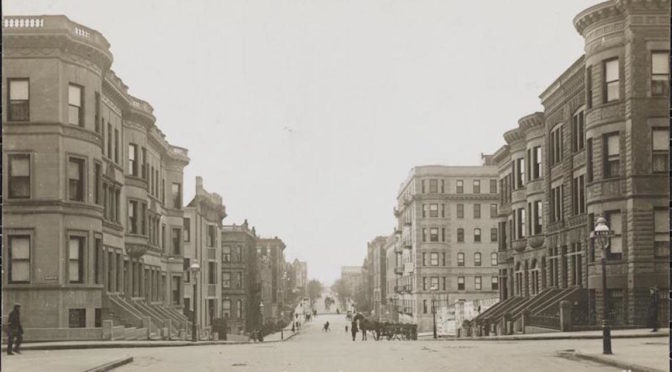
Pictured at top:Â Convent Ave, south from 148th St., photographed by Thaddeus Wilkerson, courtesy the Museum of the City of New York
The Dutch were sold on the island’s placement in the harbor at the mouth of the mighty Hudson River, making it a convenient waypoint for explorers and traders. Soon its ports had built the foundation for New York’s and later America’s financial sector.
The city’s most influential nineteenth-century businessman, Cornelius Vanderbilt, got his feet wet in business first with ferries and steamships before building his mighty railroad empire. Manhattan is surrounded by water, and yet early New York would almost be undone due to a lack of it.
Traces of the city’s centuries-long quest for clean drinking water can be found from the island’s tip to its top from the site of spring water wells down in Bowling Green to the relics of old water systems..
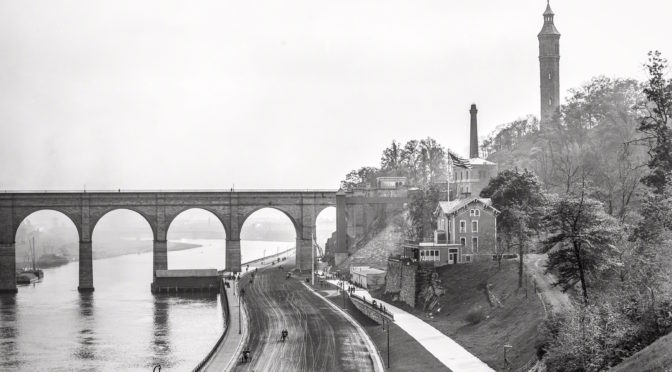
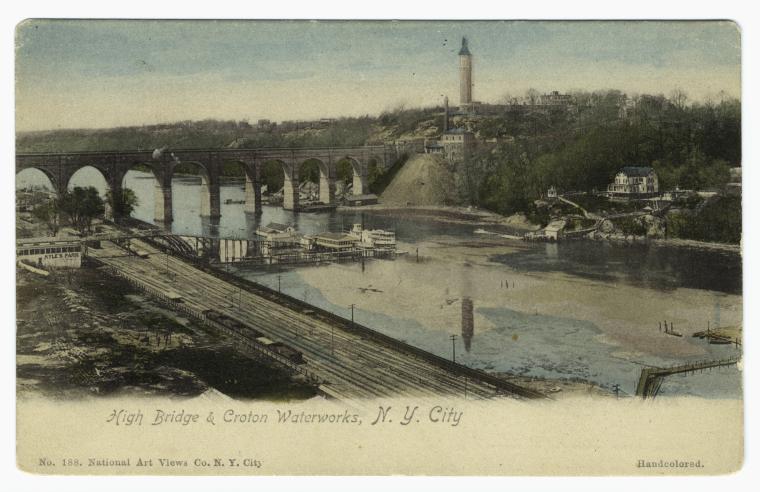
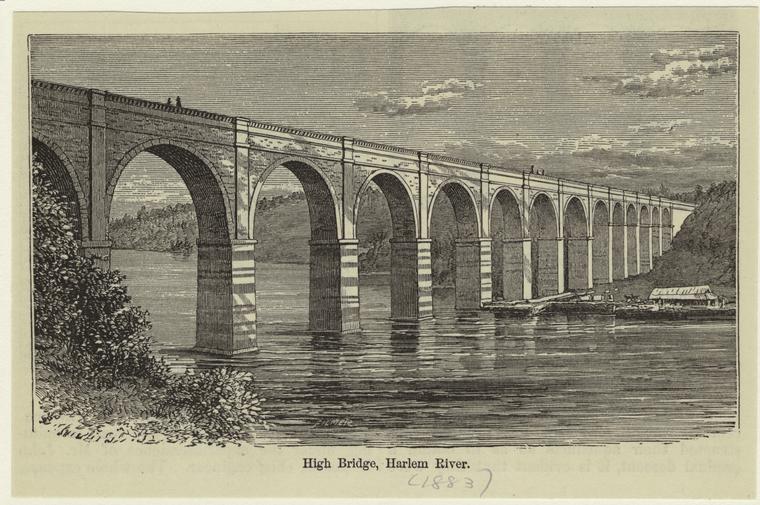
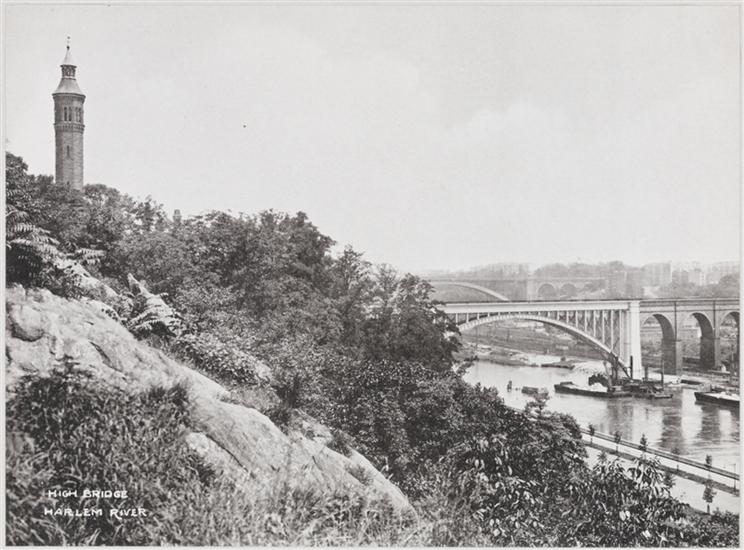
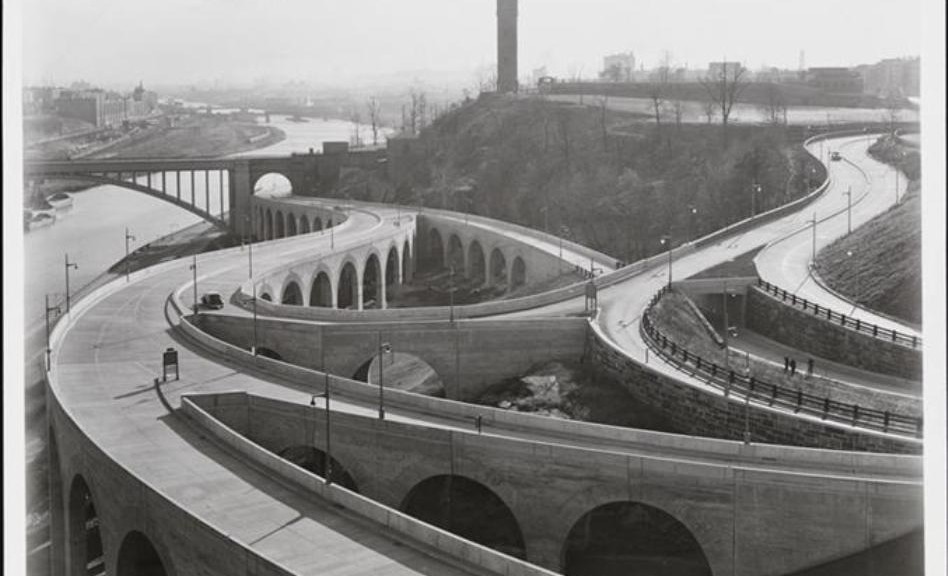
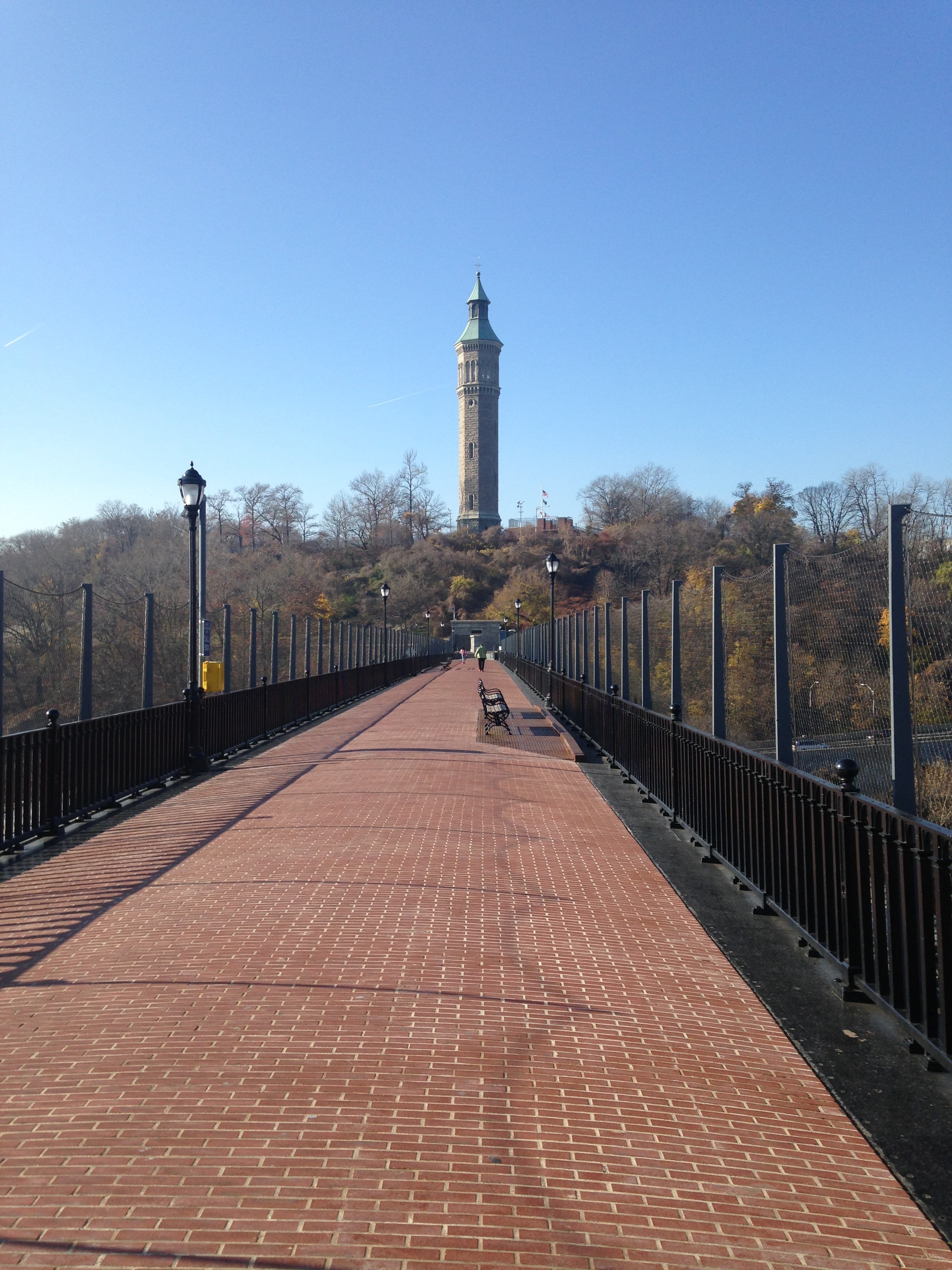
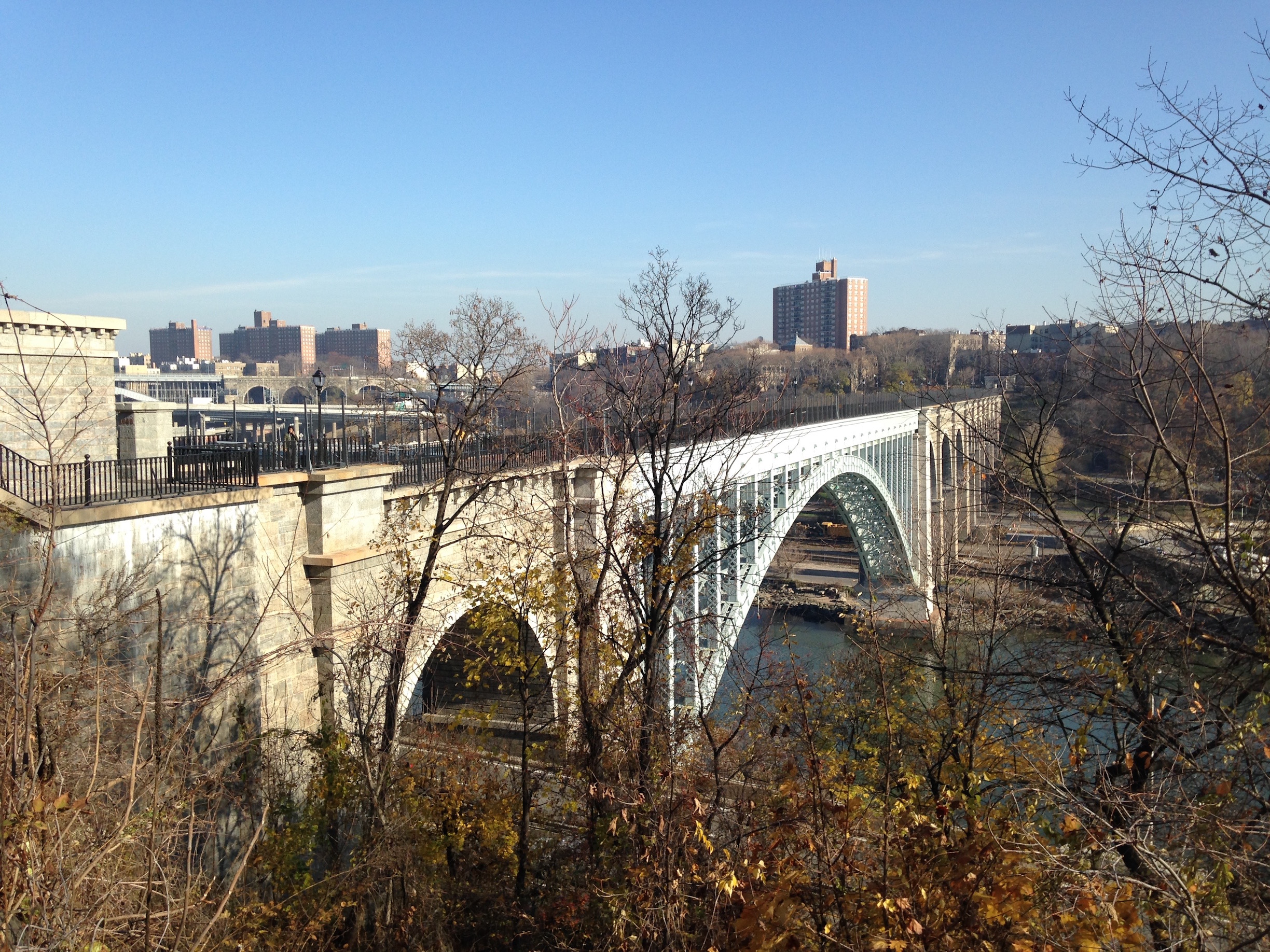
But no monument to freshwater dominates quite like the High Bridge, the Romanesque wonder linking Manhattan to the Bronx over the Harlem River.
Courtesy NYPL
For many decades this majestic artifact, seemingly plucked from the hills of ancient Gaul, was a vital link in that great engineering triumph: the Croton Aqueduct.
With the dense river traffic below and the icky-brackish composition of the surrounding rivers, early New Yorkers had to look beyond their waterways for drinking water. They dug cisterns and hunted down springs, but these couldn’t support the growing city.
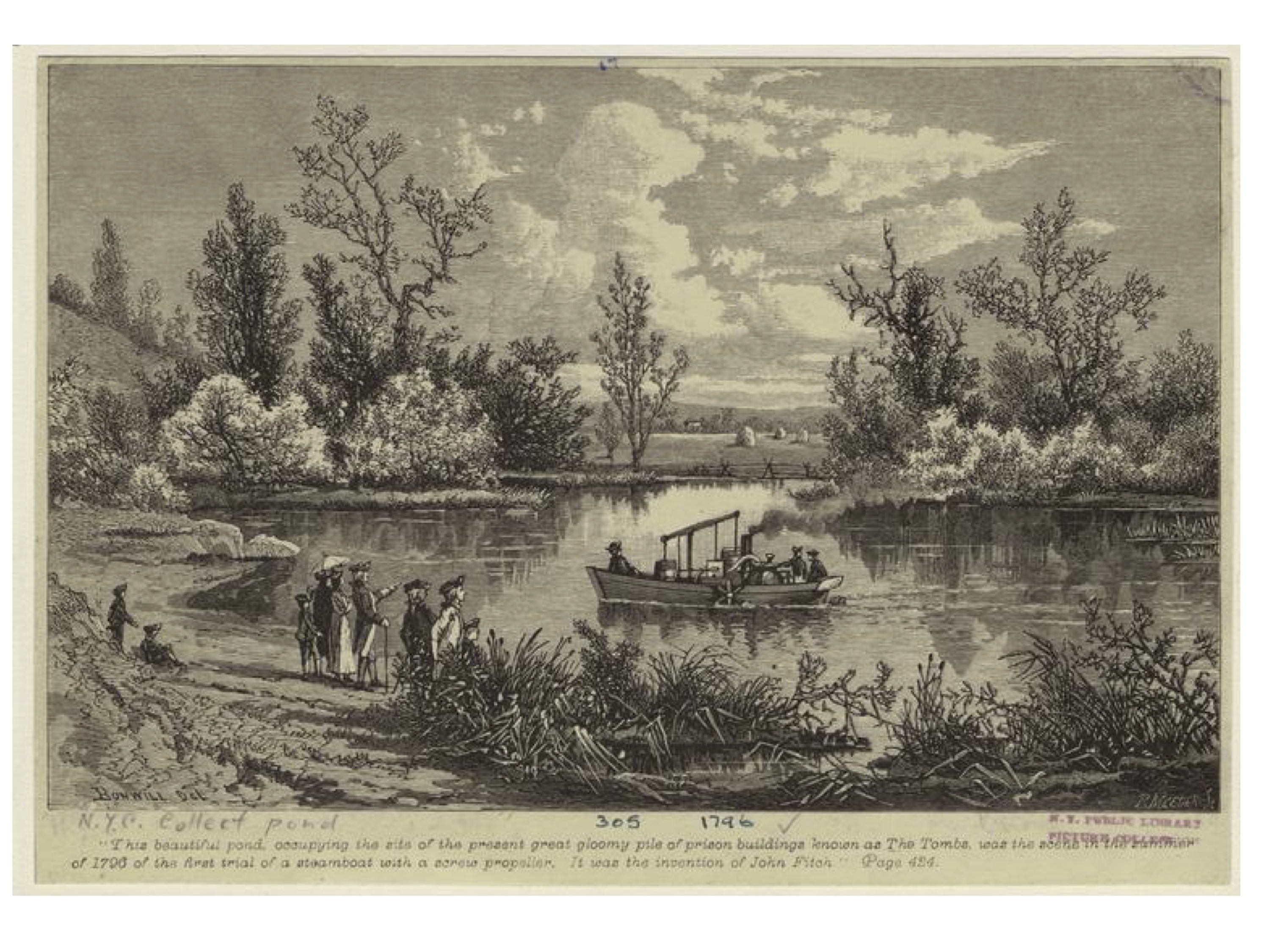
By the late eighteenth century, Collect Pond, a so-called freshwater source located northeast of today’s City Hall, had become polluted by the industries that surrounded it, and valiant efforts to bring water from other sources during the Colonial era were dampened by debt and war.
Courtesy MCNY
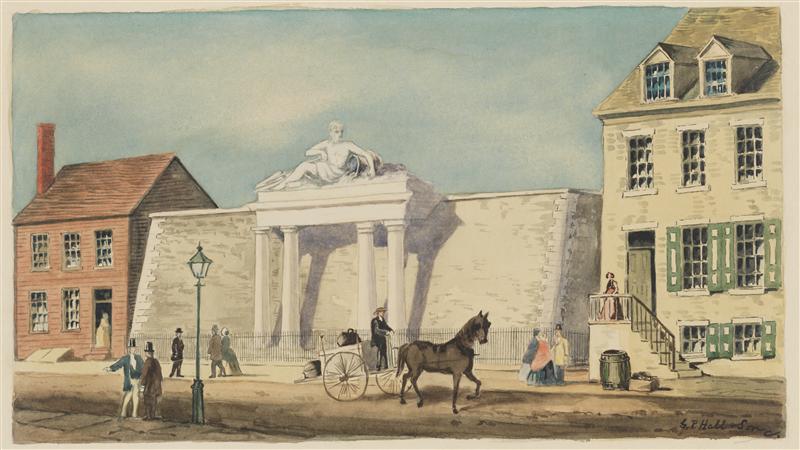
In 1799 future vice president/murderer Aaron Burr hatched a grand business plan to construct a reservoir system that would distribute water via an elaborate network of hollowed-out logs. (Above: The reservoir and grandest structure of the Manhattan Company system, pictured here in 1825.)
Unfortunately for parched New Yorkers, he ended up using most of the funding for his company to establish a successful bank instead. More than a century and a half later, Manhattan Company merged with Chase National Bank to become Chase Manhattan, known today simply as Chase, one of the largest banks in the world. But his water distribution efforts ended up being woefully inadequate, and left Manhattan high and dry.
NYPL
By the 1830s the city was on the verge of a health crisis, as putrid water, poor sanitation, and all-around squalid living conditions culminated in a series of health epidemics and breakouts—which only heightened the urgent need for clean water.
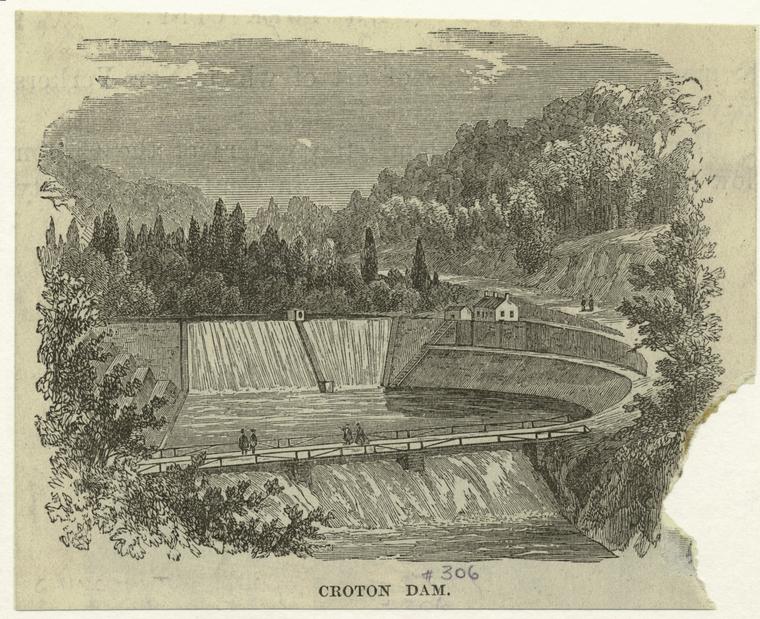
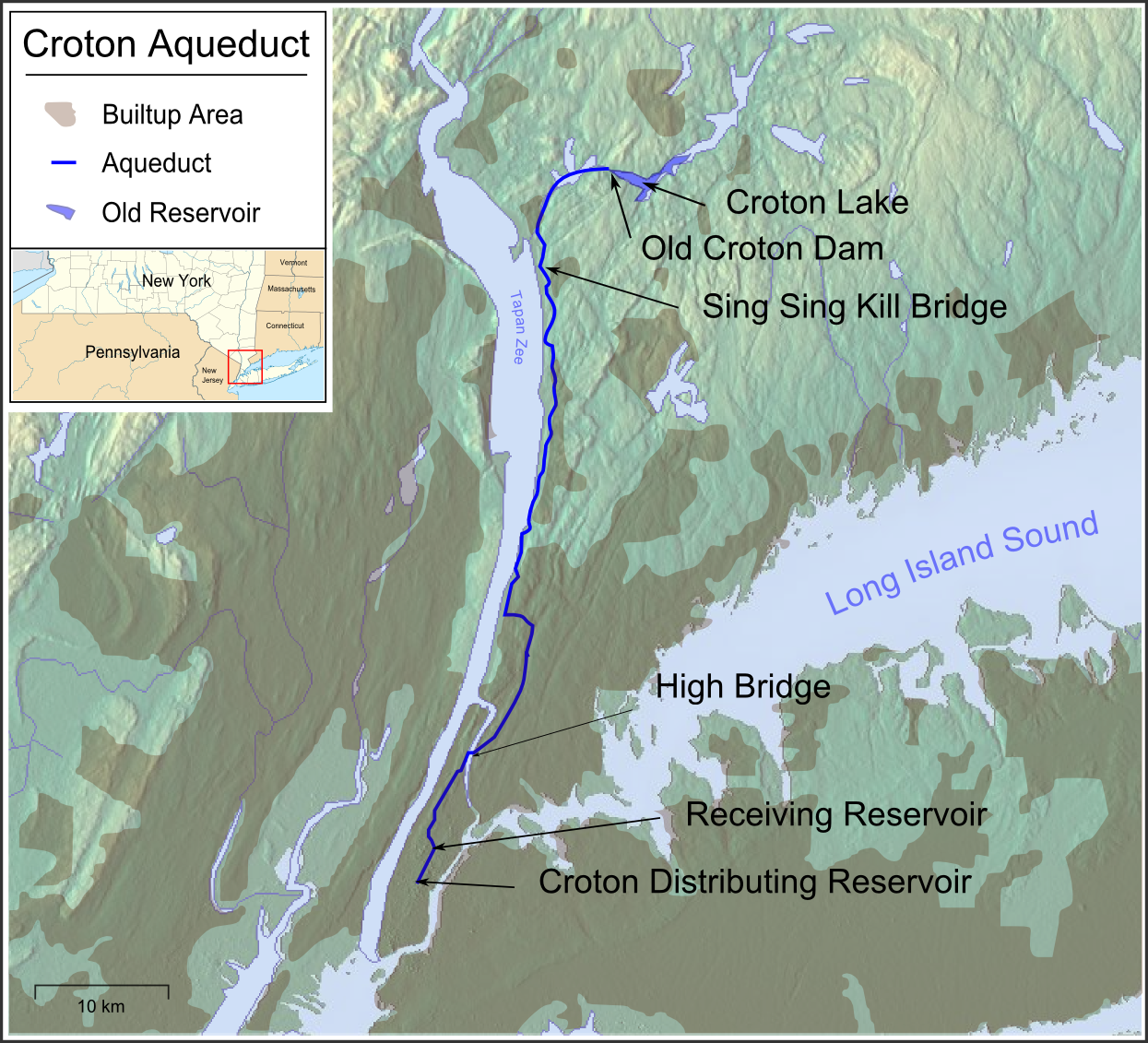
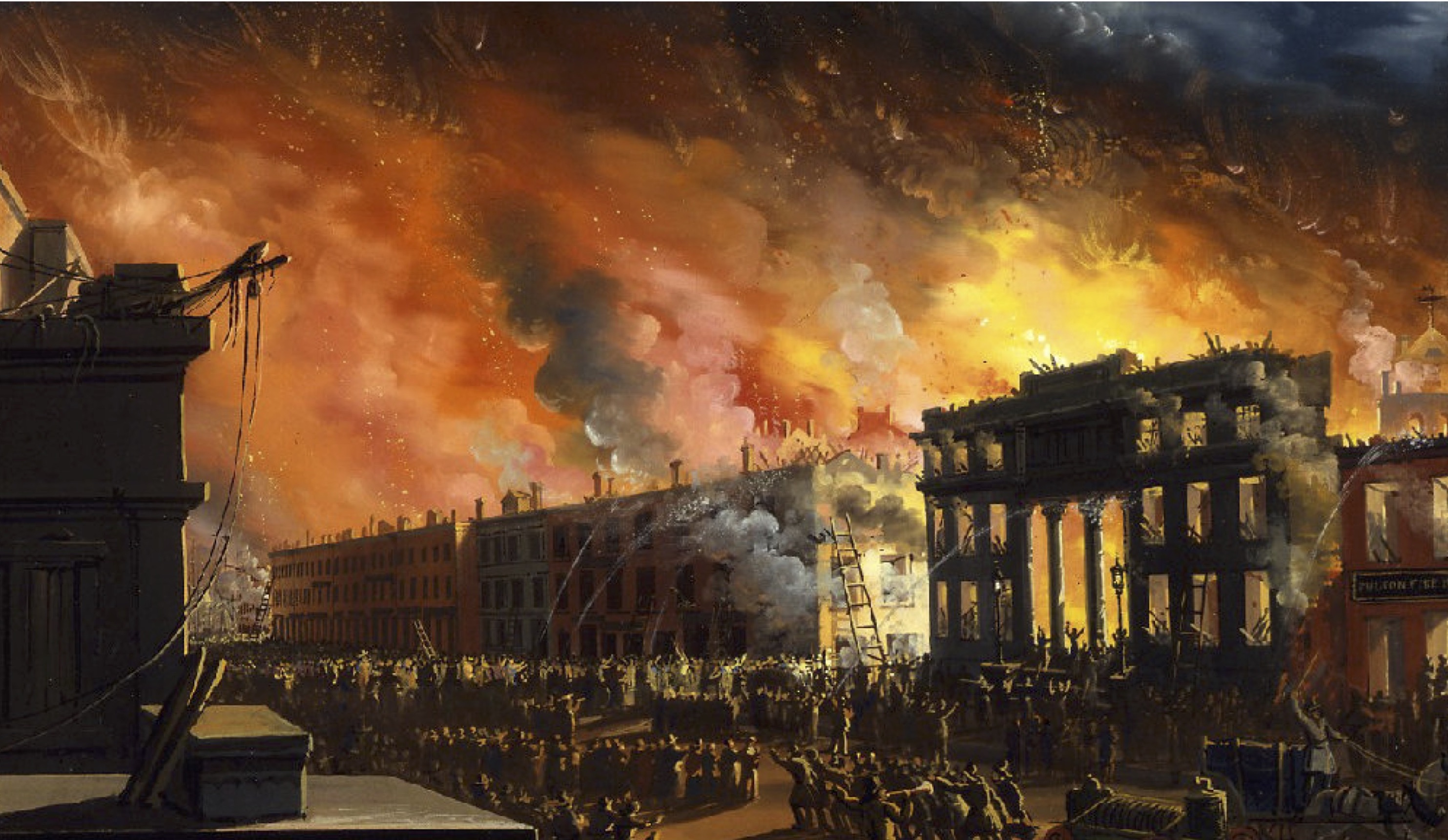
In April 1835 New Yorkers were so desperate for a freshwater supply that they voted in favor of a seemingly impossible plan: a pipeline that would bring the pure waters of the Croton River, forty miles north in Westchester County, down to city residents. Only underscoring the emergency, eight months later the Great Fire of 1835 would ravage the city. The aqueduct couldn’t be constructed quickly enough.
Wikipedia
The elaborate project employed thousands of mostly Irish immigrants for many years (1837-1842). They constructed a sophisticated system of iron piping and brick masonry, which drew upon gravity to run the water through pipes and over arches, across the lush terrain of Westchester, and through the small towns that would later form the nucleus of the Bronx.
But how would the water get into the island of Manhattan? The aqueduct’s architects would need to find a way to keep it flowing across the Harlem River. Drilling technologies were not advanced enough in the 1840s to allow for a tunnel, so planners thought bigger — and higher.
NYPL
The High Bridge, at an elegant 1,450 feet long, is the oldest surviving bridge in New York. Completed in 1848, it not only brought the Croton water into the city, but it also made one heck of a statement noticed around the world.
New Yorkers had pulled off a technological miracle, borrowing engineering and architecture principles not attempted, on this scale, since the glory days of the Roman Empire. They were changing the course of one river forty-one miles away and sending its waters high above another.
“Water! Water!” wrote diarist and former mayor Philip Hone on October 12, 1842, “is the universal note which is sounded through every part of the city, and infuses joy and exultation into the masses.”
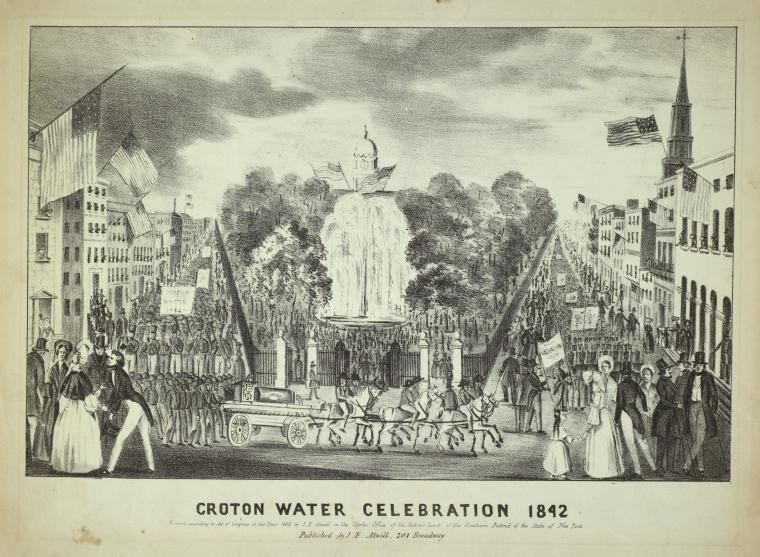
When the water was finally turned on — flowing on October 14, 1842 — the city threw a bash bigger than any since the expulsion of the British in 1783.
From there it moved through the city, eventually to City Hall Park, where good, clean water shot high into the air and down into the City Hall fountain, to the delight of the public. Imagine— enough water to waste in a fountain!
(At the time of the celebration, the High Bridge had not yet been completed, so Croton water crossed a temporary low bridge. The lofty span replaced the modest one a few years later.)
Below: New Yorkers gathering at City Hall in celebration at the completion of the Croton water system. For more information, check out our podcast on the construction of the Croton Aqueduct
NYPL
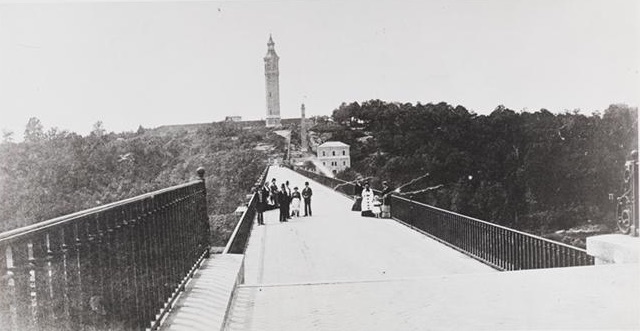
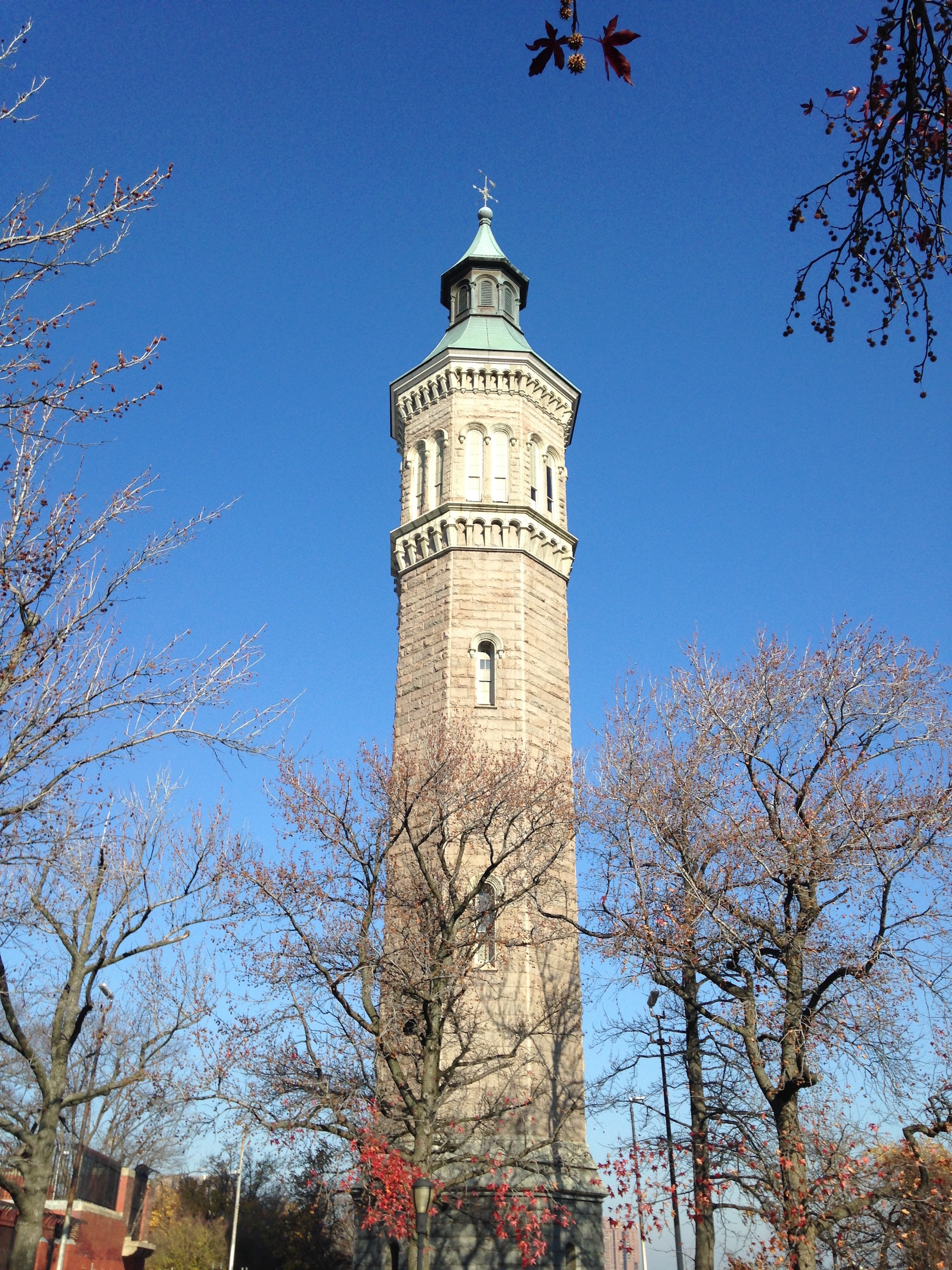
But the celebrated new system struggled to keep up with the demands of the growing city. In 1872, as masses of new arrivals from far-off lands crammed into tenements, an attractive water tower was constructed near the High Bridge to help increase the water pressure into the city.
The High Bridge and tower in 1915
By this time the High Bridge itself had turned into an attraction, a festive promenade where young gentlemen and their parasol-clinging lady companions could stroll, taking in the striking views of the still-forested landscape that surrounded them, while millions of gallons of clean water coursed beneath their feet.
MCNY
But New York, growing larger every day, would need more water. Much, much more. The introduction of indoor plumbing would require an entirely new and much larger Croton system to be built, which opened in 1890 and employed the massive Jerome Park Reservoir in the Bronx to satisfy the demand.
But alas, with a million flushes came the end of the High Bridge as an active part of the water system. Its function replaced by unromantic pipes buried underground, the bridge and water tower were retired from service by 1949, and soon these structures modeled after antiquity became historical relics themselves.
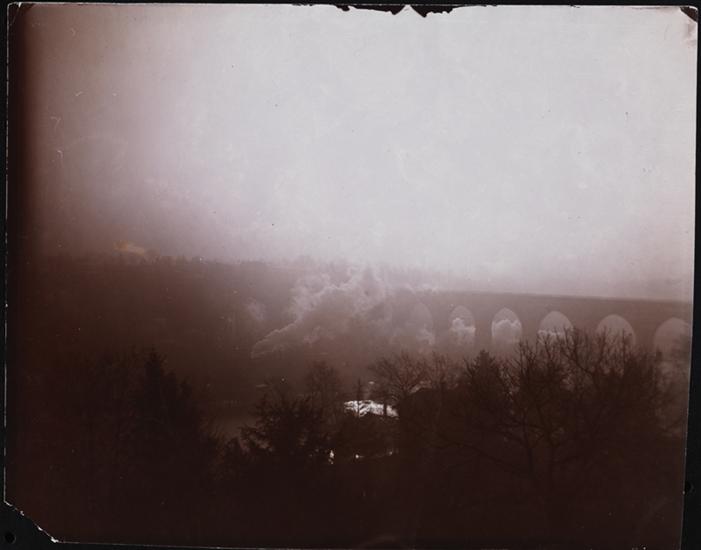
Below: The High Bridge, lost in a haze, photographed in 1920
MCNY
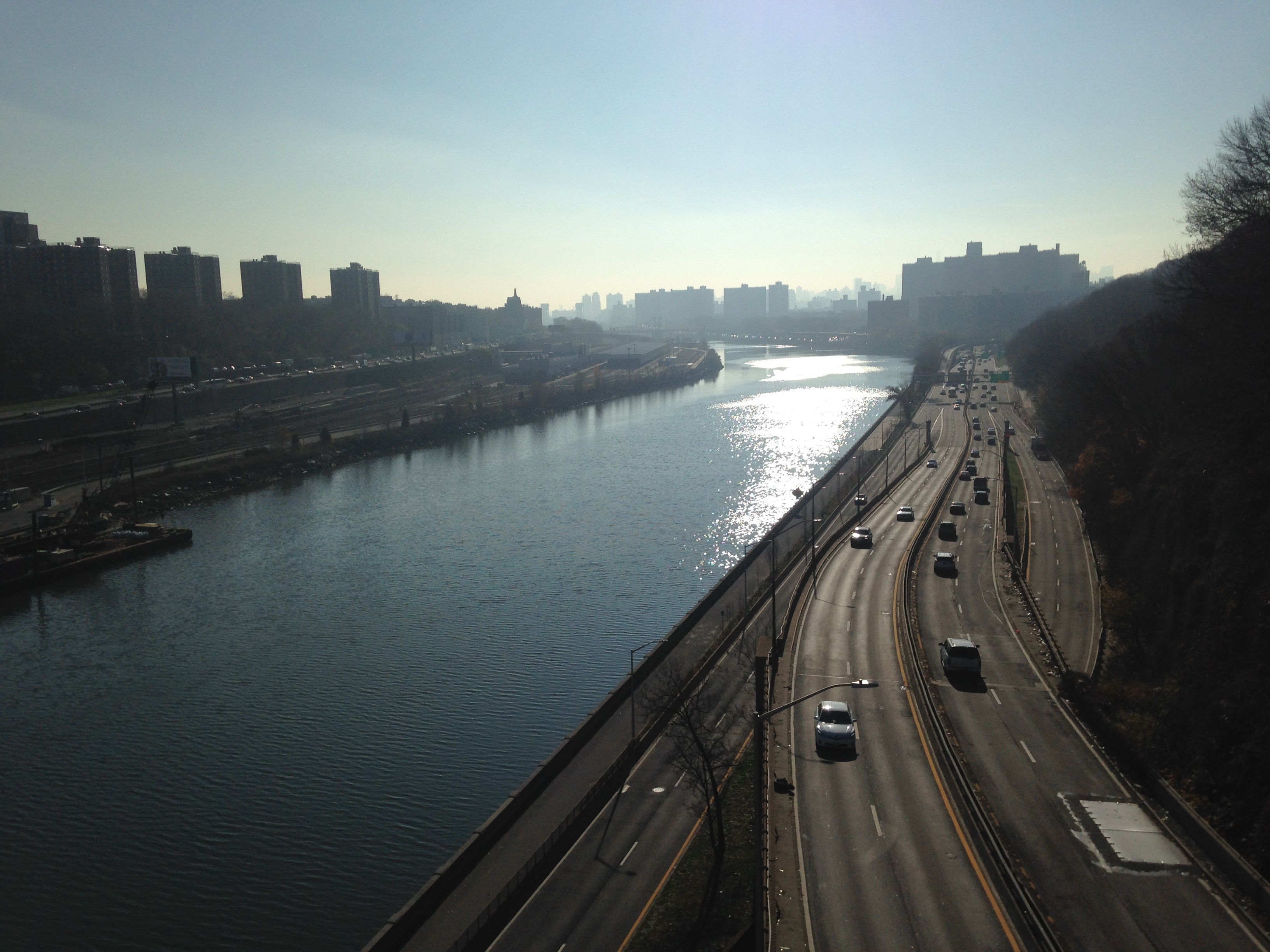
In a surprising twist given the unforgiving tendencies of city planners of the day, it was probably the beauty of the bridge and the tower that kept them from being ripped down in a bit of “progress.” Motorists along the Major Deegan Expressway took moments from their traffic jams to reflect on the possible story behind these strange and magnificent artifacts, which grew more incongruous as the modern highway system developed around them.
MCNY
Two years ago this month, the High Bridge was restored, not for the movement of water but for those visitors and their parasols (replaced by headphones, we imagine) to enjoy a one-of-a-kind perspective on their buzzing metropolis.
If you go — or rather, when you go, because you really must see it — reflect upon the water that once passed below you. It helped this city grow.
HOW TO GET TO THE HIGH BRIDGE
Mass Transit: Take the A/C or the 1 train to 168th Street, get out and walk east. OR the M101 bus takes you right up to Highbridge Park
On the Bronx side, you can take the 4 train to Mt Eden Ave but it’s a bit of a walk west. Instead take the Bx11 or Bx13 bus
“If you are entering the High Bridge from the Manhattan side, please enter Highbridge Park at West 172nd Street and Amsterdam Avenue and walk east to the High Bridge Water Tower Terrace staircase down to the bridge level. If entering from the Bronx side, enter at University Avenue and 170th Street in Highbridge, Bronx.”
Some images from my trip there in November. It’s three times as beautiful now!
Most of these interruptions are experienced in a unique way, a group of strangers coping with a  situation outside their control. After a few minutes of waiting, people get impatient, pace the train, grumble silently, turn up the volumes on their listening devices. Their spheres of comfort may change, allowing them to speak to a fellow passenger in a sign of solidarity.
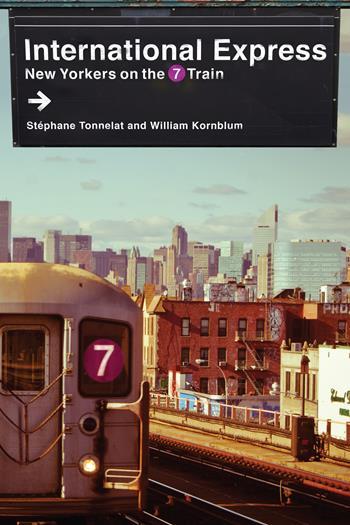
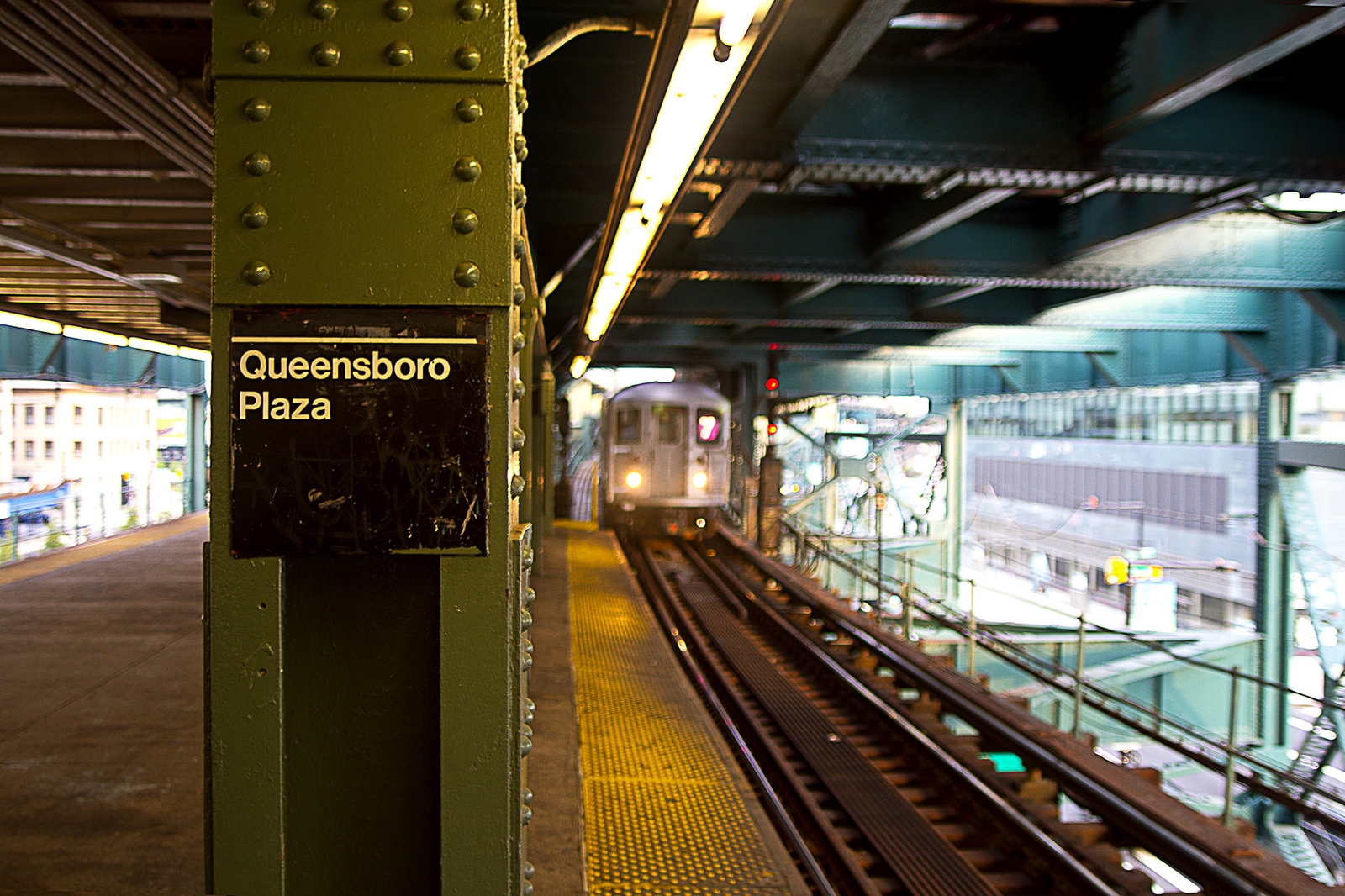
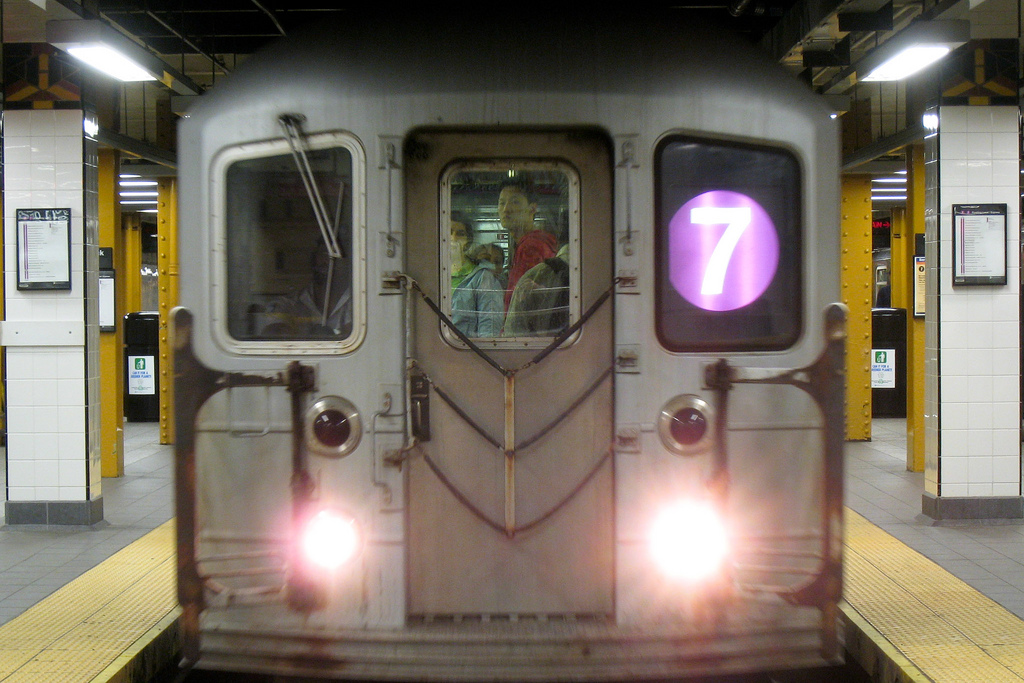
Now take those regular mass-transit routines and observe them on the most unusual train in all of New York  City (if not the world) — the 7 train which travels from the Hudson Yards to Flushing, passing through a wide variety of ethnic neighborhoods. It’s affectionately called the International Express.
As the two authors observe, there really is no experience on earth like riding the subway.
Their observations of human behavior can be read to include all experiences upon the New York subway, but the 7 train provides a very unique mix of languages and cultures, intensifying and sometimes complicating regular daily routines.
Riders in rich ethnic communities of one type may only interact with those of other communities while riding the subway. On the 7, this means sharing a space with people of many ethnic backgrounds at once. Â “Riders are fascinated by the diversity they experience and take pride in learning in learning to read cues regarding the identities of strangers on the trains.”
Flickr/Doug Letterman
In a very blunt but incisive way, the authors identify various aspects of New York that often hard to quantify. “[A]fter paying the fare, we all have an equal right to be on the subway, to be in the city dressed however we please, and to be ready to defend ourselves against stereotyping and bigotry.”
And yet, as observed in interviews with countless 7-train riders, the train becomes a sort-of safe space as well, where individuality is not only allowed but even supported, as it allows every rider to express themselves personally within basic norms of decency. Not that riders don’t personally harbor hostile or racist views at times; but mostly, perhaps as preservation of the 7 train’s neutral space, they keep these thoughts to themselves.
The authors also explore the particular power of the 7 train itself in transforming Queens into the most diverse and second-most populous borough, allowing neighborhoods of specific ethnic character to thrive, even at moments in New York City history where the rest of the city stagnated.
The success of neighborhoods like Jackson Heights and Flushing ultimately depend on the train. The most illuminating sections of International Express seem almost like dire warnings in light of 2017’s recent mass-transit disasters.
Or, as the authors put it, “Despite overcrowding, construction and mechanical delays, sweltering platforms in the summer, and endlessly broken escalators, the physically and socially competent urbanite chooses the subway. Will that always be the case?”
PODCAST The legacy of the Stonewall Riots and their aftermath, in a podcast history told over nine years apart (May 2008, June 2017).
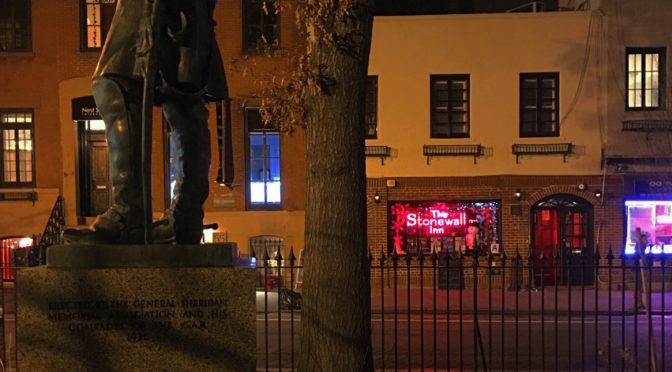
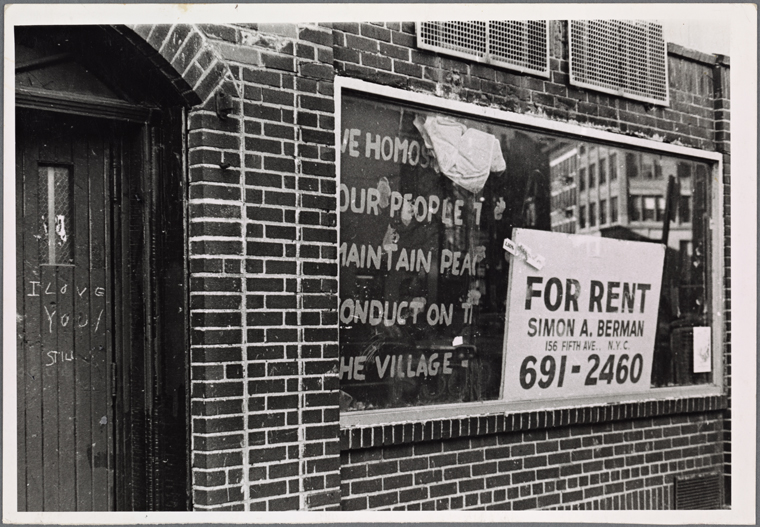
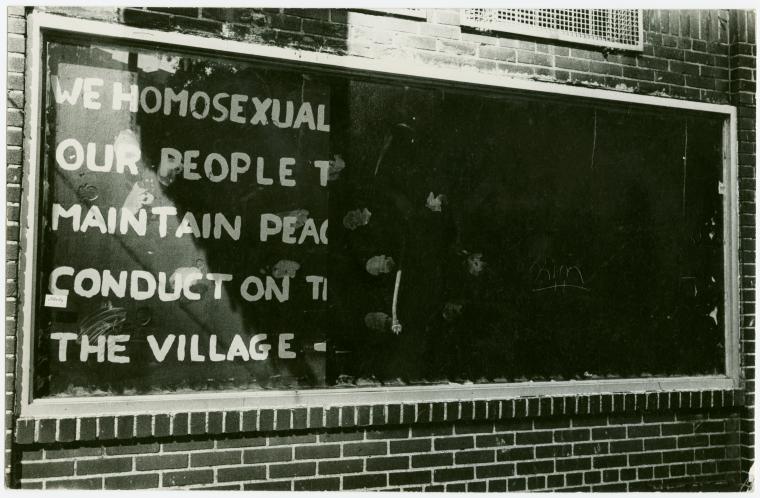
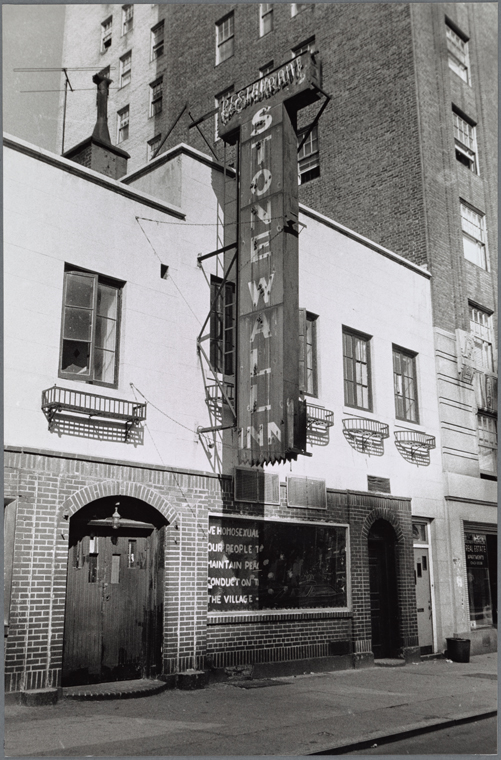
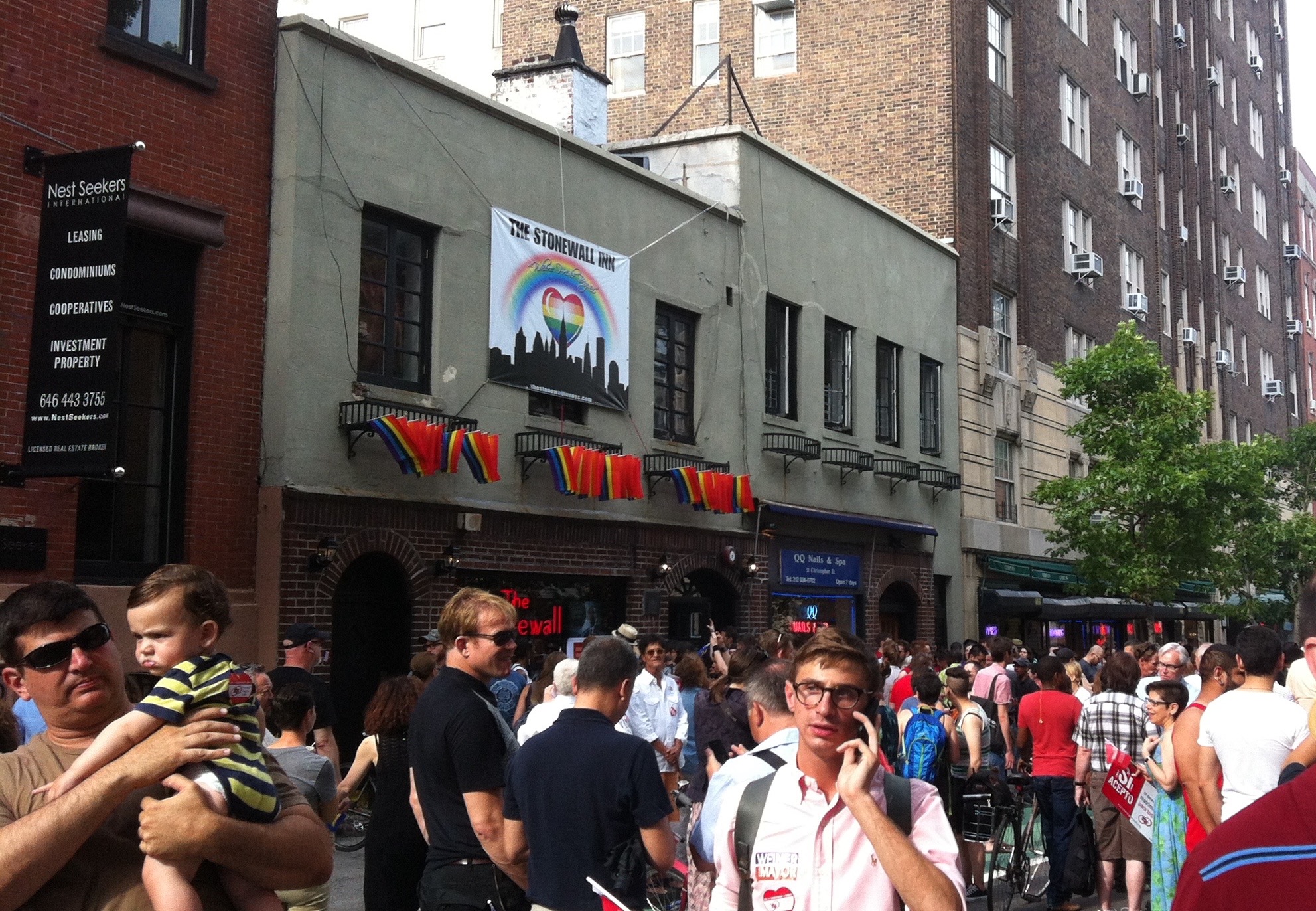
In the early morning hours of June 28, 1969, undercover police officers attempting to raid the Stonewall Inn, a mob-controlled gay bar with darkened windows on Christopher Street, were met with something unexpected — resistance.
That ‘altercation’ was a messy affair indeed — chaotic, violent, dangerous for all. Homeless youth fought against riot police along the twisting, crooked streets of the West Village. And yet, by the end, thousands from all walks of life met on those very same streets in the days and weeks to come in a new sense of empowerment.
In May of 2008, we recorded a podcast on the Stonewall Riots, an event that galvanized the LGBTQ community, giving birth to political organizations and a sense of unity and pride.
So much has changed within the LGBTQ community — and so much was left out of our original show — that’s we’ve decided to do something unique. In the first half, we present to you our original 2008 history on the Stonewall Riots, warts and all. In the second half, we present newly recorded material, exploring the effects of Stonewall on the crises that faced the gay community in the 1980s and 90s.
Now an official U.S. National Monument maintained by the National Park Service, the Stonewall National Monument preserves New York City’s role in the birth of the international LGBT movement.
And please forgive us in advance for being extra personal in this show near the end.
The Bowery Boys: New York City History podcast is brought to you …. by you!
We are now producing a new Bowery Boys podcast every two weeks. We’re also looking to improve the show in other ways and expand in other ways as well — through publishing, social media, live events and other forms of media. But we can only do this with your help!
We are now a member of Patreon, a patronage platform where you can support your favorite content creators for as little as a $1 a month.
Please visitour page on Patreon and watch a short video of us recording the show and talking about our expansion plans. If you’d like to help out, there are five different pledge levels (and with clever names too — Mannahatta, New Amsterdam, Five Points, Gilded Age, Jazz Age and Empire State). Check them out and consider being a sponsor.
We greatly appreciate our listeners and readers and thank you for joining us on this journey so far. And the best is yet to come!
This show is brought to you by Audible. Listen anytime, anywhere to an unmatched selection of audiobooks, original premium podcasts and more.
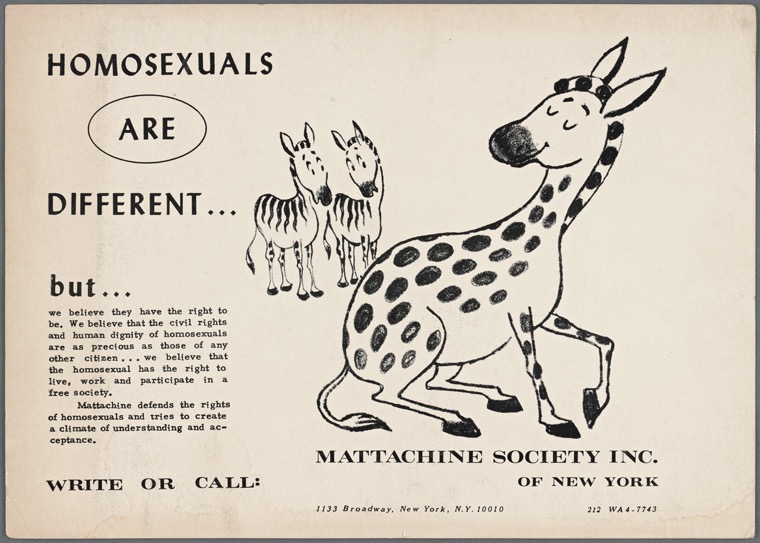
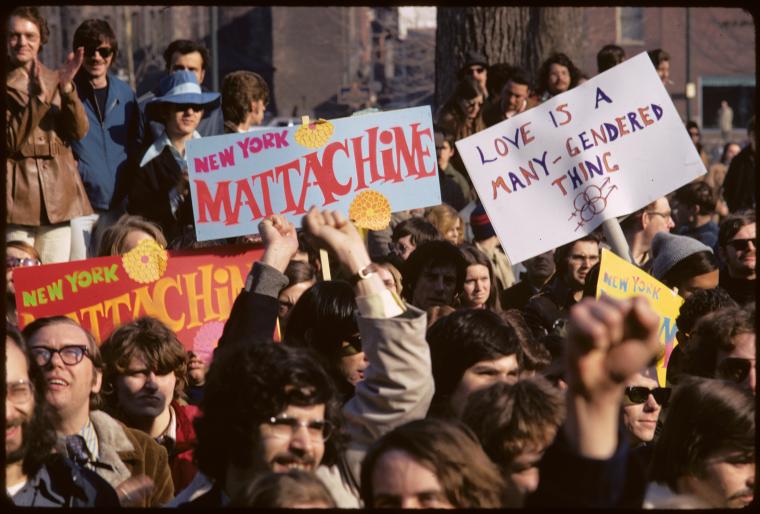
An early advertisement put out by the Mattachine Society, urging people to look at homosexuals different.
NYPL
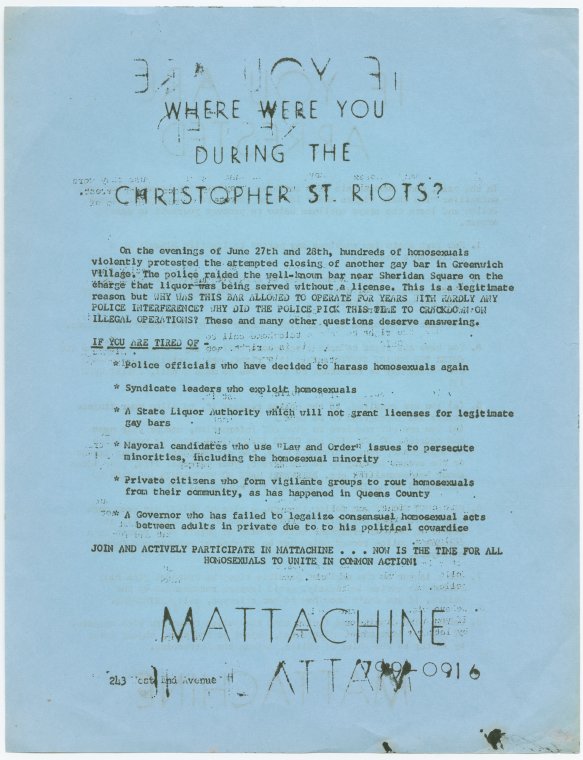
An example of the types of flyers circulating in the West Village following the Stonewall incident.
NYPL
The Stonewall Inn was closed shortly after the battle with police, not to be reopened again until 1990.
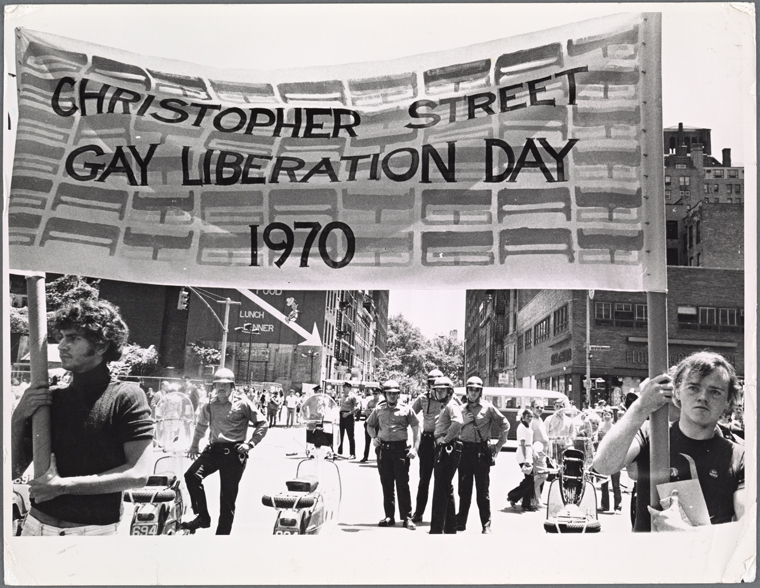
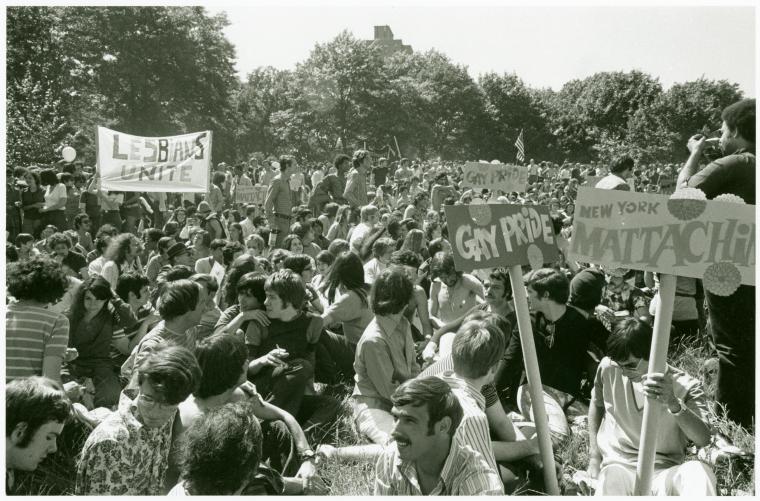
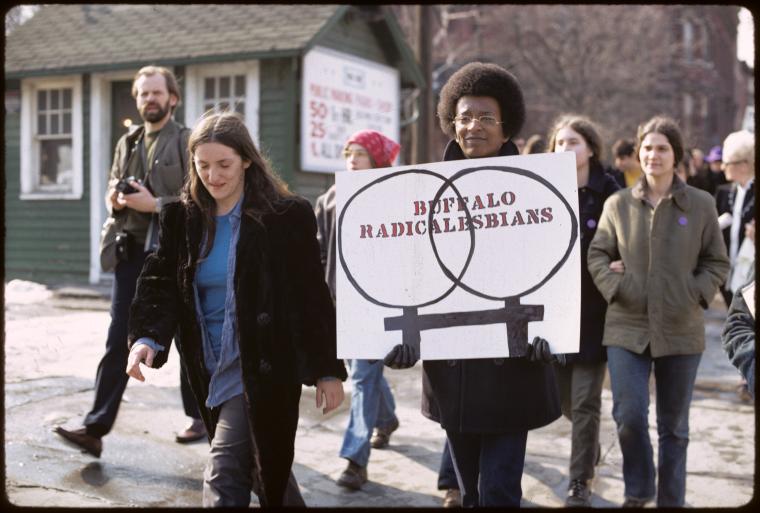
From the first parade (in 1970) to Central Park, the first of what would later be called the Pride Parade.
Diana Davies/NYPL
The parade ended with a gigantic rally in Sheep Meadow in Central Park.
Diana Davies/NYPL
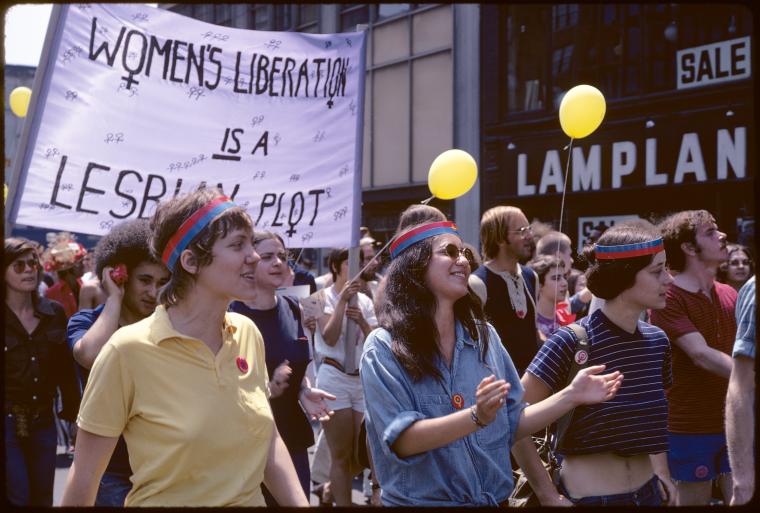
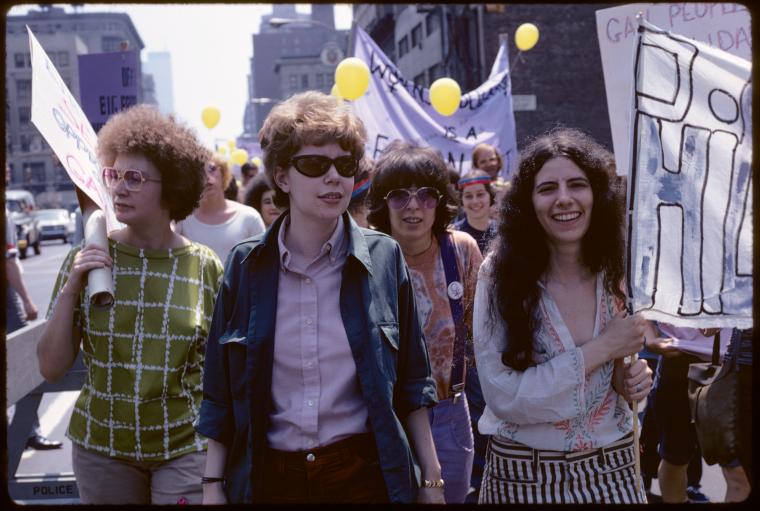
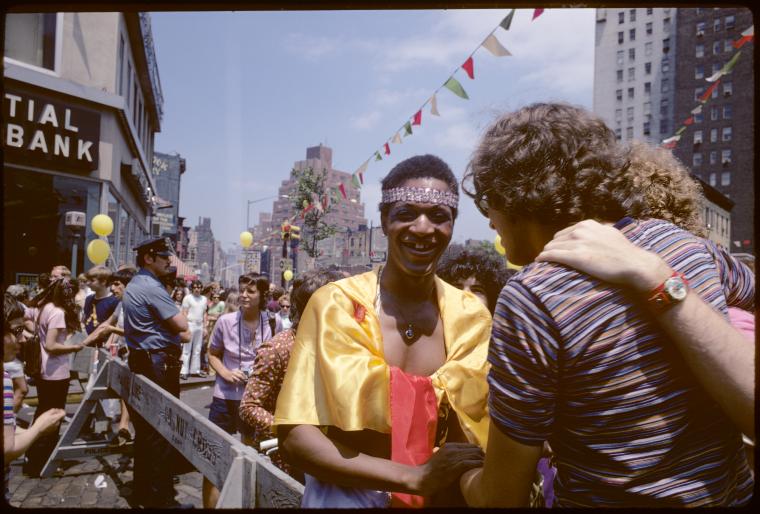
From the parade the following year:
NYPL
NYPL
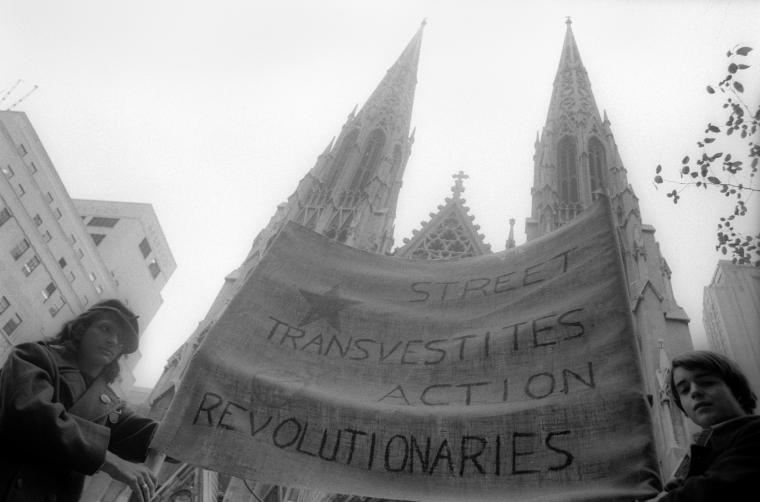
From a 1971 demonstration in front of St. Patrick’s Cathedral.
NYPL
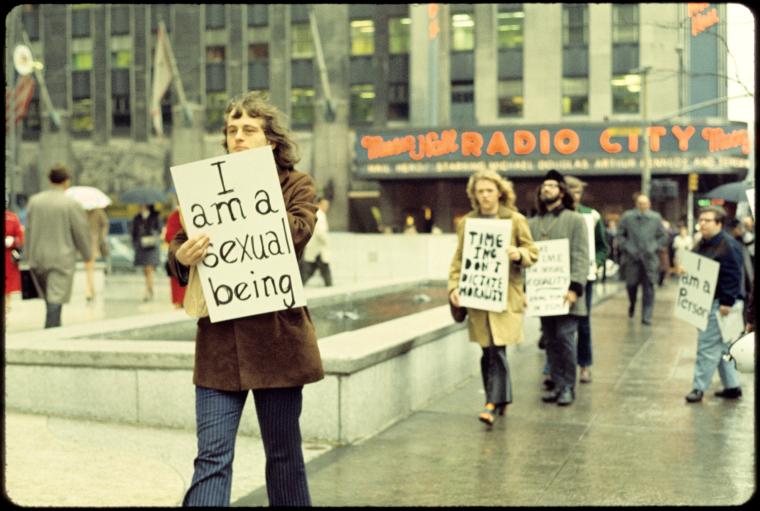
….and another near Radio City Music Hall.
NYPL
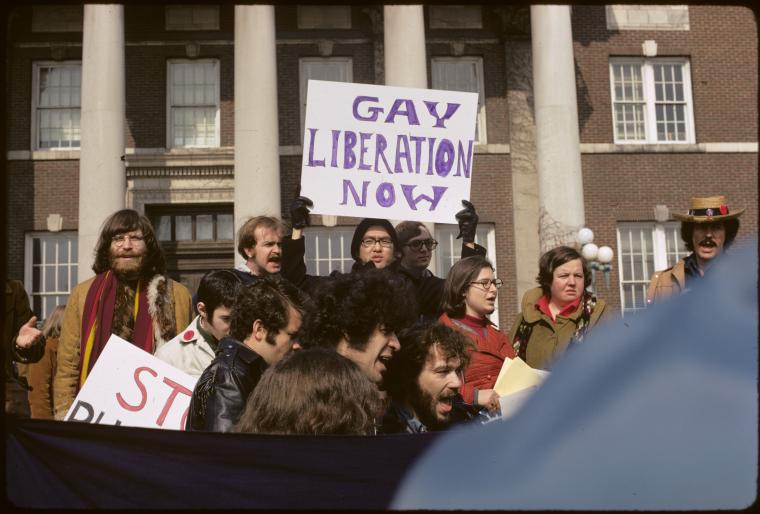
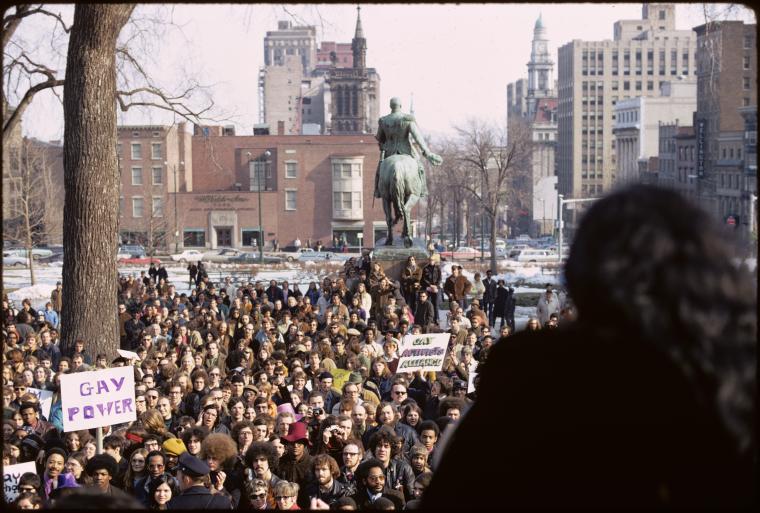
Gay rights demonstrations from 1971 at the state capitol in Albany, NY, from an incredible collection of pictures by Diane Davies, courtesy the New York Public Library.
NYPL
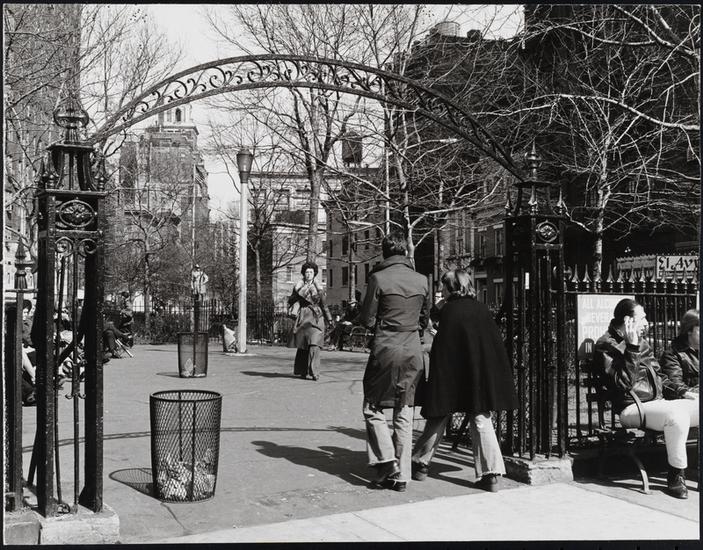
The entrance to Christopher Park in 1975, photo by Edmund Vincent Gillon
MCNY
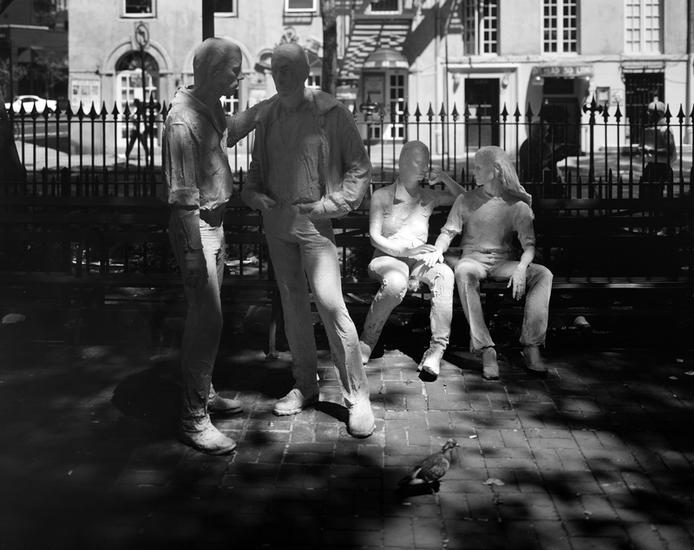
Gay Liberation, how the statues looked when they were first installed in 1992.
Edmund Gillon/MCNY
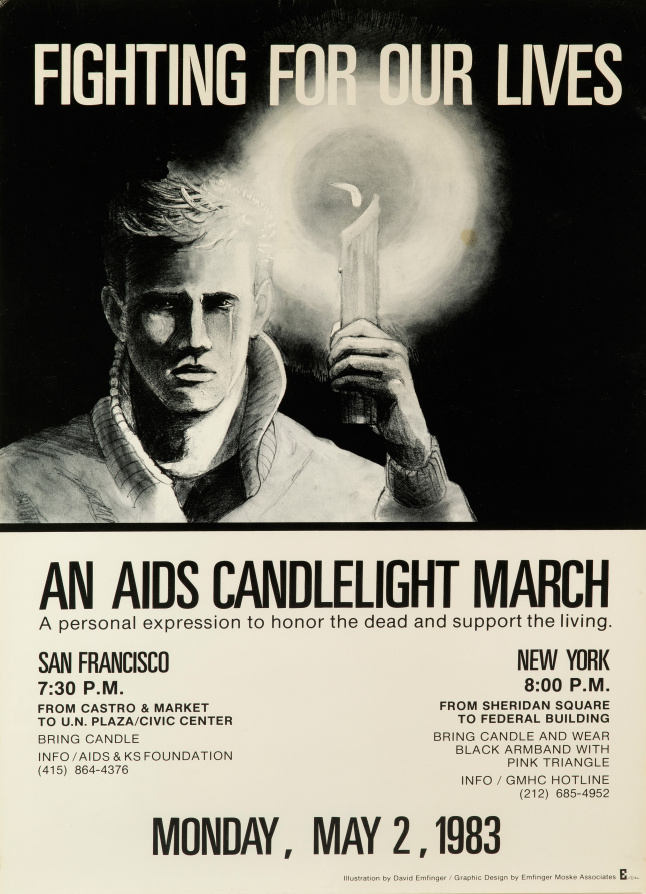
An early AIDS march from 1983 which began near Stonewall in Sheridan Square.
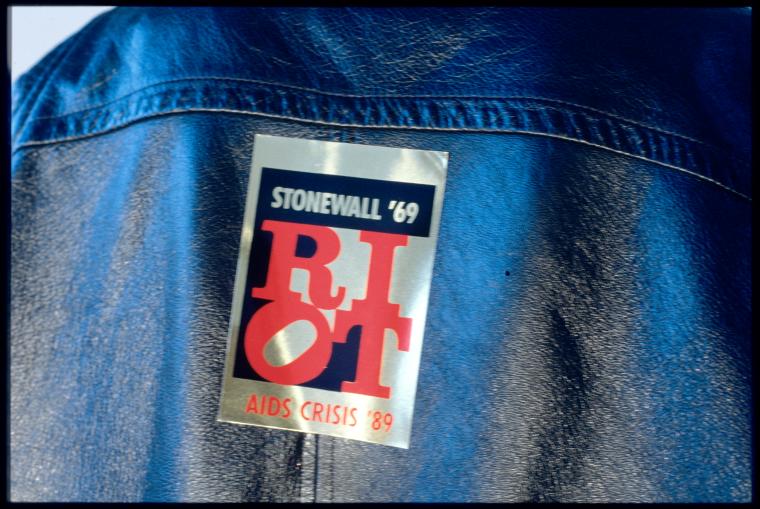
During the AIDS crisis of the 1980s and 90s, many turned to the example of Stonewall as a way to unite the community and fight back against homophobia.
Photographer Gran Fury, Courtesy NYPL
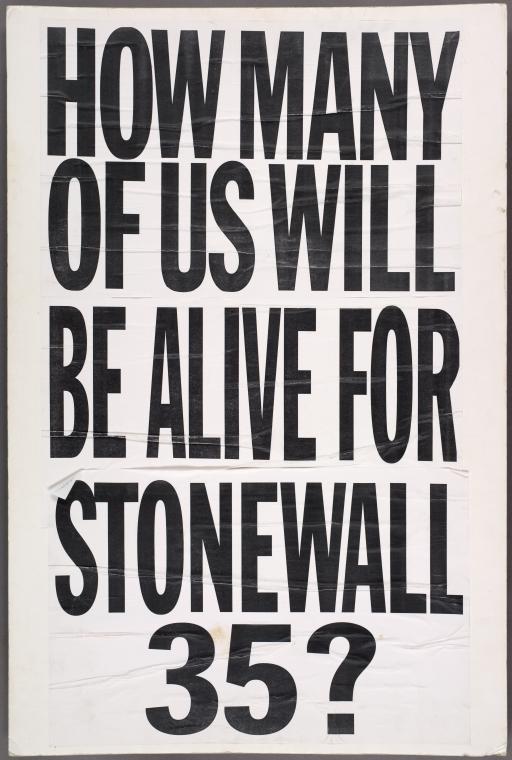
An ACT UP sign for the Stonewall 25 parade and rally “How many of us will be alive for Stonewall 35?” On the opposite side: “AIDS. Where is your rage? ACT UP.”
NYPL
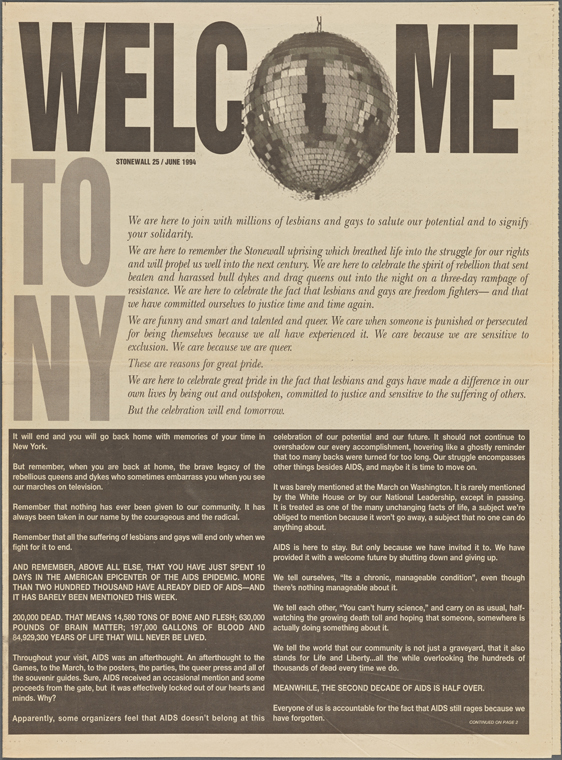
A sobering ACT UP ‘welcome wagon’ message. “But remember, when you are back at home, the brave legacy of the rebellious queens and dykes who sometimes embarrass you when you see our marches on television.”
NYPL
In front of Stonewall in 2013 after the announcement of the Supreme Court verdict in United States v. Windsor, overturning the Defense of Marriage Act.
Photo by Greg Young
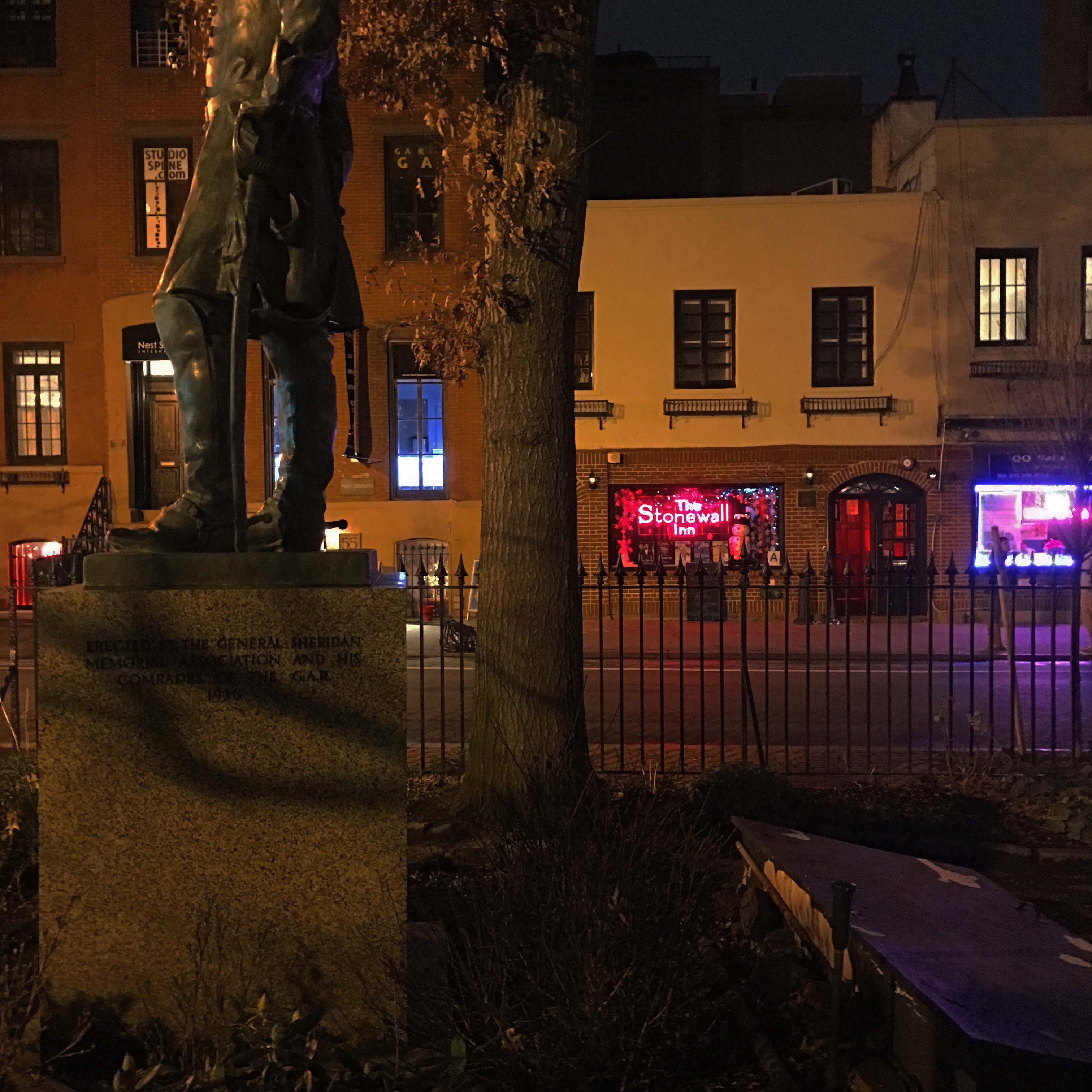
Stonewall Inn and Christopher Park, 2015
Photo by Greg Young
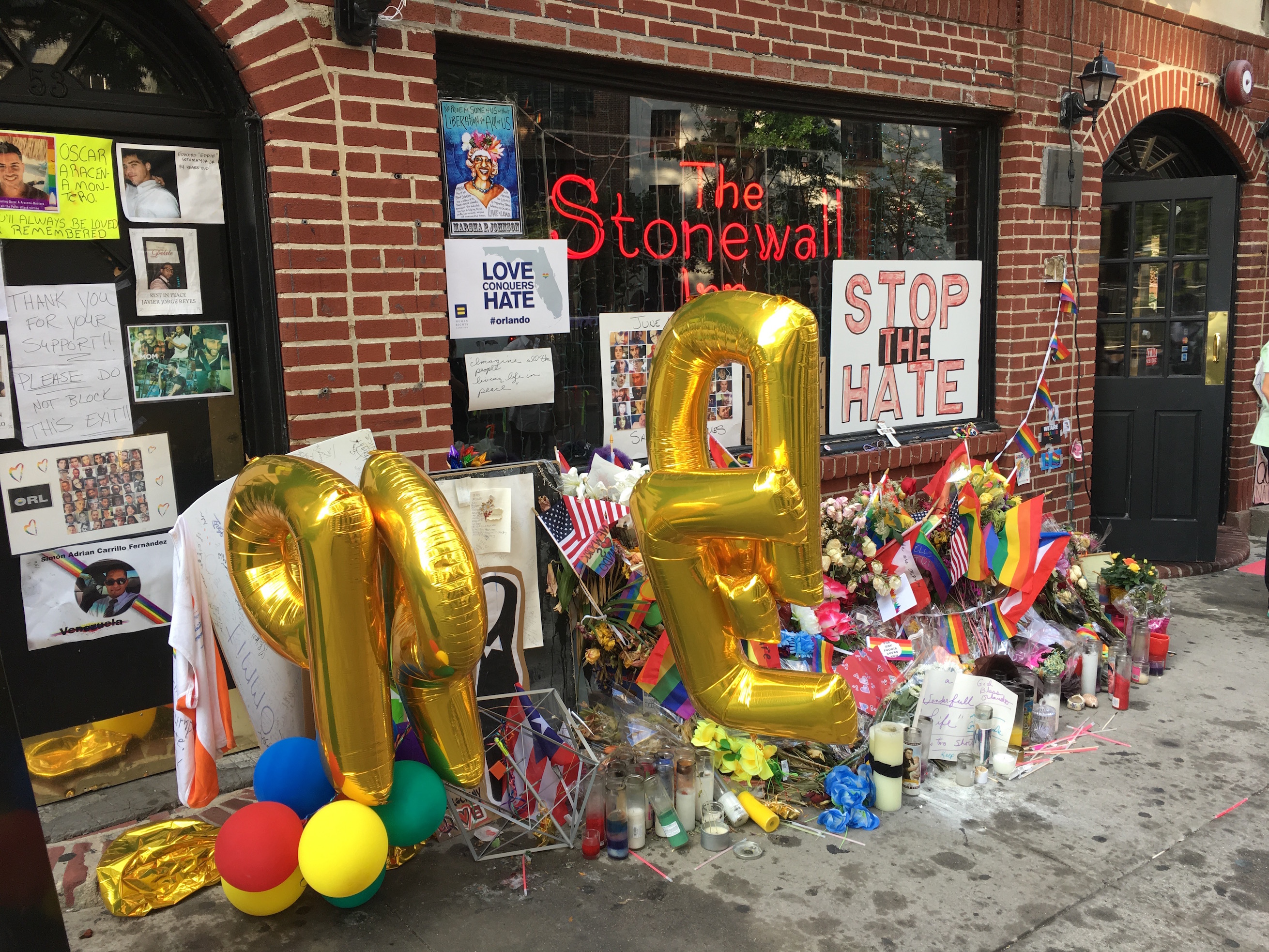
Outside the Stonewall in 2016, following the Pulse nightclub shooting in Orlando, Florida.
Photo by Greg Young
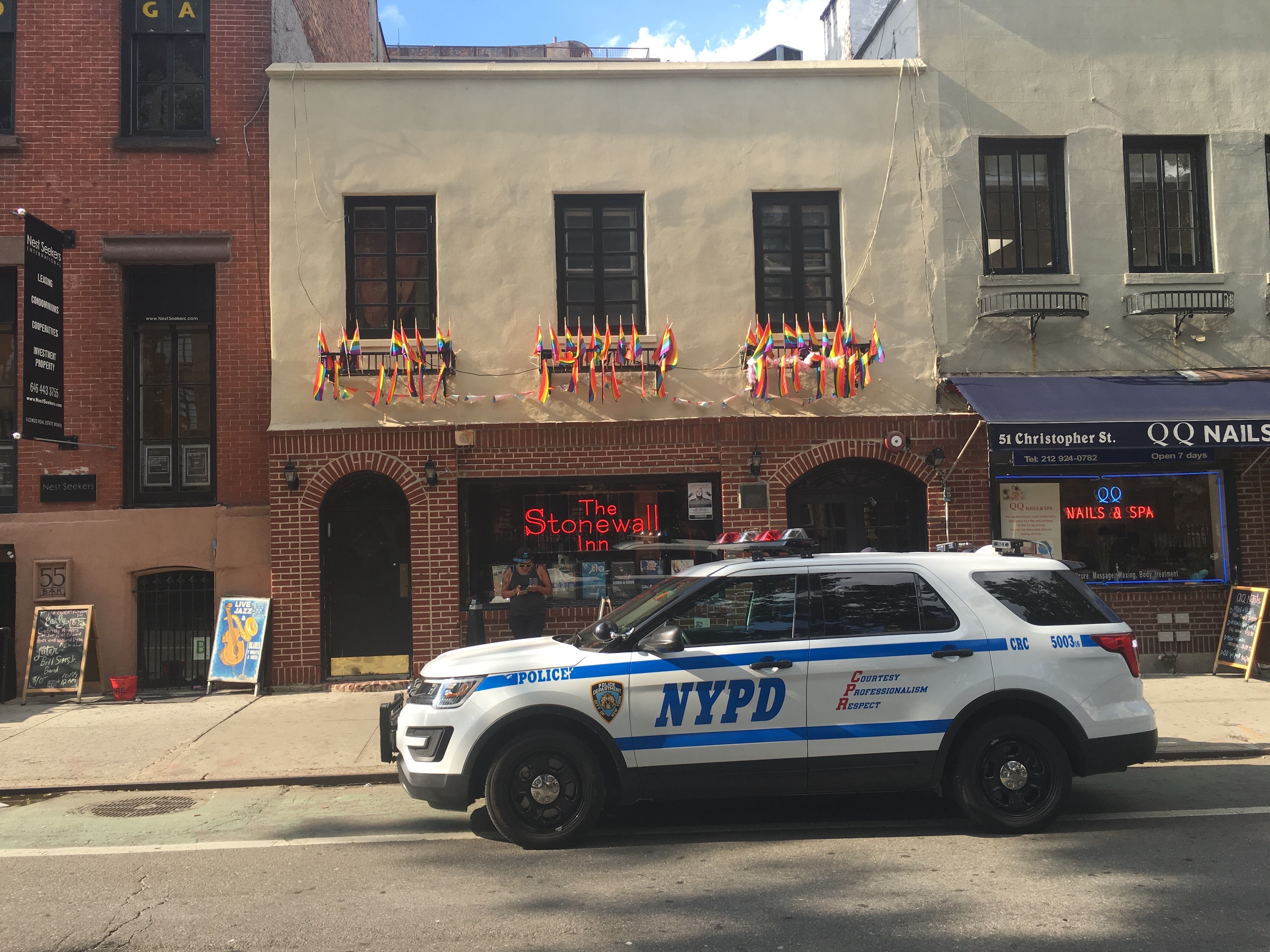
Stonewall 2016, now with police protection! Taken in August 2016, following the announcement of Stonewall as a National Monument.
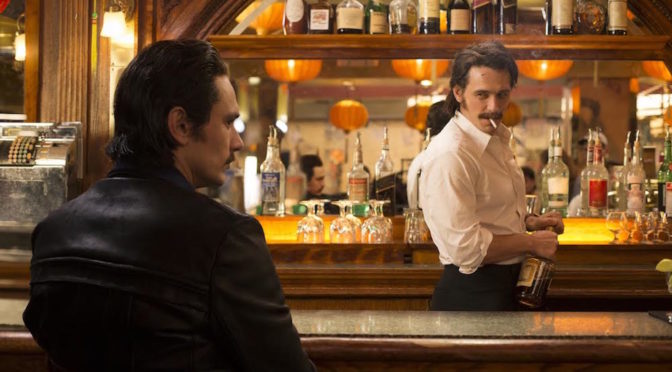
"The Deuce Pilot HBO Productions 2015 1114 Avenue of the Americas New York City 10036 Characters: James Franco- Vincent Gary Carr- C.C. Margarita Leveiva- Abby Amber Skye Noyes- Ellen Don Harvey- Flanagan
Will The Deuce succeed where Vinyl failed? I was disappointed that HBO’s luxury period series about the 1970s music industry quickly faded after only one season, but it appears the network is going back into New York City history with a hotter, sleazier concept. (And Vinyl was very, very sleazy.)
The Deuce takes aim at Times Square, strolling past the legitimate theaters and restaurants and heading into the porn houses. According to their official description, the show “follows the story of the legalization and subsequent rise of the porn industry in New York’s Times Square from the early 1970s through the mid-1980s, exploring the rough-and-tumble world at the pioneering moments of what would become the billion-dollar American sex industry.”
I’m intrigued, even though the concept of two James Francos, as twin porn kingpins Vincent and Frankie Martino, sounds exhausting. (But with his voluminous output of work recently, perhaps there have always been two James Francos.)
However there are a few reasons why I think this might actually take off:
1) The show has been developed by George Pelecanos and David Simon, the makers of The Wire, possibly the most intense and literate show ever about urban life.  Simon’s last project Show Me A Hero was a precise and well-observed drama about Yonkers in the 1980s.
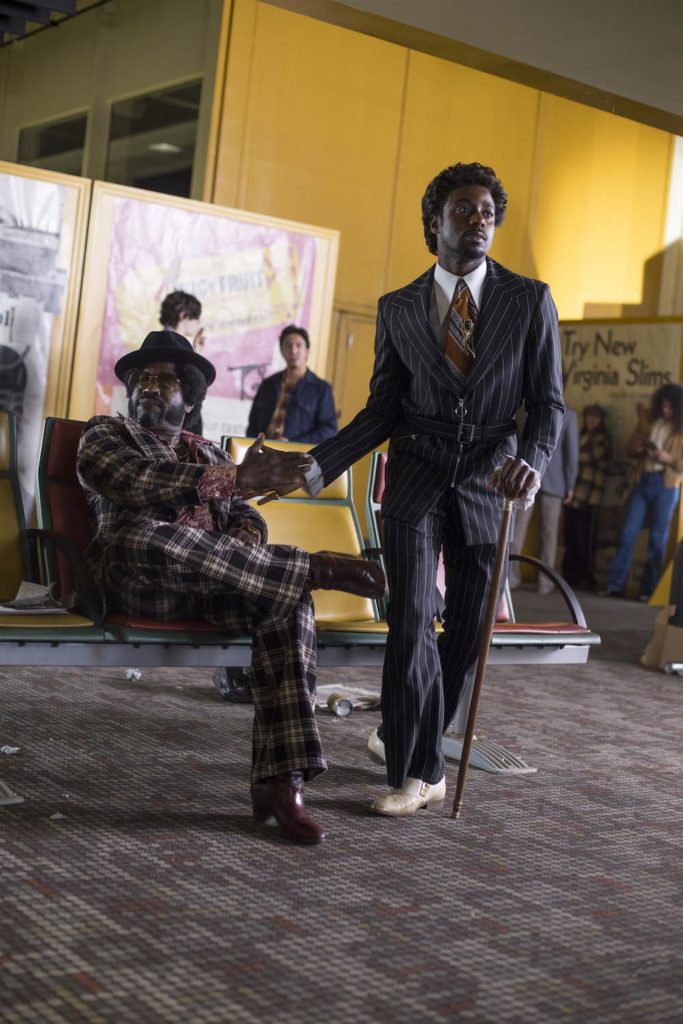
Below: Gary Carr and Tarik Trotter
2) New York City in the 1970s provides a treasure trove of dramatic possibilities if done straight. I quite liked Netflix’s The Get-Down but it was hardly literal. Times Square should provide suitable visual properties provided it’s not too over-the-top. (Fans of Simon’s Treme will know that he handles flashy settings very well.)
HBO
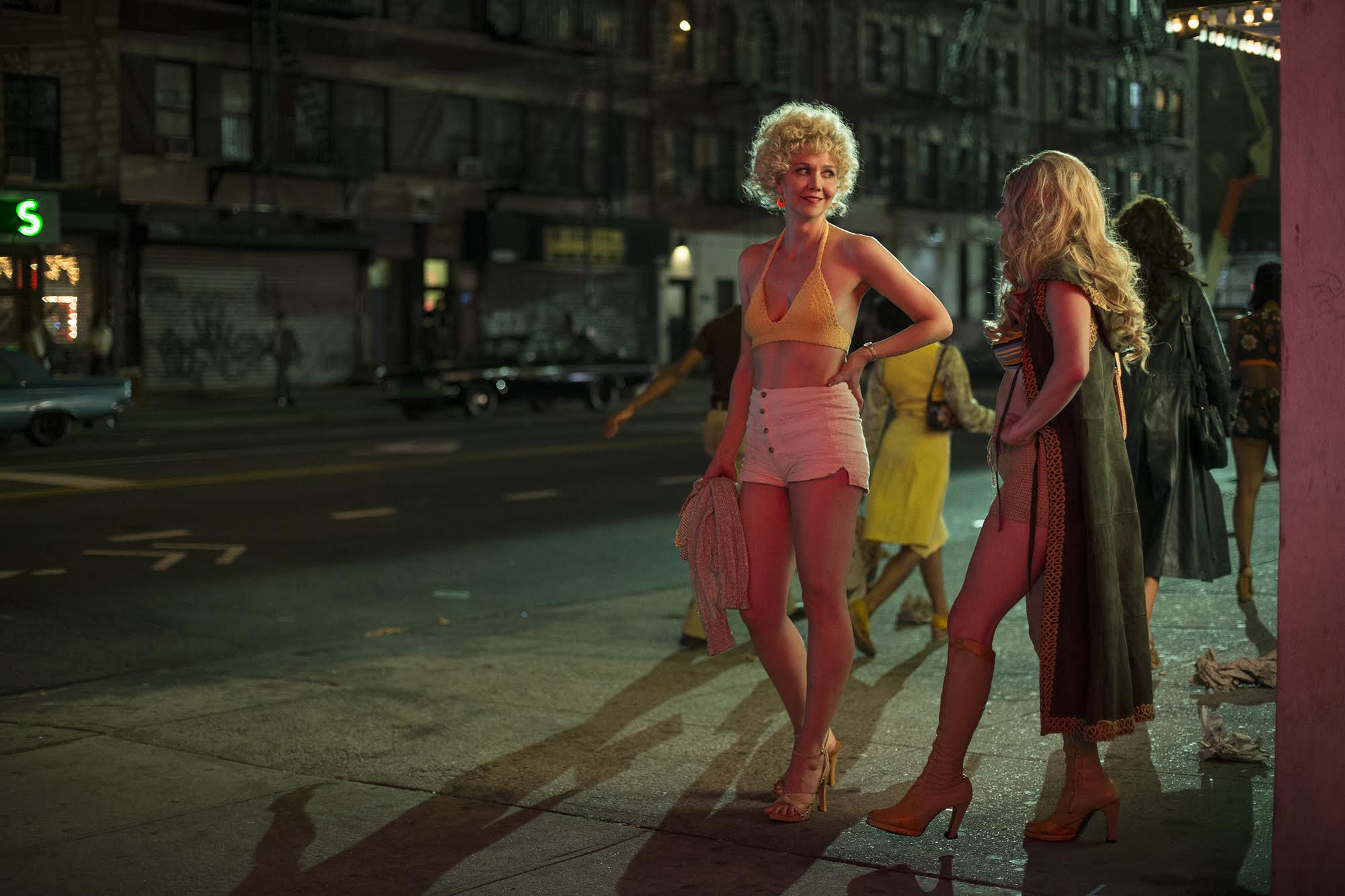
3) Maggie Gyllenhaal is in this. We’re in good hands. But let’s hope that wig translates better on film.
THE FIRST PODCAST There is something very, very bizarre about a can of soda.Â
How did this sugary, bubbly beverage – dark brown, or neon orange, or grape, or whatever color Mountain Dew is – how did THIS become such an influential force in American culture?
This is the strange and inconceivable story of how the modern soft drink was created. It’s a story in four parts —
1) At the start of the 19th century, two dueling soda fountains in lower Manhattan would set the stage for a century of mass consumption.
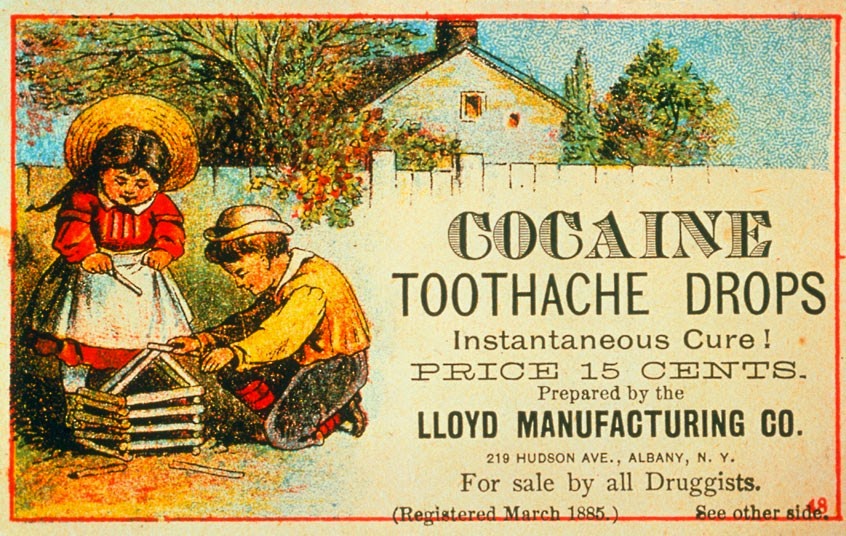
2) Soft drinks weren’t just tasty. For over a century, many believed they could provide a litany of cures to some of man’s most vexing ills. It’s from this snake-oil salesmanship that we get many of today’s top soft-drink brands.
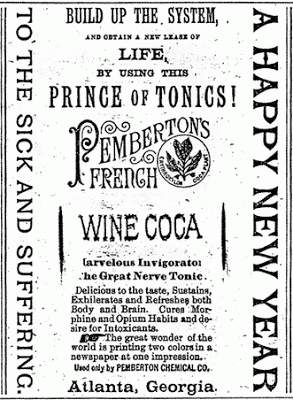
3) Coca-Cola may pride itself on its ‘secret formula’, but in fact that formula has frequently changed since the 1880s, when a Confederate war veteran first invented this magical brew mixing three exotic ingredients — cocaine, wine and kola nut.
4) Soft drinks have professed to relieve many physical ills. By the 1950s they even attempted to promote weight loss. But the rise of diet drinks sparked a marketing war with manufacturers of one of their most reliable (and delicious) ingredients.
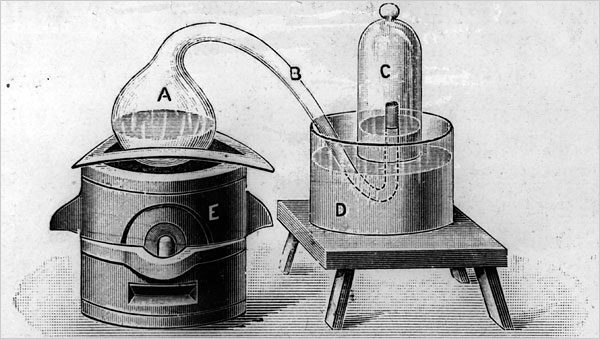
Joseph Priestley’s mechanism for artificially carbonating water.
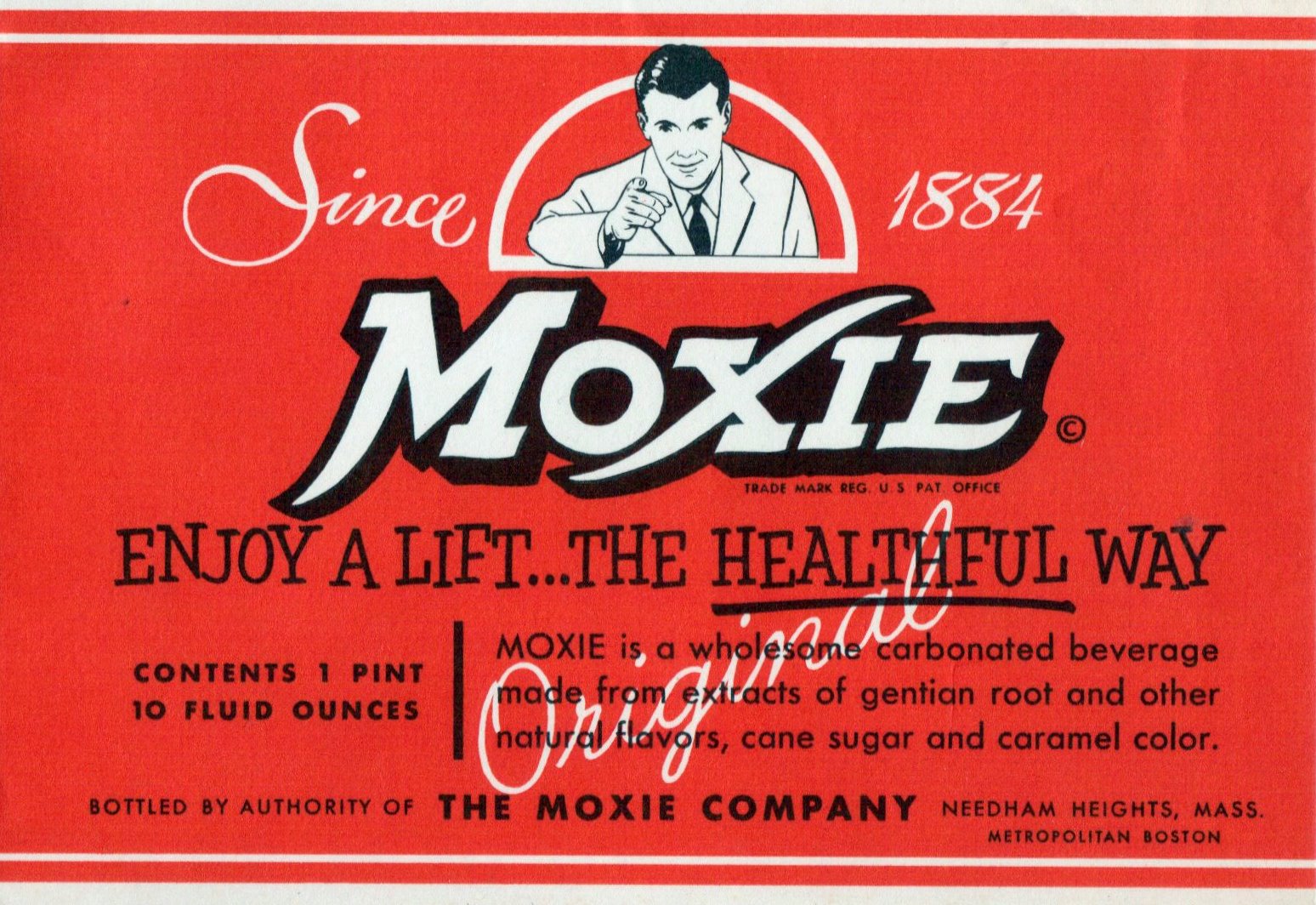
For many decades Moxie advertisements featured a medical professional as the defining image of their product.
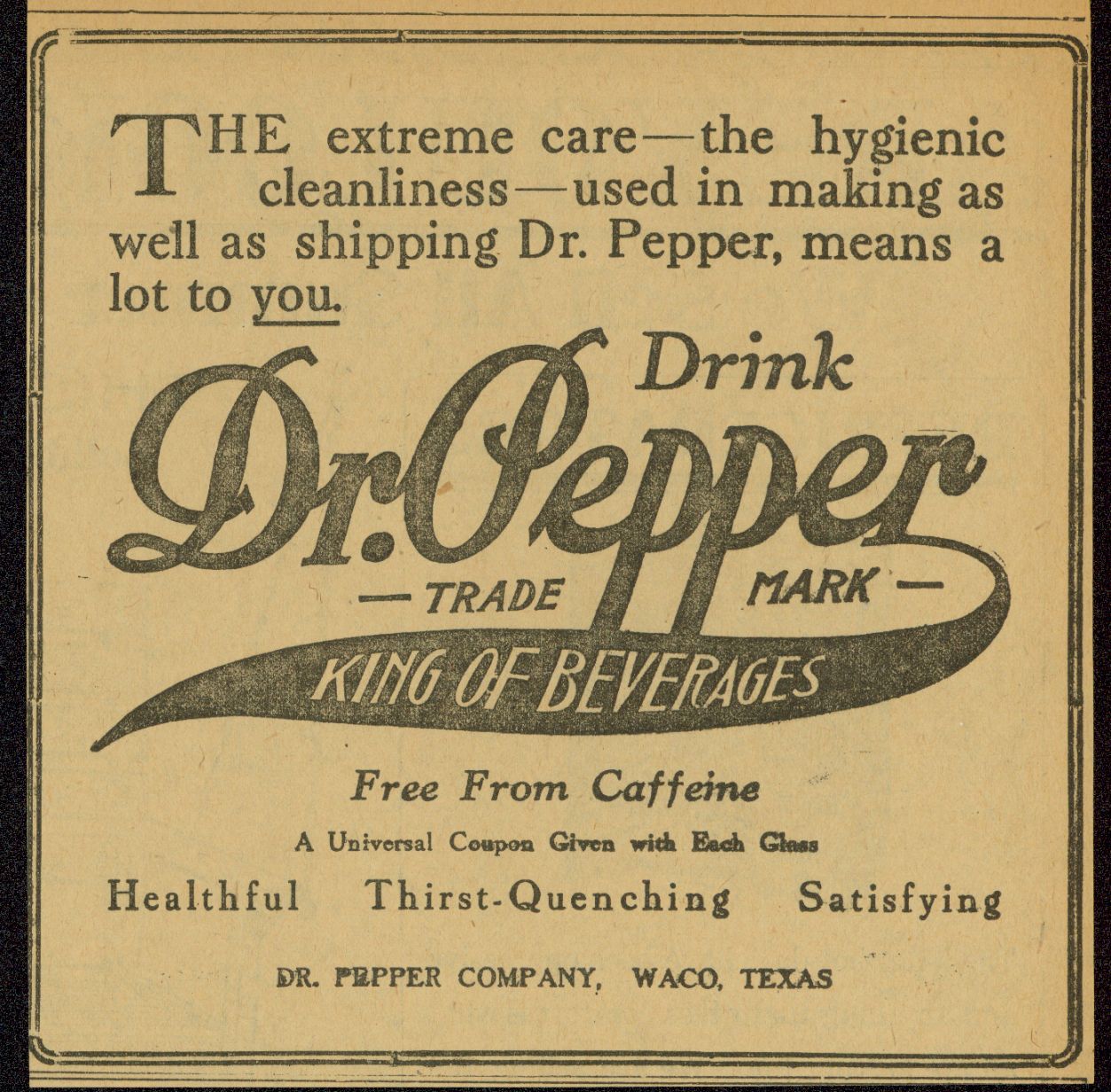
Dr. Pepper once proudly advertised that it was free from caffeine. This ad is from the 1910s in the wake of Coca-Cola’s battles with the federal government over caffeine.
Dr Pepper Museum
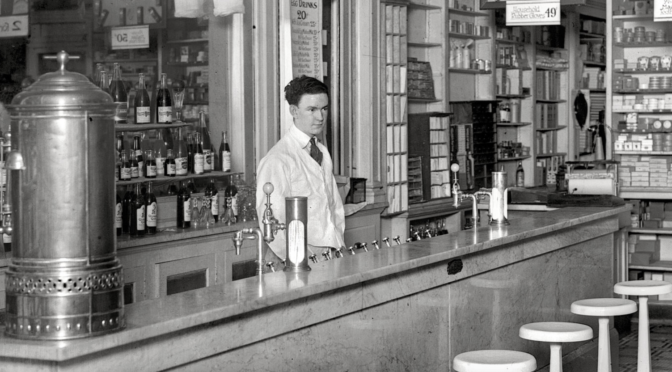
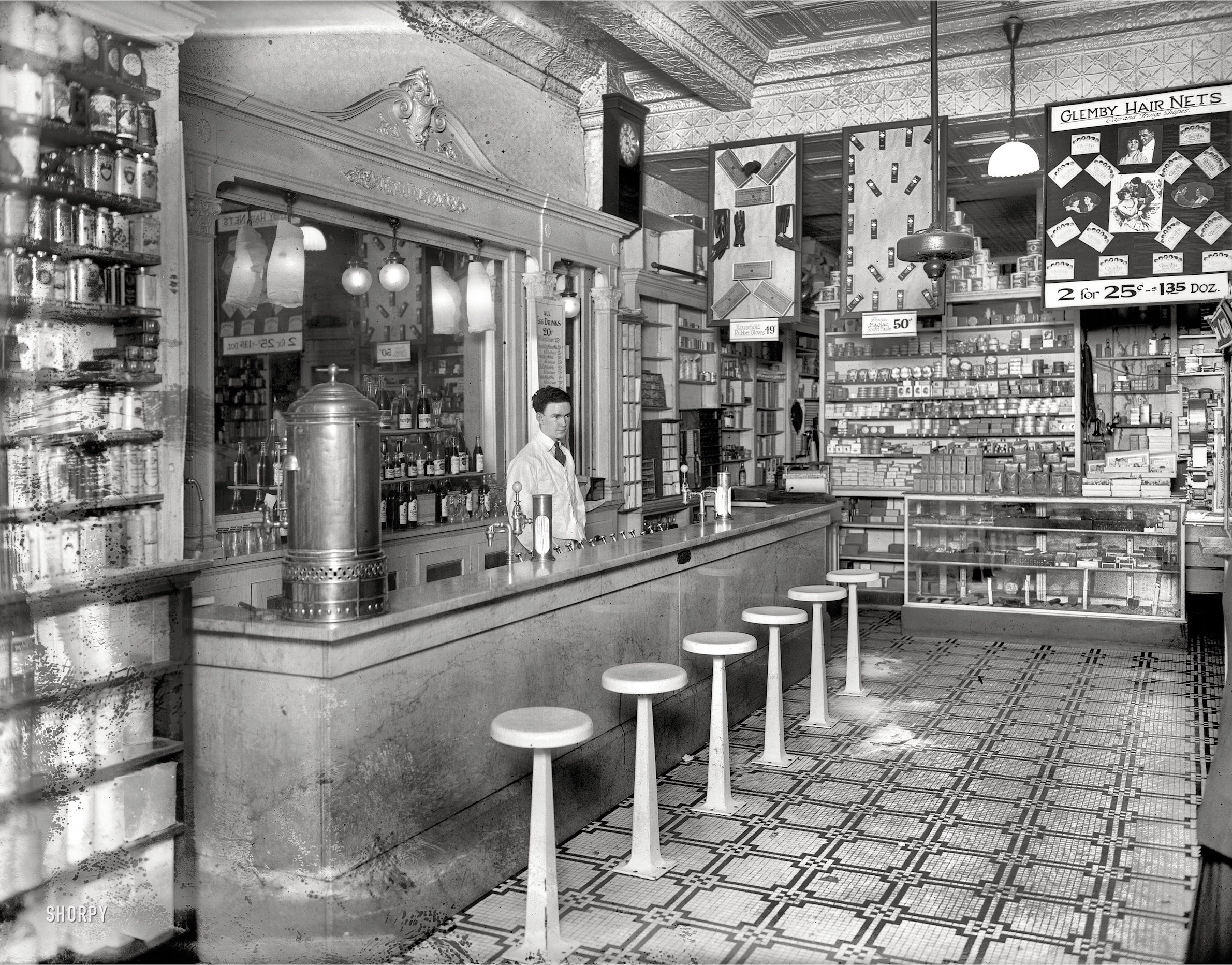
Picture at top is a detail from this great shot from Shorpy, circa 1920, of the People’s Drug Store, 14th & U Streets, in Washington D.C.
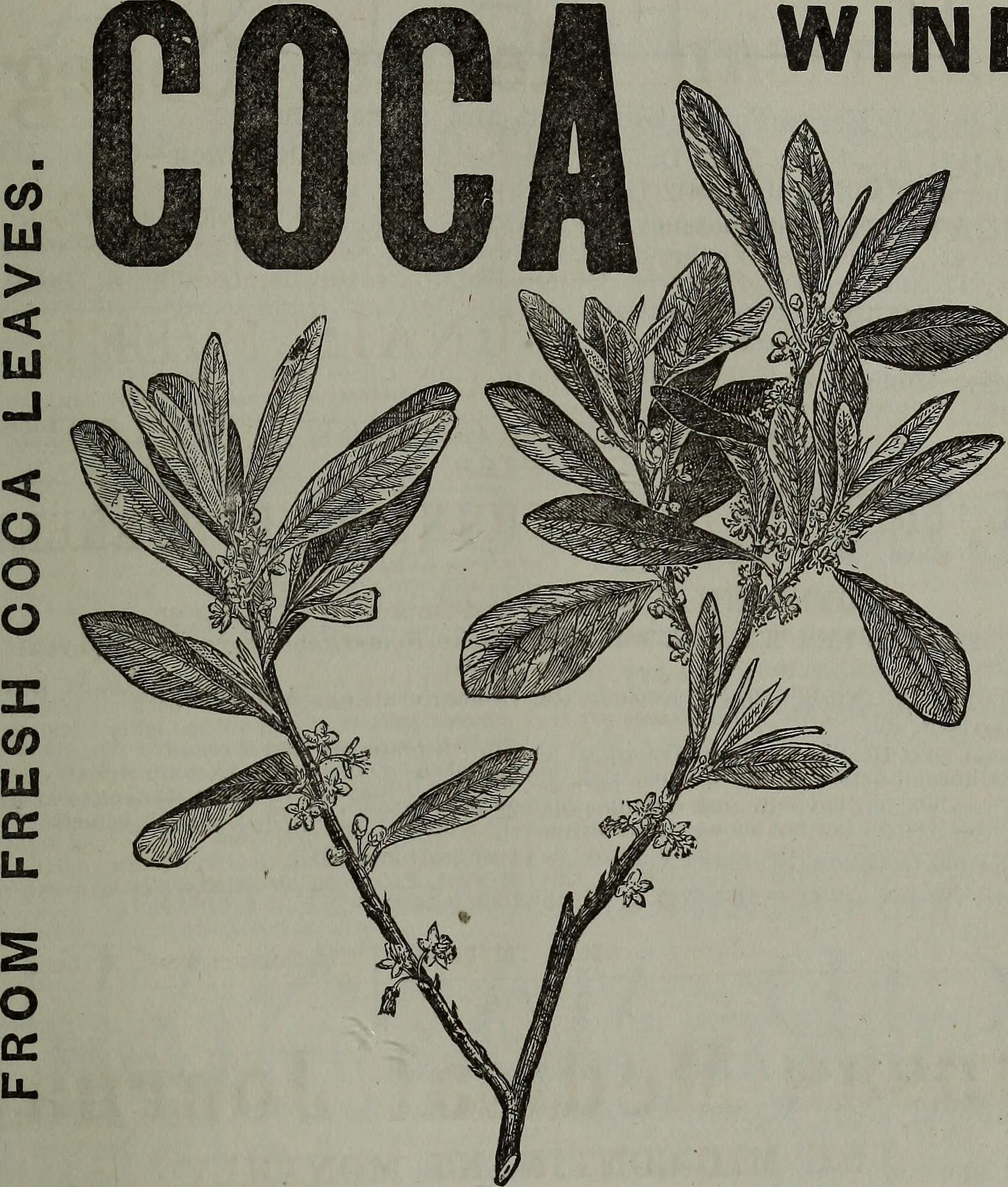
The inspiration for Coca-Cola — coca wine from coca leaves.
Internet Archive Book Images
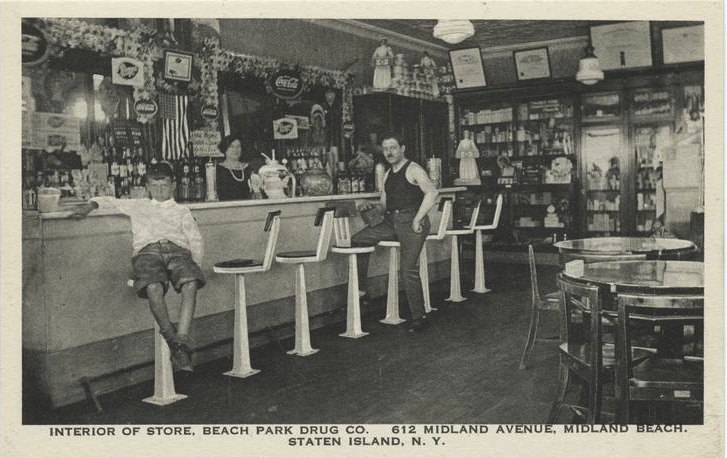
In the 1890s there were reportedly more soda fountains than there were taverns in New York City. Below — a later fountain stocked with sodas in Staten Island
This unsuccessful campaign tried to convince people that hot soft drinks were also a taste treat.
George Metesky was just your average working joe with a unique and understandable beef against his former employer Con Edison. He was injured on the job, eventually fired and denied workers compensation for what appear to be purely bureaucratic reasons.
But any sympathies one might find for Metesky, however, are quickly abandoned.
In retaliation, he began a meticulously sustained crime spree in New York City within its most famous and most bustling landmarks.
For sixteen years (from 1940 until his arrest in January 1957), this disturbed man placed explosive devices throughout the city, a chilling swath of discord meant to send a message while endangering the lives of thousands of New Yorkers. Grand Central, Penn Station, the New York Public Library and a variety of theaters (including Radio City Music Hall) were all targeted by the man who the press would eventually label ‘the Mad Bomber’.
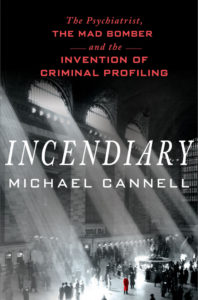
INCENDIARY
The Psychiatrist, The Mad  Bomber and the Invention of Criminal Profiling
By Michael Cannell Minotaur Books/Macmillan Publishers
In Incendiary, the brisk new page-turner by Michael Cannell, these disturbing events and the race to capture Metesky are given a bold, true-crime retelling, an immersive non-fiction thriller with cinematic pacing.
Metesky operated a bit like a comic-book villain, sending letters to the New York Journal-American, taunting the police, all the while setting devices in places where they would receive the most attention. But, strangely enough, the ‘Mad Bomber’ never meant to seriously take lives; indeed, of the dozens of explosive devices set off over the city, nobody was actually killed. (But there were a number of serious injuries.)
Given the nature of Metesky’s crime spree, investigators were able to use ground-breaking criminal profiling methods. A disturbed individual like Metesky almost demanded such an investigation, his psyche on full display in his newspaper letters.
Key to his eventual capture was psychiatrist James Brussel who worked closely with the police in constructing a profile of Metesky that was extraordinarily detailed — and mostly accurate.
Even down to outfit he wore when he eventually confronted the police on a cold evening in January of 1957.
“I know why you fellows are here. You think I’m the Mad Bomber.”
Metesky conducted his frightening crimes with an alarming theatricality — indeed, Brussel’s criminal profiling methods would inspire millions of hours of evening television — which is why Cannell’s gripping procedural feels immediate and particularly terrifying.  This is the stuff of modern nightmares.
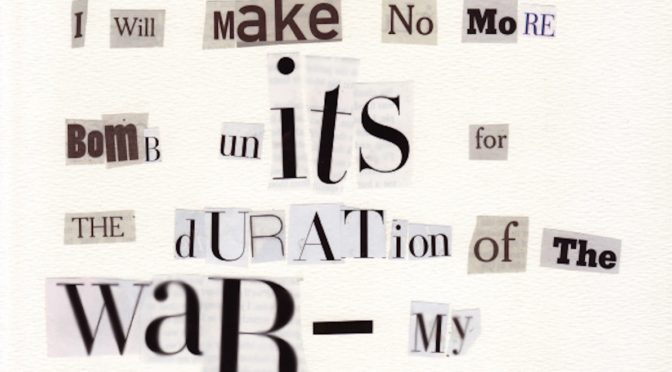
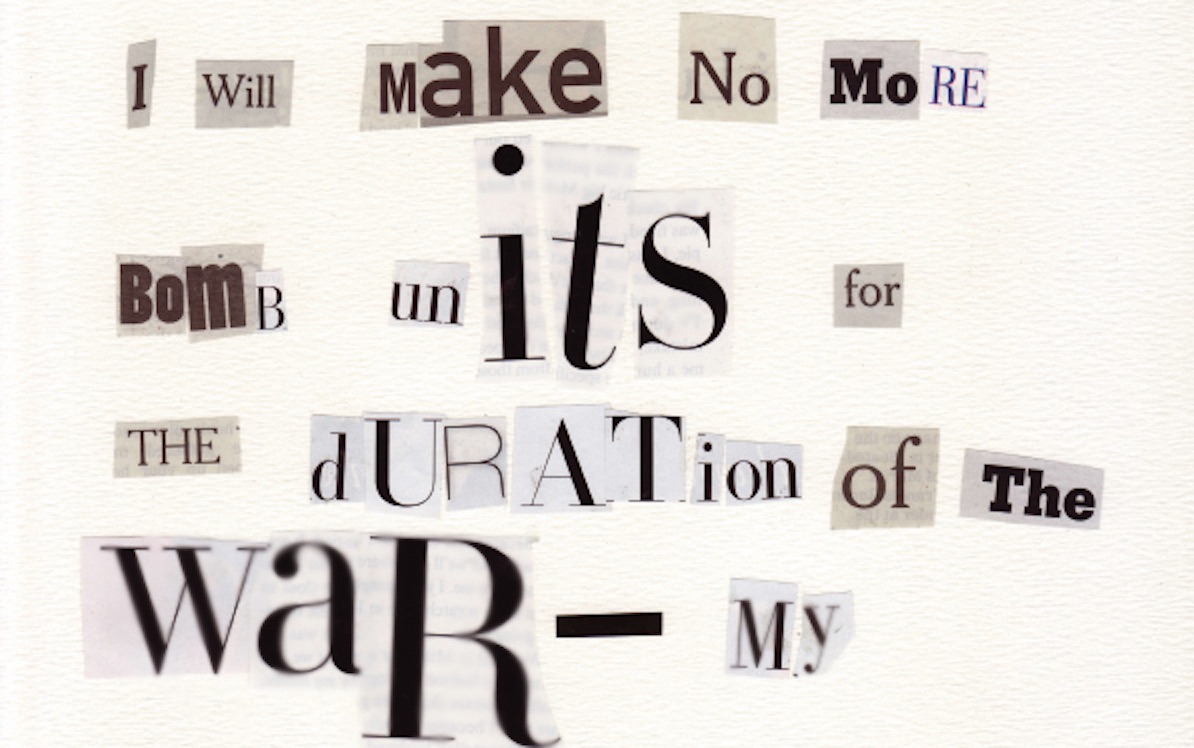
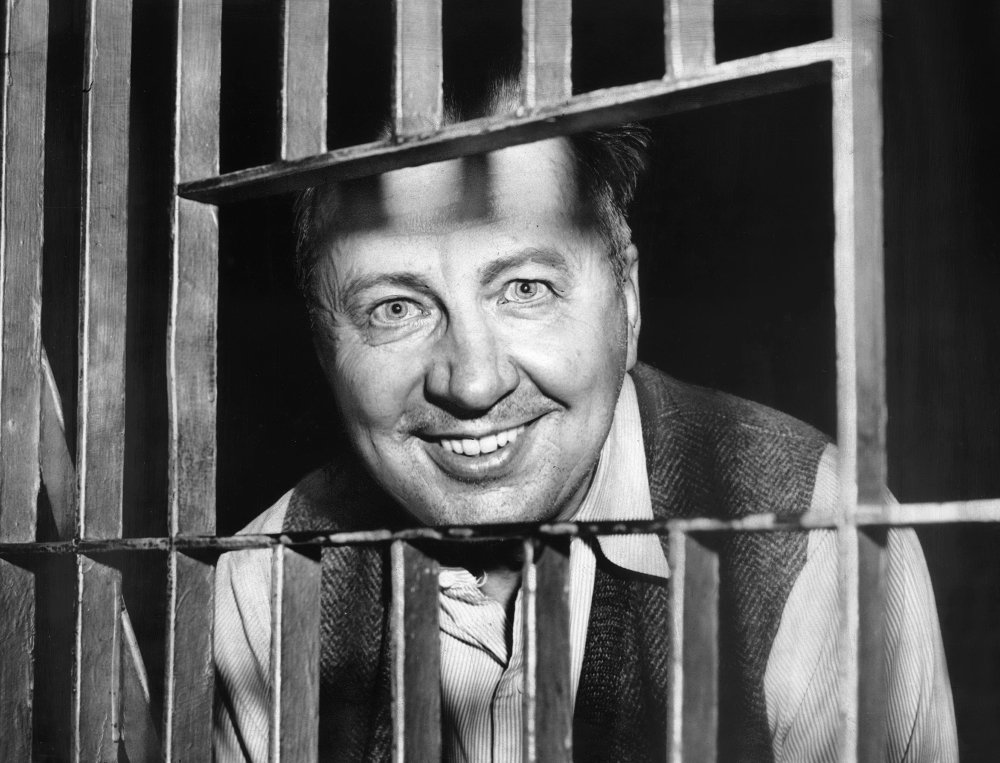
At top: A portion of one of Metesky’s letter. Below: the Mad Bomber in jail
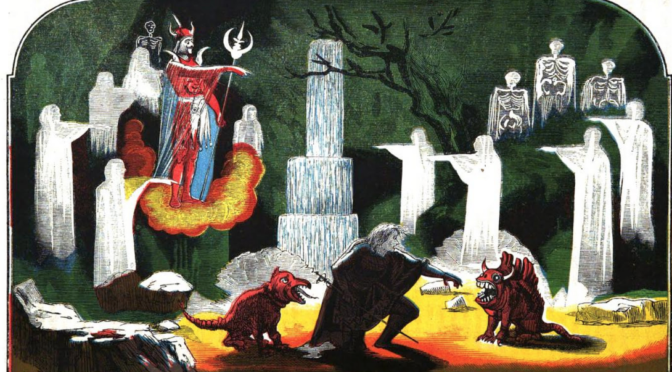
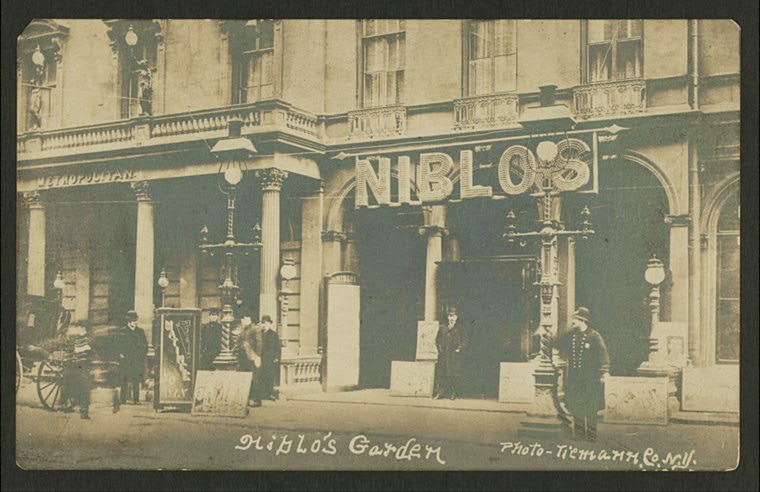
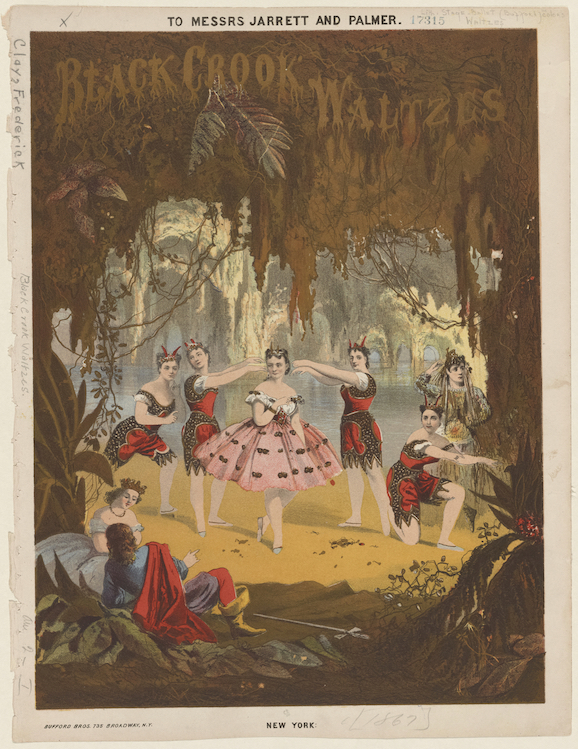
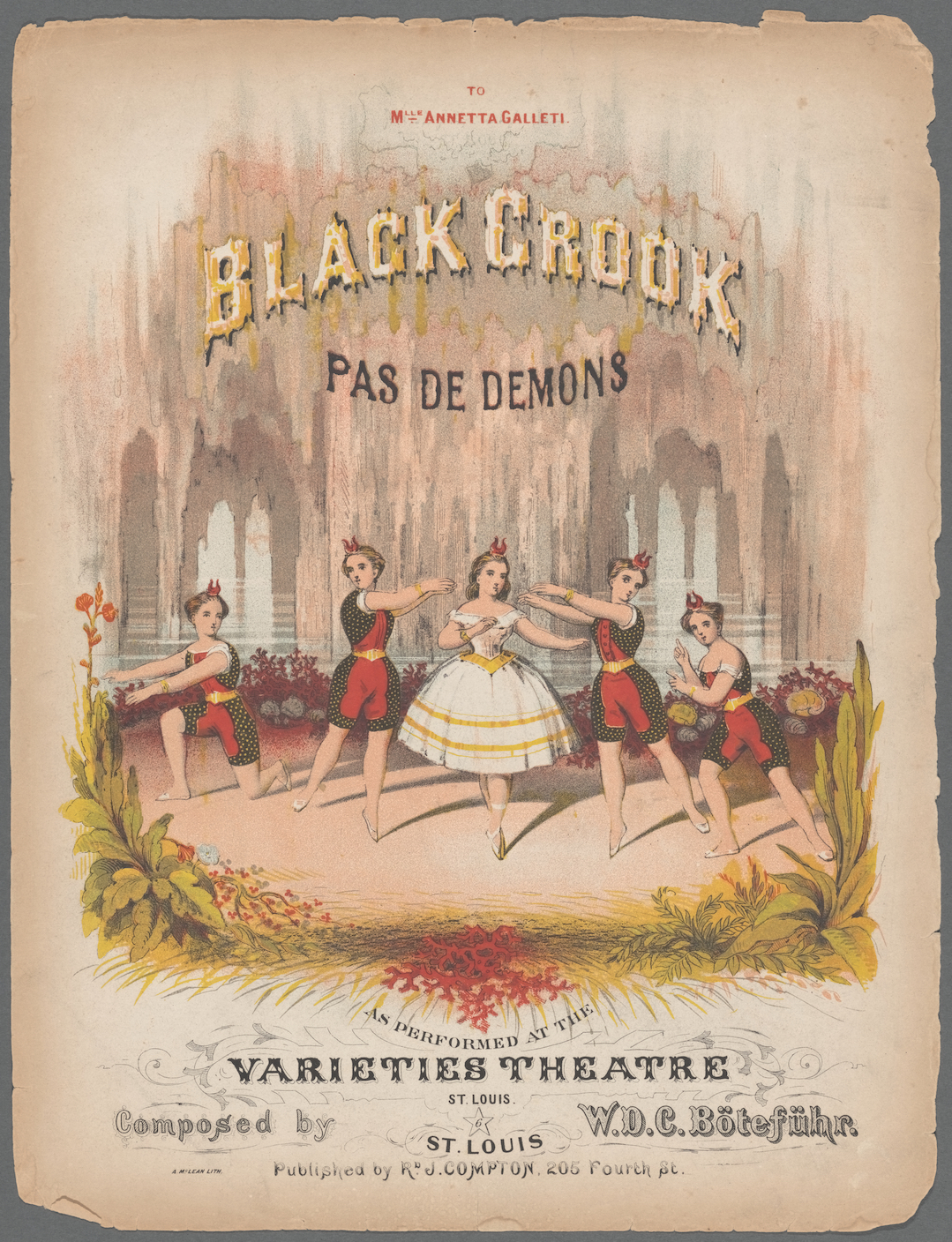
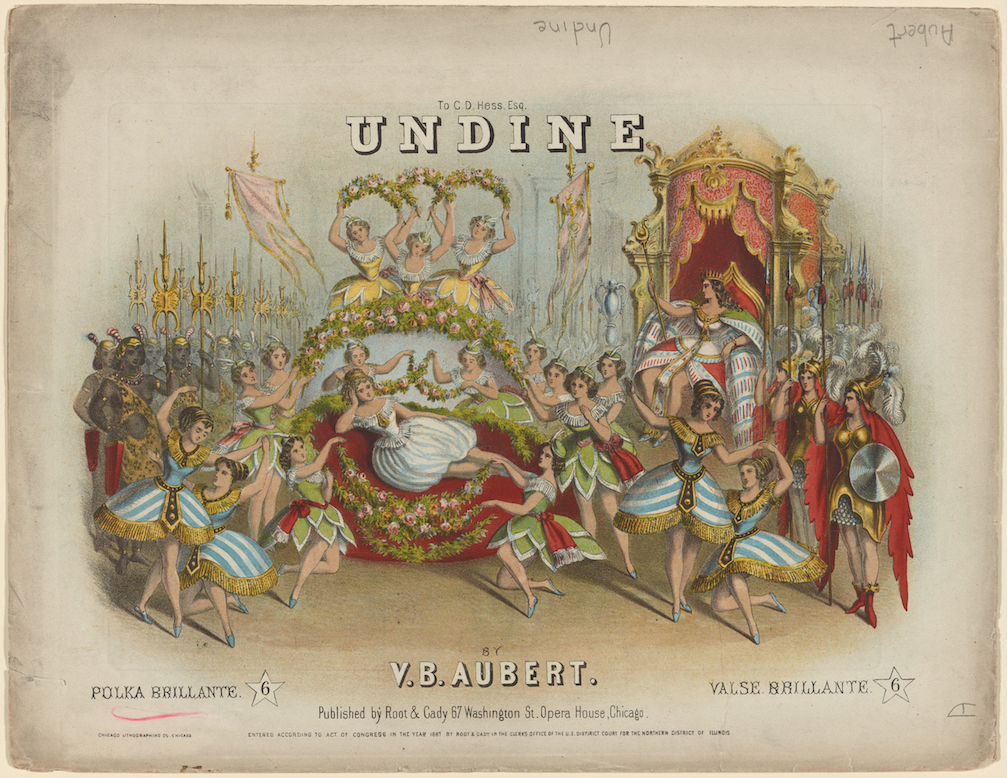
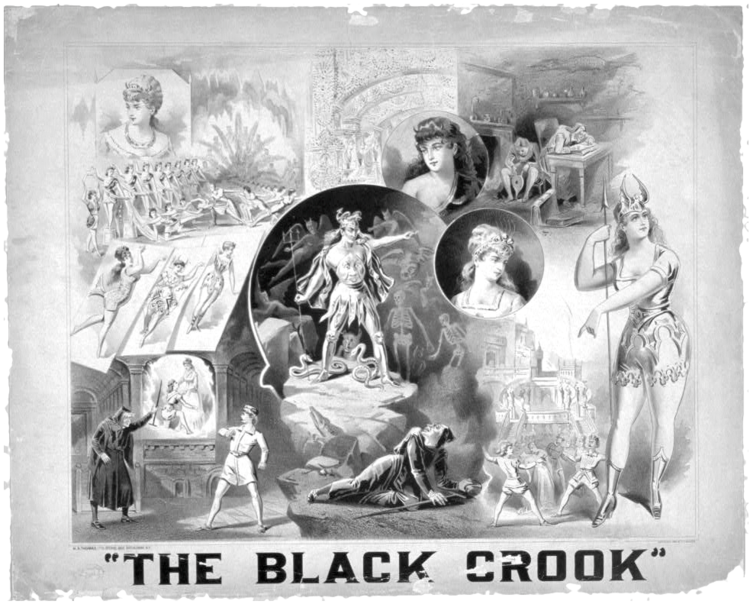
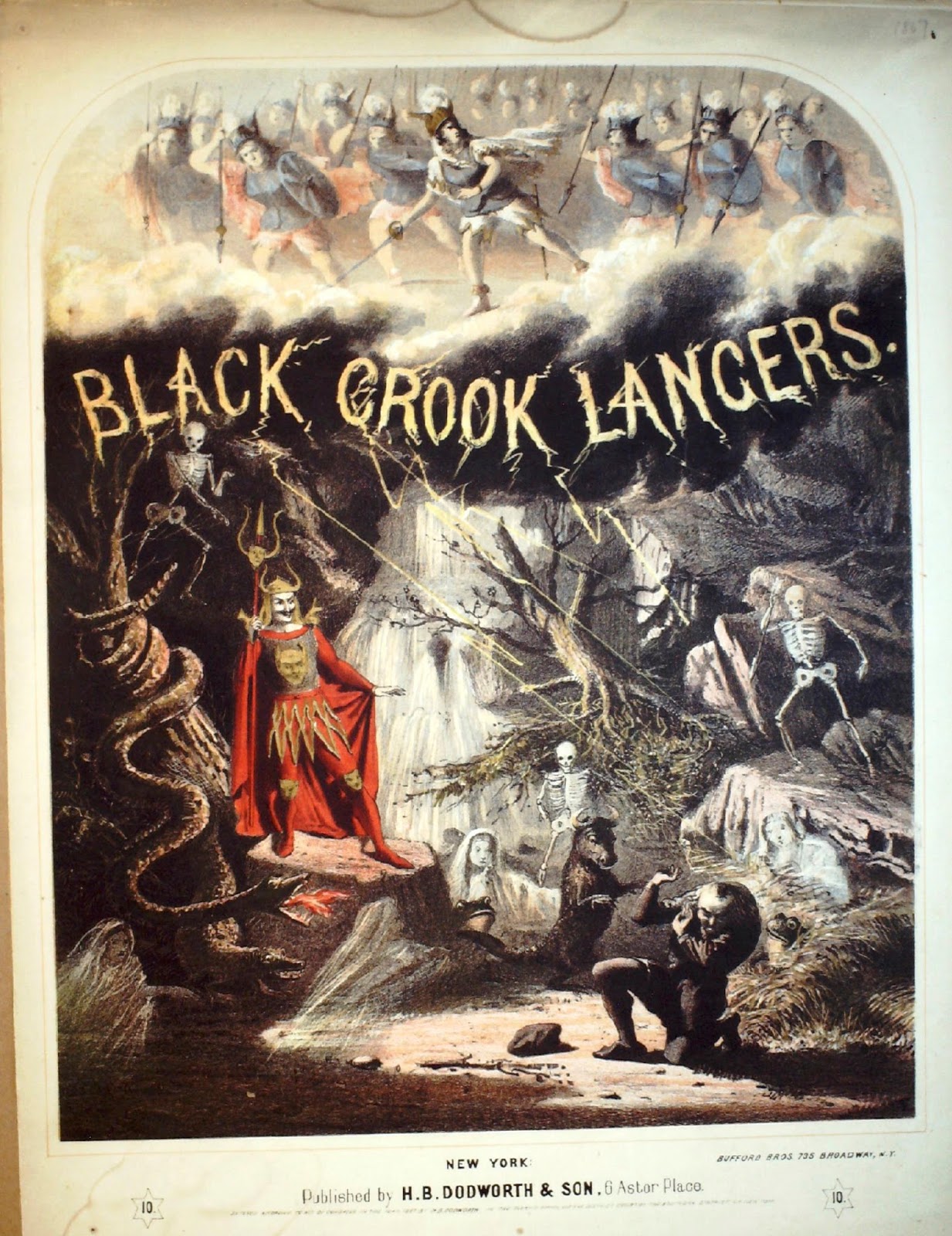
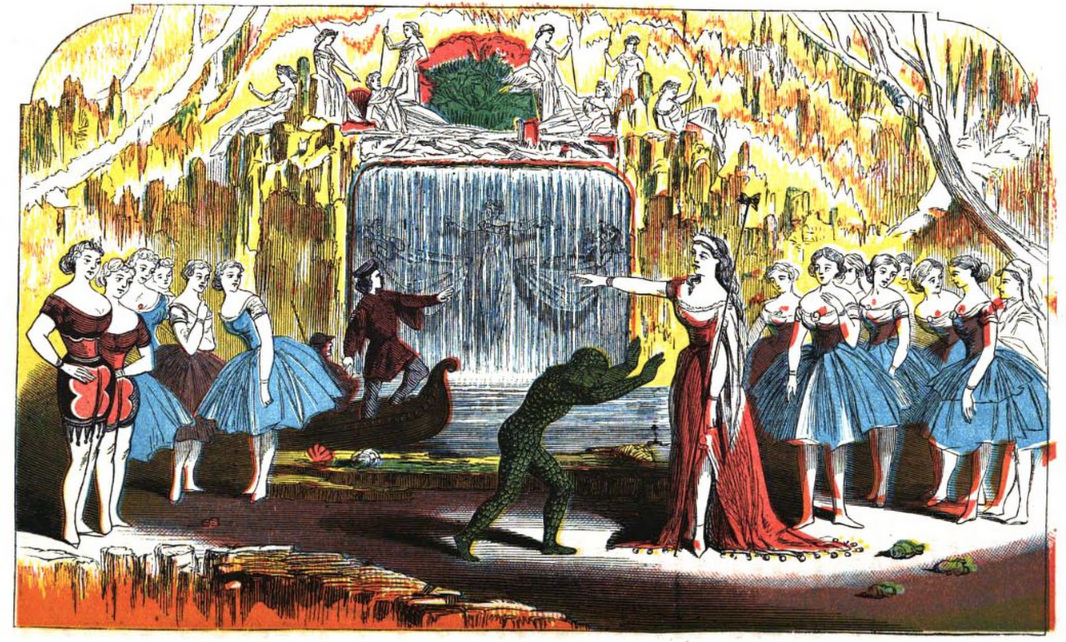
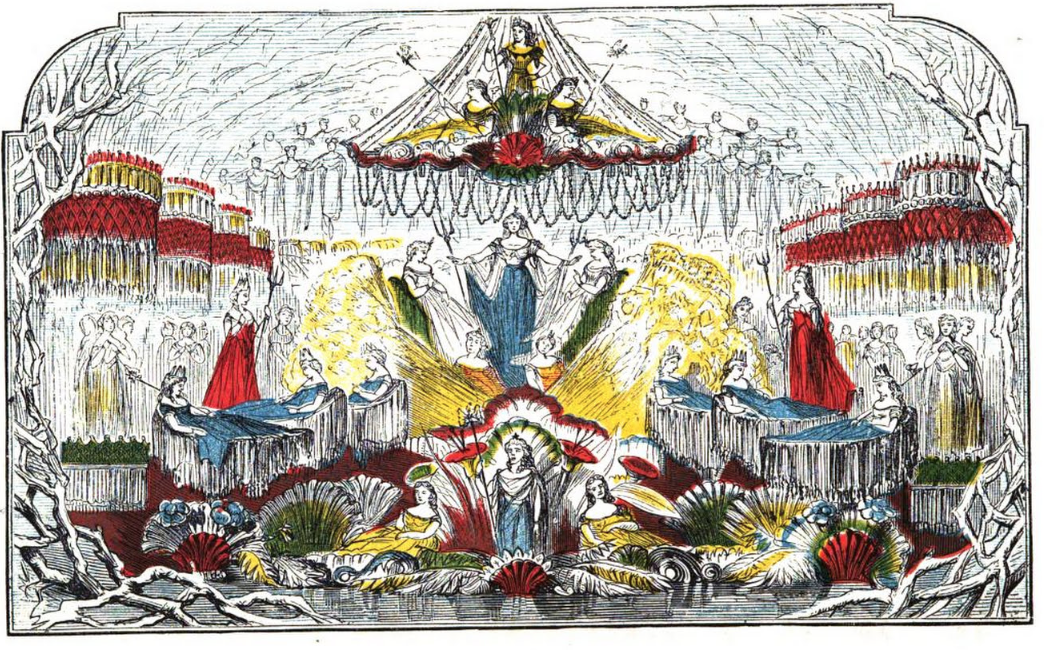
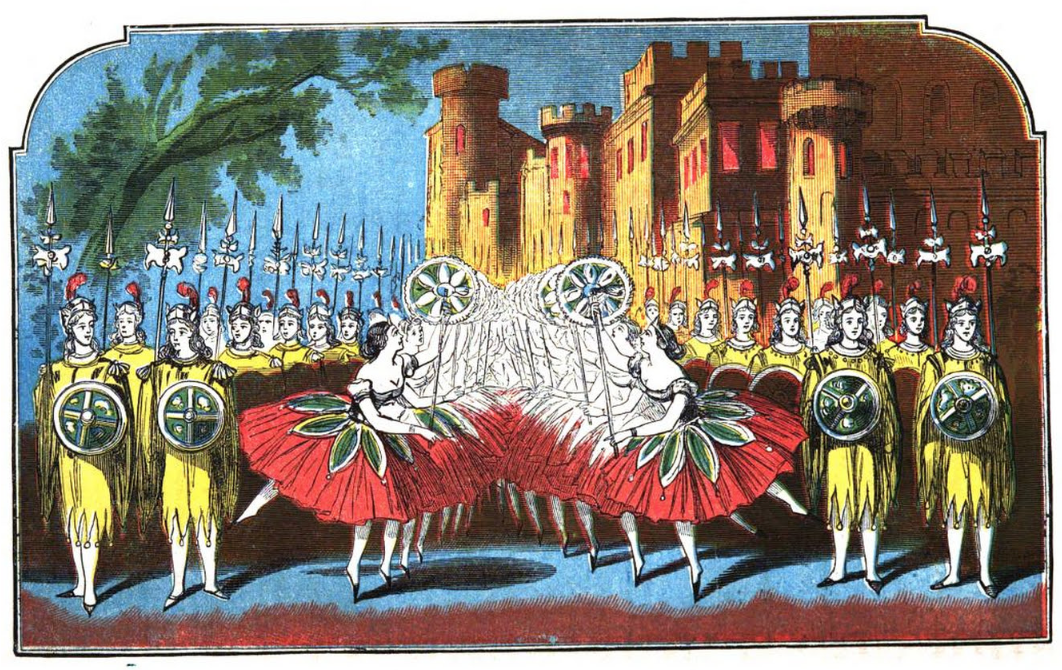
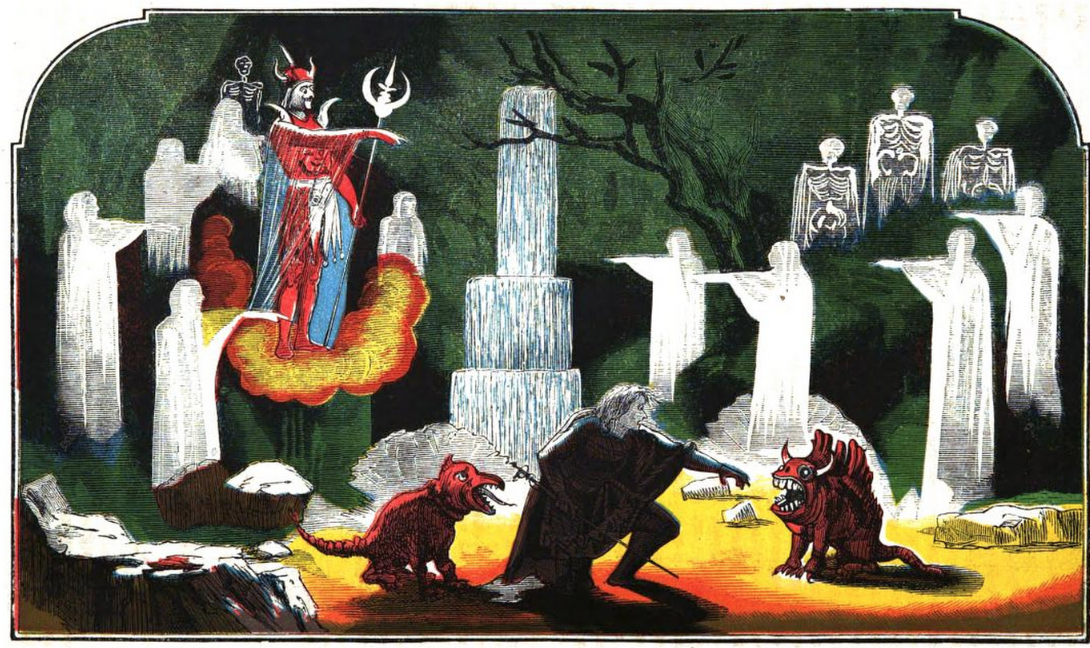
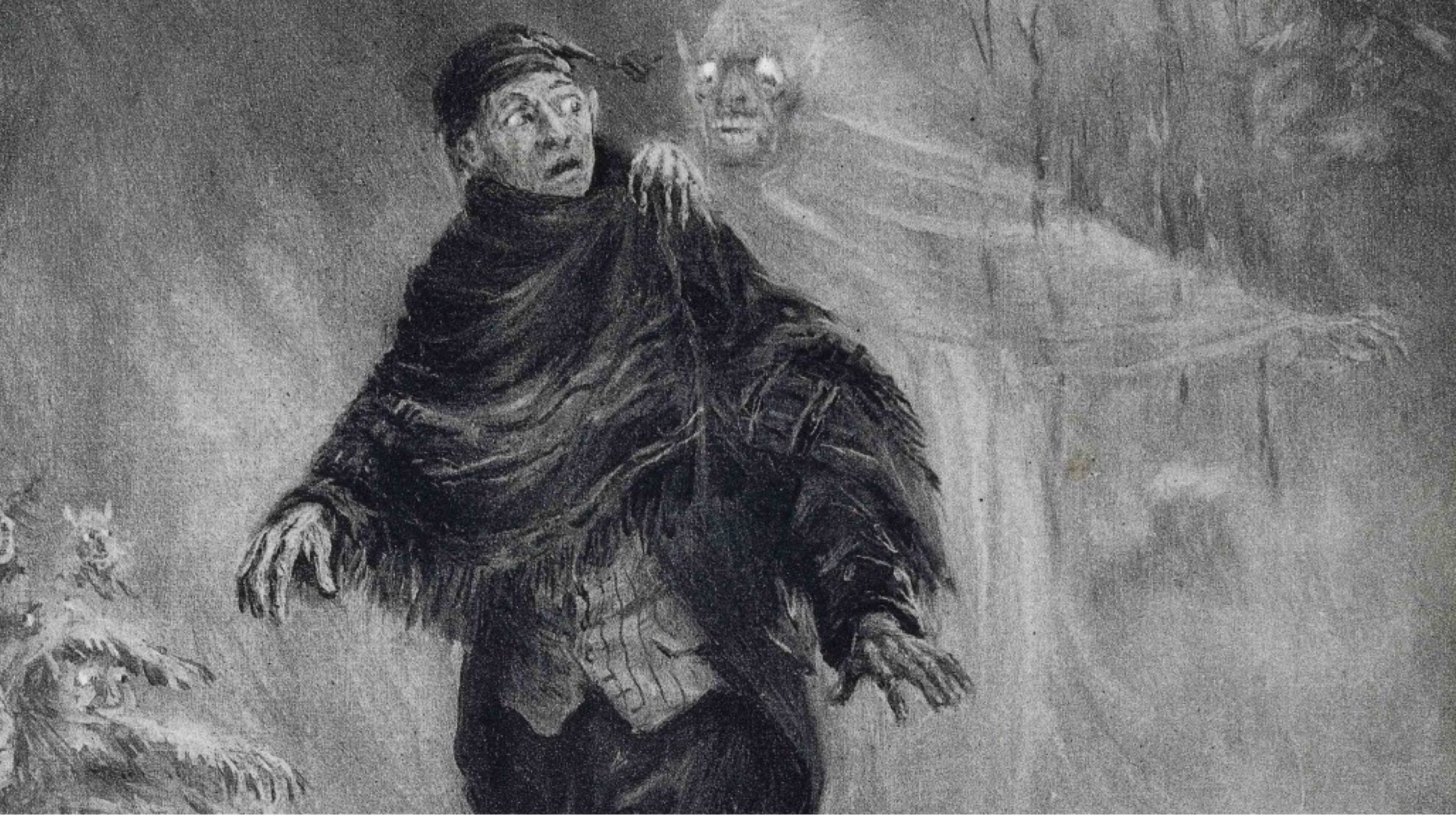
THE FIRST PODCASTThe Black Crook is considered the first-ever Broadway musical, a dizzying, epic-length extravaganza of ballerinas, mechanical sets, lavish costumes and a storyline about the Devil straight out of a twisted hallucination.
The show took New York by storm when it debuted on September 12, 1866. This is the story of how this completely weird, virtually unstageable production came to pass. Modern musicals like Phantom of the Opera, Wicked, and Hamilton wouldn’t quite be what they are today without this curious little relic.
WARNING: You may leave this show humming a little tune called “You Naughty, Naughty Men.”
Featuring music by Adam Roberts and Libby Dees, courtesy the New York Public Library for the Performing Arts.
And the voice of Ben Rimalower reading the original reviews of the Black Crook.
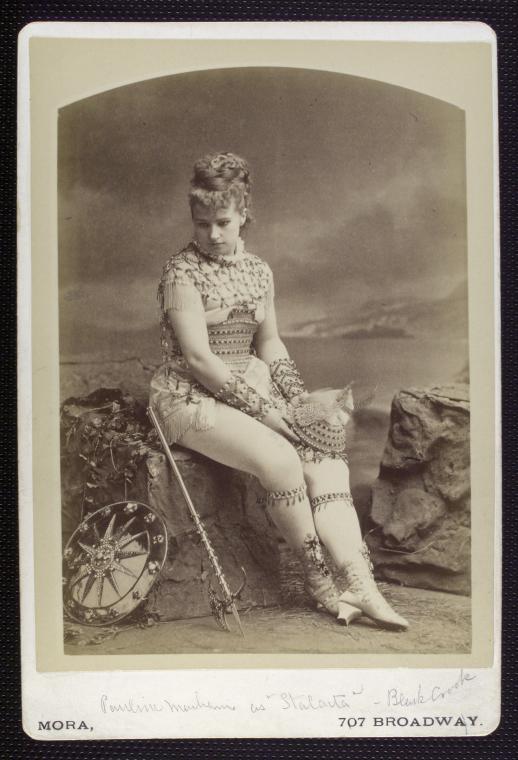
The actress and dancer Pauline Markham, performing as Stalacta, Queen of the Golden Realm
NYPL
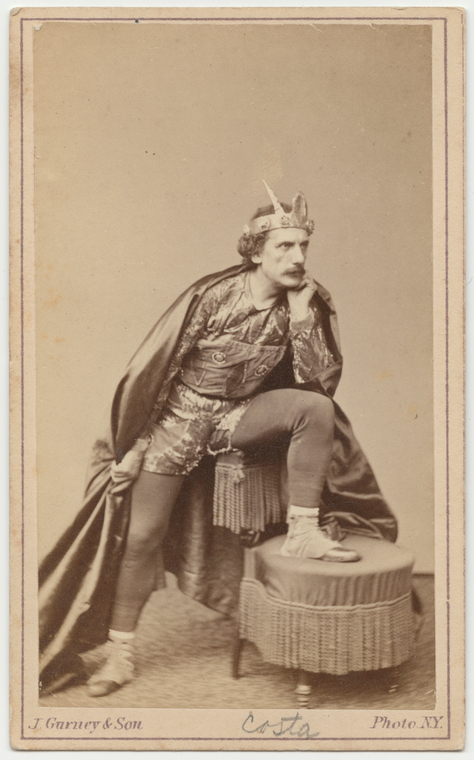
“Celebrated dancer and composer, David Costa, wearing tights, trunks, shirt and long cape with a satin sheen, and a crown on his head featuring horns. He has one foot on the seat of a round-seat chair with heavy fringe, his thigh resting on the back of the chair as he rests his elbow on his knee and his chin on his hand.”
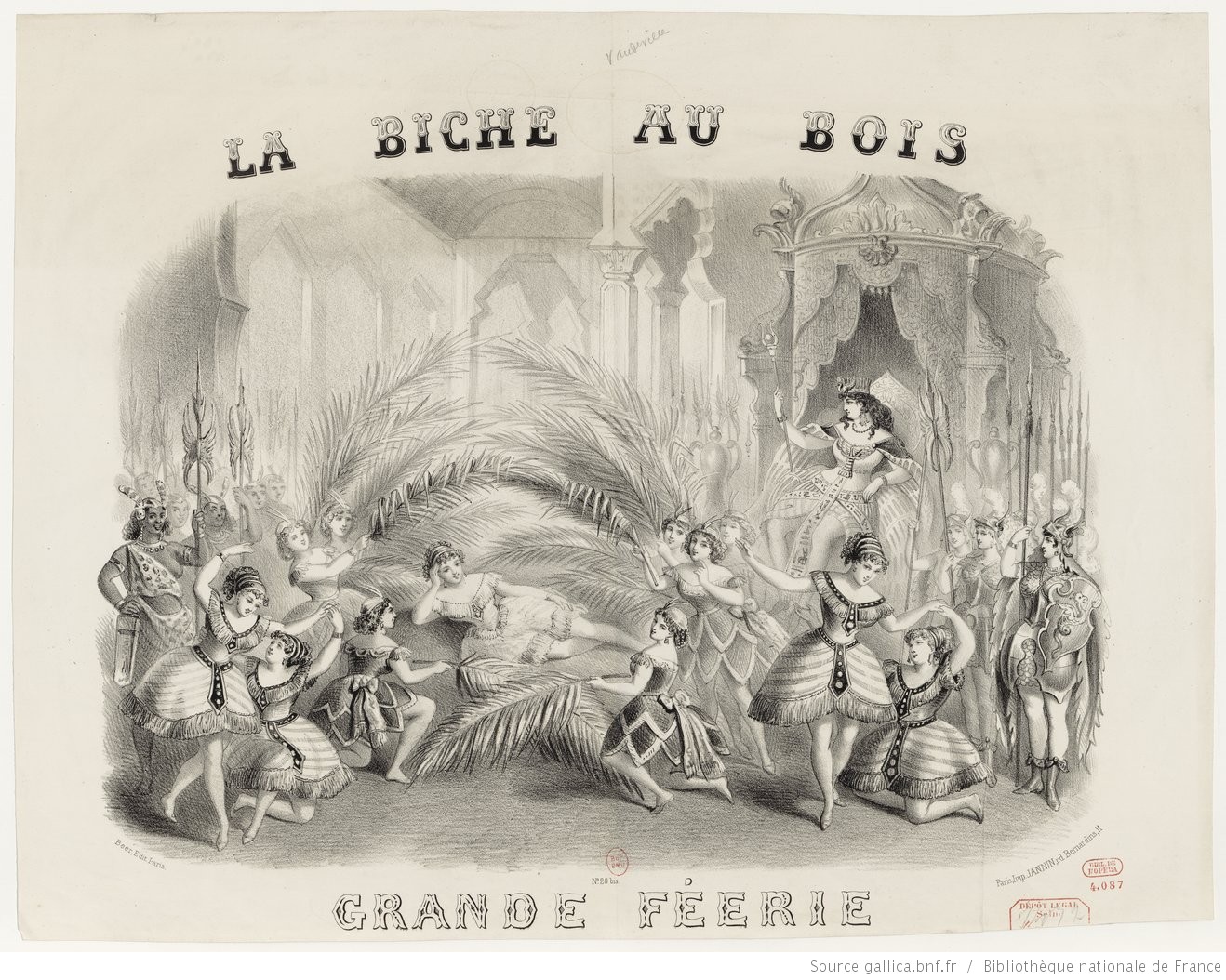
La Biche au Bois from which sprung the Black Crook
From an 1867 book of songs from the Black Crook (although many of the songs were likely never in the show!)
NYPL
Versions of the show popped up across the country in almost every major city. There was no real consistency aside from Barras’ story.
NYPL
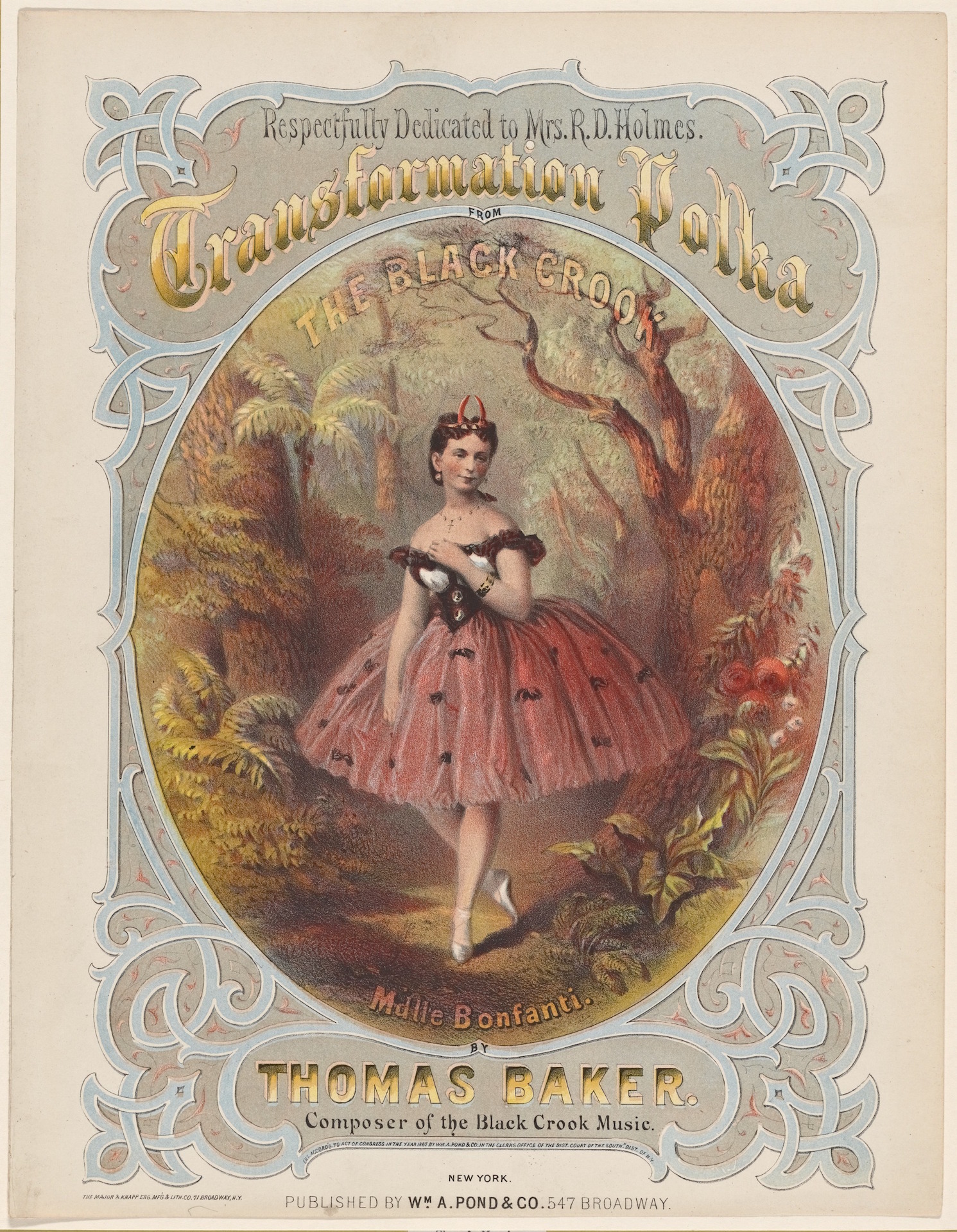
Thomas Baker wrote many of the songs in The Black Crook. He was also a song writer for Laura Keene whose show The Seven Sisters is sometimes noted as an early proto-musical.
NYPL
Each number was so elaborate that it would take several minutes to move scenery and get the cast into new costumes. This was one of the key reasons the show had so many unrelated songs which were sung as scenes were shifted.
The audio of Leonard Bernstein was taken from this episode of Omnibus:
“You Naughty, Naughty Men” performed by Adam Roberts and Libby Dees
“Les Grelots d’amour” performed by Adam Roberts
Some intrepid theater folk brought back a version of The Black Crook and performed it last year at Abrons Arts Center. Hopefully they will remount the show in the future!
PODCAST The Bowery Boys podcast turns ten years old in June. Greg and Tom take the celebration to the Bell House for a live show.
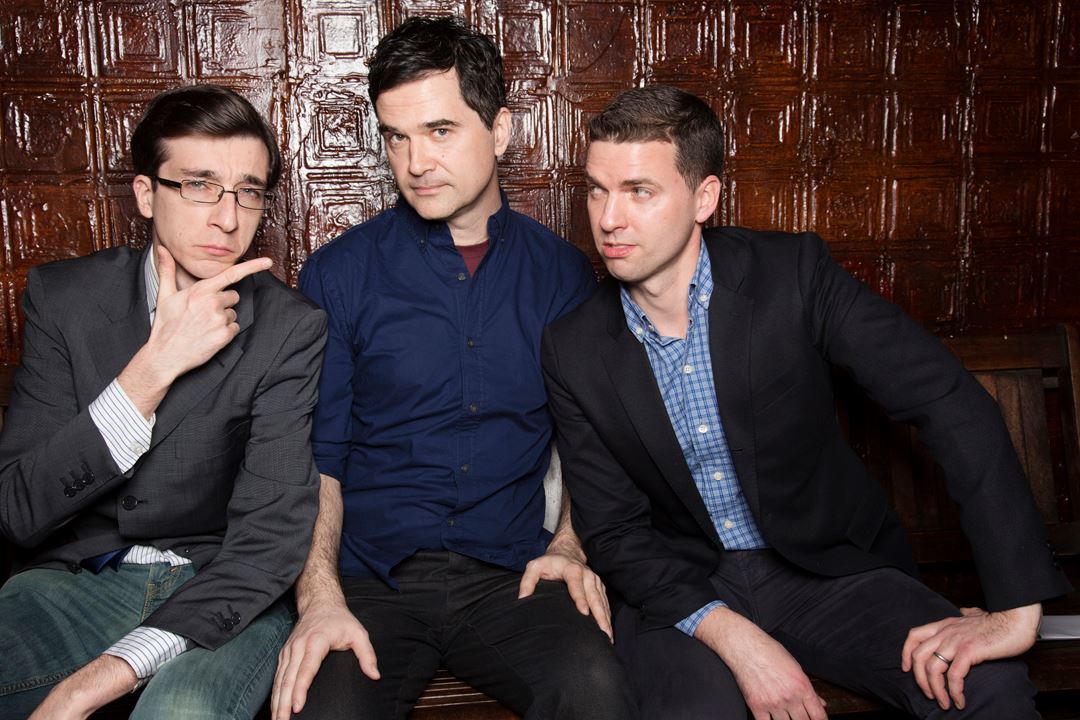
In early June of 2007, Tom Meyers and Greg Young sat around a laptop and a karaoke microphone, looked out over Canal Street in the Lower East Side and began recording the very first Bowery Boys: New York City History Podcast.
For ten years the Bowery Boys podcast has brought the history of this extraordinary city to life — the people, places and events which have helped shape our modern metropolis.
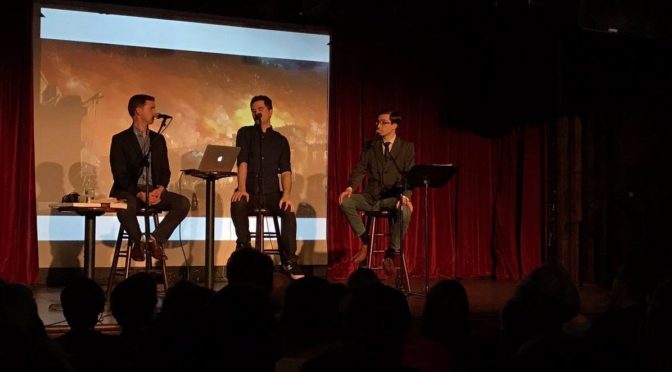
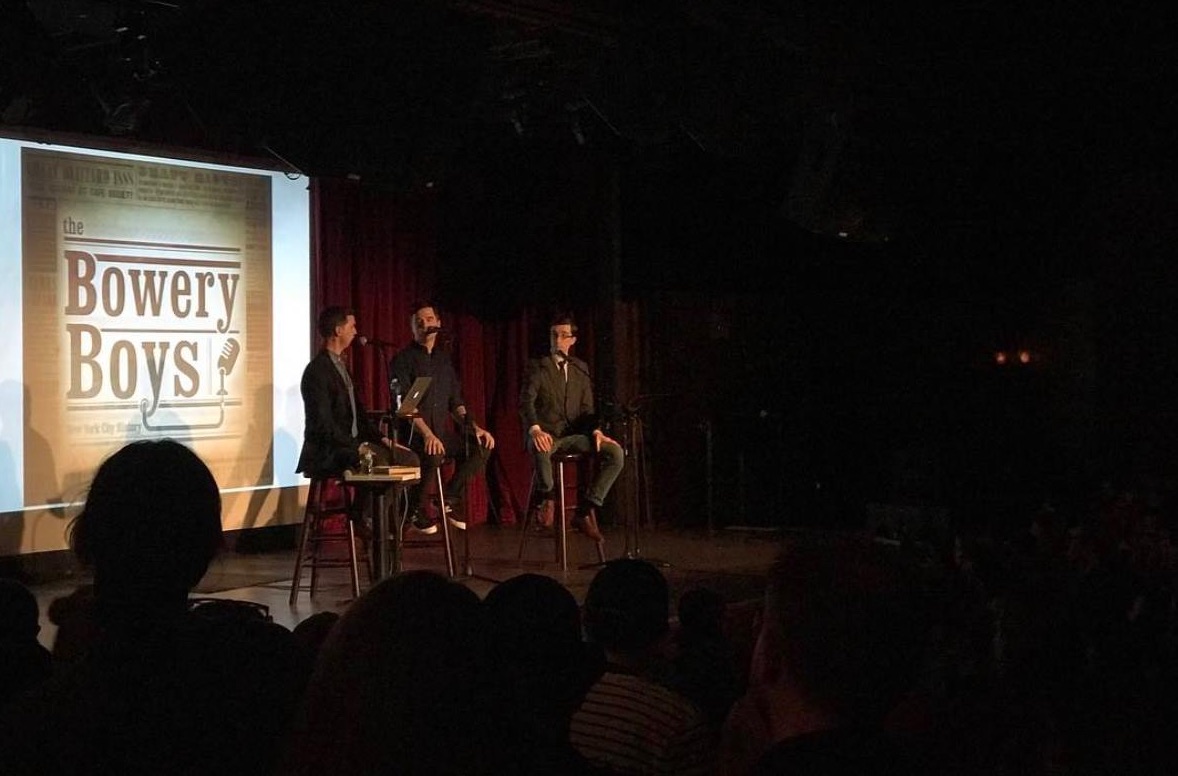
In celebration of this anniversary, join them for their very first podcast event in front of a live audience as a part of the 2017 NYC Podfest festival. This show was recorded on April 9, 2017, at the Bell House, in Gowanus, Brooklyn.
They talk about how they met, how they came up with the idea for their show and run through a list of their favorite and most notable podcasts.
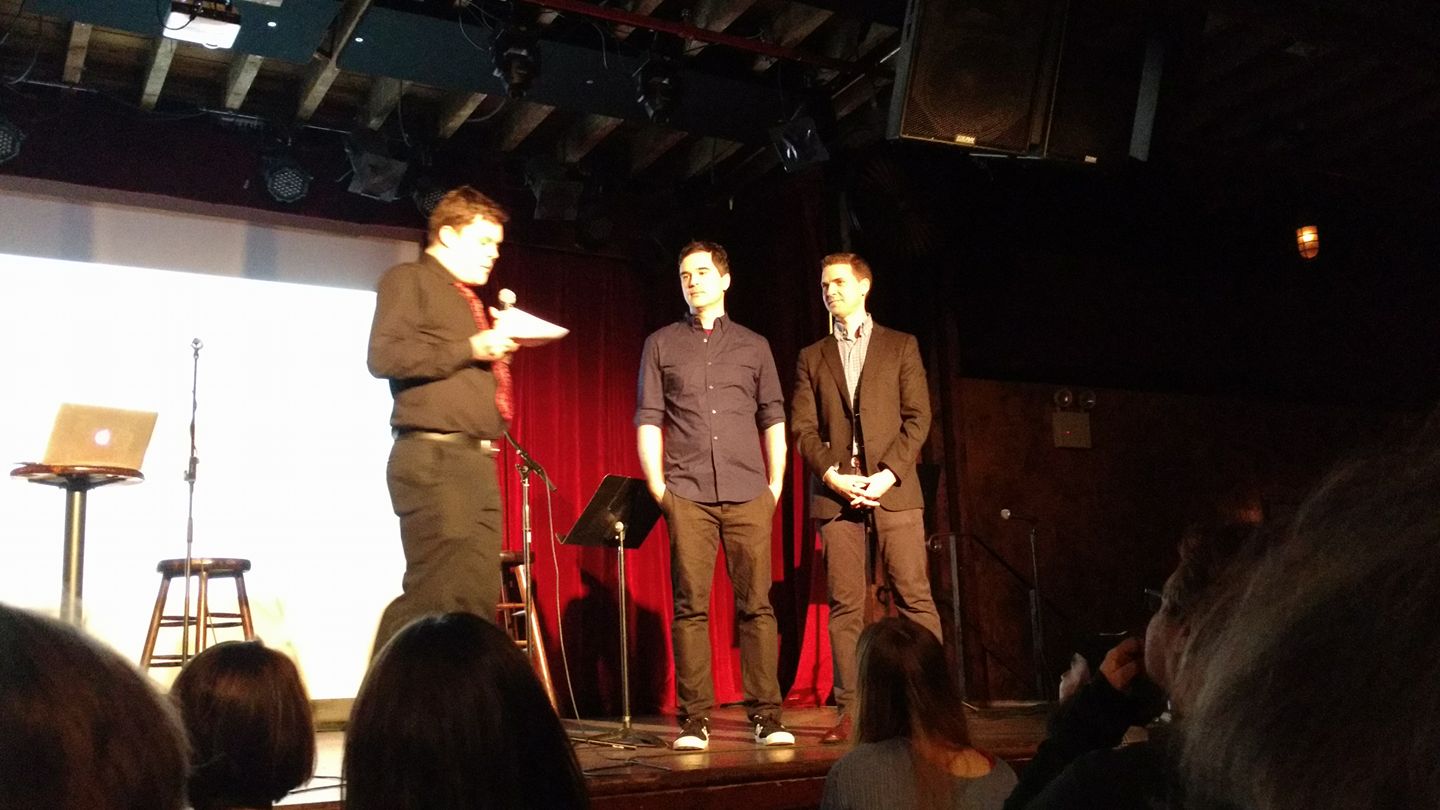
The Bowery Boys are joined by moderator Nat Towsen, host of the Nat Towsen Downtown Variety Hour every month at UCB Theater in the East Village. And stay tuned until the end! An unexpected guest arrives to present the Bowery Boys with a special gift.
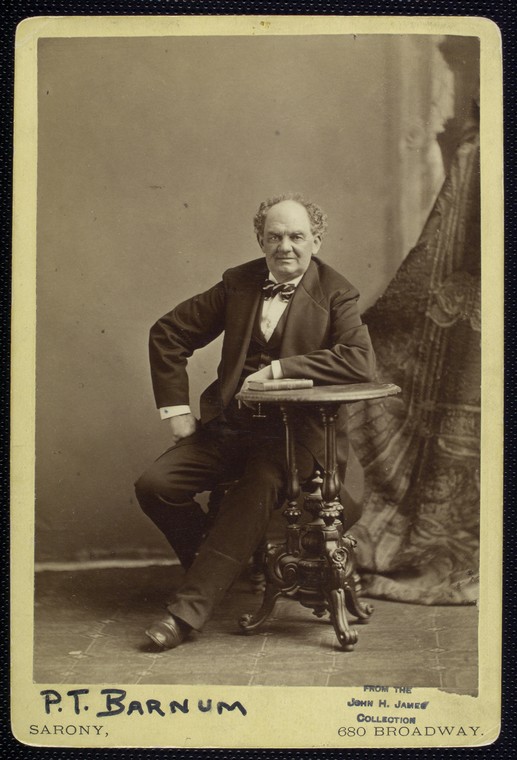
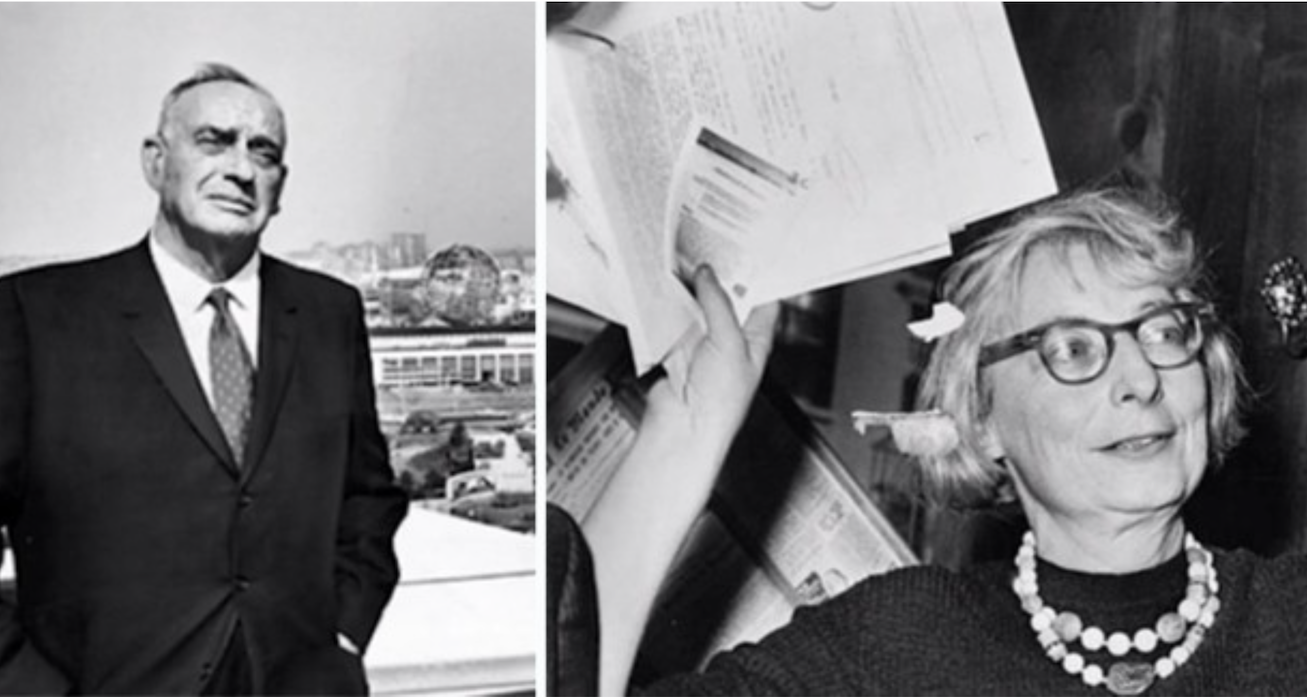
FEATURING: Stories of Eartha Kitt, Boss Tweed, ABBA, Evelyn Nesbit, P. T. Barnum, Talulah Bankhead, Donald Trump, Varla Jean Merman, the musical Rent and, of course, Robert Moses and Jane Jacobs.
The Bowery Boys: New York City History podcast is brought to you …. by you!
We are now producing a new Bowery Boys podcast every two weeks. We’re also looking to improve the show in other ways and expand in other ways as well — through publishing, social media, live events and other forms of media. But we can only do this with your help!
We are now a member of Patreon, a patronage platform where you can support your favorite content creators for as little as a $1 a month.
Please visitour page on Patreon and watch a short video of us recording the show and talking about our expansion plans. If you’d like to help out, there are five different pledge levels (and with clever names too — Mannahatta, New Amsterdam, Five Points, Gilded Age, Jazz Age and Empire State). Check them out and consider being a sponsor.
We greatly appreciate our listeners and readers and thank you for joining us on this journey so far. And the best is yet to come!
Our big big thanks to NYC Podfest, to the Bell House and to Julie Menin, Commissioner of the Mayor’s Office of Media and Entertainment!
NOTES: The Revolutionary War site that Greg mentions is being excavated will be built over by a school, not a condo. Here’s more on that story.
John F. Kennedy, the 35th president of the United States, was memorialized in dozens of ways following his assassination on November 22, 1963. None of these are more vital to the daily lives of New Yorkers than John F. Kennedy International Airport — or Kennedy Airport or simply JFK — the business airport in the northeast.
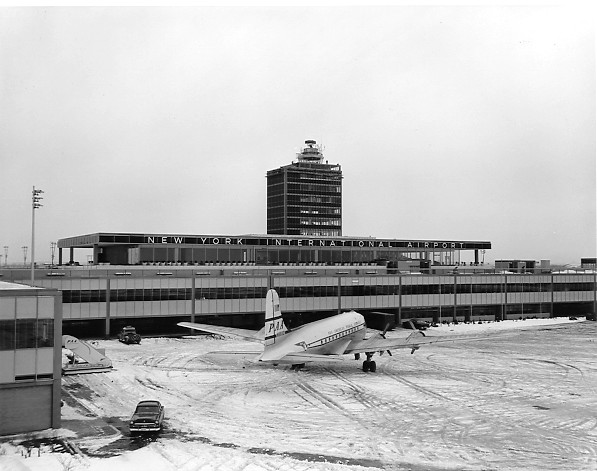
You may not realize how quickly it was renamed for the fallen president. On November 15, 1963, President Kennedy left Idlewild Airport (the airport’s former name) after a short stay in the city. Six weeks later, that airport would be named after him.
New York joined the nation in mourning following the televised funeral of President Kennedy on November 25, 1963. Thousands watched the ceremony from a large television screen hanging in Grand Central Terminal. Traffic stopped in Times Square and buglers played taps from atop the old Hotel Astor. All airport traffic at Idlewild stopped at noon.
Calls immediately rose to memorialize the president in the city. On December 4, less than two weeks after Kennedy’s death, Mayor Robert Wagner announced that he would submit a bill to the city council to honor Kennedy with a name change to the Idlewild.
Unfortunately, these ultimately successful calls to rename New York’s largest airport came at the cost of obliterating the memory of another great American.
Wired New York
Idlewild was the popular name for the airport which opened on July 1, 1948, because it was built upon a former golf course and luxury accommodation of that name. According to the Times, “The name Idlewild is believed to have been inspired by the fact that the site at that time was wild and that the hotel and park constituted a recreational facility for the idle rich.”
But its full, official name was New York International Airport, Anderson Field, named forMajor General Alexander E. Anderson, a decorated World War I veteran and Queens businessman. Unfortunately Anderson had few proponents fighting to keep his name on the airport by 1963.
The following week, “[i]n an action marked by solemnity and silent prayer, the City Council voted unanimously yesterday to change the name of New York International Airport at Idlewild, Queens, to the John F. Kennedy International Airport.” [source]
It was revealed then that city officials wished to name the airport after Kennedy even more quickly than that. Indeed, the idea had been unofficially approved hours after Kennedy’s assassination but it had taken the extra time to get the official approval from his widow (and future New York City resident) Jackie Kennedy.
Photographer Meyer Liebowitz/The New York Times
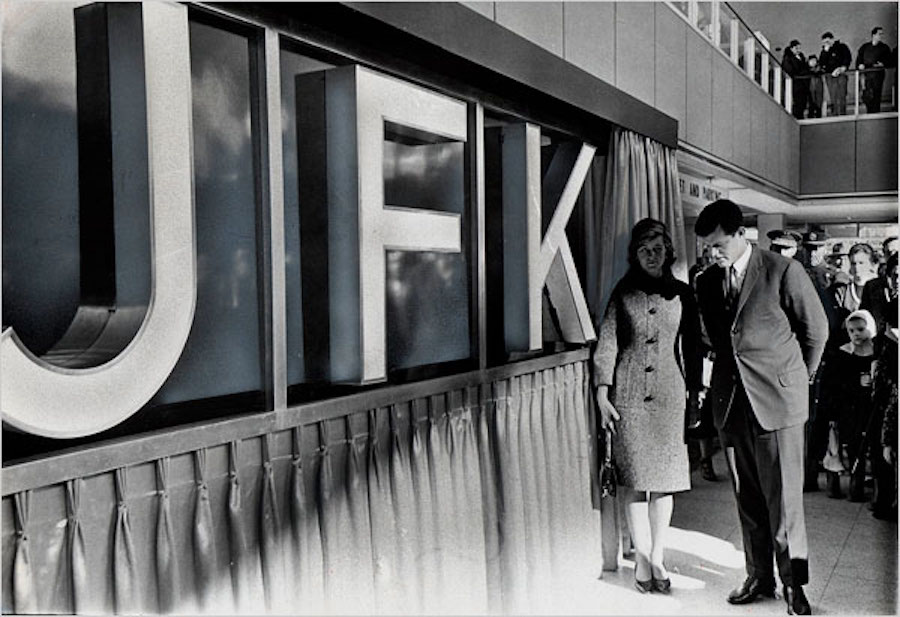
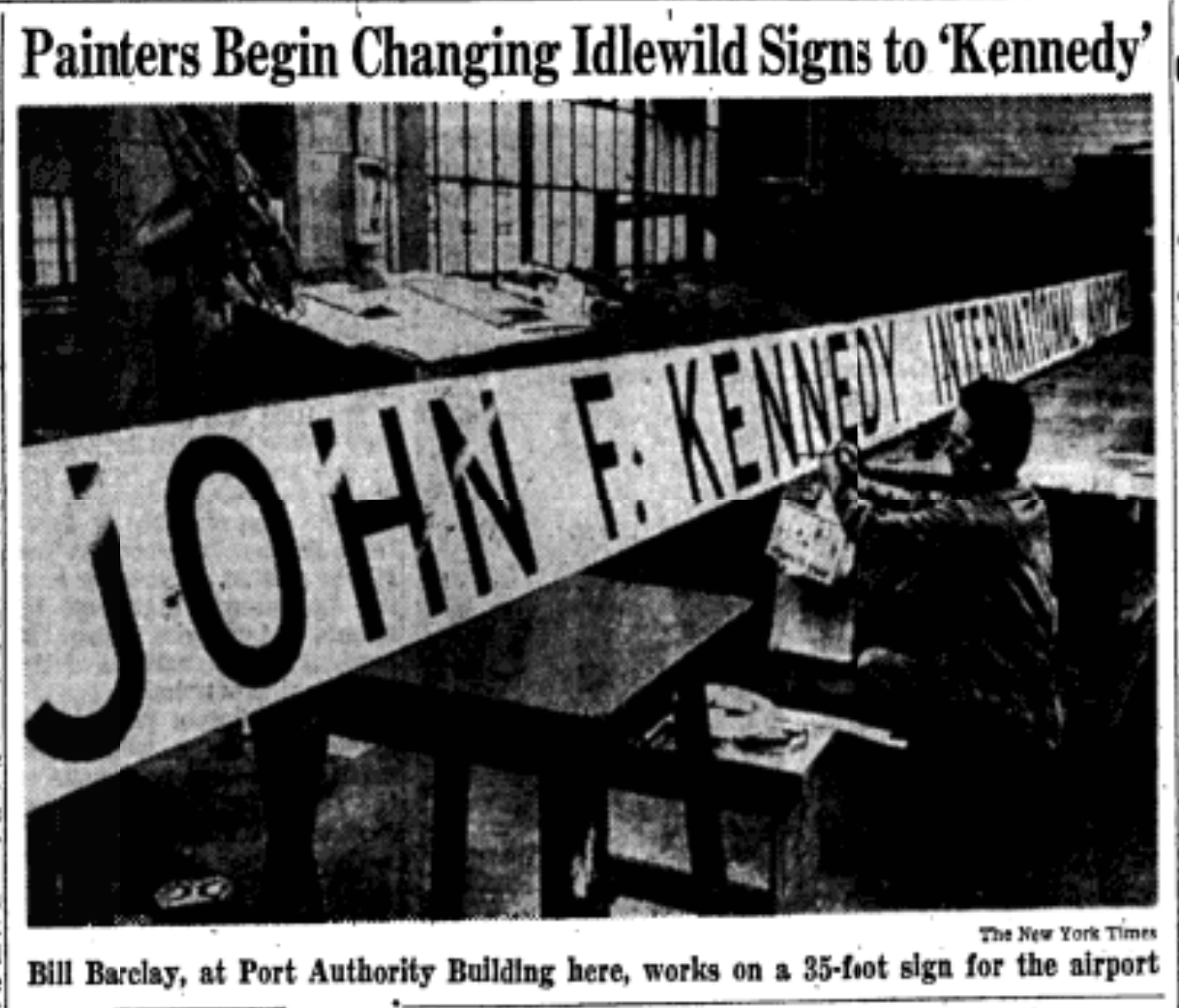
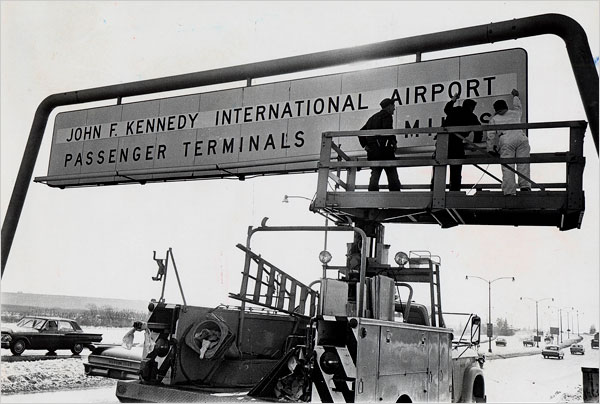
By Wednesday, December 18, the name change had been formally approved and workman busily rushed to change all the signs at the airport. Idlewild officially became John F. Kennedy Airport in a ceremony held on Christmas Eve 1963.
The president’s younger brother Edward Kennedy was in attendance, helping to unveil a 242-foot-long sign emblazoned with the new name. Their brother Robert F. Kennedy was scheduled to attend but canceled.
You would think such a name change to be relatively uncontroversial but this was not the case.
In an editorial which ran a few days after the ceremony, the New York Times remarked: “The speedy change of name — whether it be of an airport or a bridge or a park or a cape — reflects the love that millions of people all over the world had for Present Kennedy; but, as we have previously stated, it is only debasing the subject of our grief to attach his name so hastily to a miscellaneous collection of public works, almost as if we were afraid that without these tangible reminders he would be soon forgotten. “
Meyer Liebowitz/The New York Times
And President Kennedy almost got his name upon a newly built bridge in the New York City area, too.
That same month, a Staten Island politician filed a bill to the New York state legislature to name a new bridge being built in the Narrows after Kennedy. “Assemblyman Edward J. Amann Jr … profiled at Albany for introduction into the Legislature in January a bill calling for changing the name of the Verrazano-Narrows Bridge to the John. F. Kennedy Memorial Bridge.” [source]
The Verrazano kept its tribute to the 16th century European explorer. But New York does have a bridge named for a Kennedy — the Robert F. Kennedy Bridge (the former Triborough Bridge).
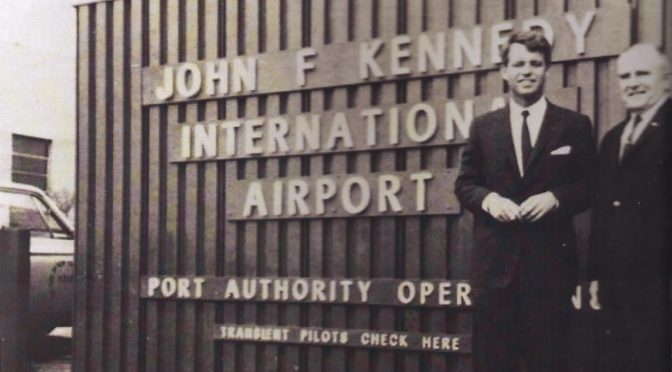
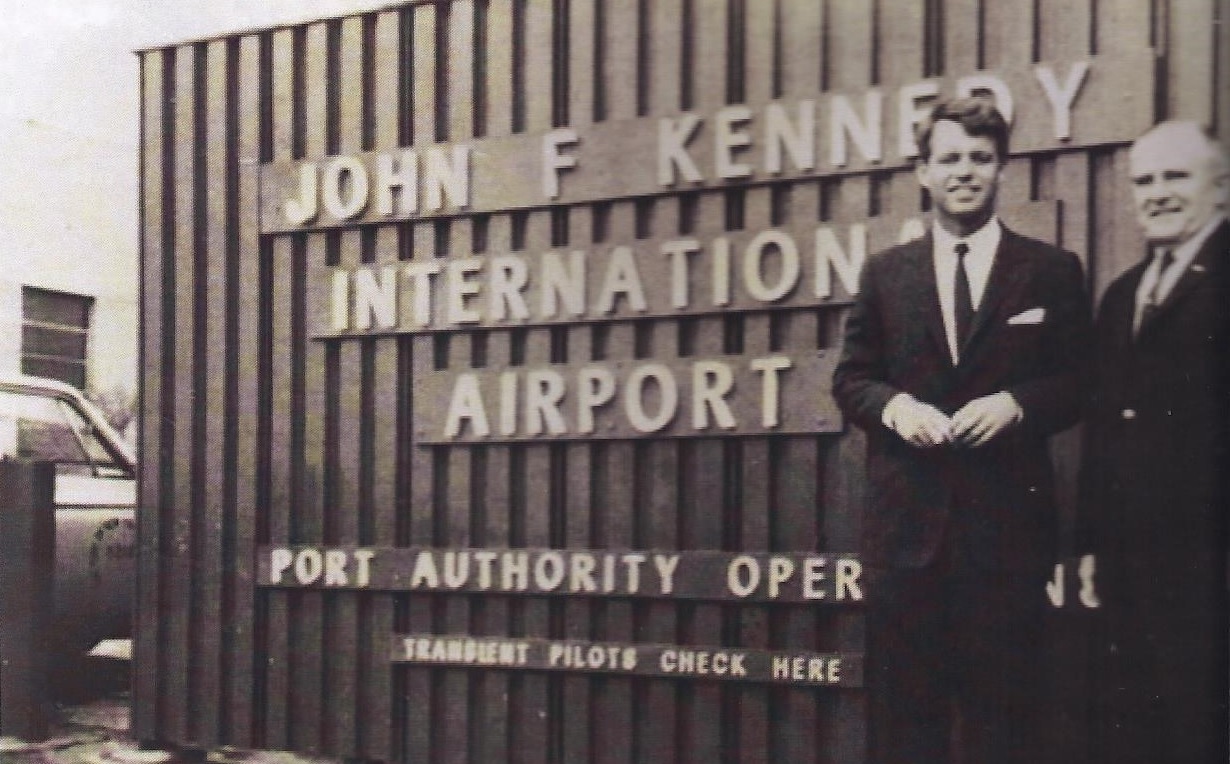
Below: A month after the dedication, Robert did stop by the airport named after his brother.
Echoes of the first World War, one hundred years behind us, can still be found in virtually every neighborhood of New York City.
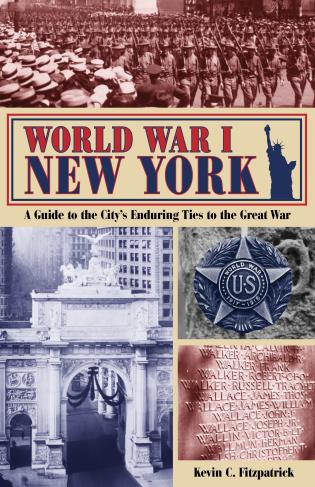
In Kevin C. Fitzpatrick’s revealing and compact guidebookWorld War I New York: A Guide to the City’s Enduring Ties to the Great War, these memories linger in familiar landmarks and obscure monuments alike. The effect of assembling these reminders in one book is eye-opening;Â collecting them brings a new sense of poignancy to markers often ignored.
Fitzpatrick organizes these marvelous finds by subject, but in my opinion the most helpful section is near the end, where all entries are arranged by borough and neighborhood. Â It’s a book designed for American history buffs and locals who just want to make new connections with their neighborhoods. (There’s even a few maps for those who enjoy self-guided walking tours.)
A few of my favorite World War I related artifacts featured in the book:
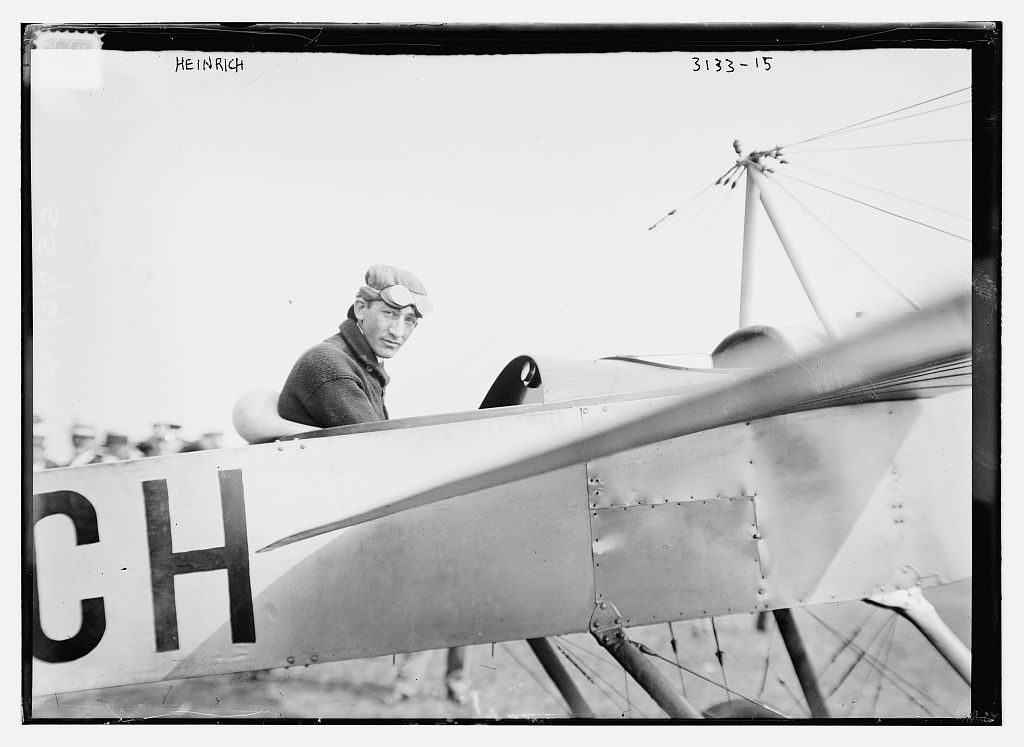
Pilot Albert S. Heinrich on Governors Island July 4, 1914. Heinrich built airplanes for the war effort during WWI. (Library of Congress)
Fort Jay Airfield and the Early Birds
Sure, Governors Island is a veritable pleasure garden now, but back in 1916-17, it was a pivotal location for wartime flight training, the spot of one of America’s first airfields.
Writes Fitzpatrick: “More than two dozen pioneer aviators trained here, and many shipped out as America’s first combat pilots.”
Library of Congress
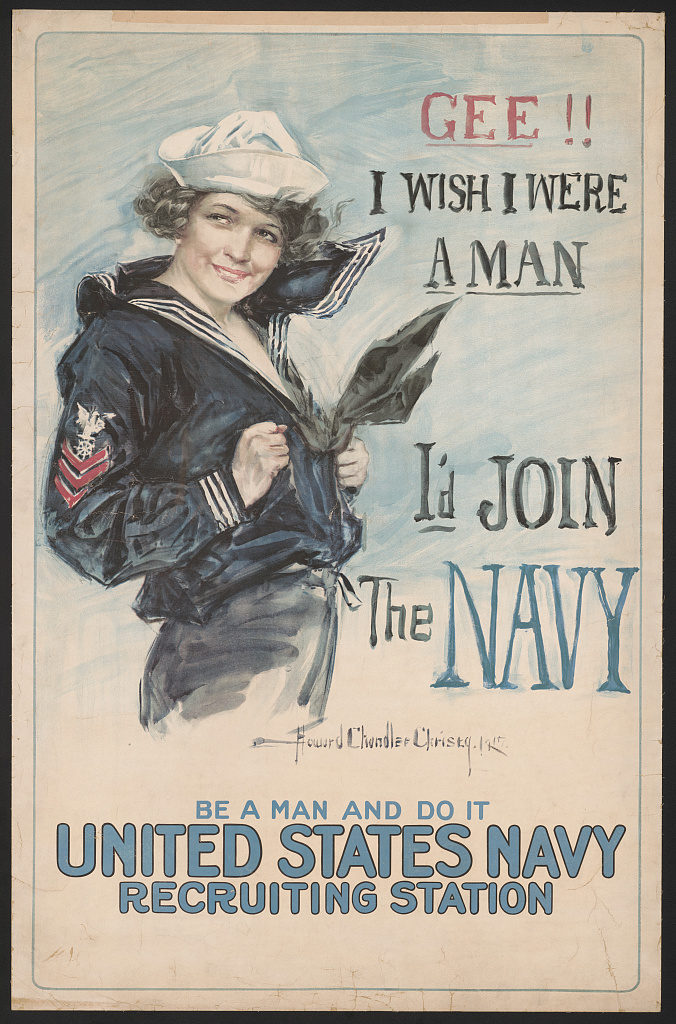
James Montgomery Flagg and Howard Chandler Christy Studios
Two artists most associated with the war propaganda effort worked and lived on the same block on the Upper West Side.
Fitzpatrick: “Christy is remembered for his luscious palette and fetching women, often dressed in men’s uniforms, next to slogans such as ‘Gee! If I Were A Man I’d Join The Navy.’ But Flagg created the real icon, instantly recognizable a century later: Uncle Sam pointing to the viewer over ‘I Want You.'”
Photo by Jim Henderson/Wikimedia
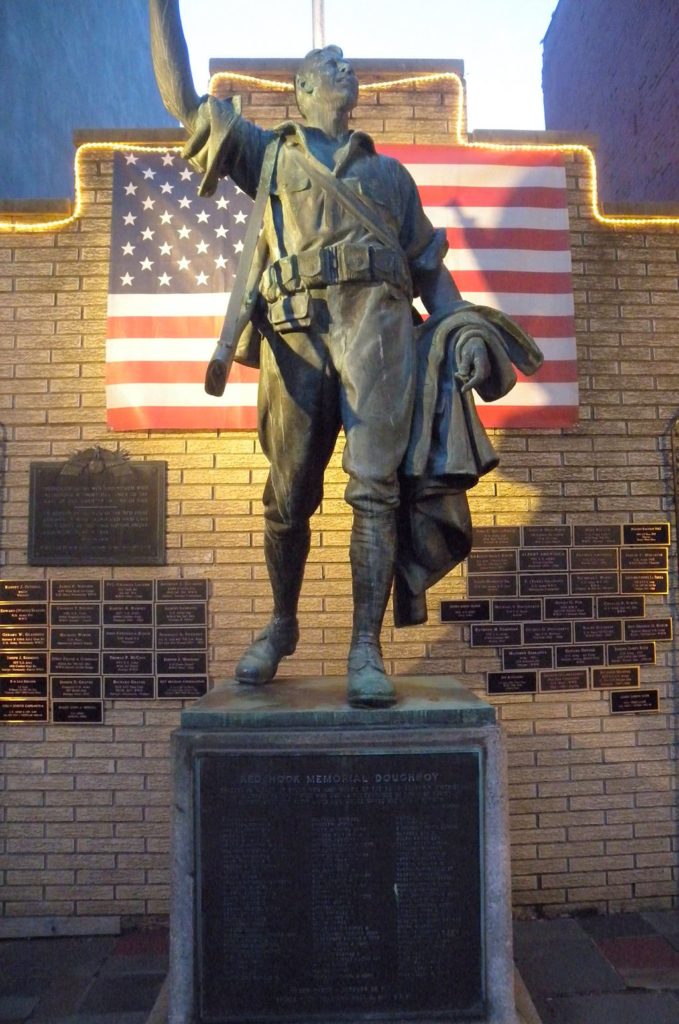
The Red Hook Doughboy
There are Doughboy statues all over New York but they are not always well highlighted. The Brooklyn neighborhood of Red Hook holds one of these treasures which once sat in a local park.
Fitzpatrick: “It was vandalized, the bronze plaques stolen, and the memorial ruined. In 1972 it was hauled to Veterans of Foreign Wars Post 5195, where today it is locked up behind a steel fence next to 325 Van Brunt Street. It was repaired and memorial plaques replaced.”
World War I New York: A Guide to the City’s Enduring Ties to the Great War
Kevin C. Fitzpatrick
Globe Pequot Press
AT TOP: The Victory Arch which once sat astride Madison Square Park. While the arch is no longer there, dozens of other memorials still grace the streets of the city.
The under appreciated South Street Seaport Museum has always had a daunting mission to fulfill — preserving a piece of New York City history on the edge of a volatile and ever-changing waterway. Established fifty years ago this year, the museum has been the guiding presence to this remaining vestige of New York’s 19th century waterfront.
But while the mighty vessels maintained by the museum and the collection inside old Schermerhorn Row provide a true flavor of the past, the present has oftentimes disrupted their objective.
Construction on the waterfront — and the uncertainty of its use — has made the area rather unpleasant to visit in past years. And natural disasters like Hurricane Sandy have gravely endangered the neighborhood’s repertoire of classic structures.
So consider this our official request to you — go down to the Seaport! The ships are now open for tours, the rusticBowne Print Shops are still a treasure to visit, and a scaled-back version of the museum is open on Schermerhorn Row. And some decent shops and restaurants have returns to the area. (The Paris Cafe, one of our favorite places in all of New York City, has remained a reliable stalwart through all of it.)
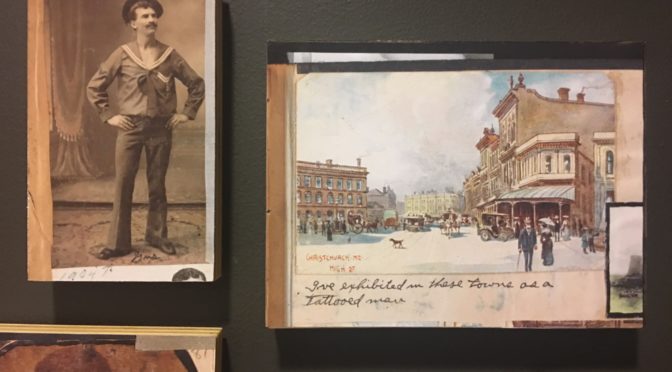
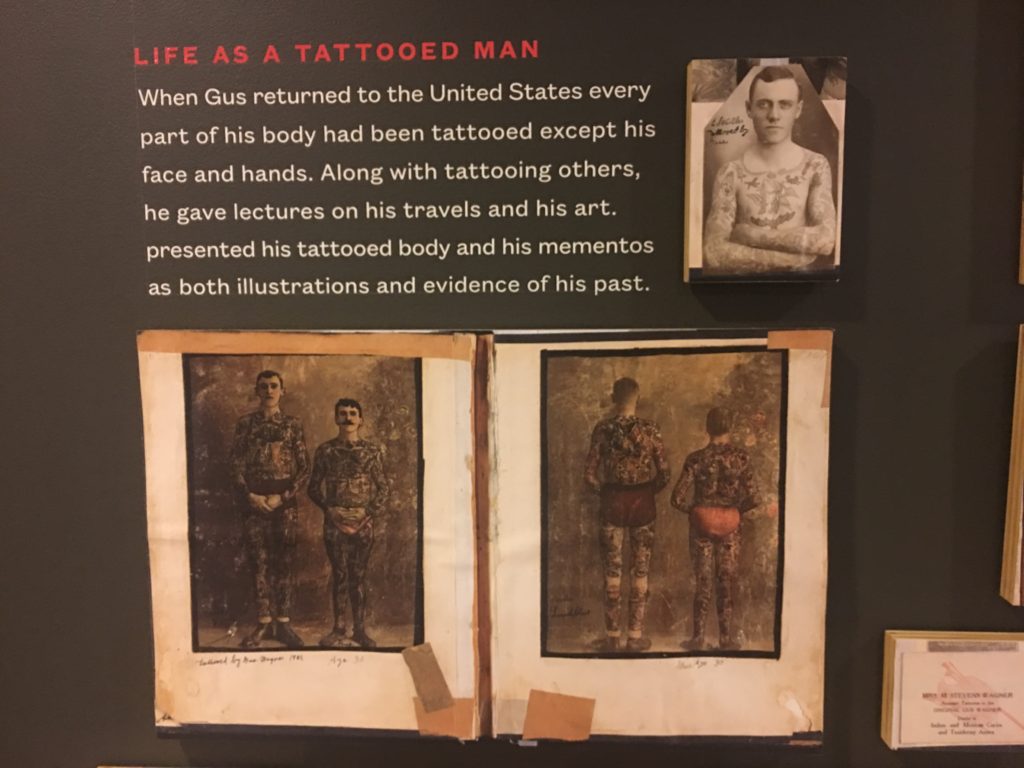
And at the museum an interesting surprise awaits you. A small second-floor gallery presents the curious work of one of America’s greatest tattoo artists — Gus Wagner.
Tattooing has long been a part of seaport life — and a critical rite of passage for many 19th century seamen. Â The Original Gus Wagner: The Maritime Roots of Modern Tattoo presents the art of the tattoo in this larger context, following Wagner, a well-traveled sailor, around the world, his body like a passport, stamped with mementos of his various journeys.
Tattoo artists were often called professors, and indeed Wagner’s own devotion to the art form, lecturing about his work and travels during his life time, helped develop its prominence among mainstream audiences. The exhibit also contains a look at some pages from his scrapbook of tattoo designs.
Take a trip down to the Seaport and visit this small but pleasurable exhibit. And my pre-emptive thanks to the South Street Seaport for inspiring the next episode of the Bowery Boys spin-off The First: Stories of Inventions and their Consequences. It comes out tomorrow and its all about the tattooing life in New York City in the late 19th century. Â (The show is available wherever you find podcasts. Just search for The First Stories. More information here.)
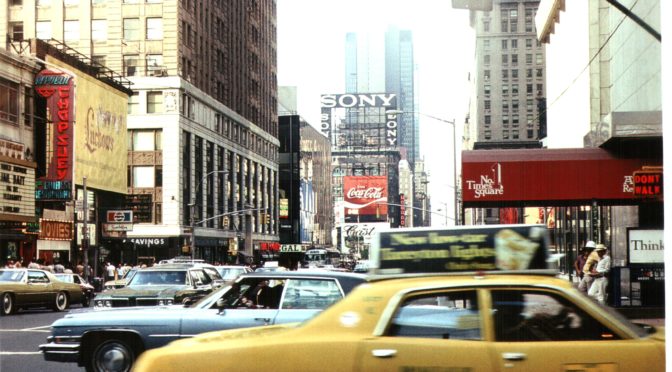
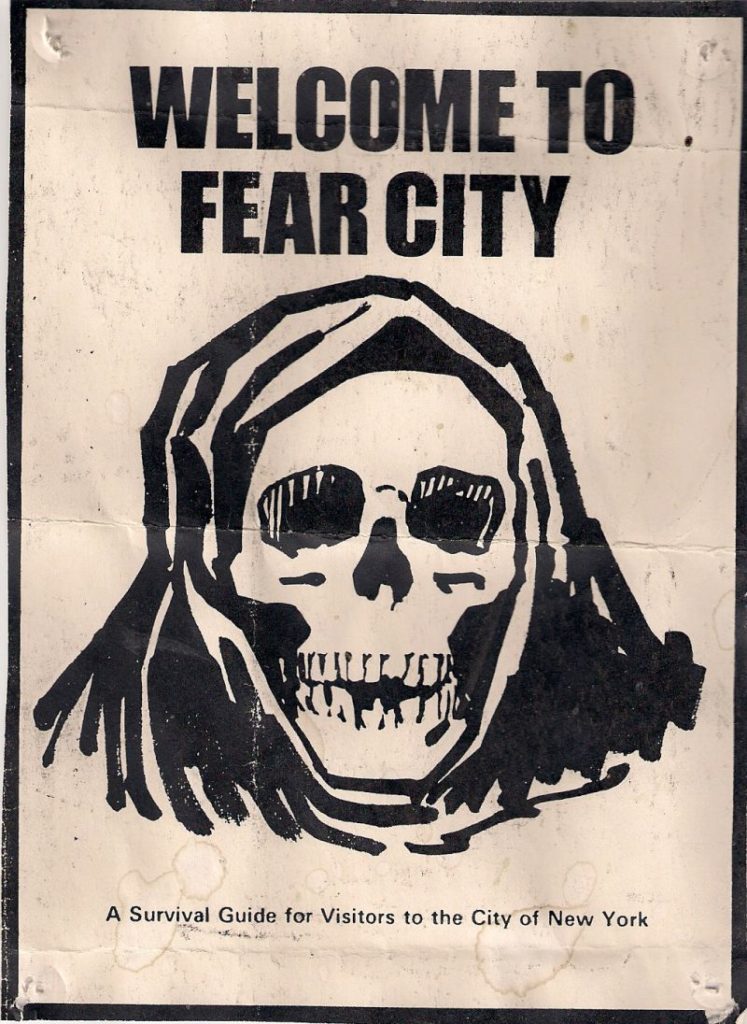
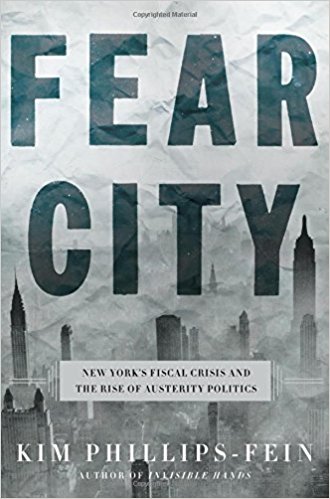
Fear City: New York’s Fiscal Crisis and the Rise of Austerity Politics, the title of Kim Phillips-Fein’s riveting new book on the 1970s financial catastrophe, isn’t wantonly comparing New York City to the devilish landscape of a horror film.
It’s the actual title of a grim pamphlet the New York Police Department distributed to tourists in 1975, providing insights into staying safe during this period of high crime and government cut-backs. Today it does read a bit like promotional material for an actual horror film The Purge, a fear-mongering document meant to embarrass city officials and galvanize communities.
Do not leave valuables in your hotel room and do not deposit them in the hotel vault.
Be aware of fire hazards.
The flyers enraged Mayor Abe Beame, who was scrambling to come up with money to save New York, and he even slapped a restraining order upon the president of the Patrolmen’s Benevolent Association who was attempting to distribute the flyers. “Abandoning the notion of leafleting the airports,” writes Phillips-Fein, “police officers instead drove around trucks decked with American flags and red-white-and-blue bunting around the city, blasting out warnings about the threats to public safety.”
How did New York City get itself into this weakened, paralyzing situation? And just as impossibly — how did the city manage to get out of it?
Metropolitan Books
FEAR CITY
New York’s Fiscal Crisis and the Rise of Austerity Politics
By Kim Phillips-Fein
Metropolitan Books/Henry Holt & Co.
In Fear City, Phillips-Fein manages to sift through this complicated and seemingly indecipherable story and recount even the most gloomy late-night board meetings with a vital urgency.
In essence, it does have a horror-film quality, as we watch a festering monster grow in size within the corridors of government. New York’s financial woes began in the late 1950s, as the city began taking out large, virtually unchecked loans, playing elaborate games on spreadsheets in order to pay the bills. They were assisted by state government (who at first facilitated such borrowing and even changed laws to allow it) and the eager ratings agencies who considered New York a safe A-rating bet as late as 1973.
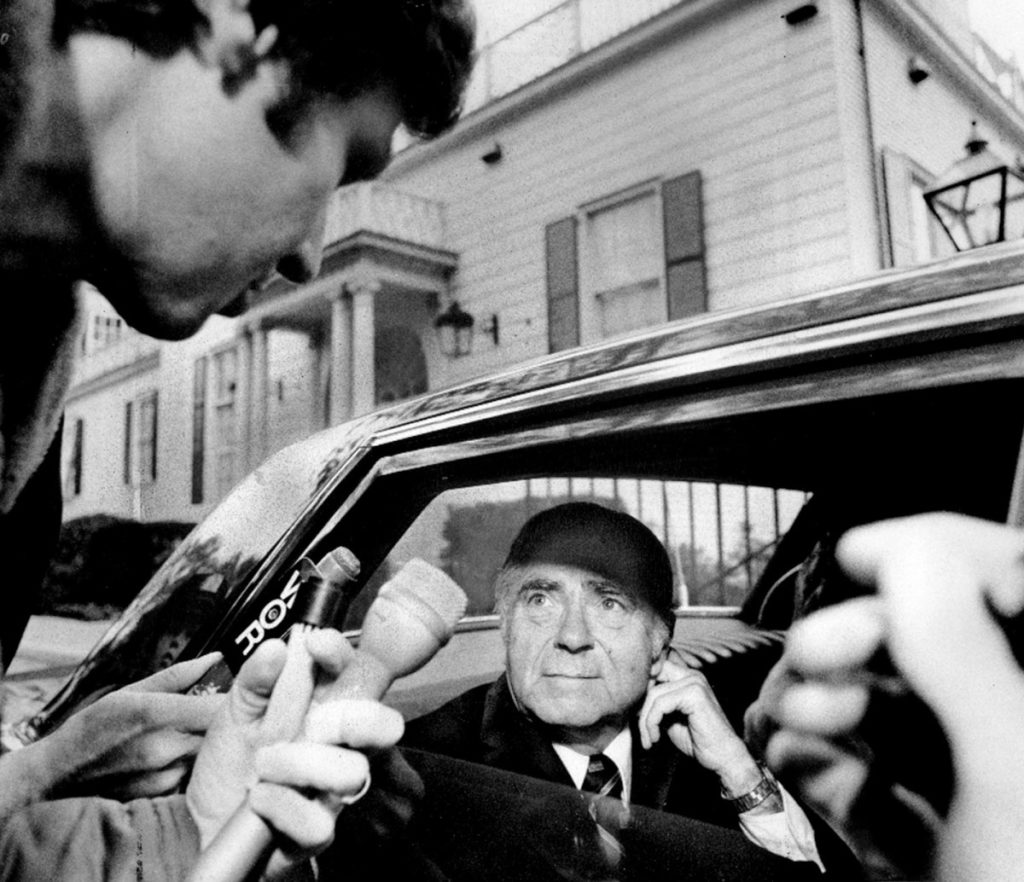
Mayor Beame, besieged by reporters outside of Gracie Mansion
Clarence Davis/NY Daily News Archive via Getty
To be fair, under prior mayors, coffers began aching under increased funding of social services, expanded to combat growing threats such as the depopulation of some neighborhoods (due to the growth of suburbs) and the spectre of deteriorating infrastructure.
But by the mid 1970s, the city and its new mayor Abe Beame faced the terrifying possibility of bankruptcy. This would not only be bad for the city, but for the nation as a whole, destabilizing the country’s banking networks. Indeed New York threatened to fall into a hole and pull the entire country in with it.
“Over time,” writes Phillips-Fein, “the fear of bankruptcy took on a life of its own.”
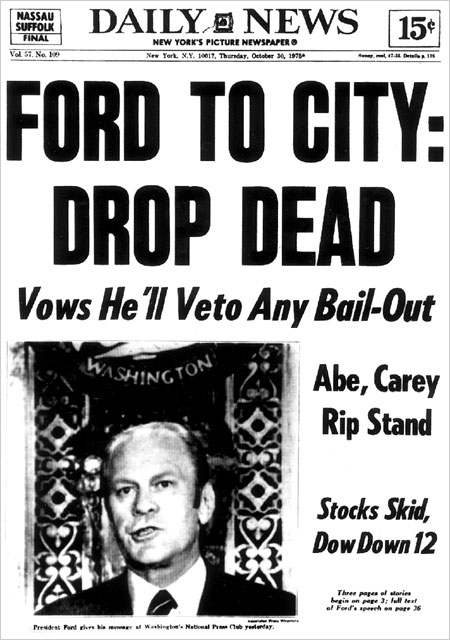
The one person with certain power to bail out the city chose not to. President Gerald Ford would eventually butt heads with his own vice president Nelson Rockefeller over the country’s involvement with New York. “Most of Ford’s advisers believed New York was shamelessly begging for help to prop up its welfare state. The cold light of default … might be the only thing that could compel the city to change its ways.”
We know how that ended up turning out.
But if Ford wouldn’t come to the table to offer assistance, Beame often had a problem admitting there was a problem at all. At times he sounds like an addict, frantically coming up with excuses for his own behavior. “He claimed the city was just running low on cash while it waited for revenues to arrive.”
You may know portions of this story quite well — some of you lived through it — but you may not know the varying and even opposing ways that the city got out of this mess.
On one level, it did so with the help of financiers and CEOs, leading task forces  of great and questionable power.
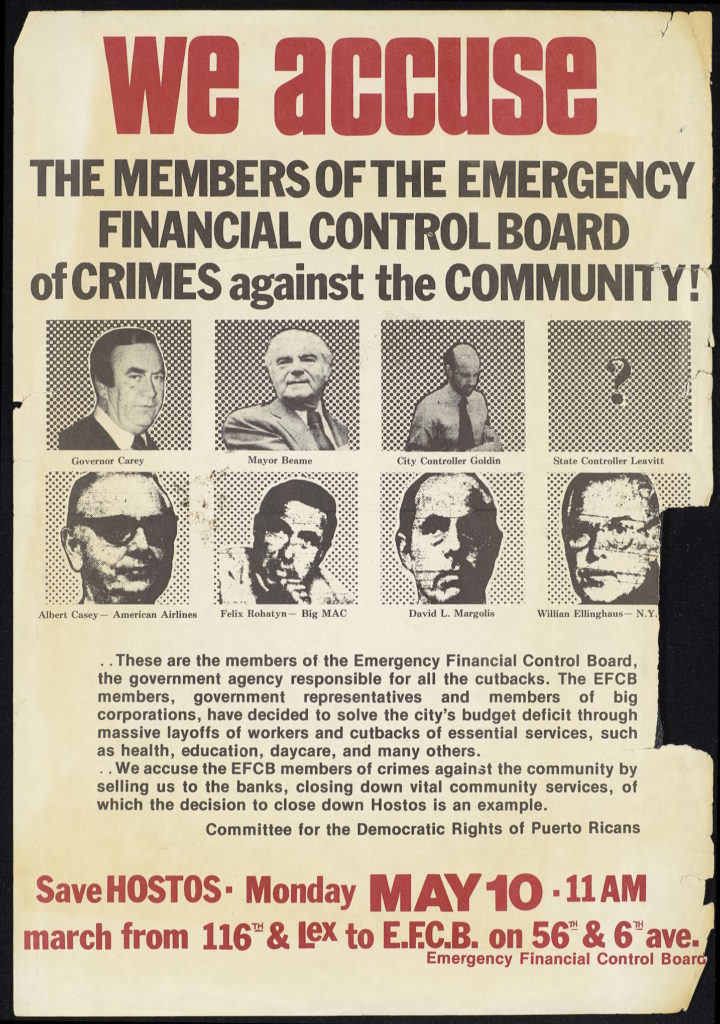
Empowered by a late-night act hurriedly passed by the state senate, the ominous-sounding Emergency Financial Control Board oversaw all city expenditures, “wrest[ing] control over the city’s finances out of the hands of the mayor and the City Council.” Among those on the board were the CEOs of New York Telephone Company, American Airlines and Colt Industries (the gun manufacturer).
Below: Anger at the EFCB’s actions to close Hostos Community College inspired vigorous protests. Such community action helped save the college.
Courtesy Museum of the City of New York
But the real bailout came from the citizens of New York themselves who weathered the horrifying notion of “planned shrinkage,” the drastic and detrimental cutbacks to hospitals, schools and public transit, generally speaking, with great resolve. (Events like the Blackout of 1977 notwithstanding.)
But they did not weather them quietly.
Communities were not afraid to push back against aggressive cuts that would have endangered them, such as the efforts by one Greenpoint community to save their fire house from closure and another by a South Bronx residents to stop the shuttering of a unique educational institution — Eugenio Maria de Hostos Community College of the City University of New York — aimed at the community’s bilingual residents.
Phillips-Fein, an associate professor at New York University, has crafted one of the best history books of the year out of one of the ugliest periods in New York City history. Aspects of this story reverberate into present dilemmas — on the local, state and national levels – as austerity measures take center stage as possible solutions to deficits and shortfalls. Let’s not hope for any sequels.
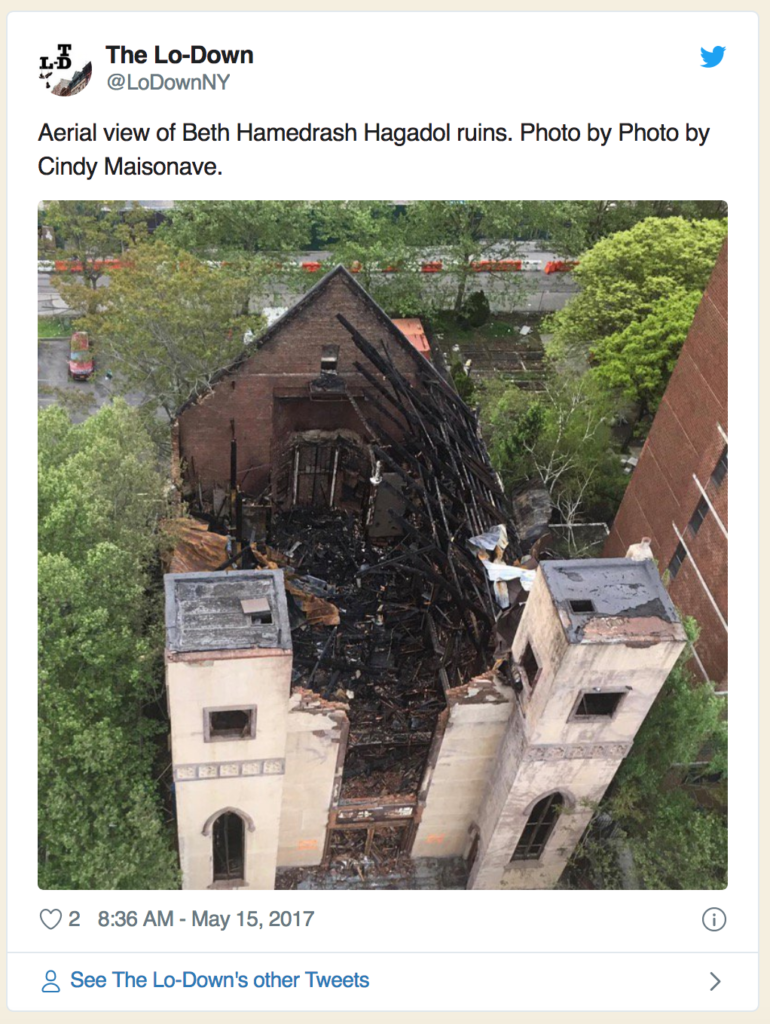
Last night a haunting and inconceivable ruin of the Lower East Side was mysteriously destroyed in a massive fire.
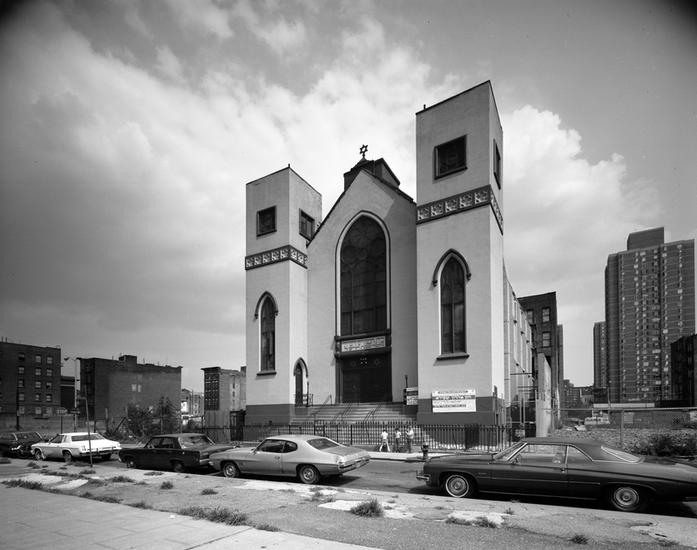
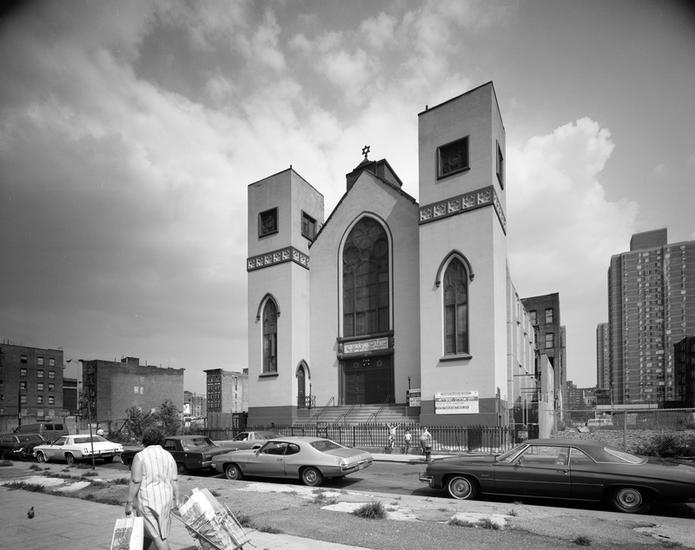
The abandoned shell of the old synagogue Beth Hamedrash Hagodol has been a feature of life of Norfolk Street, stubbornly nestled next to apartment buildings, a vestige of the past clinging to the present without care or purpose.
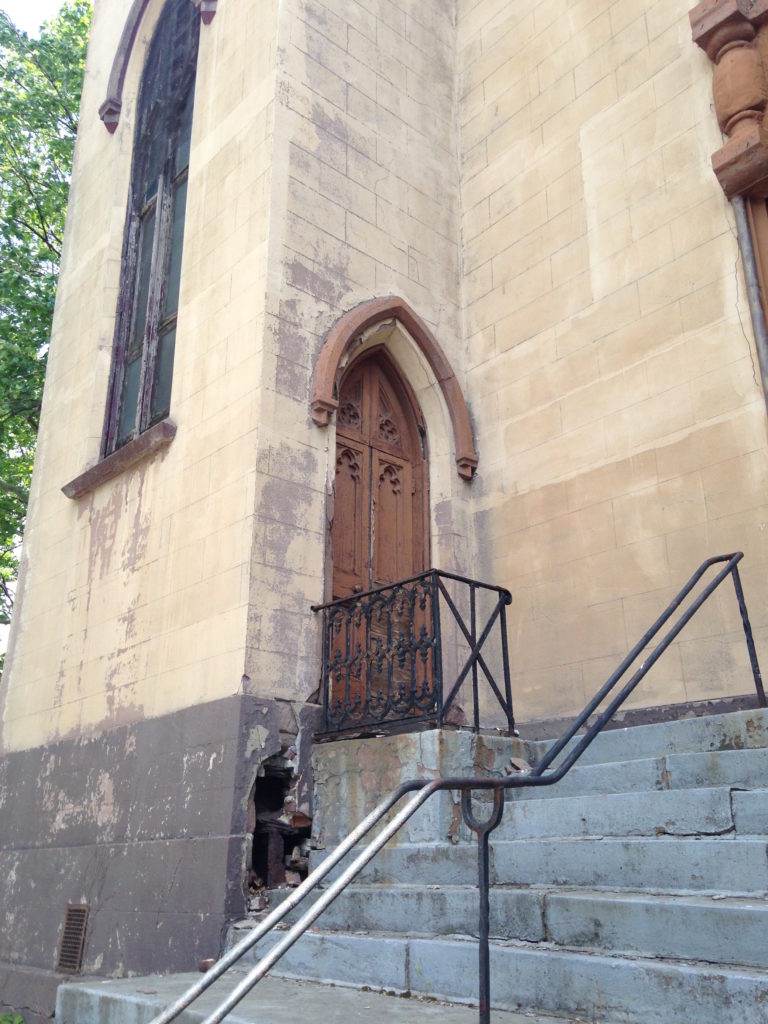
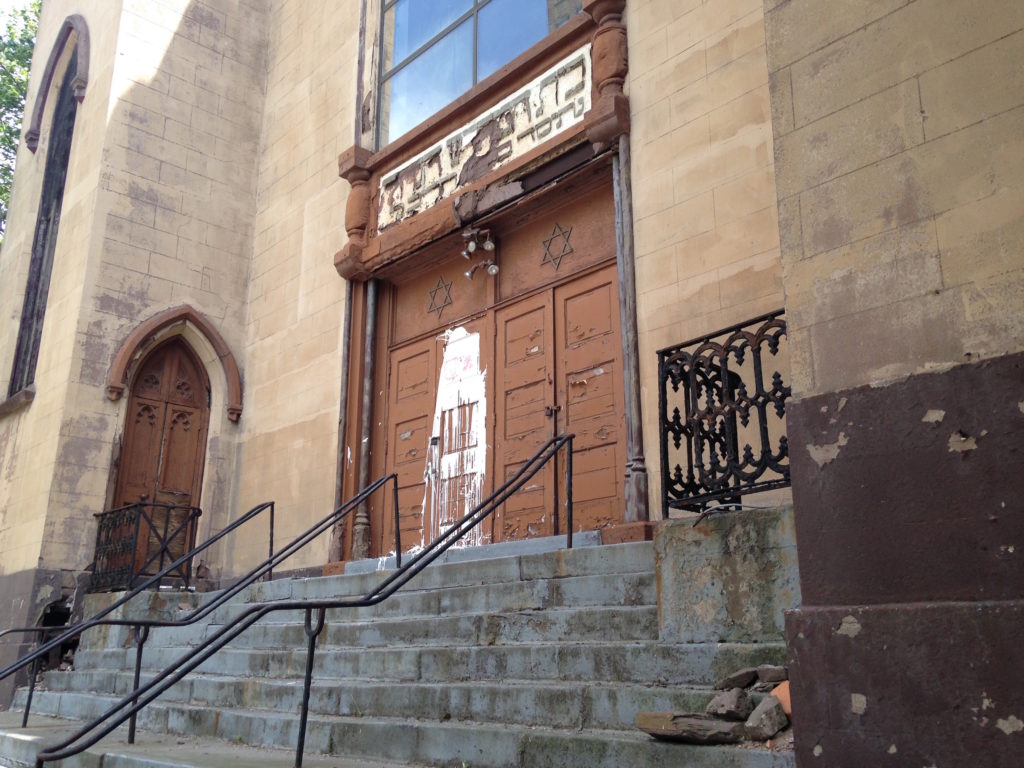
Here are a few pictures of the front of the synagogue as it looked several months ago:
“Beth Hamedrash Hagodol, a nineteenth-century synagogue, sits in a sad, abandoned state today, as though everyone’s afraid to go near it. Built as a Baptist church in 1850, it too was converted into a synagogue in 1885. It played an important role in Jewish American history, as it was connected to the oldest Eastern European Jewish congregation in America (Beth Hamedrash, formed in 1853), and yet today it sits eerily unused. Hopefully somebody will come to its rescue before further deterioration”or the forces of gentrification”cause it permanent harm. (60-64 Norfolk Street)”
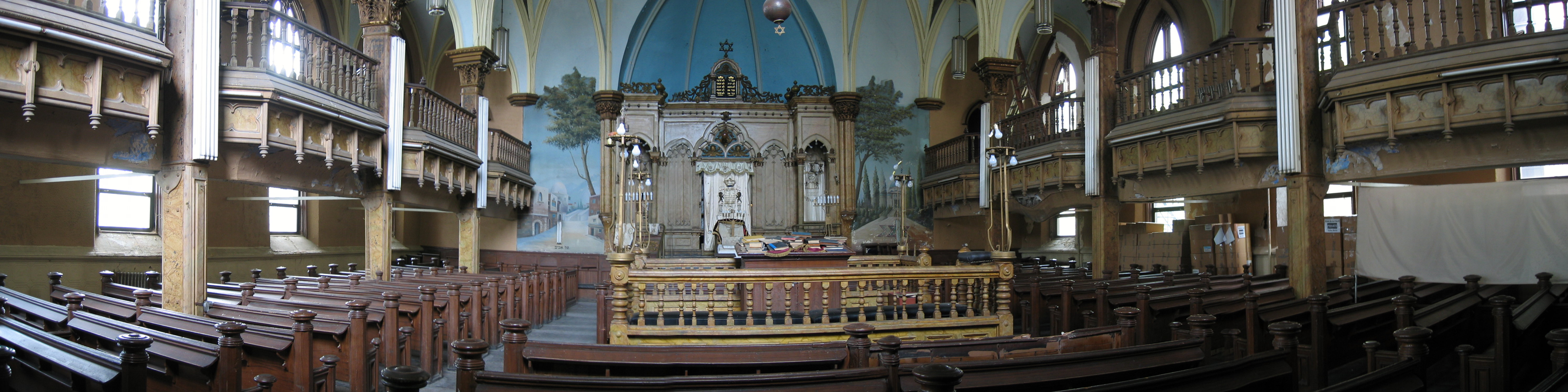
Below: The interior of the synagogue in an image taken in 2005 (courtesy Wikimedia)
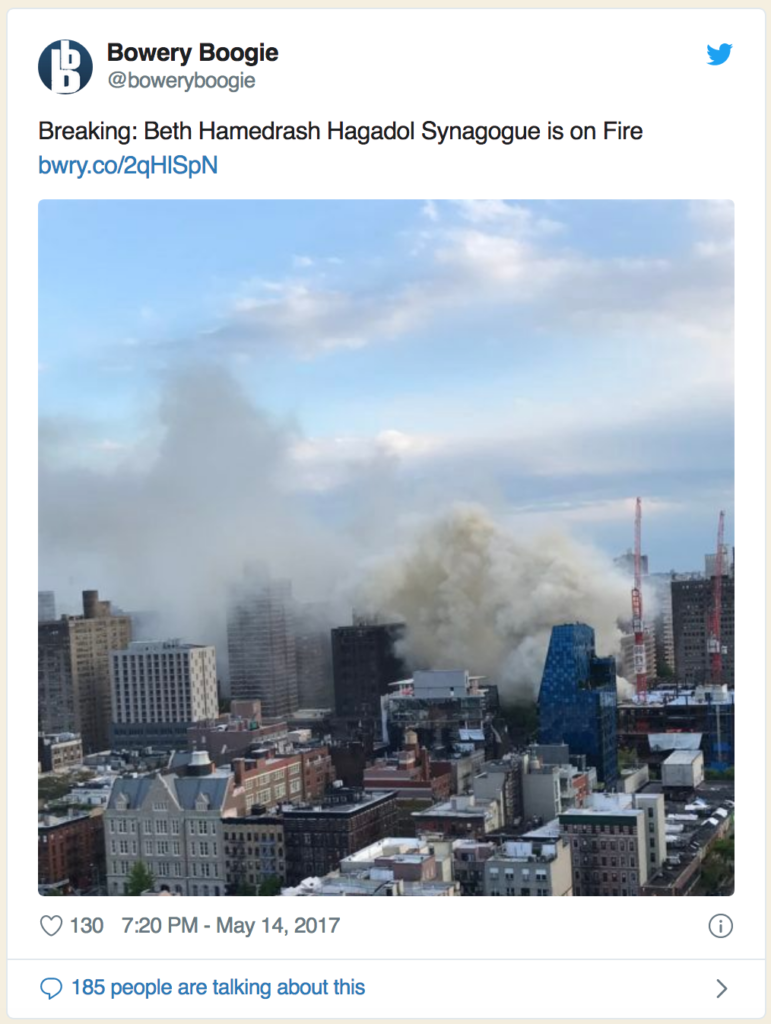
Last night the ruins were gutted in a three-alarm fire. Bowery Boogie was on the scene last night, first observing the disturbing plumes of smoke that filled the Lower East Side a little before sundown last night.
The new Essex Crossing development is rising just a couple blocks north, poised to transform this area of the Lower East Side. Consider me an optimist, but I always thought the ruins of the synagogue could somehow be saved in connection with the development. Now more than ever, we need to protest as many of its treasures as possible or else risk erasing the very identity of this vital historic neighborhood.
Beth Hamedrash Hagodol is now gone.
It existed only as a crumbling ruin and now not even as that. (Friends of the Lower East Side lamented the building’s fate as “demolition by neglect.“) Certainly it will be cleared away so the land can be used for other purposes. Instead of even the shell of the building living on as a reminder, it will be replaced by something inevitably glass, pretty and sleek.