The city was in the midst of a devastating heatwave gripping in the entire Northeast during the first two weeks of July 1911. There was little escape from the scorching temperatures among the cramped tenements. New York’s beaches offered some respite, but you had to cram into a sweltering train cabin to get there. Rudimentary air conditioning had only been invented a few years before and was hardly widespread.
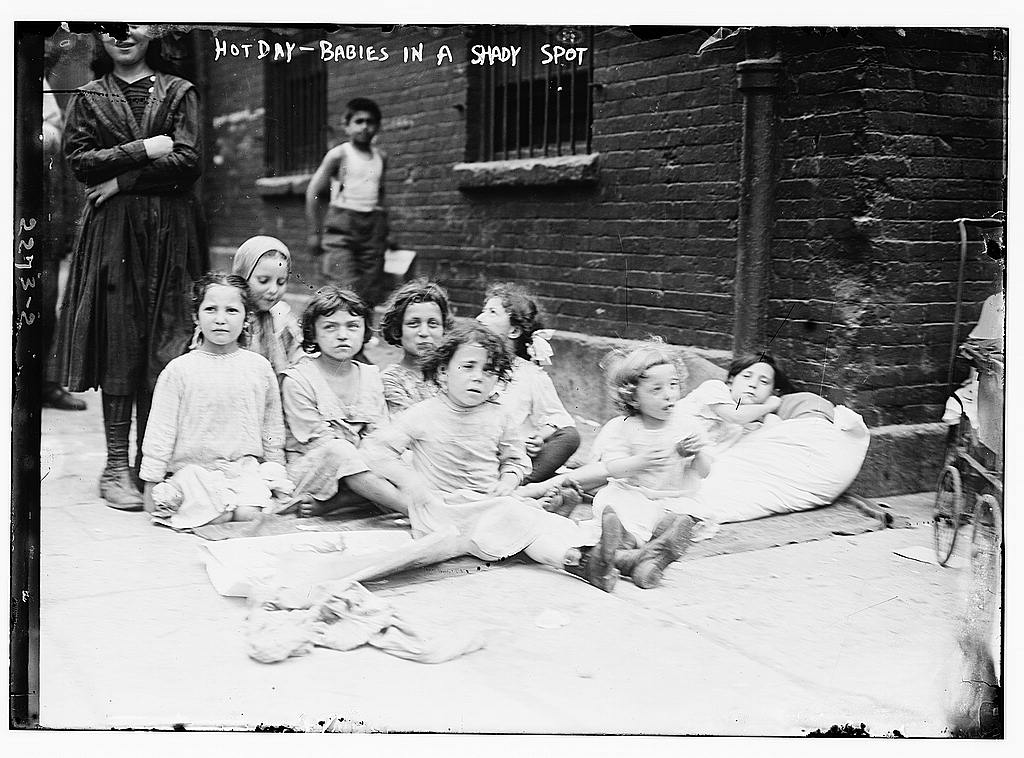
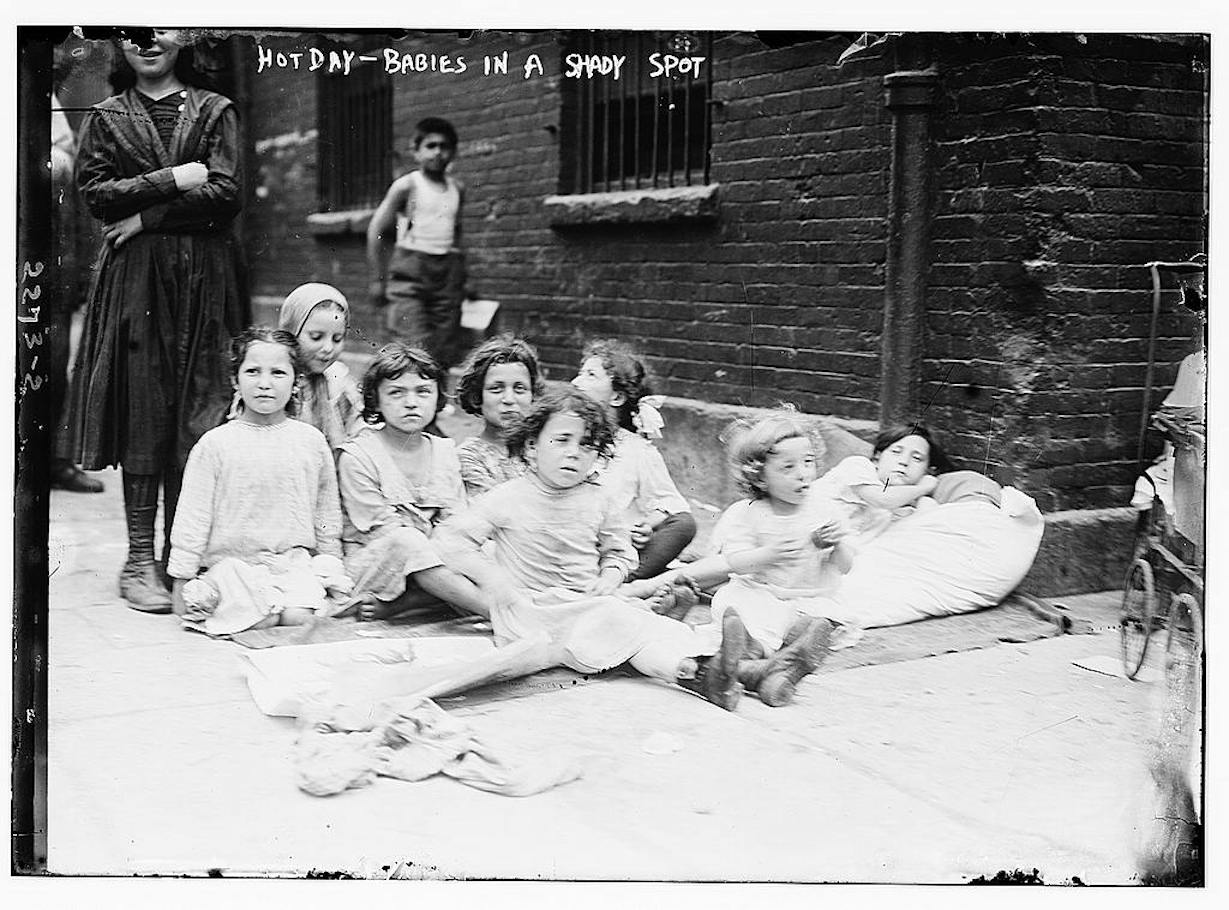
Oh baby, it’s hot! Some tots seek shady shelter during the July 1911 heat wave.
In New York, the thermometer never broke a 100 degreeslike it did in Washington or Boston. But the humidity was deadly, and the city too crowded and ill-prepared for such withering conditions.
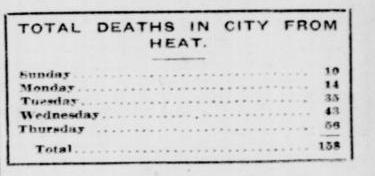
Below: A disturbing infographic from the Tribune
Naturally, the brand new subway was not the place to be either.
Riders going from the Brooklyn Bridge to Grand Central suffered a 45 minute ride, and a few passengers passed out. But others underground found relief from the heat; workers drilling the Penn Railroad tunnels under the Hudson River reported luxuriously cool temperatures in the 60s.
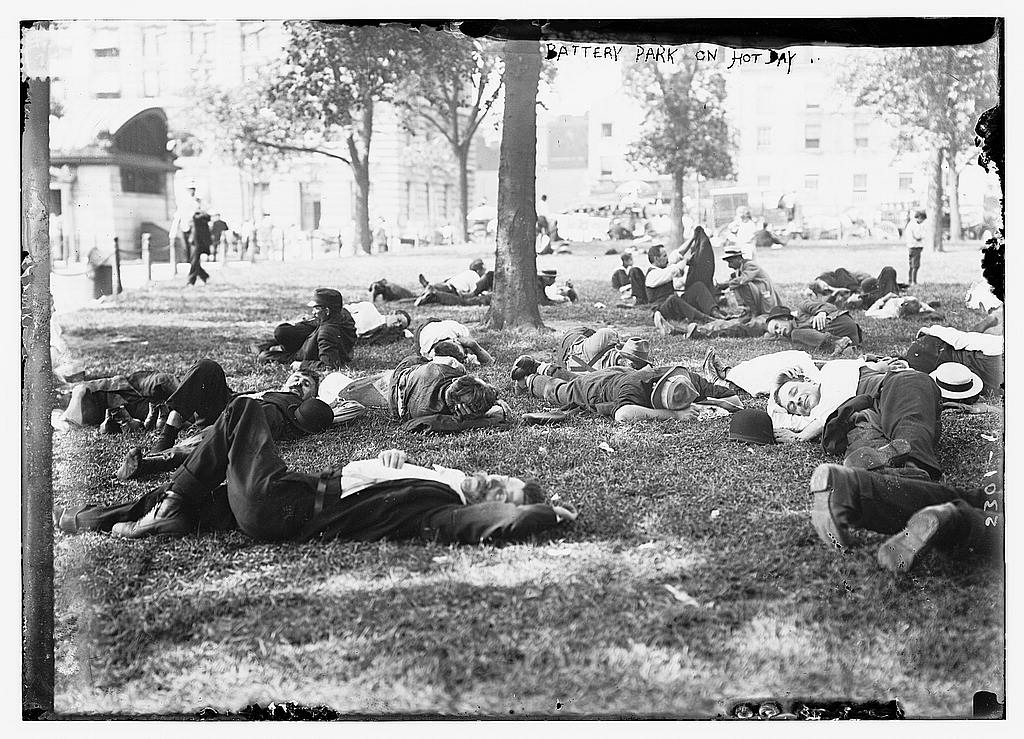
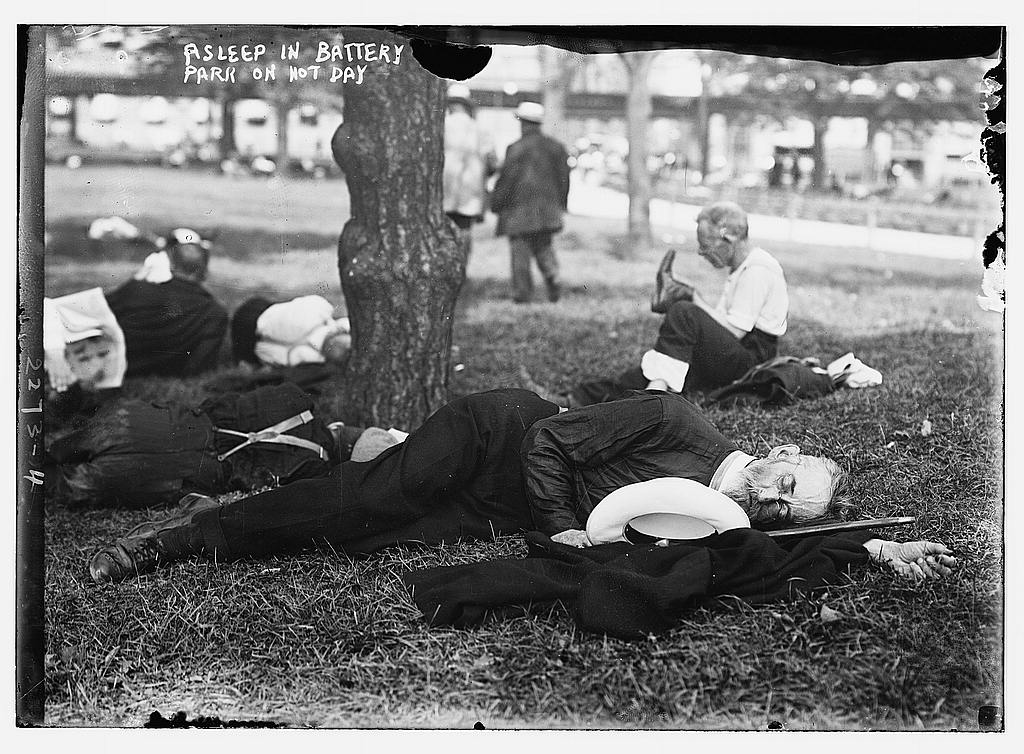
Below: Dozens slept underneath the shady trees in Battery Park at the hottest point of the heat wave.
The sizzling conditions literally drove people insane.
One drunken fool, “partly crazed by the heat,” attacked a policeman with a meat clever. A child on Tenth Avenue, escaping to the rooftop for relief, tumbled down an air shaft. The hospital was filled to capacity. Staten Island’s fire commissioner succumbed to the heat and died in his home.
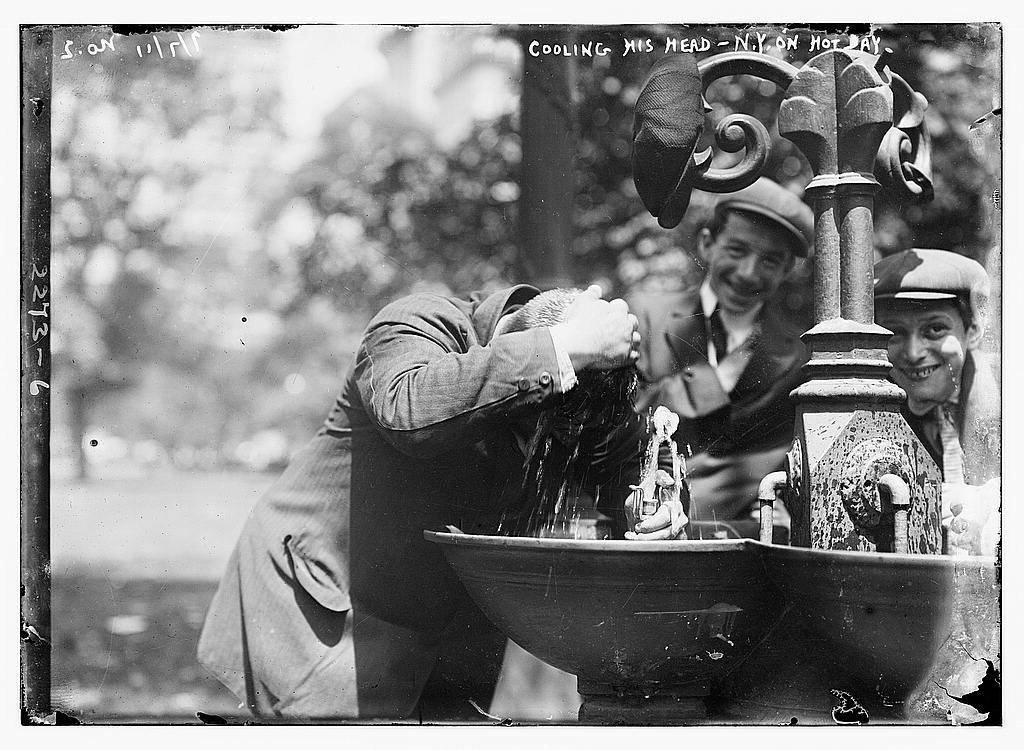
Some levity as a boy takes off his cap to cool off in a park fountain:
Library of Congress
After July 7th, the temperatures dipped to normal levels but the humidity kept the city in sweaty discomfort. Or as the Tribune dramatically states: “The monstrous devil that had pressed New York under his burning thumb for five days could not go without one last curse, and when the temperature dropped called humidity to its aid.”
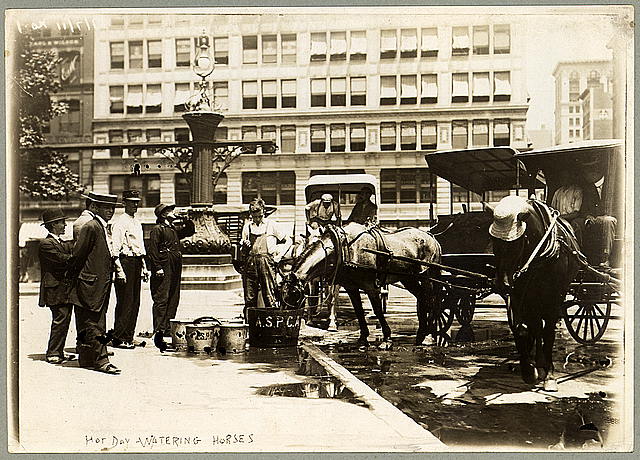
By the time rain came to relieve the city, a reported 211 people had fallen to heat-related deaths. But the largest number of victims came from New York’s army of horses, trudging by the thousands through the city’s busy, stagnant streets.
The New York Times estimates that over 600 animals died during the heat wave, so many that the city was unable to pick up all the bodies from the streets. Frequently seen were dead animals pushed to the sides of the road. Add in the oppressive humidity, and I’ll leave you to imagine how horrific it would have been to experience.
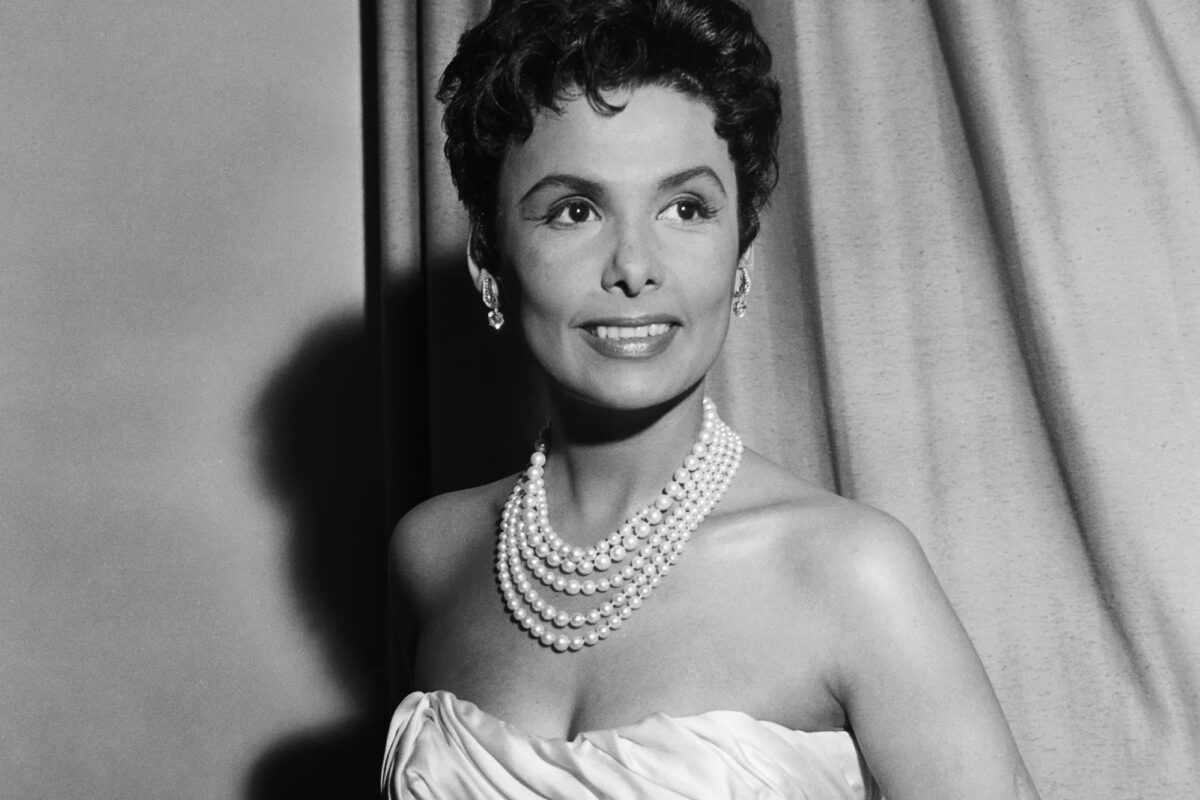
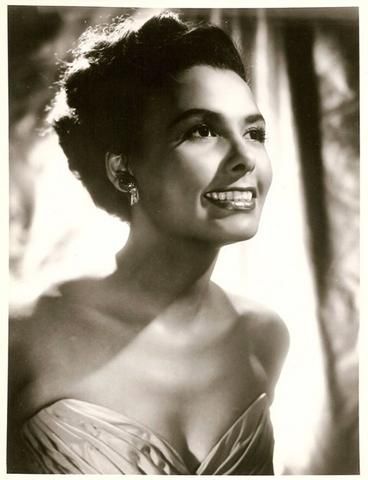
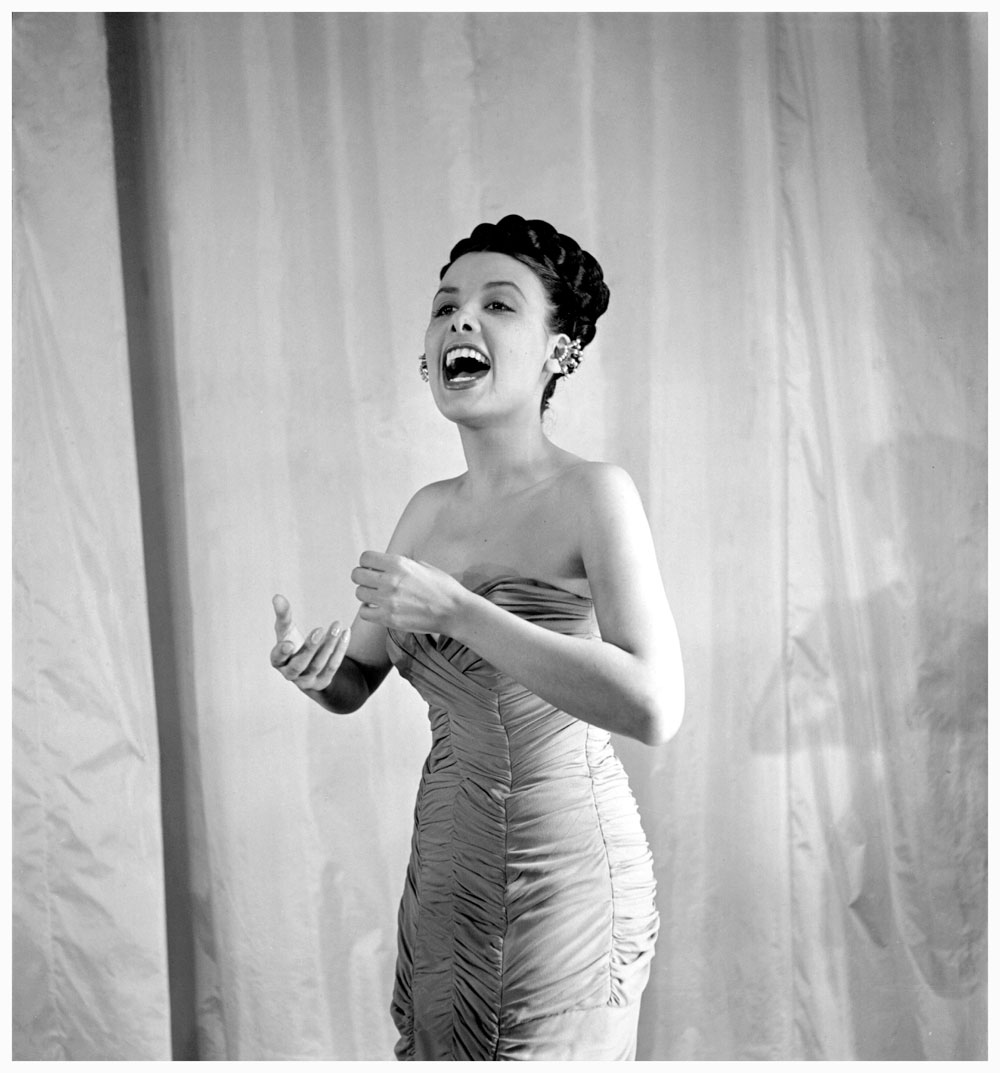
The superstar and civil rights activist Lena Horne had such a dynamic, multi-faceted and enduring career — starting in 1933, she worked regularly well into the late 1990s — that we all may have different views of who she was.
Horne was one of the first African-American women to break through in Hollywood in the 1940s though it was her successes on stage and in nightclub acts that would cement her reputation as a sterling jazz voice of uncommon elegance.
In 1958 she became the first African-American woman to be nominated for a Tony Award.
If you’re a ’70s and ’80s kid, you probably remember Horne for her television work on Sesame Street, the Muppet Show or the Cosby Show.
By this point she was already a musical icon; as a kid, I was transfixed watching her on Sesame Street, never understanding the political undertones of a seemingly simple performance such as “Bein’ Green,” sung here with Kermit the Frog.
Lena Mary Calhoun Horne was born 105 years ago today in Brooklyn. As a tribute, here are a few addresses around New York City that helped play a role in her development, her career and her legacy.
A tour of Lena Horne’s life begins in the Brooklyn neighborhood of Bedford-Stuyvesant, home of the ‘black bourgeoisie‘ of the 1930s, middle and upper class African-Americans whose wealth and professional careers set them apart from black enclaves in other parts of the city.
It was here that Horne was born on June 30, 1917 at 189 Chauncey Street. (And for a time she also lived at 519 Macon Street, a house that was recently on the market). She lived there with her grandparents for only a short time before traveling to Georgia for many years, returning to Brooklyn as a teenager.
Horne enjoyed her time at Girls High School (later Boys and Girls High School), a towering institution where Shirley Chisholm would attend school just a decade later. But Lena’s mother Edna pulled her from school before she could finish, making her attend a secretarial school instead.
But Lena wouldn’t waste too much time dictating and typing. In 1933, at just 16 years of age, she made her debut as a chorus girl at The Cotton Club, the segregated music club which had helped define Harlem as a pivotal nightlife destination during Prohibition.
As much as it may horrify us today thinking of a 16-year-old girl in a rowdy nightclub, Lena was well protected (chiefly by the guys in Cab Calloway‘s orchestra who nicknamed her ‘Brooklyn’) and her charm, beauty and crystal voice soon got her engagements with traveling musicians (notably Noble Sissle, best known for the musical Shuffle Along).
It would be at the Cotton Club that the song “Stormy Weather” would make its debut — but sung by Ethel Waters.
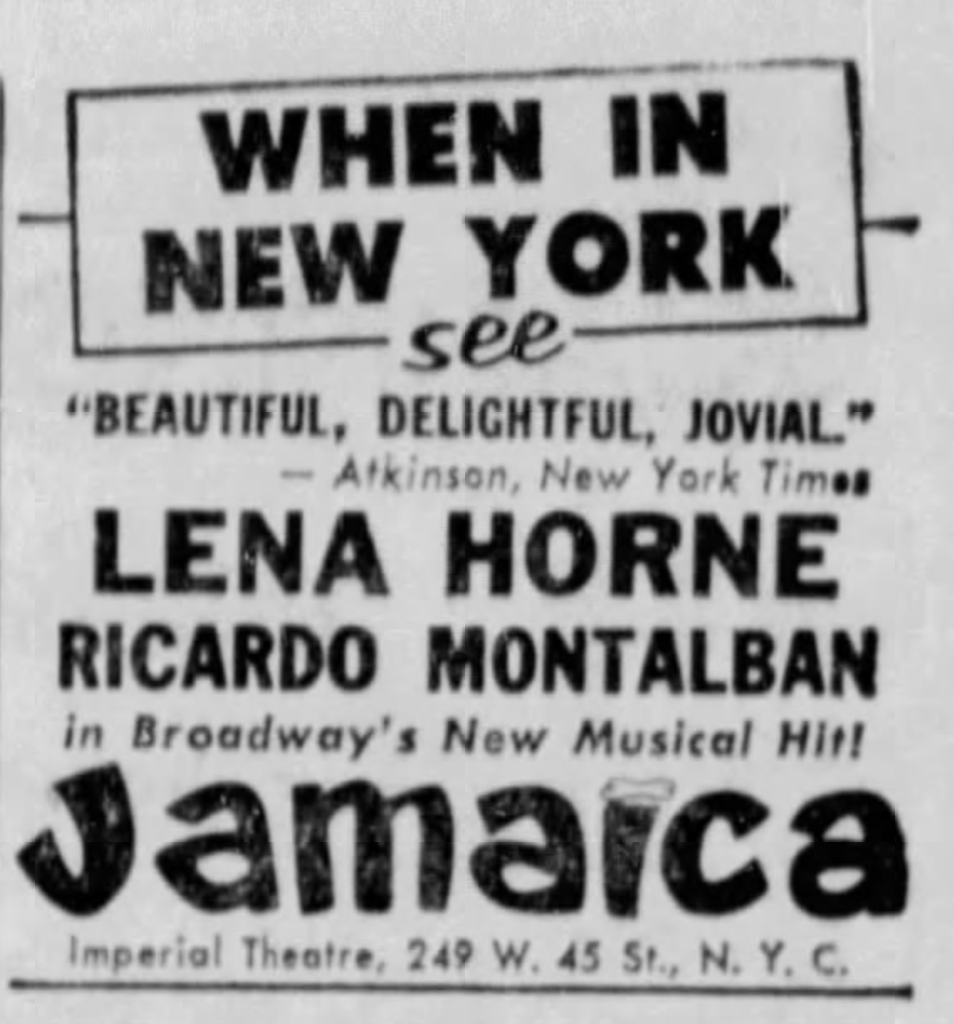
During the 1930s she became a modest presence of the stage and screen. She received her first mention in a New York Times review by Brooks Atkinson in February 13, 1939, for a show called Blackbirds of 1939: “Among those present is a radiantly beautiful sepia girl, Lena Horne, who sings “Thursday” and “You’re So Indifferent” in an attractive style, and who will be a winner when she has proper direction.”
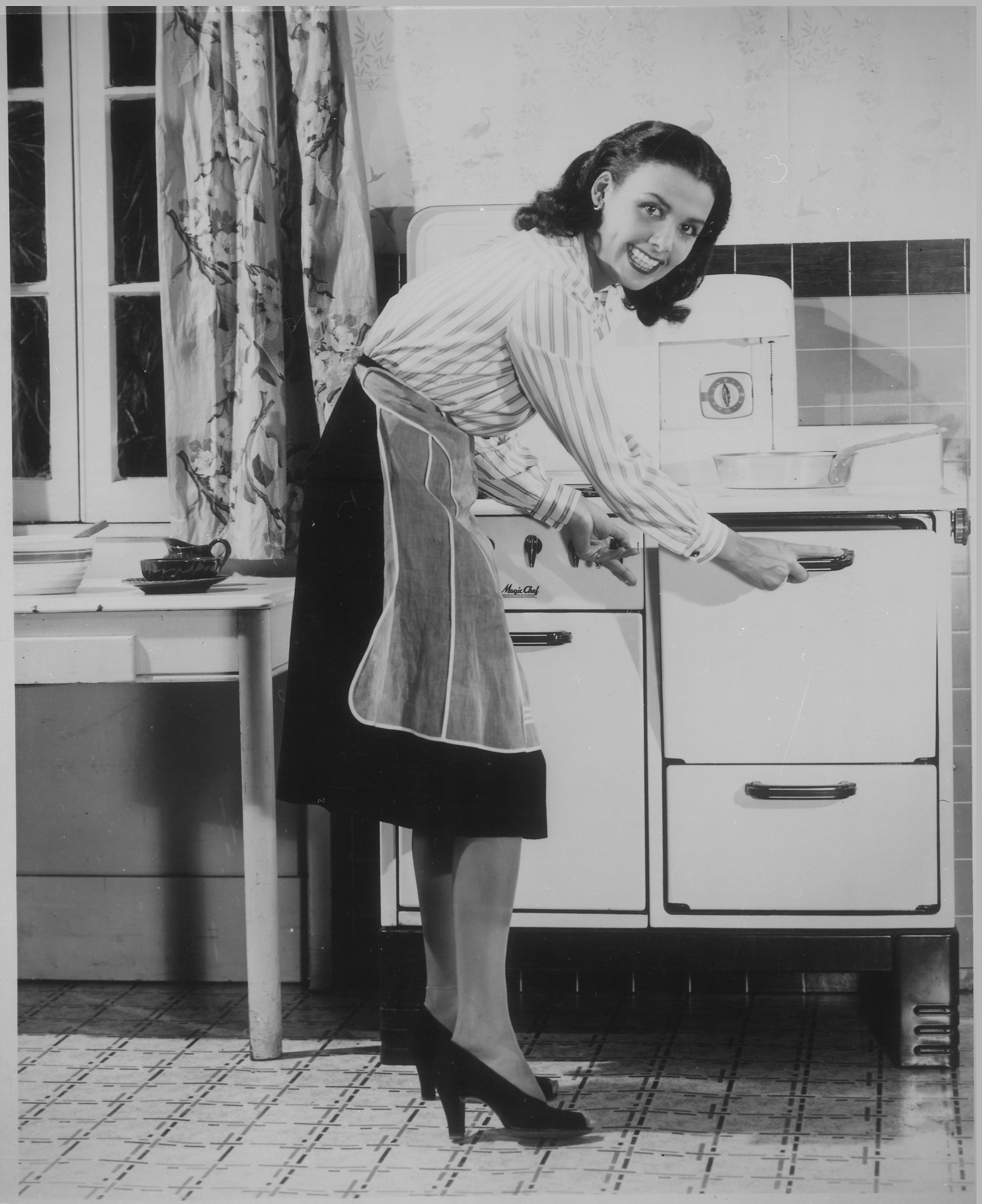
Below: “Lena Horne Conserves Fuel” — A wartime public service announcement she filmed for the Office of Emergency Management
The club was explicitly political. According to its proprietor Barney Josephson: “I wanted a club where blacks and whites worked together behind the footlights and sat together out front. There wasn’t, so far as I know, a place like that in New York or in the whole country.”
Read more about Cafe Society here or check out the Bowery Boys podcast on the life of Billie Holiday for more information (Episode #174)
6) Waldorf-Astoria, 301 Park Avenue, Manhattan
Perhaps no other music venue in New York is more important to Horne’s legacy than the Empire Room at the Waldorf-Astoria.
Her New Year’s Eve debut on December 31, 1956, captured her at the height of her talents. From the New York World-Telegram:
“The woman is so stunningly gowned to accent a beautiful figure that this, in itself, would catch an audience’s attention. But the ultimate hypnotic effect is the music, the arrangements and an intensity of delivery that finds its essence in eyes that seem to bore into you.“
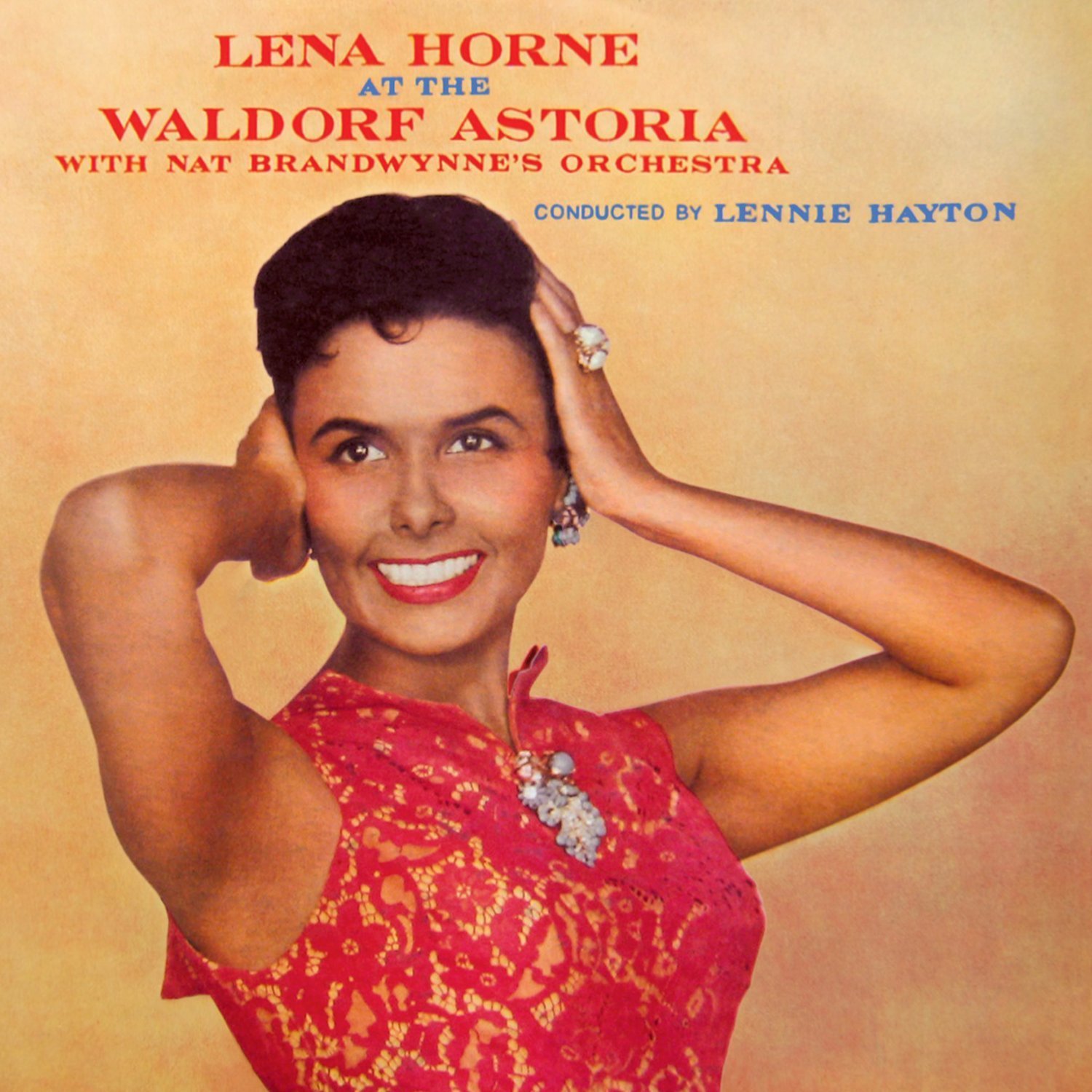
Her performances there would inspire an album Lena Horne At The Waldorf-Astoria (1957), becoming the highest selling album by a female RCA recording artist up to that time.
Despite her fame, Horne (as well as many other famous African-Americans) found it difficult to find apartment owners who would rent to her due to her race.
Harry Belafonte had ran into a similar problem in the late 1950s but found a unique solution, simply buying an entire building on West End Avenue. He rented the penthouse to Horne.
“[W]e [she and her husband Lennie Hayton] went through the hysteria of trying to find an apartment “ all those stupid problems“ and when we finally found a place that would admit both me and Lennie, we put our roots down.”
Horne got a late career boost in 1981 when the wildly successful musical revue Lena Horne: The Lady and Her Music which garnered her a Tony Award and a world tour.
From the New York Times review: Miss Horne is out to prove something in this revue, and it’s not merely that her talents and looks are unbruised by the years that have passed since she first danced across a Cotton Club stage an era ago.
She doesn’t simply present herself as a survivor – a favorite device of older stars who come back to Broadway – but as an artist who is still growing, who is only now reaching the peak of her powers.
Here’s Horne accepting her Tony Award for the performance:
9) Brooks Atkinson Theatre Lena Horne Theater (256 W. 47th Street)
This month it was announced that the Brooks Atkinson Theatre — currently home to the musical Six — will be renamed the Lena Horne Theater starting in the fall. The Broadway playhouse, which first opened in 1926, was originally called the Mansfield Theatre, named for British Shakespearean star Richard Mansfield.
This article originally ran five years ago on the 100th anniversary of her birth
The story of New York’s most prominent abortionist of the 19th century and the unique environment of morality and secrecy which accommodated her rise on the fringes of society.
Ann Lohman aka Madame Restell was one of the most vilified women of the 19th century, an abortion practitioner that dodged the law to become one of the wealthiest self-made women in the Gilded Age. But is her wicked reputation justified?
Thoughts on abortion and birth control were quite different in the 1830s, the era in which Madame Restell got her start. It was societal decorum and marital morality — not science and religion — that played a substantial role in New Yorkers’ views on the termination of pregnancy. Restell and countless imitators offers a wide range of potions, pills and powders to customers, provided for in veiled wording in newspaper advertisements.
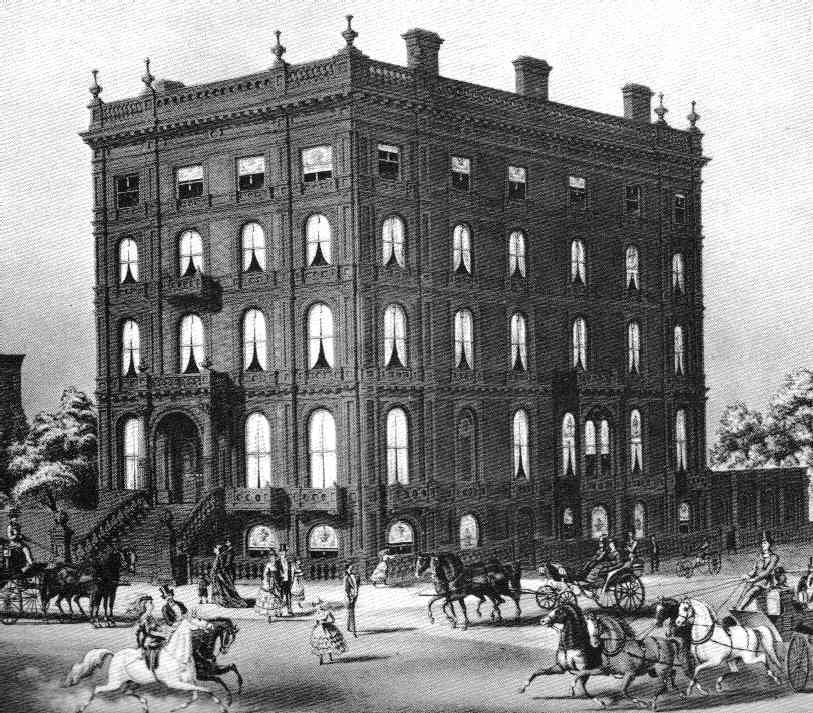
By the 1860s Restell was insulated from serious interrogation and flaunted her unique position in society by planting her Fifth Avenue mansion in a very controversial place. But she soon became a target of New York’s most dogged reformer, a man who considered her pure evil and the source of society’s most illicit sins.
The Bowery Boys: New York City History podcast is brought to you …. by you!
We are now producing a new Bowery Boys podcast every two weeks. We’re also looking to improve the show in other ways and expand in other ways as well — through publishing, social media, live events and other forms of media. But we can only do this with your help!
We are now a member of Patreon, a patronage platform where you can support your favorite content creators for as little as a $1 a month.
Please visitour page on Patreon and watch a short video of us recording the show and talking about our expansion plans. If you’d like to help out, there are five different pledge levels (and with clever names too — Mannahatta, New Amsterdam, Five Points, Gilded Age, Jazz Age and Empire State). Check them out and consider being a sponsor.
We greatly appreciate our listeners and readers and thank you for joining us on this journey so far. And the best is yet to come!
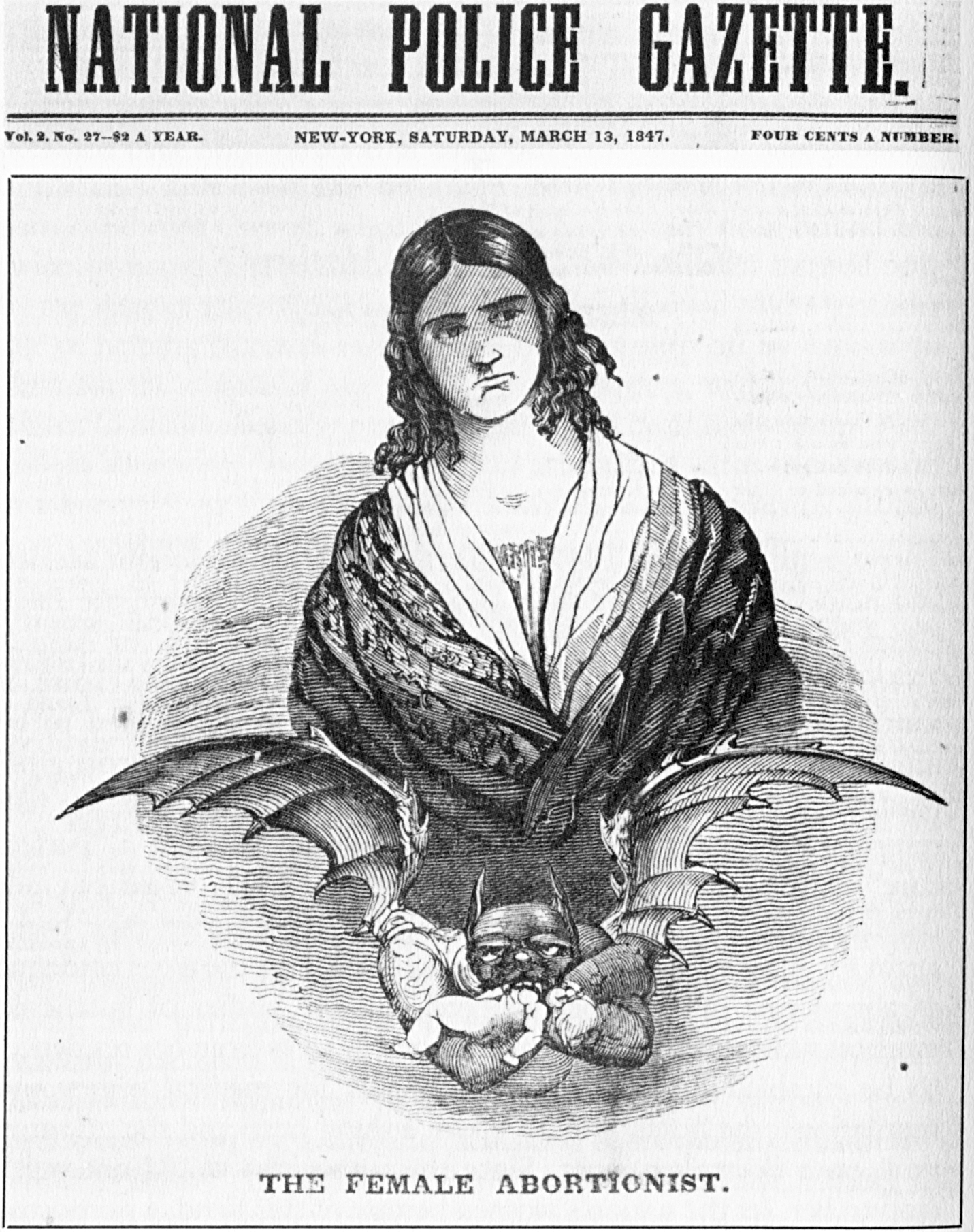
Ann Lohman aka Madame Restell, featured in the National Police Gazette for the crime that would get her sent to Blackwell’s Island, March 13, 1847
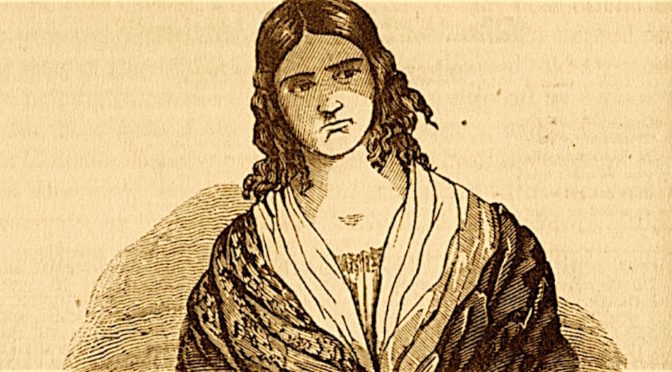
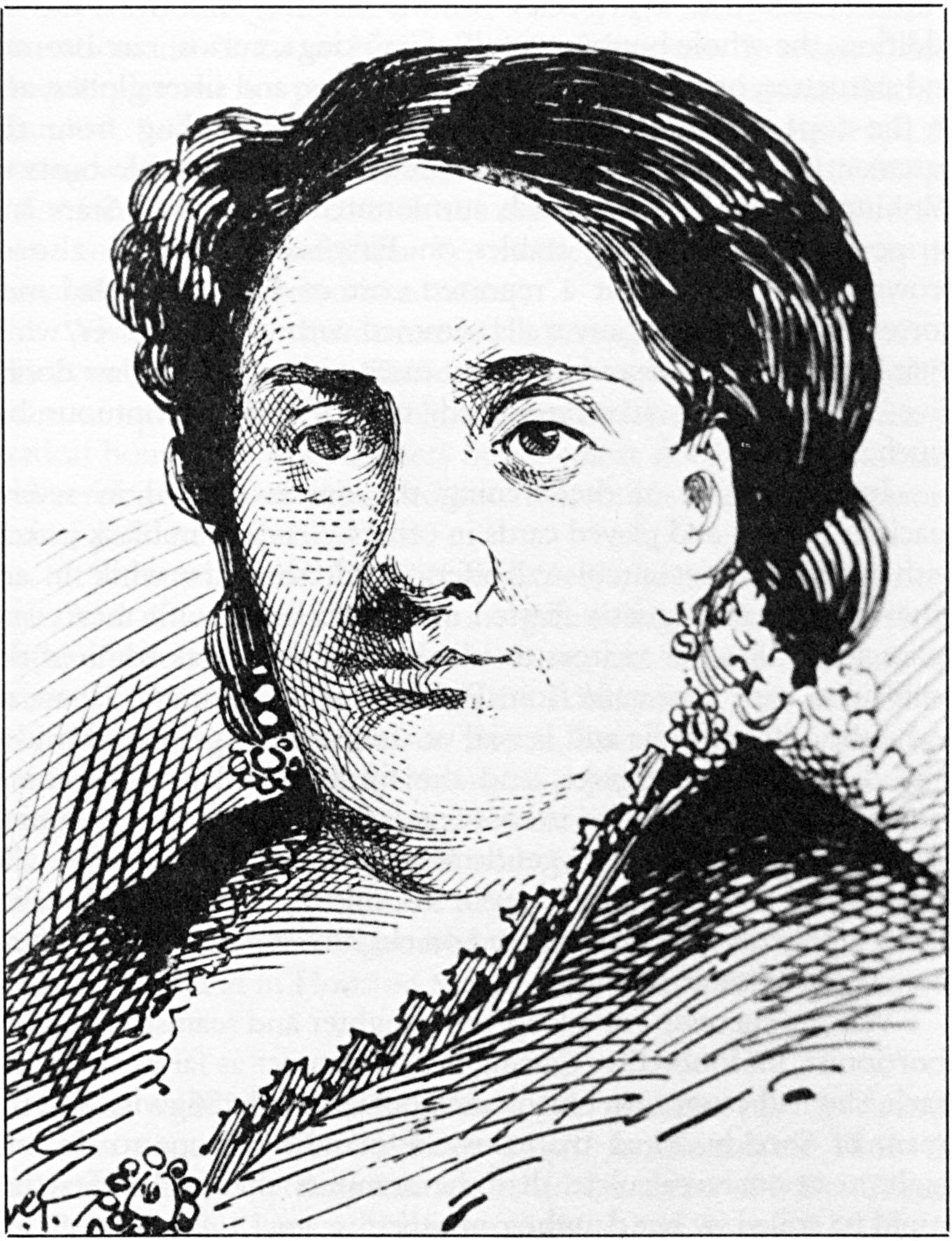
A drawing of Madame Restell made in 1888, long after her death.
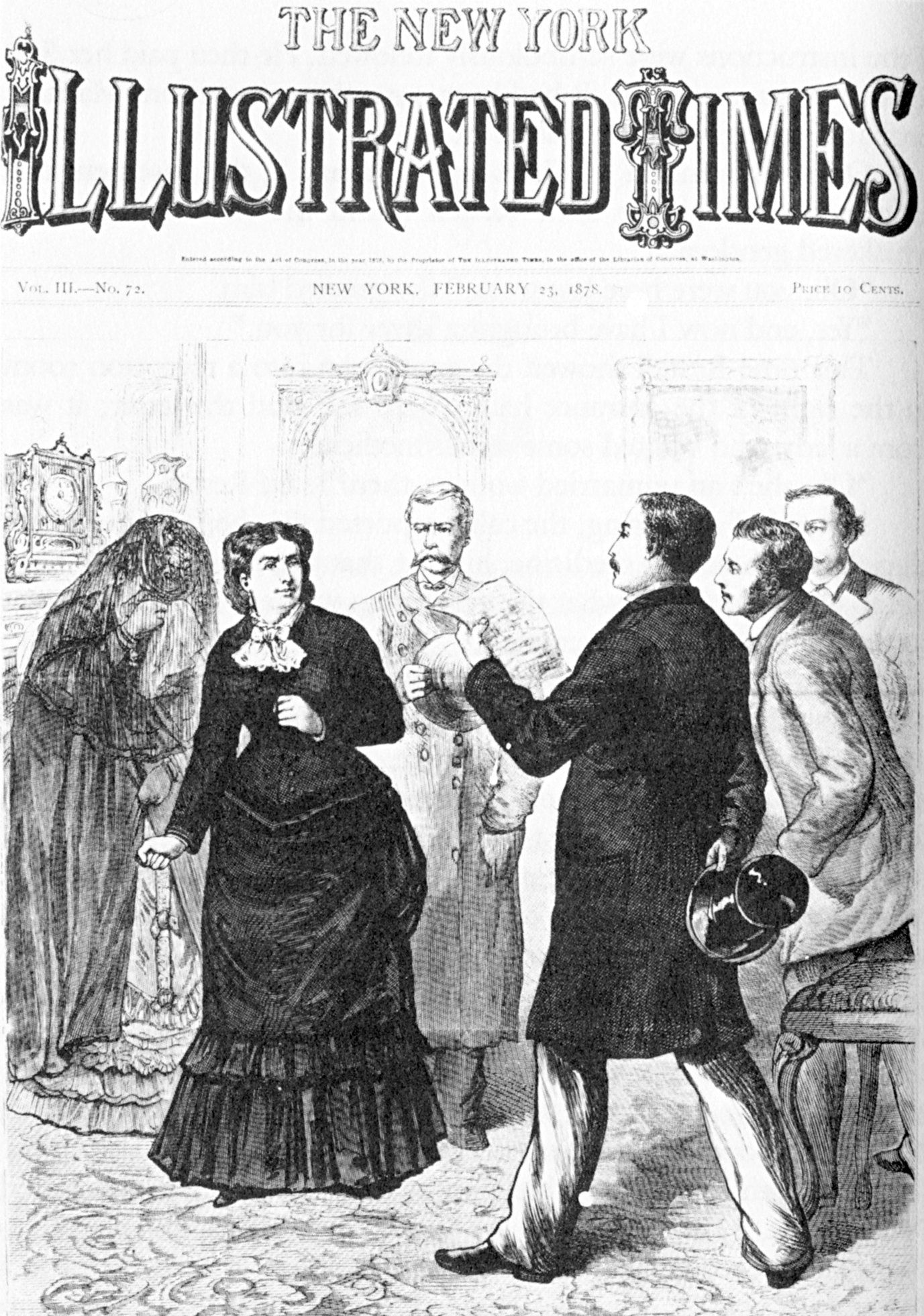
The New York Illustrated News, 1878, heralding the arrest of Madame Restell by Anthony Comstock (and, later in the issue, Restell in the Tombs):
Thanks to Victorian Gothic for this image!
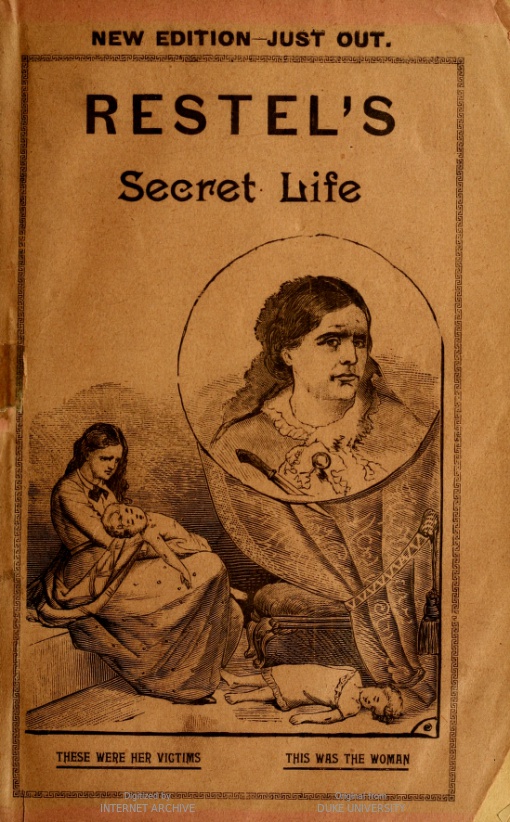
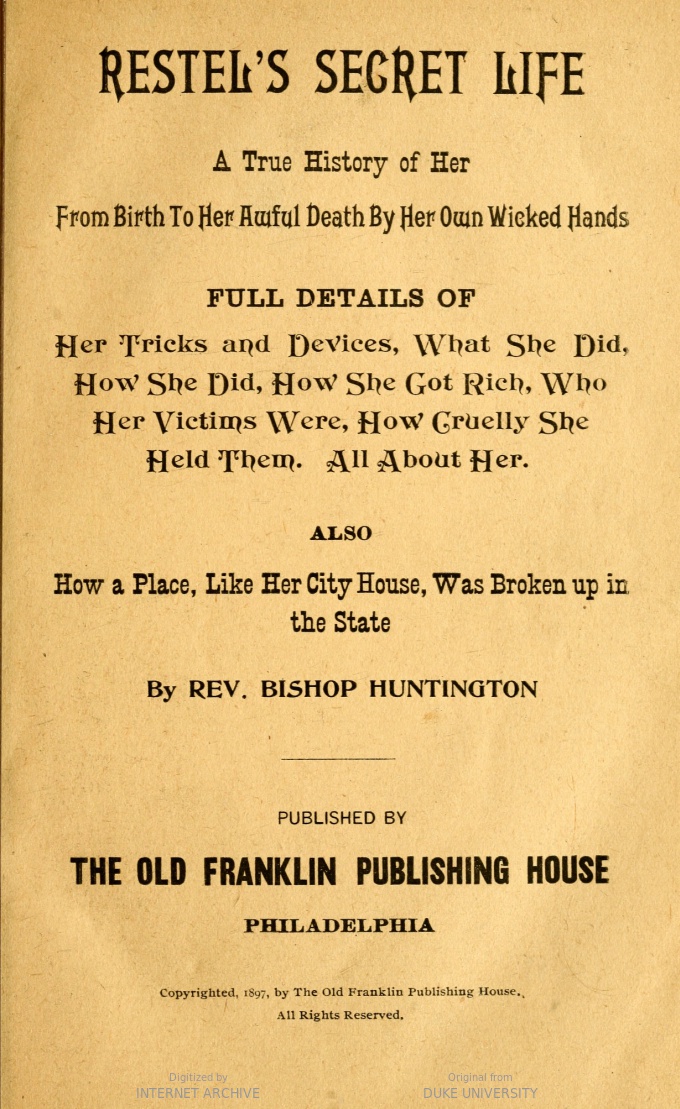
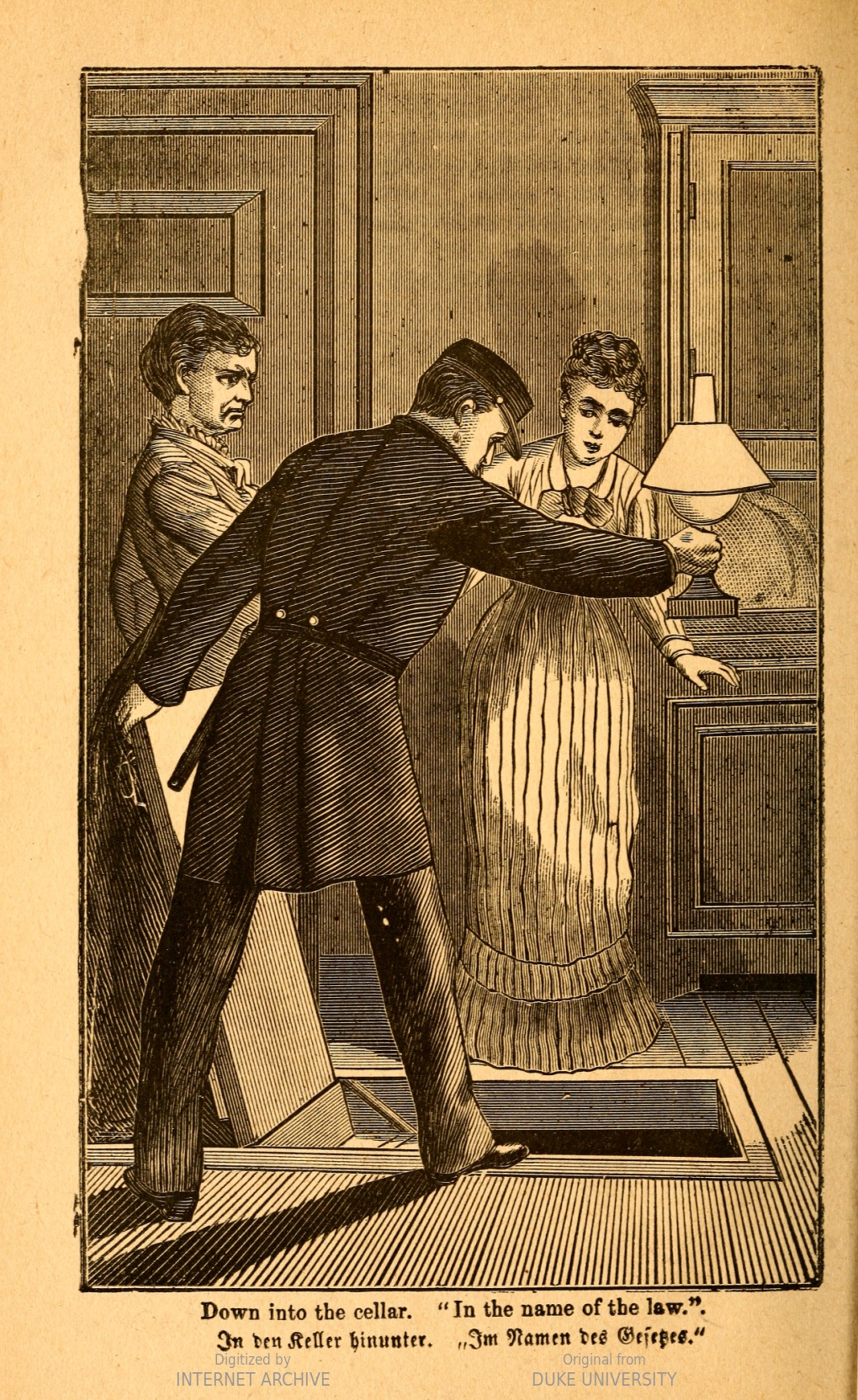
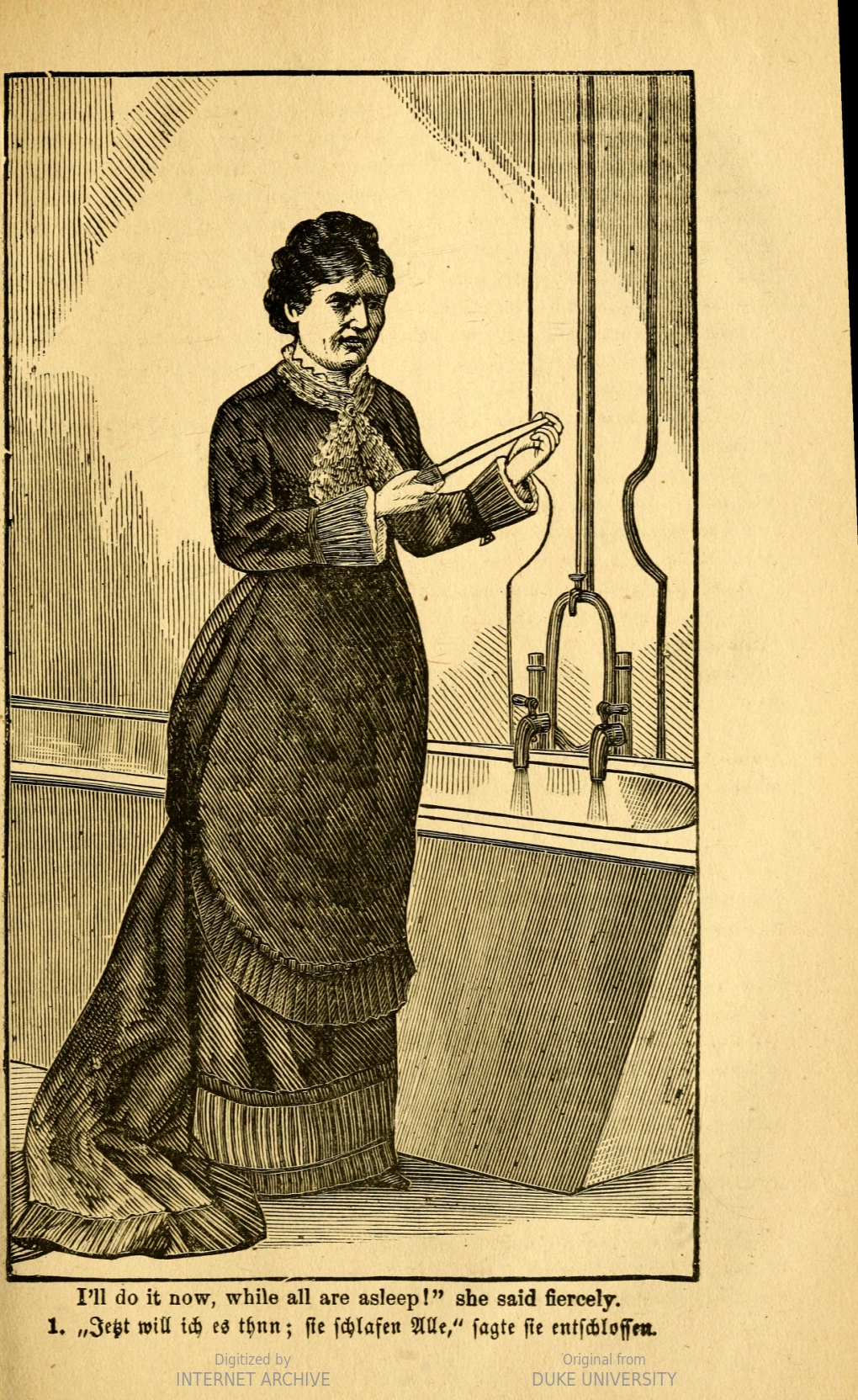
A few choice pages from an 1896 scandal novelization about the life of Madame Restell by Rev. Bishop Huntington:
Courtesy Hathi Trust
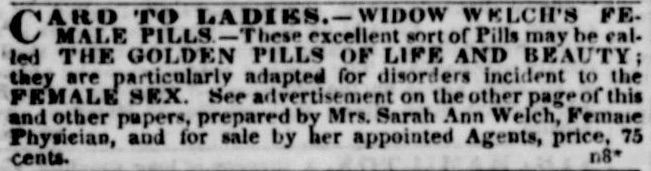
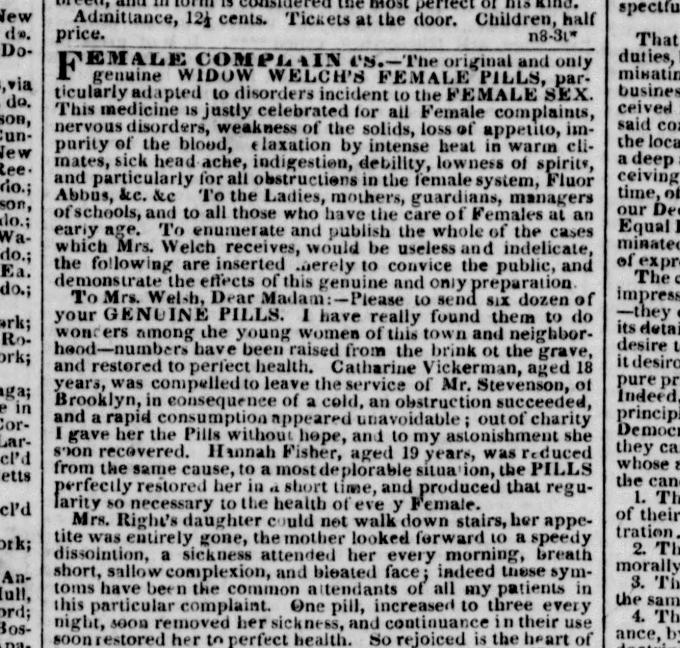
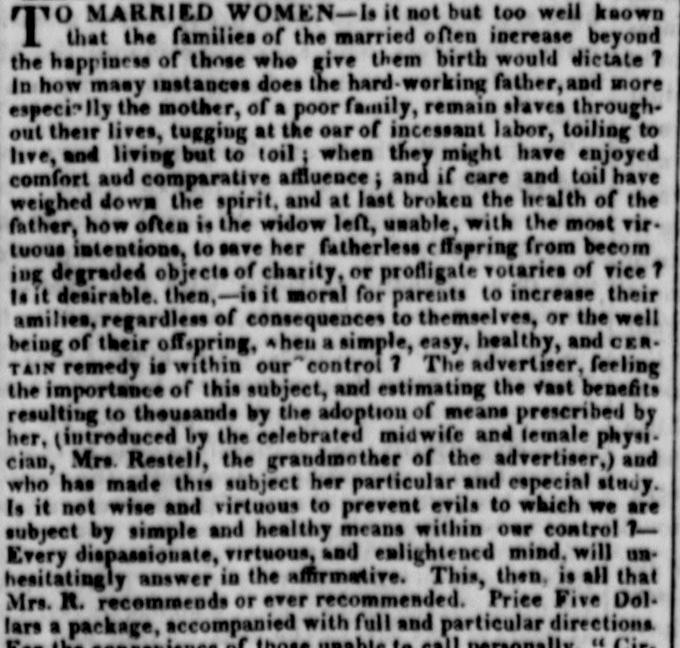
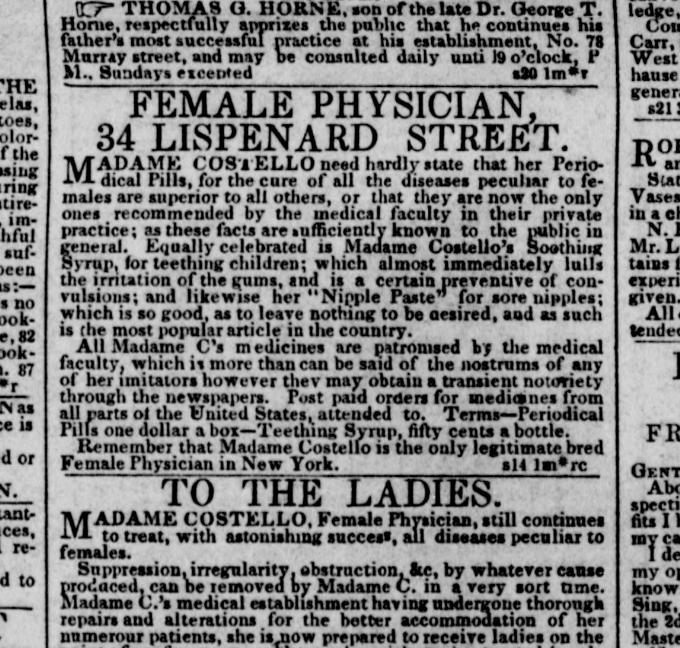
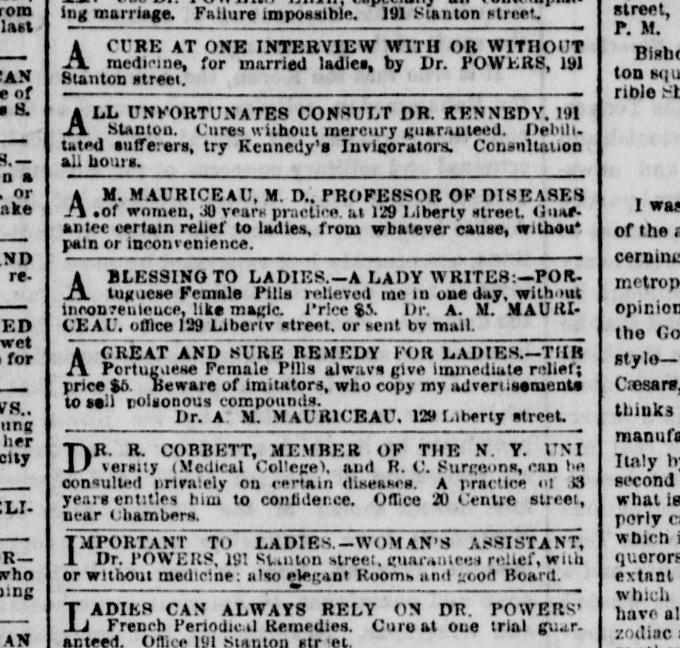
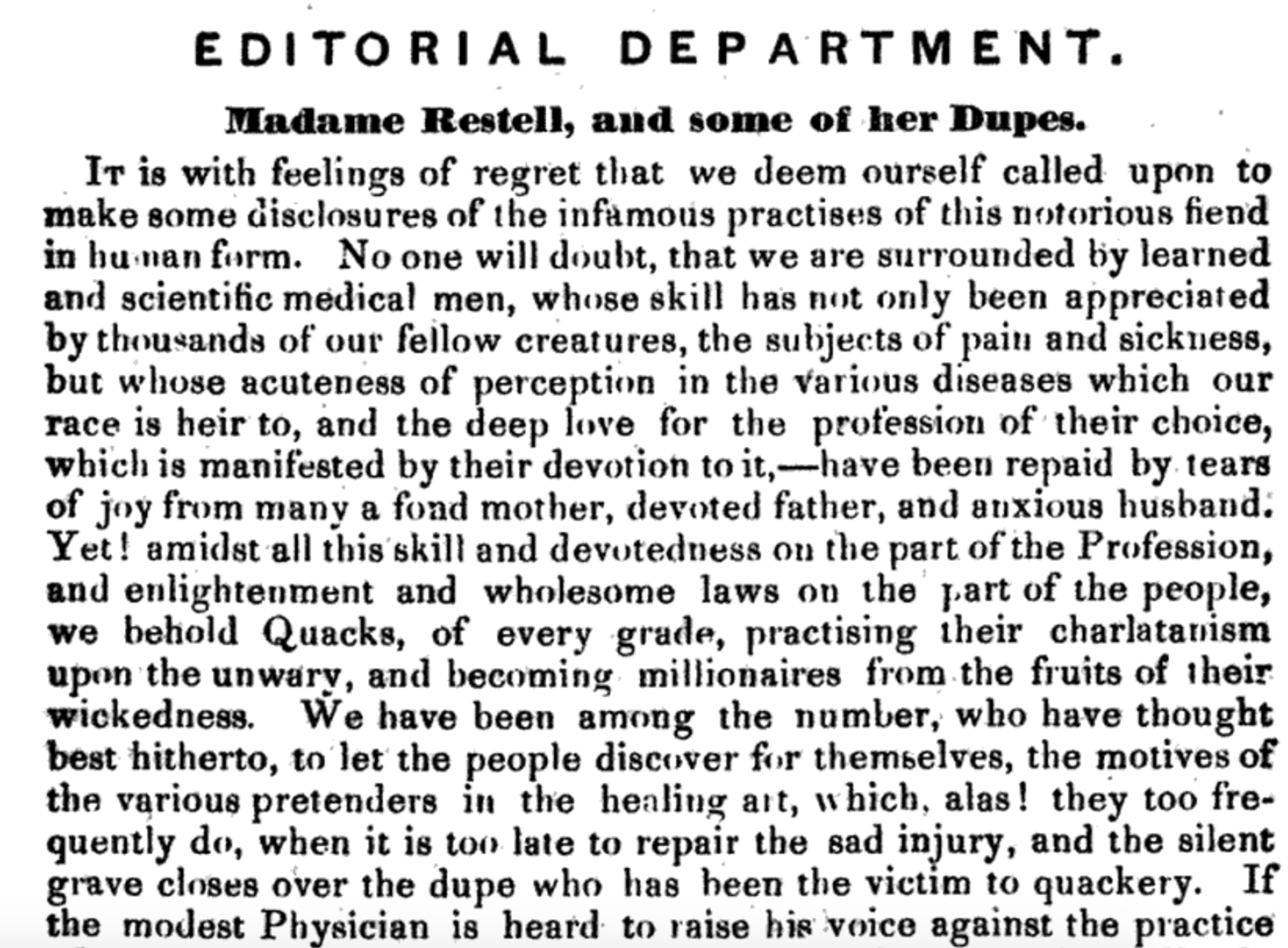
A sampling of ‘abortion pill’ advertisements from the late 1830s and early 1840s, from Madame Restell and her impersonators. NOTE: It’s hard to discern if these so-called medicines were for abortions or for other “female issues” given the vagueness of language:
Even before Madame Restell, there was the ‘Widow Welch’s Female Pills’. Both these ads ran in the New York Morning Herald on November 8, 1837:
Library of Congress
An early Madame Restell advertisement, New York Morning Herald, December 9, 1839:
A successful rival of Madame Restell was Madame Costello who worked off of Lispenard Street. Her ad from the Herald, October 10, 1842:
A series of advertisements for an assortment of female ‘solutions,’ New York Herald, August 4, 1867:
Madame Restell’s Fifth Avenue mansion (at 52nd Street), an area so newly developed in 1857 that there was nothing else around — except for the construction site of St. Patrick’s Cathedral.
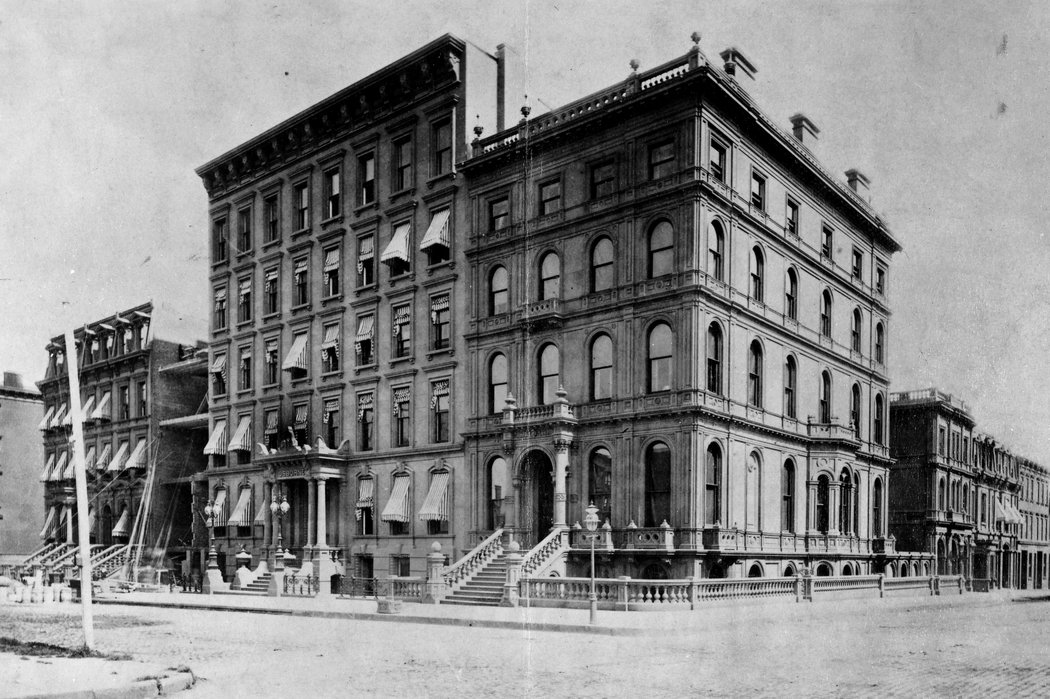
The mansion in later years after Restell’s death. The apartment building next to the mansion was also commissioned by Restell because nobody else would buy the property!
Courtesy NYPL
An illustration of the death of Madame Restell as imagined in Recollections of a New York Chief of Police by George P. Walling.
A big thanks to our special guest — author Nicholas Syrett, Associate Professor of History at the University of Northern Colorado!
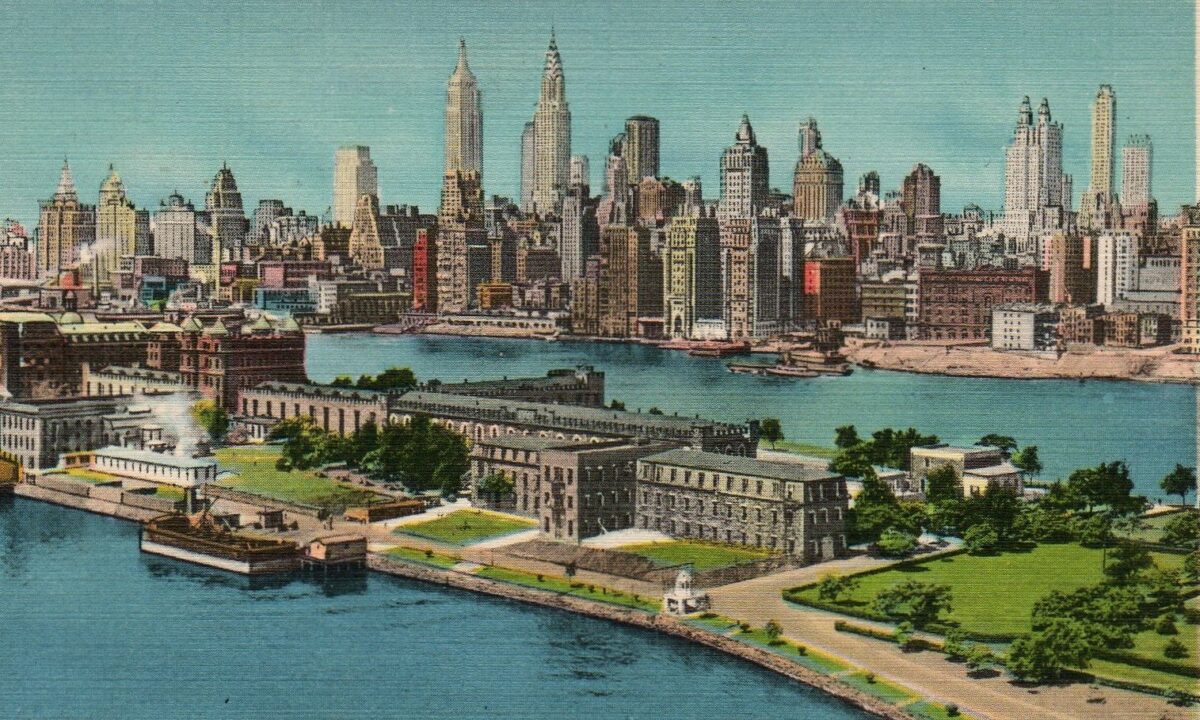
Welfare Island (once the more enticingly named Blackwell’s Island) was New York’s depository of human services, once a dour place of horrifying asylums and miserable workhouses.
In the 1960s Mayor John Lindsay was preparing to revitalize the East River island with new housing and increased support for the hospitals there. Architects Philip Johnson and John Burgee were brought in to rethink the urban space as a largely automobile-free community.
For this grand experiment, all they needed was a name. Luckily there seemed be a couple prominent figures being egregiously ignored in the city — Franklin Delano Roosevelt and his wife Eleanor:
“It is astonishing, and becomes more disgraceful with every passing year, that within the city there is still no memorial to this great New Yorker (except for FDR Drive, a dubious honor).
The opportunity is, however, immediately at hand. Welfare Island, now slowly undergoing a total reconstruction and rebirth, would take on a new symbolic significance if its name were changed to Franklin D. Roosevelt Island — or, better yet, to Franklin and Eleanor Roosevelt Island in honor of that extraordinary woman who was even more closely identified with New York City than was the president himself.”
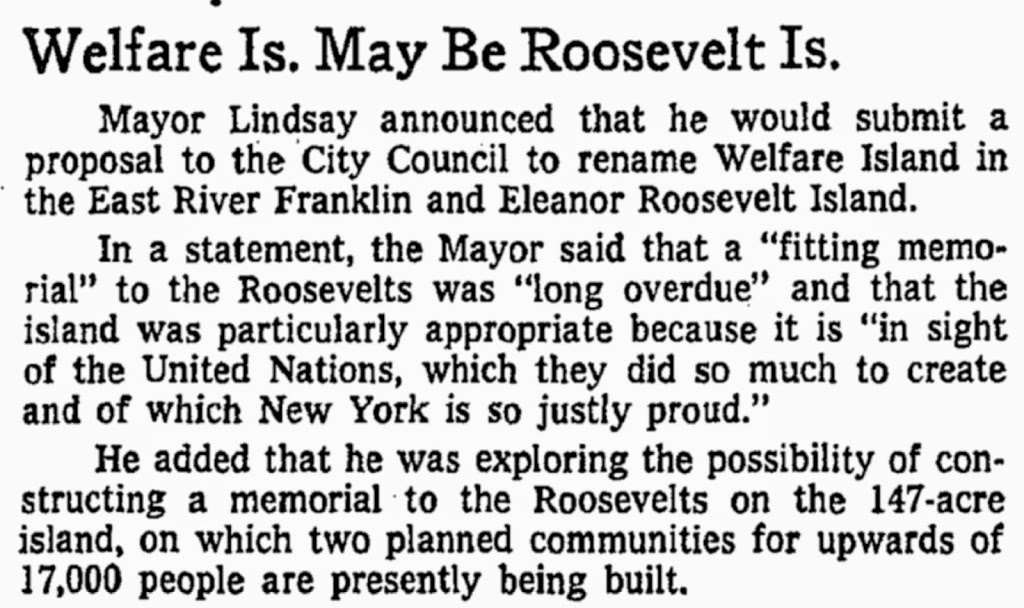
By the following year Mayor Lindsay submitted a proposal to re-name Welfare Island for the president and the first lady.
From Jan. 21, 1973:
It was officially approved later that summer but with a revised name — Franklin Roosevelt Island.
To the Council, “a witness testified that the name of Welfare Island should be dropped because plans were under way to start marketing this September the thousands of apartments already built and still under construction as part of a $300-million ‘new town’ designed to replace outdated medical facilities.” [source]
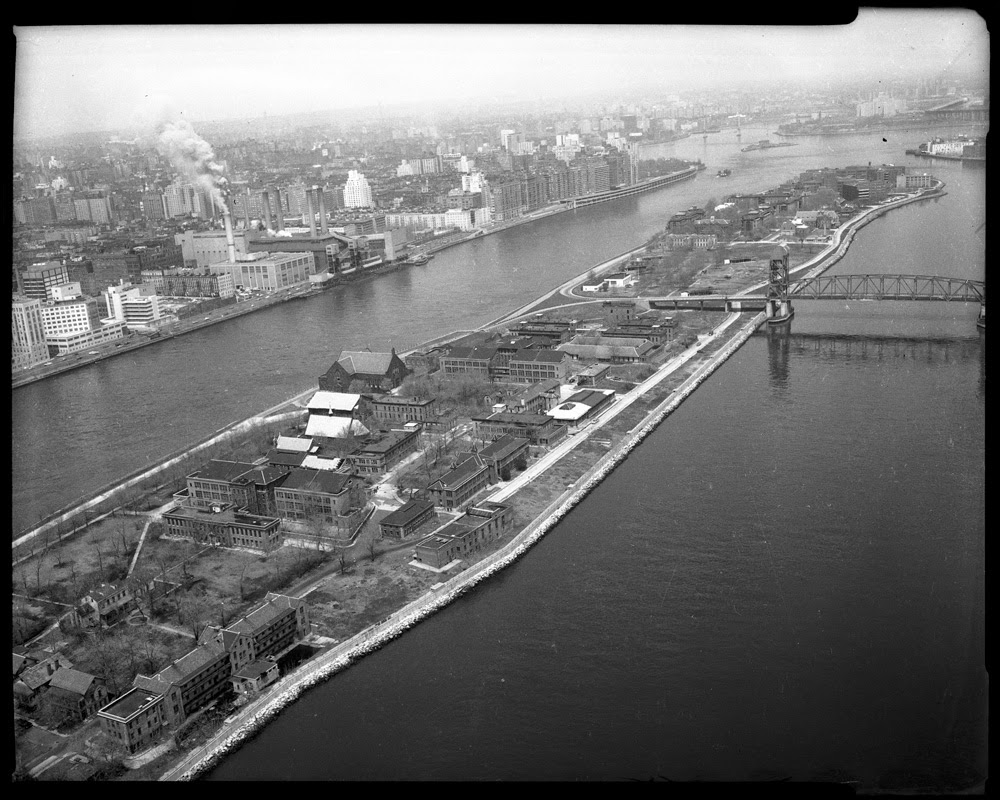
Below: The island in April 1961, photo courtesy the New York Fire Department
She finally did get her own memorial in New York City — an understated statue tucked away in Riverside Park.
It was unveiled on October 5, 1996 by Hillary Rodham Clinton.
Oddly enough, Hillary regaled the crowd with a story of imaginary conversations she liked to have with Eleanor. “When I last spoke to Mrs. Roosevelt, she wanted me to tell all of you how pleased she is by this great, great new statue.”
Top picture courtesy Museum of the City of New York
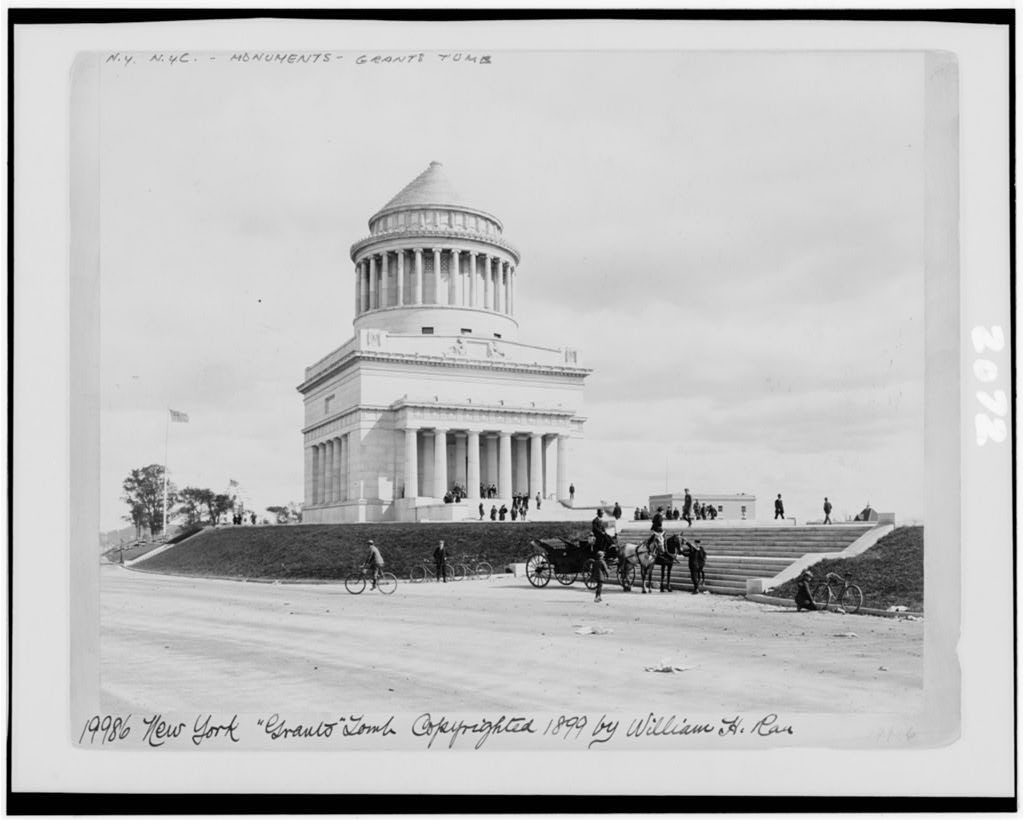
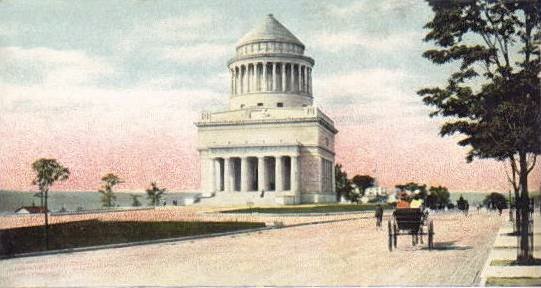
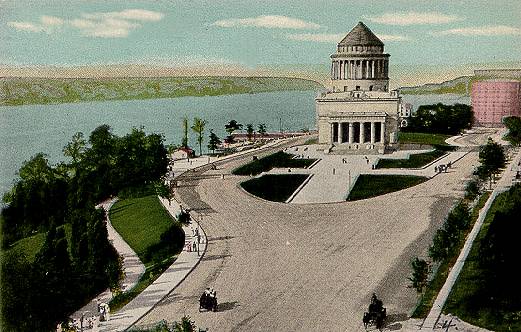
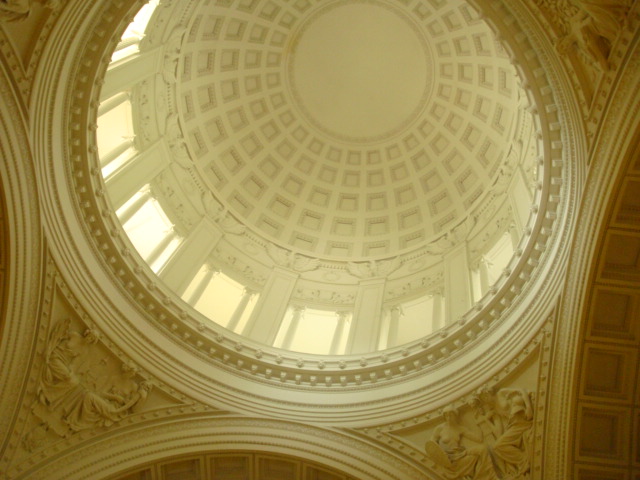
The fascinating story of Grant’s Tomb — and a quirky history that includes an ambitious architect, one of the seven wonders of the ancient world, lots of ugly raspberry paint, and strange charges of animal sacrifice.
The history of Grant’s Tomb plays an important role in the story of Riverside Park (released in 2018). Listen to that tale here:
And listen to the story of Grant’s Tomb in this very early episode of the Bowery Boys podcast from 2008.
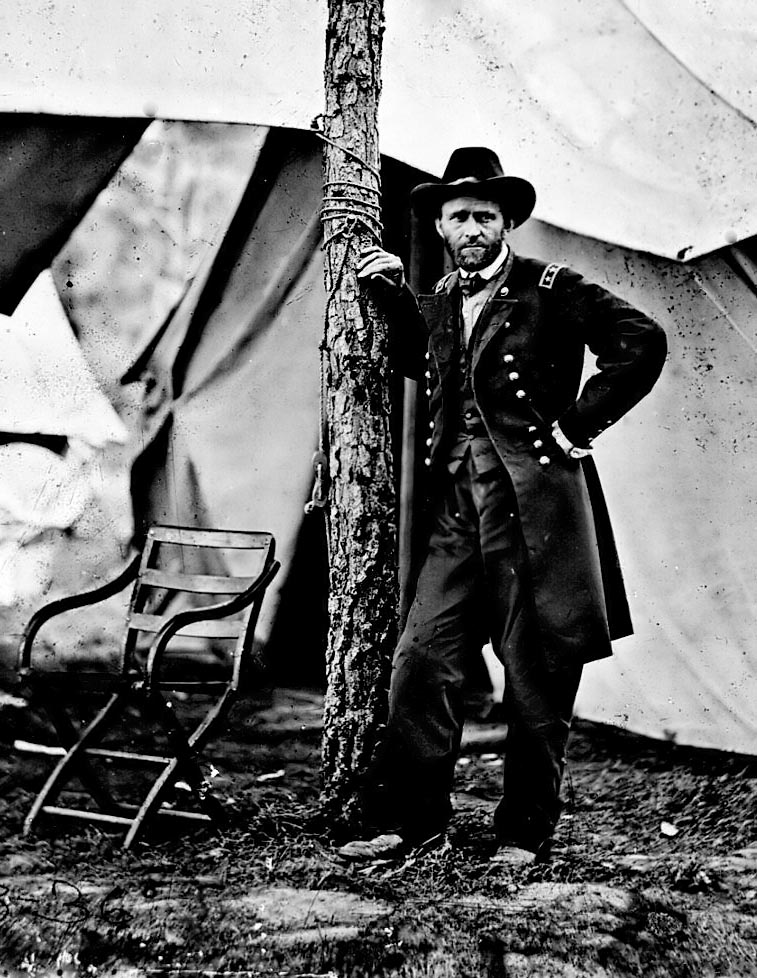
Ulysses S. Grant – perhaps America’s most famous man in the years following the Civil War. As president of the United States, Grant would be known for important political reforms — and a series of corruption scandals.
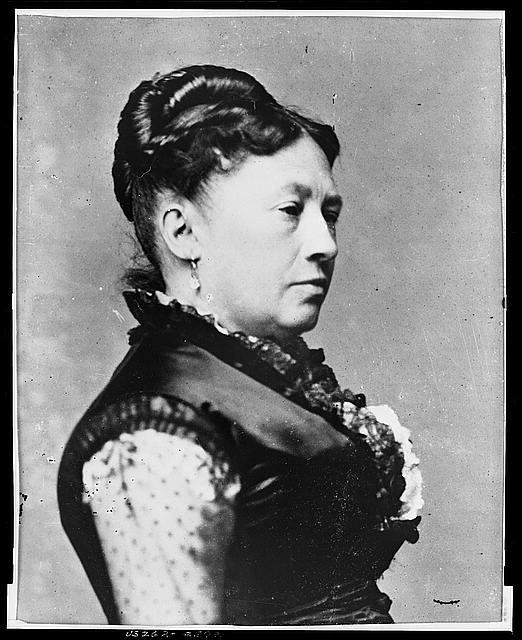
His wife Julia Dent Grant, entombed next to him
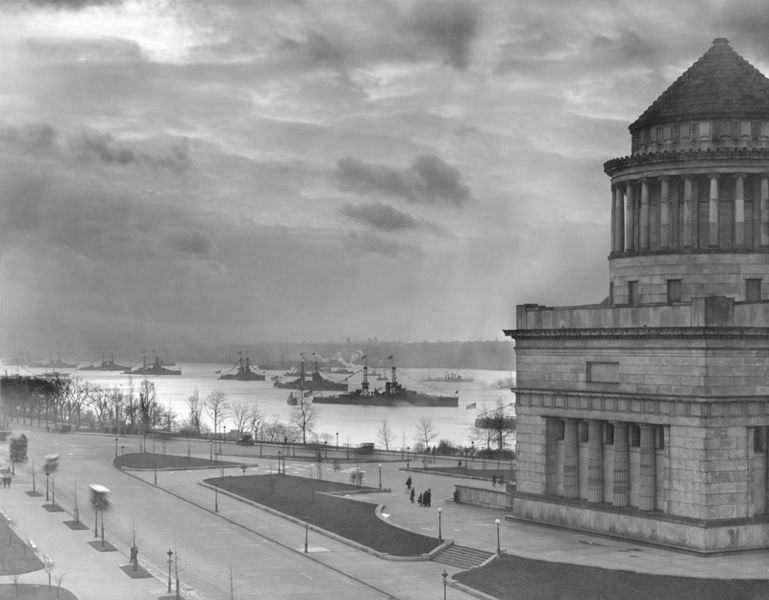
An ominous view of the Tomb during World War I, as battleships pass by it
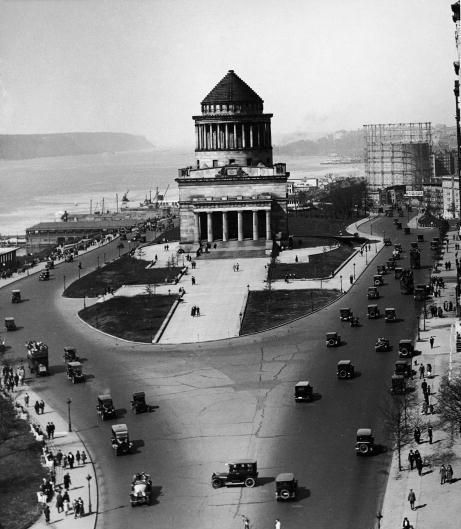
A great photo illustrating how somewhat barren that area of town was at the time. The silo-like building in the background is apparently a gas shell.
The website of the Grant Monument Association details some of the disasterous deterioration of the memorial during the 1970s:
Frank Scaturro, the Columbia University student who helped bring Grant’s Tomb back to life (photos courtesy the GMA website)
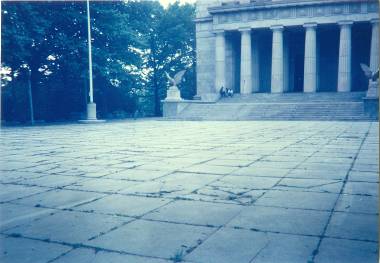
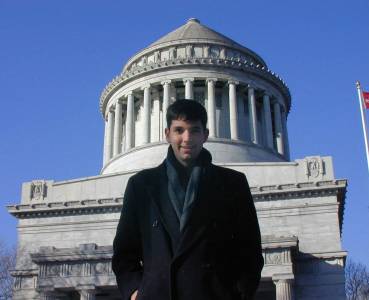
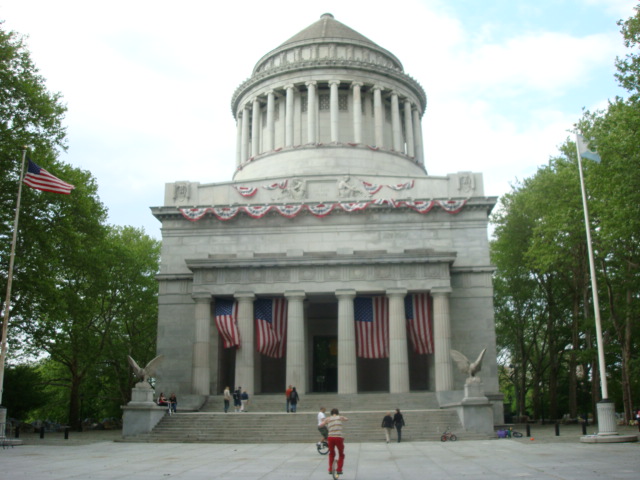
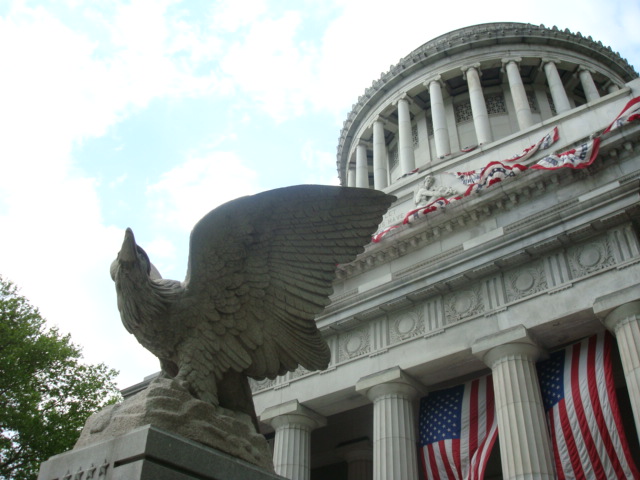
Grant’s Tomb today, complete with unicyclists (in foreground). Photos by Greg Young (taken in 2008)
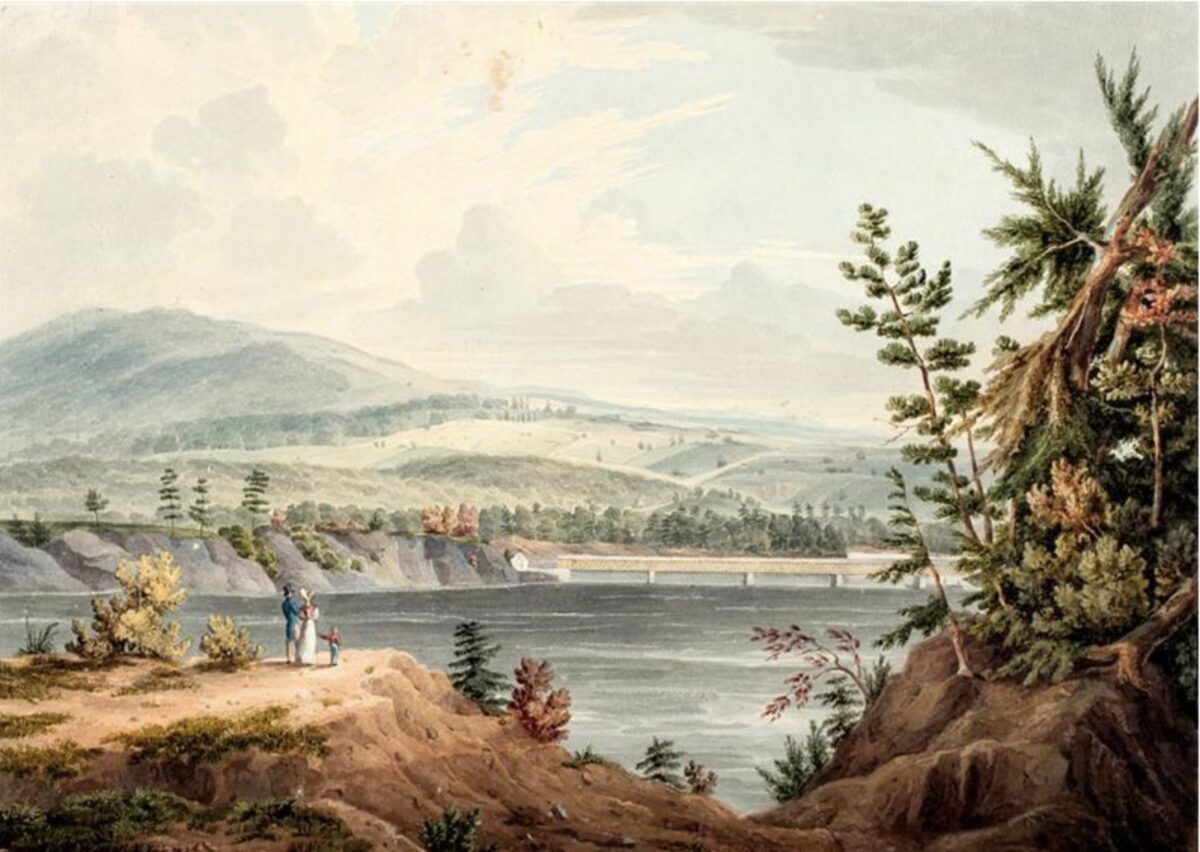
Hudson River Bridge near Waterford, New York, 1832. Courtesy New-York Historical Society
People have schemed to put a bridge over the Hudson River for well over two hundred years. That task would prove most difficult to those in Manhattan, given the distance between its shores and those of New Jersey.
After several failed proposals, the two were linked with the Pennsylvania Railroad tunnels (1910), the Holland Tunnel (1927), and finally, the George Washington Bridge (1931).
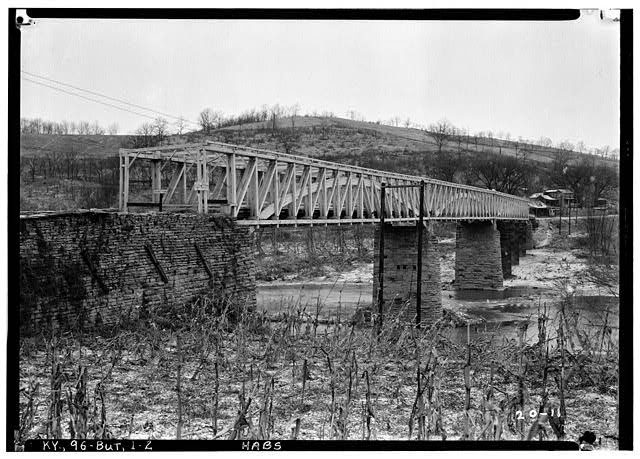
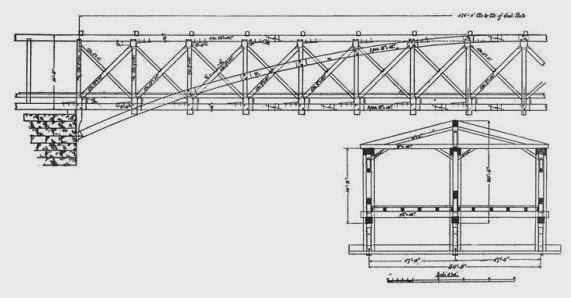
Above: A wooden bridge in Kentucky using the Burr truss, invented by Theodore Burr and first used over the Hudson River’s first bridge span. (Courtesy LOC)
But further upstate, industrious New Yorkers had an easier time of bridging the two sides, as the river became narrower in places and engineers could work upon sparsely populated lands.
The first bridge over the Hudson River rose at the village of Waterford(near Albany) in 1804, the work of inventor Theodore Burr, the cousin of Vice President Aaron Burr.
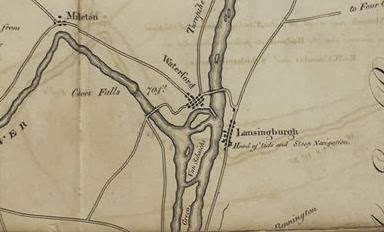
From an 1820 map of the Hudson River. You can see where Burr’s bridge was located, situated over the Hudson until the 20th century (courtesy NYPL):
While Aaron was engaging in a vituperative war of words with Alexander Hamilton, his cousin Theodore was crafting an extraordinary bridge, described in a later history by his ancestor as “four combined arch and truss spans, one of 154 feet, one of 161 feet, one of 176 feet, and a fourth at 180 feet.”
By this point, he was already a well-known, even adventurous builder, but the Waterford bridge was truly something unique. He eventually patented his design, which became known as ‘a Burr Truss,’ used in the construction of covered bridges throughout the United States.
A sketch of the Waterford bridge, as illustrated by Thomas Cooper in 1889, and an excellent view of what became known as the Burr Truss:
The bridge was coming along nicely by the spring of 1804. The local paper noted that “the erection is proceeding rapidly, the abutments, (on shore sides) and one of three piers are already near finished, and the frames of the arches are in a state of equal preparedness.
Concerning the abutments and piers, there is not the least doubt that they will render the bridge secure from ice in spring seasons.”
I’m not sure where Theordore was in July, whether at the bridge site or back at his grist mill in Oxford. The bridge was over one-third completed that month when Theodore got word that his esteemed cousin had met Hamilton in a duel at Weehawken, 150 miles down river, leading to the death of Hamilton.
But while Aaron’s reputation would quickly deteriorate, Theodore’s would briefly flower, becoming America’s most prolific bridge engineer in the early 19th century. His most impressive span, the Susquehanna River Bridge in Pennsylvania, survived until 1857.
Strangely, however, Theodore’s eventual fate would eventually mirror his cousin’s. Many of his bridges fell apart, and his finances were ruefully mismanaged.
He actually disappears from the historical record; according to author Donald E. Wolf, “[h]is heirs report that he died in 1822, but they have been unable to say what caused his death or to identify the place of his burial.”
Originally exposed to the elements, the bridge was later sheathed in a covering. It held sturdy over the Hudson River until it was destroyed in a gas fire in 1909.
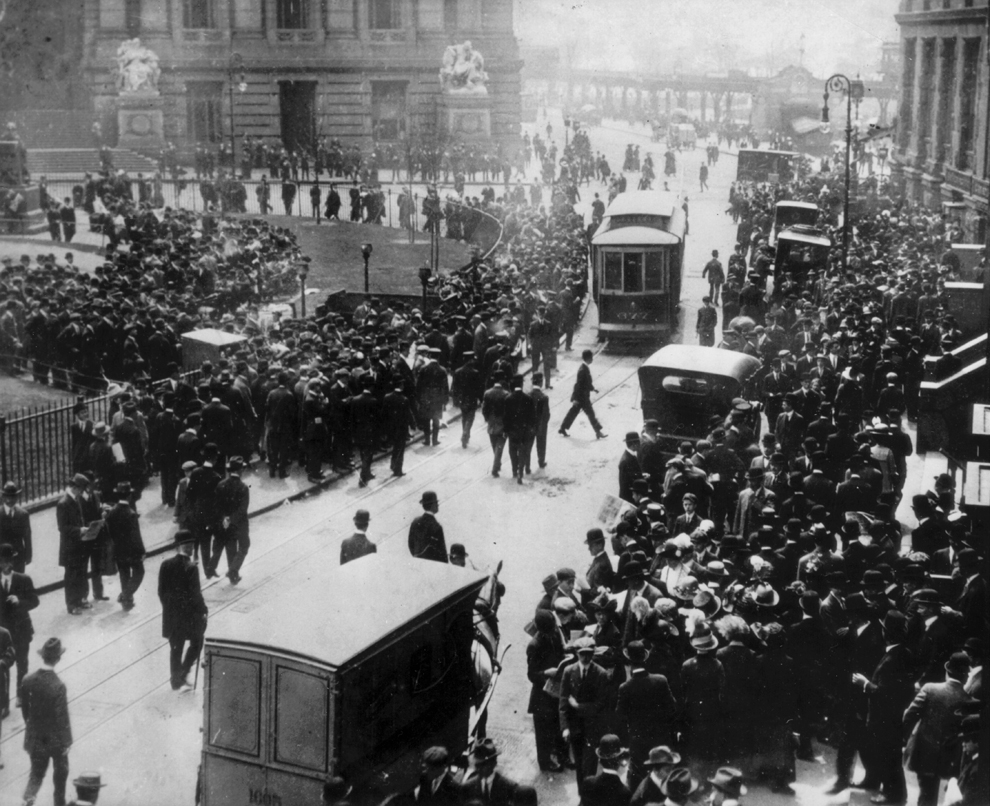
The Waiting Game: Down at the White Star Line's Broadway offices near Bowling Green, anxious New Yorkers line the streets waiting for news about the sunken vessel. 1912
Over fifteen hundred people died the night the Titanic sank, April 14-15, 1912. The early reports from the New York newspapers, of course, spent their time mourning the city’s most connected figures to society.
Even from some of the most obsessive sources on the Titanic, the details on the lives of dozens of men and women who died below deck are sometimes hard to locate.
There’s always been something slightly unsettling about using primary news sources for Titanic research. The bias towards wealthy lives over poor ones — and of American and British lives to all others — can be a little unsettling.
For instance, an anecdote from an April 20, 1912, article in the New York Times: “…[I]t became known among those saved from the Titanic were six or eight Chinamen who were among the steerage passengers on the big liner. It seems that they climbed aboard one of the lifeboats without anybody making objection, despite the fact that many of the women in the steerage of the Titanic went down with the ship.“
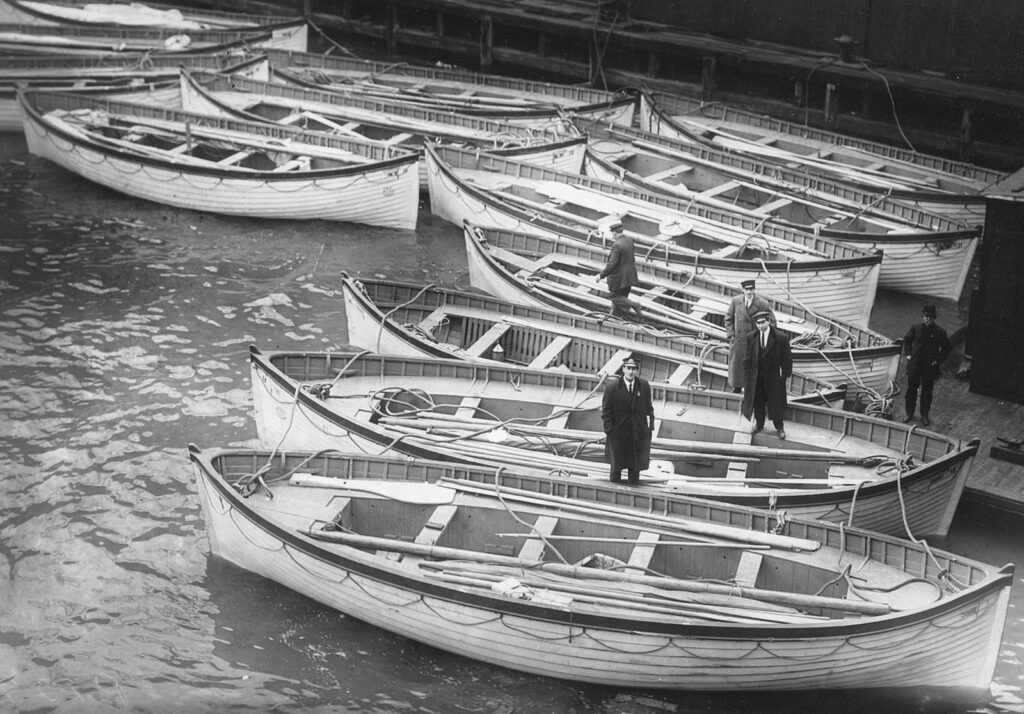
Titanic’s Lifeboats at The White Star Lines Pier 54 in NYC after Sinking. [source]
But this was indeed a tragedy that shook most of the entire world to its core and, in particular, changed the lives of many Americans, from tenements to townhouses.
The old-family names and the wizards of business (Astor, Straus, Guggenheim) have been well documented. But here I present the fates of five well-off but perhaps lesser-known New York women who survived the sinking of the Titanic with intriguing stories of their own to tell:
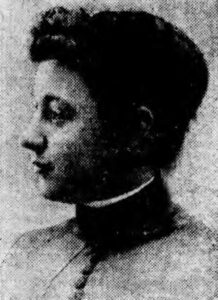
Dr. Alice Farnham Leader Born in New York, May 10, 1862
Alice would have been among the second generation of women trained in medicine, and a career in pediatrics was one of the few that a women of her day could ably progress towards. As late as 1907 she was employed at Bellevue Hospital as ‘a social service nurse‘.
However she wasn’t a practicing doctor by the time she boarded the Titanic; the 49 year old had retired when her husband died in 1908.
She was rescued by lifeboat no. 8, commanded by one of the Titanic’s most famous names: Noël Rothes, the Countess of Rothes. “The countess is an expert oarswoman and thoroughly at home in the water,” Alice told the press, who sadly seemed more interested in the fate of the titled gentry than of this mysterious doctor who appears to have avoided the spotlight for the remainder of her life.
Afterwards: Dr. Leader is mentioned in a Utah newspaper in 1916, discussing the crisis of graying hair. Her solution: “A head exercise for circulation is to lie on the couch with the head projecting beyond the couch. Bend the head forward, backward, to each side, to each side, then rotate.” Died: April 20, 1944
Irene (Rene) Harris Born: June 15, 1876
A New York stage actress with some considerable credits to her name, Harris boarded the Titanic with her husband Henry Birkhardt Harris, the theater impresario and partner (with Jesse Lasky) in the Folies Bergere, which has just opened in midtown the year before.
Irene made it to a lifeboat but her beloved husband perished on the Titanic. The Times recounts her cable to the Hudson Theater: “Praying that Harry has been picked up by another steamer.”
Afterwards: Returning to the New York theater in grief, she sued the White Star Line for a large petition of damages, and perhaps with good reason; she discovered when she got home that her husband was nearly bankrupt from the Folies Bergere venture and other flops.
So she decided to make her own money, soon becoming one of Broadway’s first female producers with such shows as ‘Lights Out’ and ‘The Noose’ and buying a Park Avenue apartment.
But her wealth didn’t make it out of the Great Depression, and she spent her last days living in Manhattan hotels. In 1958, she was subjected to a screening of the Hollywood film ‘A Night To Remember‘. “I think your film title is a mistake,” she said. “It was a night to forget.” Died: September 2, 1969
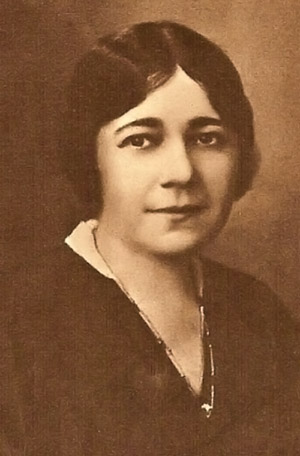
Margaret Hays Born: December 6, 1887
If not for the tragic sinking of the Titanic, Margaret Hays’ fate might have made a charming family comedy. The young woman lived at304 West 83rd Street and had gone to Europe with two school friends Olive and Lily.
And there was another lady with her on the Titanic that fateful night — Margaret’s Pomeranian dog.
All three friends and her little dog too made it to a lifeboat, but Margaret’s story was just beginning.
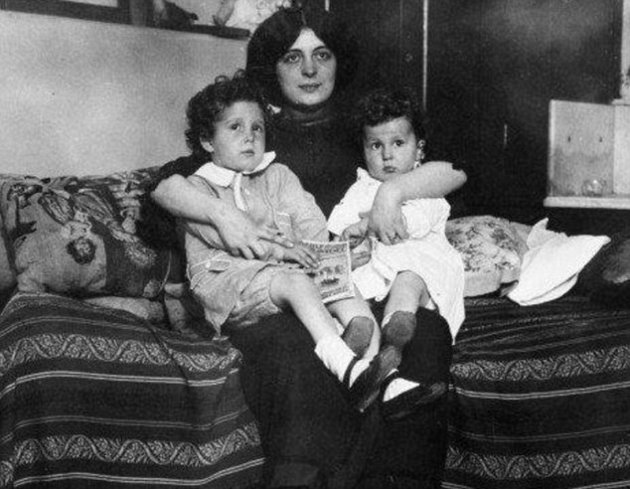
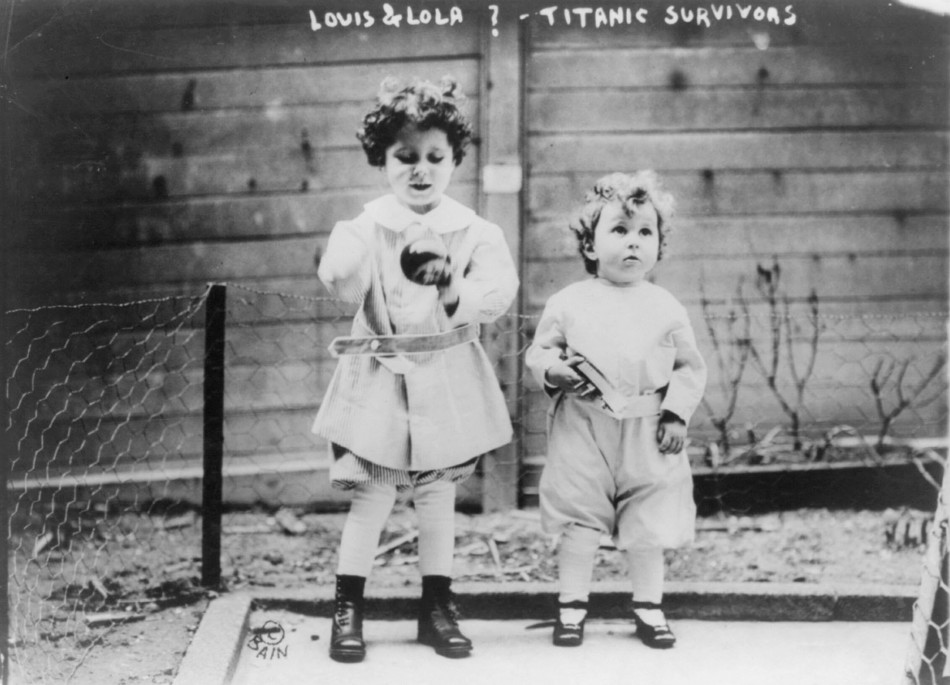
Onboard the rescue ship Carpathia were two small frightened French boys.
The ‘Titanic orphans’, named Michel and Edmond (not Louis & Lola!).
They had been separated from their father Michel who was never found. Hays, who spoke French, took the boys into her care during the somber voyage and well after they arrived in New York. They stayed at her home on West 83rd — she distracted the distraught boys with carriage rides up Riverside Drive — until their mother arrived from France.
On her arrival, it was revealed that their father had taken the two boys against their mother’s will during a bitter divorce battle.
Afterwards: Hays married a Rhode Island doctor and lived in relative comfort, dying during a vacation in Argentina. Died: August 21, 1956
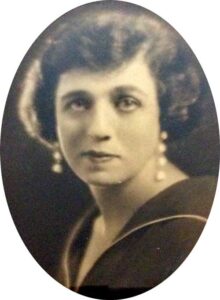
Leila Meyer Born in New York, September 28, 1886
The young socialite and daughter of Andrew Saks (founder of Saks Fifth Avenue) met aspiring Wall Street broker Eugene Meyer and married him in 1909.
While traveling, Leila was wired the tragic news that her father had died. (Later, she discovered that a sizable part of their fortune had been willed to her.) Leila and her husband boarded the Titanic to return home. She made it to a lifeboat; her husband died aboard the ship.
Afterwards: She later remarried and lived the remainder of her life at 970 Park Avenue, rarely speaking to the press about her tragedy, although her spectacular jewelry collection was frequently remarked upon in women’s magazines. Died: November, 27, 1957
Mrs. Charlotte Appleton Born in New York, December 12, 1858
Charlotte was well versed in the thrill of ocean travel. Her father, once a well-known dry goods importer, worked for the firm which operated theBlack Ball Line, one of the oldest shipping companies in New York and no stranger to a few shipwrecks of its own.
She married into the prestigious Appleton publishing family and was on the Titanic with two sisters, returning from a funeral in England.
Afterwards: Mrs. Appleton’s name is familiar with Titanic buffs as she was an acquaintance of Col. Archibald Gracie IV, the great-grandson of the man who built Gracie Mansion and one of the more notable bold-faced names on the Titanic. Mrs. Appleton lived the remainder of her life at 214-33 33rd Road, the oldest house in Bayside, Queens.
Died: June 25th, 1924
Some pictures and many of the birth/death dates above are courtesy Encyclopedia Titanica. Top picture courtesy the Library of Congress.
This story was originally published on the 100th anniversary of the Titanic and refreshed the honor the 110th anniversary.
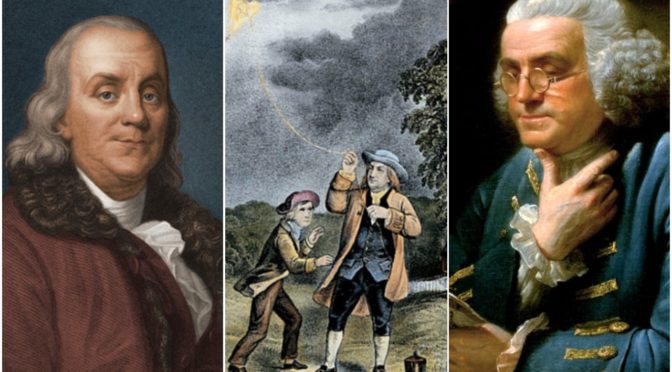
Benjamin Franklin helped to create the modern world. His legacy is all around you — from the electricity which powers and illuminates our homes to the ideas that form our system of government.
For the past three episodes of The First: Stories of Inventionsand their Consequences (the Bowery Boys spin-off podcast from 2016-2018), Greg Young has taken you through the story of the Founding Father’s extraordinary life by way of his inventions — printing innovations, the Franklin stove, the bifocals.
In his final years, as the most esteemed member of Congress, he brought his scientific mind into service to create a new country.
All three episodes of this series are now available. You can find The First: Stories of Inventions on iTunes, Stitcher, Spotify, Overcast or wherever you get your podcasts. (Just search for ‘The First Stories’.)
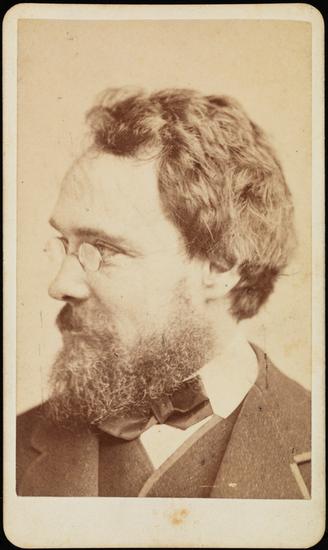
On November 19, 1895, Calvert Vaux went for a morning walk from his son’s home in Brooklyn. He never returned.
The 70 year old architect had helped to create the greatest parks in the cities of New York and Brooklyn.
His landscape collaborations with Frederick Law Olmsted had given Manhattan its Central Park and Brooklyn its Prospect Park and Fort Greene Park.
His own architectural work could be seen at Jefferson Market Courthouse, the American Museum of Natural History and the Metropolitan Museum of Art. In 1895 he still retained an honorary role as the parks department’s landscape adviser, although he had mostly retired from public life.
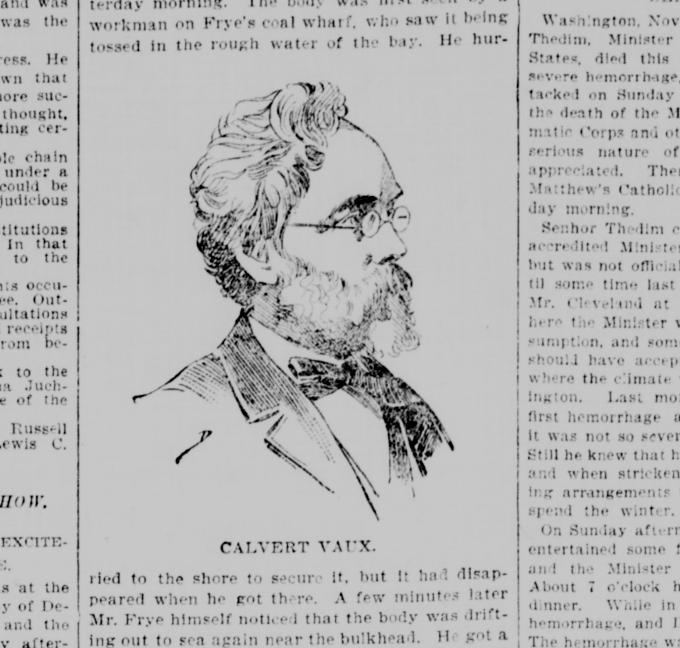
Calvert Vaux, circa 1865-1871
Courtesy Museum of the City of New York
His son Calvert Bowyer Vaux lived in a house on Twentieth Avenue between Bath and Benson Avenues in today’s neighborhood of Bath Beach. The elder Vaux often stayed with his son and was known for taking morning walks along the waterfront
On November 19, 1895, it was gray and foggy on the morning that Vaux departed his son’s home, leaving behind “a gold watch and chain and his vest” with about two dollars in his pocket.
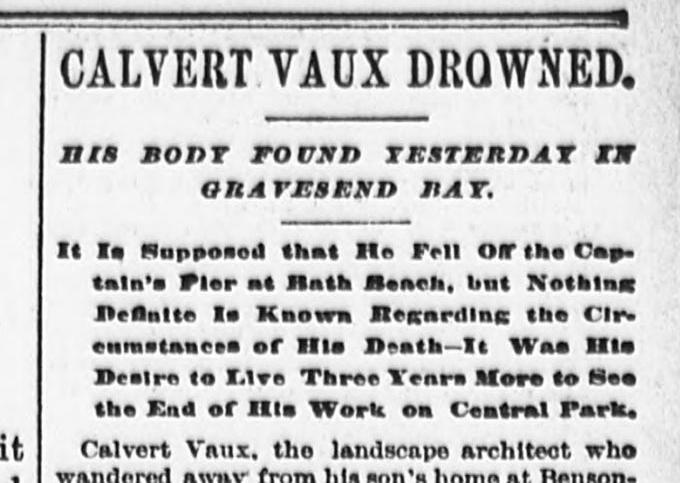
Below: The New York Tribune made a brief mention of Vaux’s vanishing in the followingone-sentence bulletin:
At some point during the day he was spotted by a “Captain Ditmar” — possibly Captain Walter Earl Ditmar — on a pier near the water, and the two briefly spoke. Vaux is reported to have said to the captain, “I’m admiring the improvements you’ve made hereabouts.”
The two briefly talked about methods in which to make the beach area more amenable to visitors before Vaux proceeded to walk the piers by himself.
Ditmar was the last person to see Vaux alive.
The architect must have been known for taking very long walks for he was only discovered missing in the late afternoon.
By the evening his family became worried; the police were called the following morning. All the local hospitals and hotels were checked. While it was well-known that Vaux was a frail man, he was often known to walk up to Prospect Park, several miles from his son’s home. But fears that he may have fallen into the bay were already present.
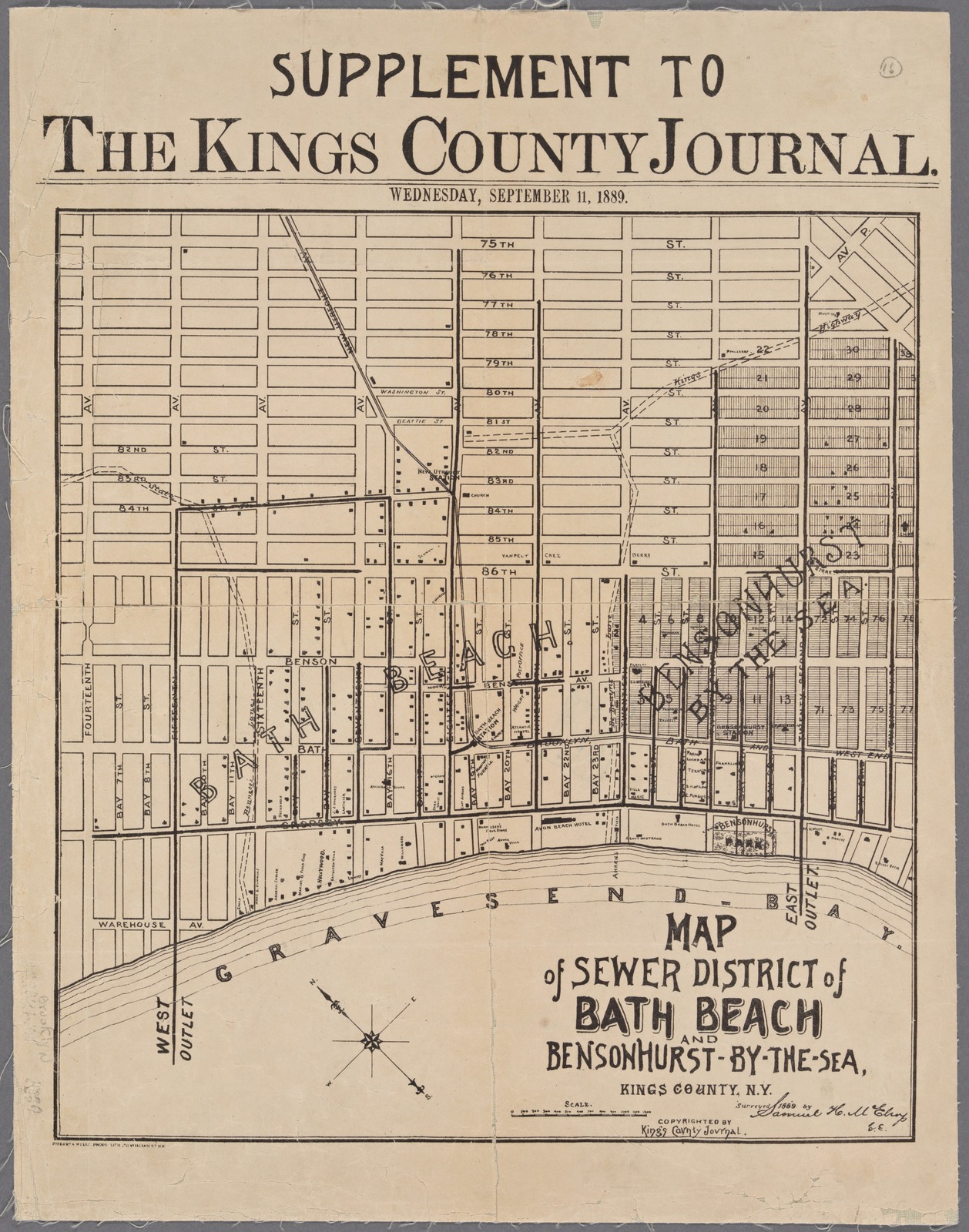
Below: An 1889 map of the district Vaux’s son lived in. The elder Vaux was last seen along the shoreline depicted here.
The following day the body of Calvert Vaux was indeed found in Gravesend Bay at the foot of Bay 17th Street, very close to the site of today’s Bath Beach Park.
As described by the Brooklyn Daily Eagle:
“A workman on Fry’s coal dock [later identified as Benjamin Butler] first saw the body being tossed about in the rough water, but when he rushed to the shore to secure the corpse it disappeared. It was some minutes later before Mr. Fry himself saw it drifting alongside the bulkhead out to sea again. With a boat hook he succeeded in bringing it close to shore.”
The police were called, bringing Vaux’s son down to the shore to identify the body. He could scarcely bring himself to look into his father’s face, recognizing his father’s well-worn suit before looking away.
“There was a bruise on the head, a slight cut over the eye, and the hat, spectacles and left shoe were missing,” reported the Times.
Given the circumstantial evidence, it seems clear as to what may have happened to Mr. Vaux. While on a walk along the shore, he may have fainted or tripped, falling into the water and drowning in the waves.
The Sun further speculated: “As he was interested in the construction of the pier, it may be that he leaned over the stringpiece to examine the foundation piles. In doing so he may have fallen into the water, as he was ill and feeble, being 70 years old.”
Most press reports of the day made it clear no foul play was suspected. Vaux Jr. brushed away any suggestions of suicide on his father’s part. “The theory of suicide has been disclaimed by his relatives who said that [Vaux] had been cheerful and mentally able the evening before he disappeared.” [source]
But not everybody was convinced, and the Tribune reported that the “theory [of suicide] prevails with some people.”
Weeks earlier Vaux had told his daughter that he wanted to live long enough to see the completion of his plans in Central Park. “If I can only manage to live until 1898, my plans for the improvement of Central Park will be completed, and I won’t worry about any other work.”
Sadly Vaux’s death did have a certain impact on Central Park. Without the dutiful eye of its co-creator, maintenance on the park gradually deteriorated, and it would not be until the installation of Parks Commissioner Robert Moses that the condition of the park would be improved.
Today, nearby the place where Vaux’s body was discovered, you may enjoy a picnic and a sunset at Calvert Vaux Park in Gravesend.
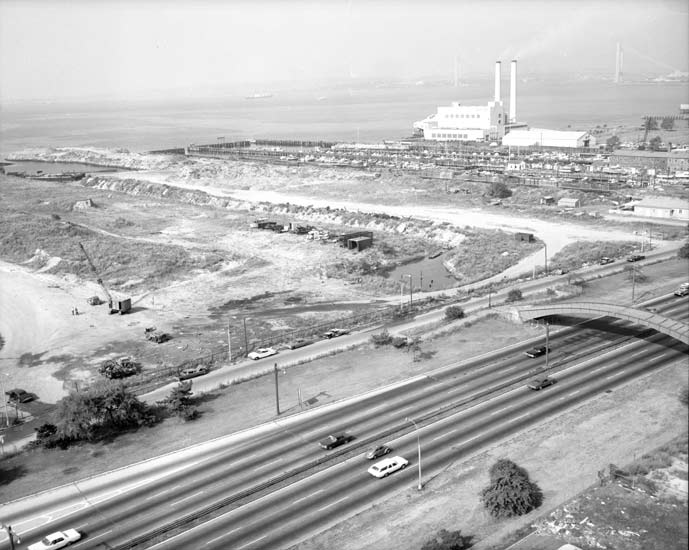
Below: Calvert Vaux Park (the former Dreier-Offerman Park) has greatly improved since the 1960s when it was essentially an undeveloped mess, linked by a pedestrian bridge. Picture courtesy the New York City Parks Archives
It was once called Dreier-Offerman Park for the former home for unwed mothers which once sat here. It was changed to honor the architect in 1998 when it was radically re-landscaped and improved. Knowing that he died close to here, I kind of think being named after an unwed mother’s home is the less depressing name.
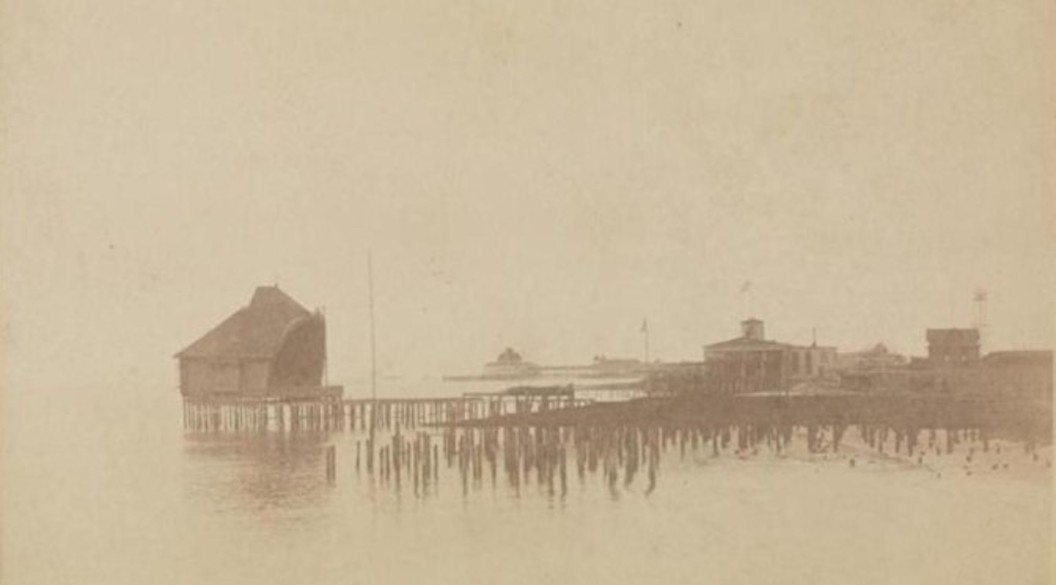
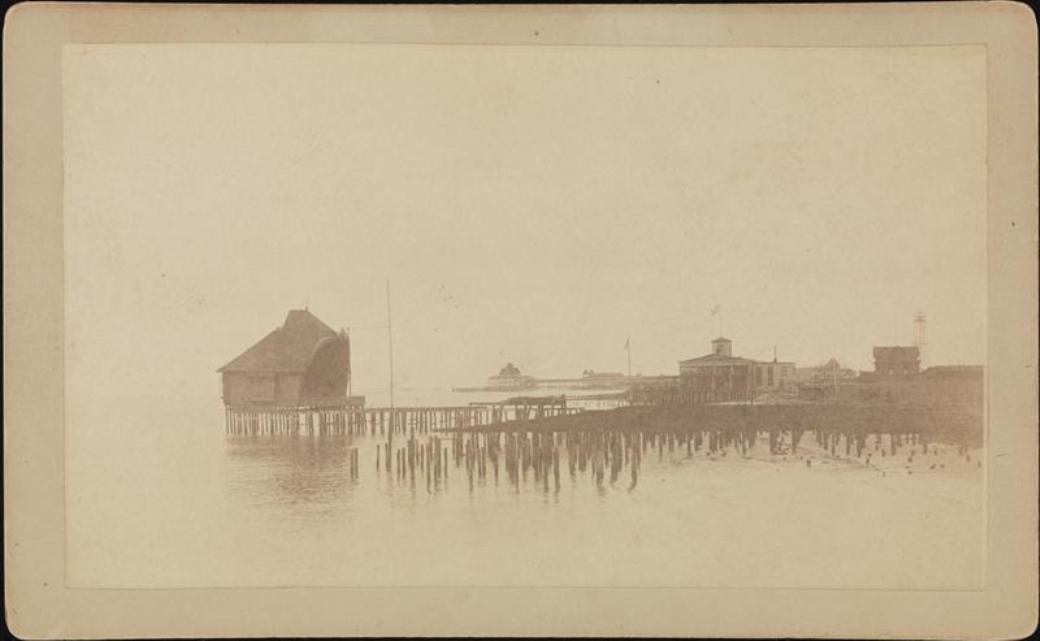
Picture at top: A forlorn pier from 1890, located at West Brighton Beach, Brooklyn.
Photograph by Robert Bracklow. Courtesy Museum of the City of New York
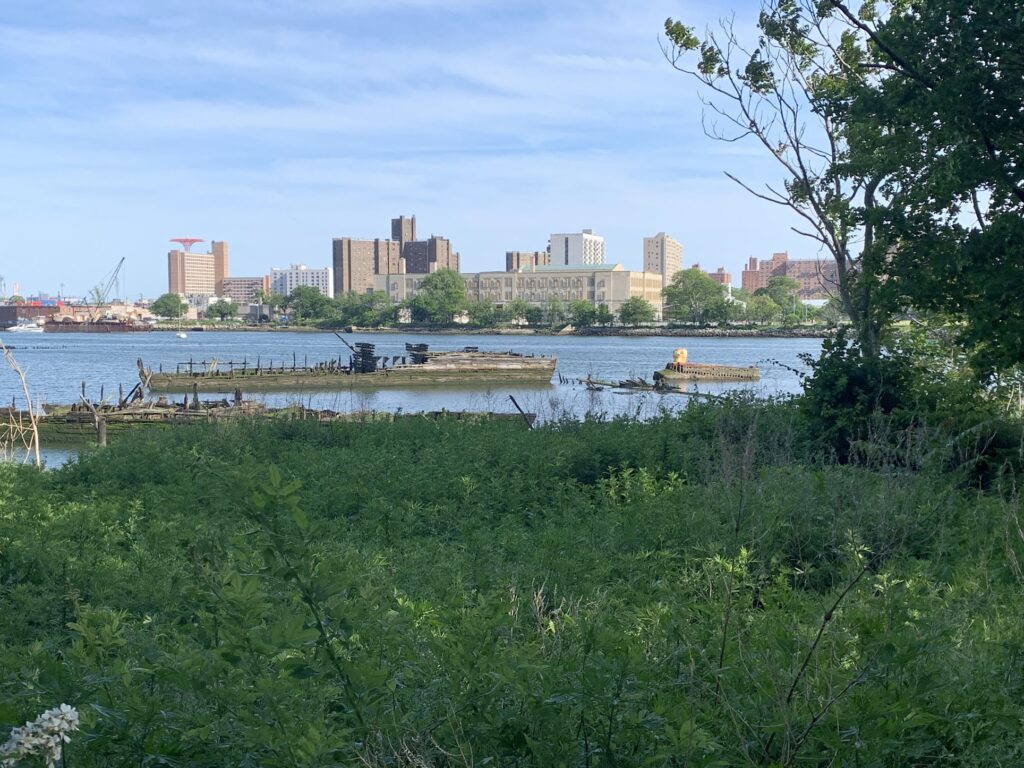
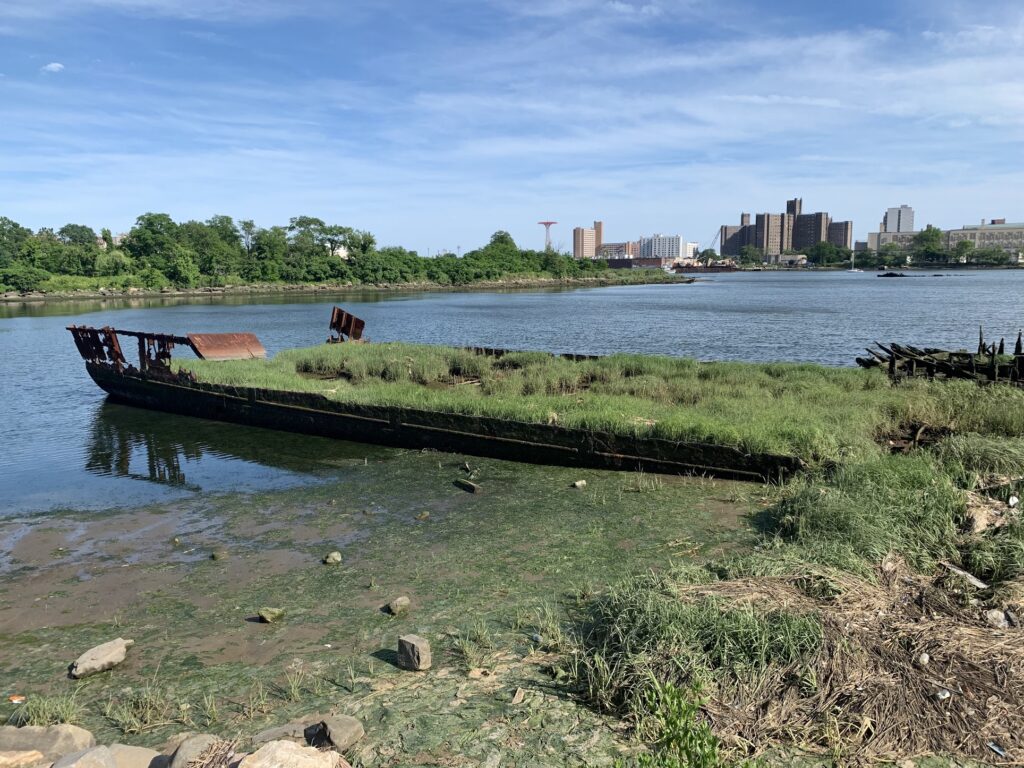
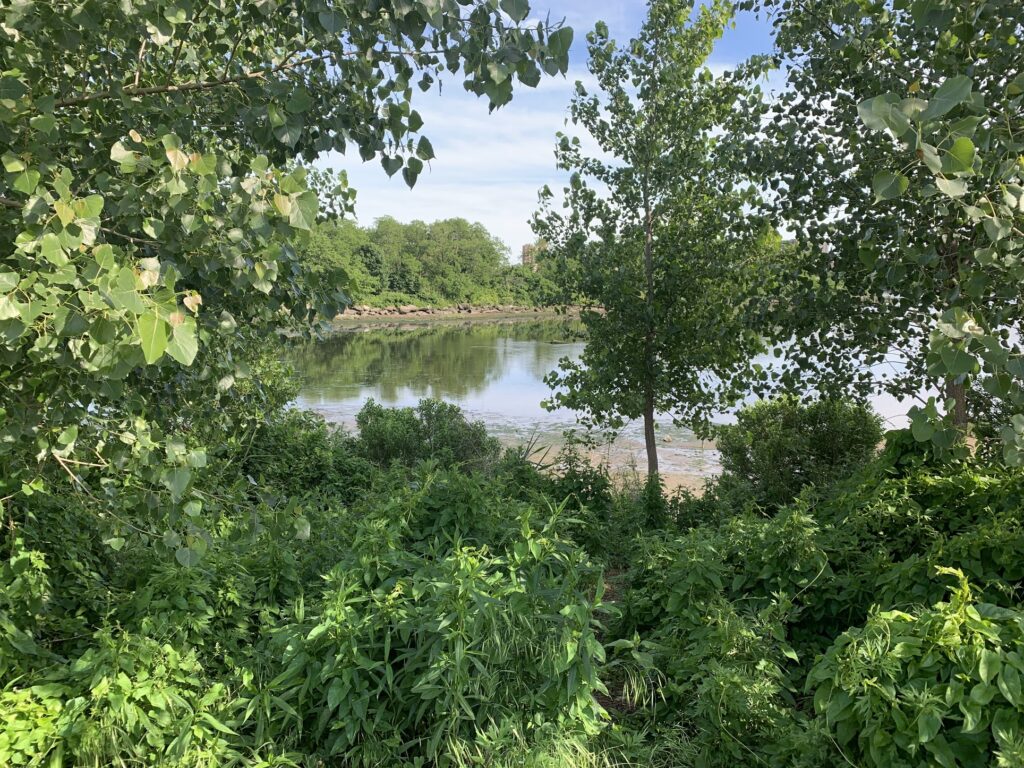
And here are some photographs I took in Calvert Vaux Park from a couple years ago:
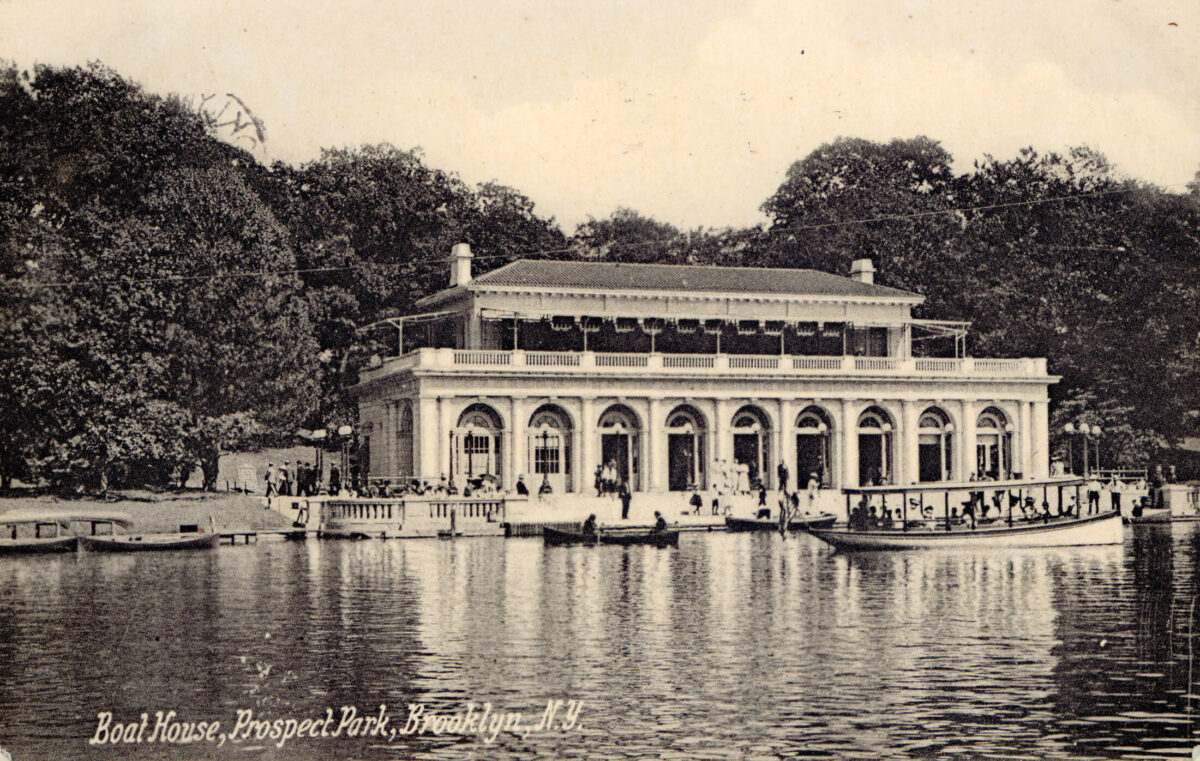
When park designers Frederick Law Olmsted and Calvert Vaux regrouped after the success of Central Park to design another great park for Brooklyn — encompassing Prospect Hill and the Revolutionary War site Battle Pass — they preserved a greater amount of natural topography than they had in Manhattan. But that doesn’t mean that Prospect Park hasn’t gone through a few radical changes of its own since it opened between the years 1867 and 1873.
Their Grand Army Plaza has experienced few changes since it opened in those years, but the structures around it have certainly changed, presenting some surprising views at the mighty war monuments.
New York Public LIbrary
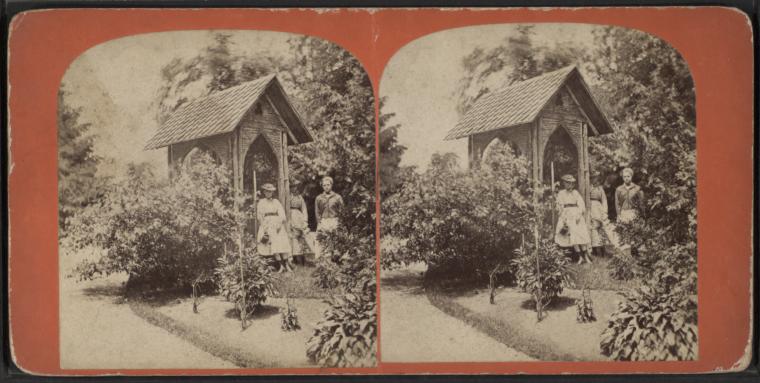
1. Women of the Wellhouse The caption for this stereoscopic view (taken sometime in the 1870s-80s) calls this a ‘well house’, although it may have also been a a coal storage shed or even an outhouse! Brooklyn’s main reservoir was on Prospect Hill, and the park was constructed partially to protect the water source from encroaching developers.
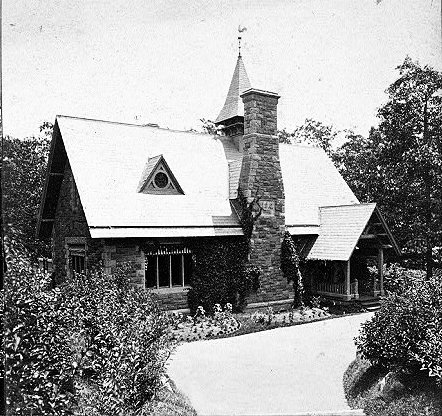
2. Prospect Park Dairy As they had done in Central Park, Olmsted and Vaux infused the landscape with various romantic, fairytale-like structures, including this dairy house, providing guests with milk straight from the cow. Central Park still has a version of their dairy, but Prospect Park’s was regrettably torn down in the 1930s to make way for the Prospect Park Zoo. (NYPL)
Library of Congress
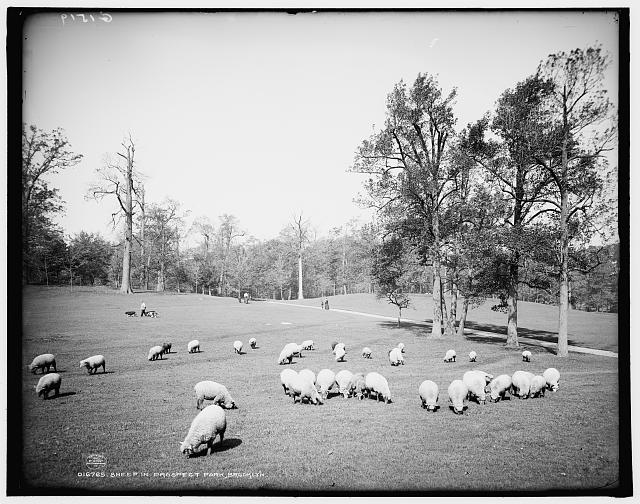
3. Brooklyn Sheep
Sure, you many know Sheep Meadow in Central Park once had actual sheep grazing — they were considered a rustic design ornament and a natural landscaper — but what happened to the animals after Robert Moses kicked them out in 1934? Like so many trendy things, they moved to Brooklyn! They joined Prospect Park’s already thriving sheep colony (pictured below, from 1903) before moving on to other pastures. (Courtesy LOC)
New York Public Library
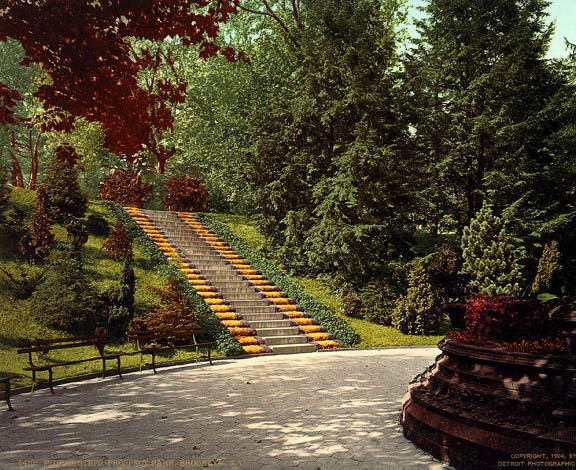
4. Floral Steps, 1904 The manicured flora that grace these steps predates the Brooklyn Botanic Garden by several years. The stairs are still there today, of course, though unadorned.
Courtesy Dept of Records
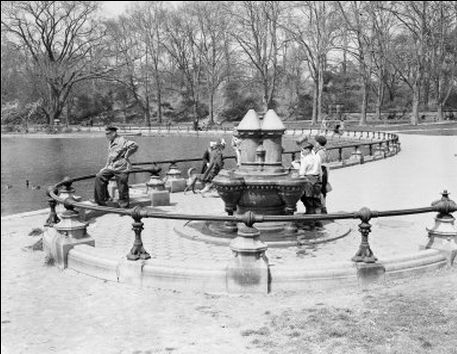
5. Drinking Fountains With water aplenty, Prospect Park has been dotted with drinking fountains since its inception. This rather unusual fountain, from 1938, may still be around, but I doubt you’ll see anybody drinking from it.
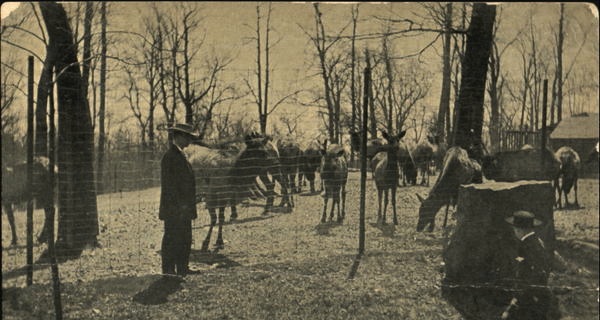
6. Deer Paddock The zoo also replaced the rather extraordinary Deer Paddock, where the sometimes docile creatures were allowed to wander around. This despite some of them occasionally escaping and running into the surrounding neighborhood (as one adventurous buck did in 1906).
NYPL
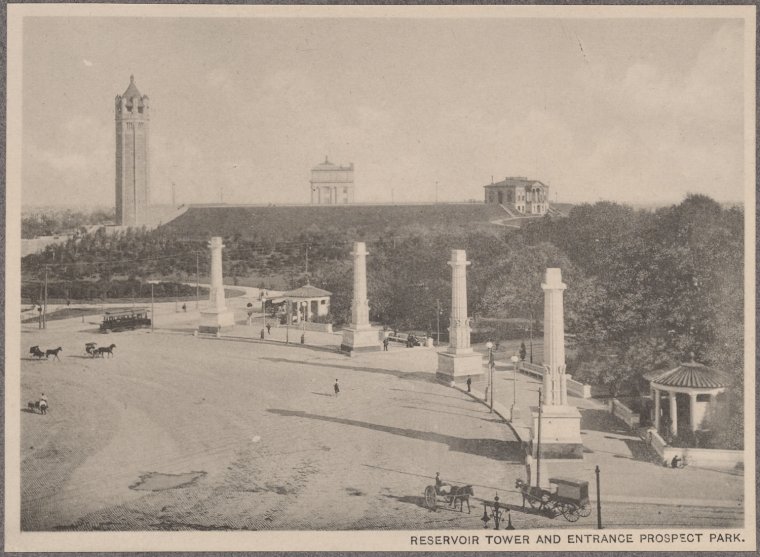
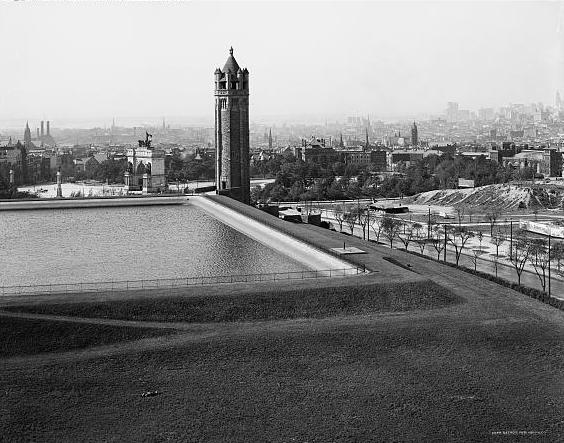
7. Stately Reservoir Tower High atop Brooklyn’s second highest point on Mount Prospect sits the reservoir tower, only a couple decades old (1893) but looking like a medieval ruin in this image. Date of this picture is unknown, although the ground for the Brooklyn Public Library main branch building was broken in 1912, so it was clearly sometime before then. The Brooklyn Museum is in the distance. [NYPL]
Library of Congress
8. And, yes, the Reservoir itself The reservoir was built here in 1856 and was meant to be included within the park designs. With Flatbush Avenue ultimately cleaving the hill from the rest of the proposal, Olmsted and Vaux left it out. This picture is from between 1910-1920. [LOC]
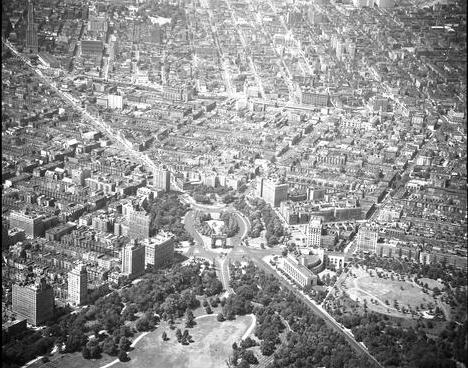
9. From high above This bird’s eye view from 1951 illustrates the plaza’s similarities to that of the Arc de Triomphe in Paris.
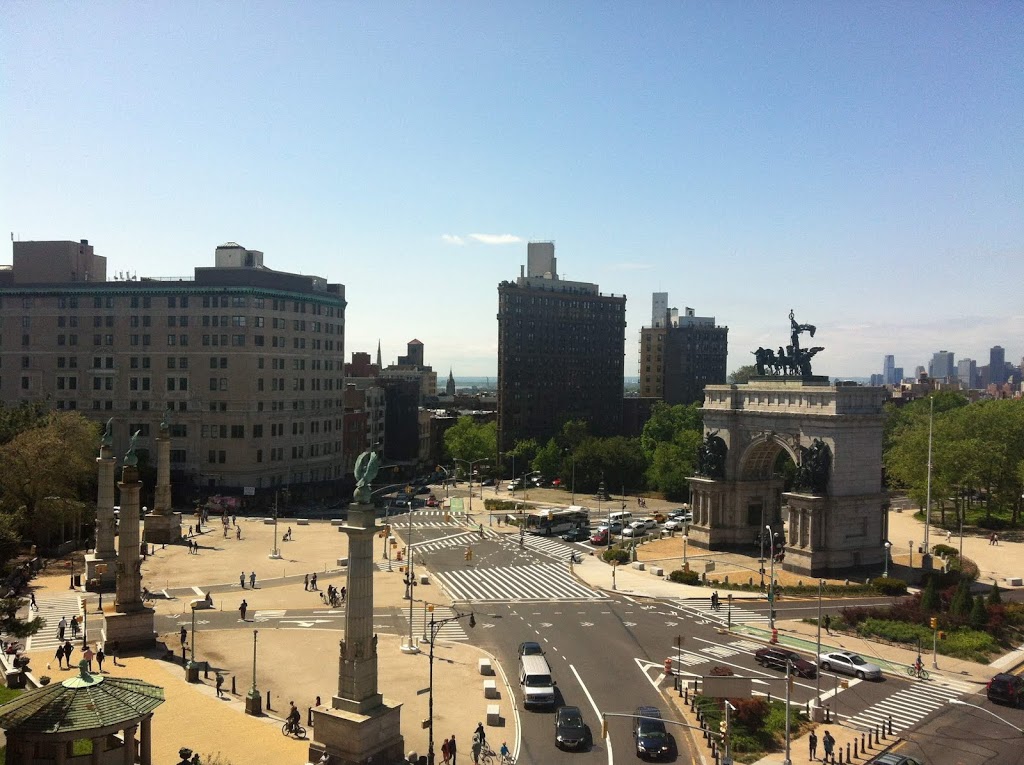
10. Library vista And this view is from two weeks ago! During the Partners In Preservation Open House, the staff at the Brooklyn Public Library main branch led guided tours to the rooftop, offering a very particular take on the plaza. And if my camera had been better, you would see off in the distance the Statue of Liberty, situated several miles away.
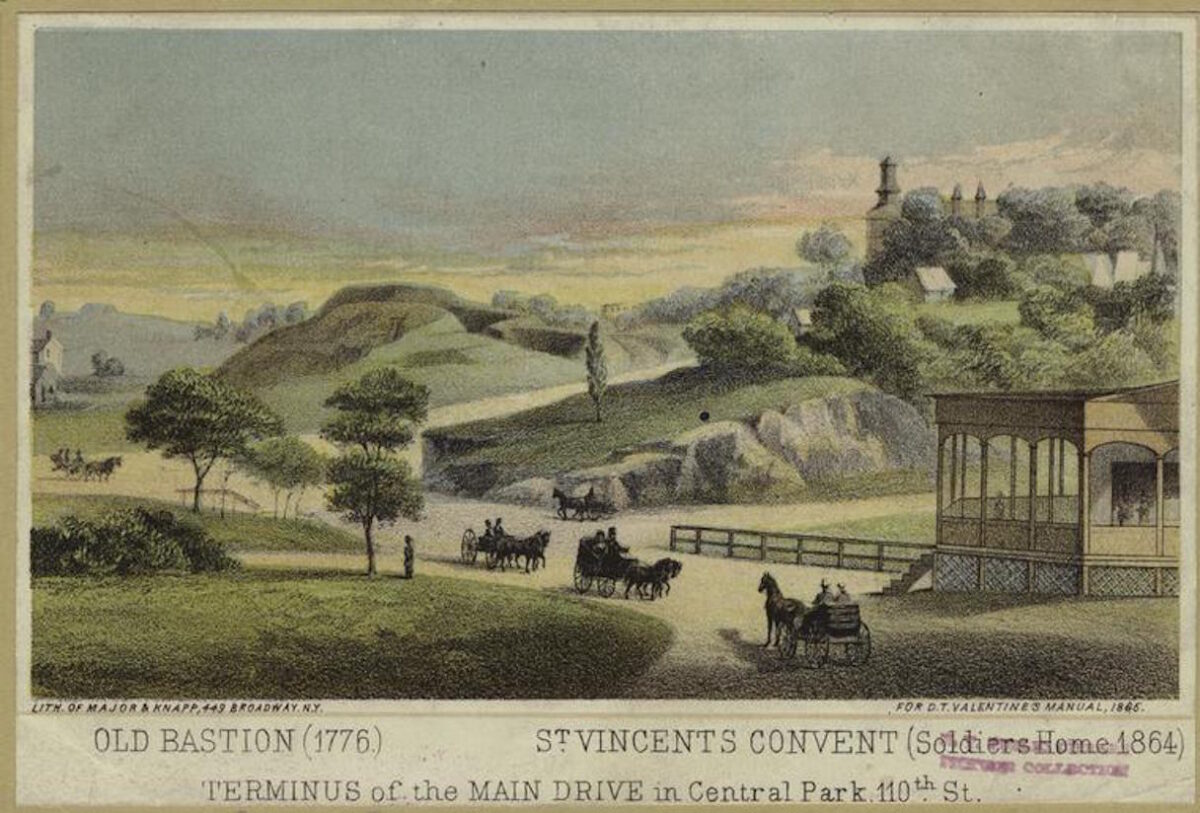
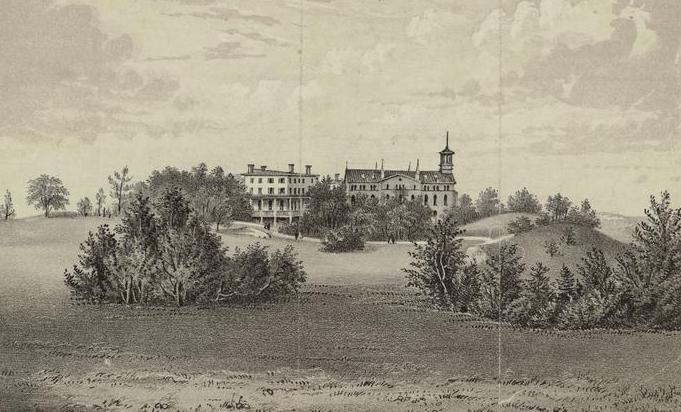
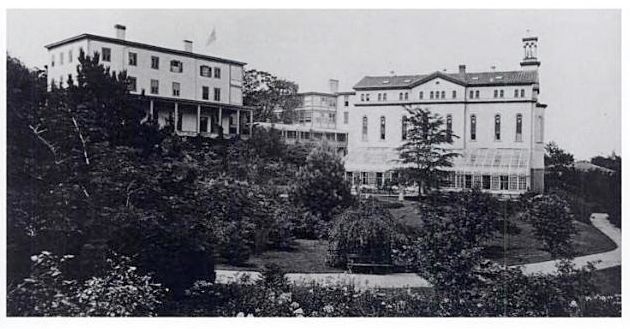
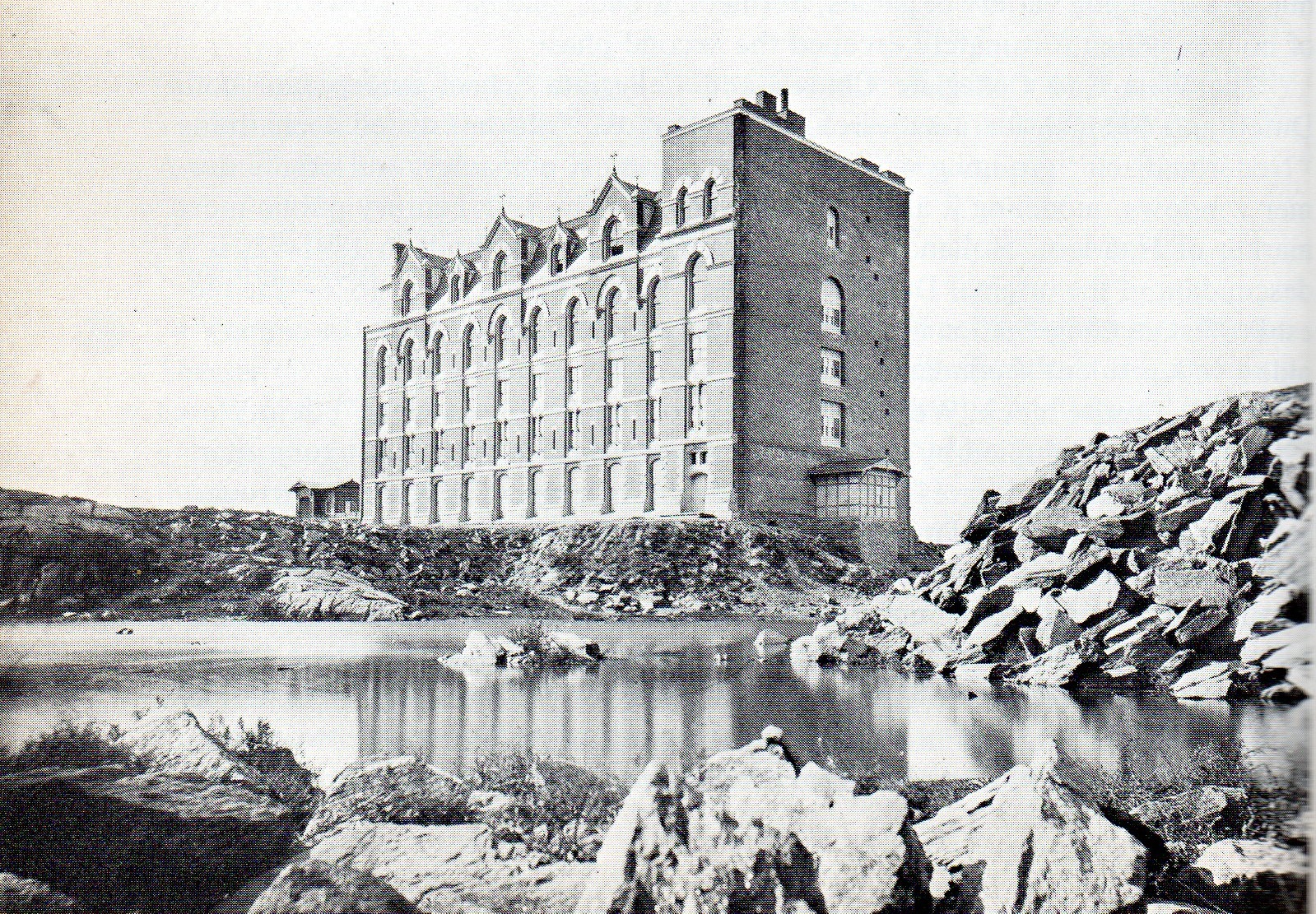
Pictured above is a remarkable structure that once dominated the scenery on the northern side of Central Park.
This was the Academy of Saint Vincent on a hill that bore its name. Located on the northern portion of the park, next to the charming Harlem Meer (and nearest 103rd Street), the Academy sat nestled amid a collection of hills and bluffs left over from its original pre-park topography.
Below: House on the hill: the stark and mysterious convent of Central Park, 1861
Washington Passes Through
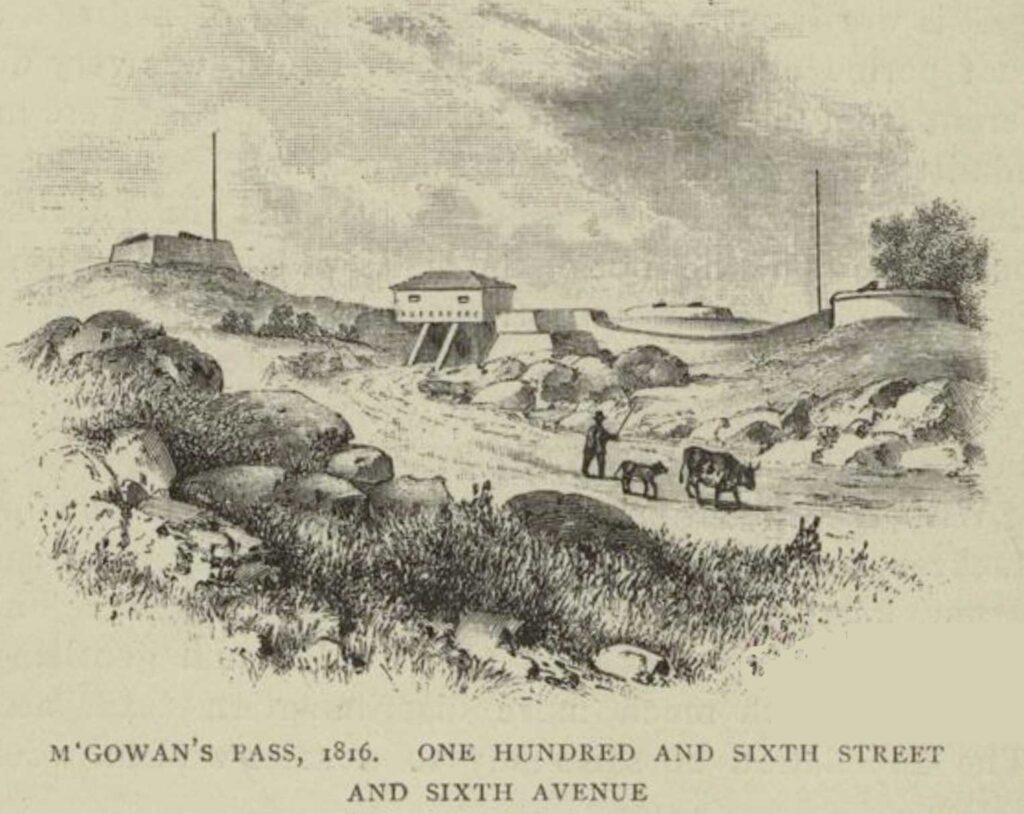
A narrow passage next to the convent was named McGowan’s Pass after Andrew McGowan, owner of a popular tavern that sat here called the Black Horse Tavern. (It is often spelled McGown.)
It was through McGowan’s Pass that George Washington traveled on September 15, 1776.
He and a portion of the Continental Army had escaped up to today’s Washington Heights area; when hearing that part of his army had been stopped by the British, Washington rode down the pass and led the remaining troops back up to their fortification in the Heights.
He rode back through the pass again seven years later, this time as the victor.
The British and their Hessian mercenaries built forts here to cut Manhattan off from the mainland. Later New Yorkers would seize upon this idea during the early days of the War of 1812.
Not willing to become property of the British once again, Manhattan mobilized for any potential battles, building forts all over the island and throughout the harbor.
The Ghost of Old Forts
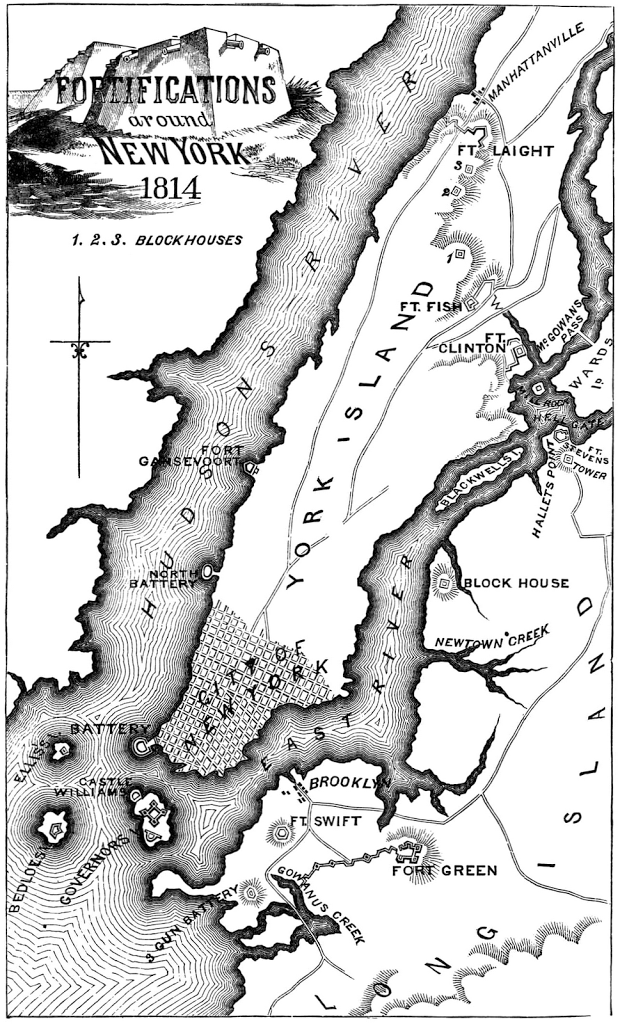
It was here at McGown’s Pass that a couple fortifications were built, including Fort Clinton (not to be confused with the fort in Battery Park, although both were named for DeWitt Clinton) and Fort Fish, named after Major Nicholas Fish, father of the New York senator Hamilton Fish.
Nothing much remains of these two old forts, which were never used as the war thankfully never made its way to the city. There are, however, two remaining structures from the early days.
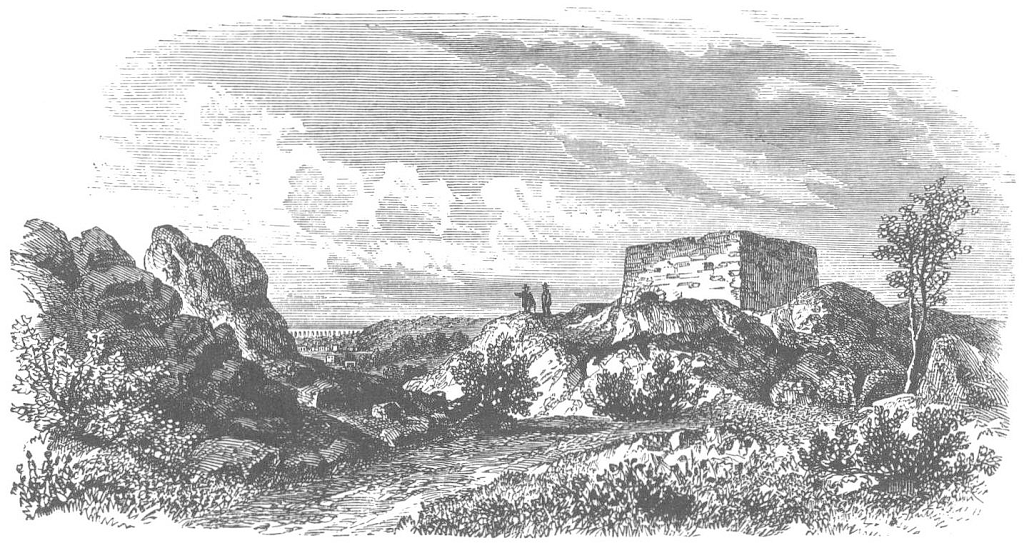
A stone ledge overlooking the meer is all that remains of Nutter’s Battery, named after a farmer who owned the property. And nearby stands the Block House, its stone face still fairly solid, once armed with cannons and used to hold ammunition — that were, of course, never needed.
The Block House was fairly intact when Frederick Law Olmstead and Calvert Vaux included it in their plans for the new park, incorporating the existing building as a ‘picturesque ruin’ covered in vines.
Here’s an illustration of how the Block House looked in 1860:
Holy Sanctuary
Before there was a park, however, there were nuns. In 1847 the Sisters of Charity of St. Vincent de Paul arrived at the still-bucolic region of Manhattan and opened the Academy of St. Vincent, a school and convent.
The nuns left when the area was incorportated into the park, however the building remained standing and utilized for several purposes. During the Civil War, it was briefly used as a hospital; later, it was a “restaurant and hostelry,” with some certainly spectacular views for guests.
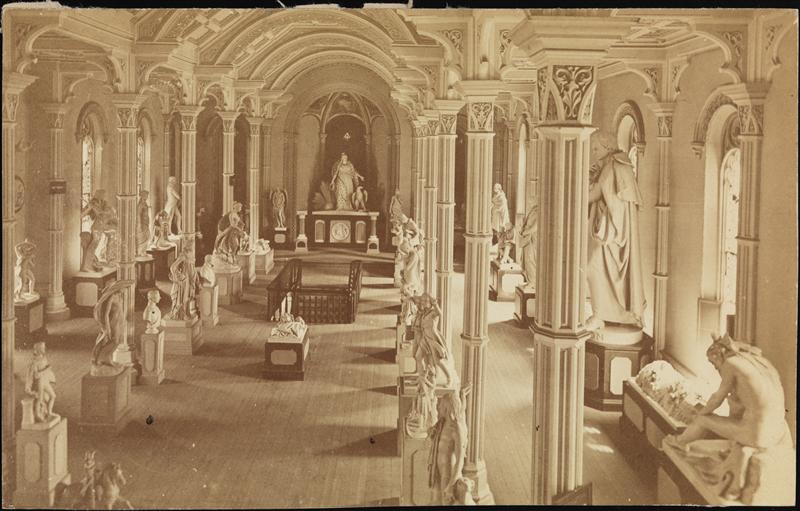
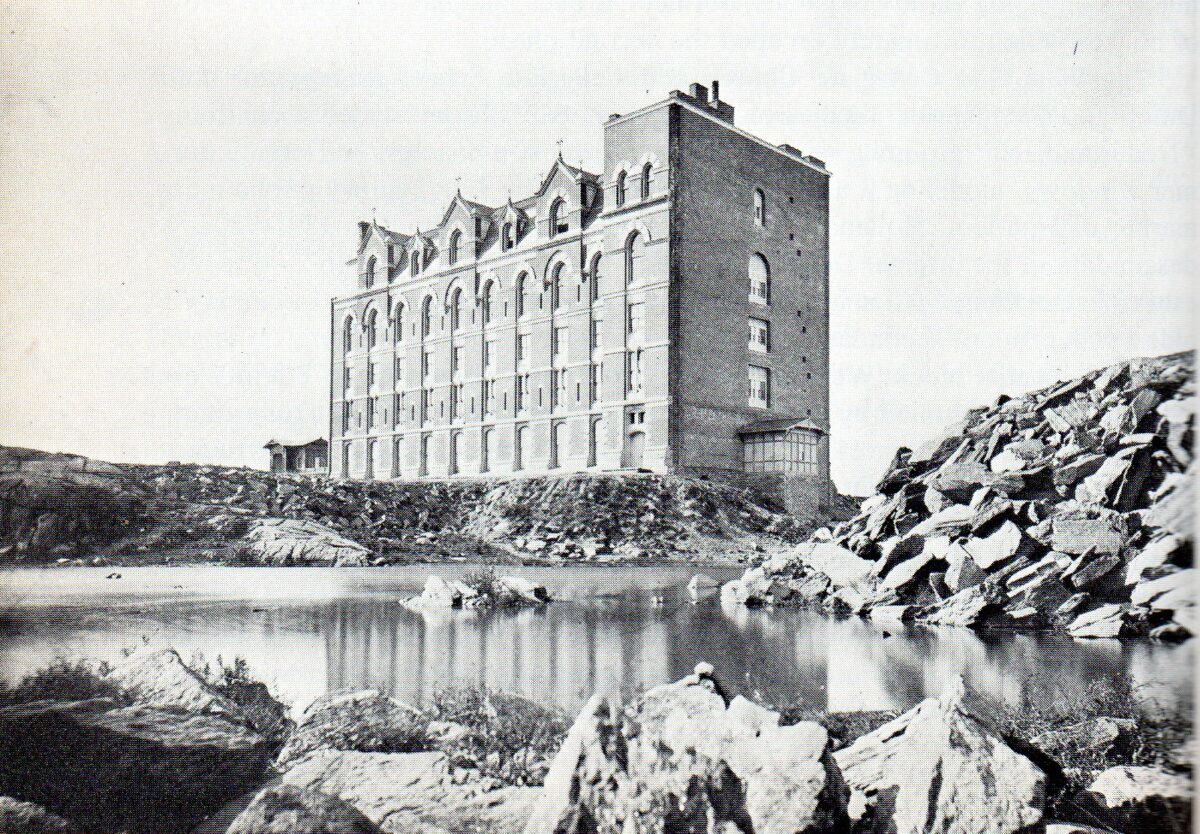
Below: Some sculptured works of Thomas Crawford in the interior of Mount St. Vincent’s Convent, Central Park, north end.]
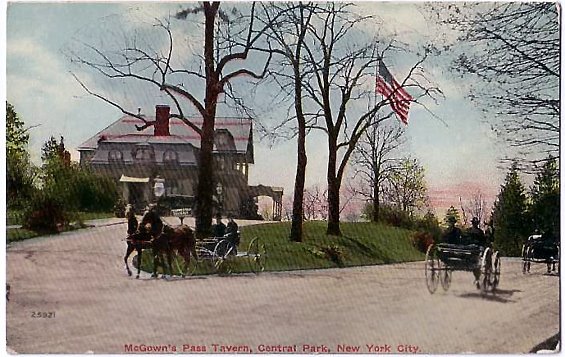
In 1895, McGowan’s was strangely granted its own election district as, being inside the park, it lay outside normal district boundaries. “There were four voters in this territory last year,” declared the New York Times. “They are four men employed at McGowan’s Pass Tavern.” The tavern was eventually torn down in the late 1910s.
Below: McGowan’s Pass Tavern (date unknown, but possibly around the early 1910s)
This is a bit tangental, but I love this story:
A plaque was erected at the old site of Fort Clinton in 1906 and unveiled in a publicized community event for children. It was apparently difficult for some people to find the location and “several chivalrous lads” guided people through the park to the unveiling.
However, the Times reports an incident that might be the only real battle that ever occured at this storied historical spot:
“Among the boys interested in the tablet unveiling were several whose spirit of mischief overcame their sense of the proprieties. These made misleading arrow signs …. and caused a number of persons to go far afield and arrive at the exercises late and angry. These mischievous youngsters were caught at their annoying trick by boys who were more sober and serious. Then there was a short scrimmage, and the mischievous lads scurried away through the Park.”
Its dimensions are greatly distorted of course, but it lists the forts and blockhouses that stood in this area as well as those such as Fort Gansevoort and Fort Greene (click on the image to look at it more closely):
**This story originally ran in 2011. All pictures courtesy the New York Public Library except where otherwise noted
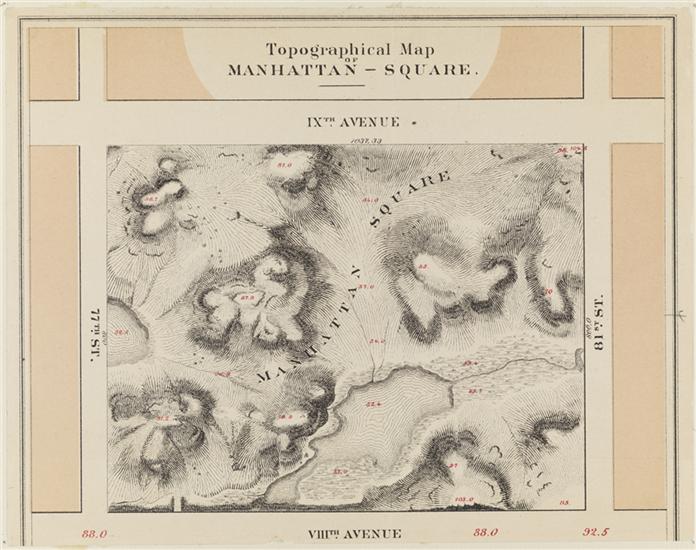
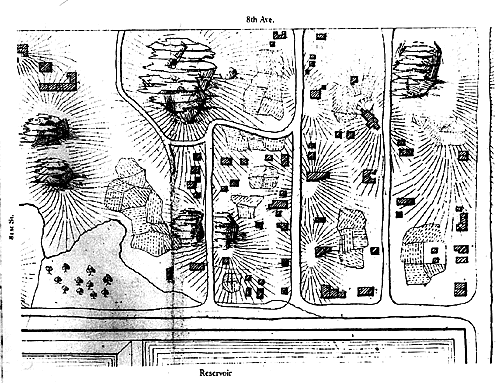
Theodore Roosevelt Park (77th and 81st Streets, between Central Park West and Columbus Avenue), which contains the beloved American Museum of Natural History, is the oldest developed section of the Upper West Side, purchased by the city in 1839 as a possible strolling park to be called Manhattan Square.
Museum of the City of New York
Central Park was but a gleam in the eye back in 1839!The Grid Plan of 1811 had divvied up upper Manhattan into organized blocks but not much was properly developed in the early 19th century. There were few suitable transportation options and thus upper Manhattan was only sparsely populated.
Near this spot on the grid was the old African-American settlement of Seneca Village, which was later wiped away with the development of Central Park.
Below: A sketch by Egbert Viele from 1857 showing the remains of the small village of Seneca Village. Manhattan Square would have been off to the upper left portion of this image.
The original grid plan had no significant parks built into it so later city planners had to carve some out themselves.
Unfortunately, the city almost literally forgot all about Manhattan Square — it’s even included in an 1860 New York Times article headlined NEWLY-DISCOVERED CITY PROPERTY!
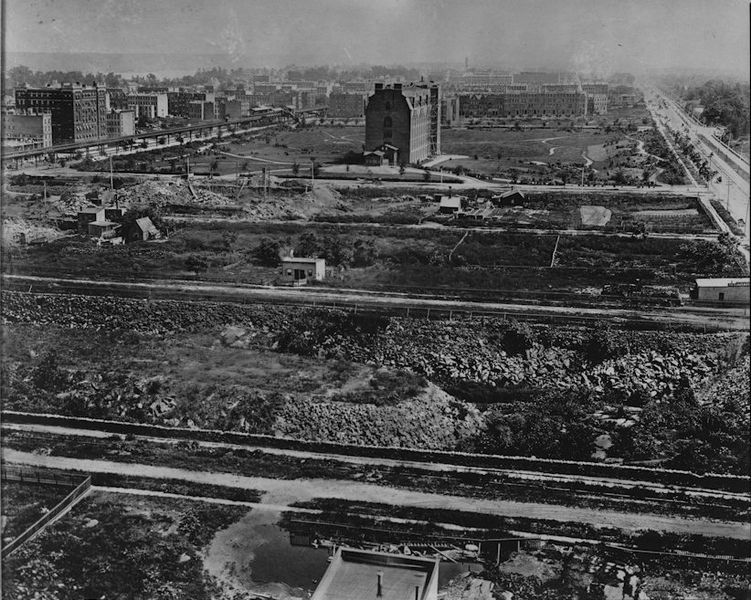
To be fair, the land had been granted to the Central Park Commission which was rather busy developing the park proper. As a result, Manhattan Square’s rugged and unpleasant terrain became an eye sore and rather dangerous for any actual visitors.
Samuel Ruggles, developer of both Union Square and Gramercy Park, once squawked, “It is a disgrace to the city. It is in some places forty feet below the grade and well characterized as a pestilential hole of stagnant water.”
Below: From the late 1870s, the solitary American Museum of Natural History building sits on the spot of Manhattan Square, now leveled out for public enjoyment, even if the lots surrounding it are quite barren.
In the early 1860s, the city proposed selling off this sorely underused area of land.
At one point, during the Civil War, some suggested it be turned into a proper military parade ground.
“Manhattan-square [has] been proposed for the parade-ground; over Manhattan-square the Commissioners have control and it is understood that they are willing to assign it, but, just now, they have not the funds which its preparation would require.” [source]
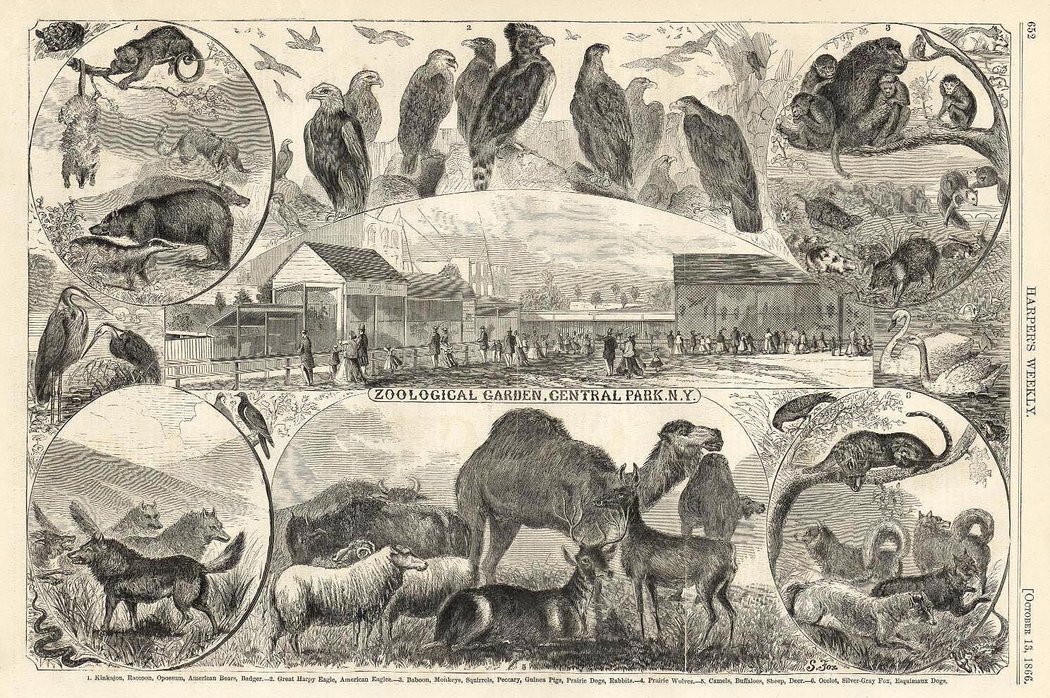
The next plan was to make a zoo!
Animals had accumulated near the Central Park Arsenal as a make-shift ‘menagerie‘ — abandoned pets, former circus animals, far-flung beasts brought over on ships. At one point it was determined to move those animals to a more formal Zoological Garden, to be built on the much abused area of Manhattan Square.
From 1865: “The Zoological Gardens are about to be commenced at Manhattan-square, and the commissioners fully expect to have this valuable garden completed before the Summer wanes.”
Below: The chaos of the Central Park menagerie, depicted in an 1866 illustration
Harpers Weekly
Those planned fell through of course. Today the Central Park Zoo marks the location of that former menagerie.
By 1872, the Central Park Commission would utilize Manhattan Square for another mission, designating it the home for the American Museum of Natural History.
Apartment developers later flocked to the park’s edges, drawn to its proximity to other fashionable apartment houses in the neighborhood like the Dakota Apartments (at 72nd Street, built in 1884).
Below: 44 West 77th Street. Manhattan Square Studio Apartment, photographed in 1910
MCNY
Of course, you may not know it by that name today either. From the New York Department of Parks and Recreation: “Neighborhood residents have traditionally referred to the parkland as Museum Park or Dinosaur Park.”
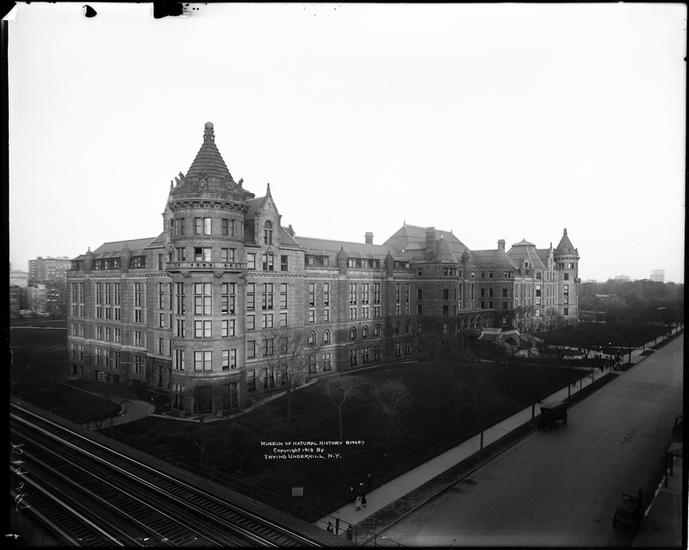
Below: The fully expanded museum as it looked in 1913
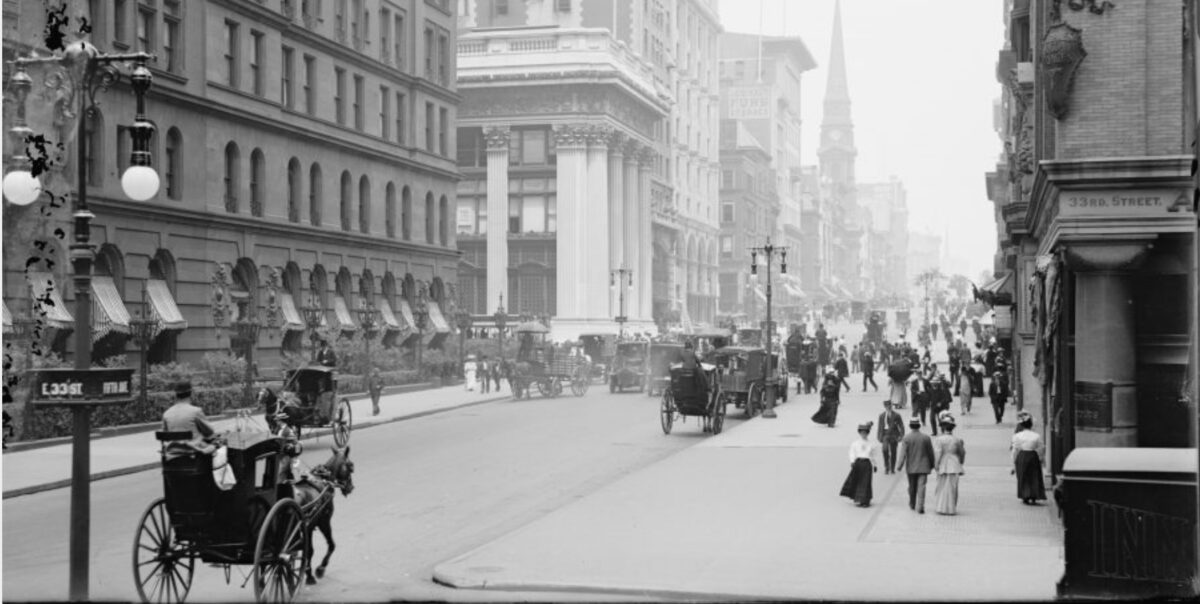
Fifth Avenue and 33rd Street, location of the post gambling den. (Detroit Publishing Company
A tantalizing stretch of New York nightlife history lies in the shadows, illegally operated, often fueled by police bribes — the opium dens of Chinatown and the speakeasies of the Village and midtown.
There were also hundreds of illicit gambling rackets, called ‘poolrooms’, throughout the city in the late 19th century, usually alongside the seediest of taverns, brothels and poolrooms.
Naturally, the pastime was not looked upon lightly by proper society. “The poolroom keeper, like the proverbial worm,” remarked one New York Times article from 1900.
But New York’s wealthy elite liked to gamble as well, and there was no need for them to step into such filthy, disreputable places. The rich had their own houses of vice.
And one, the House with the Bronze Door, which opened in 1891, would have rivaled the great casinos of the day in terms of its lush presentation.
House of Cards
The fine townhouse at 33 West Thirty-third Street sat right around the corner from the Waldorf-Astoria, so close to respectable Fifth Avenue that people certainly strolled by it with no clue of the entertainments within.
Its glorious, defining feature — and where it gets its name — was a $20,000 Italianate Renaissance, 15th century bronze door which gave the building the feel of a classic structure, or perhaps a bank vault.
Luxury greeted those who were fortunate to peer behind that door, imported old school finery, from vases to oil paintings on rich wallpapered walls, along hallways in red velvet carpeting, leading to game rooms with European oak tables hosting games of roulette, poker and baccarat.
In a place where wealth exchanged hands nightly, it was reflected in the imported banisters and marble bathrooms.
High Stakes
And it wasn’t just how it looked, but who designed it to look that way — none other than Stanford White of the city’s most prestigious design firm McKim, Mead and White, a gambling man himself who hired a team of Venician craftsman to give the gambling house its distinctive glamour.
The building next door also belonged to the casino, but was less impressively designed; its sole purpose was as an exit in case of police raids.
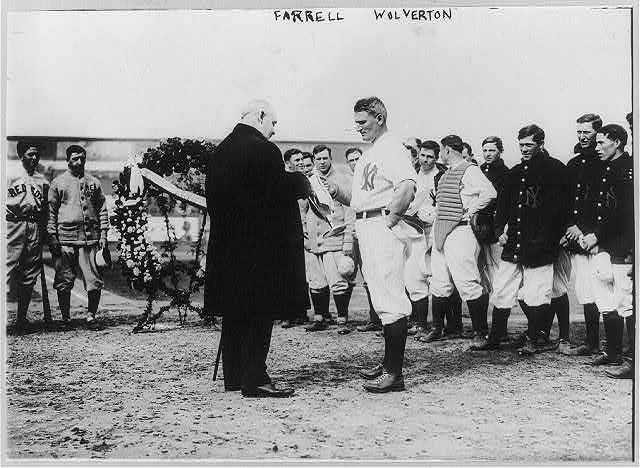
The owner Frank Farrell* was New York’s gambling kingpin, using profits from the Bronze Door to fund over 200 illegal gambling houses throughout the city and grease the palms of police officers to ensure they all stayed open.
If that name sounds familiar to sports fans, it’s because of a riskier gamble Farrell made in 1903 with his business partner William Stephen Devery. (Yes, the former police chief. See how it used to work back then?)
The two purchased the Baltimore Orioles, moved them to New York, lost a lot of money, renamed the team as the New York Yankees and promptly sold them to beer mogul Jacob Ruppert.
Below: Farrell with a Yankees team member in 1912. He would sell off the losing team a few years later. Courtesy Library of Congress
A Night at the Tables
The only people taking risks at the Bronze Door, however, were the rich and well connected clientele. On any given evening you could find the head honchos of Tammany Hall smoking cigars in the corner, or ‘Diamond’ Jim Brady and his entourage at the upstairs roulette wheel.
According to Lloyd Morris: “The casino was conducted with the quiet decorum of a gentleman’s club.” These men expected the royal treatment, and they got it. A midnight buffet of lobsters and steaks, open bar of the best liqueurs, fine cigars for a $1 apiece. More importantly, Farrell strictly applied a philosophy of ‘the customer is always right’. Unlike many of Farrell’s downtown dive, where the house often rigged games and marked cards, the gambling den behind the Bronze Door was straight.
There was little nickel and diming here. It’s purported that fifty thousand dollars would hit the tables each night.
Gamblers would win, and then lose, vast fortunes each night. As Luc Sante so elegantly states: “… the stories of rich men dropping enormous sums in a single evening kept topping each other, so that the phenomenon almost comes to seem like a version of potlatch, in which wealth is proven by the ability to shed it.”
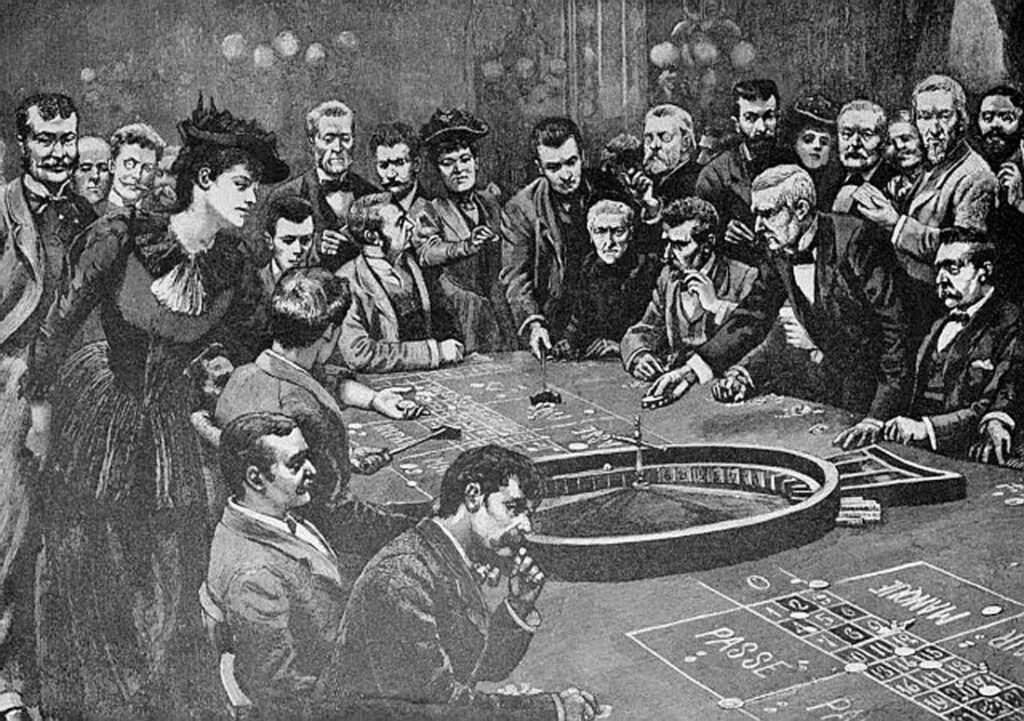
Depiction of a 19th century casino. At the House of the Bronze Door, it was unlikely that women were allowed however.
Luck Runs Out
The casino stood in defiance of the law for almost a dozen years thanks to Farrell’s connections and the reputation of its clientele. However, given the New York’s waxing and waning reform movements, its time would eventually come, and it did so at the hands of one William Travers Jerome, New York’s district attorney with a particular bent for reform.
Jerome shut down casinos and poolrooms throughout the city and didn’t discriminate, successfully breaching that imposing door and raiding the club in 1908.
Although the games were gone, the place remained open for many years afterwards, as a restaurant owned by the Waldorfs according to official sources. What its true nature was in these later years is unknown.
The building is completely gone today, replaced with a condo and the shadow of the Empire State Building.
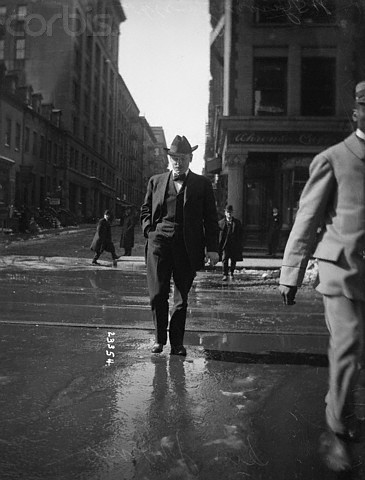
Below: District Attorney Jerome, 1915
*Farrell had other partners in the casino, including racetrack owner Gottfried Walbaum and Billy Burbridge, who later became a hotelier in Havana, Cuba.
“Such is the world, or, rather, one infinitesimal portion of the cosmos, in the year 2015, according to the ancient calendar, or 90 since the Terror.”
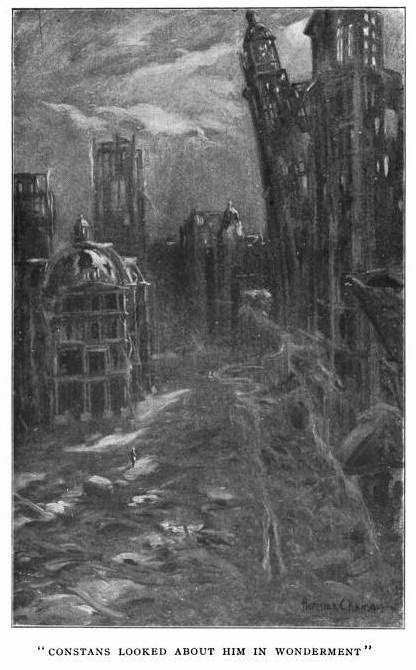
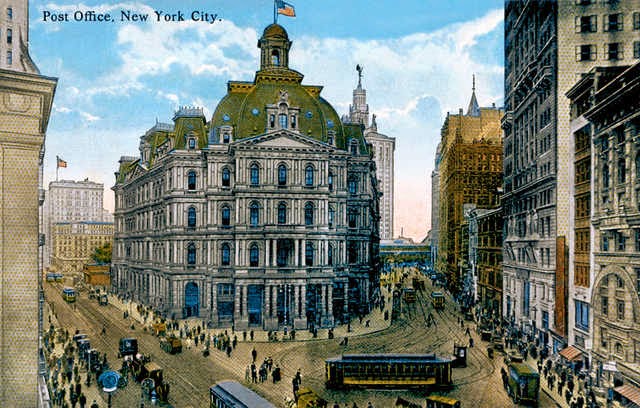
From the original illustrations of The Doomsman: a look up Park Row in 2015, a decrepit row of deteriorating structures. You can clearly see the ruins of old Post Office at the foot of City Hall Park. Compare this view to the photograph at the bottom of this post.
The destruction of New York City is a literary pastime that began in the late 19th century, usually in the hands of moralist writers seeking a little comeuppance upon the great evil of modern life.
By the year 1900, Manhattan had already been destroyed by nitroglycerin bombs (Park Benjamin Jr‘s ‘The End of New York,” 1880), left to waste in a future dystopia (John Ames Mitchell‘s The Last American, 1889), and cleansed with poison gas in a ‘revolutionary holocaust’ (Caesar’s Column: A Story of the Twentieth Century, written in 1890 by Congressman Ignatius Donnally).*
In 1906, the Episcopalian minister William Van Tassel Sutphen entered the fray with his own version of post-apocalyptic New York City in the novel The Doomsman, first serialized in Metropolitan Magazine.
What makes this book especially interesting today is that the breathless plot takes place in the year 2015. We’ve lived through that year so we can address what Sutphen got right. (The answer: nothing.)
Hole in One
Sutphen, an intellectual and New York literary sophisticate, is perhaps best known today as an early sports writer, best known for his observations on the sport of golf.
In 1898, he wrote the very Dr. Seuss-ianGolfers Alphabet. (“A is Arithmetic, handy to know/When the score figures up to a hundred or so.“) His most popular book remains 1901’s The Nineteenth Hole: Being Tales of the Fair Green, featuring humorous stories along the sporting course.
He was closely associated with Harper Brothers, writing and editing for the publishing house for most of his life. It was for Harpers that Sutphen wrote The Doomsman, his first non-golf book.
Doom and Gloom
The Doomsman is Anglo-Saxon fantasy, Game of Thrones lite, turning the New York metropolitan era into a landscape of wild vales and stockades. But its most interesting element is the depiction of a future Manhattan neglected and overcome, its ruins lorded by the vicious remnants of mankind.
Keep in mind however this is 1906 Manhattan.
This is the futuristic version of an old landscape. The novel’s version of a dismantled America should be familiar to anyone whose watched a recent disaster film or enjoyed an episode of The Walking Dead.
“For miles and miles the ruined city stretched away, a wilderness of brick and mortar. Here and there were areas of blackness and vacancy, where fire had worked its will. The business section, with its substantial shops and warehouses, and the central district, made up of the clubs, churches, theatres and the handsomer private homes, remained intact. And yet, withal, the spectacle was a singularly mournful and depressing one, for nowhere were there any signs of life.”
It’s 2015, and New York City is now called Doom. At some point in the 1920s, a Great Change occurred, so instantly that few could prepare for the aftermath.
The wealthiest New Yorkers, “seiz[ing] upon the shipping in the harbors for their exclusive use,” fled via steamships. The remaining population were ravaged by the Terror, a combination of panic and disease, and left only a handful of survivors.
Most fled to the countryside but died there. All industry, “every form of thought and progress,” ceased to be. “The relapse into barbarism was swift.”
People escaped into new walled encampments and quickly divided into medieval classes. Walled fortifications appeared over the ruins of the outer boroughs, Long Island and Westchester.
Our hero Clemens is raised at Greenwood Keep (pictured above), some kind of stockade presumably in the area of Greenwood Cemetery.
The area is constantly terrorized by The Doomsmen, inhabitants of the ruins of Doom. When Clemens’ own home is savagely destroyed in an attack, Clemens vows to venture into Doom and seek his revenge on the nefarious warrior Quinton Edge.
Days of Future Past
In 1906, the year Doomsman was published, there was not yet a Woolworth Building, but downtown Manhattan was in the midst of a colossal building boom unlike any other.
The author plays upon the fears of the day. Unusual gases seeped from the broken sidewalks. Old stone adornments fall the sky, almost killing our hero.
New York’s skyscrapers still exist in 2015, but all were empty, hollowed out and falling apart; one skyscraper on Park Row “had settled and was leaning over at a terrifying divergence from the perpendicular.”
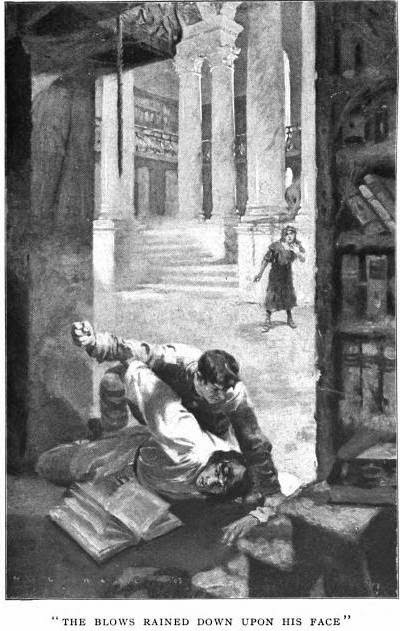
He eventually arrives at the main branch of the New York Public Library (above)— lion-less and half-completed in 1906 — and meets the tempestuous young Esmay whom he will eventually fall in love with.
With a little detective work, you can figure out many of the real-life locations depicted here. For instance, the walled city Croye, “the principal city of this western hemisphere in the year 2015,” is actually Yonkers. Perhaps because it’s already so ancient looking, one landmark retains its name — the High Bridge.
But most of the action takes place in Citadel Square, alongside the Palace Road (Broadway).
That’s actually Madison Square, which has become the encampment of the Doomsmen, many of whom are holed up in the White Tower — most likely the medieval-looking tower upon old Madison Square Garden.
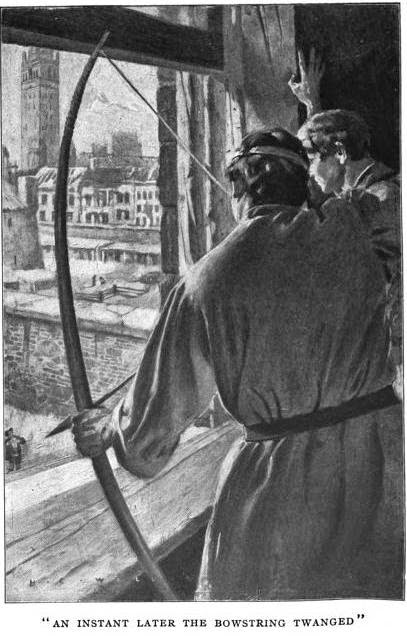
Our hero takes up a home on the fourth floor of the peculiar building to its southern side, a structure that would have been sparkling new in the mid 1900s. “The building had been constructed upon a narrow, triangular plot of land, and its ground-plan bore a fanciful resemblance to the shape of a flat-iron.” From this vantage within the Flatiron Building, Clemens is able to launch arrows upon his enemy.
But perhaps its strangest detail comes from another obsession of the late 19th century — electricity. The Doomsmen worship The Shining One, an electric dynamo in an abandoned power plant. A crazed priest has been able to reconnect the power and turn — get this — an electric chair into the central relic of worship!
The Doomsman is hardly an unfairly forgotten masterpiece. Its racial and ethnic politics are frankly repellent, its female characters mostly stock characters of helpless maidens and selfish harpies. The prose is occasionally cinematic — that’s cinema in 1906 — perfect for a silent film adaptation that regrettably never happened.
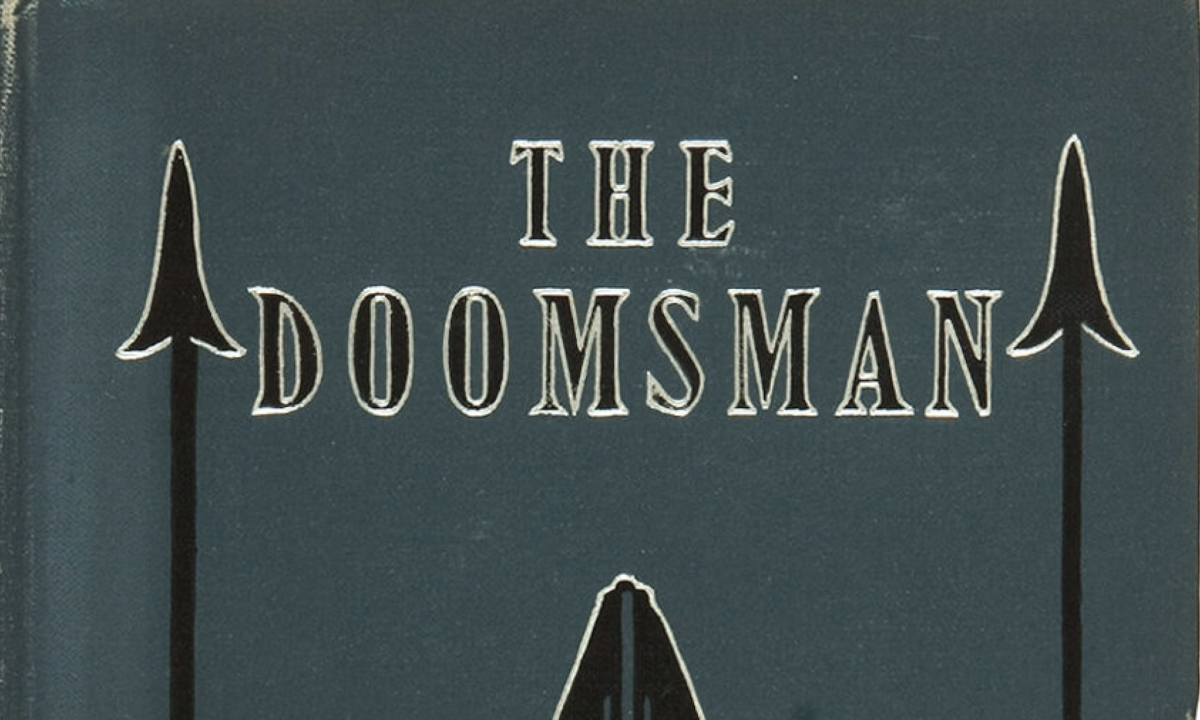
At right: The original cover of the book featured the Flatiron Building
For a modern audience, it’s most interesting for its descriptions of Gilded Age ruin, of a city that never developed to embrace automobiles.
In a book that’s so conventionally swashbuckling, it’s startling to read passages like, “Hats and garments, cash-boxes and accountbooks, littered the hallways and were piled in little heaps at the entrances of elevators.”
This classic episode of the Bowery Boys: New York City History podcast (originally released in December of 2021) is featured in this week’s episode of the History Channel podcast HISTORY This Week.
Since 2011 the Bowery Boys Podcast has revisited a few of the themes featured in this show. After listening to this episode, give these installments a try:
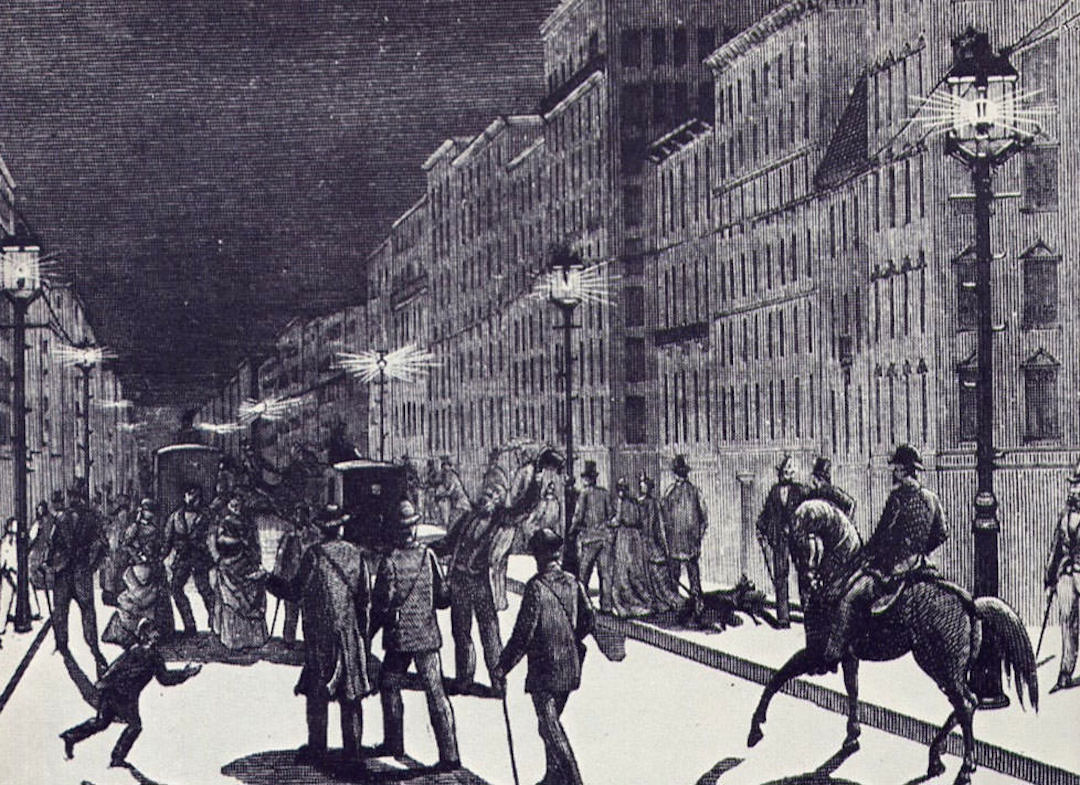
PODCAST The streets of New York have been lit in various ways through the decades, from the wisps of whale-oil flame to the modern comfort of gas lighting. With the discovery of electricity, it seemed possible to illuminate the world with a more dependable, potentially inexhaustible energy source.
First came arc light and ‘sun towers’ with their brilliant beams of white-hot light casting shadows down among the holiday shoppers of Ladies Mile in 1880.
But the genius of Menlo Park, Thomas Edison, envisioned an entire city grid wired for electricity. From Edison’s Pearl Street station, the inventor turned a handful of blocks north of Wall Street into America’s first area entirely lit with the newly invented incandescent bulbs.
ALSO: It’s the War of Currents, the enigmatic Nicola Tesla and the world’s first electric Christmas lights.
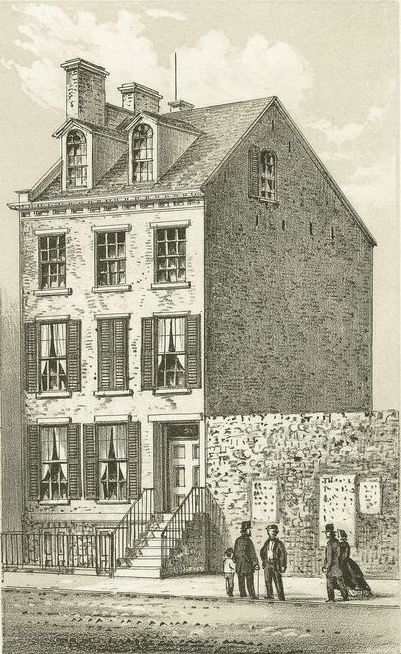
The home of Samuel Leggett, the first to be illuminated with gas lighting, at 7 Cherry Street. This home stood just a few blocks from the location of Edison’s Pearl Street Station (255-7 Pearl Street), which would also change the way people consider lighting their city. (NYPL)
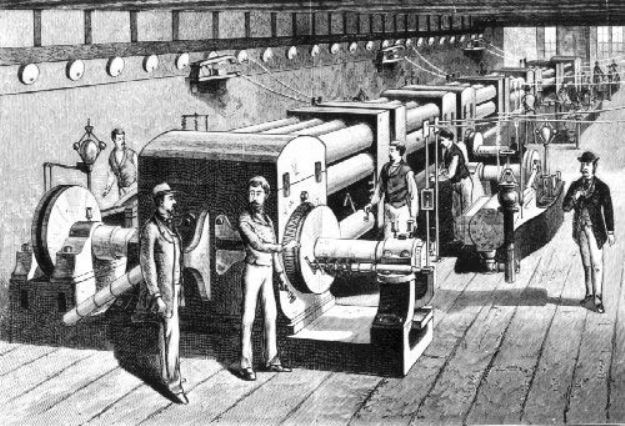
Inside the Pearl Street Station: Direct current surged through Edison’s generators to the neighboring blocks.
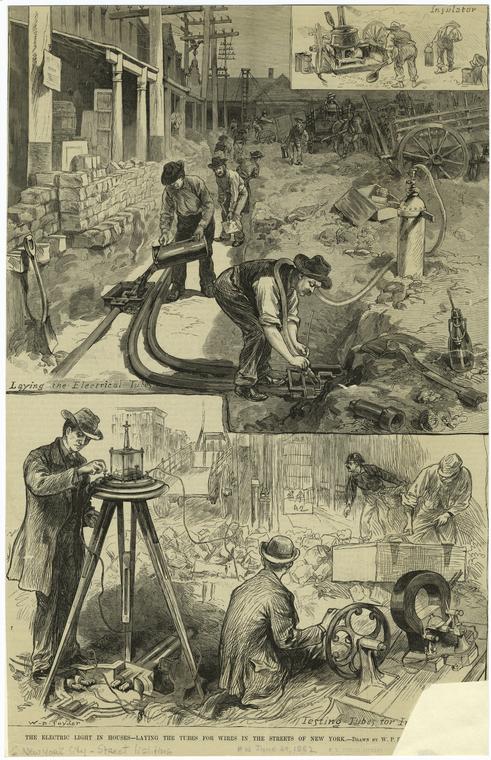
Laying the electrical wires under the streets of the blocks surrounding the Pearl Street station was an arduous, potential dangerous task. It took well over a year to complete the job. (Courtesy NYPL)
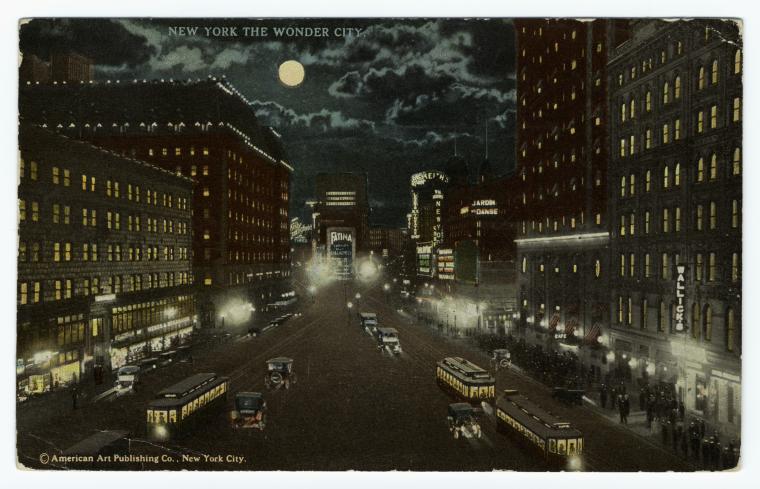
‘New York The Wonder City‘, and indeed it was, thanks to electricity. Whole neighborhoods, like Times Square and Coney Island, were defined by it. Landmarks like the Brooklyn Bridge, thoroughfares like the Bronx’s Grand Concourse and even Broadway itself were transformed at night by electric power. (NYPL)
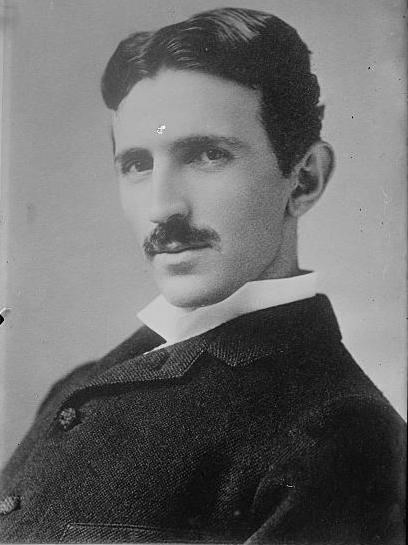
Nikola Tesla, the brilliant Serbian inventor who spent his final decades in New York living at the Hotel New Yorker.
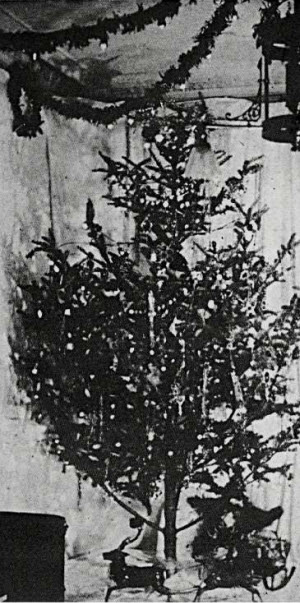
Behold! The first Christmas tree with electrical lighting, courtesy Edison employee Edward Hibberd Johnson. This tree glittered and twirled from Johnson’s home in Murray Hill. (Courtesy Jim on Light)
On the fiftieth anniversary of the invention of the lightbulb, an elderly Thomas Edison ‘reinvents’ it in 1929 at a reconstructed laboratory in Dearborn, Michigan, to the delight of Henry Ford and newly elected President Herbert Hoover.




.%22,_ca._1941_-_ca._1945_-_NARA_-_535820.jpg)