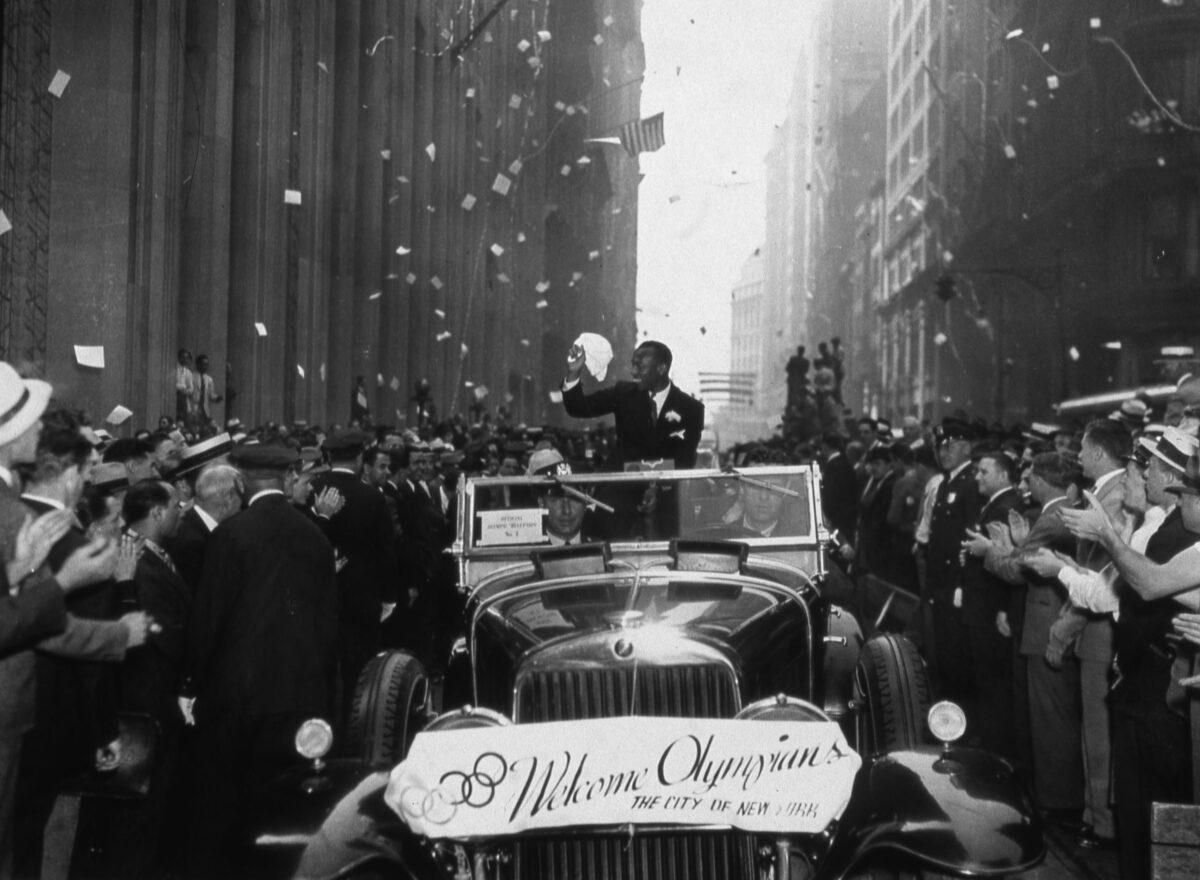
Olympic gold medalist Jesse Owens receives a ticker-tape parade through lower Manhattan, September 3, 1936. (Photo by Transcendental Graphics/Getty Images)
OLYMPICS ROUNDUPStarting today Tokyo, the biggest city in the world, will host the Games of the XXXII Olympiad aka the Tokyo Olympics 2020 (in 2021). The Japanese city first hosted the games back in 1964.
New York City, the biggest city in the United States, has never hosted the Olympics Games.
The city did aim to host the 2012 Olympics in an ultimately unsuccessful bid back in 2005. Those games went to London.
Alas.
A great many New Yorkers were quite happy to be without that international sporting event in the city. Personally, I would have loved to have seen New York become even more international for a few weeks, although I’m relieved that plans for that catastrophic Olympic Village in Queens were never realized.
Outside of that, the closest the city has ever gotten to the Olympics is a little under 300 miles — the distance from New York to Lake Placid, which hosted the 1980 Winter Olympics.
Those games featured the now-storied ‘Miracle on Ice‘ match between the USA and the USSR.
But did you know that the Russian team completely iced the US team just a few days earlier in an exhibition game played at Madison Square Garden? You can read more about that in my article ‘No Miracle on Ice’ from February 2010.
Although New York has never hosted the Games, when it comes to events before and after the Olympics, New York City’s all over them.
Randall’s Island
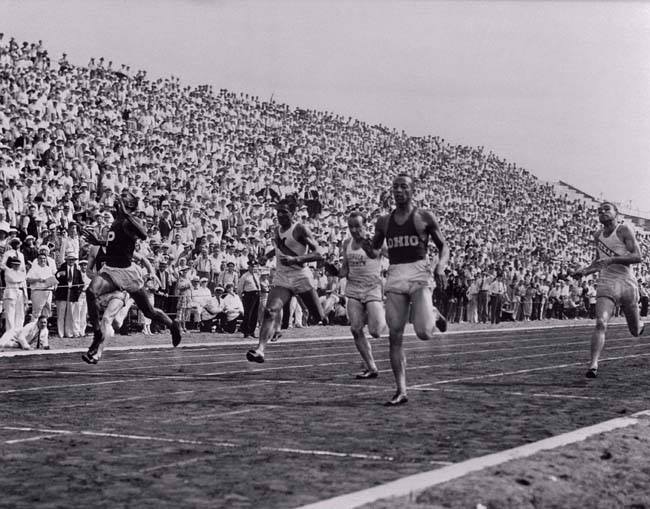
Randall’s Island has hosted several Olympic trials, including one of the most famous at all, the track and field events from 1936 which produced sports legend Jesse Owens.
You can hear all about it in one of our very early podcasts onthe history of Randall’s Island and the 1936 Olympic Trials.
Astoria Pool
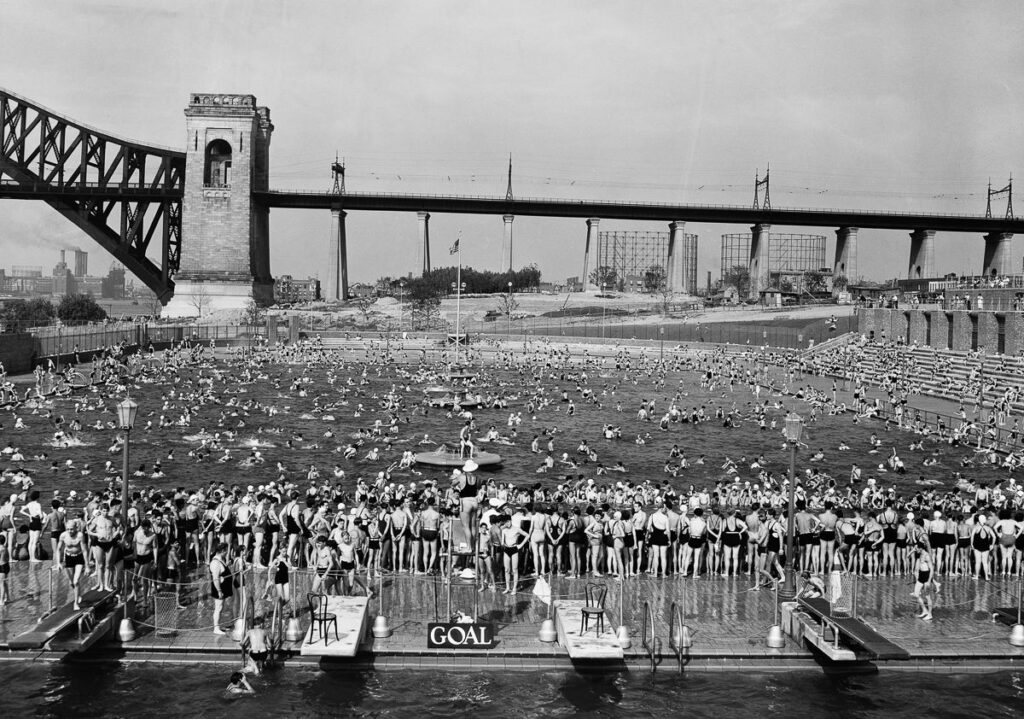
Around the same time, Robert Moses commissioned Astoria Pool with the explicit purpose of hosting Olympic swimming trials.
That 1936 event, featuring its dramatic diving platform, produced several American gold medalists. Two massive Olympic torches stood astride the pool as competitors fought for a spot on the Olympic team.
Olympics trials returned to Astoria Pool in 1952, and again in 1964, producing athletes that again nearly swept the diving events in the Tokyo games.
SwimmerDon Schollanderwent on to win 4 golds that year, the most of any athlete in 1964 and the most medals won by an American athlete since Jesse Owens.
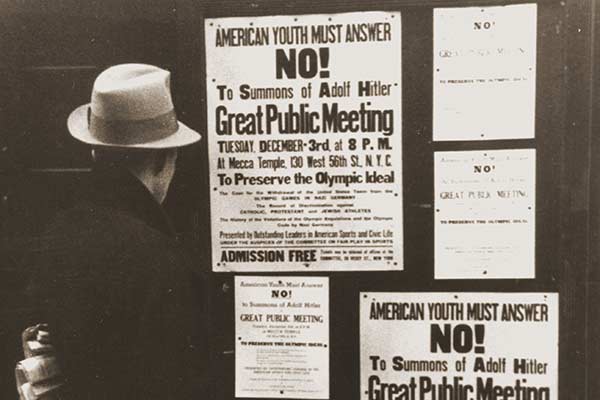
Of course, a great many New Yorkers were entirely unhappy with any participation in the 1936 Olympic Games, given that they were being held that year in Berlin, in the heart of Nazi Germany.
A concerted effort by politicians (including Fiorello LaGuardia), religious leaders and athletes to boycott the games was met with defeat, but in the summer of 1936, a group of Jewish athletes competed in a ‘counter-Olympics’.
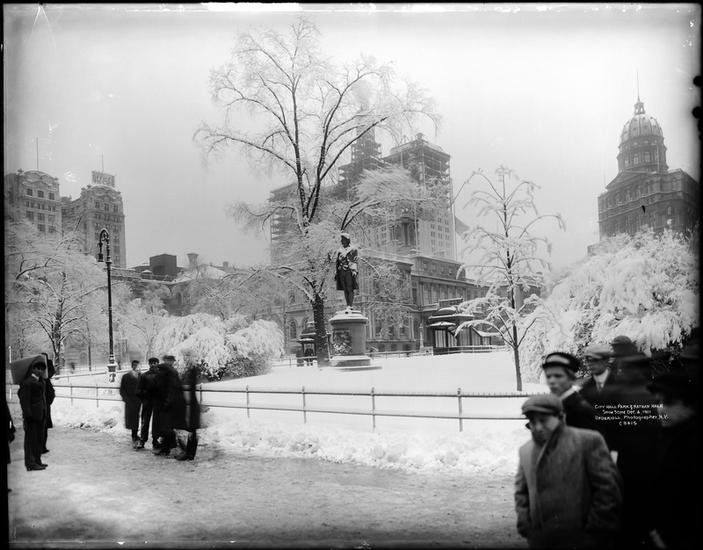
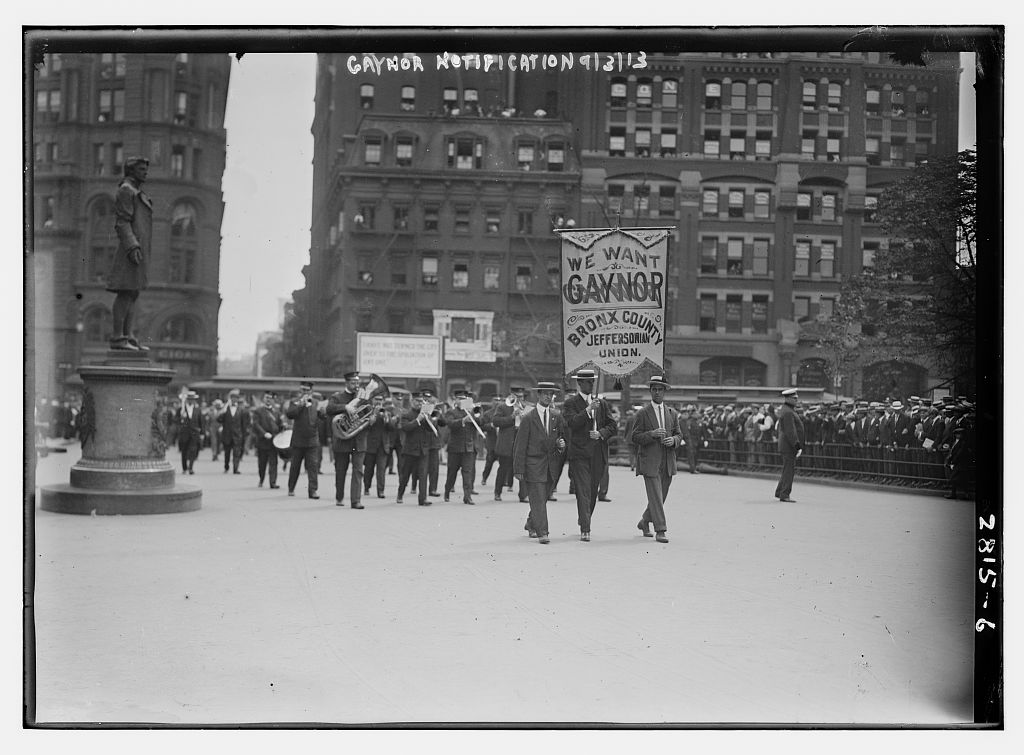
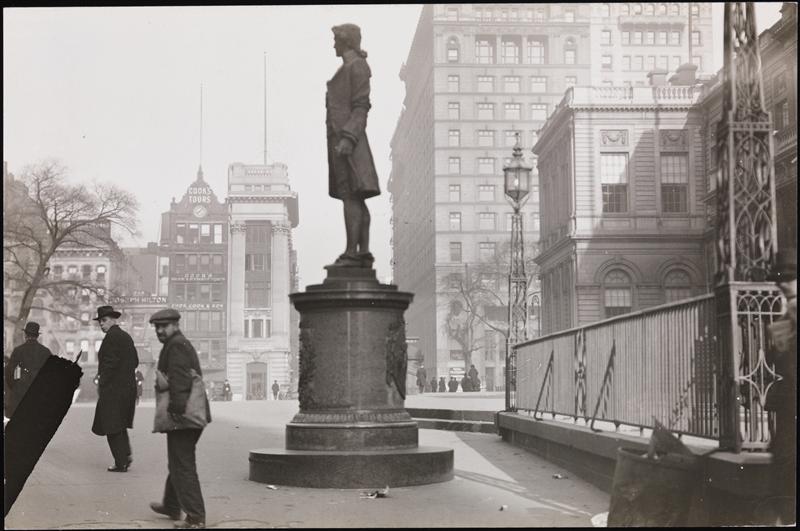
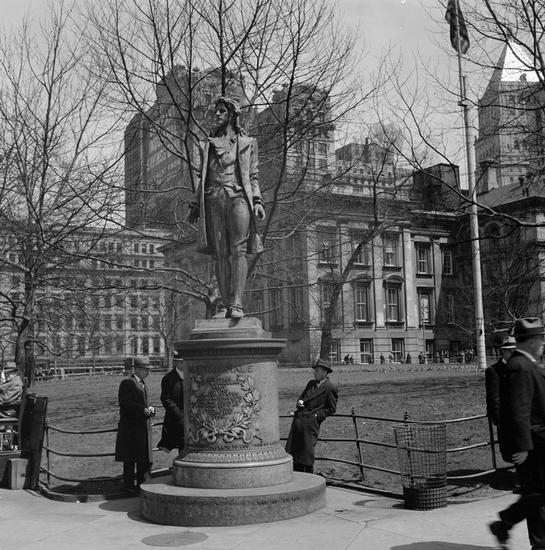
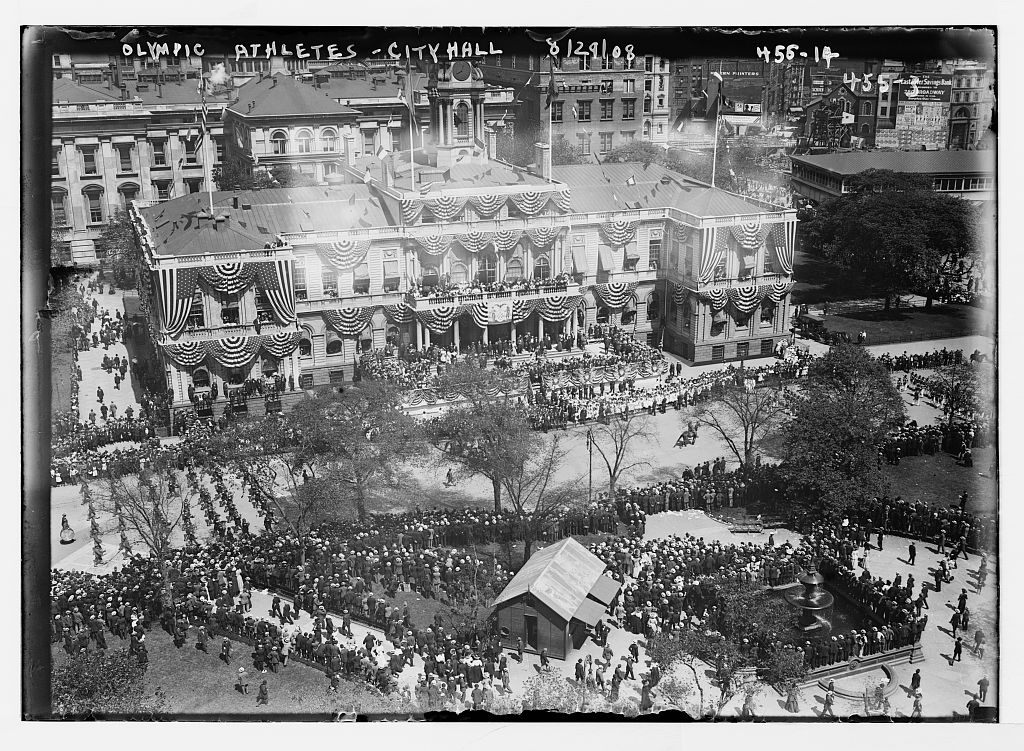
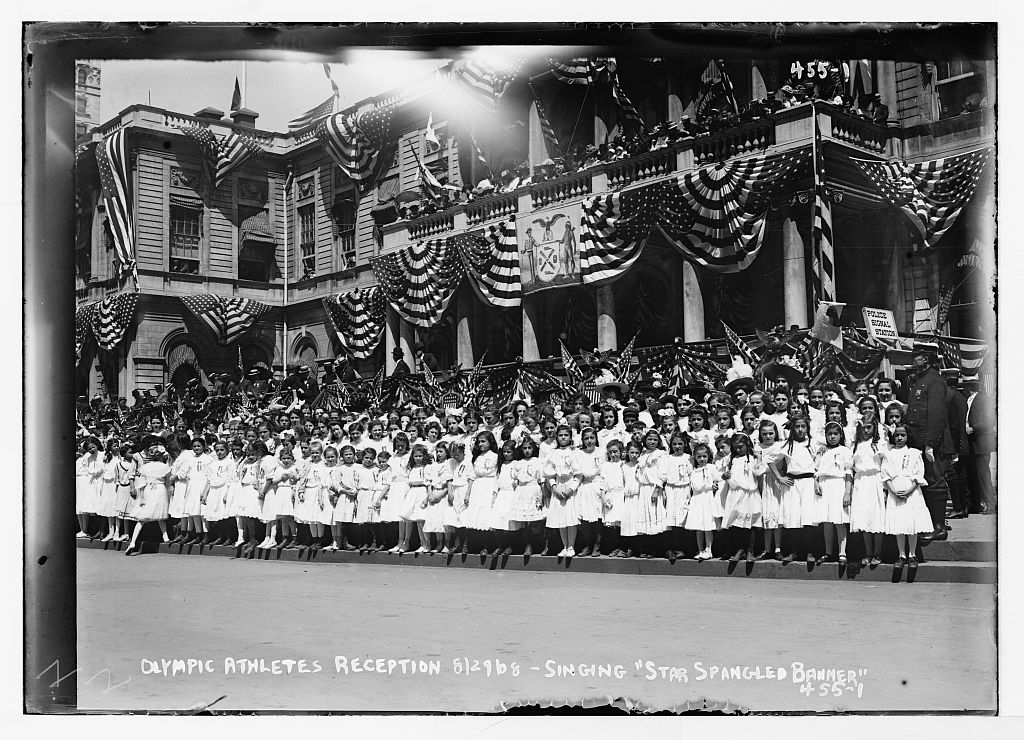
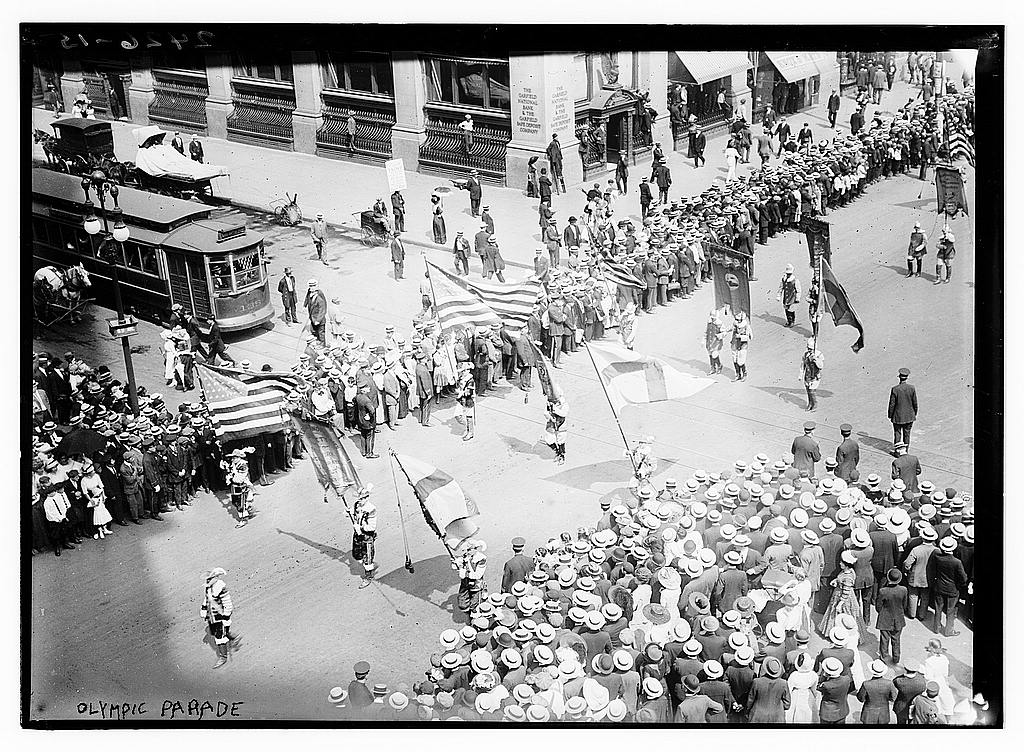
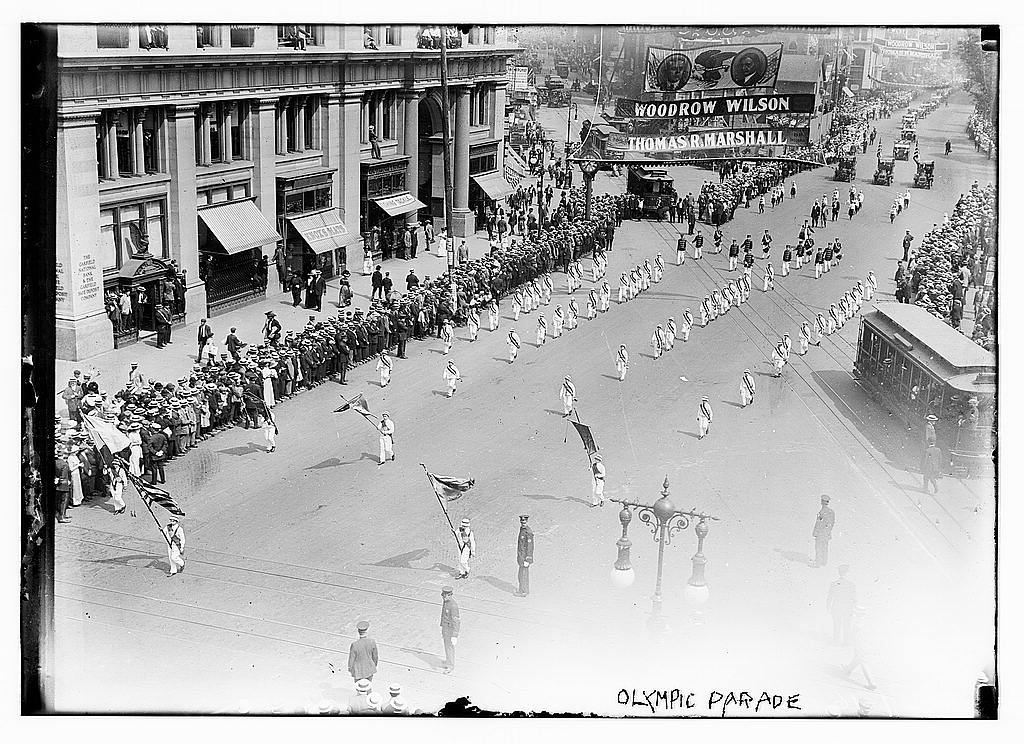
And finally, here are some pictures of two glorious receptions of American Olympians held in New York — after the 1908 games (in London) and the 1912 games (in Stockholm).
Photo showing an event in New York City related to the 4th Olympic Games, held in London, England, in 1908. Library of CongressPhoto showing an event in New York City outside City Hall, related to the 4th Olympic Games, held in London, England, in 1908. Library of CongressPhoto showing a parade in New York City related to the 5th Olympic Games, held in Stockholm, Sweden, in 1912. Library of CongressPhoto showing a parade in New York City related to the 5th Olympic Games, held in Stockholm, Sweden, in 1912. Library of Congress
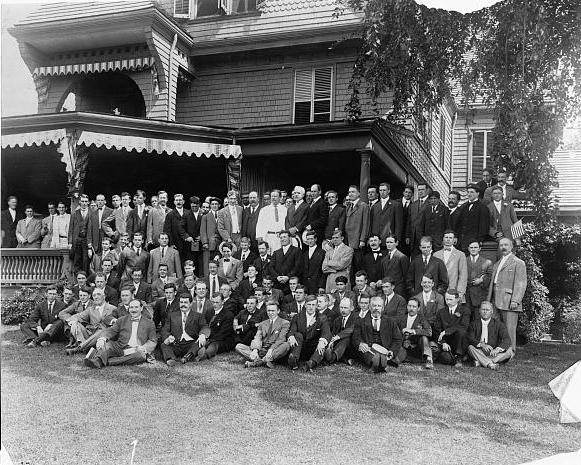
And finally, here’s a swell photograph — no other adjective to describe it — of the U.S. Olympic team from 1908, posing with President Theodore Roosevelt at his home in Sagamore Hill, Long Island.
We’re just months away from a new mayor in New York City so we think it is time that you Know Your Mayors! Become familiar with other men who’ve held the job, from the ultra-powerful to the political puppets, the most effective to the most useless leaders in New York City history.
This longtime feature of this website is being rebooted with new articles and newly researched and refreshed earlier entries in this series. Check back every other week for a new installment. Read past articles here.
The most influential political force in New York City history isn’t an individual but a group of men who wielded power in often corrupt, entirely self-enriching ways. They were elected again and again because — at various times in history — they were able to convince the public that they were a better option than the city’s elites.
And sometimes they actually were. Occasionally they even kept the city running smoothly and served with the needs of their constituents in mind.
Thus is the power of a political machine. And thus was the power of Tammany Hall.
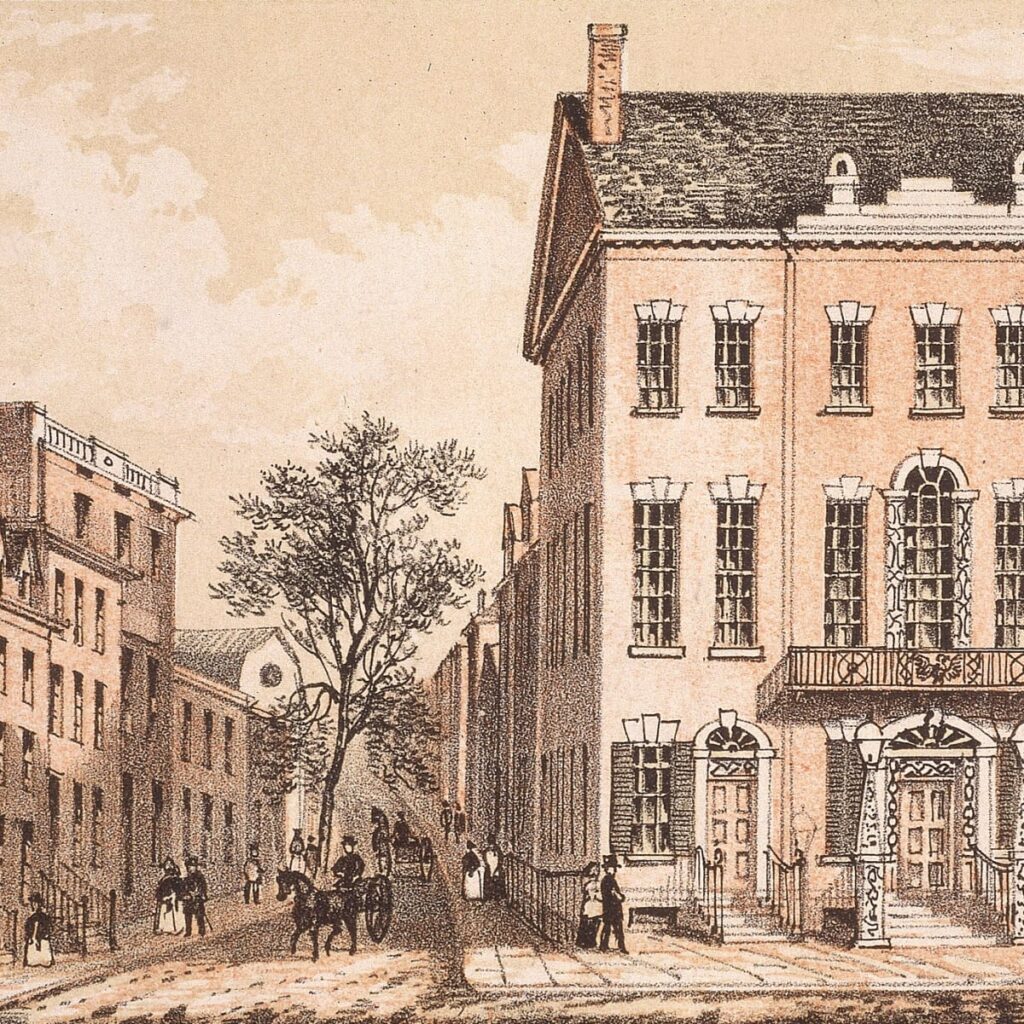
Tammany Hall on 170 Nassau Street
What is Tammany Hall?
The year 1815 marks the real beginning of New York City’s Tammany Hall era. It was the year that the organization first realized its fullest political potential.
The legendary Democratic political machine had of course been around long before, founded in 1789 as the Tammany Society, a patriotic club formed around the legend of the Lenape leader Tamanend.
These white gentlemen war veterans participated in garish exaggerations of Native American ceremonies, forming a structure of command under a Grand Sachem (leader or, later, Boss).
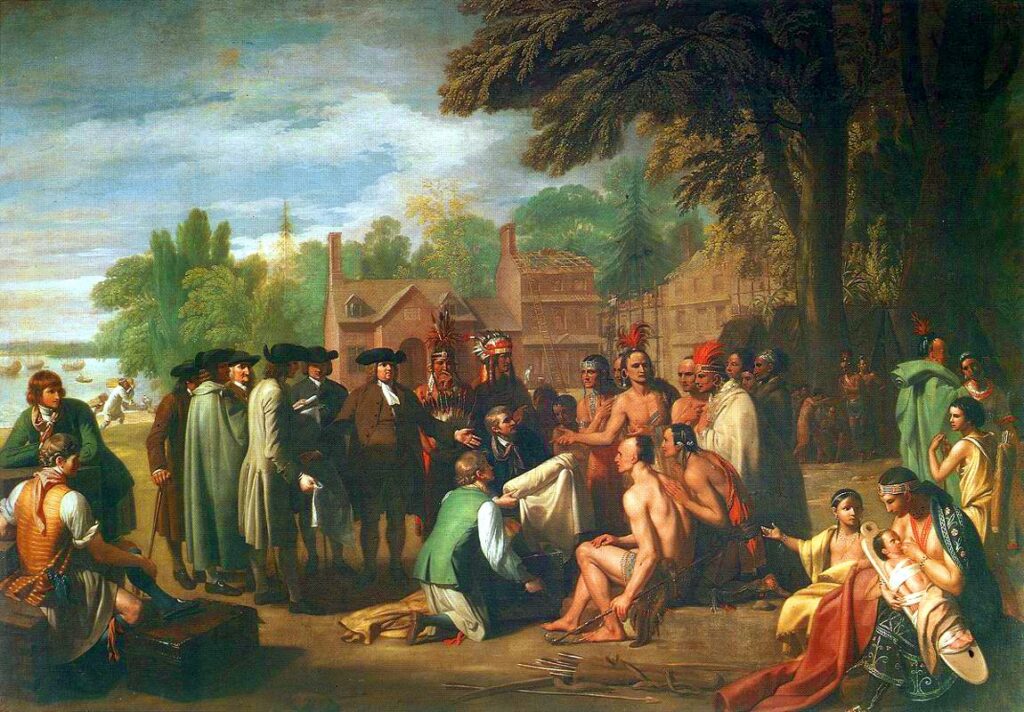
The Benjamin West painting The Treaty of Penn depicting William Penn negotiating with Lenape chief Tamanend.
Being comprised of well-connected men in high society, the organization soon took on a political character. It would be Aaron Burr that first exploited its political potential as a mechanism to unite the city’s Democratic-Republicans against Alexander Hamilton and his Federalist forces.
In 1800, Burr became the Vice President after an unusual election outcome that almost handed him the presidency instead of Thomas Jefferson. Burr’s suspicious handling of the election put him on the wrong side of some fellow Democratic-Republicans like governor George Clinton.
This meant that the Clintons would gradually become political enemies to those of Burr’s new political tool — the Tammany Society (or Tammany Hall).
Burr would eventually be sidelined in all things political. (Shooting a Founding Father and attempting to form a new country out west will do that to you.) But the political machine he wielded was only just beginning.
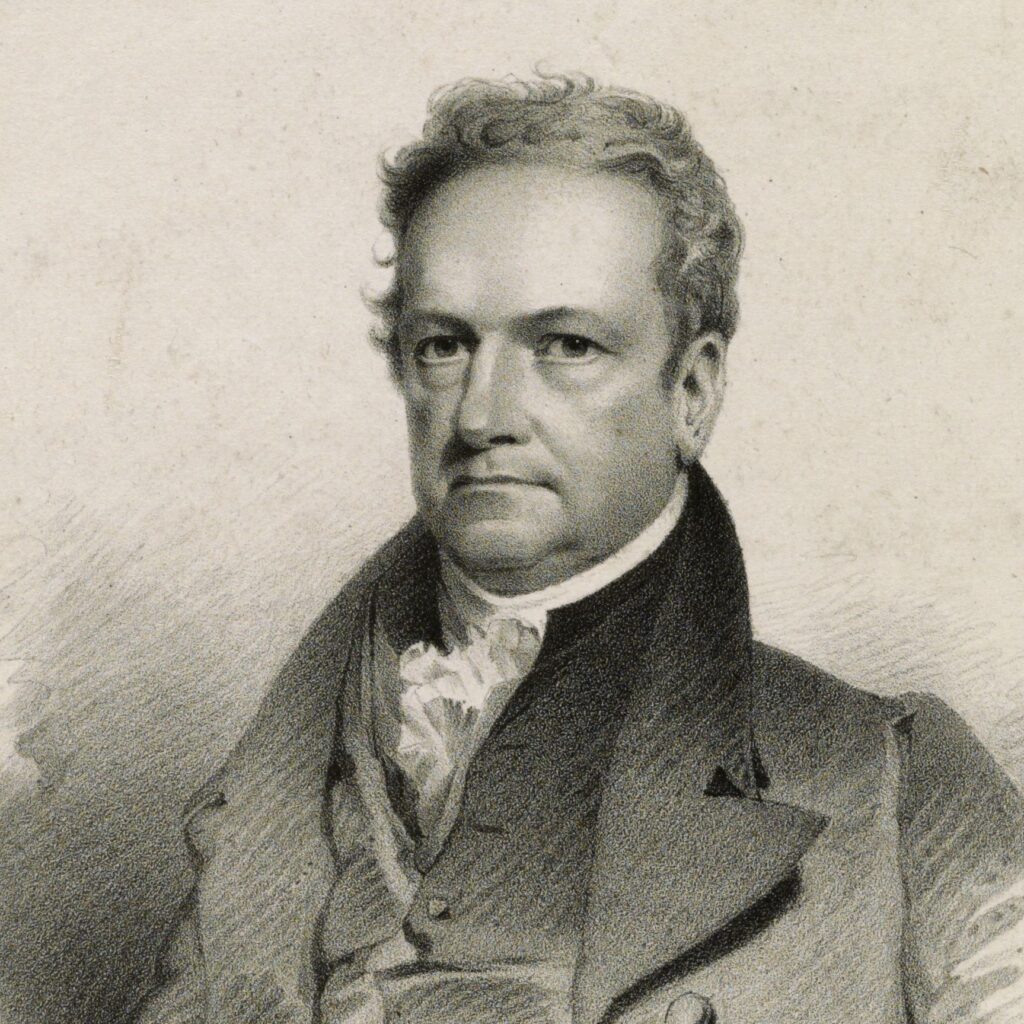
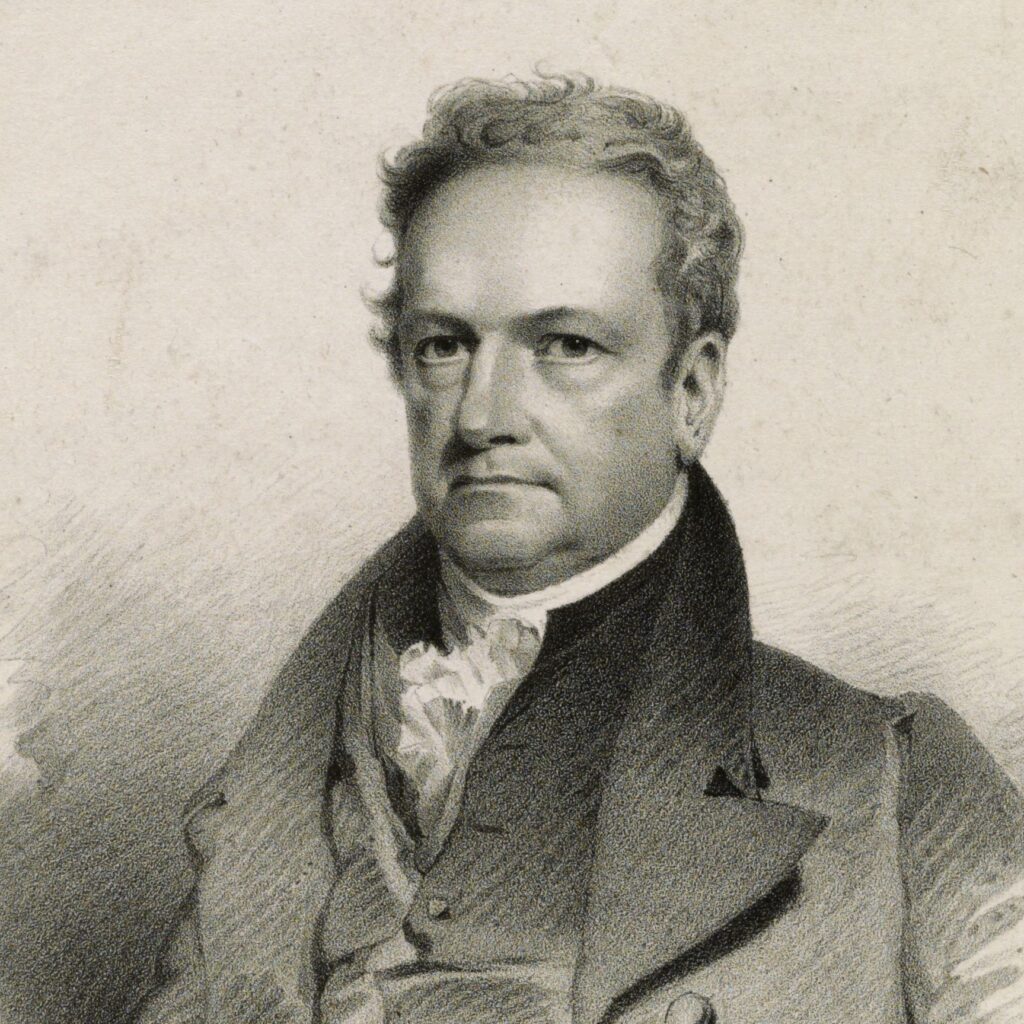
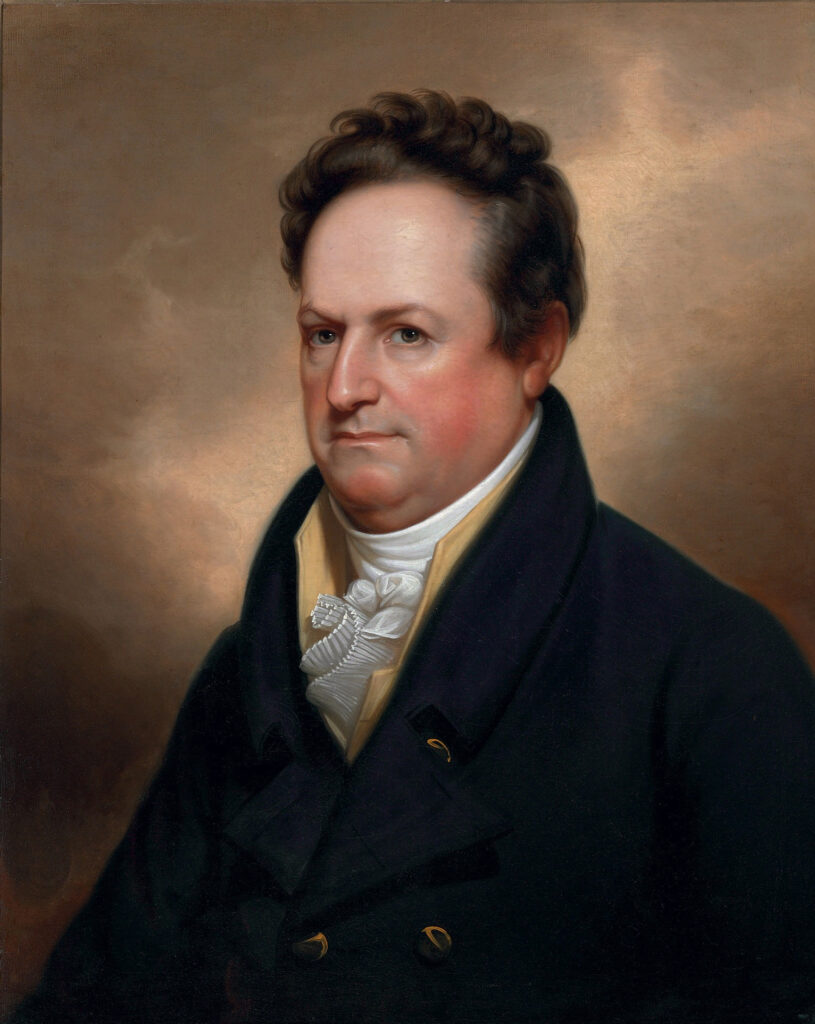
Mayor DeWitt Clinton, Library of Congress
Clinton Entanglements
When Clinton finally became mayor of New York starting in 1803 — serving several consecutive one-year terms — Tammany waited for a moment of weakness to strike. (Read about Clinton’s days as mayor here.)
As stated in previous Know Your Mayor articles, the job of New York mayor was not an elected post at this time, but rather chosen by a state-run Council of Appointments, one year at a time.
The ambitious and well connected Clinton would be appointed to this position for several years, since 1803, excepting a single year when he was replaced by Revolutionary War hero Marinus Willett. (Read more about him here.)
He returned to the mayor’s seat in 1808 but his political entanglements had earned him many new enemies by this time.
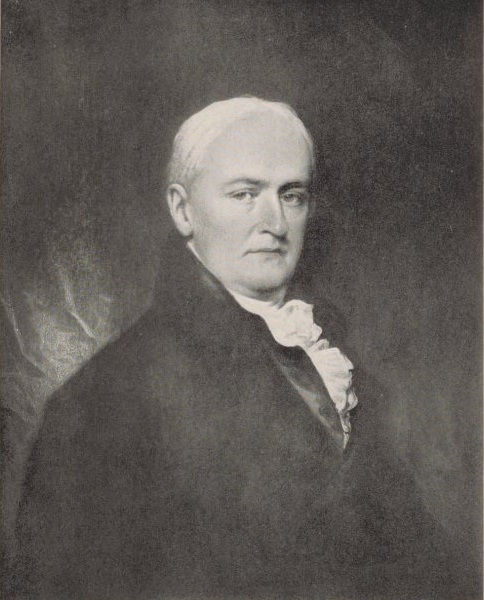
Mayor Radcliff, courtesy New York Public Library
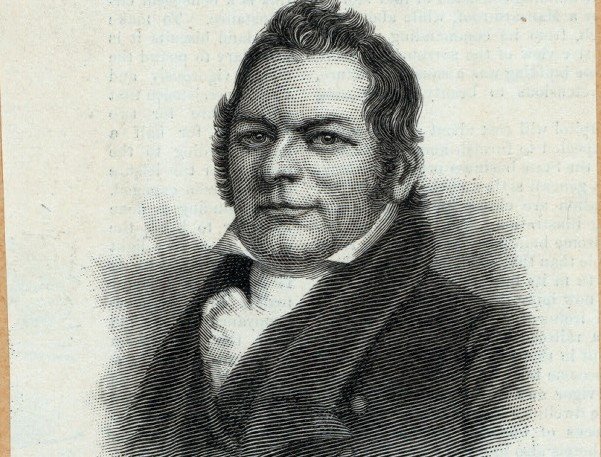
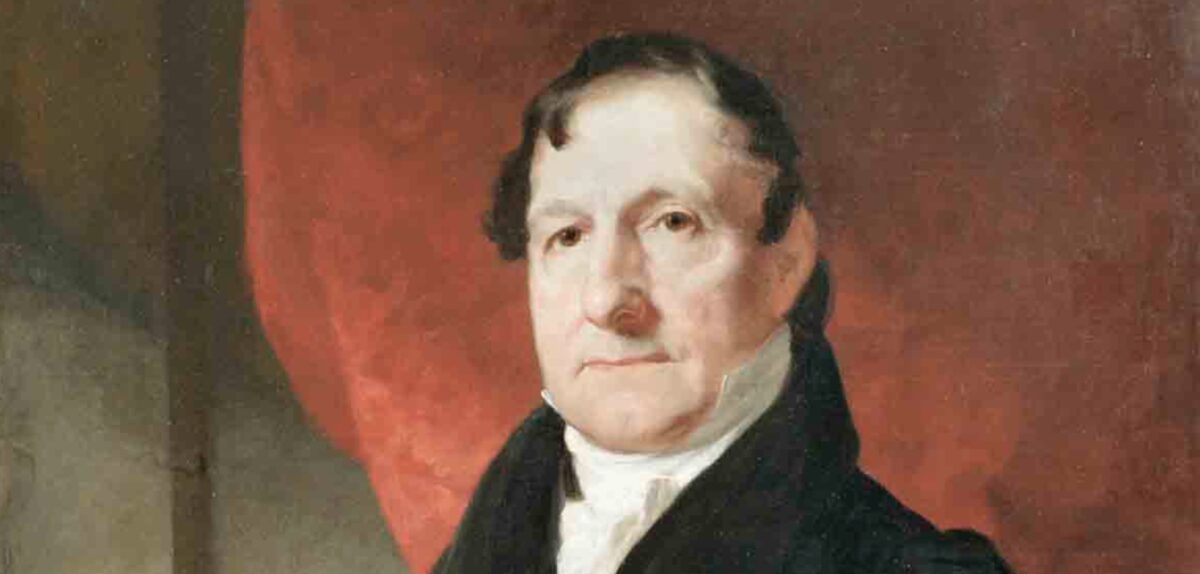
Mayor Jacob Radcliff
Most notably, Clinton, who was a lifelong Democratic-Republican, eventually became an enemy to most of New York’s disenfranchised faction of that party. He was the state’s most popular politician — except with a great many politicians.
Clinton’s political fortunes swung like a pendulum and in 1810 that pendulum swung to the Federalists on the state level.
According to author Oliver Allen, “Tammany plotted circuitously with its leaders to have the Council of Appointment remove Clinton from the mayoralty. The move succeeded but Clinton was only temporarily sidetracked.”
He was replaced with Jacob Radcliff, a former associate of Alexander Hamilton and a justice on the New York Supreme Court whose lasting claim of fame would be as a founding father of the city of Jersey City, New Jersey.
Radcliff was also openly aligned with the Tammany Society and well aware that his new position (more lucrative than a job on the bench) was entirely due to his associations with the nascent political machine.
But the pendulum swung back the following year and Clinton was placed back in the mayor’s seat in 1811. (You think this is confusing so far? Read on.)
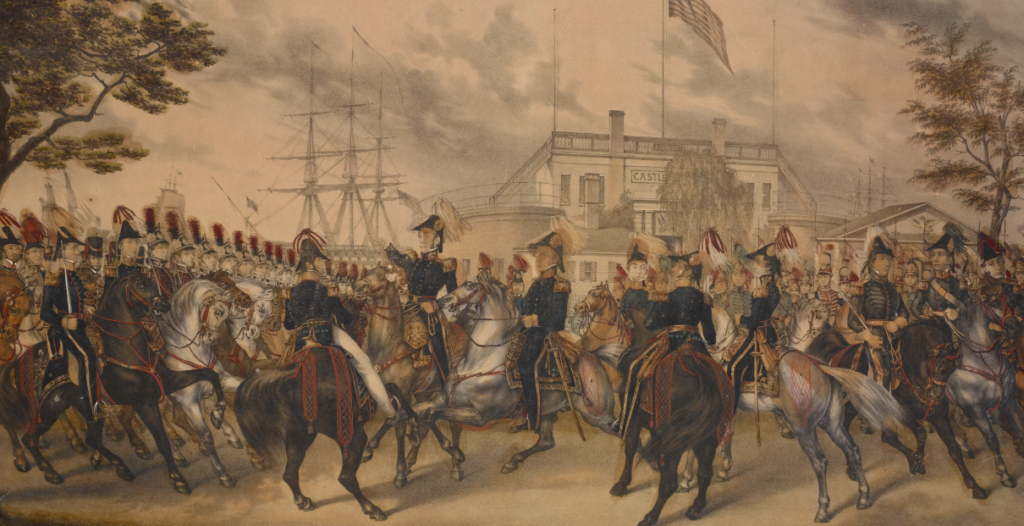
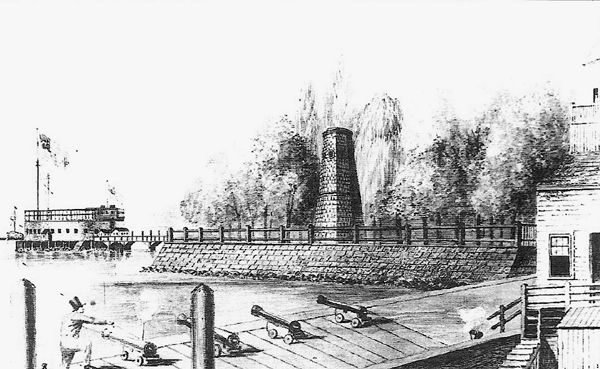
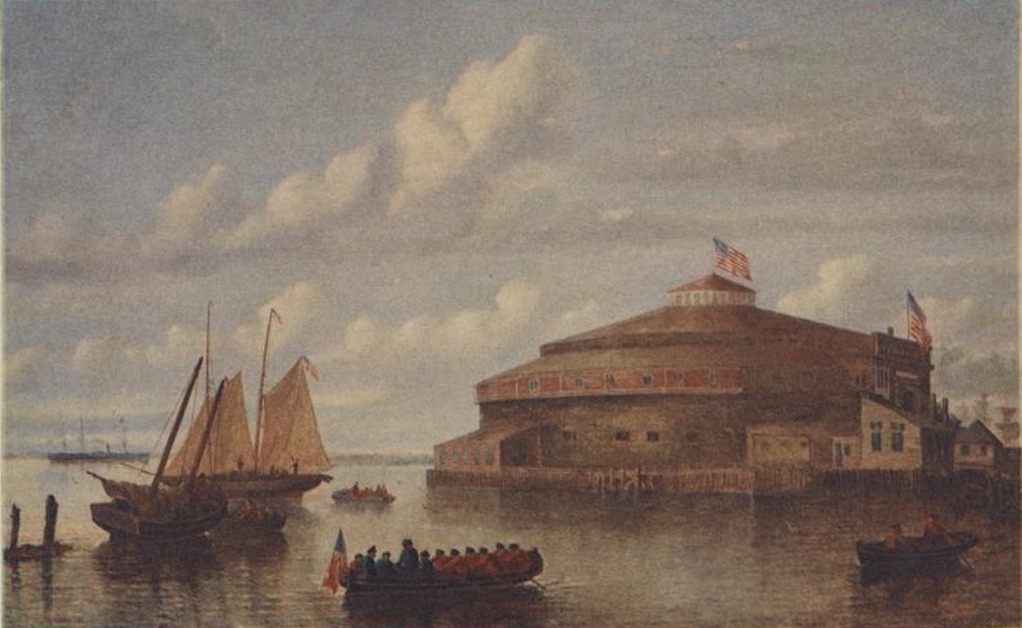
Fort Clinton (later Castle Clinton), named for the mayor and built in anticipation of conflicts from the coming war. [source]
The Brewing War of 1812
Tammany Hall finally gained its more-than-a-century-long foothold over New York City politics with the international crisis known as the War of 1812 — which actually lasted until 1815.
On top of the usual partisan stew of a swiftly growing city, the conflict with England left party affiliations malleable, with Federalists opposing action (even suggesting secession from the United States!) and staunch Democratic-Republicans generally favoring war.
Thus, as you can imagine, it would be difficult to remain balanced in such unstable political waters, even for somebody as saavy and popular a career politician as Clinton.
As war broke out with England in 1812, all political parties and affiliations seemed to disintegrate entirely.
As James Renwick wrote in his biography of Clinton, “On this occasion the old party lines were completely obliterated; no trace of affection for Great Britain remained in any mind, and the very name of federalist only exists to be used as a mode of discrediting a political adversary in the minds of the ignorant.”
As a result, many Federalists jumped ship to join the surging Tammany Democrats. Among their number was the former mayor Radcliff, warmly greeted by Tammany head Grand Sachem John Ferguson.
He would be Tammany’s first ‘boss’ with genuine power.
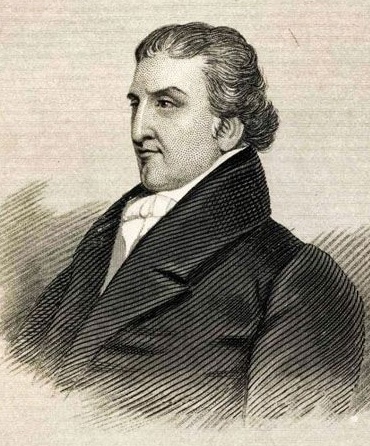
Mayor Ferguson
John Ferguson, Mayor and Boss
A perfect storm brewed in 1815 when Tammany — in the first robust display of its powers — for the first time controlled the state senate and enjoyed great gains in local elections.
At last! Tammany could really do what it wanted. And what it wanted was to get rid of that old stalwart Clinton. Once and for all.
And who better to replace him than the head of Tammany himself — John Ferguson?
However, whether by intent or sudden whim, Ferguson stepped down after only three months in office to take on the far-more lucrative job of officer of the Port of New York custom house, according to one source, a major center “of federal revenue, political patronage and potential graft.”
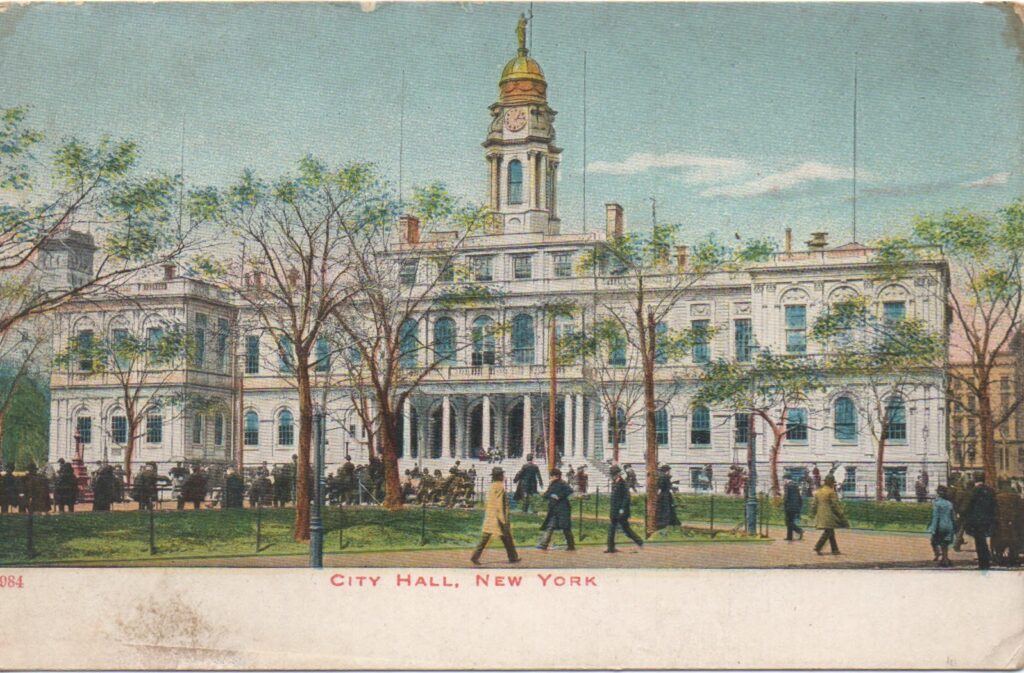
And so he was replaced with — Jacob Radcliff again, now a mayoral appointee representing an entirely different political party from the first time he had the job! In 1815 he moved in the city’s new City Hall and would remain in the position until 1818.
Clinton became governor in 1817 and handily swept away his opponents.
Meanwhile, Radcliff was caught up in a scandal when, halfway into his term, he was caught distributing a list of potential Tammany replacements for all still-remaining Federalist Common Council members, a politically insensitive move which galvanized the Council and ensured that 1818 would be Radcliff’s last year ever as mayor.
But it would be tactics like this that would ensure the future of Tammany Hall in local politics.
The political machine was only getting warmed up.
This is an expanded and rewritten version of an article which first ran on this website in 2009.
With a new mayoral race on the horizon in New York City we think it is time that you Know Your Mayors! Become familiar with other men who’ve held the job, from the ultra-powerful to the political puppets, the most effective to the most useless leaders in New York City history.
This longtime feature of this website is being rebooted with new articles and newly researched and refreshed earlier entries in this series. Check back each week for a new installment.
Marinus Willett is easily one of the most distinguished New York mayors, one of the few whose tenure at City Hall is so dwarfed by his past achievements that it merits but a footnote in his biography.
However he has a fantastic connection with the job that makes his brief stint there all the more relevant.
Marinus served as city mayor from 1807-1808 — just a single year.
His great-grandfather Thomas Willett, however, was New York City very first mayor, appointed to guide the city of New Amsterdam through its official transformation as a British property in 1665.
The Fighter
His rascally great grandson would be less enamored of his British lineage. Born on July 31, 1740 in Jamaica, Long Island — in what would much, much later become the borough of Queens — Marinus would be the last appointed New York mayor with strong military connections to the Revolutionary War.
Willett served as a militiaman during the battles of the French and Indian War, where as a young man he participated in the failed campaign at Fort Ticonderoga.
By 1775, he was a fully engaged American rebel living in New York, foiling British troops at the very start of the Revolutionary War as one of the subversive Sons of Liberty.
Marinus Willett preventing removal of arms by the British, June 6th, 1775 / In a print of a painting by John Ward Dunsmore, 1907. Library of Congress
That same year, age 35, he became Lieutenant Colonel in George Washington’s Continental Army, working on the northern Canadian campaigns and distinguishing himself at the defense of Fort Stanwix in upstate New York, where he held off British and allied Indian forces.
Eventually in 1780 he was even given command of the entire Mohawk Valley, where his ragtag and sparse militia tenuously held the area against enemy foes.
According to author Frederick L. Bronner: “It is a possibility that Willett witnessed the first and last battle in New York during the Revolution.”
Today, Willett is remembered at Fort Stanwix National Monument by the Marinus Willett Center.
Choosing Sides
Willett’s reputation as a Revolutionary warrior would define him for the rest of his life.
But his return to post-war New York, employed as a merchant, was seemingly marked by skirmishes of a different sort, divorcing two different women before settling third wife in 1799, 35 years his junior. (All this on top of an illegitimate son he had fathered during the war!)
But by the start of the 1800s, Willett became associated with Aaron Burr which put him on the opposite side of many former political allies including DeWitt Clinton who became Mayor of New York in 1803.
Bronner writes: “Clinton saw to it that they [Burr sympathizers] got not so much ‘as a smallest crumb from the well-filled table.'”
Yet when Clinton fell out of political favor in Albany, his appointment as mayor (he served from 1803 to 1807) went to Willett.
A Brief Tenure
Simply put, Willett took the job for the money, which paid better than city sheriff. But as a rival of Clinton, he must have relished taking the position away from him.
He lasted for exactly one full term (i.e. a year). Clinton would return to the job in 1809. (Read Clinton’s Know Your Mayor entry here for more information.) And two years after that, when Willett ran for state lieutenant governor, he was defeated … by DeWitt Clinton.
Ever a feisty old man to the finish, Willett later rallied support for the war that would become the War of 1812. He died at age 90 on August 22, 1830.
Willett is still remembered today in the Lower East Side with two streets — Willett Street and possibly Sheriff Street. Both streets have been rather ungraciously neutered by the Williamsburg Bridge.
A version of this article originally ran on June 10, 2008 — as you can see from the comments below.
PODCAST REWIND A story almost four hundred years in the making — and a place at the center of modern New York political life.
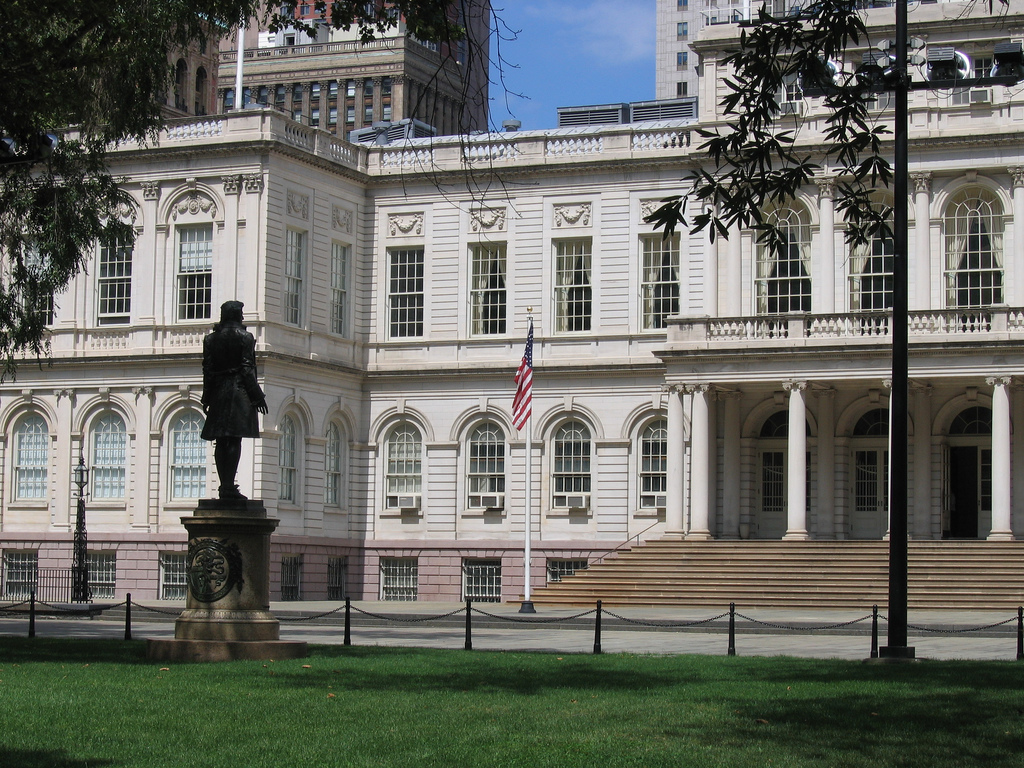
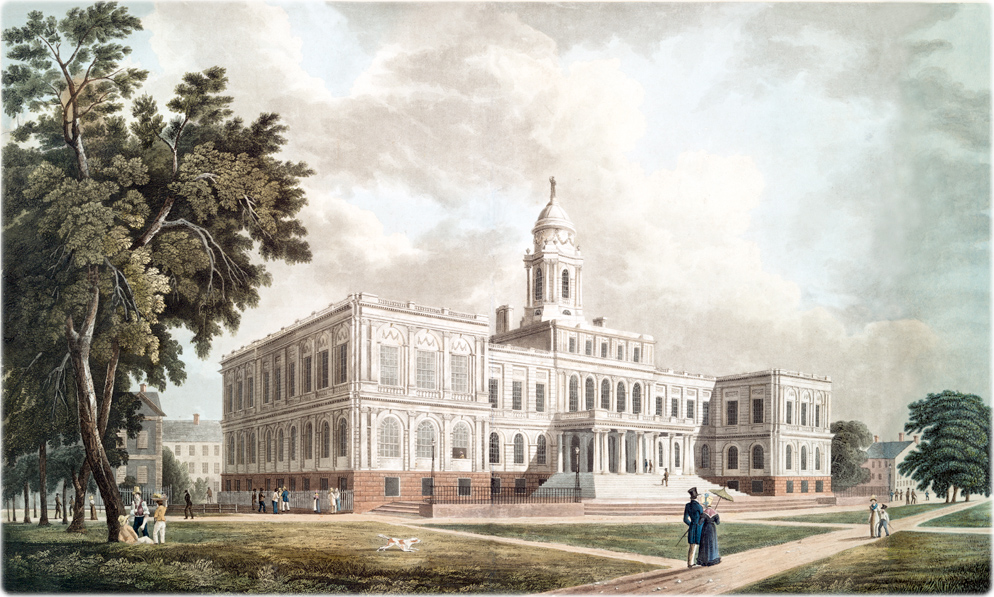
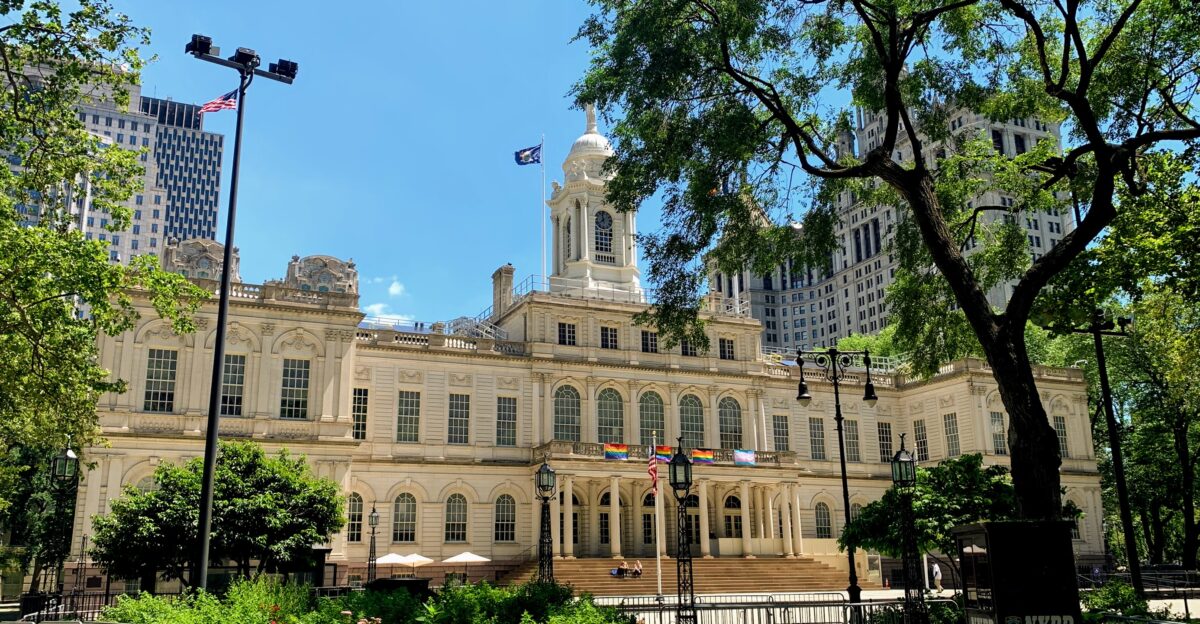
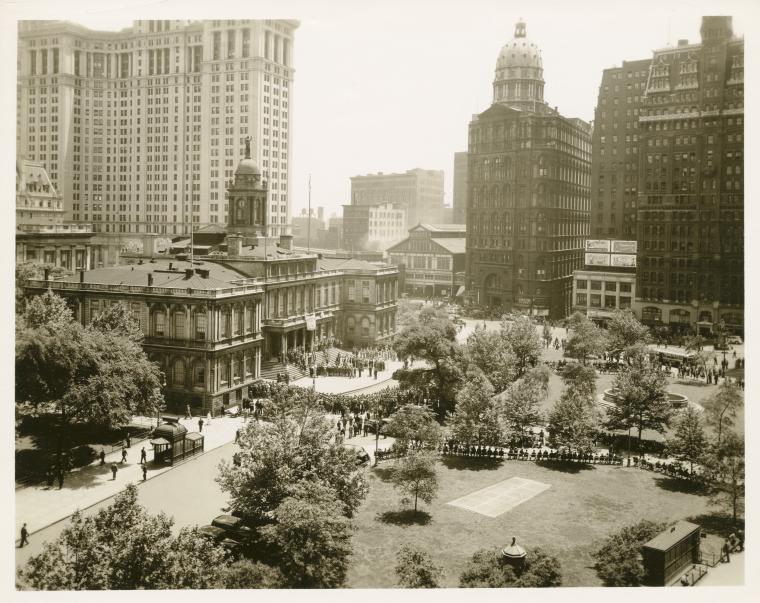
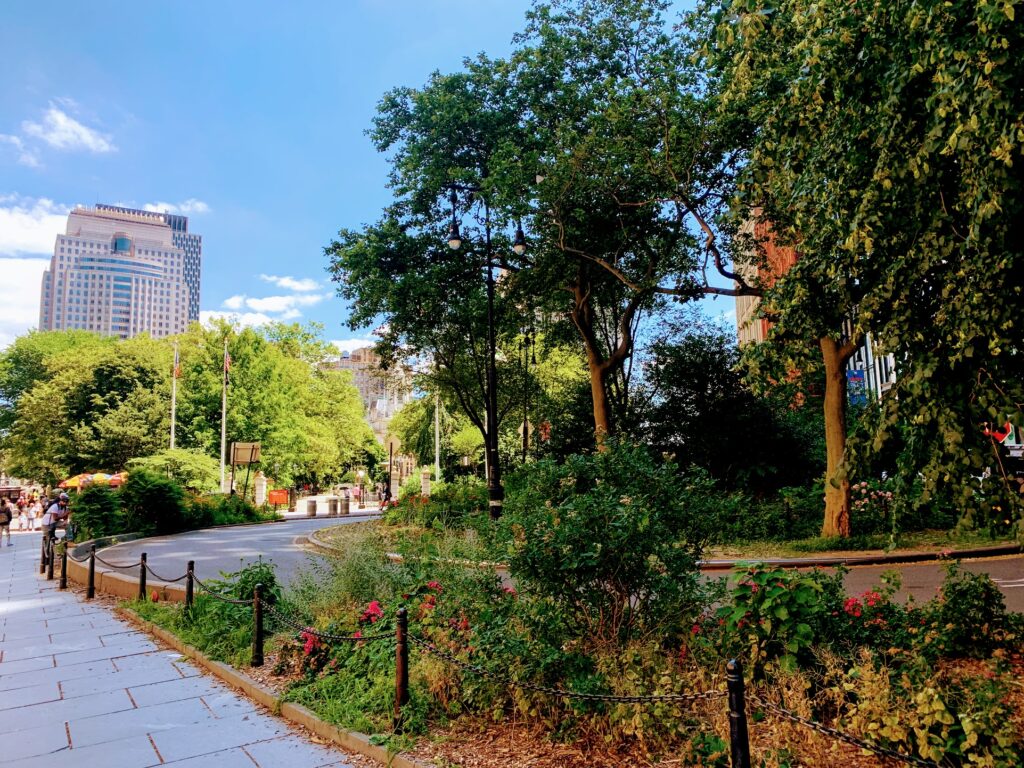
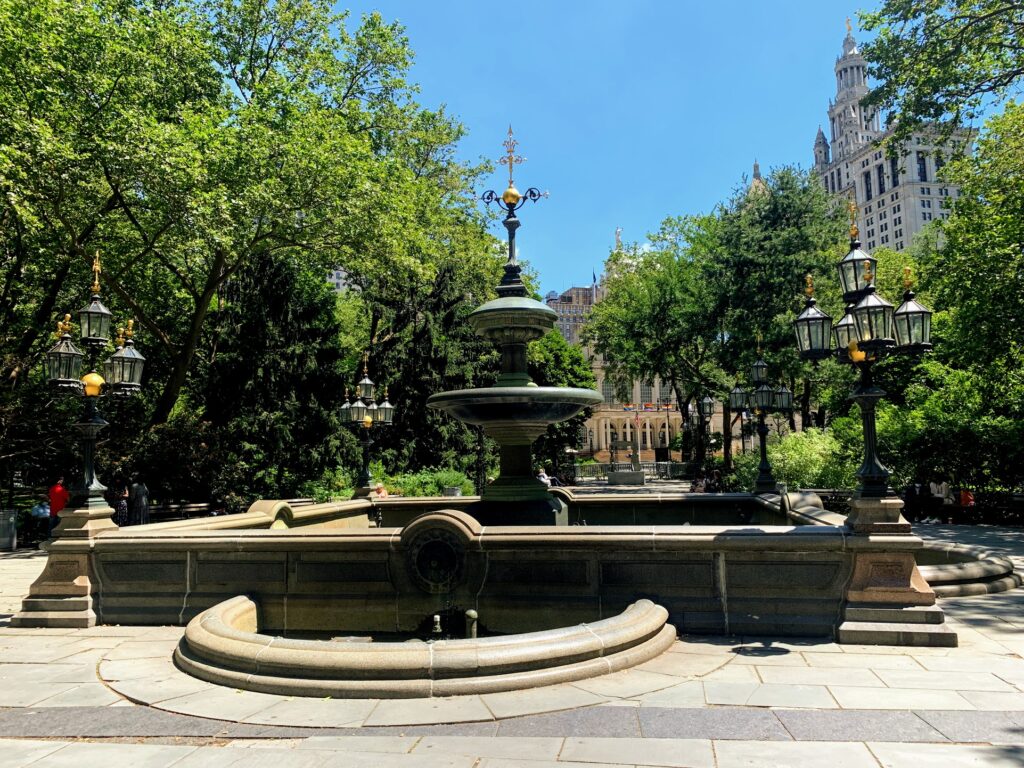
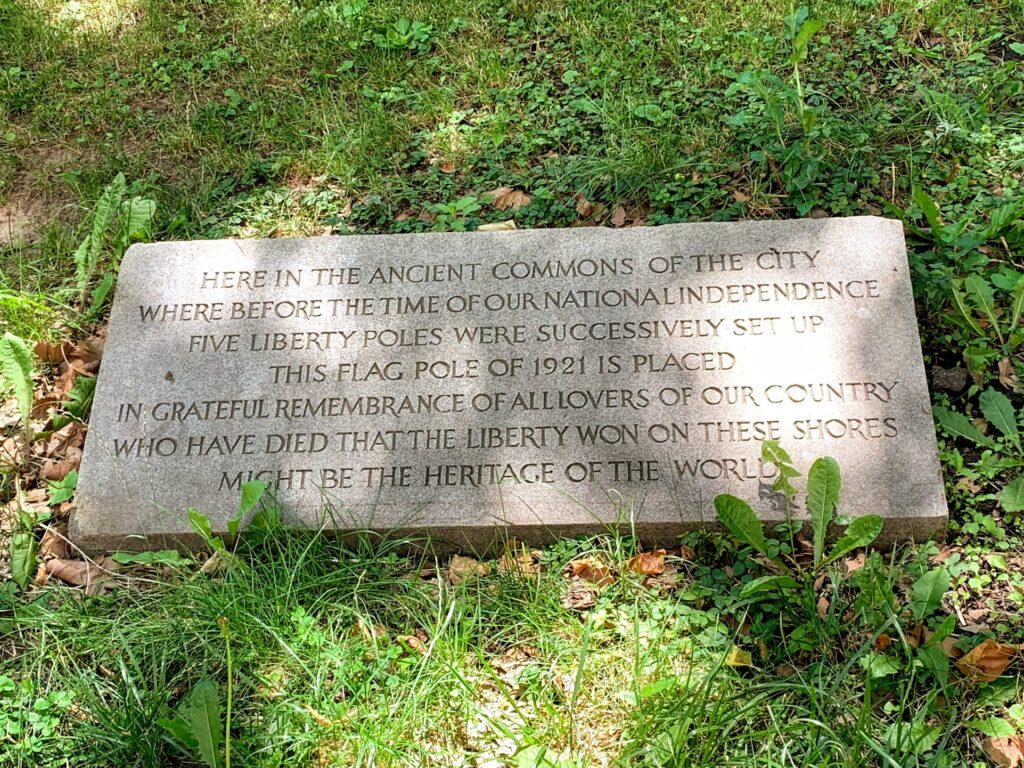
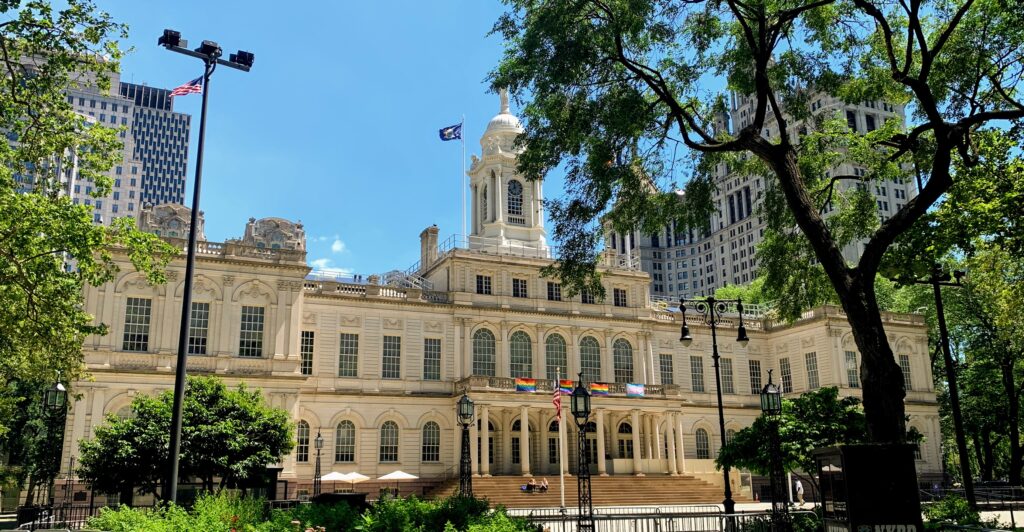
New York City Hall sits majestically inside a nostalgic, well-manicured park, topped with a beautiful old fountain straight out of gaslight-era New York.
But its serenity belies the frantic pace of government inside City Hall walls and disguises a tumultuous and vigorous history.
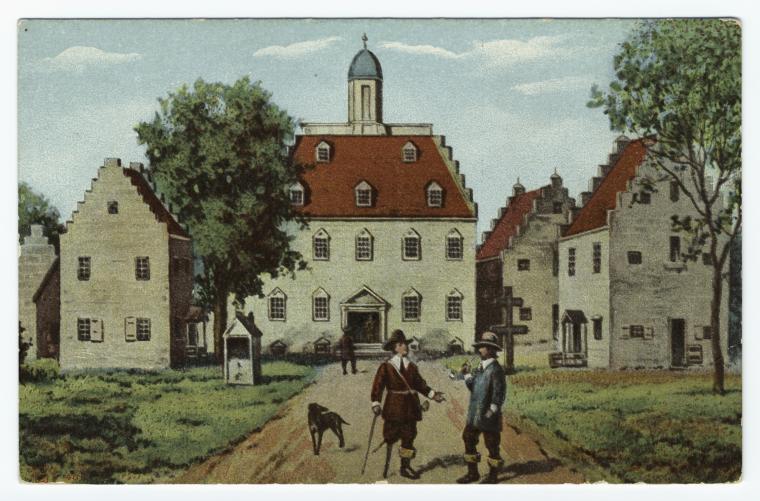
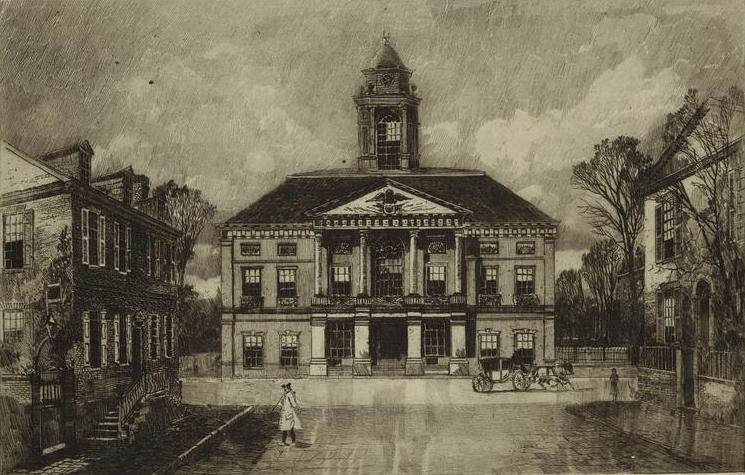
There have actually been two other city halls — one an actual tavern, the other a temporary seat of national government. The present city hall — first used in 1811 and completed the following year — is one of New York City’s greatest treasures.
Join us as we explore the unusual history of this building, through ill-executed fireworks, disgruntled architects and its near-destruction by city planners.
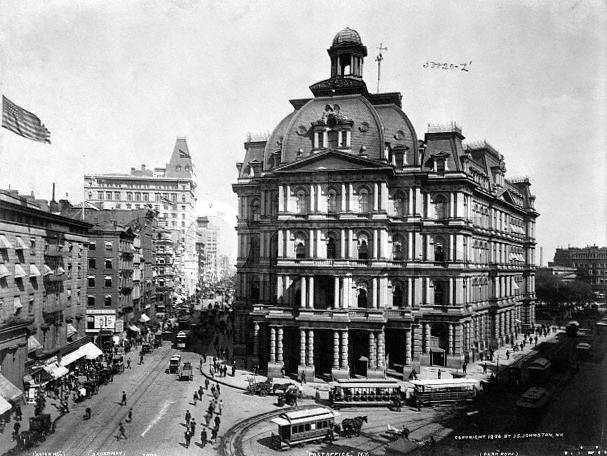
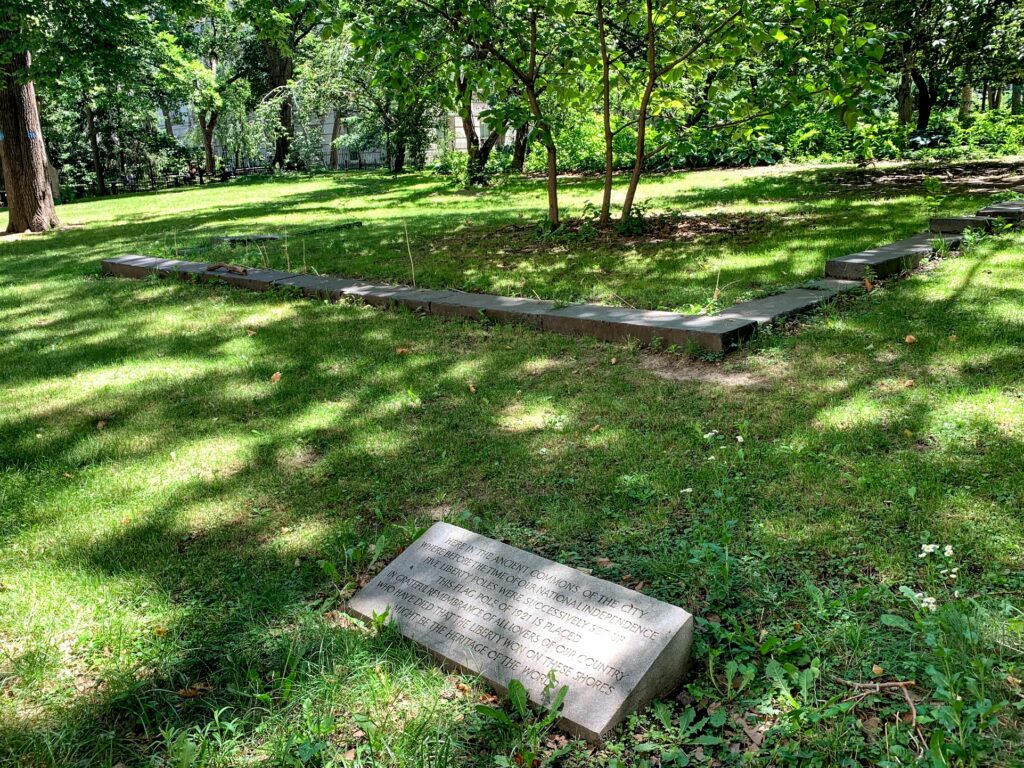
PLUS: We look at the park area itself, a common land that once catered to livestock, liberty poles, almshouses and a big, garish post office.
This is a reedited and remastered version of episode #93 featuring an all-new, very special ‘Choose Your Own Adventure’ challenge at the end.
Listen Now: The Historic New York City Hall
The Bowery Boys: New York City History podcast is brought to you …. by you!
We are now producing a new Bowery Boys podcast every other week. We’re also looking to improve and expand the show in other ways — publishing, social media, live events and other forms of media. But we can only do this with your help!
We are now a creator on Patreon, a patronage platform where you can support your favorite content creators.
Please visit our page on Patreon and watch a short video of us recording the show and talking about our expansion plans. If you’d like to help out, there are six different pledge levels. Check them out and consider being a sponsor.
We greatly appreciate our listeners and readers and thank you for joining us on this journey so far.
I’ll Drink To That: Stadt Huys, New Amsterdam’s town hall, was a multi-purpose stone building housing an inn, a tap room on the first floor and the workings of city government on the second floor. The building was the government center even when the British arrived and would only be replaced in 1700.
Today on Pearl Street (near Stone Street) one can find the exact spot where the Stadt Huys once stood, marked by beige-colored bricks.
Photo by Greg Young
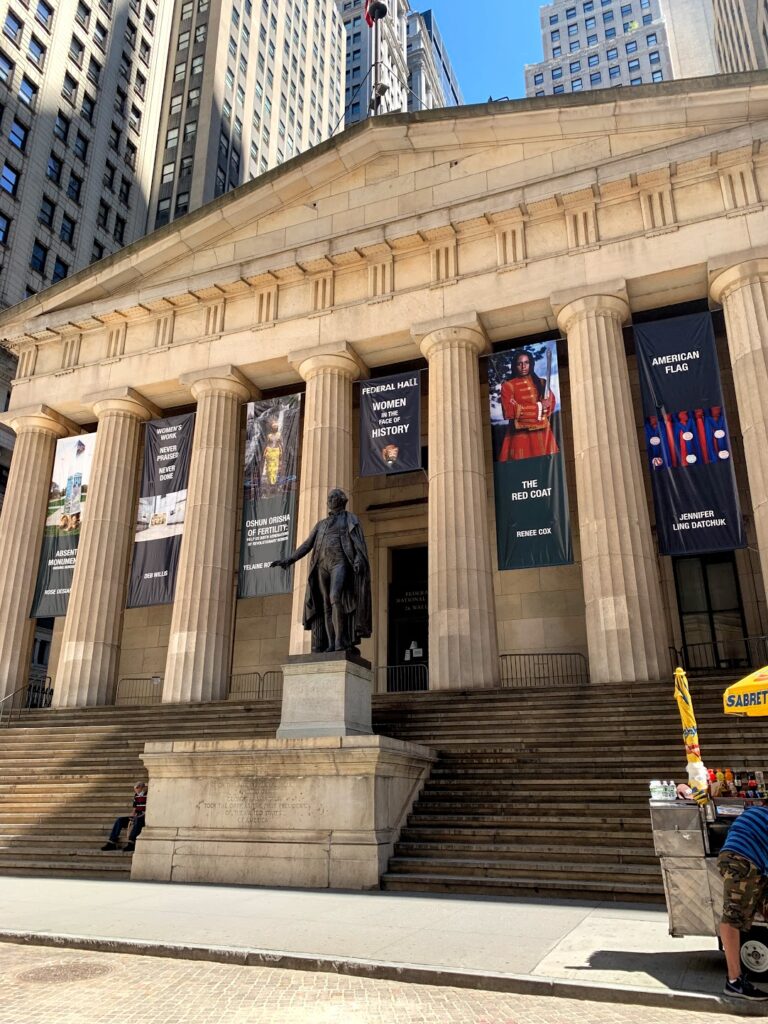
Federal Style: The second city hall, made with stones from the actual ‘wall’ of Wall Street, would be a bustling overstuff building and central to the beginnings of American history.
For a couple years, as Federal Hall, it was the center of federal government; the votes for George Washington as the first president were counted here and he was sworn in from the balcony.
New York Public Library
The old City Hall/Federal Hall was torn down in 1812. Three decades later the U.S. Custom House was constructed here, and today it is called Federal Hall.
Photo by Greg Young
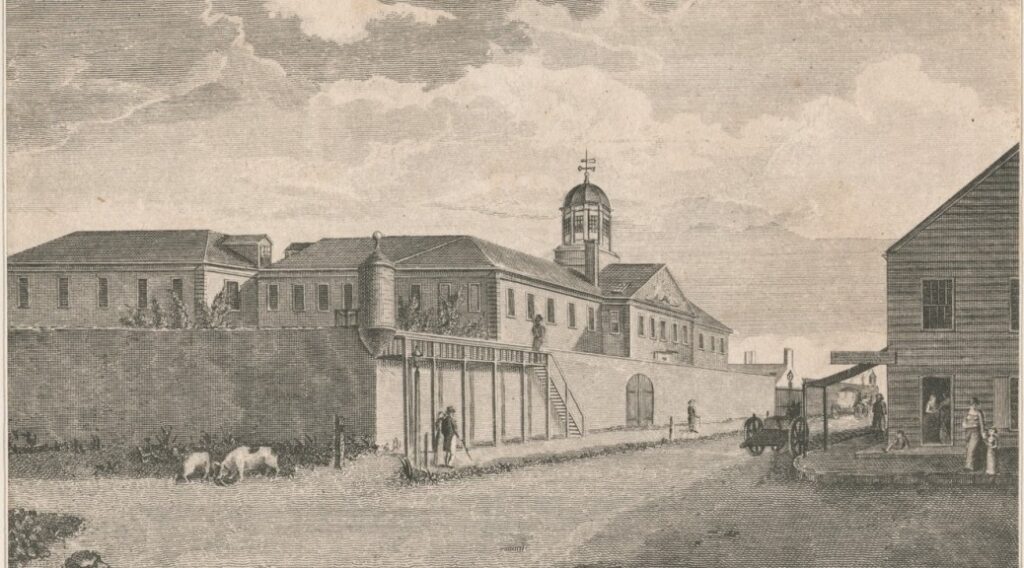
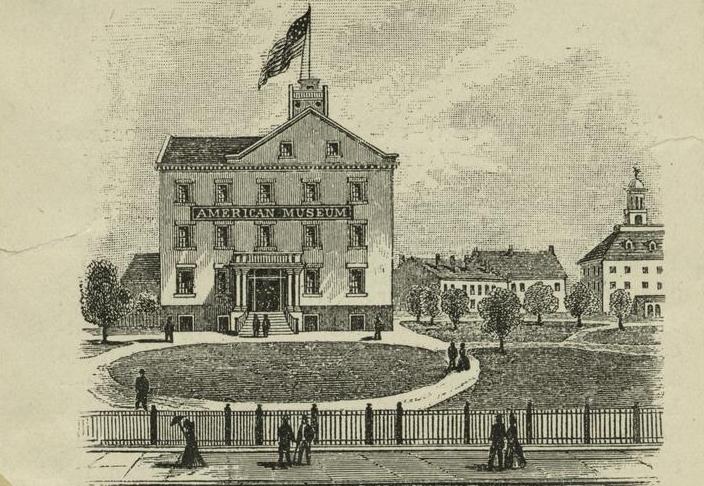
Park Purposes: Before City Hall arrives, the common ground held several buildings, includin almshouses and debtors prisons (depicted in the background) and an early version of the American Museum (which evolved to become Barnum’s American Museum).
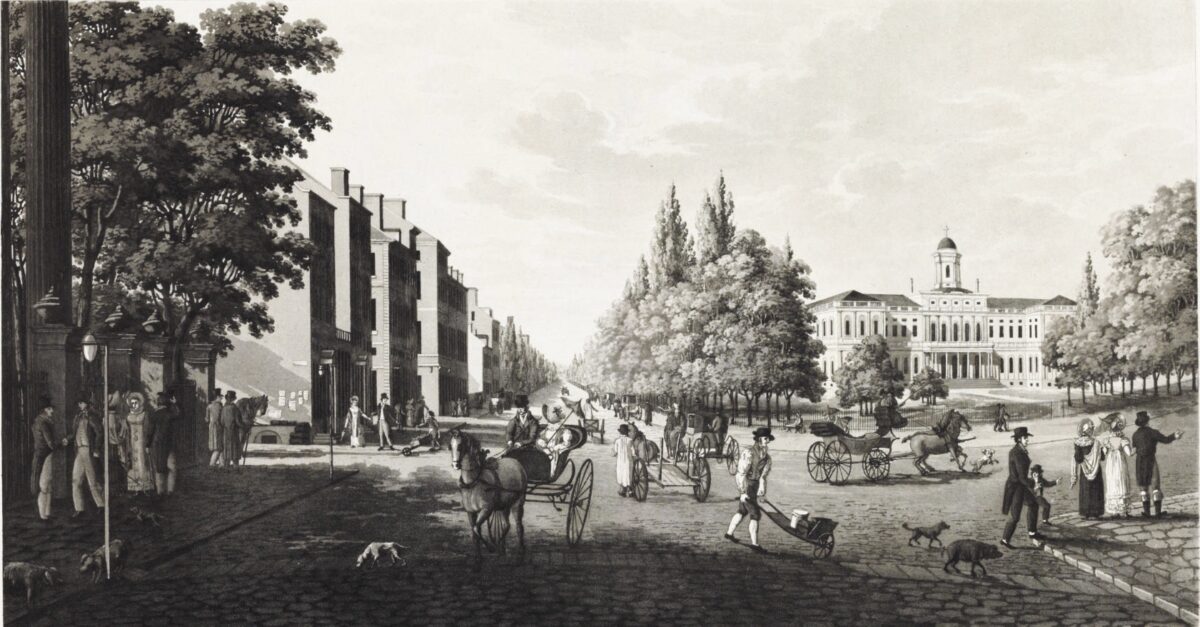
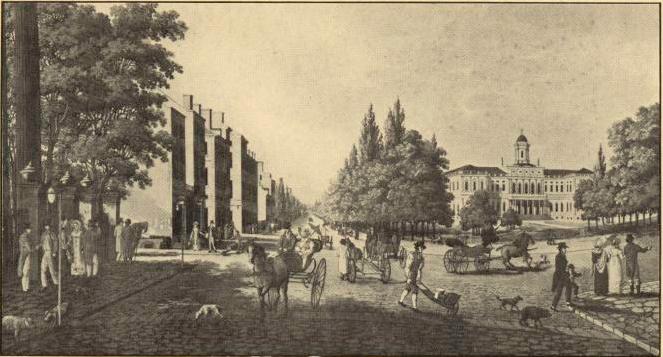
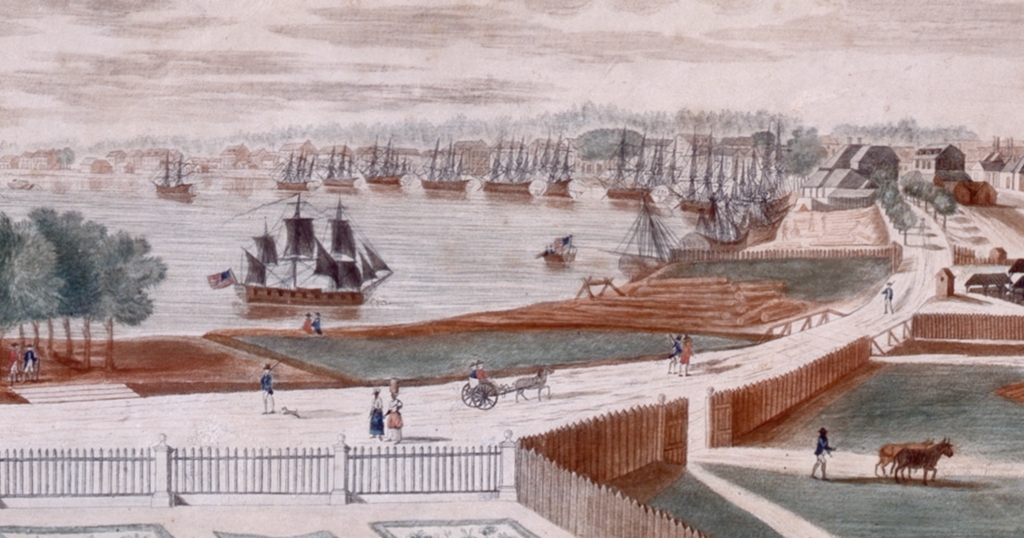
There Goes The Neighborhood: The image below depicts life in the year 1820. With the introduction of a shiny new City Hall, lavish rowhouses begin springing around the park, housing New York’s elite. Just a few years before, they would have faced into almshouses.
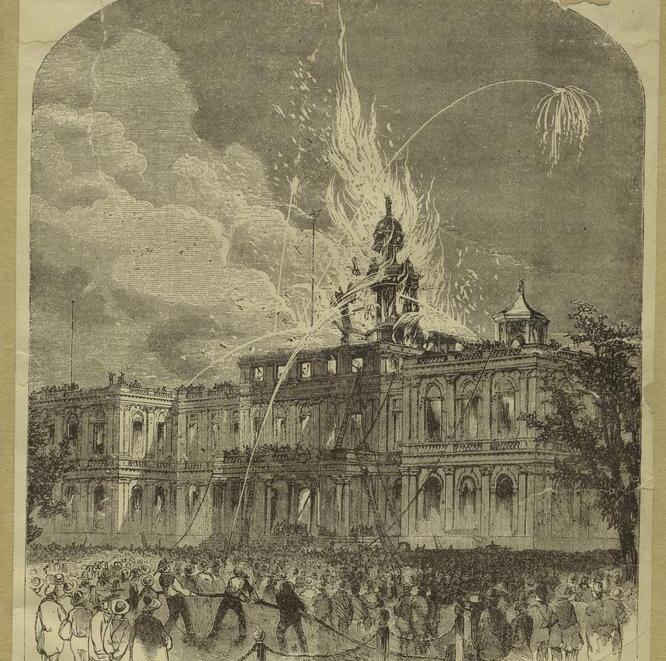
D’oh!: Wanna know one really good reason why we don’t shoot off fireworks in the middle of the city anymore? One robust fireworks celebration, honoring the laying of the Atlantic cable, caught the roof of City Hall on fire in 1858, causing extensive damage.
New York Public Library
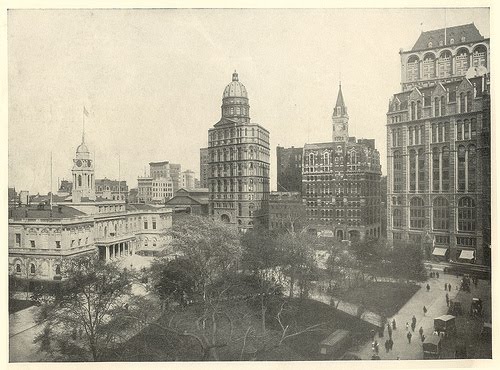
The City Grows Up: New York’s growth spurt starts around City Hall Park, with a few new skyscrapers becoming the tallest buildings of their times, including the World Building (pictured at center), the Park Row and St. Paul buildings (just south), and the Woolworth Building, on the park’s west side.
The Municipal Building joins it a few years later….
Post Haste: The City Hall Post Office sat on the southern end of City Hall Park.
The front of the Post Office, entirely consuming the area that is today’s southern end of the park and adjoining traffic triangle.
Photo by Greg Young
The Jacob Wrey Mould Fountain, first placed in City Hall in 1871. During the 1920s it was dismantled and shipped to Bronx, but returned to the park in 2000.
Photo by Greg Young
Plaque on the western side of City Hall Park:
Stones mark the site of Bridewell Prison:
Photo by Greg Young
FURTHER LISTENING:
After listening to this show on the history of New York City Hall check out these shows with similar themes and historical moments mentioned in this show:
With a new mayoral race on the horizon in New York City we think it is time that you Know Your Mayors! Become familiar with other men who’ve held the job, from the ultra-powerful to the political puppets, the most effective to the most useless leaders in New York City history.
This longtime feature of this website is being rebooted with new articles and newly researched and refreshed earlier entries in this series. Check back every other week for a new installment.
Dewitt Clinton was so much more than a mayor of New York City of course.
He also served as a two-term governor, ran for president against James Madison and helped oversee one of the greatest engineering projects in American history.
He negotiated the choppy waters of early American politics with dexterity, building upon the reputation of his family name to fuel economic and cultural growth in the state he called home.
His greatest achievement was the Erie Canal, the cross-state canal which linked the Hudson River and New York Harbor with the interior of the United States.
No other civic project — with the possible exception, at the start of the 20th century, of the subway system — would affect the fortunes of New York City in such a dramatic and unambiguous way.
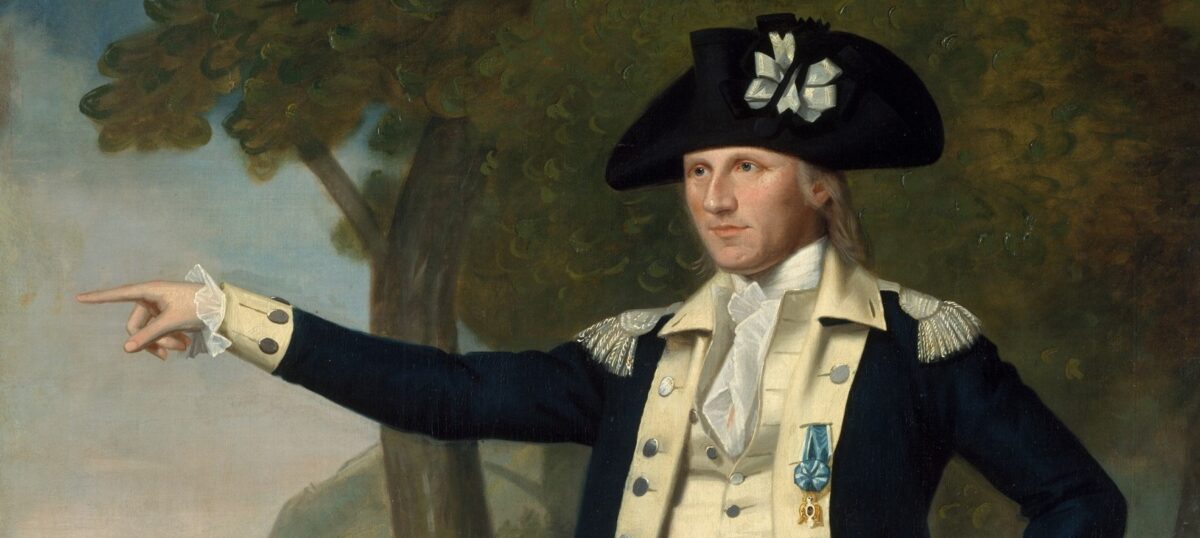
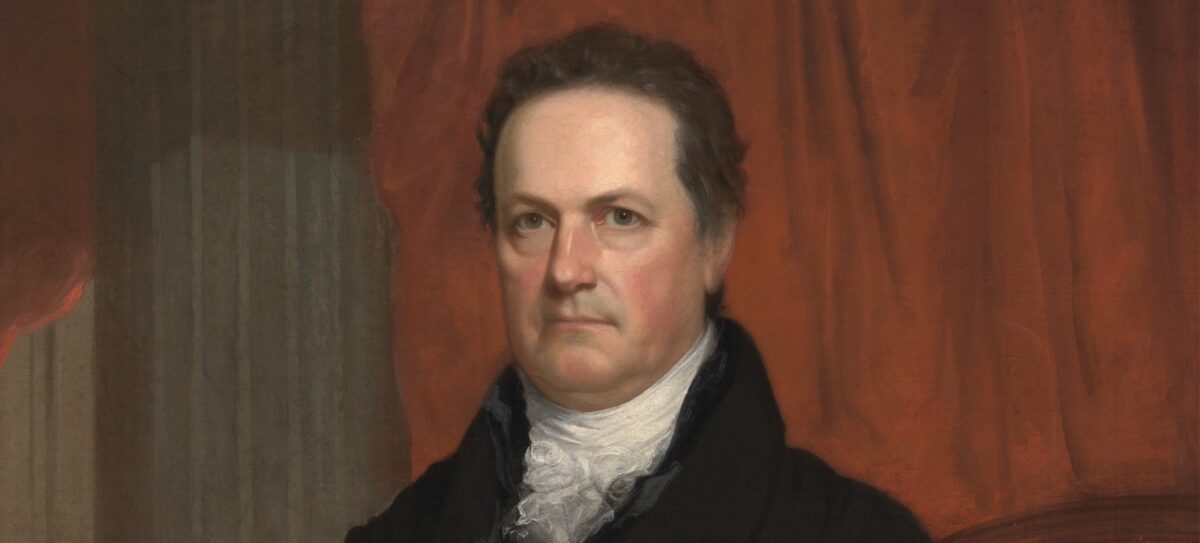
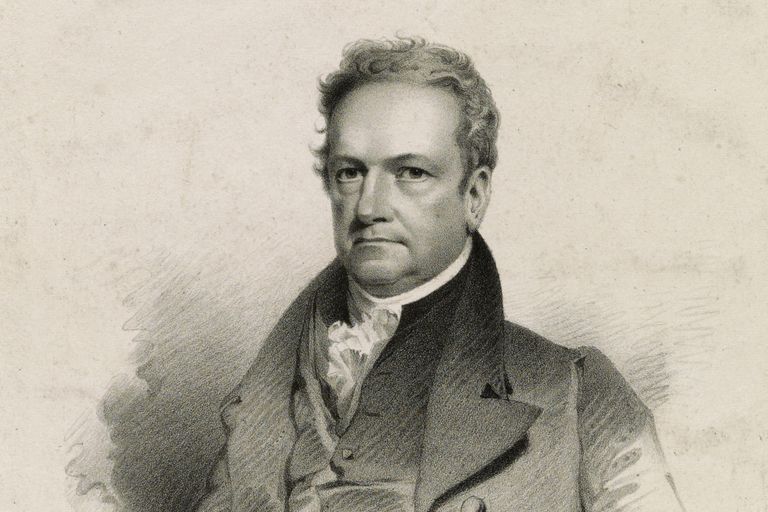
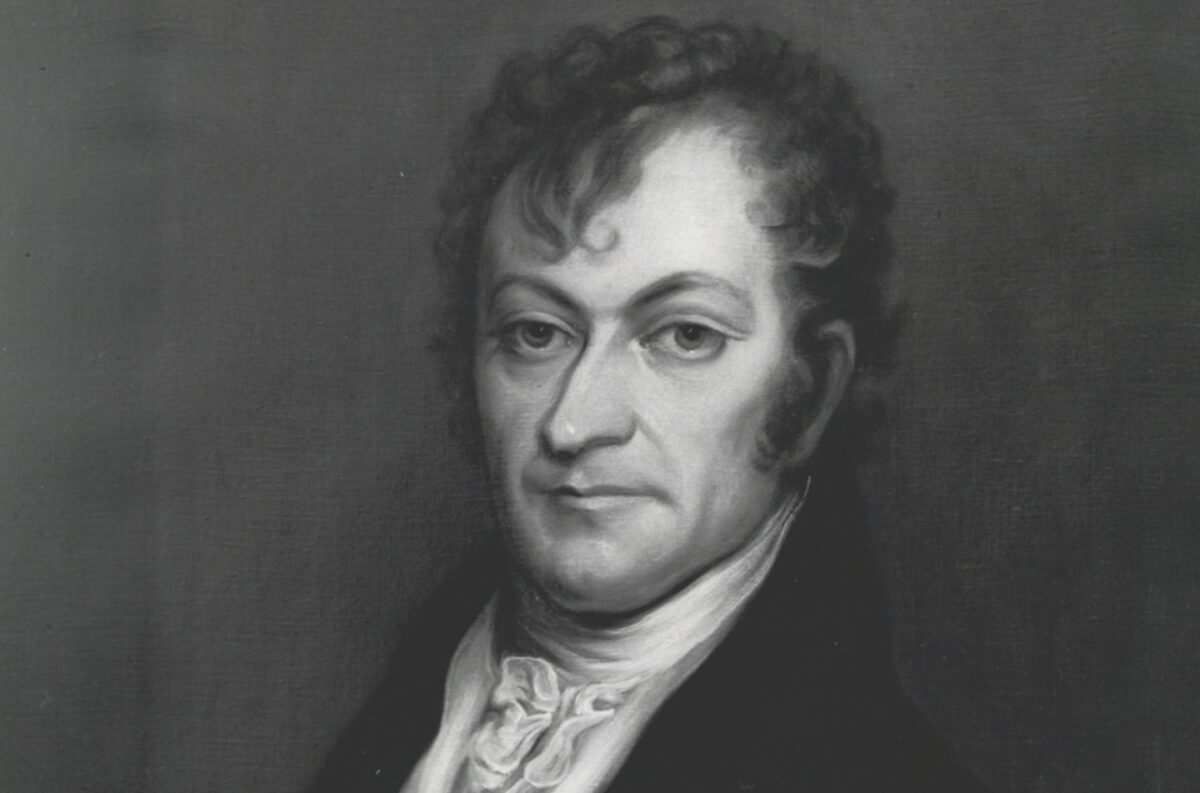
Clinton in a portrait made by Rembrandt Peale
So, yes, the many accomplishments in Clinton’s storied career tend to overshadow his work as the mayor of New York.
Yet most historians place him among the greatest mayors the city has ever employed. He might even be the greatest in terms of his long-term impact.
Clinton served ten one-year terms non-consecutively — 1803-1807, 1808-1810 and 1811-1815 — weaving together an extraordinary period of city growth during tumultuous political times and a potentially deadly foreign war. (Why not consecutive terms? I’ll explain in the next Know Your Mayors column.)
Clinton on the Rise
Dewitt Clinton was born in Little Britain, New York, on March 2, 1769, into one of the most politically important families in America.
Major-General James Clinton, DeWitt’s father, fought next to George Washington during the Revolutionary War (and brutally killed hundreds of Iroquois people during the 1779 Sullivan Expedition). DeWitt’s uncle George Clinton rose the political ranks following the war to become the governor of New York (from 1777-1795 and again from 1801-1804).
By the 1890s, according to author Evan Cornog, “three families presided over New York State politics — the Schuylers, the Clintons and the Livingston.”
So DeWitt Clinton had easy access to the corridors of power — Uncle George even made him his secretary in a bold gesture of nepotism — but he built upon that privilege, instead of resting on it. More importantly, he’s often considered to have the genuine needs of New Yorkers in mind in his accumulation of power, believing the city’s cultural and economic prosperity could be worn as a badge of honor for himself.
His most influential job during this period was as a member of the Council of Appointment, the body charged with appointing all the governmental positions that were not elected. This included the mayor of New York. In fact, he helped appoint the last mayor in our Know Your Mayors series — Edward Livingston.
While the Clintons were aligned with Thomas Jefferson and the Democratic-Republicans, DeWitt held personal animus towards his party’s Aaron Burr, the Vice President, who many believed had attempted to steal the 1800 election from the preordained Jefferson. When Burr killed Alexander Hamilton in 1804, Jefferson replaced him — with George Clinton, DeWitt’s uncle.
By then, DeWitt himself had dabbled in federal office, serving as the Senator from New York for almost two years from 1802 to 1803. But he hated Washington D.C. — which was an unpleasant and barely developed swamp then — and wanted to return to the comforts of New York.
So he resigned and took a new job which was then offered to him — the mayor of New York City.
New York City Hall, dedicated in 1811 and opened for government business by 1812
Setting the Foundations
At first it appeared this was just another step in the political ladder for DeWitt. According to Gotham, Clinton told his uncle that “being mayor was the better job [than being a U.S. senator] because its influence in presidential elections made it ‘among the most important positions in the United States’.”
But he quickly fleshed out the mayor’s role in surprising ways, having the unique political connections that allowed him to expand local government’s role. In later years, these expanded powers would be reduced by the influence of political machines like Tammany Hall.
Among the fledgling organizations he either founded or vigorously supported during his time in office:
— New York Board of Health: Clinton entered office with yellow fever the city’s greatest enemy. According to NYC Health, “Led by Mayor De Witt Clinton, the board evacuated stricken neighborhoods and started collecting mortality statistics, to ‘furnish data for reflection and calculation.'”
From this department came a newly created role — city inspector — which expanded to collect data (births, marriages and deaths) on city residents.
— New-York Historical Society: Clinton believed in upgrading the city’s cultural life, and the Historical Society, essentially New York’s first museum, allowed the city to celebrate its role in the new American cause and exalt the New Yorkers who fought for independence (which naturally included Clinton’s family).
Clinton was a founding committee member in 1804 and even gave the institution some space at City Hall (then at Wall Street aka Federal Hall).
He also chaired both the American Academy of the Arts and the Literary and Philosophical Society in their early years.
— Free School Society: Clinton championed the social education model which eventually became the New York public school system.
According to Evan Cornog, “In 1805, two measures transformed primary education in New York. The first was the allotment by the legislature of 500,000 acres of state lands and three thousand shares of bank stock for the benefit of public school. The second was the establishment of the New York Free School Society, whose president, from its inception to his death, was DeWitt Clinton.”
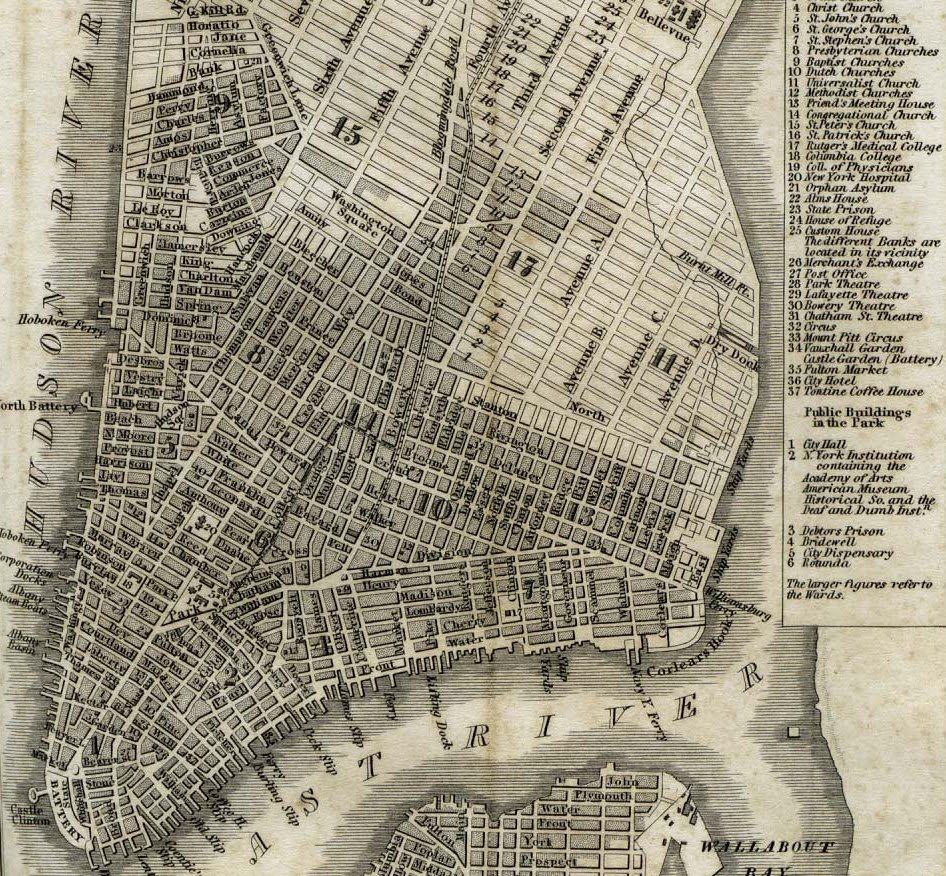
— The Grid Plan: Seeing a need to plan the city’s growth as it galloped up Manhattan island, the city’s Common Council formed a committee — “doubtless at DeWitt Clinton’s instigation” — that would draft up ideas for a possible grid of streets and avenues.
— A System of Fortifications: In addition, Clinton faced the impending crisis of a new war with Great Britain. Although the War of 1812 never came to New York City, Clinton oversaw the construction of new fortifications through the city, including a new fort at the Battery which eventually bore his name — Castle Clinton.
Castle Garden (within the old Castle Clinton) courtesy the Museum of the City of New York
A Complicated Record
Clinton innovated a form of governance which can be seen either as forward thinking or incredibly opportunistic (and quite possibly both) — the improved rights of immigrants.
Christian Luswanger, a member of the city’s night watch, became the first officer killed in the line of duty in New York during a Christmas Day anti-Catholic riot in 1806, the most violent of a series of skirmishes aimed at immigrants. New Irish arrivals faced Nativist backlash in a heavily Protestant city.
DeWitt Clinton. Library of Congress
The mayor, however, was a supporter of the Irish, laying the groundwork for one of the most successful collaborations in 19th century New York City politics.
As a U.S. senator, Clinton had supported liberal immigration laws. As mayor he also supported the elimination of a citizenship test oath for Catholics. As a result, his opponents quickly painted Clinton as a puppet of foreign influence.
But Clinton was no paragon of human rights reform. While he earlier supported the Gradual Emancipation Act of 1799 — and a second Emancipation Act passed in his first year as governor in 1817 — his family had kept enslaved people for decades. And DeWitt himself owned at least a couple people during his years as mayor, including a coachman named Henry.
And many decisions Clinton made did seem more bluntly opportunistic.
He directed that the city’s funds be held by the banks of Manhattan Company, formed in 1799 — by his foe Aaron Burr, no less — to build a water system for the city. But the Company never did fund a truly adequate system, existing only as a bank. (Clinton, by the way, was also a company director. Seems like a conflict of interest!)
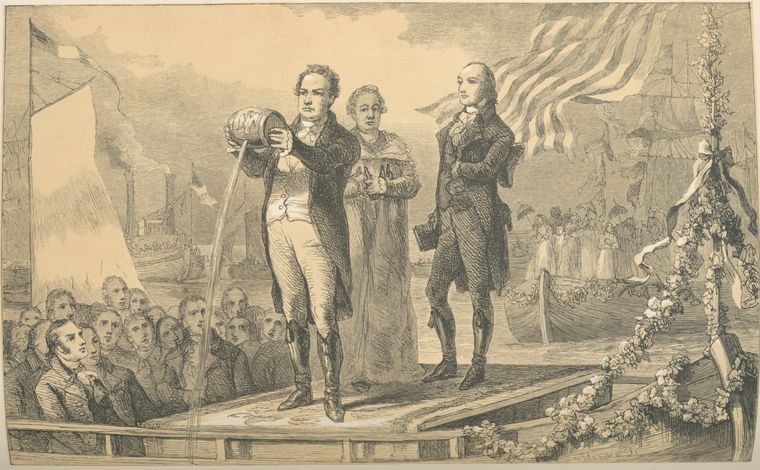
Clinton ceremonially pours water from Lake Erie into the Atlantic Ocean, 1825
The Billion Dollar Idea
For decades, prominent New Yorkers had pondered the idea of an upstate canal system, and even Clinton had considered canal making schemes years before reaching any significant prominence, extending back to his days as a student at Columbia College.
His interest in a massive canal project was renewed during his tenure as mayor (and those years in between his non-consecutive terms). By the time he became the governor of New York in 1817, he was so associated with the canal project that it became known by detractors as Clinton’s Folly.
No folly at all. When the Erie Canal finally opened in 1825, the engineering marvel — one of America’s greatest early achievements — proved genius. It not only created new wealth of New York City, it boosted the economic strength of the entire country.
Clinton had created new opportunities for New York City. The rise of the city as an economic and cultural power begins with him.
DeWitt Clinton Park in Hell’s Kitchen, photography by Greg Young
For more information on DeWitt Clinton, we have an older show in our catalog on Clinton and his role in creating the Erie Canal:
With a new mayoral race on the horizon in New York City we think it is time that you Know Your Mayors! Become familiar with other men who’ve held the job, from the ultra-powerful to the political puppets, the most effective to the most useless leaders in New York City history.
This longtime feature of this website is being rebooted with new articles and newly researched and refreshed earlier entries in this series. Check back each week for a new installment.
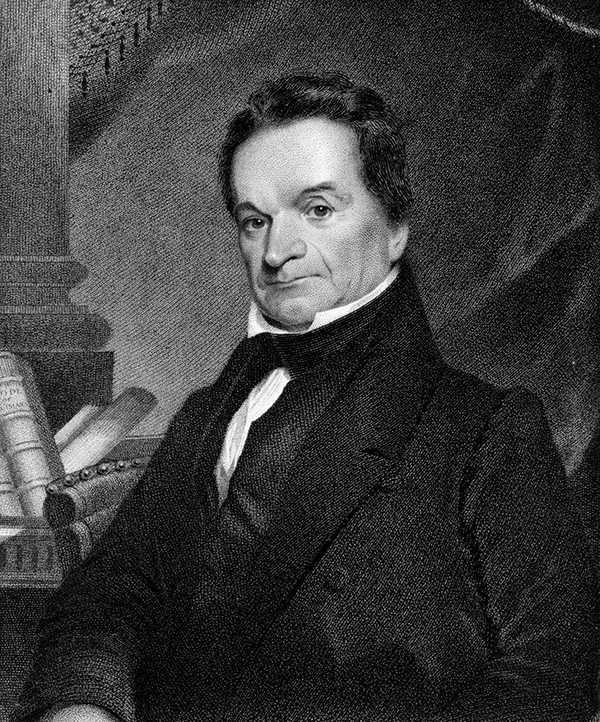
Edward Livingston Term: 1801-1803 The Mayor Who Went On To Do Better Things
On the spectrum of interesting folks who have occupied the mayor’s seat, Edward Livingston must certainly be noted as the defining example of turning your life around.
In 1801Livingston became the mayor of New York City. Two years later, he left the job in total disgrace, run out of the city due to a financial scandal. He would never work in this town again.
And then things got really interesting.
Edward Livingston. Wellmore, E (Engravor) &Longacre, J. L. (Illustrator) Courtesy Library of Congress
Life With The Livingstons
Livingston, born in 1764, was a member of the rich and powerful Livingston clan. There were Livingstons in all aspects of American life — political, social, financial. It was as close as you got to a brand name in the Colonial era.
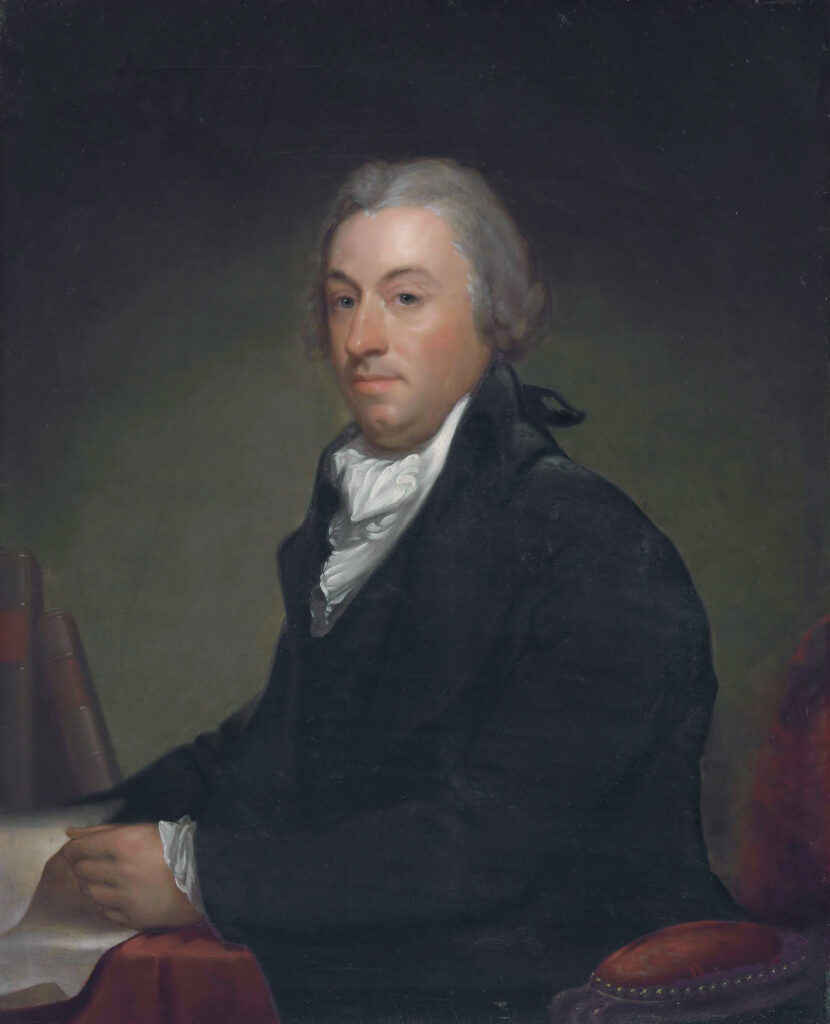
Edward benefited from this common ancestry. He was just eleven years old when his father Peter Van Brugh Livingston became president of New York’s First Provincial Congress in 1775. Another relation Philip Livingston signed the Declaration of Independence in 1776. And Edward’s older brother Robert Livingston (pictured below) would become New York chancellor.
Robert R. Livingston, in a painting by Gilbert Stuart
Young Edward barreled into his career, an ambitious lawyer who settled in New York following the Revolutionary War. Everybody knew his name; he was unsurprisingly a great success. What could go wrong?
Rising Star
In 1795, Beau Ned (as he was called) was elected to represent New York in the U.S. House of Representatives, aligned with the ascendent Democratic-Republican Party, putting him in good graces with Thomas Jefferson, New York Governor George Clinton and various politicians in opposition to the Federalists.
The mayor of New York at that time — Ricard Varick — was a Federalist.
WhenJeffersonwon the presidency in a hotly contested election in 1800, Edward Livingston found himself on the right side of many lucrative political appointments.
In 1801, the governor chose him for U.S district attorney and then, a few months later, Livingston was also appointed mayor. (See entries on Varick and James Duane to understand why these men were even allowed to hold multiple jobs.)
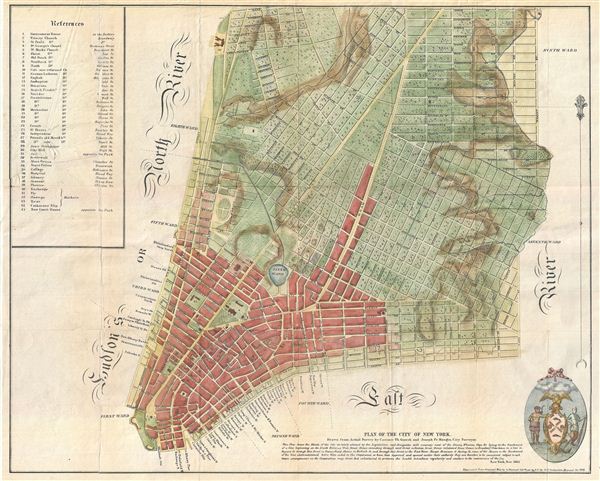
An 1801 map of New York, overlaid with a grid plan proposed by Casimir Goerck and Joseph-François Mangin. This plan was never carried out but it would inspire the Commissioners Plan of 1811.
A Hot Time In The Old Town
Suddenly, Livingston had become mayor of the biggest city in the new nation — a whopping 60,482 according to that year’s census. His opposition to the policies of former president John Adams served him well for a time under the new auspices of a Jefferson presidency.
But the year 1801 in New York was undeniably a volatile one and post-war optimism had given way to bitter skepticism and political chicanery.
New York senator Aaron Burr, Jefferson’s running mate, was nearly voted president in an electoral-college snafu.
Jefferson’s nemesis Alexander Hamilton— who would later be shot and killed by said running mate — would baste his thoughts in the newly created New York Evening Post.
Nearby, a young aide named Washington Irving worked in a law office.
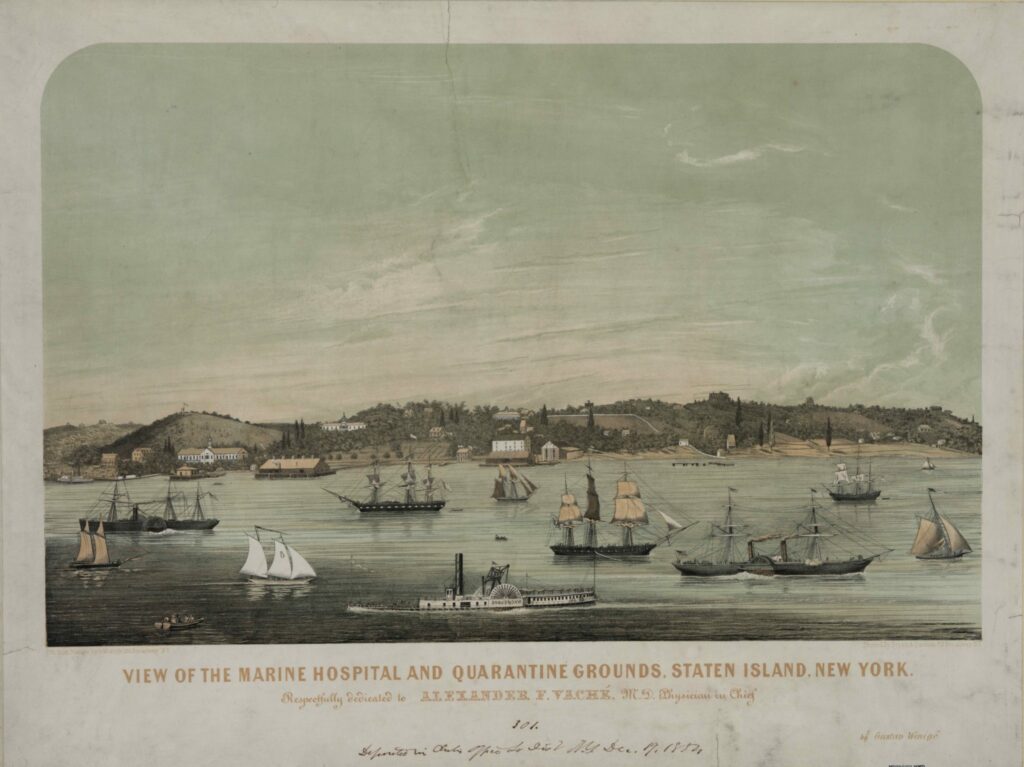
In 1799 New York City built a quarantine station in Staten Island for the treatment of people afflicted by yellow fever and other illnesses. (Image courtesy New York Public Library)
A City Sickness
Unfortunately for Livingston the early 1800s were simply not a great time to be living in New York City. In fact, during his tenure, Edward Livingston almost died of yellow fever.
In 1803, a second epidemic hits New York and hits hard. Hundreds would die, thousands would flee. The stoic Livingston would manage to keep the city operating, even as he himself would become sick and nearly die.
In Disgrace
He recovered only to meet with a scandal that would nearly ruin him.
In the summer of 1803, it was discovered that $45,000 had gone missing from the city’s custom-house fund. While it was determined that a clerk from the district attorney’s office had actually stolen the money, it was Edward Livingston who took the hit politically.
“Although his own integrity was not in question,” according to the book Gotham, the ensuing scandal not only forced Livingston to give up both the state attorney job and the mayor’s seat, but he actually had to sell his property to repay the government.
Livingston had disgraced the family name.
1803 view of New Orleans, looking upriver from the Marigny Plantation House, by J. L. Bouquet de Woiseri
The Ultimate Second Act
Nearly penniless and humiliated, Edward decided to leave New York for good in 1803.
Penniless but not, of course, without family connections.
In 1804 moved to New Orleans, recently purchased from the French by the federal government as part of the Louisiana Purchase. The team negotiating that deal included James Monroe — and Edward’s older brother Robert Livingston.
During the War of 1812, Edward was active in the defense of New Orleans and even served as the aide-de-camp to General Andrew Jackson. The two became close friends.
By 1826, Livingston was successful enough again with his own law practice in New Orleans that he was able to pay back the government all the money he owed plus interest — or almost $100,000, no petty sum back then.
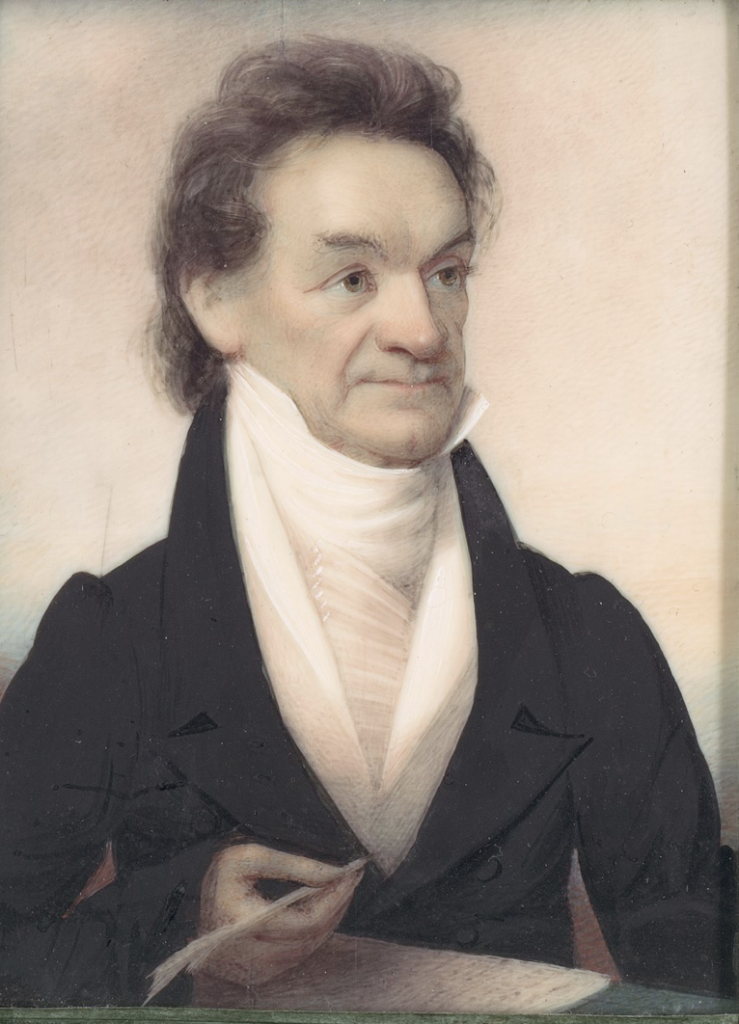
Livingston in 1827. Painting by Anson Dickinson
That same year, Livingston would shape American civil policy with a series of influential penal and judiciary codes for the treatment of prisoners, now referred to as the Livingston Code. While rejected by the State of Louisiana, the legal reforms would live on to shape ideals about incarceration and the death penalty.
Because of these reform codes, Edward Livingston is considered one of the great American legal geniuses of the early 19th century.
After notable stints as representative and a Senator for the State of Louisiana, he became a persuasive Secretary of State for President Jackson from 1831-1833. Edward Livingston died on May 23, 1836.
PODCAST The historical backstory of one of the most famous documentaries ever made – Grey Gardens.
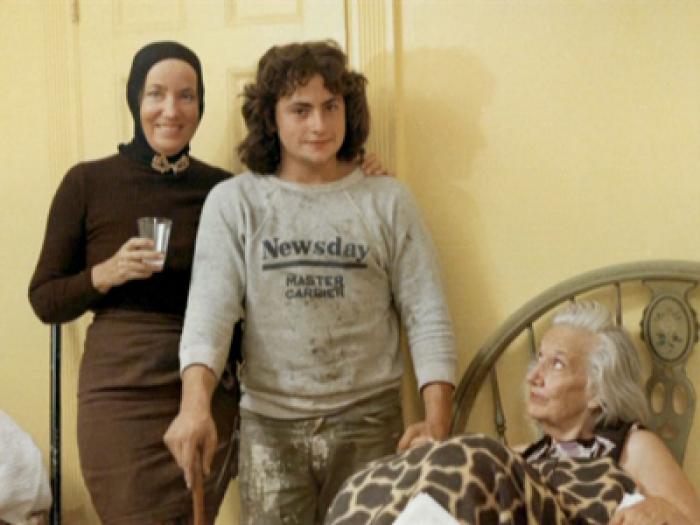
The classic film Grey Gardens, made by brother directing team Albert and David Maysles, looks at the lives of two former society women leading a life of seclusion in a rundown old mansion in the Hamptons.
Those of you who have seen the film – or the Broadway musical or the HBO film inspired by the documentary – know that it possesses a strange, timeless quality. Mrs Edith Bouvier Beale (aka Big Edie) and her daughter Miss Edith Bouvier Beale (aka Little Edie) live in a pocket universe, in deteriorating circumstances, but they themselves remain poised, witty, well read.
But if our histories truly make us who we are, then to understand these two extraordinary and eccentric women, we need to understand the historical moments that put them on this path.
And that is a story of New York City – of debutante balls, Fifth Avenue, Tin Pan Alley and the changing roles of women. And it’s a story of the Bouviers, who represent here the hundreds of wealthy, upwardly mobile families, trying to maintain their status in a fluctuating world of social registers and stock market crashes.
This is story about keeping up appearances and the consequences of following your heart.
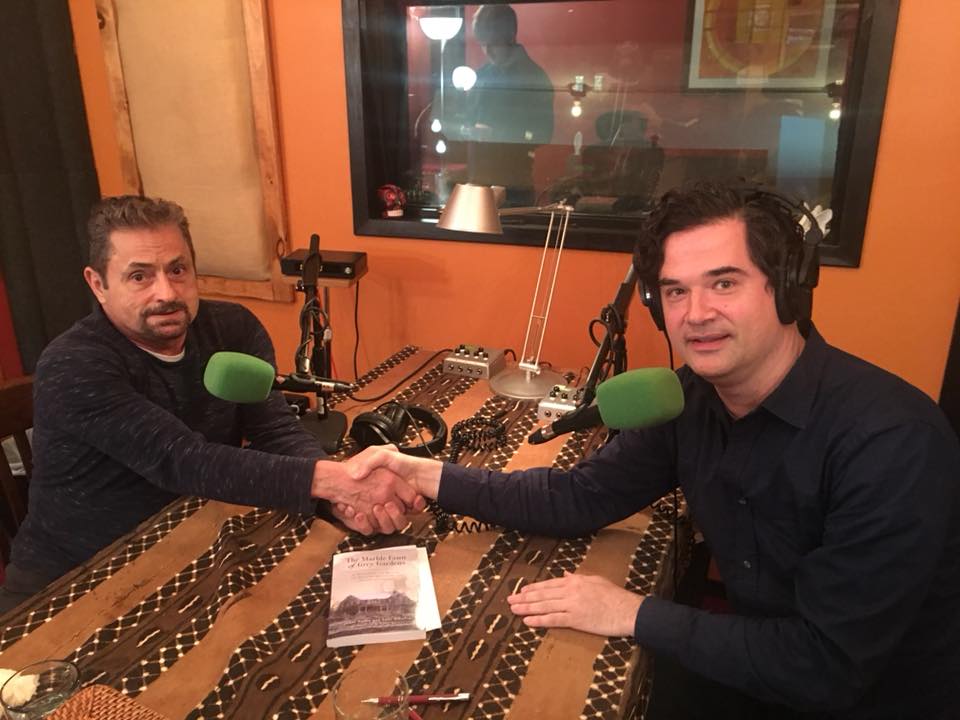
FEATURING: A very special guest! The Marble Faun himself — Jerry Torre, who swings by the show to share his recollection of these fascinating women.
The Bowery Boys: New York City History podcast is brought to you …. by you!
We are now producing a new Bowery Boys podcast every other week. We’re also looking to improve and expand the show in other ways — publishing, social media, live events and other forms of media. But we can only do this with your help!
We are now a creator on Patreon, a patronage platform where you can support your favorite content creators.
Please visit our page on Patreon and watch a short video of us recording the show and talking about our expansion plans. If you’d like to help out, there are six different pledge levels. Check them out and consider being a sponsor.
We greatly appreciate our listeners and readers and thank you for joining us on this journey so far.
The Bouvier family did indeed have ‘French genes’, connected to cabinetmakers who immigrated to the United States in the 1810s.
NYPL
The Bouvier family’s listings in the 1899 New York Social Register.
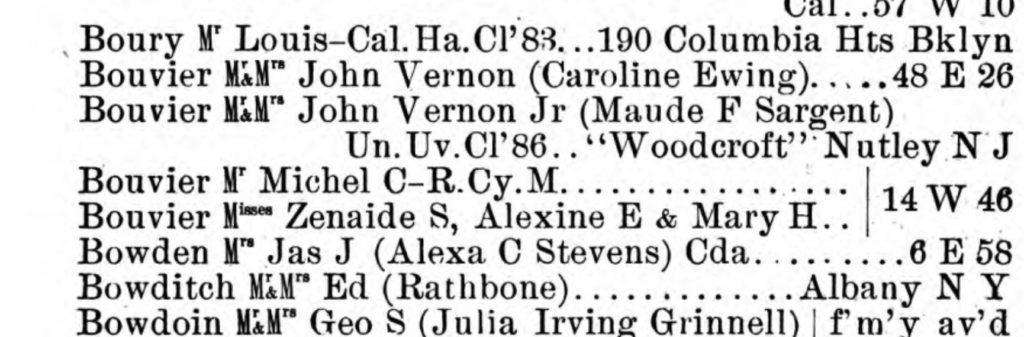
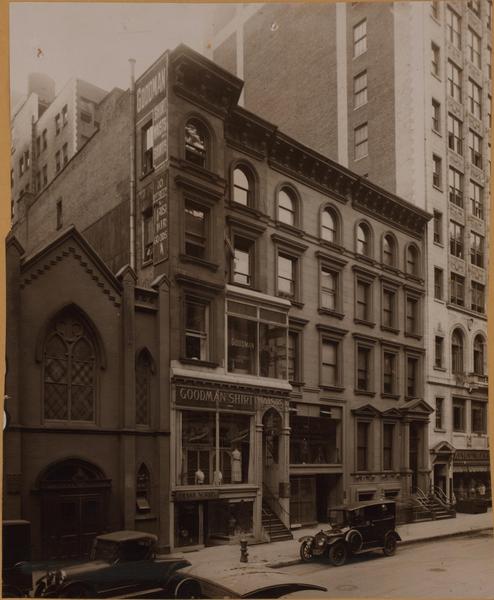
Big Edie’s great uncle Michel Charles ‘M.C.’ Bouvier and her three unmarried great aunts Zenaide, Alexine and Mary all lived in a fine brownstone at 14 W. 46th Street.
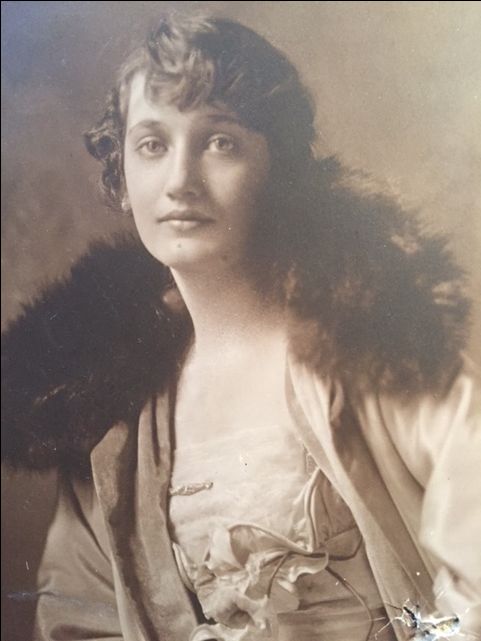
Edith Ewing Bouvier Beale
Grey Gardens Official
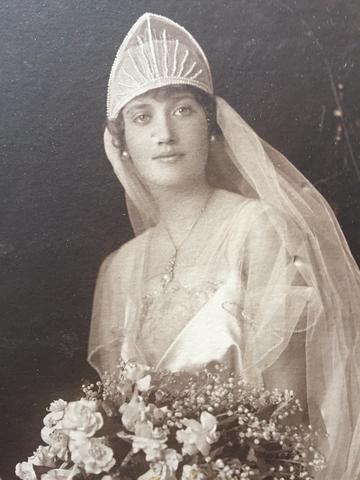
The wedding photo of Edith Ewing Bouvier Beale.
Grey Gardens Official
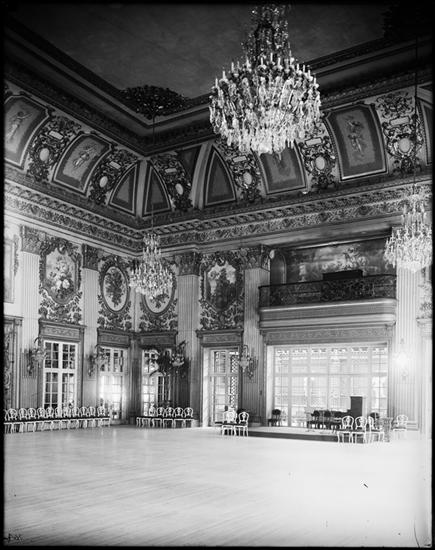
The ballroom of Sherry’s (44th and 5th Avenue) where Edith had her debutante ball.
MCNY
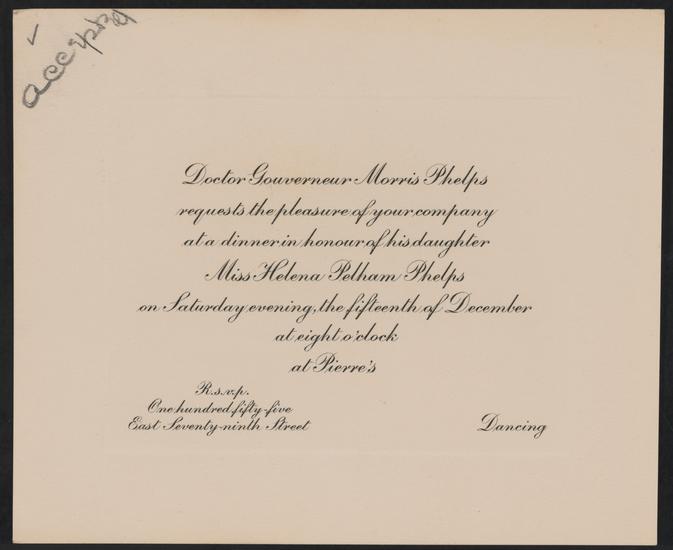
An invitation for a 1928 debutante ball at the Hotel Pierre (where Little Edie would have her own fête).
Museum of the City of New York
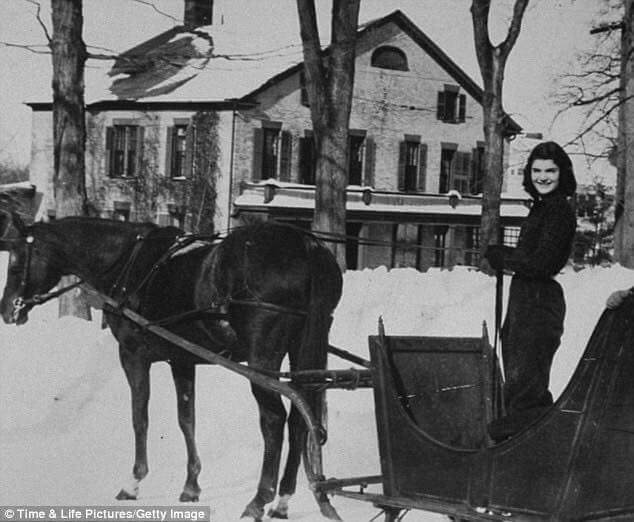
Sixteen year old Jacqueline Bouvier attending Miss Porter’s finishing school in Farmington, Connecticut. Both Big Edie and Little Edie went here as well.
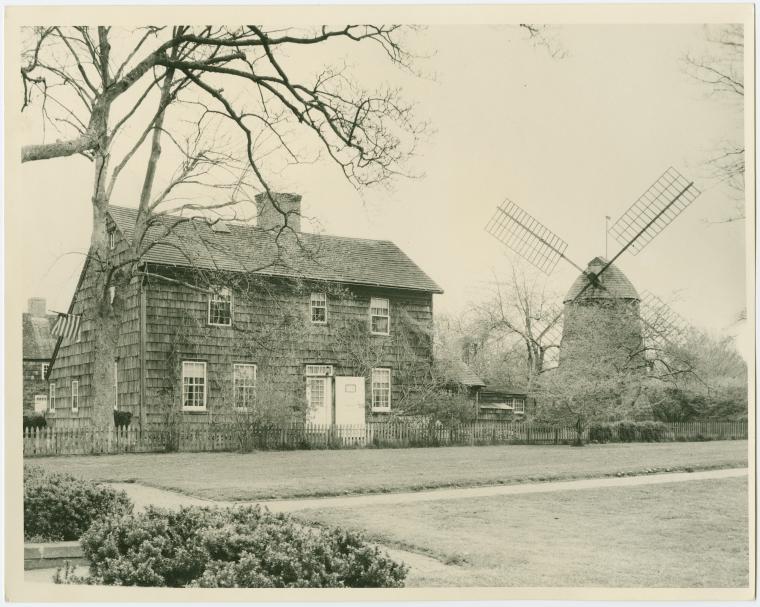
East Hampton was the first English settlement in the area that would eventually become New York state.
NYPL
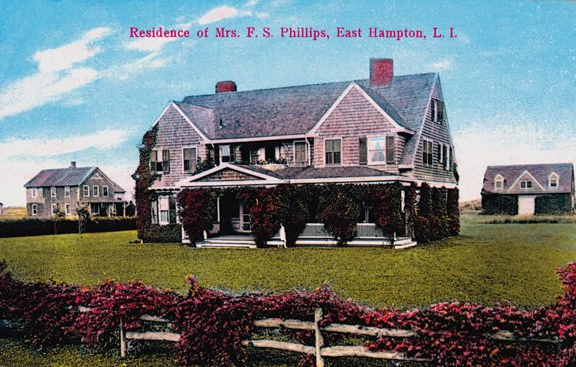
An early image of Grey Gardens mansion.
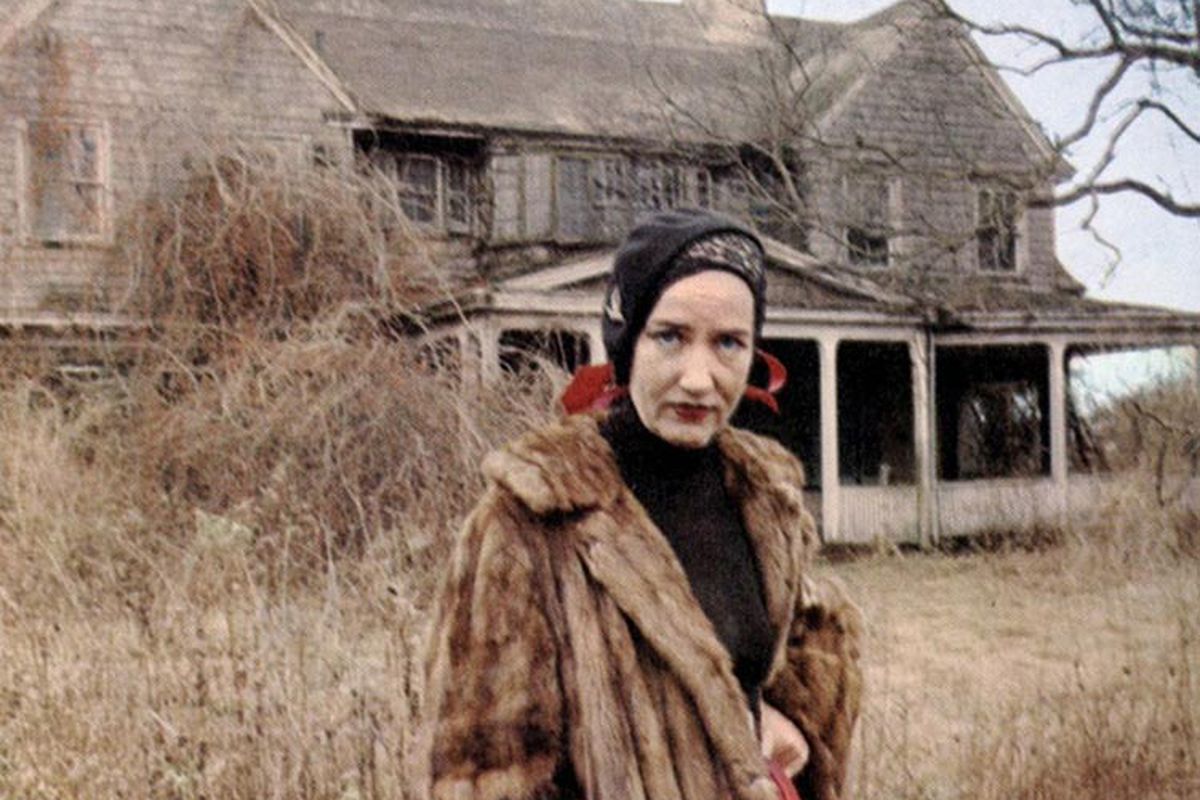
Little Edie posing in front of the house in the film Grey Gardens.
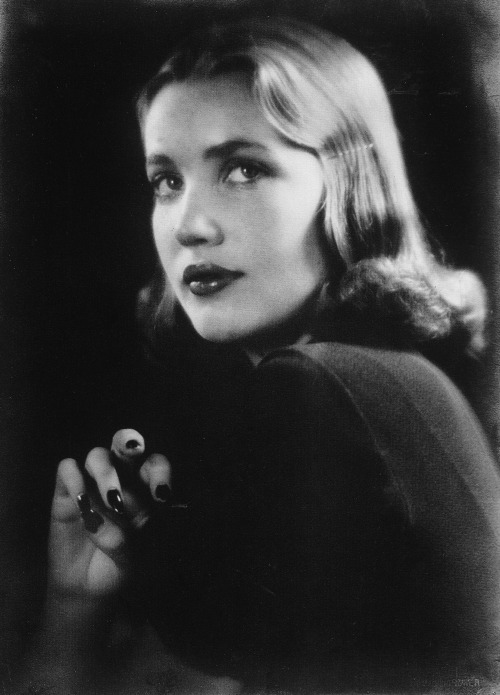
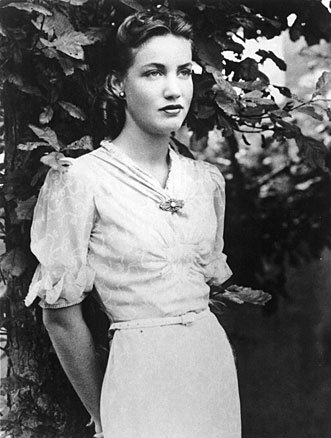
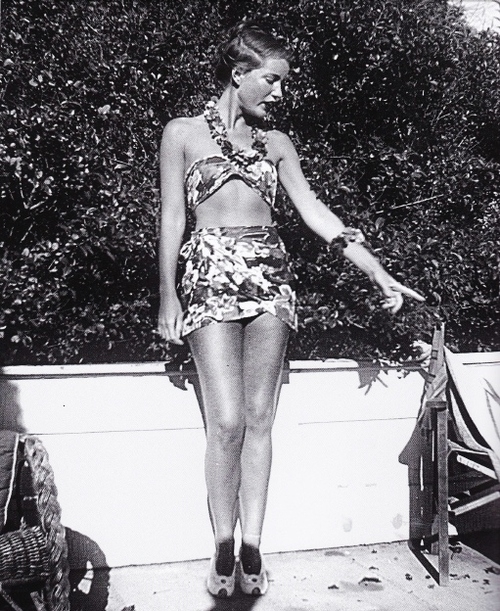
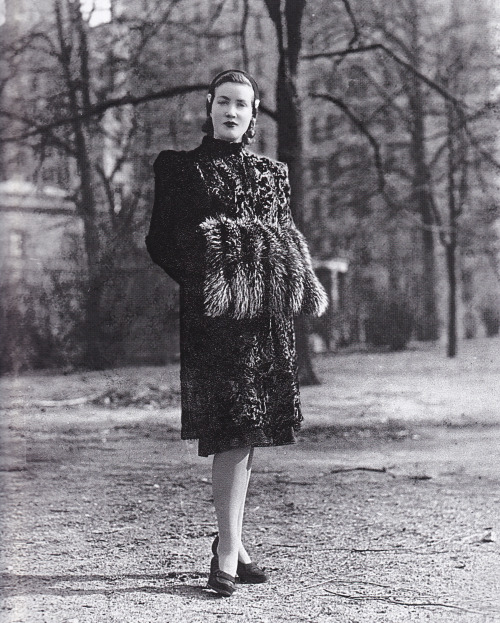
Images of Little Edie in her youth, a beautiful, confident young woman who echoed her mother’s love of music and performance. The two retreated into a reclusive life even as their family become national prominent.
Grey Gardens Official
Little Edie in New York, possibly from the period of the late 40s/early 50s.
Grey Gardens Official
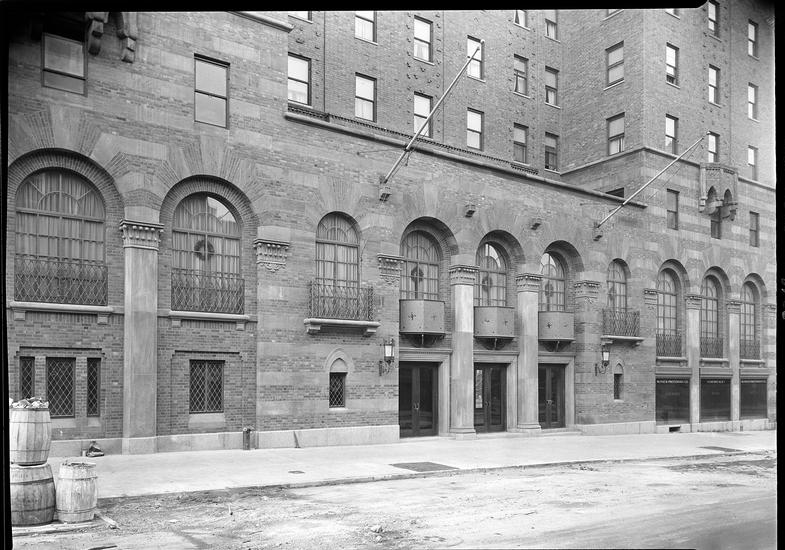
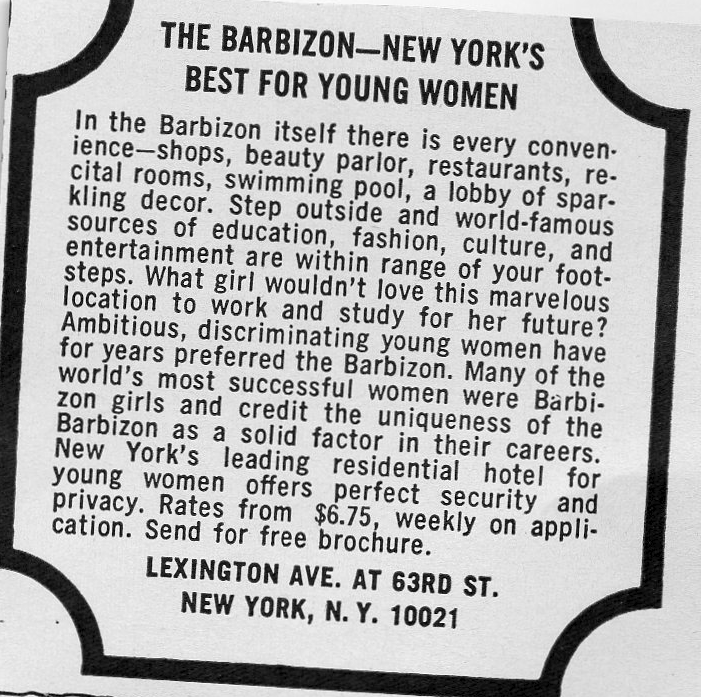
Little Edie’s big-city refuge for a time — the Barbizon Hotel for Women:
Museum of the City of New York/Samuel Gottscho
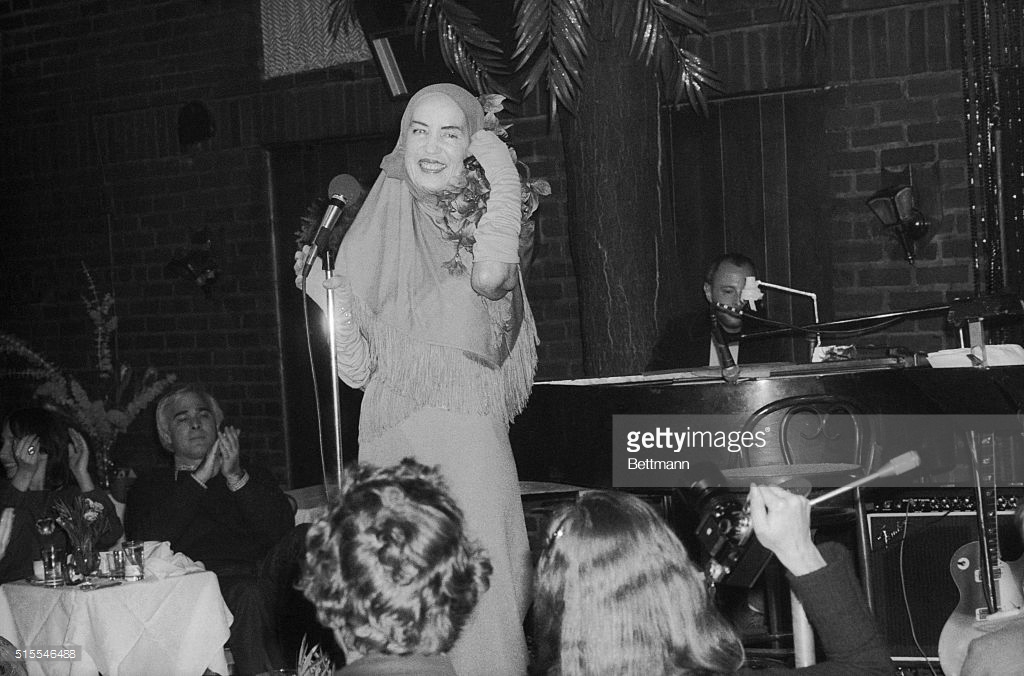
Little Edie performing at Reno Sweeney in the West Village.
Getty
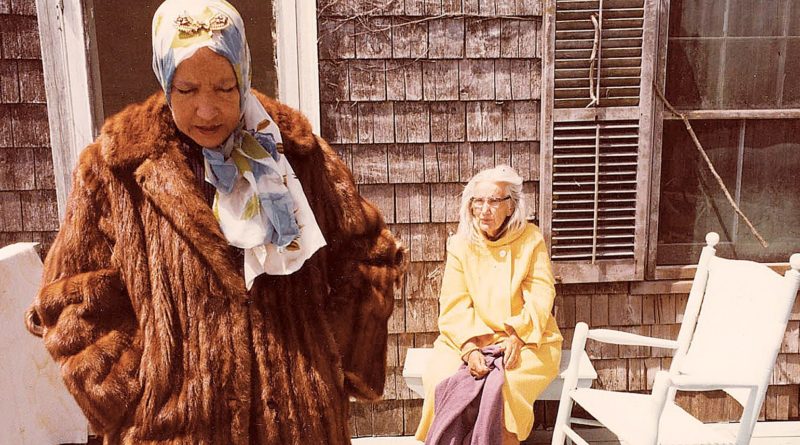
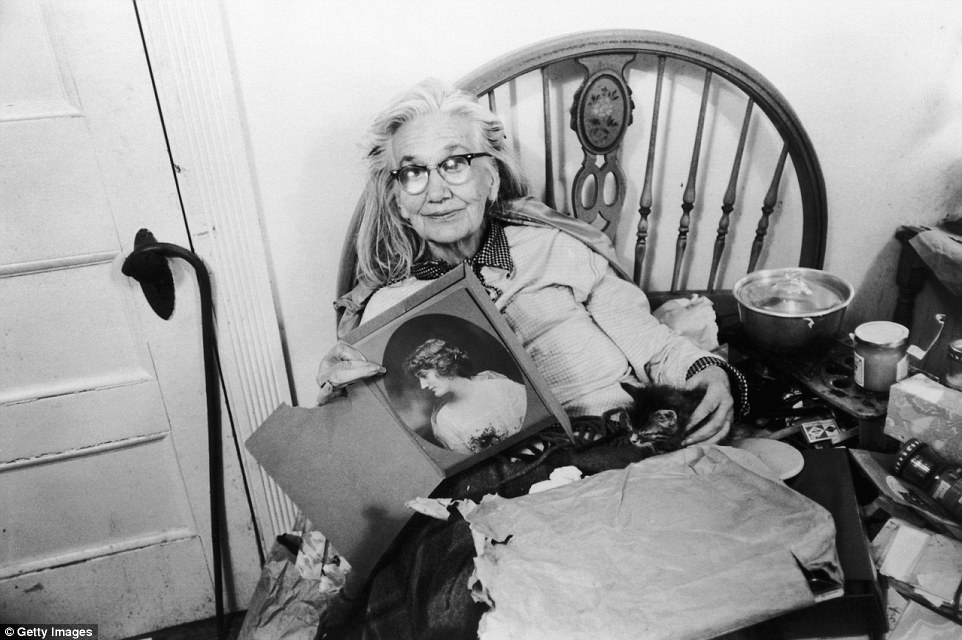
Big Edie in her familiar perch, flanked with kittens and memories.
Getty
Many thanks to Jerry Torre for stopping by the studio to chat!
CORRECTION TO THE SHOW: The Great Gatsby is set in 1922, but the book was released in 1925.
FURTHER LISTENING Some of the themes and subjects referenced in this episode have been spoken about in past shows. After you’ve finished listening to Journey to Grey Gardens, give these a try.
And if you enjoyed the show, you might enjoy the soundtrack! Here’s a Spotify playlist of songs from the show and inspired by this story:
With a new mayoral race on the horizon in New York City we think its time that you Know Your Mayors! Become familiar with other men who’ve held the job, from the ultra-powerful to the political puppets, the most effective to the most useless leaders in New York City history.
This longtime feature of this website is being rebooted with new articles and newly researched and refreshed earlier entries in this series. Check back each week for a new installment.
Richard Varick Term: 1789-1801 The Federalist Mayor
La Guardia Airport. Van Wyck Expressway.The Ed Koch Queensboro Bridge. Duane Street.
While most old mayors of New York City fade into obscurity, a few leave their legacies on landmarks and street names.
In Lower Manhattan lies little Varick Street, linking the West Village to Tribeca. Drivers entering the Holland Tunnel are very familiar with Varick Street. It’s named for the man who once owned property here — Richard Varick.
He served as mayor of New York City for eleven consecutive terms — one year terms, from the fall of 1789 to 1801, making him the first New York mayor of the 19th century.
Biographer Paul Cushman calls Varick a “forgotten Founding Father” of the United States, an officer in the Continental Army and confidante of George Washington.
But perhaps his legacy had been slightly tarnished by another close association — with Benedict Arnold.
Richard Varick, born in Hackensack, NJ, on March 15, 1753, was the descendent of Dutch settlers, and his family history is deeply intertwined with that of early colonial New Jersey.
Richard’s fate would lie in New York where he would get his law degree in 1774 at King’s College (Columbia University), naturally becoming compatriots with those who would become revolutionaries against the British Crown.
Varick had a virtually unblemished military record during the Revolutionary War but for one unfortunate association.
During the early days of battle he served as secretary to General Philip Schuyler, later father-in-law to Varick’s friend Alexander Hamilton. He swiftly moved on as inspector-general of the newly formed military base at West Point (it wouldn’t become a military academy until 1802) where he would become entangled with a potential political albatross — Benedict Arnold.
Arnold in a 1776 painting by Thomas Hart
Serving as Arnold’s loyal aide-de-camp, he was unaware that his friend was selling West Point — and the American cause — down the river, plotting to trade the base’s secrets to the British.
Arnold’s treachery was found out, and it comes as no surprise that Varick too was suspected of treason, but was later exonerated. The stench of rumored betrayal was alleviated when Varick was appointed Washington’s personal secretary in the later days of the Revolutionary War.
Varick and his signature
The Ultimate Multi-tasker
Not one to let one sticky political association bog him down, Varick was appointed a recorder of New York City once the British were swept out of town. But that’s not all.
In those days, with so many positions in the newly formed government and so few men with experience, Varick soon held other jobs concurrently — including speaker of the New York State assembly and even the state attorney general!
“A simple explanation of the prevalence of a few public-spirited civic servants holding multiple offices in these times,” writes Paul Cushman, “might relate to the fact that these were unusual and non-recurring moments in the development of government. The offices in the evolving government were still quite malleable. “
The amount of ink and parchment used by Varick in these various jobs — not to mention his wartime correspondence — must have been astounding. Indeed forty-four folio volumes known as the Varick Transcripts, collecting his various papers from 1775 to 1785 (including his correspondence with Washington), are housed at the Library of Congress.
But in 1789 came his most intriguing government appointment — mayor of New York, a role in which he was appointed eleven consecutive times by the Council of Appointment. (Previous mayor James Duane stepped down to become a judge. See the previous article of Duane for a breakdown on the appointment process.)
How could one man with so many jobs take on this responsibility as well? Cushman explains: “A part-time occupant as mayor, not yet burdened with a host of defined civic duties or a subordinate staff to manage, could carry out several tasks simultaneously, with the mayoral duties being just one of many.“
Richard Varick, in an 1805 painting by John Trumbull
A City In Crisis
The city population doubled under his administration, so naturally basic civic neccessities like water and disease control became the focus of his attentions. So what were his governing views?
Like Hamilton and John Jay, Varick was a staunch Federalist, believing in a strong centralized government and a robust national banking system. Federalists were also aristocratic and often elitist, and Varick was frequently at odds with the city’s rising artisan class who favored the more democratic leanings of national politicians like Thomas Jefferson and James Madison.
Varick used his position to punish anti-Federalist New Yorkers. In 1791 he threatened to revoke the licenses of any cartmen who voted against Federalist candidates in future elections.
In fact, due to his support of the quite unpopular Jay Treaty in 1794, the “arrogant and elitist” Varick was almost literally driven out of City Hall by a mad riot.
His political posturing insured that New Yorkers would never really like Varick. Still he continued to be appointed to the job year after year — by both Republican governors (George Clinton) and Federal ones (John Jay), most likely based on his reputation during the war.
The political bickering between factions failed to stunt the growth of the city, both in terms of its physical size and its prominence as the financial center of the new nation, of which Varick played no small part. (He was the director of a few small fledgling banks, including Alexander Hamilton’s special project the Bank of New York.)
Another change during Varick’s term would alter the course of New York politics forever.
In 1797, New York state government responsibilities moved out of the city to Albany, allowing the city bureaucracy to grow but setting the stage for future animosities between state and local leaders. In other words, the roots of Andrew Cuomo vs. Bill De Blasio begin here.
Painting by Henry Inman
Founding Father of Jersey City
With the ascent of the Democratic-Republican Thomas Jefferson to nationwide office, Federalists were on the wane, and Varick was replaced by the more amenable Edward Livingston.
Varick, on the outs in New York, returned to New Jersey where he helped found Jersey City. Varick died there on July 30, 1831. For the residents of NJ’s second-largest city, Varick is most certainly not forgotten.
And thousands everyday take lower Manhattan’s Varick Street to the Holland Tunnel which arrives on its New Jersey side into the city which Varick founded.
This article is newly written and expanded from an earlier version published in 2007.
With a new mayoral race on the horizon in New York City we think its time that you Know Your Mayors! Become familiar with other men who’ve held the job, from the ultra-powerful to the political puppets, the most effective to the most useless leaders in New York City history.
This longtime feature of this website is being rebooted with new articles and newly researched and refreshed earlier entries in this series. Check back each week for a new installment.
James Duane Term: 1784-1789 The First Post-War Mayor
New York officially had 44 men prior to James Duane filling the seat of city mayor in 1784. So why do I consider Duane New York City’s official first mayor?
Although America declared its independence from England in 1776, England did not declare its independence from New York City until 1783, when they were driven out at the end of the Revolutionary War.
British appointed mayor David Mathews governed Manhattan throughout the entire war until he and other Loyalists fled to Canada in the conflict’s waning days. Which is probably a good thing since he was implicated in a specific attempt to kidnap and murder the commander of the Continental Army George Washington.
Duane is the first American New York mayor, the first to lead the city newly broken from its colonial shackles.
However, it should be noted that he is not New York’s first elected mayor. Like the many mayors of the Colonial era before him — and the many men who would hold this office well into the 19th century — James Duane was appointed to the job.
James Duane, born in New York in 1733, was destined for great things, a respected attorney and statesman who would become what we might call a minor Founding Father.
Orphaned as a teen, young Duane became the charge of Robert Livingston, a prominent lawyer in a socially important New York family. Naturally he pursued a career in law as well, his natural skills bolstered by his social privilege.
In 1759 Duane married Robert’s daughter Mary Livingston and would grow up alongside Robert Jr. who would go on to draft the Declaration of Independence. Through tenacity, family wealth and de facto family influence through the Livingstons, Duane became New York state attorney general at age 34.
Duane was also part of New York’s delegation to the First Congressional Congress in 1774, alongside John Jay and another Livingston, Philip, who would eventually sign the Declaration of Independence. (Duane, alas, was serving in New York’s Provincial Congress in the summer of 1776 or else he too would have John Hancock’d the founding document.)
Duane had originally agreed with general notions of appeasement with the British, not favoring a separation from England.
In fact author Edward P. Alexander calls him a ‘moderate rebel‘. “Duane strove with common sense and moderation to cling to the golden mean which would protect gentlemen of his station from both British taxation and domestic social upheaval.”
In other words he was for the cause of American liberty but not all that rabblerousing.
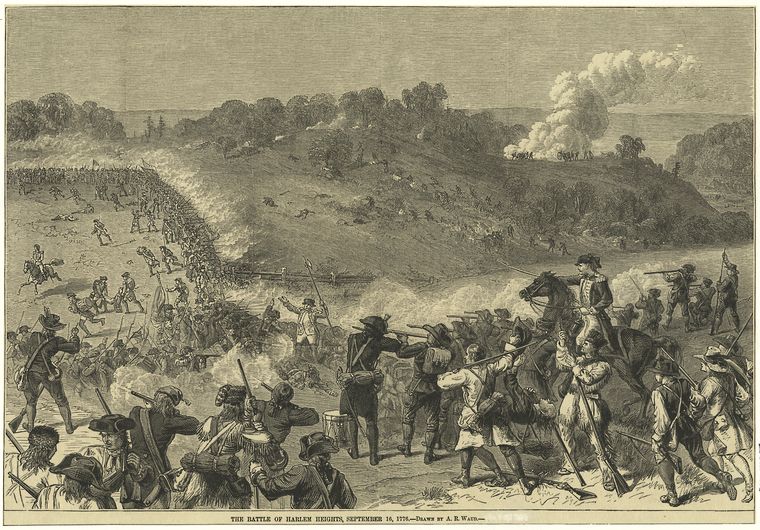
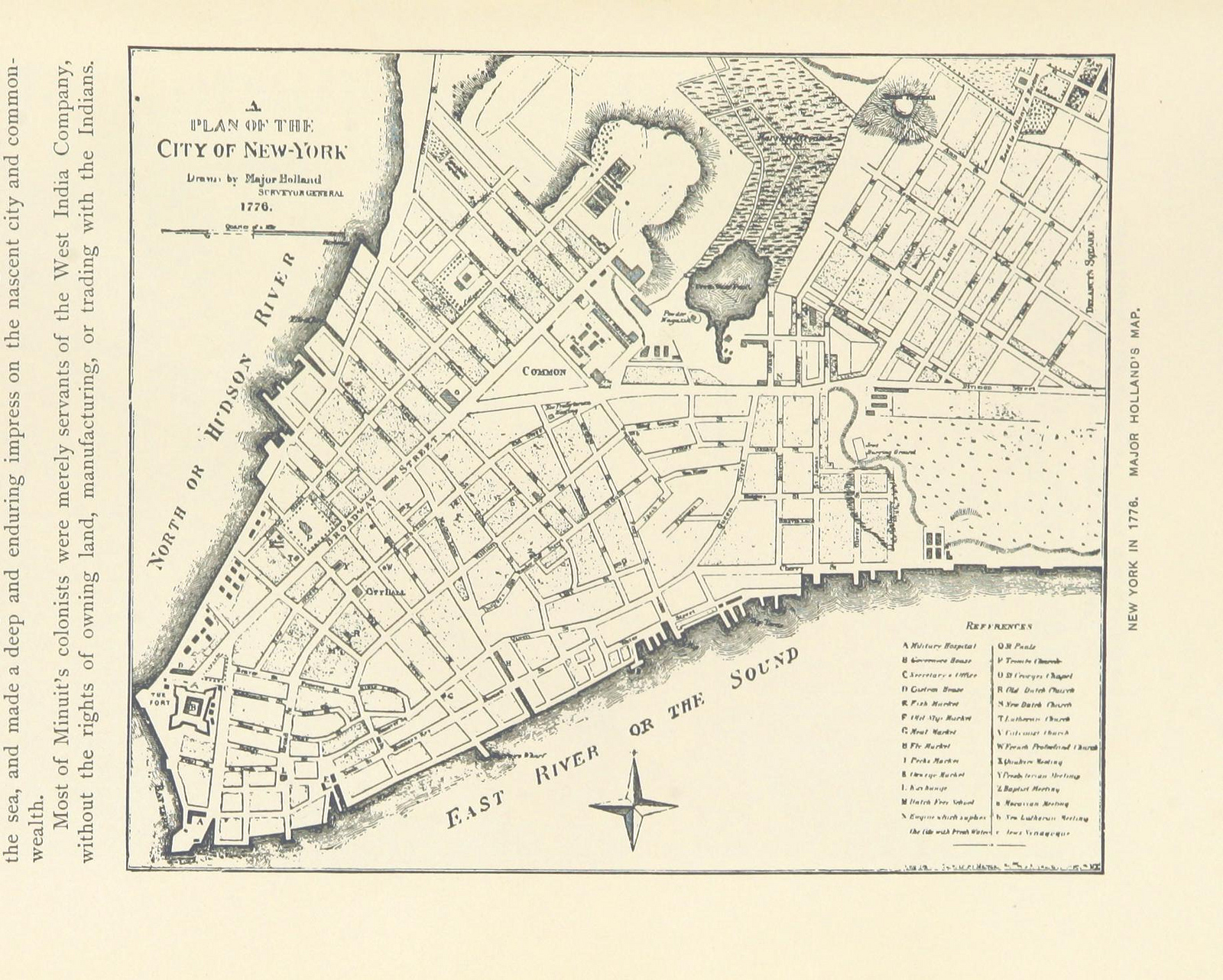
James Duane’s New York City, 1776
Regardless, he would be a member of Second Continental Congress all the way through the end of the war and on behalf of New York would even be a signer of the Articles of Confederation, precursor to the Constitution.
During the British occupation of New York, Duane lived at Livingston Manor, a vast estate which today includes modern-day Livingston, New York.
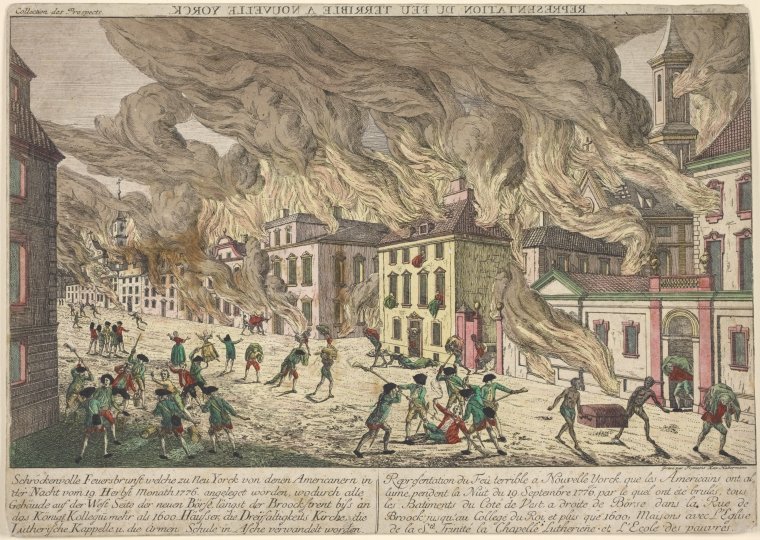
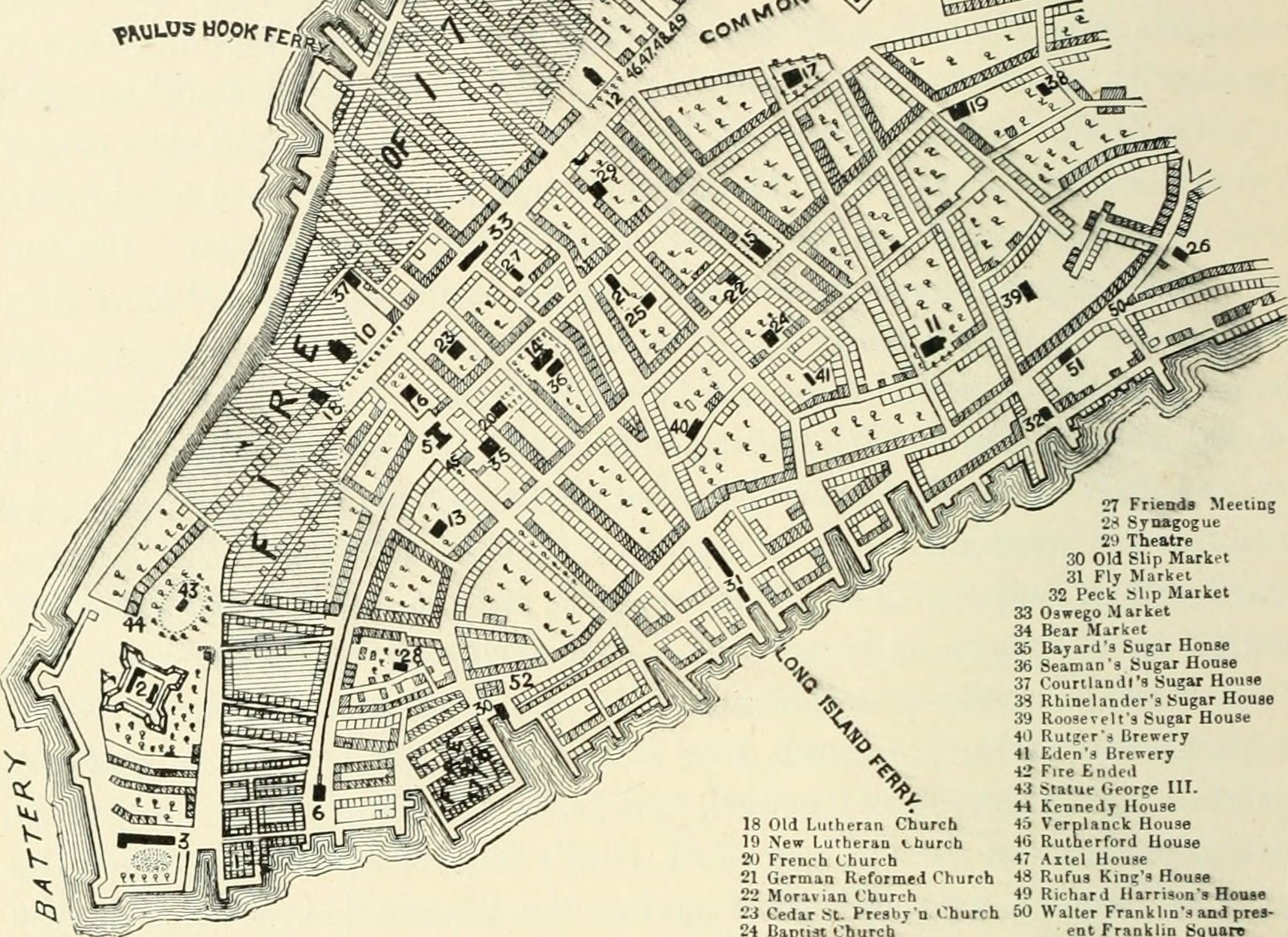
New York during British occupation 1776
Its Loyalists freshly evacuated, the city needed a new leader.
In 1784 Duane was appointed Mayor of New York by a slate of state officials called the Council of Appointment, led by Governor George Clinton.
This council didn’t just select the city’s mayors; it selected every office in the state. It would be decades before mayors were actually elected into office by the people.
Duane moved his family to a family estate right outside the city — a farm that would become Gramercy Park thirty years after his death.
“In a letter of James Duane to his wife, after the Revolution, he alludes to this farm and the beautiful grounds with the fish pond and fountains. The house having been occupied by British officers during the War the letter says ‘you will find the cellars in most excellent condition and the wine bins in good repair, the house has suffered but little.’“
City Hall became Federal Hall.
The new mayor oversaw a massive shift in Manhattan’s well-being; while the evacuation of the British and their sympathizers left a serious economic vacuum, the city also took its first steps win defining its urban character.
In fact Duane’s legacy as mayor would be largely overshadowed as the foundations of the United States were built around him.
City Hall would become Federal Hall in these years and the overcrowded government building — over 75 years old already by the time Duane took office — was hastily enlarged in 1788 to accommodate these extra politicians.
Angry New Yorkers storm the hospital. Wood engraving by William Allen Rogers
Meanwhile in the spring of that year, Duane intervened in one chilling incident involving grave robbers and medical students at New York Hospital, an incident today known as the Doctor’s Riot.
An angry mob, enraged that the local cemetery had been pillaged for cadavers, stormed the hospital and, eventually, Columbia College. Several officials, including Duane, urged restraint. When the mob attacked the officials — injuring John Jay in the process — Duane took action.
According to Gotham by Edwin G. Burrows and Mike Wallace, “Duane summoned a troop of militia to disperse the crowd and was met with another shower of missiles. Baron von Steuben, also struck in the head and bleeding profusely, shouted, ‘Fire, Duane! Fire!’ Duane, or perhaps [Governor] Clinton, gave the order. The first volley killed three rioters outright and wounded many others. Before a second could be fired, the crowd had scattered.“
Governor George Clinton who possessed most of the power in post-Colonial New York.
While Duane threw himself into the job — he was praised by his critics for his charity and “good judgement” — his power was limited. Governor Clinton and his Common Council (an early version of City Council) controlled his salary and could veto his decisions on a whim.
In 1785 he was also a founding member of the New-York Manumission Society, an abolition organization headed by John Jay that eventually included Alexander Hamilton and Governor Clinton.
This despite the fact that Duane would own at least one enslaved person after this date:
“His 1790 census record, in New York City, shows his family consisting of 2 Free White Males aged 16 and older, 2 FWM under 16, 6 Free White Females, and 1 slave.” [wiki]
(Most of the members were slaveholders including Jay and Clinton. In 1799, Jay, as governor of New York, would sign the Act for the Gradual Abolition of Slavery into law.)
James Duane — February 6, 1773 – February 1, 1797
By the end of administration in 1789, Duane was governing over a city of 25,000 citizens. After the wounds of war, New York was at last recovering.
After Duane’s five one-year terms, the mayor’s seat went to another attorney with even greater ties to the Revolutionary War — Richard Varick.
Duane’s next appointment was more prestigious — one of the nation’s first federal judges on US Circuit Court in New York, nominated for the position by President George Washington himself. (It helped to rub elbows with the new president in the cramped quarters of Federal Hall.)
Duane died on February 1, 1797, on an inherited land grant in upstate New York that he had developed into a township and where he spent his final years. Its name, appropriately, is Duanesburg.
Most New Yorkers are familiar with James Duane today — not for his accomplishments but for the street named after him. Duane Street runs through lower Manhattan today just a couple blocks north of today’s City Hall.
The drug store Duane Reade takes its name from Duane Street.
This article is based on an original post from December 2007.
PODCAST Coney Island is back! After being closed for 2020 due to the pandemic, the unusual attractions, the thrilling rides and stands selling beer and hot dog have finally reopened.
So we are releasing a very special version of our 2018 show called Landmarks of Coney Island — special, because this is an extended version of that show — an extended remix, if you will — featuring the tales of two more Coney Island landmarks which were left out of the original show.
And this episode is dedicated to the Wonder Wheel which was to celebrate its 100th year of operation last year. So go show them some love this year!
The Coney Island Boardwalk — officially the Riegelmann Boardwalk — became an official New York City scenic landmark in 2018, and to celebrate, the Bowery Boys are headed to Brooklyn’s amusement capital to toast its most famous and long-lasting icons.
Recorded live on location, this week’s show features the backstories of these Coney Island classics:
— The Wonder Wheel, the graceful, eccentric Ferris wheel preparing to celebrate for its 100th year of operation;
— The Spook-o-Rama, a dark ride full of old-school thrills;
— The Cyclone, perhaps America’s most famous roller-coaster with a history that harkens back to Coney Island’s wild coaster craze;
— Nathan’s Famous, the king of hot dogs which has fed millions from the same corner for over a century;
— Coney Island Terminal, a critical transportation hub that ushered in the amusement area’s famous nickname — the Nickel Empire
PLUS: An interview with Dick Zigun, the unofficial mayor of Coney Island and founder of Coney Island USA, who recounts the origin of the Mermaid Parade and the Sideshow by the Seashore
Listen Now: Landmarks of Coney Island (Extended Funhouse Mix)
Here are the seven official landmarks within the old Coney Island amusement area.
1) Coney Island Boardwalk
Museum of the City of New York
2) Wonder Wheel
1944, Museum of the City of New York
3) The Cyclone
1935, Courtesy Museum of the City of New York
4) Parachute Jump — pictured here at its original home at the 1939 New York World’s Fair at Flushing Meadows
Wurts Brothers, courtesy Museum of the City of New York
The Parachute Jump and the boardwalk on a windy summer’s day in 2017.
Greg Young
5) Childs Restaurant on the Boardwalk
Forgotten NY
A nice hazy day in 2017. The former Childs Restaurant can be seen in the distance. This image was taken from the Steeplechase Pier.
Greg Young
6) Childs Restaurant on Surf Avenue (now the home of the Coney Island Museum)
Courtesy Alex Rush
Inside the museum:
7) Shore Theatre on Surf Avenue
Brooklyn Public Library
And while Nathan’s Famous may not be a landmark, nobody can argue with the fact that its a genuine Coney Island classic.
1939, Andrew Herman Federal Art Project, Museum of the City of New YorkFrom our 2018 adventure through Coney Island
The Bowery Boys: New York City History podcast is brought to you …. by you!
We are now producing a new Bowery Boys podcast every other week. We’re also looking to improve and expand the show in other ways — publishing, social media, live events and other forms of media. But we can only do this with your help!
We are now a creator on Patreon, a patronage platform where you can support your favorite content creators.
Please visit our page on Patreon and watch a short video of us recording the show and talking about our expansion plans. If you’d like to help out, there are six different pledge levels. Check them out and consider being a sponsor.
We greatly appreciate our listeners and readers and thank you for joining us on this journey so far.
PODCAST: Dr. David Hosack was no ordinary doctor in early 19th-century New York.
His patients included some of the city’s most notable citizens, including Alexander Hamilton and Aaron Burr, both of whom he counted as close friends — and both of whom decided to bring him along to their fateful duel.
But it was Dr. Hosack’s love and appreciation for the field of botany that would eventually make him famous in his time. In 1801 he opened his Elgin Botanic Garden on 20 acres of land located three miles north of the city on Manhattan Island.
Engraving circa 1802 of a drawing by L. Simond, titled View of the Botanic Garden at Elgin in the vicinity of the City of New York, frontispiece of a pamphlet by David Hosack
In this first public botanical garden in the country, Hosack would spend a decade planting one of the most extraordinary collections of medicinal plants, along with native and exotic plants that could further the young nation’s agriculture and manufacturing industries.
And yet, he also spent a decade looking for funding for this important project, and for validation that this kind of work was even important.
Elgin Botanic Garden, painted in 1910, artist unknown
Tom and special guest Victoria Johnson with a copy of her book American Eden
PLACES TO VISIT
Rockefeller Center — See if you can find the plaque in honor of David Hosack and the Elgin Botanic Garden. It’s located along the way in the Channel Gardens.
FURTHER LISTENING:
Listen to these shows in our back catalog for more information on subjects mentioned in this show —
Our DeWitt Clinton and the Erie Canal show from many years ago gives further insight into the man much admired by Hosack, so much so that he wrote the man’s memoir
What was medical care like in the early 19th century? Look no further than our show on one of the most prominent medical institutions of the day — Bellevue Hospital:
The Bowery Boys: New York City History podcast is brought to you …. by you!
We are now producing a new Bowery Boys podcast every other week. We’re also looking to improve and expand the show in other ways — publishing, social media, live events and other forms of media. But we can only do this with your help!
We are now a member of Patreon, a patronage platform where you can support your favorite content creators.
Please visit our page on Patreon and watch a short video of us recording the show and talking about our expansion plans. If you’d like to help out, there are six different pledge levels. Check them out and consider being a sponsor.
And join us for the next episode of the Bowery Boys Movie Club, an exclusive podcast provided to our supporters on Patreon.
We greatly appreciate our listeners and readers and thank you for joining us on this journey so far.
The Ziegfeld Theater, one of Manhattan’s last single-screen movie theaters, closed for regular film exhibition in 2016.* Its final film was Star Wars: The Force Awakens, an appropriate choice as tens of thousands of movie lovers had gone to the Ziegfeld to see previous films in the series — including the 1977 original.
I think the real story here is how — in a landscape of multiplexes and state-of-the-art home theaters — this respected dinosaur, sitting amidst the most valuable real estate in the world, managed to stay open as long as it did, playing a single film at a time.
(The Paris Theater is the only Manhattan theater remaining with just one screen.)
Losing the Ziegfeld means that New York lost a valuable link to one of the city’s greatest theatrical icons, Florenz Ziegfeld. Although, to be fair, that link was already indirect.
The original Ziegfeld Theater (at top), built especially for the showman by William Randolph Hearst, sat on Sixth Avenue close by the present movie theater. It was demolished in 1966, and a new Ziegfeld — devoted solely to film — was built nearby by Emory Roth & Sons. It opened in December 1969.
At 1,131 seats, the Ziegfeld movie house was hardly the biggest theater in New York. And it doesn’t even have the biggest movie screen (that title belonged to the IMAX at Lincoln Center).
But the grandiosity of design, the traditional show-palace style, and the dramatic trappings of its lobby make for a movie experience of special import. Even its bathrooms were extraordinary.
The Ziegfeld was a throwback to New York’s early single-screen theaters of yore like the Roxy, the Rivoli and the Capitol. It’s also much smaller than all of those. (The Capitol, for instance, sat 4,000 people!)
The Ziegfeld catered to films of a remarkable scope, and it built its reputation upon ‘serious’ films of pedigree.
Some of the most successful films to ever play the Ziegfeld include Gandhi (1982, playing 31 weeks), Cabaret (1972, 26 weeks), and Close Encounters of the Third Kind (1977, 23 weeks, plus an additional month in its 1980 reissue).
Courtesy Ziegfeld Ballroom
But screen longevity doesn’t necessary auger quality. For instance, Raiders Of The Lost Ark played here for three weeks. Grease 2 played for five.
Less than a year after the theater’s opening, on November 9, 1970, came the film that currently holds the record for the longest-running film in Ziegfeld’s history — Ryan’s Daughter.
Perhaps not the traditional classic you might expect to hold such a record.
This blown-out, histrionic World War I drama by legendary filmmaker David Lean, loosely based on the book Madame Bovary, recounts an illicit love affair set along the Irish seashore, with crashing waves serenading the passionate kisses between a married pub owner’s daughter (played by Sarah Miles) and a maimed war veteran (Christoper Jones) who is intermittently tormented by battle flashbacks.
Star wattage was provided by Robert Mitchum as the jilted husband.
Lean’s previous film was Doctor Zhivago, a box office triumph that set international records and proved movie audiences would gratefully sit through lengthy costume dramas if they were any good.
Ryan’s Daughter, sadly, was no Doctor Zhivago.
New York Times critic Vincent Canby completely dismisses it — a film full of ‘soapy gestures’ — but adds a telling postscript to his review:
“I first saw ‘Ryan’s Daughter’ at a press preview at the Ziegfeld Theater, where the audience reaction tended toward rudeness. Five days later, I returned to see it with a paying audience that stood patiently in line around the block before getting into the theater. The members of that audience loved the movie even before they entered the lobby, and, from the reverence with which they greeted the movie itself, they also loved it while seeing it.“
The New Yorker’s Pauline Kael pulled no punches, calling it a “gush made respectable by millions of dollars ‘tastefully’ wasted”.
Afterwards, a brave Lean showed up for a function by the National Society of Film Critics held at the Algonquin Hotel, where he was mercilessly lambasted by the New York critics.
Lean recalls, “One of the most leading questions was, ‘Can you please explain how the man who directed Brief Encounter can have directed this load of sh*t you call Ryan’s Daughter?’ It really cut me to the heart, and that was Richard Schickel.”
The experience was so scarring that Lean later claimed it caused him to withdraw from film making for over a decade
Yet still, New Yorkers flocked to Ryan’s Daughter, from its premiere that November and for thirty-three weeks afterwards.
The film, initially presented in the old ‘roadshow’ format including its overture and intermission, lasted three and a half hours, so the Ziegfeld could only schedule two or three shows a day.
Ryan’s Daughter — all of Lean’s pictures, actually — seemed ready-made for the Ziegfeld.
By 1970, many of New York’s grandest movie screens were already torn down. Those that remained were in Times Square, and it’s doubtful that the Upper East Side crowd — older, wealthier New Yorkers — felt comfortable settling down in those theaters by this time.
The Ziegfeld, right off Sixth Avenue, was also nearby midtown’s swankiest restaurants (as Mad Men, which once mentioned the old Ziegfeld Theater, regularly demonstrates.)
The film was also presented in Super Panavision 70, a film process using ‘spherical optic’ lenses that had only been used by a few films. (2001: A Space Odyssey, another Ziegfeld success, used the same process.)
Such visual scope blasted out from the Ziegfeld’s immense screen, beguiling and even numbing audiences as the IMAX of its day.
The theater was known for very splashy premieres — especially in the 1980s. Stars of the film Steel Magnolias pose backstage at the Ziegfeld Theater in New York Nov. 5, 1989 at the movie’s premiere. Shown from left: Dolly Parton, Sally Field, Olympia Dukakis, Shirley MacLaine, Julia Roberts and Daryl Hannah. (AP Photo/Ed Bailey)
Which is why Lean would always find a welcome audience at the Ziegfeld — his movies were too monumental in scale to be ignored.
His return to filmmaking A Passage To India would play for over three months at the Ziegfeld in 1984. And a reissue of his greatest masterpiece, Lawrence of Arabia, played to sold-out crowds here in 1989.
Personally, if I could go back in time, I’d probably want to attend the Ziegfeld premieres of The Last Temptation of Christ (met with offended protesters) or perhaps Apocalypse Now, which made its debut there in 1979 and played for twelve weeks.
Data courtesy the amazing Cinema Treasures / Michael Coate, with verification using old New York magazines.
*Today the old theater is the luxurious event space Ziegfeld Ballroom. Looks swanky!
The Paris Theater, as glamorous and as eccentric as any film it’s ever played, has the benefit of having the Plaza Hotel and Central Park to ensure it never goes out of style.
But the history of this romantic and occasionally radical movie house, the longest running single-screen movie theater in New York, is as cinematic as its photo-friendly neighbors.
No less than Marlene Dietrich cut the ribbon on opening day of the Paris in September 13, 1948.
Gerald A. DeLuca
Opened by the French film distributor Pathè Cinema, the old-style 586 seat theatre with balcony — billed as “the first new moving picture theater to be built in New York since before the war” — was intended to debut significant achievements in foreign film, an ambition it still mostly retains today, along with re-issues of classic movies.
New York Daily News, April 11, 1948 (courtesy Newspapers.com)
Its first film was Symphonie Pastoraleby the almost-forgotten French director Jean Delannoy. And the cinema might have continued to enjoy quiet renown among foreign film aficionados if it wasn’t for Roberto Rossellini and Federico Fellini.
In December 1951, the Paris decided to show three films under an umbrella title Ways of Love.
One of these was a forty-minute piece entitled The Miracle, directed by Rossellini and starring Anna Magnani as a pregnant woman who’s convinced she’s carrying the Christ child after meeting a shepherd (played by Fellini) whom she believes is St. Joseph.
Its subject matter enraged the Catholic Church, and the theatre was assaulted with hundreds of protesters for weeks, orchestrated by Cardinal Spellman from his pulpit at St. Patrick’s Cathedral.
Eventually the Paris was ordered to stop showing the film, a decision Paris manager Lillian Gerard, along with the film’s distributor, appealed in court.
The case eventually went all the way to the U.S. Supreme Court who ruled the banning a violation of free speech.
No other film at the Paris would draw as much international attention, but the theater would affect cinema history in other ways, helping build the reputations of foreign directors on American soil.
Courtesy the Paris Theatre
Franco Zeffirelli’s Romeo and Juliet ran for almost an entire year from 1968-69. Director Claude Lelouch’s A Man And A Woman and the Marcello Mastroianni comedy Divorce Italian Style would play for over a year.
Merchant and Ivory preferred to debut all their films here; A Room With A View played almost nine months, Howard’s End seven.
Below: The Paris, no stranger to sex and scandalous screenings
It’s had equally grand success with revival screenings as well, most notably Luis Buñuel’s 1968 drama Belle De Jour starring Catherine Deneuve which re-debuted in theaters in 1995 with the highest single-screen gross for a foreign film ever.
(I saw Lawrence of Arabia for the very first time here in 1997. Anytime the Paris shows a great film like that, I highly recommend you cancel all your plans and go.)
Pathe pulled out of the Paris Theatre in 1990 with intentions of opening another screen in New York. (It never did, but Pathe is still in business, and you can find their film on most art-house screens in New York.)
Loews operated the theater as the Fine Arts Theatre before the landlord bought them out and renamed it back to the Paris.
Courtesy Wikimedia Commons/DavidSchwartzNetflix
Cut to modern day and the threat movie theaters face from at-home streaming services.
Hundreds of theaters across the country have closed in the past ten years, and many have had upgrade interiors and food and drink offerings in order to survive.
The Paris, however, was actually saved by a streaming service — Netflix. The popular streaming service purchased the theater in 2019 and began launching some of its films there — most with awards-season potential.
From the Paris’ website: “Since opening an engagement of Marriage Story on November 6, 2019, Netflix operates the theater, giving new life to a landmark of New York moviegoing. The Paris is New York’s movie palace, and Netflix will honor the theater’s history while offering the finest in contemporary cinema, introducing the theater to a new generation of film lovers.”
You can find a lot of fun personal recollections by former ushers and managers at Cinema Treasures.
People have been enjoying movies and alcohol well before anybody first thought to make popcorn for hungry audiences.
Believe it or not, this carefree pleasure — one most people do not take for granted anymore — has its roots in a small but significant decision that was made almost 110 years ago.
In May of 1912, people were still reeling from the Titanic disaster and sorting through a messy presidential election between four viable presidential candidates (Woodrow Wilson, William Howard Taft, Theodore Roosevelt and Eugene V Debs).
But most people left their worries behind once they stepped off the train at Coney Island, where the amusement parks were just opening their doors that month, making way for the summer crowds with an even wilder array of rides and shows.
The Bowery, one of the more adventurous sections of Coney Island, 1903
Most of the amusements at Steeplechase Park were totally new, as a fire in 1907 had decimated most of the park.
Nearby sat the ruins of Dreamland, destroyed in a fire in 1911 and never rebuilt. Luna Park also expanded in 1912 with many new rides, including one that seemed to mock the misfortunes of its rival parks — the Great Fire Show, which presented a Western town ravaged in flame.
But a brand new entertainment was making itself known in Coney Island — moving pictures.
Coney Island’s Bowery. You can see signs for Wacke’s establishment here. (Library of Congress)
For instance, when Luna Park threw open its doors on May 25, 1912, the park contained a theater which presented some of the world’s first color short films in the British-invented Kinemacolor process. (Here’s an example of one of the films that may have exhibited here.)
The popularity of motion pictures, which were often exhibited between vaudeville acts or in continuous runs in theaters called nickelodeons, soon exposed the fallacy of one particular New York law.
For operators had to have a theater license in order to present a free show, even though, technically, a film could be easily displayed in a non-theatrical environment — namely, a saloon.
The Bowery, one of the more adventurous sections of Coney Island, 1903
Coney Island theater proprietor Herman Wacke, no stranger to the moving image, is touted by some as the first commercial exhibitor of a motion picture at his Trocadero Hotel in 1893.
Wacke’s hotel, a stalwart from Coney’s early years located along a strip of cabarets and beerhalls affectionately called the Bowery, was nearly destroyed in the fire that consumed Steeplechase in 1907.
In 1912, Wacke fanned a few new flames.
He began showing films for free in the saloon as a way to entice people to come in and purchase food and beer. Wacke’s was probably the best known of many along the Bowery to exhibit films in this fashion.
But the proprietor didn’t have a license to do so, and during one particular sting, Wacke was arrested — “charged with conducting a free show in connection with his bar” — and fined $5.
Not a huge sum of money for a successful saloon owner, and Wacke went willingly, becoming a test case for a law that many certainly thought was rigid and overly meddling.
The charge was eventually overturned by a Kings Country Supreme Court judge who announced that such incidental performances were not subject to the law.
“Wacke was arrested for a test of the law and its relation to the free shows given that people may be induced to buy drinks while sitting at the tables. Judge Niemann held that a show must be conducted as a business of exhibition for a price of admission in order to come under the law. “
The law would be challenged again a few years later by the owners of posh Manhattan cabaret Maxim’s, who also presented so-called ‘free’ performances.
By the 1920s, of course, saloons could technically show movies — but they couldn’t serve alcohol! By the time Prohibition was repealed, films were much longer and people preferred the comfort of lavish movie palaces.
Free movies (and broadcast sports) of course returned to bars with the advent of television.
Today theaters like Alamo Drafthouse and Nitehawk Cinema elegantly mix the pleasure of cinema and fine cocktails. The ghost of Herman Wacke looks down approvingly.
As one of America’s premier leisure destinations, Coney Island was so closely associated with films of this period that it even starred in a few of them, including Mack Sennett’s ‘At Coney Island‘ in 1912.
I’m a sucker for severe electric-laden art-deco theaters like the Trans-Lux Modern Theater which was once located in Midtown Manhattan on the corner of 58th Street and Madison Avenue.
Most every Midtown movie theater by the 1920s dabbled into electric signage to grab attention. But Trans-Lux worked in the opposite direction.
To underscore the importance of illuminated billboards in New York, Trans-Lux was actually a sign company who then dabbled into theater ownership.
Their separate film branch, Trans-Lux Movies Corporation, was a collaboration with RKO Pictures. This screen at 58th and Madison, opening in March 1931 as the first of Trans-Lux’s theater ventures, was a unique venue that played newsreels and shorts.
An advertisement for an additional location at Broadway and 49th Street, via the New York Daily News, May 13, 1911
It was an ‘upgraded’ film-going experience, in a miniature theatrical environment.
According to a Time Magazine article from 1931, “[t]his theatre, about the size of a small drugstore, has 158 comfortable arm-seats, a turnstile in front and a svelte modernistic interior in which newsreels now flicker from 10 a. m. till midnight. There are no ushers; a ticket girl, two operators (union requirement) and a manager run the house.”
Below: The Broadway and 49th Street location with a more traditional marquee
Customers would pay a quarter to see about an hour of newsreel and short films, in a brightened environment to allow them to read their programs and newspapers without squinting.
Trans-Lux opened several ‘newsreel’ theaters throughout the city, although by the late 1930s, those that survived the Great Depression switched to conventional feature films.
This Library of Congress image from April 1931 shows the building from the corner. That glorious neon lettering would have brightened a bustling Manhattan corner.
Library of Congress
Their theaters may be gone today but the company lives on in its original capacity as electric sign makers, most notably for providing stock-exchange ticker displays.