Categories
Uncategorized

A few strikes at New York’s bowling palaces


As often happens in the blogosphere, seemingly unimportant events get parceled about with declarations that don’t really mean much. For instance, the announcement yesterday that a new bowling alley was opening in Brooklyn — the first to open there in nearly 50 years! — disguises the fact that there are already a few bowling alleys in Brooklyn already. There just aren’t that many with a ‘hipster’ gloss — vintage equipment and furniture, lots of fancy booze, scrappy environment.

In Manhattan, there are four places to go bowling, each with its own ‘perspective’, if you will, on the sport:

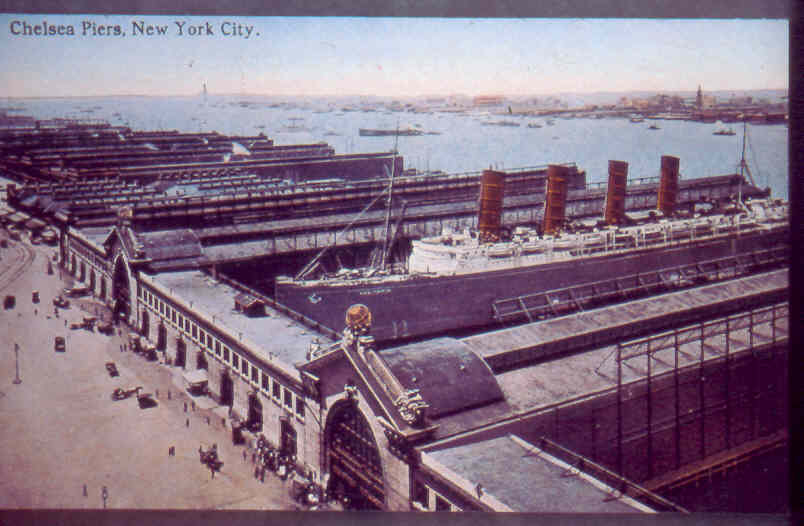
300, flashy bowling alleys, biggest and most expensive in the city, are part of the Chelsea Piers complex. The Piers are far more familiar with ocean liners than bowling balls rolling in. It was a dock for the very first passenger ocean liners all the way back in 1907. The beautiful Pier complex that was constructed in 1910 served the city as a terminal for luxury liners and immigrant transport alike. Here’s a pic of Chelsea Piers’ original lanes:

The Titanic was scheduled to dock there, but didn’t quite make it. The Lusitania left from here in 1915 when it was sunk in Irish waters by a German U-boat, killing almost 1,200 people. A more hopeful docking occurred in 1936 when the vessel containing the victorious US Olympic team from Berlin, including Jesse Owens, landed to a breathtaking reception.

The Piers fell into great disrepair and were scheduled for demolition when they were allotted in 1992 as a sports and recreation hub for the city. The AMF Chelsea Piers Lanes were built in 1995 and have only recently been transformed into the ‘fancier’ 300 New York (think expensive martinis and fabulous bowling shoes). NOTE: It is named after the perfect score in bowling, not a comic book Greek epic.

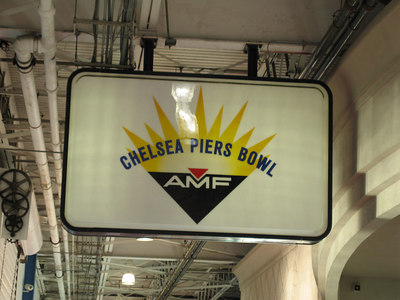
Here’s some pre-300 signage:

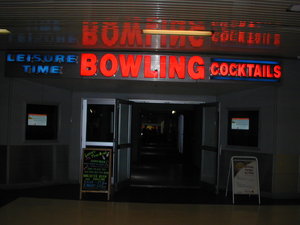
Leisure Time Bowling, at the Port Authority bus terminal, has gone through some enhancement since its opening back in 1991, but it still has that hard, greasy edge that goes well with a pitcher of beer. This is the place you go if you’re serious about bowling, you have a birthday party of children, or you just want to entertain yourself while waiting for your bus.

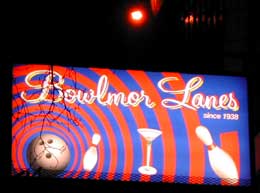
But despite its ‘self-aware’, showy hipster-eque and often campy decor, Bowlmor Lanes still remains my favorite, and for good historical reasons. Opened in 1938, Bowlmor was host to the prime-time televised bowling of the 50s and helped form bowling’s kitsch aesthetic.

Bowlmor was saved — or ruined, depending on your viewpoint — in 1997 by owner Tom Shannon, who transformed it into a temple of bowling glamour, with walls of pins signed by celebrities, sparkling upholstery and a deejay spinning retro tunes. Virtually every celebrity known to man has worked out a lane, from Jodie Foster to Richard Nixon.

It seemed to have worked for him; the website claims that in 2001, Bowlmor was the highest grossing bowling alley in the world. Anybody trying to get a lane there on the weekend these days would not scoff at that factoid.

It was discovered in 2004 that one of Shannon’s investors, through his company Strike Holdings LLC, was none other than Yassar Arafat. As Bowlmor has always been a popular location for bar mitzvah parties, naturally they returned the money.

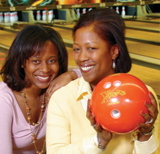
The recent addition to the Manhattan’s bowling universe is Harlem Lanes, right off 125th Street, opened last year by Sharon Joseph and her aunt Gail Richards (pictured), the first African-American women to ever own a bowling alley in the United States! Who knew there was trailblazing to be done in the world of bowling? The lanes are supposedly the best in town. (Well, they are the newest.) Maybe they can offer some advice to Brooklyn’s newest?

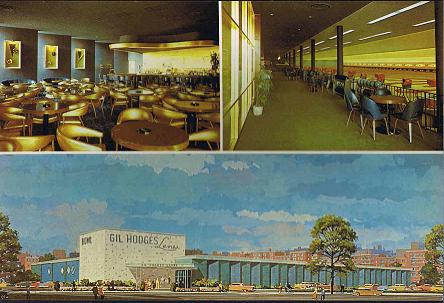
By the way, the picture at the top is of Gil Hodges Lane in Brooklyn, which is still operating and is named after a baseball player. (Hey if a tennis stadium can be named after a jazz musician, why not?)

Categories
Podcasts

PODCAST: Peter Stuyvesant

Back when New York was New Amsterdam, it was the domain of the bullheaded, pear-growing, peglegged Peter Stuyvesant, who cleaned up the city and gave us our most important street. Find out why he still matters and why he’s the king of the East Village.

Listen to it for free on iTunes or other podcasting services. Or you can download or listen to it HERE

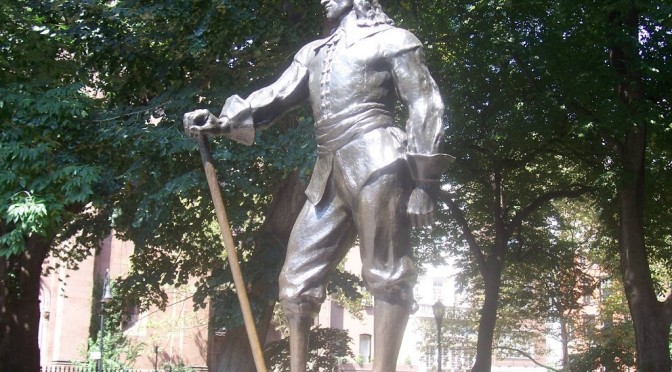
The picture above is of the statue of Peter Stuyvesant, created in 1941 by Gertrude Vanderbilt Whitney (as in the Vanderbilts and the Whitney Museum). Note how its posture and stance cleverly convey Stuyvestant’s stubborn character. (Click the pic to get a closer look at that peg leg.)

The park itself is a beautiful block of greenery lined with old churches and brownstones — and interrupted by 2nd Ave, part of the original design — in the approximate location of the original Stuyvesant family mansion.

Another of the neighborhood’s famous residents is also honored here with a statue nearby and a street named after him — composer Antonin Dvorak, who lived at 327 East 17th Street.

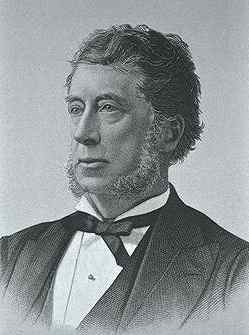
The legacy of Stuyvesant leadership would pass on through the generations. Peter’s great-great-granddaughter Elizabeth took the family in another historically significant direction when she married Revolutionary War hero Nicolas Fish. Their son Hamilton Fish (seen right, named after family friend Alexander Hamilton) would become an influential mayor of New York and later secretary of state under Ulysses S. Grant. Hamilton Fish II, Hamilton Fish III, and Hamilton Fish IV (who died in 1996) would all be New York congressmen. The current Hamilton Fish, we’re up to V I believe, once owned The Nation magazine.

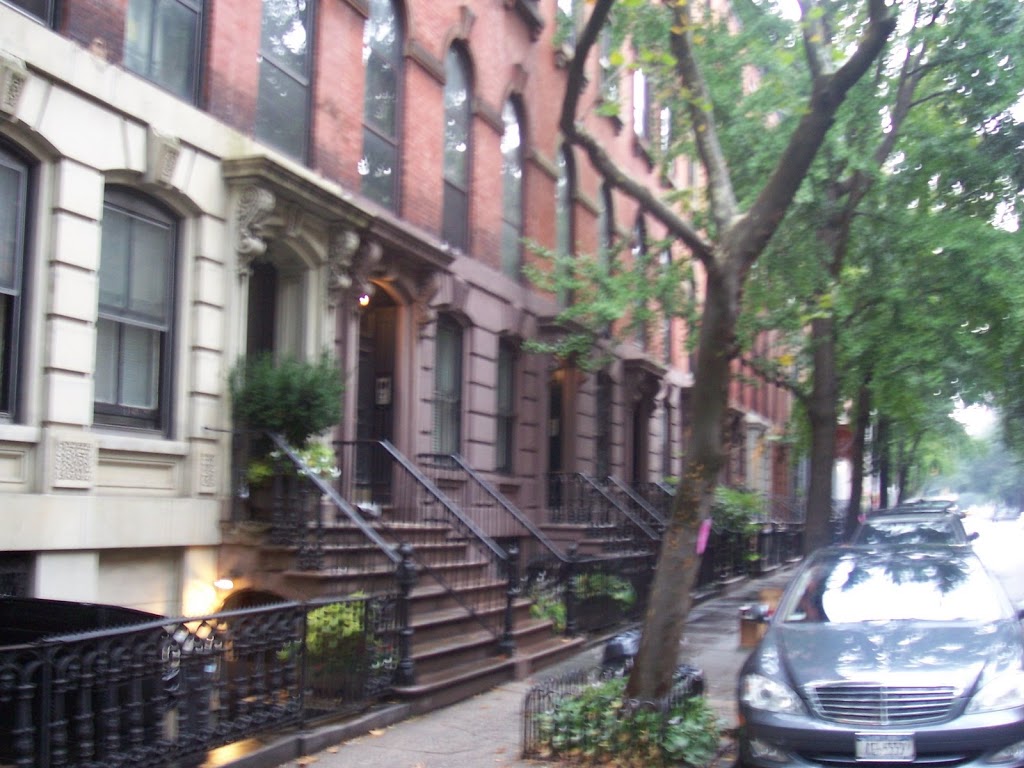
Hamilton I was born in the lovely Stuyvesant-Fish house at 21 Stuyvesant Street. Today its one of the loveliest streets in the East Village.

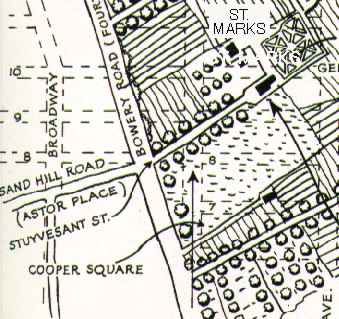
Its odd diagonal through the grid pattern of the Village is a vestige of its original path through Stuyvesant’s old farm.

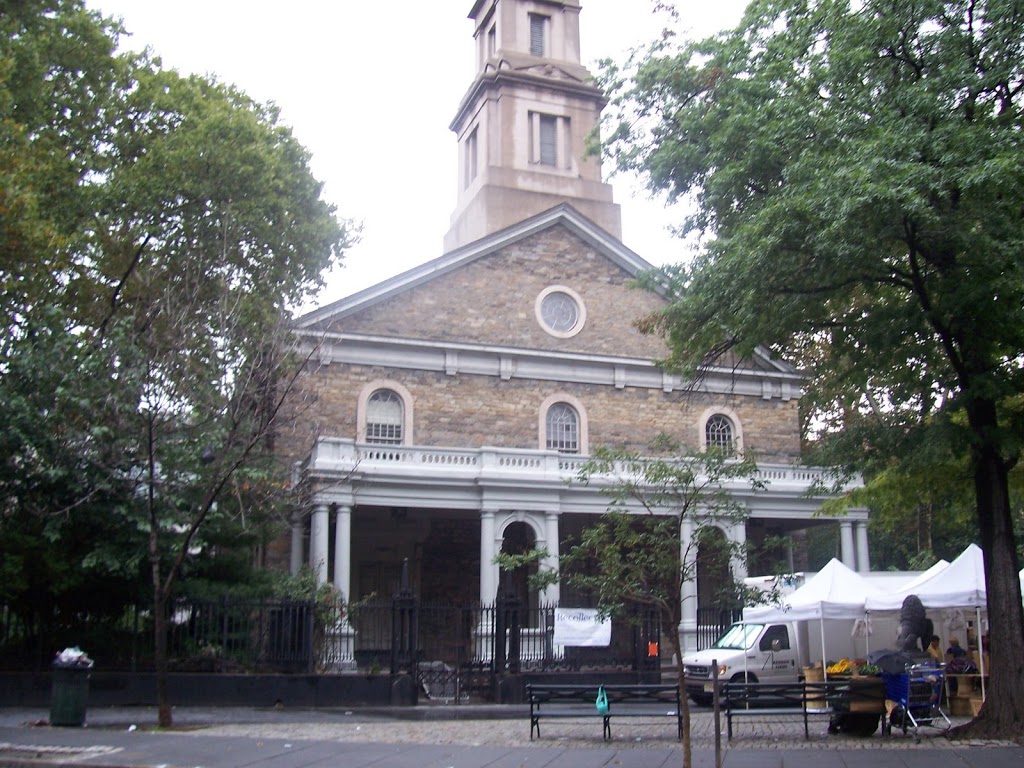
At the end of path, at Second Avenue, is St. Marks-on-the-Bowery, which is aswirl during the weekend with community activities and sometimes a farmer’s market outfront. St Marks contains the crypt of Peter Stuyvesant (marked Petrus Stuyvesant on the stone, to indicate the formalized version of his first name).

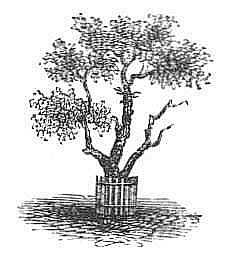
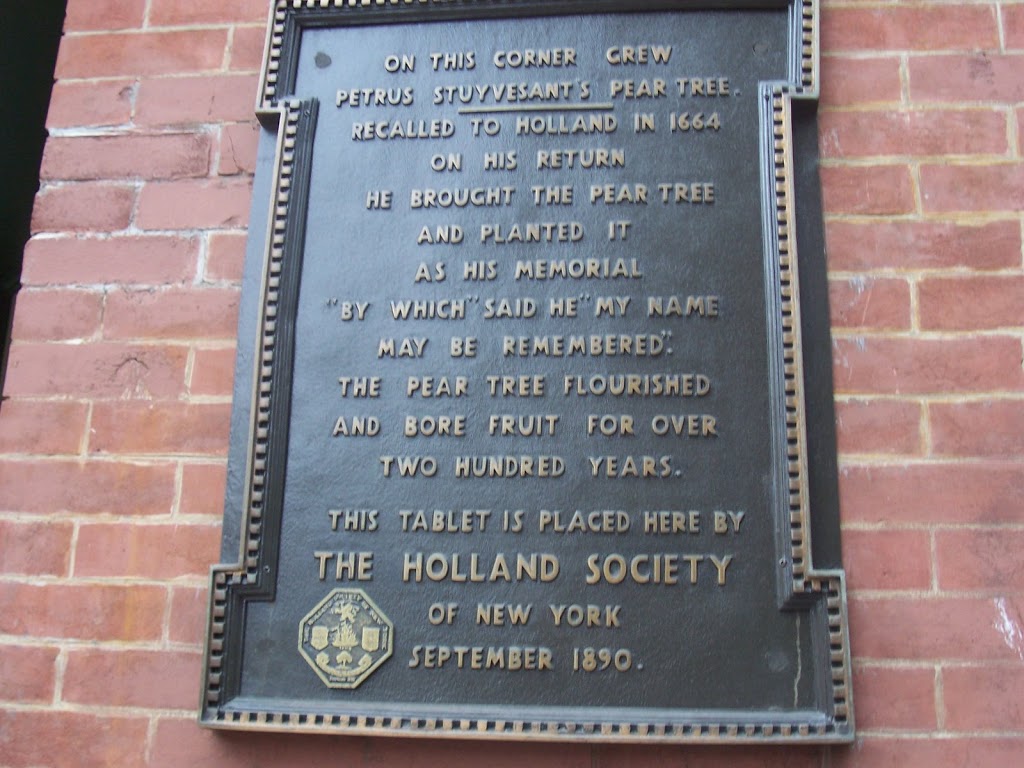
You’ll need to walk a short way to Third Avenue and 13th Street to the plaque honoring the site of Peter’s old pear tree, planted in 1647 from a Dutch seedling, which outlived him by almost two hundred years and drew curiosity seekers from miles around in the mid-19th Century. At the time it was considered the most famous tree in America until it was uprooted by an errant wagon in 1867. (It should be noted that the tree survived the New York Draft Riots, when the neighborhood nearby was in flames.)

Here’s the plaque that hangs in front of Keihl’s. Believe it or not, Keihl’s opened in 1851, the tree standing not far from its doorstep, and John Keihl may have even witnessed the arboreal tragedy. (Click into the picture for a closer look.)

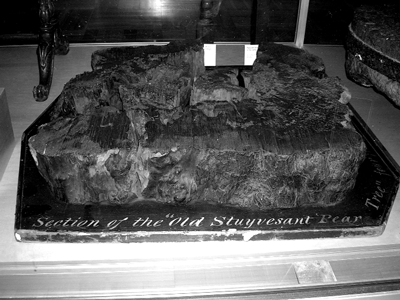
Believe it or not, a slab of the old pear tree can be viewed in the regular collection of the New York Historical Society.

The Stuyvesant family name also pops up in Bedford-Stuyvesant (comprising the Stuyvesant Heights neighborhood), once a cultural mecca for African-Americans, then a former notorious neighborhood — at one time called ‘the world’s biggest ghetto’ — BedStuy has transformed into a ‘hot’ real estate haven, thanks to its many beautiful brownstones. Stuyvesant High School in Battery Park is one of the most revered in the nation (it’s the alumni of several Nobel laureates).

Categories
Uncategorized

9/11: From the other side of downtown

I wasn’t sure what kind of entry to post today, so I figured it might be interesting for some of you to read an excerpt from the letter I wrote my family and friends back home on Sept 15, 2001. (The day I got back my Internet service, which had been knocked out.) I lived in downtown east and decided to investigate the parts of downtown Manhattan that weren’t being shown on television. Technically, this is now as much “NYC History” as anything else.

This is short on sentimentality on purpose, as I just wanted to report the things I saw that weren’t really being shown. However a little dramatic, even sappy emoting pops through.

Warning: this piece is a little long. If you prefer to skip it to the articles below, just scroll past it or use the bar on the right to navigate to another story. Trust me, I understand; it wasn’t fun to relive this, however sometimes you feel obligated to kick yourself again into remembering. And forgive the occasional dramatics…

“On Thursday, a little more than 40 hours since the towers were destroyed, I made an arguably unwise but curiosity-induced trek down the the Financial District, to within a couple blocks of the former World Trade Center.

I could scarcely grasp that it had happened at all, as we all did.  I journeyed down not because I’m some morbid freak who wanted to look at a few thousand tons of havoc and twisted metal, but because I wanted to see the state of ole New York. The dark, narrow streets lined with the flair and shadow of ornately designed buildings, built by the city’s ancestors in their powdered wigs and uncomfortable shoes, all shoved into a corner of the island with various tall and faceless glass towers.

For those reading this who’ve never been to New York, you should realize that essentially at the foot of the Twin Towers (named David and Nelson, didya know that? after Rockefeller’s sons) are the beginnings of this city and some of the oldest roots to our past in the country.  The Trinity Church. The India House. Delmonico’s.  And naturally, the Stock Exchange and City Hall.

I wasn’t sure what kind of a toll the toppling of the two biggest buildings in the world would have on one of my more cherished sections of New York.  Clearly their fate is secondary to the lives lost, but I felt it was important to me to find out for myself.  Even beyond the more symbolic clarion-call of ‘New York will survive’ I just needed to know for my peace of mind.  Also I happen to live way South in the Lower East Side, only a mile or so from what is called Ground Zero, and my neighborhood was in lock down and my phone and TV were out, so heck, what else was I gonna do?

The first noticeable change to my immediate neighborhood is that my grocery store Pathmark three blocks away has become the central location for the National Guard.  There were about 400-500 men in camouflage garb standing in the parking lot, flanked by military vehicles and police cars.  The Pathmark is right below the Manhattan Bridge, which has no traffic, only emergency vehicles.

I passed along the waterfront and walked down the east side of Manhattan to the South Street Seaport. Along the way were dozens of cops standing around, observing the old Chinese men who fish for God-knows-what off the edge.  They were patrolling what appeared to be the most tranquil area of the Eastern Seaboard. I swear, even the birds were hanging languidly in the air.  All that horrible smoke, dust and debris was blowing down south into Brooklyn, missing this area entirely.

Down at the Seaport were a few aimless tourists — their vacation fans suddenly dashed — and a couple joggers in headphones.  The old pubs and wharf-themed restaurants were shuttered; the tourist plaza, looked upon by vacant J. Crew and Abercrombie stores, looked abandoned.  Along Water Street did I first notice the patches of dust stuck to various pieces of public art — caked to two sides of a giant mirrored cube, or crusted to the highest arms of a tall white sculpture.

Up the street possibly the closest apartment building to the site not evacuated now held court to a dazed assemblage of senior citizens, staring blankly into the west.  An old woman had a mask strapped to her head, yet held her hand to the white puffy fabric.

Nothing was being policed to emphatically.  Again, it was early after the tragedy, and the gravity of the situation was only then settling in. Cops saw me and probably thought I was another journalist. The streets were crawling with amateur photographers finding dramatic angles and continually wiping their lenses.

Moving on, I regretted not bringing a mask to wear.  Almost instantly the streets became slightly clouded and I might have imagined myself getting a headache from it.  A supply truck rushed by, sending up a whirlwind. What actually WAS t hat dust?  I just couldn’t think of it as something pulverized, of sheer mass broken into particles. Soon I noticed that it was covering the ground, the steps, the awnings, everything completely.  The great old India House was frozen in it.  Stone Street, an ‘untouched’ colonial sidestreet, with its ancient storefronts and quaint 18th century streetlamps were locked in a sudden beige winter. And it really was like wintertime, except it was warm.  As is the way with these streets, the sun could only peek in, creating strange, bent shading. One strip of sun in the middle of the street maybe, surrounded in grim shadows.

Very few people were walking around. Somebody was walking their dog and the poor creature was completely coated in dust. A street cleaning truck slowly wedged its way down the street, spraying water into the gutter, turning the dirt into thick gobs of mud. It took me a few minutes to maneuver through the mess.

A trio of college students was cautiously walking toward the destruction. I followed them — I suddenly felt quite alone — until I go the top of the slope down to Wall Street. I saw an elderly couple, seeming undisturbed by the mud, walking slowly past me. Both of them were pasty and bundled up. ‘Why aren’t the stores open?” the old man said. “They’re closed. There’s been a bombing,” said the woman.

Down Wall Street, the haze and shadow were compounded by the relative tightness of the street. The buildings on either side seemed more constricting than ever. The NY Stock Exchange jutting around a corner looked like it was in mothballs. Nearby at Federal Hall, the statue of George Washington, always so tall, was shrouded and unrecognizable. Beyond, towards the disaster, the shadow thrown from the buildings felt dank. Through a crack between two buildings ahead, I could see the tendrils of smoke billowing from the remains of the Trade Center.

I noticed that the mud and dirt was joined on the ground with the paper trail of the WTC. Faxes and case files and memos, many of them intact, many burned around the edges. I picked up some page from what appeared to be a business contract; its edges were dramatically singed, like a pirate treasure map in a movie. There was even a resume, mud-strew, burned, on blue card-stock; I hoped that this person was not qualified and got a job elsewhere from this.

I walked further up Wall Street until I was two blocks away from old Trinity Church. I was not allowed (and in fact did not want) to get any closer, but I could tell that this grand old landmark was completely blanketed in debris, yet looked perfectly solid.

I was directed by an officer to walk back up north, yet at the next cross street, I witnessed that which I didn’t really need to see. Two blocks up was the shadow and haze of the wreckage, the black fingers of the building’s metal casing arched and twisted without detail, like cracks. Around it I could only guess was just a small section of the destruction on all sides of it. From the angle where I stood, it was a dark and solid mas, without the horrific subtleties displayed on TV.

And where I stood, and above it, the World Trade Center was profoundly not-there. It’s not a simple as merely seeing a white dotted line where they used to be, as though they had simply been erased. The devastation is more complete, jagged ruin notwithstanding. There is NOTHING there, nothing civilized. I used to look up and feel a churn in my stomach from my moderate fear of heights. Now I didn’t need to lift my head to get that feeling back. The blue sky and flimsy white clouds which exuded from the newly opened space in my vantage was macabre, as if something pleasant was cluelessly trying to take their place. I don’t know what I preferred — a dark, sinister sky? — but this, the backdrop of an afternoon picnic, seemed absurd.

I quickly passed this and noticed the street around me, trapped within the moment of escape. A little bagel cart was on the corner, its cheap donuts and bagels still stacked up against the windows, all covered in dust. Some cars were completely destroyed, others just in need of a car wash. A woman had come back to her decimated car and was fishing something out of her trunk. And scattered all over the ground were pairs of shoes. Not just women’s shoes, as one would expect — running in heels? no way — but men’s shoes. The sickly story behind them I could not possibly guess.

The thick billowing smoke nearby was creating shadows in this section that were like an instant night, so I was thankful when I worked my way up toward City Hall, where the lowness of the surrounding buildings let in some light. Apparently this is where the many reporters were allowed to stand and talk, yet there were so many of them scattered on the sidewalk. Were they interviewing each other?

A large group of volunteers stood on the steps of Pace University across the street, all relatively dazed and unbelieving, their faces caked with dust like those Depression-Era portrait of farmers from the Dust Bowl. The task they had in store was truly daunting, and still is.

This was about all I could take so I walked up to the Brooklyn Bridge and traced it through the Seaport back to my neighborhood. When I got home to east Chinatown, I looked worn out and noticed my shoes and pant legs were completely covered in mud.  (It was so bad I just threw them away when I got home.)  If not for that, I would have thought the entire thing was a bizarre dream. I and we still do.”

FRIDAY NIGHT FEVER: Geoghegan’s / Steve Brodie’s Saloon


To get you in the mood for the weekend, every Friday we’ll be celebrating ‘FRIDAY NIGHT FEVER’, featuring an old New York nightlife haunt, from the dance halls of 19th Century Bowery, to the massive warehouse spaces of the mid-90s. Past entries can be found here .

We’re going way, way, way back, to New York’s seediest, filthiest and most notorious place — the Bowery in the late 19th century.

The nightlife of the old Bowery could be an entire blog in itself. It has been witness to some of the most rowdy, shameless and debauched New Yorkers who have ever lived. They filled up dives and flophouses, brothels and saloons, catered to the poorest of immigrants and the richest of the upper class ‘slumming it’ for a real idea of fun unimagined in the drawing rooms of the elite.

The two saloons from the late 19th century featured here weren’t extraordinary places as we would consider today — they would both fit comfortably in the 20th century sin-den the Limelight — but they were run by extraordinary people, ‘heroes’ of the Bowery brawler set.

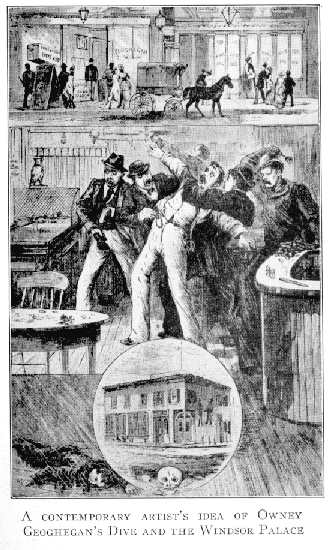
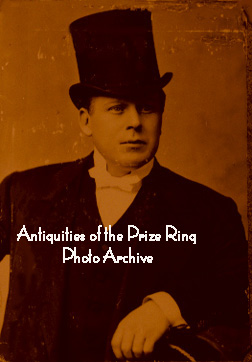
Geoghegan’s at 105 Bowery has been described as “a rendezvous for professional mendicants.” Often called the Bastille of the Bowery, it didn’t just spawn a few fisticuffs; it catered to them. Because this two floor booserie featured two boxing rings, and one of the men in the ring was often the bar’s owner.

Owney Geoghegan held the boxing distinction of Lightweight Champion of America from 1861 to 1964, when he retired to open his tavern/fight palace in the Bowery. His reputation naturally drew the crowds, and Geoghegan encouraged his patrons on to a little pugilism with the help of ample ales and whiskey. In 1891 the ‘Bastille’ even hosted a few rather fierce bouts of women’s wrestling, with the competitors required to cut their hair (to prevent pulling) and costume themselves wearing only tights.

Such a swarthy establishment was bound to attract the lowest elements and the most sinful gangs of New York. One journalist at the time describes it: “The faces around us are worse than those seen in a bench show of pugnacious dogs, and instinct teaches us to have a care for our nickels, for our pockets are in imminent danger.”

But perhaps the person the clientele should have feared the most was Geoghegan himself. A short but powerful Irish man, Geoghegan was known for his impressive, compact strength. And his penchant to cheat when needed. 

Geoghegan was in the ring one night against Viro Small, a very popular black wrestler. Geoghegan was still in his prime but it was clear he was being bested in the ring by Small. The drunken crowd catcalling him, and he knew he couldn’t lose in his own establishment. So he had one of his henchman hold a gun to the referee’s head and call the match for Geoghegan!

(Small didn’t hold a grudge. He later wrestled there again, with a man named Billy McCallum who afterwards tried to murder him.)

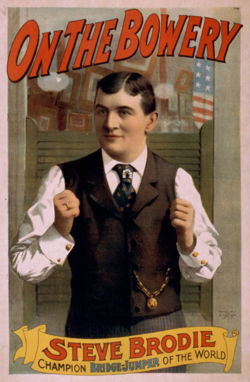
As Geoghegan flexed his strength to his barflys, another Bowery saloon owner was busy displaying his gifts of agility. In 1886 Steve Brodie, on a bet, jumped off the Brooklyn Bridge, the bridge being only about three years old at the time. What was amazing was not the amount of stupidity that took, but the fact that he survived and claimed his $100 bet money.

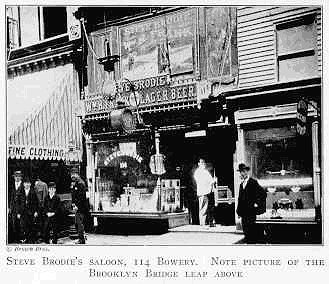
His feat was celebrated at the time and from the fame of this simple act, he was able to open Steve Brodie’s Saloon, 114 Bowery, at Bowery and Grand Street (a couple doors down from Geoghegan’s place).

If Geoghegan’s dive was a celebration of his profession, Brodie’s was a celebration of his own personality. Behind the bar was an elaborate oil painting depicting Brodie bravely hurling off the bridge, along with a signed affidavit from the boat captain who fished him out of the water. The floor of the bar was inlaid with silver dollars to give it that wealthy feeling that money had been hurled to the floor.

For the cost of a drink, Brodie would gladly recount his tale. As silly as it seems today, he was able to pack in patrons, perhaps many from Geoghegan’s place, still drunk on booze and bloodletting.

Somehow he managed to turn his feat into a touring autobiographical performance entitled ‘On The Bowery’. Eventually he tried to top his feat with a plunge down Niagara Falls in 1889. (It could never be proven that he actually went ahead with it!) He settled in Buffalo and opened another saloon there, but the enigma of his fame apparently didn’t carry that far. He moved to San Antonio and died at age 38.

Owney Geoghegan had a similar short-lived fate. He lapsed into a severe depression at the death of his father and, traveling to Hot Springs, Ark., to try cure himself of his pain, actually died there, age 45.

As his obituary in the New York Times said: “There is mourning in the Bowery, sorrow on Houston and Bleecker streets, and desolation in the dance halls of the slums….. His career as a prize fighter, ward heeler and dive keeper was that of the typical New York rough, and is only interesting as it illustrates a phase of life little known to respectable people.”

Heirs to the vice of modern nightlife, take note.

[Two main pictures are provided by this site, which has some juicy info about the Bowery.]

Categories
Uncategorized

Rabid Doors fans and tennis pros


The world has turned its eyes to Flushing Meadows, Queens, for almost 30 years now thanks to the U.S Open, held as the sports complex called the USTA Billie Jean King National Tennis Center. It’s named after the tennis icon who won four women’s Open singles titles, three mixed doubles titles, and two women’s doubles titles (the latter paired with no less than Martina Navratilova).

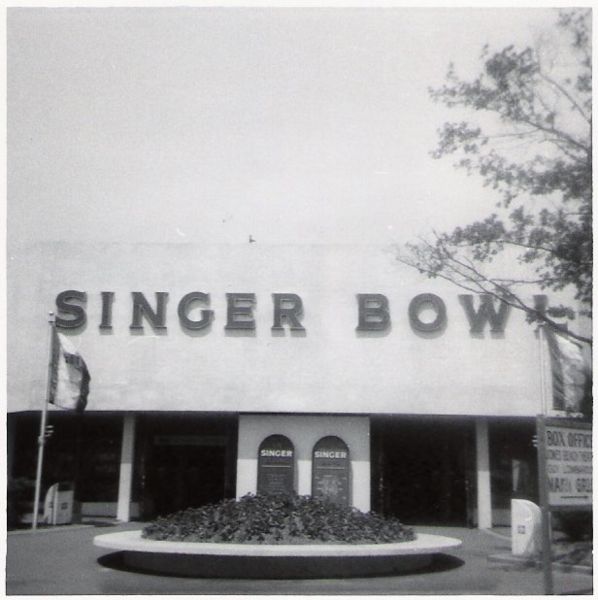
The tennis center is in walking distance to the sci-fi like ruins of the 1964 New York’s World’s Fair because its original structure, called the Singer Bowl after the sewing machine giant, was constructed for the fair. (FYI, Coney Island’s Parachute Jump was also constructed for a New York world’s fair, but the one in 1939).

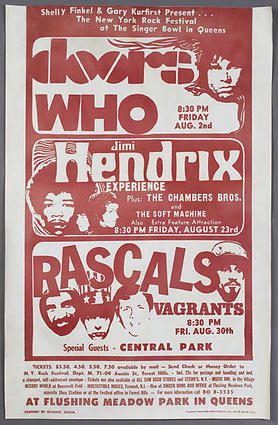
The Singer Bowl has an unsung history as a site of some terrific New York concerts. On August 1968, The Who opened for the Doors, two diva performers whose attention to theatrics nearly sabotaged the show. The Who insisted that the Door’s equipment not mingle with their own and while performing, the rotating stage broke down.

When Jim Morrison of the Doors came on, the crowd thronged the stage and policemen fought to keep them back. According to the Doors website, Jim “spun around and ground the songs out halfheartedly, ad libbing, improvising, doing an ominous dance” but was barely visible to the crowd due to the police. The crowd became incensed, ripping up chairs and throwing them onto the stage. During the chaos, Morrison was typically indifferent and oblivious.

The Singer Bowl fell into some disrepair until W.E. Hester, of the United States Tennis Association, flew over it while landing at Laguardia and suggested it make a new home for the U.S. Open, which had previously been held at the West Side Tennis Club in Forest Hills.

The Singer Bowl lost its name during renovations in 1977, when it was refitted as the Louis Armstrong Stadium, for the musician who lived out his final days virtually down the street.

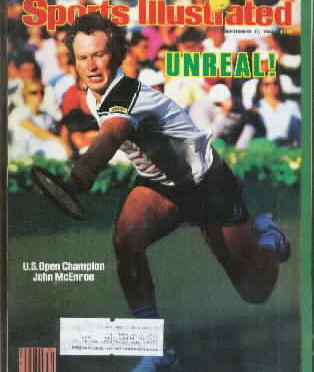
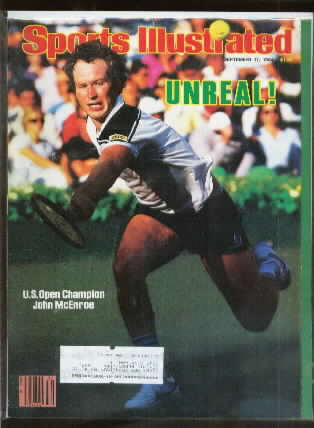
The stadium was host to a fabulous rivalry between John McEnroe and Jimmy Connors, who batted the U.S. Open men’s singles title between each other for seven straight years.

However the popularity of the Open soon dictated that a bigger stadium be built. Louis Armstrong was upstaged, figuratively anyway, when the Arthur Ashe Stadium was constructed in 1995 and became the main court for the Open. Louis Armstrong Stadium was reduced in size and still hosts smaller matches. Both Arthur Ashe and Louis Armstrong stadiums and the rest of the complex was officially coined as the USTA Billie Jean King National Tennis Center in 2006.

Strictly speaking of the Flushing Meadows era of the the U.S. Open (since 1978), McEnroe is king, with eight wins (4 singles, 4 men’s doubles) but even he’s blown away by the reigning queen Navratilova with 15 wins (4 singles, 8 women’s doubles, 3 mixed doubles, including a win last year.) And she’s still in this year’s contest for women’s singles!

A picture of the old Singer Bowl, back before world class tennis and rock egos:

Can’t afford tickets to the Open? (Hell, I can’t!) You can watch it for free at various ‘tennis centers’ in Madison Square Park on 23rd and in Rockefeller Center, equipped with fancy bleachers, greens to relax on, and other amenities, sponsored by American Express.

Categories
Podcasts

PODCAST: Coney Island – 20th Century Freakshow

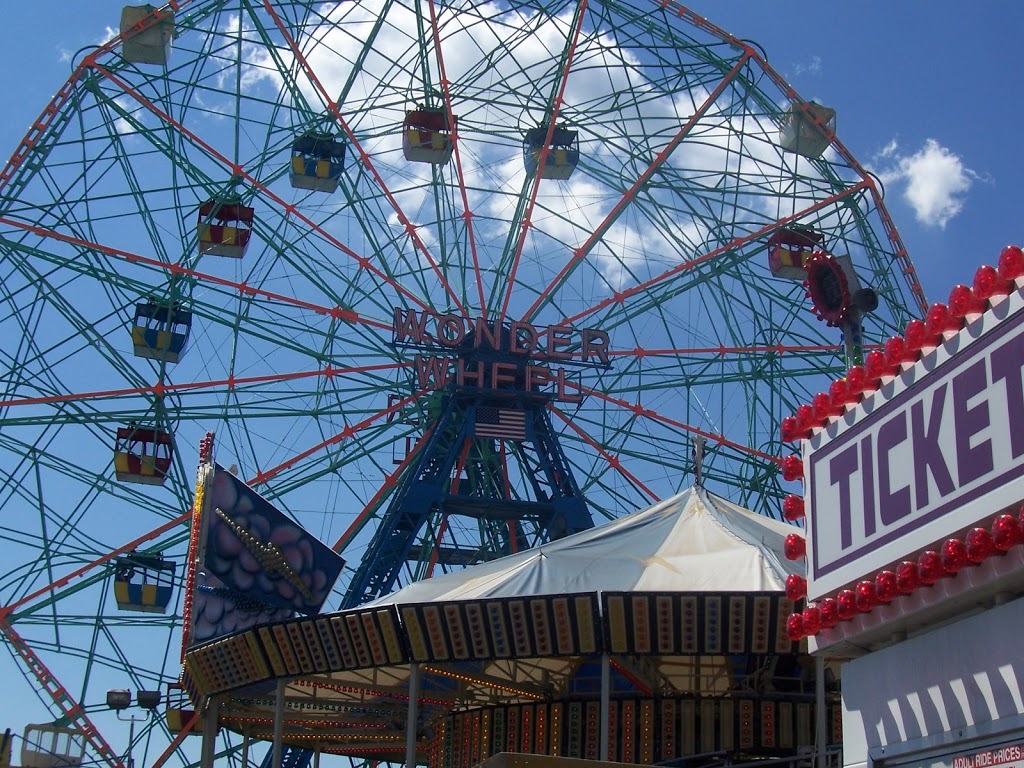
Come see the Wonder Wheel, the king of hot dogs, the “Freaks” in the Dreamland Sideshow, a beached whale and Donald Trump’s dad — all in one place! Its Coney Island of the 20th Century. But will it be around much longer in the 21st?
Listen to it for free on iTunes or other podcasting services. Or you can download or listen to it HERE

Before we begin, I should stress that these next few weekends may be the last for Astroland. (Apparently they’ll still be open on the weekends throughout the month of October.) The rumor is that there are some last minute negotiations going on to allow Astroland one more season next year, so cross your fingers. Dino’s Wonder Wheel Park , with plenty of rides and arcades to tide you over, is also still open through October. Two independent rides, the Spider and the Zipper, are already in the process of being dismantled as I type, and will be shipped to fairs in Honduras, Central America.

Some images to go with today’s podcast on the modern history of Coney Island:

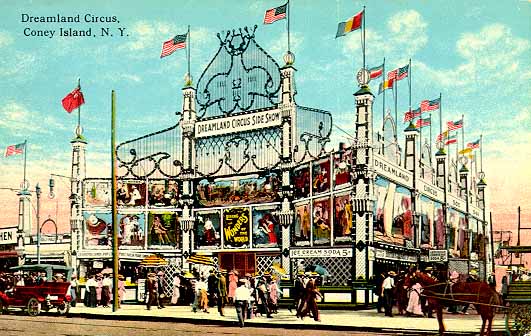
Coney’s most famous early sideshow, the Dreamland Sideshow was built by Samuel Gumpertz from the ashes of the still smoldering Dreamland amusement park. Its cast of characters would later star in the early film classic ‘Freaks’.

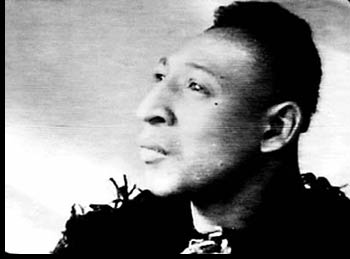
By the time William Henry Johnson joined the Dreamland Sideshow, he was an old man and had already been touring in circuses and freak shows for over 40 years. The son of former slaves, the New Jersey-born Johnson was born with an abnormally shaped head, but was not actually microcephalic(a medical condition that deforms the human skull at birth). His stage name, coined by PT Barnum, was Zip What Is It, the missing link between human and apes. (Ah, the age before political correctness.) When Zip died at age 84, his sideshow friends served as his pallbearers.

According to one account in 1925, he rescued a young girl from drowning. Considering he must have been in his 70s, his bravery and stamina should have been heralded. However, perhaps due to years of conditioned shyness, he fled after rescuing her for fear being spotted.

Lots more pics of William and other ‘official’ microcephalics or ‘pinheads’ can be found here. He was not in the movie ‘Freaks’ but Schlitzie was. (Click the link above to discover who that is.)

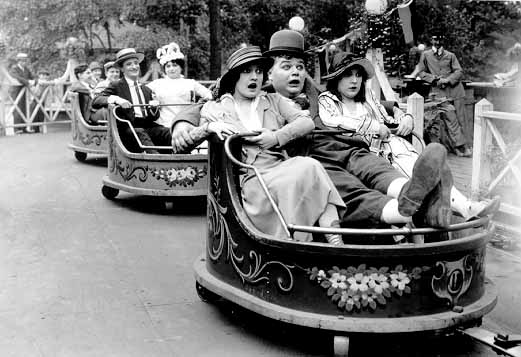
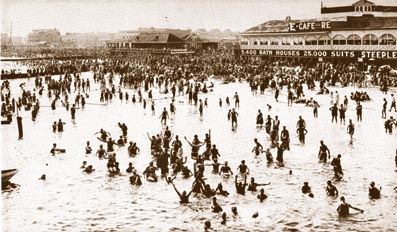
Silent film stars Fatty Arbuckle, Buster Keaton (looking buff), and Al St. John teamed up for an amusing lark “Fatty at Coney Island,” released in 1917, featuring the still-flickering lights of Luna Park, old time bathing suits and fancy bath houses.

With the advent of the new subway, public beaches and a strong new boardwalk, people from all walks of life were able to enjoy themselves on Coney Island. Oy!

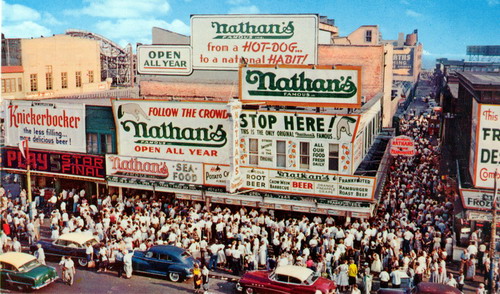
Nathan’s Hot Dogs, as crowded then as it is today on a hot summer’s day.

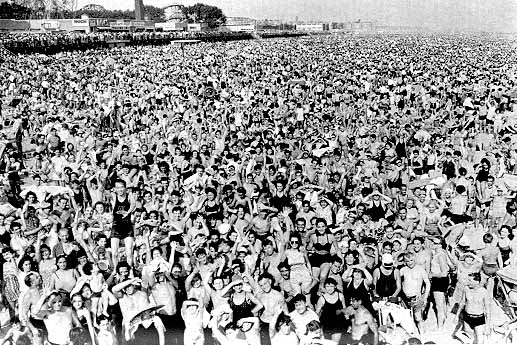
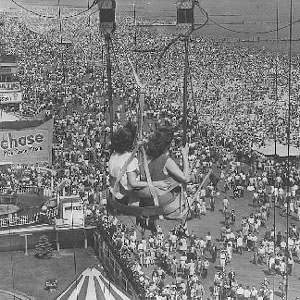
A lofty view from the Parachute Jump, overlooking thousands of visitors below. Its easy application as an amusement belied its original purpose as a military training machine. The Jump was sponsored by Lifesavers candy during its run at the 1939 New York Worlds Fair in Flushing Meadows, Queens, where it was one of the most popular attractions there and was even the scene of a wedding. Its no longer operating now, but has been given fresh colors reminiscent of its Lifesavers days, and it even lights up during the season.

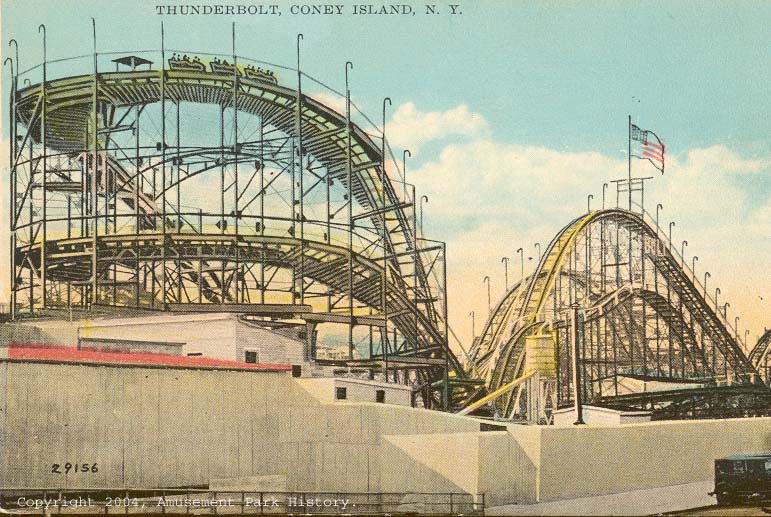
One of Coney Island’s other rollercoasters that didnt make it into the 21st century, The Thunderbolt was dismantled during the building of the minor league ballfield KeySpan Park.

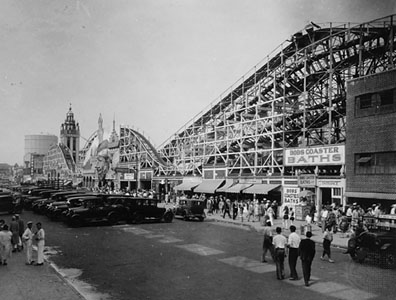
Another Coney Island rollercoaster was the Tornado, which was built in 1926 and burned down, a common fate of amusements here, in 1977. Note that the Tornado was built before the Cyclone. Hmm, who’s ripping off who here?

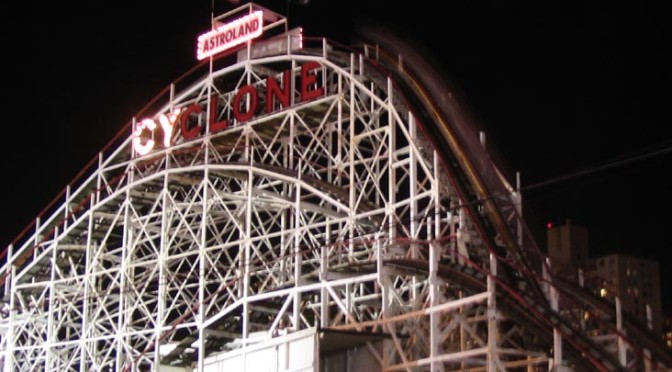
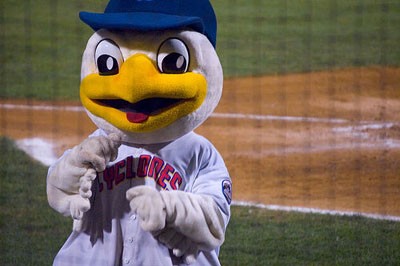
The remaining rollercoaster, of course, gave its name to the minor league team that now plays closeby:

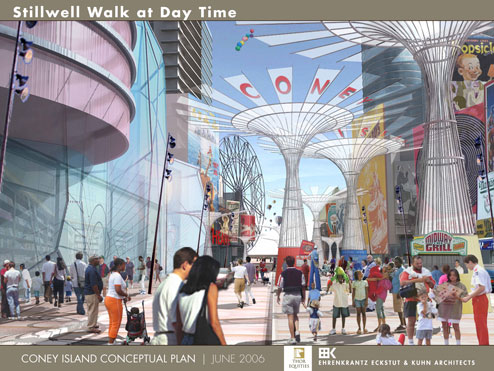
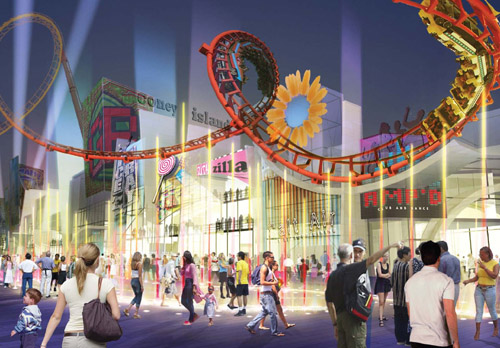
Here are a few mockups of potential renovations by Thor. They have gone back to the drawing board many a time. Gothamist even reports the city may be attempting to scuttle Thor’s plans altogether with talks with Copenhagen’s Tivoli Gardens, the 164 year old park that was certainly an influence on the old Coney Island parks:

Here are some other plans by Thor.

And I thought I’d end our presentation with a few that I took myself this past weekend…..

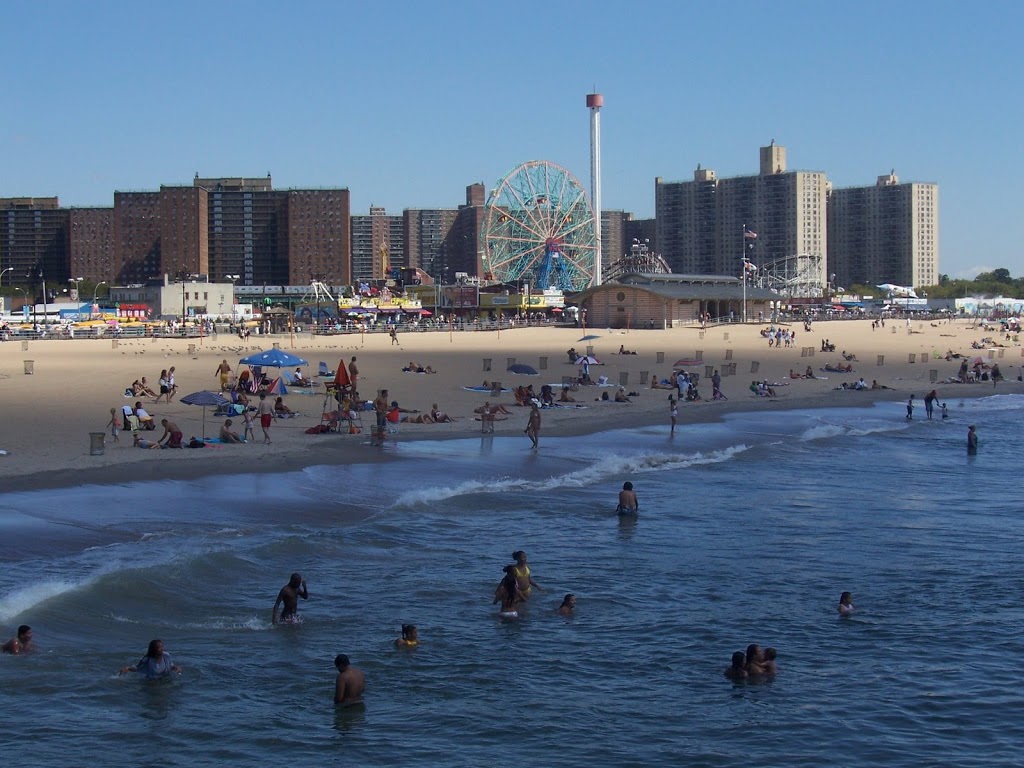
The beach on a beautiful day. From this angle, the Robert Moses influence can be readily seen:

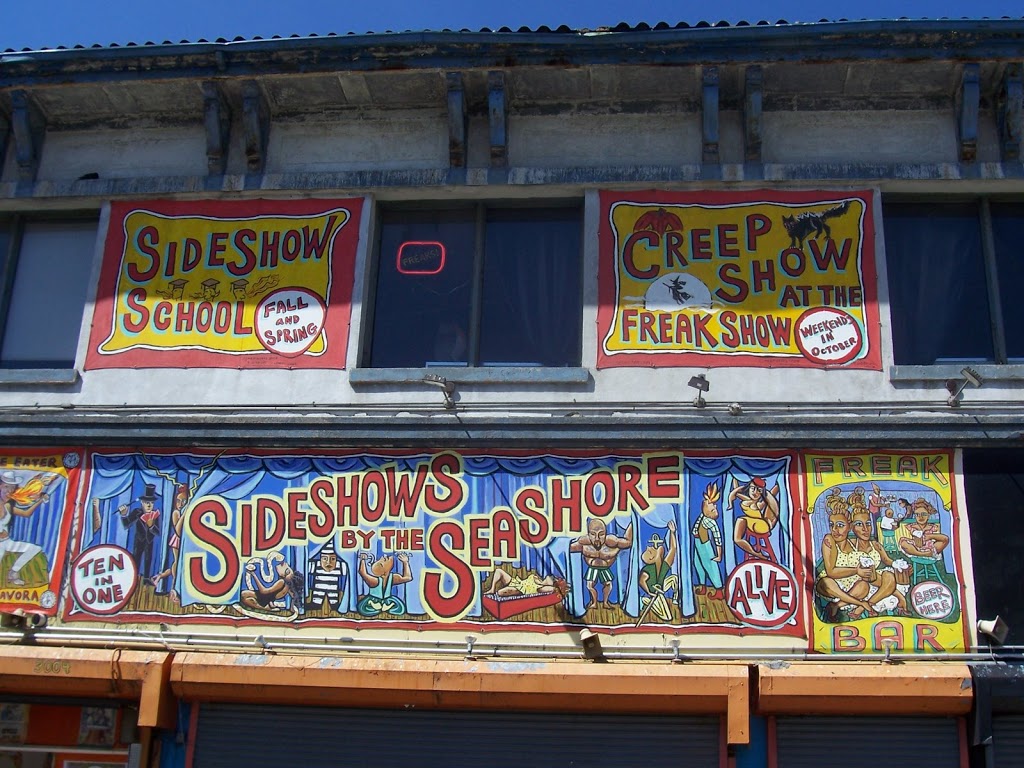
You can still go see the sideshow, perhaps a bit more politically correct than it was in the past.

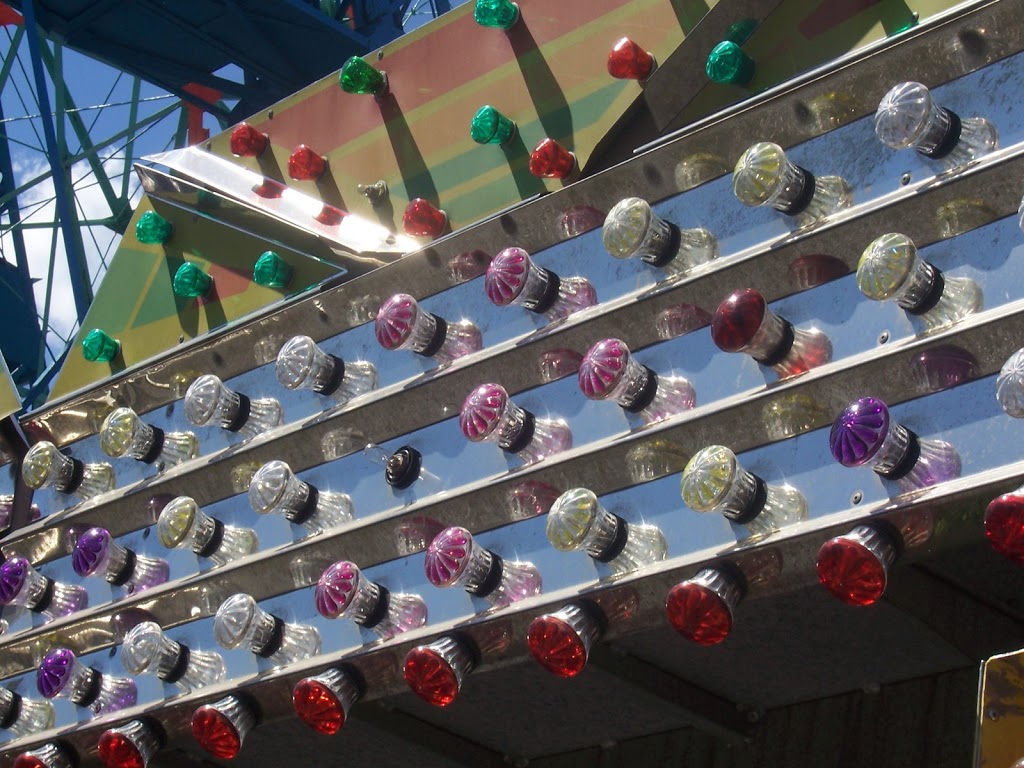
A bit of Coney’s faded glamour…

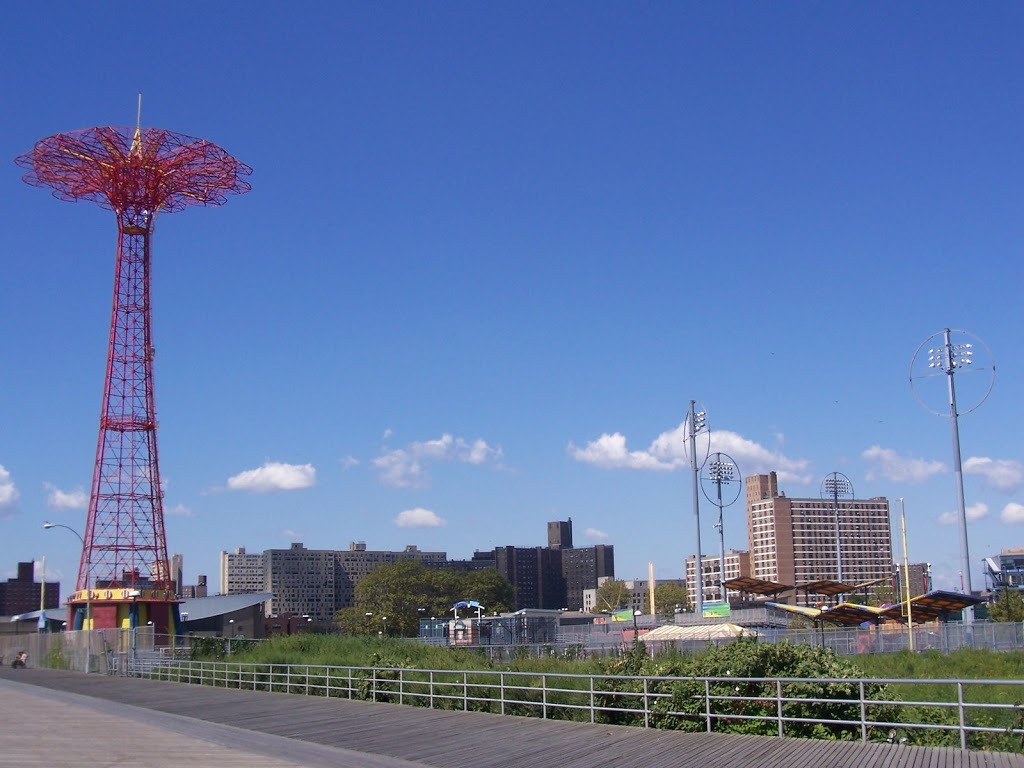
Its “makeup may be flaking” but the Parachute Jump lingers on, in less jovial environs than its used to.

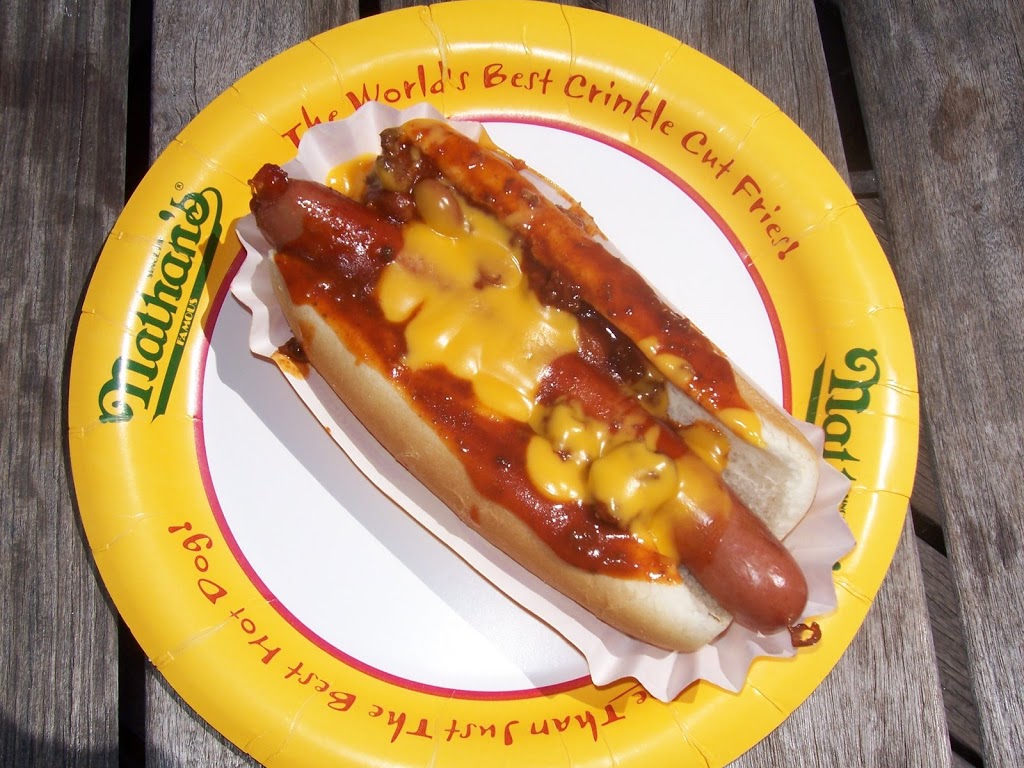
This cost $3.35, still a bargain for something so decadent, but nowhere near Nathan Handwerker’s original selling price of five cents

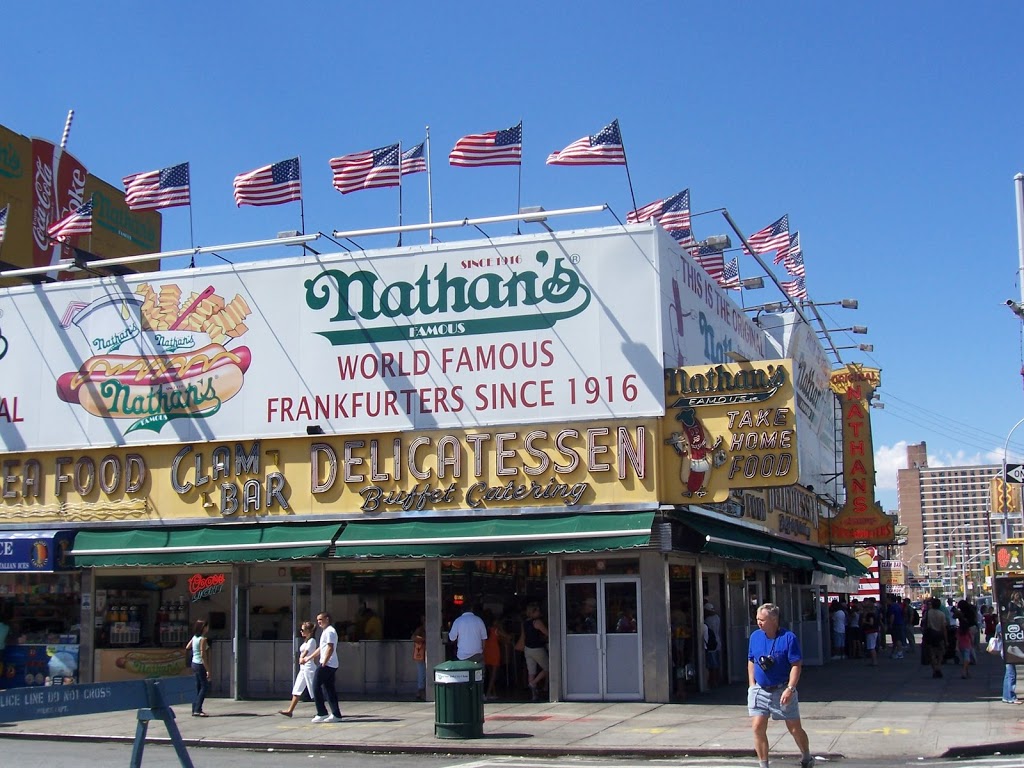
Here’s where Nathan’s has stood since he opened it, in 1916. Since then, he’s also opened another location closer to the boardwalk. One of Nathan’s first employees was a young redheaded girl named Clara Bowtinelli, who would later shorten her last name to Bow and become one of the silent film era’s biggest stars as Hollywood’s ‘It’ Girl.

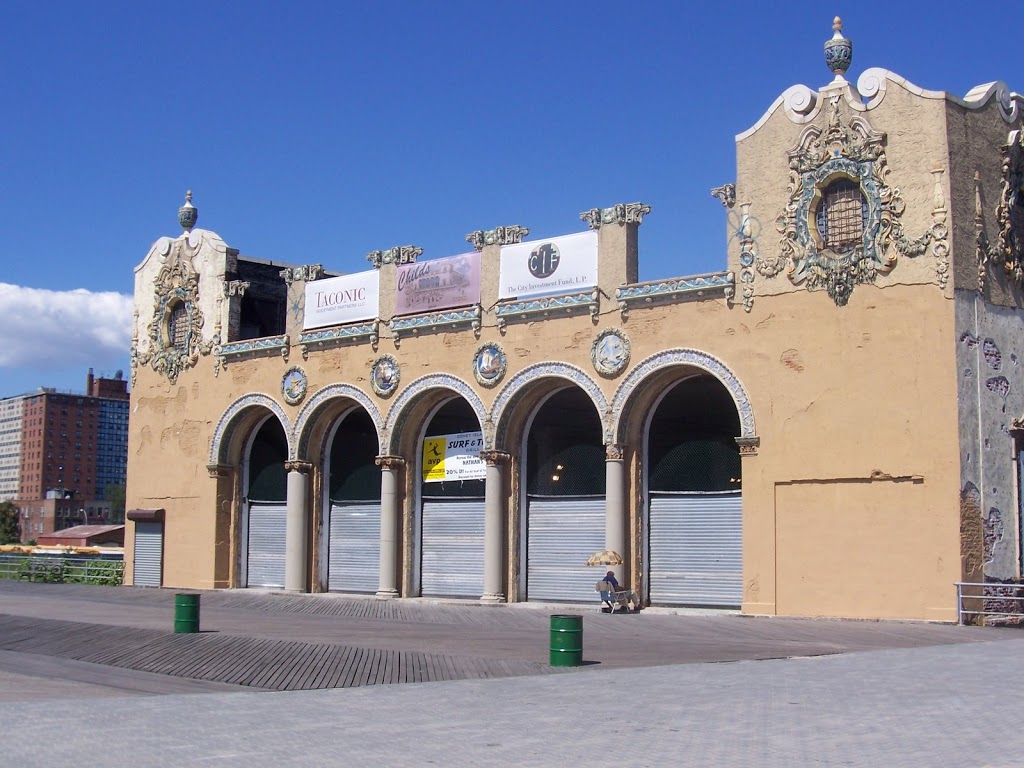
This is Childs Restaurant, along the boardwalk, one of the oldest structures still standing on Coney Island. Built in 1924, it was able to withstand the many fires that swept through Coney and in fact shielded buildings close by from the flames. A developer intends to re-open Childs as a restaurant once again in the near future. It was opened for the first time in many, many years during this year’s Mermaid Parade.

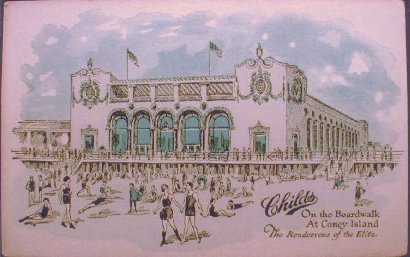
Childs in its glory days:

Some detailed information about Childs can be found here.

If you’d like more information about some current activities in preserving Coney Island, try the Save Coney Island page or the lovely official Coney Island webpage.

Many of the blogs in our blogroll have far more in-depth information about Coney Island that we do. I suggest you start with Kinetic Carnival or Gowanus Lounge first. A very exhausting site on its history (with lots of photos and interactive maps) can be found here.

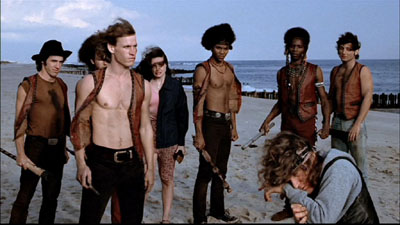
Finally, how could I forget The Warriors, the seminal cult 1979 film, set through much of Manhattan but featuring an explosive finale at Coney Island? Visit its tribute site or rent it today.

Last year I was fortunate enough to go to a special screening of the film at Coney Island that was sponsored by Netflix and featured many members of the cast.

Categories
Uncategorized

Sunday In the Park With George (Washington)

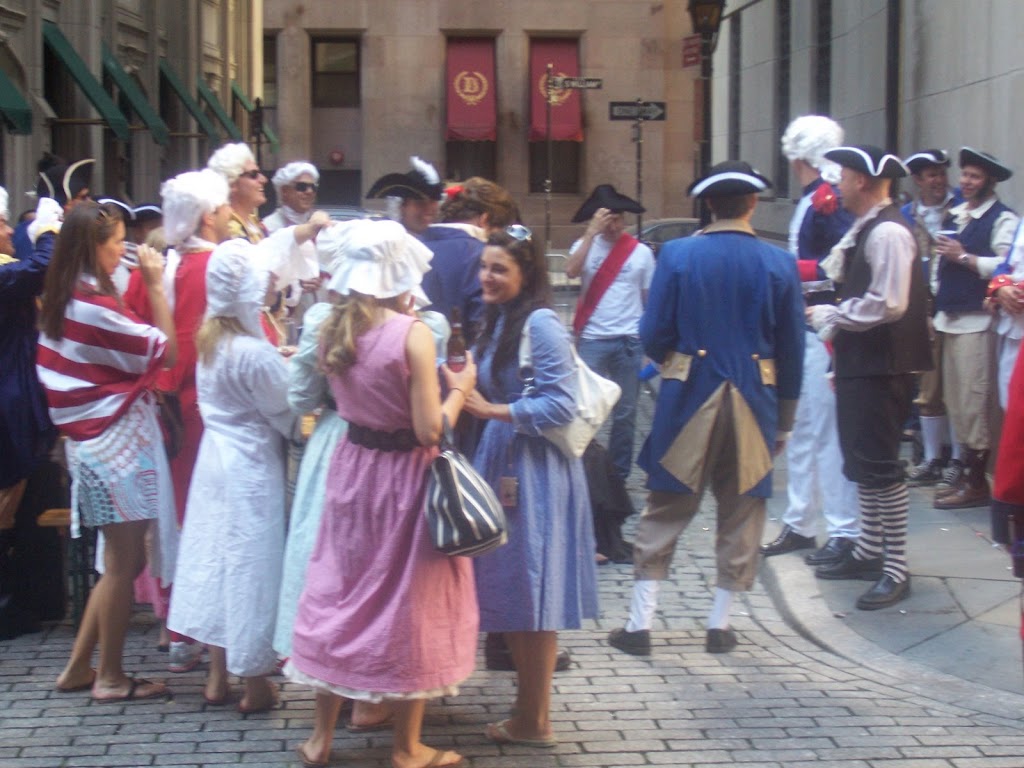
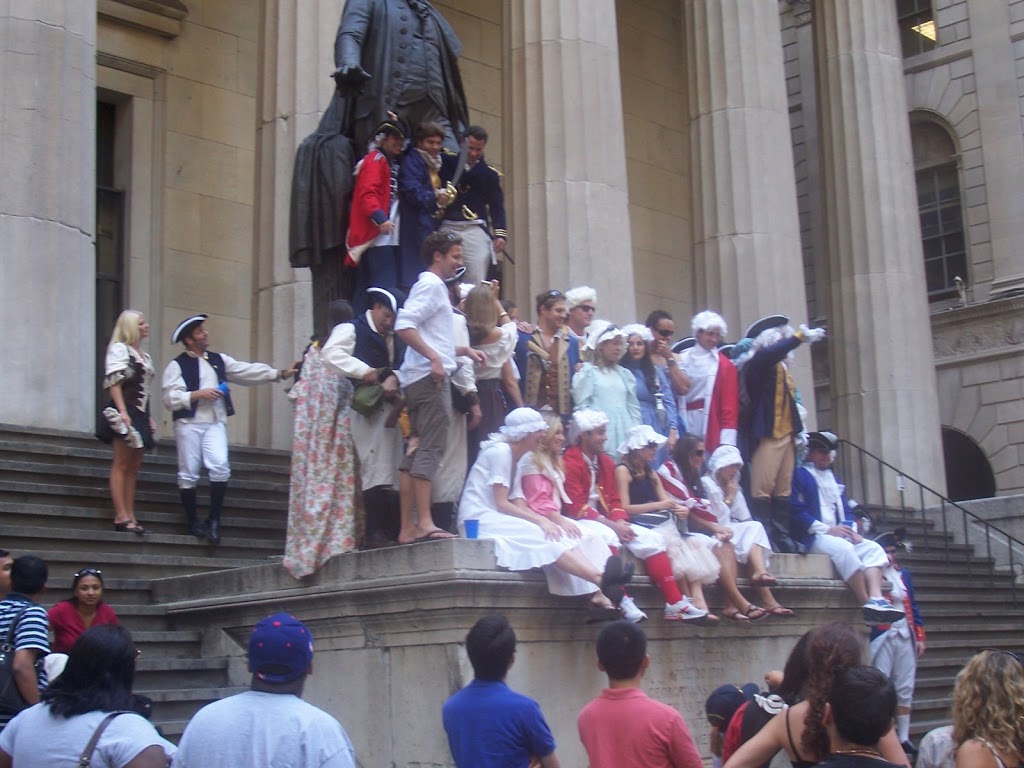
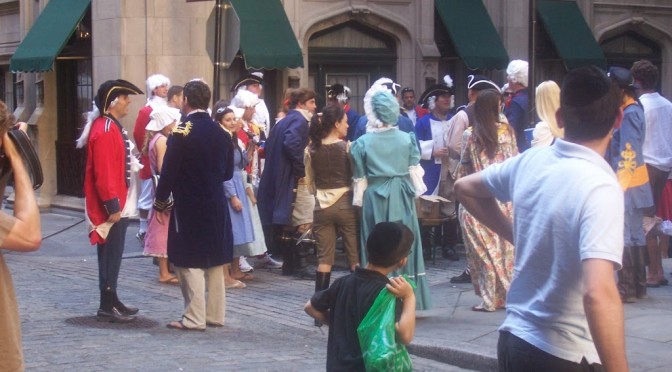
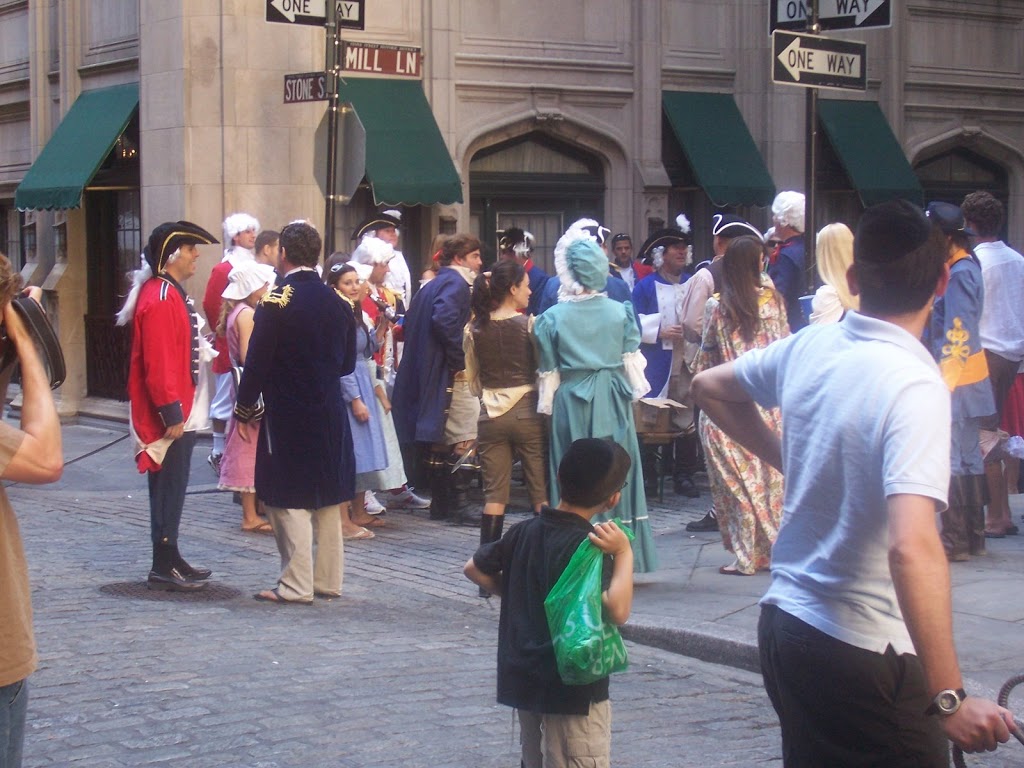
While winding through the financial district in lower Manhattan on Sunday (Sept 2), I made my way down Stone Street (one of the city’s oldest paths) and found this scene outside of Ulysses bar:

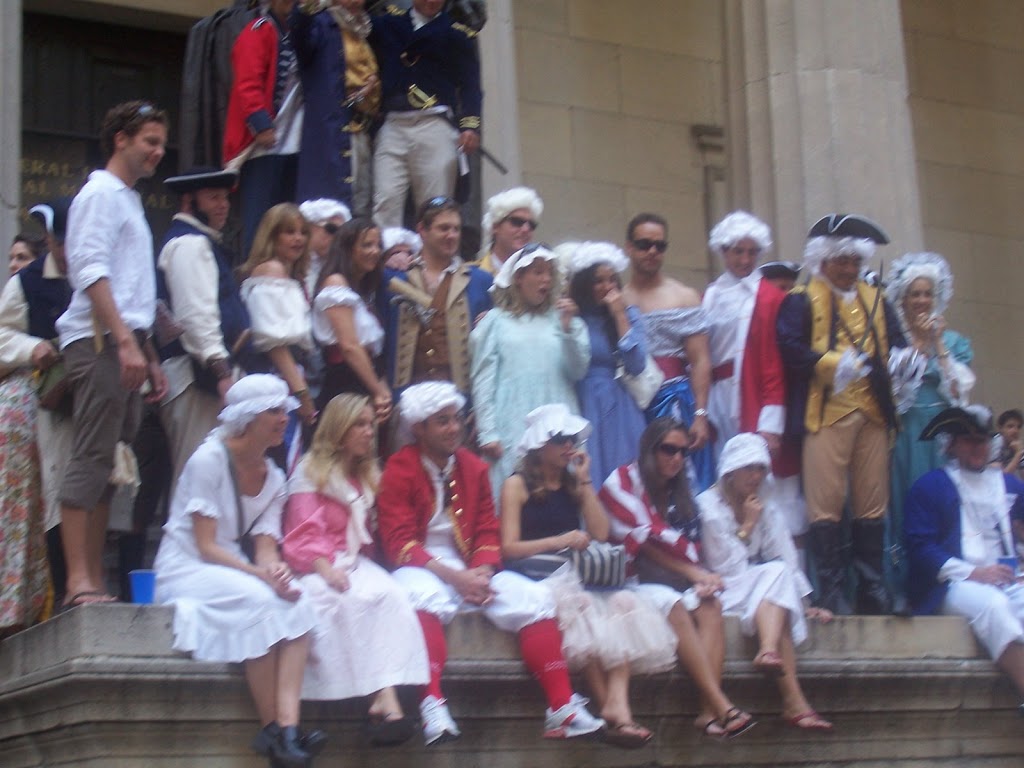
About 40 people, in various Colonial and period garments, were carousing in character and loudly carrying on like Revolutionary War heroes. Some of the other buildings on that street have been around since the 18th Century, so at least the location seemed suitable. And the owner of Ulysses also owns the Irish bars Puck Fair (near the Puck Building) and Swifts Hibernian (as in Jonathan Swift), so they’re clearly comfortable with some historical theater.

I apparently couldn’t get away from these folks, as shortly afterwards I ran into them at Federal Hall.

By this point, it was clear that our friends had liberally sampled from Ulysses’ many fine Irish ales and stouts. People were shouting ‘Huzzah!’ and starting up ‘USA!’ chants.

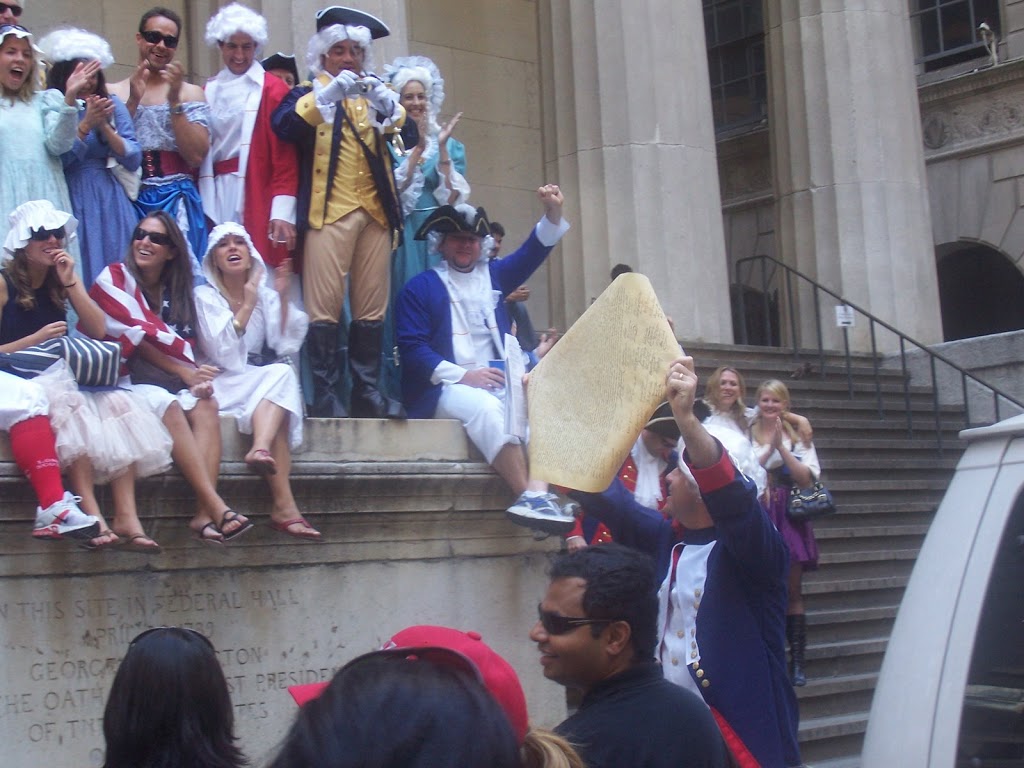
The reason for that soon became evident. A man strode out with a copy of the Declaration of Independence and read it to the crowd as if it were a new document. Which, on these steps, on July 9, 1776, it in fact was, by George Washington, reading from a copy from John Hancock.

It was because of this reading that the empassioned troops stormed down to Bowling Green and tore down the statue of King George and his horse, the pieces of which were scattered to the consternation of future treasure hunters. Our little group of re-enactors, however, stopped quite short of doing anything like that.

Im not exactly sure yet what the significance of the whole affair was (still calling around to ask). However I do know that it was at this building, during the summer of the first government of the United States, on September 2, 218 years previous, that the Department of the Treasury was formed.

FRIDAY NIGHT FEVER: Jackie 60


To get you in the mood for the weekend, every Friday we’ll be celebrating ‘FRIDAY NIGHT FEVER’, featuring an old New York nightlife haunt, from the dance halls of 19th Century Bowery, to the massive warehouse spaces of the mid-90s. Past entries can be found here

I was reading Vanishing New York’s piece yesterday on the absurd descent of condos and high fashion culture onto the Meatpacking District, into an area that still, well, processes meat. And it got me thinking of the days when that area was a lot less burdened with designer clothing stores. The days when its aesthetic was dictated not by fashionistas and the upwardly mobile, but by burly leathermen and transsexual prostitutes.

In the ’80s and ’90s, Meatpacking was host to some truly ‘alternative’ nightclubbing options. For the gay leather set, you had The Lure (featured in the controversial 80s Al Pacino flick Cruising), while straight folks with debauched inclinations had the Hellfire Club. The still operating Hogs & Heifers, with its mountain of discarded bras, made the East Village’s Coyote Ugly seem like a classic three-star restaurant. (Hogs has since lapsed into a camp tourist destination.)

But lording over the region was the dark and quirky Mother, a small, caverned club that found its niche as a freakshow outside the universe of the ’90s mega-clubs. And no evening at Mother quite resonated throughout the city as Jackie 60, the Tuesday night party of kooks and costume.

What set it apart from the mega-clubs was its unique sense of creativity and inclusiveness. In fact, its creators Chi Ci Valenti and Johnny Dynell specifically designed it to emulate the fertile spirit of late ’70s places like the Mudd Club (featured in our very first Friday Night Fever article).

According to Chi Chi, “We decided to create a place in the spirit of those smaller clubs. And when someone who used to go to a place like the Mudd Club walks in to Jackie and says, “This feels like those days,” well, that’s when I feel like we’ve really done our job.”

The two met at the Mudd Club and soon created a party together that took some of the neighborhood ideas (remote locale, S&M and sexual imagery) and combined it with striking costumes and themes, incorporating punk, drag and theater. They soon added British fashion designer Kitty Boots and choreographer Richard Move to the mix, and the flamboyant stage was set.

Unlike the spirit of exclusivity that possessed the monster doormen at big clubs, Jackie 60 drew a wide range of people, the only criteria being a flair for the dramatic — and the guts and confidence to exhibit it. As Dynell describes it, “For example, you never know what somebody is here. They could be anything. They could be straight. They could be straight to bed. At Jackie we have an expression: For every cup there is a saucer.”

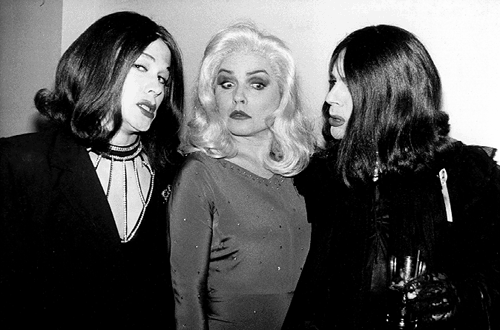
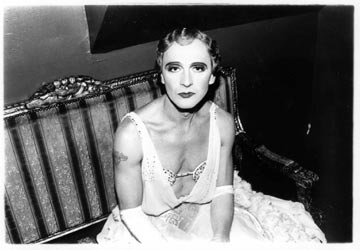
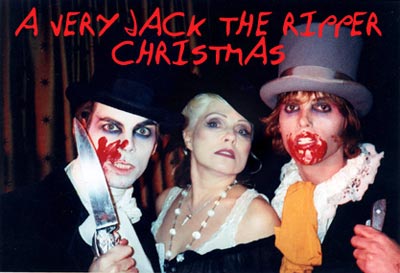
Frequent special guest Deborah Harry (seen in the pic at the top and below) being the exception, celebrities like Mick Jagger, Marc Jacobs, Jack Nicholson, and Robert Deniro came through and were barely noticed. How could you be noticed?

Along with a ‘classic dress code’ (attire within reason, basically), Jackie 60 frequently had an inspired weekly dress code. For example, on Bleak House night (yes, as in Charles Dickens) one must wear ‘Vivienne Westwood urchin-look’ with ‘gruel bowls and utensils’. You can just imagine what Klingon Women Night (an actual theme night) must have looked like.

The regular clientele came attired often in the theme of the evening — Rimbaud night, Hasidic hip-hop, Hooker’s Ball, even supermodel disasters night.

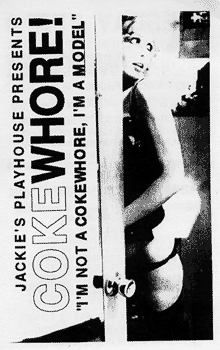
Jackie 60 even had a monthly poetry reading at midnight, with verse delivered from the most painted of lips. Satellite Jackie events included theatrical productions (with one written by Michael Musto) and spinoff parties (Click + Drag, a cyber themed soiree in the days before iPods).


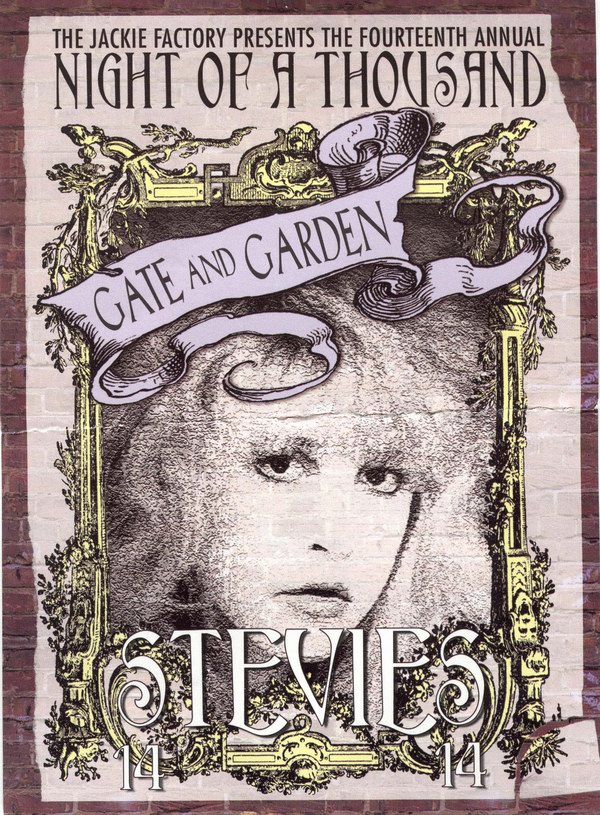
But what was easily their most celebrated event was the Night of a Thousand Stevies, a yearly gathering where hundreds of Stevie Nicks fans from around the country descended on that little hole in the Meatpacking District to worship their favorite songstress. Men and women, young and old, beautiful and not-so, for one night each year, the cobblestone streets were filled with swirling shawls and tambourines.

Jackie 60 closed on the last Tuesday of the 20th century, but the Night of a Thousand Stevies parties live on every May, as do other events in the Jackie 60 brand. In these days of nightlife homogeny, the kids at Jackie 60 just look better with age.

A loving tribute with tons of photos can be found here, or visit their official tribute site and one from Mother.

Categories
Podcasts

PODCAST: Coney Island – The Golden Age

The Coney Island that greeted vacationers and city folk in the years 1904 to 1911 was one of infinite imagination manifested in fantastic but cheaply built extravaganza.

A world of amusement starts here in New York — Coney Island, the world’s oldest and strangest collection of amusement parks, a mishmash of sideshows, concession stands, gambling halls, new-fangled rides and luxury hotels. Take a daytrip with us back to the early days of Coney Island. Hold on to your hat!

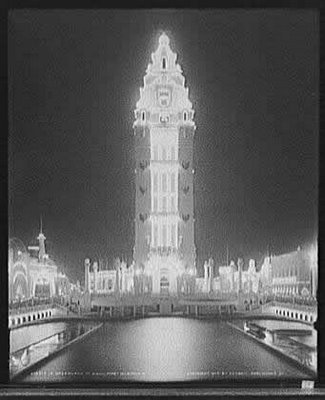
Part of what made the experience of Coney Island’s cheap, often disposable thrills was its meshing of new technology, human invention, and reactions to a strict moral society. It was socially acceptable debauchery, literally plugged in to the experience of a new century. The advent of electricity brought visitors out into the salty air until late at night. Benches were often sent slight electrical charges to make sure people didn’t sit around all day, not spending money! With electricity used more aestheticly as it was in Luna Park (right), they could light up the sky like Oz. The name Luna Park paid homage to A Trip To The Moon, a ride created by its parks owners Frederick Thompson and Elmer “Skip” Dundy, which in turn was certainly a close approximation of the French 1902 silent film classic by Georges Méliès.

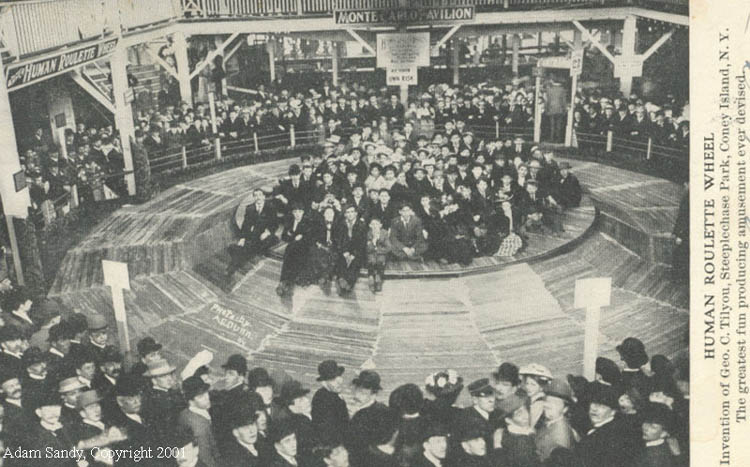
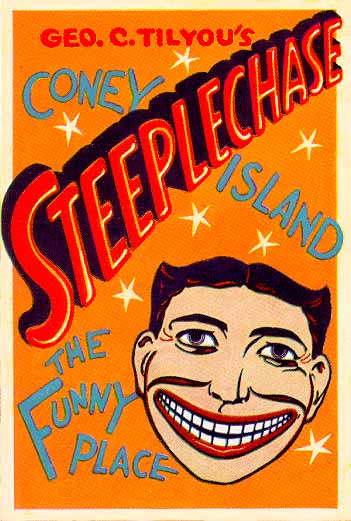
Over at Steeplechase Park, meanwhile, it was more centrifugal and gravitational forces that brought out the crowds, such as the Human Roulette wheel below. I dont know, there’s just something about this that looks profoundly unfun to me:

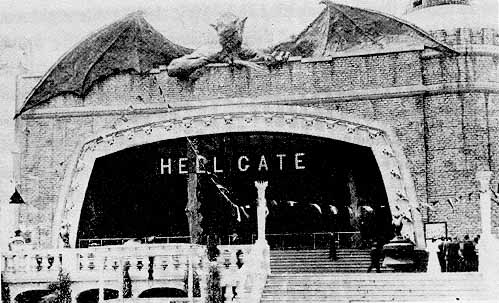
One of the more unusual amusements at Dreamland was Hell’s Gate, which emulated via the guise of starched Victorian morality the possible geography of Biblical Hell. Perhaps unsurpring, it was the combination of a burst lightbulb and a tar bucket inside Hell’s Gate that started the fire that eventually burned all of Dreamland to the ground in 1911, burning for 18 hours.

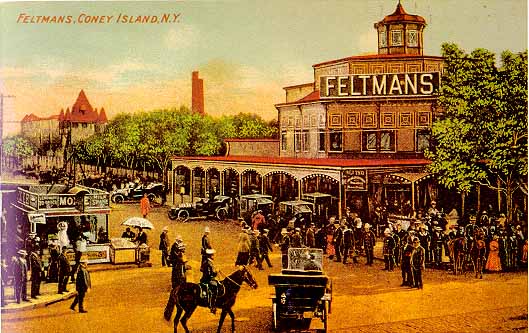
The proper entrepreneur who could maneuver through the early days of Coney Island corruption and make a financial killing. Take the inventer of the hot dog, Charles Feltman, who launched restaurants and hotels from the success of his sausage in a roll carts. This fancy restaurant, a favorite of vacationers of all social classes, sat where modern Astroland sits today:

(Not to spoil anything from our next episode, but in 1915, an employee of Feltman’s Restaurant Nathan Handwerker ate free hot dogs all summer, then devised an idea….)

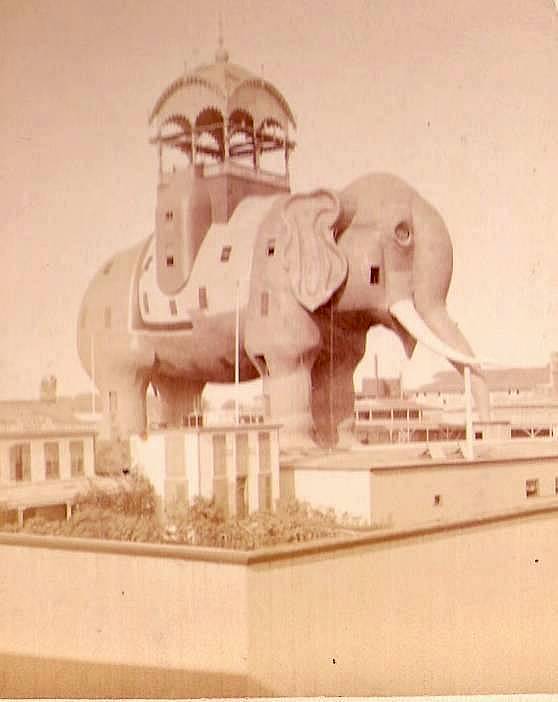
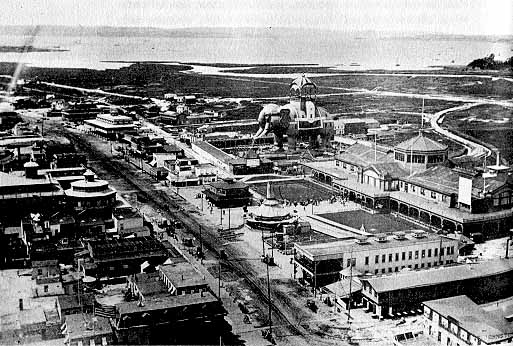
Why stay in a luxury hotel when you can just sleep in a giant elephant? This unusual lodging was built in 1882, just a few steps from the world’s first roller coaster, the Switchback Railway, and you could view the beach revelers via windows that served as the elephant’s eyes. One leg featured a small cigar store, while the back legs had a staircase that led to your room. Perhaps because this doesnt exactly look like the most comfortable revolution in hospitality, the hotel soon became a favorite for prostitues, so that ‘seeing the elephant’ soon became a rather naughty euphemism. Our shabby pachyderm was mercifully put out of its misery in 1896 by fire. I love this aerial view of the area, with the Elephant lording clumsily over the landscape, well before the Island’s peak days a few years later.
Elephants in general didnt fare so well in Coney Island. Then there’s the case of Topsy, the once friendly elephant at Luna Park who went wild and killed three men. Her owners decided to put her down, attempting to poison her with cyanide-laced carrots, to no avail.

Enter Thomas Edison, who was trying to prove the dangers of his rival George Westinghouse’s alternating electrical current to his own ‘safe’ direct current. He did this by going around the country and electricuting dogs and cats as a demonstration. So when he heard that the owners of Luna were trying to off their elephant, he couldnt refuse.

They even made the ‘demonstration’ the topic of a silent film, which you can see here.

By the way, there are so many resources online about early Coney Island history, that I invite you to check a few of these wonderful places out yourself:

Coney Island History Project
Amusement Parks history
Coney Island History Site

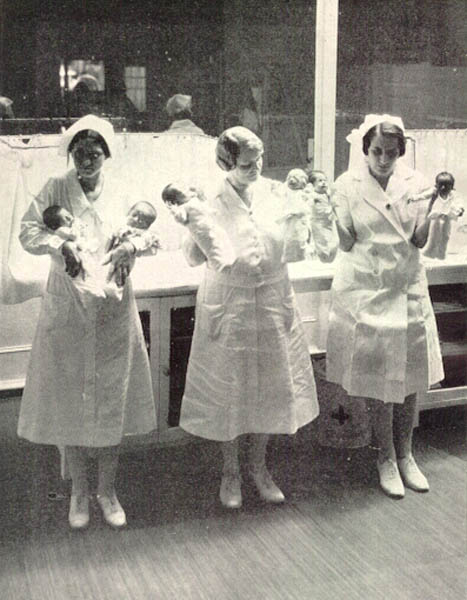
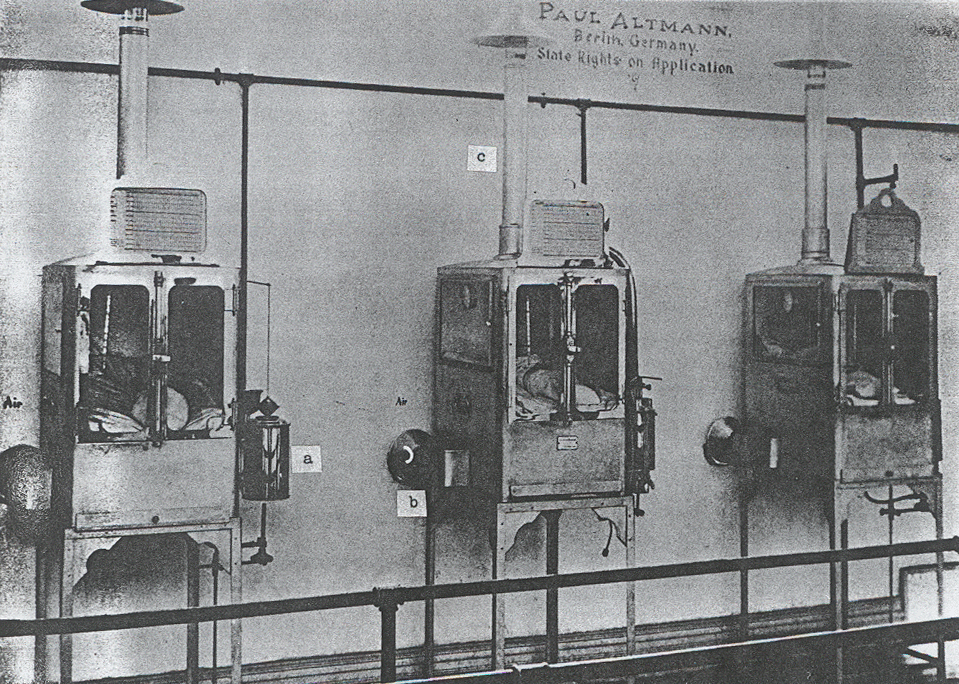
And in case you don’t believe me about that sideshow exhibit involving premie babies in incubators, here’s a shot of some of the nurses displaying the stars of the show, followed by a look at the actual incubators. The exhibit actually ran for decades in Coney Island, until 1945. You know, because there’s nothing more entertaining than watching a newborn infant struggling to survive:

FRIDAY NIGHT FEVER: The Electric Circus


To get you in the mood for the weekend, every Friday we’ll be celebrating ‘FRIDAY NIGHT FEVER’, featuring an old New York nightlife haunt, from the dance halls of 19th Century Bowery, to the massive warehouse spaces of the mid-90s. Past entries can be found here

No Chipotle burrito and taco restaurant has ever made me as sad as the one that sits on St Marks Place. I can’t be overdramatic and say that every instance of gentrification is a bad one, but this particular case, standing next door to a gourmet grocery store, is a bit more notable than most.

For it stands in the place a former clubhouse and dance hall built all the way back in the 1830s but reached its culture preeminence just over 40 years ago.

The building’s backstory sets a juicy notoriety for its later events, as it was a rowdy 19th century meeting place for political and ethnic dissents, throwing yearly carnivals in the street (often mocking the political giant of the day, such as Boss Tweed) and sparking at least one bloody gunfight in 1914 between rival Italian and Jewish gangs!

It sat through some of the 20th century as the Polish National Home (Polski Dom Narodowy), a community hall and restaurant for Polish New Yorkers (whose influences can still be seen all around this area of the East Village). At a certain point in the 1960s, part of the space was opened as a small bar by Stanley Tolkin, whose watering hole Stanley’s Bar at 13th and Ave B was already a huge magnet for the bohemian set.


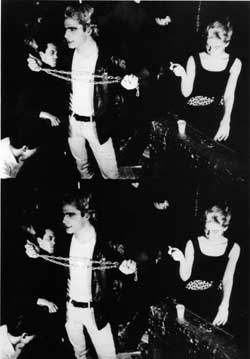
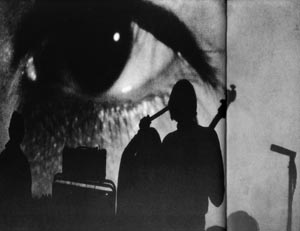
The bar at St. Marks Place attracted the same crowd and, now being 1966, eventually drew the interest of Andy Warhol who, with his film-making collaborator Paul Morrissey, rented the upper rooms from Tolkin, fancied the original Polish name (Andy was of Polish descent) and its new moniker “the Dom,” moved in on April 1966 for a series of legendary events he would collectively called “the Exploding Plastic Inevitable.”

It became the East Village fuse box for Warhol’s talents and those of his entourage, in particular the Velvet Underground and Nico. The dazzling synthesis of psychedelica and glamour, of the Velvet’s strange atmospheric music and Warhol’s performance displays of lights and costumes, immediately attracted the scenesters to this odd little street — according to the New York Times, “everyone from hippies to Tom Wolfe and George Plimpton” — way before St. Marks would make its reputation in the 1970s with the punk scene.

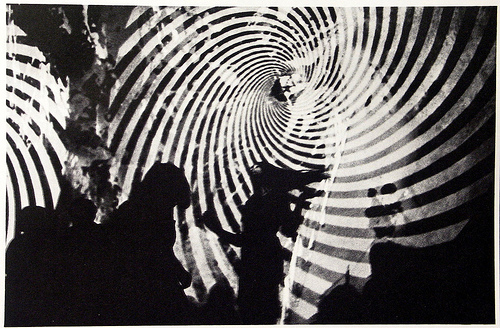
Warhol moved on, and the name would change for a short time to the Balloon Farm. The next year it was sold to Jerry Brandt, who decided to take the avant garde (but rather elitist) Warholian approach and mainstream it into the Electric Circus. The new incarnation helped  define the wild visual and colorful aesthetic of the hippie 60s, a virtual overload of light machines and live music. Sometimes it took its name seriously:

“A young man with the moon and stars painted on his back soars overhead on a
silver trapeze, and a ring juggler manipulates colored hoops and shaggy hippies
who unconcernedly perform a pagan tribal dance…Stoboscopic lights flicker over
the dancers, breaking up their movements into a jerky parody of an old-time
Chaplin movie.”

— Radical Rags: Fashions of the Sixties (New York:
Abbeville Press, 1990)

And while audiences pulsated to the swirling lights, in the throes of LSD, bands would materialize onstage, often in long jam sessions. It should be no surprise to find out that early incarnations of the Grateful Dead and the Blue Oyster Cult got their start here.

Much as the psychedelic revolution itself died out once the next decade started, so too did the Electric Circus. In March 1970, a bomb exploded on the dance floor (!) injuring 17 people, which couldn’t have done much for its waning popularity.

It was eventually turned into a church-run craft center and a community center for substance abusers and the homeless through the 80s and into the 90s. As gentrification swept through the East Village, most of St. Marks remained intact; you can still find rows of punk tee-shirt shops, tattoo and piercing parlors, St. Marks Comics and Kim’s Video.

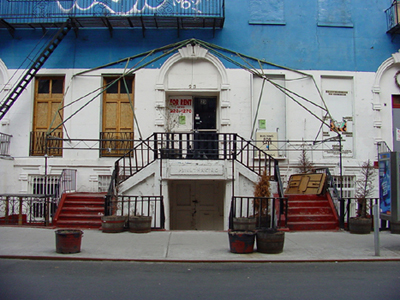
What you can’t find is the remnants of the Electric Circus. The building is now the aforementioned Chipotle and a grocery store. And in one corner — in a move that is either a throwback to its old days or the biggest slap in the face in the world — is a gift store that sells branded products from CBGB’s, another legendary East Village rock club that has since been closed.

Here’s what it looked like when I first moved to the city:

(I apologize, I have a few links to post where I got some of my information, but I can’t do it from this computer. However some information was obtained at the excellent New York blog: http://streetsyoucrossed.blogspot.com. I’ll post the links when I get back on Monday. Have a great weekend!!)

Categories
Uncategorized

The Headless Horseman and the New York elite


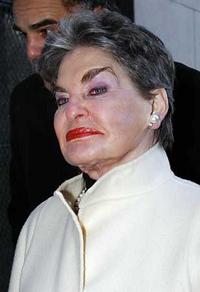
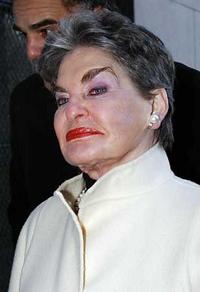
Another colorful New Yorker died earlier this week, the Cruella Deville of real estate, Leona Helmsley, the Queen of Mean. With her passes a dynasty of wealth and power derived from her husband Herman, whose properties included the Empire State Building, the Flatiron building and more than 30 hotels.

Brooke Astor, elder survivor of the powerful Astor family, passed on the week before, and she and Leona have many things in common. Oh sure, Brooke was our fair city’s greatest philanthropist, and later the embodiment of a sick old matron taken advantage of by her progenitors, while Leona was a snarl-lipped, homophobic tax evader who encapsulated the follies of New York greed unlike any other. But you can’t go a few blocks in this city without seeing either of their family influences.

Another thing they have in common is that they’re buried not more than a couple hundred feet from each other. And that’s not even the strange part. Let’s throw in a little Tim Burton twist. They’re both buried at the Sleepy Hollow Cemetery which, despite its creepy legend, has become the ‘hot’ resting place for the richest dead New Yorkers.

To tie this ever further into our week here at the Bowery Boys, they join another well known New Yorker, the man who financed the Chrysler Building, Walter Chrysler.

The village of Sleepy Hollow is just thirty miles north of Manhattan and might seem a strange place for so many of New York’s great power players. Others interred there include moguls (Andrew Carnegie, William Rockefeller, Henry Villard), entrepreneurs (Elizabeth Arden) publishers (Whitelaw Reid), and film producers (Mark Hellinger).

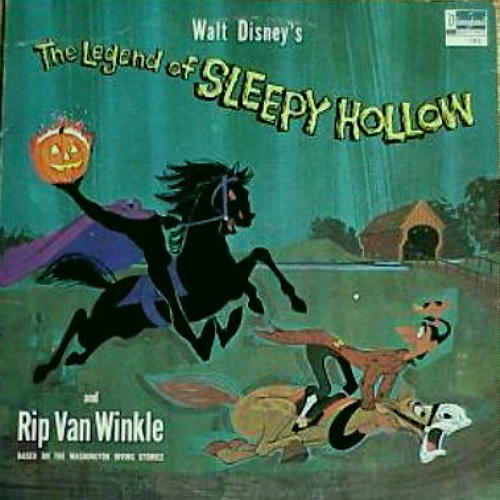
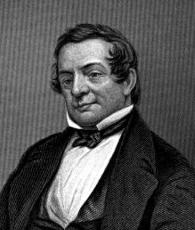
And let’s not forget its most famous resident, Washington Irving. Irving is actually buried next door in the Old Dutch Burying Ground, a far creepier place and the purported final home of many of the people who inspired the tale of Ichabod Crane (not to mention the ground in which the Headless Horseman supposedly appears!) But Sleepy Hollow Cemetery was Irving’s idea, and it’s because of his original plan that the burial ground has attracted so many rich and famous.

I think it best to include here the text of a letter Irving wrote to a newspaper editor in 1849 regarding this particular plot of land, for it encapsulates the cemetery’s appeal:

“I send you herewith a plan of a rural cemetery projected by some of the worthies of Tarrytown, on the woody hills adjacent to the Sleepy Hollow Church. I have no pecuniary interest in it, yet I hope it may succeed, as it will keep that beautiful and umbrageous neighborhood sacred from the anti-poetical and all-leveling axe. Besides, I trust that I shall one day lay my bones there.

The projectors are plain matter-of-fact men, but are already, I believe, aware of the blunder which they have committed in naming it the “Tarrytown,” instead of the “Sleepy Hollow” Cemetery. The latter name would have been enough of itself to secure the patronage of all desirous of sleeping quietly in their graves.”

While Irving certainly divined the tranquil beauty here as a sanctuary of peace, he may not have realized that his presence nearby — and the legacy of his tale “The Legend of Sleepy Hollow” — would have upped the value of the real estate, something Leona would have been proud of.

Mrs. Helmsley built a massive 1,300-square-foot mausoleum for herself and her husband, whose remains she moved from the Woodlawn Cemetery in the Bronx.

She needed special permission from the village to build the $1.4 million tomb, which features Manhattan-themed stained glass windows, Japanese maple trees, and 12 Greek columns. It’s almost as if she meant to dwarf the actual Rockefeller estate which is nearby. Some of her fellow multi-millionaires must be rolling in their expensive graves.

By the way, there’s actually another Sleepy Hollow Cemetery in Massachusetts that also has an impressive lists of permanent guests — Nathaniel Hawthorne, Louisa May Alcott, Ralph Waldo Emerson and Henry David Thoreau .

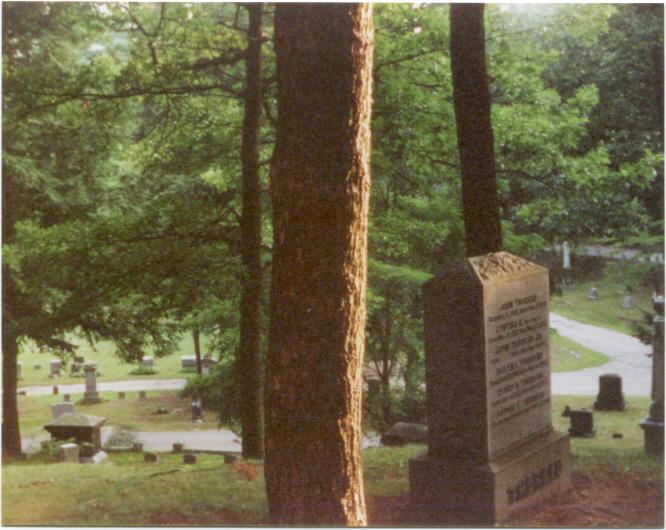
Here’s a peek at Irving’s Sleepy Hollow, which I highly recommend visiting, naturally around fall:

Categories
Podcasts

PODCAST: The Chrysler Building

Ah, the classic Chrysler Building! She’s got style, glamour and all that jazz. But what magical surprise did she spring on New York in October of 1929? Join us as we tell the story of New York’s most beautiful art deco treasure.
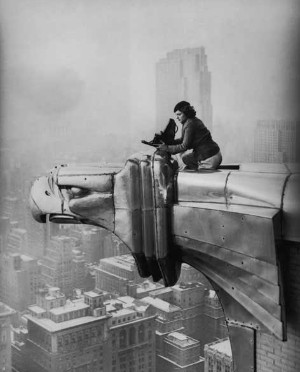
The picture above is of famed photographer Margaret Bourke-White, who had an studio on the 61st floor of the Chrysler. Her iconic photographs of the building helped create the building’s mystique as a sleek, magical tower. Of course later, as a correspondent for Life Magazine, she became one of the most intregal documenters of World War II, particularly the bombing of Moscow.

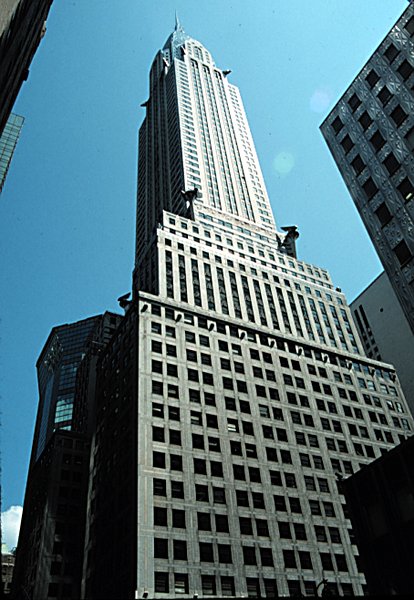
One unusual aspect of the Chrysler building is that it’s ‘something you look up at’. At street level and for several floors up, its a rather drab structure. In fact there are many buildings nearby that exhibit a far more striking art-deco style at street level, including the Chanin Building just across the street, and the Daily News Building a block away.

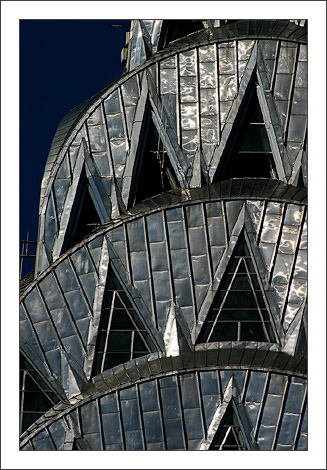
But the top of the Chrysler more than makes up for it, with its silver spire and repetitions of triangular sunbursts draped in silver nickel steel (a specialty metal called Nirosta designed by the German company Krupp). The real punch of the Chrysler at night comes with these triangular windows, with their almost crown-like appearance, which pierce the night and create truly dramatic scenes on foggy evenings.

Photo at right: Courtesy Frank Jermann, Voelzberg, Germany

The Cloud Room, a swanky nightclub and speakeasy in the 30s, occupied the top floors until the 1970s. As with many things in New York at that time, the building fell into disrepair in the 70s and 80s; thankfully much of its luster has been returned thanks to the current owners Tishman Speyer. Given the recent trend of restoring New York landmarks to their former glory, might we see a return of the Cloud Room in the near future?
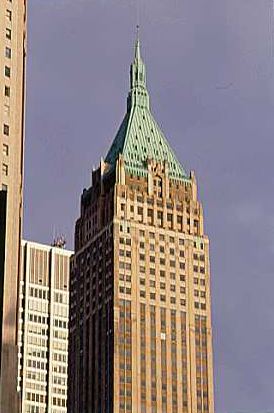
Van Alen was racing to build the Chrysler Building before his former estranged business partner H. Craig Severance finished with the building down at 40 Wall Street. Severance finished first, but Van Alen stole his thunder by erecting the Chrysler spire which pushed its height above 1,000 feet.

The 40 Wall Street building, still impressive but far less ornate, has had a rather rocky history. Referred to as the “Crown Jewel of Wall Street,” it held the title of world’s tallest building for all of four days. At one time known as the Bank of Manhattan Trust Building, it was hit by a Coast Guard plane in 1946, killing four people. In the 90s it was bought by Donald Trump, who funded extensive renovations and turned it all to commercial space. It’s actually called The Trump Building now. The American Express headquarters is housed here. According to Real Estate Weekly, 40 Wall Street is the tallest mid-block building in the world, which I guess has some sort of cache.

Incidentally, a former 40 Wall Street building which stood in its spot was office to the first president of the New York Stock and Exchange Board when it was first organized in 1817.

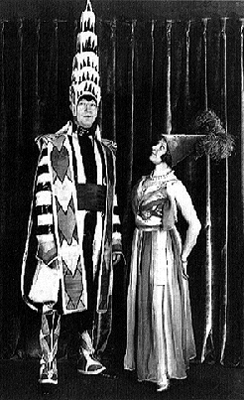
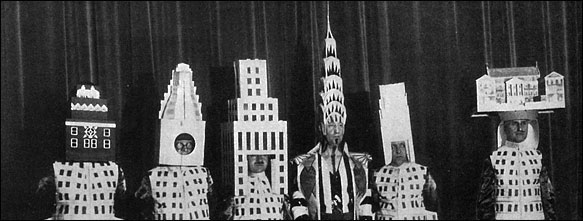
As for the Severance’s former partner, Van Alen did bask in a brief fame as architect of the Chrysler, despite Walter Chrysler’s refusal to pay him the remainer of his commission for the project due to bribery. Perhaps strangely, his most circulated photograph actually has him dressed up as the Chrysler Building. The event was the 1931 Beaux-Arts Ball for the Society of Beaux-Arts Architects. Van Alen was a student in Paris’ École des Beaux-Arts and was a regular attendent at these high-class and often rowdy functions. This New York Times article gives a thorough recap of the event. But just to put it in perspective, many architects came that year dressed as the buildings they created, including William F. Lamb as his newly constructed Empire State Building. The jovial bunch is featured below:

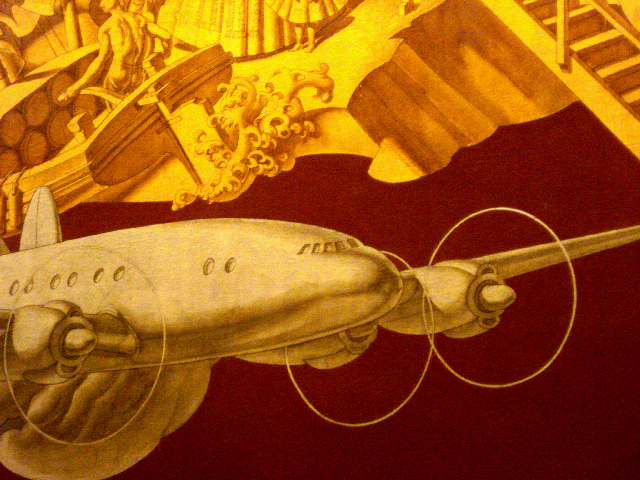
And finally, I apologize for giving short shrift on the podcast to the work of Edward Turnbull, who painted the brilliantly colored ceiling mural in the lobby of the Chrysler Building.

A mixture of Sistine Chapel magnificence and perhaps a bit of prescient Communist-esque propaganda, “Transport and Human Endeavor” is actually one of the largest indoor murals in the world, displaying an enthusiasm for American progress and mechanical ingenuity. Lit in the warm glow bouncing off the marbled wall and oak floor, the mural hides many fascinating details full of blimps, airplanes and automobiles. Just make sure you dont stumble over one of the building security guards as you look upwards.

You can find another lovely picture of it here

All-Blogs.net directory

Categories
Uncategorized

UNUSUAL NYC MUSEUMS: History Underground

Our tribute to an off-the-beaten-path museum or landmark that you may not know about. Instead of MoMa, why not try out one of these places? Past entries in this series can be found here.

Okay, I know I’m stretching when I call the NYC Transit Museum ‘off the beaten path’. Its advertised in every available form of transit, and city guides all feature it. However what makes it unusual is the format in which they present their collection.

First of all, its actually in a subway station, the former Court Street station of the Fulton line. Built in 1936, it was in service for all of ten years, closed because many trains are already available in the area; you can catch the 2, 3, A, C, E, F, B, D, N, 4 and 5 trains within just a few blocks. So yeah, they didn’t need it. It remained unused until the museum opened in 1976.

Like all museums I particularly fancy, the Transit Museum has an awkward, slightly out-of-date charm to it. Partially because the newest addition — On the Streets: New York’s Trolleys and Buses, featuring interactive displays — is situated last, you get an immediate assault of nostalgia, both in the things presented and in how things are presented.

This isn’t a complaint. Each exhibit should have its own feel. You go immediately into Steel, Stone & Backbone: Building New York’s Subways 1900-1925, displaying photos and placards in a low-ceilinged display to give you (perhaps too well) that claustrophobic feeling of digging a subway tunnel.

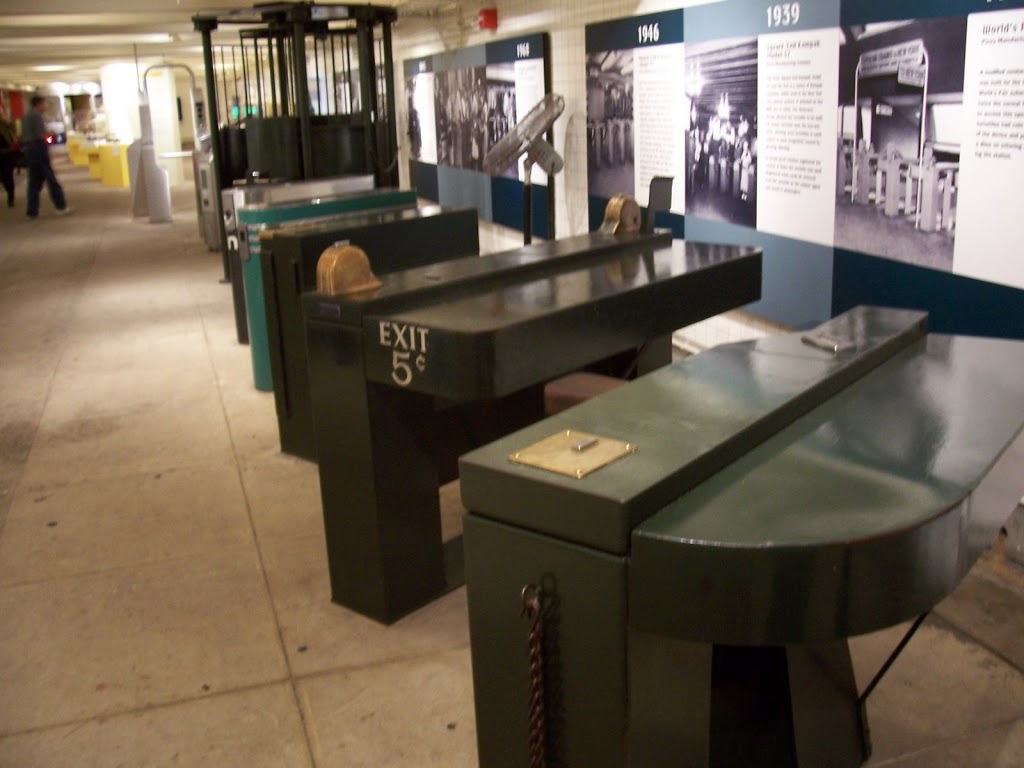
Things open up considerably from there. Waiting outside is a depiction of tokens through history, as well as various styles of turnstiles:

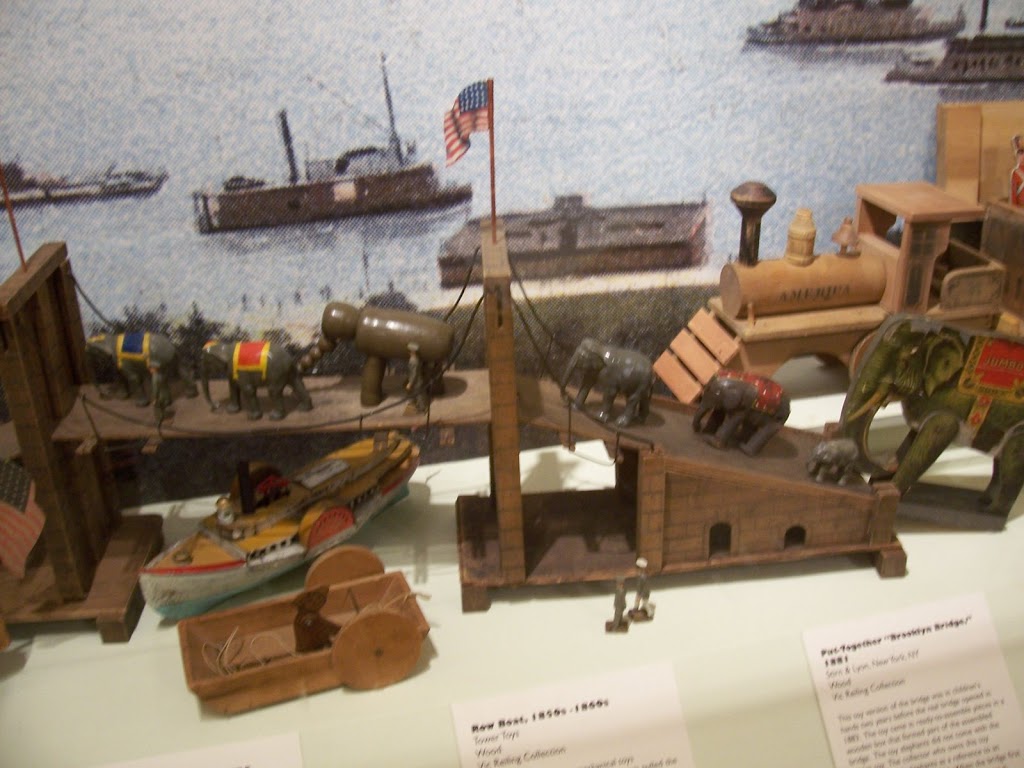
On the lighter side is a fun display of children’s transit-themed toys throughout past two centuries. Here’s one that must have delighted some kid with a penchant for the circus:

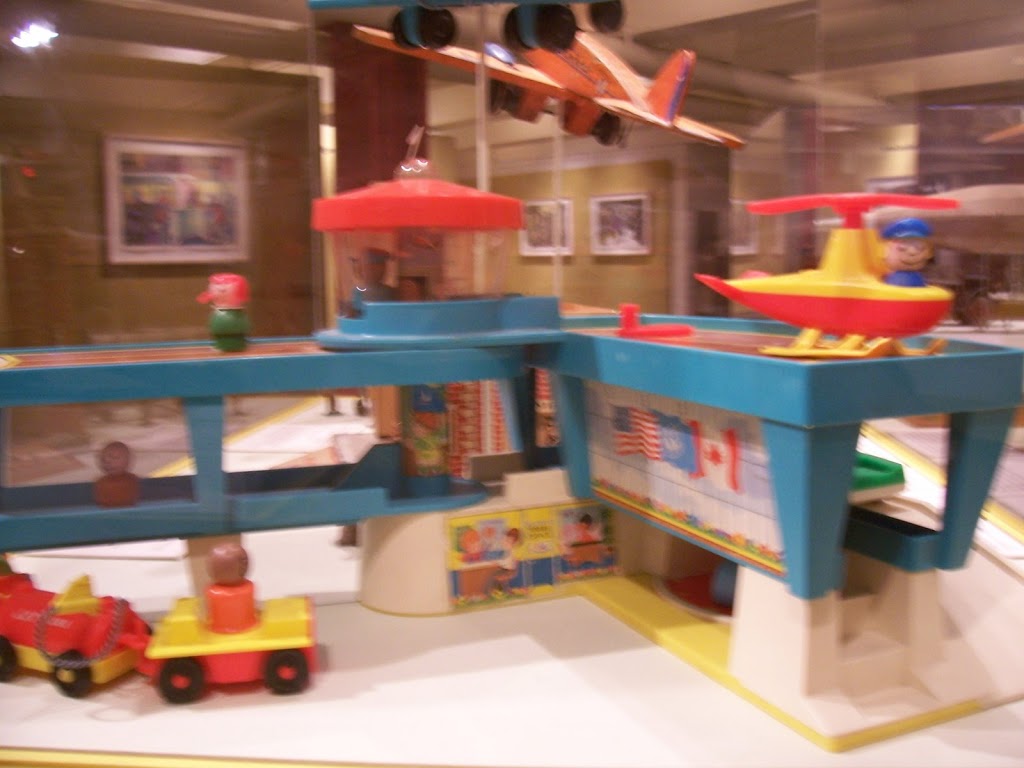
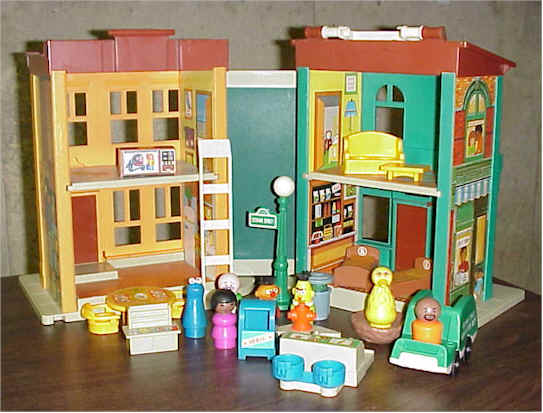
To my surprise, I discovered some artifacts that I could easily have found in my parents garage. (NOTE TO TRANSIT MUSEUM CURATOR: I’m pretty sure my folks still have my Fisher-Price Sesame Street scene if you need it).

After briefly perusing the exhibit on the Triborough Bridge and some transit-themed paintings, I was ready for the really fun stuff. On the Streets is a particularly kid-friendly display, with sections on city smog, a timeline of horse-drawn conveyances, a day in the life of a city bus driver, not to mention a real live city bus without chewing gum on the seats!

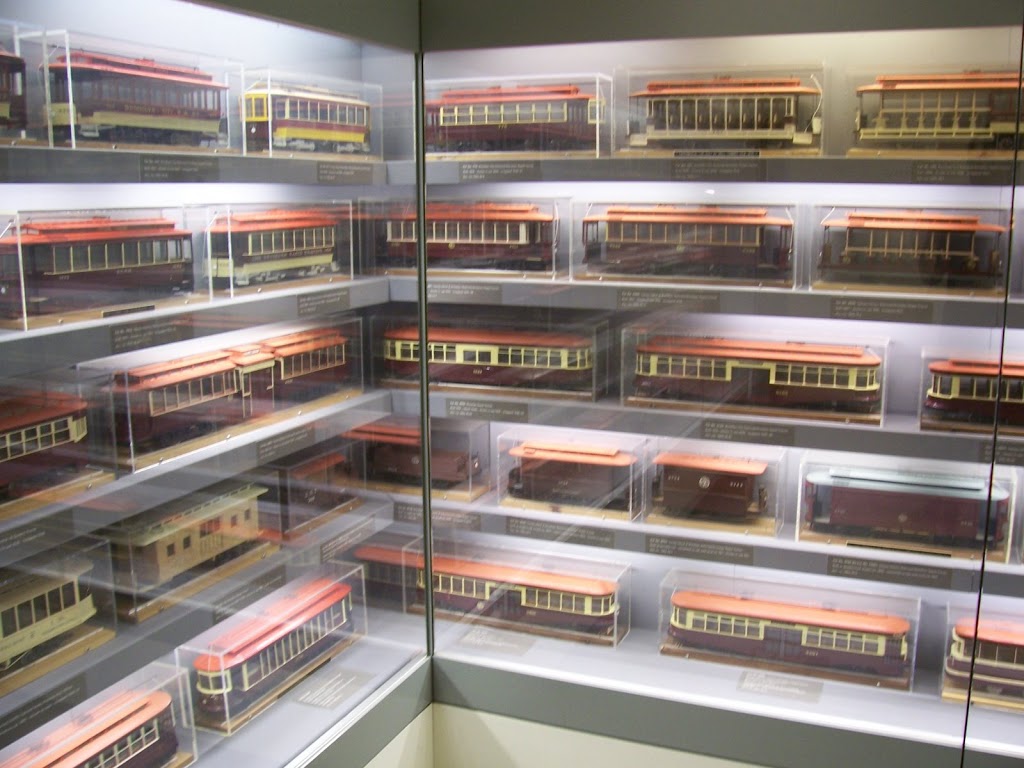
For some reason I was totally transfixed by a display of mini-traincars, which appeared to be more an artistic installation than an actual historical display:

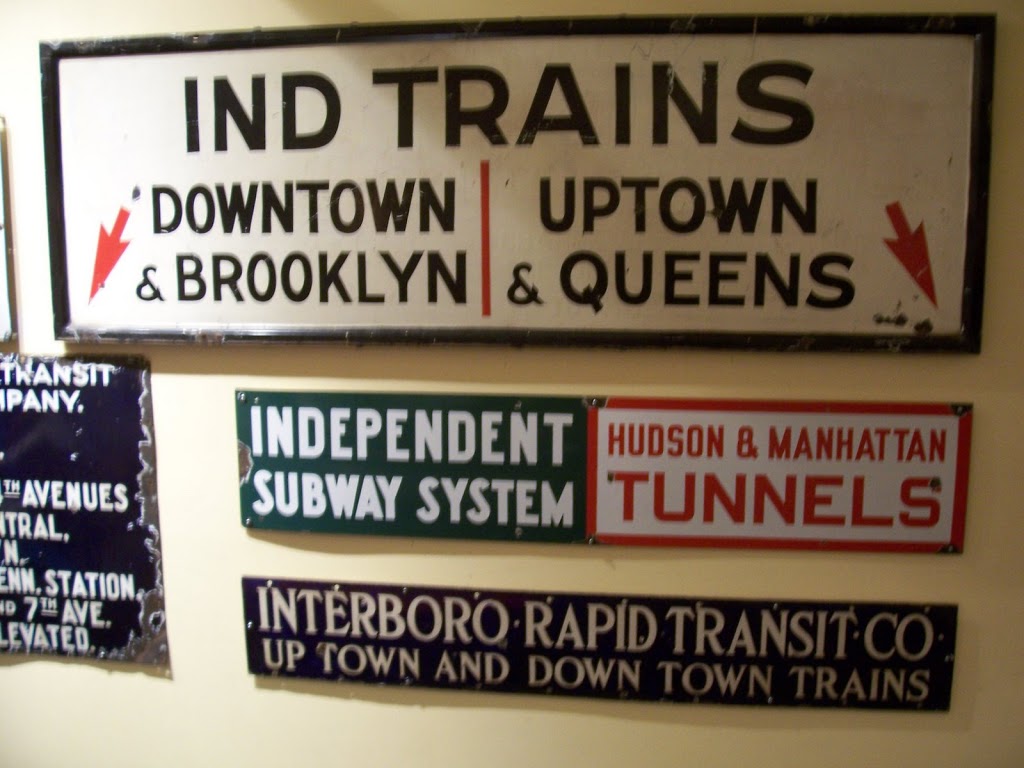
Past the buses and trolleys is a room full of tables (presumably for kids parties) and walls of old signage dating from the first subways. As a geeky lover of fonts and designs, I wanted to snatch some of these off the wall and take them home with me:

Easily the Transit Museum’s best feature, the ‘sexiest’ part — worth the cost of admission alone (a whopping five bucks!) — are the presentation of 19 original subway cars, from the very first one up to the 1980s. You actually go down into a subway tunnel, and there they are lined up.

You don’t think that going in and out of empty subway cars would be all that fun. But oh, my friends, you would be wrong.

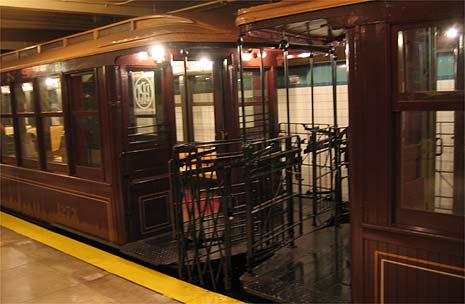
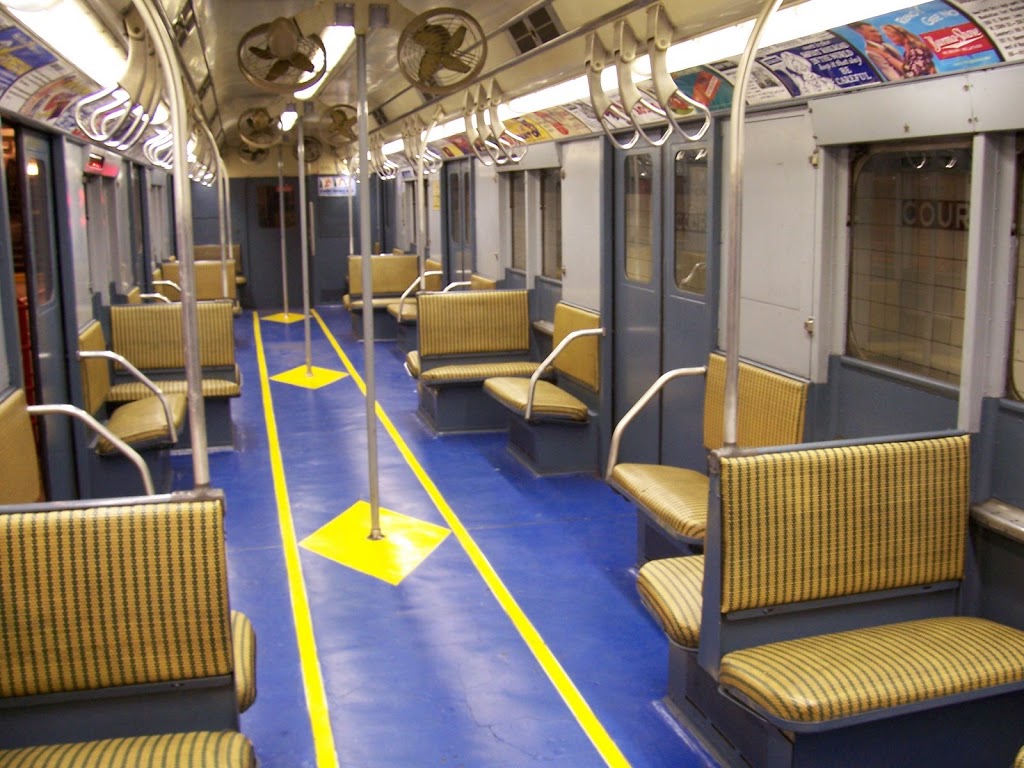
Every decade apparently had a color scheme they thought would be pleasing and natural to the morning commuter. For instance take this car from the 1940s:

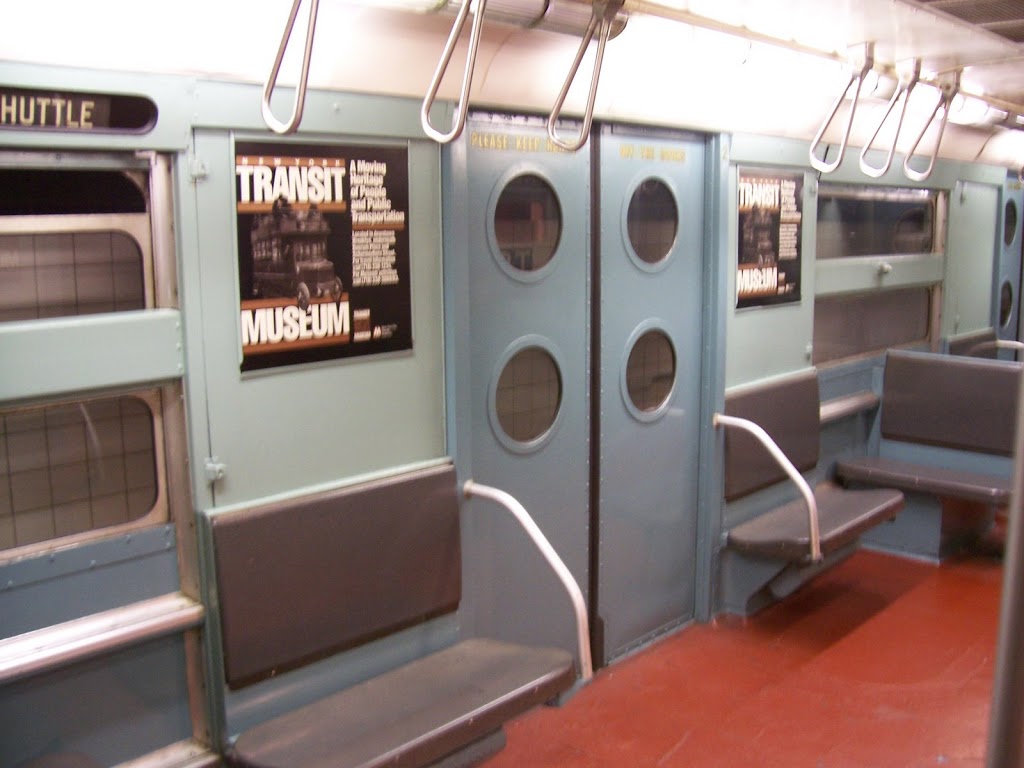
Each car is decorated with advertisements from the era and each has been preserved excellently. All they’re really missing is graffiti and a weird smell.

The cars from the 70s were of a particular treat, as with a few alterations, they could have been used on a 70s sci-fi television show like Buck Rogers:

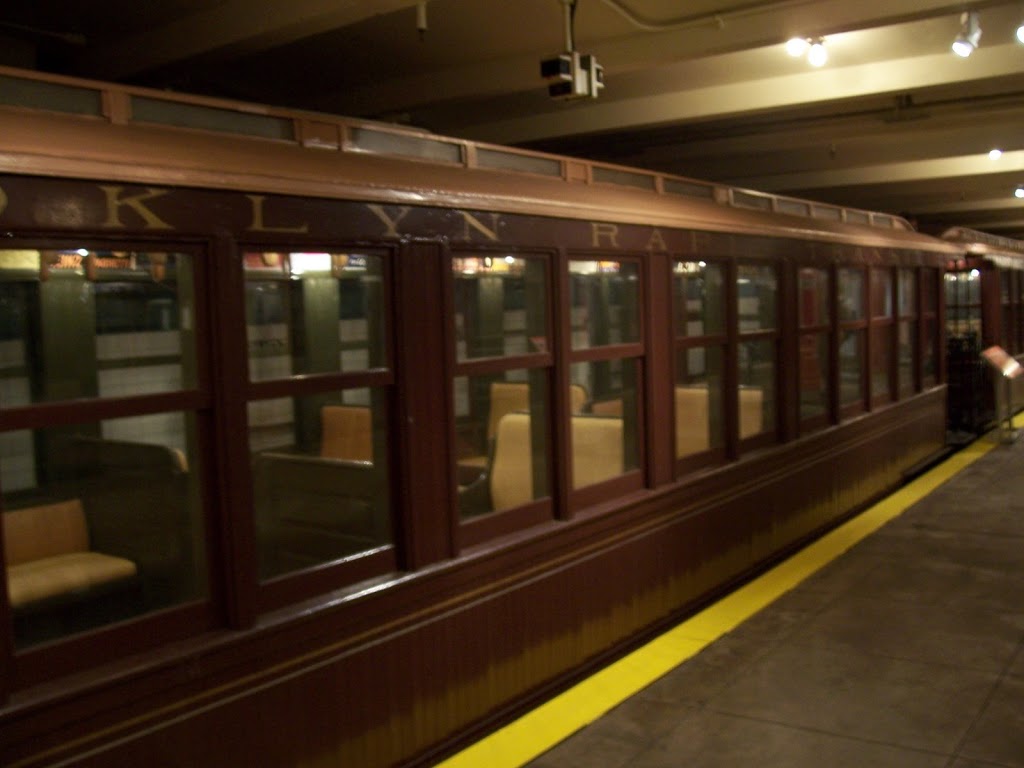
You also realize how perceptions of comfort have had to cave to the necessities of maintenance. Take this view of one of the first train cars ever used, from 1904. The seats inside were comfy and plush, and the entire room had a feel of your grandmother’s parlor.

It’s for this reason that I think life-long, jaded New Yorkers would get a kick out of the Transit Museum, and why it’s a must stop for visitors. Its a fitting tribute to the biggest, and one of the oldest, transportation systems in the world.

Most unintentionally funny part: voice-over announcements of events at the museum are as muffled and unclear as any service change in the regular subway!

Check here for information on hours and direction.They also have an easily accessed annex at Grand Central Station, although it clearly doesnt have all the subway cars.

FRIDAY NIGHT FEVER: The 300 Club


To get you in the mood for the weekend, every Friday we’ll be celebrating ‘FRIDAY NIGHT FEVER’, featuring an old New York nightlife haunt, from the dance halls of 19th Century Bowery, to the massive warehouse spaces of the mid-90s. Past entries can be found here

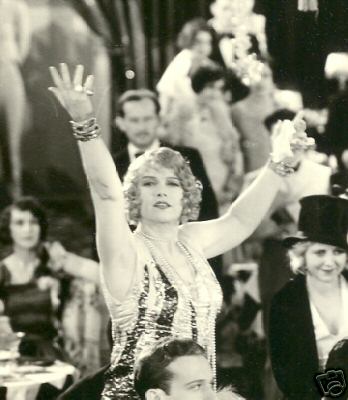
We’re reaching way back for this week’s entry, to the heyday of New York nightlife, the 1920s, when prohibition hardly prohibited anything. The underground speakeasy The 300 Club at 151 W. 54th Street was one of the most successful, despite being raided many, many times, and all because of one scrappy, lovable dame. 

Ladies and gents, I give you New York’s reigning queen of nightlife, Ms. Mary Louise Cecilia — but the boys call her  “Texas” Guinan.

Born in Waco in 1884 to Irish immigrants, she coined her nickname on the youth rodeo circuit, then ran off to New York for a short stint in vaudeville. Her cornfed, bawdy charms caught the eye of a movie scout who rustled her to Hollywood, where she became the silent era’s first movie cowgirl, starring in a string of corny Westerns — The Girl Sherriff, The White Squaw, The School M’arm, Little Miss Deputy.

But New York lured her back, where saloon owner Larry Fay (his speakeasy El Fey Club was on West 47th) convinced her to crack open her own establishment. And the 300 Club* was born.

The bar practically bristled with Guinan’s outsized personality. Its relatively small size worked in its advantage, especially as 40 fan dancers flew from the wings and had to basically dance in the aisles, to the delight of those tippling the bar’s illegal sauce.

Texas was always around greeting customers with her signature slogans, “Hello, Suckers! Come on in and leave your wallet on the bar!” and “Give the little ladies a great big hand!”

It wasn’t just the underbelly of New York captivated by Texas’ charms. The toast of the town often popped by to ogle at her dancing beauties, including Rudolph Valentino, Gloria Swanson and Pola Negri. Young composer George Gershwin would sometimes leap to the piano and pound out a ragtime. She also took a young Walter Winschel under her wing, a man who would later become the most influential gossip columnist of the 1930s and 40s.

With all that attention, it’s no surprise the club was perpetually raided. Guinan never once admitted she sold liquor, claiming her hundreds of customers had brought it in with them. According to one adoring fan site:

“Legend has it that the joint was raided one night when the Prince of Wales was there. She popped an apron on him and hid him in the kitchen, washing dishes.”

After a few weeks she would reopen, and the party would begin again. Occasionally, she would have to move to different locations, and reopen under different names (Salon Royale, Club Intime, the Argonaut), but she always returned W. 54th Street, where the legends of the jazz age were bred.

It ended a little too soon for Texas. The Great Depression rolled over her good fortunes, and she attempted to take her show on the road, touring the United States. (She even attempted to take it to Europe and was denied a permit to perform in France due to Texas’ notorious reputation.) While in Vancouver, she contracted dysentery and died in Nov 5, 1933, age 49.

The tales of her midtown speakeasys have helped to shape our entire perception of New York in the 20s, with its excess and abandon. Guinan herself lived on as an primary influence to Mae West. In fact Guinan was actually considered for West’s debut role in the film Night After Night in 1932.

(By the way, today is Mae West’s birthday.)

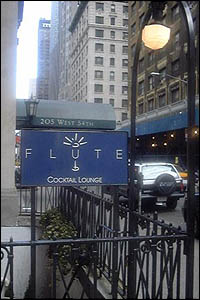
You can still have a drink at Guinan’s speakeasy Club Intime; the space where she once entertained New York’s greatest is now the champagne bar Flute . The location of the 300 Club has been turned into The London luxury hotel.

She literally was the end of an era; the day after she died, the US government repealed prohibition.

Texas Guinan lives on in an incredibly exhaustive blog in her honor and in reruns of Star Trek: the Next Generation (Whoopi Goldberg’s bartender character is named after her). Who knows what mayhem Texas would be getting herself into if she were alive today.

*I admit I couldnt find anything on why it was called the 300 Club, however it could be because when customers would ask her how many films she had made in Hollywood, she always answered, “About 300 of ’em.” Even though it was more like a couple dozen.

Categories
Podcasts

PODCAST: Central Park Zoo

From an odd assortment of abandoned creatures, to one of the most notorious zoos in the world, take a tour with us through Central Park’s storybook zoo.

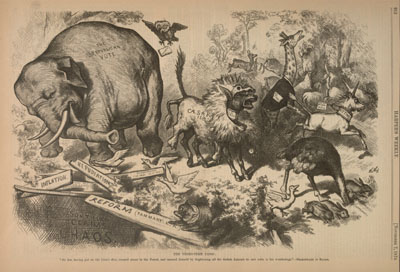
In the podcast I erroneously stated that a famous political cartoon using the Central Park Zoo as a political metaphor also featured Ulysses S Grant depicted as an ass. Perhaps that was some sort of Freudian partisan comment, because Grant himself is not in the cartoon, although it is about his alleged ‘Caesarism’, running for president for a third term back when it was constitutionally possible — but untraditional — to do so.

The ass in the cartoon below actually represents the New York Herald, the flagrant publication which ran the article on the Central Park Hoax as well as coining the phrase ‘Caesarism’.

The cast of the Zoo is featured (hmm, I didnt realize the Zoo had unicorns), as well as an elephant representing the republican vote, being scared off by the Herald’s bombastic opinions on Grant. This is the origin of the elephant as the symbol of the Republican Party:

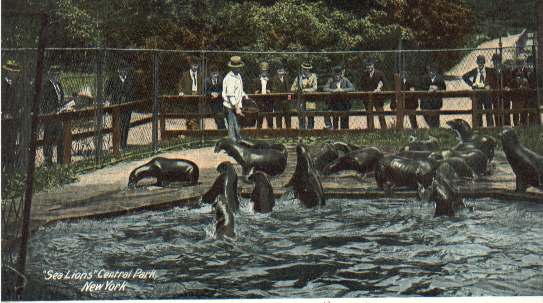
Now, onto the Menagerie! This postcard nicely displays the early collection’s unplanned evolution:

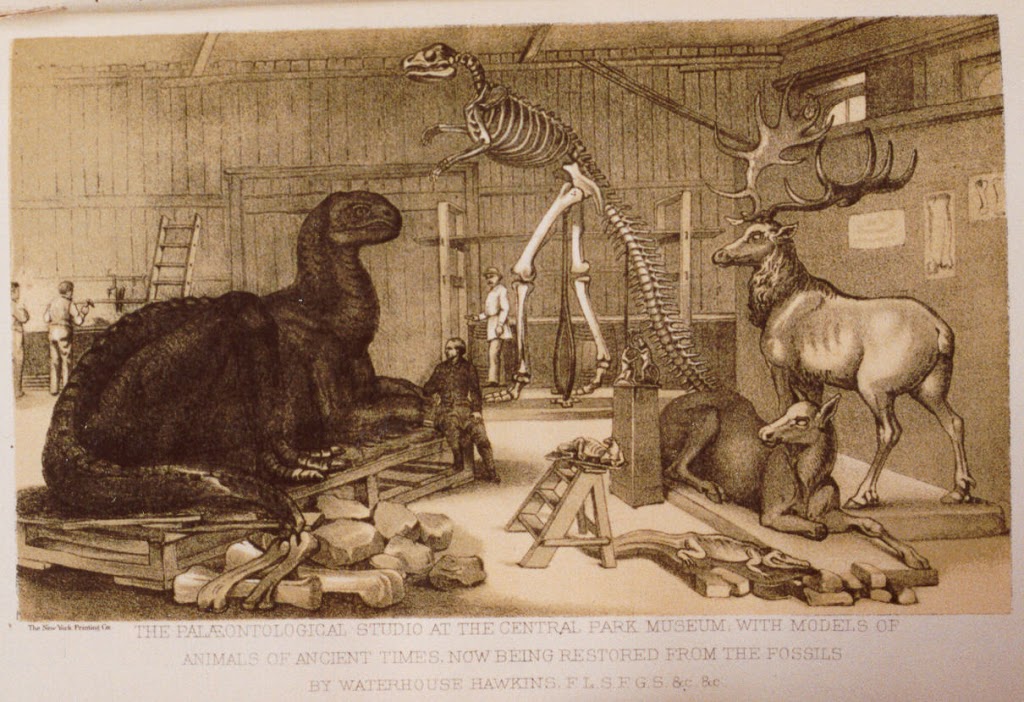
Before the Arsenal served as headquarters of the city park service and anchor to the Zoo, it was the temporary location of the Natural History Museum as well as workspace for paleontologists and their dinosaur skeletons.

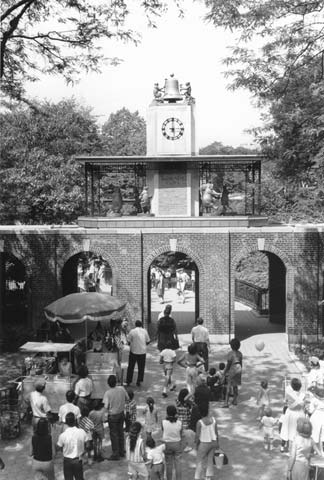
Part of the zoo’s rebirth in the 80s included the restoration of the Delacorte Clock, a throwback to grandiose European clock design that greets each hour with a parade of dancing animals and tinkling music. It was a gift of George Delacorte, founder of Dell Publishing Company, who also graced Central Park with a theatre and statuary depicting Alice In Wonderland. Over forty years old, the clock and its tinny nursery rhymes can be actually be heard from Fifth Avenue if you listen closely enough.

Although close in style, the nearby Dancing Goat fountain sculpture and its companion Honey Bear are actually from the 1930s, where they once flanked a lavish cafeteria inside the zoo that was demolished in the 80s to make way for the rain forest.

And a couple of our celebrity stars of the zoo:

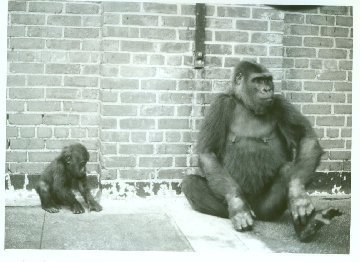
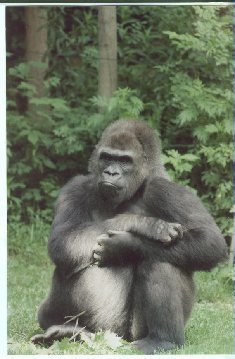
Patty Cake and her mother were quite the sensation in the early 70s. The first gorilla ever born at New York, she was named in a much publicized newspaper competition, and ever since, she has unquestionably been the city’s most famous gorilla.

Most baby gorillas are actually taken from their parents to be nursed, however Patty was cared for by both her parents, Lulu and daddy Kongo. Her father eventually fell on her, breaking her arm, and she was eventually transferred for a time to the Bronx Zoo. Her custody battle between the two zoos was even covered by Time Magazine.

Now as a permanent resident of the Bronx Zoo, queen of the Congo Gorilla Forest, at age 35, Patty is a proud mother of nine, including two rare twins, Nngoma and Tambo. And like any New York society diva, she’s also had four husbands.

In spirit, she’s also doing her share to stop gorilla poaching in Africa, through a charity called ‘The Pattycake Fund’.

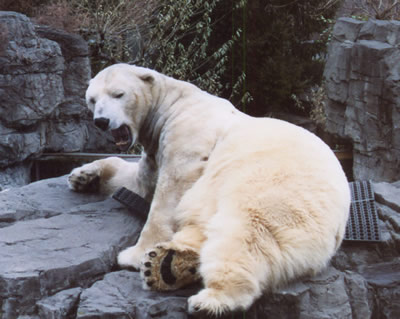
Gus, the no-longer-depressed polar bear, was really diagnosed by an animal behaviorist with psycotic tendencies, and the animals plight was so publicized that he made the cover of Newsday, significant coverage on CNN, and somebody actually wrote a play about him. Changes to Gus’ habitat were soon made, including better water circulation, and Gus’ mood has improved substantially. And anyway, why should he be depressed? He has two wives — Ida and Lily.

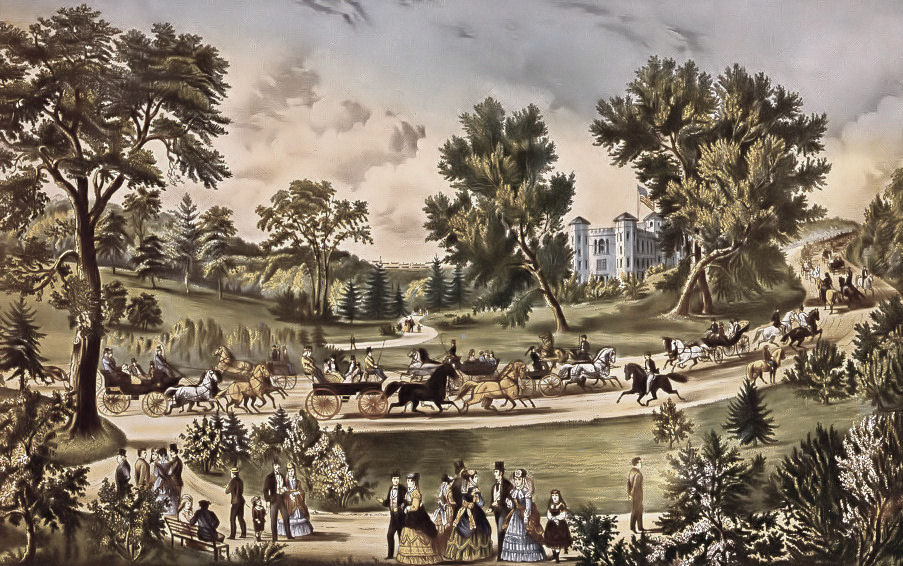
And finally take a gander at this painting from the mid 19th century of Central Park in its wilder days. The building in the back is the castle-like Arsenal, before a menagerie started appearing.