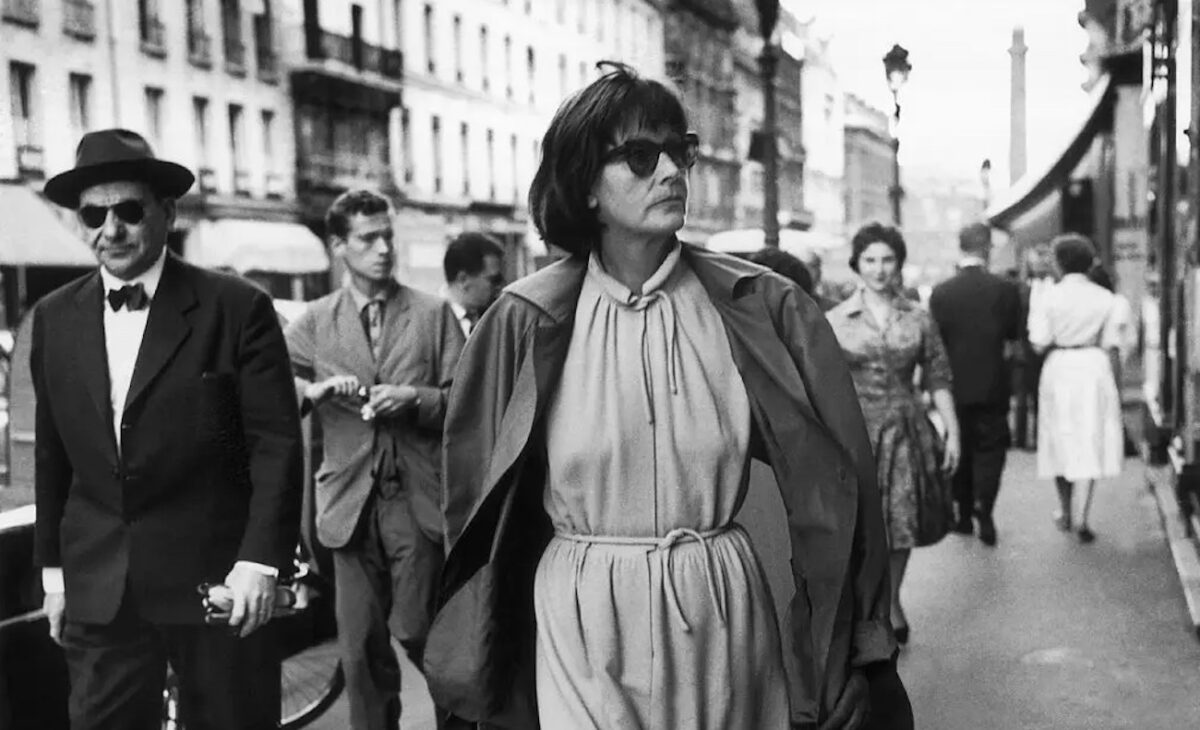
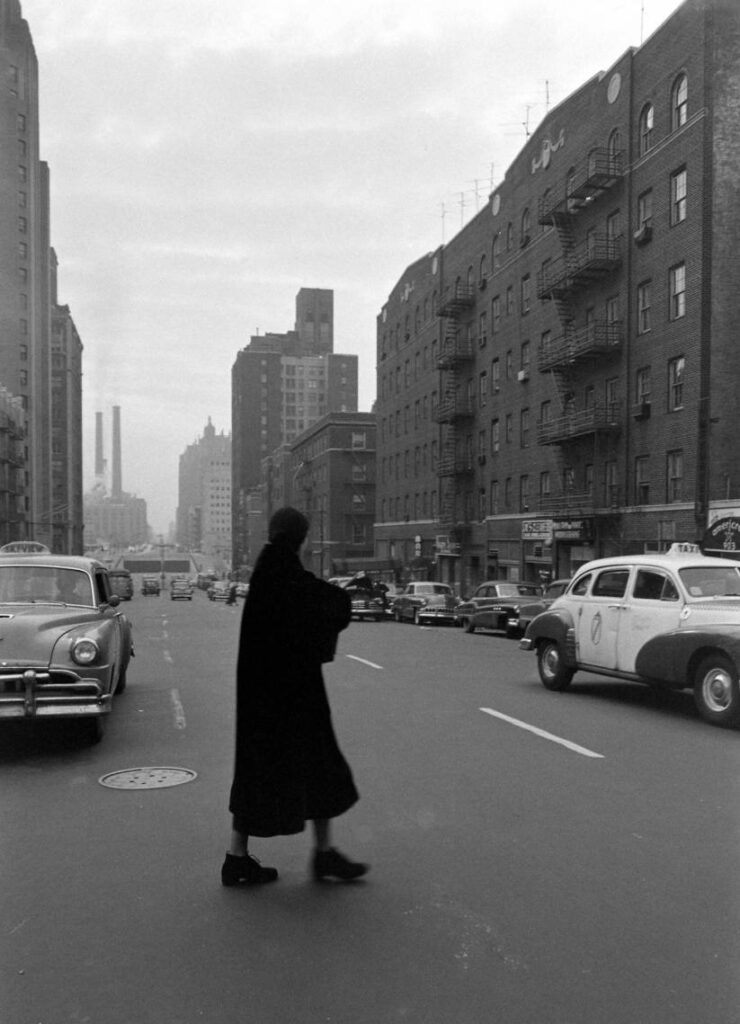
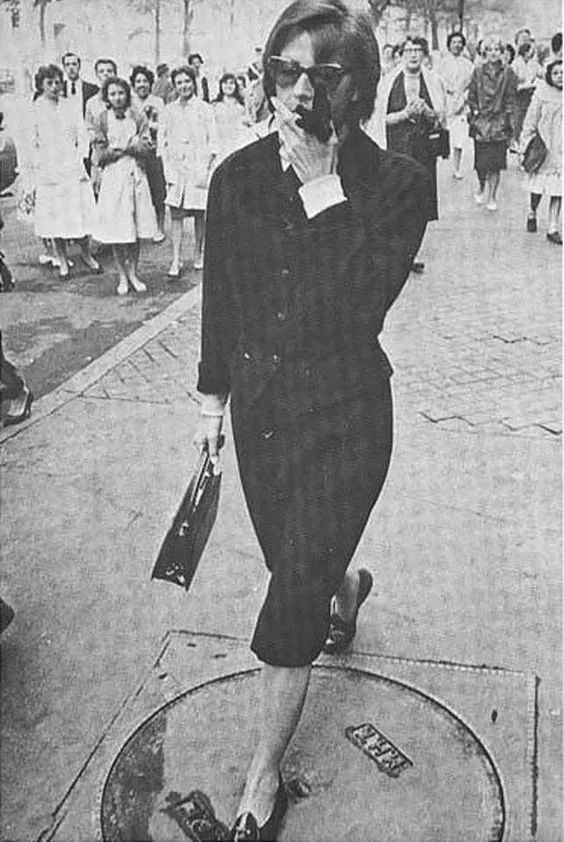
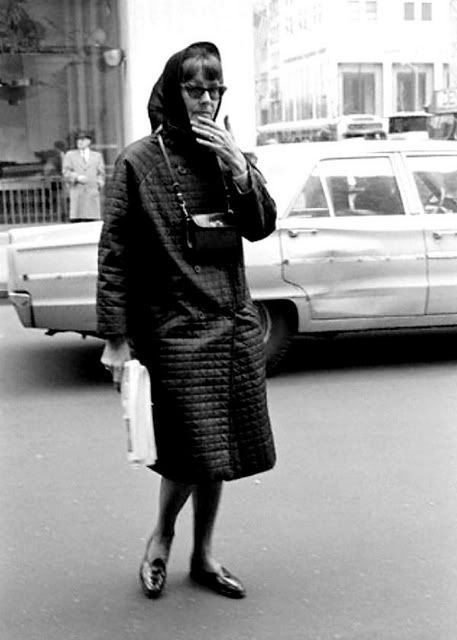
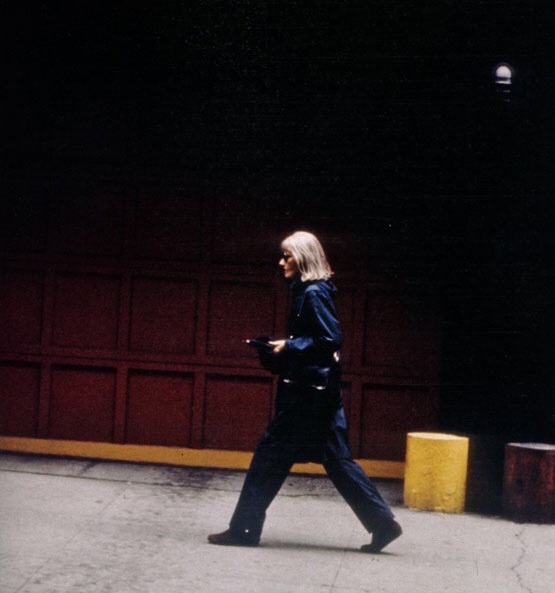
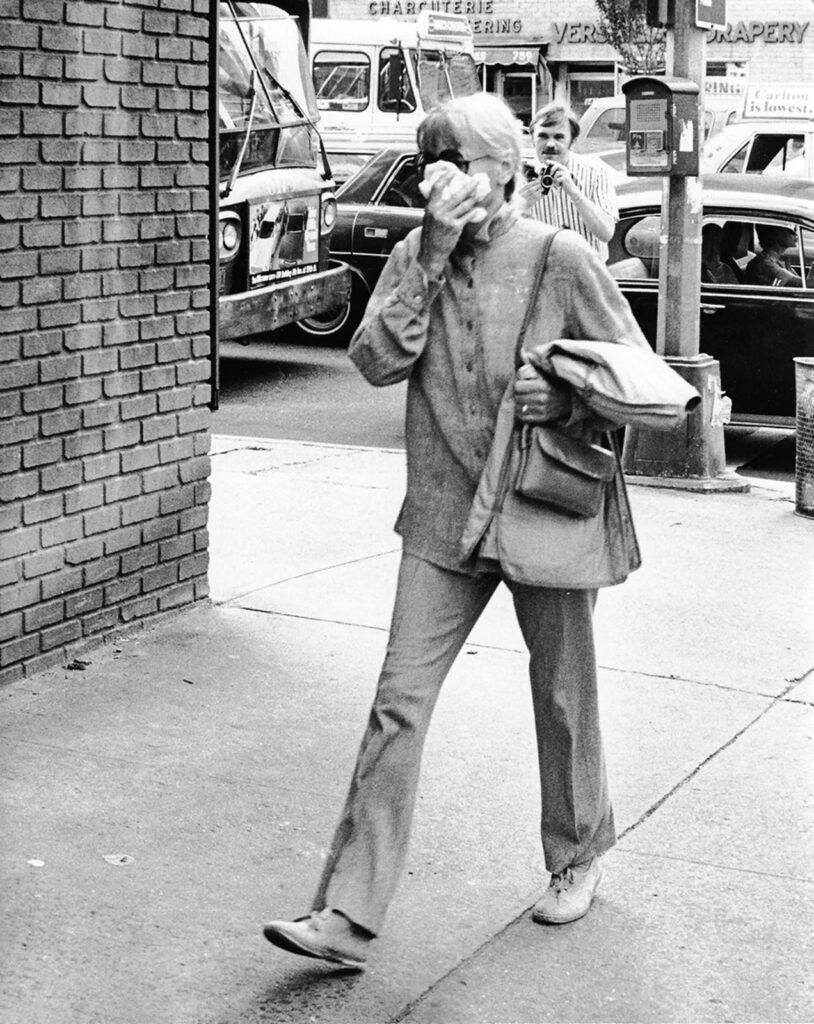
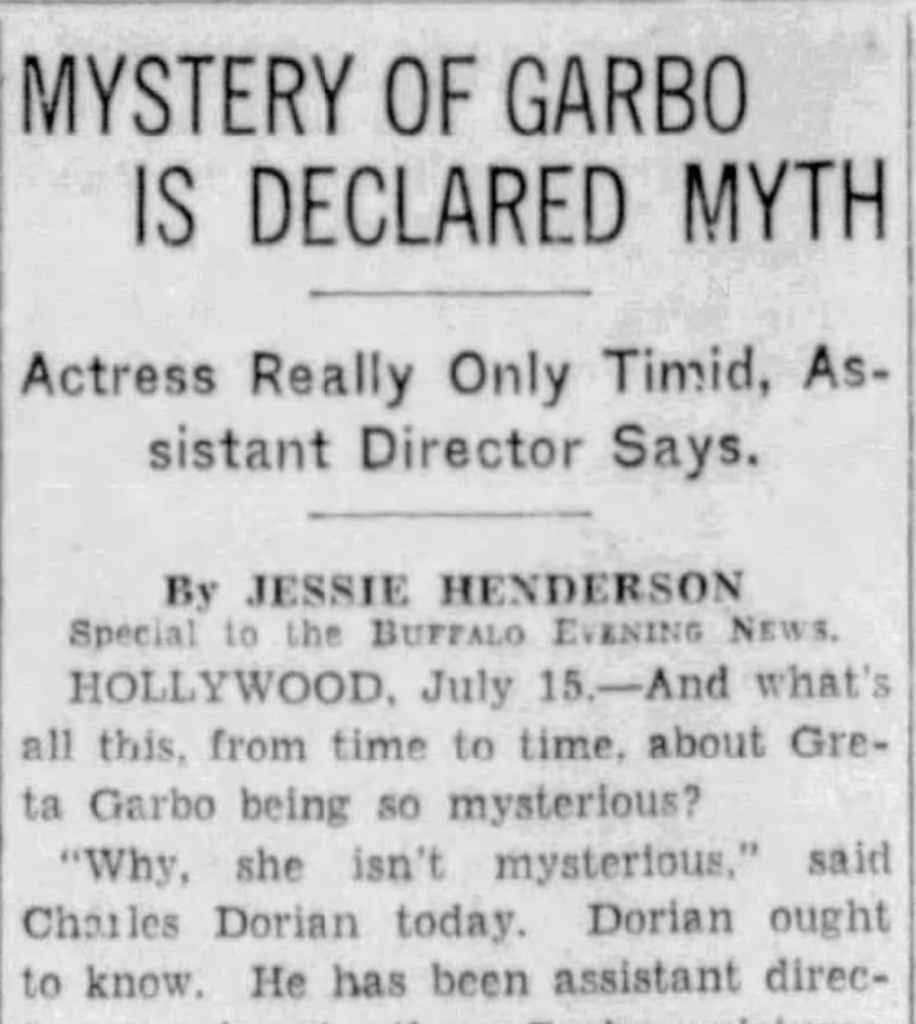
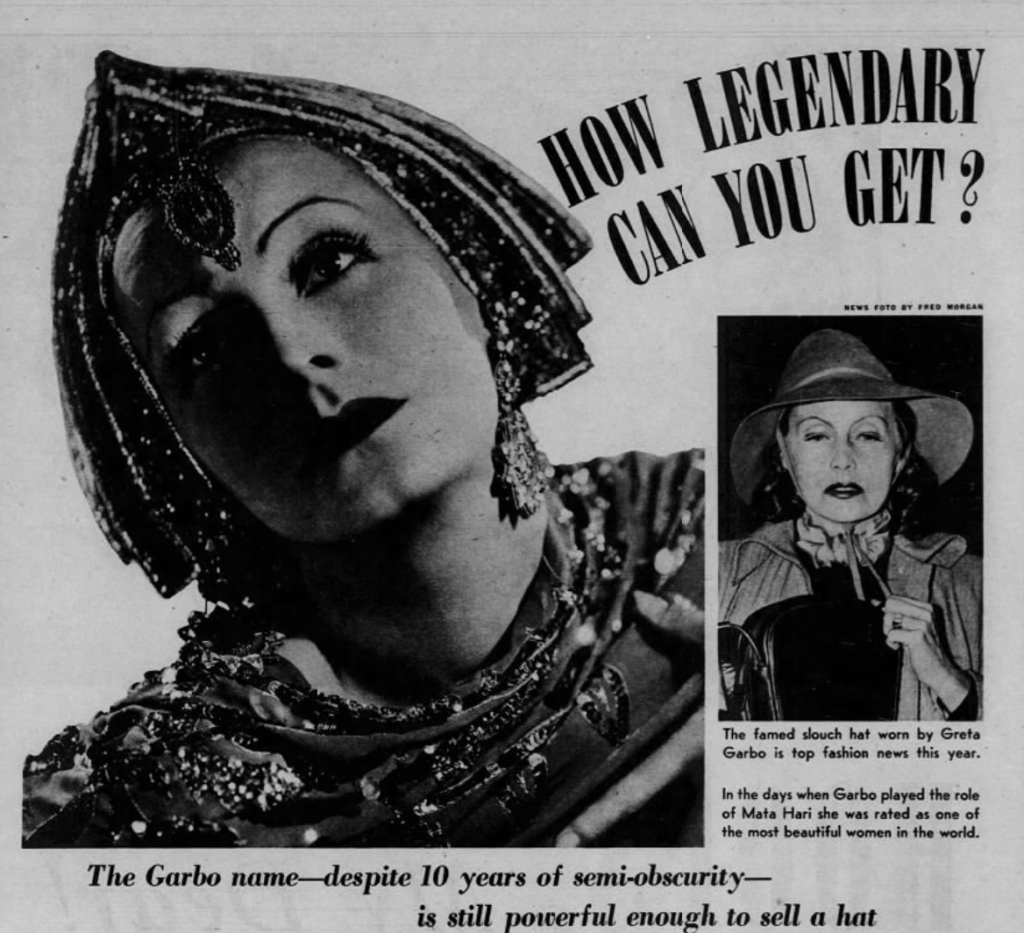
Greta Garbo on the streets of New York City, 1958. Getty Images/Keystone-France
Garbo in New York! A story of independence, glamour and melancholy, set at the intersection of classic Hollywood and mid-century New York City.
This is the biography of a legendary star who became the city’s most famous ‘celebrity sighting’ for many decades while out on her regular, meandering walks.
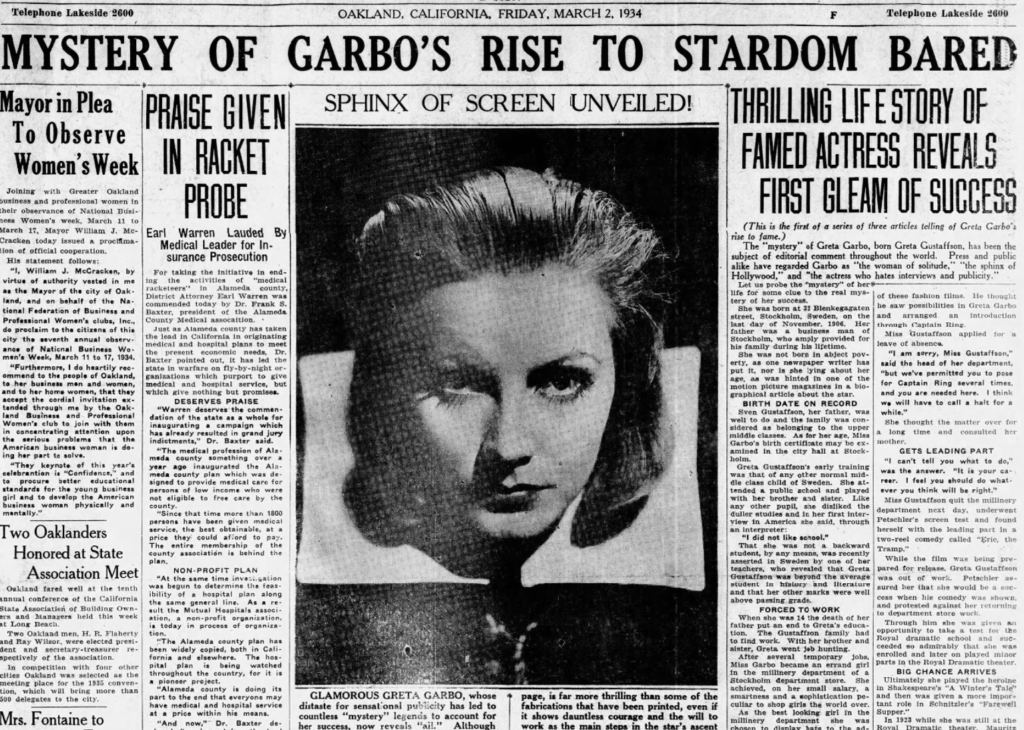
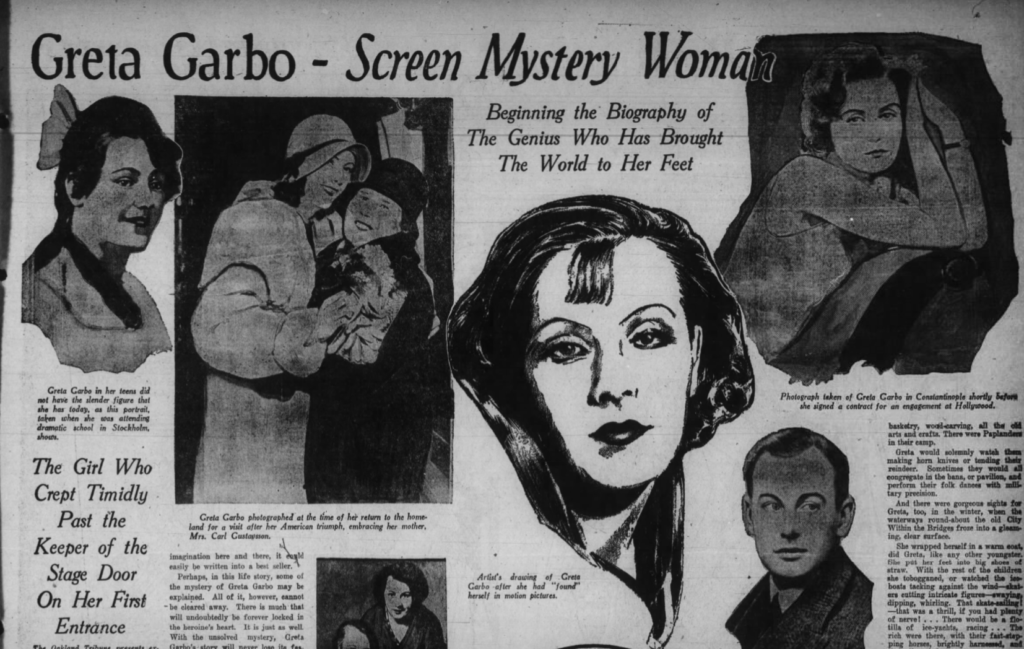
Garbo had once been Hollywood’s biggest star, a screen goddess who survived the transition from silent pictures to sound in such movies as Grand Hotel, Queen Christina and Camille.
But her career was over by the 1940s, her exotic and distant screen presence no longer appealing in the years of World War II.
And so the actress — famous for her line “I WANT TO BE ALONE” — moved to New York City and stayed here for the rest of her life, living in a fabulous apartment near Beekman Place on the east side of Manhattan.
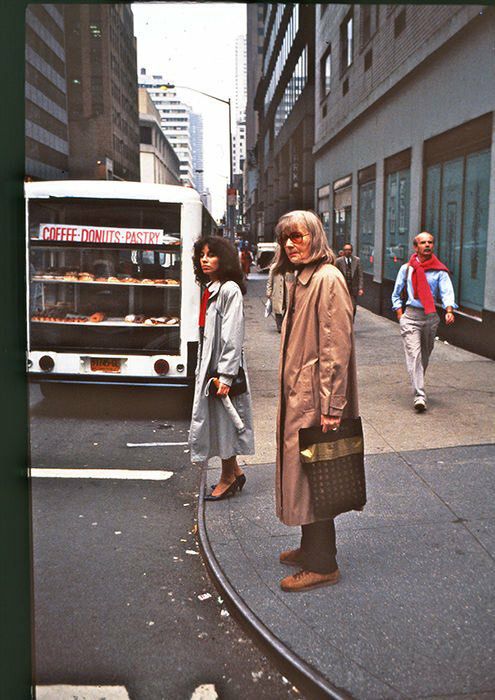
Her favorite activity was walking, two long trips a day in her dark glasses and trench coat, committed to freedom of urban exploration and enjoying a livelihood in the city that we all take for granted.
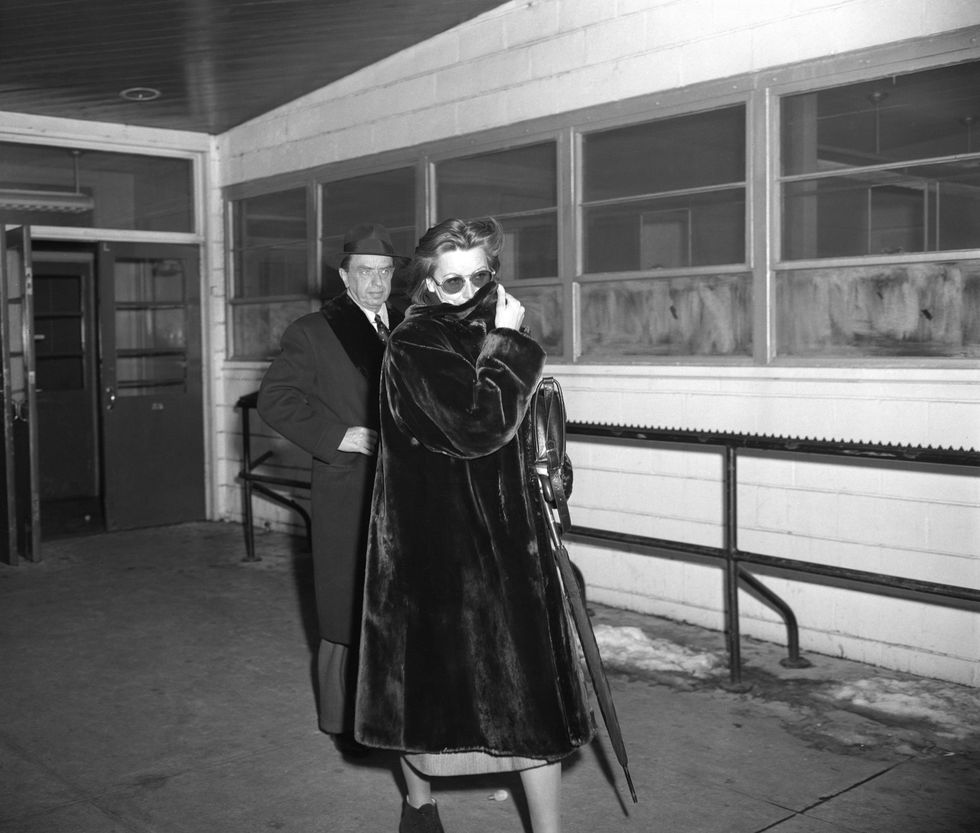
Garbo in 1951, BETTMANN//GETTY IMAGES
In attempting to live her life freely, however, she opened herself to the intrusive behavior of others — some obsessed with her as an iconic movie star, others simply gravitating to her elusive reputation. By the 1970s and surging by the 80s, Garbo sightings became a popular urban scavenger hunt. You had Bigfoot, the Loch Ness Monster and Greta Garbo!
Her New York story reveals some bigger themes about living in a big city — finding privacy and even solitude in a place with eight million people.
LISTEN NOW — GARBO WALKS: OLD HOLLYWOOD IN NEW YORK
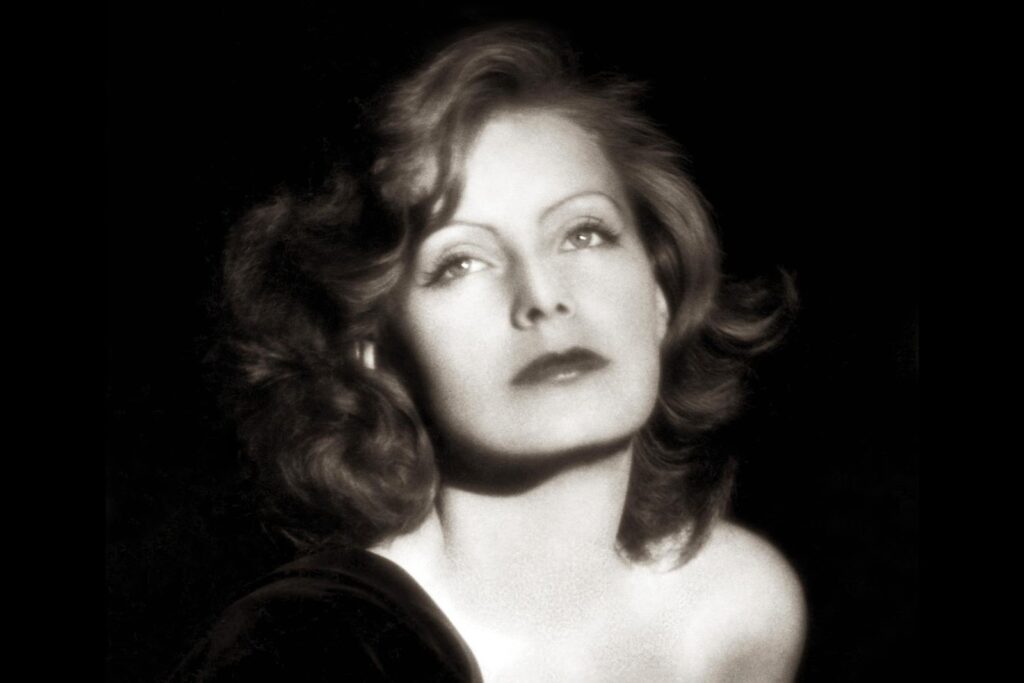
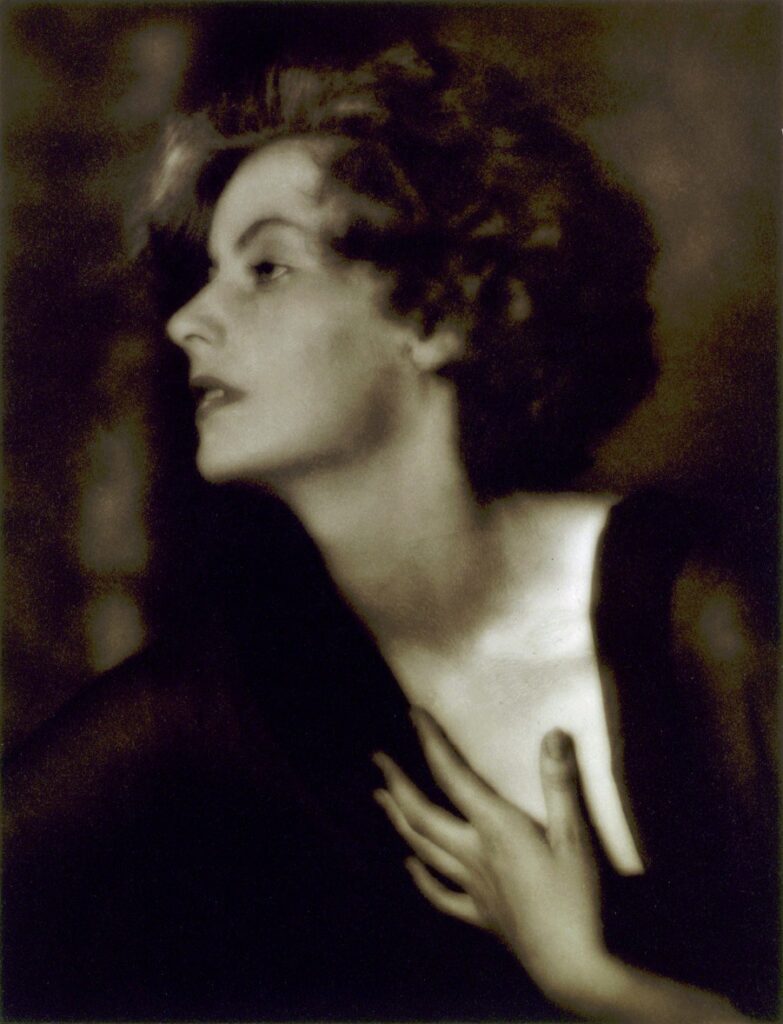
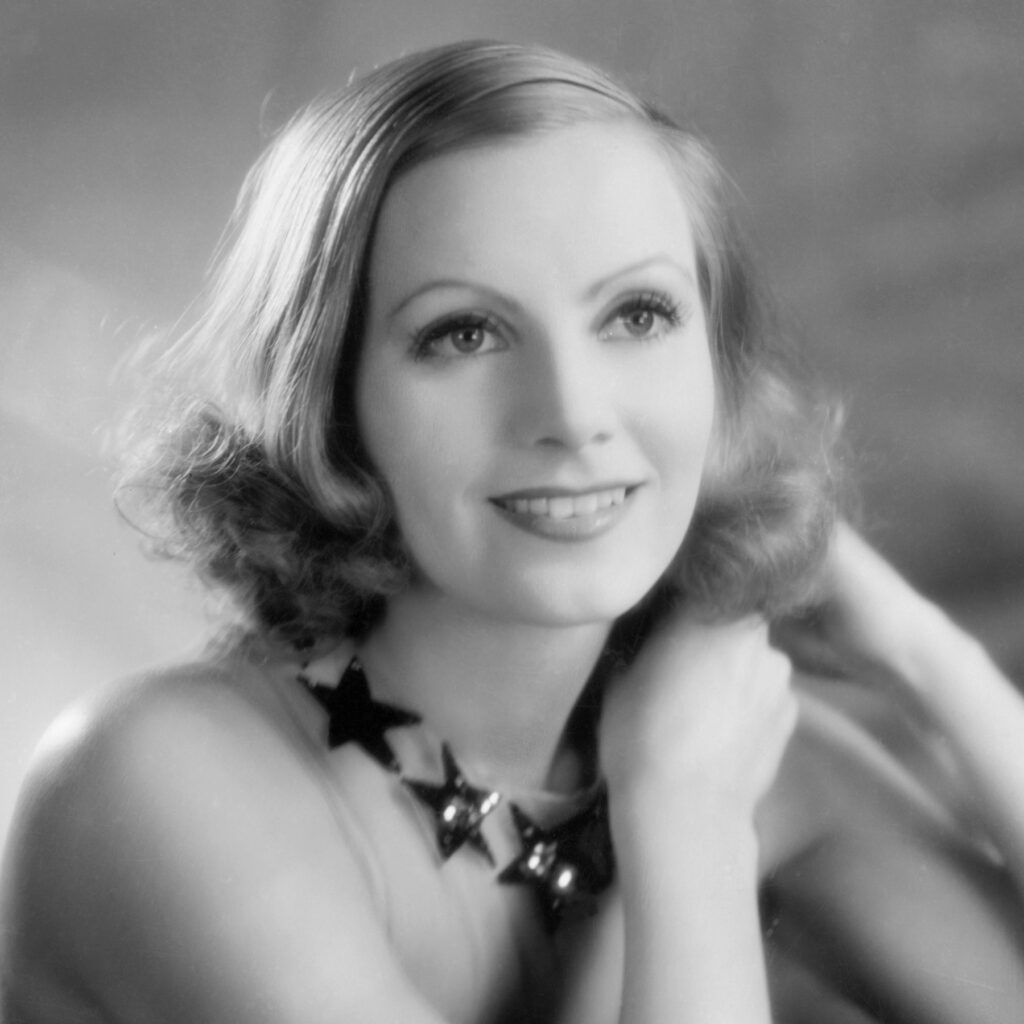
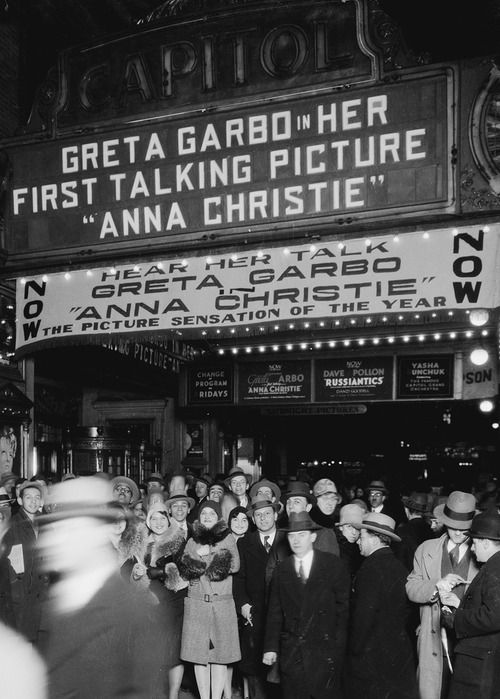
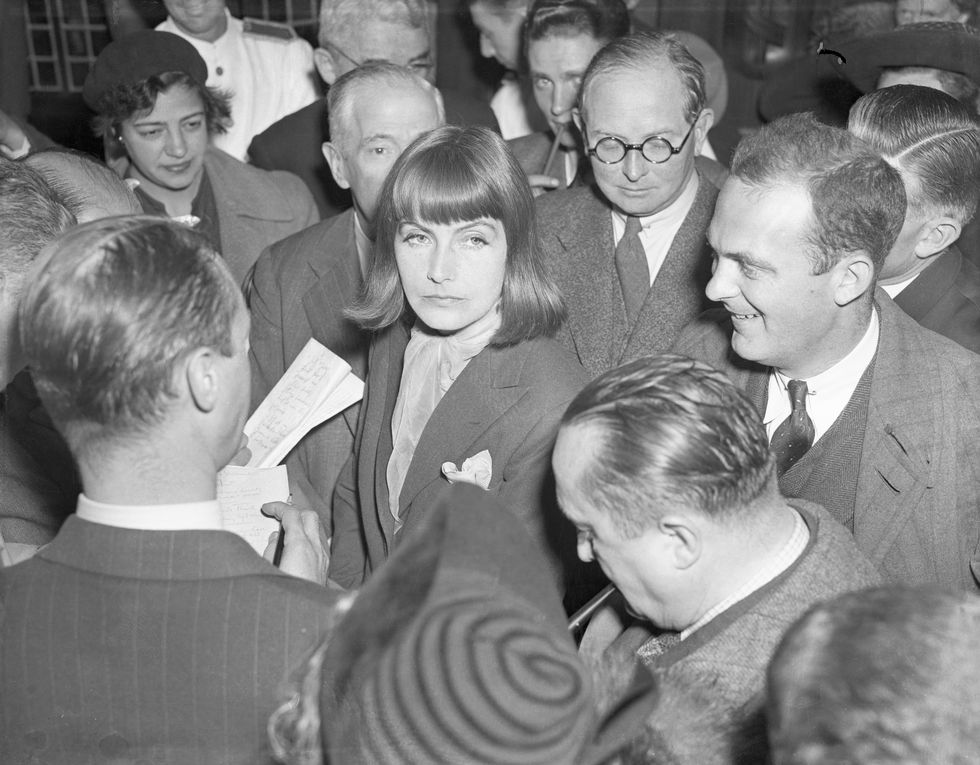
Garbo in 1925, Arnold GentheCapitol Theatre 1930Greta Garbo getting hounded by the press, 1938 / BETTMANN//GETTY IMAGESGarbo in 1955, photo by Lisa Larsen for Life MagazineCourtey IHeartIngrid
Garbo 1974 (courtesy Womanhouse)Garbo outside Rizzoli Bookstore, 1978, photo by Ron Galella
Garbo in the 1980s, taken by Ted Leyson, courtesy Greta Garbo Facebook page
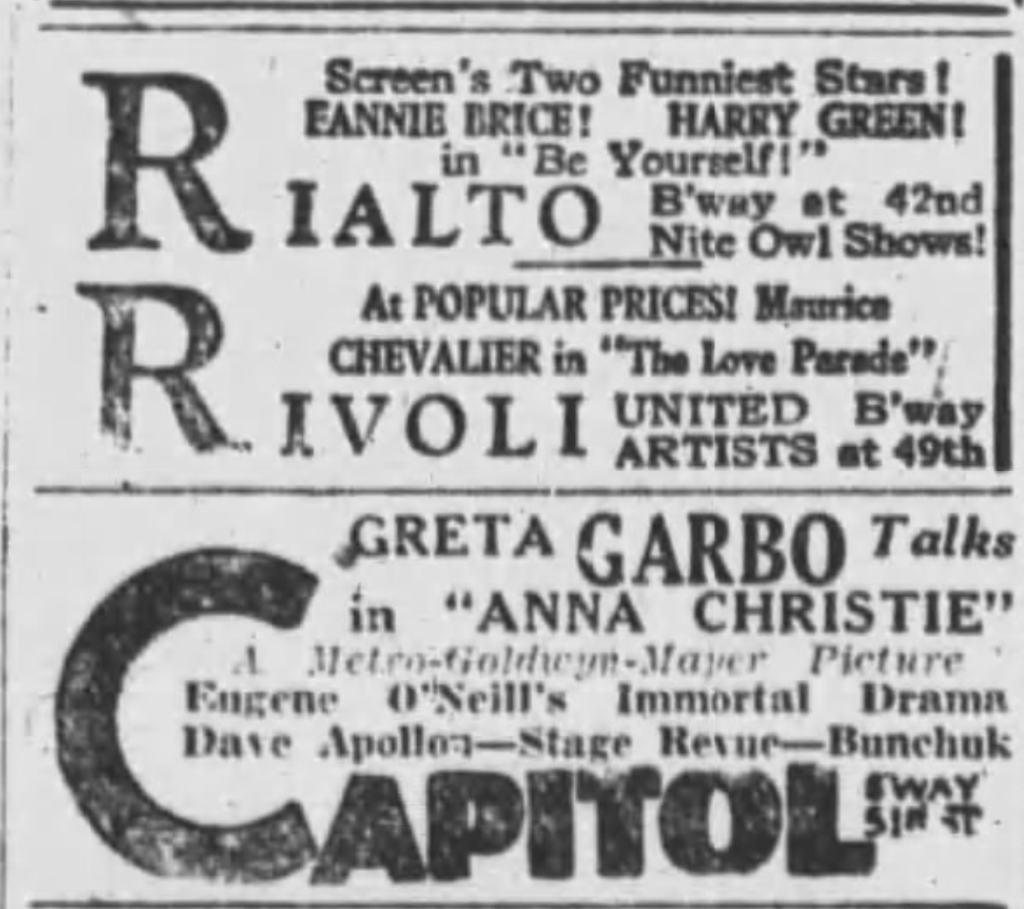
Anna Christie — Garbo Talks!
Queen Christina — Garbo in Charge!
Camille — Garbo Dying!
Ninotchka — Garbo Laughs!
FURTHER LISTENING
After listening to this show, drop into these past Bowery Boys episode regarding New York City, pop culture, celebrity and fame:
FURTHER READING
Garbo / Barry Paris Garbo / Norman Zierold Garbo: Her Life, Her Films / Robert Gottlieb Garbo: Her Story / Antoni Gronowicz In Pursuit of a Vanishing Star / Gustaf Sobin Loving Garbo / Hugo Vickers Walking With Garbo: Conservations and Recollections / Raymond Daum
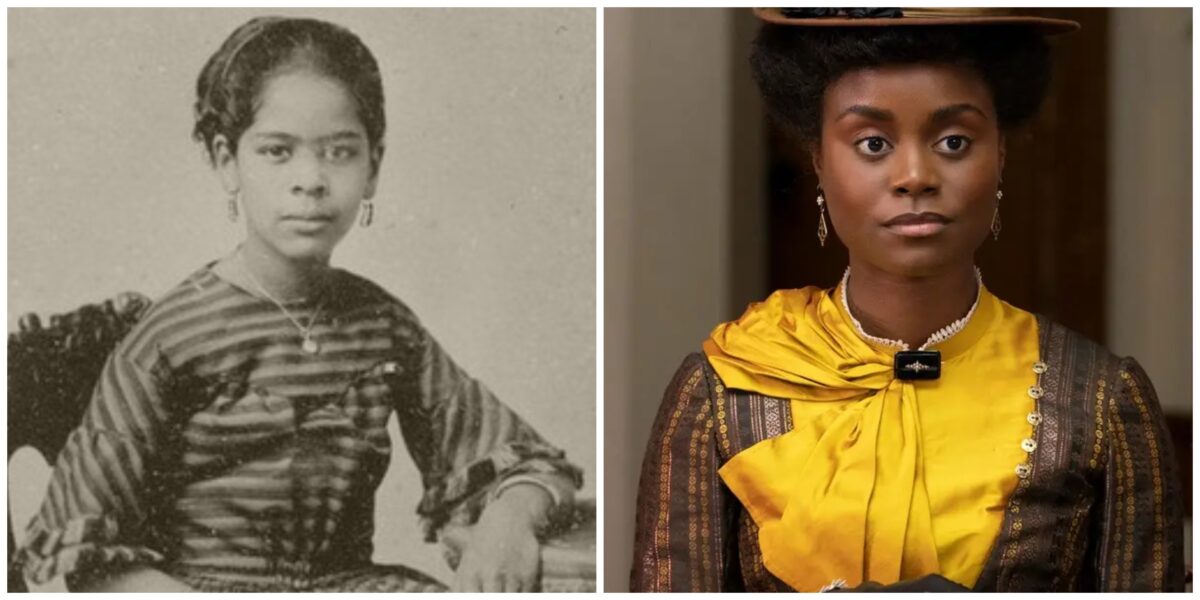
At left Maritcha Remond Lyons; at right the character of Peggy Scott (played by Denèe Benton) on The Gilded Age
NEW from The Gilded Gentleman podcast — some overlooked history of the 19th century, the story of black life and social class in New York City.
Dr. Carla Peterson, author of Black Gotham: Family History of African Americans in Nineteenth-Century New York City, joins Carl to share her research and perspective on the growth and development of the prosperous black professional class throughout the nineteenth century up to the Gilded Age.
In her 2012 groundbreaking book, Peterson sheds light on how this particular corner of the black community grew as New York became enriched in the late 19th century. She provides insight into leading African-American figures of the day, many missing in contemporary accounts of the period.
And believe it or not, a few characters from the HBO series “The Gilded Age” were designed with Black Gotham in mind. In particular, the father of Peggy Scott (played by Denée Benton) was based on Peterson’s own ancestral family.
LISTEN HERE OR ON YOUR FAVORITE PODCAST PLAYER:
And for other Bowery Boys podcasts on similar subjects, follow up your listening with these shows:
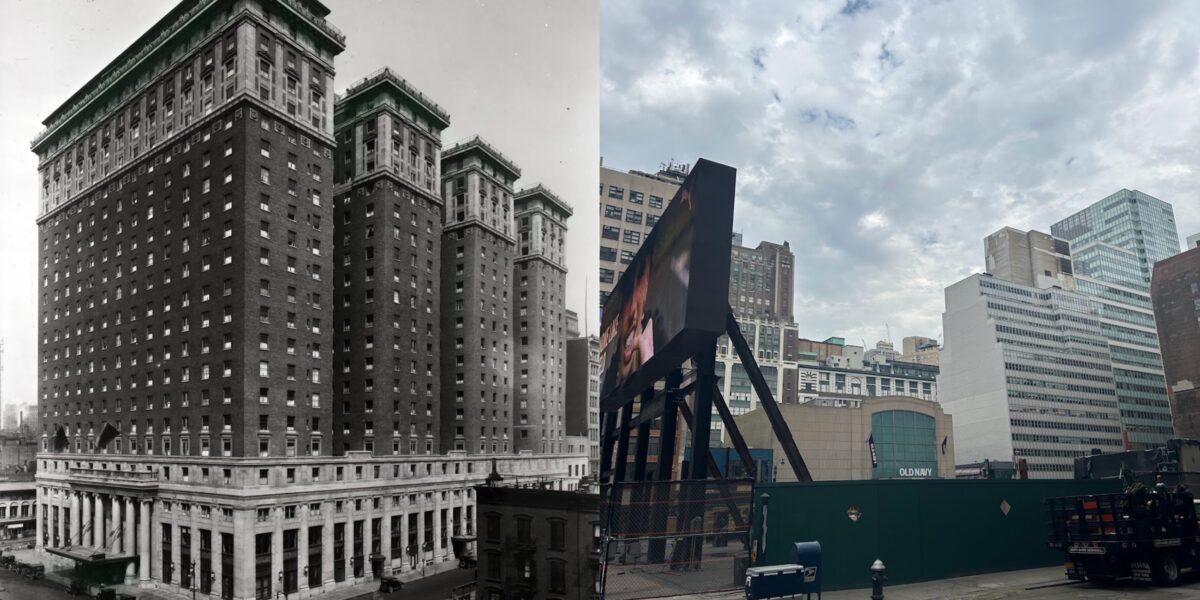
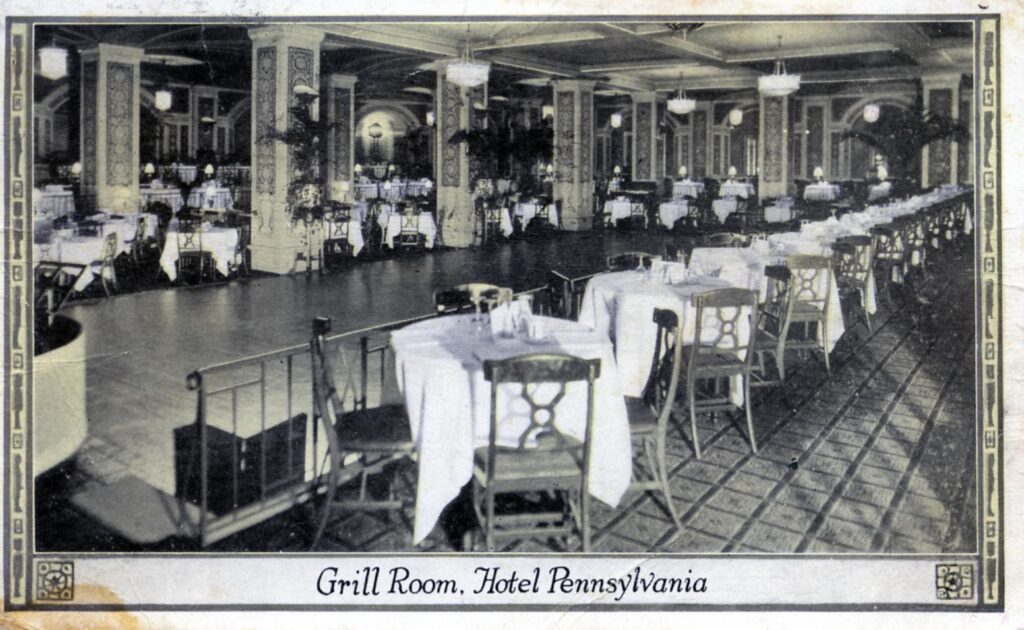
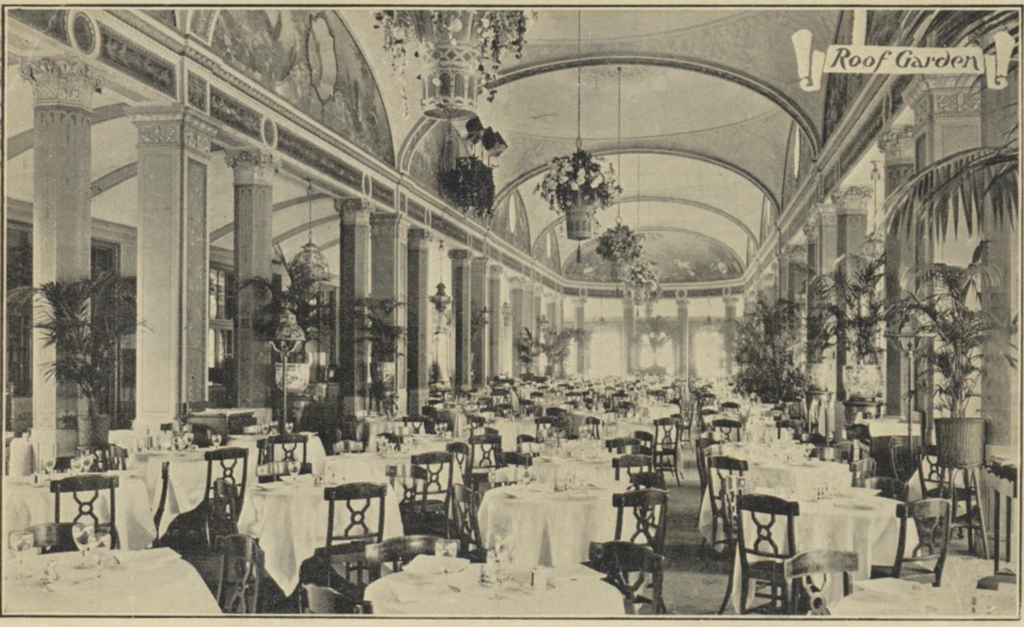
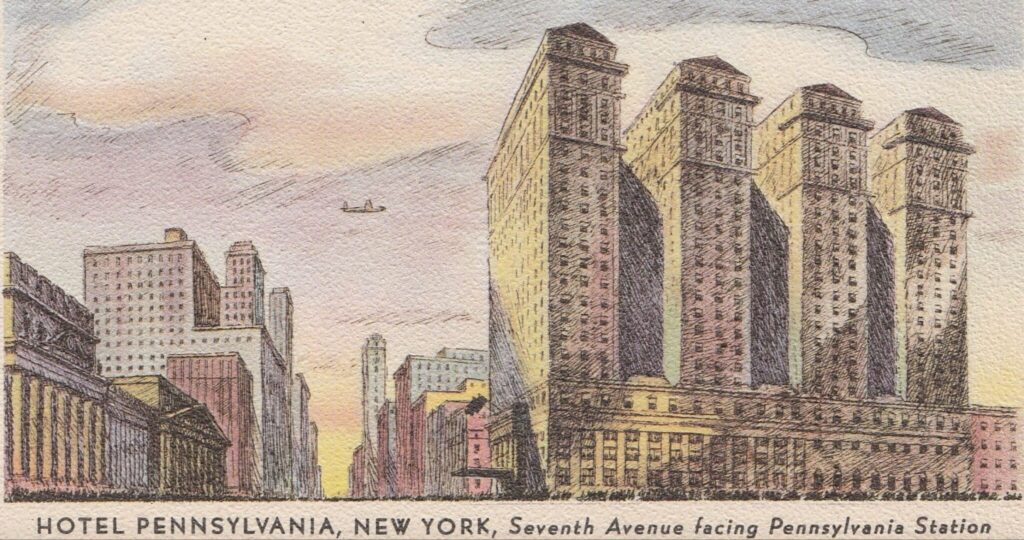
PODCAST When it opened in 1919, the Hotel Pennsylvania was the largest hotel in the world. Over a hundred years later, its fate remains uncertain. Is it too big to save? (NOTE: Alas the hotel was torn down in 2023.)
After the Pennsylvania Railroad completed its colossal Pennsylvania Station in 1910, the railroad quickly realized it would need a companion hotel equal to the station’s exquisite grandeur. And it would need an uncommonly ambitious hotelier to operate it.
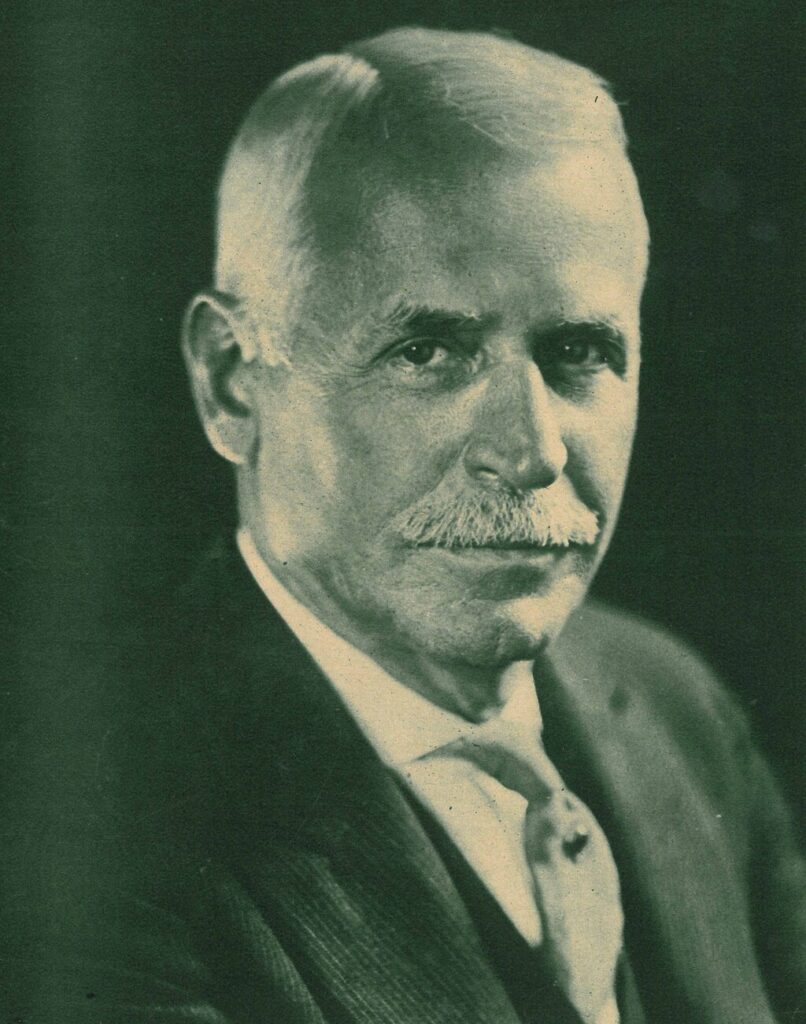
Enter E.M. Statler, the hotel king who made his name at American World’s Fairs and brought sophisticated new ideas to this exceptional hotel geared towards middle-class and business travelers.
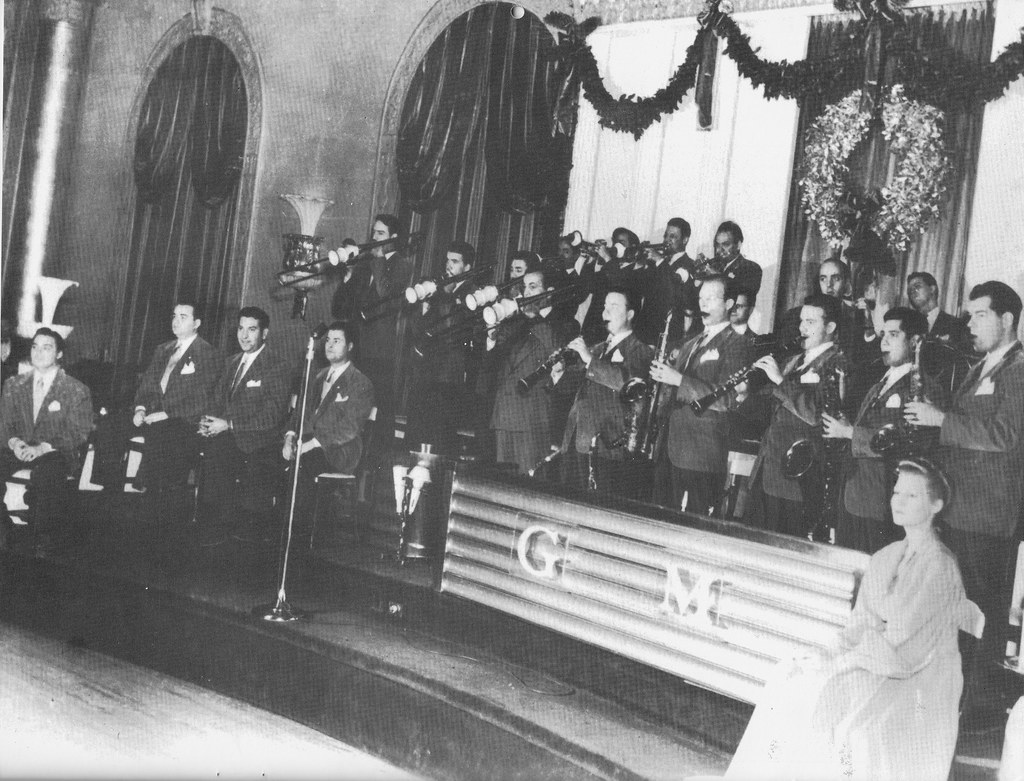
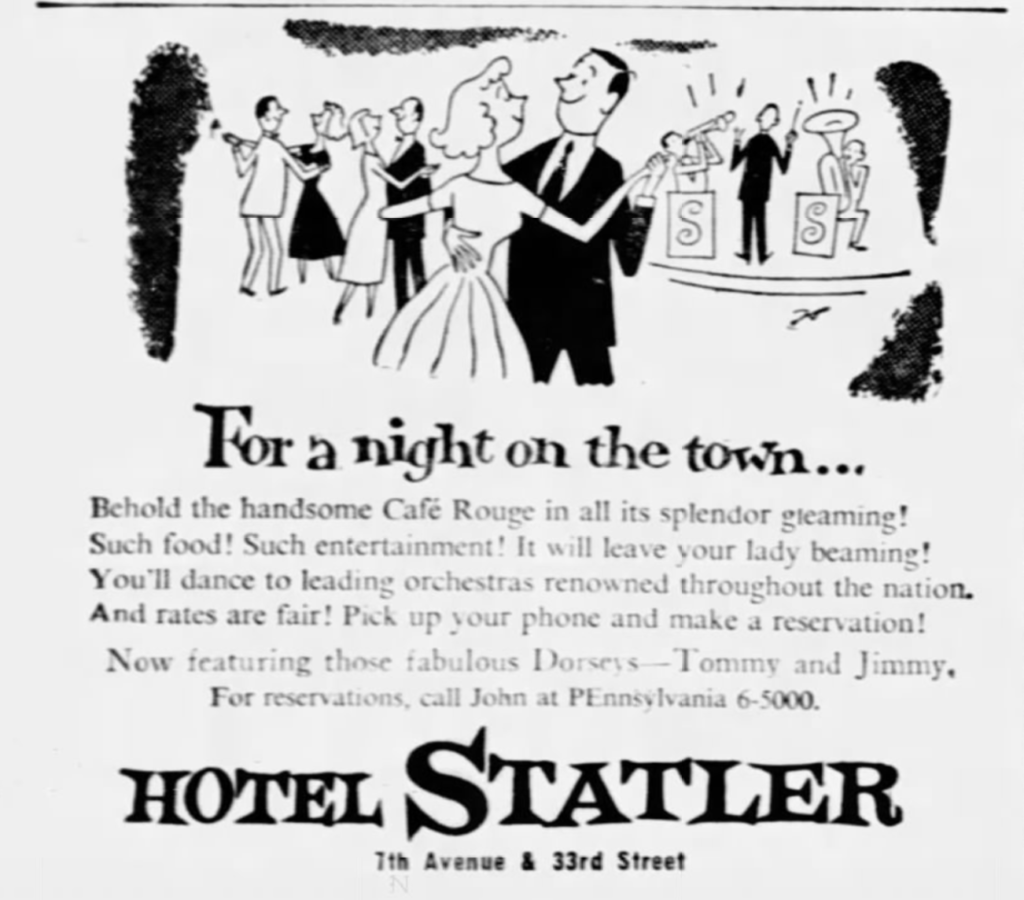
But the Hotel Pennsylvania would have another claim to fame during the Swing Era. Its restaurants and ballrooms — particularly the Café Rouge — would feature some of the greatest names of the Big Band Era.
Glenn Miller played the Cafe Rouge many times at the height of his orchestra’s fame. He was so associated with the hotel that one of his biggest hits is a tribute — “Pennsylvania 6-5000.”
The hotel outlived the demolition of the original Penn Station, but it currently sits empty and faces imminent demolition thanks to an ambitious new plan to rehabilitate the neighborhood.
Is this truly the last dance for the Hotel Pennsylvania?
Listen Now – Last Dance at the Hotel Pennsylvania
Special thanks to preservationists and friends of the show George Calderaro and Brad Vogel for advising us on the current plight of the Hotel Pennsylvania.
Songs Featured On This Show
“Pennsylvania 6-5000” by Glenn Miller and His Orchestra “In The Mood” by Glenn Miller and His Orchestra “Kiss and Make Up” by Vincent Lopez and His Orchestra “Night Owl” by George Olsen and His Music, Ethel Shutta vocals “I Cried For You” by Jimmy Dorsey and His Orchestra “My Blue Heaven” by Artie Shaw and His Orchestra “Moonlight Serenade” by Glenn Miller and His Orchestra “Pennsylvania 6-5000” by The Andrews Sisters “The People’s Court Theme”
The Official Spotify Playlist
E.M. Statler, one of America’s most famous names in hotels. Photo courtesy Western New York HeritageDinner and dancing on the Hotel Pennsylvania rooftop.
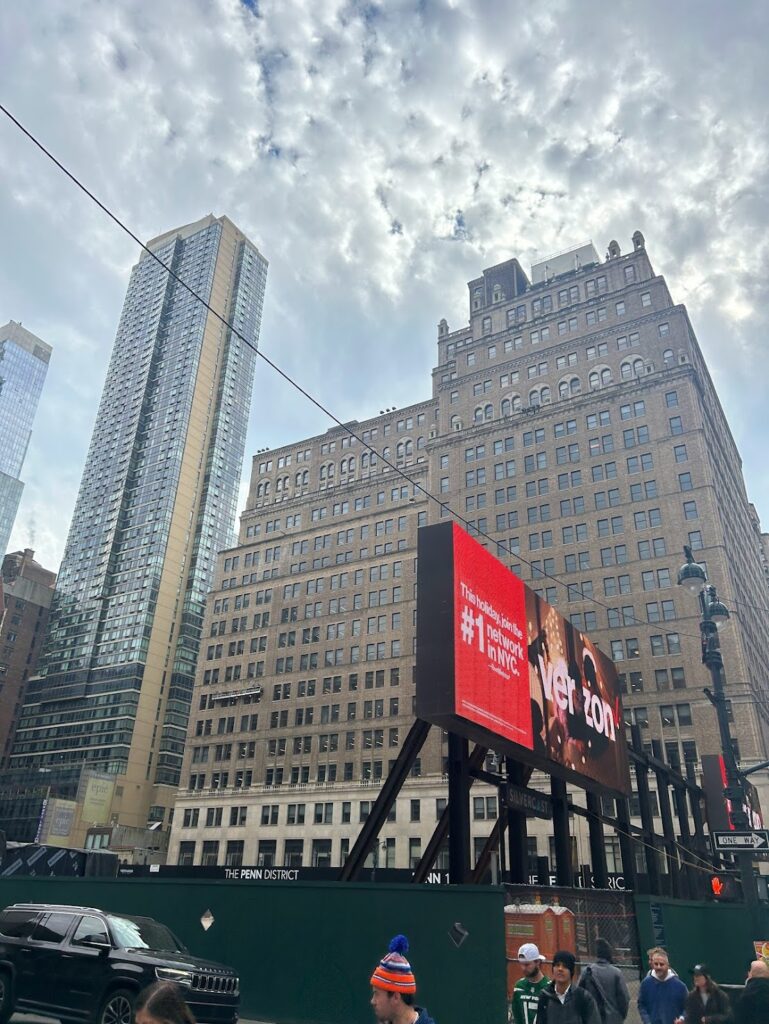
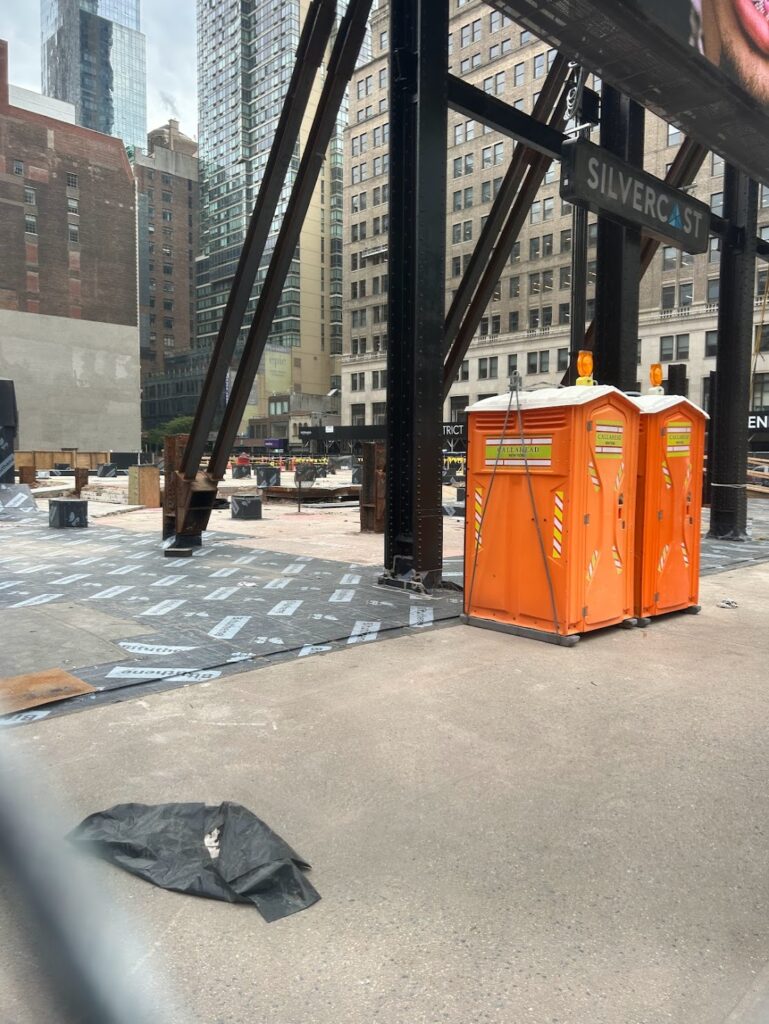
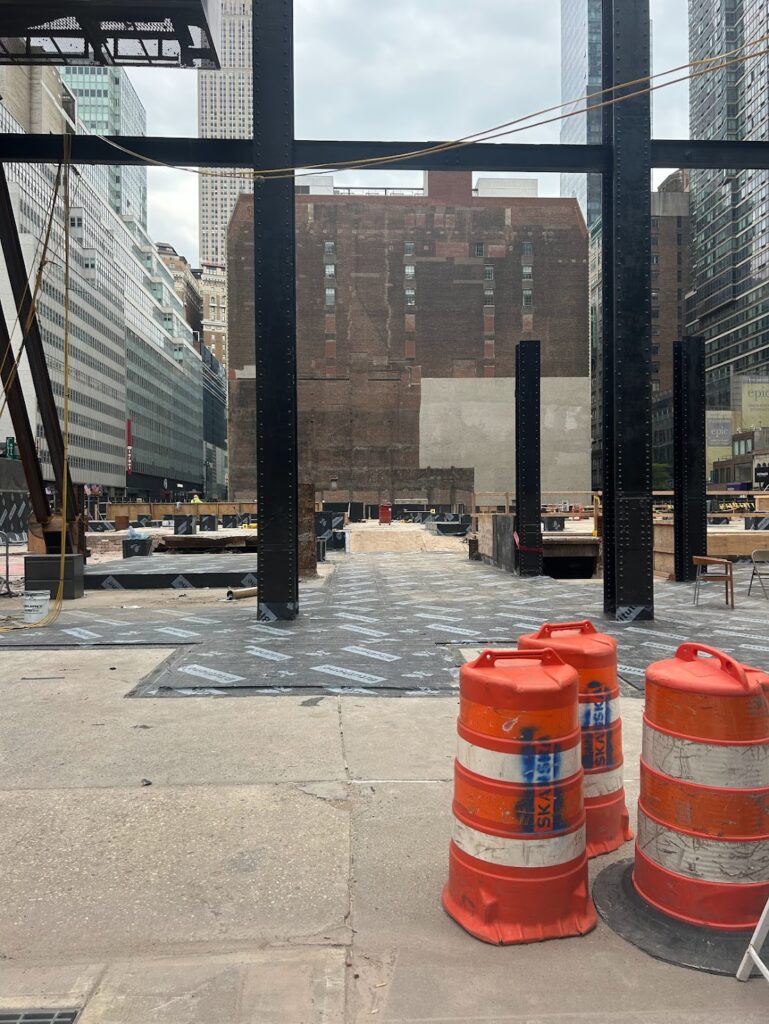
UPDATE: The hotel has been demolished. Rather bittersweetly, the space stands briefly open, allowing some interesting views of the surrounding buildings. They’ve still managed to put an electric billboard however.
FURTHER LISTENING
After you’ve listened to this show on the Hotel Pennsylvania, dive back into the back catalog and listen to these shows with similar themes:
The Bowery Boys: New York City History podcast is brought to you …. by you!
We are now producing a new Bowery Boys podcast every other week. We’re also looking to improve and expand the show in other ways — publishing, social media, live events and other forms of media. But we can only do this with your help!
We are now a creator on Patreon, a patronage platform where you can support your favorite content creators.
Please visit our page on Patreon and watch a short video of us recording the show and talking about our expansion plans. If you’d like to help out, there are several different pledge levels. Check them out and consider being a sponsor.
We greatly appreciate our listeners and readers and thank you for joining us on this journey so far.
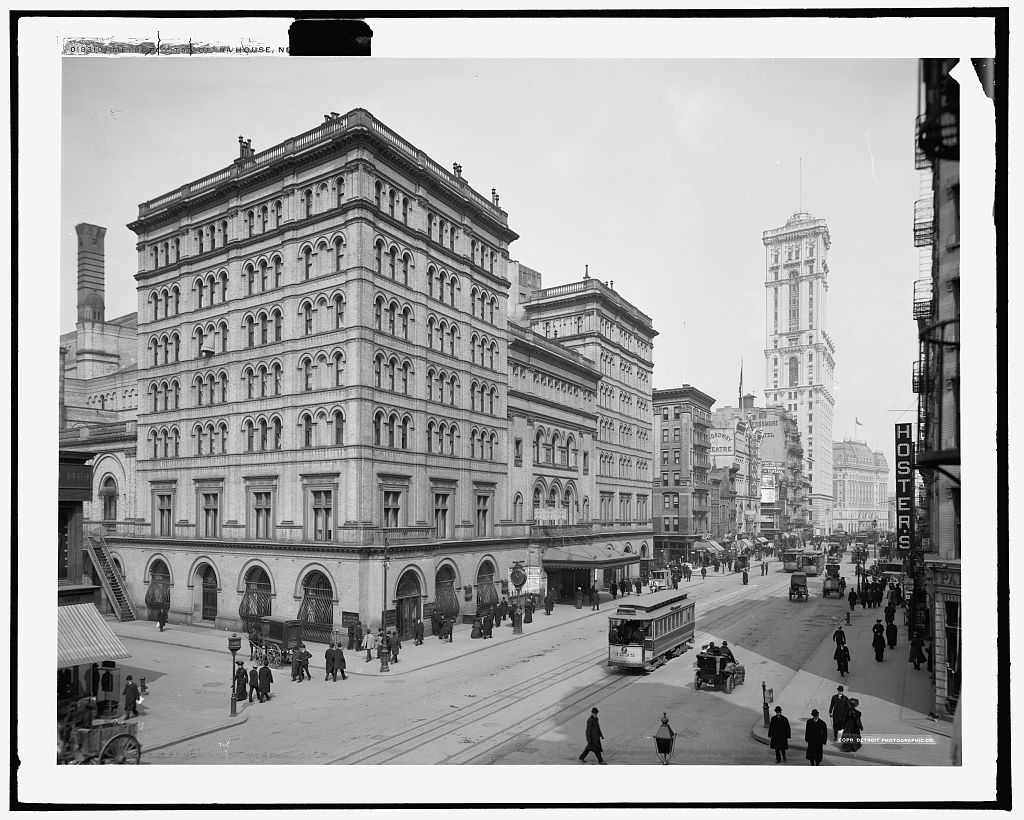
The Metropolitan Opera House, 1905. Detroit Publishing Company photograph collection (Library of Congress)
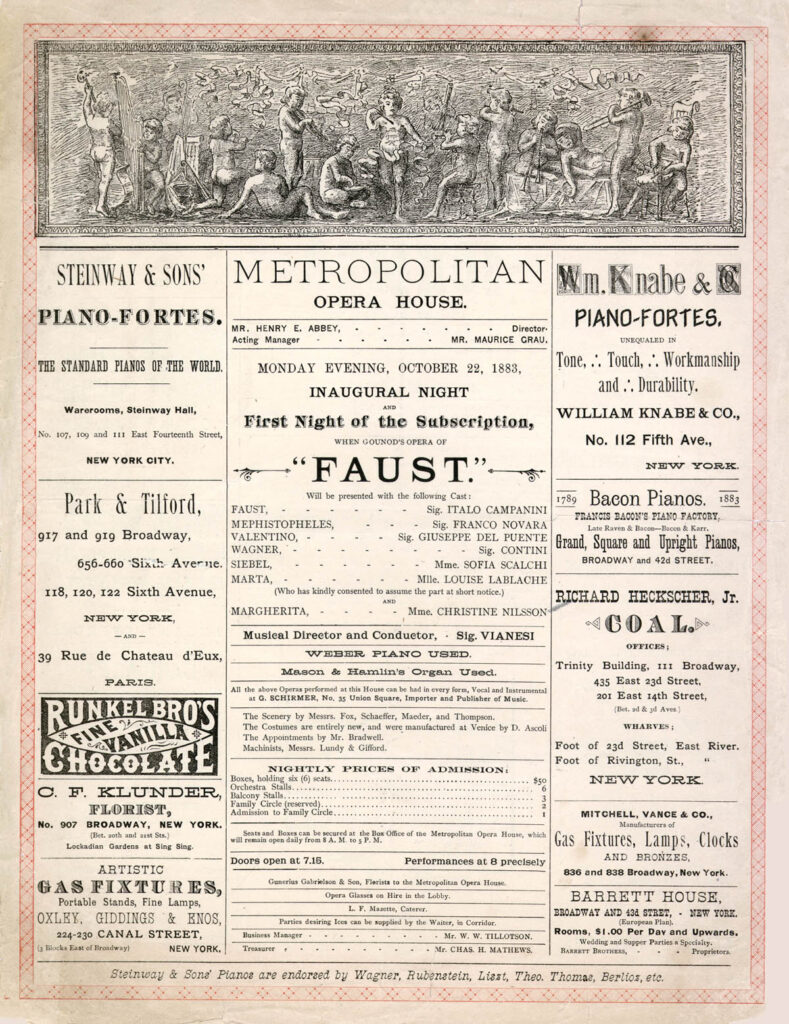
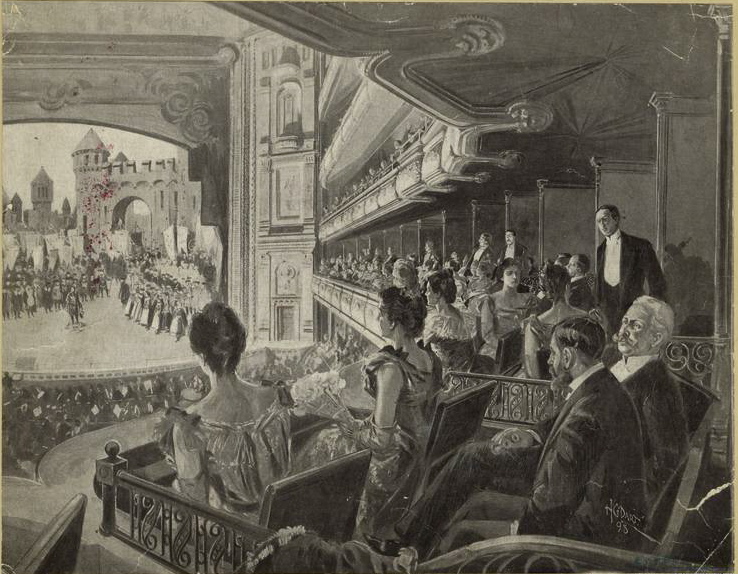
The opening of the new Metropolitan Opera at the height of the Gilded Age had perhaps more drama going on in the audience than on the stage.
Carl Raymond, host of The Gilded Gentleman history podcast, revisits one of America’s most famous opening nights.
The original Metropolitan Opera House — nicknamed the Yellow Brick Brewery for its bulky exterior design — was built by the families representing New York’s nouveau riche who felt slighted by Old New York’s upper class.
While it was technically Gounod’s opera Faust which played from the stage, most of the spectacle was actually in the audience — and up in the regal boxes, called the ‘golden horseshoe’ for its extravagant roster of social-climbing elite.
Subscribe to The Gilded Gentleman on your favorite podcast player (including Apple Podcasts, Spotify, Stitcher, Overcast and more) to listen to the show and to get new episodes when they arrive every two weeks.
Artwork by Harry Grant Dart. Illustration published in book “From The New Metropolis : Memorable Events of Three Centuries, 1600-1900, from the Island of Mana-Hat-Ta to Greater New York at Close of Nineteenth Century. (New York : Appleton, c1899) Zeisloft, E. Idell, Author. New York Public LibraryNEW YORK CHARITY BALL, 1884.
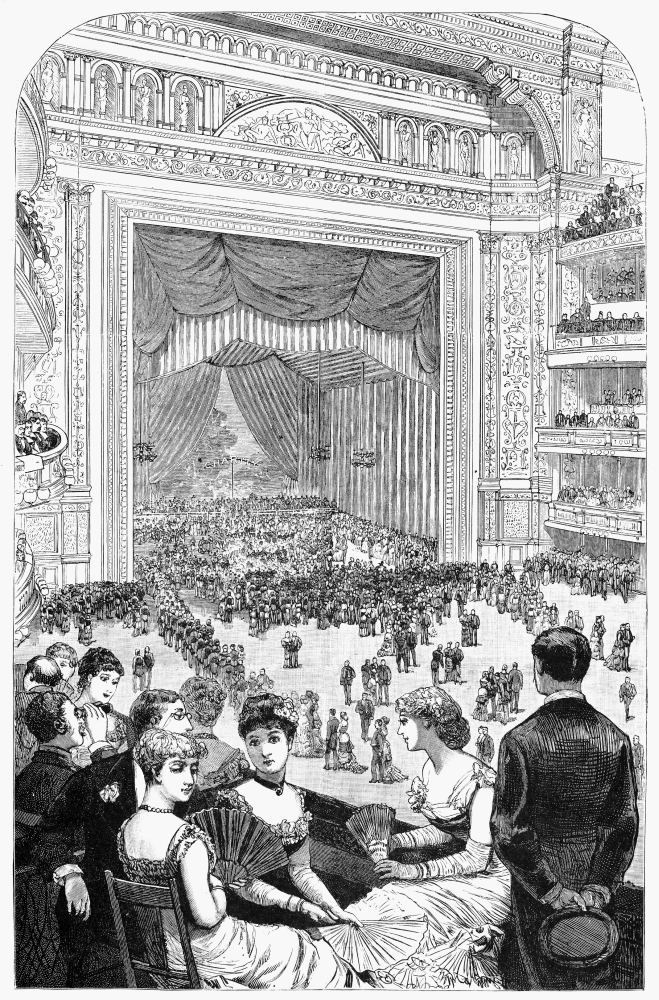
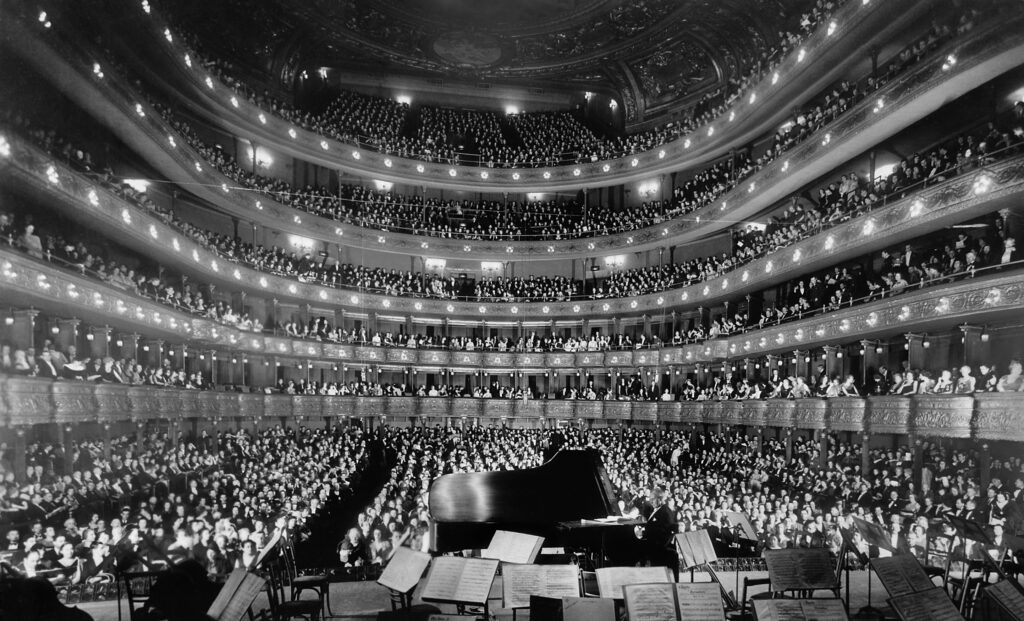
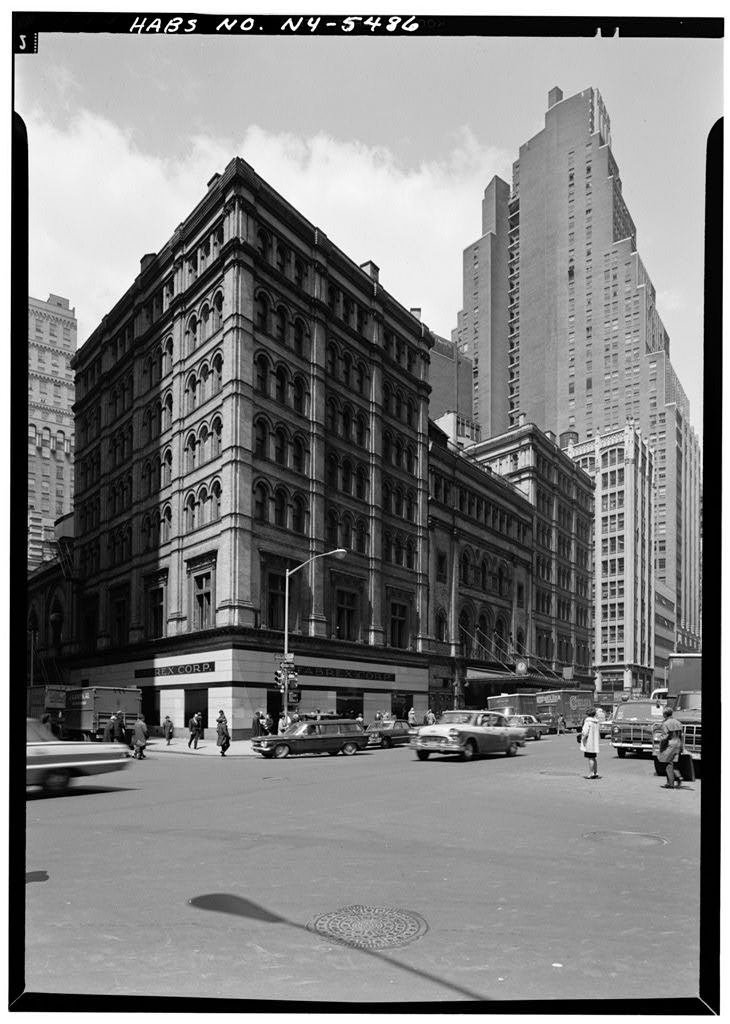
A charity ball at the Metropolitan Opera House in New York City. Wood engraving, 1884. Library of CongressA full house, seen from the rear of the stage, at the Metropolitan Opera House for a concert by pianist Josef Hofmann, November 28, 1937. Wikimedia Commons (touch up by Mmxx)The opera house in the 1960s before demolition. Historic American Buildings Survey (Library of Congress)
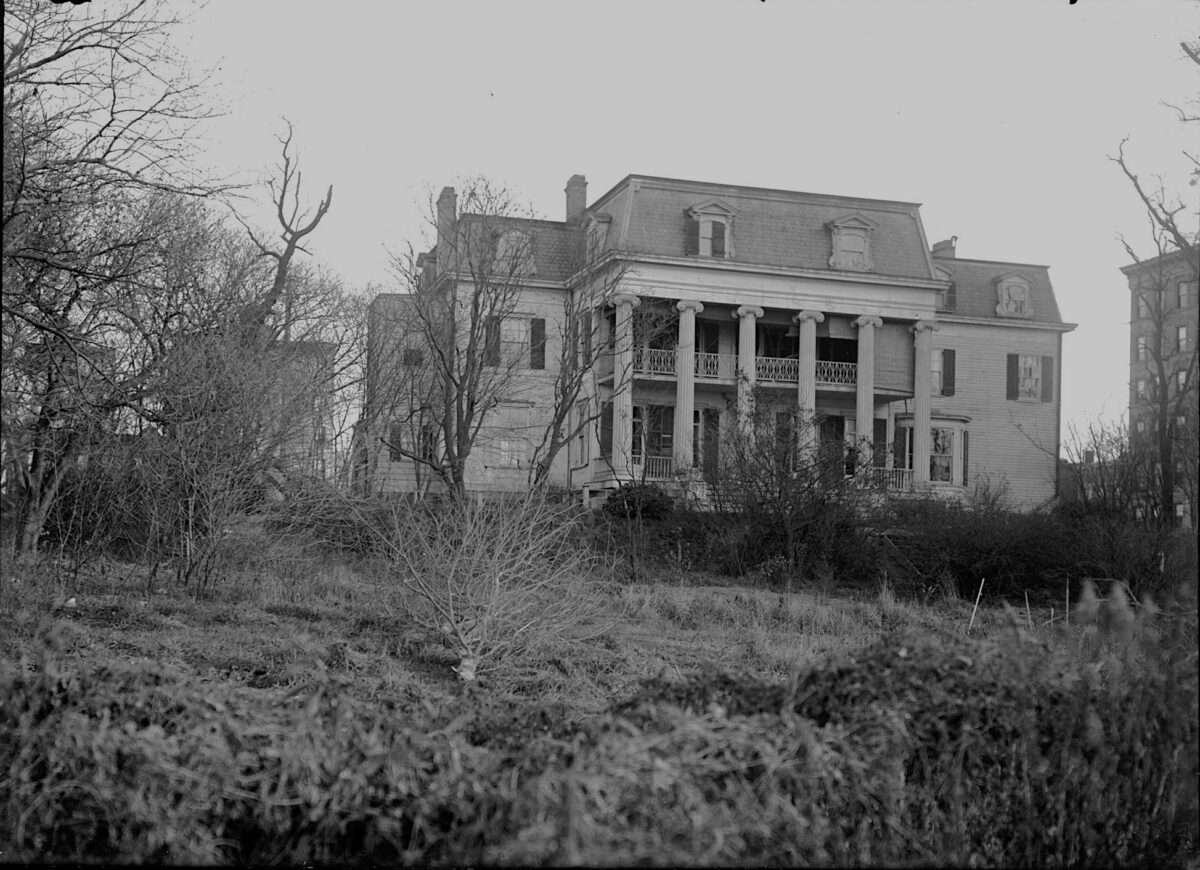
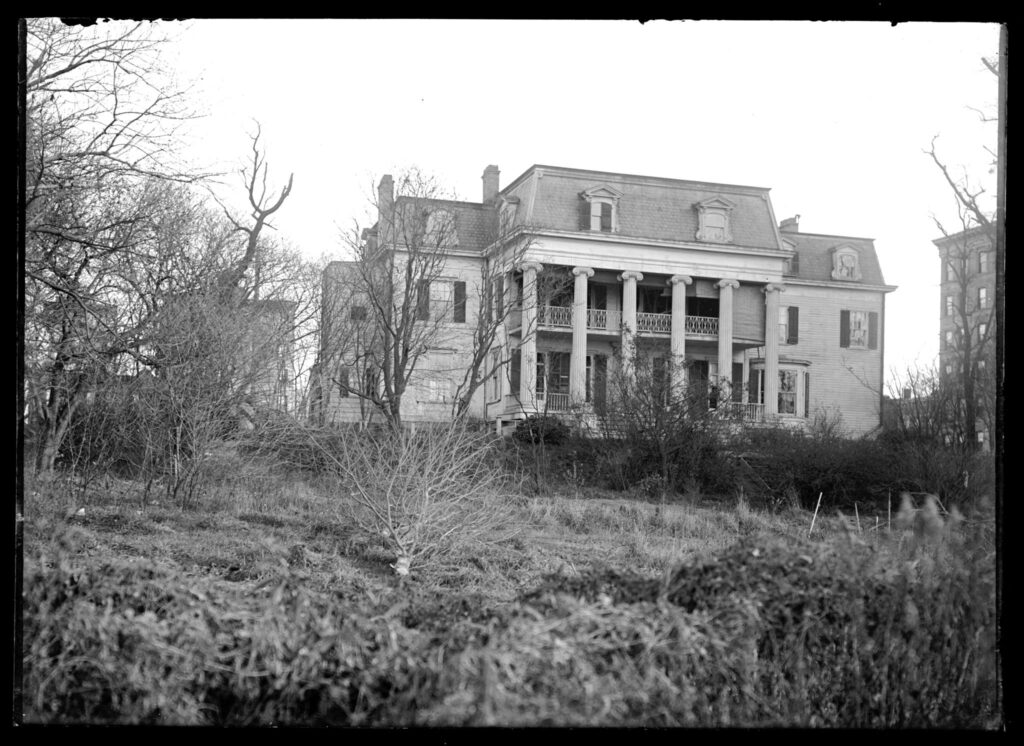
The old Furniss mansion, with its dark secrets literally behind a locked door. (courtesy Ephemeral New York)
A brand new batch of haunted houses and spooky stories, all from the gaslight era of New York City, the illuminating glow of the 19th century revealing the spirits of another world.
Greg and Tom again dive into another batch of terrifying ghost stories, using actual newspaper reports and popular urban legends to reveal a different side to the city’s history.
If you just like a good scare, you’ll enjoy these historical frights. And if you truly believe in ghosts, then these stories should especially disturb you as they take place in actual locations throughout the city — from the Lower East Side to the Bronx. And even in cases where these 19th-century haunted houses have been demolished, who’s to say the spirits themselves aren’t still hanging around?
Featured in this year’s crop of scary stories:
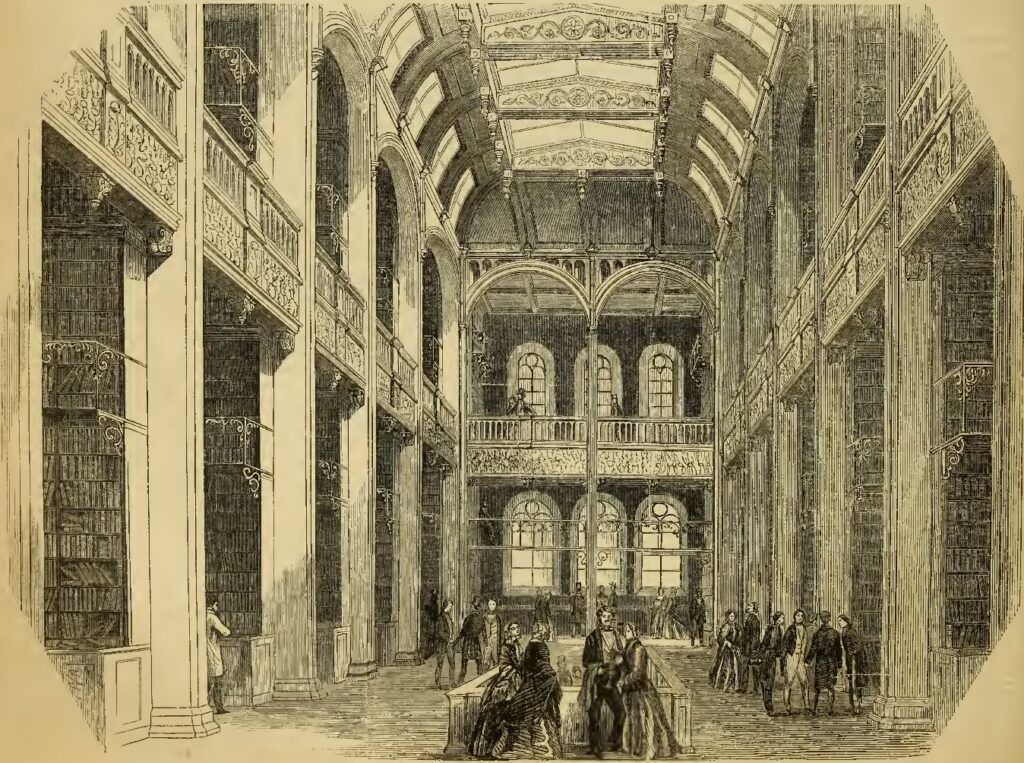
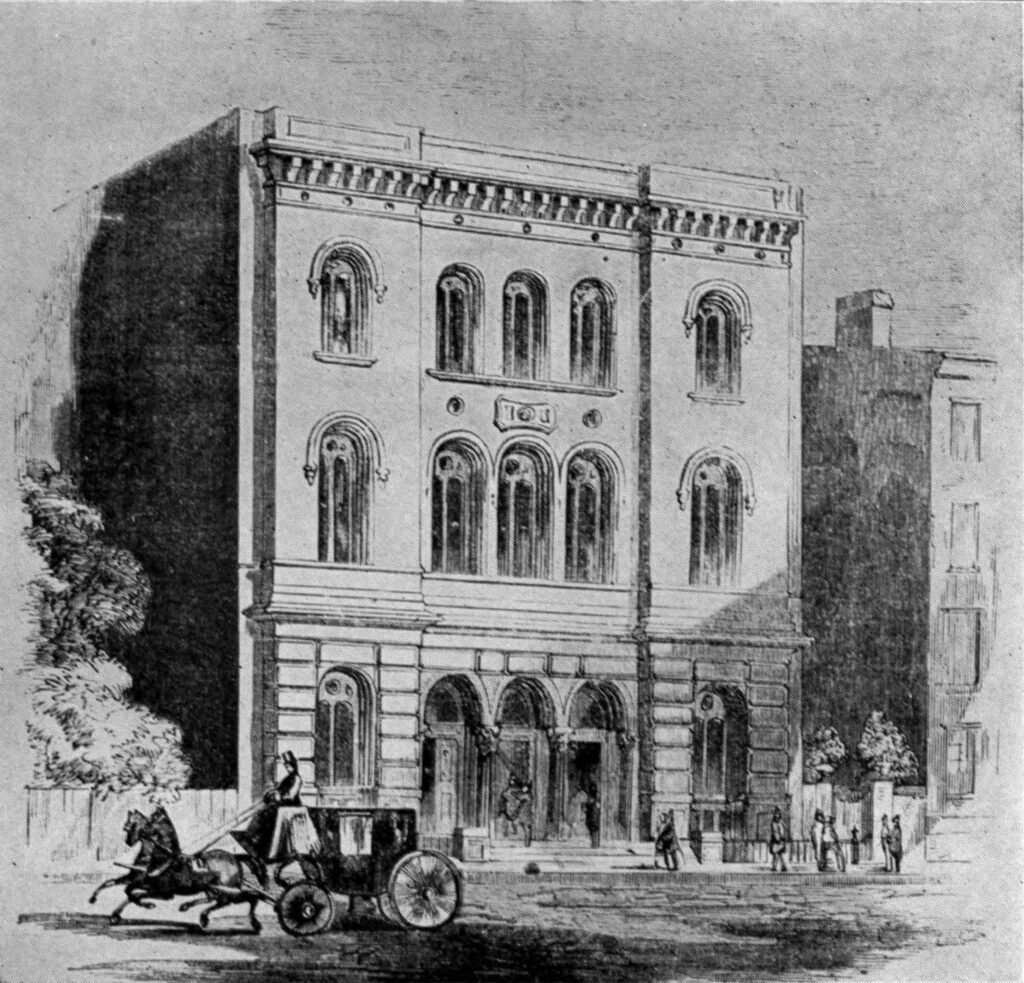
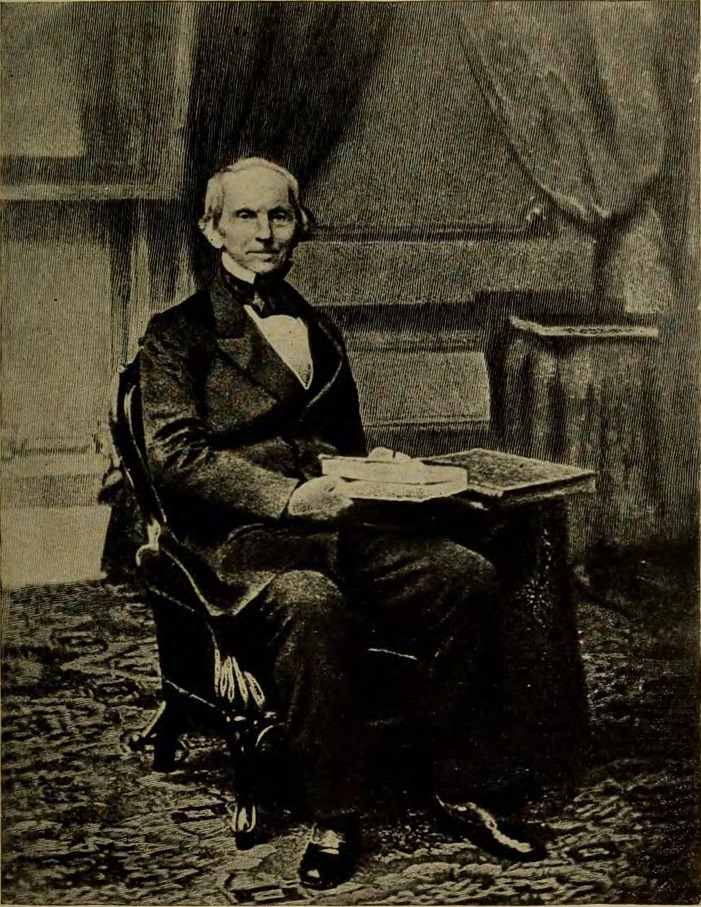
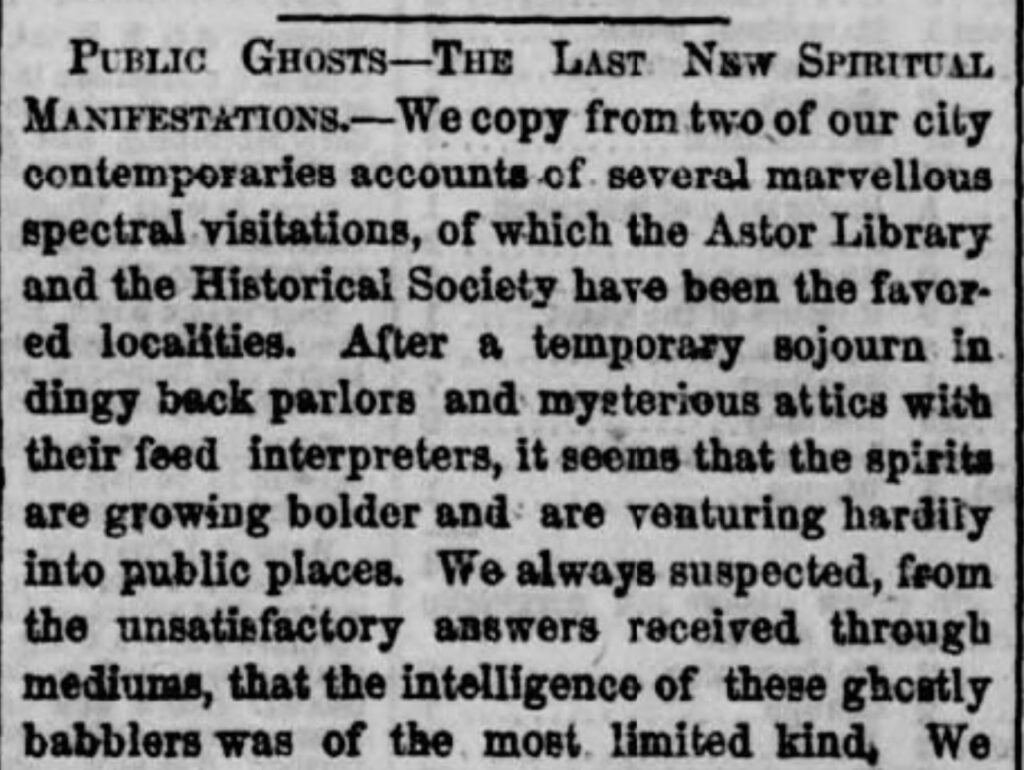
— A ghostly encounter at the Astor Library (today’s Public Theater) involving a most controversial set of mysterious books;
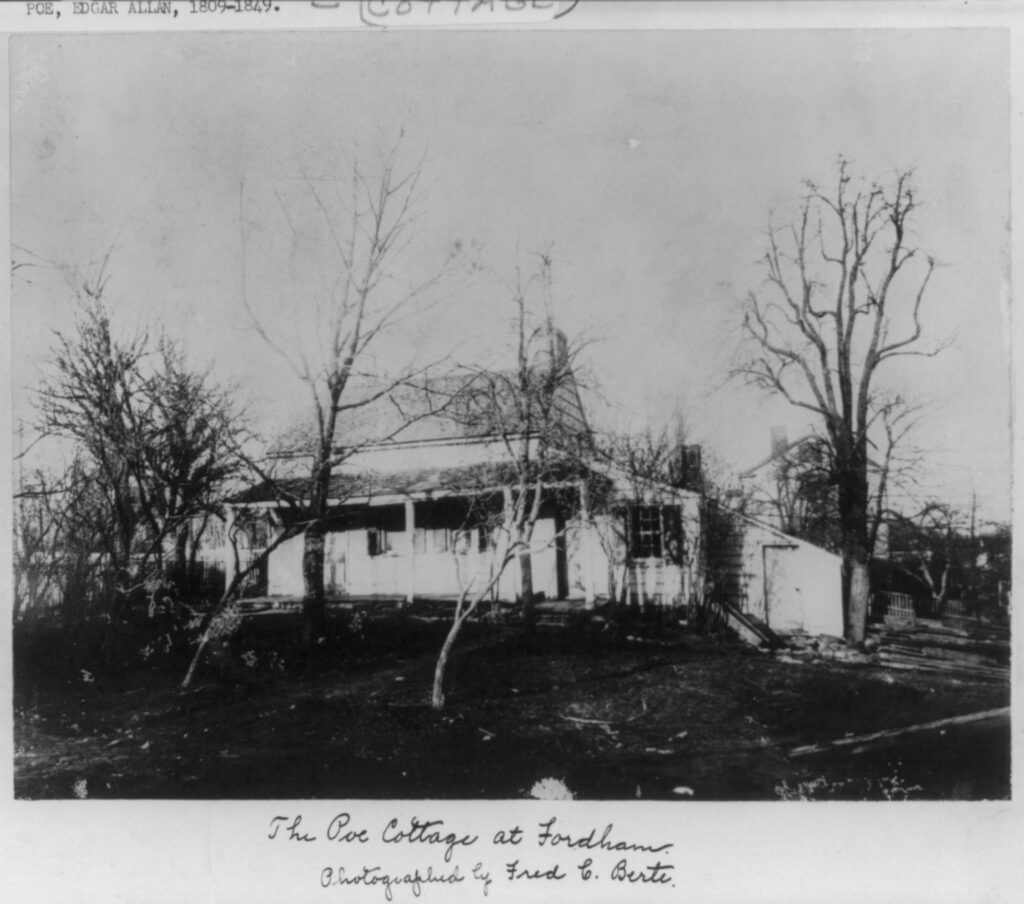
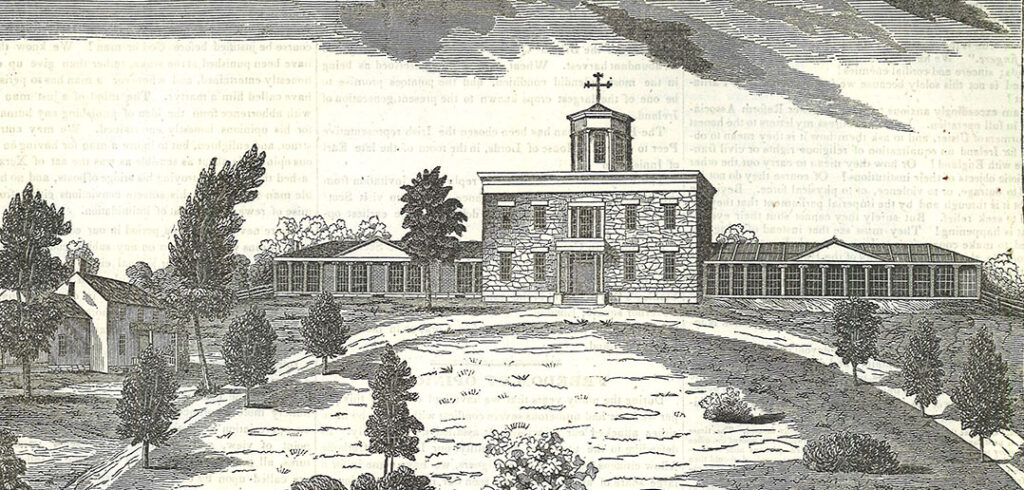
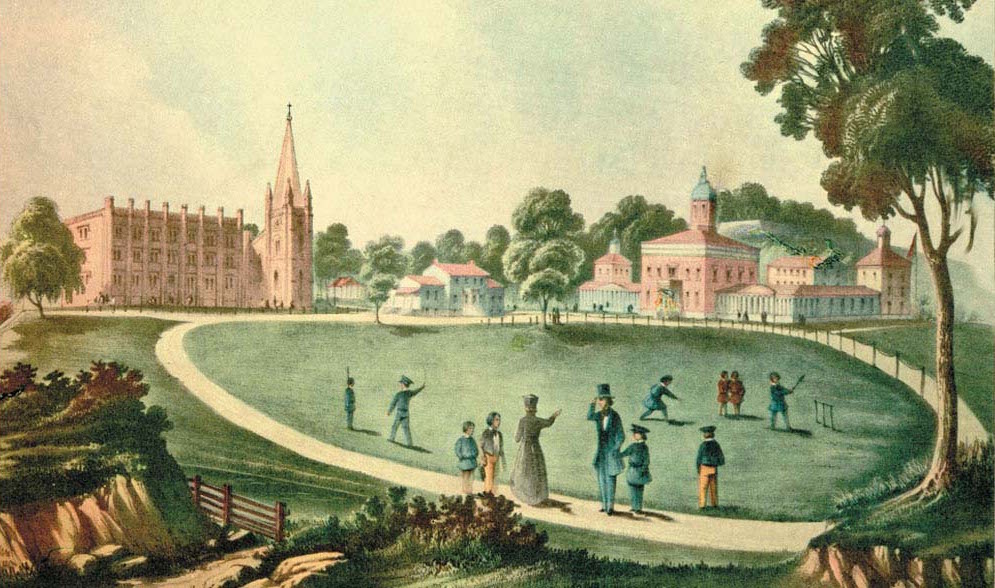
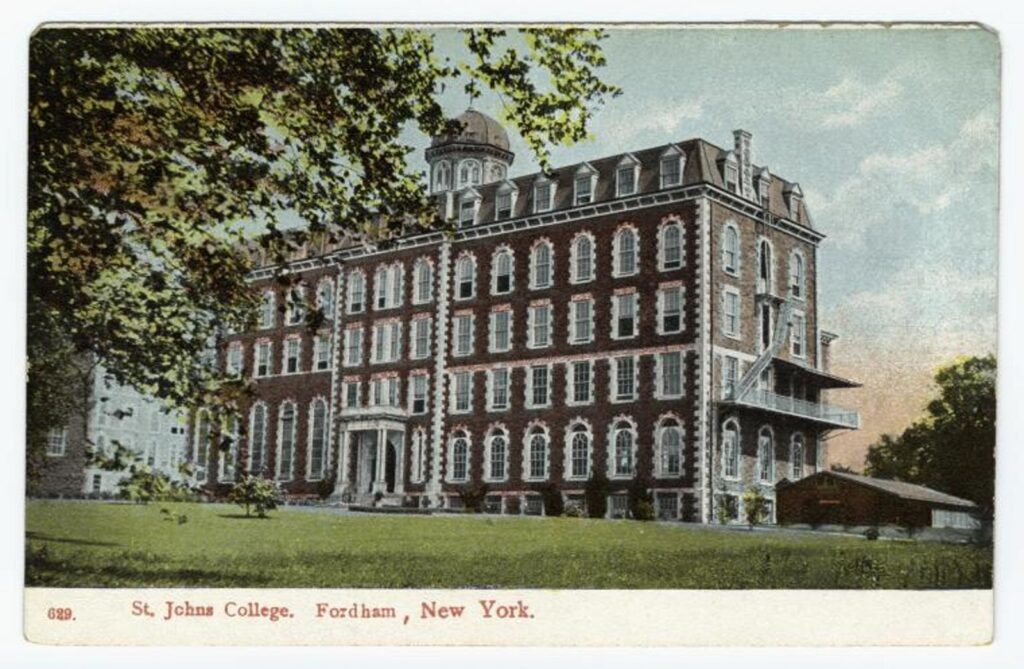
— A whole graduating class of ghosts stalks the campus of the Bronx’s Fordham University, and it may have something to do with either Edgar Allan Poe or the film The Exorcist;
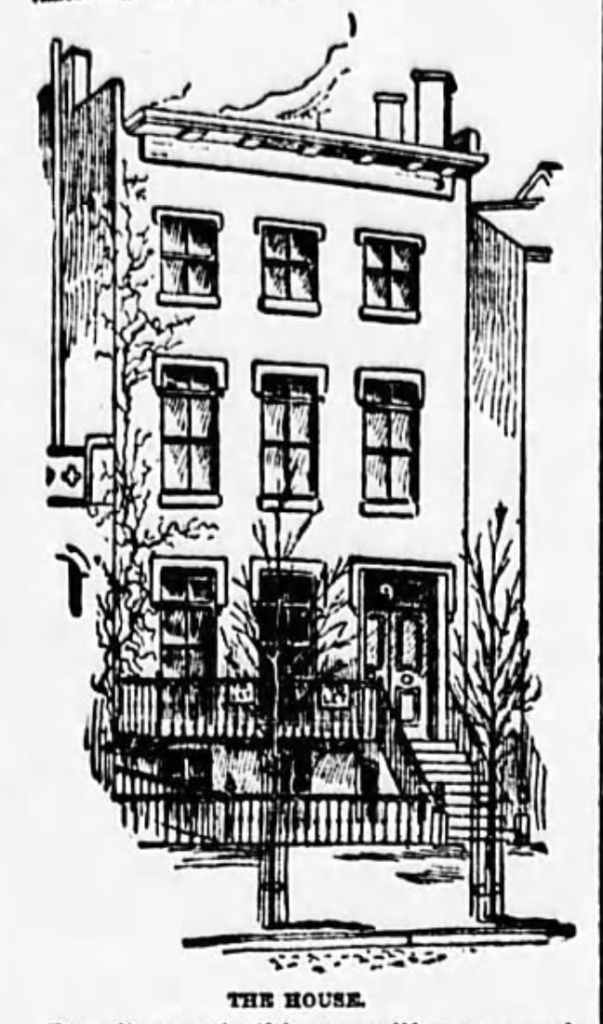
— Just north of Washington Square Park in Greenwich Village, a haunted townhouse vexes several tenants, the sight of a hunched-over man in a cap driving people insane;
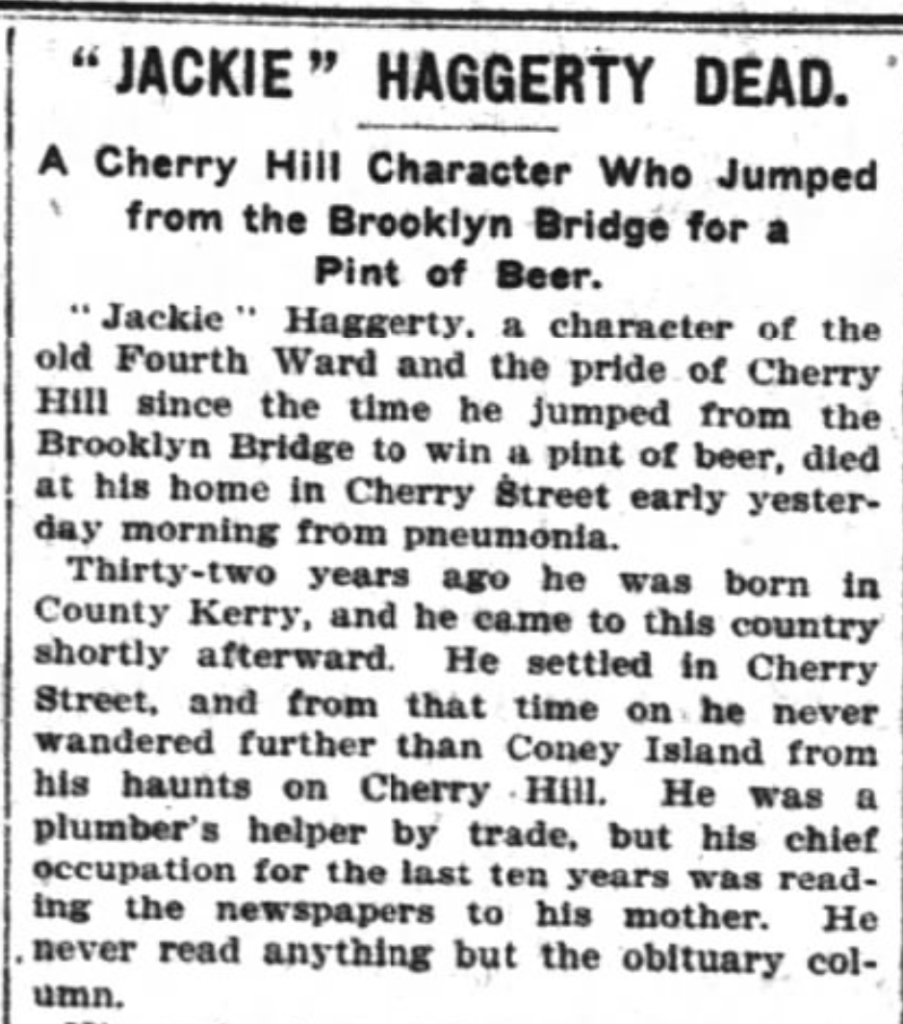
— In the shadow of the Brooklyn Bridge, a small apartment in today’s Two Bridges neighborhood becomes possessed by a poltergeist with a penchant for throwing furniture …. and punches. One vainglorious showoff named Jackie Hagerty learns the hard way;
— And before the days of Riverside Drive, a rustic old mansion once sat on the banks of the Upper West Side, with a mysterious locked room that must never be opened.
LISTEN TODAY: GHOST STORIES BY GASLIGHT
And of course listen to the entire collection of Bowery Boys ghost stories podcast here and in this Spotify playlist:
Ghost of the Astor Library
Wikimedia Commons/Internet Archives. Gleason’s Pictorial Vol. 6 No. 8 (February 25, 1854), Boston:124Astor Library 1954. Harry Miller Lydenberg (July 1916). “History of the New York Public Library”. Bulletin of the New York Public Library 20: 570-571.; first published in Gleason’s Pictorial Drawing-Room Companion/Wikimedia commonsThe librarian Joseph Cogswell
The Sorority of Ghosts
Poe Cottage, pictured 1900, Library of CongressThis 1840 image of Cunniffe House by engraver Benson J. Lossing, also includes the original Rose Hill Manor house, at left. (Image courtesy of Catholic Historical Research Center of the Archdiocese of Philadelphia via Fordham)St. John’s Colllege, 1846, courtesy FordhamSt John’s College aka Fordham University, New York Public Library
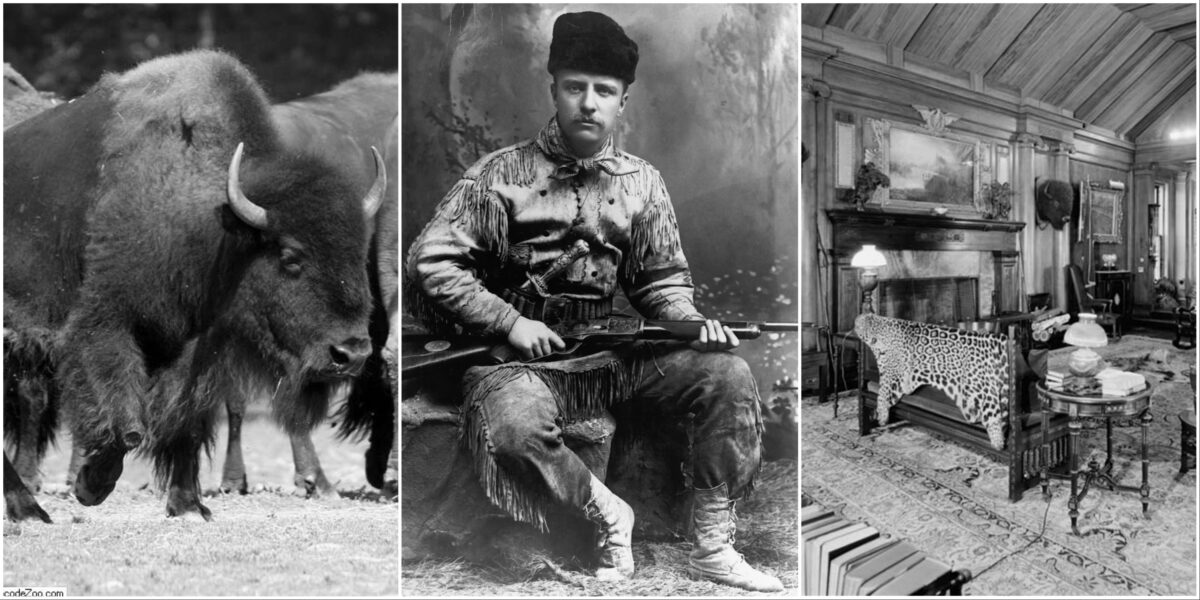
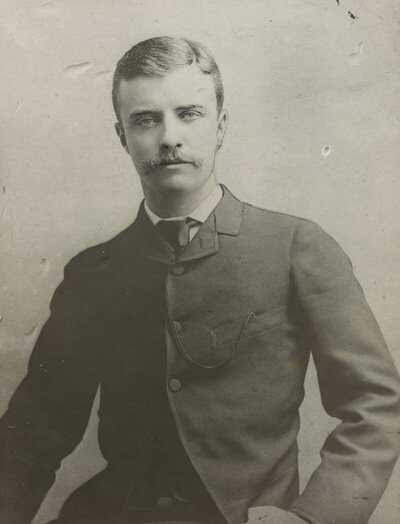
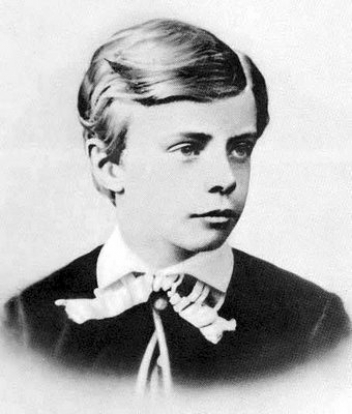
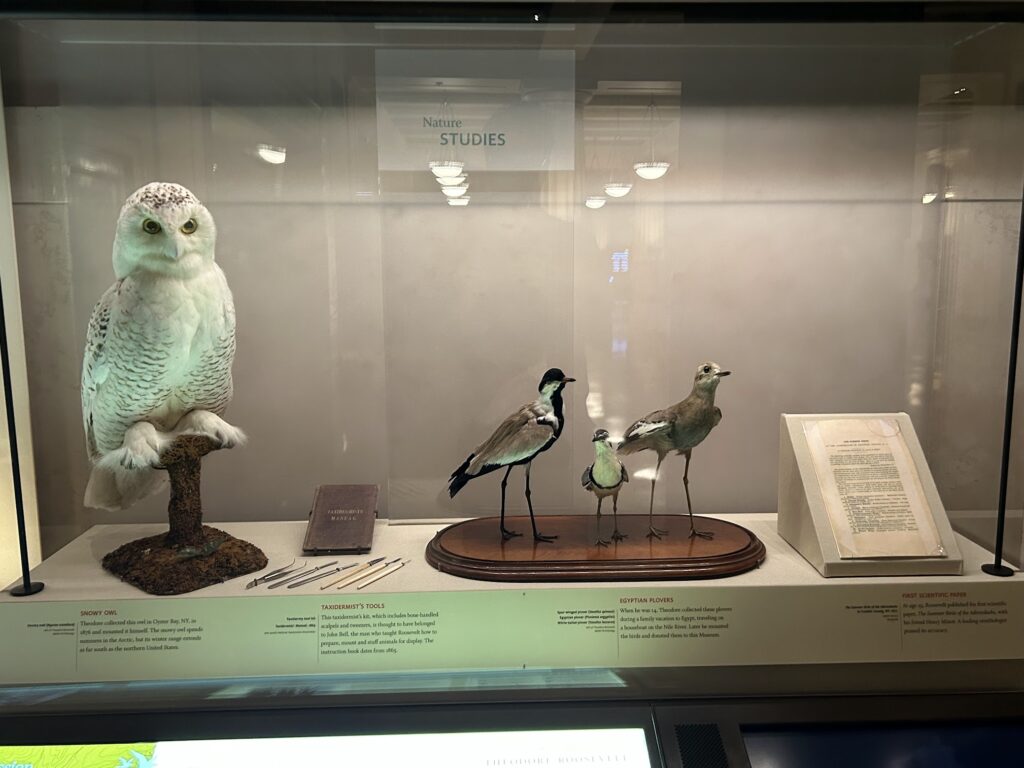
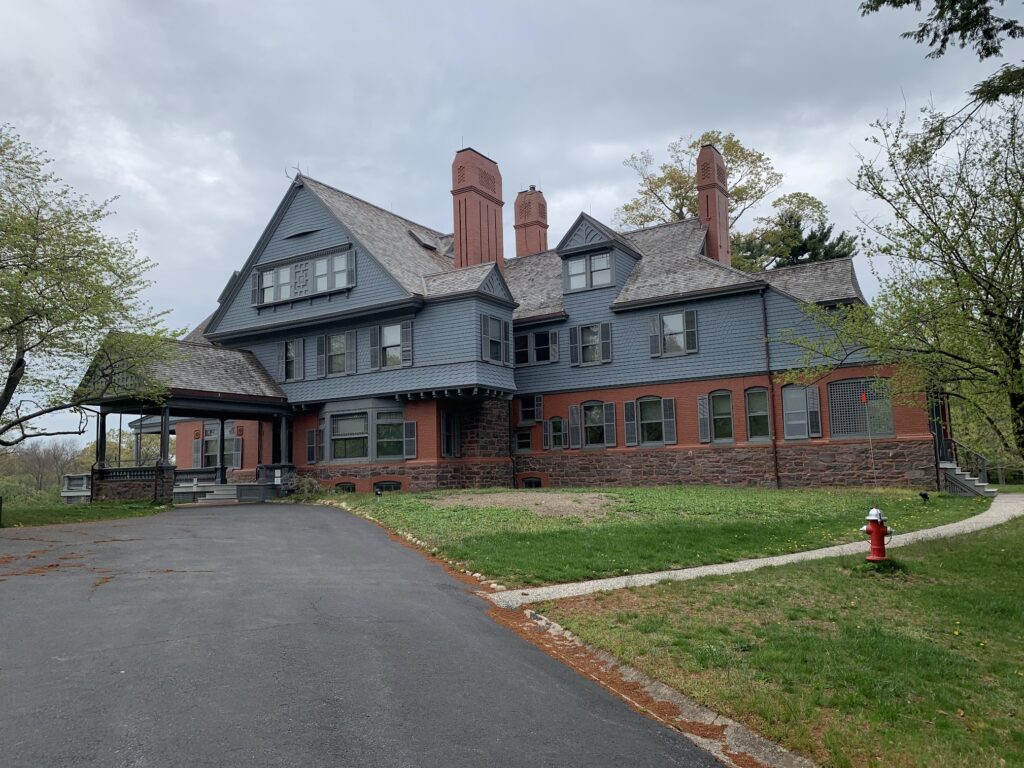
Theodore Roosevelt was a New Yorker and a rugged outdoorsman, a politician and a naturalist, a conservationist and a hunter. His connection with the natural world begin at birth in his Manhattan brownstone home and end with his death in Sagamore Hill.
He killed thousands of animals over his lifetime as a hunter-naturalist, most notably one of the last roaming bison (or American buffalo) in the Dakota Badlands. Many of his trophies hang on the walls of his home in Long Island; other specimens “live on” in institutions such as the American Museum of Natural History.
But as this episode’s special guest Ken Burns reveals in his newest mini-series The American Buffalo, Roosevelt’s relationship with the animal world was complicated and in certain ways, hard to understand today.
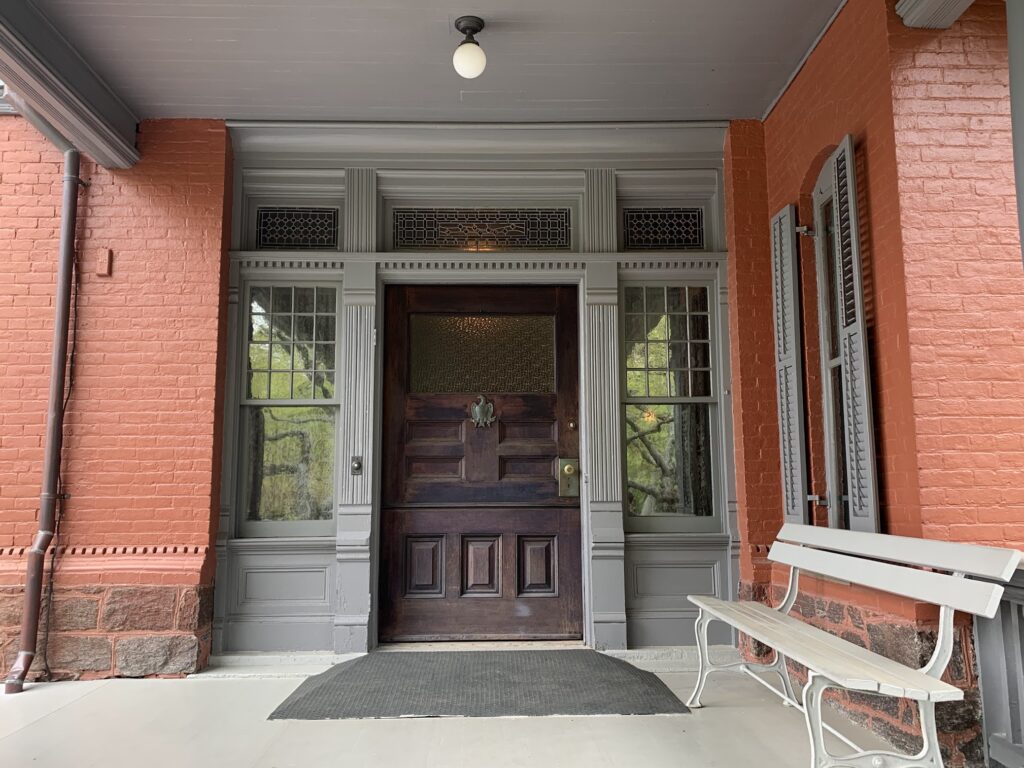
This episode marks the 165th anniversary of Roosevelt’s birth in October and the 100th anniversary of the opening of the Theodore Roosevelt Birthplace National Historic Site (which plays a small but important role in today’s story. )
As one of America’s great conservationists, President Roosevelt’s advocacy for wildlife and public land helped to preserve so much of the natural richness of the United States.
And his involvement in the creation of the New York Zoological Society (aka the Bronx Zoo) would set the stage for one ambitious project that would help bring the American buffalo back to the Midwestern plains.
LISTEN NOW: THEODORE ROOSEVELT’S WILD KINGDOM
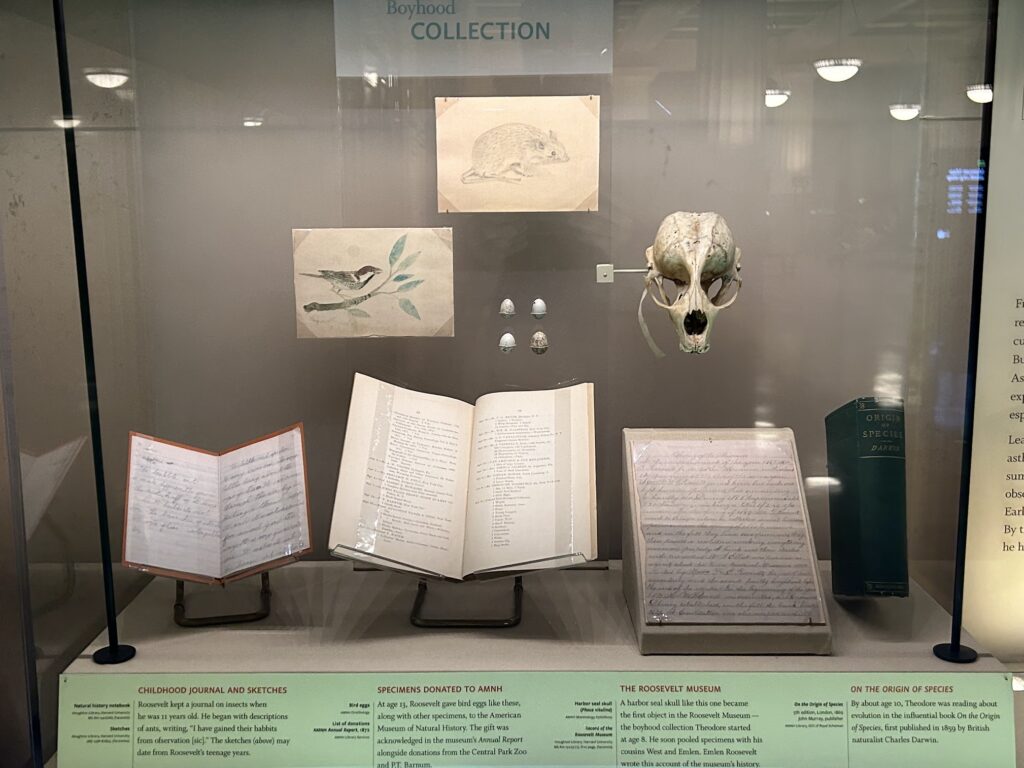
Eleven-year-old Roosevelt was already creating his own museum of natural history.
A special thanks to documentary filmmaking legend Ken Burns for joining me on the show today. His latest project The American Buffalo debuts on PBS on October 16, 2023.
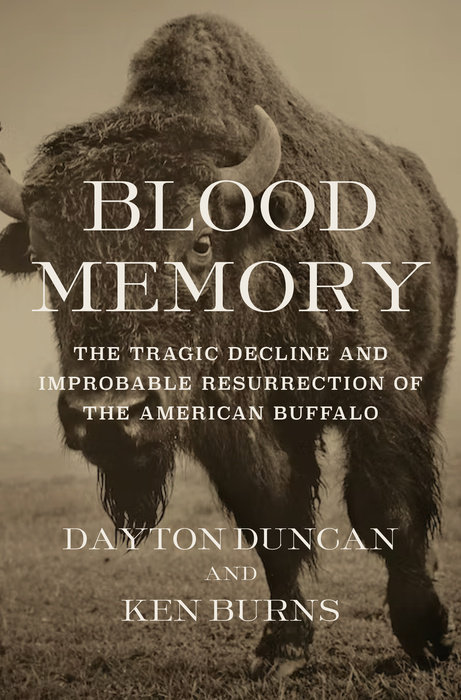
And the story is elaborated upon in a new book by Burns and Dayton Duncan
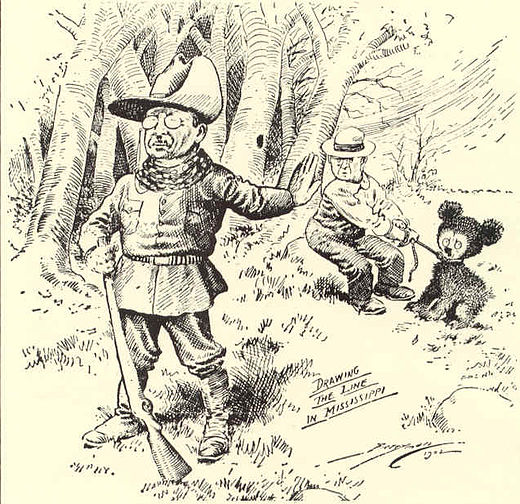
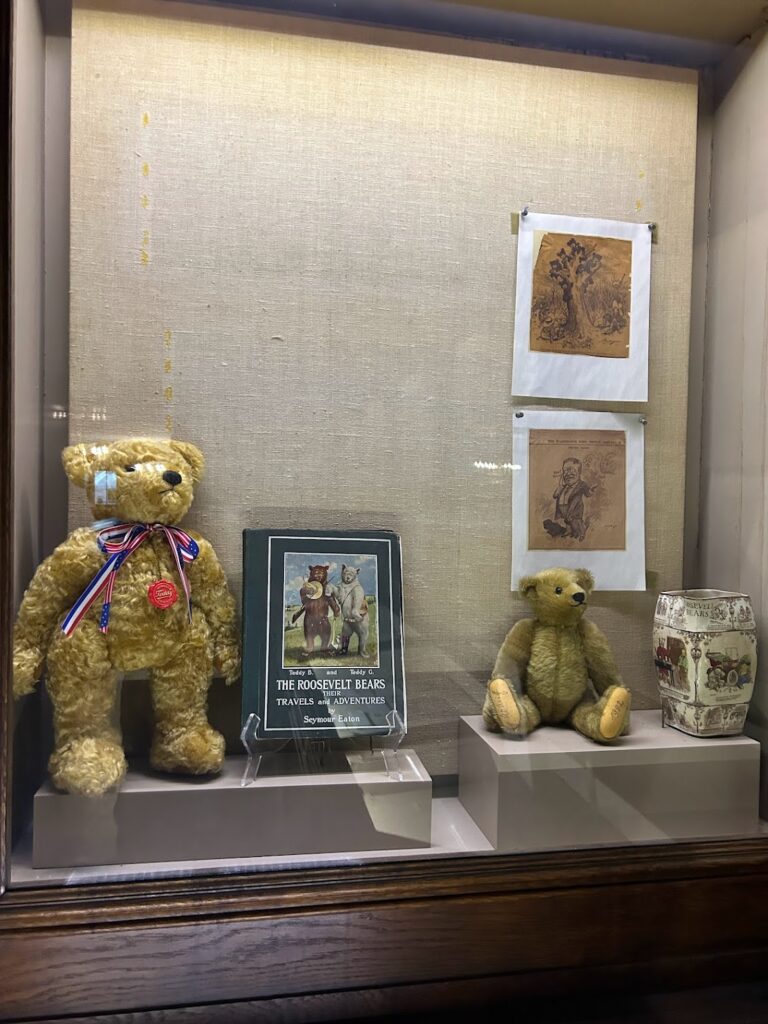
The 1902 Clifford Berryman editorial cartoon which inspired the creation of the Teddy Bear
Theodore Roosevelt’s New York
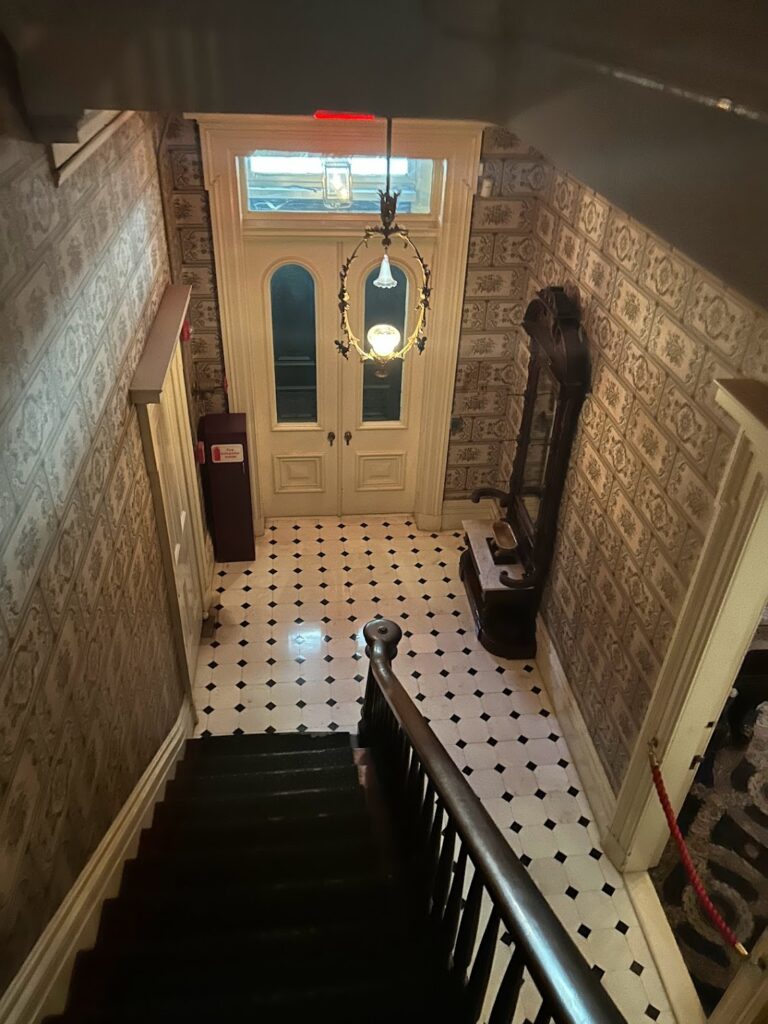
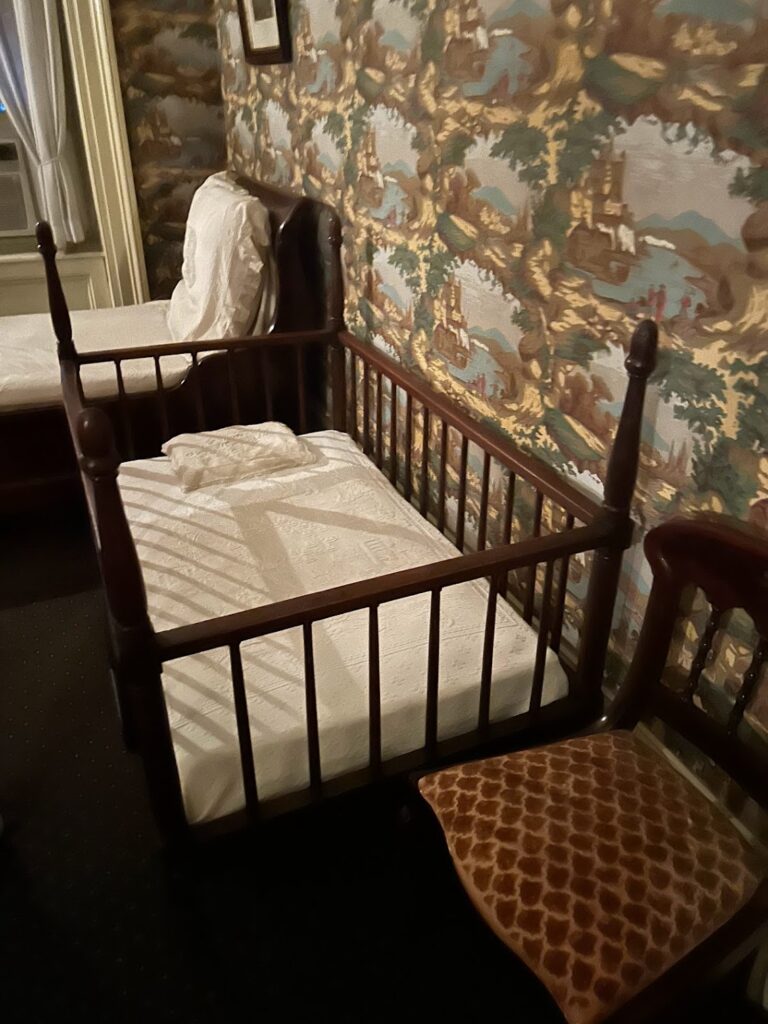
Some images from the Theodore Roosevelt Birthplace National Historic Site
Photo by Greg YoungPhoto by Greg YoungPhoto by Greg Young
Displays from the American Museum of Natural History’s Theodore Roosevelt exhibition
Photo by Greg YoungPhoto by Greg Young
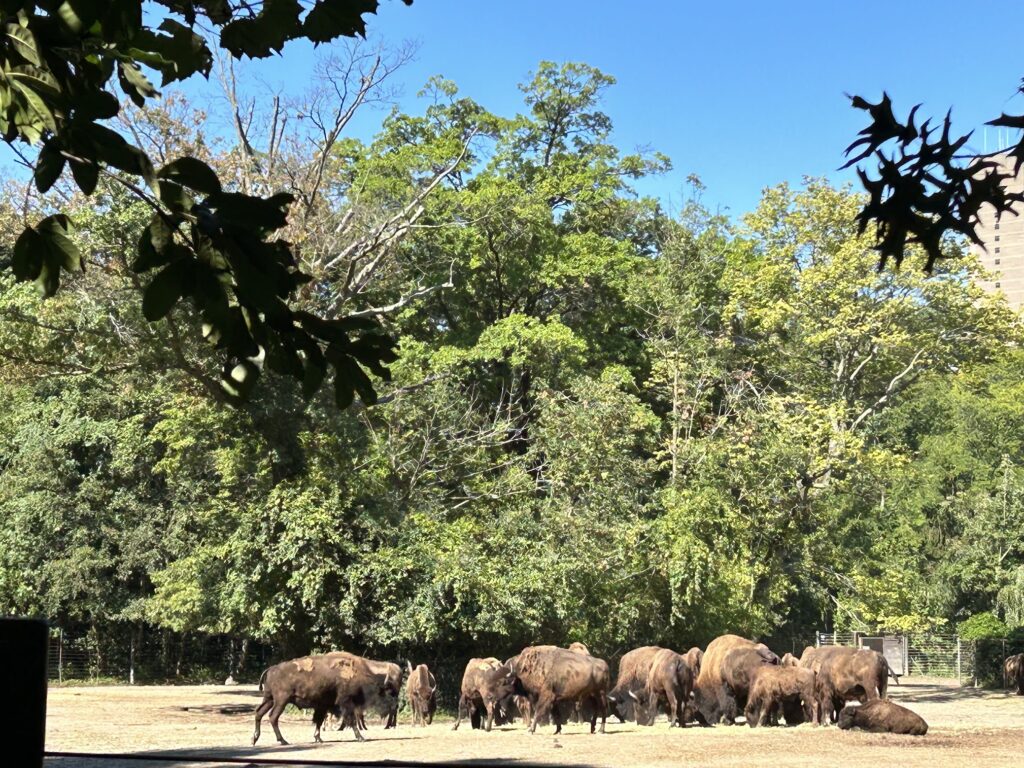
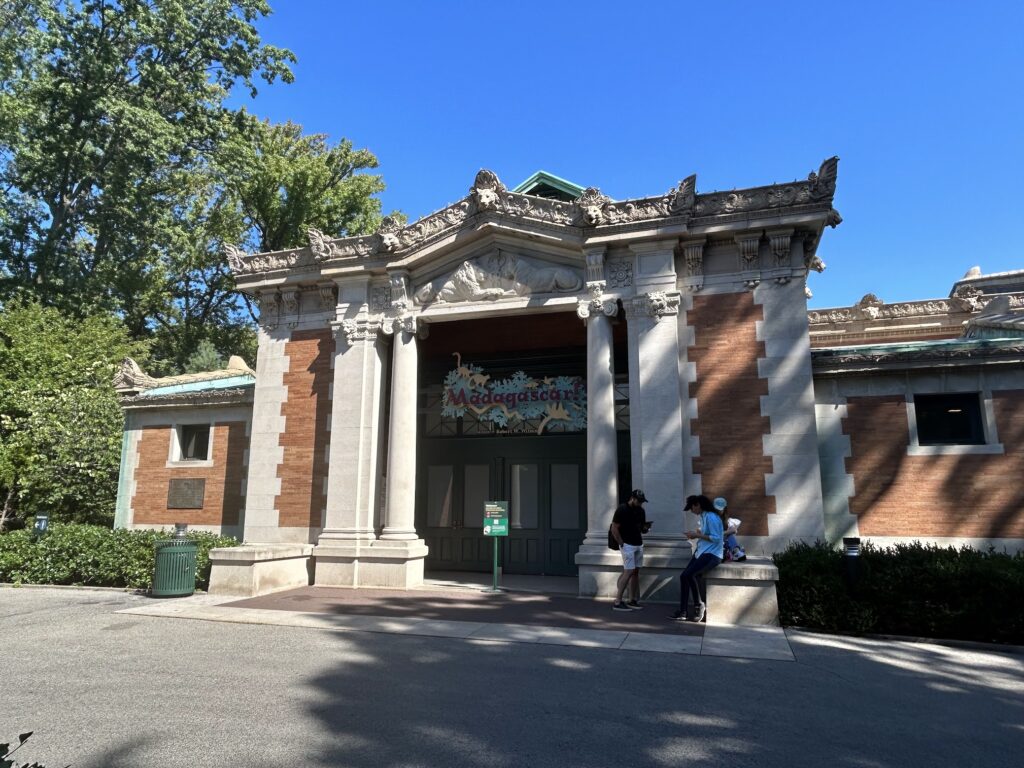
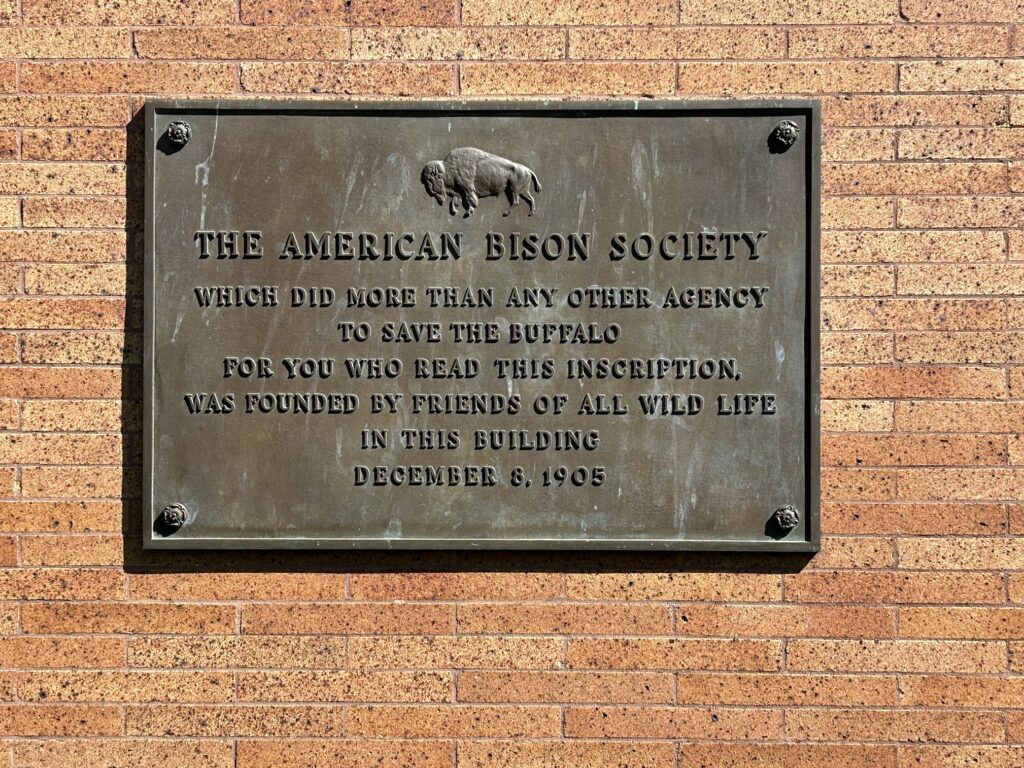
The bisons of the Bronx Zoo and the lion house, where the American Bison Society was founded.
Photo by Greg YoungPhoto by Greg YoungPhoto by Greg Young
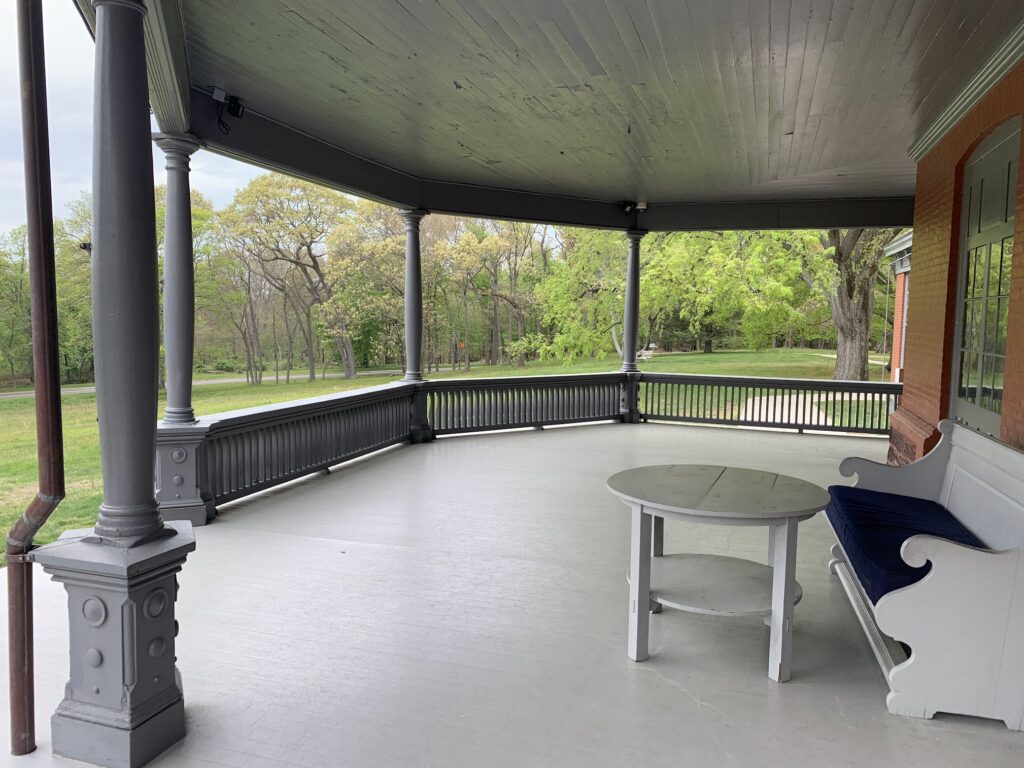
Roosevelt’s Long Island home Sagamore Hill
Photo by Greg YoungPhoto by Greg Young
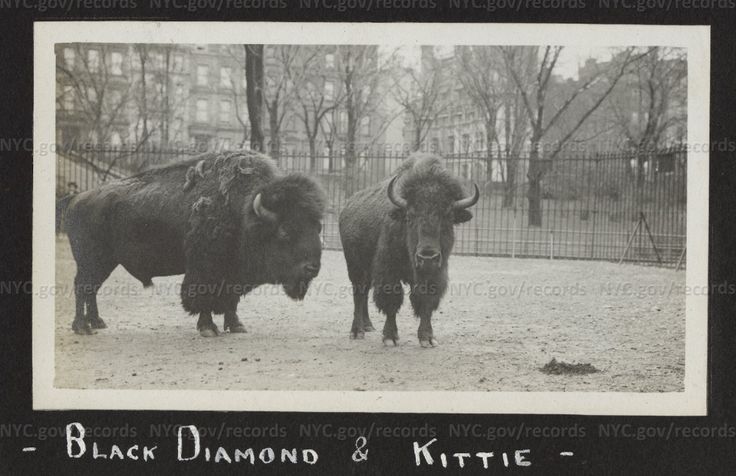
Black Diamond at the Central Park Zoo. The animal became the model for the 1913 buffalo nickel but was slaughtered two years later.
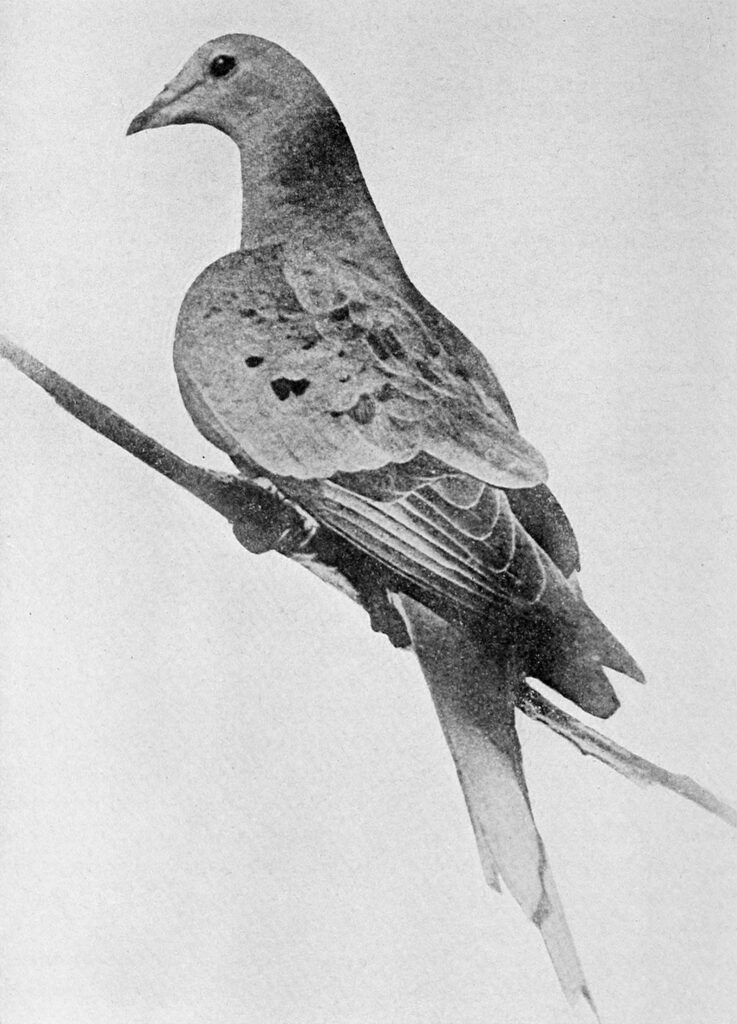
Martha, the last surviving passenger pigeon. When she died at the Cincinnati Zoo, passenger pigeons became extinct.
1912, Wikimedia Commons
FURTHER LISTENING
After listening to this show about Theodore Roosevelt, the bison and the origins of the American conservation movement, head back to some our previous shows with related themes:
FURTHER READING
“The American Hunter—Naturalist and the Development of the Code of Sportsmanship” / Thomas A. Altherr The American Museum of Natural History and How It Got That Way / Colin Davey Blood Memory: The Tragic Decline and Improbable Resurrection of the American Buffalo / Dayton Duncan and Ken Burns “The Hunter’s Aim: The Cultural Politics of American Sport Hunters, 1880-1910,” Journal of Leisure Research / Daniel Justin Herman Hunting Trips of a Ranchman / Theodore Roosevelt Last Stand: George Bird Grinnell, the Battle to Save the Buffalo and the Birth of the New West / Michael Punke The Naturalist / Darrin Lunde “Pictures in the Papers,” The American Mercury / Walt McDougall The Rise of Theodore Roosevelt / Edmund Morris The River of Doubt: Theodore Roosevelt’s Darkest Journey / Candace Millard The Wilderness Hunter / Theodore Roosevelt The Wilderness Warrior: Theodore Roosevelt and the Crusade for America / Douglas Brinkley
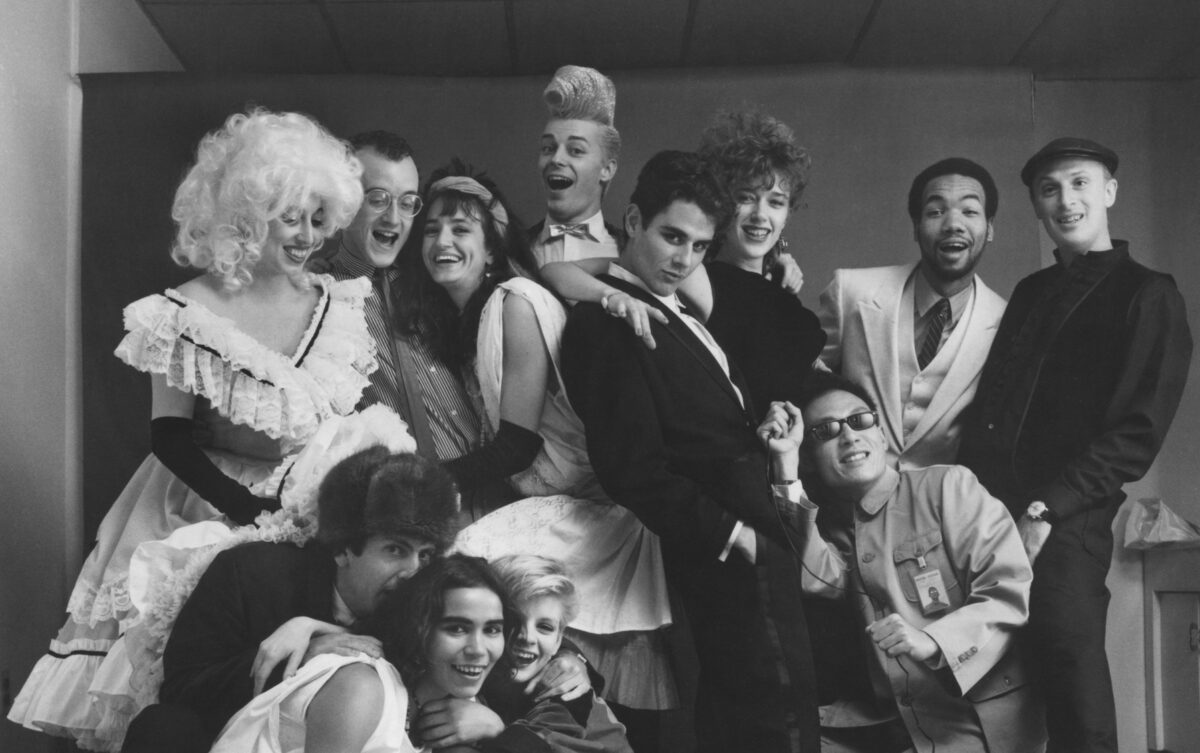
The wonderful wacky artists of Club 57. Photo by Tseng Kwong Chi
PODCAST The rebirth of the East Village in the late 1970s and the flowering of a new and original New York subculture — what Edmund White called “the Downtown Scene” — arose from the shadow of urban devastation and was anchored by a community that reclaimed its own deteriorating neighborhood.
In the last episode (Creating the East Village 1955-1975) this northern corner of New York’s Lower East Side became the desired home for new cultural venues — nightclubs, cafes, theaters, and bars — after the city tore down the Third Avenue Elevated in 1955.
But by the mid 1970s, the high wore off. The East Village was in crisis, one of the Manhattan neighborhoods hit hardest by the city’s fiscal difficulties and cutbacks. It had become a landscape of dark, unsafe streets, buildings demolished in flame.
But the next generation of creative interlopers (following the initial stampede of Greenwich Village beatniks and hippies) built upon the legacies of East Village counter-culture to create poems, music, paintings and stage performances heavily influenced by the apocalyptic situations around them.
This was something truly distinct, a creative scene that was thoroughly and uniquely an East Village creation — punk and hardcore, murals and graffiti, fashion and drag,
And much of that was created by people who did not fit in anywhere else in the world, whether that world which rejected them was a Queens suburb or New Jersey or the Midwest or well beyond.
Photo: New York Daily News Archive
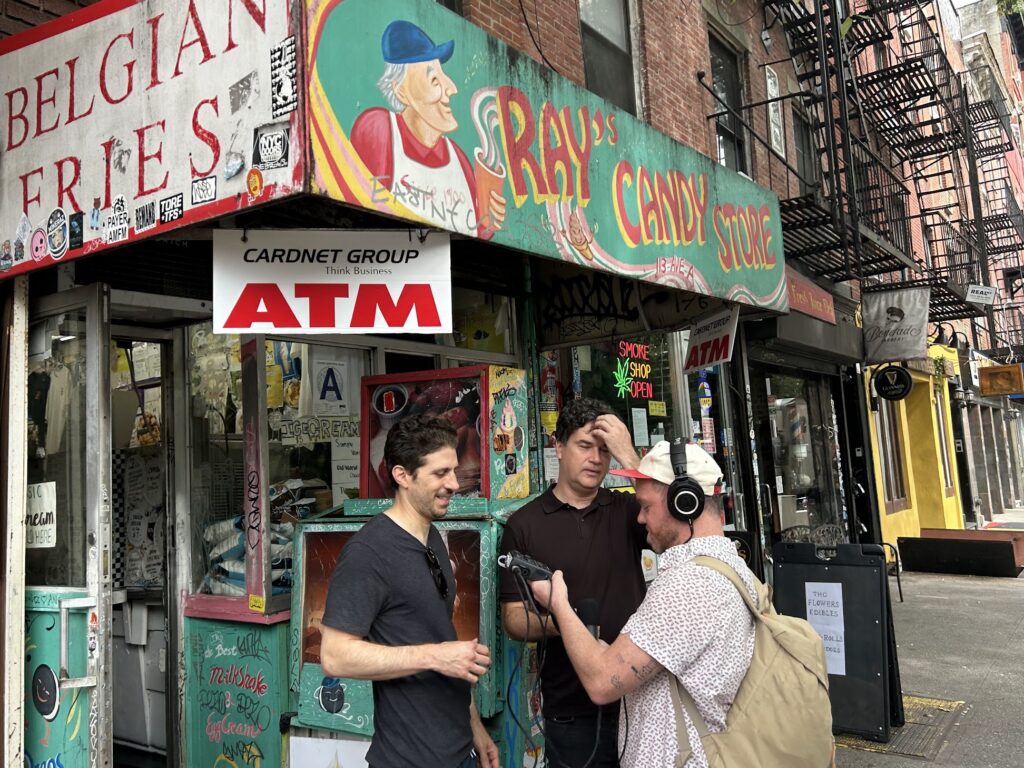
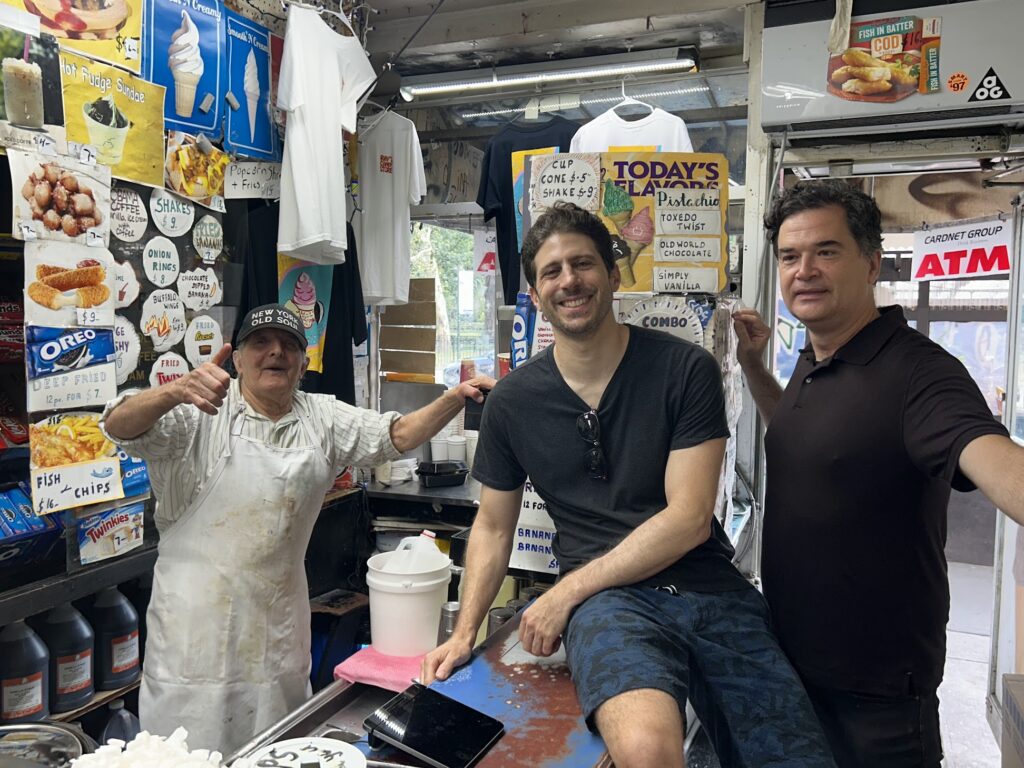
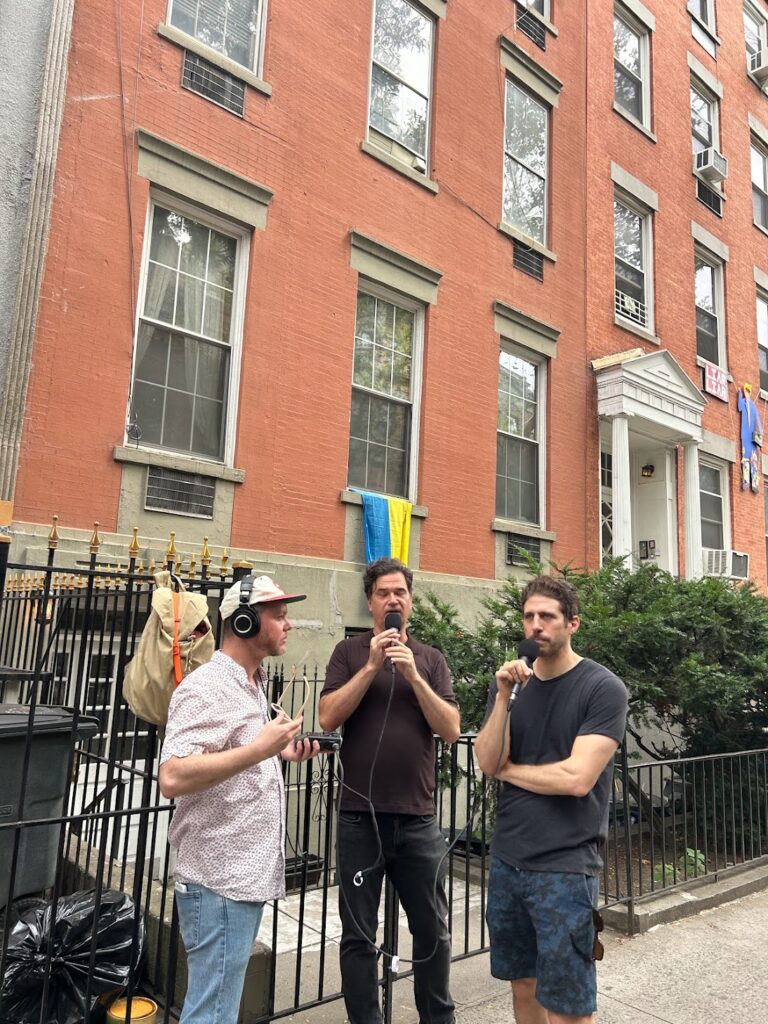
In this episode Greg hits the streets of the East Village with musician and tour guide Krikor Daglian (of True Tales of NYC), exploring the secrets of the recent past — from the origins of skateboarding to the seeds of the American alternative rock scene.
Follow along as they traipse to classic music venues and dive bars to uncover the special ingredients which made the East Village a most special place at the end of the 20th century.
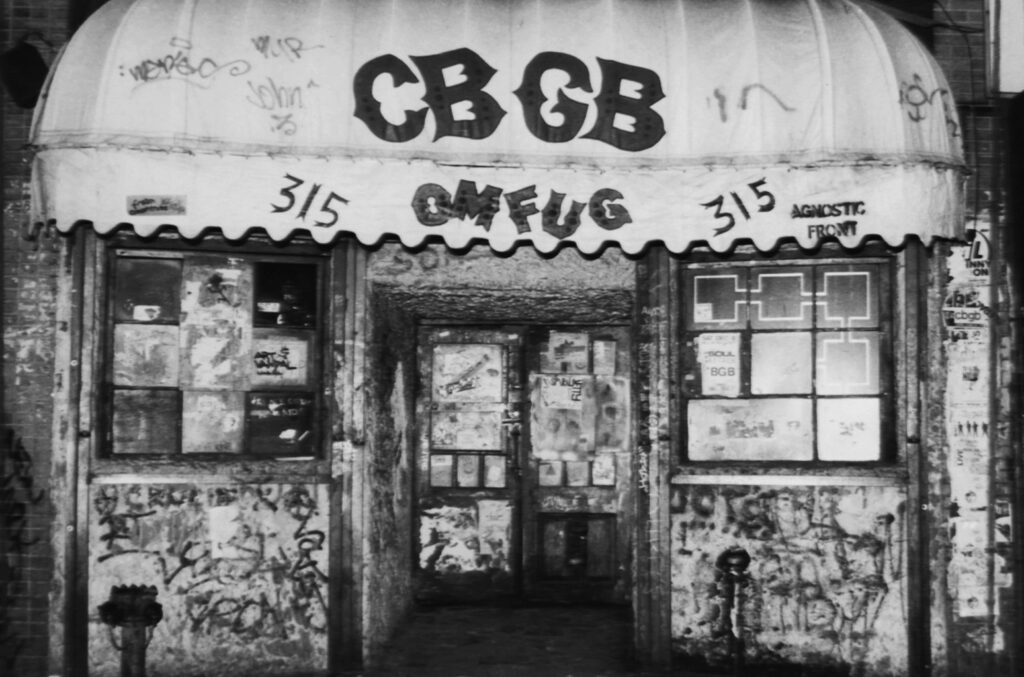
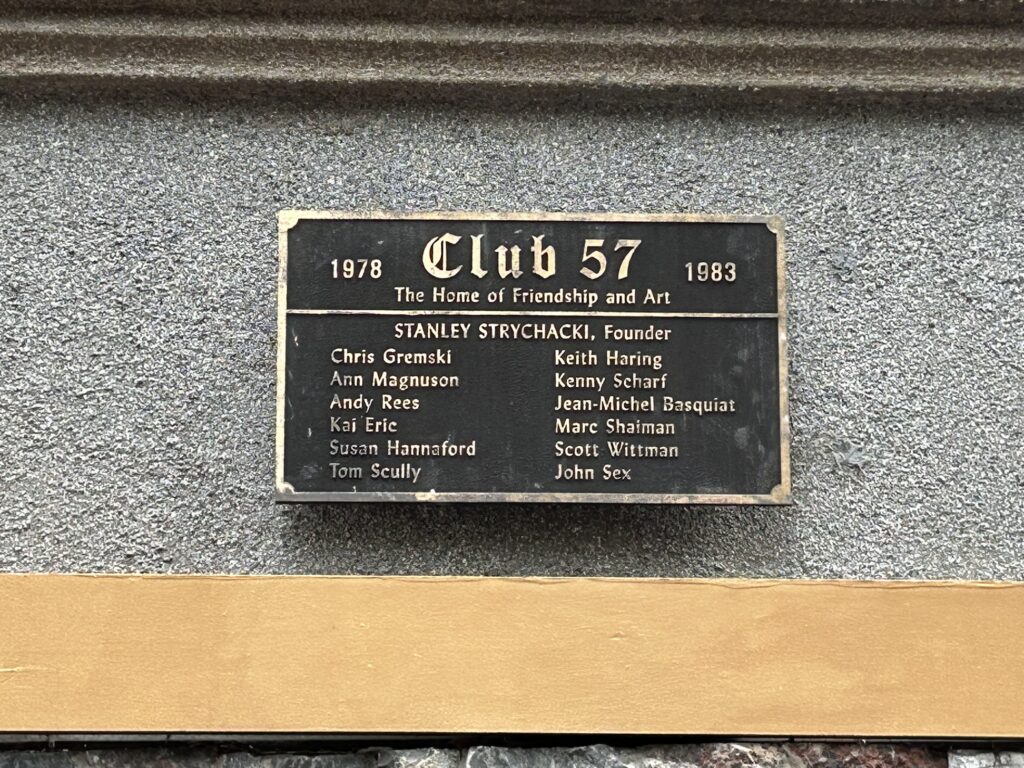
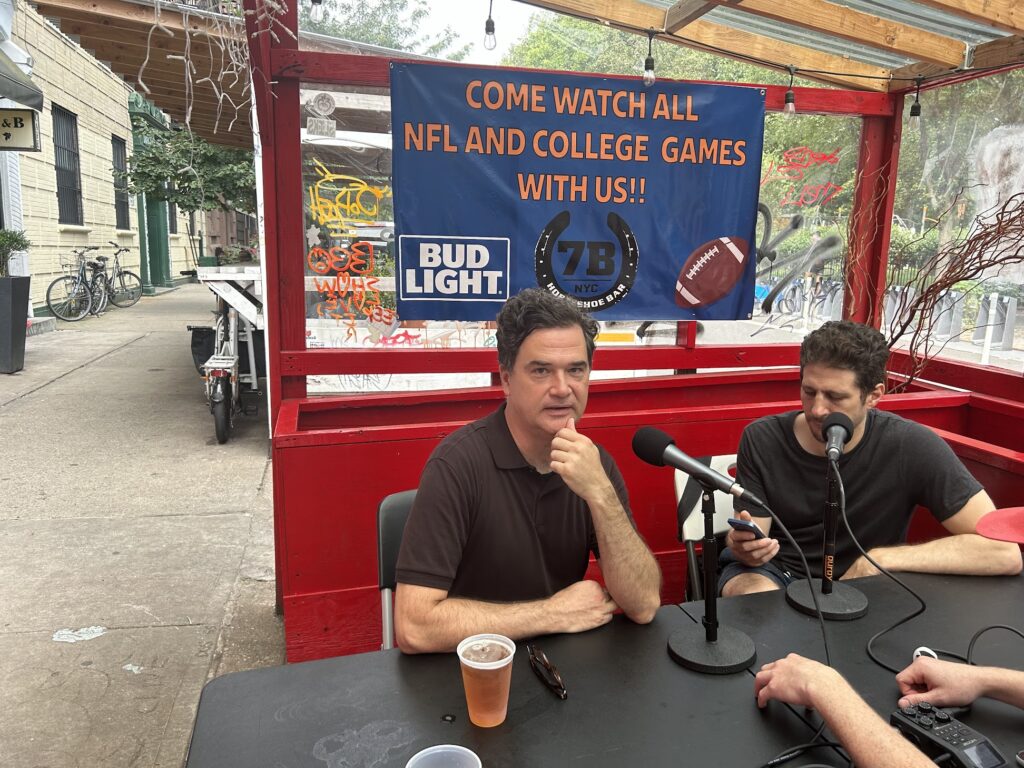
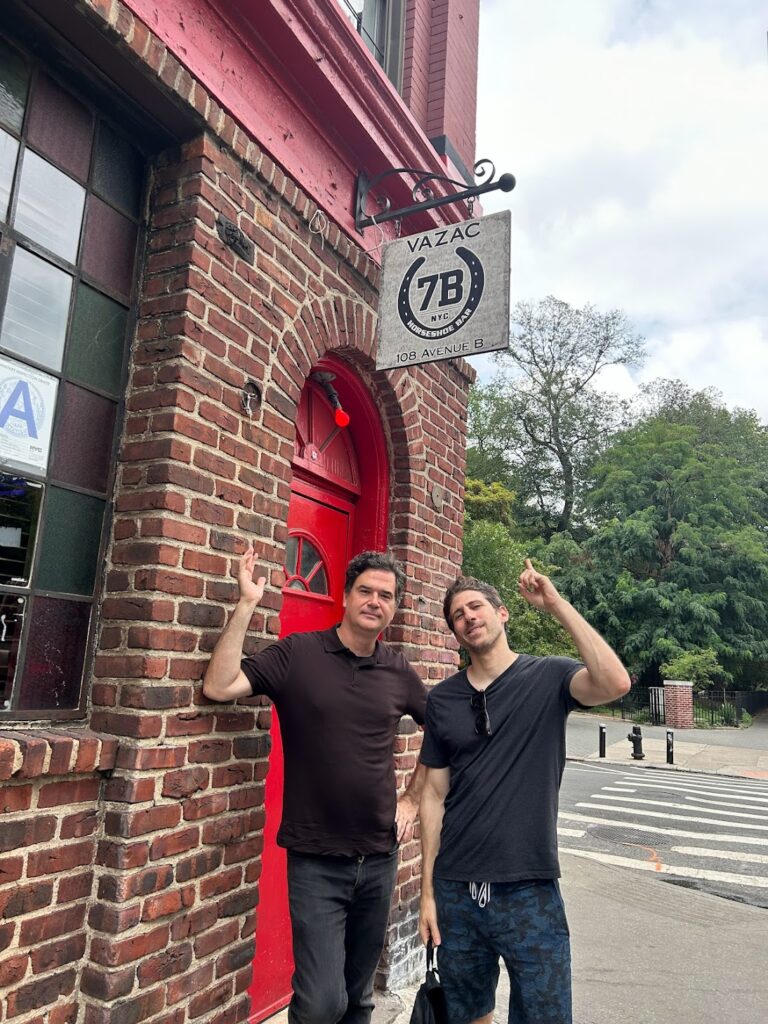
FEATURING: CBGB, Supreme, the Pyramid, Club 57, Niagara, 7B, Brownies and many others
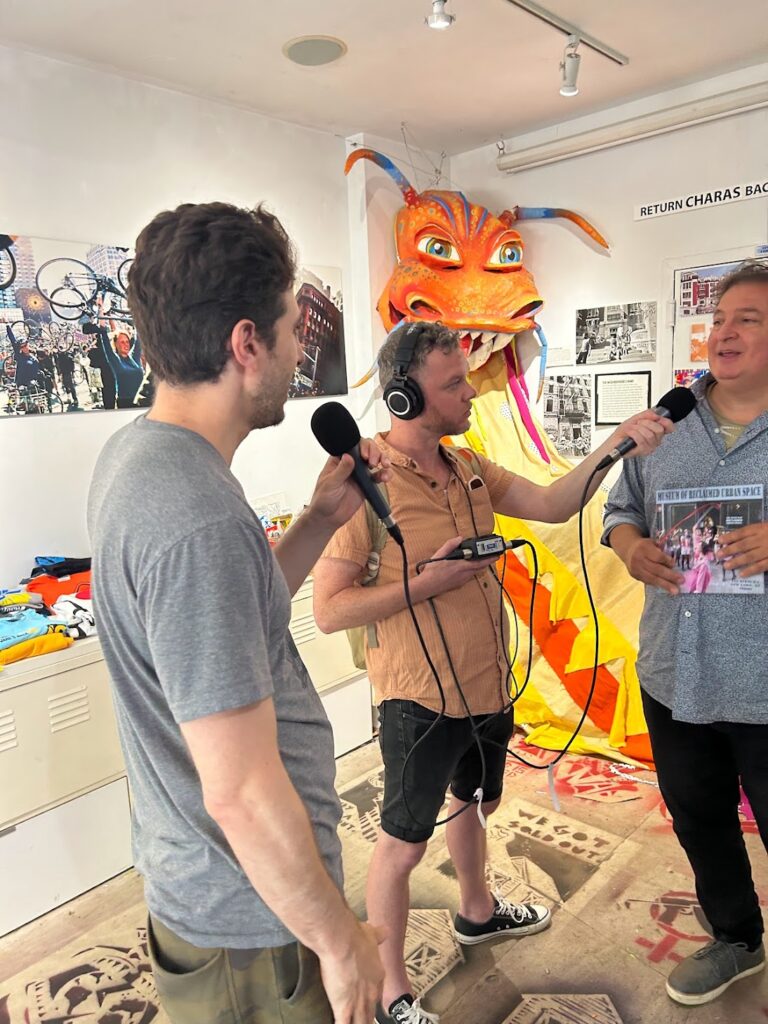
Producer Kieran Gannon with Krikor and Bill De Paola
FURTHER LISTENING
After you listen to this week’s episode, check out these episodes with related themes:
FURTHER READING
The Drag Explosion: New York City’s Drag Scene of the 1980s and 90s / Linda Simpson From Urban Village to East Village / Janet L. Abu-Ludhod New York Rock: From the Rise of the Velvet Underground to the Fall of CBGB / Steven Blush St. Marks Is Dead: The Many Lives of America’s Hippest Street / Ada Calhoun The Village: 400 Years of Beats and Bohemians, Radicals and Rogues / John Strausbaugh This Must Be The Place: Music, Community and Vanished Spaces in New York City / Jesse Rifkin
By a very fun coincidence, our twotime guest — the marvelous Hugh Ryan — just so happens to have written “The Trashy, Freaky, DIY East Village Scene That Birthed Modern Drag” for Curbed this week. Excellent article about the 80s East Village drag scene with a focus on the Pyramid — where Greg and Krikor recorded some of the show!
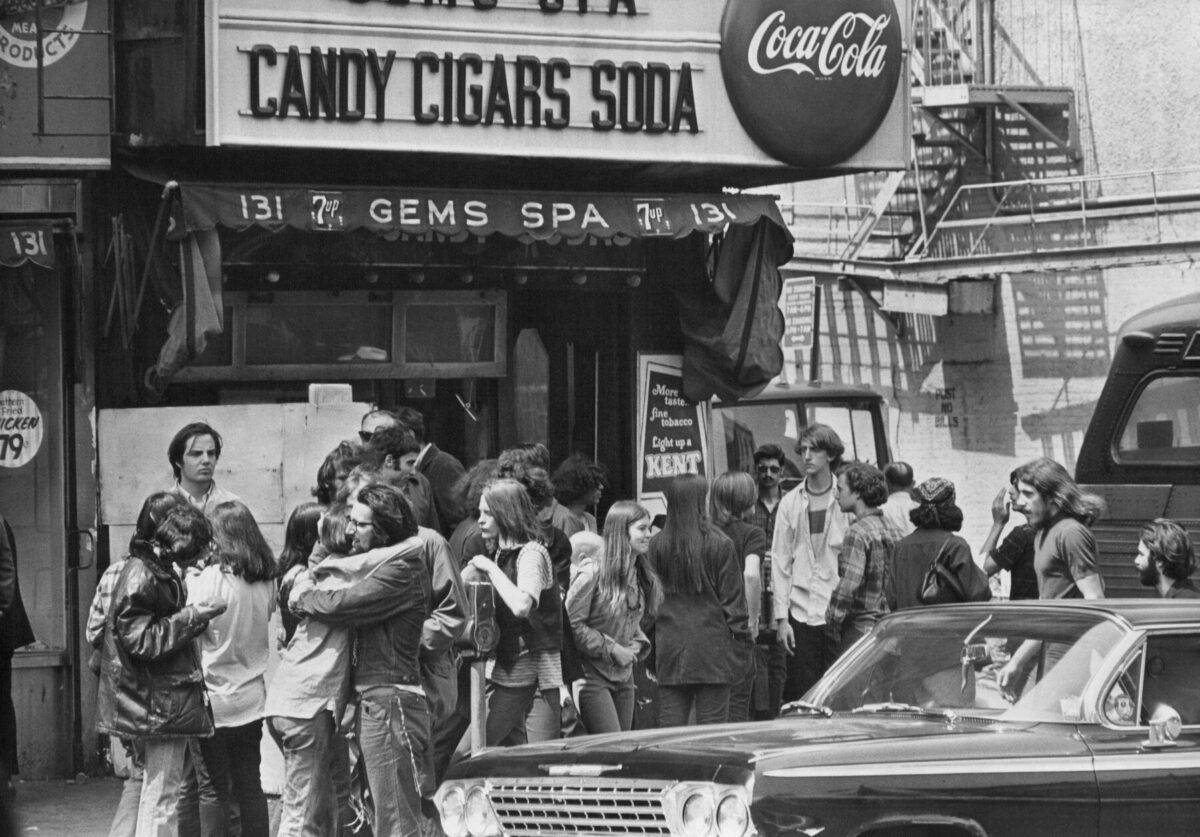
St. Marks Place and Second Avenue, 1969. Photo by Meyer Liebowitz/The New York Times
Before 1955 nobody used the phrase “East Village” to describe the historic northern portion of the Lower East Side, the New York tenement district with a rich German and Eastern European heritage.
But when the Third Avenue El was torn down that year, those who were attracted to the culture of Greenwich Village — with its coffeehouses, poets and jazz music — began flocking to the east side, attracted to low rents.
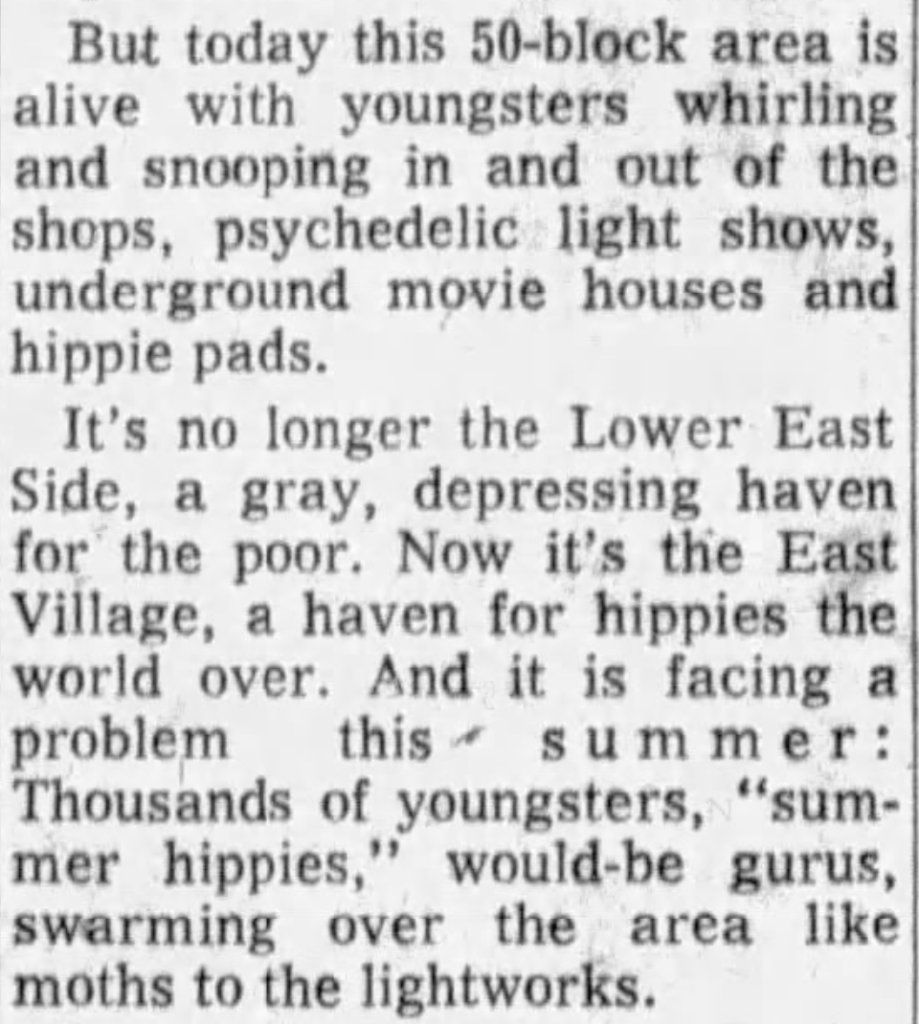
Soon the newly named East Village culturally became an extension of Greenwich Village with new bookstores, cafes, experimental theaters and nightclubs. By the mid-1960s the hepcats were replaced by hippies, flamboyant and politically active, influenced by the events of the 1960s and a slightly different buffet of drugs.
At the same time, the neighborhood’s Ukrainian population grew as well after the United States provided visas to thousands of refugees from Europe displaced by World War II. By the 1960s Puerto Ricans also lived in the eastern end of the district, sometimes called Alphabet City (and eventually Loisaida).
In this first of a two-part series on the history of the East Village, Greg is joined Jason Birchard from Veselka Restaurant, who shares his family’s story, and by theater historian David Loewy to discuss the influence of Joe Papp and The Public Theater, a stage whose first production would capture the very counter-culture dominating the streets around it.
The residents of the Lower East Side one century ago would probably have never have said to themselves, “What a grand place to plant flowers!”
But it would be their very tenement lots that would later lead to the sprouting of so many East Village neighborhood gardens, some of the most wonderful community gardens in the city.
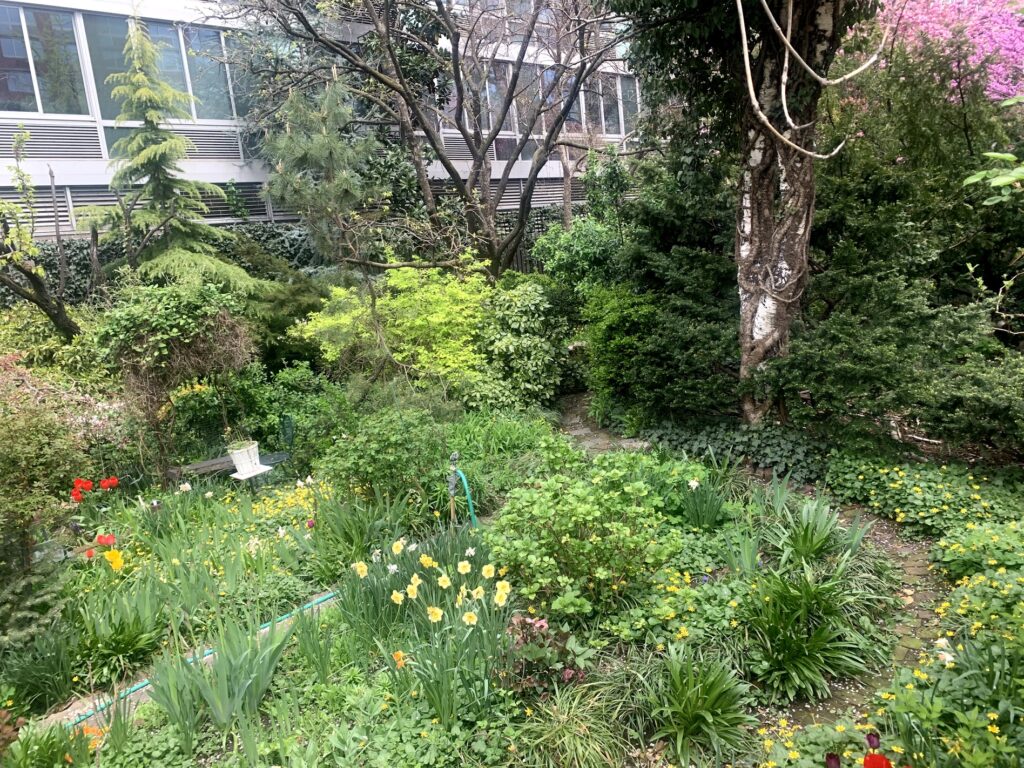
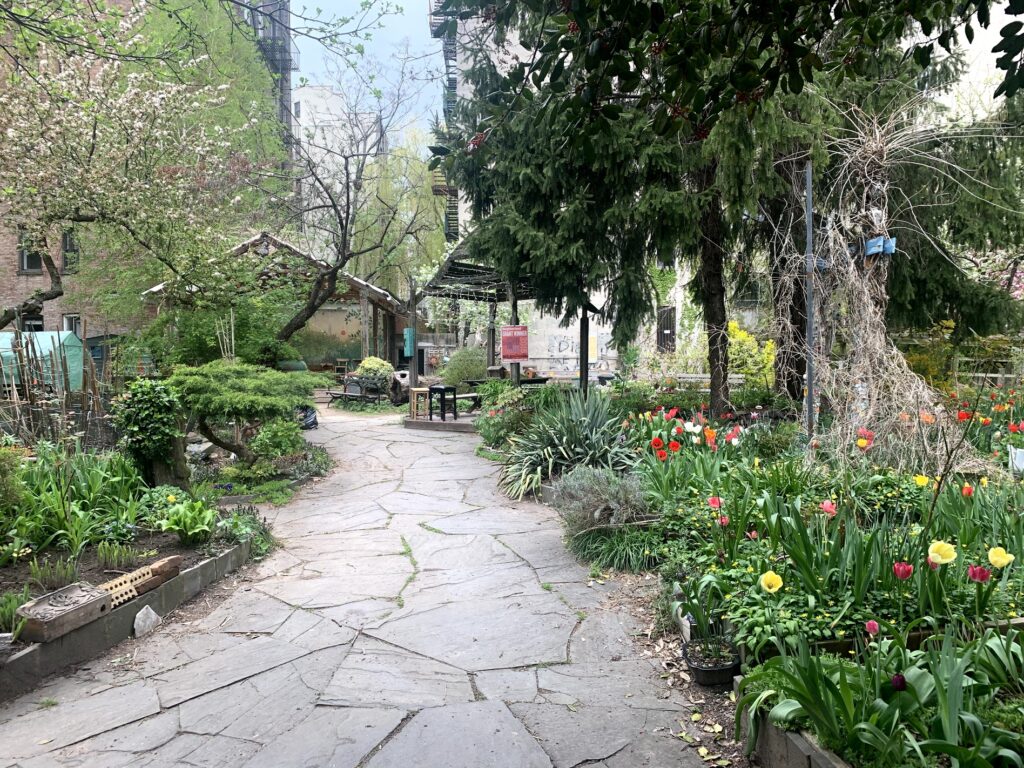
Liz Christy Garden today / Photo by Greg Young
New York’s hundreds of community gardens grew out of efforts which begun in the 1970s to beautify and rehabilitate neighborhoods suffering from urban blight.
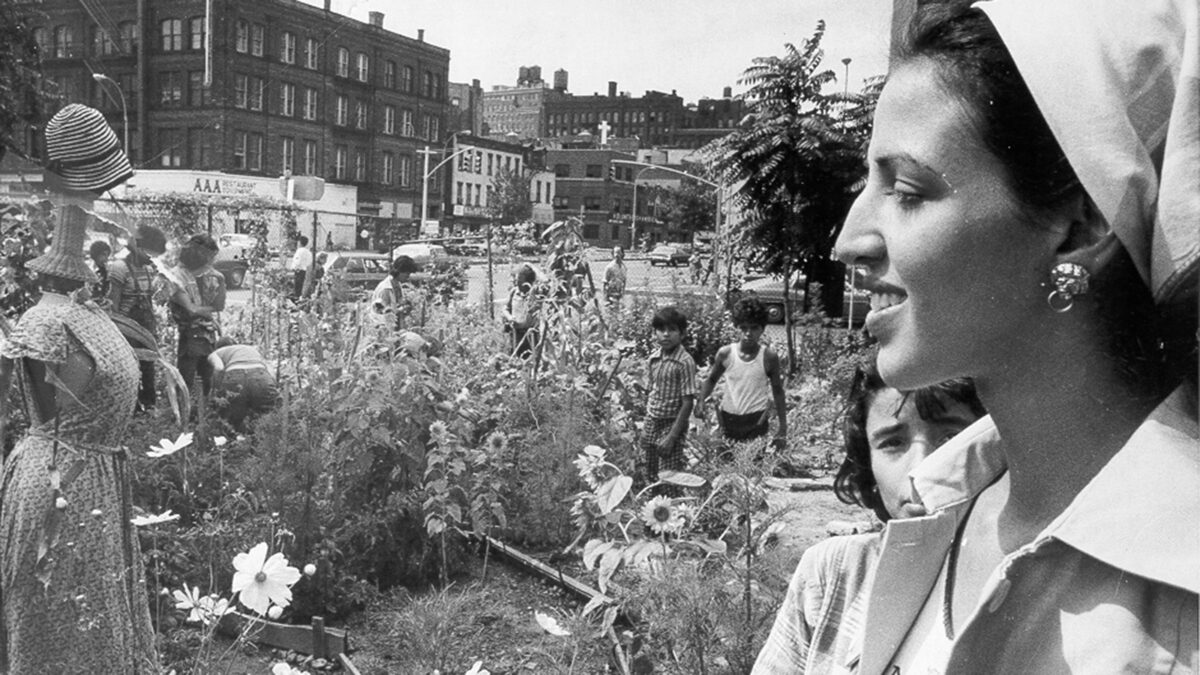
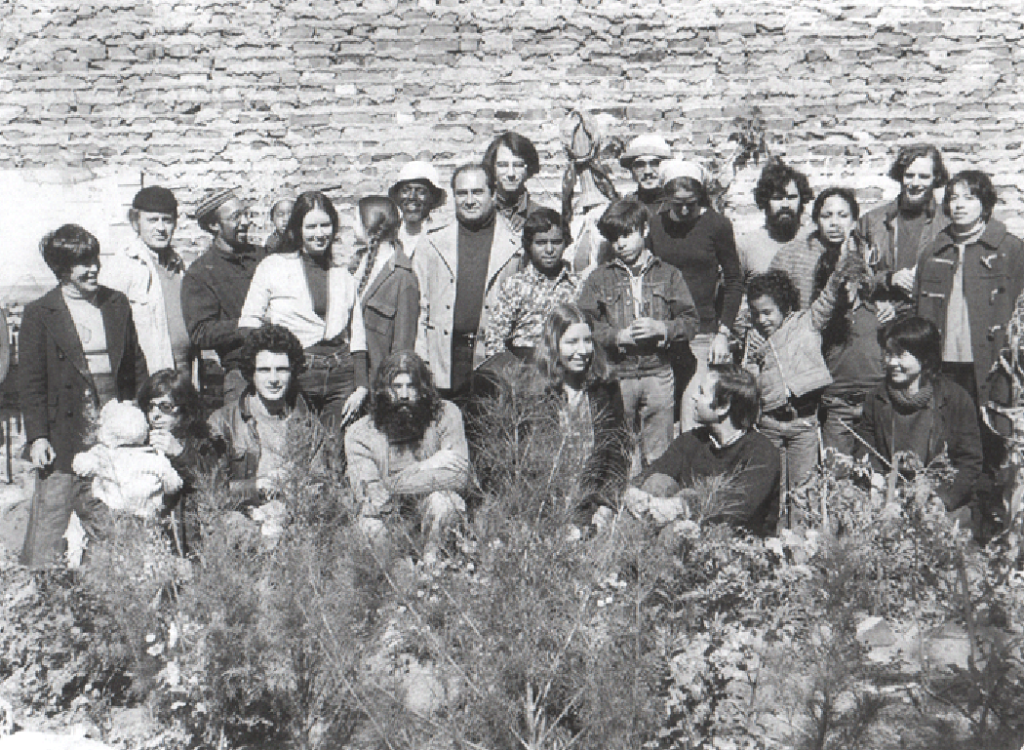
In the early 1970s, a young artist named Liz Christy, an avid gardener inspired by national green efforts (such as Earth Day, first celebrated three years previous), became inspired to fill abused and abandoned places in her neighborhood with small gardens.
To quote from the organization website: “They threw ‘seed green-aids’ over the fences of vacant lots. They planted sun flower seeds in the center meridians of busy New York City streets. They put flower boxes on the window ledges of abandoned buildings.
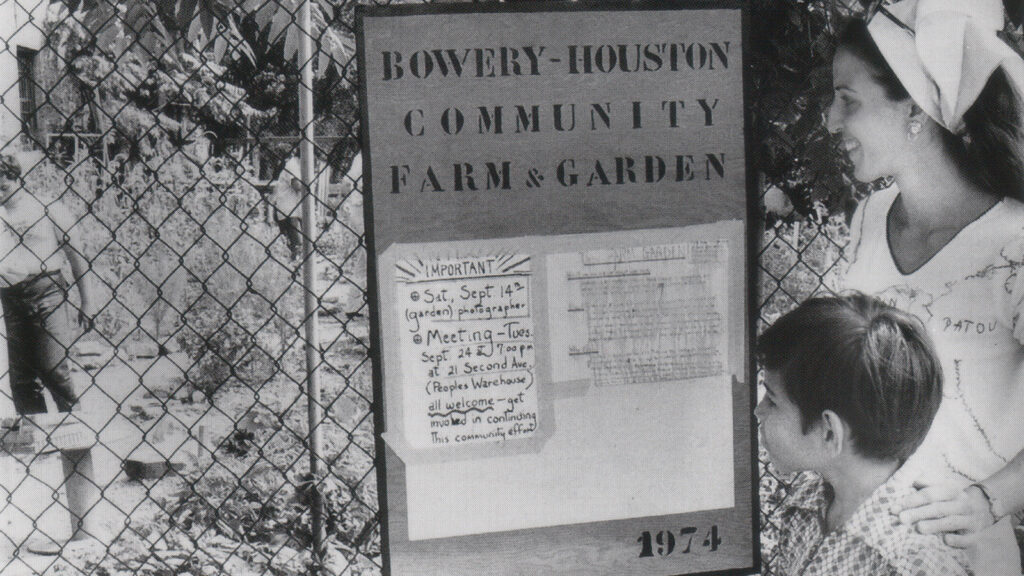
But Christy became concerned about one lot in particular — at Bowery and Houston Street.
As she told the New York Daily News in 1974: “That lot was so depressing. In the past few years I’ve seen three different men carried out of their dead…. And children played in there with all that glass and filth.”
And so in 1973, Christy and her band of green heroes formed the Bowery Houston Farm and Garden, transforming the lot into a verdant stretch of beauty.
In just a single quote in that Daily News article, Christy articulates not only the salvation of a city lot, but lays out a blueprint for how to inspire any community to take a similar approach.”
“The best thing about the garden has been the interest and involvement of families and especially children. So many children have been eager to take care of their own lots and besides keeping them out of trouble and teaching them something, it has also given them great pleasure to take home their crops.”
To call their mission a labor of love is an understatement. In 1976, the New York Times wrote“
“In the three years of their existence, [The Green Guerillas] have received a total of $356 in donations. The expenses for which they actually have receipts come to $3,500, which has come out of their own pockets, and this does not include a lot of the money spent on gasoline. mailings, gardening equipment and transportation.”
Thanks to the legacy of Liz Christy (who died in 1985) and the continuing work of the Green Guerillas, hundreds of spaces in New York City have been transformed into community-run gardens, supported by the city’s GreenThumb initiatives which began in 1978.
For more information on the history of New York City community gardens, visit NYC Parks.
El Jardin del Paraiso
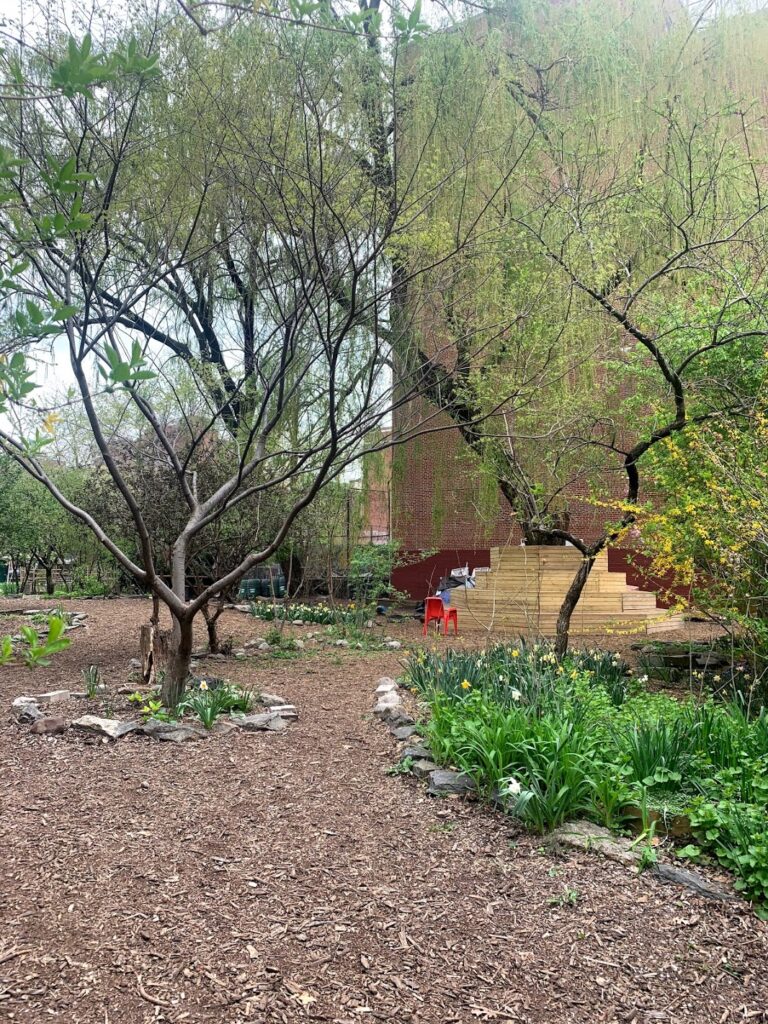
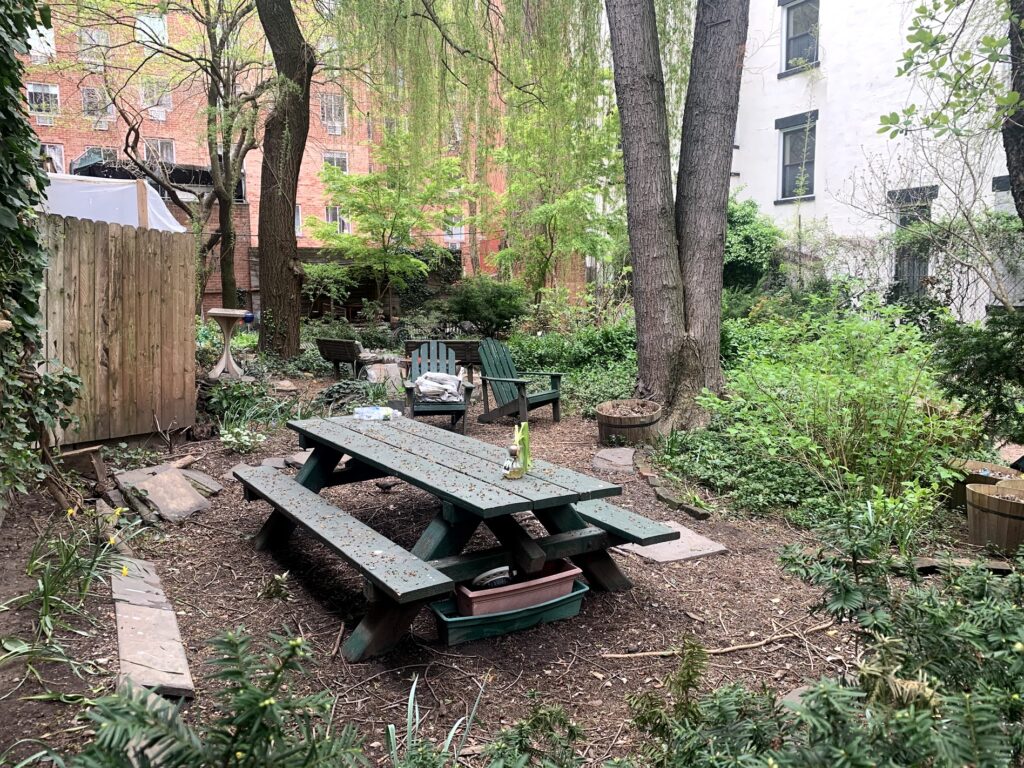
While you can find these types of community gardens all over New York City, the ones in the East Village still hold a certain kind of magic.
At the bleakest moments of the 1980s, when burned- out buildings and empty lots defined the neighborhood, community leaders took beautification efforts into their own hands, clearing abandoned lots and planting leafy, magical, and art-filled oases.
Once a mere curiosity of the East Village, the gardens have now become one of its defining features.
There are about 40 gardens today in the neighborhood. One could spend an afternoon with a good book, tiptoeing from garden to garden, each with its own flora and fecundity.
My three personal favorites are below — but there are dozens! Celebrate the season by following this map of gardens (via Earth Celebrations) through the neighborhood:
El Jardin del Paraiso Most of the East Village was once high salt marshes and tidal meadows (called Stuyvesant’s Meadow), which gradually mixed with trees and plants at the shore.
It’s not a stretch to imagine those verdant old days at this garden, created in 1981, which also includes a fabulously imaginative willow treehouse. (Spans 4th and 5th Streets, between Avenues C and D)
Greg Young
Miracle Garden The name of this peaceful respite recalls the garden’s opening in 1983, when a batch of toxic soil killed off all of the first plantings. It might have spelled doom for the entire lot if not for the diligence of neighborhood gardener Penny Evans.
But the name may also hint at the fact that this flourishing spot sits on the site of a former crack house. (194–296 East 3rd Street)
Greg Young
6th and B Garden While there might be fuller and lusher gardens in the East Village, this corner spot, which frequently hosts musical events on its central stage, was famous for its astonishing 65-foot tower of toys. (The garden is also immortalized in the musical Rent.)
Artist Eddie Boros constructed the playful structure in 1988 out of found toys. Sadly, the structure was torn down by the city in 2008, a year after Boros died. (6th Street and Avenue B)
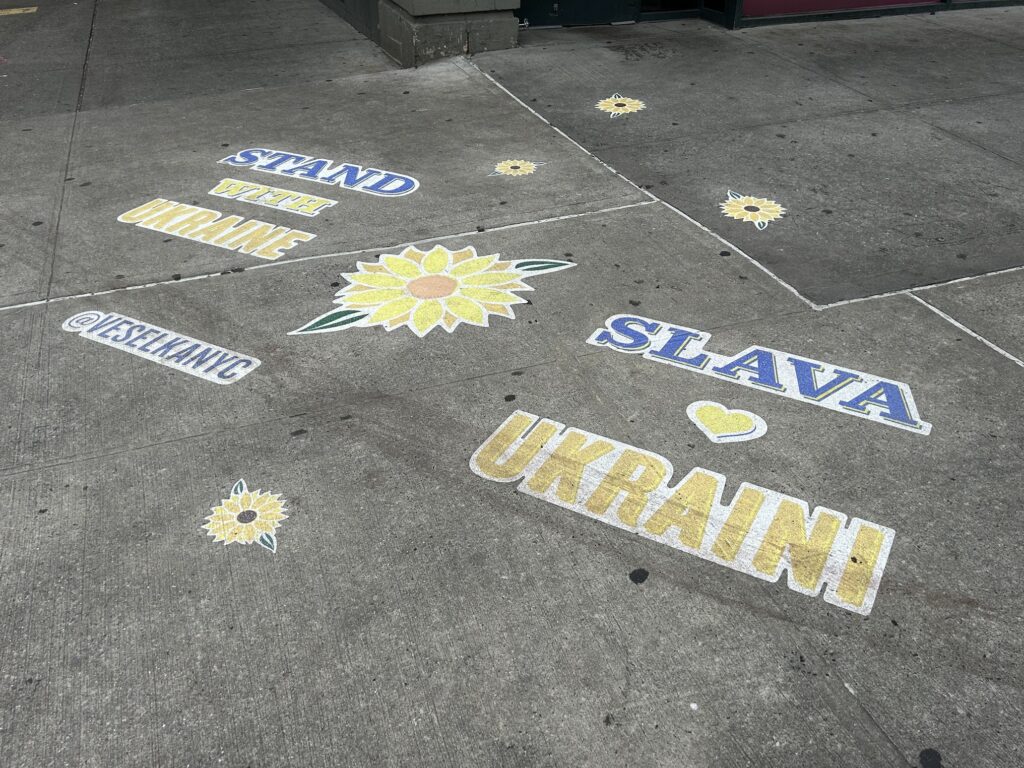
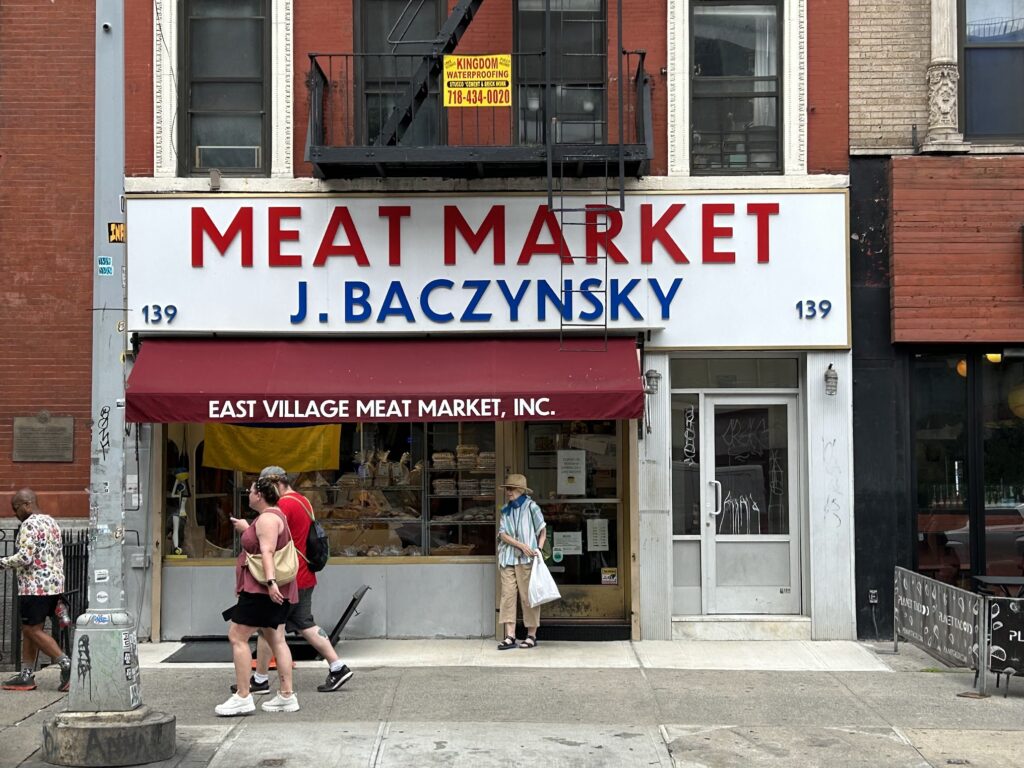
There’s a small pocket of the East Village still referred to today as “Little Ukraine” (or Ukrainian Village), located at 6th and 7th Streets between First and Third Avenues.
Once populated in the late 19th century with thousands of newly arrived Ukrainian immigrants, this area has grown notably smaller in recent years, more distinguished today by its many legacy institutions dedicated to Ukrainian culture and cuisine.
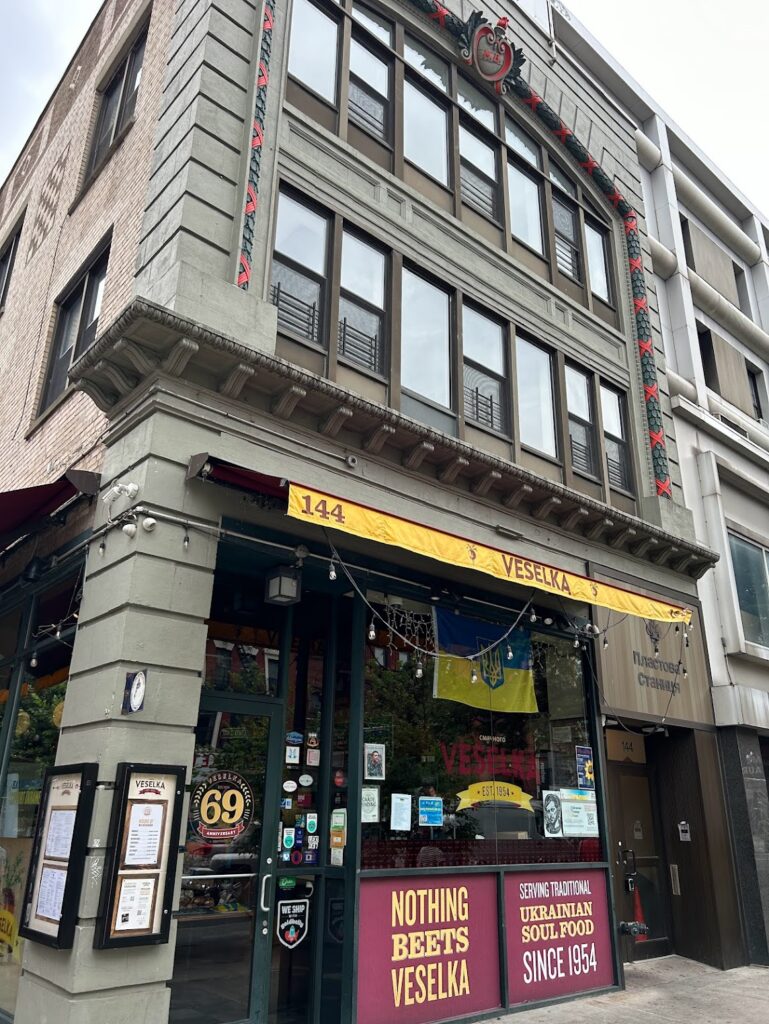
You’re probably most familiar with Veselka, the Second Avenue staple of delicious Ukrainian food which has served the East Village since 1954 — or rather, it’s served the Lower East Side as that newer neighborhood name wasn’t introduced when pierogi and blintzes were first served from their kitchen.
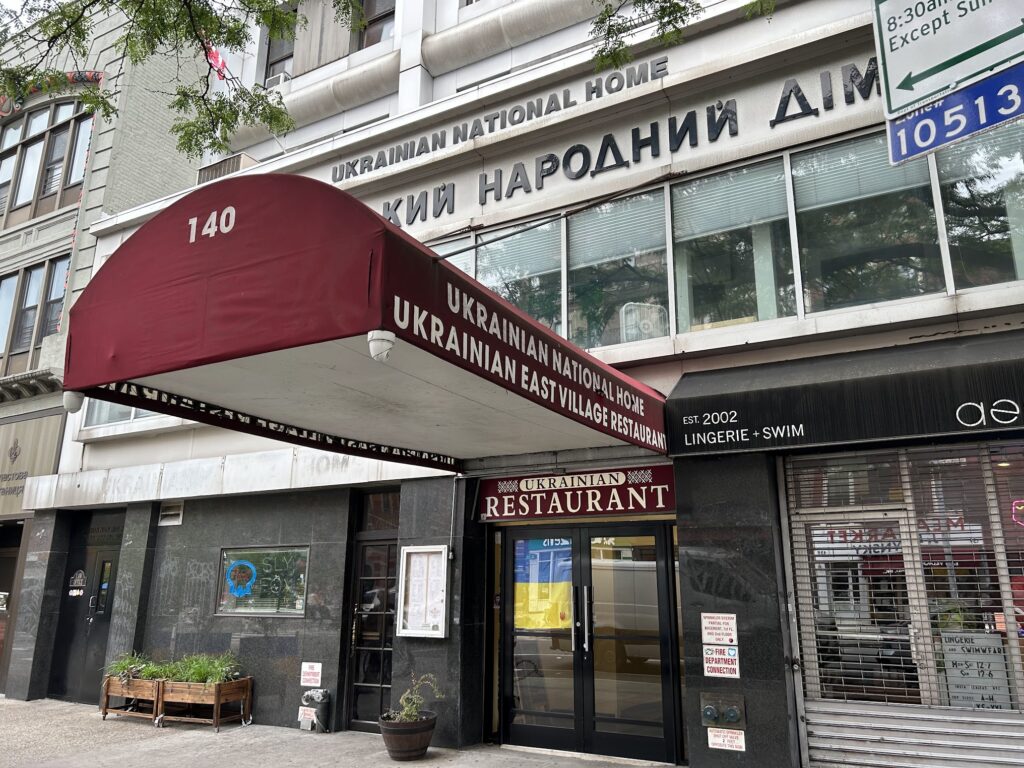
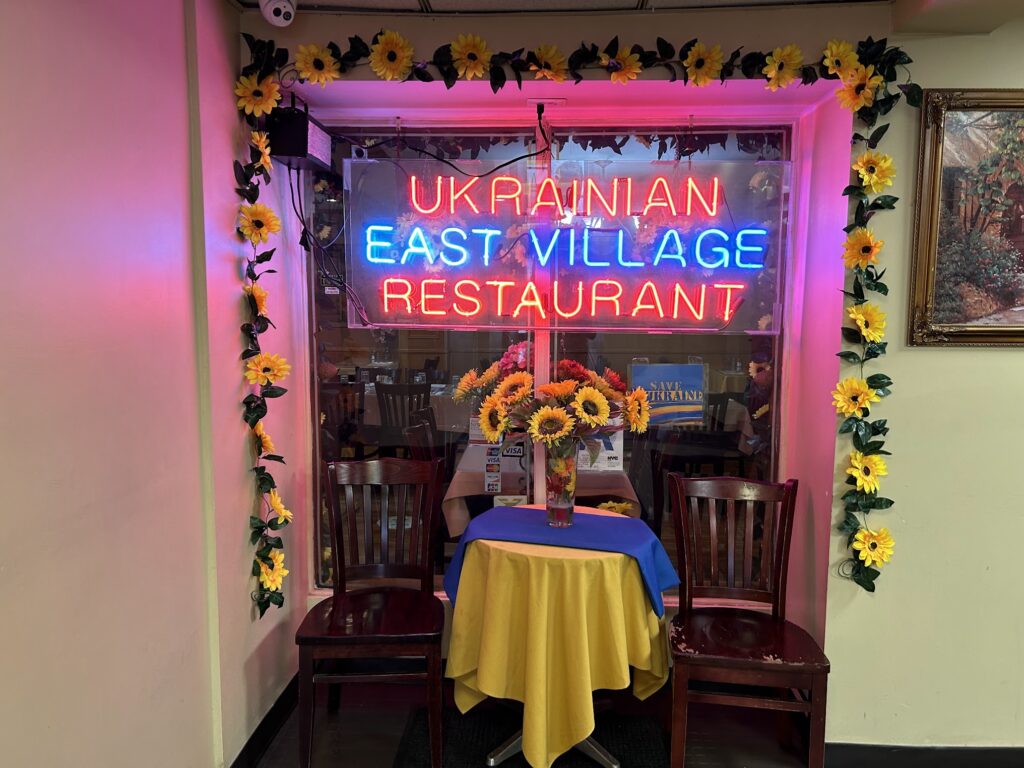
Less glamorous but equally as delicious is the restaurant at National Ukrainian Home next door. Of course the space has a valuable place in music history; in 1981 the British group New Ordermade their first American appearance here. (New Order with a side of potato pancakes sound like heaven to me.)
This article was first published on March 30, 2022
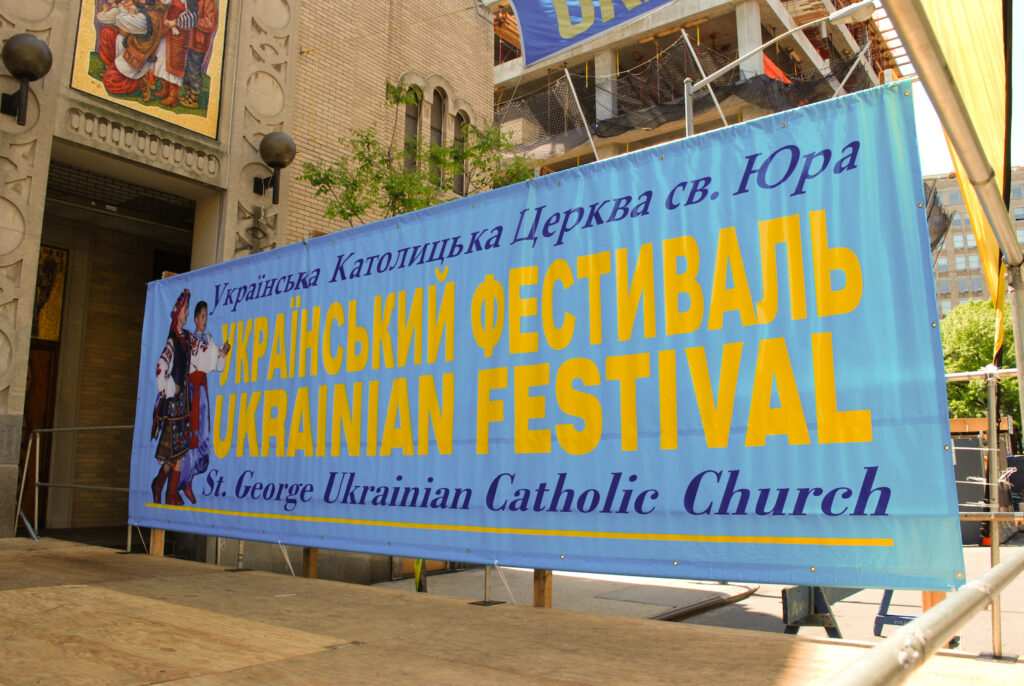
From an East Village Ukrainian festival, 2008 (courtesy Jazz Guy/Wikimedia Commons)
As you stroll these streets, you’ll find other evidence of the neighborhood’s Ukrainian past including houses of worship like St. George Ukrainian Catholic Church. Although St. George was built in the mid-1970s, the congregation itself traces itself back to the first Ukrainian services in the late 19th century (in the basement of St. Brigid Roman Catholic Church, which is also still around).
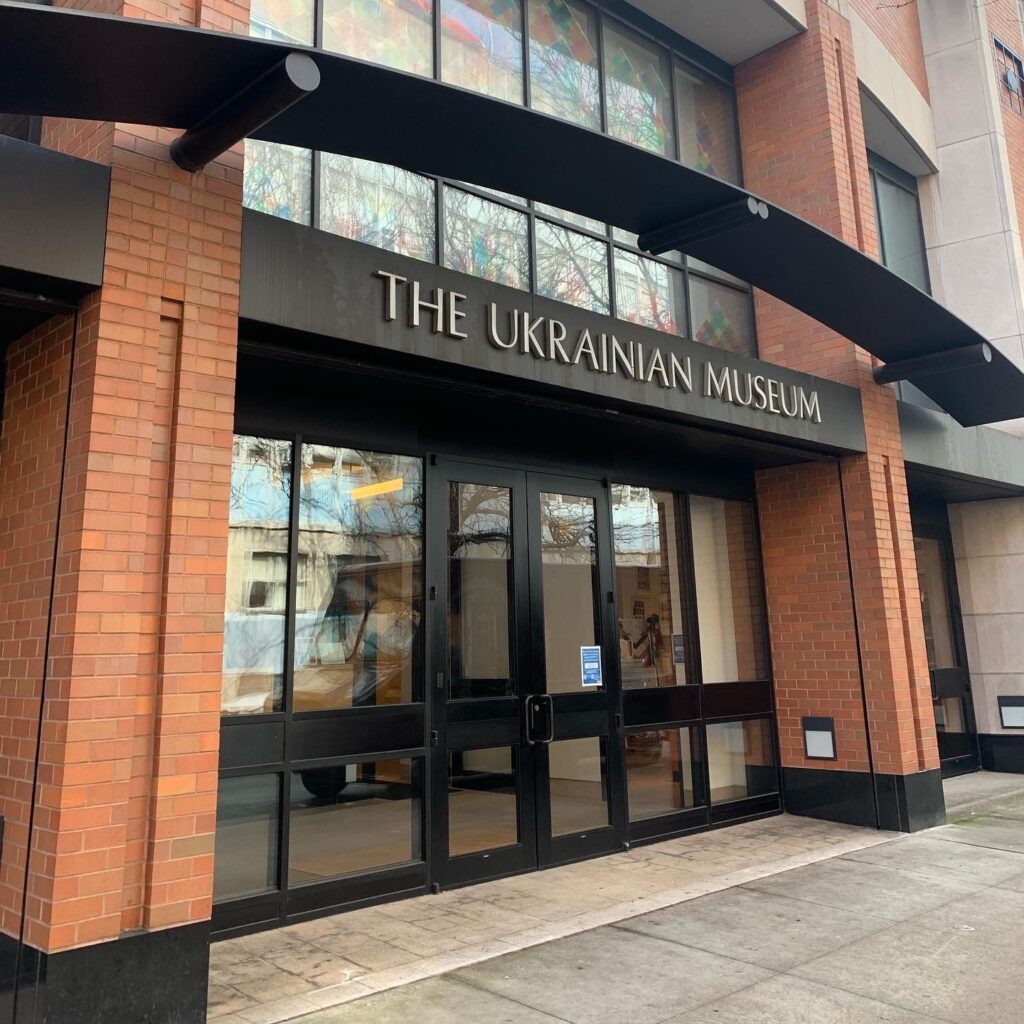
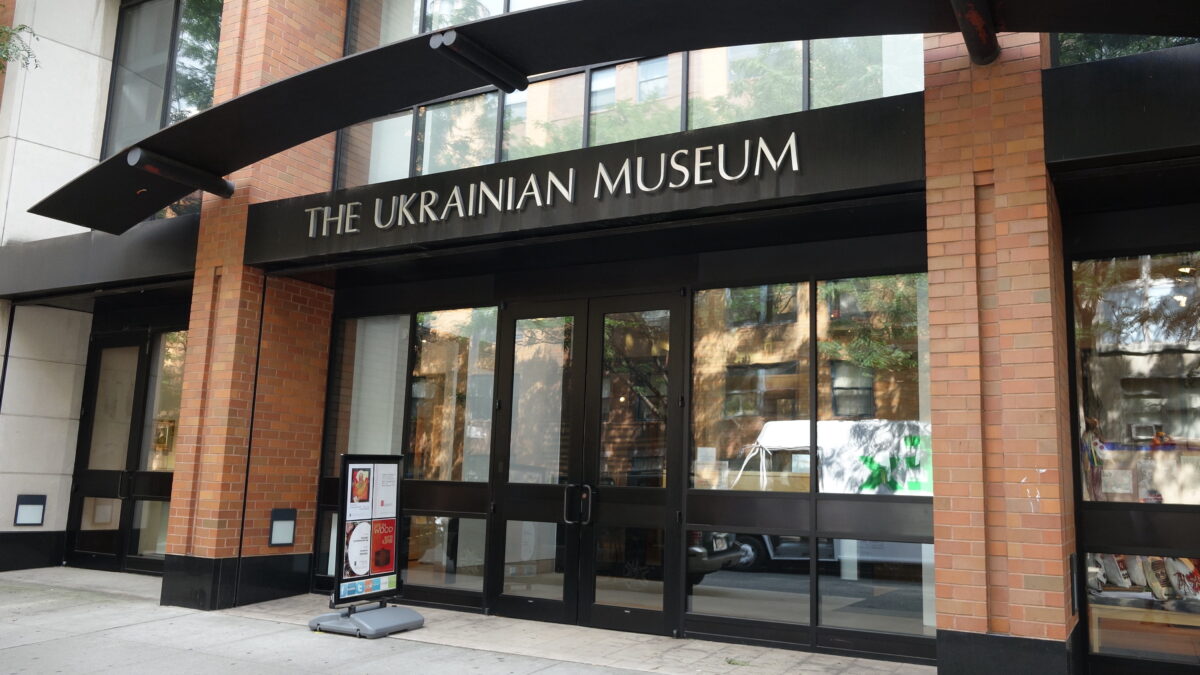
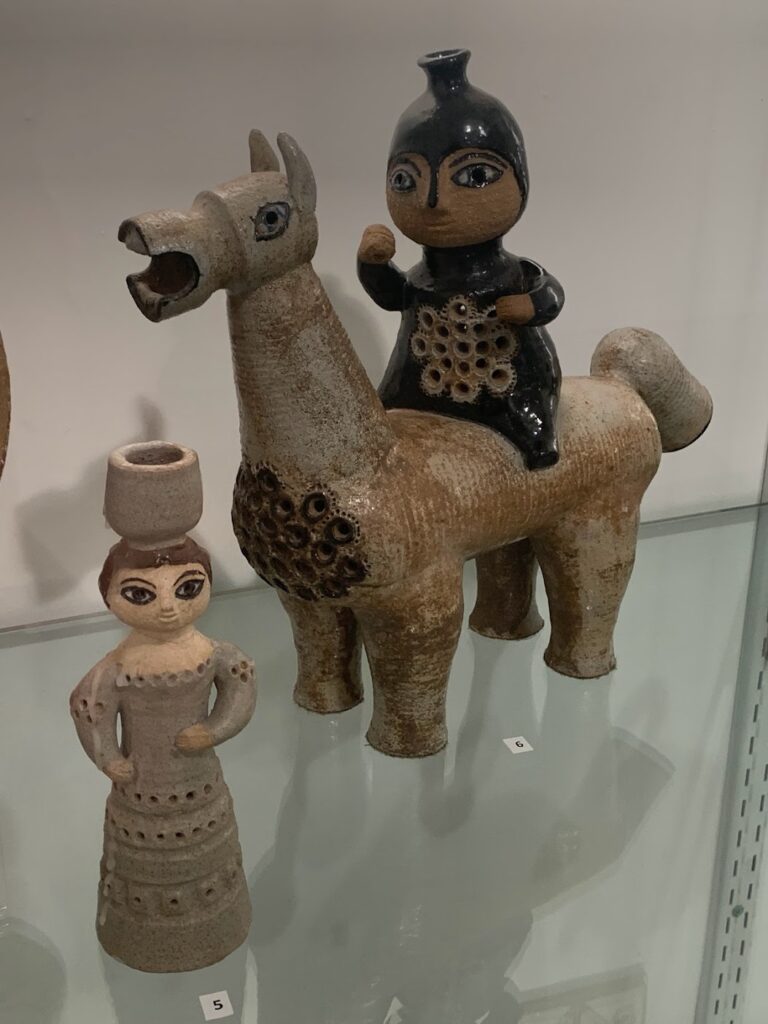
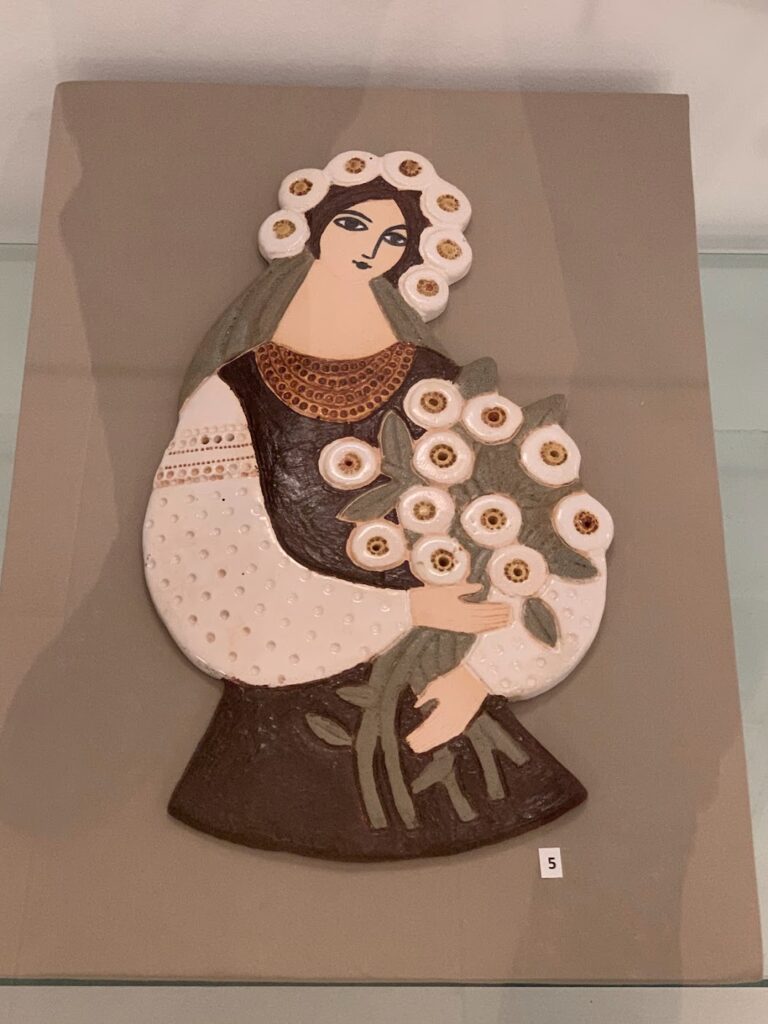
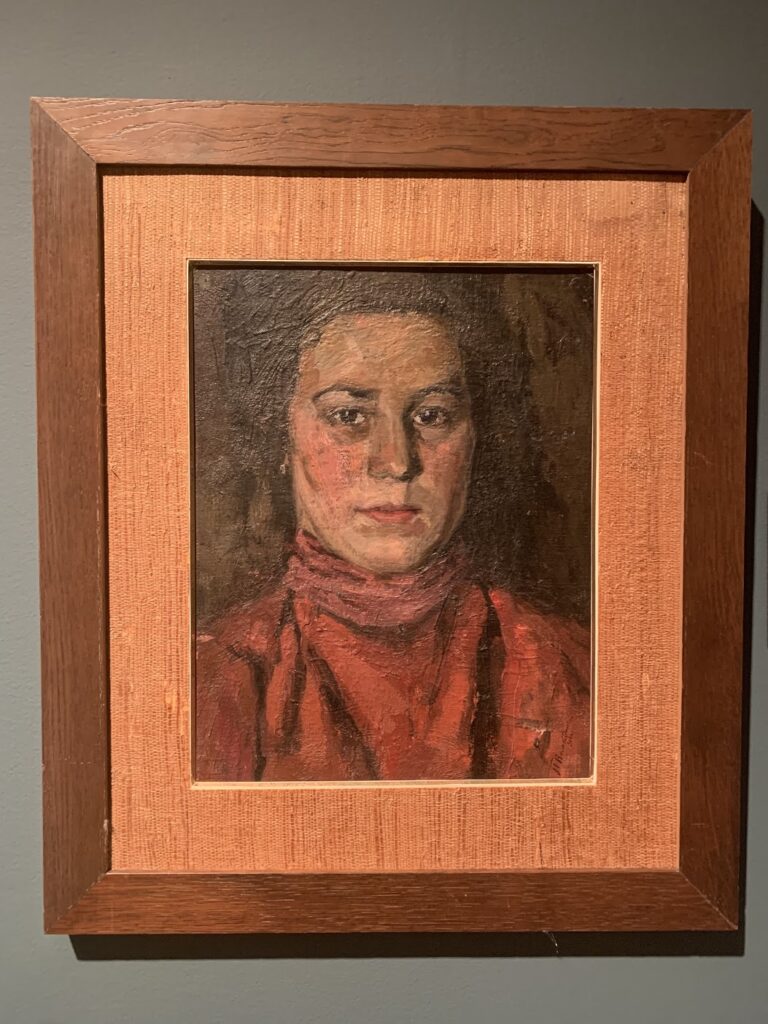
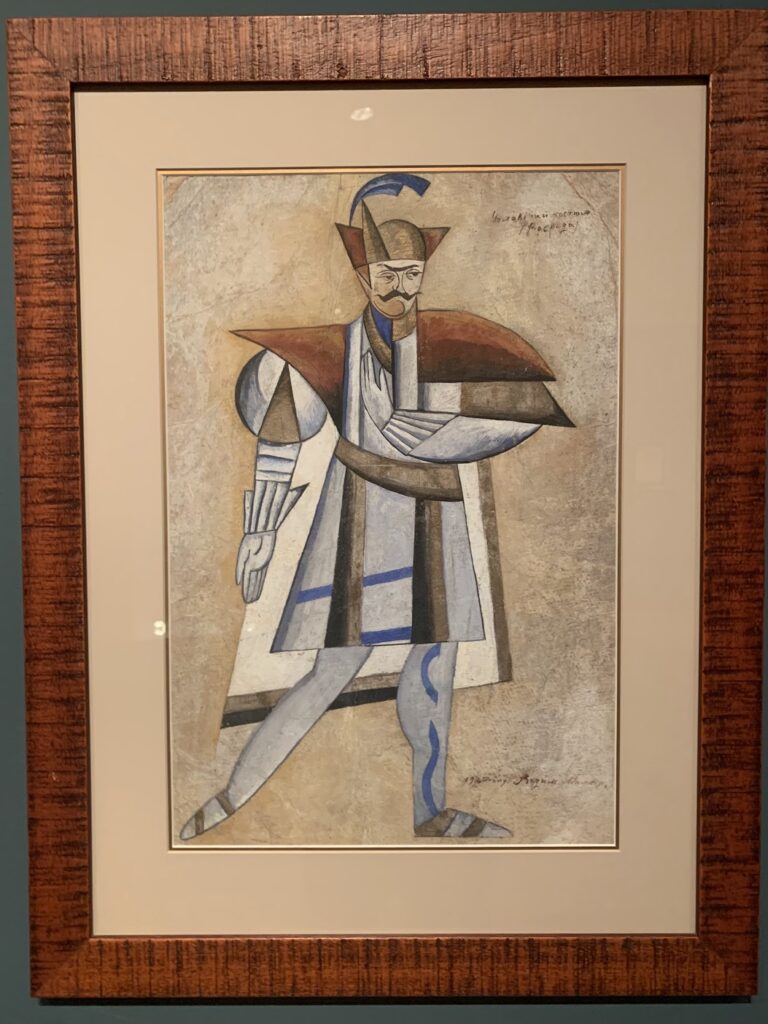
But for a true appreciation of New York’s “Little Ukraine,” pay a visit to the Ukrainian Museum (222 East 6th Street between Second and Third Avenues), one of the city’s perfect small museum experiences, where works of folk art and costumes are displayed near striking examples of early 20th century modern art.
The current home opened in 2005 with a retrospective of the avant-garde sculptor Alexander Archipenko, a splashy and provocative direction for an museum better known then for its festive displays of pysanky (or Easter eggs).
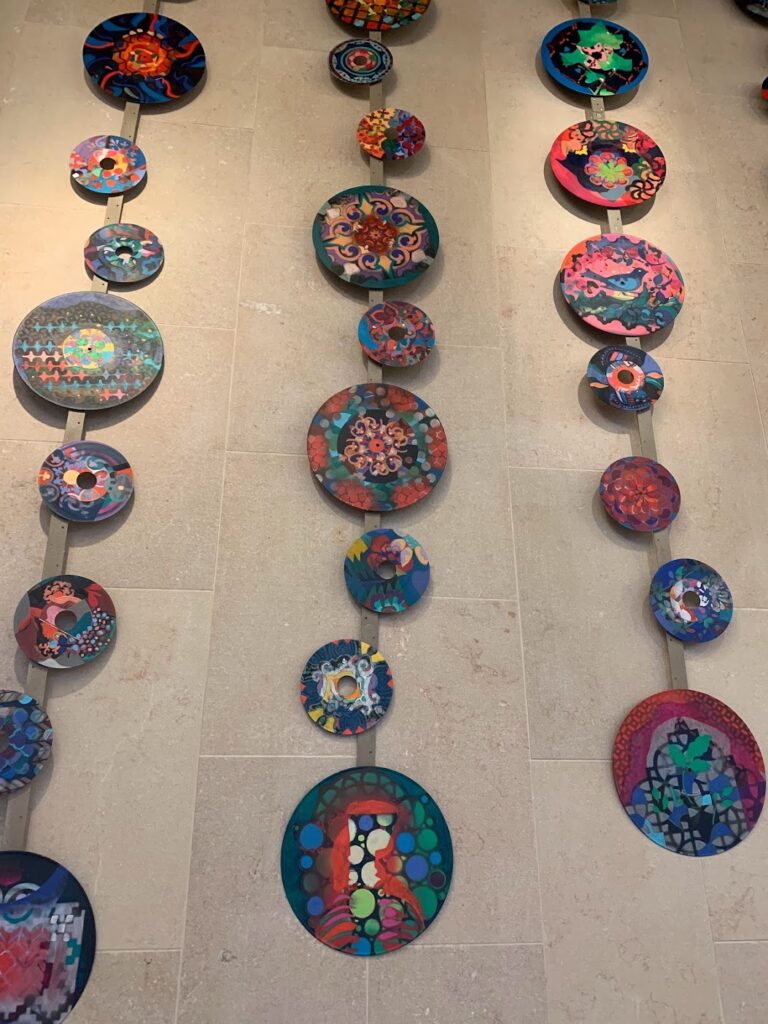
The eggs are still there though! As are other colorful spherical objects — the fanciful installation Finding Sanctuary During the Pandemicfeaturing brilliantly colored record albums.
For more information on the Ukrainian Museum , visit their website or just pop by Wednesday through Sunday, 11:30am to 5pm.
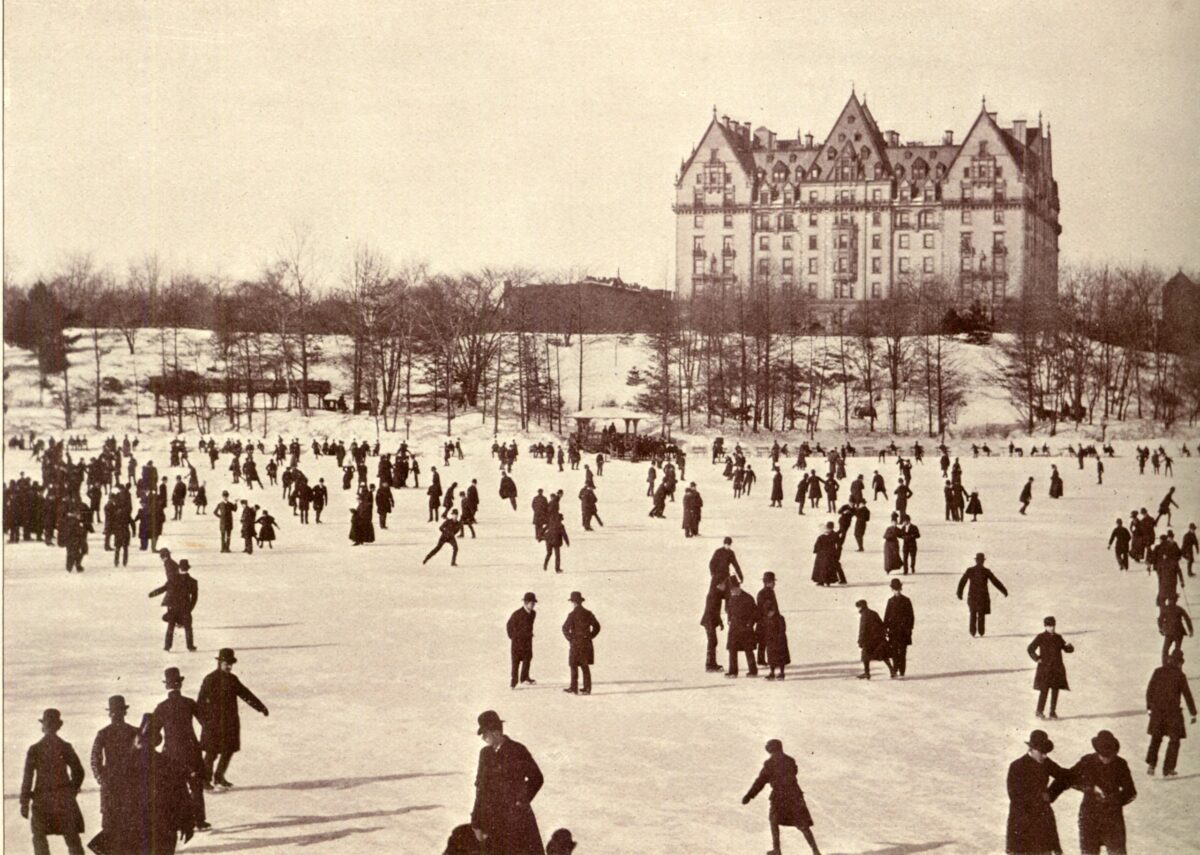
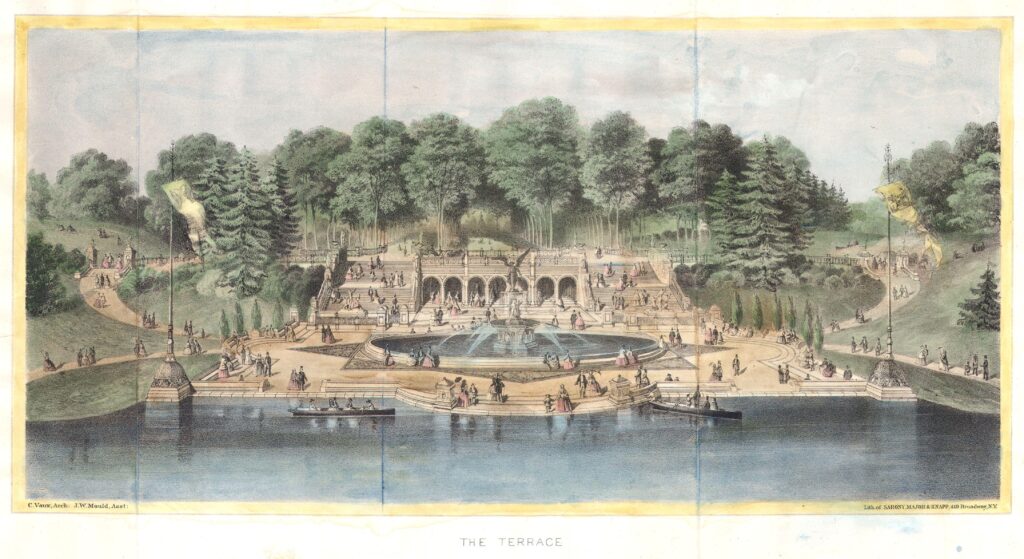
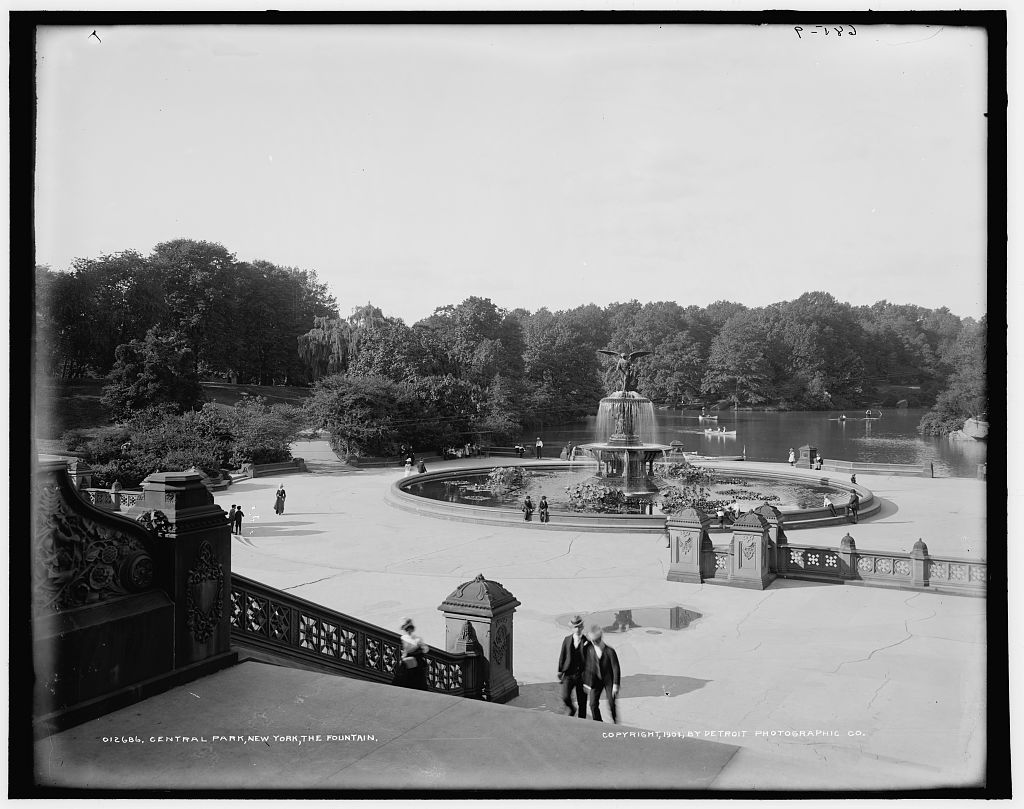
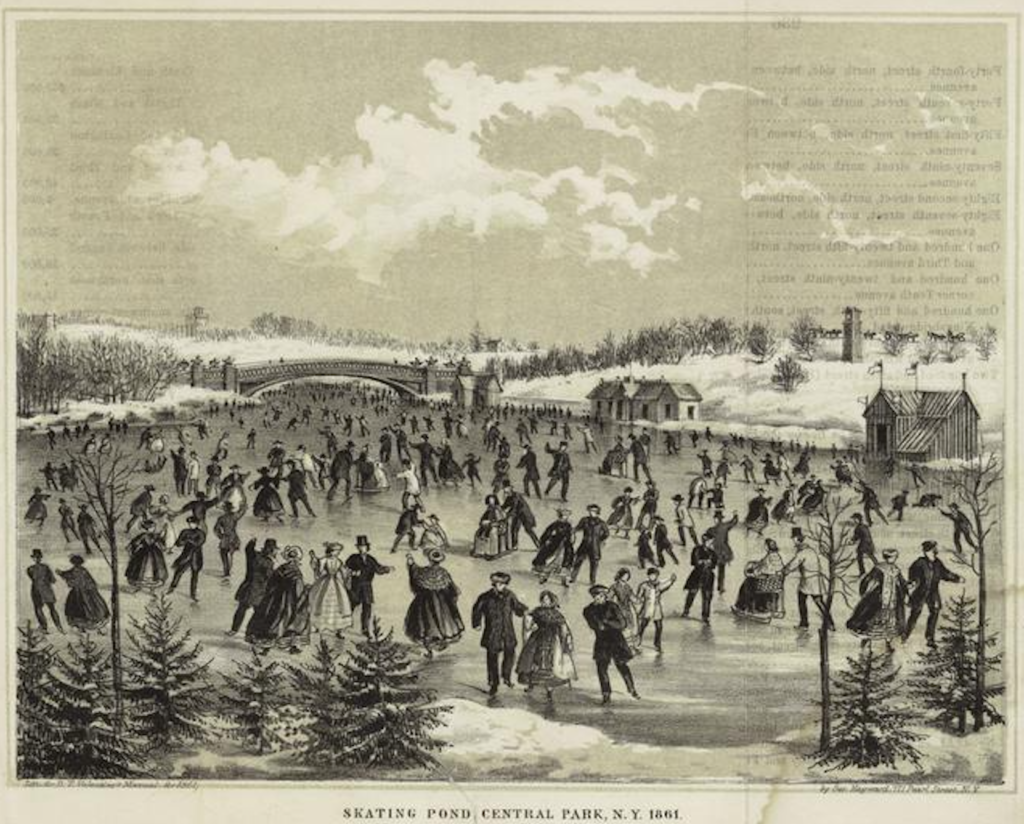
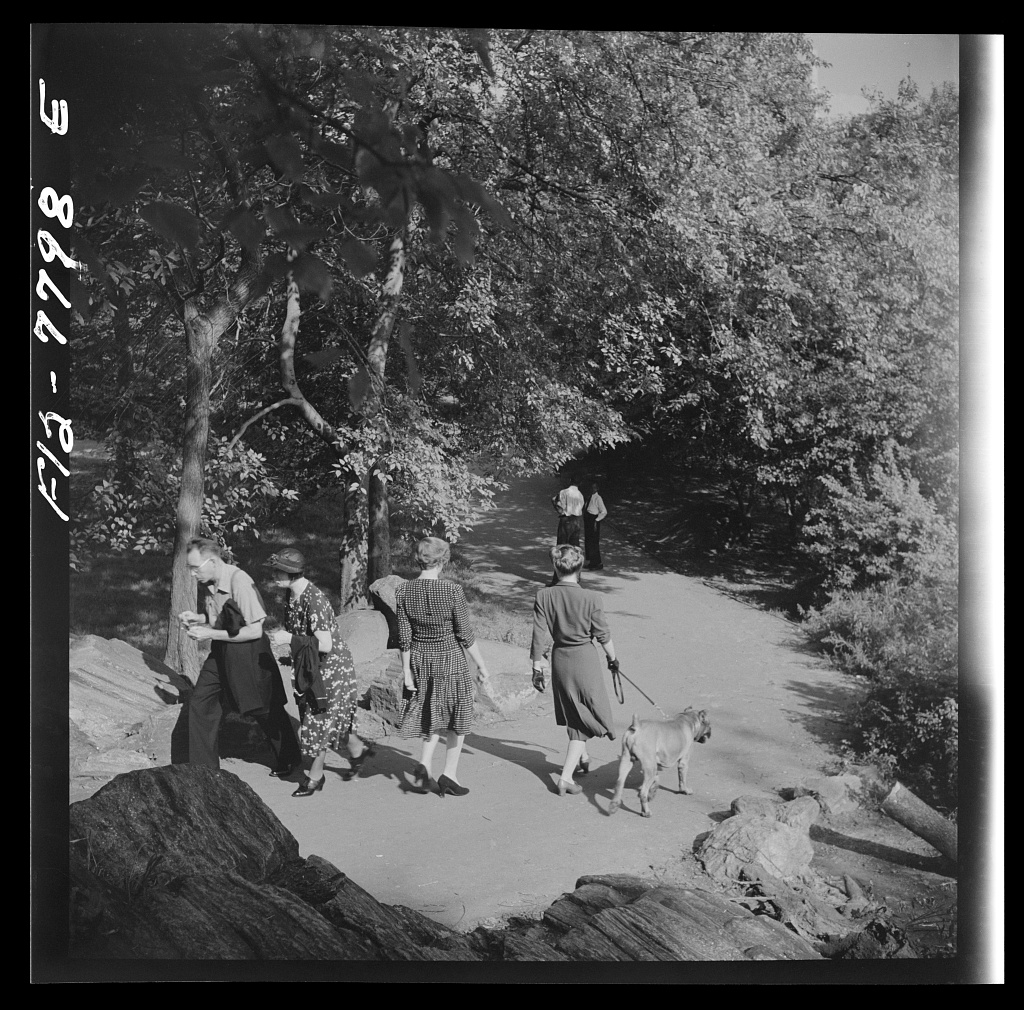
Stroll the romantic, rambling paths of historic Central Park in this week’s episode, turning back the clock to the 1860s and 70s, a time of children ice skating on The Lake, carriage rides through The Mall, and bewildering excursions through The Ramble.
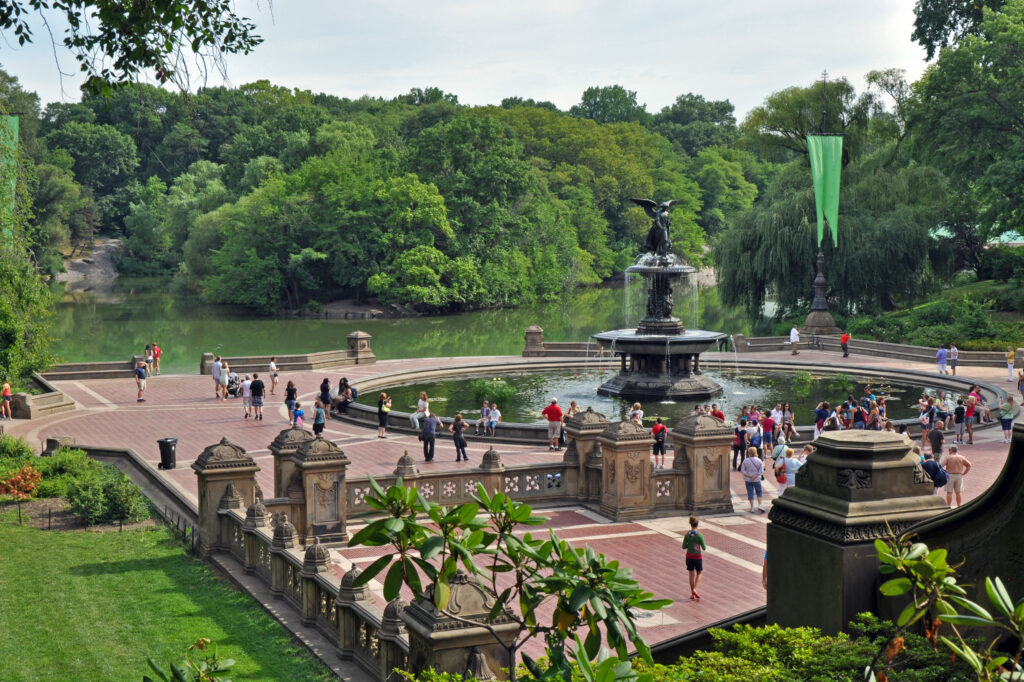
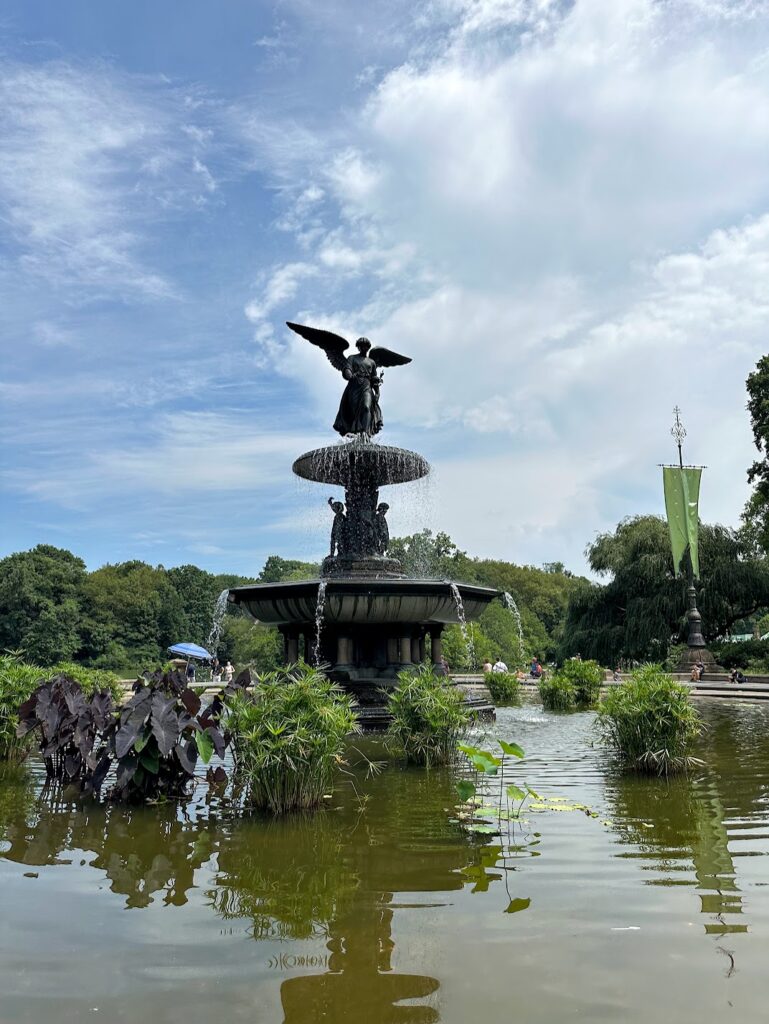
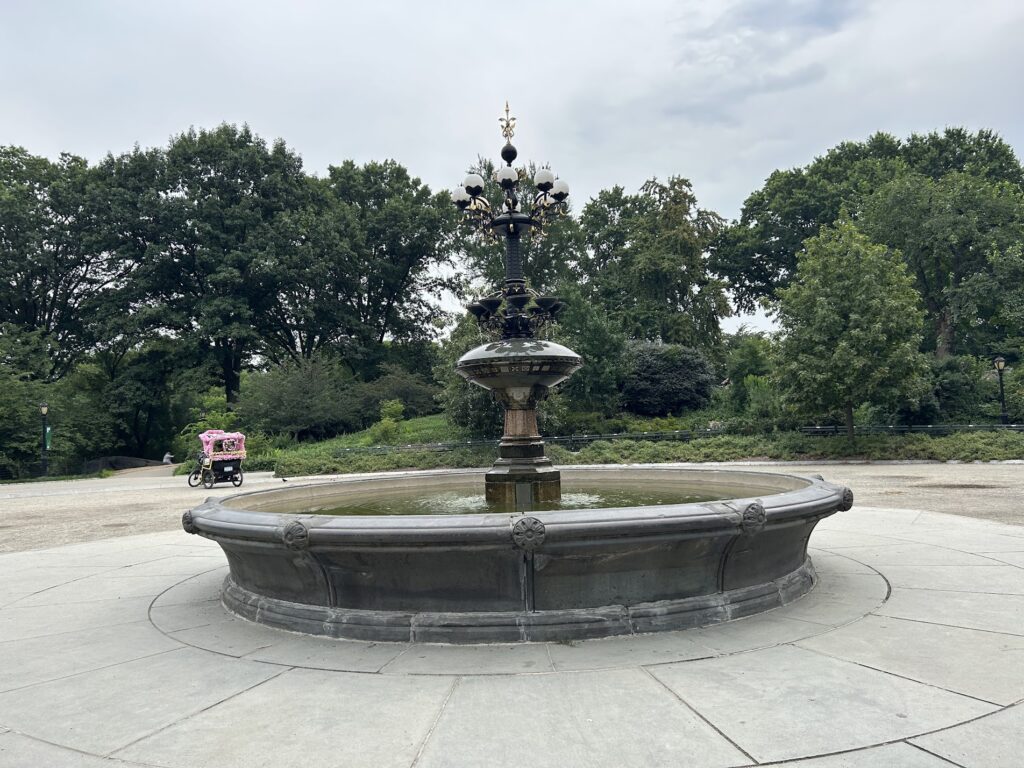
You’re all invited to walk along with Greg through the oldest portion of Central Park But not only to marvel at the beautiful trees, ancient rocks, flowers and the dizzying assortment of birds but to look at the architecture, the sculptures and the fountains.
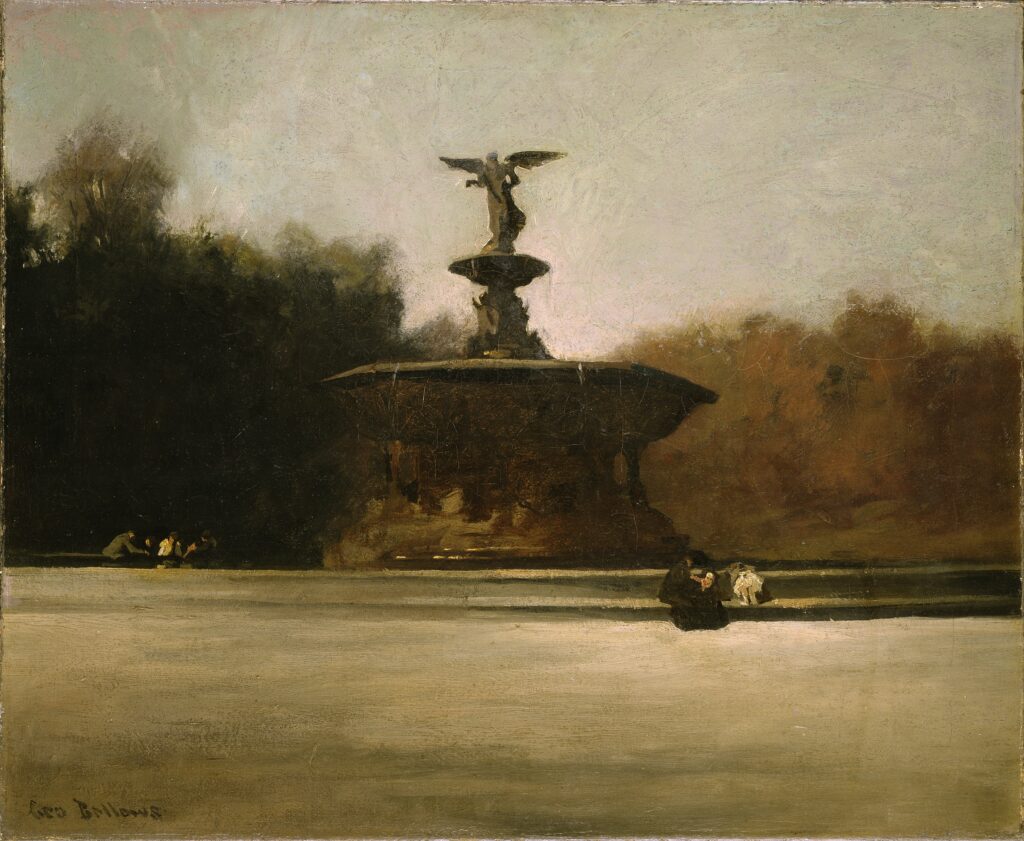
George Bellow’s 1905 painting of Bethesda Fountain
The idea of a public park — open to all people, from all walks of life — was rather new in the mid-19th century. The original plan for Central Park by Frederick Law Olmsted and Calvert Vaux emphasized an escape to the natural world. But almost immediately, those plans were altered to include more monumental and architectural delights.
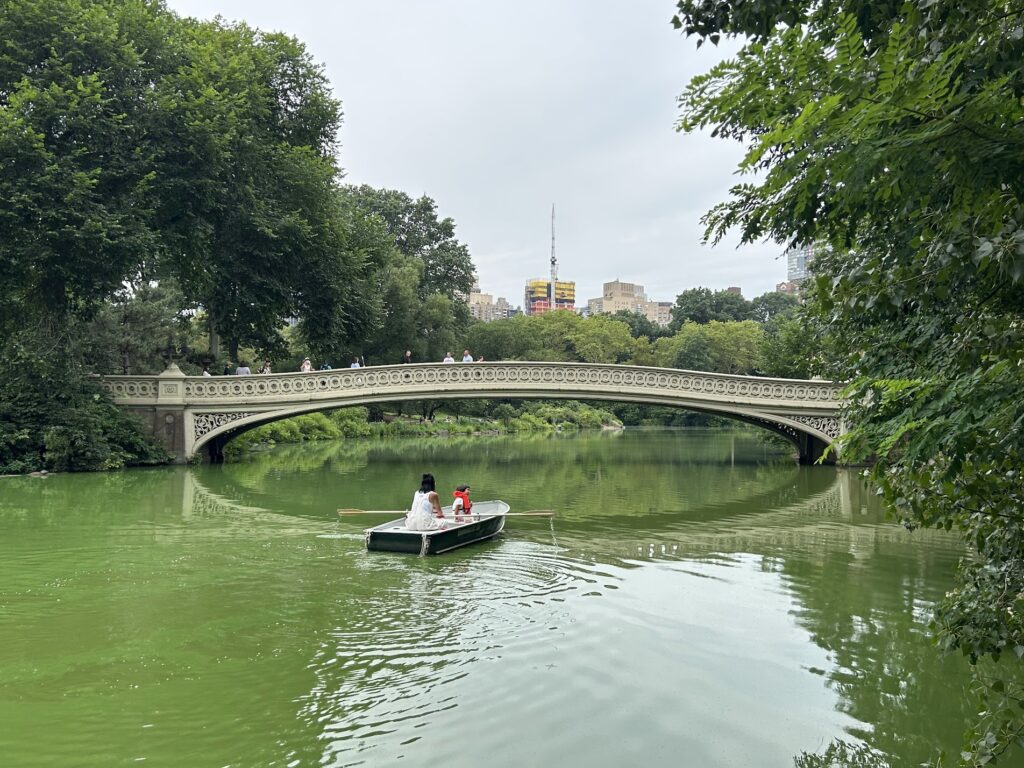
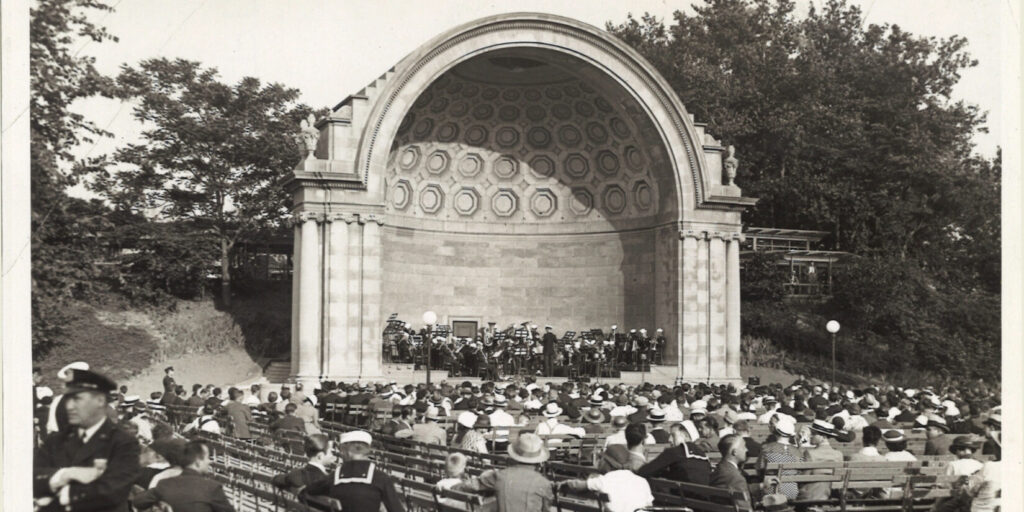
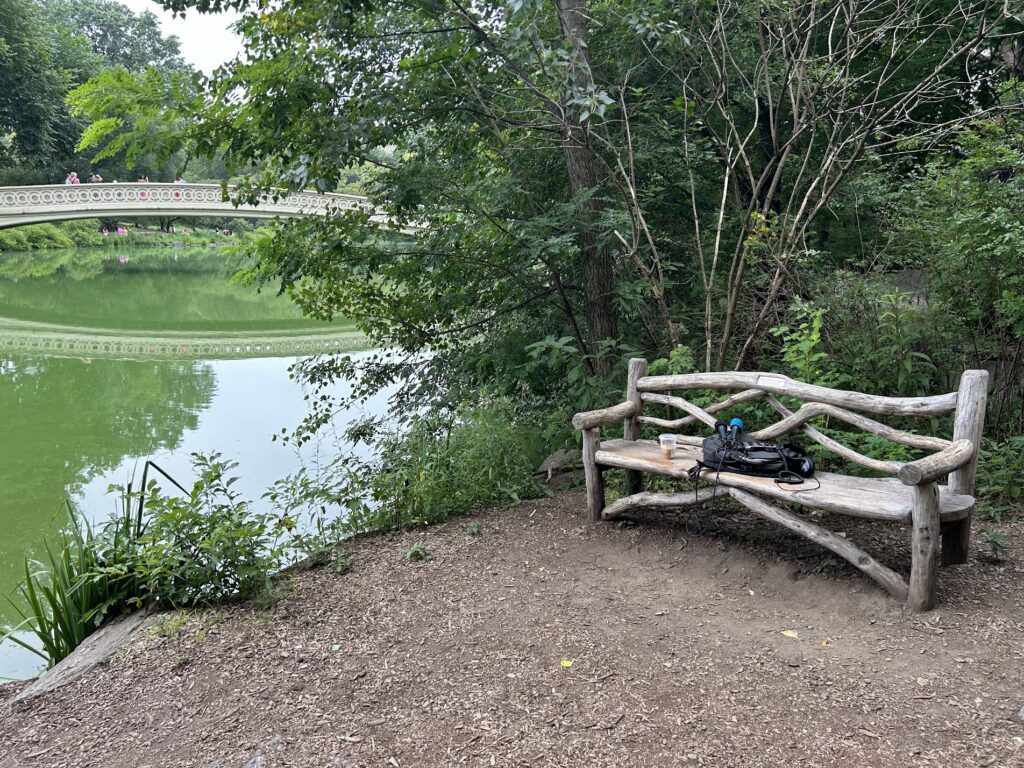
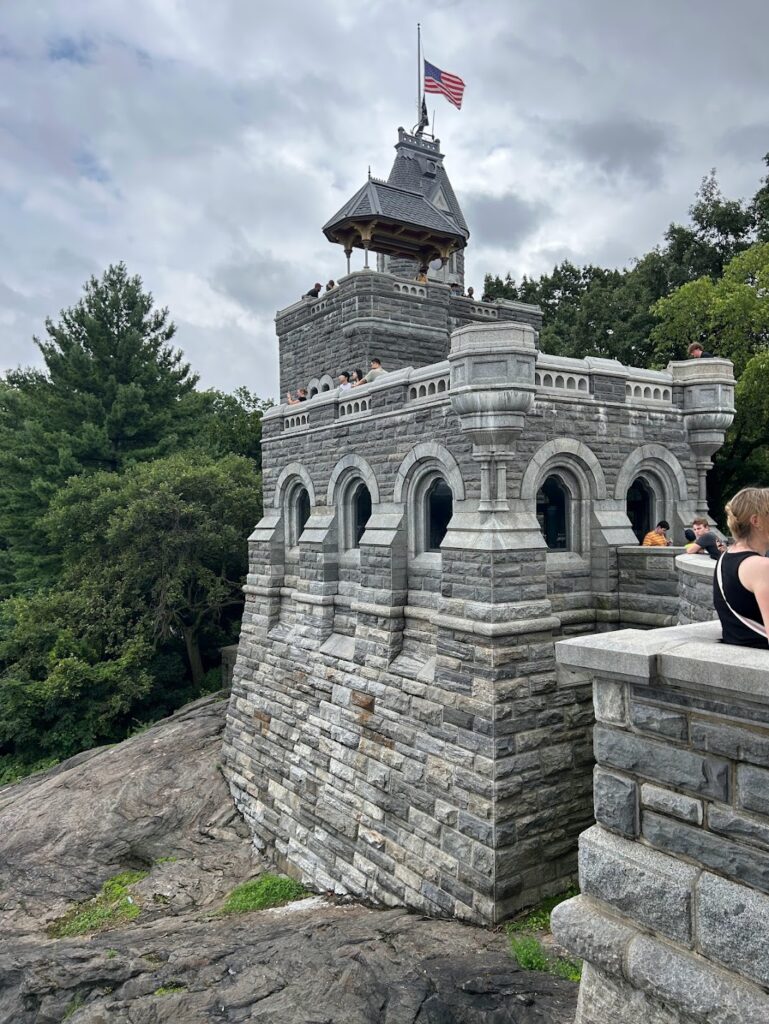
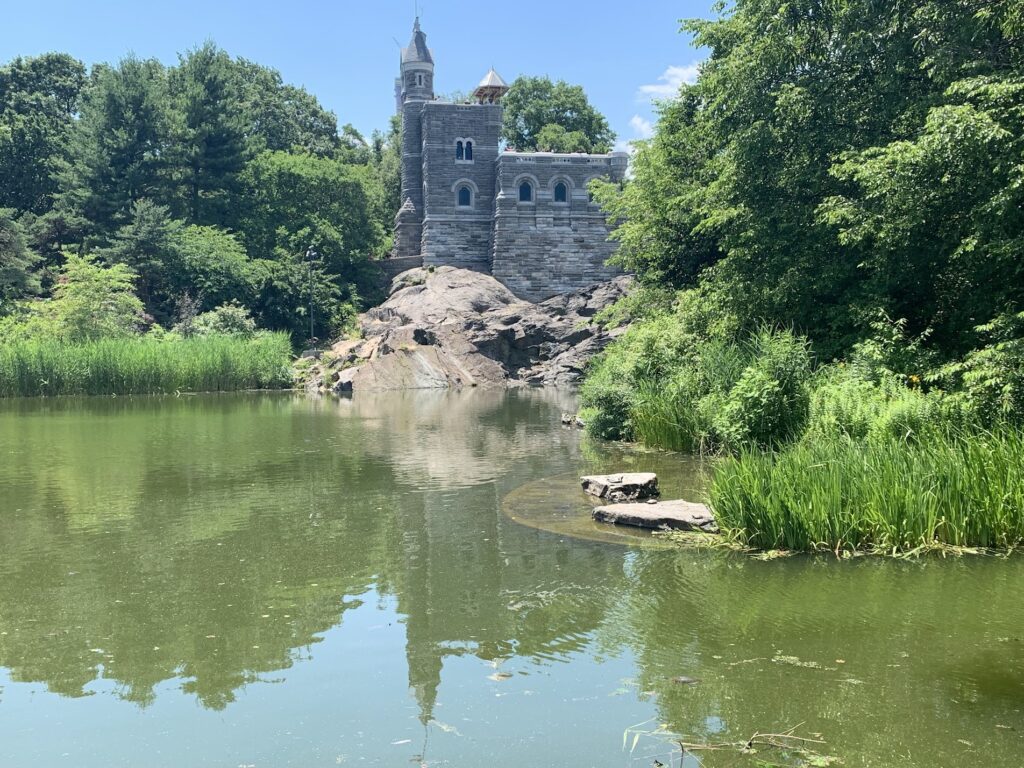
In this rambling walking tour Greg visits some of the most beloved attractions of the park including Bethesda Terrace and Fountain, Naumburg Bandshell, Bow Bridge and Belvedere Castle.
Photo by Greg Young
And he’s joined by two very special guests:
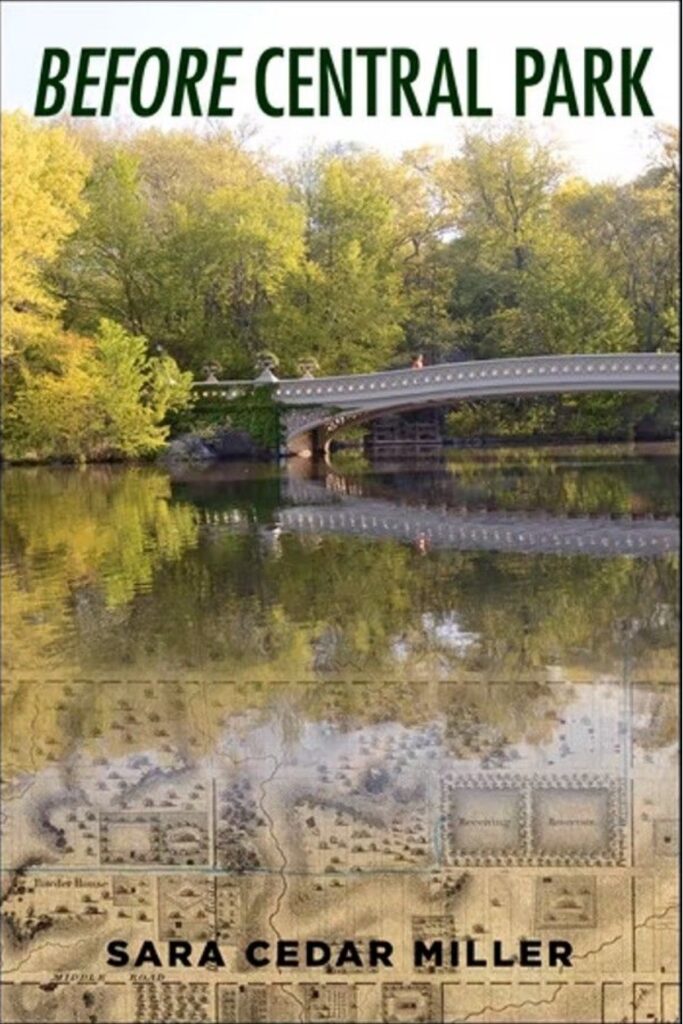
— Sara Cedar Miller, historian emerita of the Central Park Conservancy and author of Before Central Park
— Dr. Emma Guest-Consales, president of the Guides Association of New York City and tour ambassador at One World Observatory.
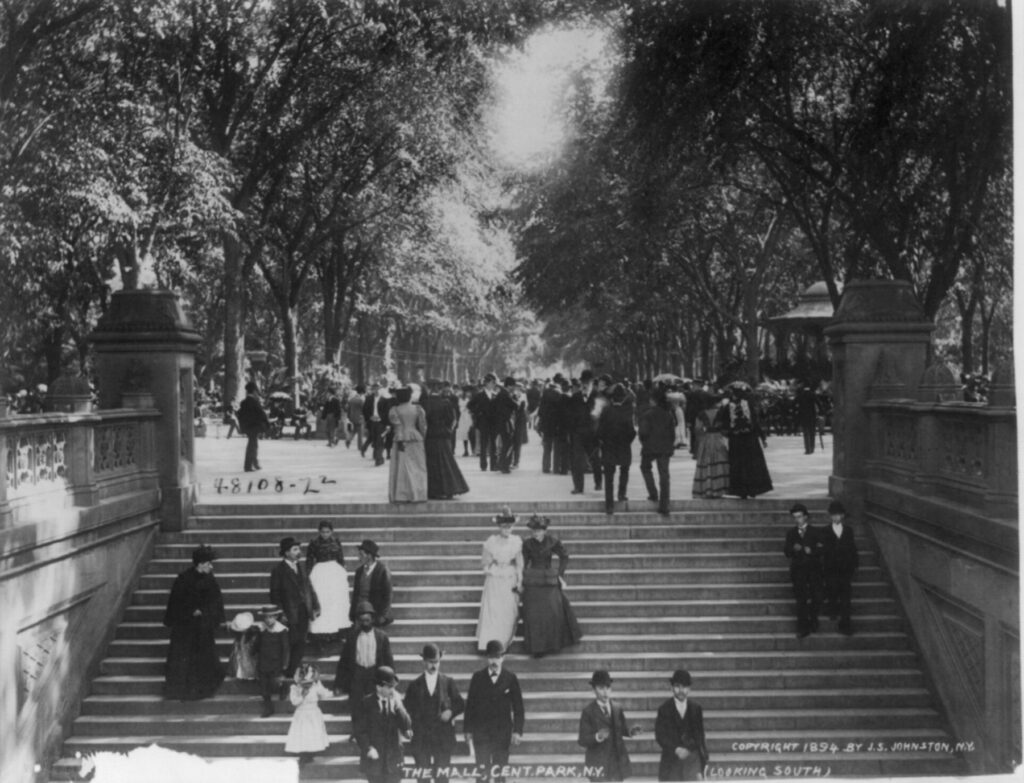
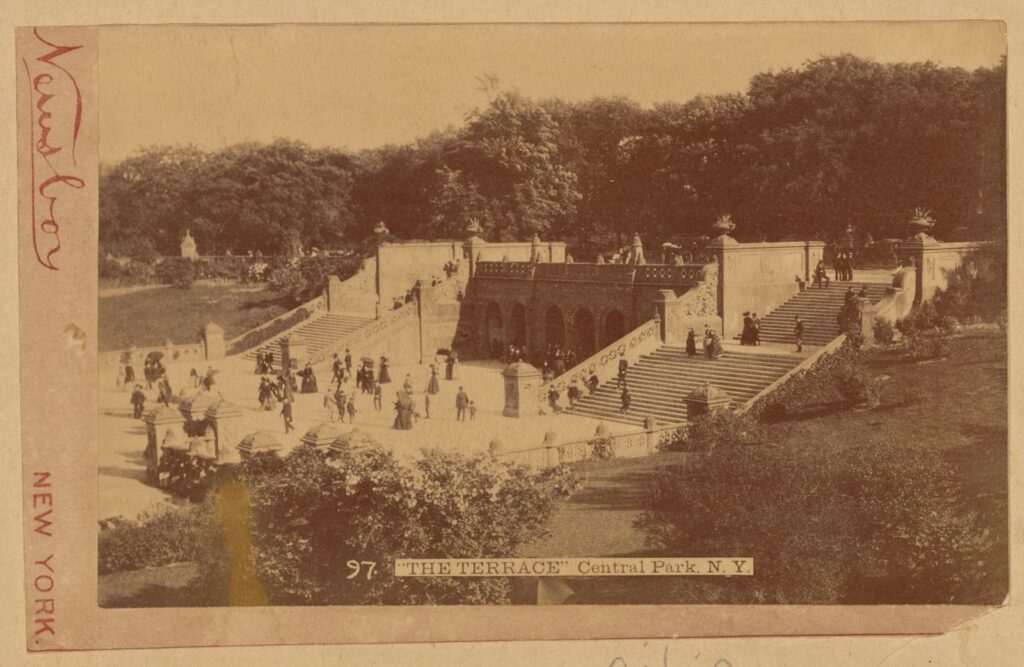
Naumburg Bandshell in 1934, courtesy the Central Park ConservancyBethesda Terrace, 1894 (Courtesy Library of Congress)Knapp View of Bethesda Terrace, Central Park, 1869 (Courtesy New York Public Library)Bethesda Fountain 1901, Detroit Publishing Co., courtesy LIbrary of CongressThe Lake in Central Park, 1861, lithograph courtesy New York Public LibraryThe Central Park Ramble on Sunday, 1942, photography by Marjory Collins, courtesy Library of Congress
You can book a tour with special guest Emma Guest-Consales here:
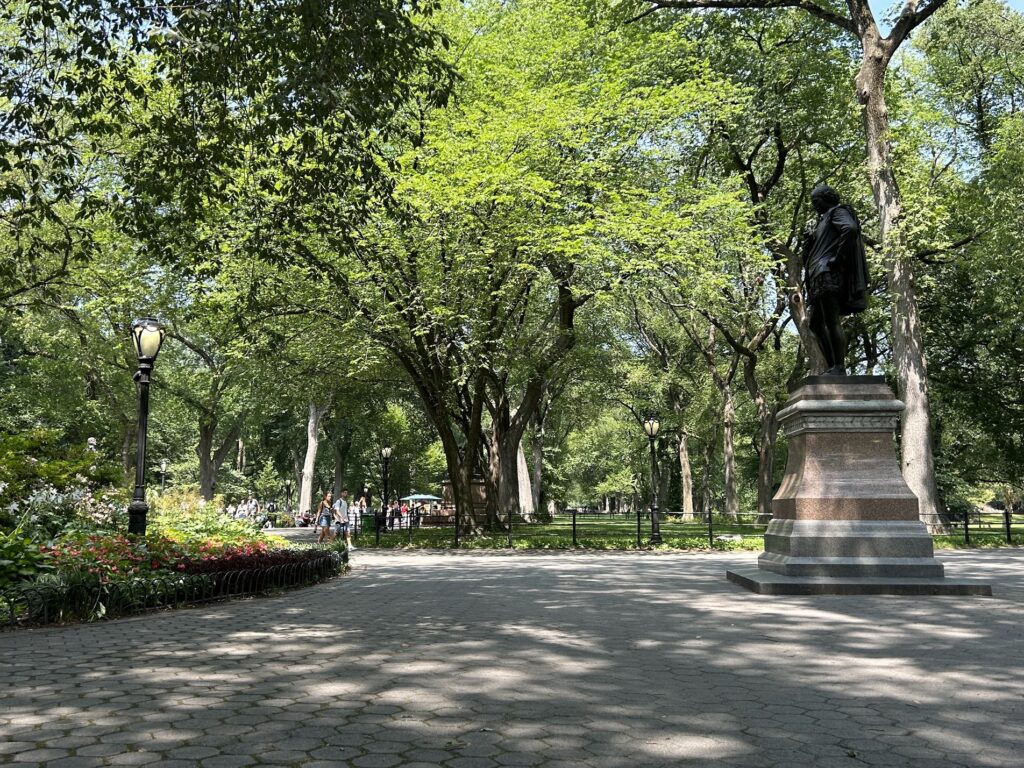
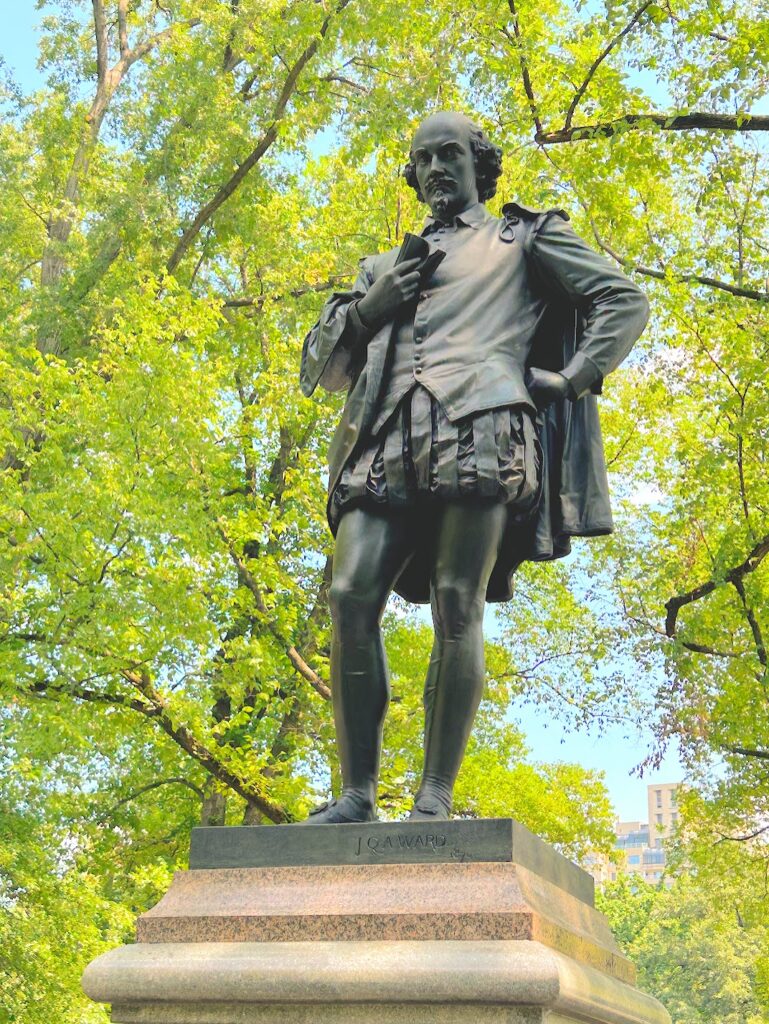
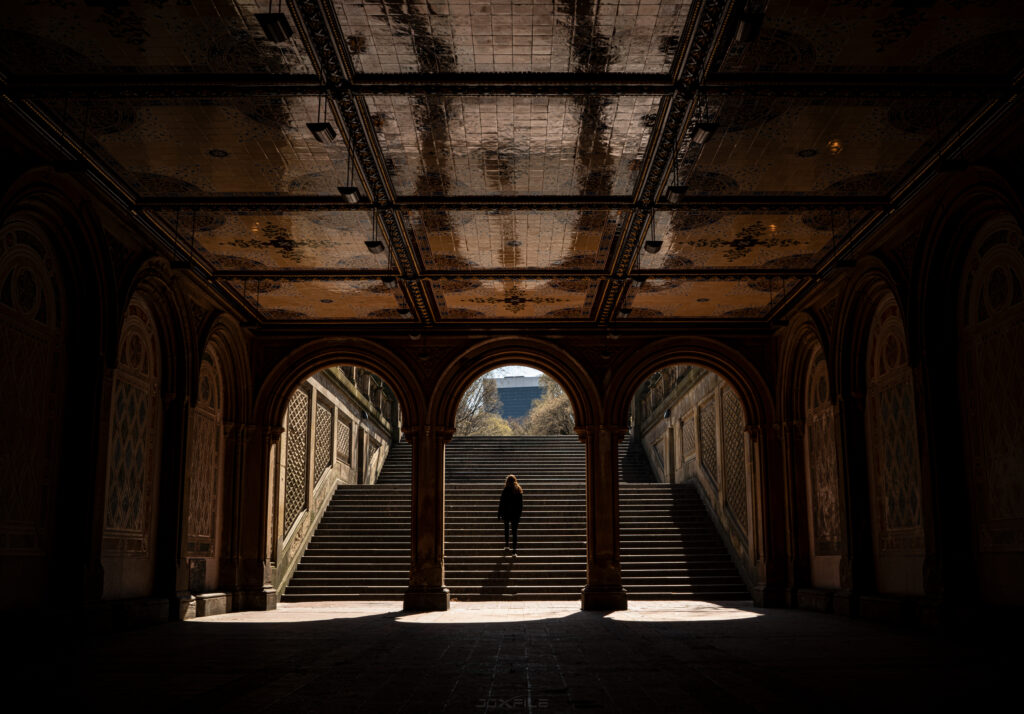
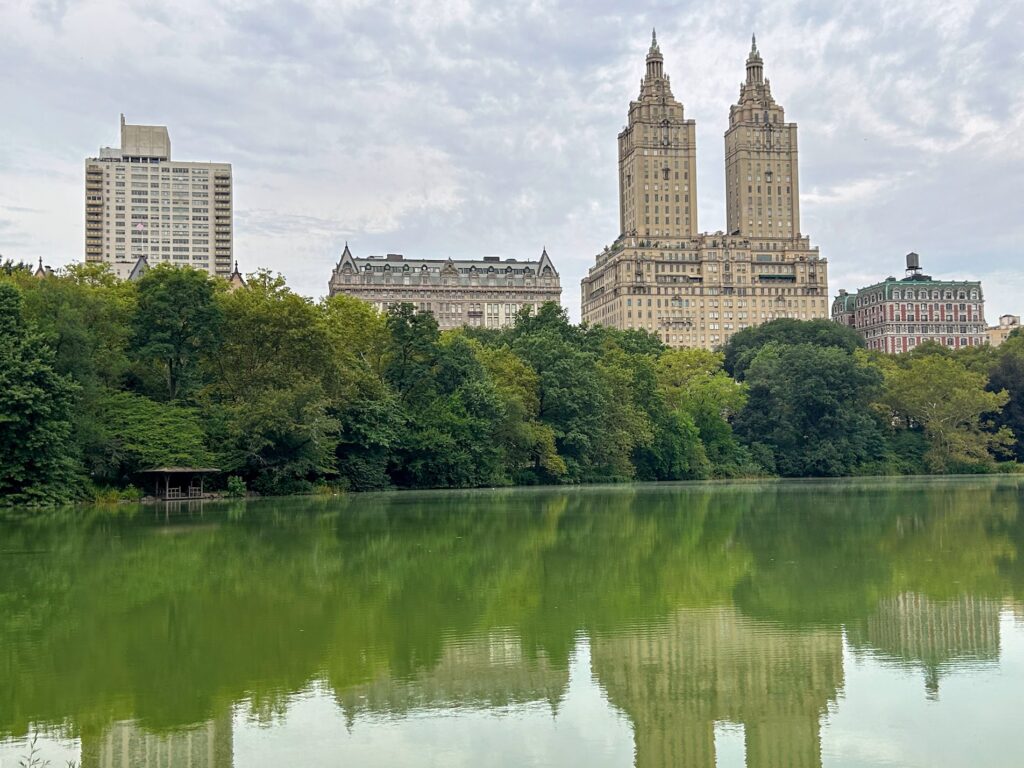
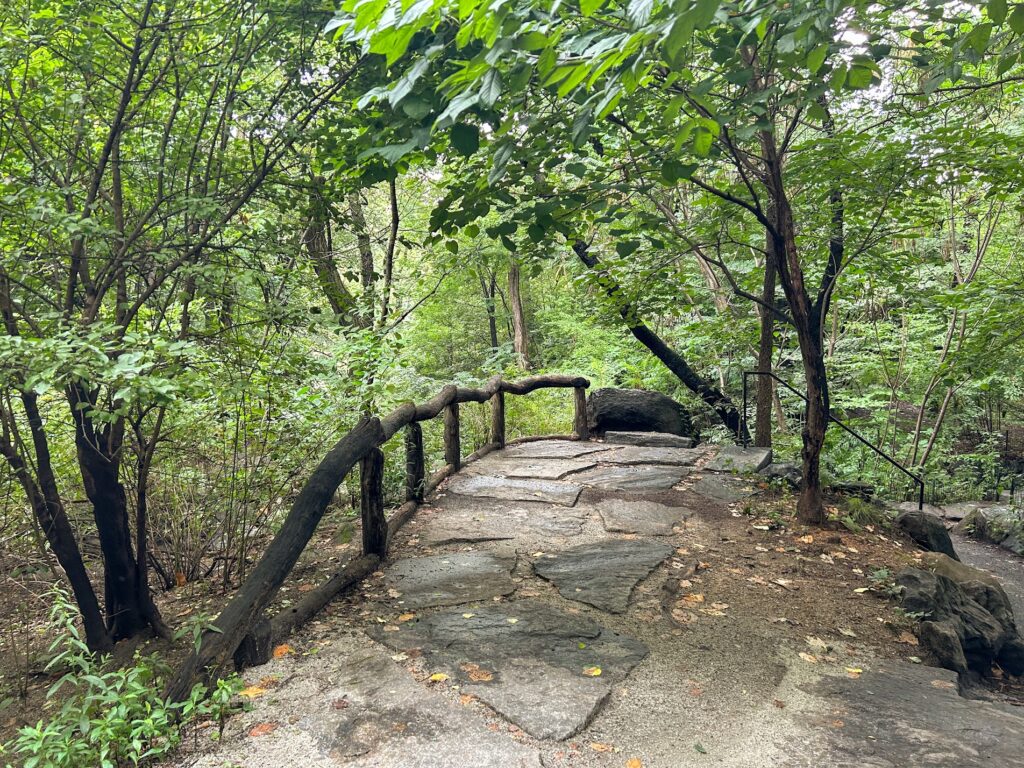
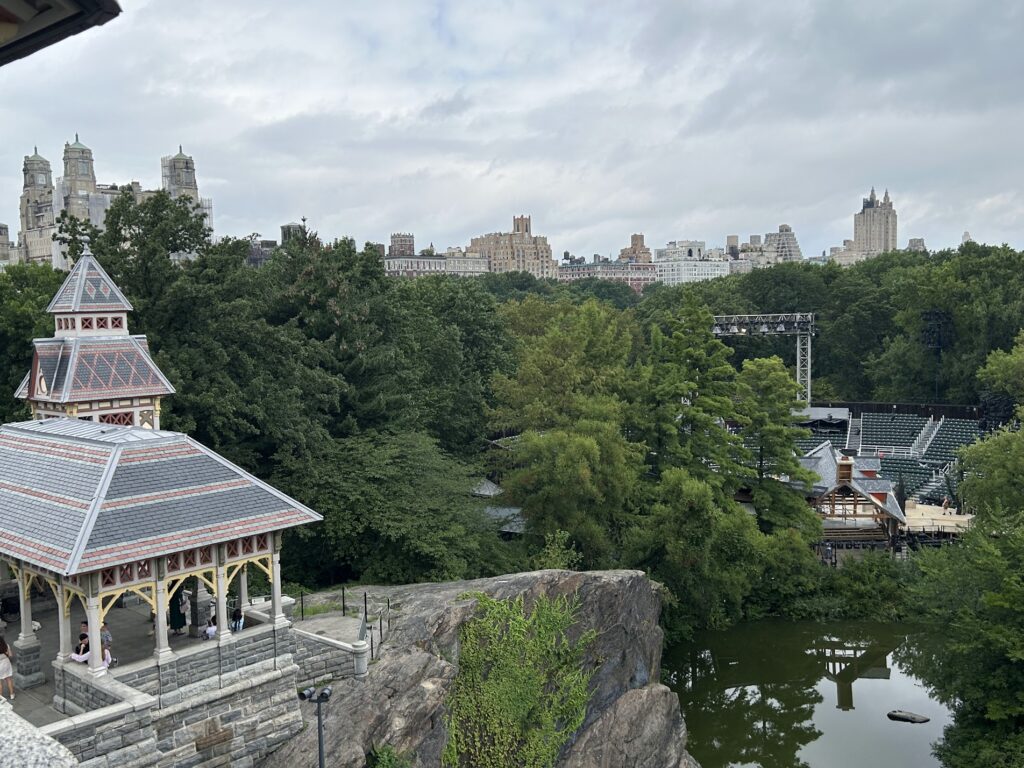
Entrance to the Mall with the William Shakespeare statue to the right.Bethesda Arcade — Courtesy JJxFile/Wikimedia Commons, taken March 2020Sidvics/Wikimedia Commons, taken 2011Cherry Hill fountain, photo by Greg YoungThe Lake with the San Remo and the Langham reflected in the water, with the top of the Dakota Apartment barely sticking over the trees.The little niche where Greg and Emma recorded the show.The rustic landscape within the RambleThe view from Belvedere Castle, looking down at the Delacorte Theater
And you also may like these related shows (including our first, earliest efforts in telling the story of the park):
FURTHER READING
Before Central Park by Sara Cedar Miller The Central Park: Original Designs for New York’s Greatest Treasure by Cynthia S. Brenwell Central Park: Then & Now by Edward J. Levine The Park and the People: A History of Central Park by Elizabeth Blackmar and Roy Rosenzweig The Ramble In Central Park by Robert A. McCabe Sacred Panoramas: Walt Whitman and New York City Parks by Jill Wacker Seeing Central Park by Sara Cedar Miller
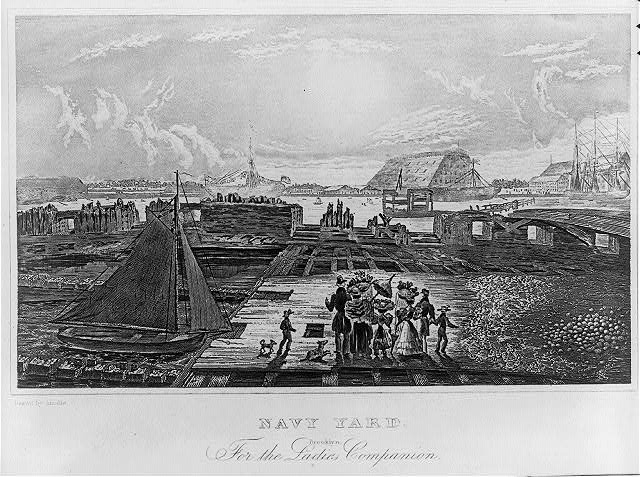
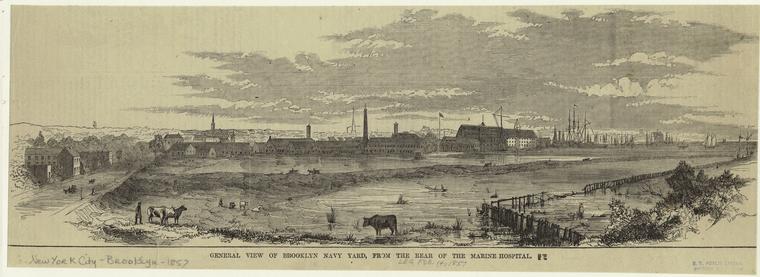
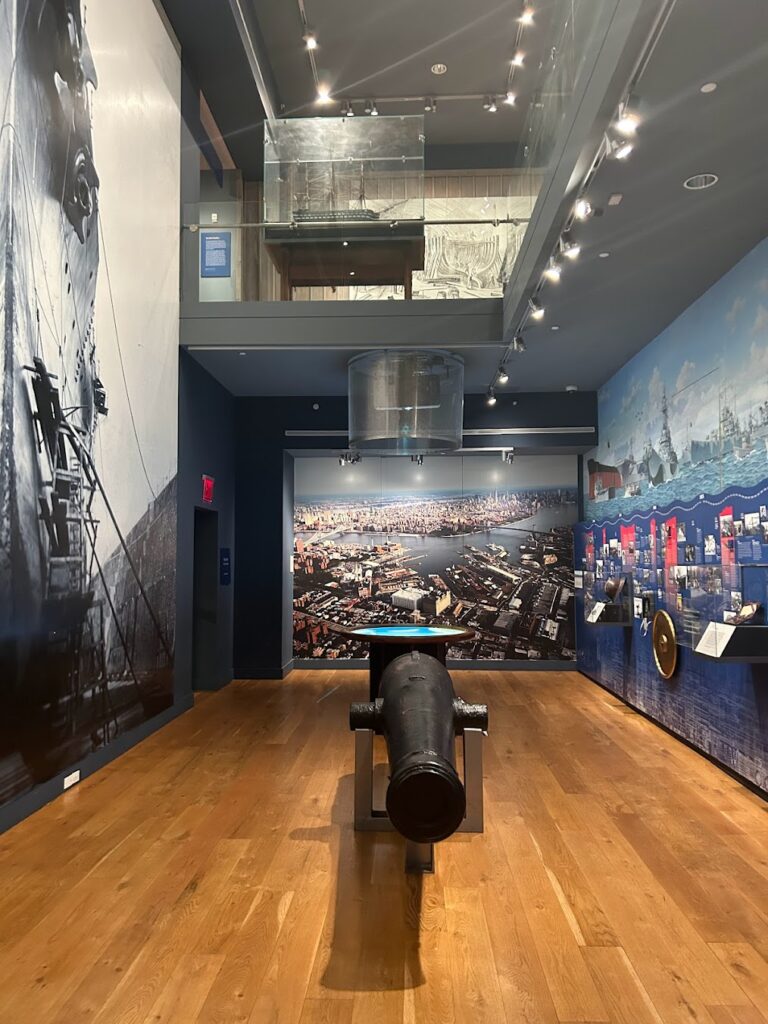
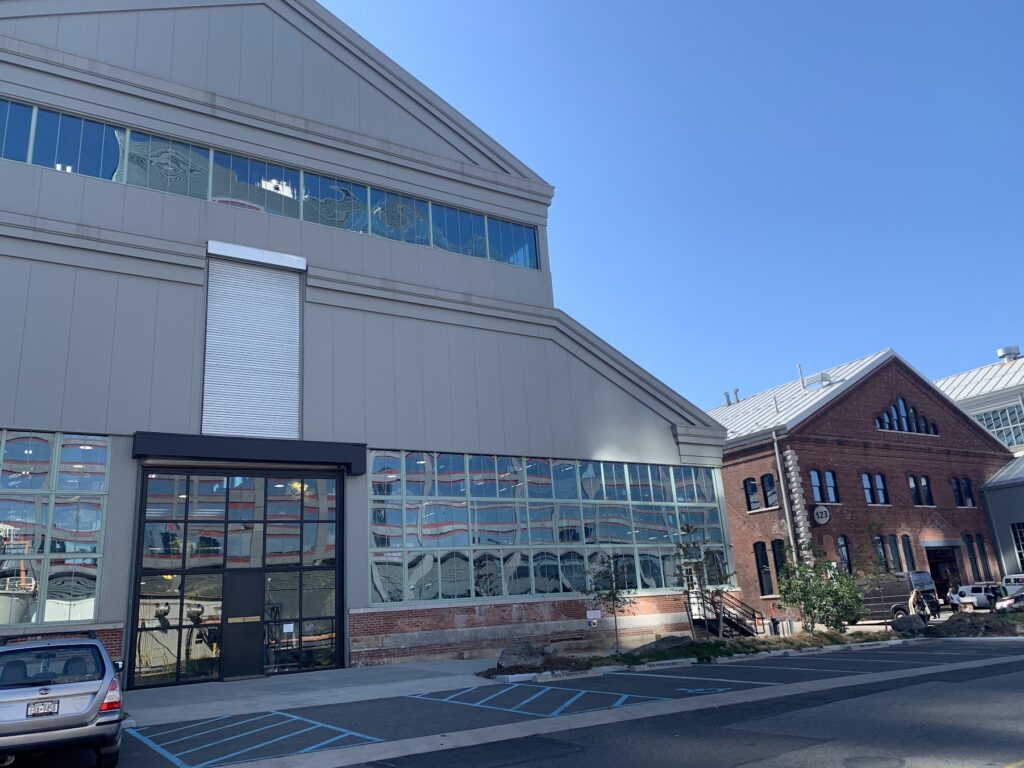
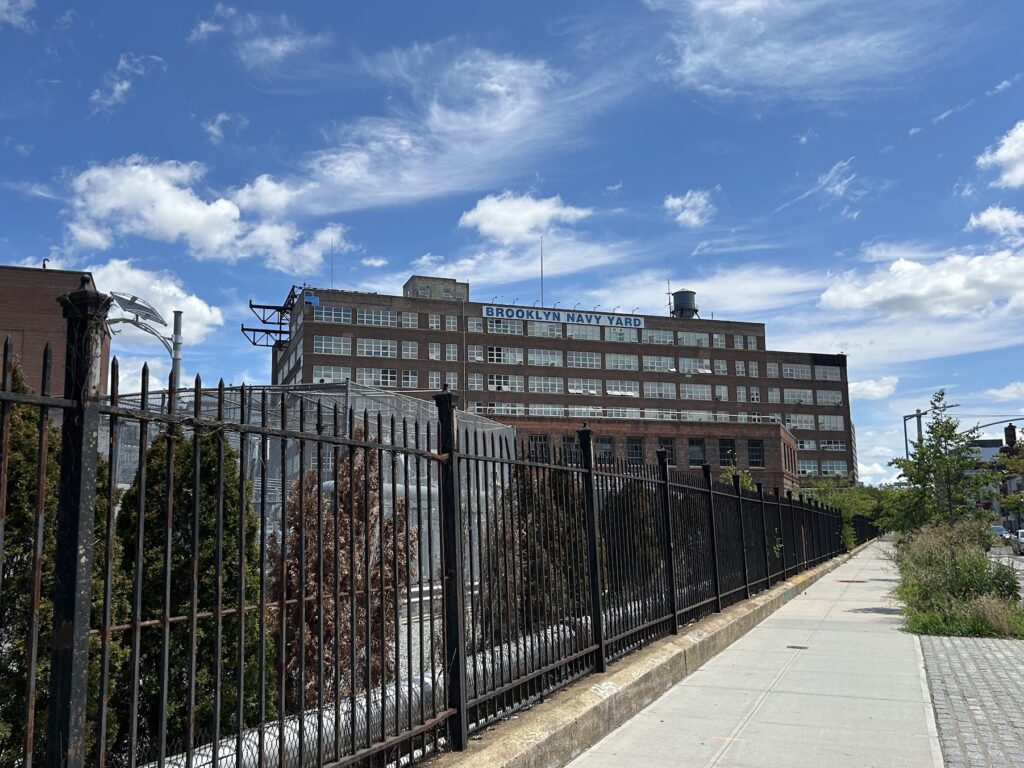
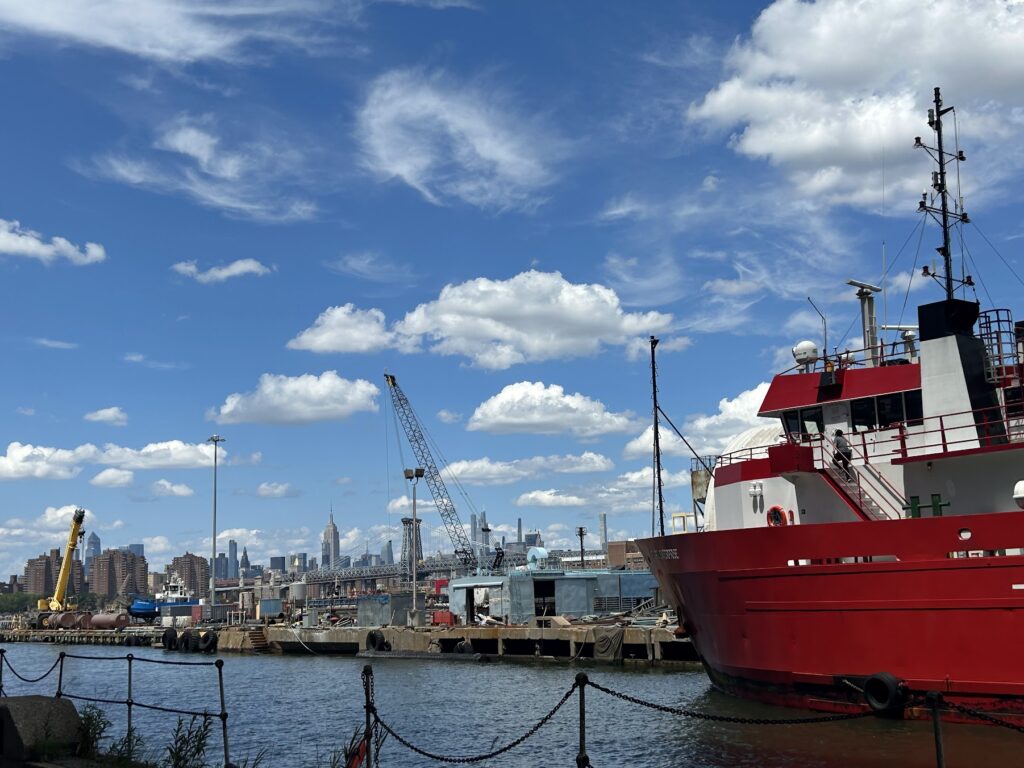
The tale of the Brooklyn Navy Yard is one of New York’s true epic adventures, mirroring the course of American history via the ships manufactured here and the people employed to make them.
The Navy Yard’s origins within Wallabout Bay tie it to the birth of the United States itself, the spot where thousands of men and women were kept in prison ships during the Revolutionary War.
Within this bay where thousands of American patriots died would rise one of this country’s largest naval yards. It was built for the service and protection of the very country those men and women died for. A complex that would then create weapons of war for other battles — and jobs for hundreds of thousands of New Yorkers.
In this episode, Greg is joined by the amazing Andrew Gustafson from Turnstile Tours who unfurls the surprising history of the Navy Yard — through war and peace, through new technologies and aging infrastructure, through the lives of the men and women who built the yard’s reputation.
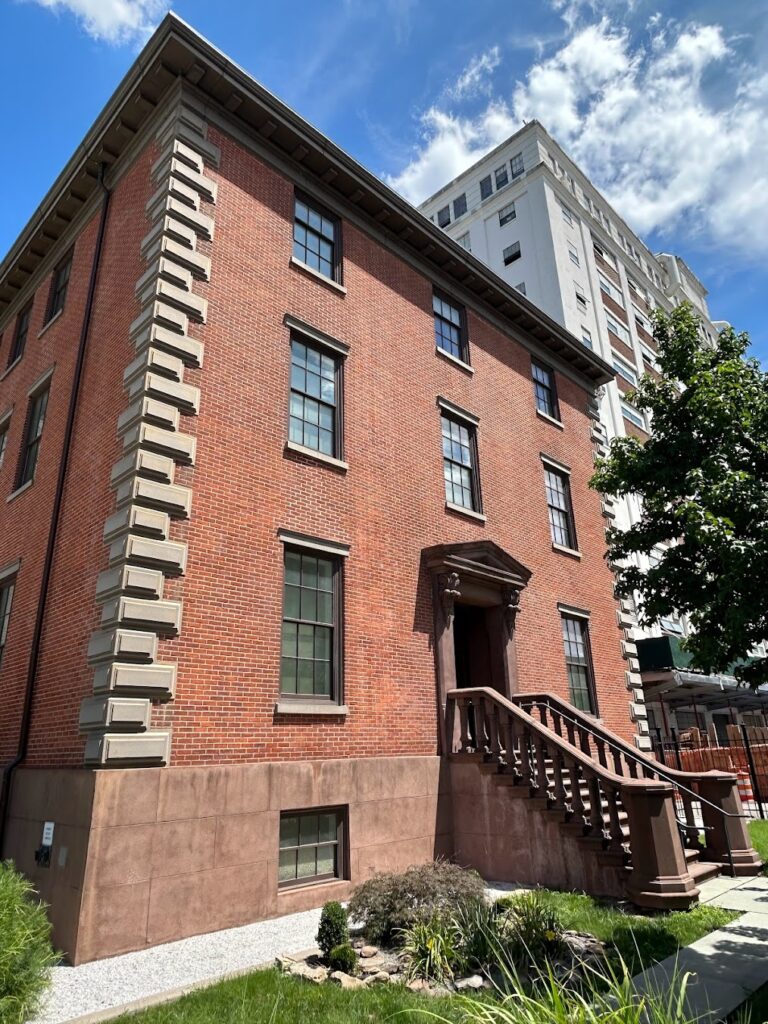
And the story extends to the tiny neighborhood of Vinegar Hill, famed for its early 19th-century architecture and the mysterious mansion known as the Commandant’s House.
FEATURING the origin story of Brooklyn’s most sacred public monument — at home not in Vinegar Hill (at least not anymore) but in Fort Greene.
WITH Matthew C. Perry (not the guy from Friends), E. R. Squibb, Robert F. Kennedy and … The Marvelous Mrs. Maisel?
LISTEN HERE: The Brooklyn Navy Yard
Have you ever worked in the Brooklyn Navy Yard or do you have relatives or descendents who worked there during its naval shipbuilding years? Leave your stories in the comments section.
Our sincere thanks to Andrew Gustafson and the gang over at Turnstile Tours. Visit their website to book a tour, not only of the Navy Yard, but also Brooklyn Army Terminal and Prospect Park, as well as a Food Cart Tour.
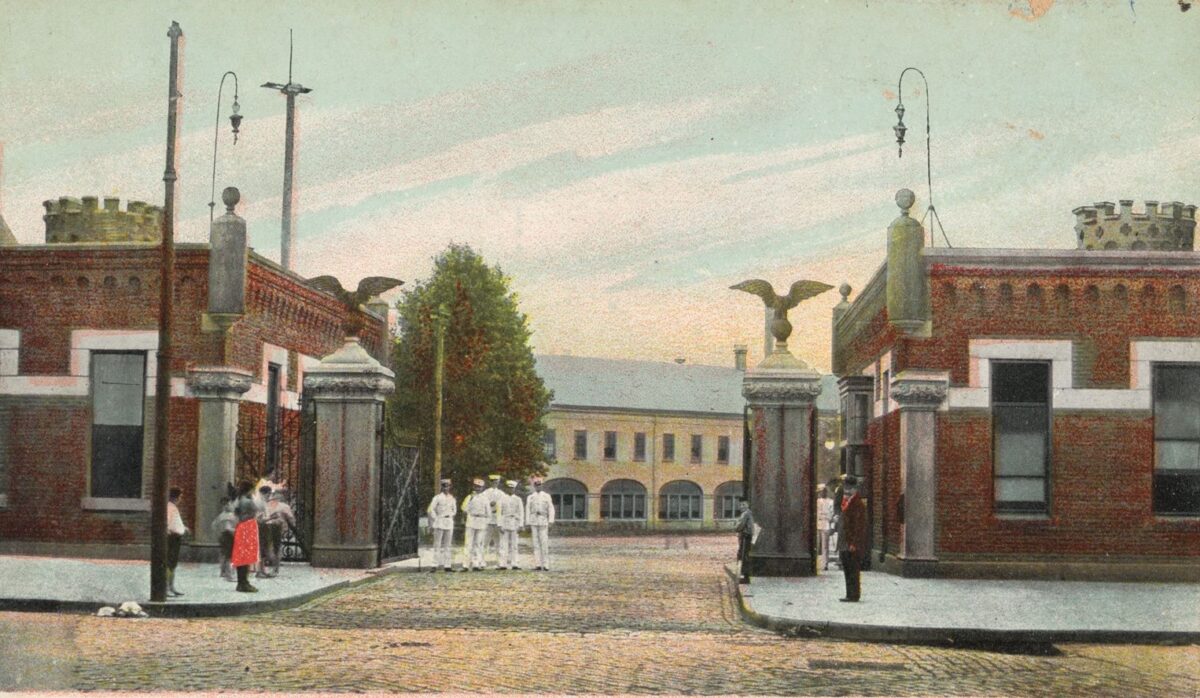
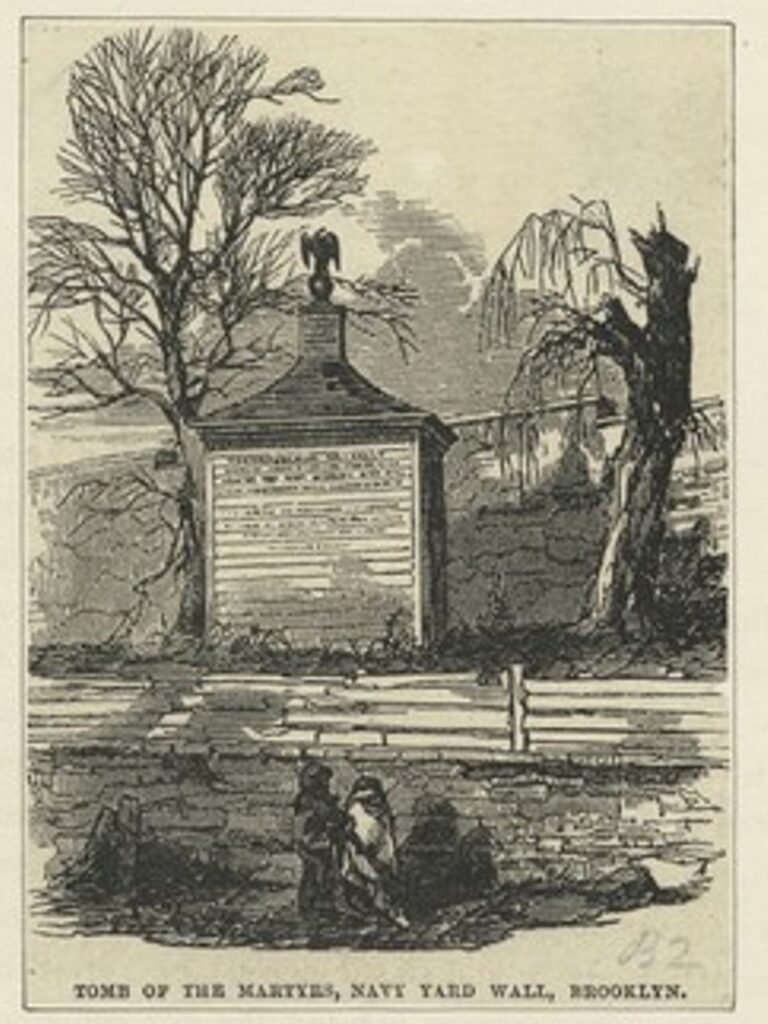
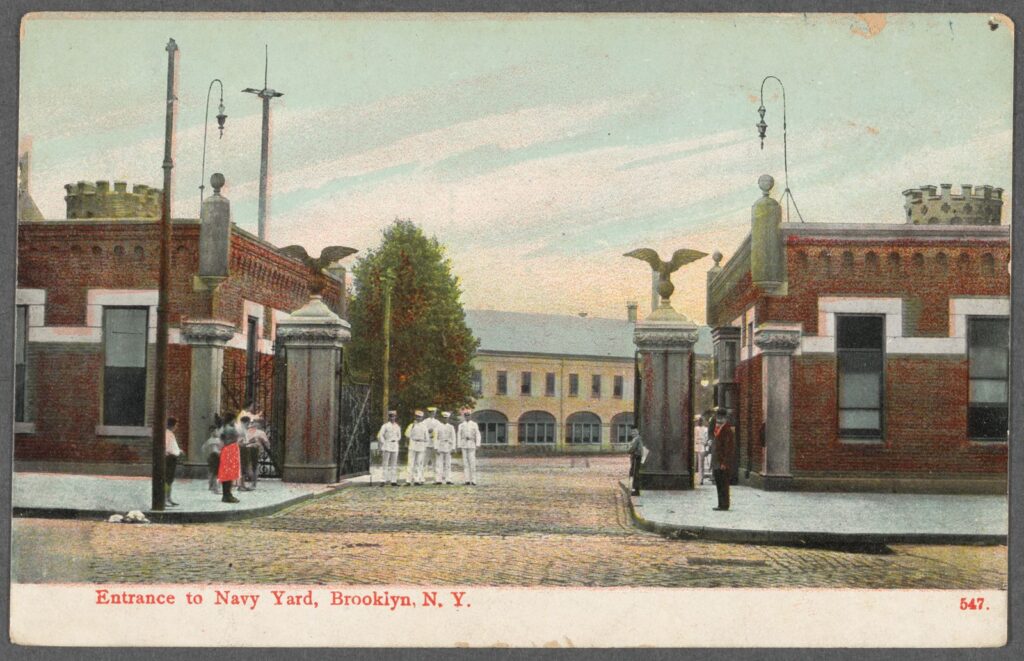
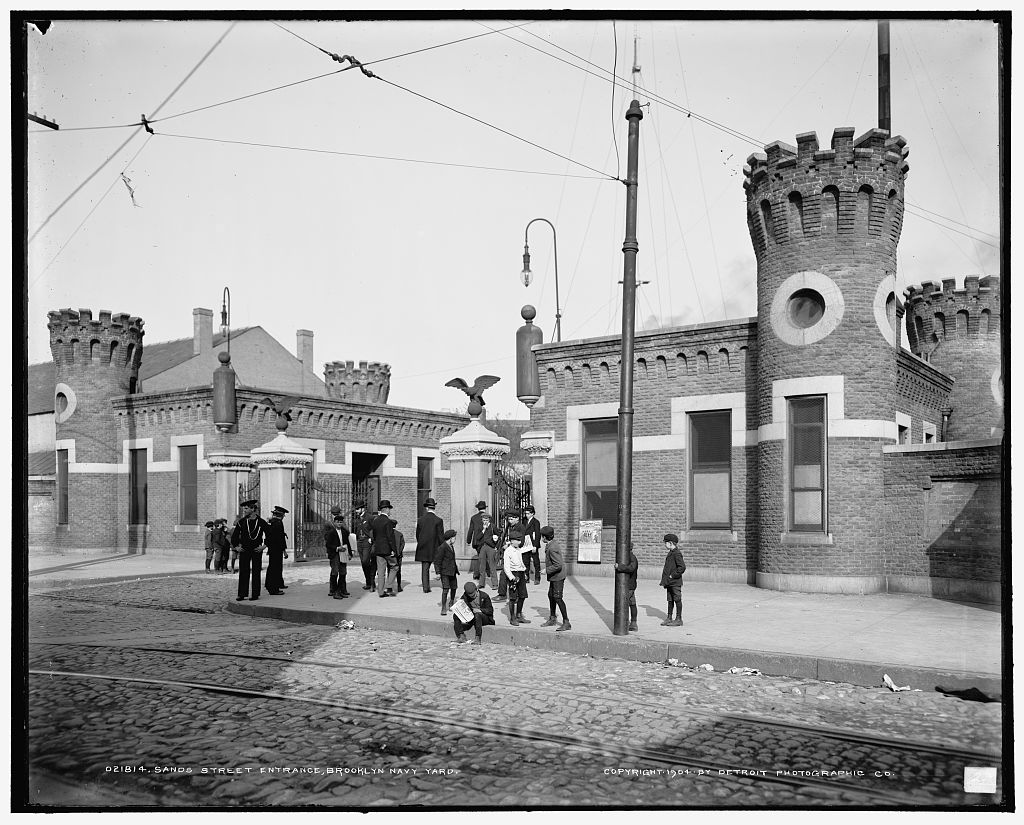
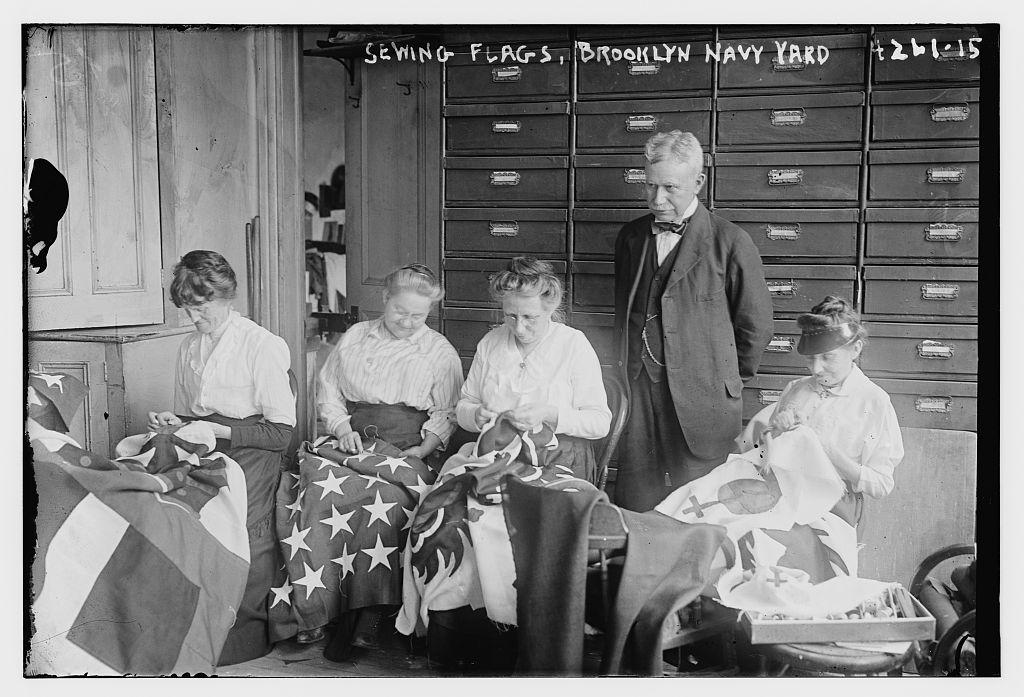
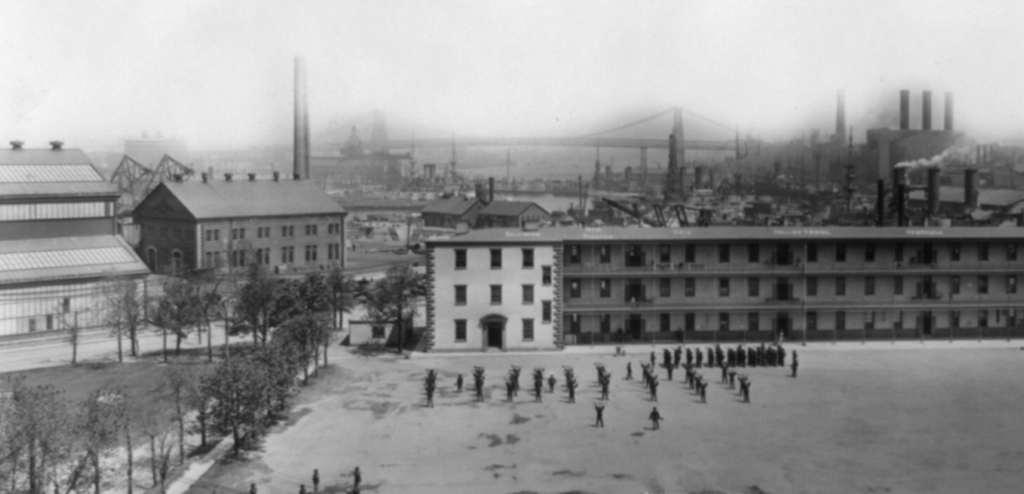
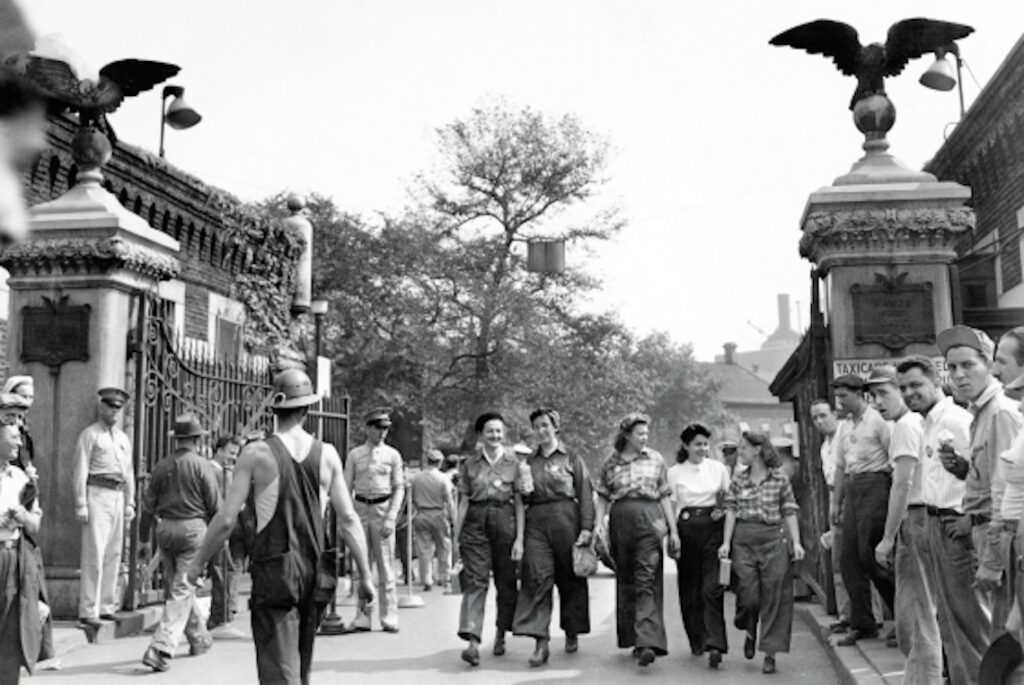
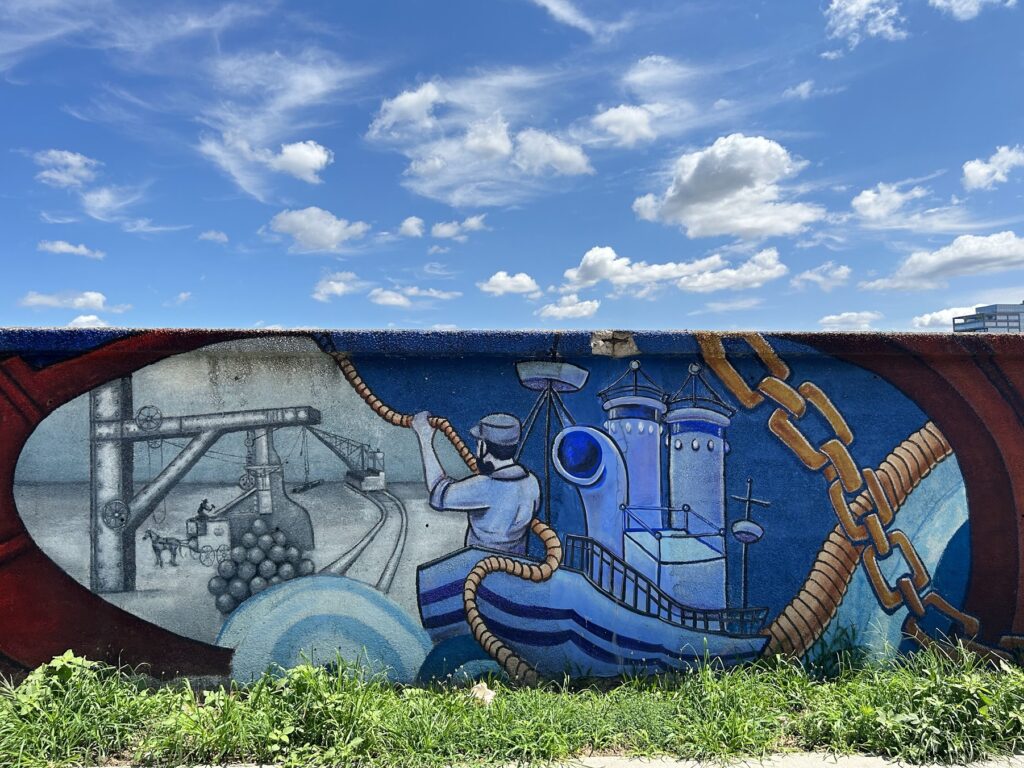
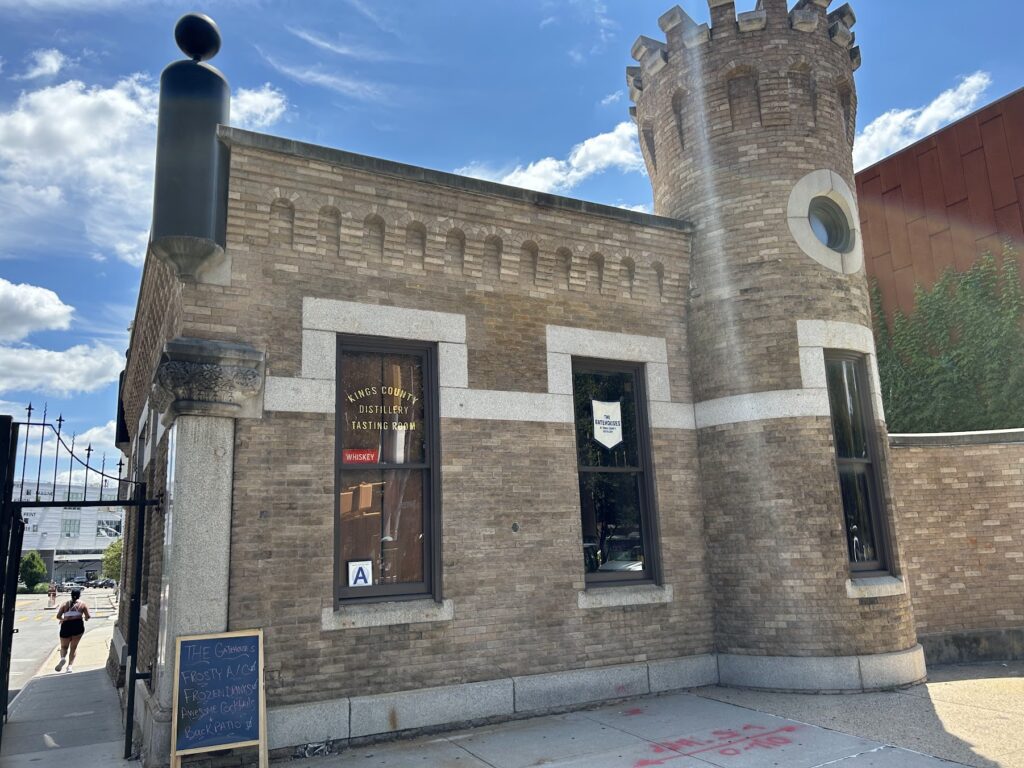
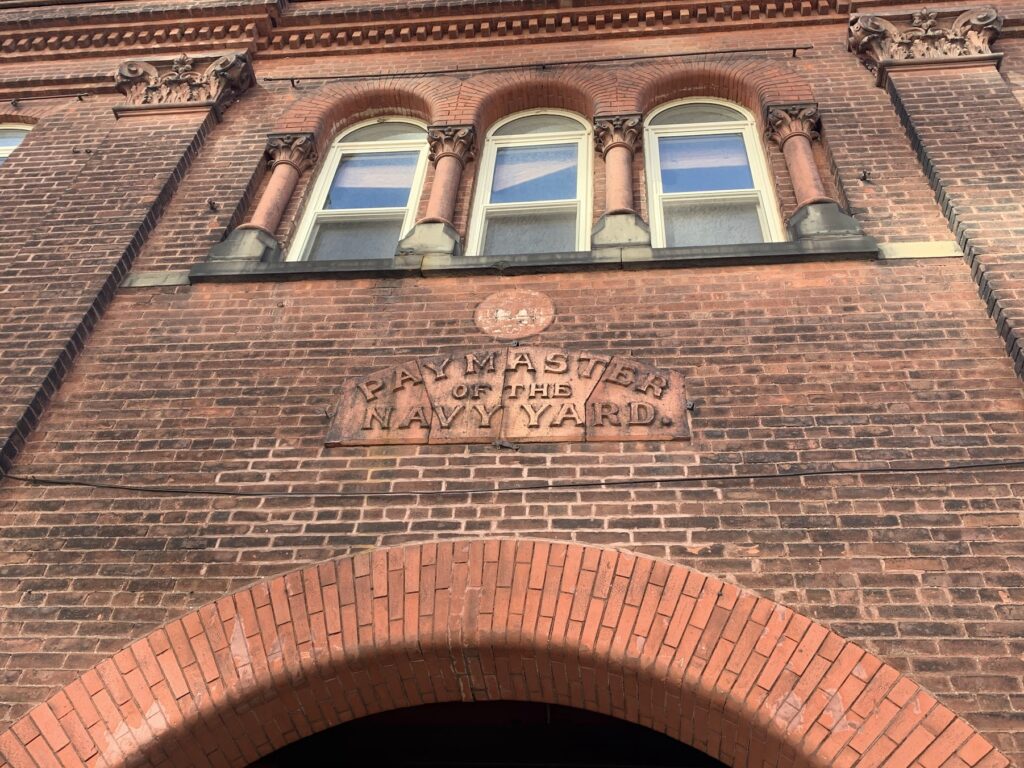
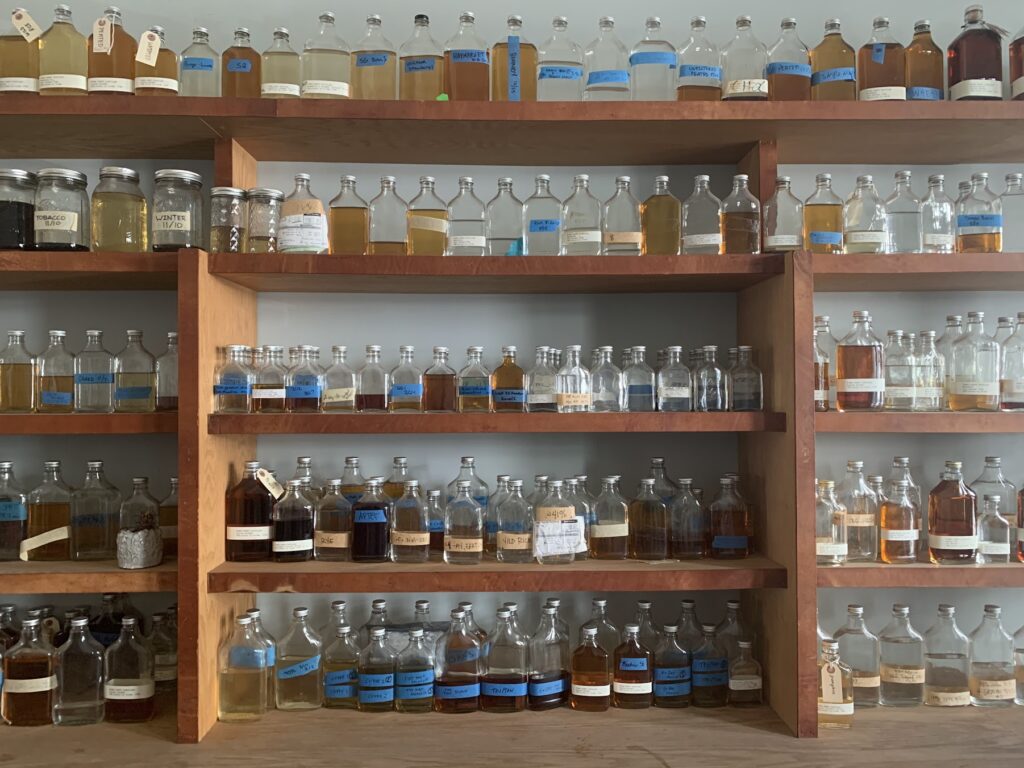
The original Martyrs Tomb on Hudson Avenue, image courtesy NYPLLithograph of the Navy Yard in 1836, Library of CongressThe Navy Yard, 1857, courtesy NYPLNYPL1904, Sands Street entrances to the Navy Yard/Library of CongressJuly 1917, Bain News Service/Courtesy the Library of CongressBird’s-eye view showing barracks and men doing exercises; harbor in background. 1909/Library of CongressWomen exit the Brooklyn Navy Yard, September 19, 1942 – (Photo by the New York Times/Redux)A wall mural on Navy Street celebrates the Navy Yard’s history. Courtesy Greg YoungSands Street Gatehouse, today a tasting room for Kings County Distillery. Courtesy Greg YoungKing County Distillery finds its home in a 19th century paymaster building… Courtesy Greg YoungThis is what’s inside today! Photo courtesy Greg YoungBuilding 92Just one room in Building 92’s thorough museum to the Navy Yard’s history.
The paths of the Naval Cemetery Landscape, the site of the old Naval Hospital cemetery.
Peering through the gate to Quarters A, the Commandant’s House.
Enchanting Vinegar Hill
FURTHER READING
The Brooklyn Navy Yard / Thomas F. Berner The Ghost Ship of Brooklyn / Robert P. Watson Six Frigates: The Epic History of the Founding of the U.S. Navy / Ian W. Toll U.S. Navy: A Complete History / M. Hill Goodspeed
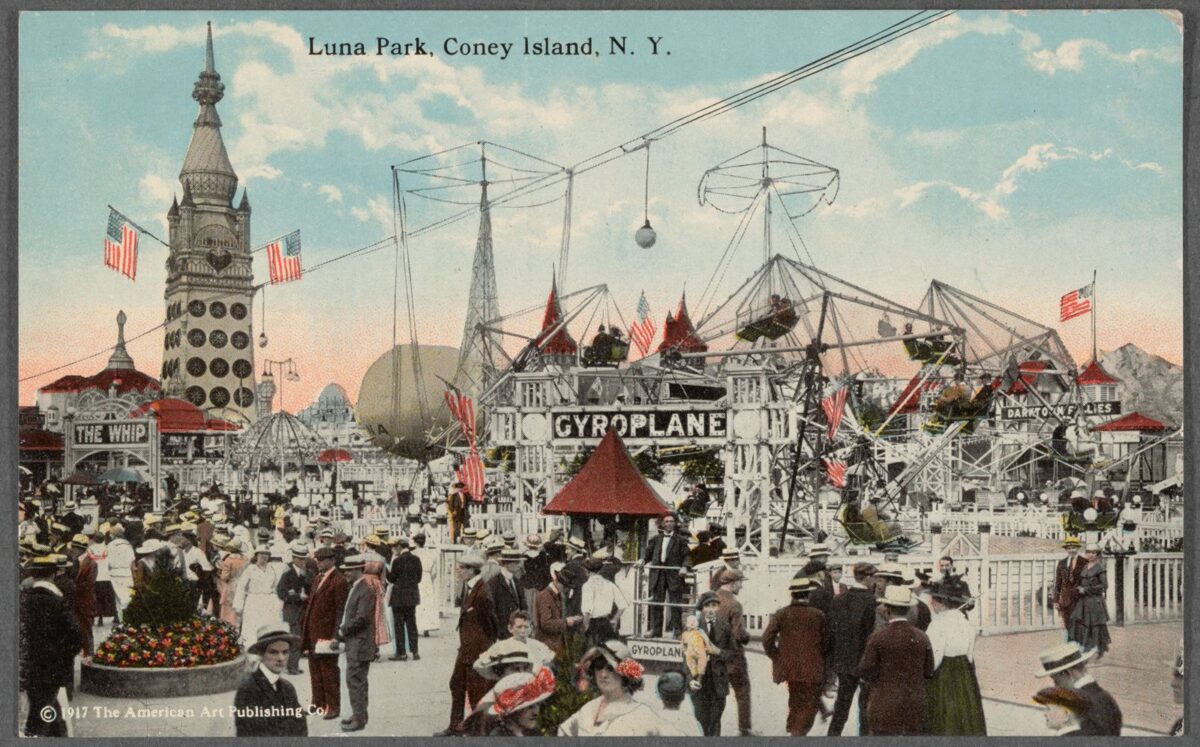
Luna Park, 1917. Courtesy New York Public Library, The Miriam and Ira D. Wallach Division of Art, Prints and Photographs: Picture Collection
On the latest episode of The Gilded Gentleman, returning guest Esther Crain, author and creator of Ephemeral New York, joins Carl for a look at how New Yorkers stayed cool on summer days in the Gilded Age.
As New York continued its march up the island of Manhattan, there were few places where New Yorkers that couldn’t escape to Newport could find somewhere to relax, play, stroll, and find some shade.
The development of the Central Park provided some much-needed relief but it took some time for it to become a place that was accessible and viable for all of New York’s social classes.
Meanwhile, out on the far coast of Brooklyn, the resort of Coney Island developed rapidly and became a truly great escape with its famous amusement parks where one could find adventure and perhaps a bit of romance.
Esther takes us on a journey to visit these spots and spaces where Gilded Age New Yorkers could cool off, forget the realities of life for just a bit and have a really good time.
LISTEN HERE OR ON YOUR FAVORITE PODCAST PLAYER:
And in two weeks on The Gilded Gentleman Podcast: Prepare for a history of the French Riviera
Instead of looking back to the history of New York City in this episode, we are looking forward to the future — to the new generation of creators who are celebrating New York and telling its story through mediums that are not podcasts or books.
Today we are honoring all the historians, journalists and photographers who bring New York City to life on social media platforms like Instagram.
There are a million different ways to tell a good story and the guests on today’s show are doing it with photography and short films, exposing new audiences to the best of New York City – its landmarks, its people, even its diners.
Featuring interviews with three of our favorite creators:
Nicolas Heller, aka New York Nico, the “unofficial talent scout of New York City,” the filmmaker and photographer who manages to capture the magic of the city’s most interesting and colorful characters
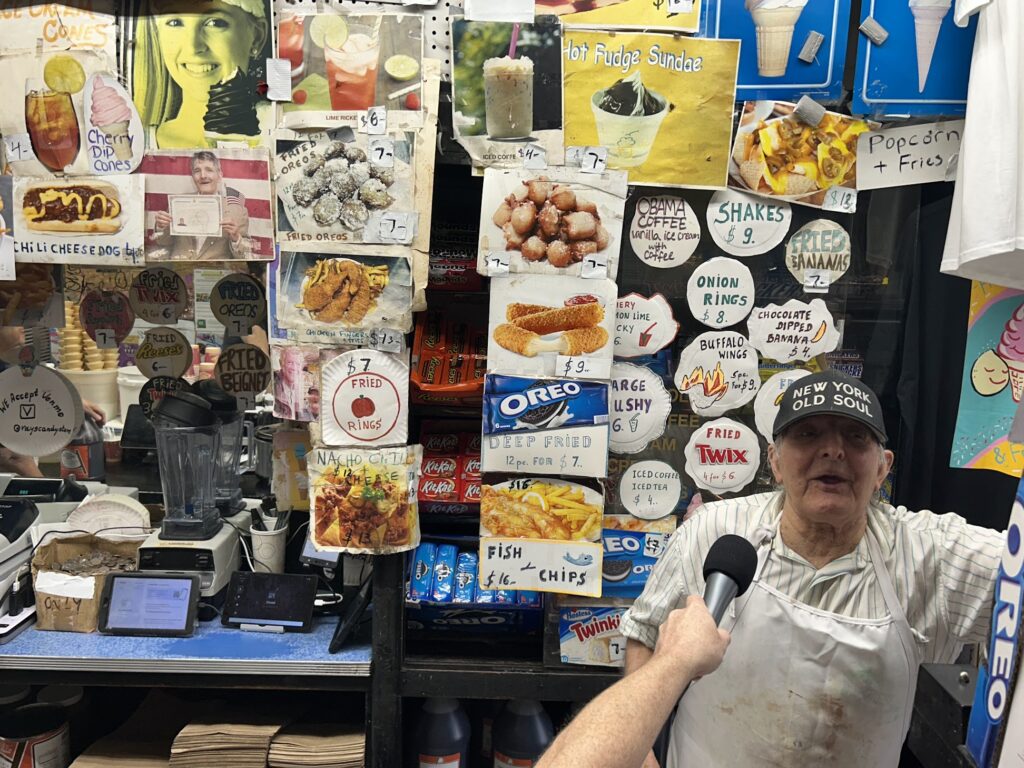
Riley Arthur, aka Diners of NYC, who explores the world of New York City diners, great and small, in hopes to bring awareness to many struggling local businesses
Tommy Silk, aka Landmarks of NY, who shares illuminating photos and videos featuring the city’s most interesting and sometimes overlooked architectural gems
Featuring stories of the Neptune Diner, the Green Lady, the Little Red Lighthouse, Junior’s Cheesecake, Tiger Hood and City Island
Carl Raymond of The Gilded Gentleman podcast presents a fascinating tour through over 100 years of New York history, showing how the Gilded Age developed and evolved from an architectural and urban planning point of view.
He’s joined by guest historian and tour guide Keith Taillon (@keithyorkcity), taking listeners on a journey explaining how key Gilded Age neighborhoods became established and grew.
Some tour guides and historians have said that to understand the early history of New York, just follow the population’s migration up the island of Manhattan during the 19th century before all the boroughs consolidated.
Along the way, Keith discusses many well known figures such as Astors and Vanderbilts as well as some lesser known but important trendsetters such as the outrageous Mamie Fish and groundbreaking (literally) Mary Mason Jones.
After this show, you’ll never look at Manhattan or the Gilded Age in quite the same way again.