PODCAST There’s no business like show business — thanks to Lee, Sam and JJ Shubert, the Syracuse brothers who forever changed the American theatrical business in the 20th century.
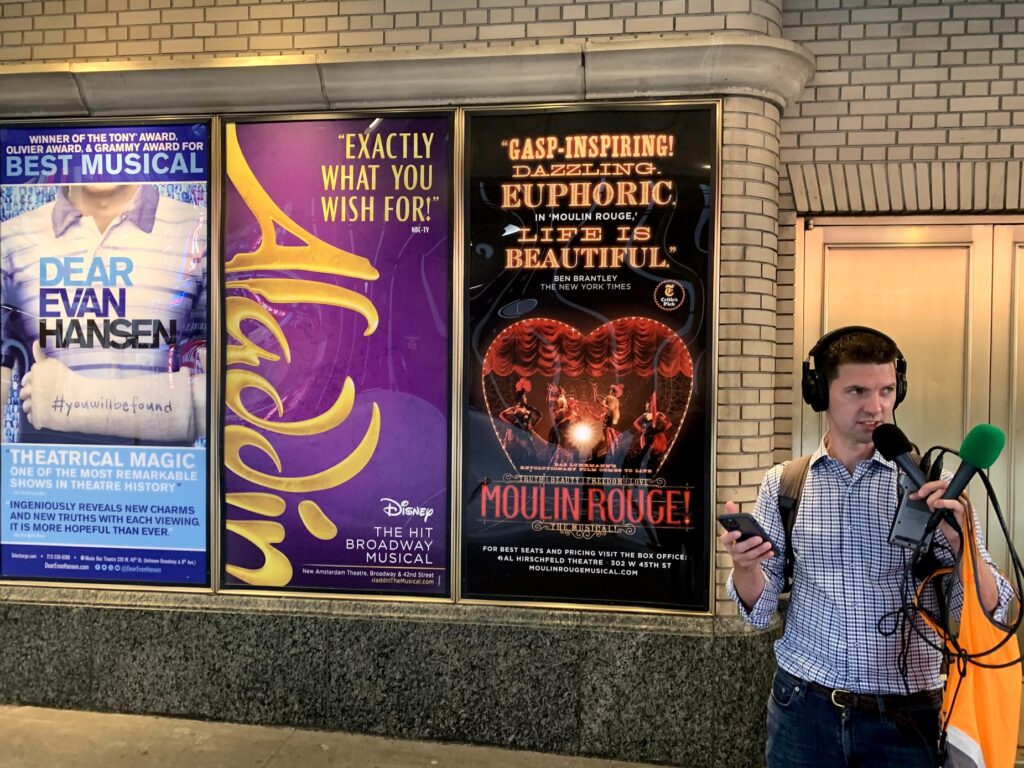
Broadway is back! And the marquees of New York’s theater district are again glowing with the excitement of live entertainment.
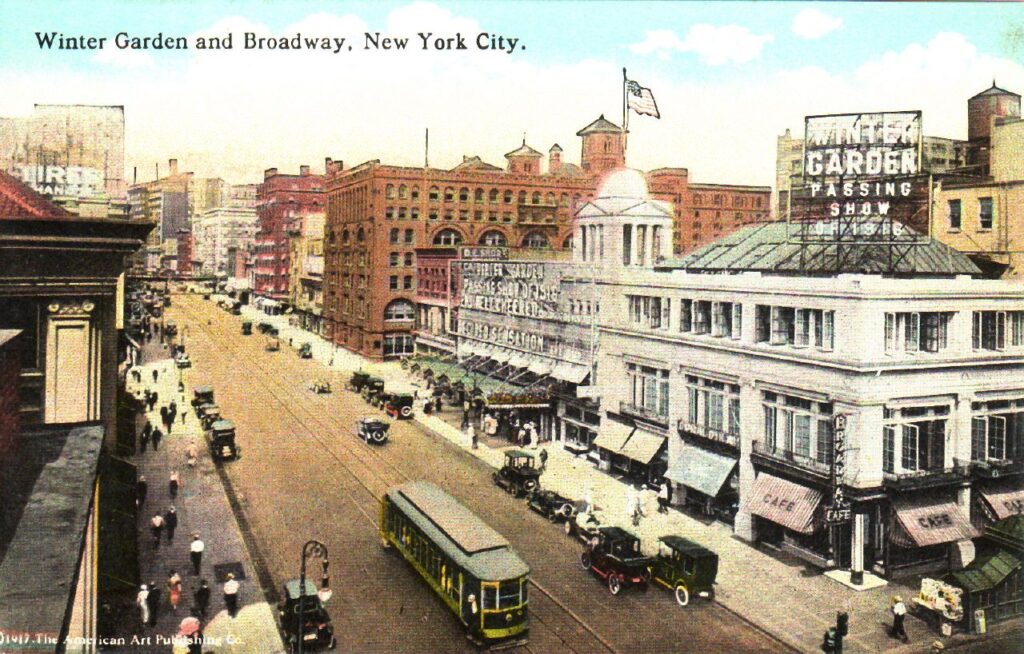
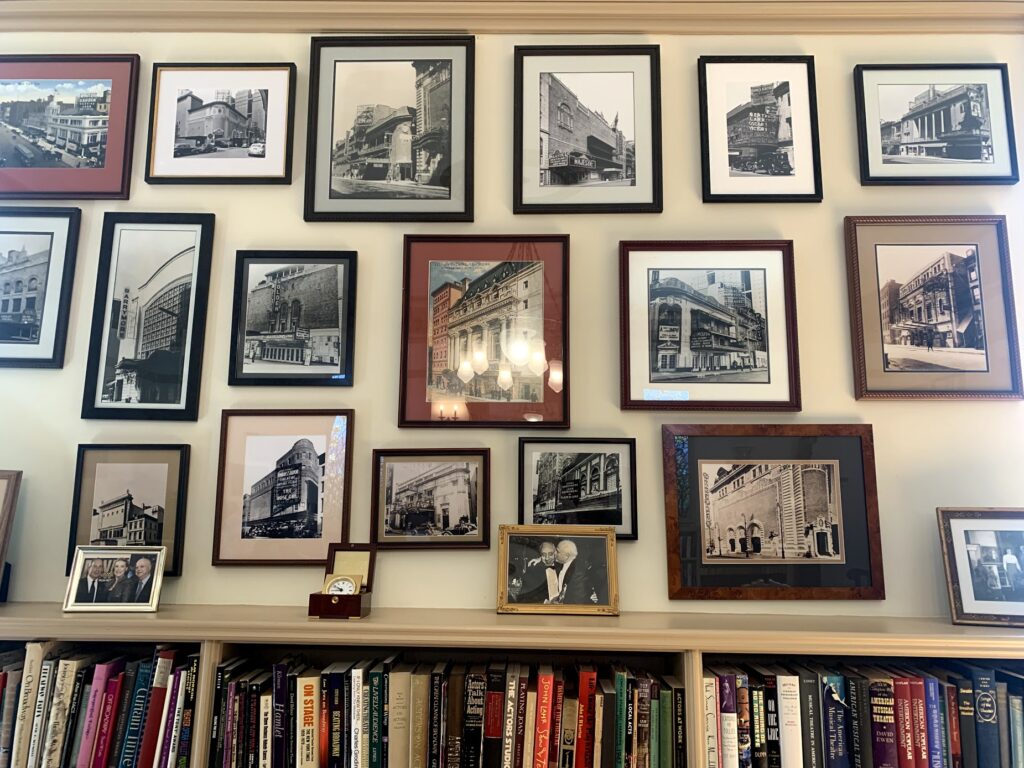
And many of these theaters were built and operated by the Shubert Brothers, impresarios who helped shape the physical nature of the Broadway theater district itself, creating the close cluster of stages that give Times Square its energy and glamour.
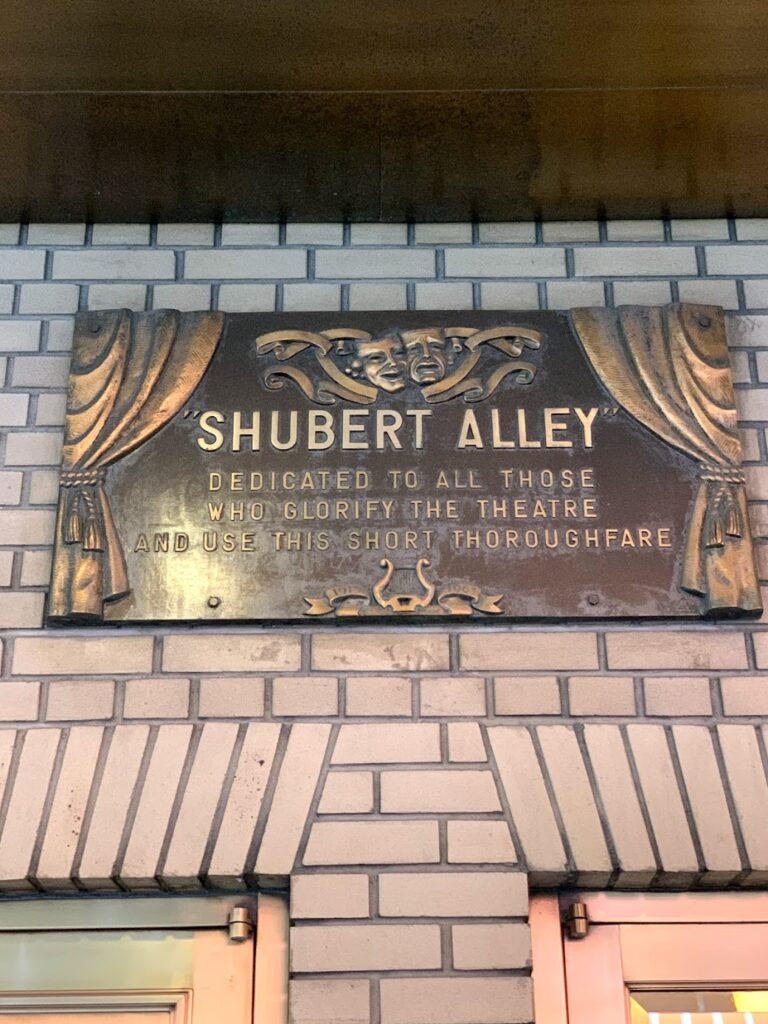
The Shuberts were there from the beginning. After fending off their rivals (namely the Syndicate), the Shuberts centered their empire around an alleyway that would quickly take their name — Shubert Alley.
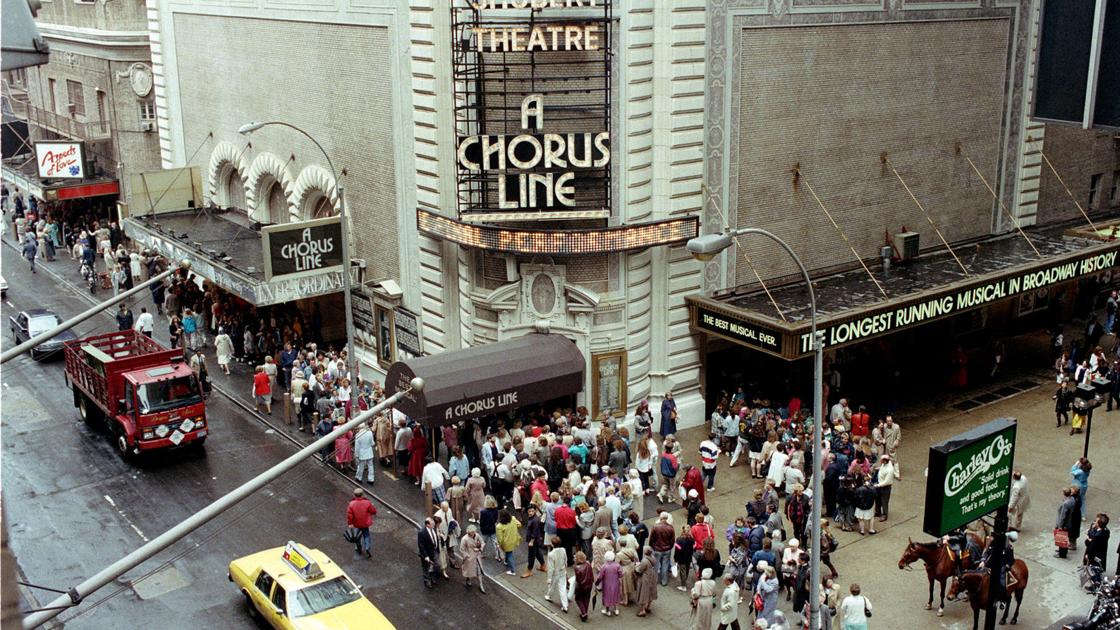
They were innovative and they were ruthless, generous and often cruel (especially to each other). During the 1950s and 60s, the Shubert empire almost crumbled — only to rise again in the 1970s and 1980s thanks to A Chorus Line and some very musical felines.
FEATURING A visit to the Shubert Archive above the Lyceum Theatre, a magical trove of historical items from the American stage.
Listen Now – The Shuberts
Our thanks to Mark E. Swartz, Sylvia Wang and Arielle Dorlester for giving us a marvelous tour of the Shubert Archive.
FURTHER LISTENING
After you’ve listened to this show on the history of Broadway, dive back into the back catalog and listen to these shows referred to on the show:
And here’s a special Spotify playlist inspired by this week’s show, featuring tunes which were made famous in America on Shubert stages — either in original runs or very acclaimed revivals.
The Bowery Boys: New York City History podcast is brought to you …. by you!
We are now producing a new Bowery Boys podcast every other week. We’re also looking to improve and expand the show in other ways — publishing, social media, live events and other forms of media. But we can only do this with your help!
We are now a creator on Patreon, a patronage platform where you can support your favorite content creators.
Please visit our page on Patreon and watch a short video of us recording the show and talking about our expansion plans. If you’d like to help out, there are several different pledge levels. Check them out and consider being a sponsor.
We greatly appreciate our listeners and readers and thank you for joining us on this journey so far.
In Times Square
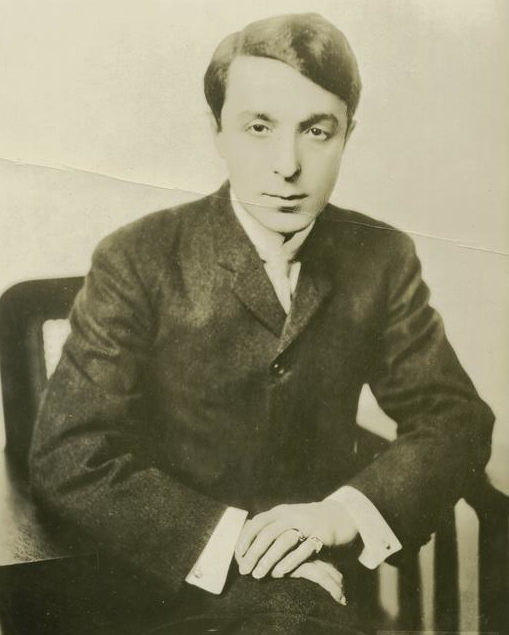
Sam Shubert. He had moxie!
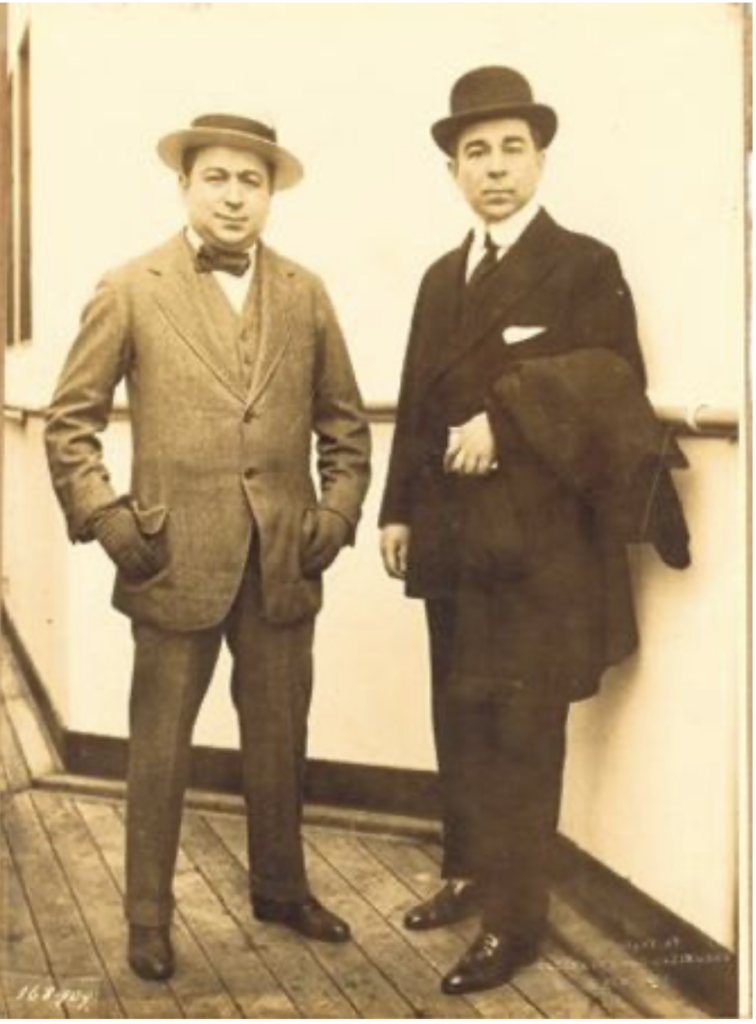
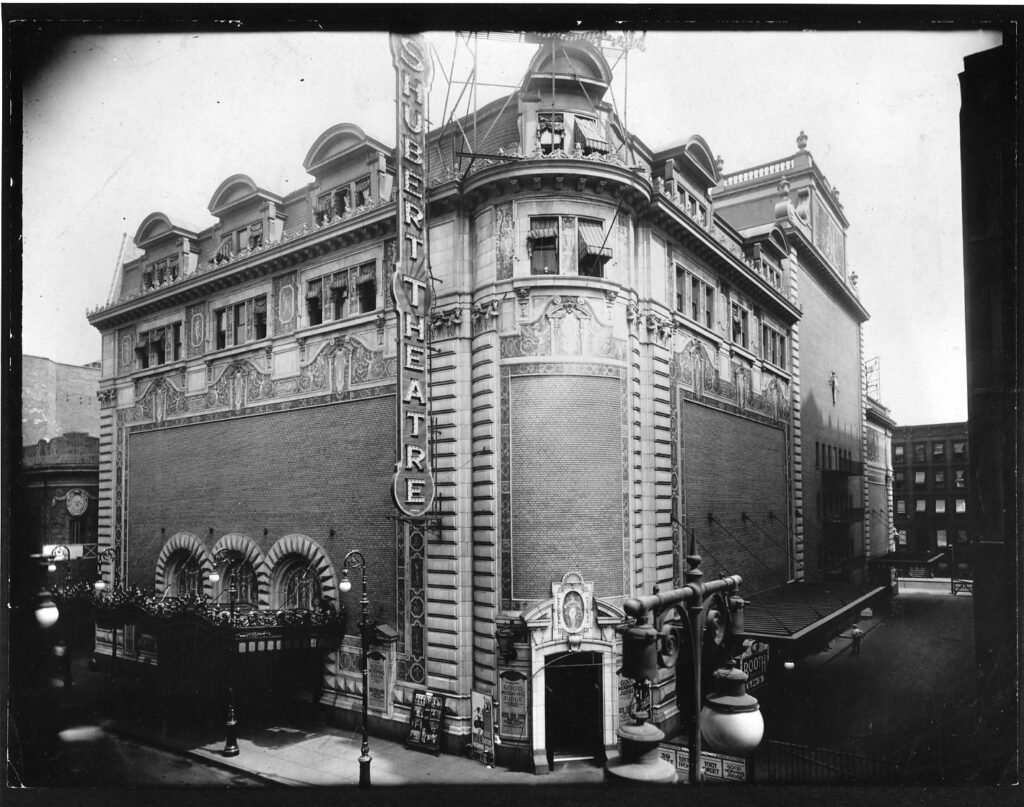
JJ and Lee Shubert, in a rare picture with each other. (Shubert Archive)Shubert Theatre (ca. 1919)
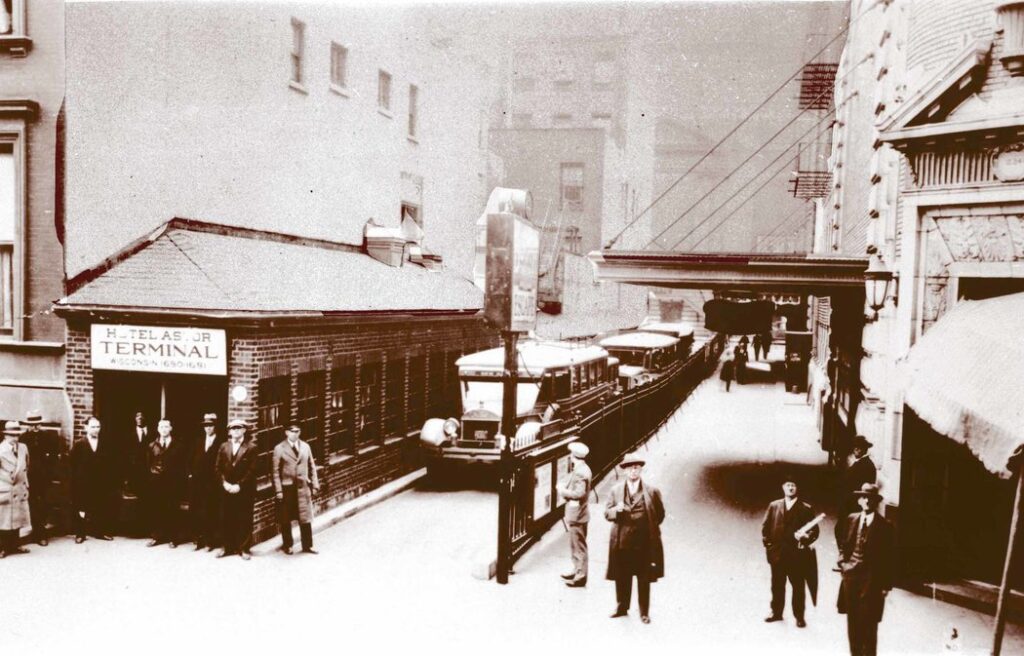
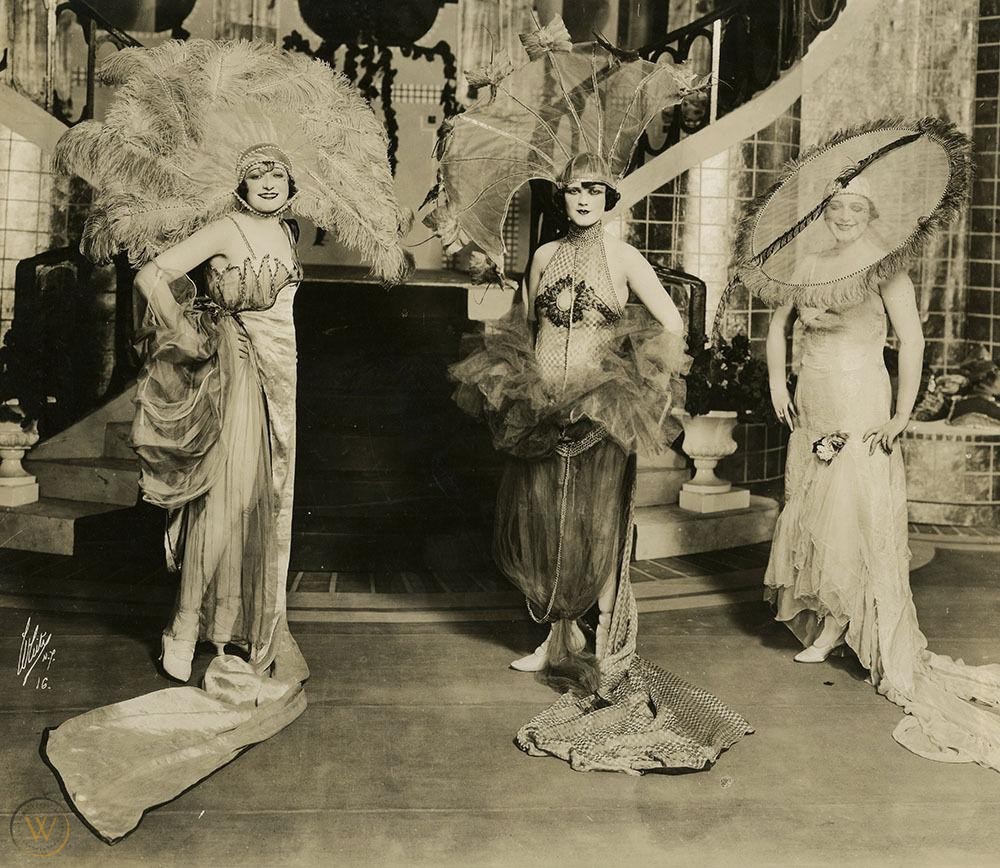
Shubert Alley in the 1930s, looking south, the Booth Theater to the right.Showgirls from The Passing Show
Images from the Shubert Archive (taken by Greg):
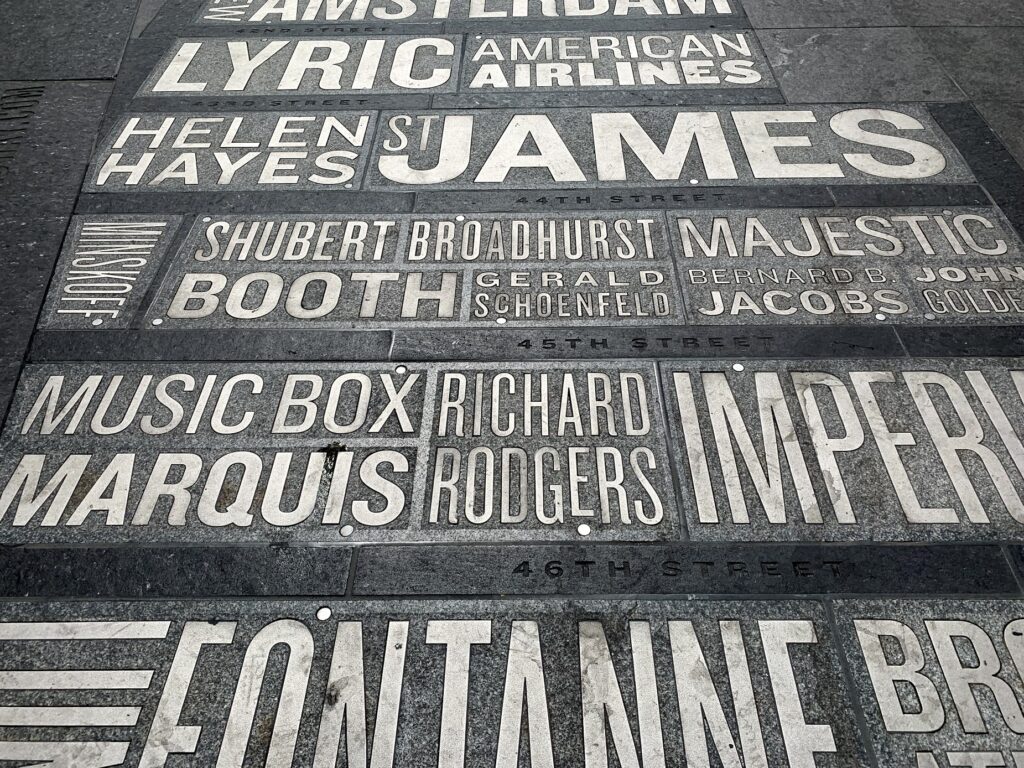
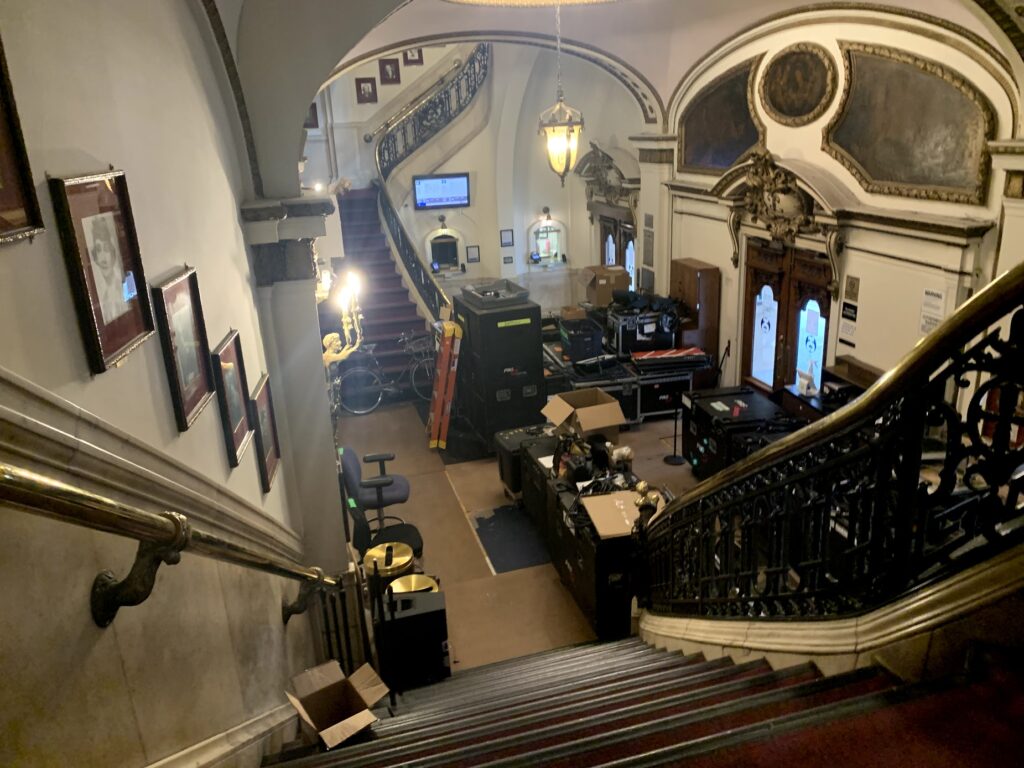
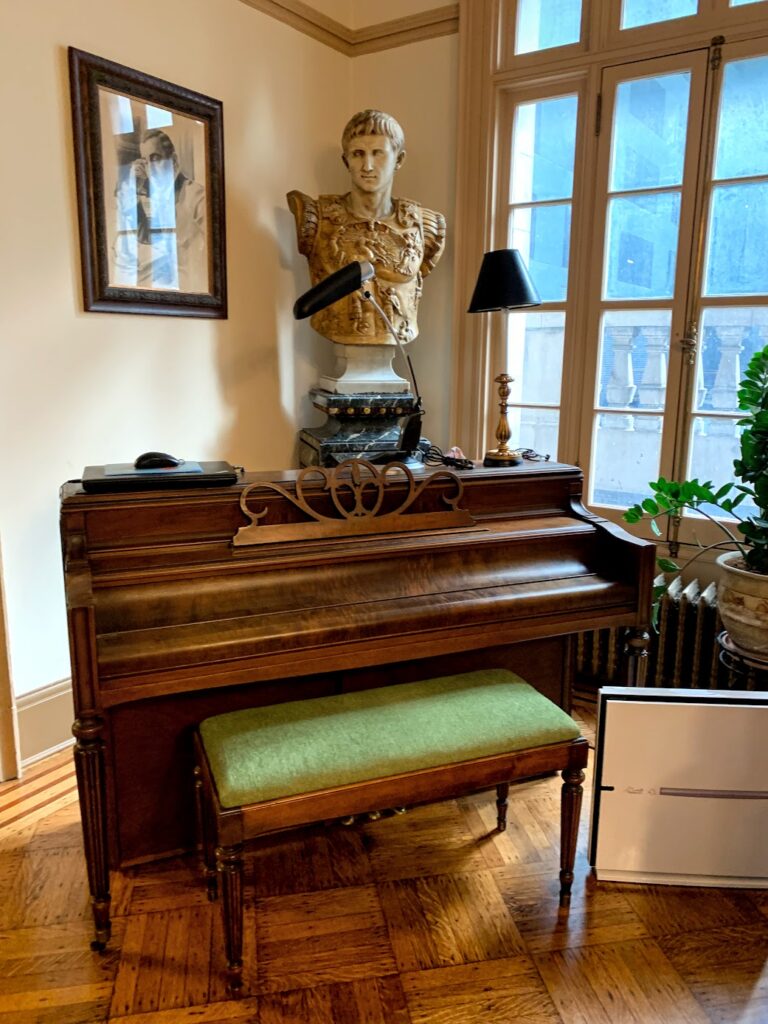
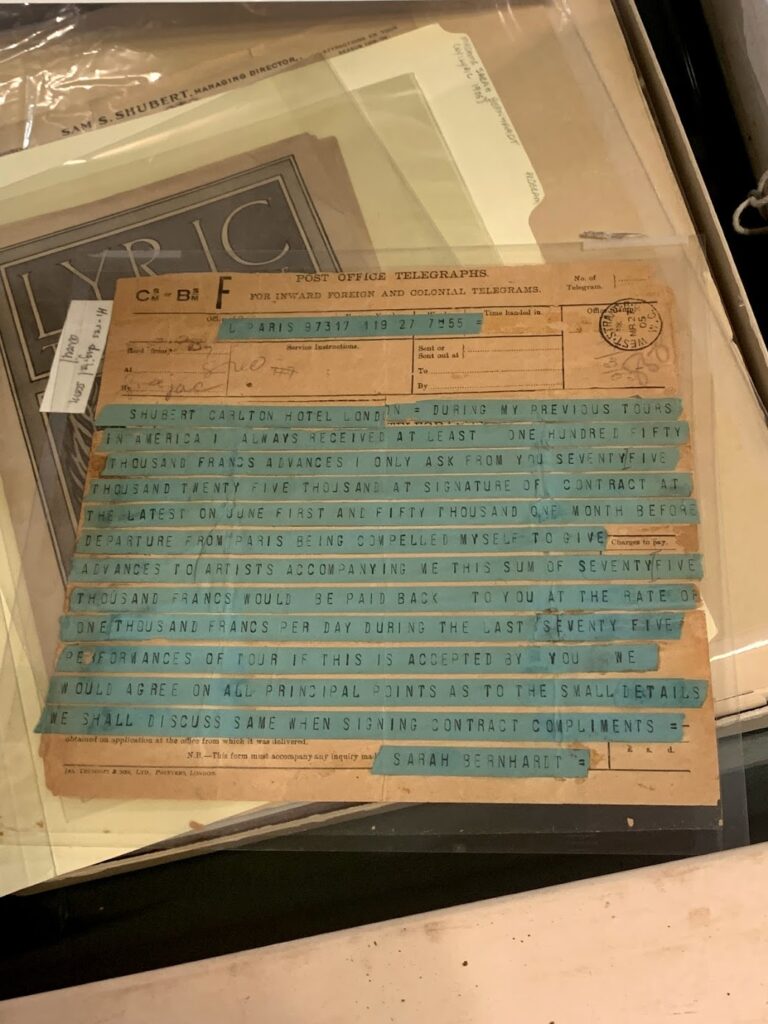
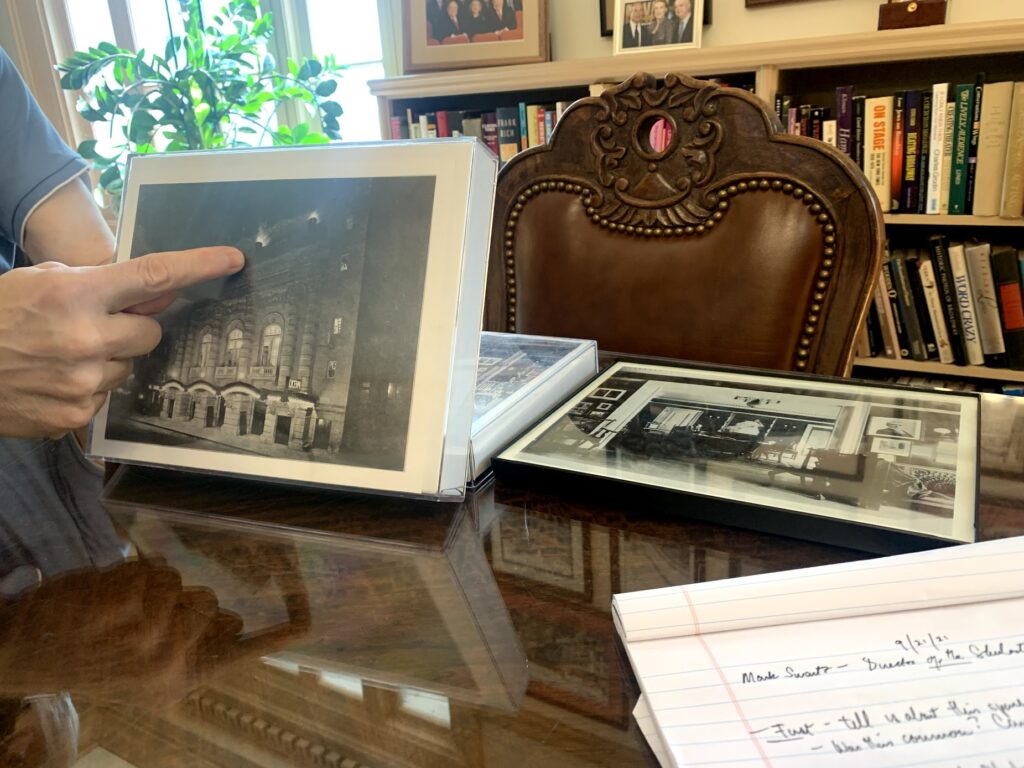
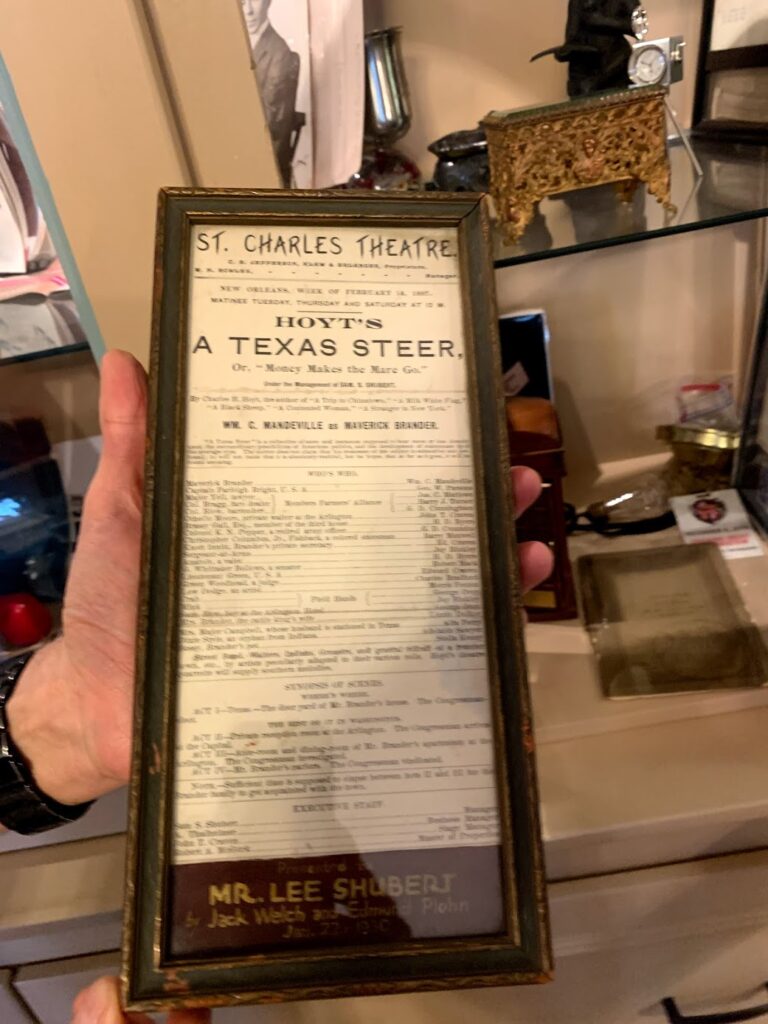
Taking the stairs to the elevator at the Lyceum Theatre.Gerald Schoenfeld’s pianoTelegram from Sarah BernhardtAt the Shubert dining table, looking at old photos of the LyceumWall of Shubert theaters!A notice for A Texas Steer, Sam Shubert’s first show.
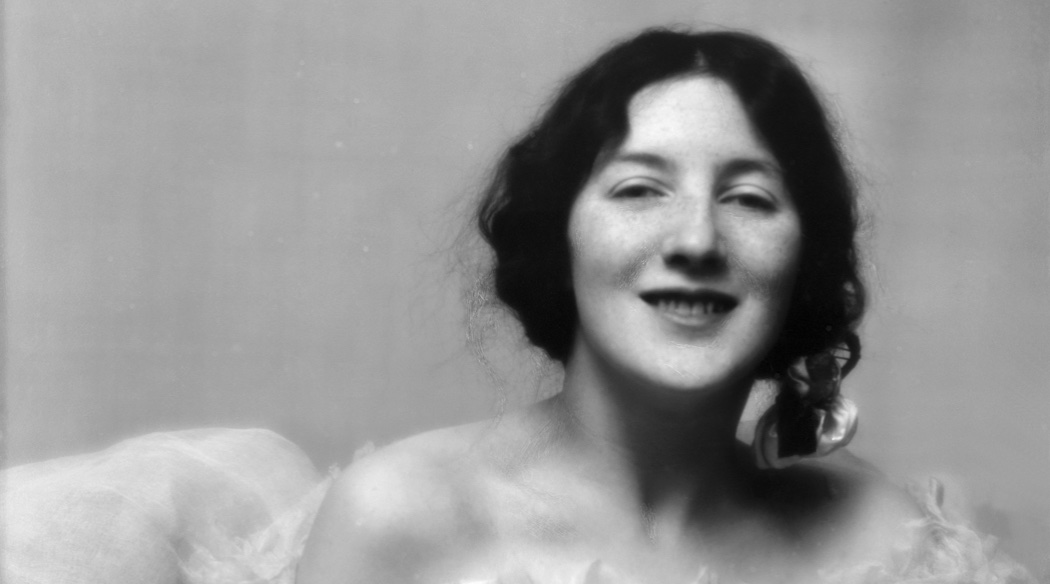
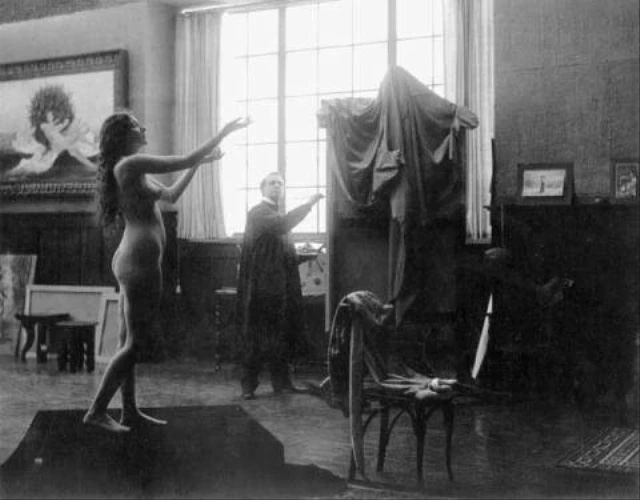
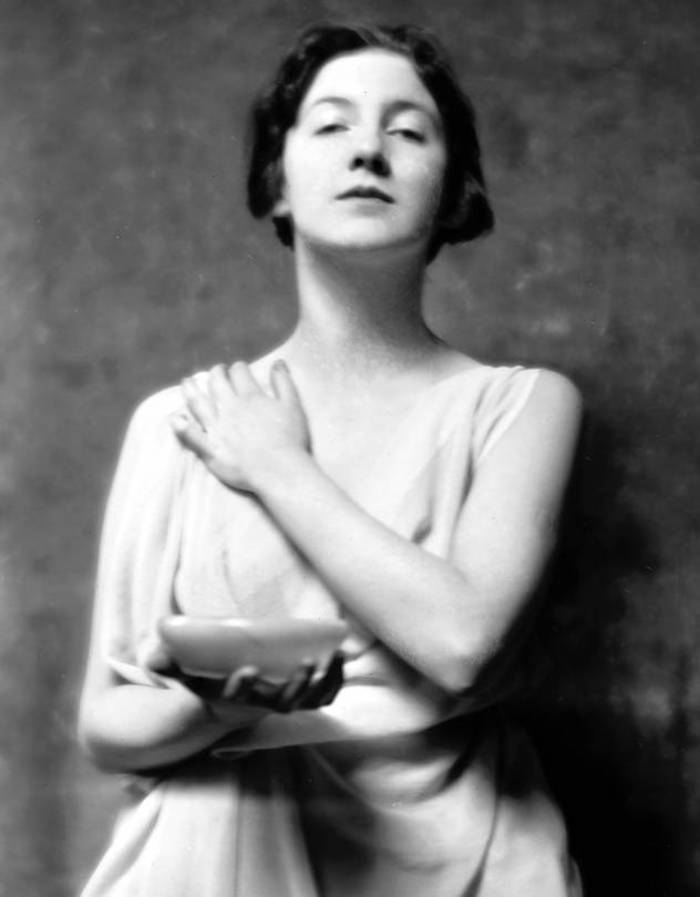
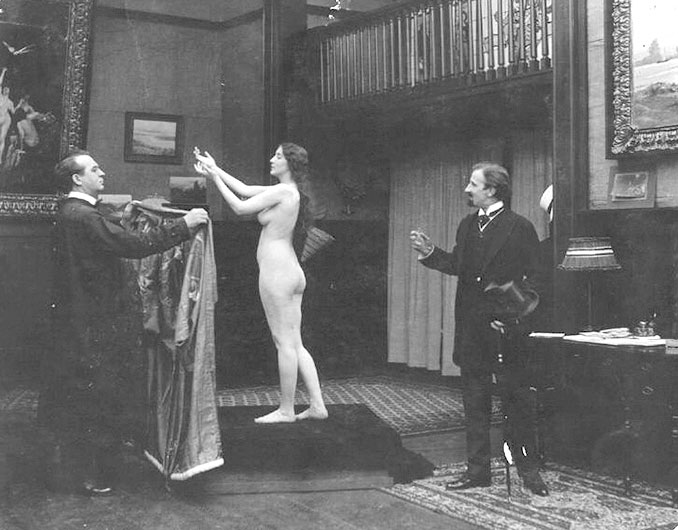
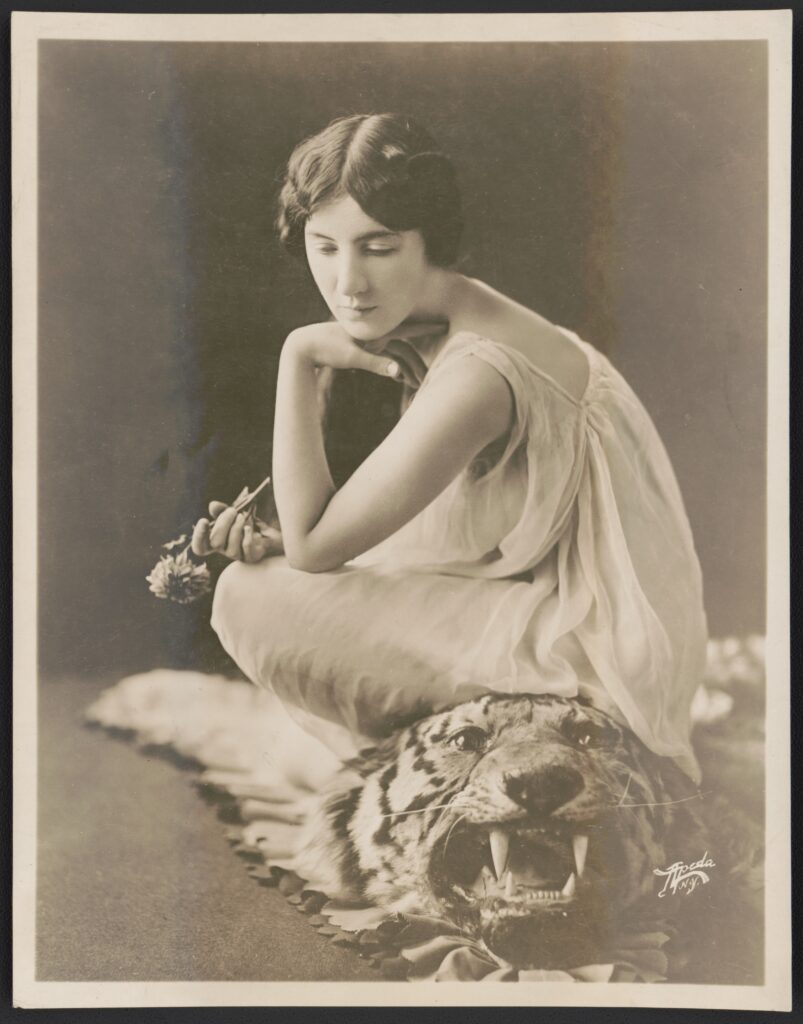
PODCAST By the time Audrey Munson turned 25 years old, she had became a muse for some of the most famous artists in America, the busiest artist’s model of her day.
She was such a fixture of the Greenwich Village art world in the early 20th century that she was called the Venus of Washington Square, although by 1913 the press had given her a grander nickname — Miss Manhattan.
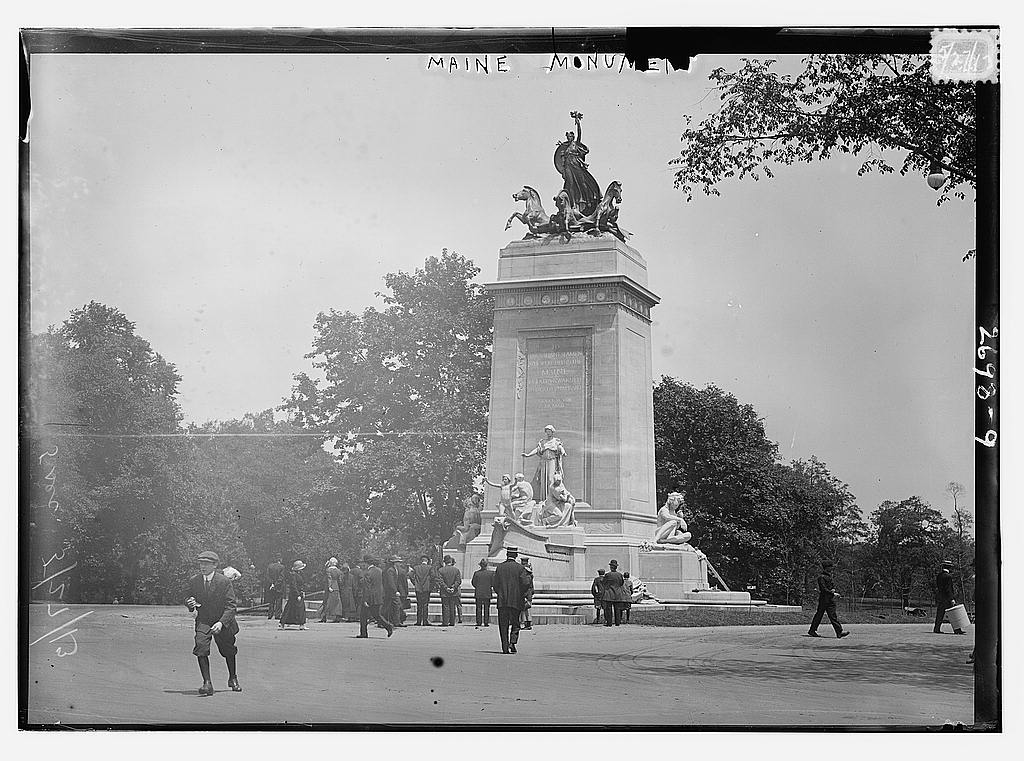
Her face and figure adorned public sculpture and museum masterpieces. And they do to this day.
But just a few years after working with these great artists, Audrey Munson disappeared from the New York art world, caught up in a murder scandal that would unfairly ruin her reputation.
And on her 40th birthday she would be locked away forever.
FEATURING: Daniel Chester French, Gertrude Vanderbilt Whitney, Richard Morris Hunt, Isadore Konti and many Beaux-Arts greats.
Listen Now – Tragic Muse
The Maine Monument, featuring Audrey in two places.
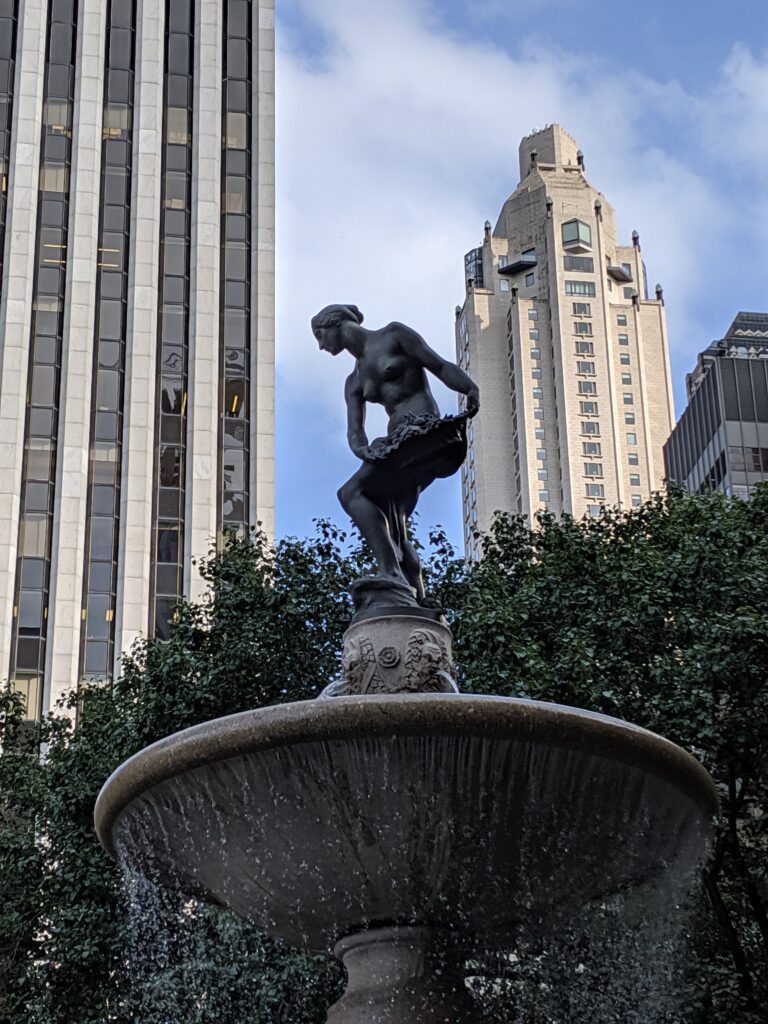
The goddess Pomona atop the Pulitzer Fountain
Courtesy PortableNYCTours/Wikimedia Commons
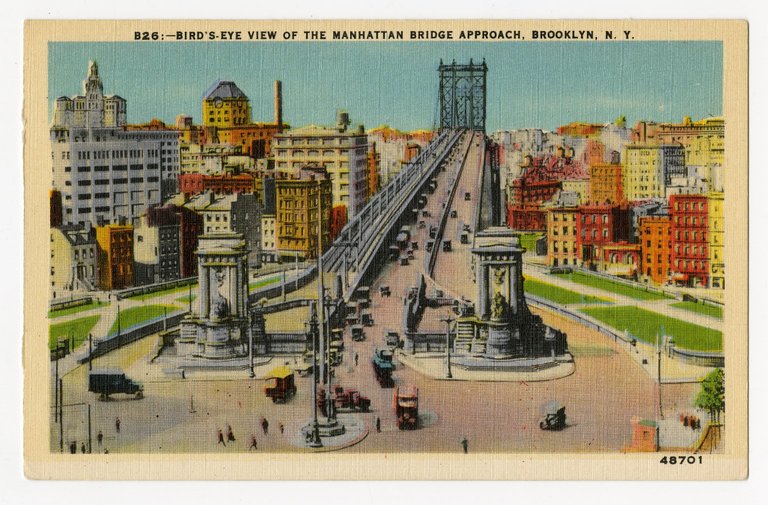
The Brooklyn side of the Manhattan Bridge used to be much more glamorous with two statues created by Daniel Chester French (and both based on Audrey Munson) on either side of the approach.
Brooklyn Museum
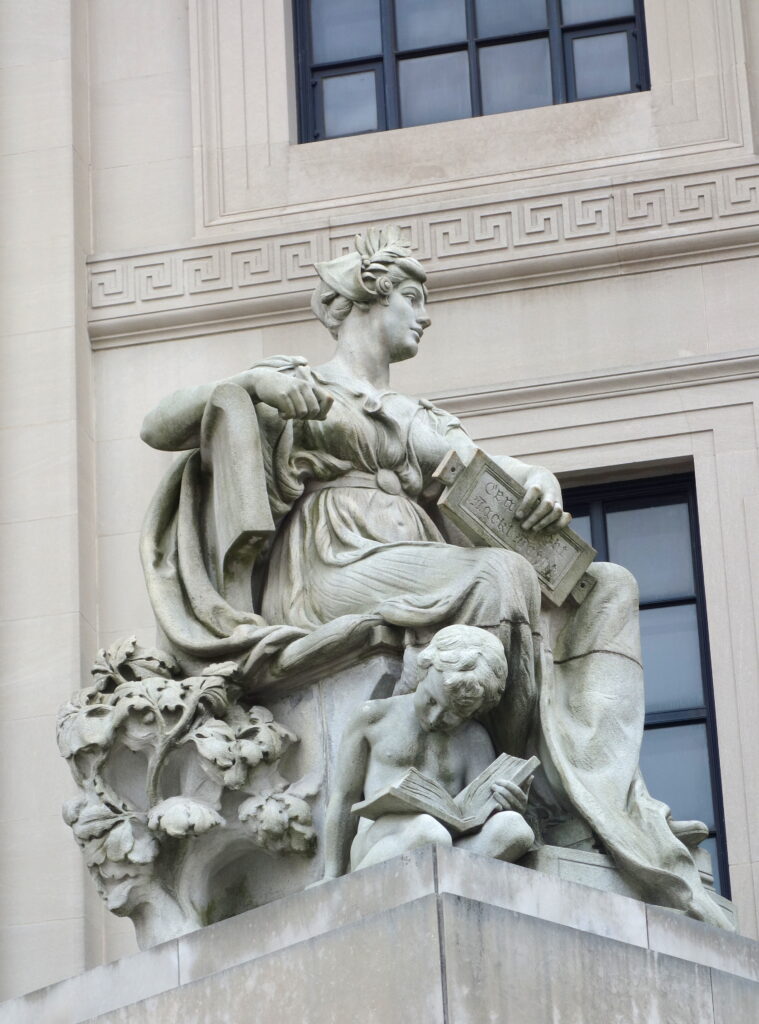
The allegorical figure of Brooklyn at the Brooklyn Museum
Photo by Daderot/Wikimedia Commons
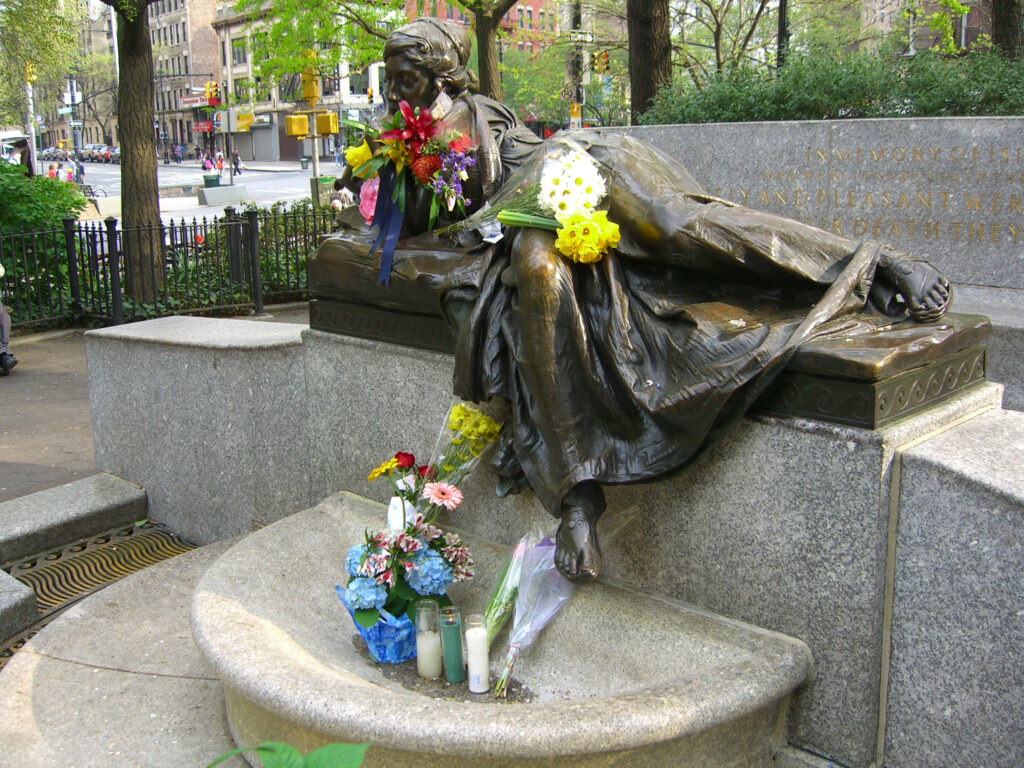
The Straus Memorial with a contemplative muse sculpture. Seen here on the 100th anniversary of the sinking of the Titanic.
Photo by Nightscream/Wikimedia Commons
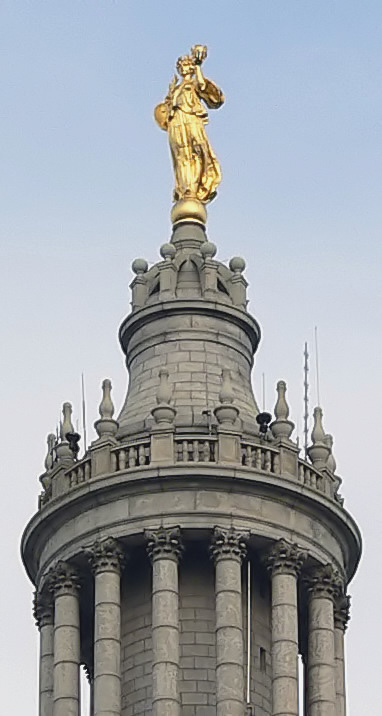
Civic Fame atop the Manhattan Municipal Building.
Photo by Stig Nygaard/Wikimedia Commons
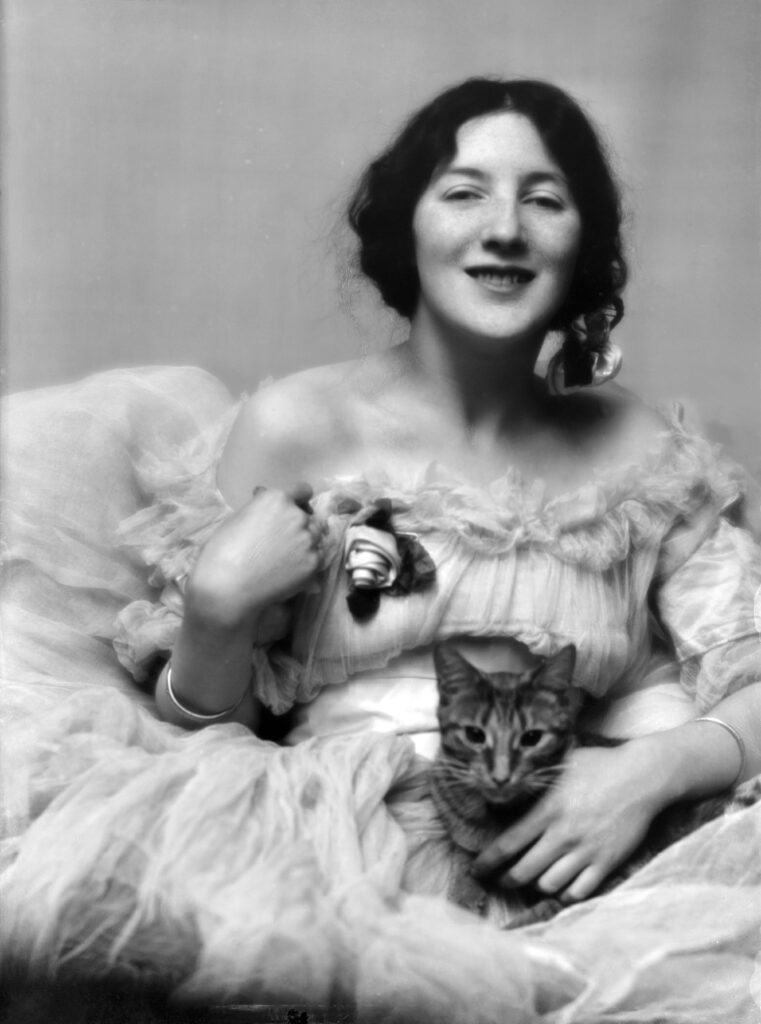
Audrey at the pinnacle of her fame.
Photographer Arnold Genthe, photo taken March 1915
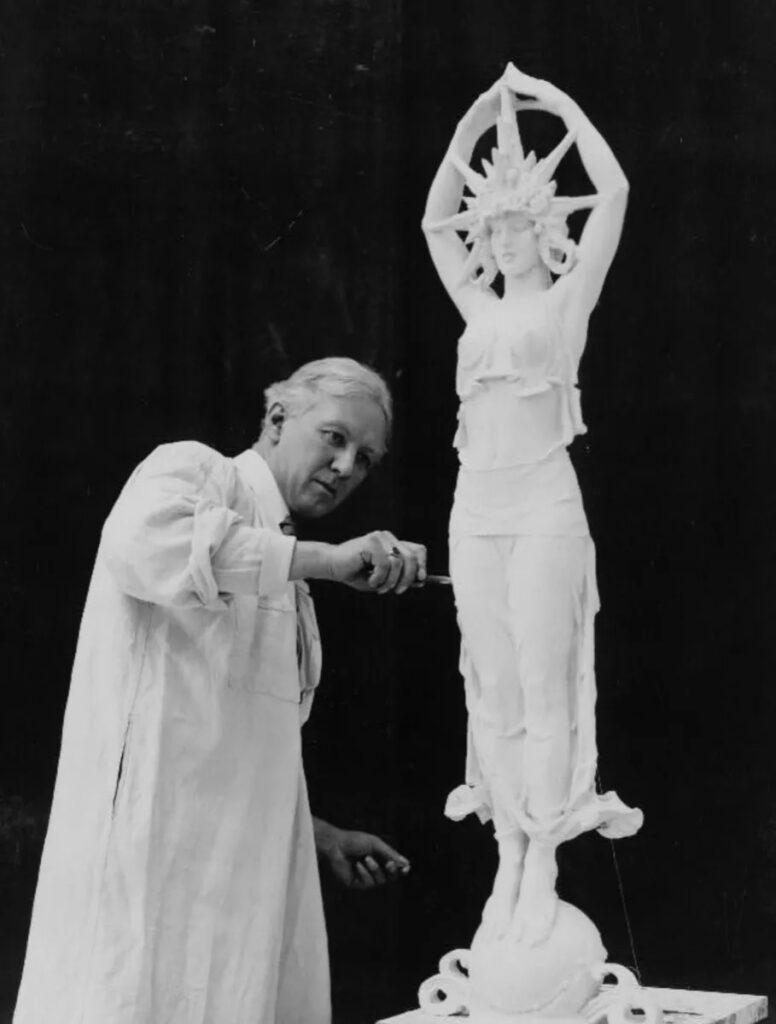
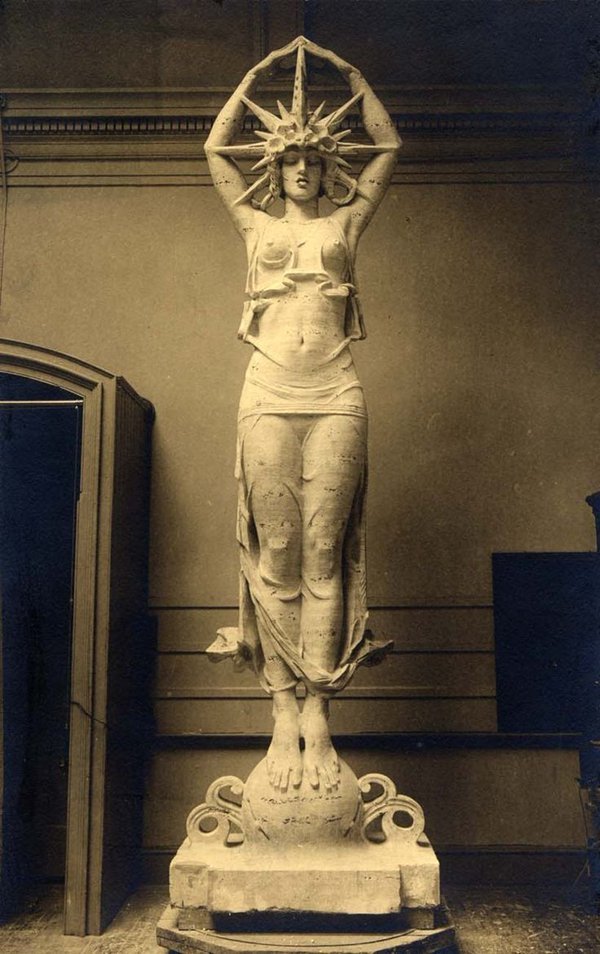
Alexander Stirling Calder puts the finishing touches on a ‘star maiden’ for the San Francisco Panama-Pacific Exposition.
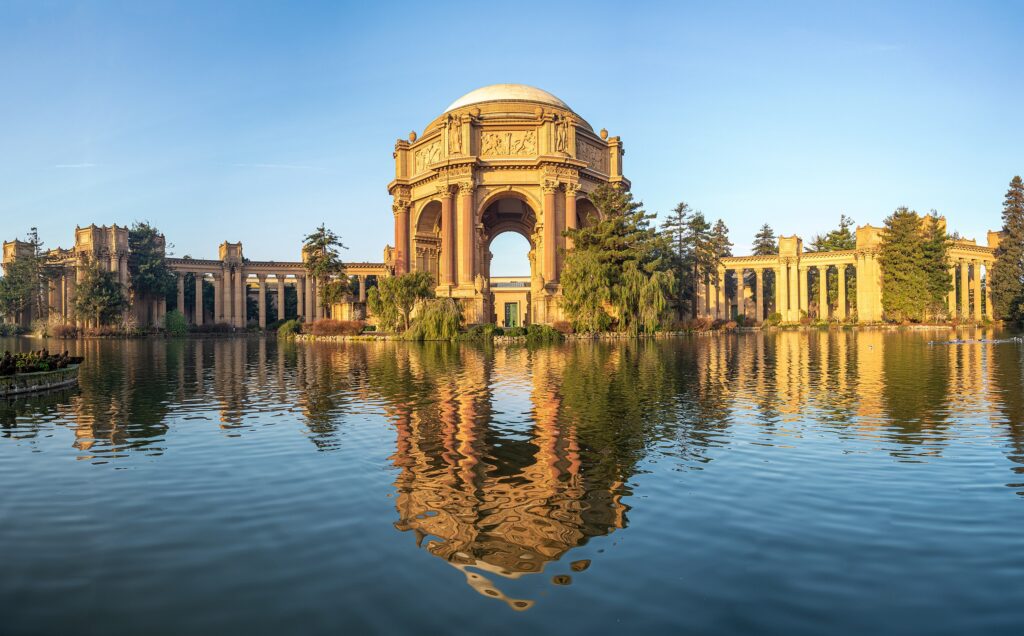
The Palace of Fine Arts is the most famous remnant of the Panama-Pacific International Exposition still standing.
Rhododendrites/Wikimedia Commons
Publicity still from the 1915 film Inspiration (later The Perfect Model).
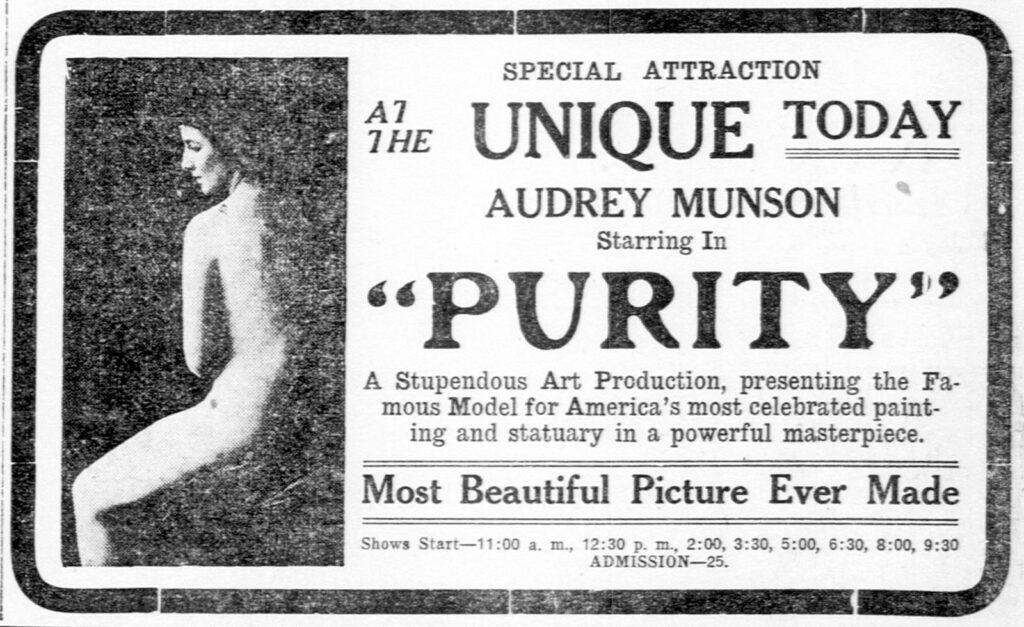
Another publicity photo, this time for the film Purity.
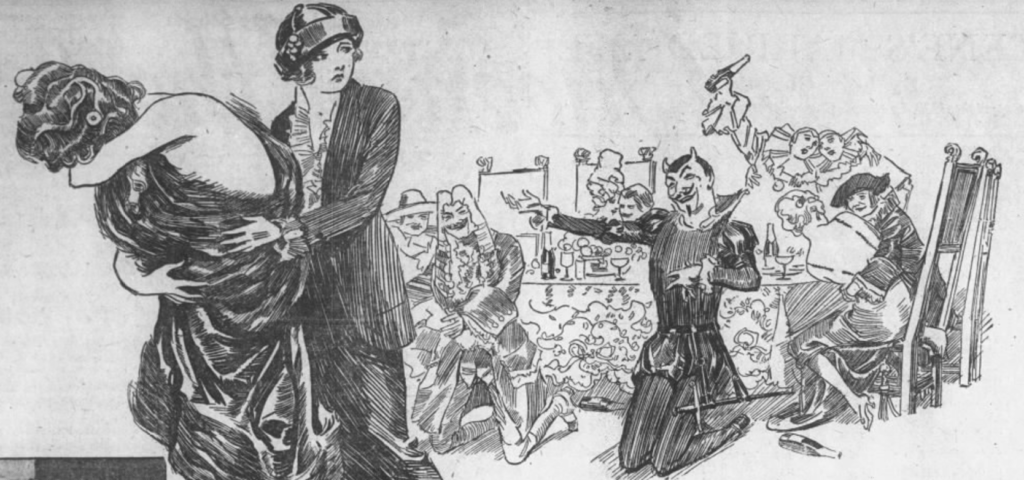
An illustration from her newspaper column Queen of the Artist’s Studio with Munson rescuing a young woman from an unfortunate scene of vice.
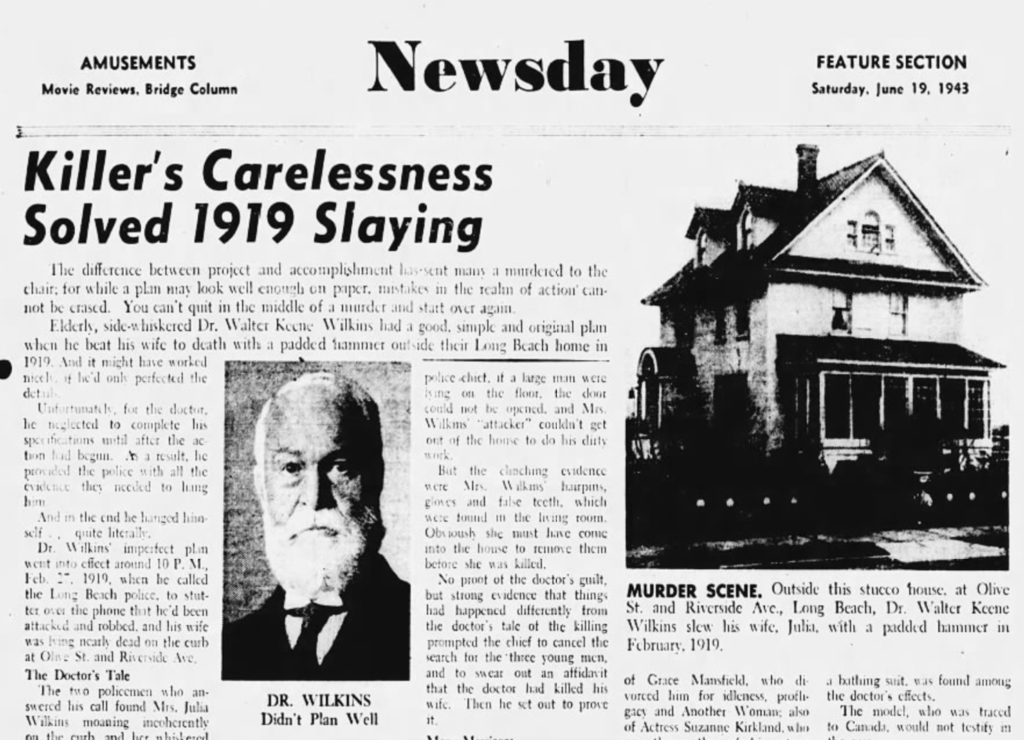
Audrey was almost completely forgotten about after 1931 and most of the references to her at all are in the context of the Wilkins murder case.
Newsday (Courtesy Newspaper.com)
FURTHER LISTENING
After you’ve listened to this show on the life of Audrey Munson, dive back into the back catalog and listen to these shows with similar themes:
The Bowery Boys: New York City History podcast is brought to you …. by you!
We are now producing a new Bowery Boys podcast every other week. We’re also looking to improve and expand the show in other ways — publishing, social media, live events and other forms of media. But we can only do this with your help!
We are now a creator on Patreon, a patronage platform where you can support your favorite content creators.
Please visit our page on Patreon and watch a short video of us recording the show and talking about our expansion plans. If you’d like to help out, there are several different pledge levels. Check them out and consider being a sponsor.
We greatly appreciate our listeners and readers and thank you for joining us on this journey so far.
The origin of a true Brooklyn ‘start up’ — Charles Pfizer and Co, who went from developing intestinal worm medication in 1849 to being a leader in vaccine distribution in the 21st century.
This is story of Pfizer Pharmaceuticals before the 1950s, a tale of German immigration and of early medical practices and concoctions that might seem alien to us today. Patent medicines! Worm lozenges!
But this company’s biography is also a celebration of Brooklyn — the City of Brooklyn in the mid 19th century, developing into an economic force in the United States and in opposition to the city of New York across the East River.
PLUS You can’t tell the Pfizer story without looking at the world of apothecaries and early drug stores in New York City in the 19th century.
Apothecaries were the first ‘natural’ medicine makers but their objectives were limited, seeking only to alleviate symptoms, not tend to the root cause of so many discomforts.
Later on, drugstores would stock up on manufactured medicines and questionable additions to the health regimen like soft drinks.
FEATURING Duane Reade, Kiehl’s, C.O. Bigelow, E. R. Squibb and Johnson & Johnson
ALSO: What important American figure today grew up delivering parcels for his family drugstore in Dyker Heights, Brooklyn?
LISTEN TODAY ON YOUR FAVORITE PODCAST PLAYER — PFIZER: A BROOKLYN ORIGIN STORY
FURTHER LISTENING
After listening to this show, take a dive in other episodes on similar or adjacent subjects.
The German biotechnology company Biopharmaceutical New Technologies (BioNTech) developed the COVID-19 vaccine injection with Pfizer, one of the world’s large pharmaceutical companies, who will manufacture and distribute it.
Let’s give our thanks to the scientists, researchers and physicians who helped get us to this moment. And yes, Brooklyn, you also get to share in a little bit of that pride today.
Because Charles Pfizer & Company — the originating business, founded in 1849 — first got its start in Brooklyn.
Or, to be more specific — the Brooklyn neighborhood of Williamsburg.
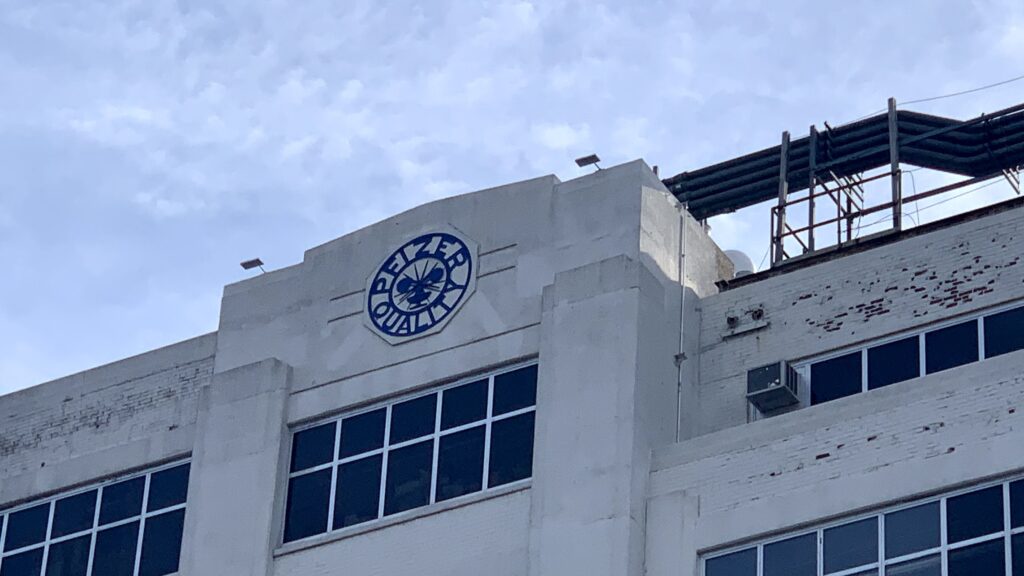
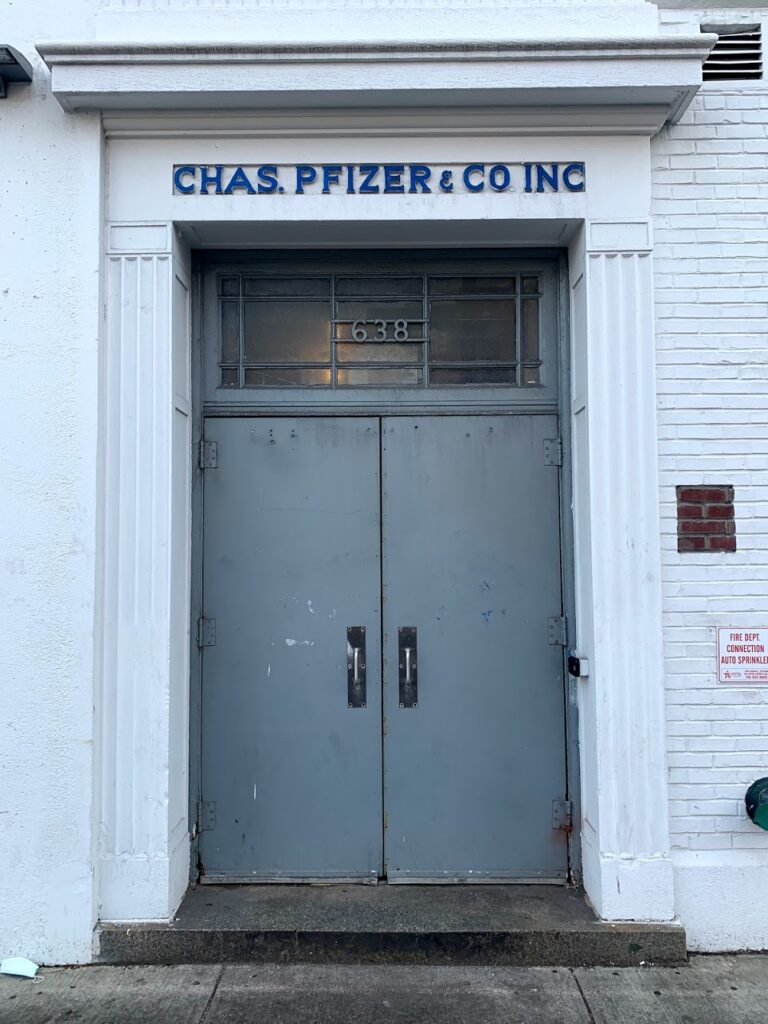
At their original Brooklyn location, the architectural details still gleam with ‘Pfizer Quality’.
A Company of Immigrants
Karl Christian Friedrich Pfizer (later Charles Pfizer), born in 1824 in the Kingdom of Württemberg, was one of the many thousands of Germans who would immigrate to the United States during the 1840s.
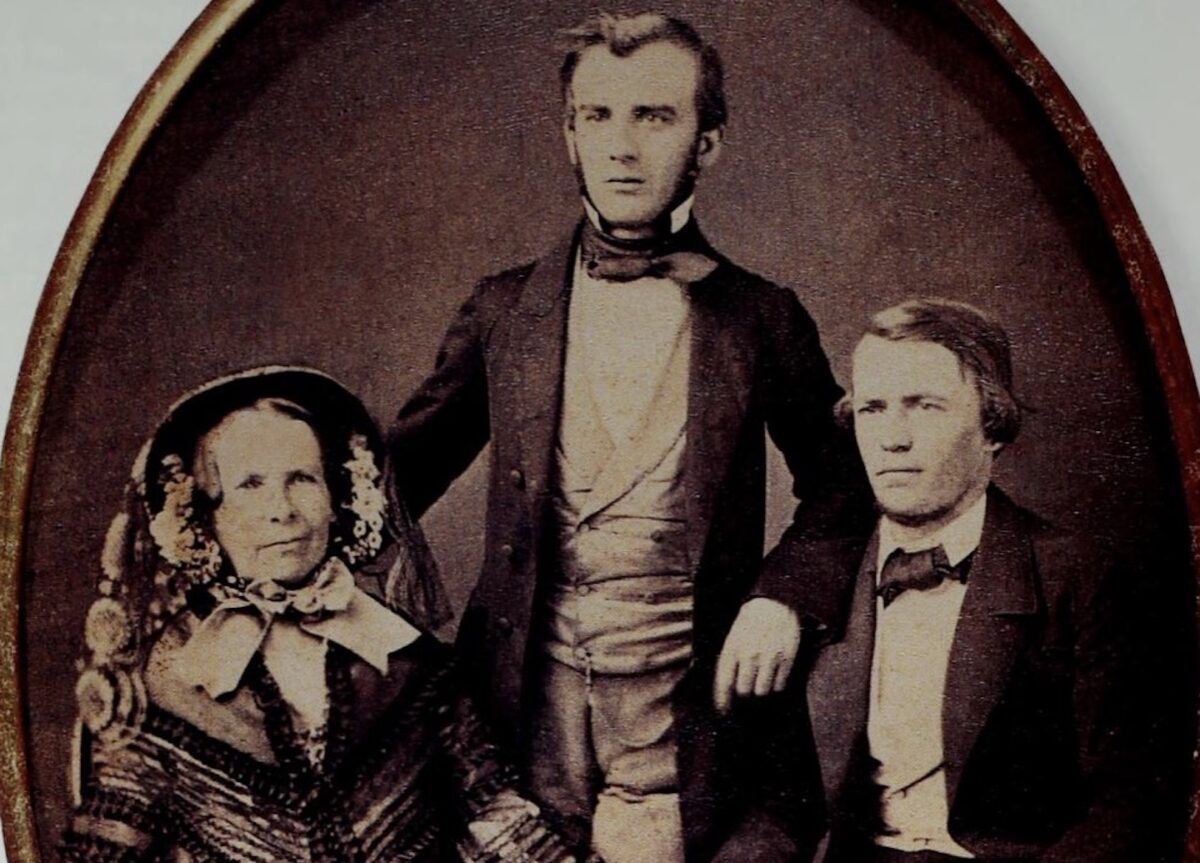
Pfizer came to America with his cousin Charles Erhart in the fall of 1848. Unlike the experiences of so many immigrants during this time, both Pfizer and Erhart came from wealthy families and were both highly educated — Pfizer as a chemist, Erhart in the grocery and confectionary trade.
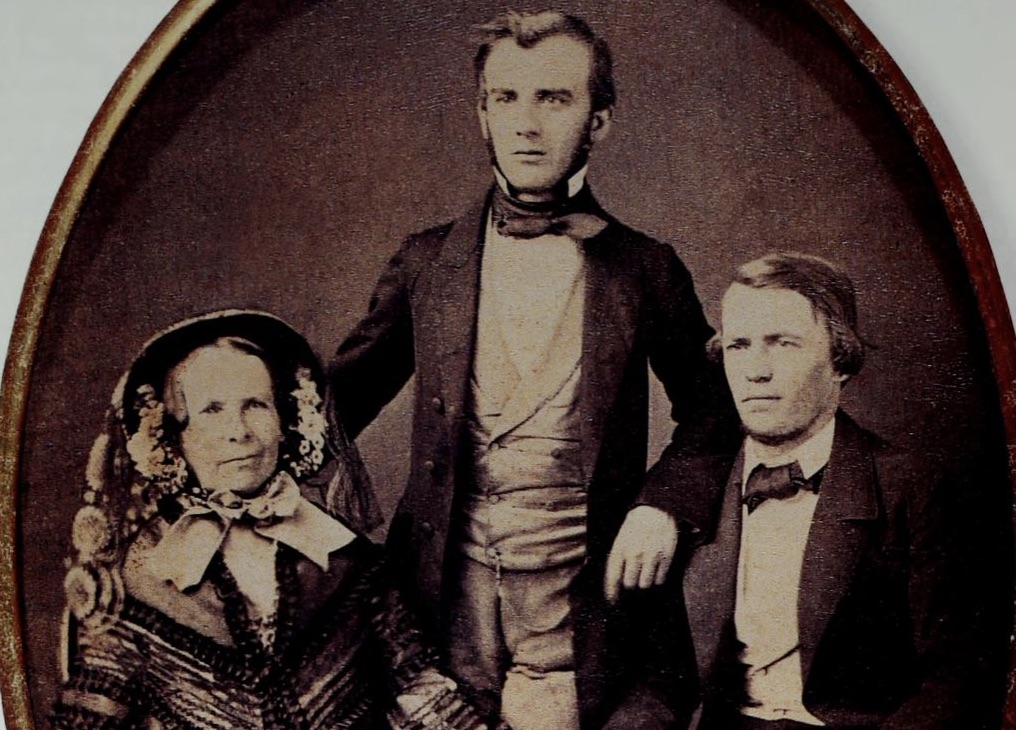
Wilhelmine Klotz Erhart, her son Charles Erhart, and her nephew Charles Pfizer standing. Photograph taken in 1855, courtesy the book The Legend of Pfizer
The practical applications of science to modern life were just beginning to be explored in the early 19th century. Pfizer was taking his training to a country not yet internationally known for scientific breakthrough.
According to author Jeffrey L. Rodengen, “Chemicals that once interested only scholars were becoming indispensable in manufacturing, agriculture and medicine. [Pfizer] also recognized that in the new nation of America, virtually no one was meeting the growing demand.”
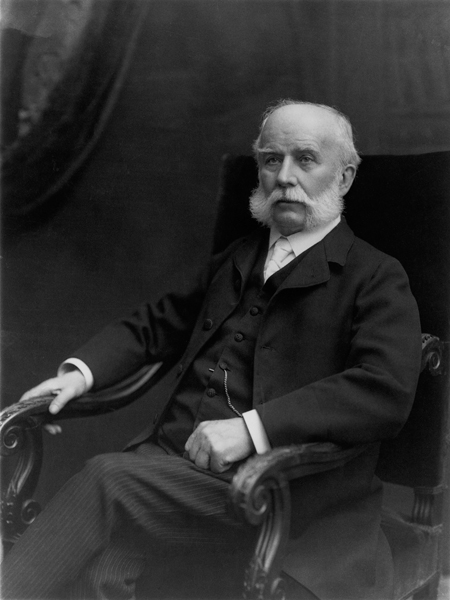
Charles Pfizer, photographed here in 1890
A Home Among The Factories
Pfizer and Erhart would form their new chemical operation in Long Island’s King County in 1849, shortly after their arrival in America.
They had their eye on a spot near the Town of Williamsburgh, north of the burgeoning Brooklyn metropolis.
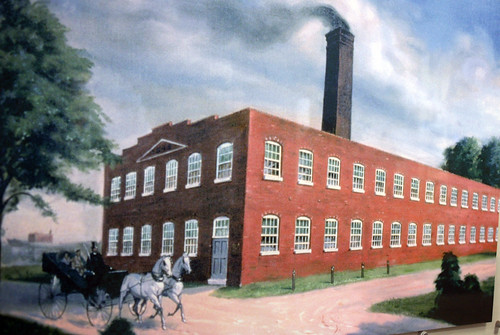
The first Pfizer building
Williamsburgh — a former village under the jurisdiction of the town of Bushwick — was a desirable destination for budding industrialists thanks to its proximity to a busy waterfront and the already busy waters of Newtown Creek. Chemical and oil plants were already home here when the cousins arrived.
Pfizer’s first headquarters was a bit far from the waterfront. They couldn’t quite afford to build a new factory.
Instead the cousins moved their operations into a pre-existing red brick building at Bartlett and Tompkins Streets thanks to a $2,500 loan from Pfizer’s father. (That’s about $78,000 today thanks to inflation.)
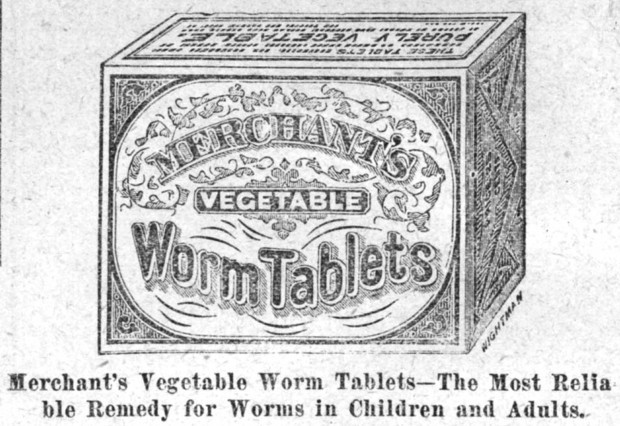
An example of 19th century medicine used to treat worms *shivers*.
How To Deal With Worms
A chemist and confectioner might seem like an odd couple today. But go to your medicine cabinet. How many of your medicines have flavor? Most pharmaceuticals would be hard to swallow without additives literally meant to make the medicine go down.
In 1849 the Pfizer company rolled out its first product — a product made from santonin. But this was santonin that tasted, well, not good exactly, but palatable enough to help relieve a very grotesque condition — intestinal worms.
Pfizer and Erhart produced santonin (made from the flower of Artemesia plants) with a relatively delicious almond-toffee taste.
Given that intestinal worms were a far bigger problem in the mid 19th century than they are today, the product flew off the shelves, allowing Pfizer to expand into other chemical remedies.
The original Brooklyn location of Pfizer still displays its history.
Room To Grow
As business was just getting off the ground, exciting things were happening in the neighborhood. In 1851, Williamsburgh briefly became its own incorporated city.
Less than four years later the city — along with the township of Bushwick and Greenpoint — would be incorporated into the expanding City of Brooklyn. It was collectively known as the Eastern District.
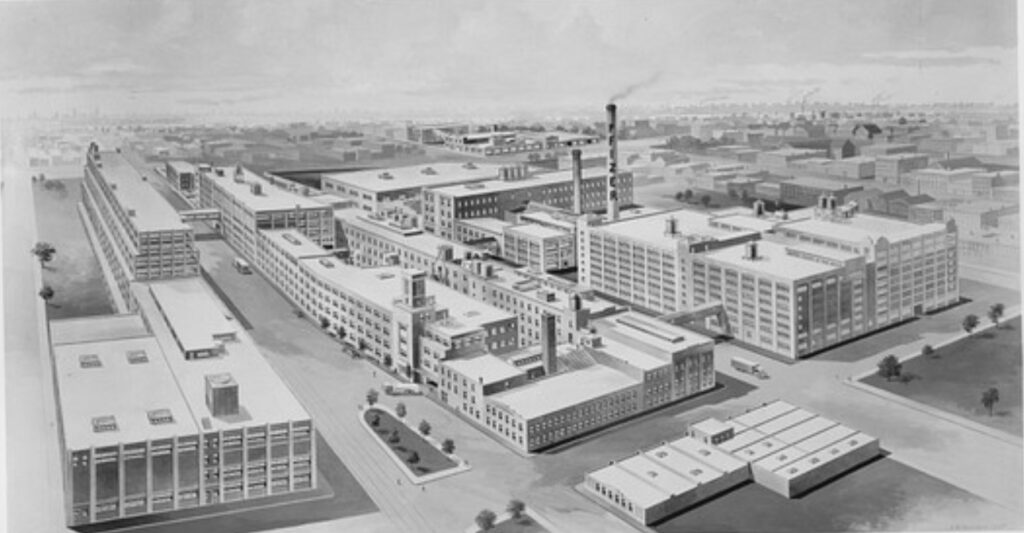
As the community was quickly growing, so too was business booming for the cousins who over the next three decades quickly expanded into the lots surrounding their original headquarters on Bartlett and Thompson.
Like many areas of the Eastern District by the late 19th century, the chemical aroma must have been remarkable.
Brooklyn Public Library
Of course Pfizer also expanded outside of Brooklyn almost immediately. In 1868, they naturally moved their central headquarters closer to Wall Street — to 81 Maiden Lane.
Meanwhile their Brooklyn location was cranking out such products as iodine, chloroform, borax, camphor and even morphine. They also specialized in non-medicinal products like cream of tartar.
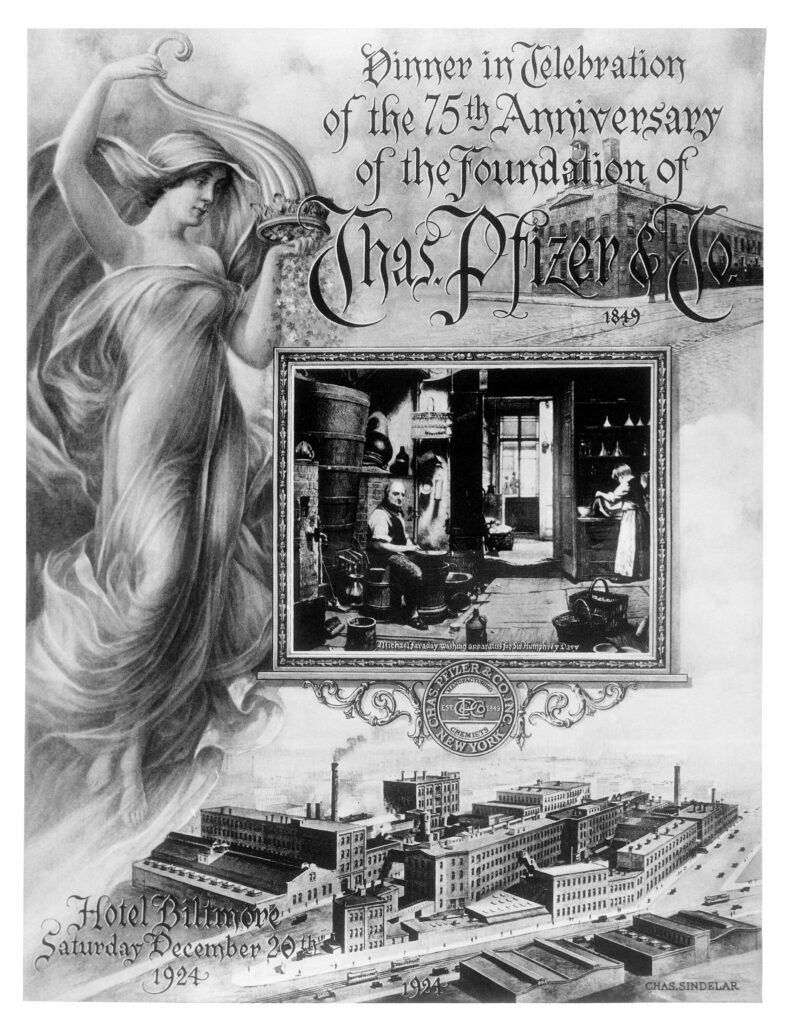
A celebration of their 75th anniversary featuring a depiction of their Brooklyn operation.
As Scott H. Podolsky writes in his journal article Antibiotics and the Social History of the Controlled Clinical Trial 1950-1970:
“For nearly a century of Pfizer’s existence, it did not market pharmaceuticals but rather had centered upon the production and refinement of chemicals such as citric acid, which Pfizer was the world’s largest producer by World War II.
“However the fermentation techniques used in the production of citric acid would render Pfizer a leader in the American World War II efforts to mass-produce penicillin and Pfizer soon followed as one of the largest producers of the equally nonexclusive streptomycin and dihydrostreptomycin (selling to other companies to distribute).”
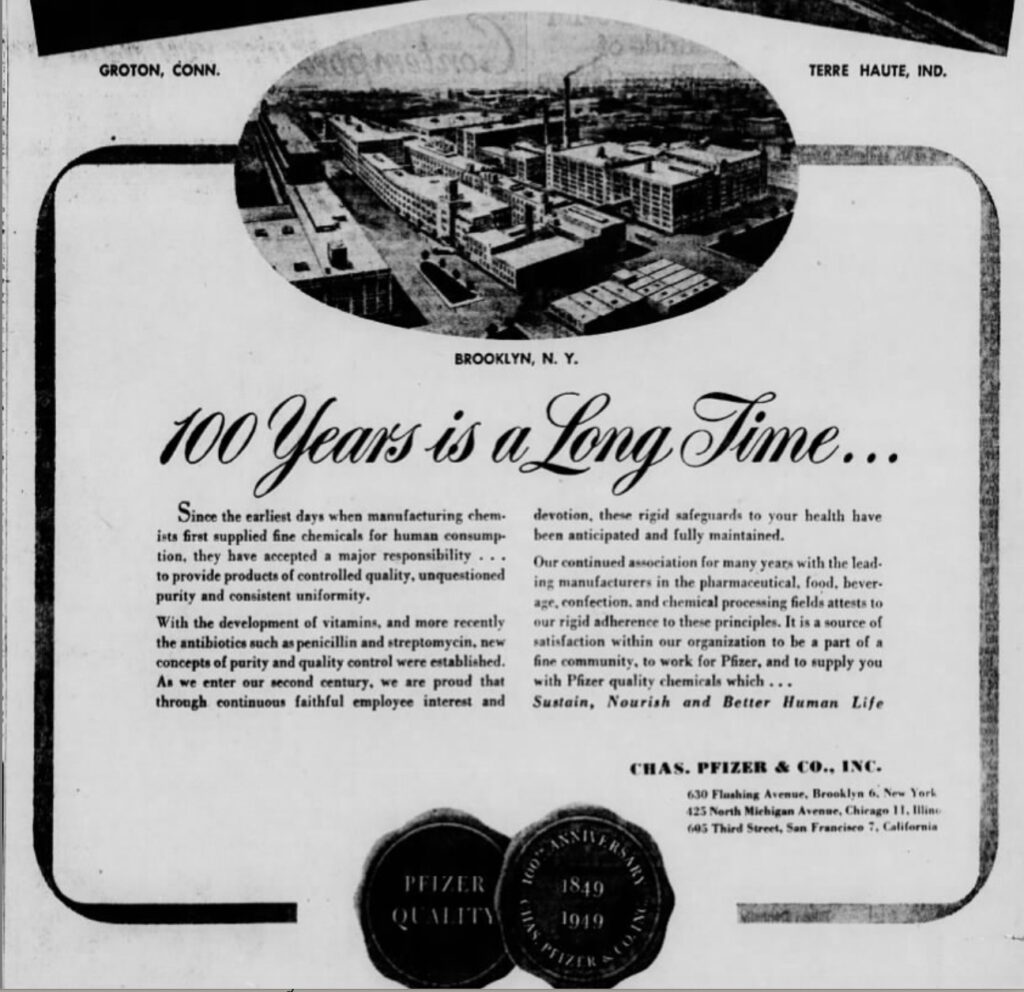
An advertisement touting their 100th anniversary
Penicillin would change the world — and significantly expand Pfizer’s profile by the second half of the 20th century through corporate mergers and expanded offices in several countries.
In the latest episode of the Bowery Boys podcast on the history of the Hotel Pennsylvania, we discuss the musical landscape of Midtown Manhattan in the 1930s and how the unspoken social restrictions of the day played out during the rise of Big Band jazz.
In fact, the Hotel Pennsylvania played a very small role in the eventual elimination of color barriers in Midtown venues.
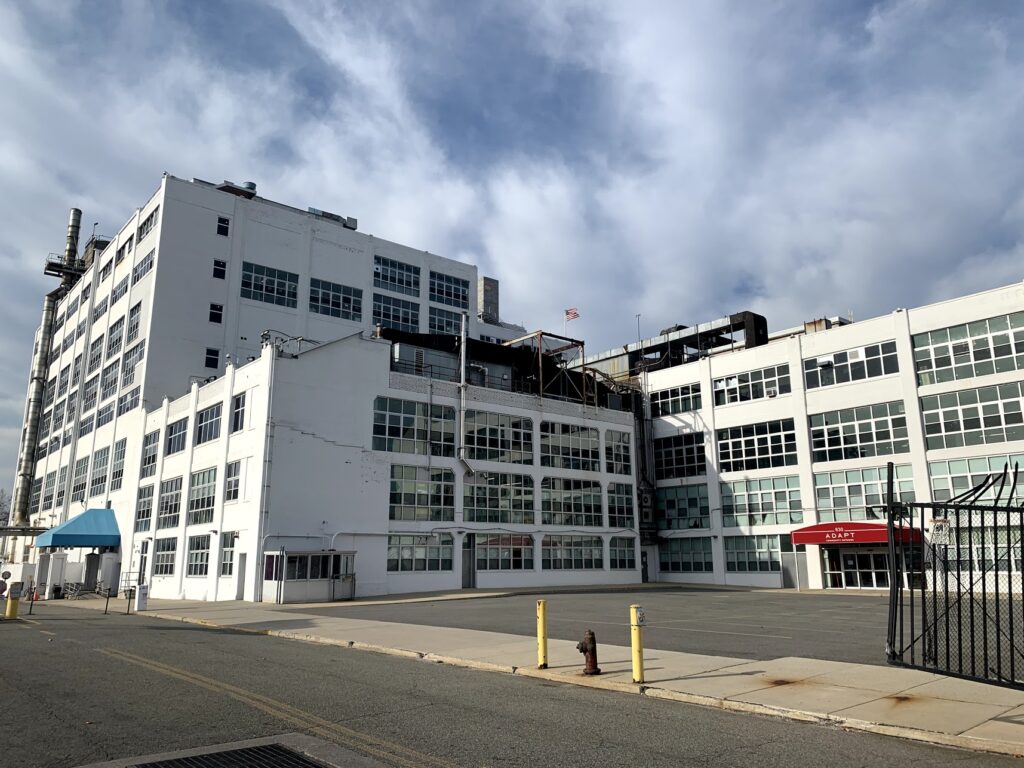
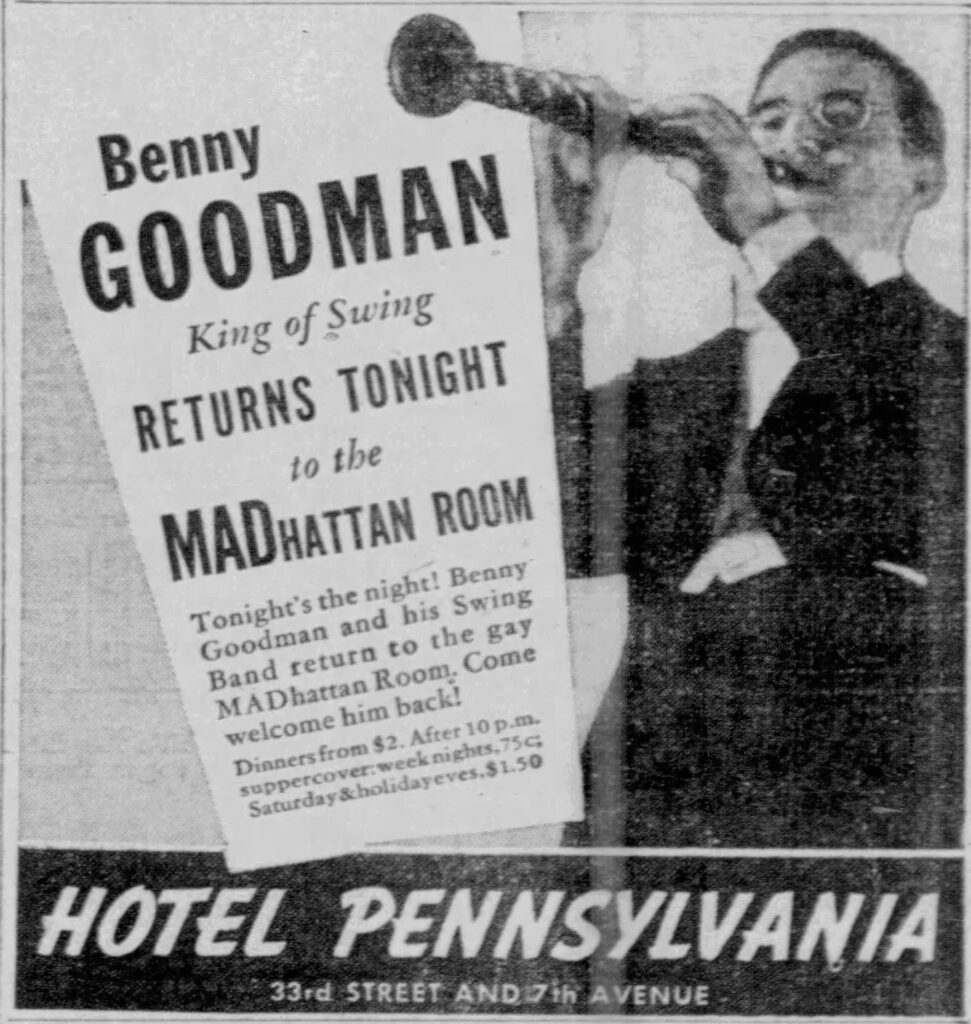
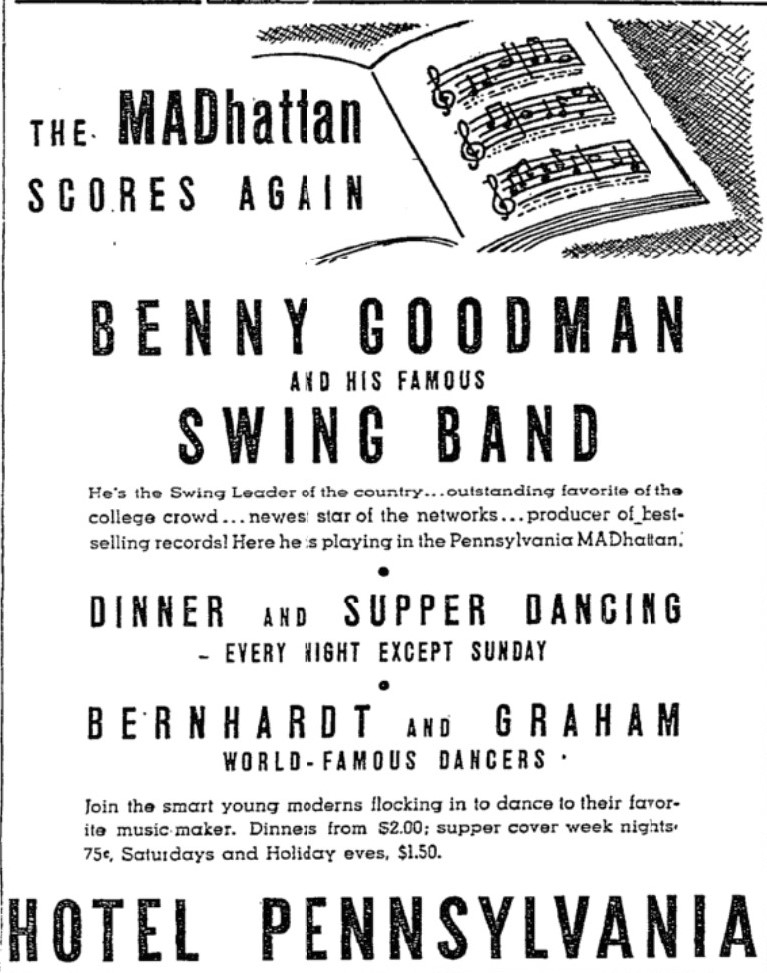
But this story has nothing to do with the Café Rouge, the legendary Big Band ballroom which hosted major artists and popular radio broadcasts. Rather the action takes place in the smaller club down on the hotel’s lower level — the Madhattan Room.
“It wasn’t as sumptuous or as glamorous as the Café Rouge,” one newspaper describes, “but it had fine acoustics and its small size and low ceiling lent an aura of immediacy conducive to jazz listening.”
It was here in the fall of 1936 that Benny Goodman, Gene Krupa and Teddy Wilson would make New York music history.
Breaking Barriers
While many white Big Band stars worked with black artists on arrangements and recordings — and they obviously sat in with each other during rehearsals — live public performances proved more difficult.
Black and white musicians were never allowed to play on stage with one another.
This was not merely a prejudice of the Jim Crow South. Venues in northern cities also held fast to this color barrier — particularly in hotel lounges and ballrooms.
That is, until Easter Sunday of 1936, during a tea dance at the Congress Hotel in Chicago, when between sets of Goodman’s regular orchestra, the bandleader debuted a new jazz trio — with Goodman on clarinet, Krupa on drums, and Wilson (an African-American musician from Texas) on piano.
It was the first time that a black musician played as a regular part of a white musical ensemble before a live paying audience. And it was only really accepted because Wilson did not actually play with the full band. Still, a moment is a moment.
According to the British jazz journalist Leonard Feather, “It was an historic precedent, the magnitude of which can hardly be appreciated today in correct perspective.”
Later that fall Benny Goodman came to the Hotel Pennsylvania and the Madhattan Room, his orchestra performing nightly.
The Madhattan Room would be Goodman’s on-and-off again home in New York, from September 30, 1936 to early 1938. And in between the band sets, Goodman would bring out Wilson and Krupa for a sweet trio interlude.
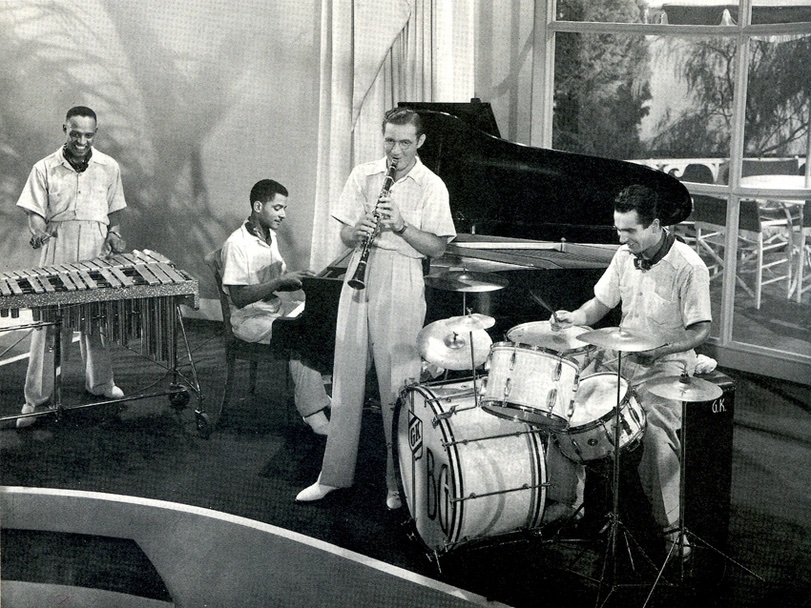
Soon that trio became a quartet in 1937 with the addition of another black musician — Lionel Hampton on the vibraphone.
I couldn’t find any images of the quartet at Hotel Pennsylvania, but here’s one from the Hollywood Hotel
While this decision might seem minor today — really, in service of the music as Wilson and Hampton were outstanding artists — some later compared Goodman to Branch Rickey, the president of the Brooklyn Dodgers who signed Jackie Robinson in 1945 and broke through baseball’s color barrier.
Hampton later said, “As far as I’m concerned, what he did in those days—and they were hard days, in 1937 — made it possible for Negroes to have their chance in baseball and other fields.”
You can hear one recording from one 1937 performance at the Madhattan Room here:
Highlights of Jazz History
But this subtle, somewhat nuanced and ironically quiet introduction to integrated live performances in New York gets immediately overshadowed by two major moments in music history.
In March of 1937, Goodman and his musicians played a two-week engagement at the Paramount Theater in Times Square.
Every night the auditorium was filled mostly with wildly enthusiastically hip teenagers, who scooped up the 25 cent tickets and sold out every night.
To quote from Goodman biographer Ross Firestone: “It was apparent to everyone — Benny and the band, the Paramount management, the assembled members of the press and the thousands of still ecstatic youngsters — that something truly momentous had just taken place.”
“By the time Goodman finished with “Sing, Sing, Sing” at the end of a forty-three minute set,” writes David Rickert, “it could be safely said that the Swing Era had begun.”
And at these shows, as they had done at the Hotel Pennsylvania, Goodman was joined on stage between sets by Wilson, Krupa and Hampton.
Then, on January 16, 1938, Goodman and record producer John Hammond brought together an epic collection of musicians to perform at Carnegie Hall.
PODCAST “Men will be just to men when they are kind to animals.” – Henry Bergh
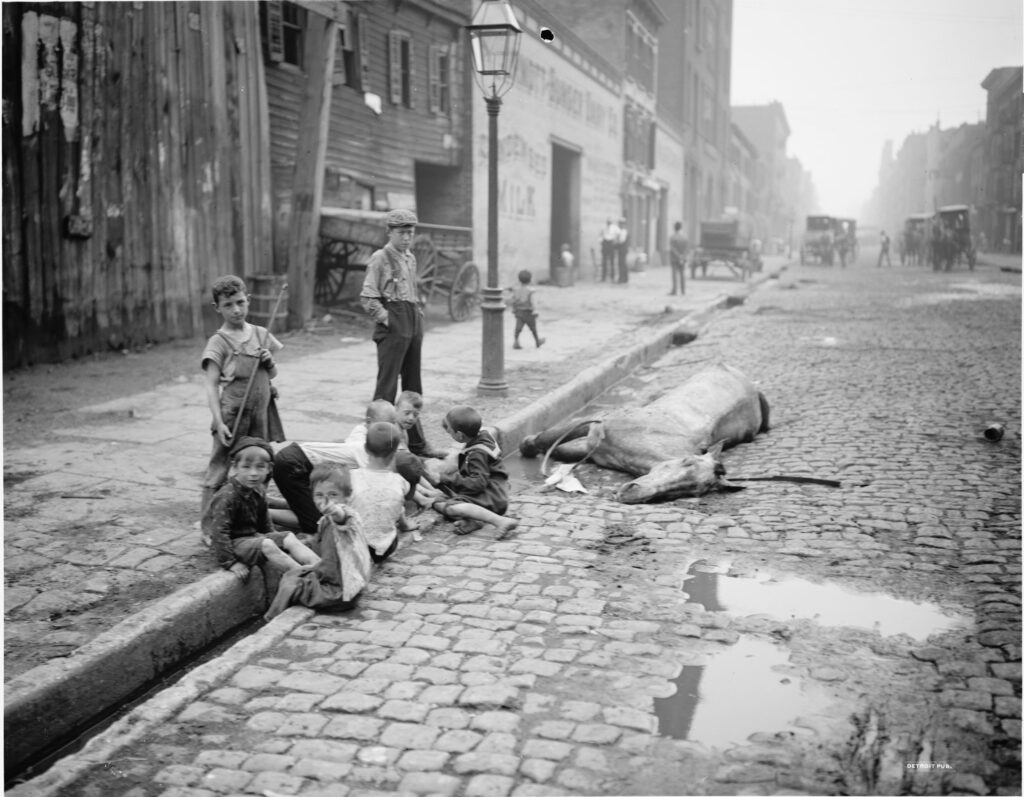
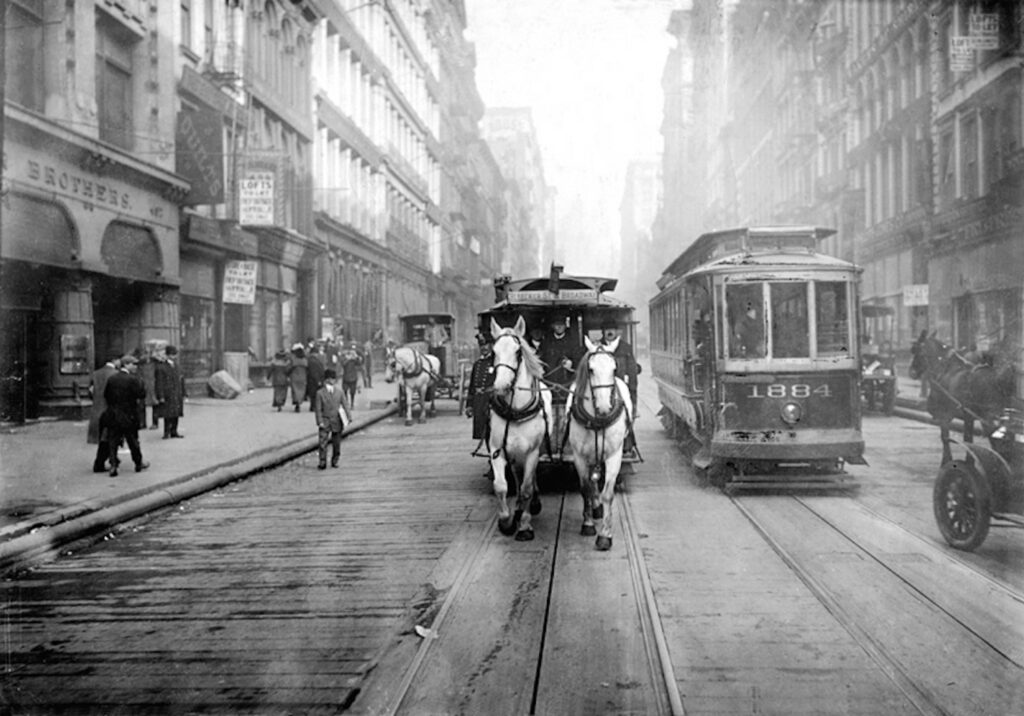
Today’s show is all about animals in 19th-century New York City. Of course, animals were an incredibly common sight on the streets, market halls, and factories during the Gilded Age, and many of us probably have a quaint image of horse-drawn carriages.
But how often do we think about the actual work that those horses put in every day?
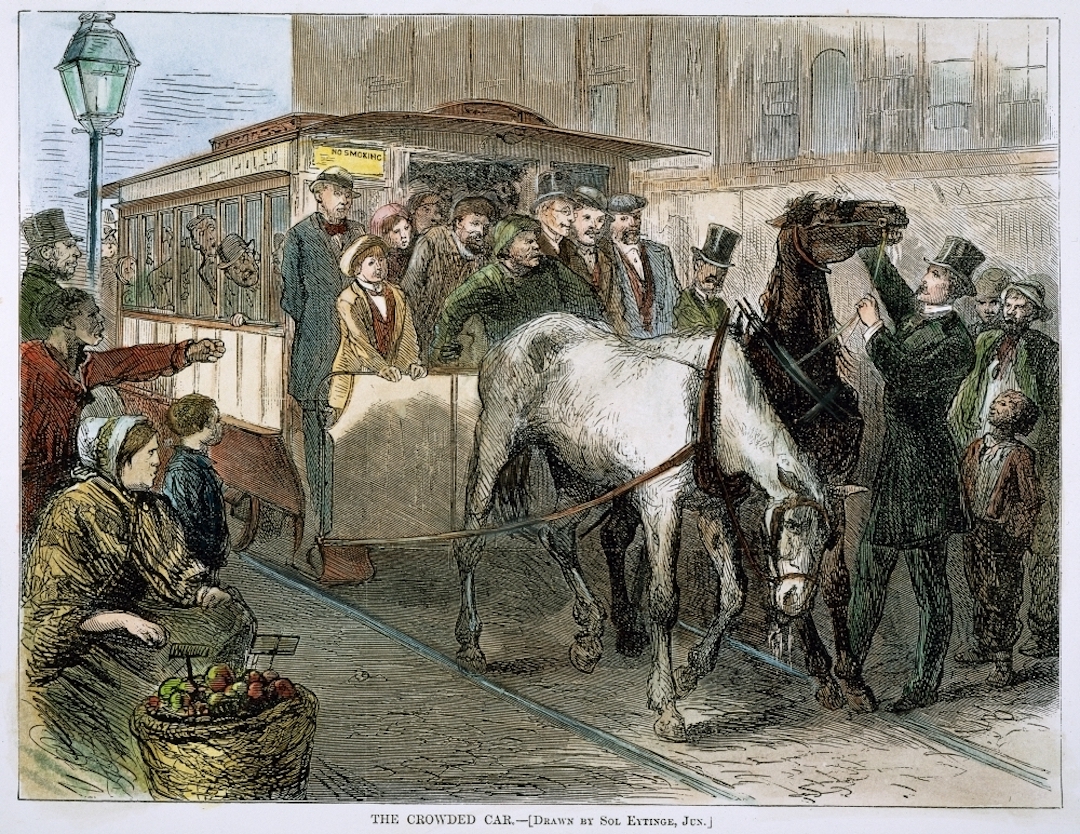
The stress of pulling those private carriages — or, much worse, pulling street trolleys, often overloaded with New Yorkers trying to get to work or home?
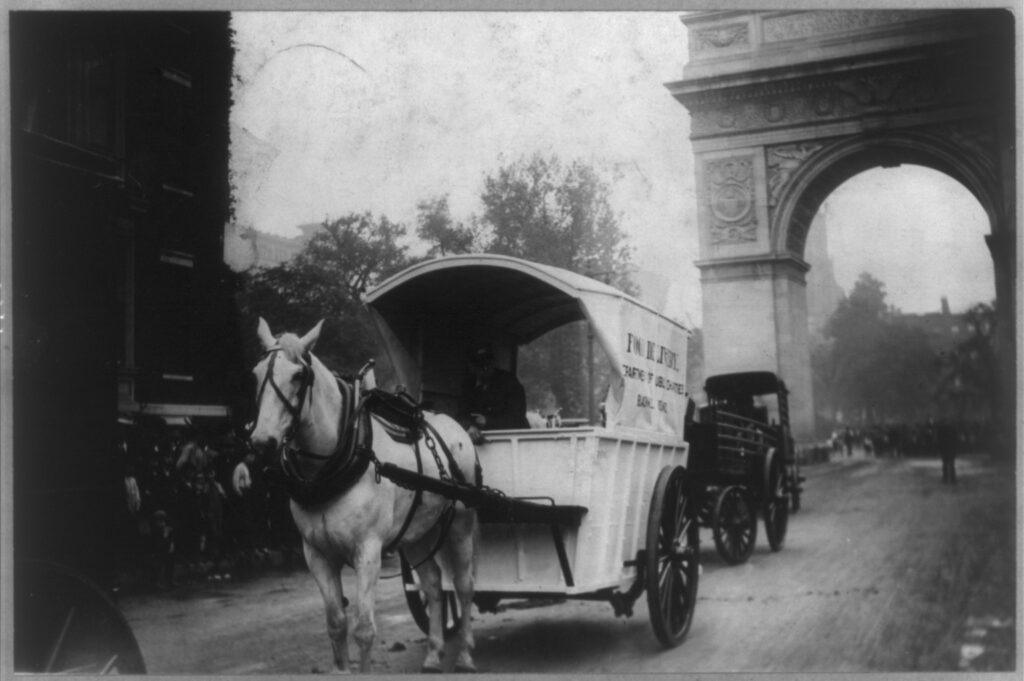
Work Horse parade, New York City: horse and delivery wagon, 1908. Courtesy Library of Congress
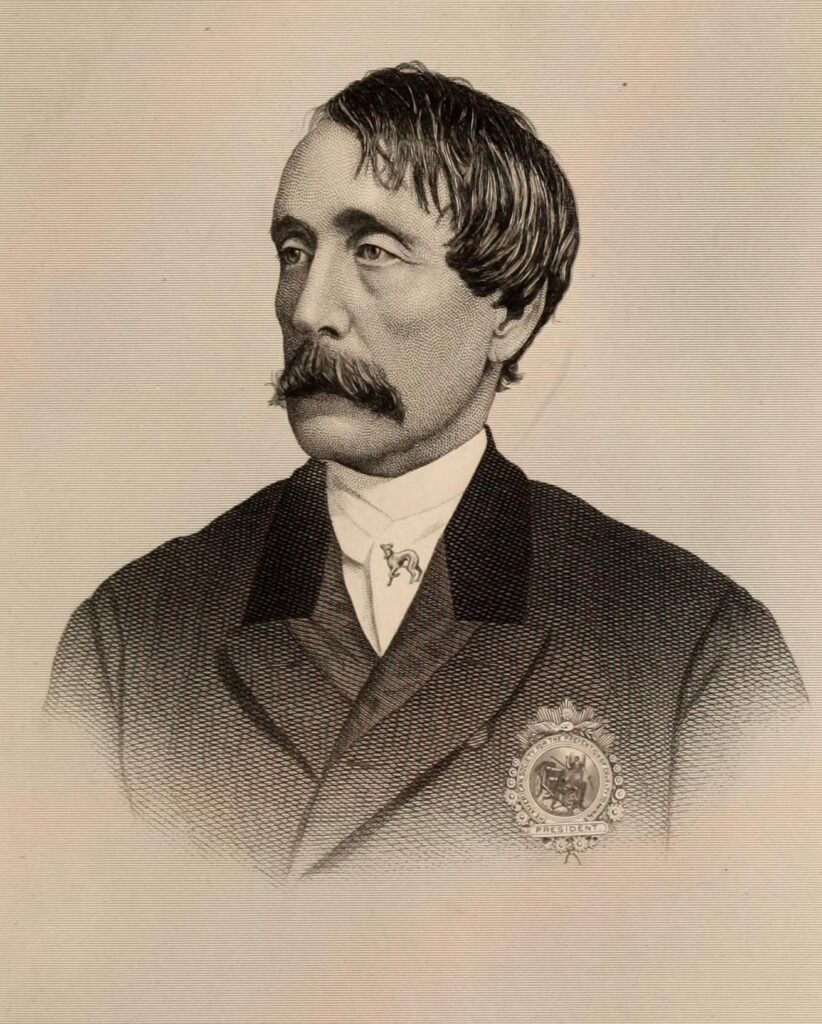
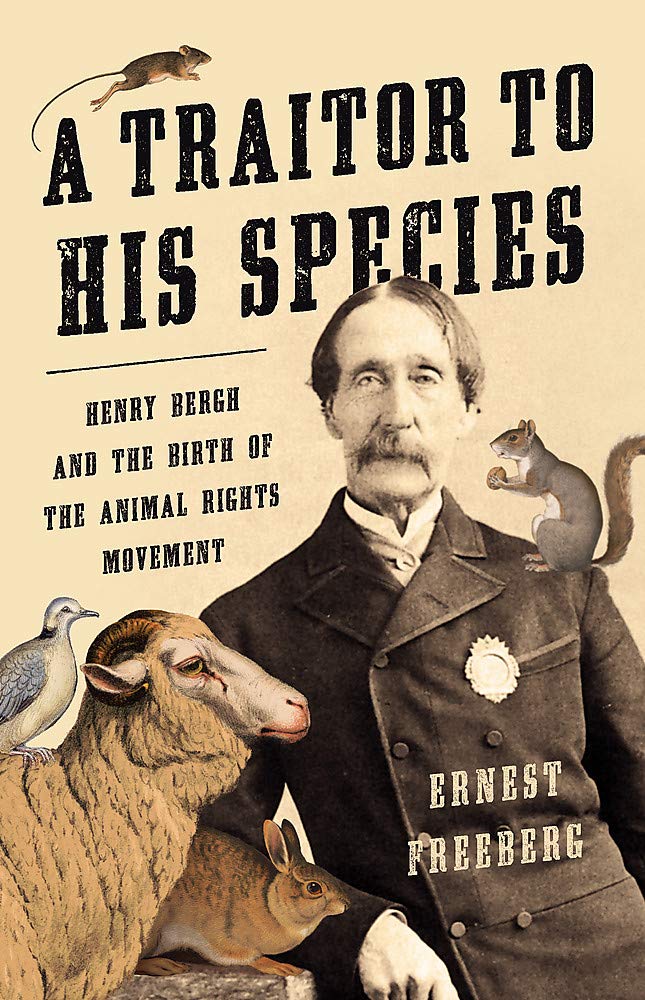
In the book A Traitor to His Species: Henry Bergh and the Birth of the Animal Rights Movement, author Ernest Freeberg (who joins Tom on this week’s show) tells the story of these animals — and of their protector Henry Bergh, the founder of the American Society for the Prevention of Cruelty to Animals (ASPCA).
He ran the organization from the 1860s to the 1880s, and was a celebrity in his day — widely covered, and widely mocked for his unflinching defense of the humane treatment of all animals, even the lowliest pesky birds or turtles.
His story is full of surprising turns, and offers an inside account of the early fight for animal rights, and engrossing tales of Gilded Age New York from a new perspective — the animal’s perspective.
Featuring an interview with Ernest Freeberg, a distinguished professor of humanities and head of the history department at the University of Tennessee.
Listen Now – Henry Bergh’s Fight for Animal Rights
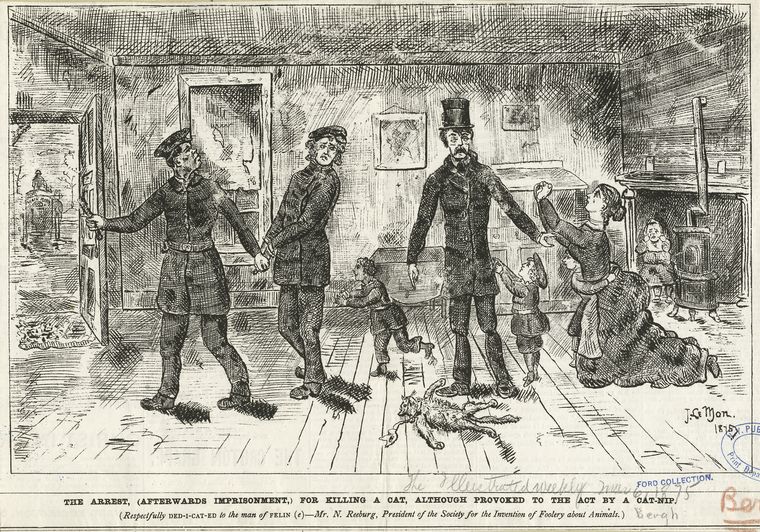
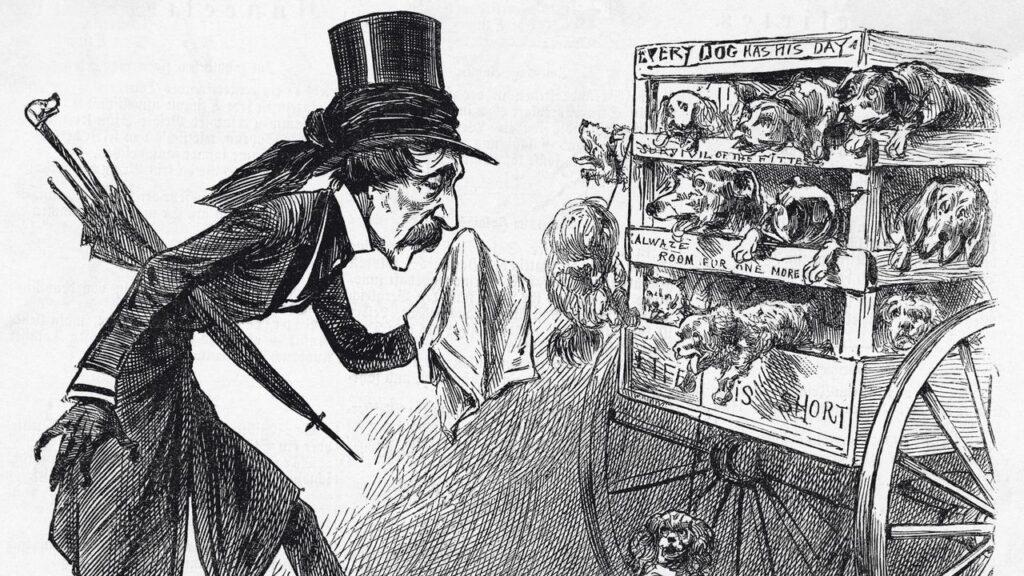
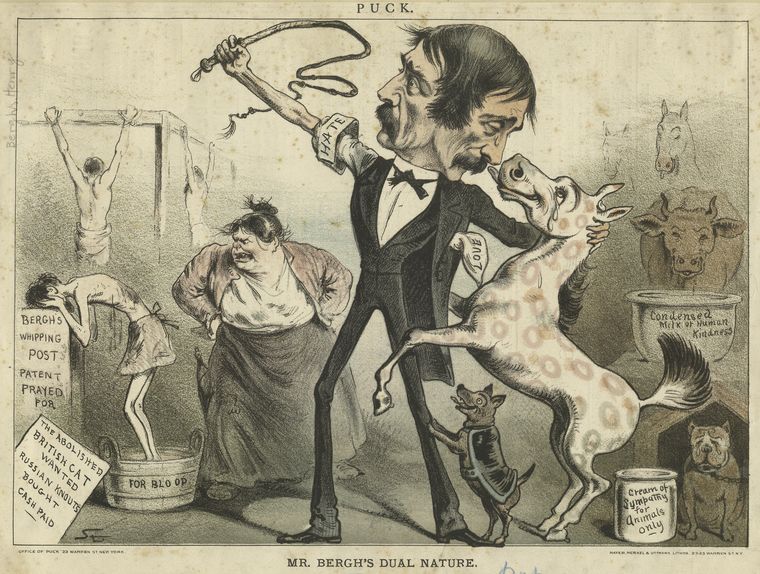
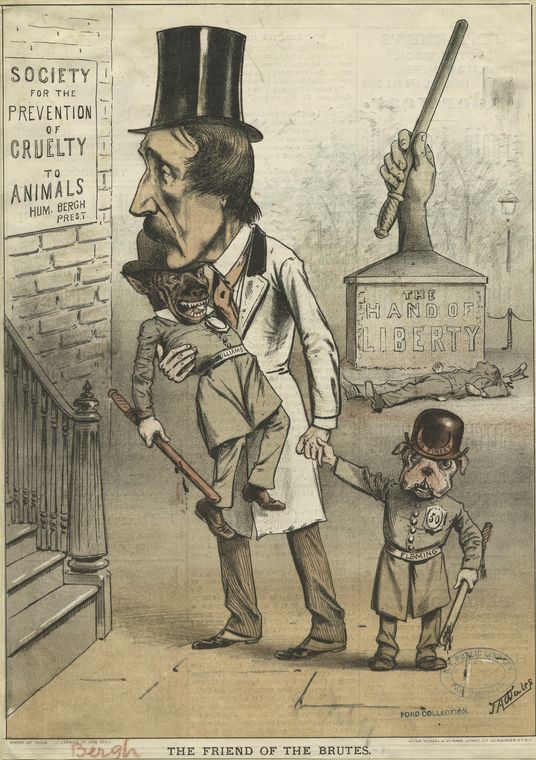
Bergh in an illustration by George E Perine“The arrest, (afterwards imprisonment), for killing a cat, although provoked to the act by a cat-nyp.” New York Public LibraryCaricaturist James Albert Wales lampooning Mr. Bergh. PHOTO: BETTMANN ARCHIVE/GETTY IMAGESBergh made an easy target for satire magazines like Puck
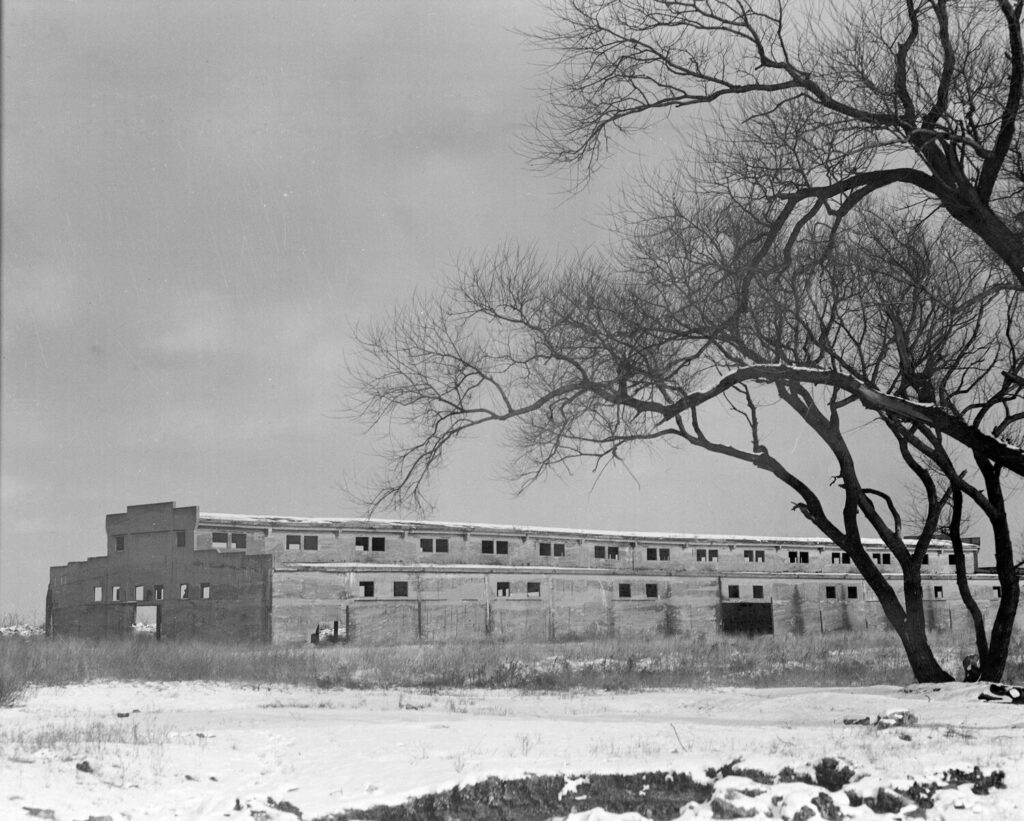
Jacob Riis captured this tragic image in 1900. Ini 1917 horses were sharing the street with automobiles and streetcars.The rendering factory on Barren Island, Brooklyn. It was abandoned by the time of this photograph — January 1938. Photographer: Sam Brody. WPA Federal Writers’ Project Collection, NYC Municipal Archives..
FURTHER READING
FURTHER LISTENING
After you’ve listened to this show on Henry Bergh and the animals rights movement, dive back into the back catalog and listen to these shows with similar themes:
The Bowery Boys: New York City History podcast is brought to you …. by you!
We are now producing a new Bowery Boys podcast every other week. We’re also looking to improve and expand the show in other ways — publishing, social media, live events and other forms of media. But we can only do this with your help!
We are now a creator on Patreon, a patronage platform where you can support your favorite content creators.
Please visit our page on Patreon and watch a short video of us recording the show and talking about our expansion plans. If you’d like to help out, there are several different pledge levels. Check them out and consider being a sponsor.
We greatly appreciate our listeners and readers and thank you for joining us on this journey so far.
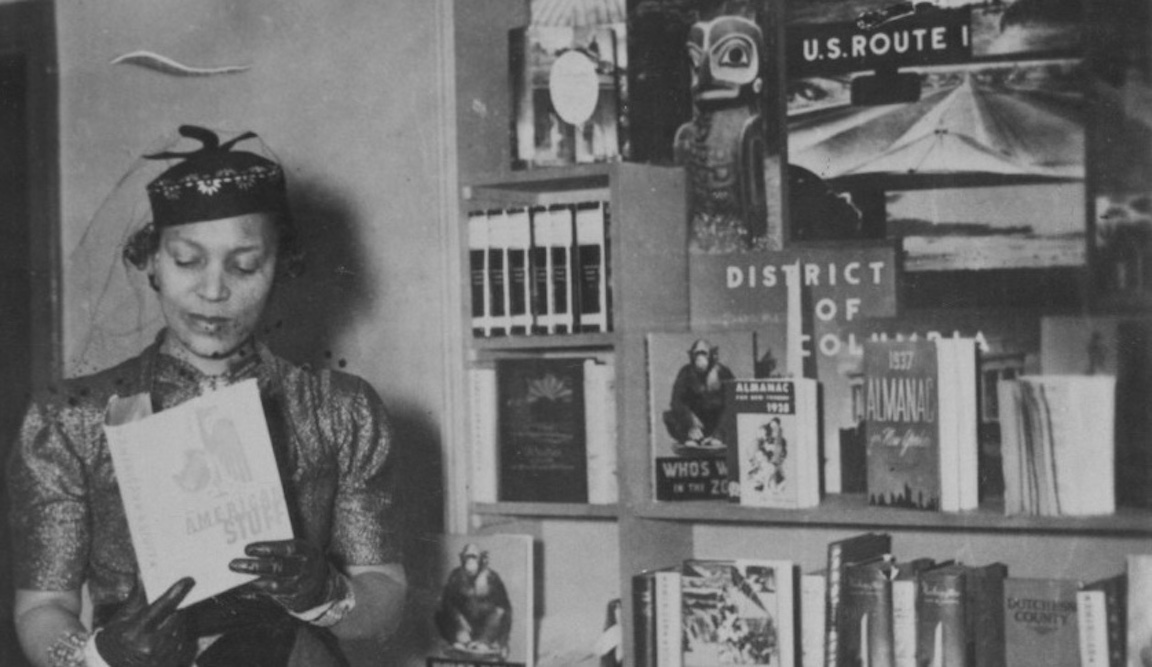
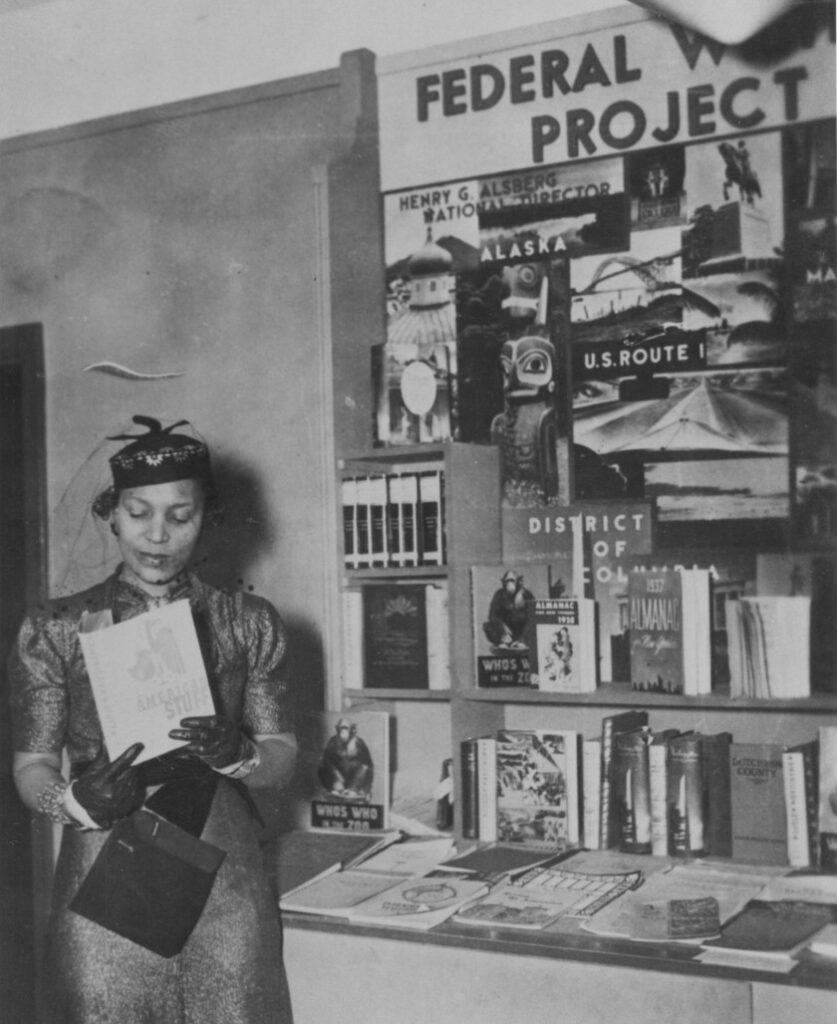
Zora Neale Hurston at a FWP book fair held at Rockefeller Center
For the hundreds of thousands of people employed by New Deal programs during the Great Depression, it was always infrastructure week.
Even for those employed by the WPA’s Federal Writers’ Project, aimed at giving paychecks to unemployed writers by creating meaningful employment that benefited the public good.
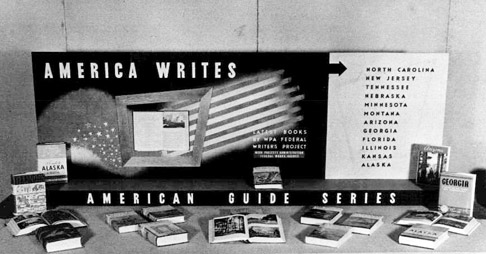
But their objectives weren’t to build new infrastructure; it was to guide Americans over its preexisting bridges and roads via a unique set of tour books — the American Guide Series.
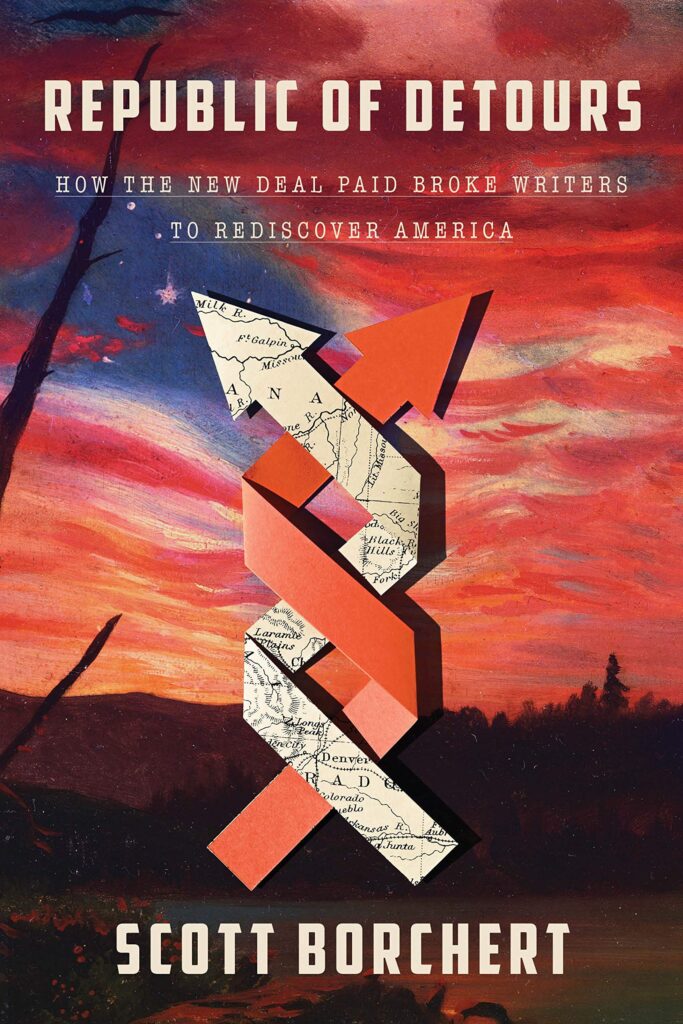
Republic of Detours How the New Deal Paid Broke Writers to Rediscover America by Scott Borchert Farrar, Straus and Giroux
Scott Borchert’s fascinating survey of this unconventional New Deal program, packed with literary greats, brings FDR’s optimistic political strides of the 1930s in line with the realities of the American landscape — from the mountains of Idaho to the swamplands of Florida.
The American Guides — tour guides of each state and many cities, often quirky and elegantly written — were the signature achievements of the project, employing thousands of writers from a wide spectrum of talents and ideologies to produce a snapshot of the United States in the late 1930s.
Library of Congress
Republic of Detours peers into the production process of several state guides — and New York City, which was treated like its own state by the program.
The personalities involved were control freaks, wanderers and raging drunks. Some were affiliated with the Communist Party (when that was obviously a less radioactive association) or left-leaning journals that would easily call the entire project into question in today’s political environment.
The program was overseen by journalist Henry Alsberg, a penpal of Emma Goldman and a Greenwich Village theater producer who pulled together an extraordinary array of talent that collectively produced a poetic embodiment of the New Deal spirit. The rights of the common man, a chorus of American voices.
Hurston at a book fair in Rockefeller Center. Zora Neale Hurston Papers/Special and Area Studies Collections/George A. Smathers Libraries, University of Florida, Gainesville, Florida
This meant employing women and Black writers like Zora Neale Hurston, the anthropologist who studied the folklore and music traditions of the Deep South — leading to the publication of her classic Their Eyes Were Watching God.
As Borchert writes,”If the New Deal rested on three visible pillars — immediate economic recovery, deeper social and economic reform, and a realignment of the political landscape — then collaboration with the racial structure of the South was a shadowy fourth pillar.”
This led to debates about depicting raw historical events — especially racial violence against Black communities in the South. Ultimately Hurston was wasted by the program; “[i]t kept her alive but squandered her talents and demeaned her with a low rank.”
The New York City guide should have been the easiest to produce — with access to the best writers and the richest archives — yet Borchert presents an often chaotic process riddled with political disagreements.
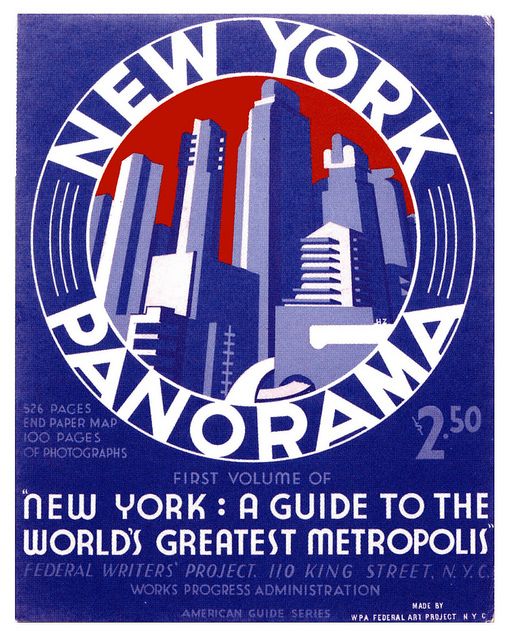
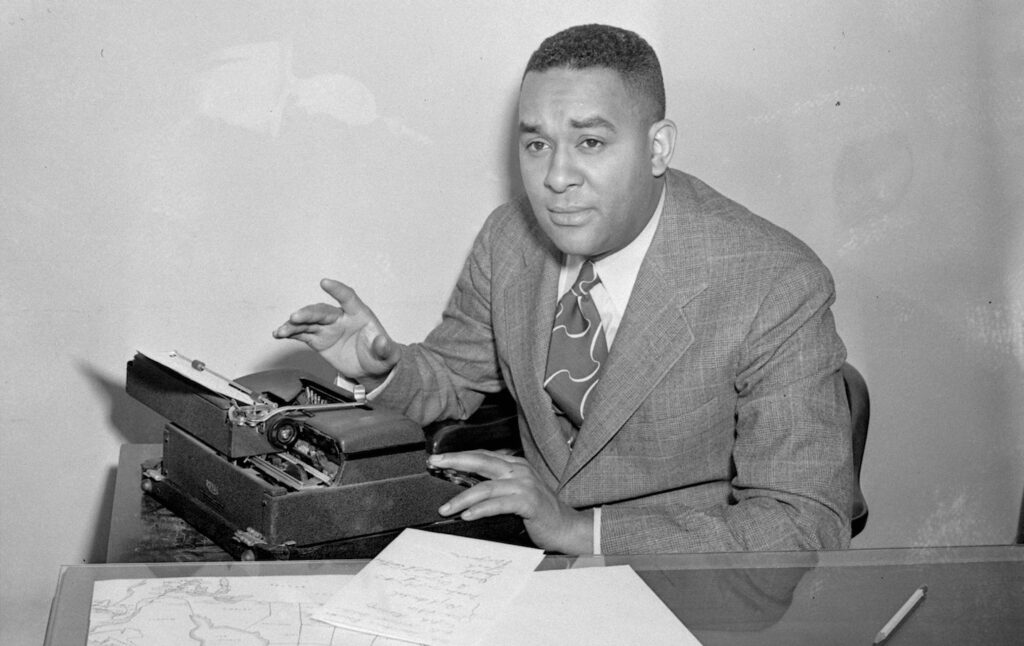
It was into this literary melting pot that Richard Wright arrived from Chicago, a few years before the publication of Native Son, to produce a section on Harlem for a book of essays called New York Panorama. He would one of the great successes of the Federal Writers’ Project.
But Republic of Detours is filled with dozens of stories of lesser known writers, men and women you may never had heard of. Allow this book to inspire a few independent detours of your own into their lives.
Richard Wright 1945 (AP Photo/Robert Kradin, File)
New York City on ice — a tribute to the forgotten industry which kept the city cool in the age before refrigeration and air conditioning.
Believe it or not, ice used to be big business.
In 1806 a Boston entrepreneur named Frederic Tudor cut blocks of ice from a pond on his family farm and shipped it to Martinique, a Caribbean county very unfamiliar with frozen water.
Tudor was roundly mocked — why would people want ice in areas where they can’t store it? — but the thirst for the frozen luxury soon caught on, especially in southern United States.
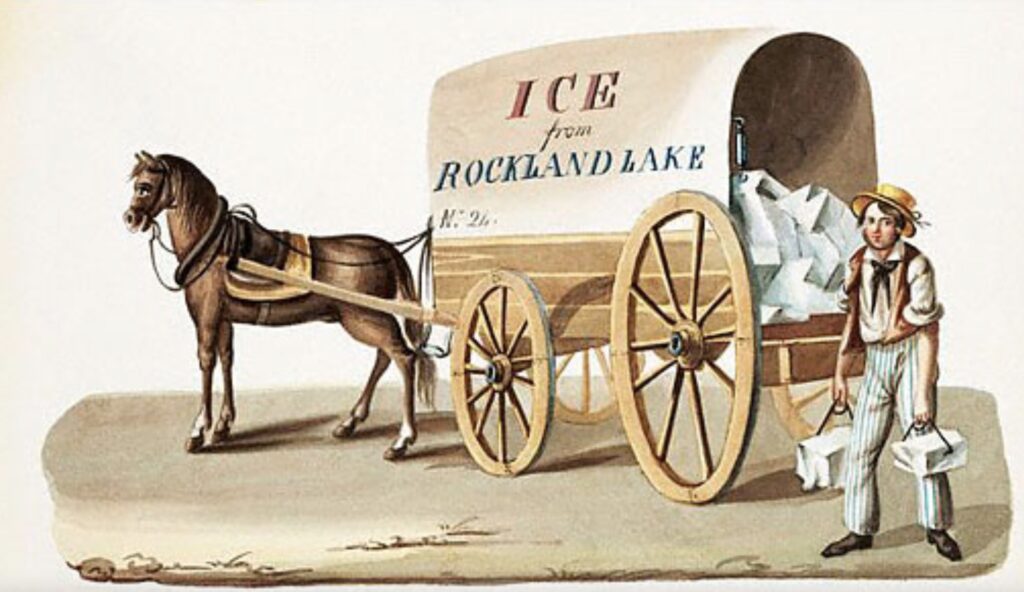
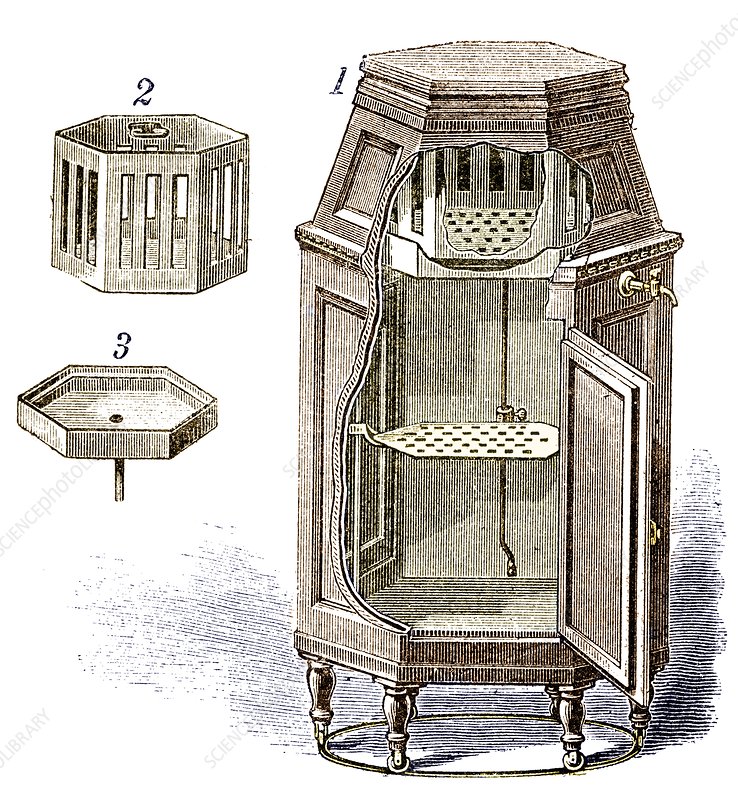
New Yorkers really caught the ice craze in the 1830s thanks to an exceptionally clear lake near Nyack. Within two decades, shops and restaurants regularly ordered ice to serve and preserve foods. And with the invention of the icebox, people could even begin buying it up for home use.
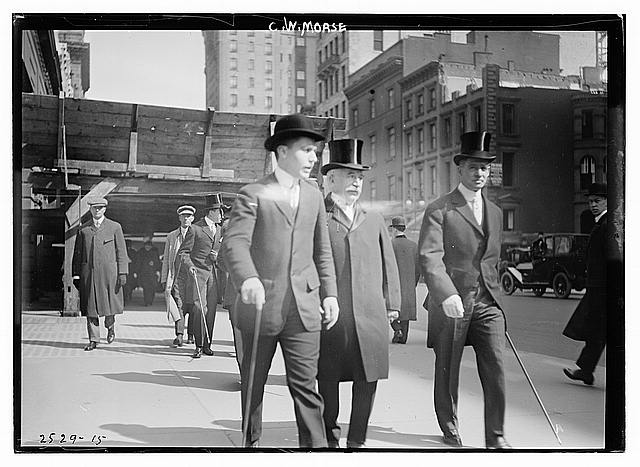
The ice business was so successful that — like oil and coal — it became a monopoly. Charles W. Morse and his American Ice Company controlled most of the ice in the northeast United States by the start of the 20th century.
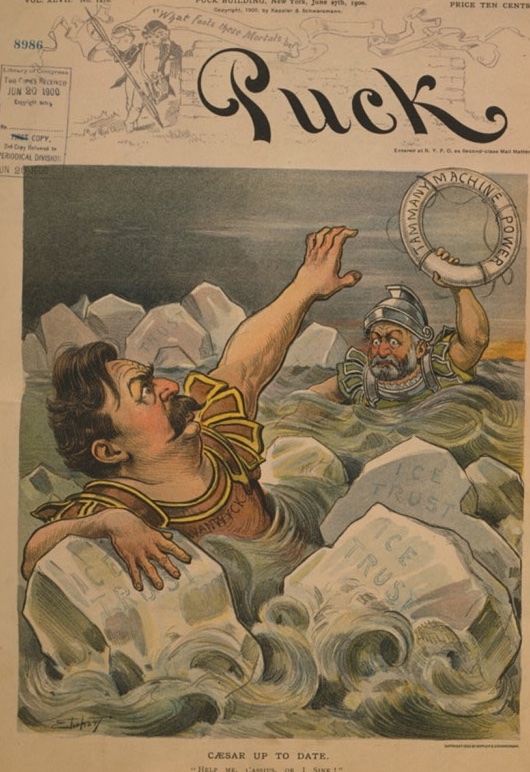
He was known as the Ice King. And he had one surprising secret friend — the Mayor of New York City Robert A. Van Wyck.
PLUS: The 19th century technologies that allowed American to harvest and store ice. The Iceman cometh!
AND: How the ice business lives on today with new 21st century uses.
Listen Now – The American Ice Craze of the 19th Century
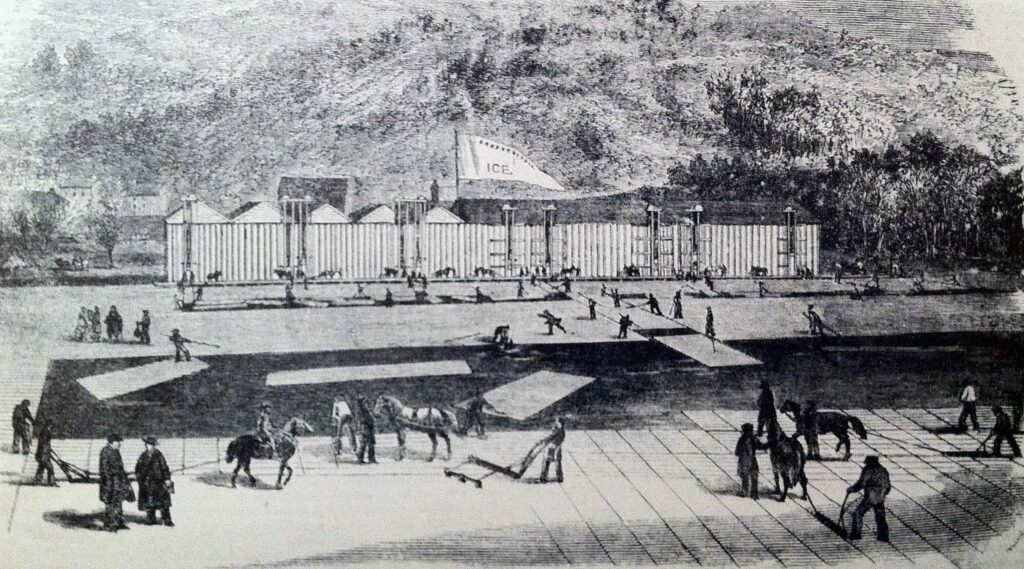
Ice harvesting, New York, 1852, originally published in Gleason’s Drawing Room Companion
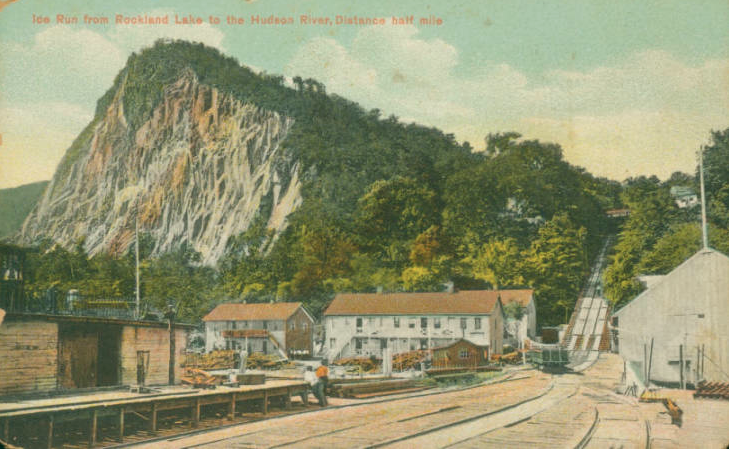
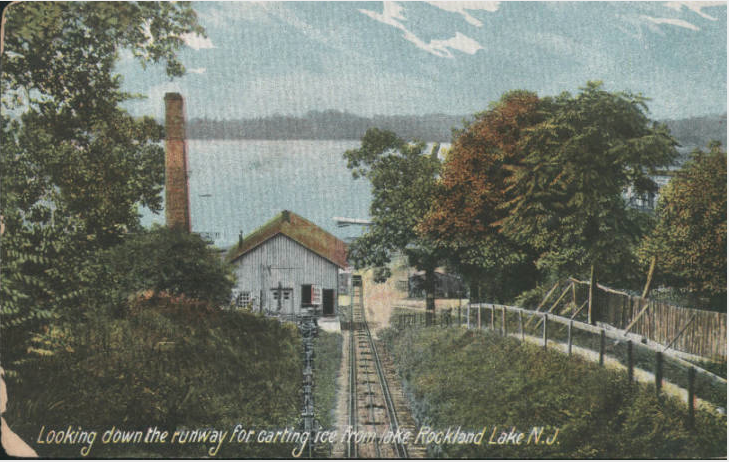
The ice railroad linking Rockland Lake with awaiting vessels on the Hudson River.
Hudson River Valley HeritageHudson River Valley Heritage
A 1902 film from Thomas Edison showing ice harvesting on Rockland Lake:
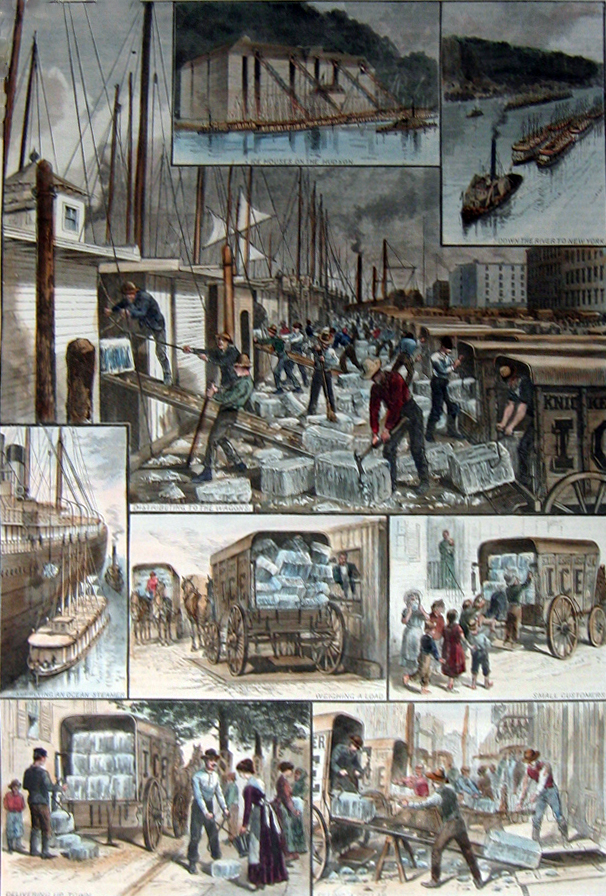
An illustration of the New York ice trade. Harper’s Weekly, 30 August 1884A late 19th century icebox (or refrigerator). From 1897 ‘La Science Illustree’.
Charles W. Morse in 1910 (the man in the middle), strolling through New York
Library of Congress
Puck Magazine satirizing Mayor Van Wyck. Note the phrase Ice Trust on the ice he’s grabbing onto:
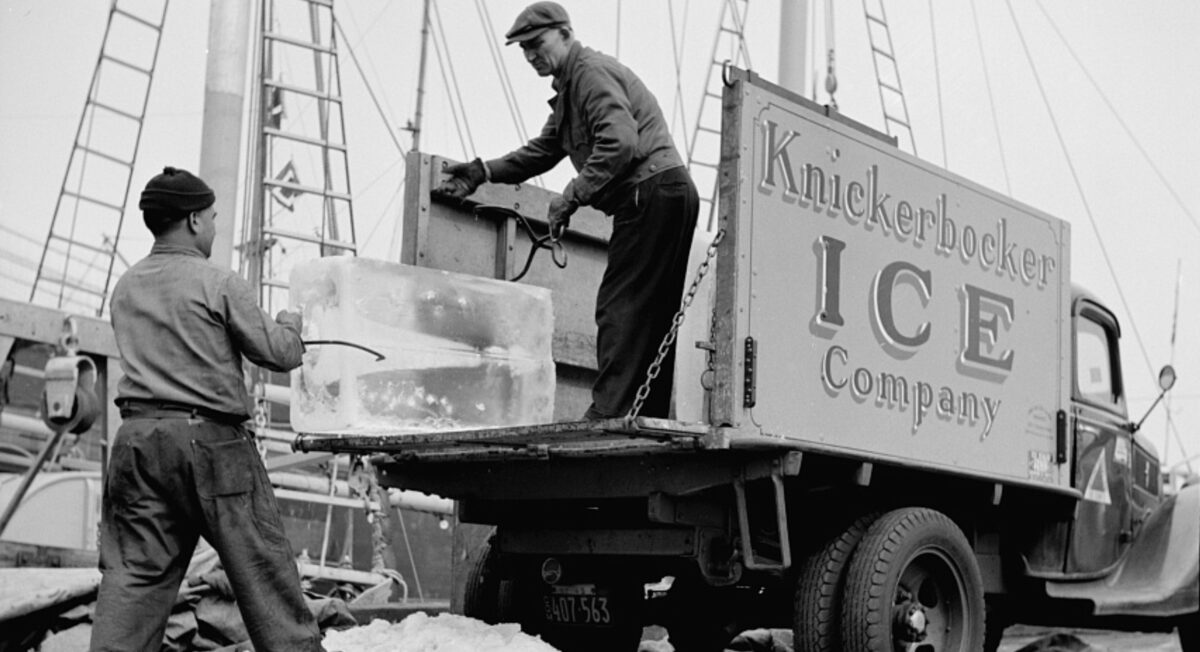
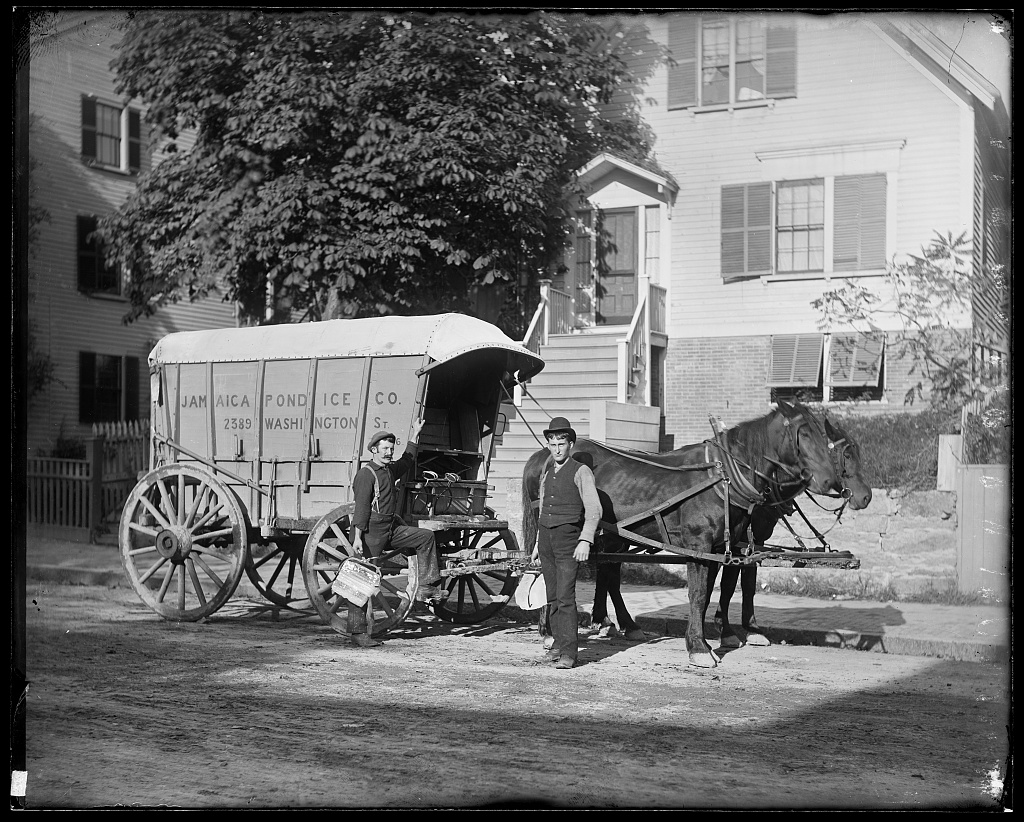
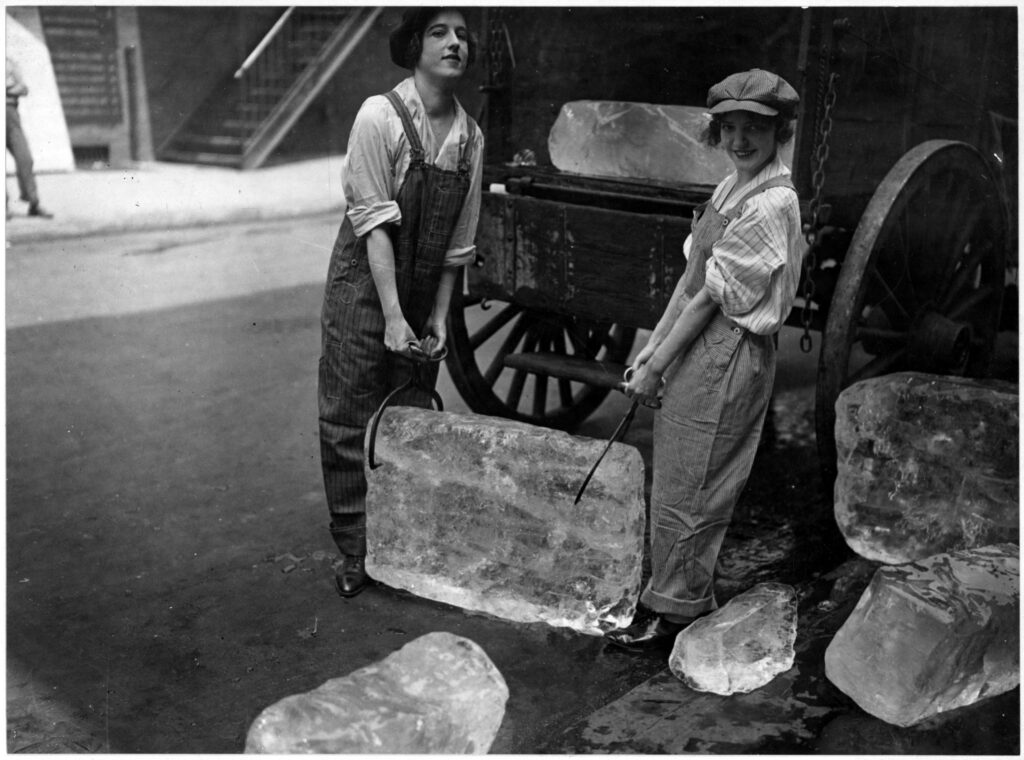
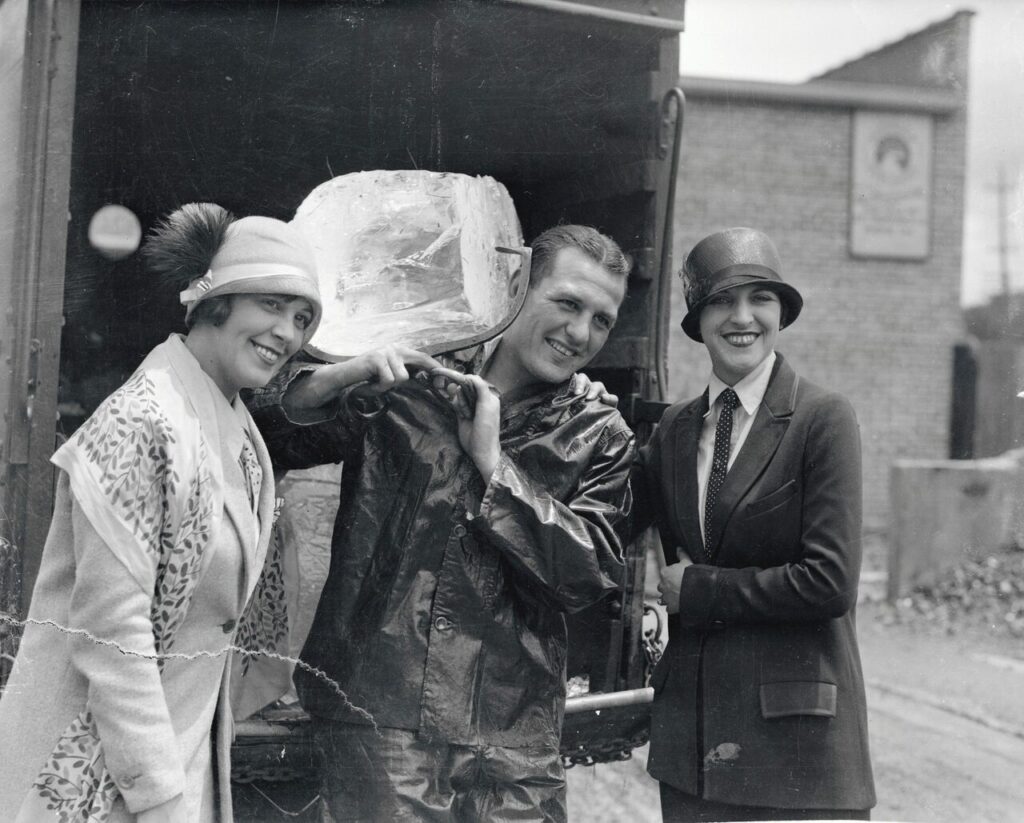
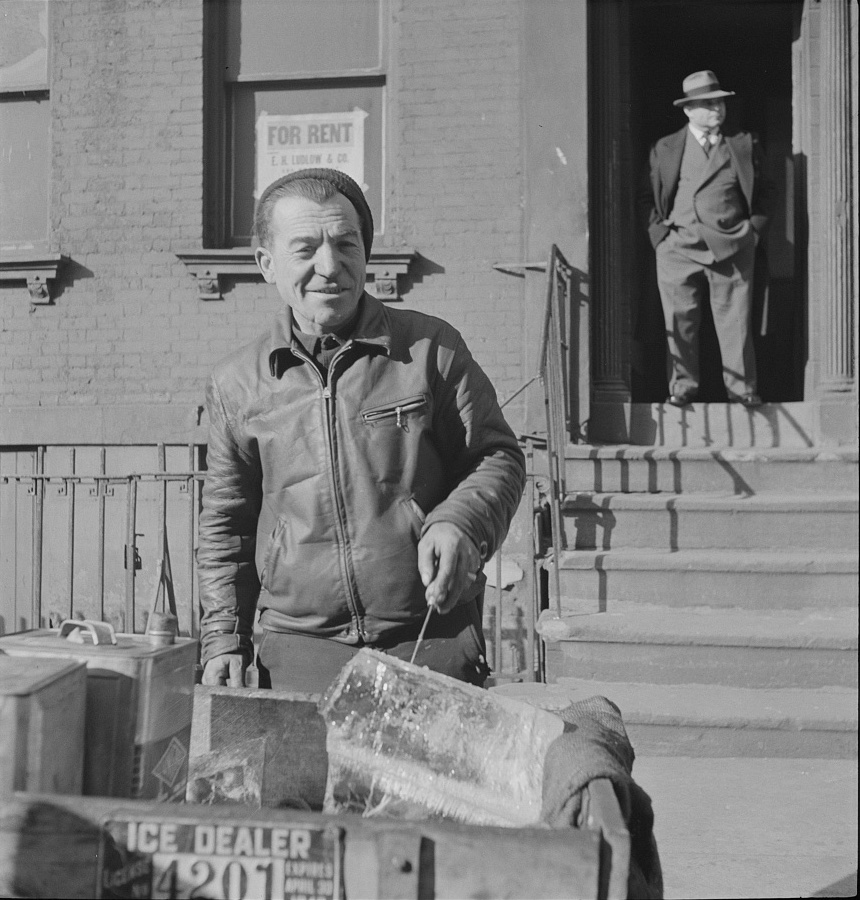
Jamaica Pond Ice Co. wagon, Boston, Massachusetts, Library of CongressWomen on an ice delivery, 1918Football player and iceman Harold “Red” Grange, getting a cool reception. Getty ImagesIce man on Mott Street, 1943. Marjory Collins photographer, Library of Congress
FURTHER LISTENING
After exploring the history of the 19th century ice trade, visit these shows in the back catalog for more information about some of the people, places and events mentioned in this show:
A tale of the long-time endurance of the Democratic machine Tammany Hall in the lives of New Yorkers:
The reform movement swept corruption from City Hall in the mid 1890s — only for it to return a few years later:
Give another listen to your show on the history of cocktails — now that you know where the ice comes from!
With Consolidation we got the mayor Robert Van Wyck — and the Ice Trust Scandal.
These days of low-to-mid 90s F, high humidity temperatures got you down? Why that’s nothing!
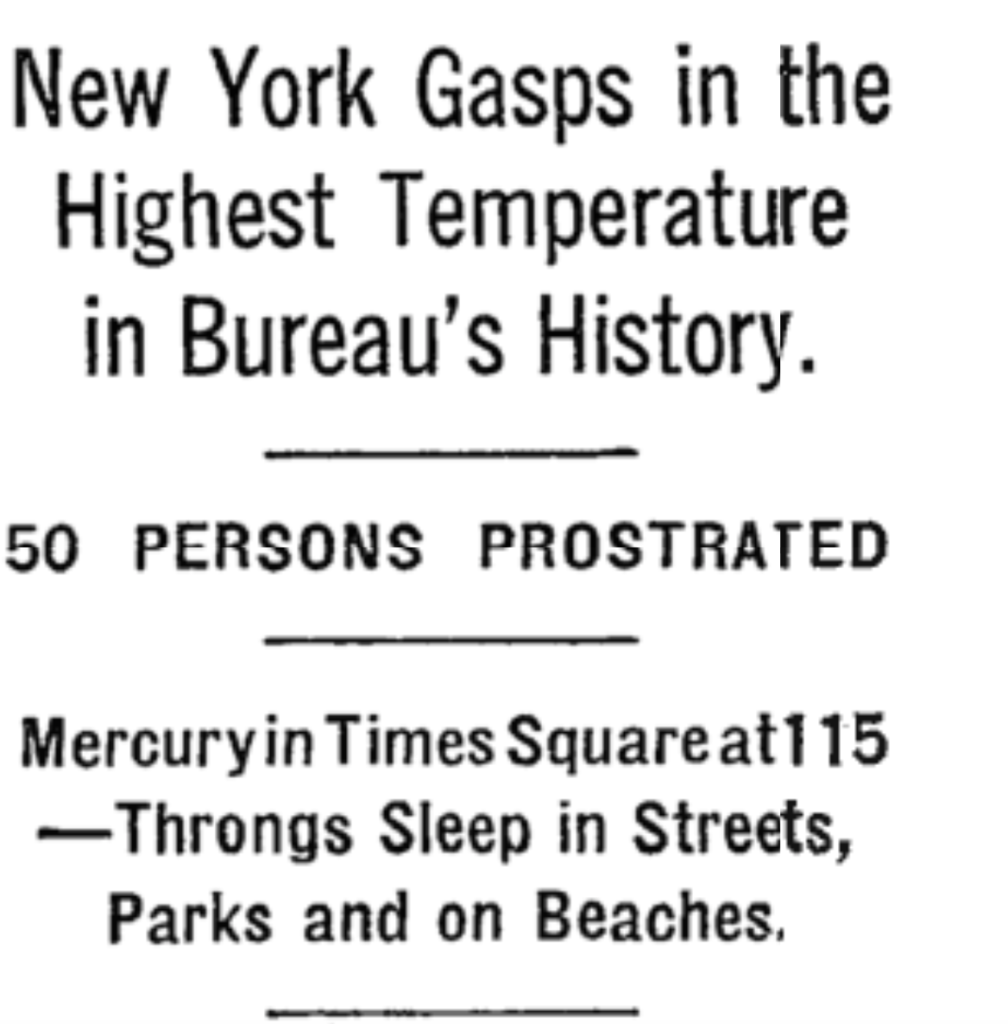
The hottest day in New York City history was eighty-five years ago last week — on July 9, 1936, when temperatures reached an agonizing 106 degrees, measured from the Central Park weather observatory.
New York Times, July 19, 1936
This broke the record set on August 7, 1918 when New Yorkers experienced a catastrophic 104 degrees. (As if World War One and the Spanish Flu weren’t enough to suffer through that year.)
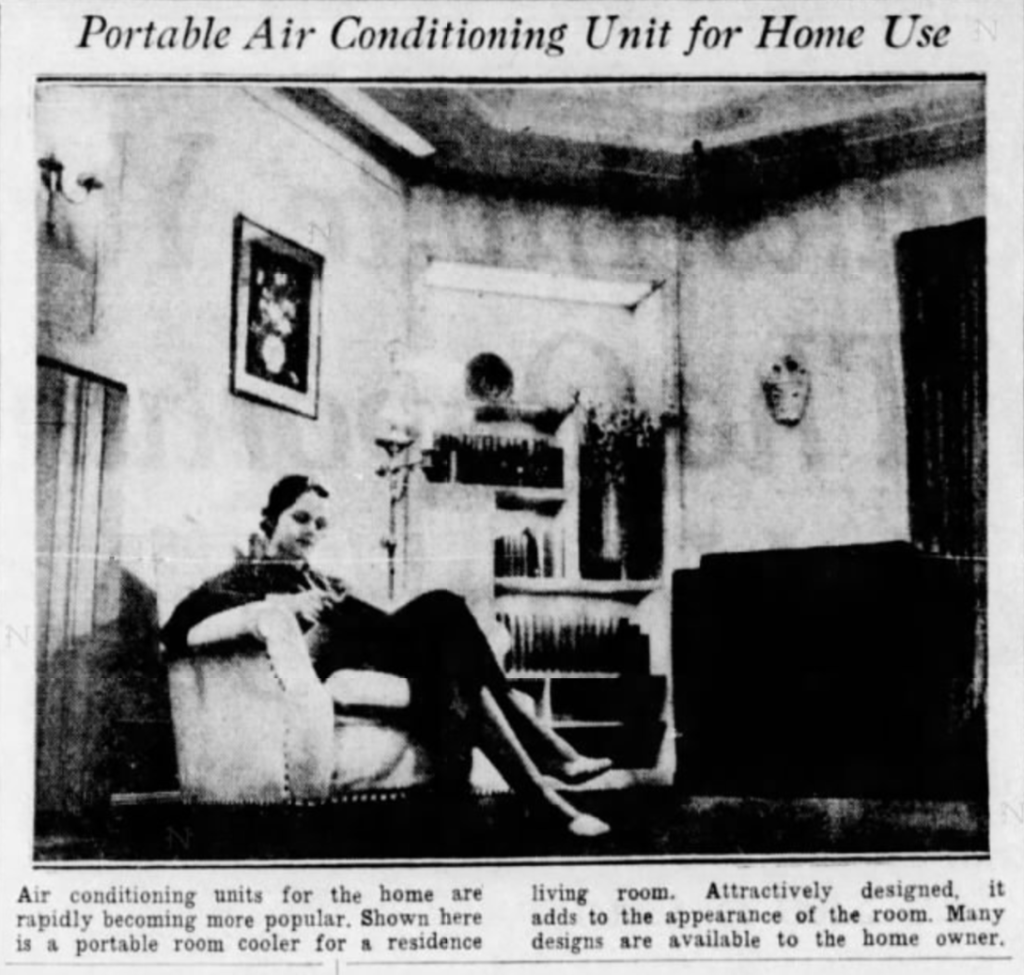
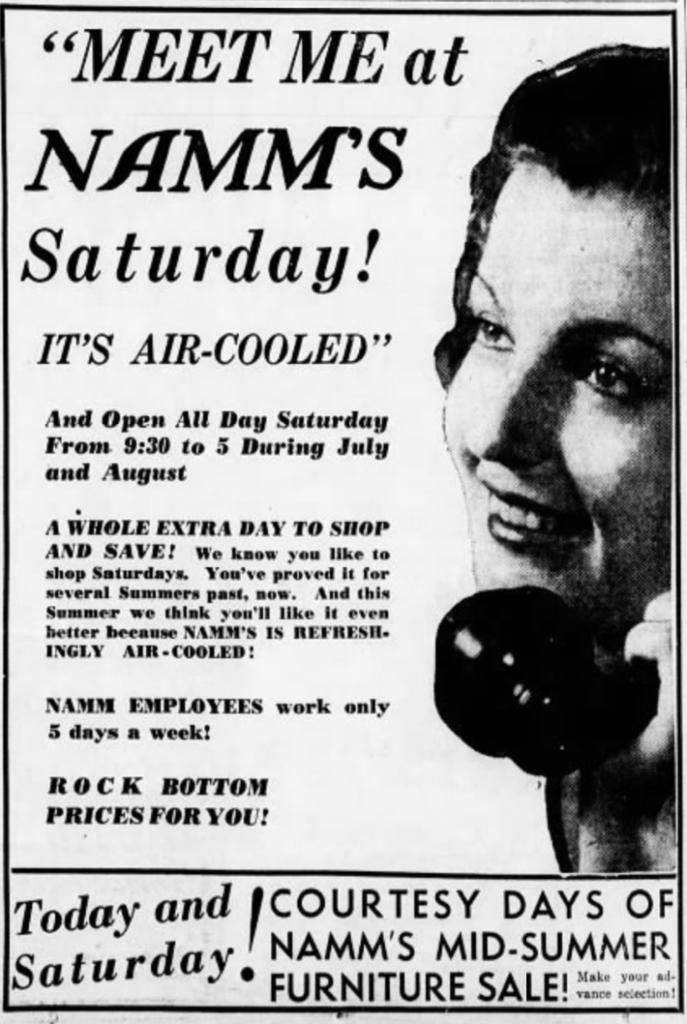
In neither of these years was there widespread air conditioning although the concept was quite familiar to those during the Great Depression. Upscale movie theaters and restaurants had a form of air conditioning by the mid 1930s but home use was too expensive at this time.
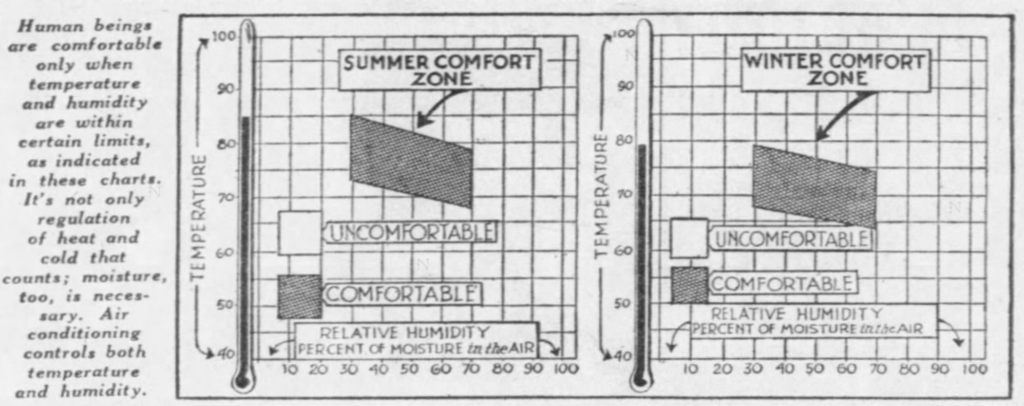
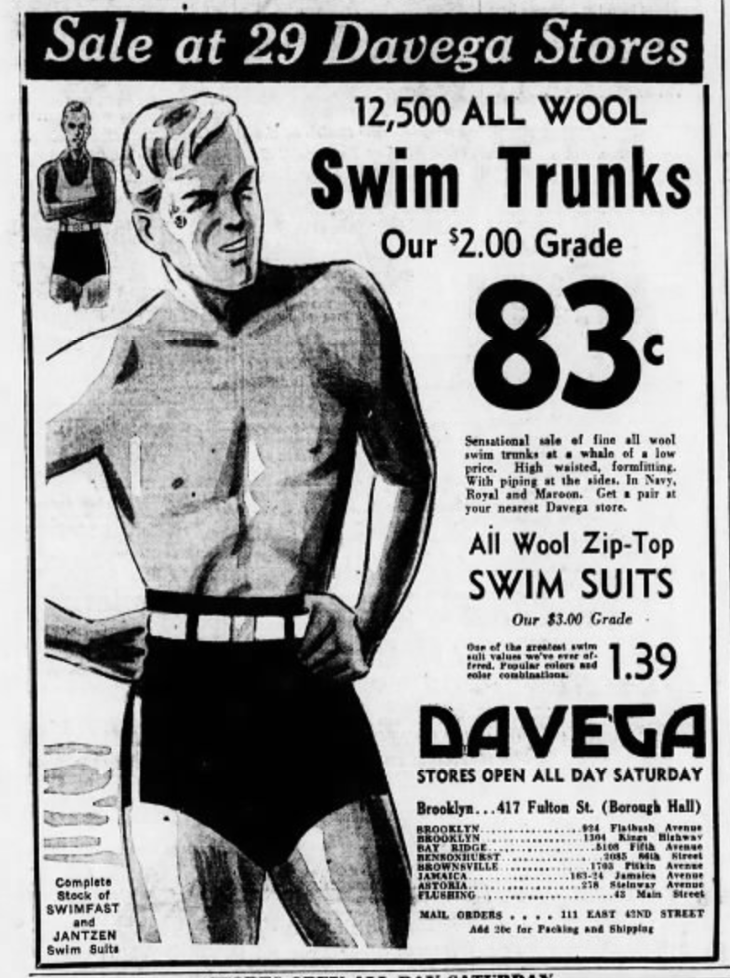
This photograph from 1935 accompanied an article about the novel concept of home air conditioning, making sure to point out that air conditioners can look ‘attractive’.In 1937 the New York Daily News ran this unusual graphic about the newly emerging innovation of air conditioning.
So on the hottest day in New York City history, most people had to forge through the day anyway they could — without the luxury of artificially cooled air.
That 106 number was hit after a series of thermometer-breaking days that week.
According to the New York Daily News, “heat was humanly bearable only because the humidity, at 44 percent, was low. If it were twice as high … human life would be almost impossible.”
And the New York Times chimed in with a startling visual. “In the canyons of the financial district men and women reported the heat waves visible.”
The Brooklyn Daily Eagle, July 9, 1936
Hundreds did die throughout the northeast United States that week due to the heat as well as several in the city, including two boys who drowned in the park lakes on July 10.
It was so hot that Mayor Fiorello La Guardia let out all city employees from work at 1:45 pm and thousands of WPA workers were given a half-day.
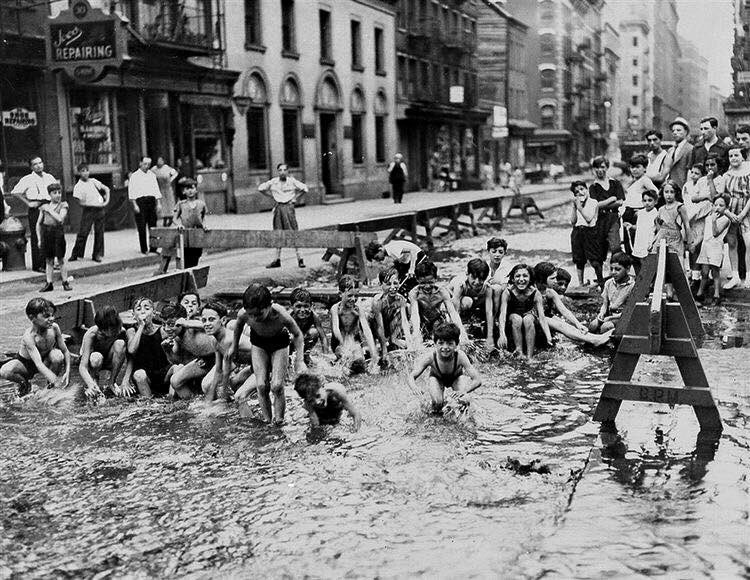
Fire hydrants were pried open in every neighborhood. In Red Hook, Brooklyn and in many other places, the hydrants lowered the water pressure so much that residents above the second floor were unable to get water in their homes.
And on Park Avenue “so many hydrants were in emergency use that the waters mounted above the curb and the cars splashed through six and eight inches of it.” [Times]
“In the great shopping districts in the Thirties [Herald Square], the pavements became so soft in the late afternoon that the crosswalks were dotted with rubber heals that were caught in the asphalt and tar as women passed by. In some spots the asphalt blistered.” [Times, 9/10/36]
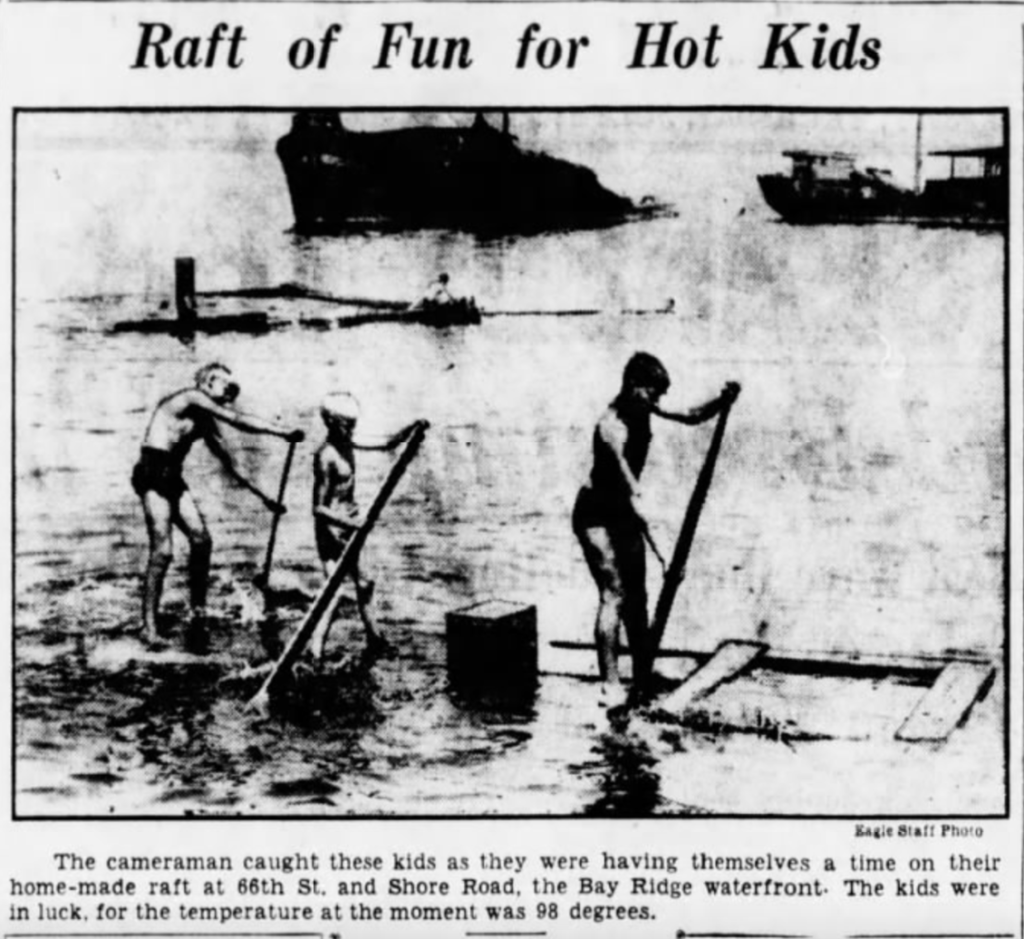
From the July 10, 1936 issues of the Brooklyn Daily Eagle
The only relief seemed to be the city parks and beaches which people duly exploited — day or night. “Coney Island, the Rockaways and other metropolitan beaches again had their hundreds of thousands of city folks cooling off in salt water, and they including thousands who had remained all night on the Bach sand.”
In fact tens of thousands of New Yorkers, looking for relief, slept in city parks throughout the night. The mayor authorized most parks to remain open and police were directed not to harass people who slept on benches or on the ground.
And even Robert Moses flew in for the rescue, authorizing that all city swimming pools remain open until midnight.
From the July 10, 1936 issues of the Brooklyn Daily Eagle
From the Times: “On the Lower East Side traffic was seriously impeded as small armies of persons emerged from tenement houses with chairs, boxes and even beds which they set up in the streets. Other thousands, including young children usually in bed by 9 o’clock, lined the East River waterfront.”
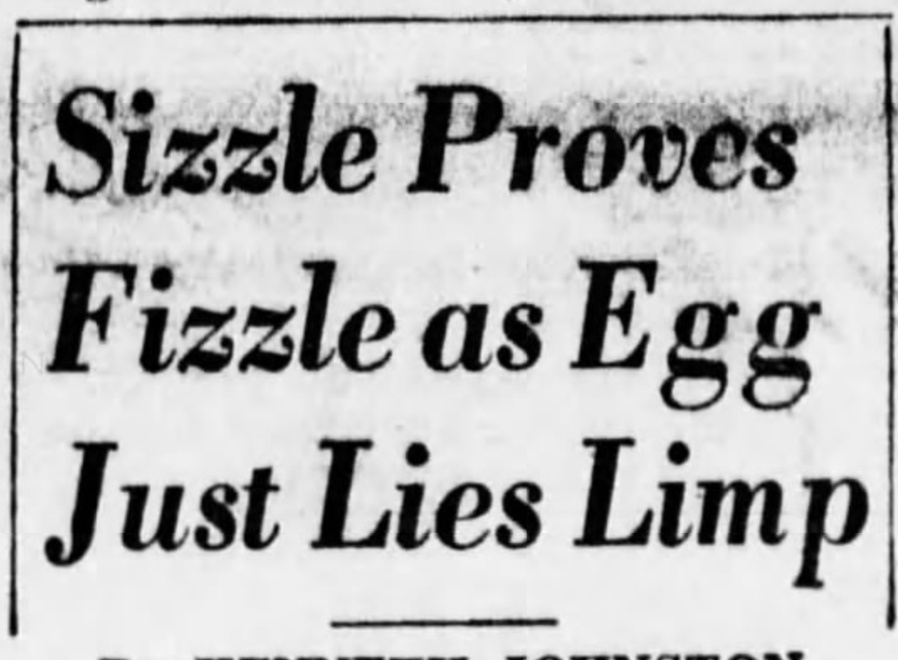
One jokester at the Daily News tried a bit of stunt journalism on that hot day by trying to fry an egg on the sidewalk in front of Queens Borough Hall. After watching the broken egg on the sidewalk for 15 minutes — runny and uncooked — the crowd left dejected.
PODCAST There are two mysterious islands in the East River with a human population of zero.
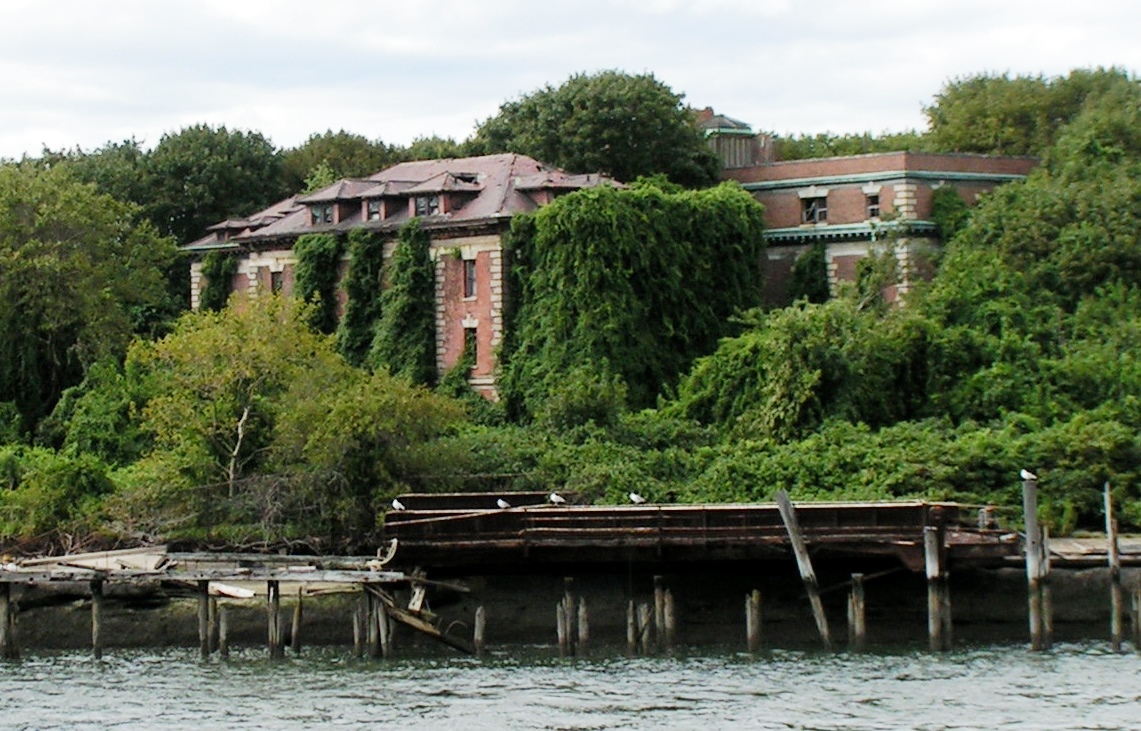
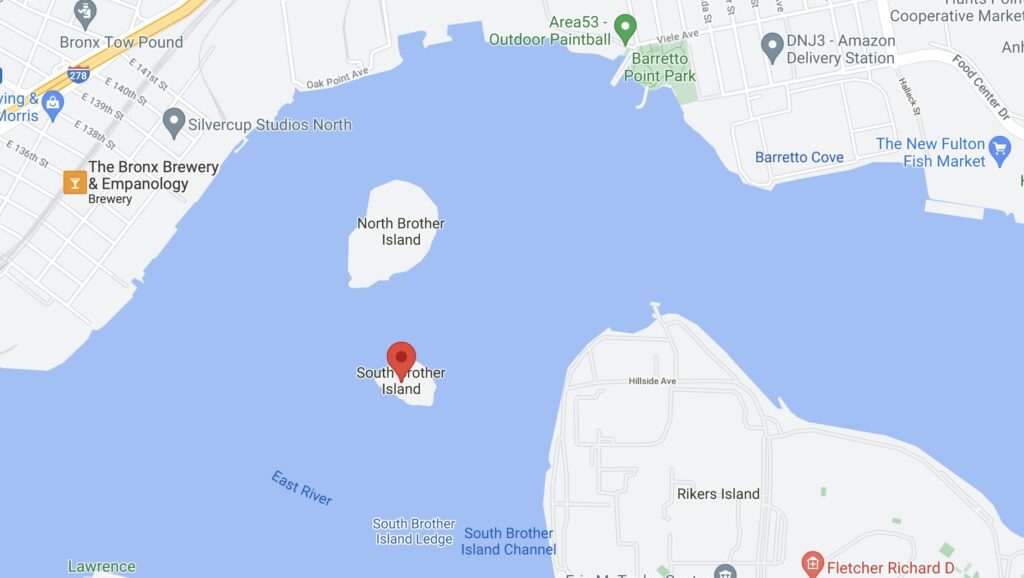
North Brother Island and the smaller South Brother Island sit near the tidal strait known as Hell Gate, a once-dangerous whirlpool which wrecked hundreds of ships and often deposited the wreckage on the island’s quiet shore.
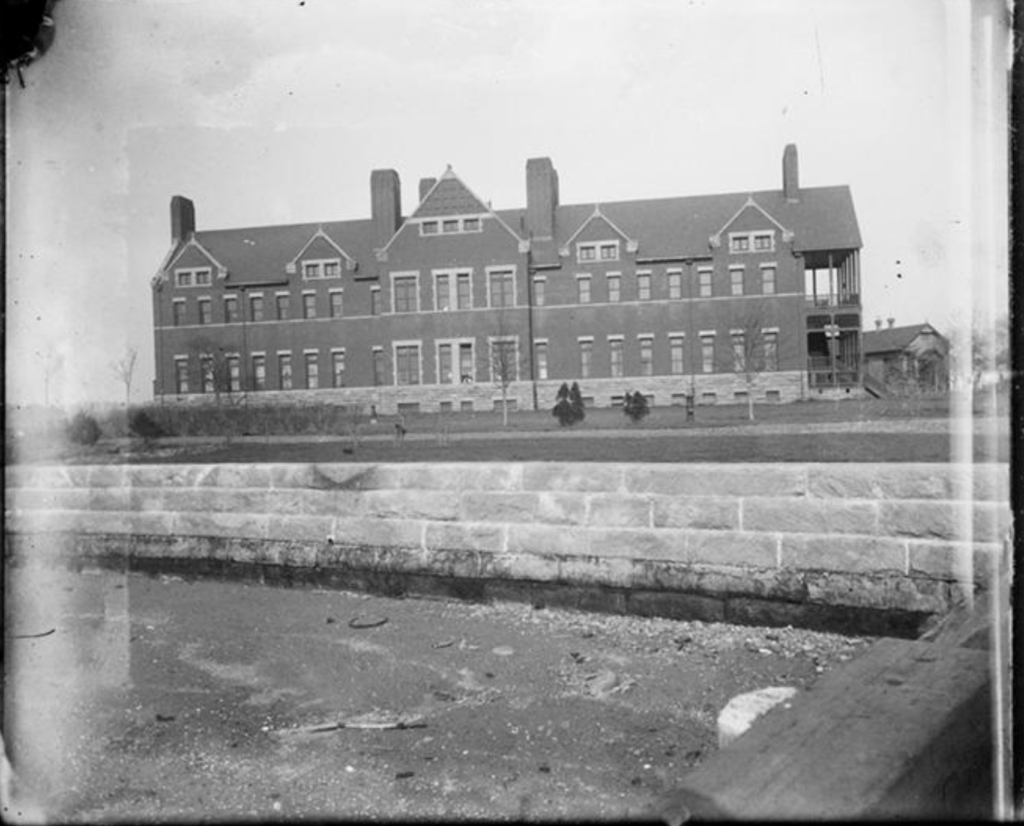
In the 1880s North Brother Island was chosen as the new home for Riverside Hospital, a quarantine hospital for New Yorkers with smallpox, tuberculosis and many more hideous illnesses.
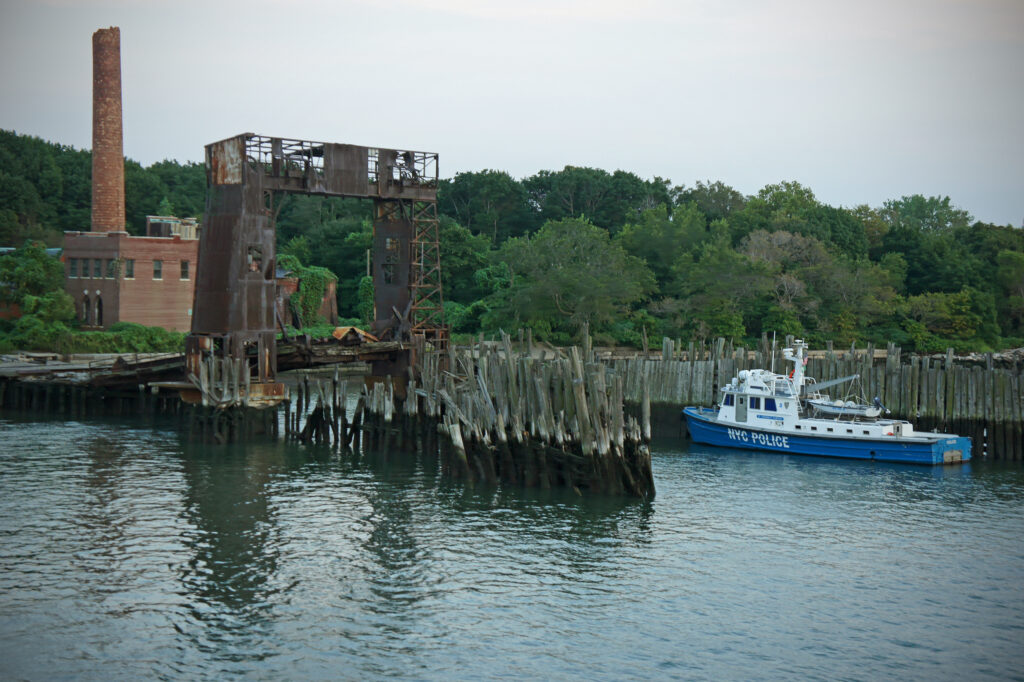
The hospital is long gone but ruins peaking out from the canopy of trees hint at a shocking story of mystery and woe.
Greg takes the reigns in this episode and leads you through the following tales featuring North Brother Island:
— A bizarre incident — involving a body found in the waters off the island — which first put the place on the map;
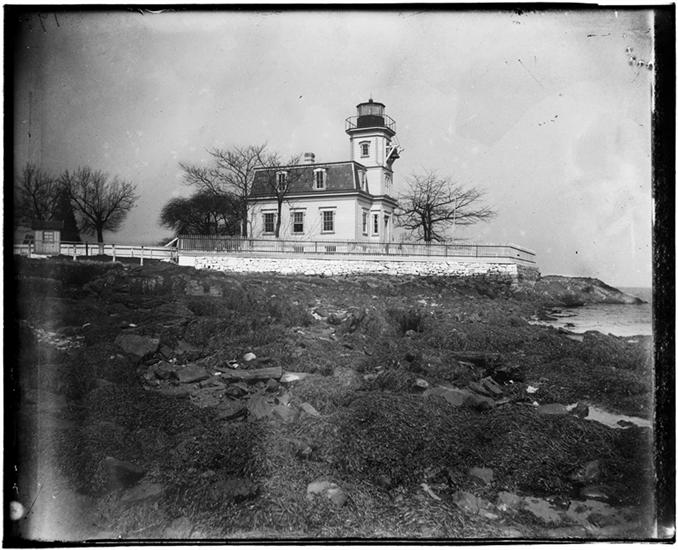
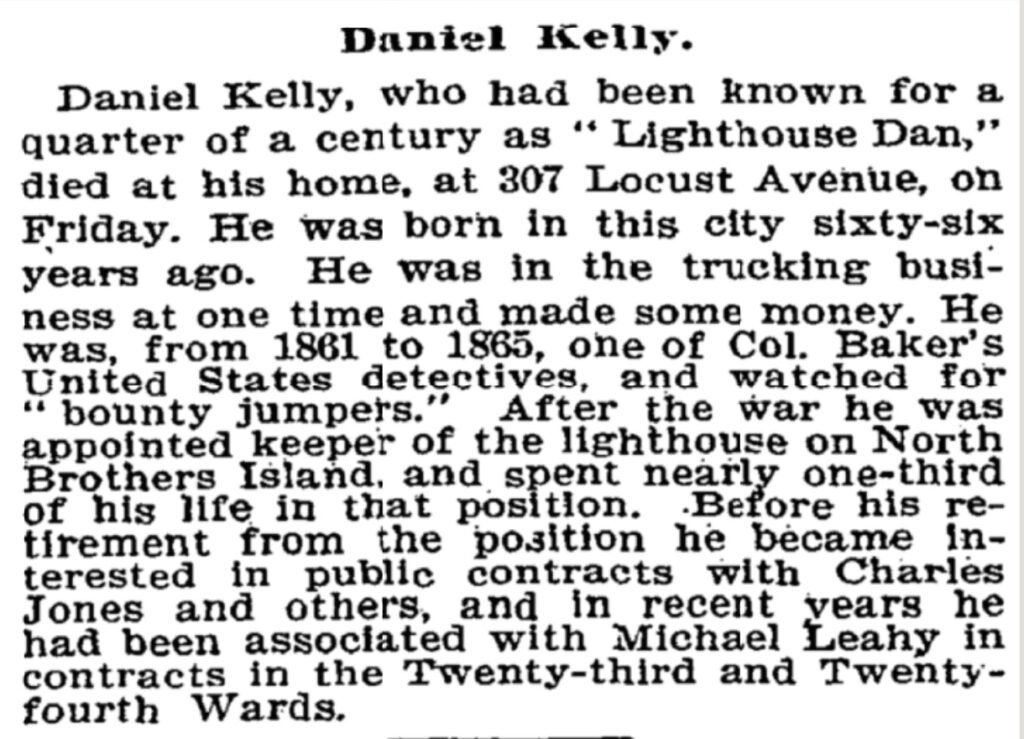
— The experiences of “Lighthouse Dan”;
— The nightmarish city policy of ‘forced exile‘ to battle the spread of disease in the city’s poorest quarters;
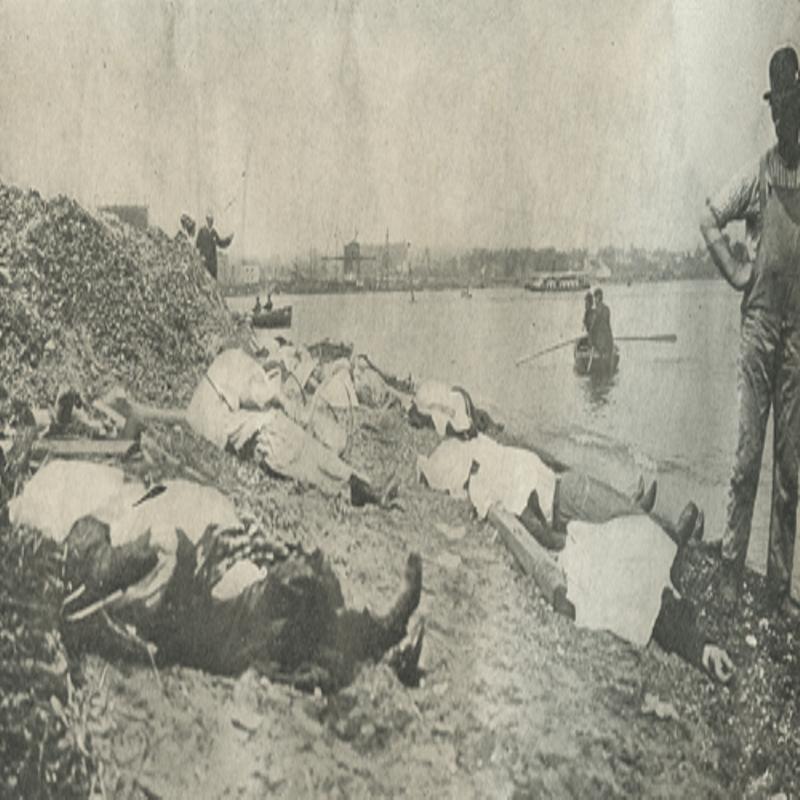
— The tragic crash of the General Slocum steamship;
— The complicated struggles of Mary Mallon, aka Typhoid Mary;
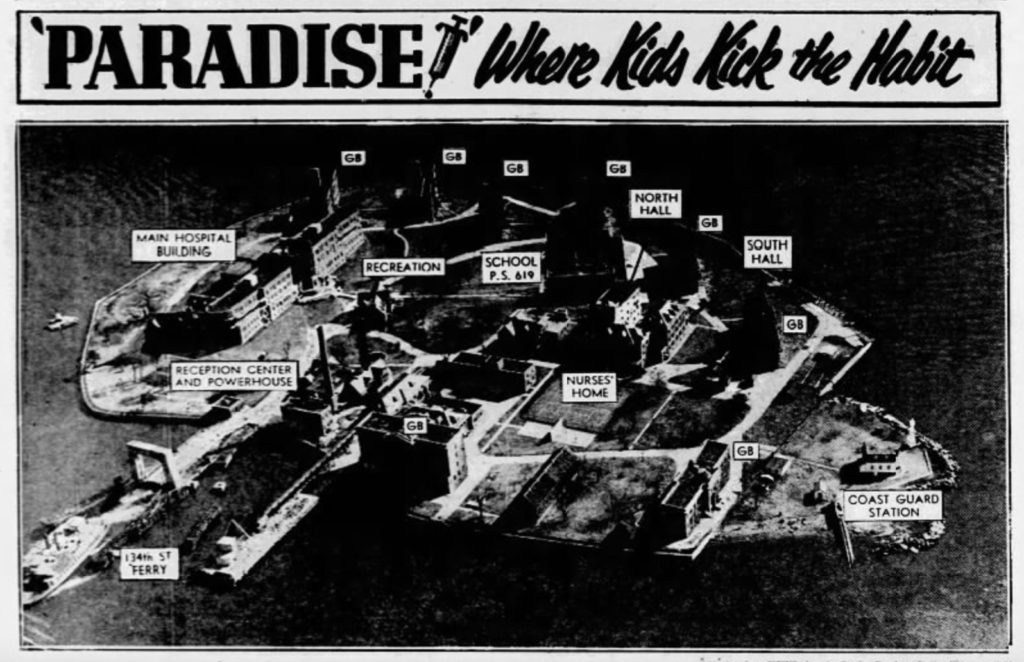
— The implausible tale of a 1950s rehab center for teenage drug addicts.
PLUS: How to see the ruins of North Brother Island without stepping foot there
Listen Now – North Brother Island: New York’s Forbidden Place
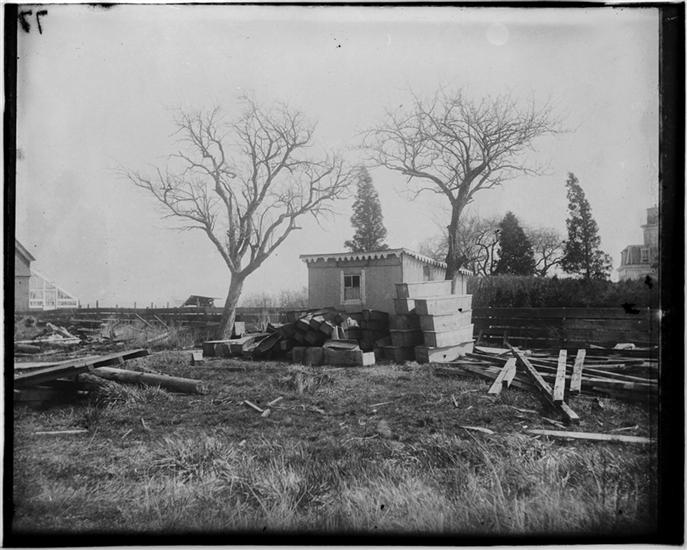
The Smallpox Hospital, photo by Jacob Riis, 1892The Lighthouse, photo by Jacob Riis, 1892Place known as ‘coffin corner’ on North Brother Island, photo by Jacob Riis, 1892The New York Times obituary of the lighthouse keeperBodies on the beach following the tragedy of the General Slocum, June 1904From a New York Daily News profile, March 1956Photo courtesy North Brother Island HLIT/Wikimedia Commons
Greg’s video of North Brother Island while passing on the ferry to Soundview:
And see the island from a drone’s perspective! Also a egret’s perspective:
FURTHER READING
Damnation Island: Poor, Sick, Mad & Criminal in 19th Century New York by Stacy Horn North Brother Island: The Last Unknown Place in New York by Christopher Payne with a history by Randall Mason The Other Islands of New York City by Sharon Seitz and Stuart Miller Ship Ablaze: The Tragedy of the Steamboat General Slocum by Edward T. O’Donnell Typhoid Mary: Captive to the Public’s Health by Judith Walzer Leavitt
FURTHER LISTENING
After exploring the history of North Brother Island, visit these shows in the back catalog for more information about some of the people, places and events mentioned in this show:
The Bowery Boys: New York City History podcast is brought to you …. by you!
We are now producing a new Bowery Boys podcast every other week. We’re also looking to improve and expand the show in other ways — publishing, social media, live events and other forms of media. But we can only do this with your help!
We are now a creator on Patreon, a patronage platform where you can support your favorite content creators.
Please visit our page on Patreon and watch a short video of us recording the show and talking about our expansion plans. If you’d like to help out, there are several different pledge levels. Check them out and consider being a sponsor.
We greatly appreciate our listeners and readers and thank you for joining us on this journey so far.
This article is an excerpt of an entire mini-podcast on the history of South Brother Island, available to those who support the Bowery Boys Podcast on Patreon (at the Five Points level and above). Join us on Patreon to listen today!
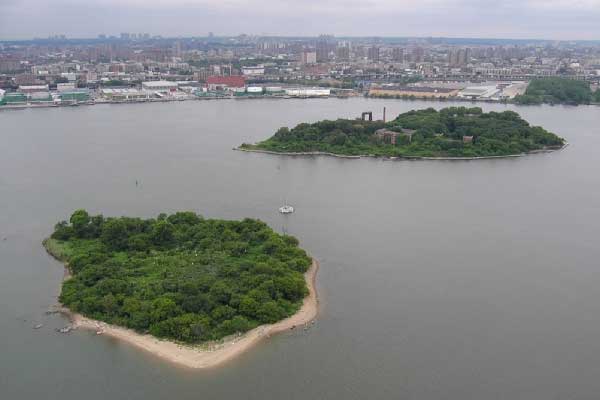
South Brother Island with North Brother Island behind it (Courtesy Harbor Lab)
This week’s latest podcast explores the dark and dramatic history of North Brother Island, the East River island home to the ruins of old Riverside Hospital.
But that’s only one-half of the story. For of course there’s South Brother Island, less than 900 feet away, a smaller island separating its brother from Rikers Island.
South Brother Island wasn’t used in the same way as North Brother Island. But it isn’t entirely devoid of any human history; its just sort of odd history.
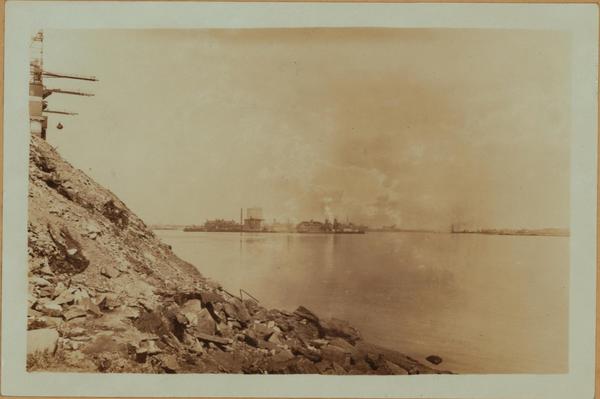
Looking east along the East River, from 132nd Street, Bronx, to South Brother Island. April 12, 1931. P. L. Sperr. Courtesy New York Public Library
During the Civil War it hosted military regiments and the island was often used in yachting competitions. There were small farm settlements here. And even a few bouts of river piracy.
But in the early 1890s something rather unusual came to this virtually abandoned place — baseball.
New ballfields would be constructed here for use by traveling ball teams, the opening innings of a true national baseball league. (For both white ball teams and those of the burgeoning Negro League.)
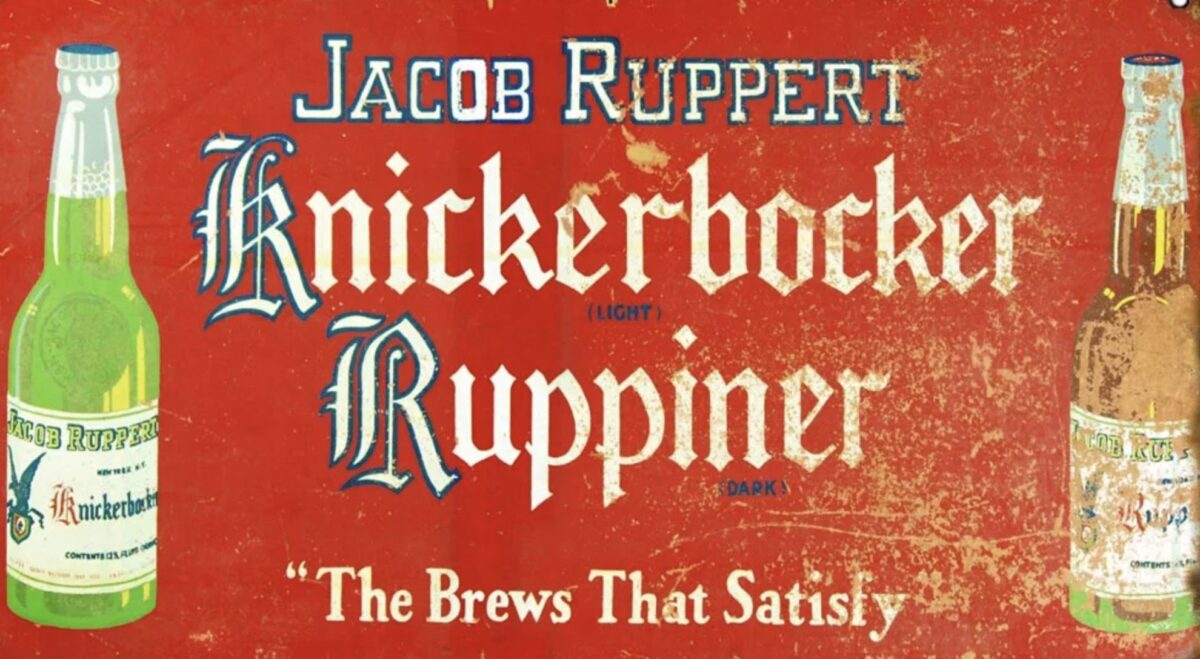
These fields would have a very fascinating pedigree for baseball historians for they were built by a man who would change the fate of the game forever — Jacob Ruppert Jr..
He had a lifelong obsession with baseball. In 1894 he purchased South Brother Island for the purposes of building baseball fields here. For many years Ruppert even lived on the island during the summer.
According to the New York Sun: “He intends to spend more than two million dollars on improvements on the island which is his property. He will have a trolly line running all over the island and a ferry of his own on 92nd Street. There will be a large building containing ballrooms and a German restaurant.”
Ruppert also reportedly wanted to build a brewery here. “He adds that everything on the island will be of a thoroughly German character.”
Now this is at the very same time — the 1890s — that neighboring North Brother Island was populated with epidemic patients afflicted with tuberculosis, smallpox, leprosy and more.
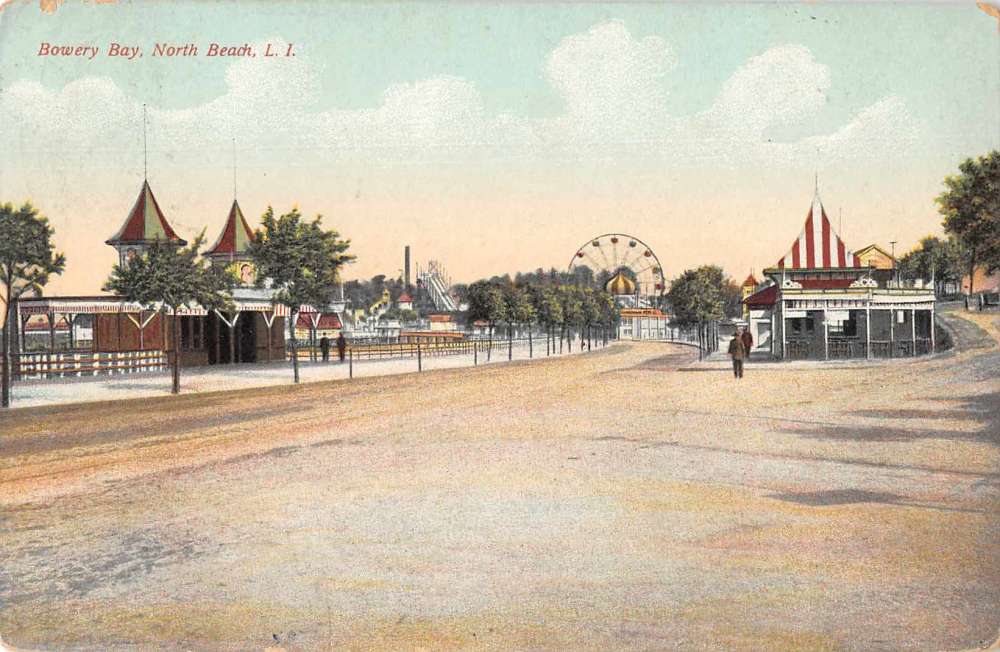
But the idea of an island sporting resort here would not actually be considered odd; in fact there were many such resorts along The Bronx and Queens waterfront back in the late 19th century, including College Point, Clason Pointand Bowery Bay Beach (on the site of today’s LaGuardia Airport).
The amusement park at Bowery Bay/North Beach, on the site of today’s LaGuardia Airport.
So Ruppert had the right idea — although the project’s eventual execution was far less grandiose from his original designs. But by the early 1900s, Ruppert had turn South Brother into a sort of baseball fantasy island.
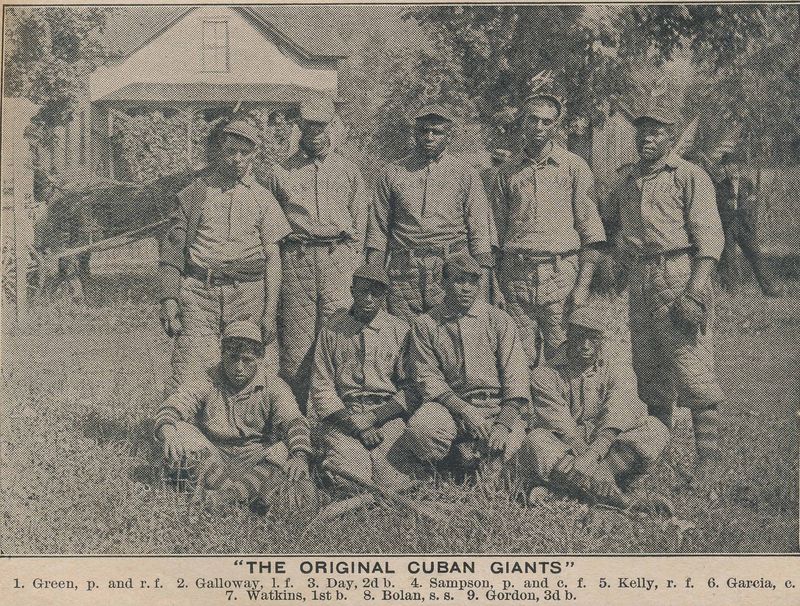
The baseball fields hosted a wide array of teams from several different leagues including one of the first and greatest black baseball teams: the Cuban Giants.
The Giants, one of the greatest African-American baseball teams from the era when the sport was highly segregated, first formed in 1885 in Babylon, Long Island.
An image of the team in 1902. The team played at several ballfields in the region, including South Brother Island.
They were a big draw in their day, so if they played out on South Brother Island, I assume facilities were substantial enough to cater to large crowds. (Sadly I have not been able to find any photographs of the island from this period.)
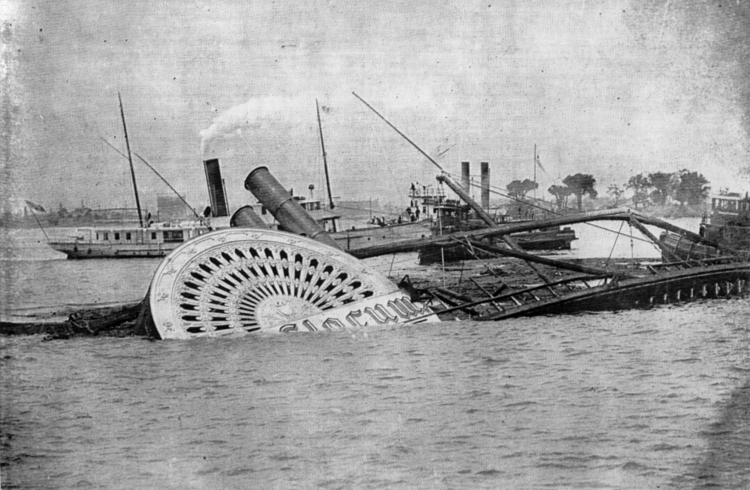
Since games were most likely played on the weekends, there were probably very few people on the island on June 15, 1904, to witness the disaster of the Gereral Slocum steamship fire, but the tragedy did comes to the shores of his island.
The sunken wreck of the General Slocum.
In fact there was so much calamity and chaos on North Brother island in the moments following the horrific tragedy that bodies of those who died and were found in the East River were taken to the shores of South Brother and from there transferred to the city morgue.
The captain of the General Slocum later said he considered running the ship aground at South Brother Island but decided against it due to its rocky shore. Thank goodness he did not, for it was the bravery of many nurses, doctors and patients on North Brother which saved so many that day.
In 1909 fire destroyed Jacob Ruppert’s summer house and it appears baseball moved off this island by this time. In fact, although the Ruppert estate would own the island for many decades, nobody would ever again LIVE on South Brother Island.
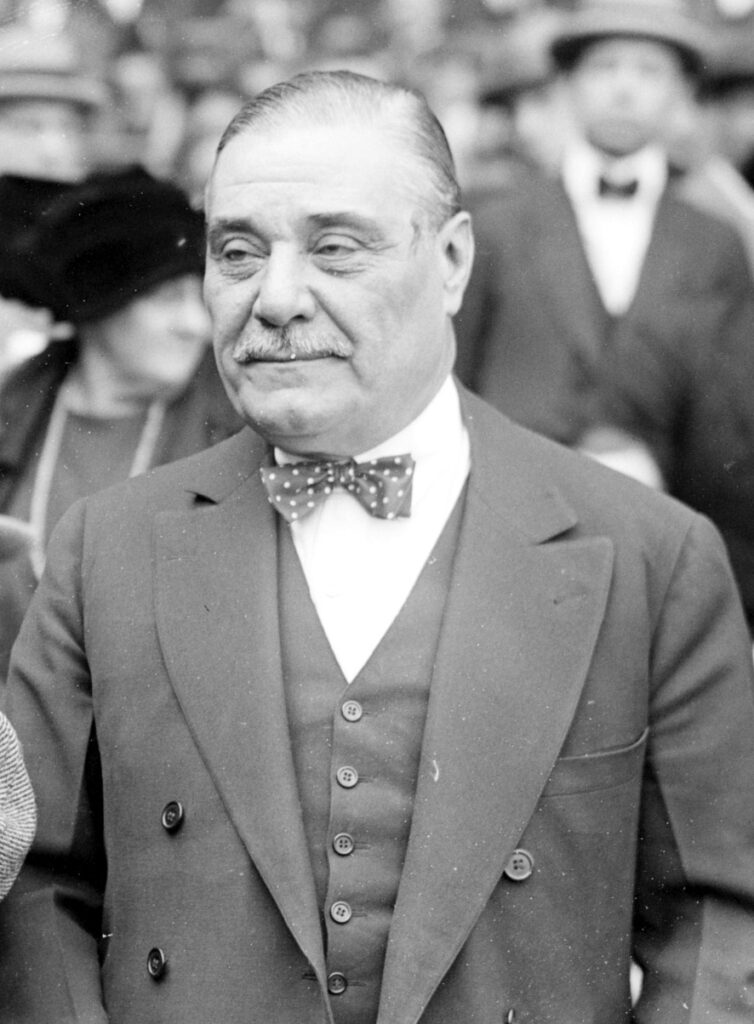
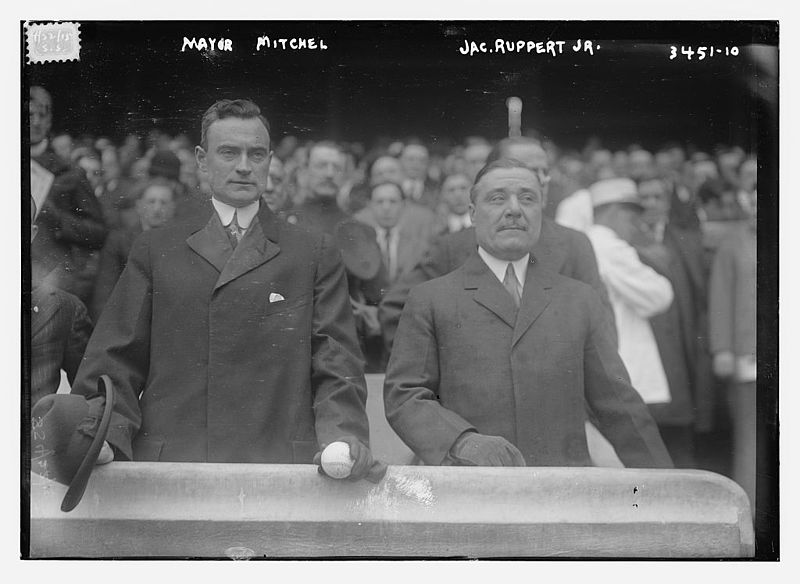
Ruppert with the mayor of New York — John Purroy Mitchel. April 1915. Library of Congress
In 1915, Ruppert became the president of his family’s beer empire. Then, partially to fuel beer sales but with a genuine love for the sport, he (and lifelong business partner Tillinghast Huston) purchased a failing baseball team named the New York Yankees.
Four years later he famously purchased the contract of Boston Red Sox player Babe Ruth. Some reports claim Ruth “spent his off days swatting balls into the East River from Ruppert’s island” however the island was mostly abandoned by the time Ruth was playing baseball. Perhaps it was a day excursion?
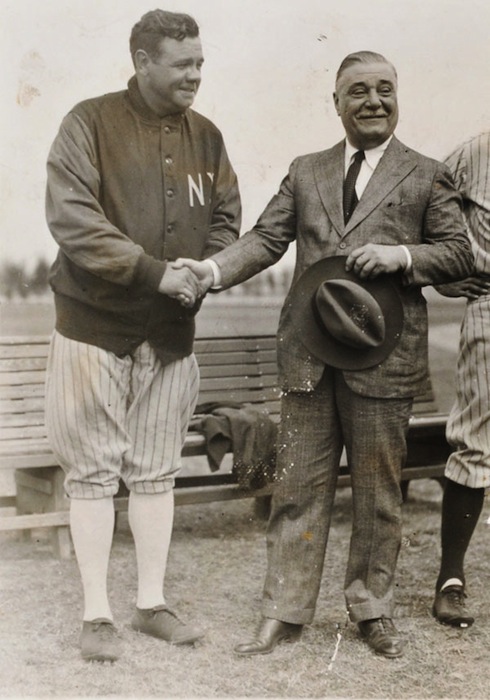
Babe Ruth and Jacob Ruppert, Jr., 1930. Photo via Legendary Auctions.
The island remained in the Ruppert family until it was sold in 1944 to a private businessman. Six decades later, a descendant of Ruppert visited the island, now an overgrown haven for wild birds. (The city officially purchased the island in 2007.)
According to Jacob Ruppert Jr’s great-great-grand nephew K. Jacob Ruppert, “There’s no beautiful lagoon. It’s a mound of bird poop. But there are beautiful birds. I never thought I could walk up to a swan on her nest. The ground is nothing but bird droppings and broken egg shells.”
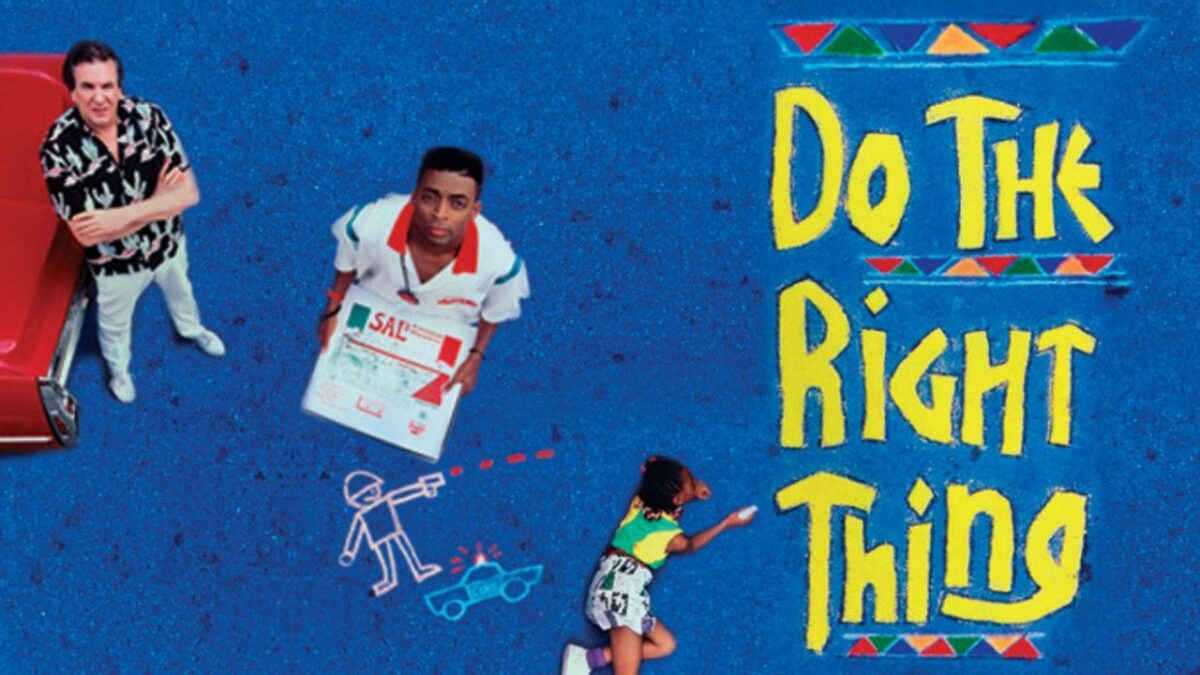
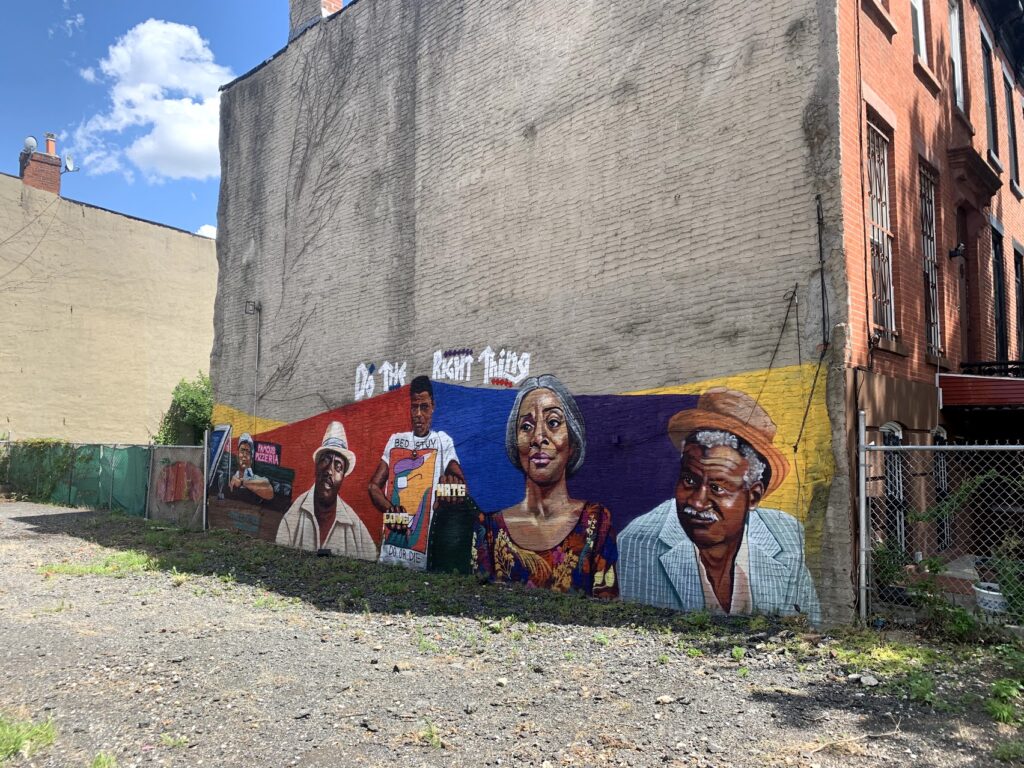
We’re sliding into summer AT LAST — ready for great music, hot dancing and breaking into fire hydrants — and so we’ve just released an epic summertime episode of Bowery Boys Movie Club to the general Bowery Boys podcast audience, exploring the 1989 Spike Lee masterpiece Do The Right Thing.
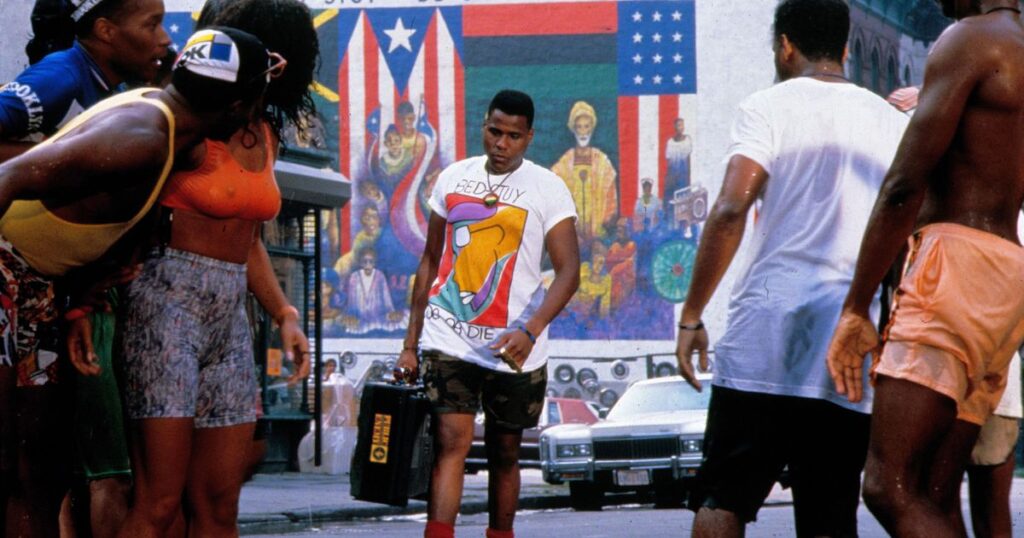
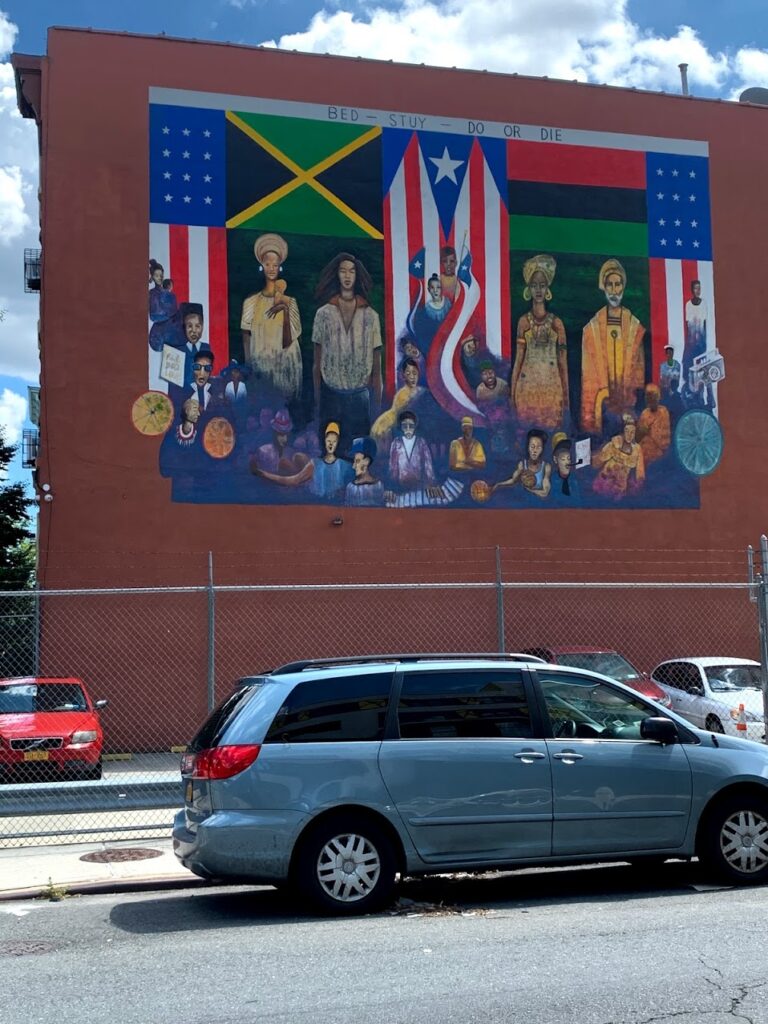
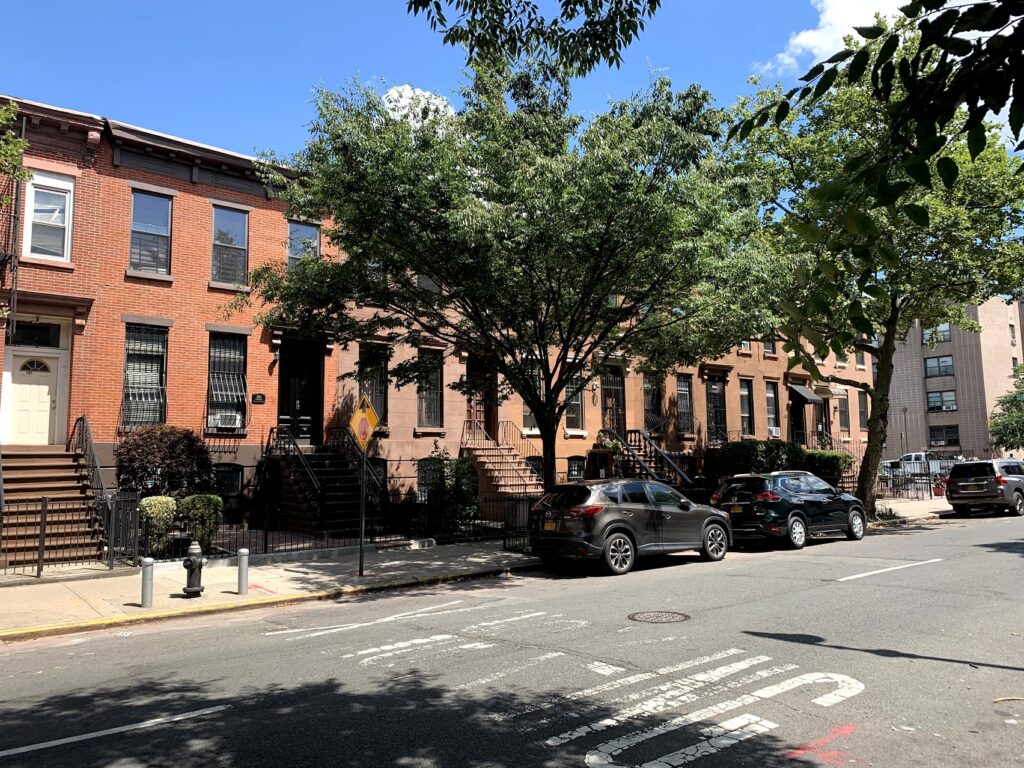
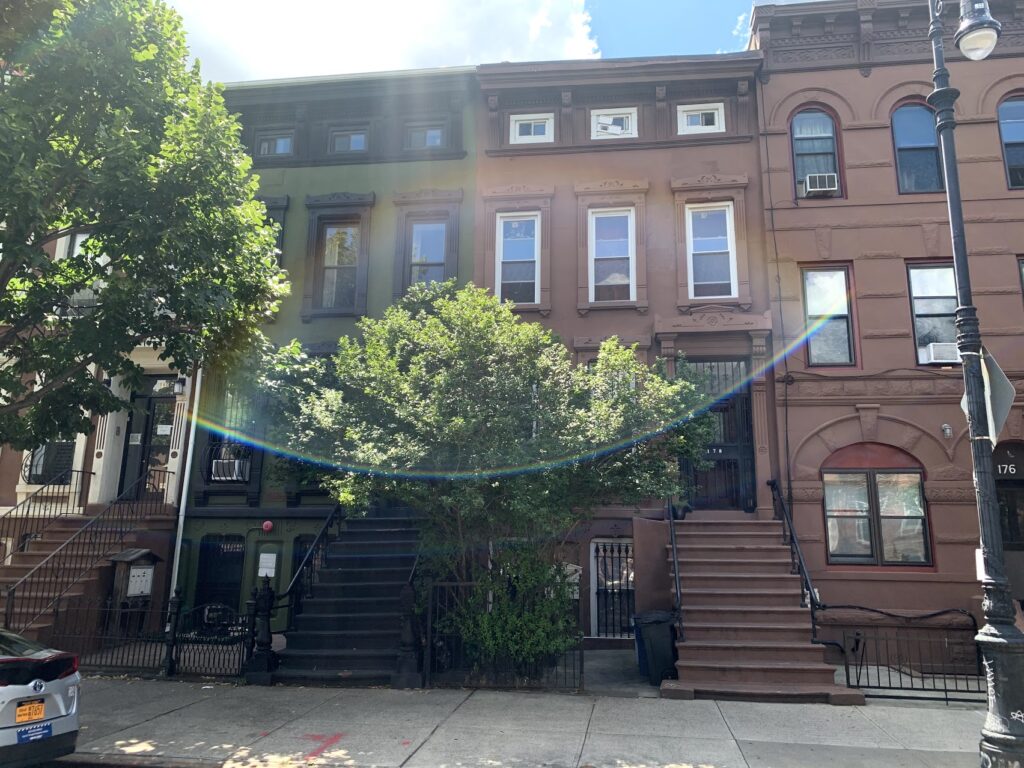
FIGHT THE POWER! In 1989, director Spike Lee electrified film audiences with Do The Right Thing, documenting a day in the life of one block in Bed-Stuy, Brooklyn on one of the hottest days of the summer.
Inspired by both Greek tragedy and actual events in 1980s New York, Lee’s masterpiece observes the racial and ethnic tensions that boil over at an Italian-American owned pizzeria serving a mostly African-American clientele from the neighborhood.
Listen in as Greg and Tom recap the story and explore some of the historical context for the film — the incendiary nature of New York summers, the realistic portrait of everyday life in Brooklyn, and the true-life murders on which Do The Right Thing is based.
Lee has since explored several historical subjects (Malcolm X, blackkklansman, Son of Sam in Summer of Sam) since making Do The Right Thing, but that exquisite marriage of past and present in his films really breaks through here.
And it doesn’t hurt that his cast includes actors that would become some of Hollywood’s biggest stars.
This episode is made possible by our supporters on Patreon, and is part of our patron-only series Bowery Boys Movie Club. Join us on Patreon to access all Movie Club episodes, along with other patron-only audio.
Shouldyouwatchthemoviebeforeyoulistentothisepisode? This podcast can be enjoyed both by those who have seen the film and those who’ve never even heard of it.
We think our take on Do The Right Thing might inspire you to look for the film’s many fascinating (but easy to overlook) historical details, so if you don’t mind being spoiled on the plot, give it a listen first, then watch the movie! Otherwise, come back to the show after you’ve watched it.
Where can you watch Do The Right Thing? It’s available to rent on all movie streaming services and is free to watch on the new NBC streaming service Peacock.
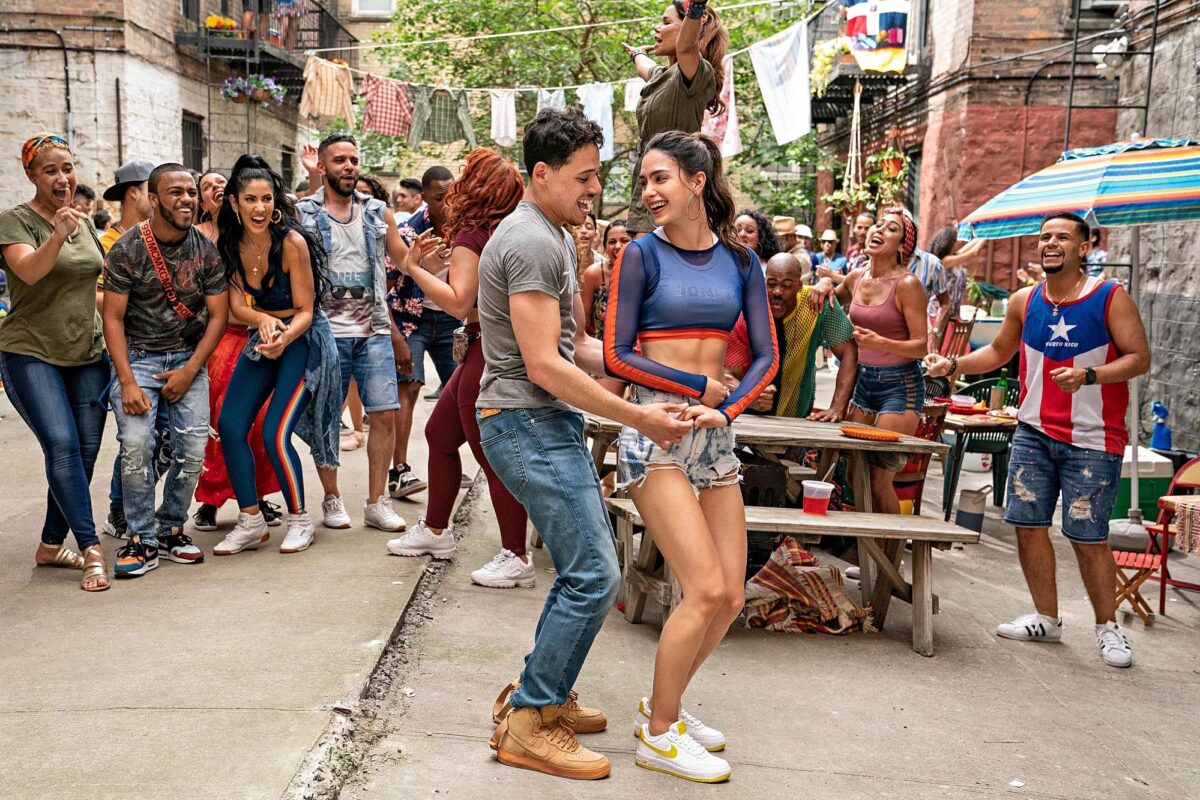
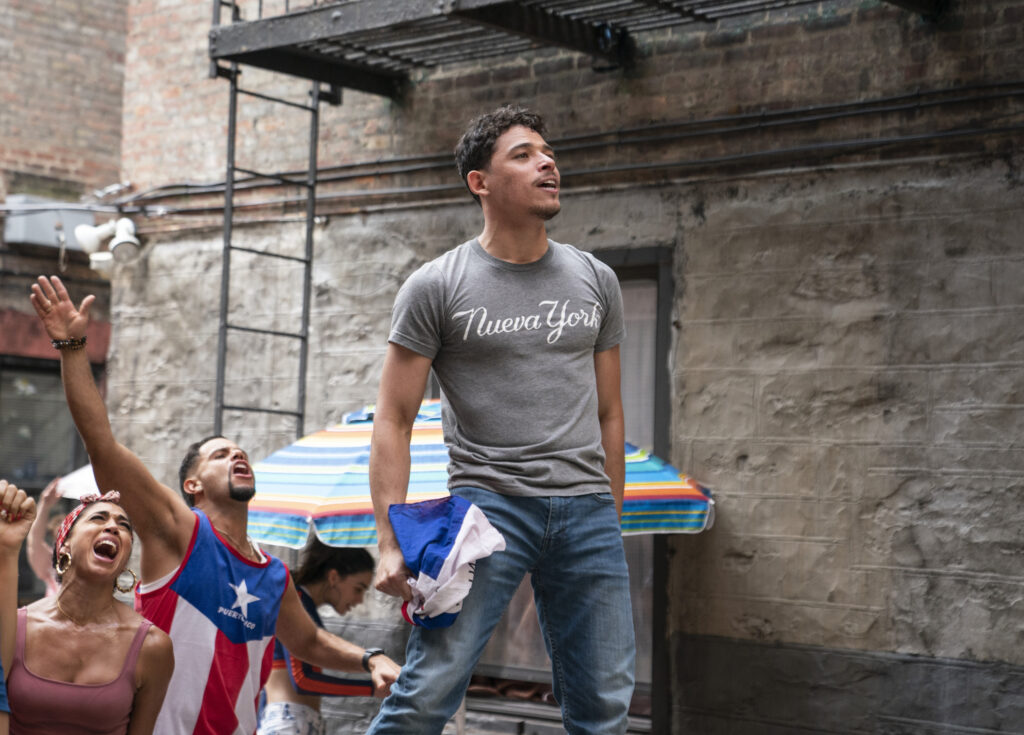
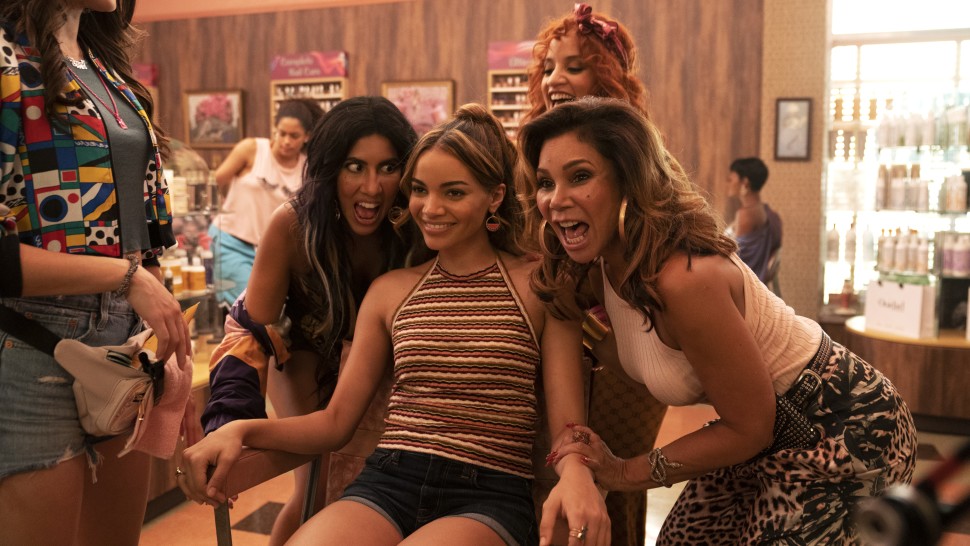
Lin Manuel Miranda‘s first Broadway musical In The Heights was a critical and box office smash and won four Tony Awards — including Best Musical. And yet its success was dwarfed by Miranda’s second offering Hamilton: The Musical.
Now In The Heights comes to the big screen — both in movie theaters and on HBO Max — bringing the music, the dancing and a few of the same stars. But it also introduces the neighborhood of Washington Heights itself into the spotlight.
Washington Heights is as much an active character in In The Heights as Uznavi (Anthony Ramos) and Vanessa (Melissa Barrera) are. In particular, the film sets up a common lurking foe — gentrification — as the primary antagonist, threatening to disintegrate the vibrant mix of communities.
How do Miranda and director John M. Chu specifically bring the action and the music into the streets? And how well does the sincerity of a Broadway musical translate onto a real-life city?
HowdoIlistentheBoweryBoysMovieClub? Once you’re signed in on Patreon, you’ll see a private RSS link that can be put directly into your favorite podcast player. Even easier, it can also be played directly from the Patreonapp if you’re signed in.
Your support on Patreon assists us in producing our podcast and website and it helps as we endeavor to share our love of New York City history with the world.
Shouldyouwatchthemoviebeforeyoulistentothis episode? This podcast can be enjoyed both by those who have seen the film and those who’ve never even heard of it.
We think our take on Auntie Mame might inspire you to look for the film’s many fascinating (but easy to overlook) historical details, so if you don’t mind being spoiled on the plot, give it a listen first, then watch the movie! Otherwise, come back to the show after you’ve watched it.
FURTHER LISTENING
After listening to this Bowery Boys Movie Club episode, relive the history of some of the places featured in the movie through a couple of our older shows:
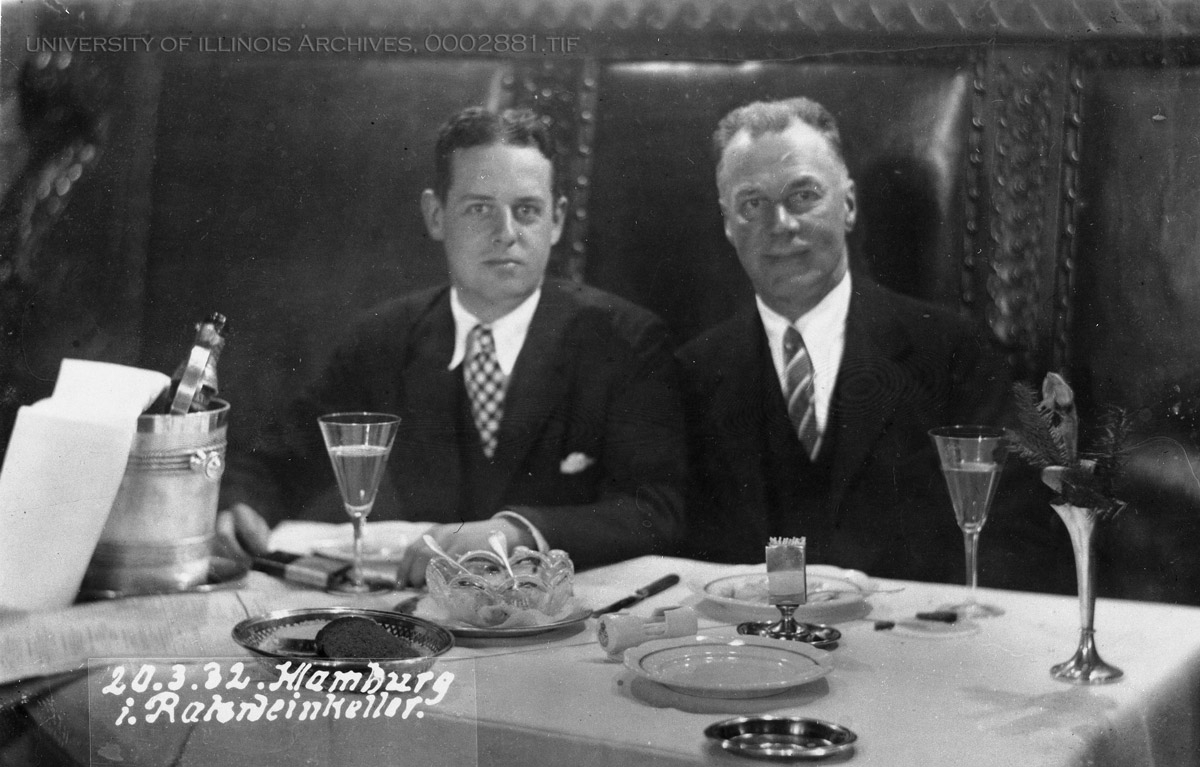
Robert Allerton lived without a care thanks to his family’s Gilded Age fortune, built from the stockyards of Chicago’s meat processing district. As a young man, Allerton used his inherited wealth to maintain the family estate near Monticello, Illinois, cultivating a garden escape where he could be left to his own devices.
And then, in 1922, he met a handsome college student named John Gregg. They were separated in age by 26 years. They fell in love.
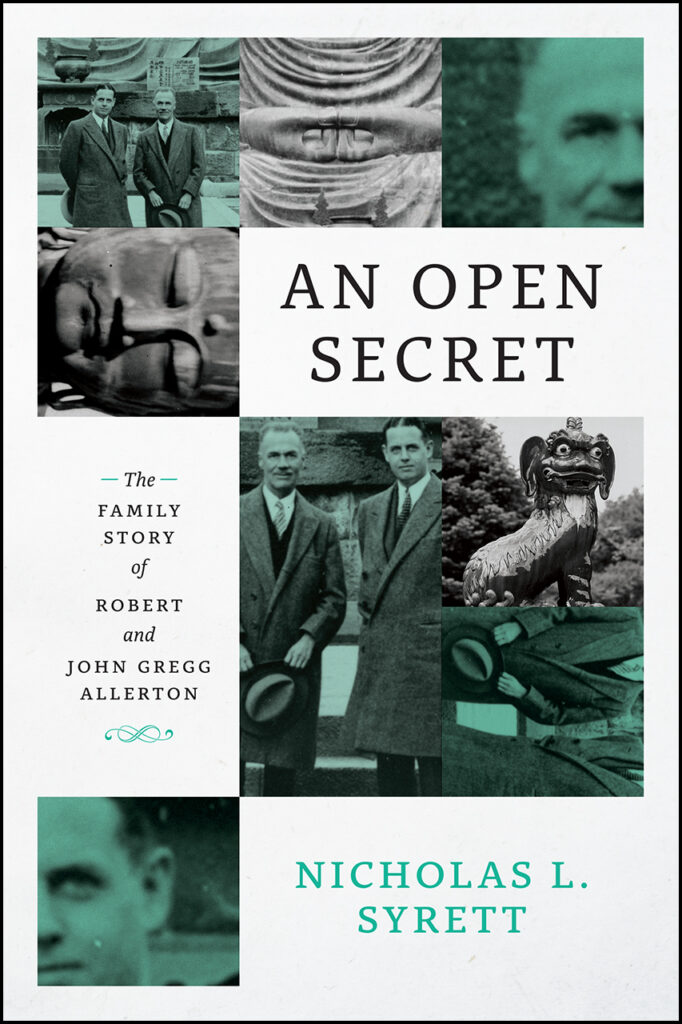
AN OPEN SECRET The Family Story of Robert and John Gregg Allerton Nicholas L. Syrett University of Chicago Press
In An Open Secret, author Nicholas Syrett takes the reader into a maze of social norms redefined by the comforts of wealth and a collection of personal mysteries as well-kept as a display case of ancient art.
But the parameters of Allerton’s personal life might be considered obscured today — concealed by the polite vestiges of post-Gilded Age social decorum, cushioned by the privilege of his vast wealth.
Or should I say — their vast wealth. Robert and John Gregg traveled the world together, living as a same-sex couple at a time when such romantic pairings were never seen or accepted.
They managed this unconventional life thanks to an intricate pantomime fueled by Allerton’s financial advantages and the vast age difference between the two men.
“By 1931,” writes Syrett, “the [Chicago] Tribune reported on the two traveling together, but the language of their relationship had become solidified as father and son, despite the fact that it was not legally so.”
They encouraged such language and eventually took it on themselves as a means to negotiate social spheres that would have otherwise shunned them.
“Calling John Gregg his son was a way of not talking about his actual role in Allerton’s life; even if Gregg’s relationship with Allerton was an open secret, calling him son allowed friends and acquaintances to avoid the awkwardness of having to discuss who he really was with Allerton.”
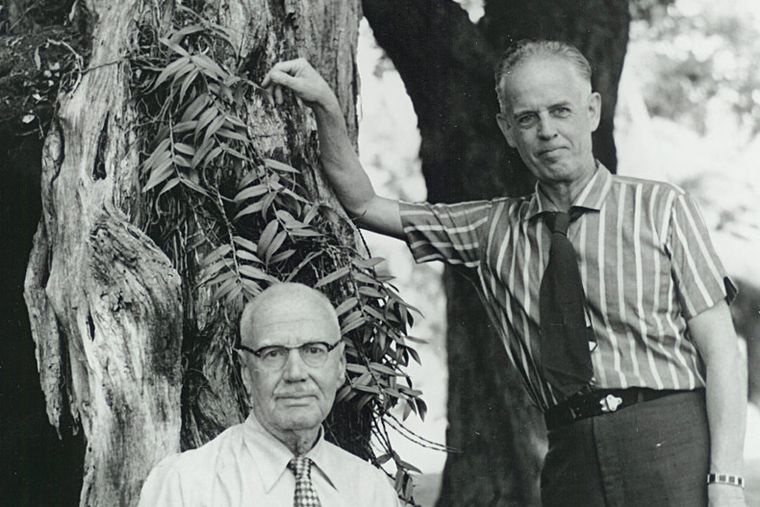
Robert and John Gregg Allerton in Hawaii, University of Illinois Archives
In 1960, near the end of elder man’s life, the pair made their charade official. John Gregg officially became John Gregg Allerton, the adopted son of Robert Allerton.
An Open Secret, with its daunting task of uncovering the secret world of two men who never left each other’s side (thus leaving no personal correspondence), succeeds as an x-ray into the procedures of living a closeted wealthy life, where clues of personal connections are scattered among the hydrangeas and exotic ornaments.
If the author’s name Nicholas Syrett sounds familiar to you, that’s because the author has been on our show! You can find him in our episode on Madame Restell, the ‘notorious’ abortionist of Fifth Avenue. Look for Syrett’s book on the life of Restell coming soon.
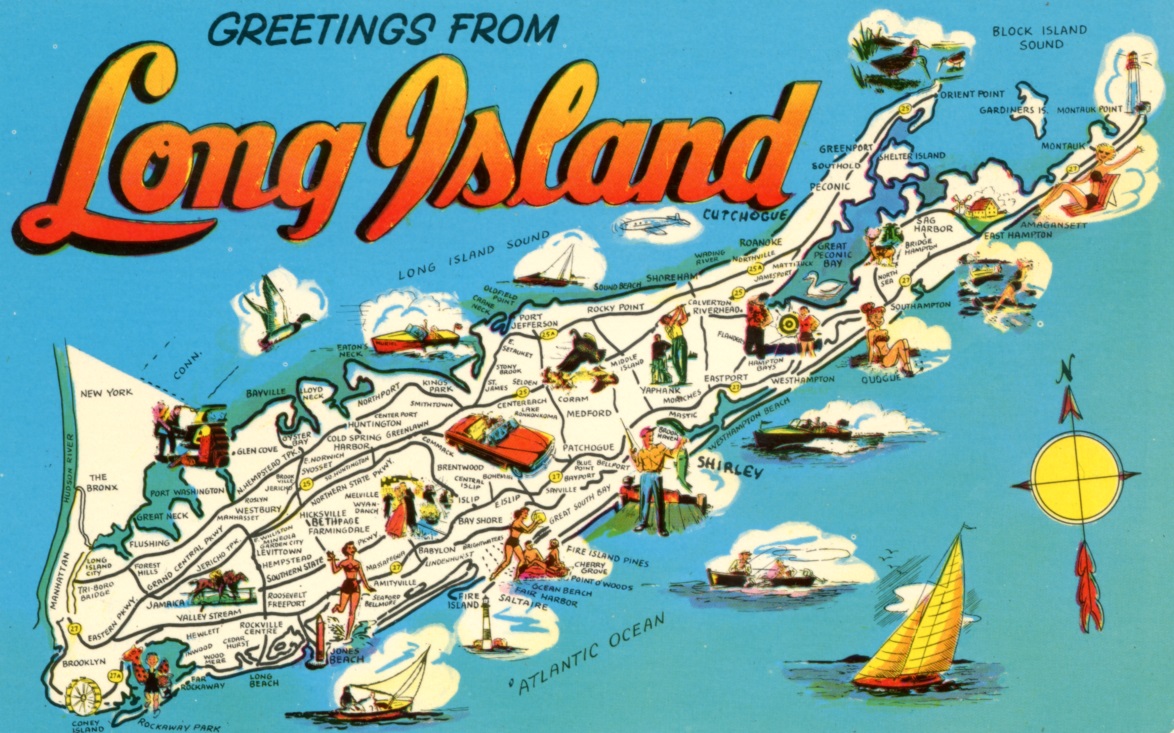
We’ve now reached the end of our Road Trip To Long Island mini-series but not the end of Long Island history on our podcast.
Let’s just say, we were on something of a test drive to gauge listeners’ interest in the Bowery Boys Podcast expanding beyond the borders of the city.
We are now anticipating that our Road Trip series will be an annual event. Which direction should we travel next time? Up the Hudson River? Down the Jersey Shore? What about even Philadelphia?
And we’d love to visit other places in Long Island in the near future — as a regular part of our show going forward. After all, we didn’t quite make it to the Hamptons this year! Or Cold Spring Harbor. Or Roosevelt Field. Or Montauk Point……
Here’s the complete collection of Long Island shows. Listen to them all!
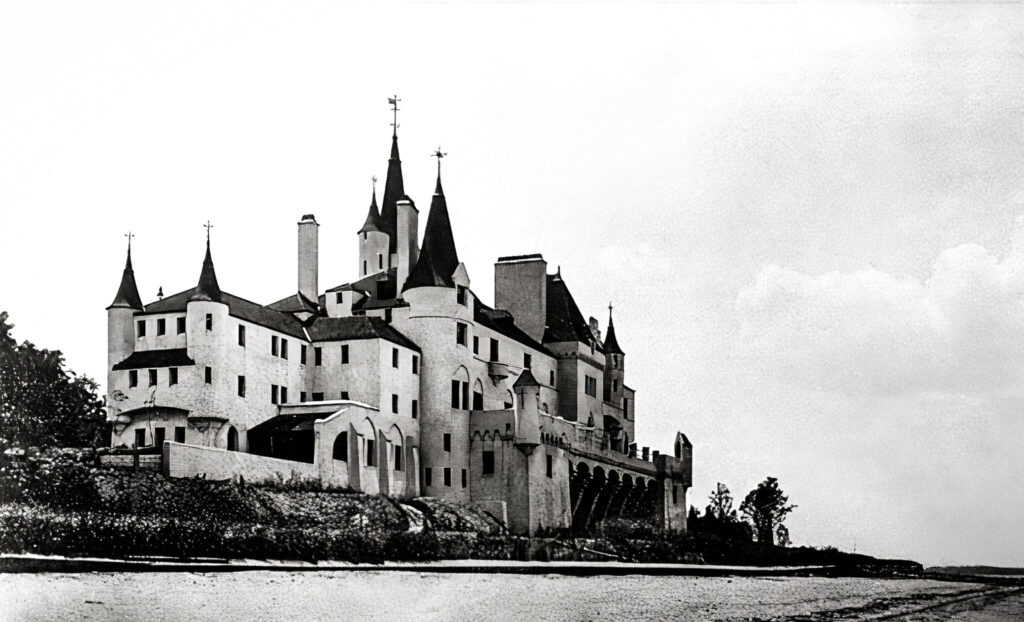
Relive a little Jazz Age luxury by escaping into the colossal castles, manors and chateaus on Long Island’s North Shore, the setting for one of America’s most famous novels.
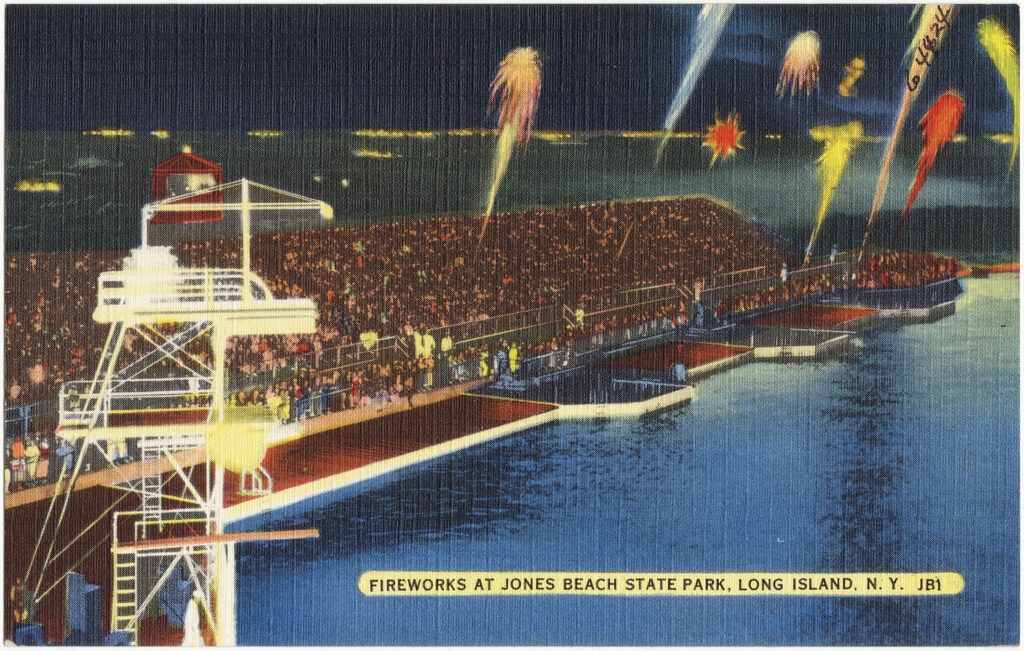
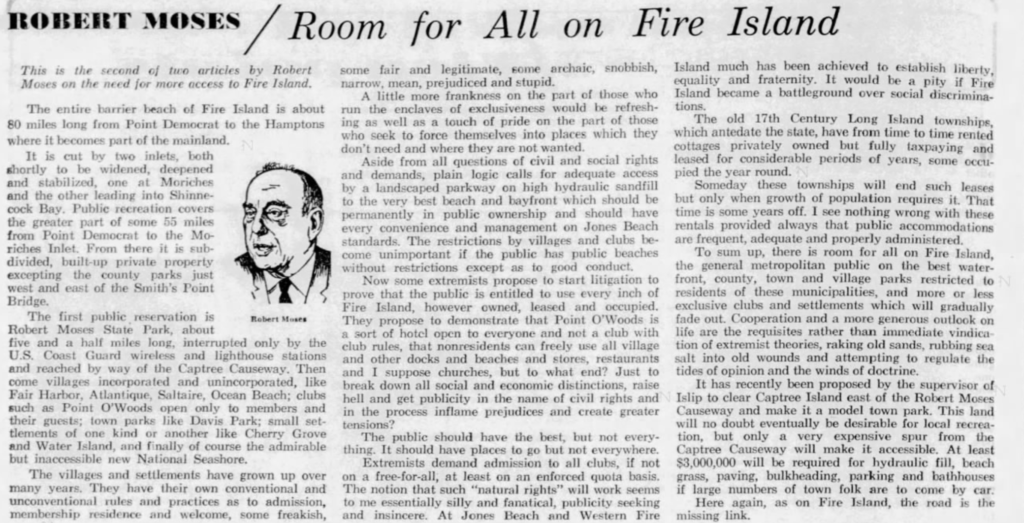
Sometimes called ‘the American Riviera’, Jones Beach made reputation of a young Robert Moses and became one of the most popular beachfronts on the East Coast. But more than that, Moses and the Jones Beach project transformed the fate of Long Island’s highways (or should we say parkways).
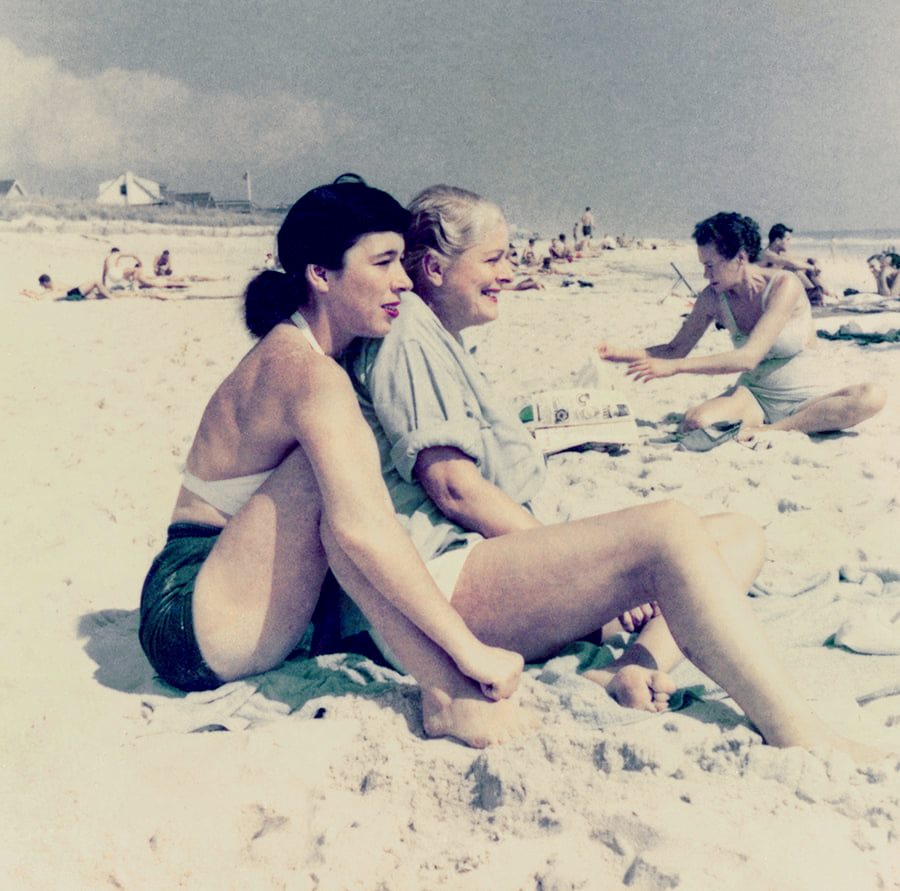
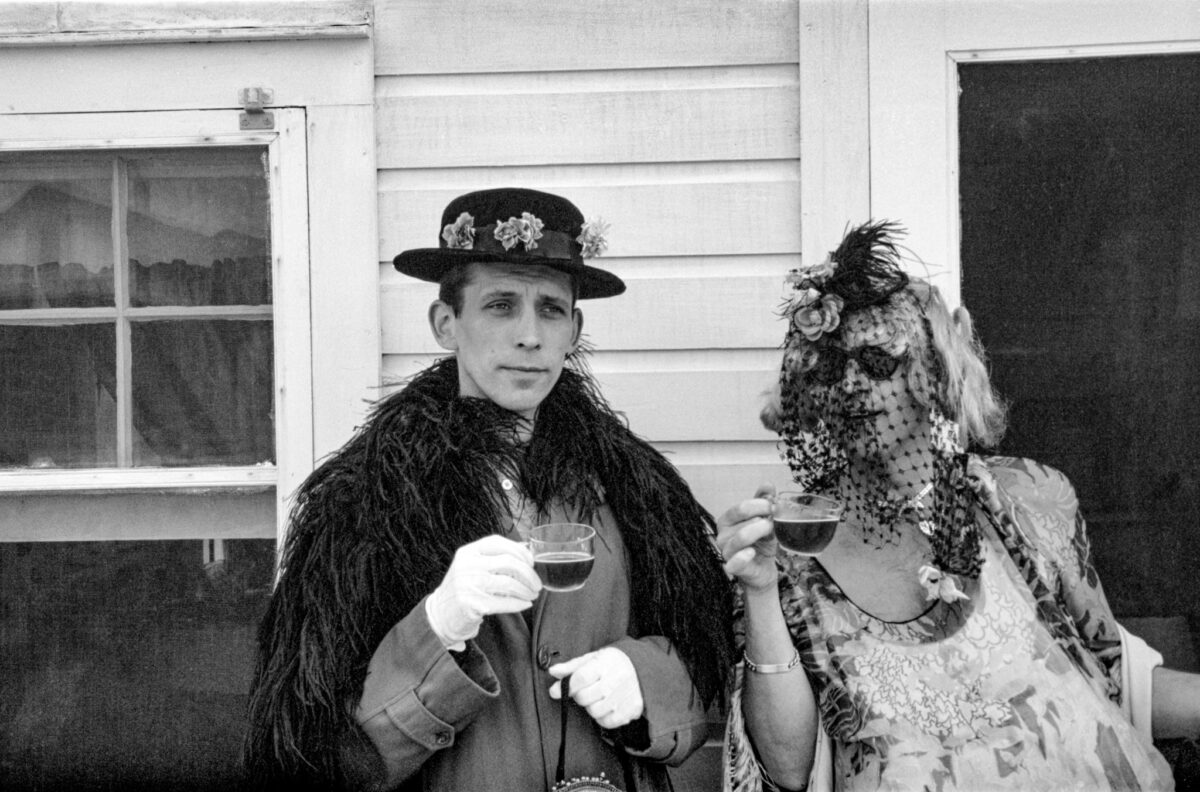
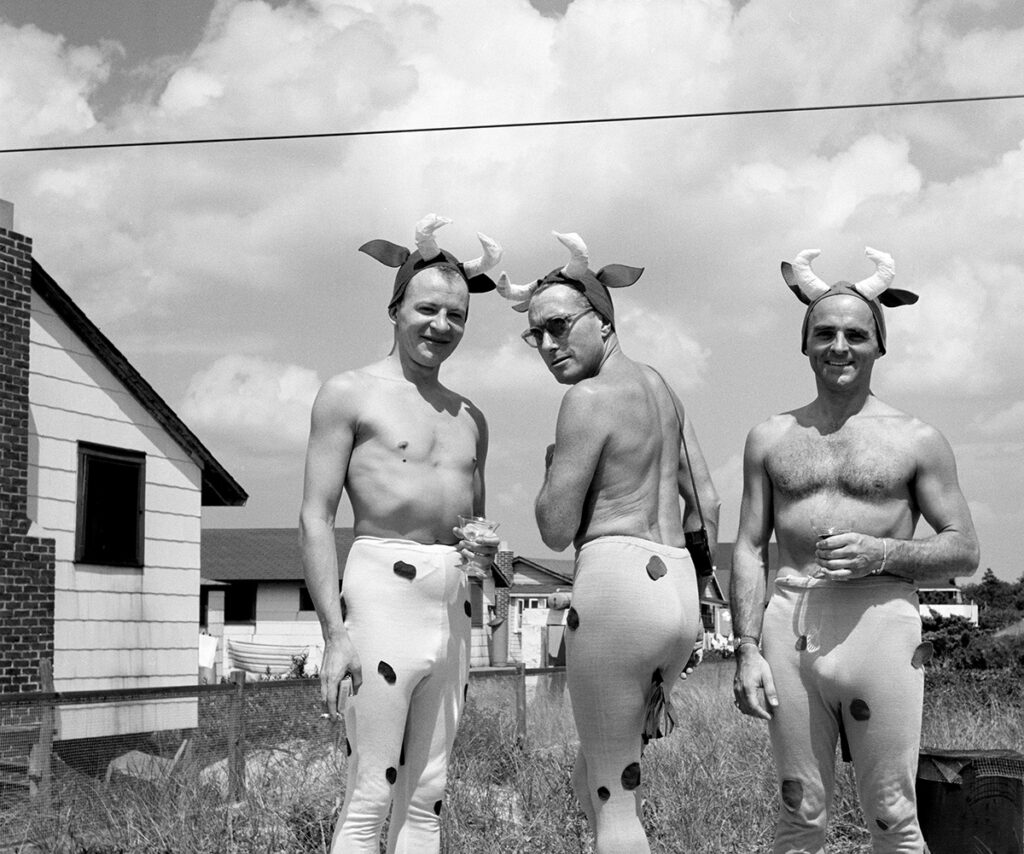
How did one particular summer settlement on Fire Island become a ‘safe haven’ for gay men and lesbians almost ninety years ago, decades before the uprising at Stonewall Inn?
And throw in a fourth show from our back catalog that definitely fits the theme:
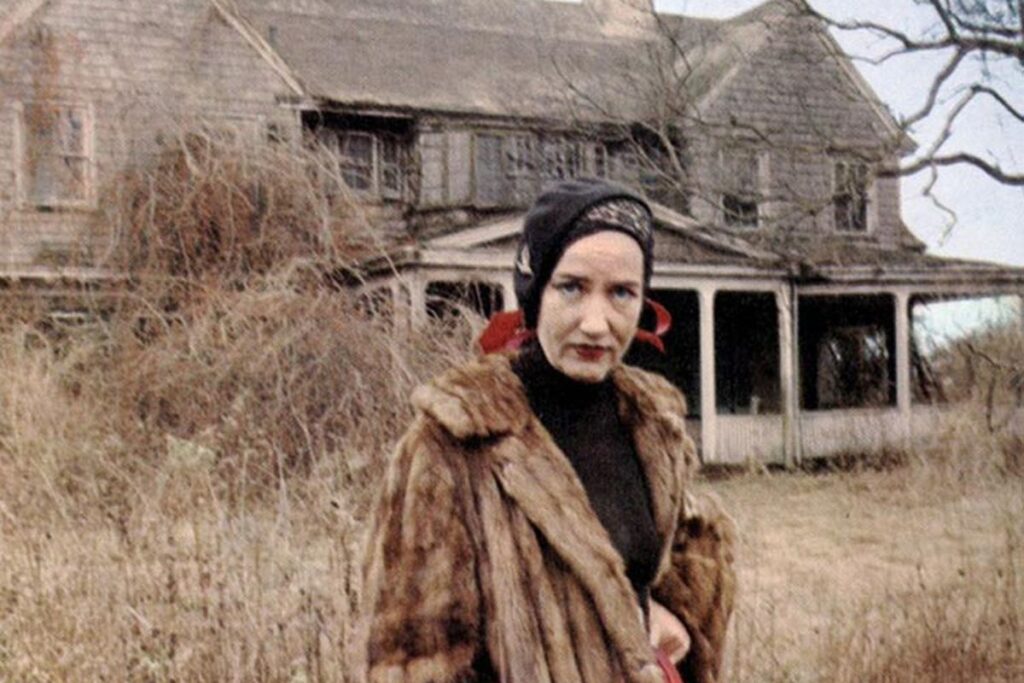
The historical backstory of one of the most famous documentaries ever made – Grey Gardens. Those of you who have seen the film know that it possesses a strange, timeless quality. Mrs Edith Bouvier Beale (aka Big Edie) and her daughter Miss Edith Bouvier Beale (aka Little Edie) live in a pocket universe, in deteriorating circumstances, but they themselves remain poised, witty, well read.
Outside of Bea Greer’s Home, Bea’s Brunch’, 1951. Courtesy the Cherry Grove Archives Collection. A gift of Harold Seeley
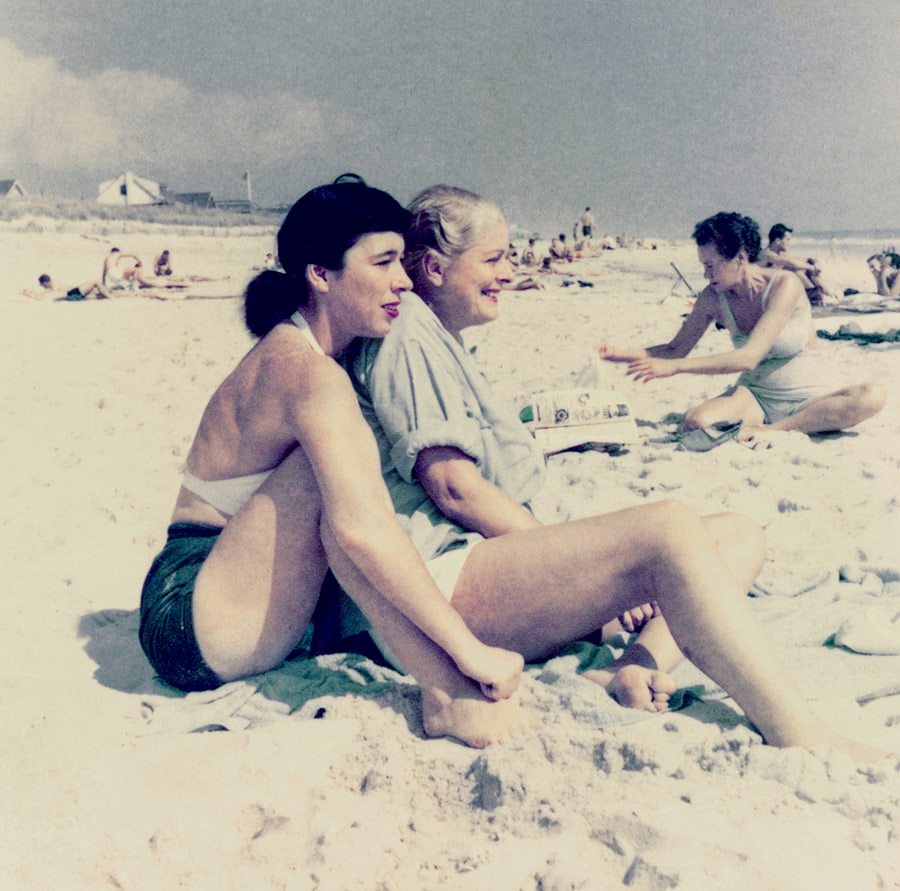
How did one particular summer settlement on Fire Island become a ‘safe haven’ for gay men and lesbians almost ninety years ago, decades before the uprising at Stonewall Inn?
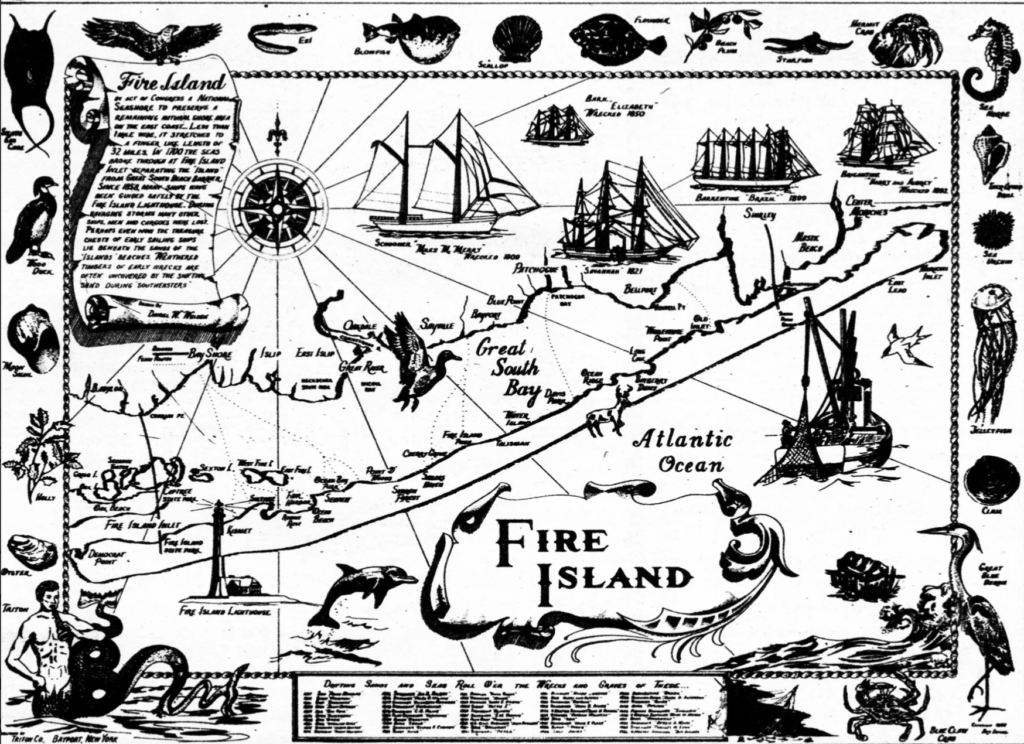
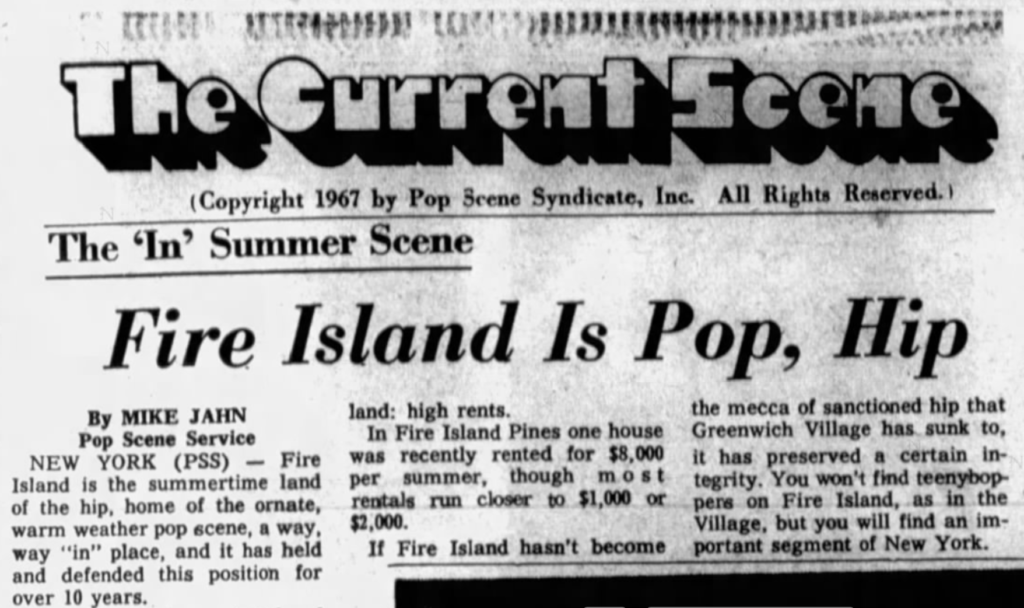
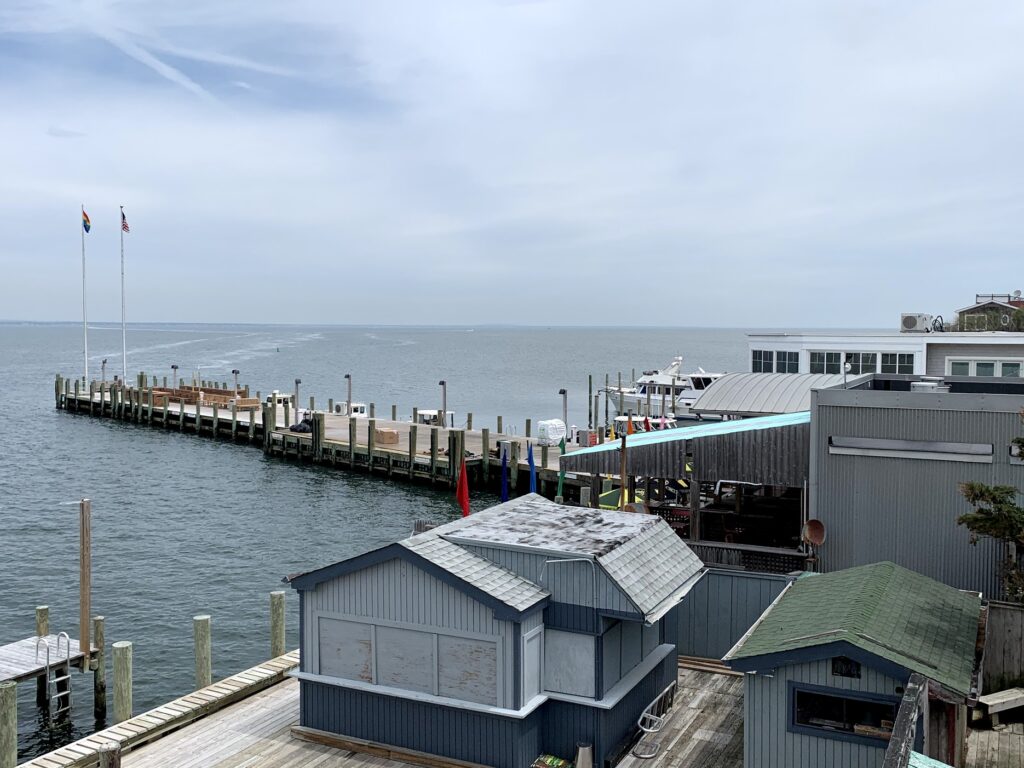
Fire Island is one of New York state’s most attractive summer getaways, a thin barrier island on the Atlantic Ocean lined with seaside villages and hamlets, linked by boardwalks, sandy beaches, natural dunes and water taxis. (And, for the most part, no automobiles.)
But Fire Island has a very special place in American LGBT history.
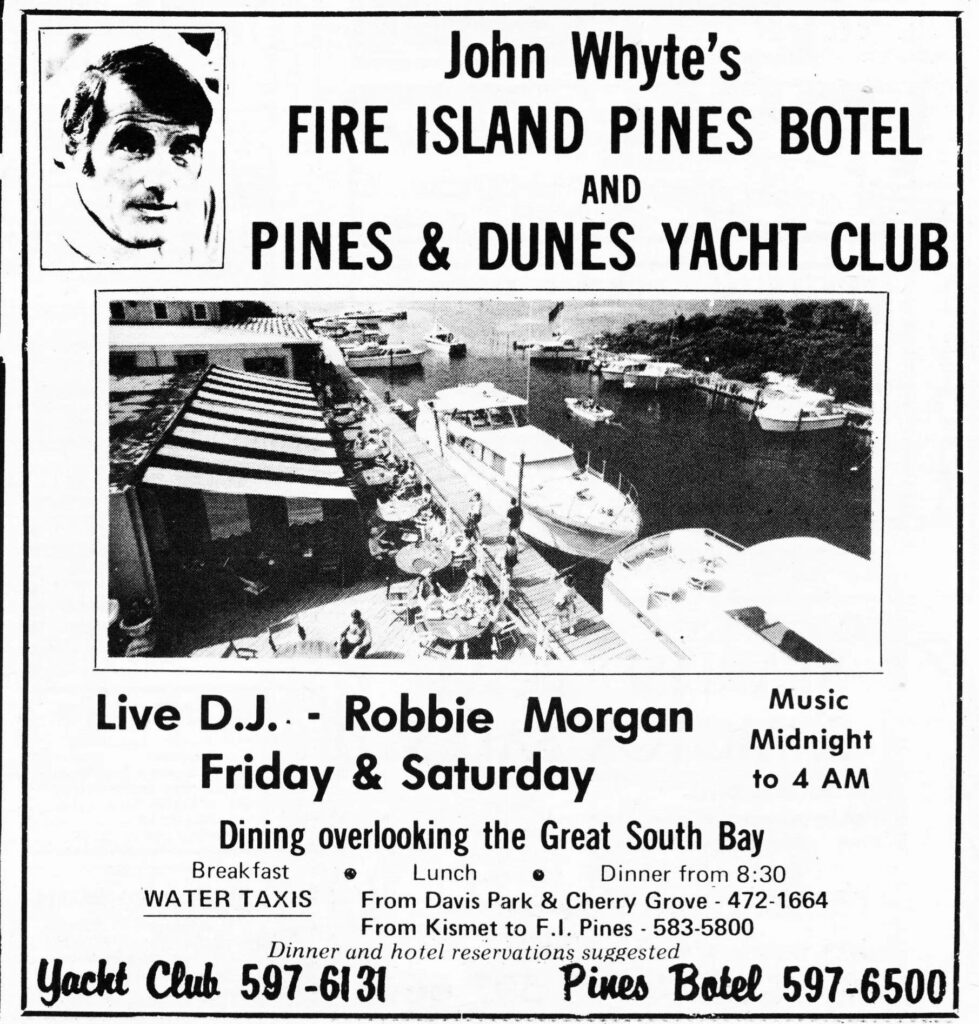
It is the site of one of the oldest gay and lesbian communities in the United States, situated within two neighboring hamlets — Cherry Grove and the Fire Island Pines.
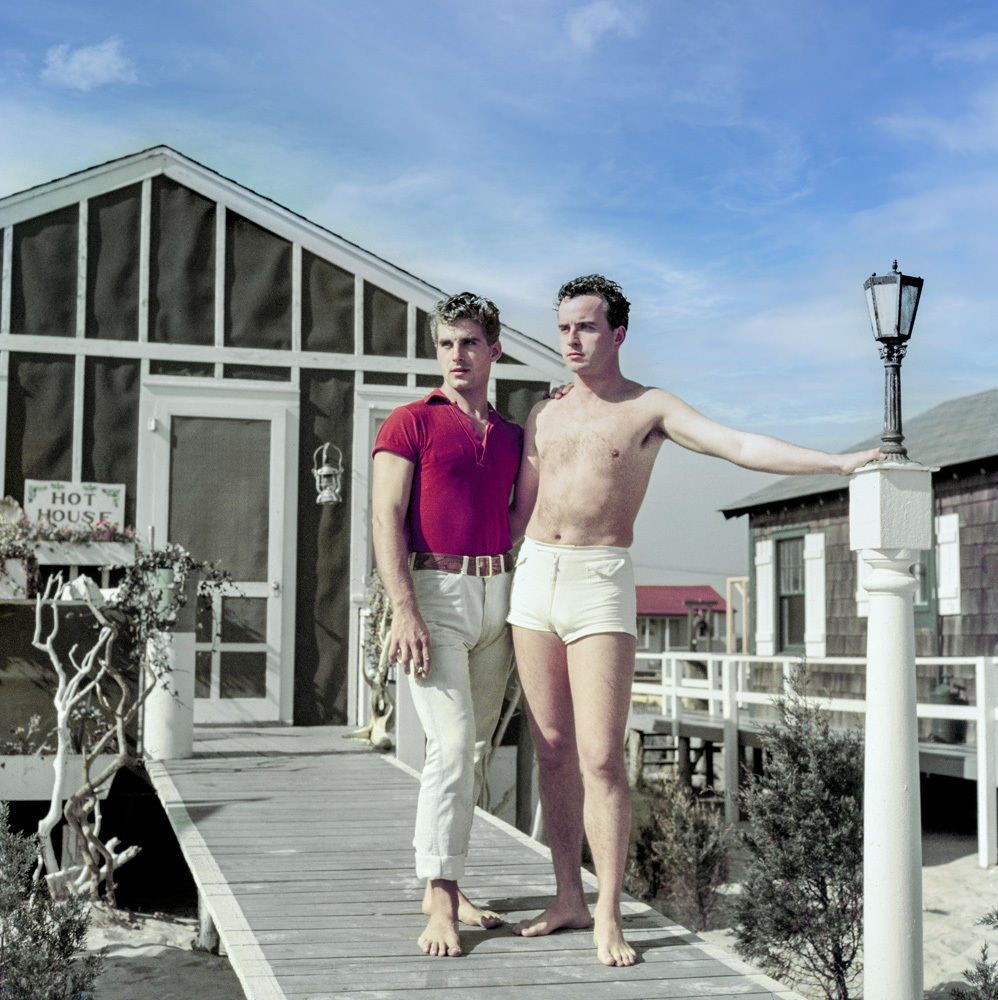
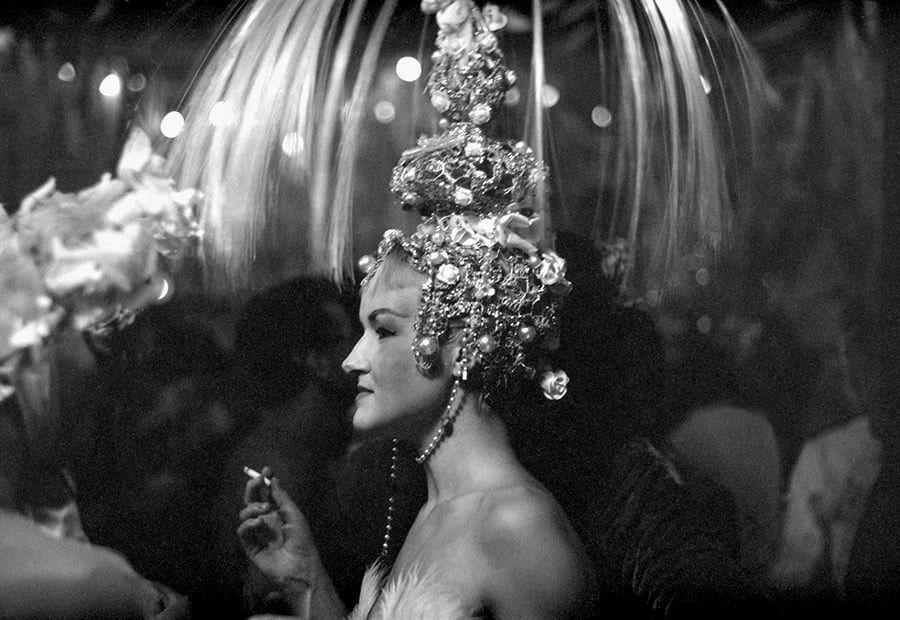
During the 1930s actors, writers and craftspeople from the New York theatrical world began heading to Cherry Grove, its remote and rustic qualities allowing for gay and lesbians to express themselves freely — far away from a world that rejected and persecuted them.
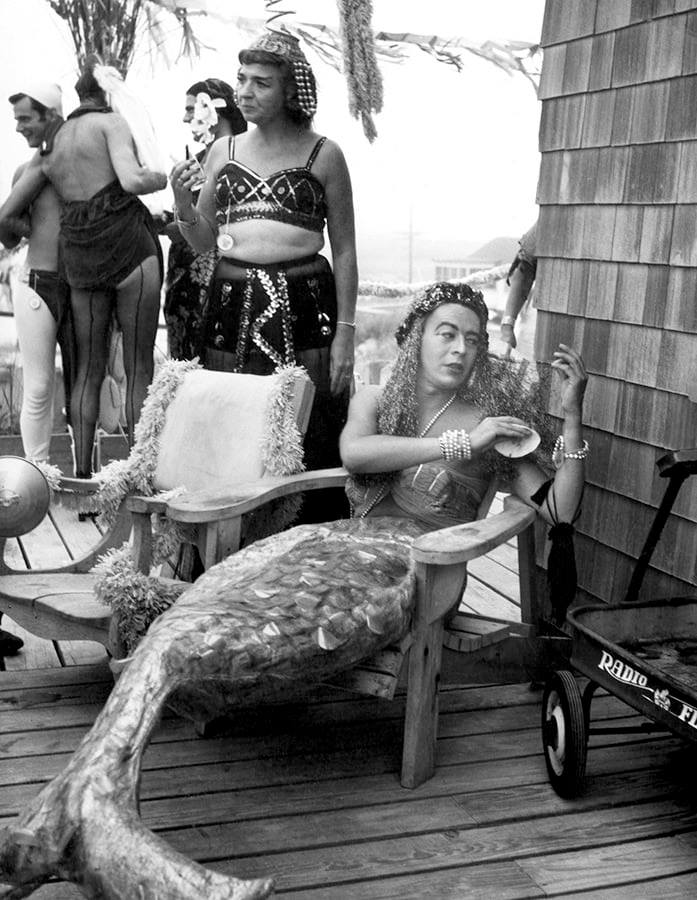
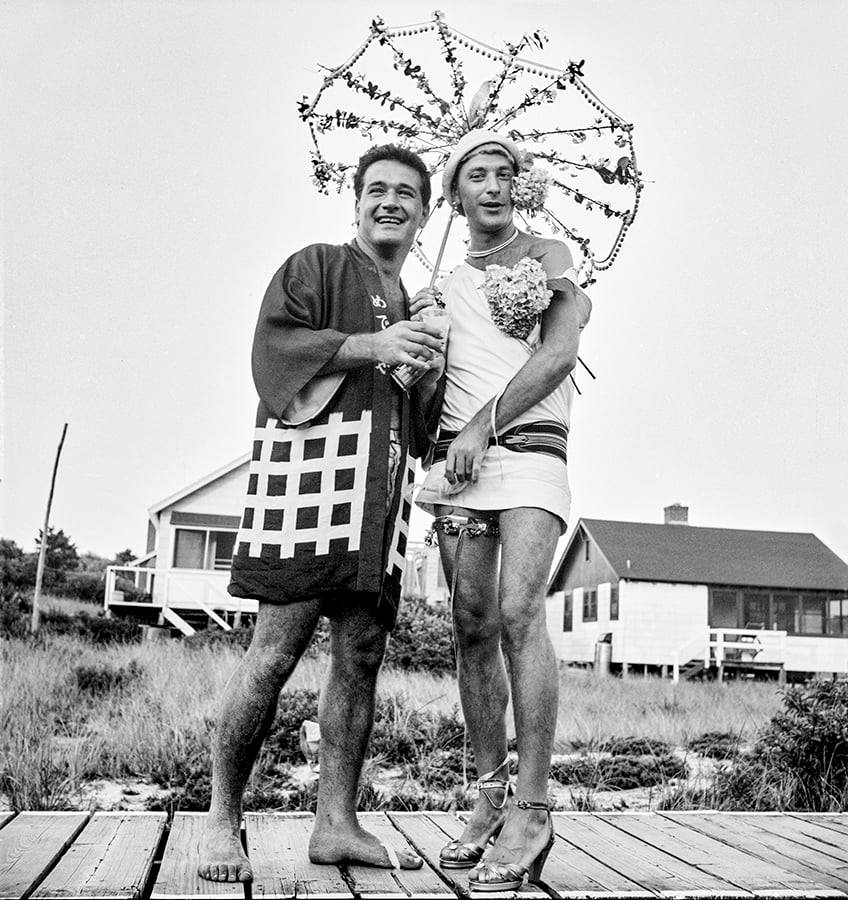
Performers at the Grove’s Community House and Theatre helped define camp culture, paving the way for the modern drag scene.
In this episode, Greg and Tom head to Cherry Grove — and the Community House and Theater — to get a closer look at Fire Island’s unique role in the American LGBT experience.
FEATURING: The Great Hurricane of 1938! The Invasion of the Pines! The indescribable Belvedere! And the surprising origin of Fire Island’s name.
Listen Now: The Very Gay History of Fire Island
The Official Bowery Boys Fire Island Playlist
Your soundtrack for the summer — whether you’re on Fire Island or just want to relive a retro experience from Cherry Grove or The Pines. Here’s a collection of songs inspired by our podcast on the history of Fire Island.
Images courtesy the Cherry Grove Archives Collection, taken by the men and women of Cherry Grove in the 1950s:
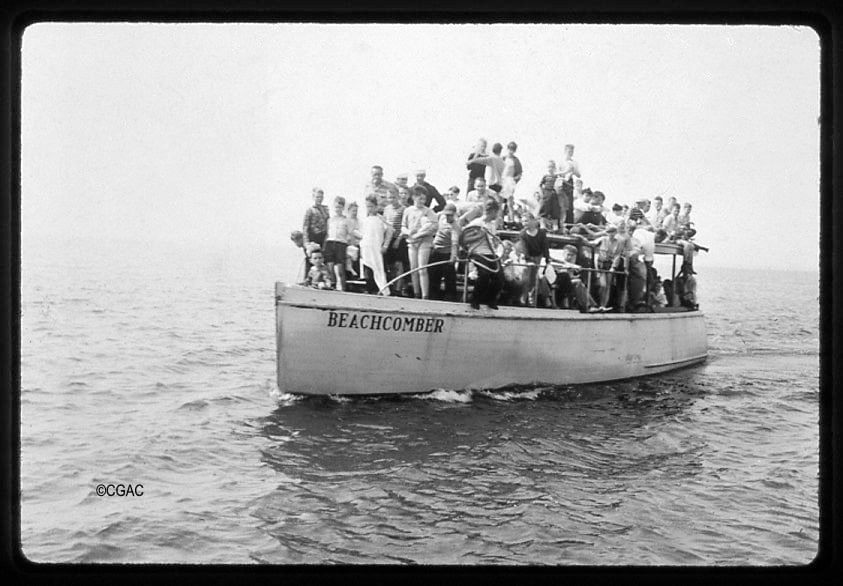
The Beachcomber, 1950s ferry to Cherry Grove.
Photographer unknown. Cherry Grove Archives Collection
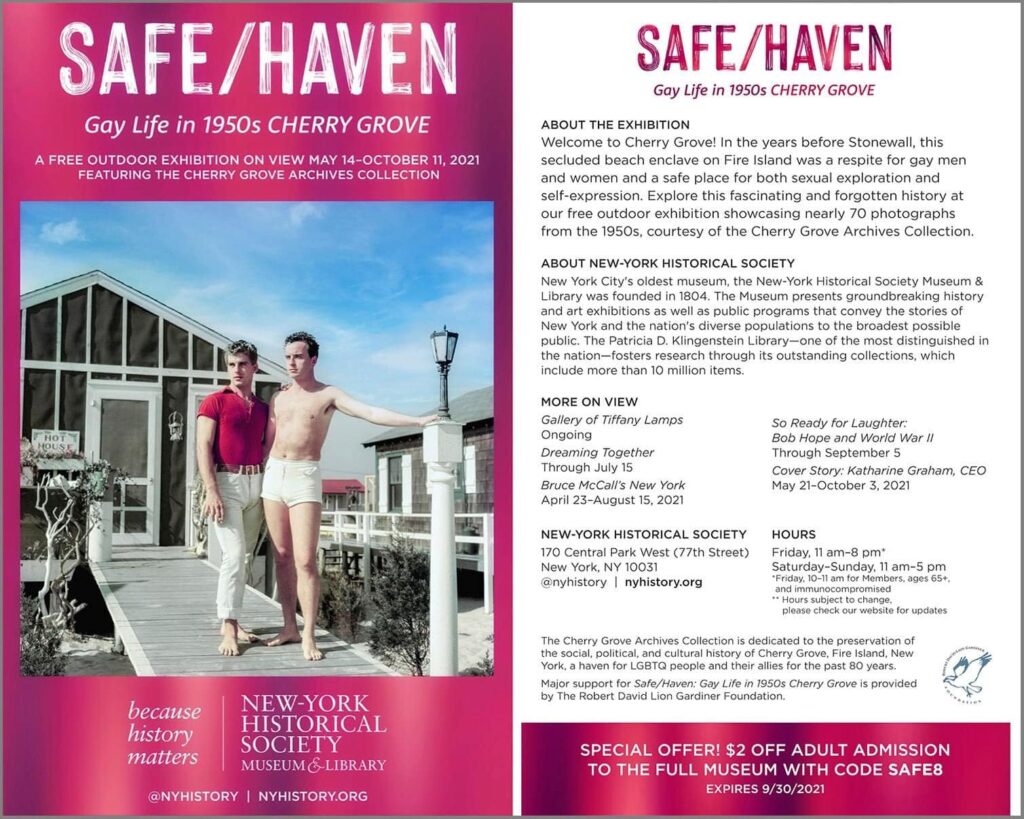
A few images from the exhibition, courtesy the Cherry Grove Archives Collection:
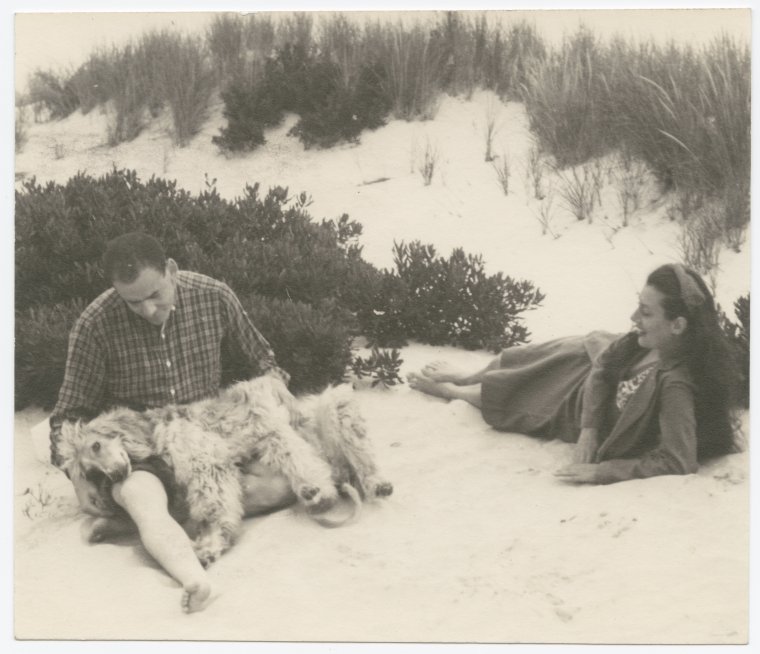
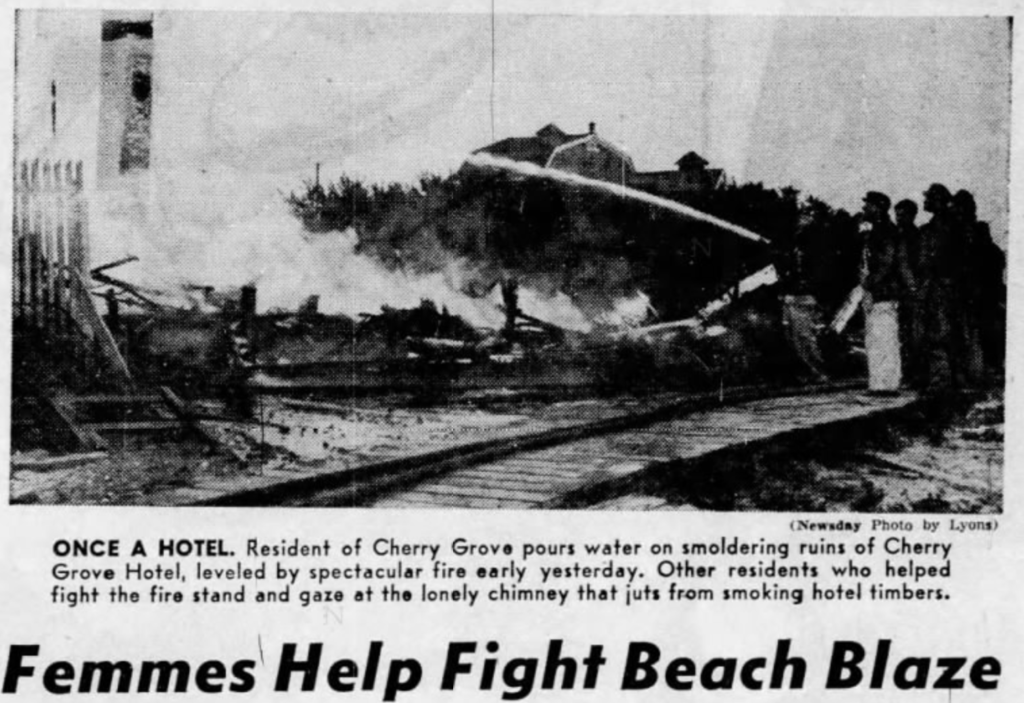
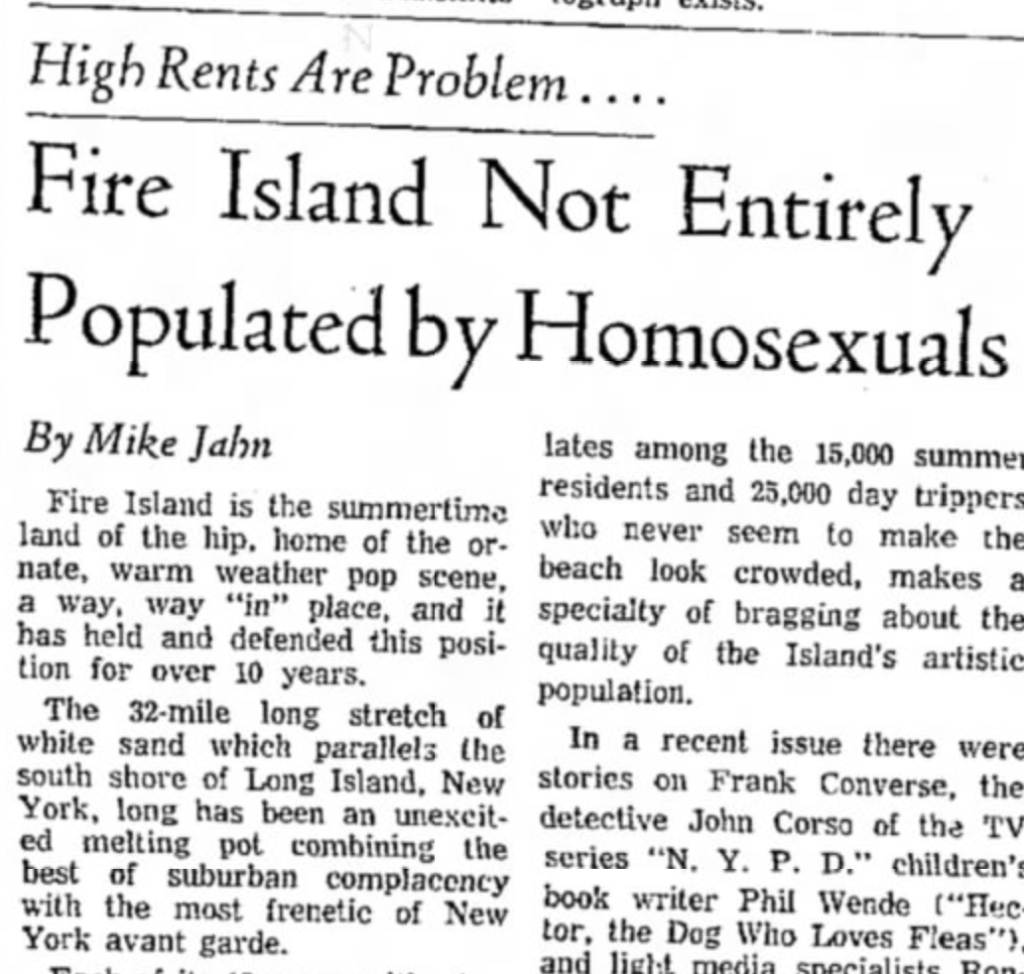
Patricia Fitzgerald & Kay Guinness, Cherry Grove Beach, September 1952Lincoln Kirstein and Fidelma Cadmus with dog on Fire Island, 1952. New York Public LibraryNewsday, September 28, 1956The Emporia Gazette, June 1968Then Tribune from Scranton, July 1968
Video about the exhibition from Safe/Haven curator Brian Clark:
https://www.youtube.com/watch?v=HHdROkyMlZ8&t=65s
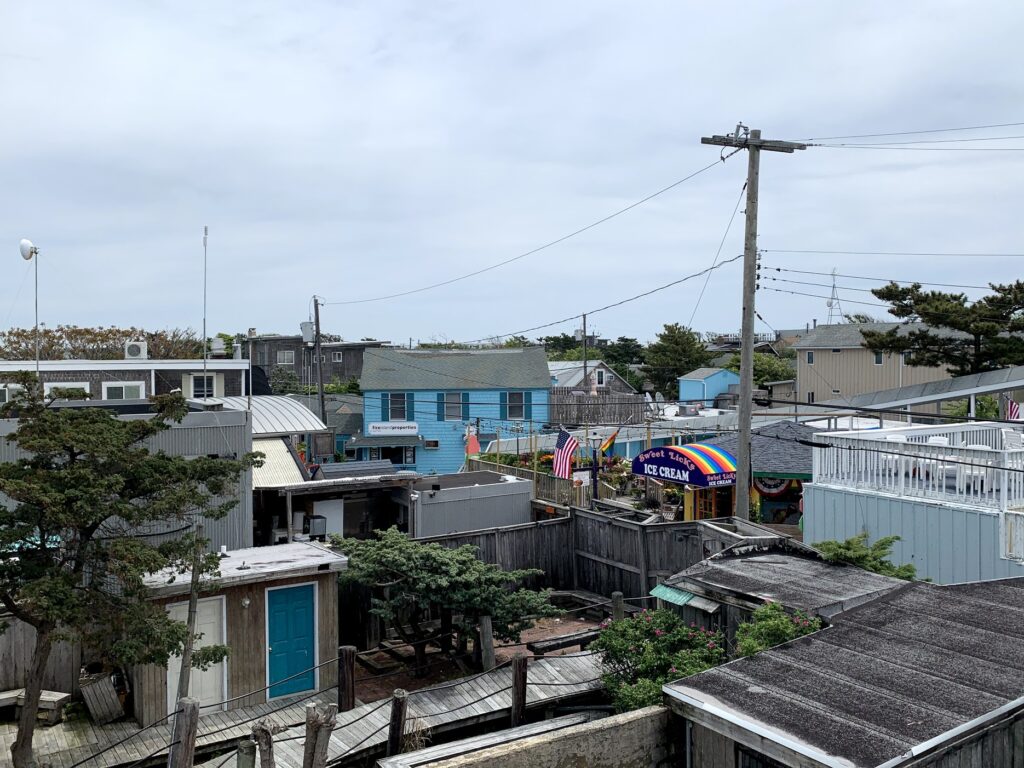
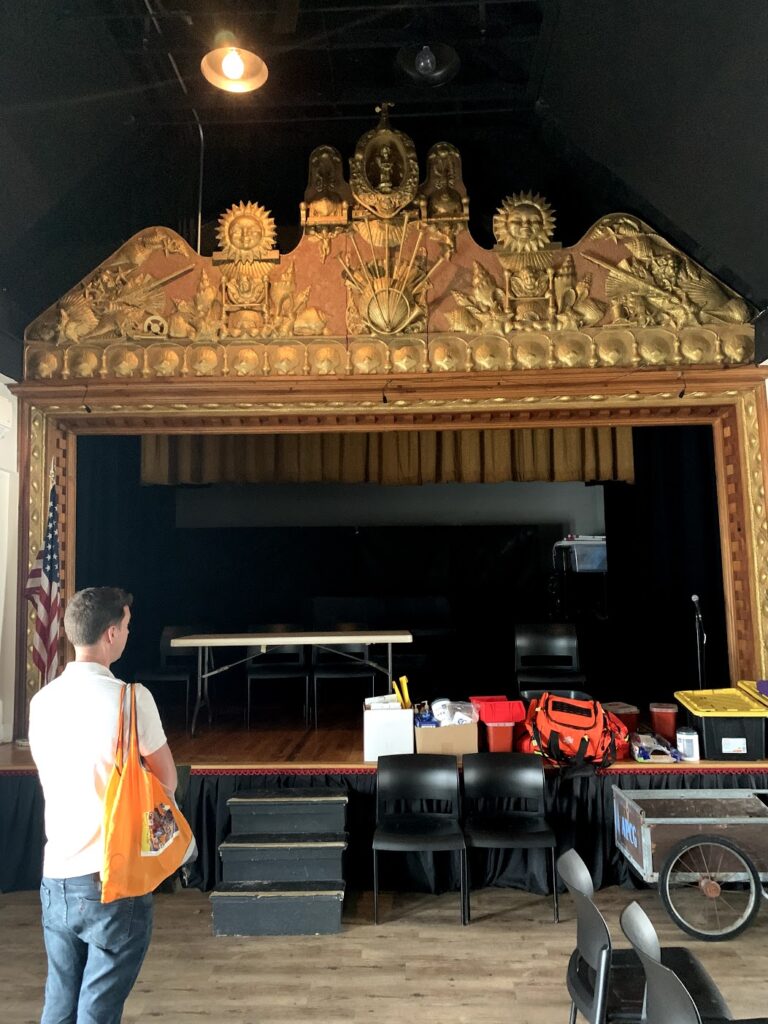
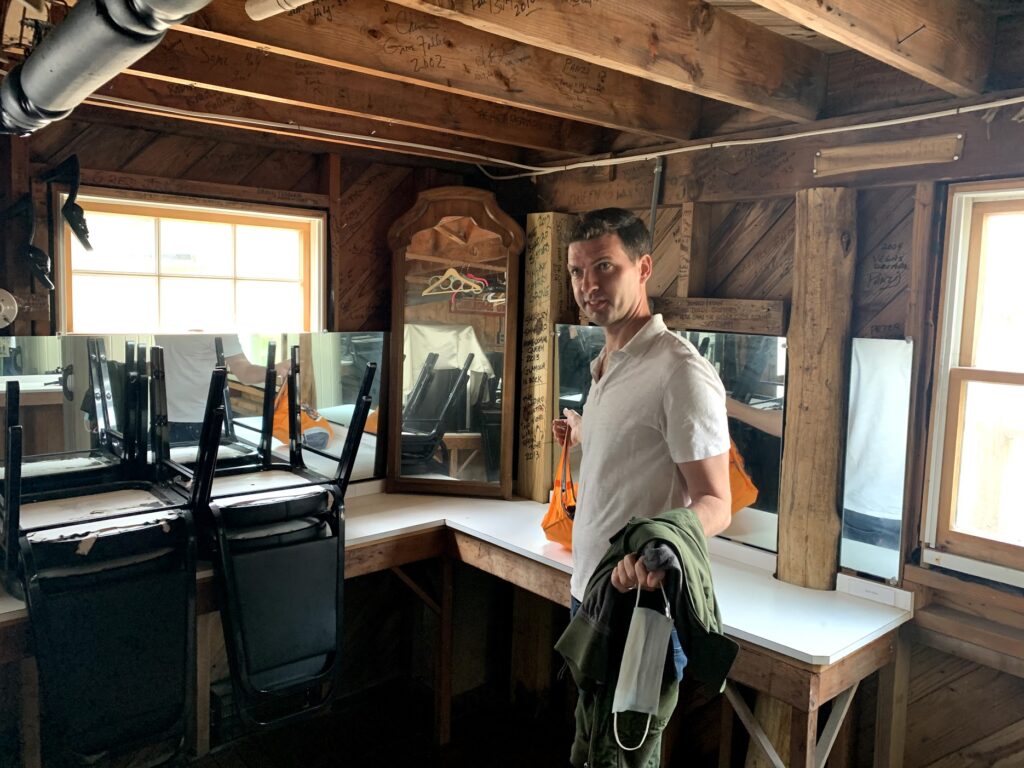
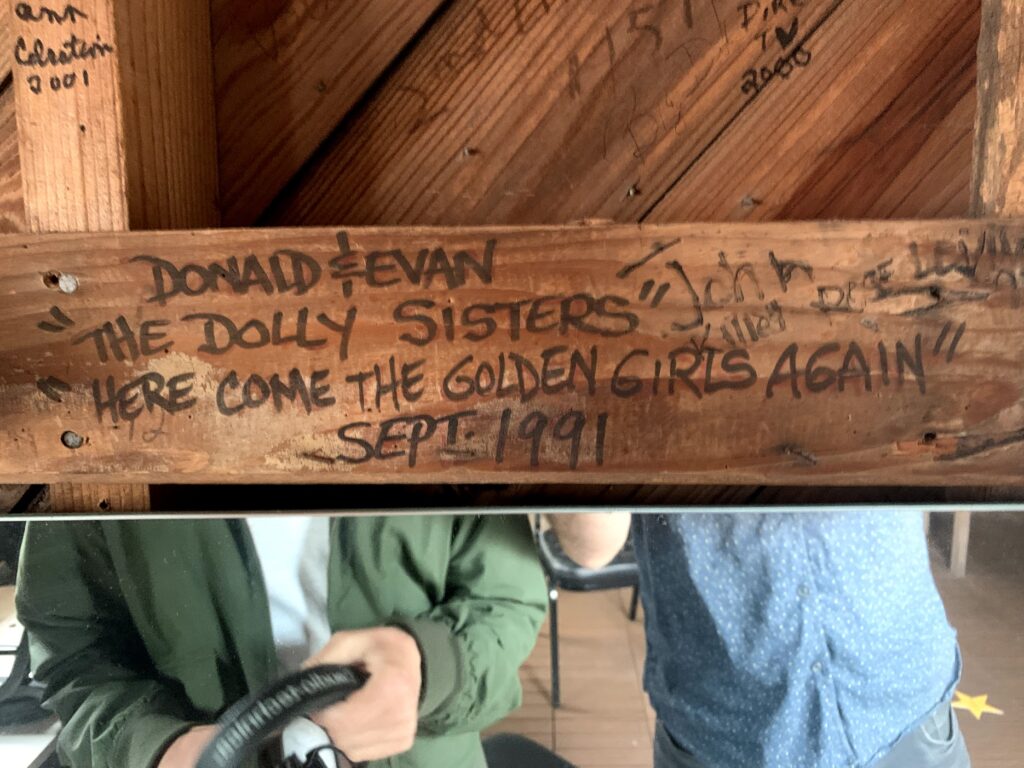
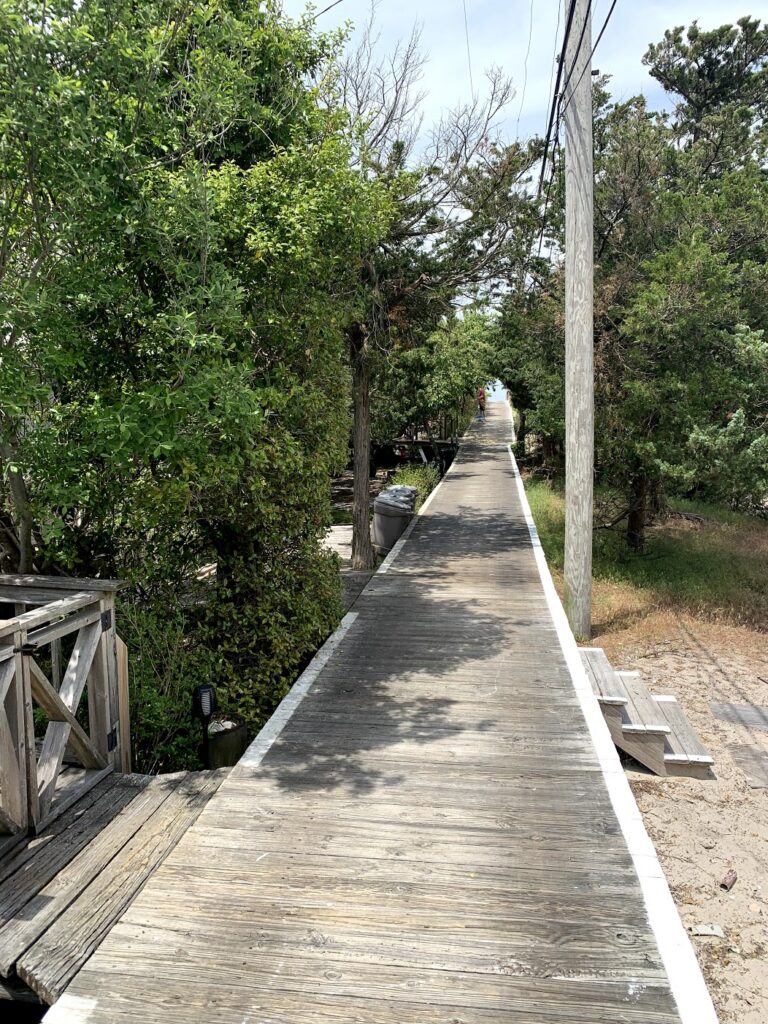
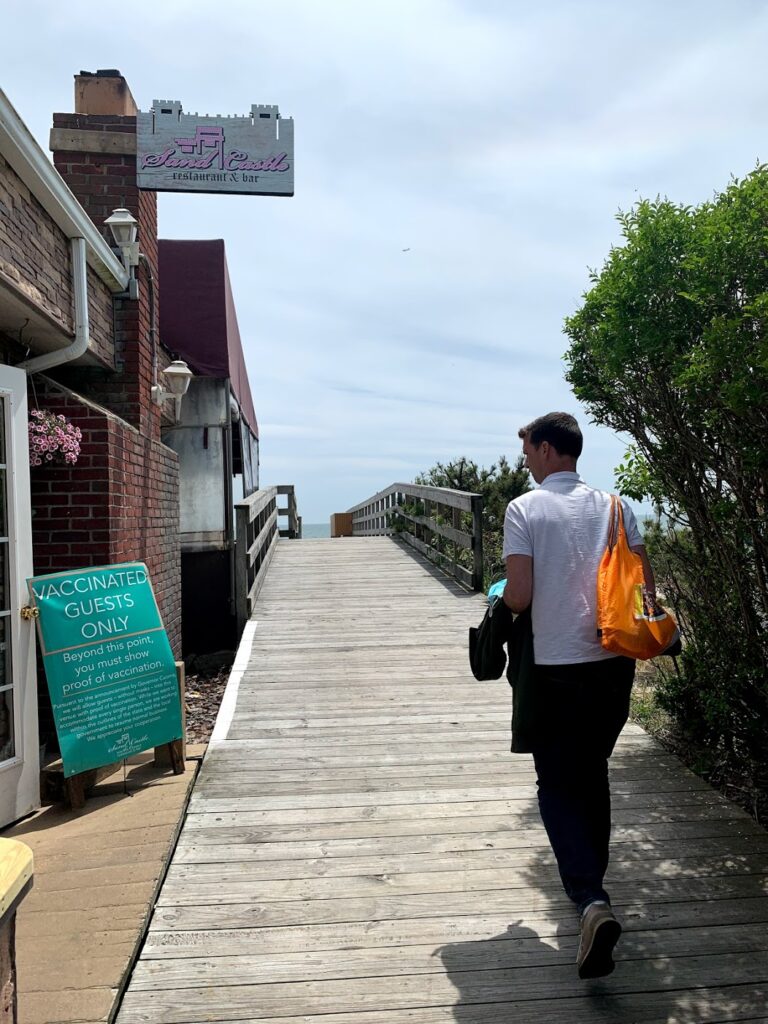
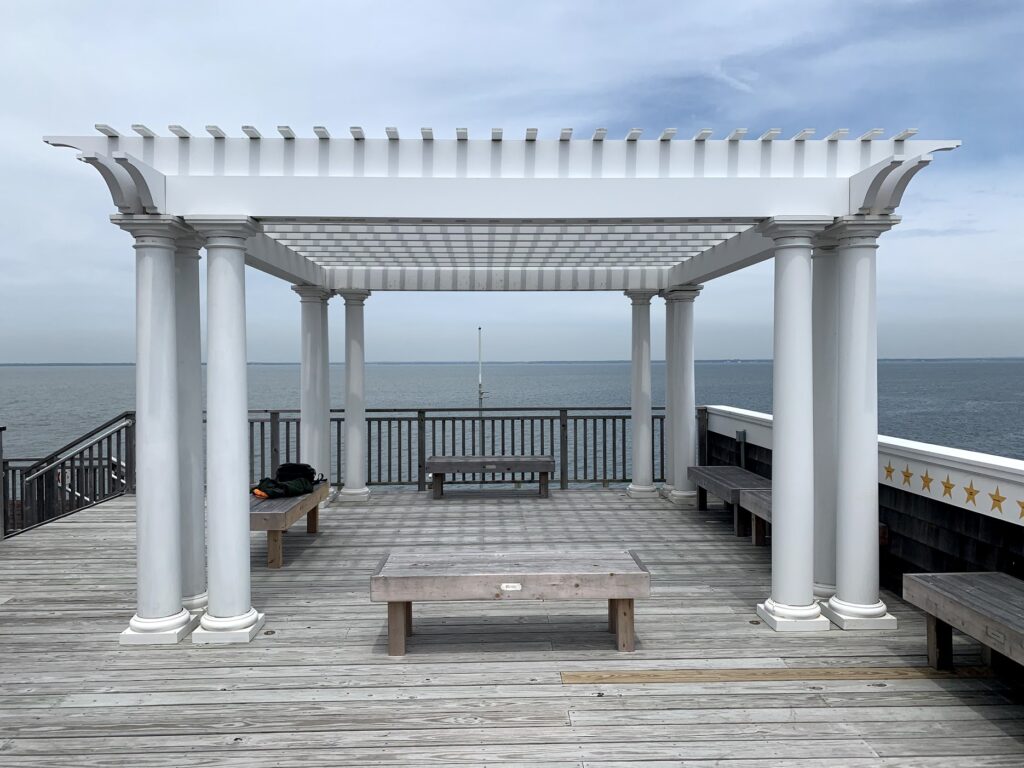
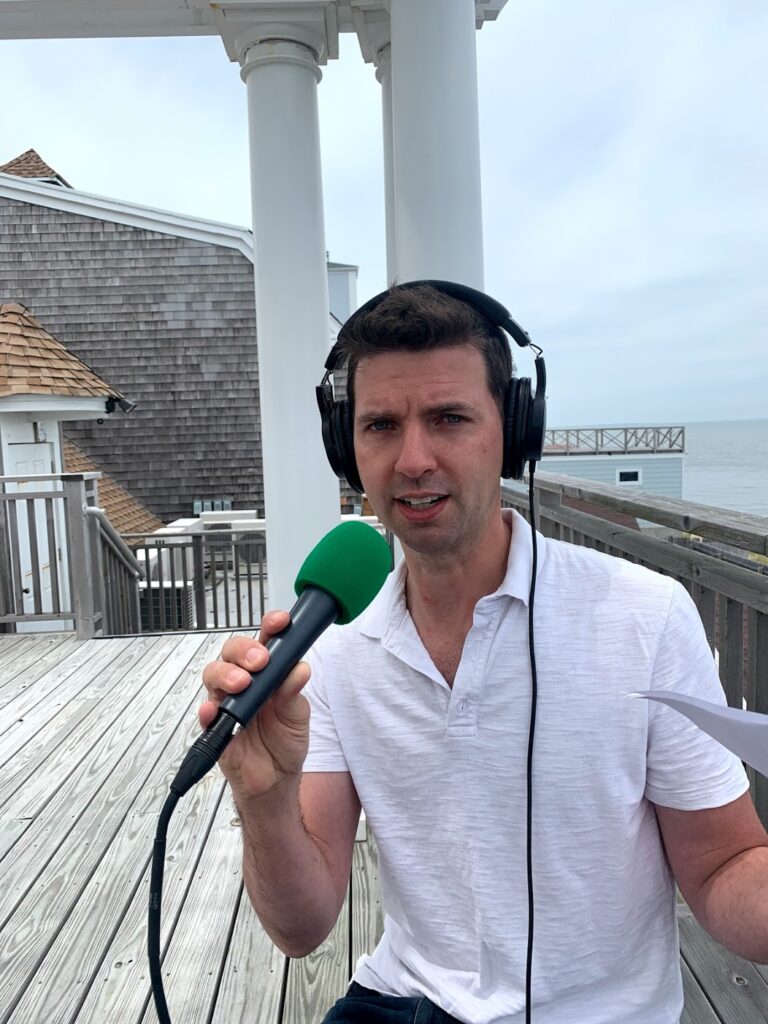
Photographs of Tom and Greg in Cherry Grove (Photos courtesy Greg Young):
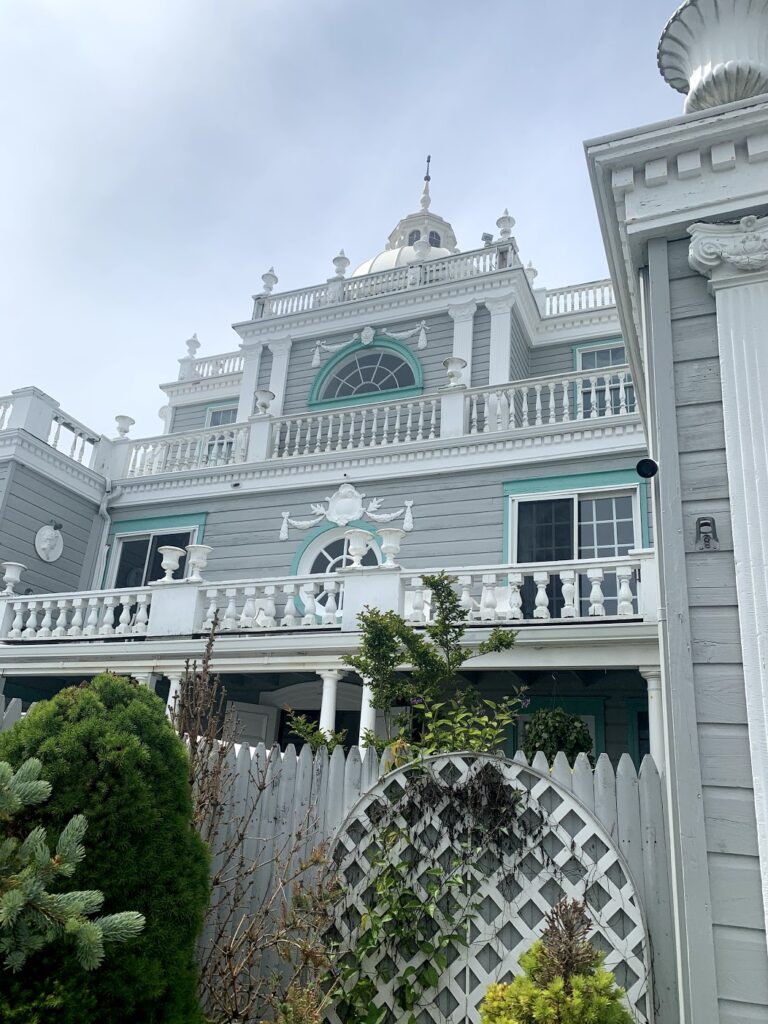
Behold — the Belvedere!
FURTHER LISTENING:
After listening to this show on the history of Fire Island check out these shows with similar themes and historical moments:
The Bowery Boys: New York City History podcast is brought to you …. by you!
We are now producing a new Bowery Boys podcast every other week. We’re also looking to improve and expand the show in other ways — publishing, social media, live events and other forms of media. But we can only do this with your help!
We are now a creator on Patreon, a patronage platform where you can support your favorite content creators.
Please visit our page on Patreon and watch a short video of us recording the show and talking about our expansion plans. If you’d like to help out, there are six different pledge levels. Check them out and consider being a sponsor.
We greatly appreciate our listeners and readers and thank you for joining us on this journey so far.