This Friday we begin our 14th year of podcasting with a new episode about one of New York City’s most beloved landmarks.
And on January 29, we will release our 350th episode — on a subject which is certain to surprise you!
We’re returned to our regular recording schedule — a brand new episode of the podcast every two weeks.
BUT you’ll still be getting a show in your podcast feed every week thanks to our REWIND series, presenting shows from our back catalog that have renewed relevance to events occurring in our world today.
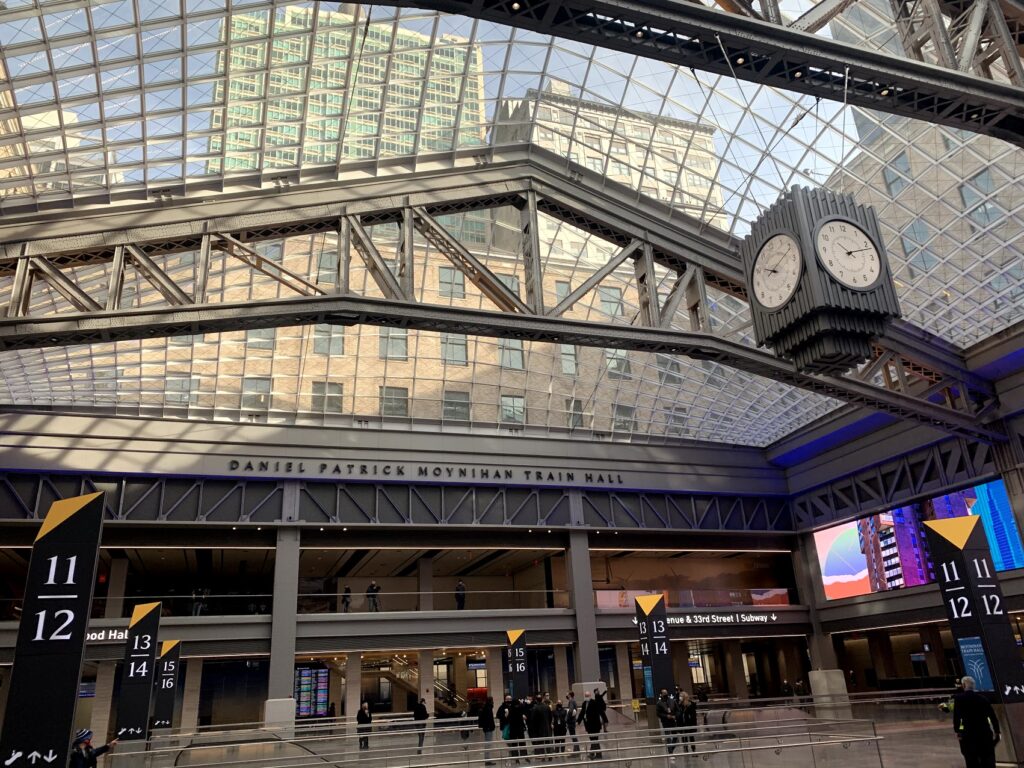
For instance, our two shows on Penn Station were just recently re-released to mark the opening of the new Moynihan Train Hall.
But these aren’t merely reruns! Most of the REWIND shows will include newly recorded material — either updates to the information or extra bonus stories that we have discovered since first recording those shows.
All shows will be re-edited for a slightly more pleasing listening experience than the first time around. (Hey we’ve been doing this for 14 years! We’ve obviously learned a lot about producing audio since 2007.)
We hope that the Bowery Boys: New York City History podcast is providing you with some needed escapism and entertainment during this unbelievable moment in our nation’s history.
CAN YOU DO US A FAVOR?
— Just make sure you’re subscribedto the Bowery Boys podcast on your favorite podcast player. See below for specific links.
— And tell a friend or two about our show. We’ve got so many now that we undoubtedly have something for everything.
(And of course we also welcome your support on Patreon where you’ll also receive audio bonuses and other surprises. There will be new Patreon-only audio released later this week.)
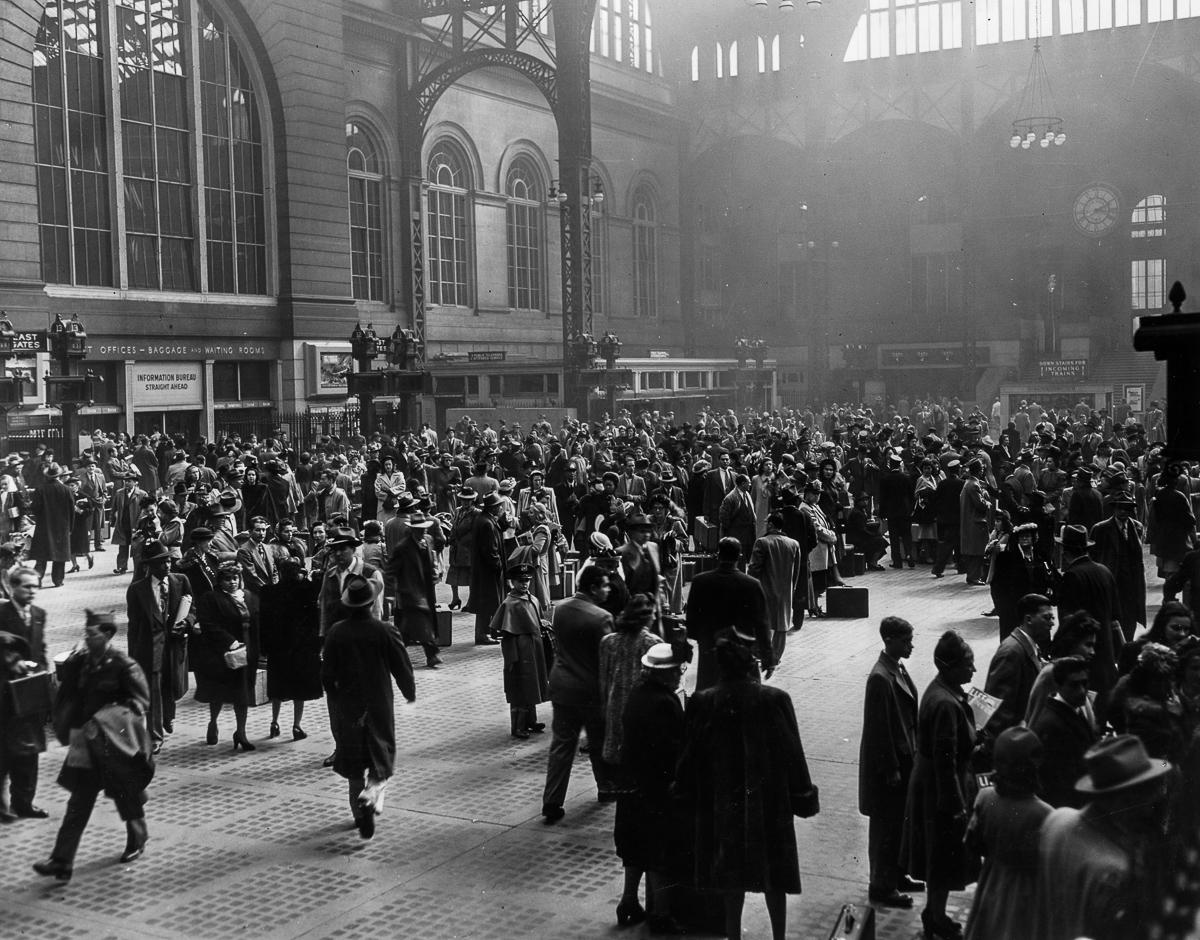
Pennsylvania Station 1950 (Photo by Hulton Archive/Getty Images)
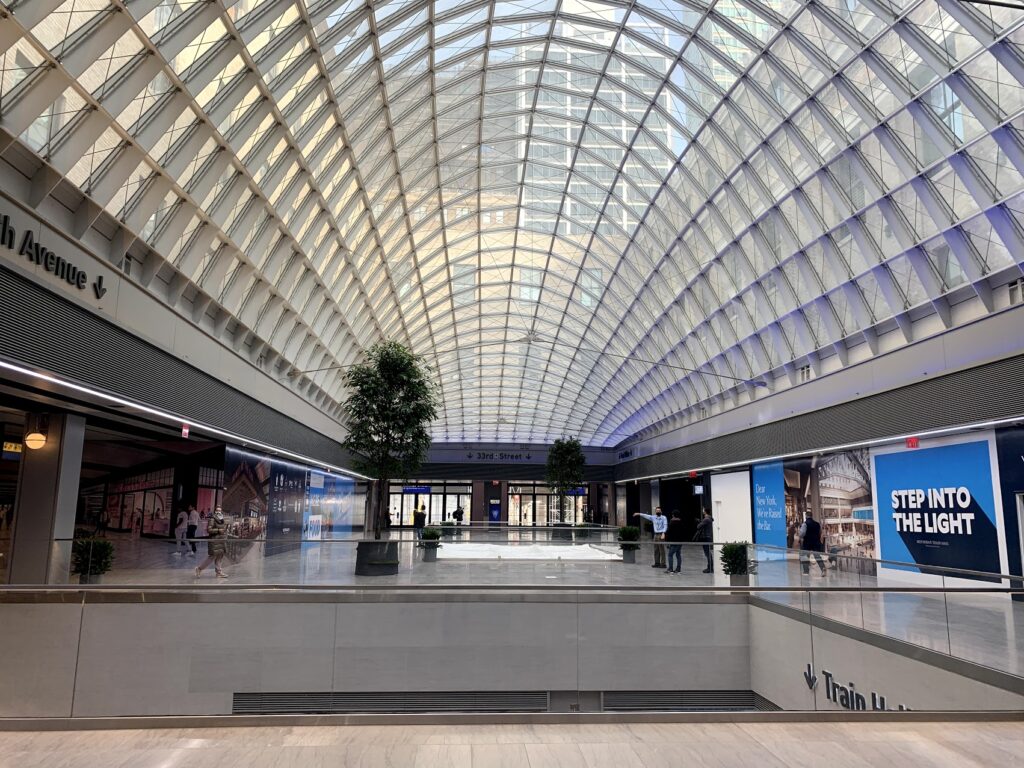
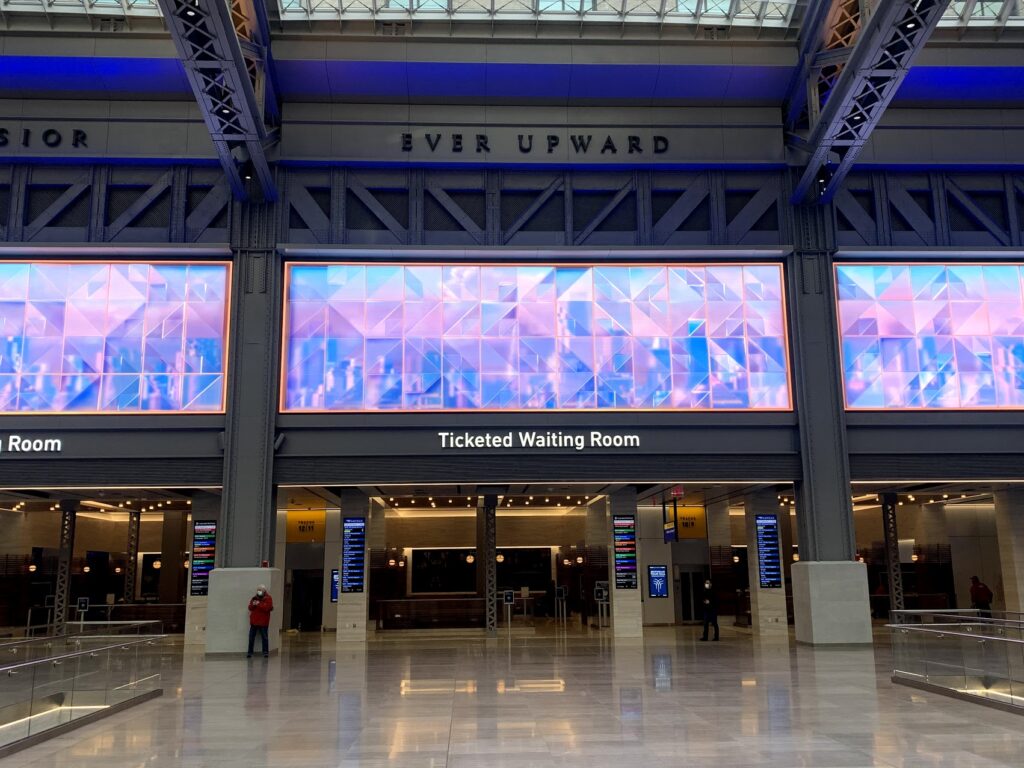
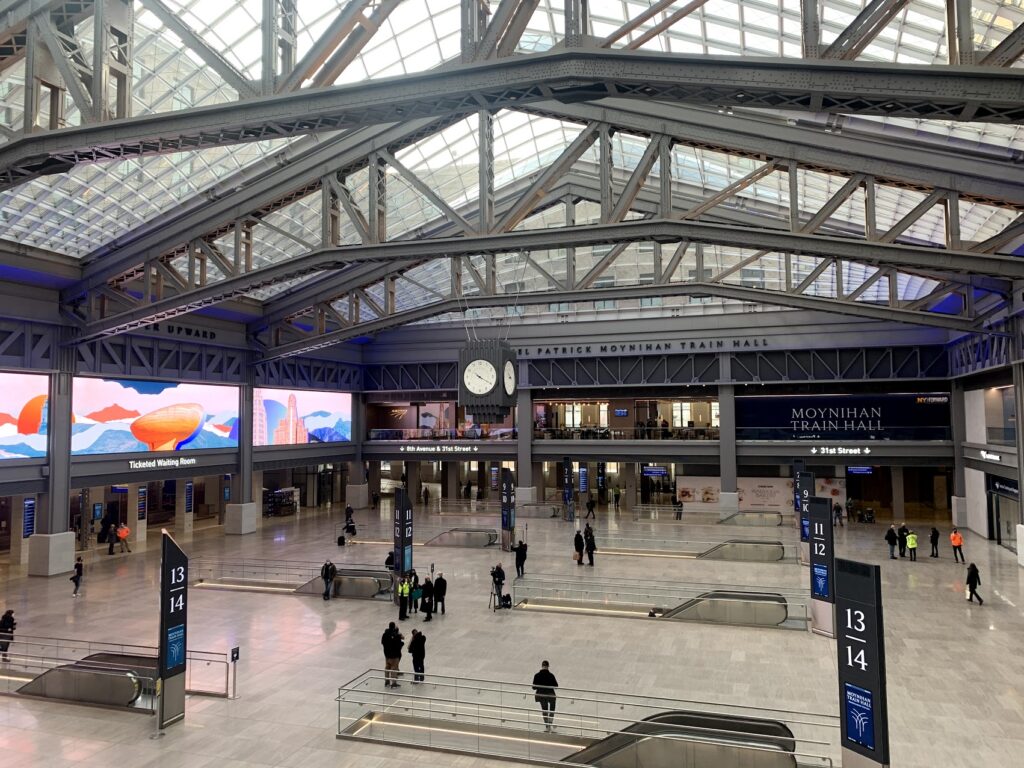
On January 1, 2021 Moynihan Train Hallofficially opened to the public, a new commuters’ wing catering to both Amtrak and Long Island Railroad train passengers at New York’s underground (and mostly unloved) Penn Station.
To celebrate this big moment in New York City transportation history, we’re going to tell the entire story of Pennsylvania Station and Pennsylvania Railroad over two episodes, using a couple older shows from our back catalog.
PODCAST Why did they knock down old Pennsylvania Station?
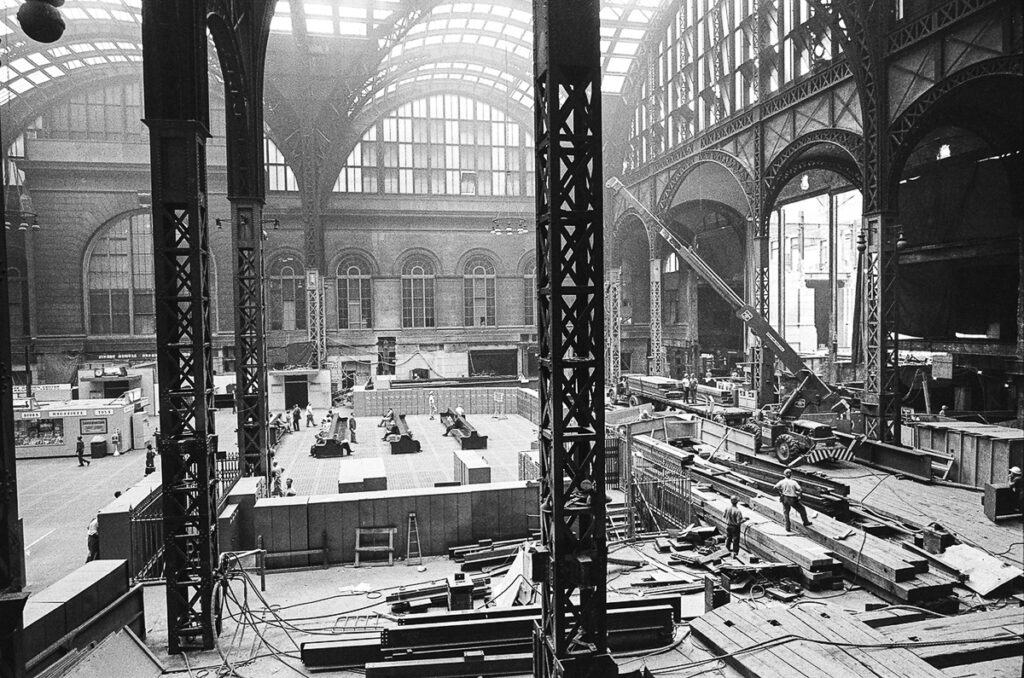
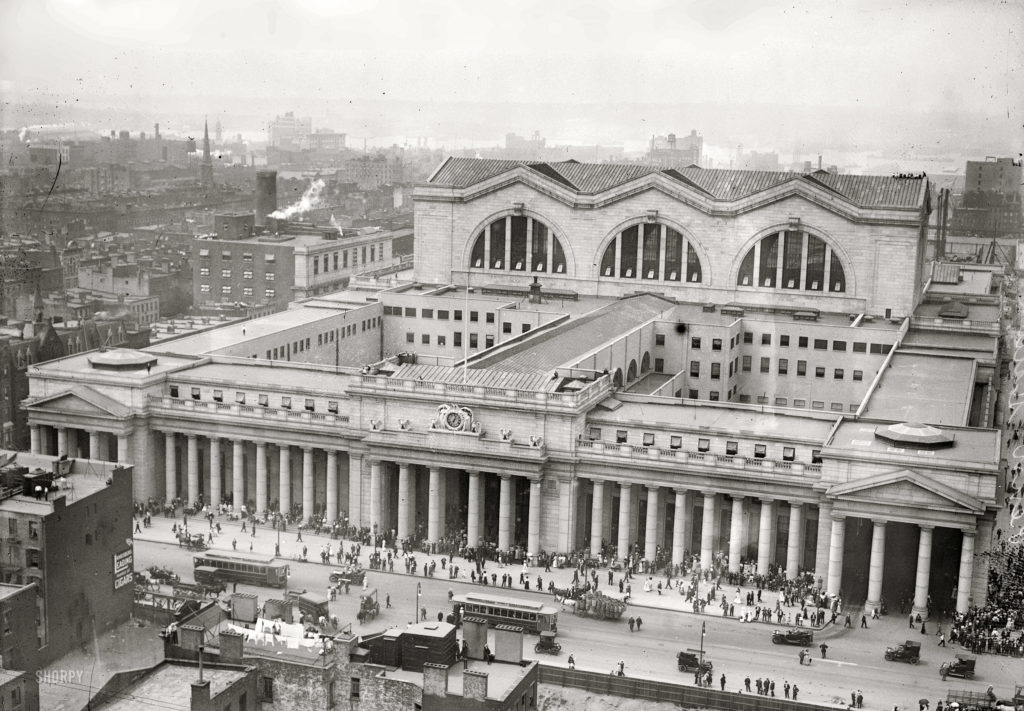
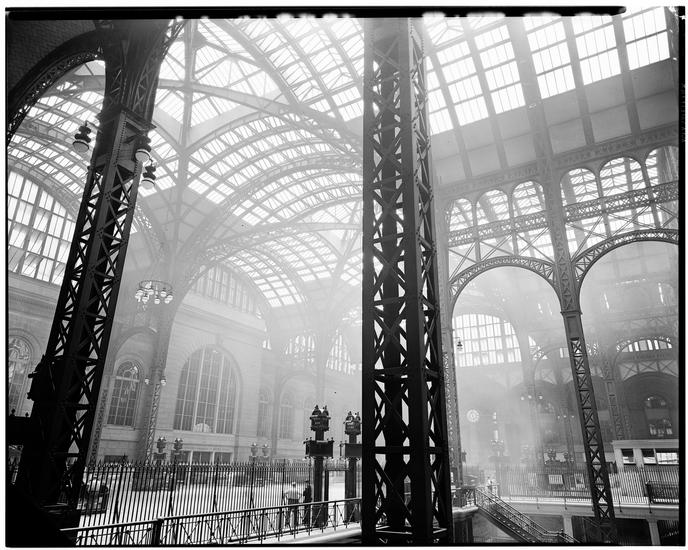
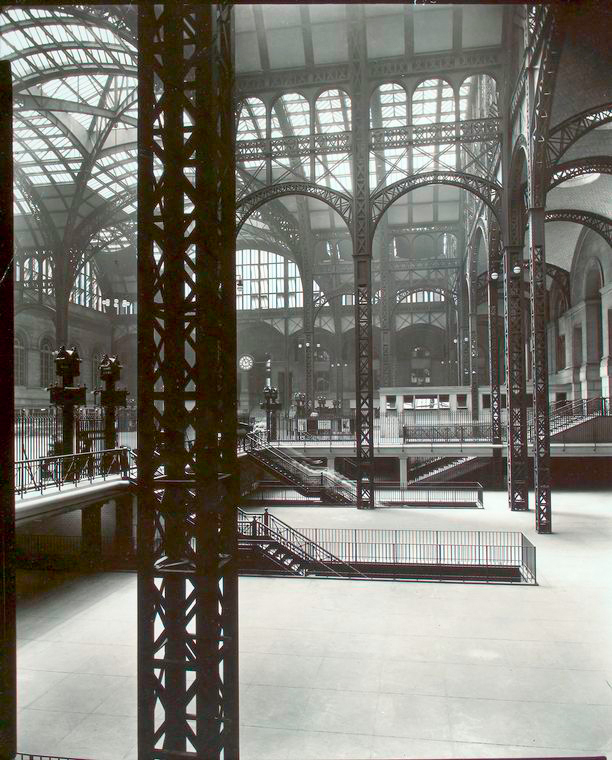
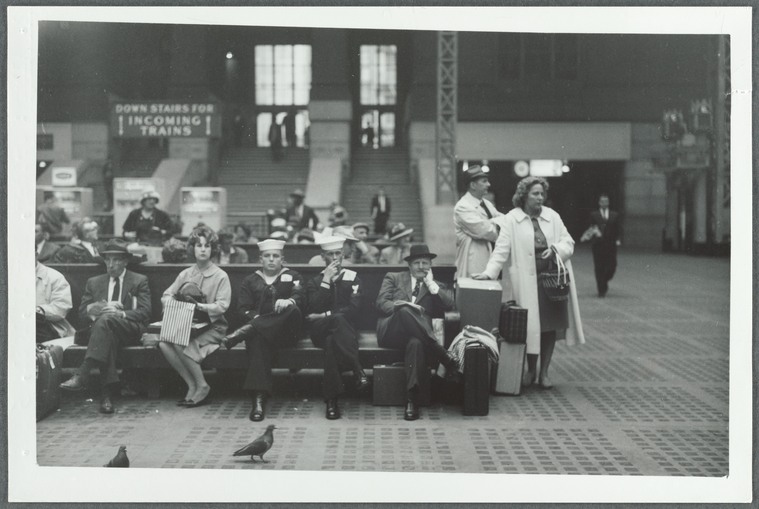
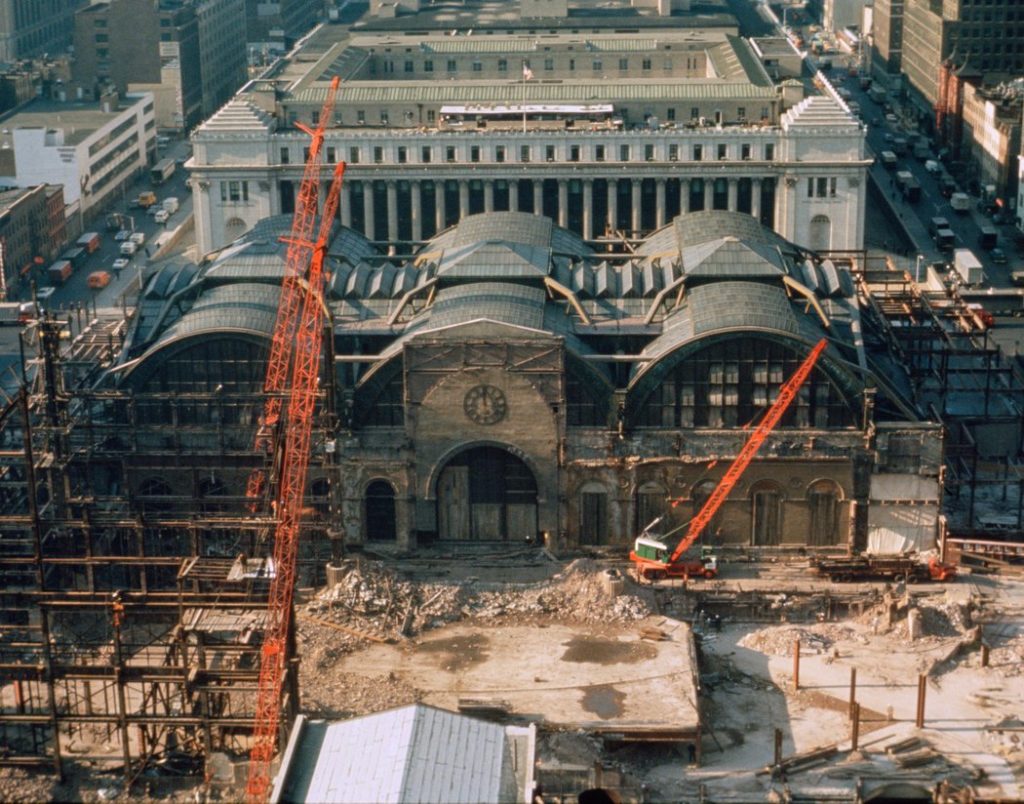
The original Penn Station, constructed in 1910 and designed by New York’s greatest Gilded Age architectural firm, was more than just a building. Since its destruction in the 1960s, the station has become something mythic, a sacrificial lamb to the cause of historic preservation.
Amplifying its loss is the condition of present Penn Station, a fairly unpleasant underground space that uses the original Pennsylvania Railroad’s tracks and tunnels. As Vincent Scully once said:
“Through Pennsylvania Station one entered the city like a god. Perhaps it was really too much. One scuttles in now like a rat.”
Robert R McElroy/Getty Images
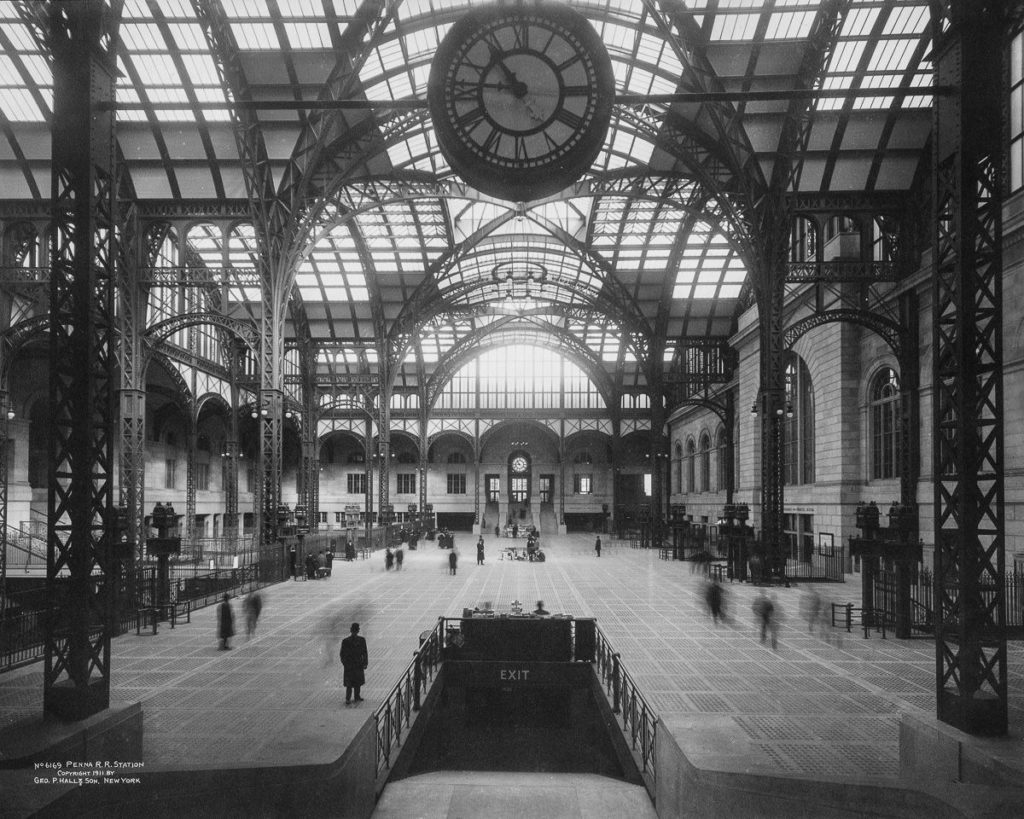
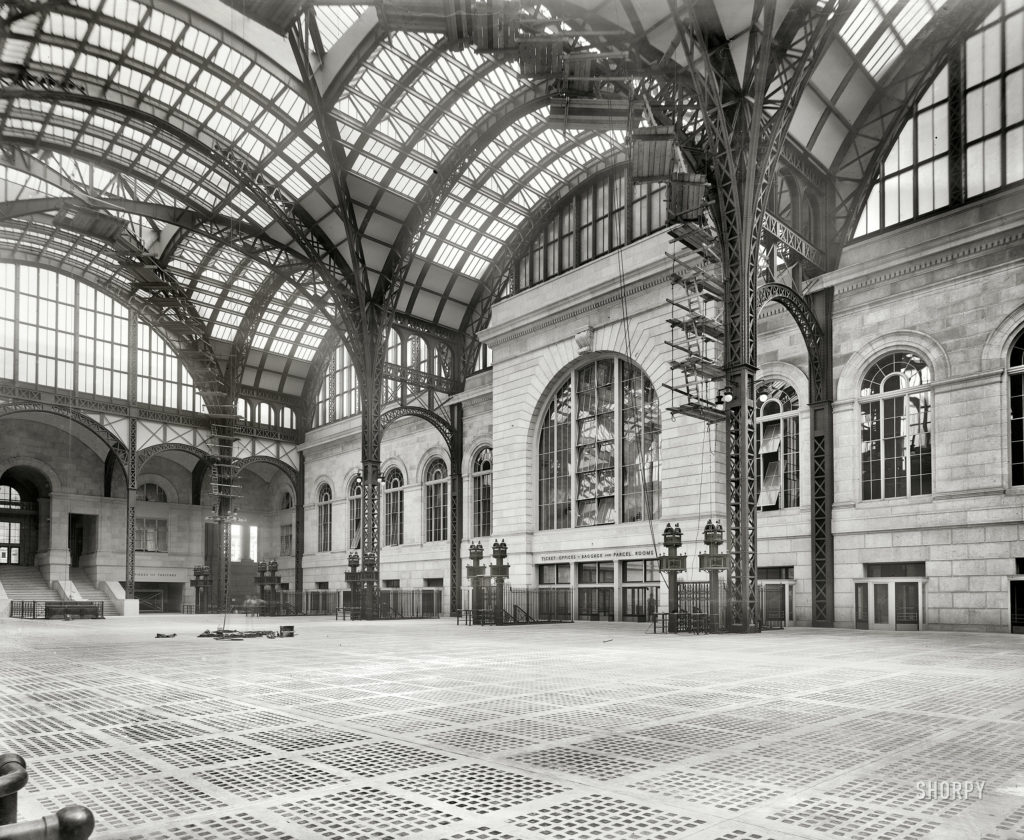
In this show we rebuild the grand, original structure in our minds — the fourth largest building in the world when it was constructed — and marvel at an opulence now gone.
Why was Penn Station destroyed? If you answered MONEY!, you’re only partially right.
This is the story of an architectural treasure endangered — and a city unprepared to save it. Should something so immense be saved because of its beauty even if its function has diminished or even vanished? Does the public have a say in a privately owned property?
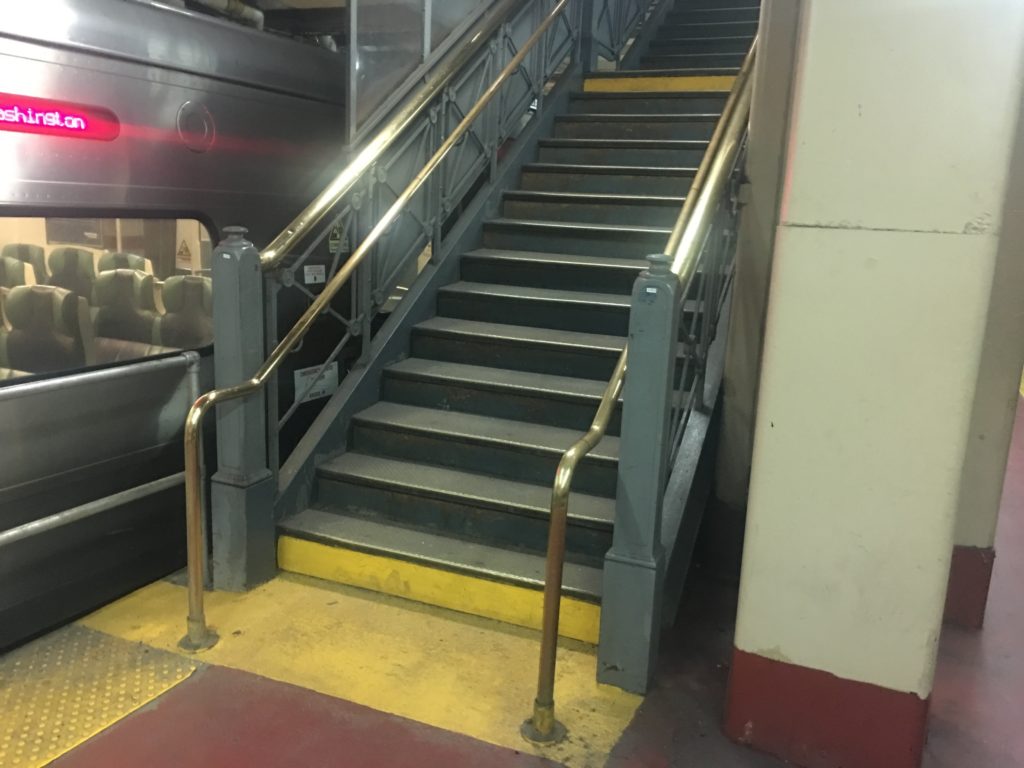
PLUS: We show you where you can still find remnants of old Penn Station by going on a walking tour with Untapped Cities tour guide Justin Rivers.
Listen to the show here or on your favorite podcast player:
THE BULK OF THIS SHOW WAS ORIGINALLY RELEASED AS EPISODE 254 — FEB 2018. THIS SHOW ALSO INCLUDES NEW MATERIAL.
The Bowery Boys: New York City History podcast is brought to you …. by you!
We are now producing a new Bowery Boys podcast every other week.
We’re also looking to improve and expand the show in other ways —
publishing, social media, live events and other forms of media. But we
can only do this with your help!
We are now a creator on Patreon, a patronage platform where you can support your favorite content creators.
Please visit our page on Patreon and
watch a short video of us recording the show and talking about our
expansion plans. If you’d like to help out, there are six different
pledge levels. Check them outand consider being a sponsor.
We greatly appreciate our listeners and readers and thank you for joining us on this journey so far.
Bain Collection/Library of Congress. Clean-up version courtesy Shorpy
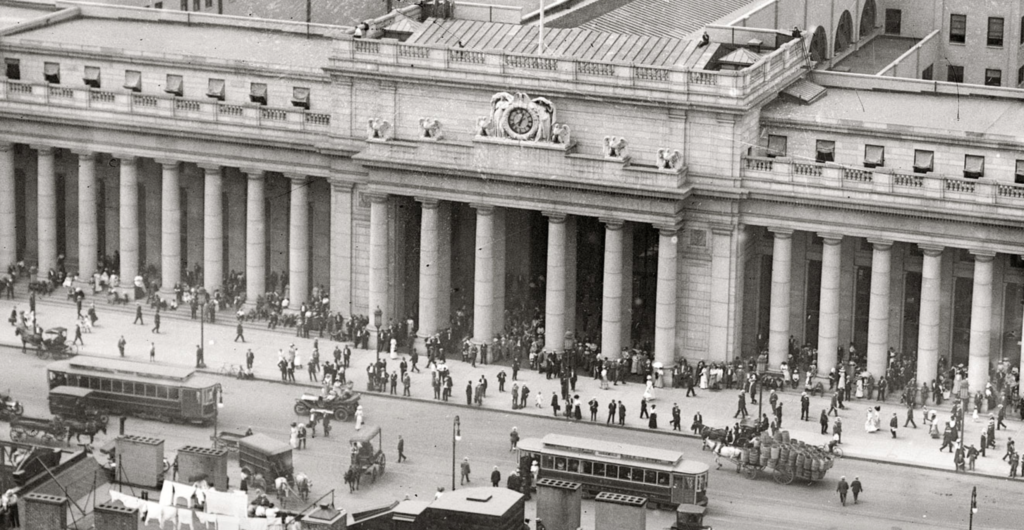
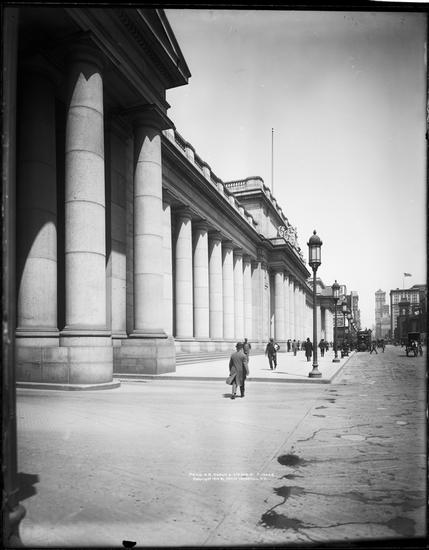
The 32nd Street entrance in 1910
The corner of 31st Street and 7th Avenue, entrance to the south carriage entrance, 1914
Museum of the City of New York1912- MCNY/Detroit Publishing Col
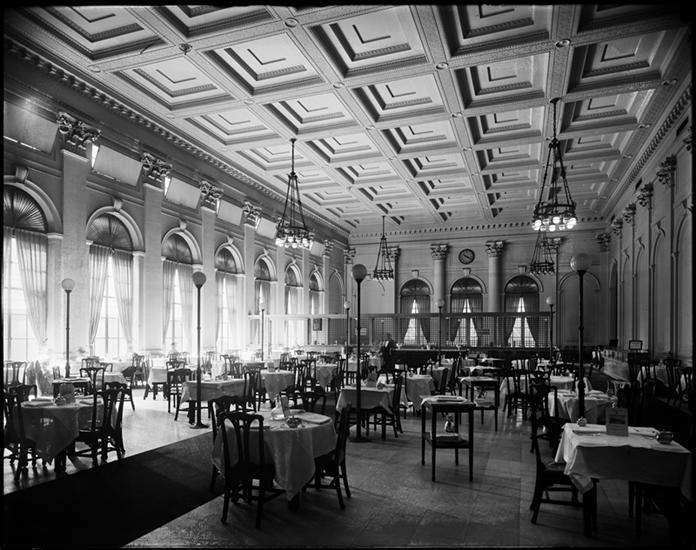
The Pennsylvania Station restaurant, found after one stepped through the arcade but before the waiting room.
MCNY/McKim Mead and White
The train concourse, 1911
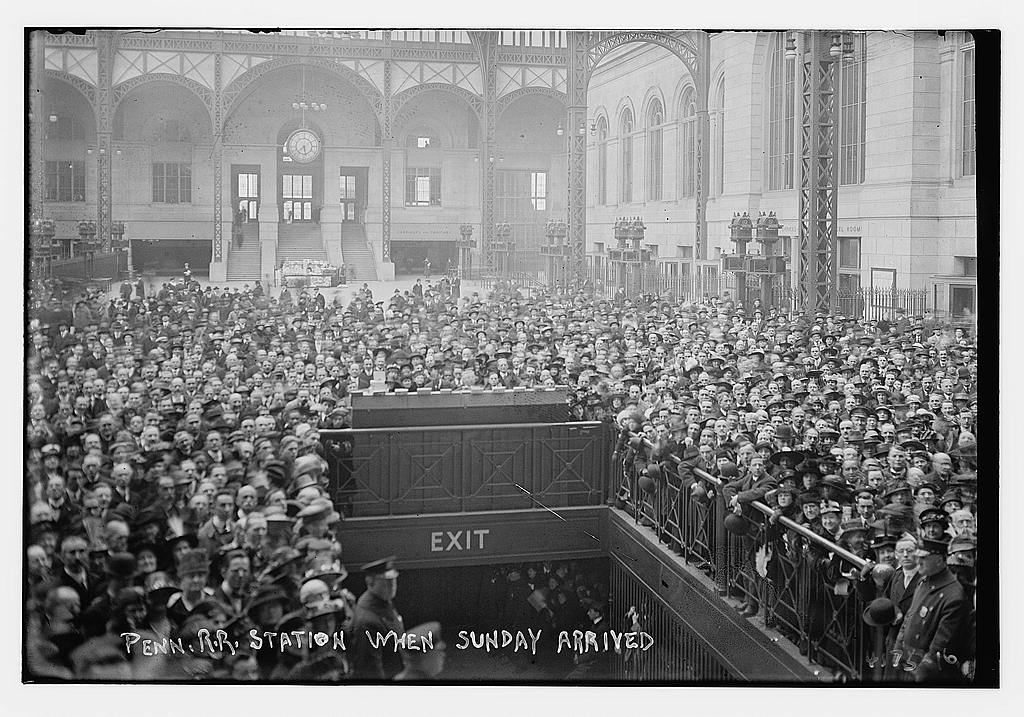
1910 — Library of Congress/clean-up version Shorpy
Awaiting the arrival of preacher Billy Sunday. (Read more about the context of this extraordinary picture here.)
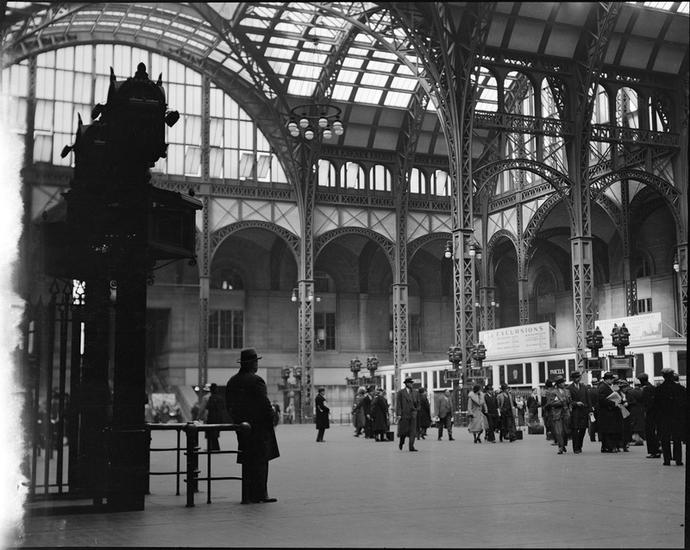
Library of Congress1936 — MCNY/Wurts BrothersMCNY/Berenice AbbottNYPL/Berenice Abbott
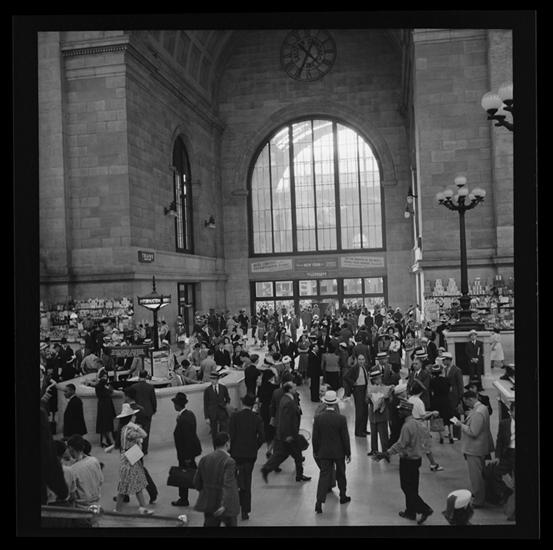
The view of the concourse from the Grand Waiting Room, 1939
Museum of the City of New York
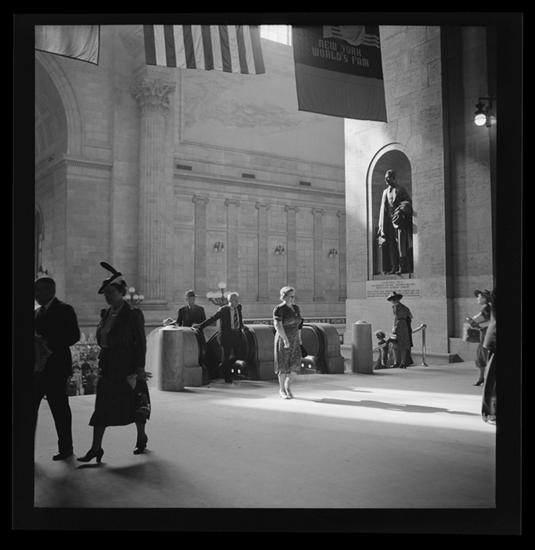
The loggia, leading to the grand staircase, 1939
Museum of the City of New YorkNew York Public Library
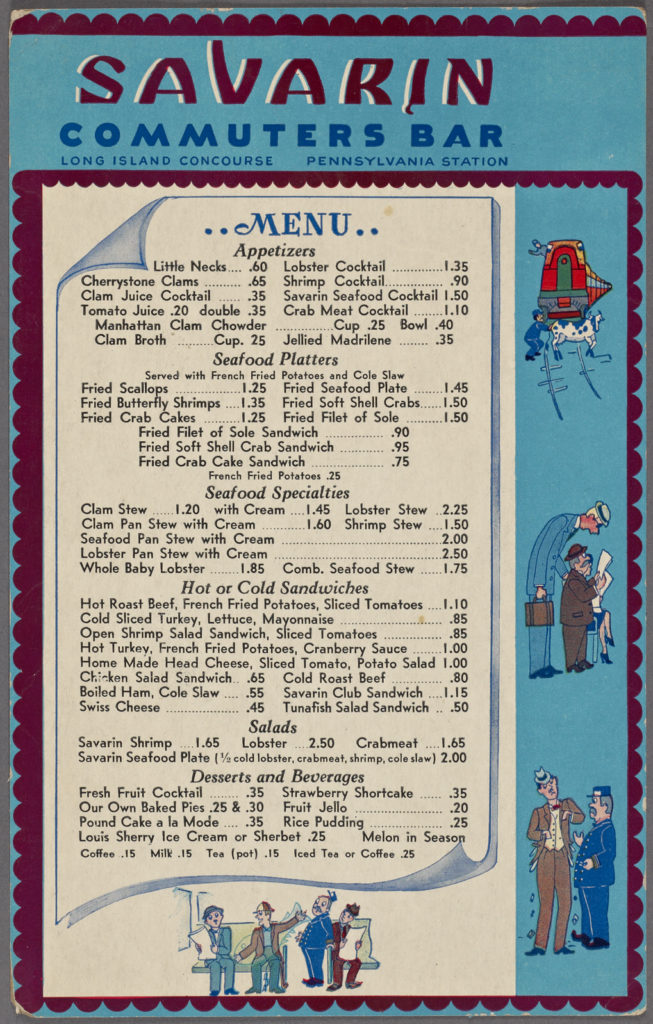
A 1955 bar menu from the Penn Station restaurant/bar
NYPL
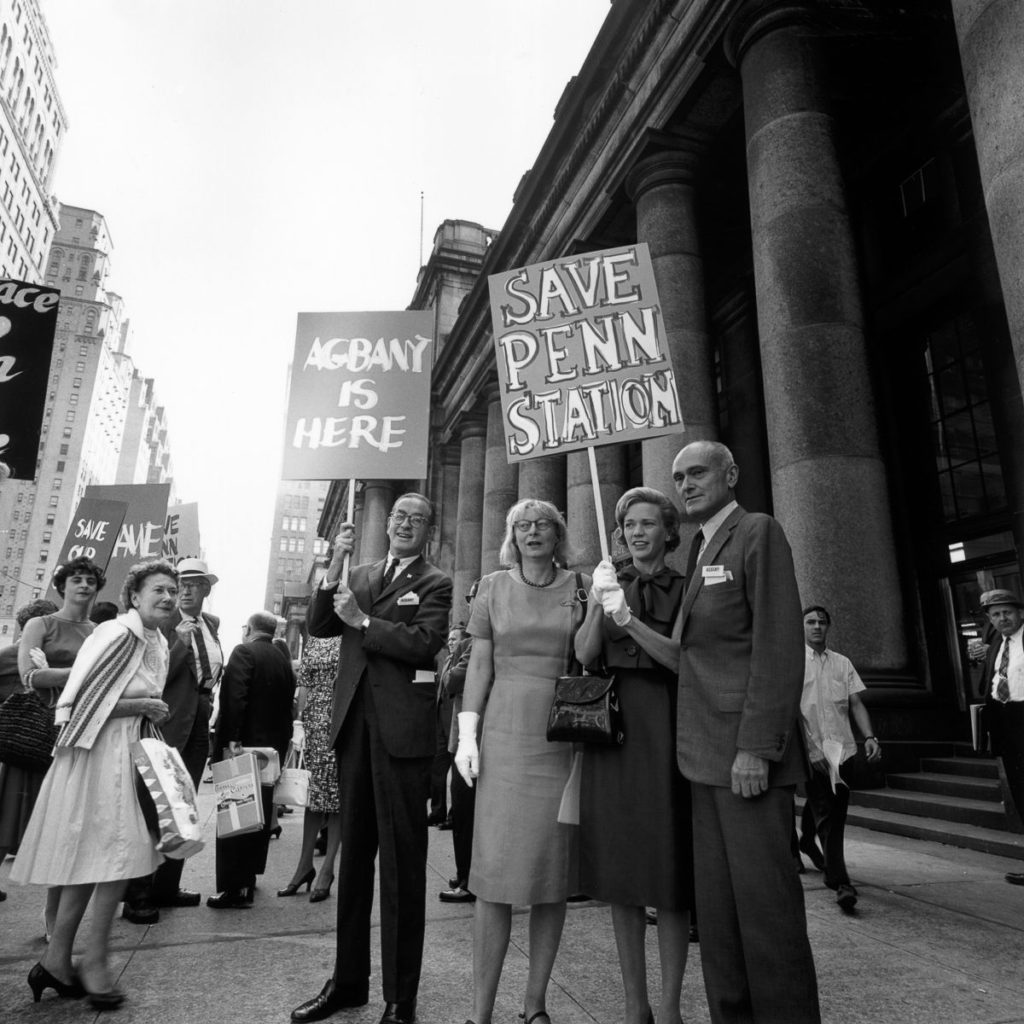
The AGBANY protesters including Philip Johnson and Jane Jacobs.
WALTER DARAN/HULTON ARCHIVE/GETTY IMAGE
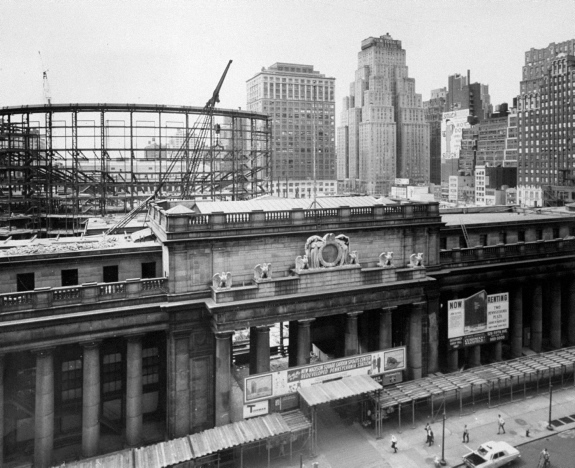
Madison Square Garden rose as old Penn Station was slowly demolished.
New York Daily NewsNorman McGrath/New York TimesNEW YORK DAILY NEWS/GETTY IMAGES
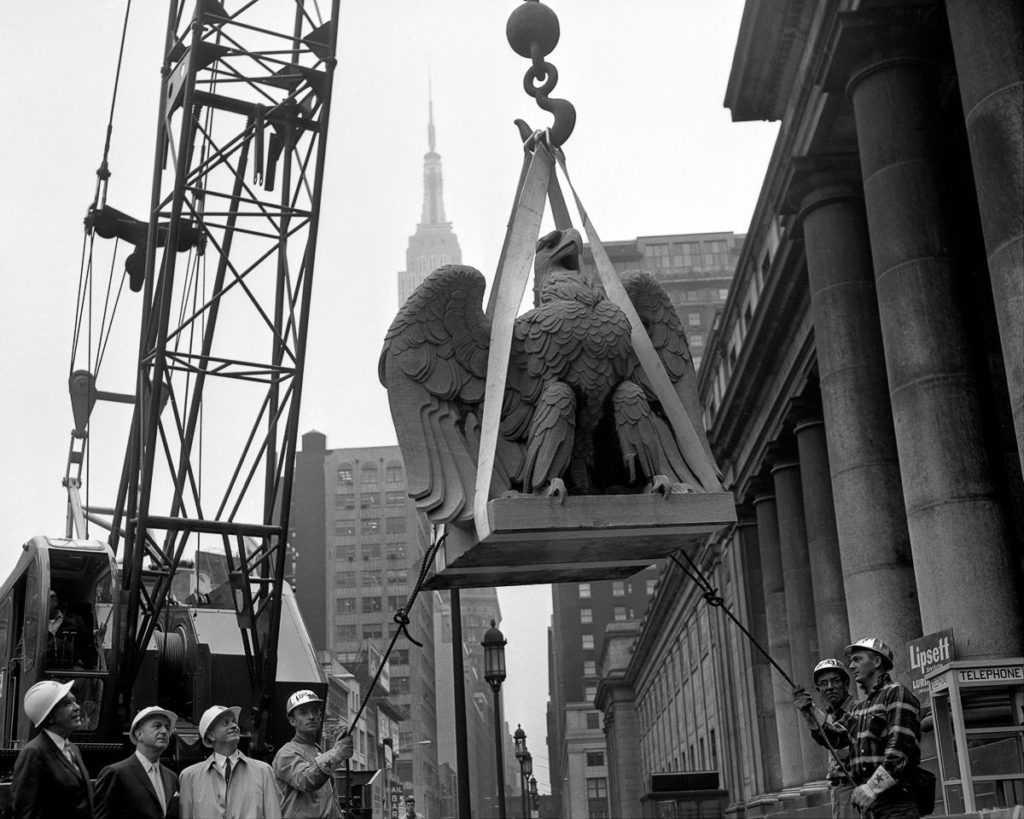
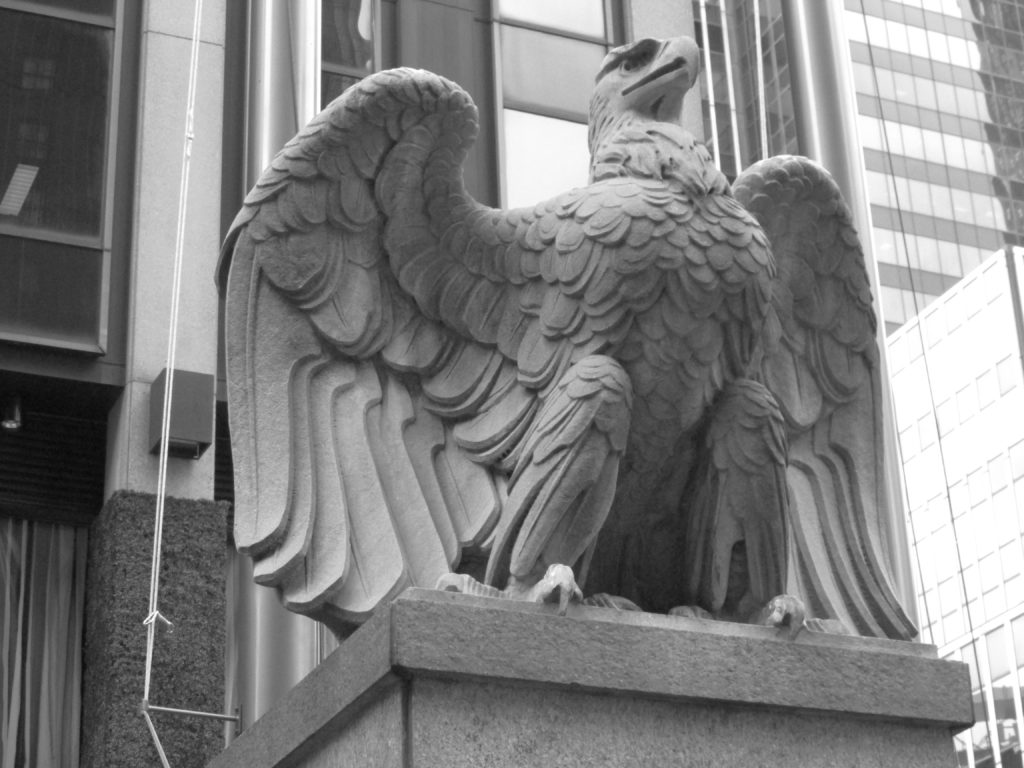
A couple eagles still flank the 7th Avenue side of the Madison Square Garden/Penn Station complex today.
Greg Young
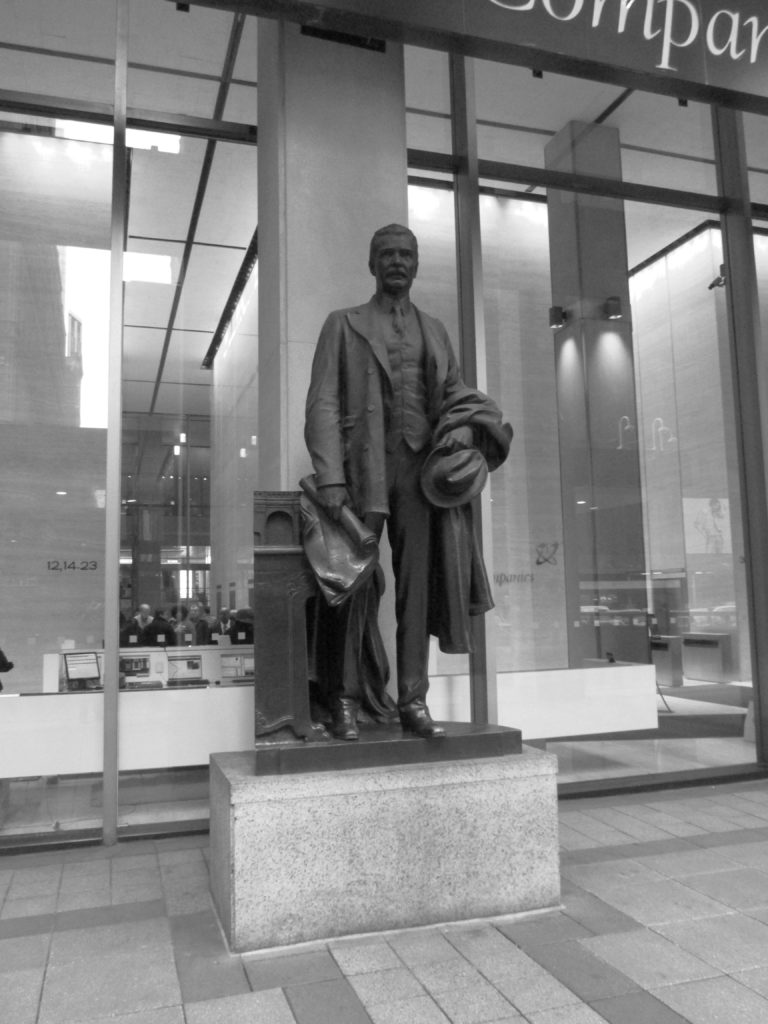
The Samuel Rea statue that once greeted commuters from the original Penn Station loggia. In his hands are blueprints to the old Penn Station and a model of the station to his side.
Greg Young
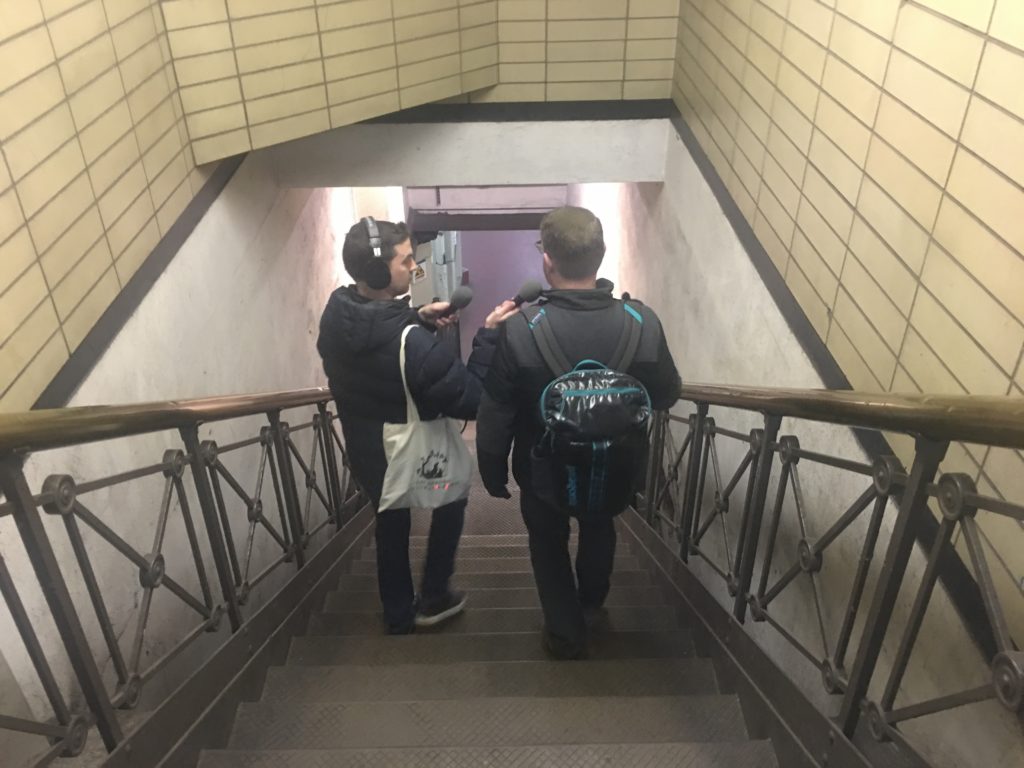
Tom and Untapped Cities guide Justin Rivers walking down one of the original Penn Station departure staircases, still in operation.
FURTHER READING The Late Great Pennsylvania Station by Lorraine B. Diehl Conquering Gotham: The Construction of Penn Station and Its Tunnels by Jill Jones Old Penn Station by William Low Pennsylvania Station: McKim, Mead and White by Steven Parissien
The story of Pennsylvania Station involves more than just nostalgia for the long-gone temple of transportation as designed by the great McKim, Meade and White. It’s a tale of incredible tunnels, political haggling and big visions.
Special thanks to Kieran Gannon for helping with editing this week’s show.
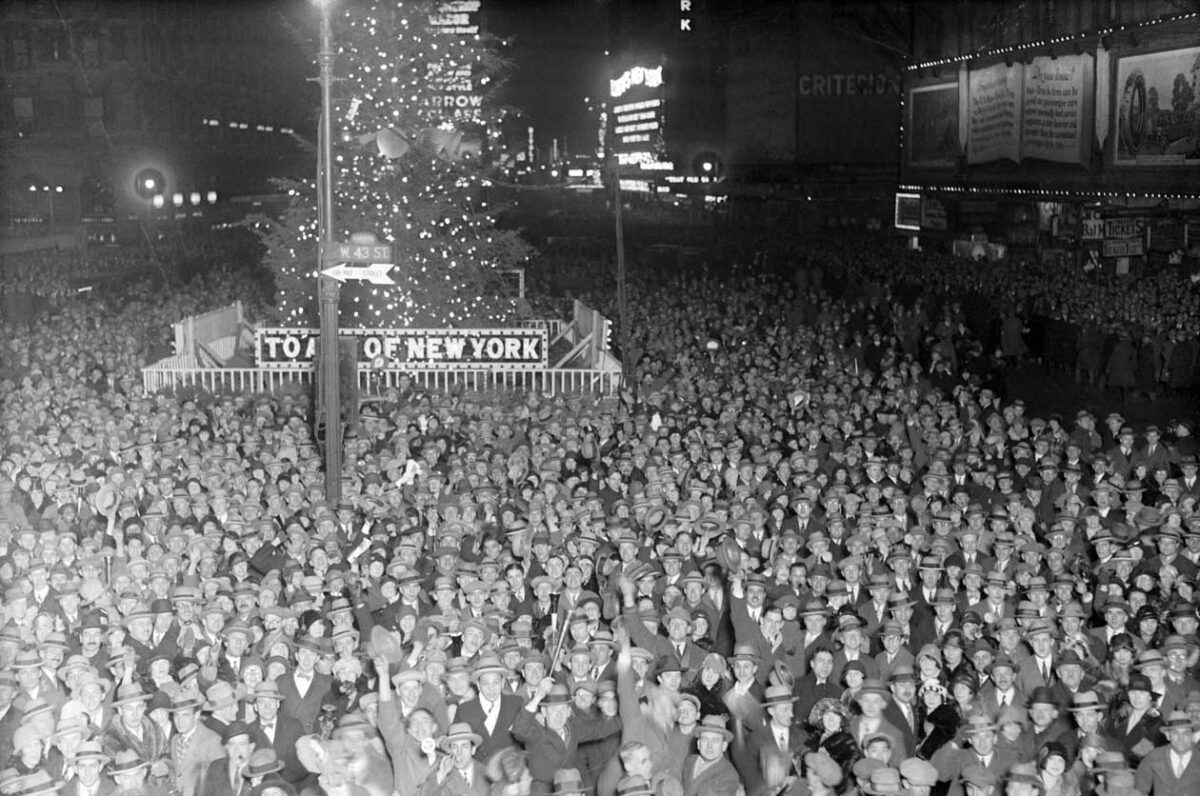
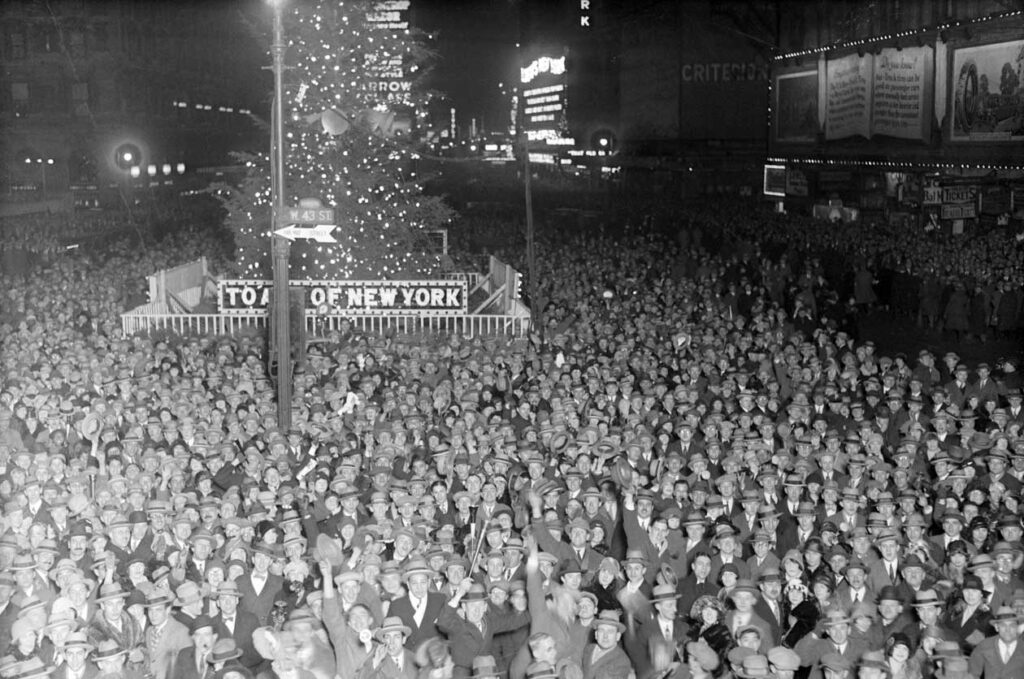
At the Times Square ball drop in 1926, Getty Images
For more information on the history of Times Square’s New Year’s celebrations, listen to our show A New Year In Old New York:
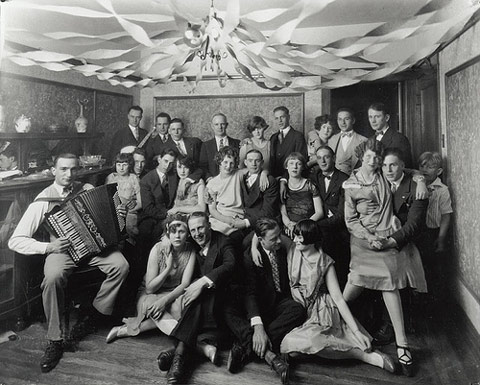
One hundred years ago, Americans rang in the new year in an entirely new way — without legal liquor.
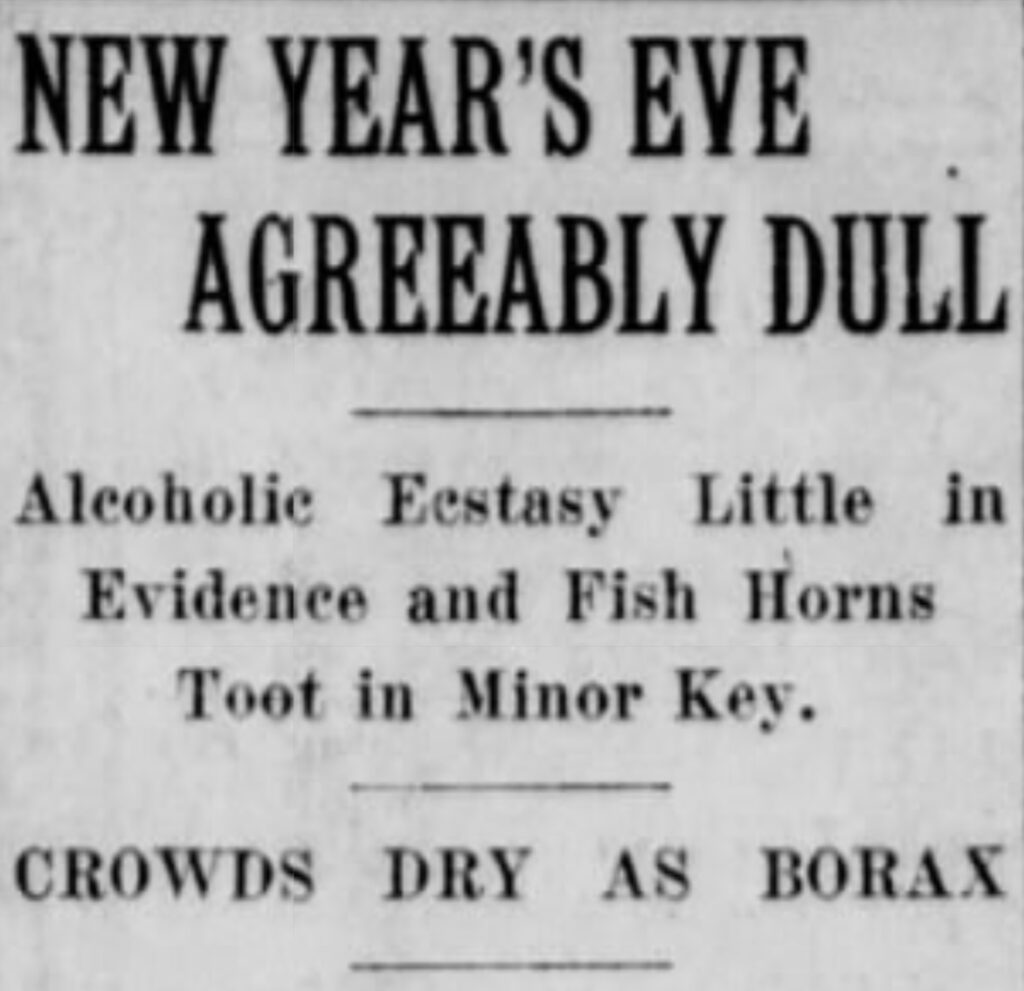
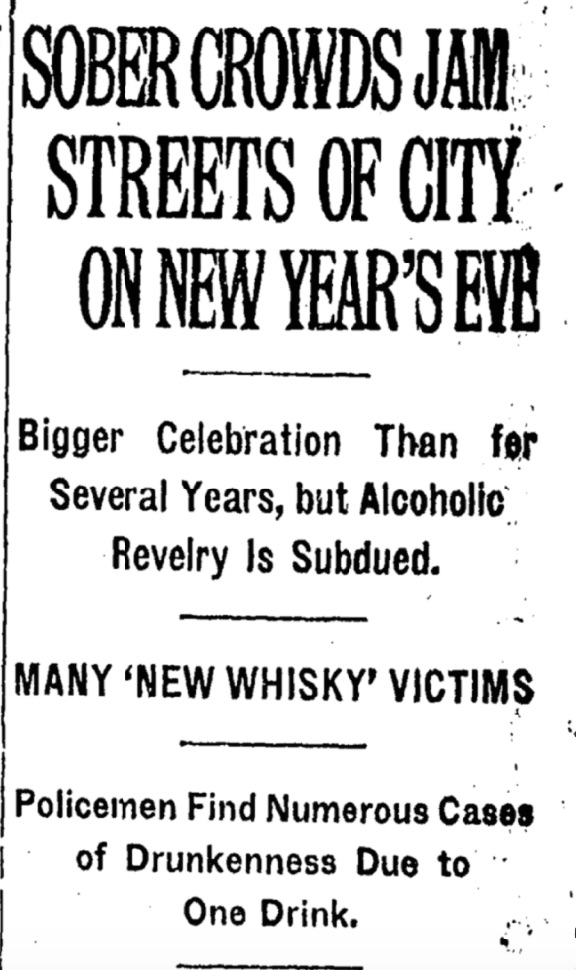
“New Year’s Eve Agreeably Dull,” declared the New York Herald. “Sober Crowds Jam Streets of City on New Year’s Eve,” observed the New York Times.
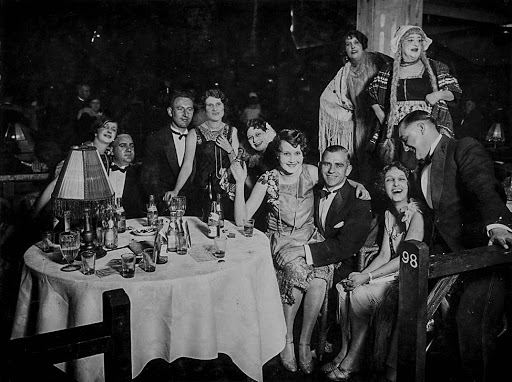
But look more closely and you’ll find the mad revelry was still there, sequestered in hotel rooms, brandished by defiant saloons or tucked away in a coat pocket.
The Eighteenth Amendment, prohibiting the production and sale of alcohol in the United States, had actually gone into effect almost 12 months before — on January 17, 1920.
Partygoers welcoming in the year 1920 knew that access to liquor would soon be shut down courtesy the Volstead Act, the law that enforced the new amendment.
According to the New York Herald, “A year ago the stuff could be toted around with perfect legality and in the course of the revelry thousands of bottles of it were given away to diners by restaurant men who took prohibition seriously and now curse their folly.”
Why “curse their folly”? Over the past eleven months, liquor manufacturing and distribution had gone underground.
The thirst for alcohol simply became more discrete. And hotels and restaurants could now charge extra for their secretive stashes of wine and champagne. (Not to mention their Manhattans and martinis.)
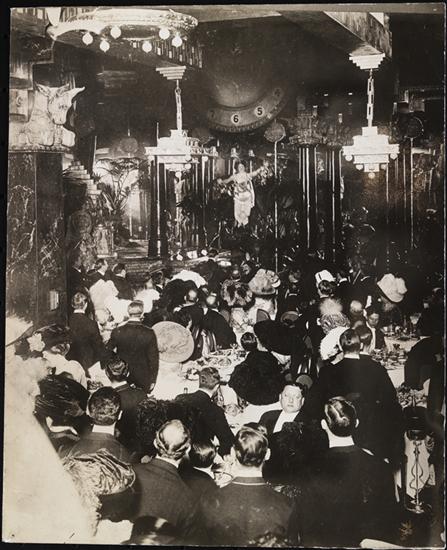
New Years’ Eve at Rector’s, 1910, courtesy Museum of the City of New York
And so the last hours of 1920 saw the birth of an entirely different party — where the added element of secrecy and lawbreaking added a new, wilder dimension for many.
The new style of revelry become obvious early in the evening. Oddly enough, Prohibition killed off more conservative celebrations where the crowds tended to be older and speakeasies less available. Without champagne, what was the point of braving a crowd?
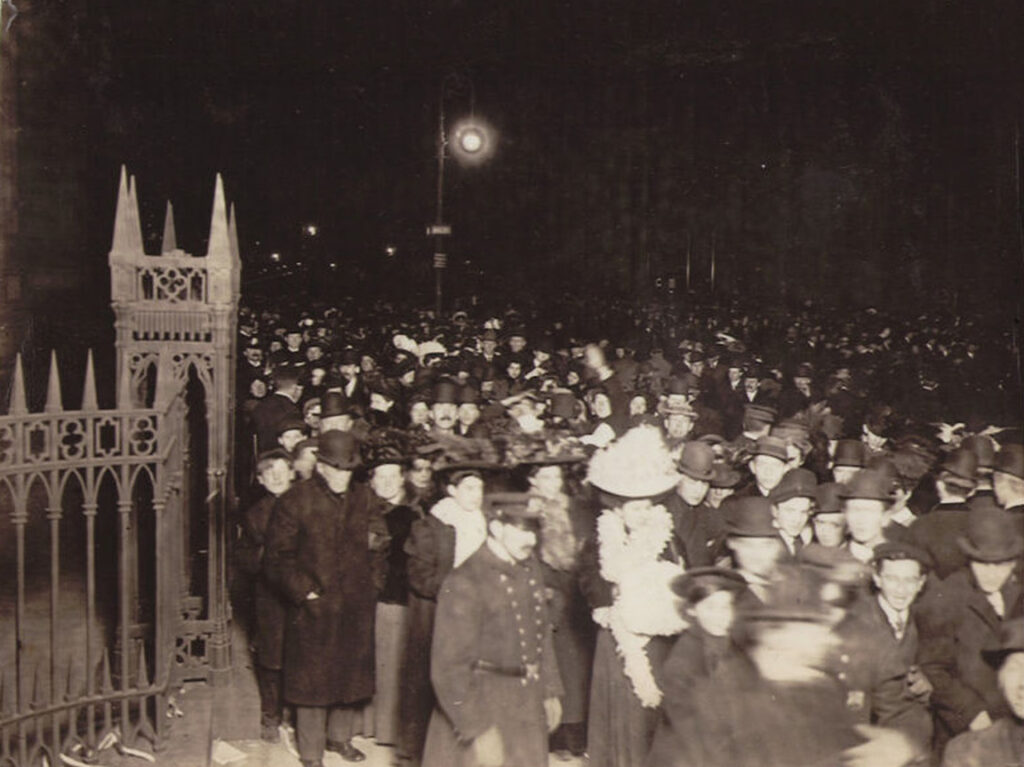
Witness the scene downtown at the ‘traditional’ celebration around Trinity Church:
“In past years Park Row and lower Broadway have been crowded paths for those who marched to Trinity early to hear the chimes. These crowds used to shriek with ratchet and horn and it took extra police to keep them in line.
“Last night the police were there and lonesome.” [source]
Below: In the early 1900s, before the popularity of Times Square, crowds flocked to Trinity to hear the midnight chimes.
As one headed uptown, further evidence seemed to suggest a dampened party vibe that year — even in Times Square:
“A policeman in Longacre Square said it was the smallest turnout he had seen in his fifteen years in the precinct. It almost reminded one of the storied past, when whole families stayed at home and played charades for New Year’s Eve, when friends went to friends’ houses for holiday dinner and when people drank little or no liquor, there being no law to violate.”
Yet as the clock drew near to the midnight hour, crowds did suddenly appear.
From the New York Times, January 1, 1921
And many of those celebrants did express a certain glow found only from illicit and overly potent intoxicants.
“The throngs in the hotels and streets, probably the largest in the history of the city, saw an entirely new kind of celebration,” wrote the New York Times the following day. “The big crowd was roughly divided into two classes, the vast majority who were cold sober and a small minority who were hopelessly to the contrary.”
New York City was experiencing its first New Year celebration without legal liquor — which meant absolutely nothing.
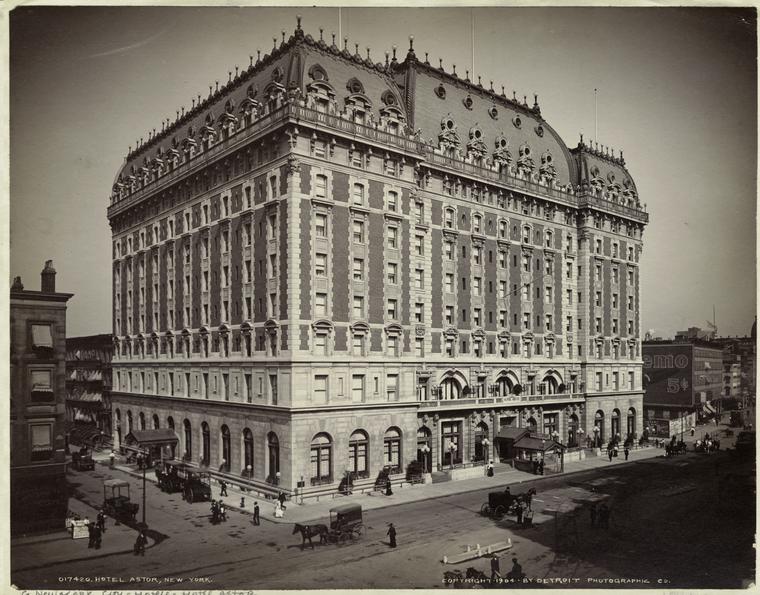
The Hotel Astor in Times Square, pictured here in 1904. Courtesy NYPL
Liquor had not vanished.
Due to rather lax enforcement of the Volstead Act among high-end establishments — poorly paid Prohibition officers were easily bribed — liquor sales actually flourished in the Times Square area if you knew where to look.
“All the restaurant, hotel and saloon managers said with affecting solemnity that they were not selling a thing, and wouldn’t allow a drop to be brought into the house on the hip or elsewhere. Some of them meant it.
“Yet the streets were full of walking bulges and where did the bulges go when they left the street but into the — some of the — hotels and restaurants?” [source]
Celebrations carried on indoors in the finest hotels and restaurants as always but now the liquor stayed indoors as well, clandestine and under the counter. Champagne was just as likely sipped from coffee cups as from glamorous cocktail glasses. But it certainly tasted the same.
Many saloons boldly served alcohol out in the open. “The uninitiated would sometimes walk [into a saloon], look around timidly, see the backs of two or three policemen and then feel safe in demanding a glass of nice fresh whisky.” [NYT]
While some did risk a flask out in the street, many in Times Square preferred to revel within the walls of places like the Hotel Astor or the Hotel McAlpin until a few minutes before midnight — and, for many, why bother leaving at all?
Below: Times Square on New Year’s Eve just a few years later, 1926 (Getty Images)
And then of course there was the abundance of medical services available.
“For some reason a dozen hotels, taking counsel from experience, established yesterday fully equipped medical stations with physicians and nurses in attendance. The nurses’ registry offices were besieged with calls all day for nurses for emergency duty, one hotel offering $2o as a bonus for a single night’s work.” [Herald]
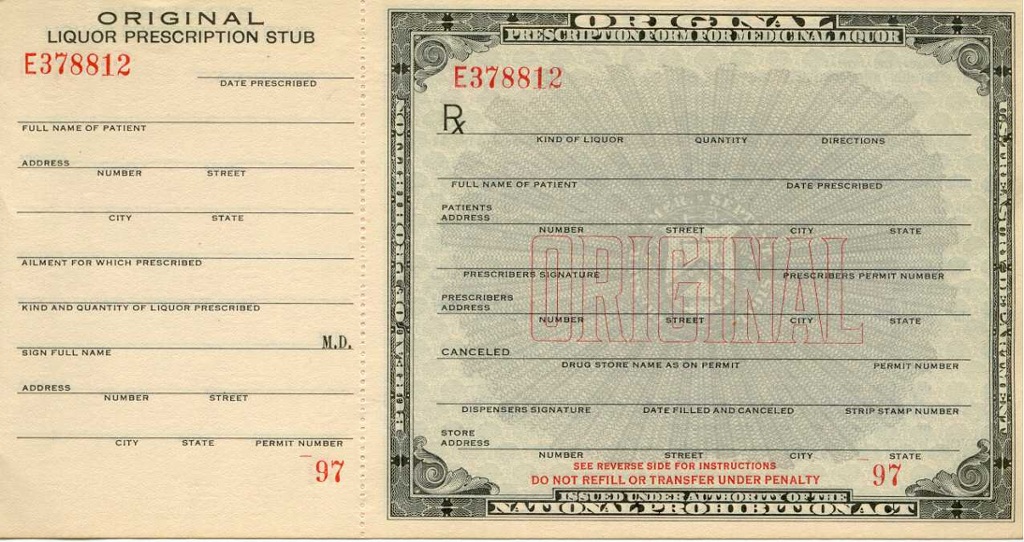
A Perscription for alcohol used during Prohibition, courtesy Smithsonian
According to the Smithsonian, “during Prohibition, the U.S. Treasury Department authorized physicians to write prescriptions for medicinal alcohol. Licensed doctors, with pads of government-issued prescription forms, advised their patients to take regular doses of hooch to stave off a number of ailments—cancer, indigestion and depression among them.”
I imagine a few hastily written prescriptions were dispensed that evening. Curing whatever ailed you!
But some of that medical experience was put to good use as many partygoers drank poisoned, inferior alcohol — called ‘new whisky’ by the New York Times — to great excess, brought in from other places.
New York had never seen so many sloppy drunks.
“The joy of being illegal became more intense than ever before.”
The act of ringing in the year 1921 easily proved that Prohibition was completely unenforceable in the biggest city in the United States — amid the centers of entertainment and vice, with law enforcement so used to looking the other way.
Between Greenwich Village, Midtown Manhattan and Harlem alone, thousands of speakeasies would operate without disruption over the next decade.
Writes Esad Metjahic: “It would be fair to say that New York City never truly accepted prohibition. Laws were passed, an amendment ratified, and even police task forces trained to enforce these laws, but the City of Immigrants never gave in.”
Happy New Year!
For more information, check out our podcasts on New Years Eve AND on the early days of Prohibition:
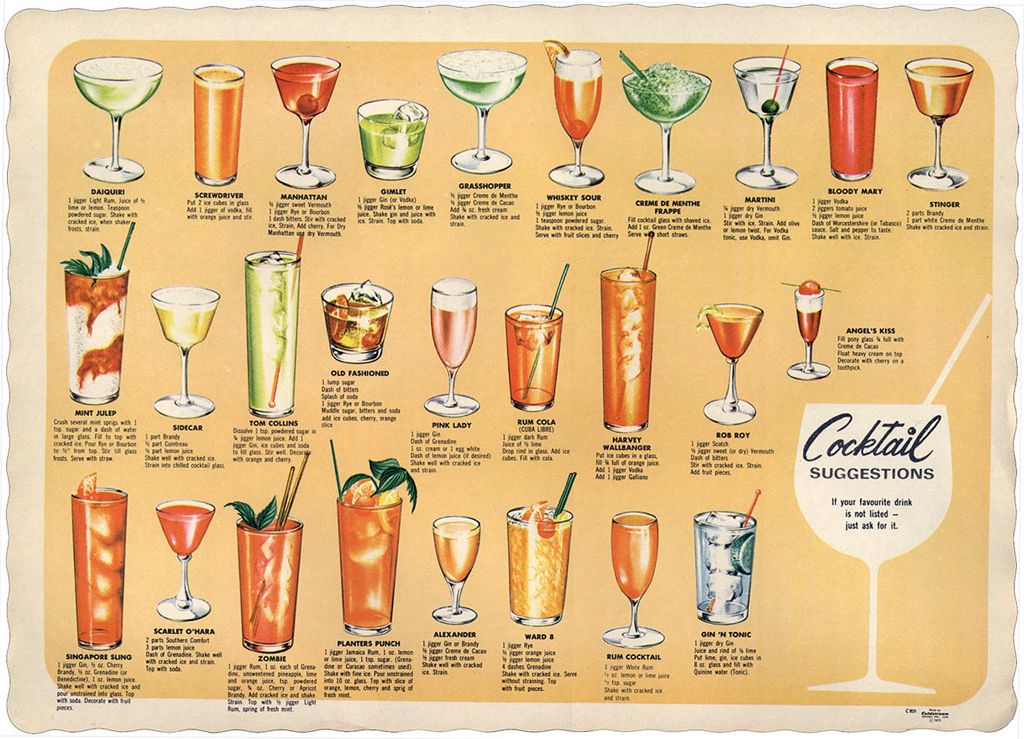
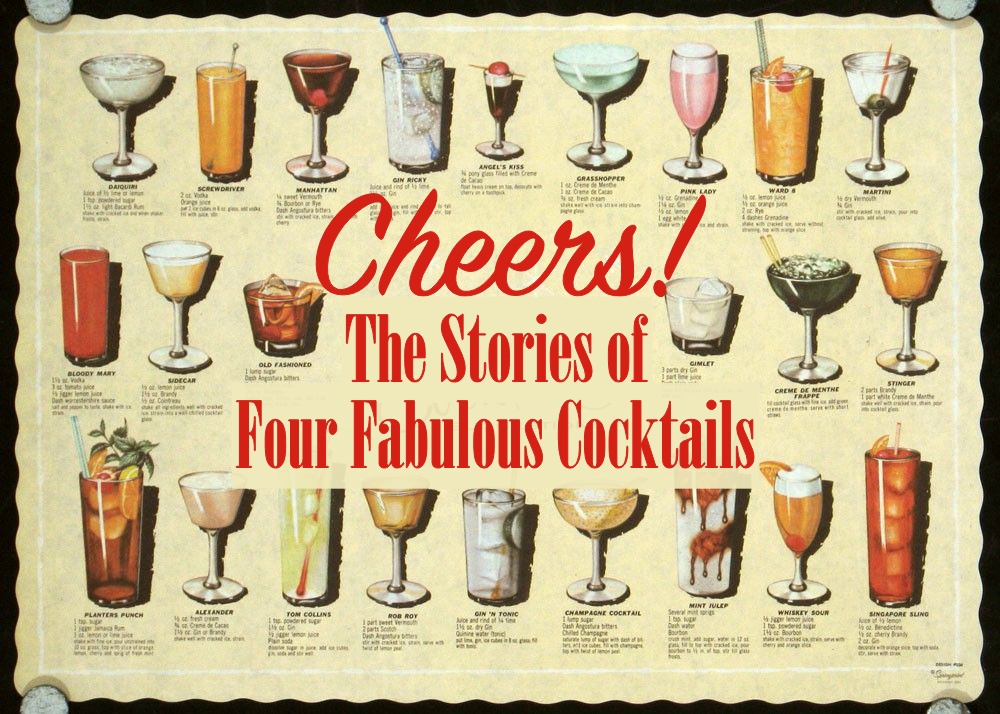
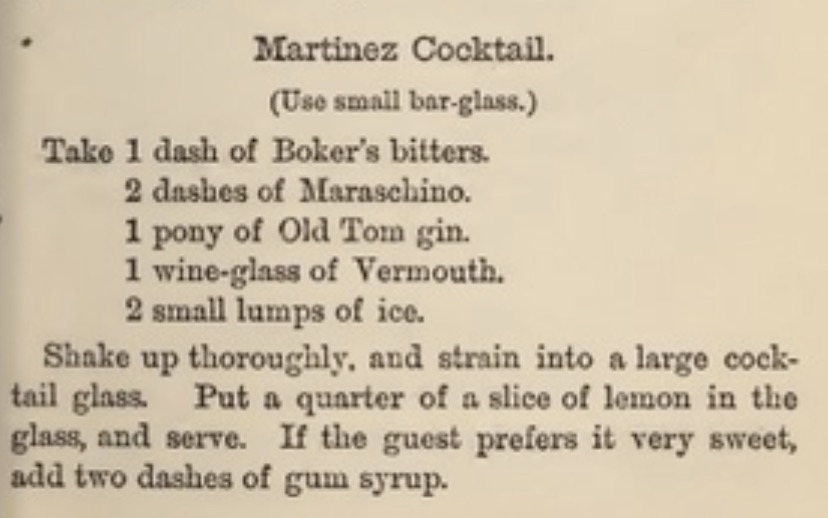
EPISODE 348 It’s the happiest of hours! The tales of four fabulous cocktails invented or made famous in New York City’s saloons, cocktail lounges, restaurants and hotels.
Cocktails are more than alcoholic beverages; over the decades, they’ve been status signifiers, indulgences that show off exotic ingredients or elixars displaying a bit of showmanship behind the bar.
In this podcast, we recount the beginning days of four iconic alcoholic drinks:
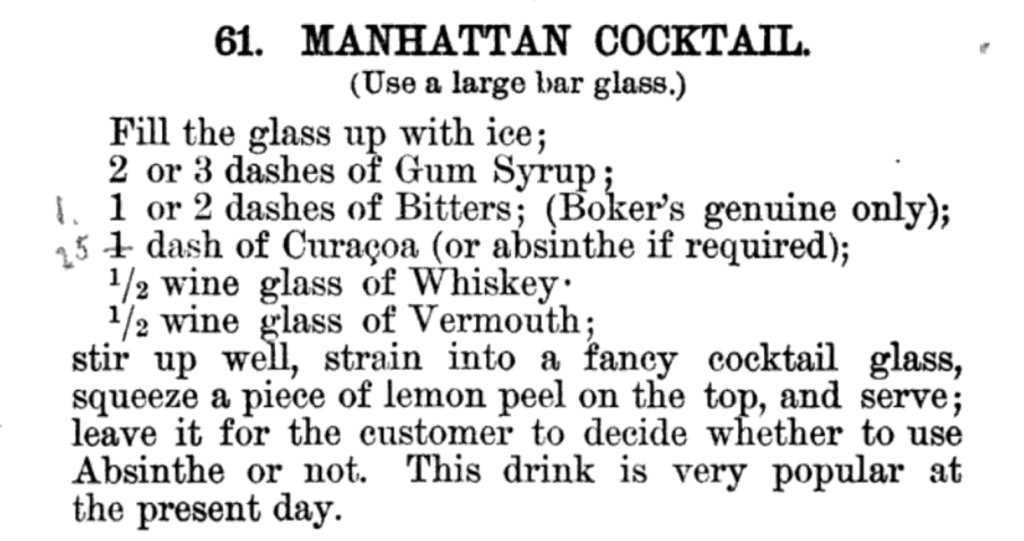
— The Manhattan: How an elite Gilded Age social club may have invented the cocktail for a new governor of New York;
— The Bloody Mary: A Parisian delight, enjoyed by the leading lights of the Jazz Age, makes it way to one of New York’s most famous hotels;
— The Martini: A drink of mysterious origin and potency becomes New York City’s most popular drink — and a curious lunchtime companion;
— The Cosmopolitan: Tracing the history of a new cocktail classic from Provincetown to San Francisco — and into two of New York’s most famous 1980s hangouts
LISTEN NOW — THE ORIGIN OF FOUR FABULOUS COCKTAILS
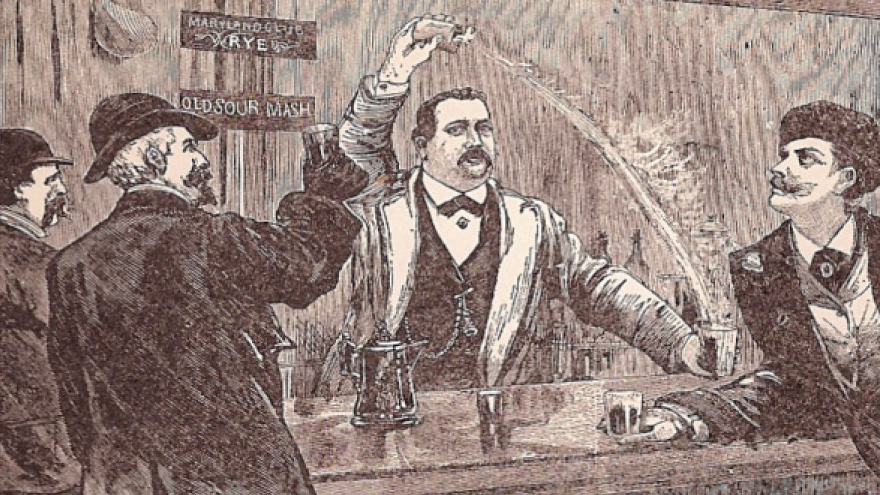
Professor Jerry Thomas, serving fire drinks to New York patrons.
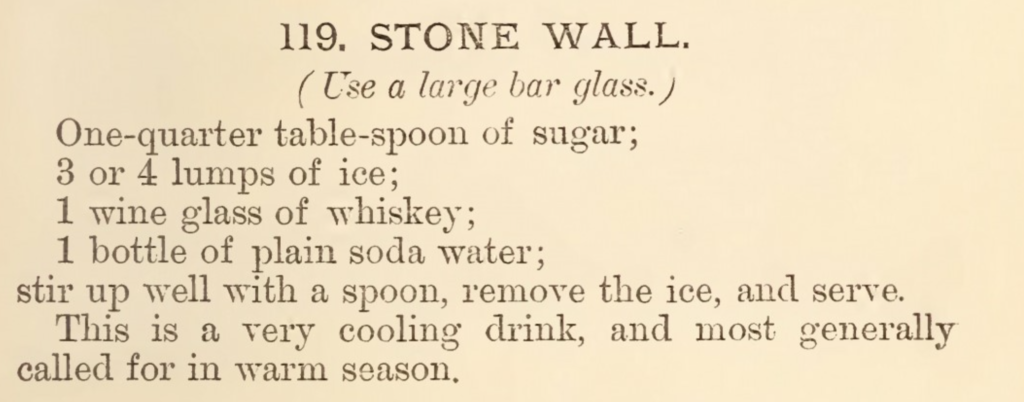
From Jerry Thomas’ bartender guide (1887 edition). Read the whole guide here.
(OR ABSINTHE IF REQUIRED)
The Bowery Boys: New York City History podcast is brought to you …. by you!
We are now producing a new Bowery Boys podcast every other week. We’re also looking to improve and expand the show in other ways — publishing, social media, live events and other forms of media. But we can only do this with your help!
We are now a creator on Patreon, a patronage platform where you can support your favorite content creators.
Please visit our page on Patreon and watch a short video of us recording the show and talking about our expansion plans. If you’d like to help out, there are six different pledge levels. Check them outand consider being a sponsor.
We greatly appreciate our listeners and readers and thank you for joining us on this journey so far.
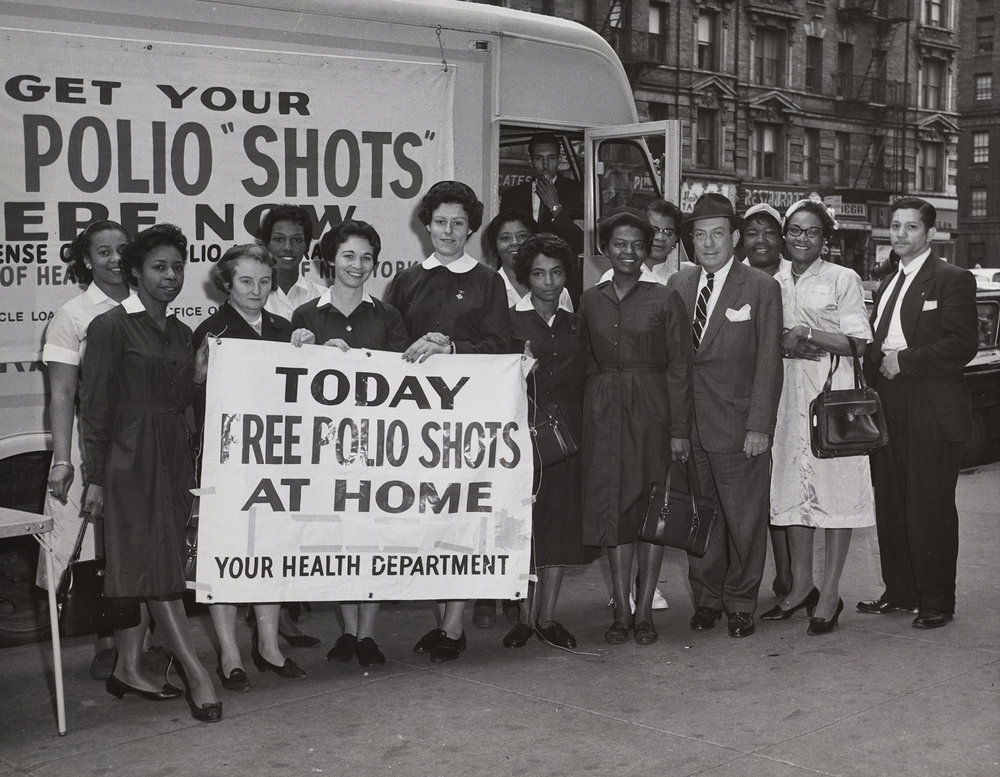
A mobile vaccine station on 84th Street and Amsterdam Avenue in 1961. Department of Health Collection, NYC Municipal Archives.
We released the following show on the history of vaccines back in early April 2020 when the idea of a COVID 19 vaccine seemed little more than distant fantasy.
Just this past Monday, on December 14, Sandra Lindsay, the director of critical care at Long Island Jewish Medical Center in Queens became the first American to receive the Pfizer COVID 19 vaccine in a non-trial setting.
And so this week we’re re-releasing this show — in a much more hopeful context this time around.
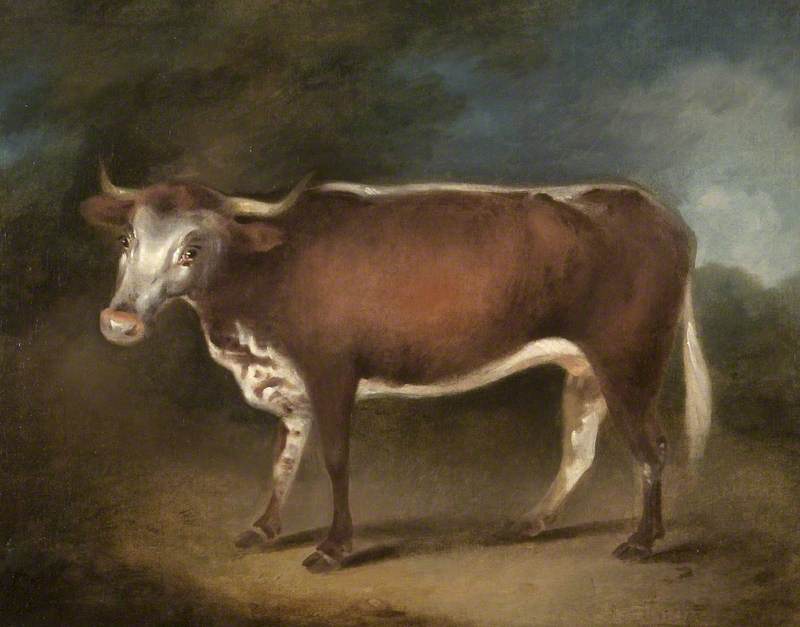
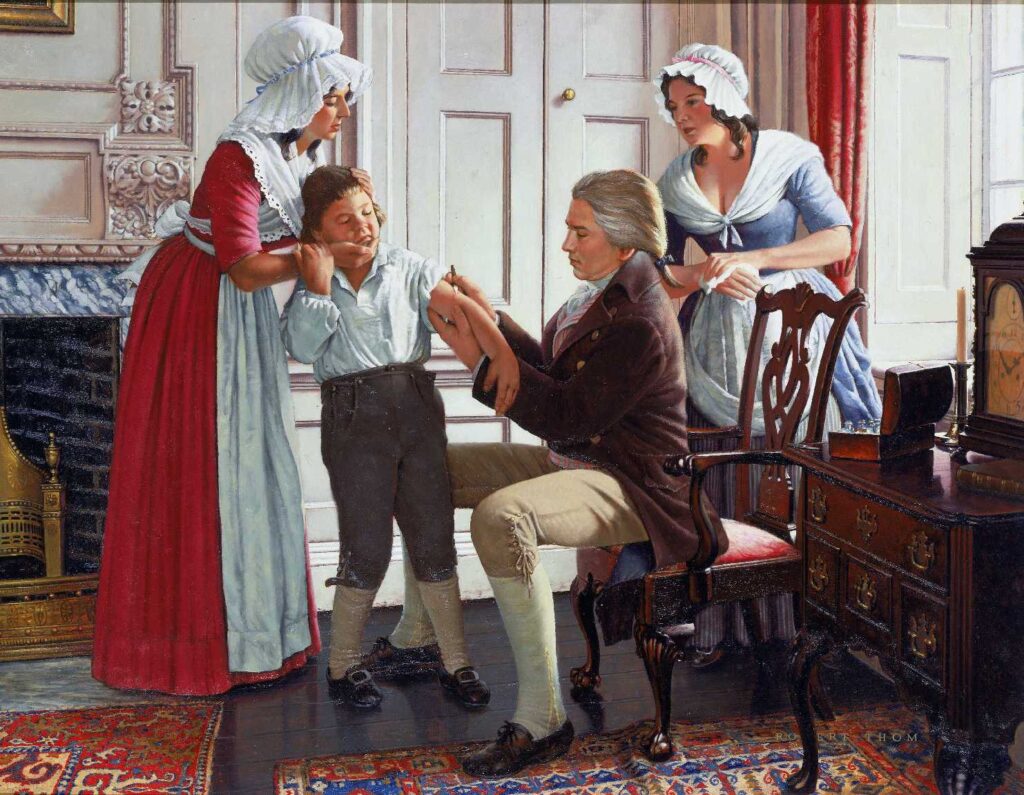
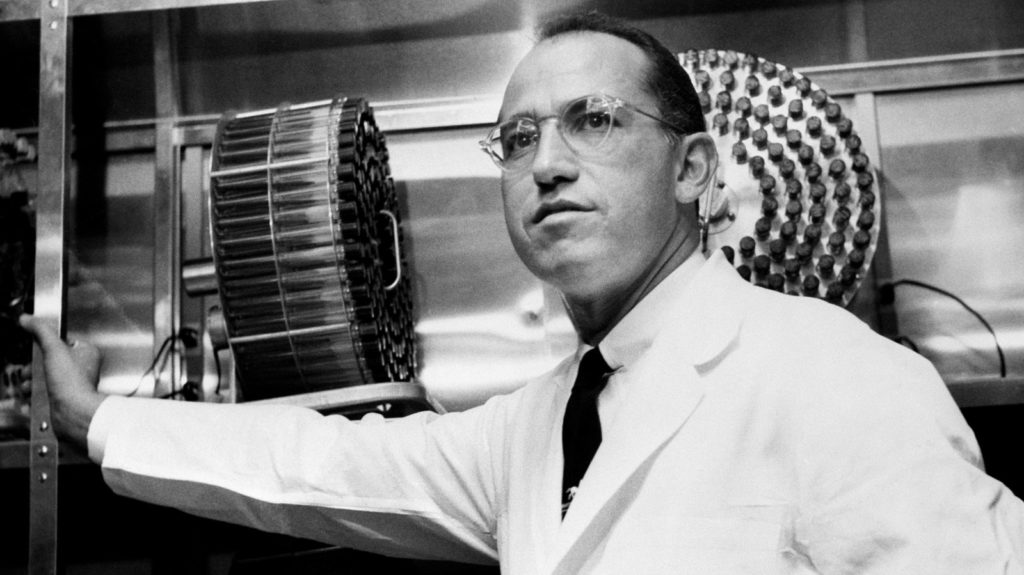
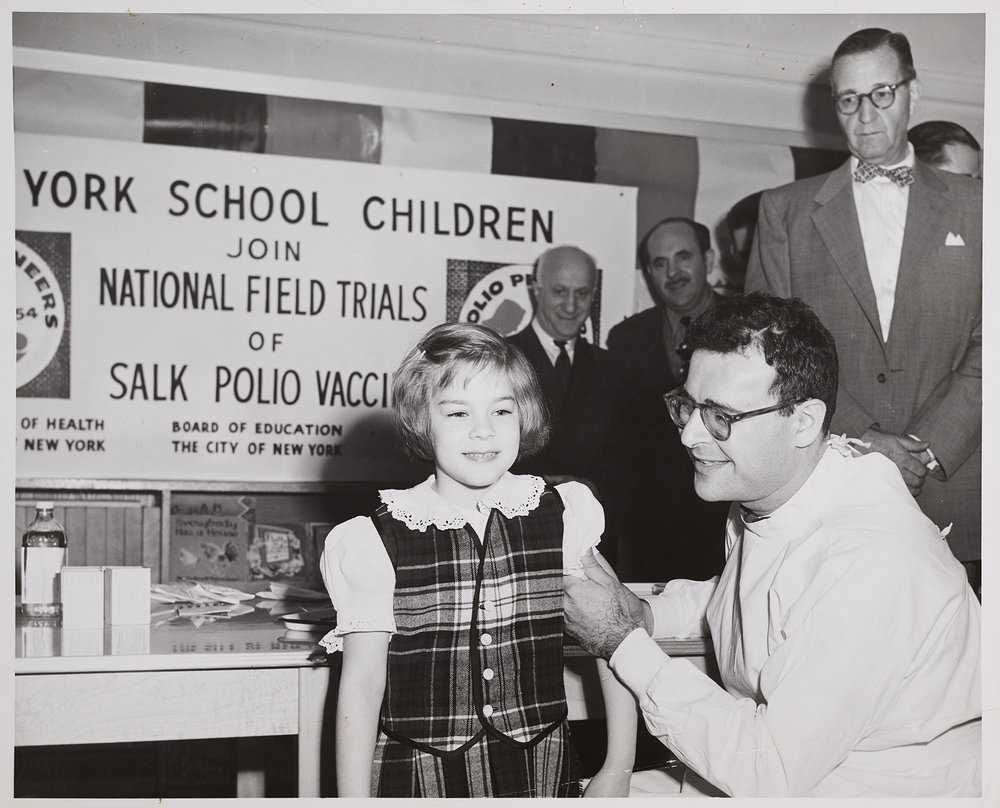
This is the story of the polio vaccines developed by Jonas Salk and Albert Sabin — and then a look at the origin of the vaccine itself, first developed to combat smallpox almost 225 years ago, thanks to Edward Jenner and a cow named Blossom.
Jenner, Stephen; ‘Blossom’, the Cow; Edward Jenner Museum; http://www.artuk.org/artworks/blossom-the-cow-62938
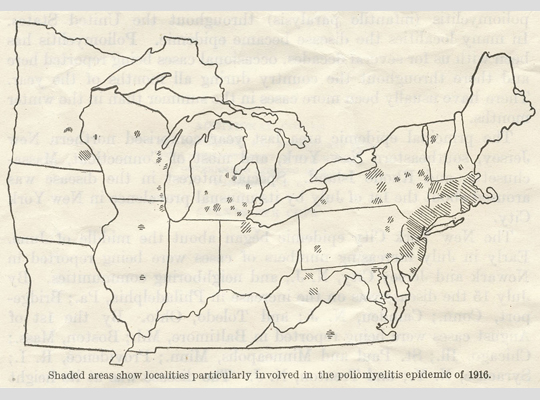
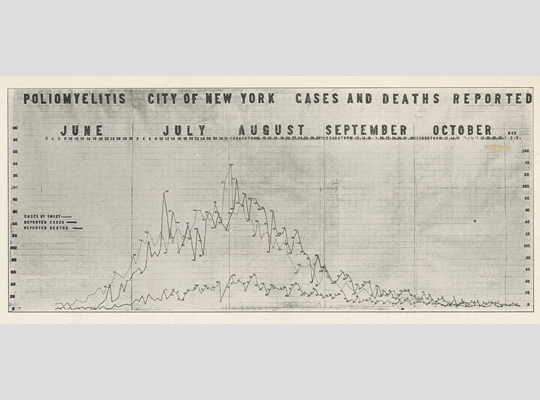
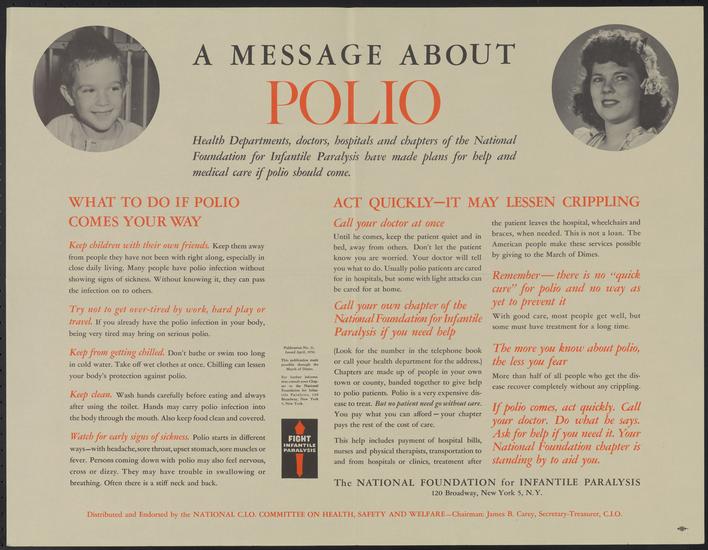
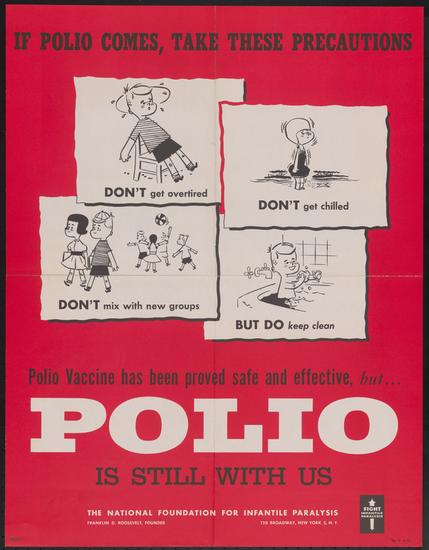
In 1916 New York City became the epicenter of one of America’s very first polio epidemics.
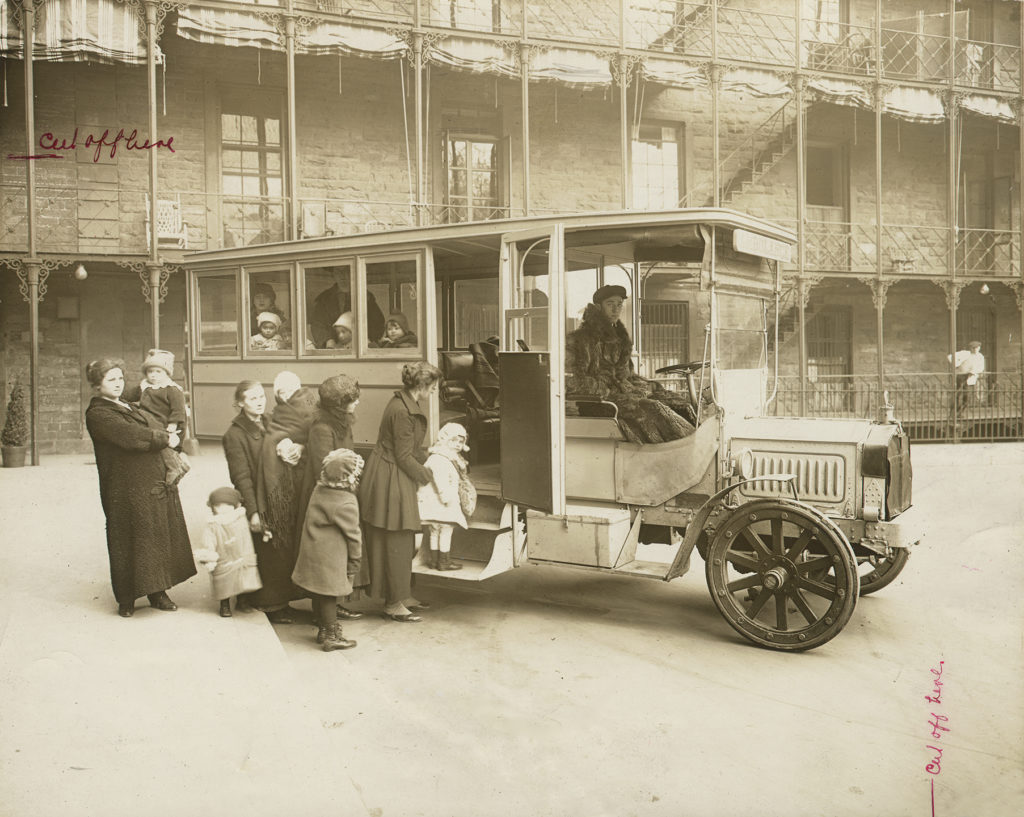
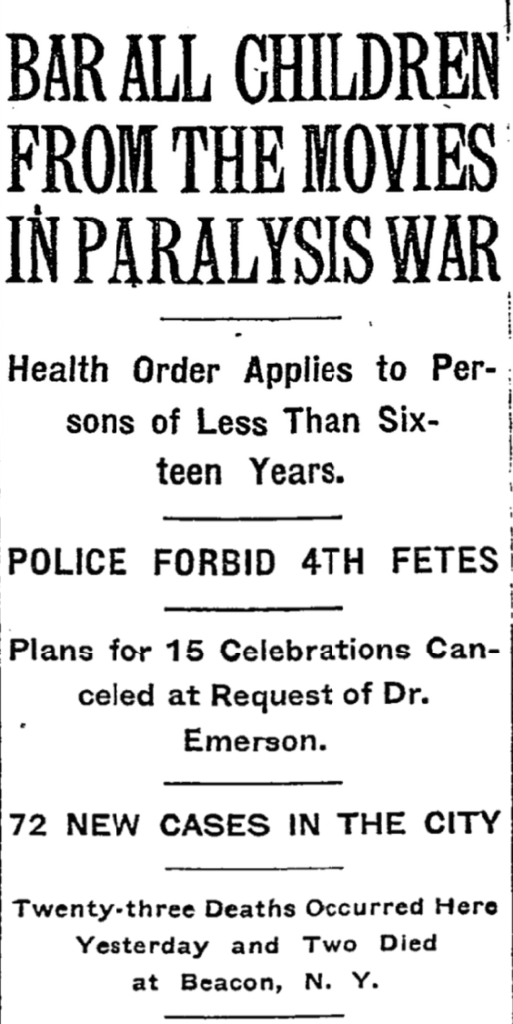
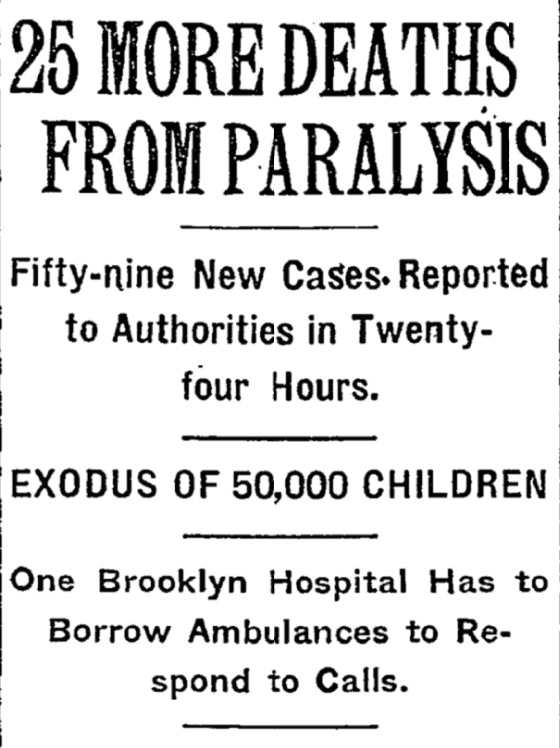
The scourge of infantile paralysis infected thousands of Americans that year, most under the age of five. But in New York City it was especially bad. The Department of Health took drastic measures, barring children from going out in public and even labeling home with polio sufferers, urging others to stay away.
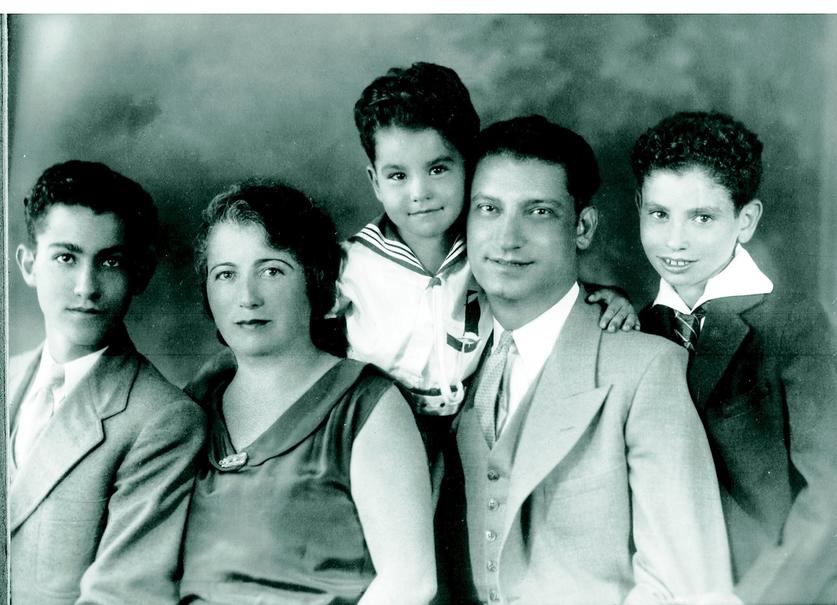
That same year, up in the Bronx, a young couple named Daniel and Dora Salk — the children of Eastern European immigrants — were themselves raising their young son named Jonas. As an adult, Jonas Salk would spend his life combating the poliovirus in the laboratory, creating a vaccine that would change the world.
In 1921 a young lawyer and politician named Franklin Delano Roosevelt would contract what was believed at the time to be polio. He would use his connections and power — first as governor of New York, then as president of the United States — to guide the nation’s response to the virus.
AND THEN: The second half of the show is devoted to the question — who came up the first vaccine anyway?
Once upon a time there was a country doctor with a love of birds, a milkmaid with translucent skin, an eight-year-old boy with no idea what he’s in for and a wonderful cow that holds the secret to human immunity.
This is the story of the first vaccine, perhaps one of the greatest inventions in modern human history. Come listen to this remarkable story of risk and bravery which led to the eradication of one of the deadliest diseases in human history.
And hear the words of Dr. Edward Jenner himself, written in the first weeks of his experiments!
LISTEN NOW — THE STORIES OF TWO HISTORIC VACCINES
Bellevue Hospital 1916, a bus with children and polio patients — Department of Public Charities Collection, NYC Municipal Archives.A map marking the places most severely hit by the polio epidemic in 1916. The Historical Medical Library of The College of Physicians of Philadelphia. Poliomyelitis (Infantile Paralysis). Prevalence and Geographic Distribution During 1916. Reprint no. 403. Public Health Reports. June 29, 1917. The Historical Medical Library of The College of Physicians of Philadelphia. The Epidemic of Poliomyelitis (Infantile Paralysis) in New York City in 1916. Department of Health of New York City, 1916.
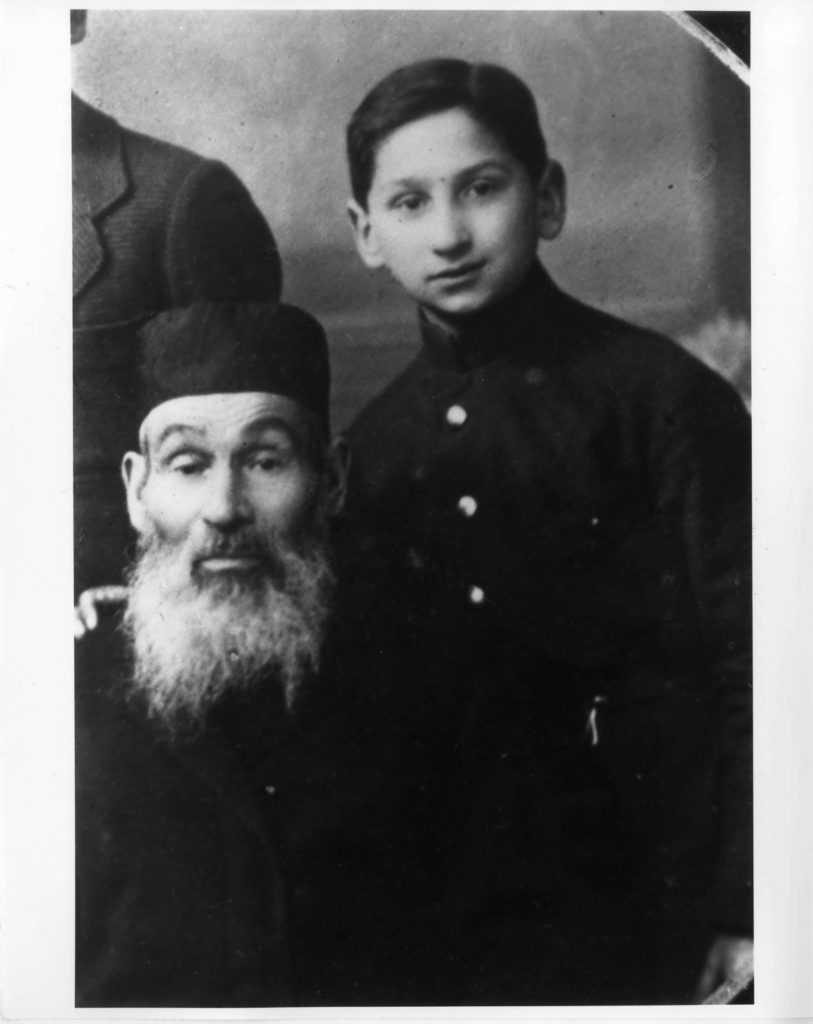
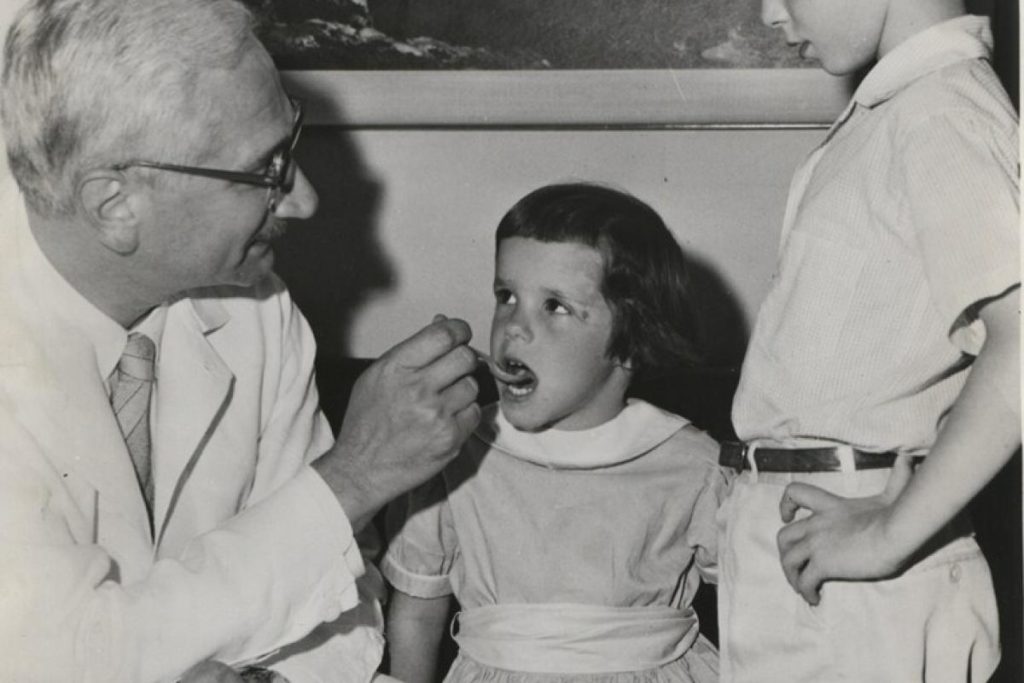
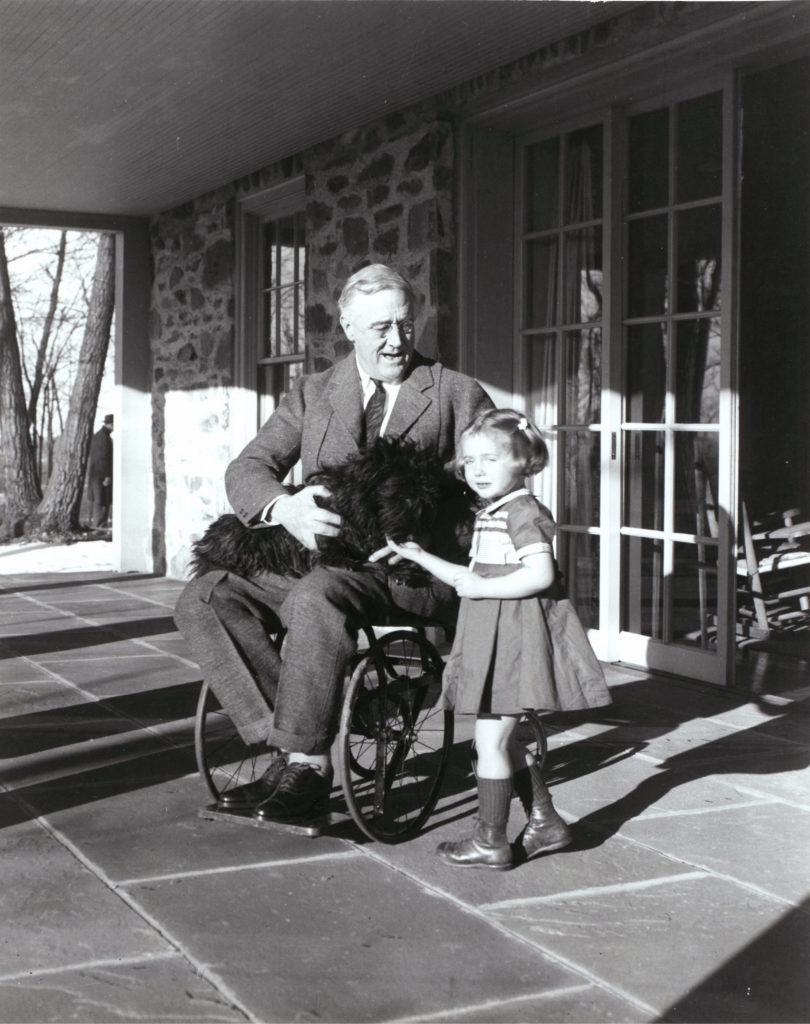
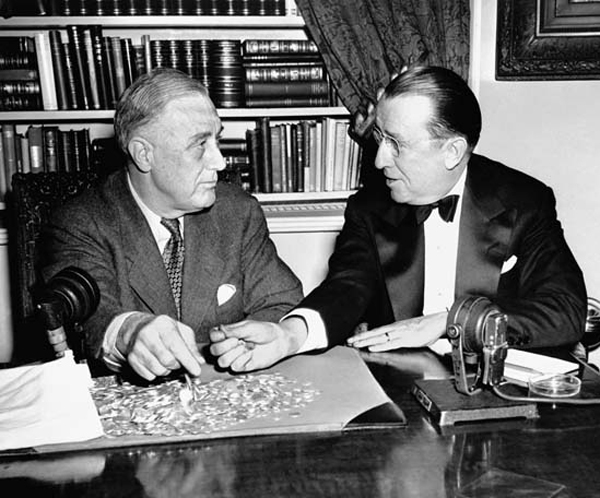
Young Jonas Salk (at far left) with his family. Picture courtesy San Diego Union TributeSalk stands in his University of Pittsburgh laboratory, 1956. Bettmann/Corbis Department of Health Collection, NYC Municipal Archives.Young Albert Sabin, courtesy University of CincinnatiAlbert Sabin, administering his oral polio vaccine. Courtesy of the Henry R. Winkler Center for the History of the Health Professions, University of CincinnatiA rare picture of FDR in his wheelchair, on the porch at Top Cottage in Hyde Park. FDR Presidential Library & Museum photograph by Margaret SuckleyRoosevelt with Basil O’Connor (and a whole lot of dimes), 1944Museum of the City of New York
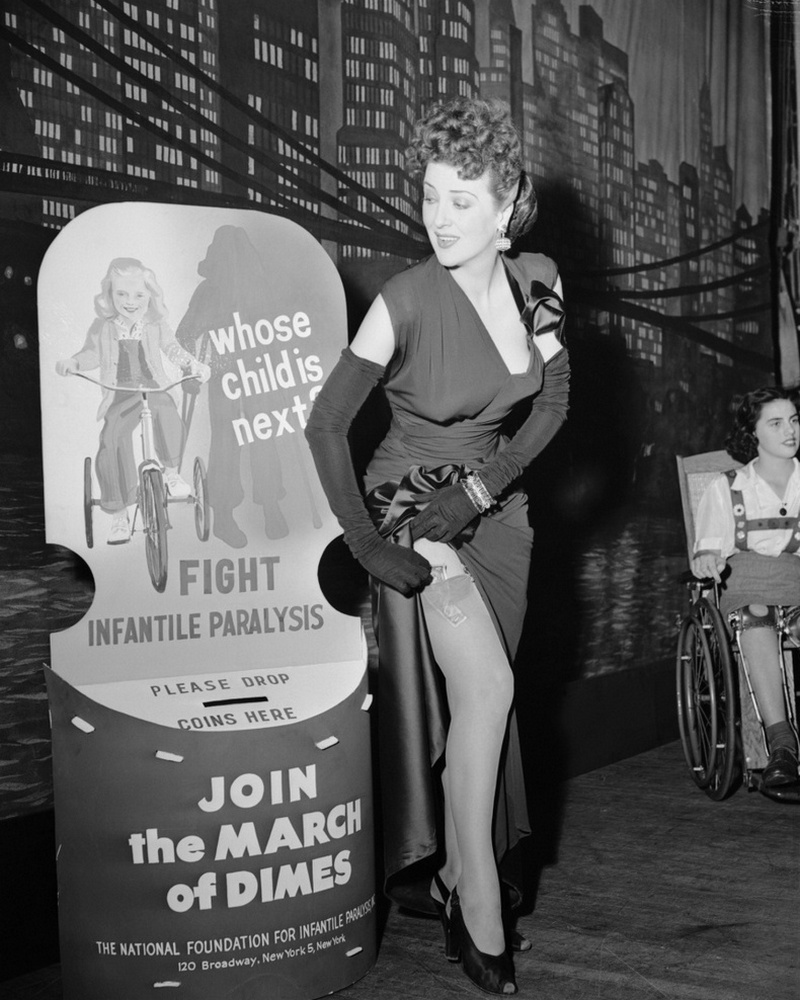
Gypsy Rose Lee at a March of Dimes benefit lunch in New York, 1945. Courtesy Bettmann/Corbis
The Bowery Boys: New York City History podcast is brought to you …. by you!
We are now producing a new Bowery Boys podcast every other week.
We’re also looking to improve and expand the show in other ways —
publishing, social media, live events and other forms of media. But we
can only do this with your help!
We are now a creator on Patreon, a patronage platform where you can support your favorite content creators.
Please visit our page on Patreon
and watch a short video of us recording the show and talking about our
expansion plans. If you’d like to help out, there are six different
pledge levels. Check them out and consider being a sponsor.
We greatly appreciate our listeners and readers and thank you for joining us on this journey so far.
The Encyclopedia of New York is a rich, attractive and surprising collection of stories from the city’s history, arranged alphabetically — from abstract expressionism to zoning.
Throughout the book, you’ll be discovering fascinating articles written by some of your favorite New York writers — Kevin Baker on baseball, Frank Rich on anchormen, Jerry Saltz on modern art, Rebecca Traister on birth-control clinics.
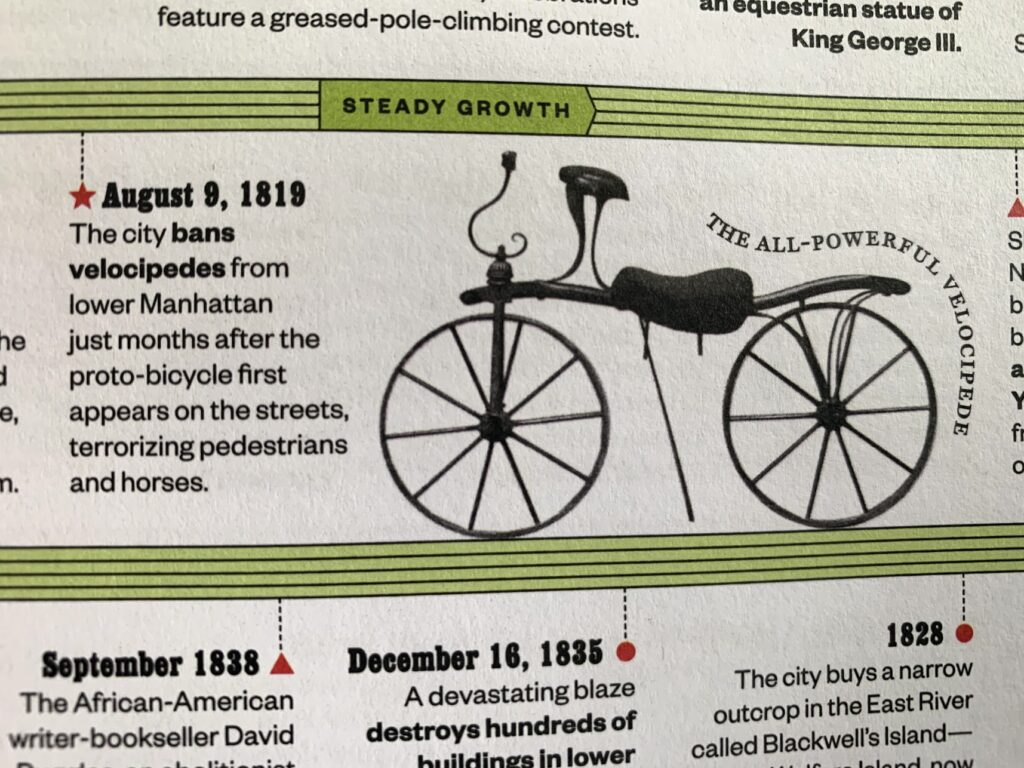
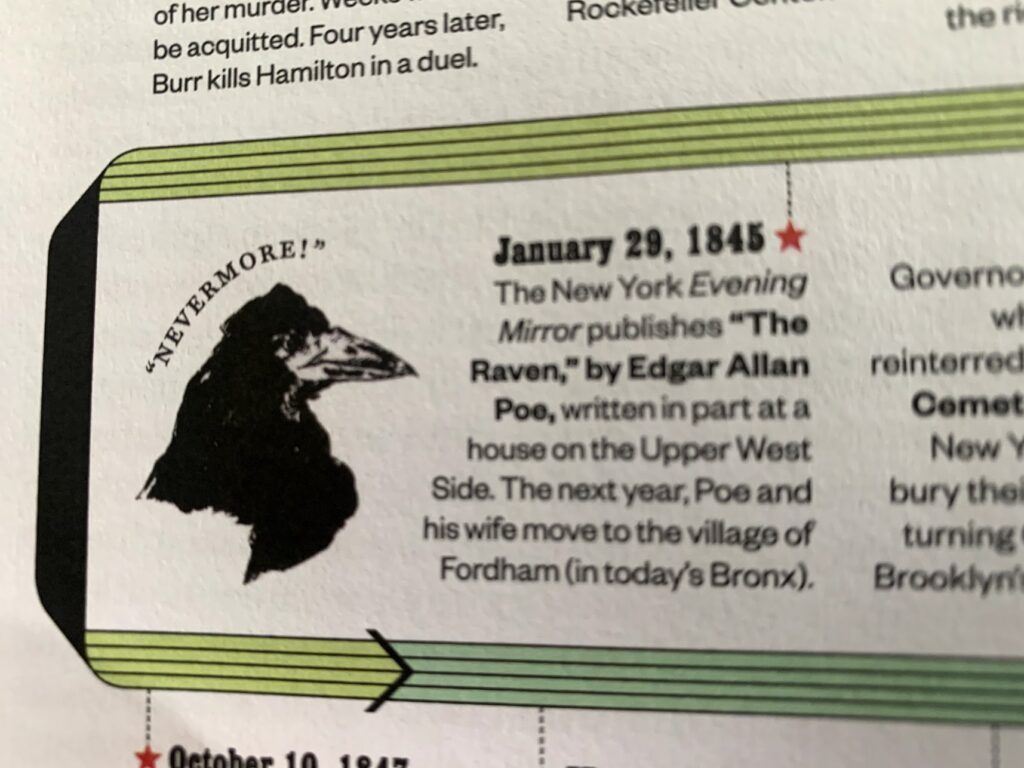
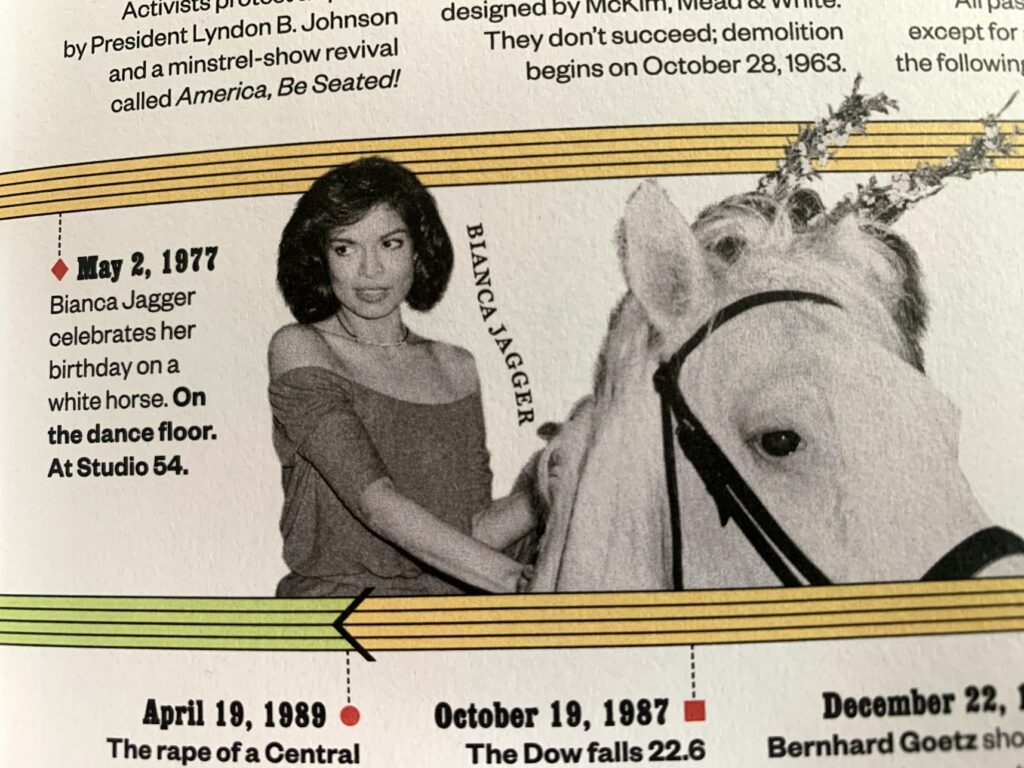
And me! I was honored to be invited to write the six-page opening timeline which lays out the story of New York City via important historical moments.
Below are just a few of my favorite entries in the timeline. This book an absolute treasure trove of information and I’m pretty sure you’ll fall in love with it.
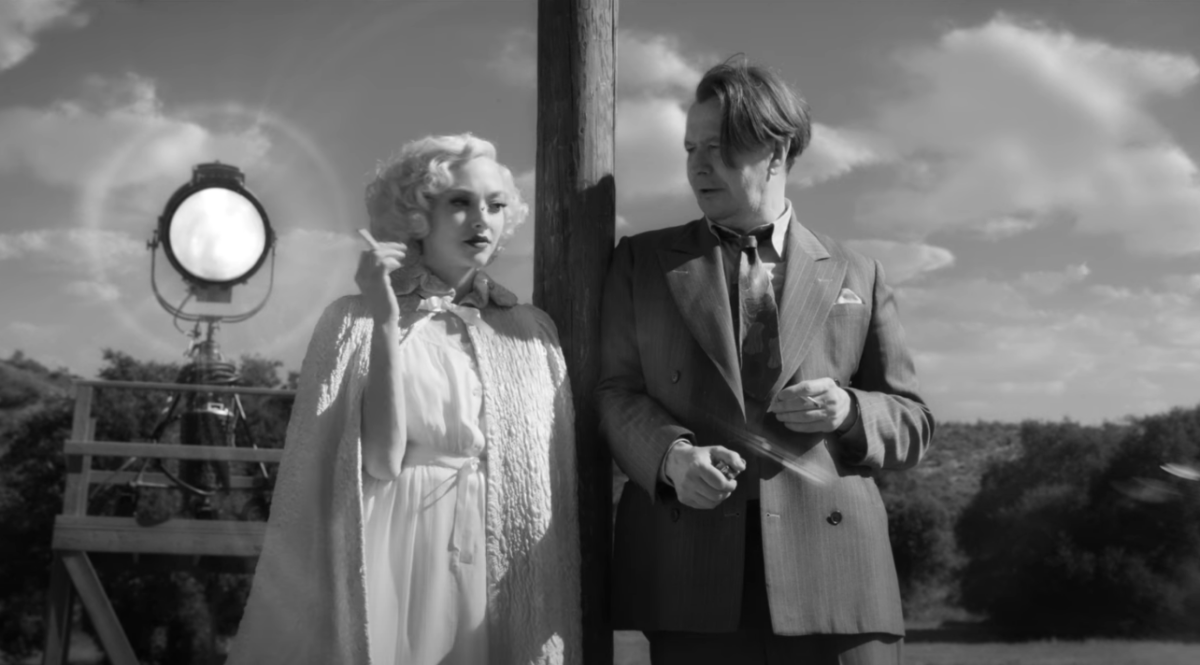
The new David Fincher film Mank, a tribute to old Hollywood and an elegant inspection of the studio system, is one of the most lavish original Netflix films ever.
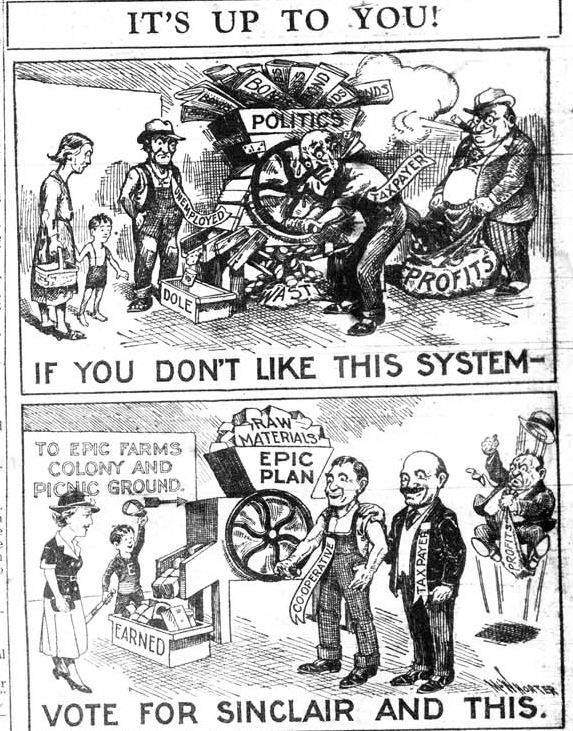
California history buffs will find it especially fascinating. Some of the more interesting moments actually have to do with the gubernatorial campaign of Upton Sinclair. And those parties at San Simeon (Hearst Castle) are breathtaking.
But there’s an interesting undercurrent to the real life figures portrayed in the film — many of them were born New Yorkers like Marion Davies (born in Brooklyn) and the film’s subject Herman Mankiewicz (born in New York to German immigrants).
If you’ve seen the film or have plans to see it this holiday season, we suggest listening to these shows from our back catalog for a better understanding of these historical moments and figures:
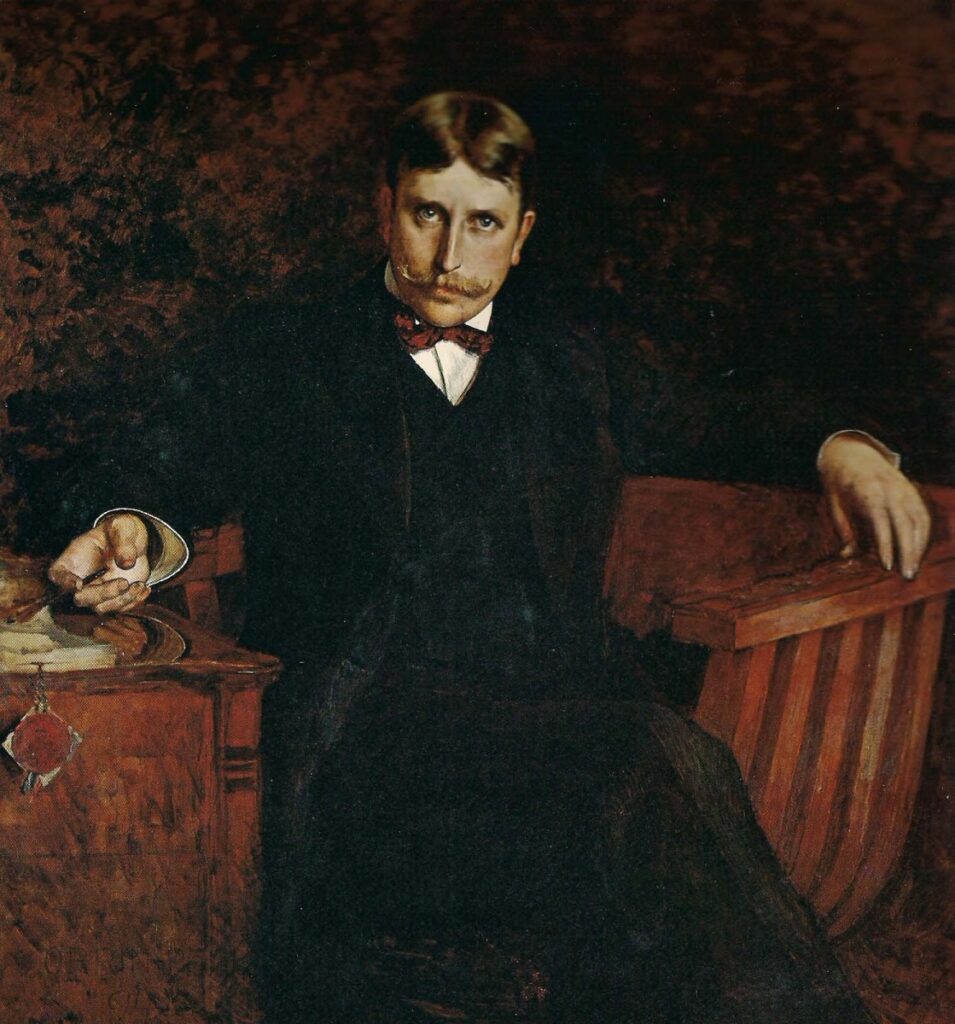
William Randolph Hearst
We present Hearst’s origin story in our 2020 episode on his epic journalism rivalry with Joseph Pulitzer….
… and in Part Two we even get to his first meeting with Marion Davies and the development of Hearst’s own film production studio.
Early Hollywood
How did the movies move from the East Coast to the West Coast? This show breaks down the early days of film production and what lead to the industry fleeing to Los Angeles:
A cartoon promoting the California campaign of Upton Sinclair, courtesy Revolutionary DS
Great Depression
In the first part of our New Deal mini-series this year, we provide on overview of the Great Depression which sunk the nation into financial and social despair….
Orson Welles
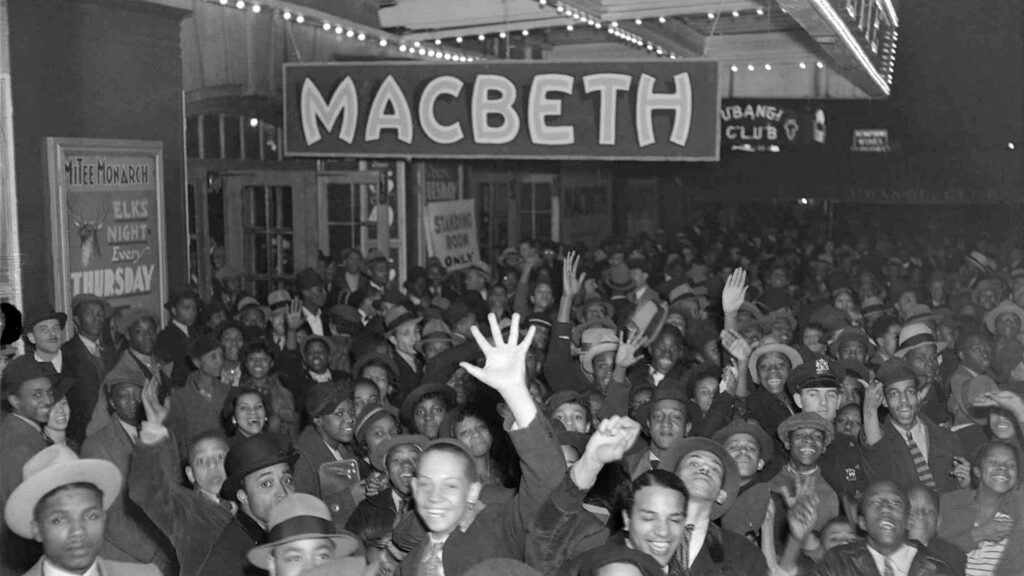
… and in the second half of that series, a very young Welles makes his debut in New York City, thanks to producer John Houseman (featured in the film), directing a visionary production of Macbeth in Harlem, later known as “Voodoo Macbeth” (pictured above and referred to in Mank).
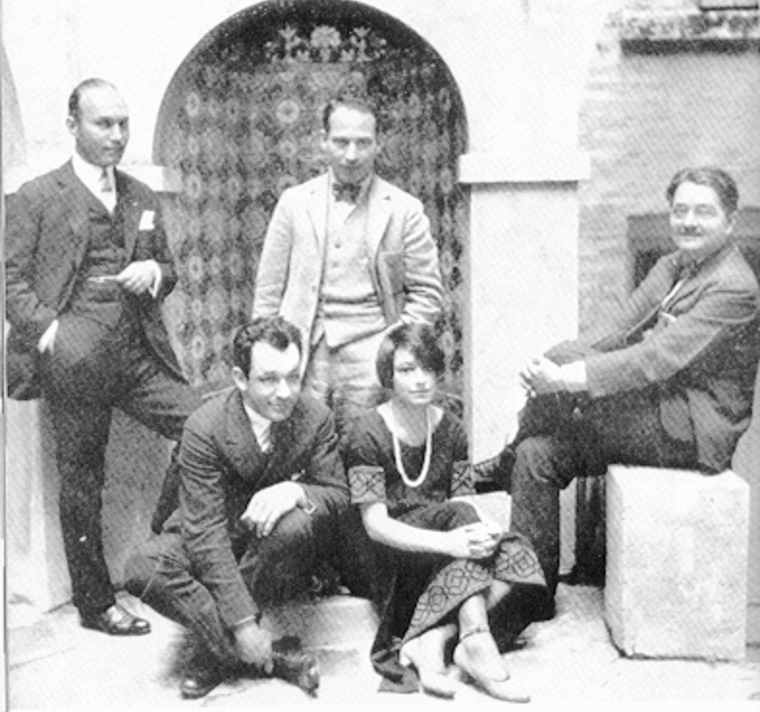
Round table regulars Art Samuels and Harpo Marx; Charles MacArthur, Dorothy Parker, and Alexander Woollcott
Herman Mankiewicz and the early writers of Hollywood
Many great writing talents of early Hollywood practiced their witticisms on the other members of the Algonquin Round Table, a collection of journalists, playwrights and general gadabouts who frequented one of New York’s poshest hotels.
Spike that hot cocoa and put on your finest Robert Moses-dressed-as-Santa-themed pajamas because Greg and Tom are celebrating!
The Bowery Boys look back at the unbelievable year of 2020. Wait, who would want to revisit this year?
Well this special Patroon-only holiday show is actually a look at producing the podcast over the past twelve months — but it’s impossible for that to not reflect the many trials and tribulations of the year.
But don’t worry — even in a truly intense year, we were able to find joy and camaraderie in telling the story of New York City.
FEATURING:
— A run-down of your favorite Bowery Boys podcasts — from the libraries of Andrew Carnegie to the halls of the Metropolitan Museum Art;
— A reflection on the Christmas holiday in New York City — festivity at a very unusual time;
— A couple Rudy Giuliani jokes;
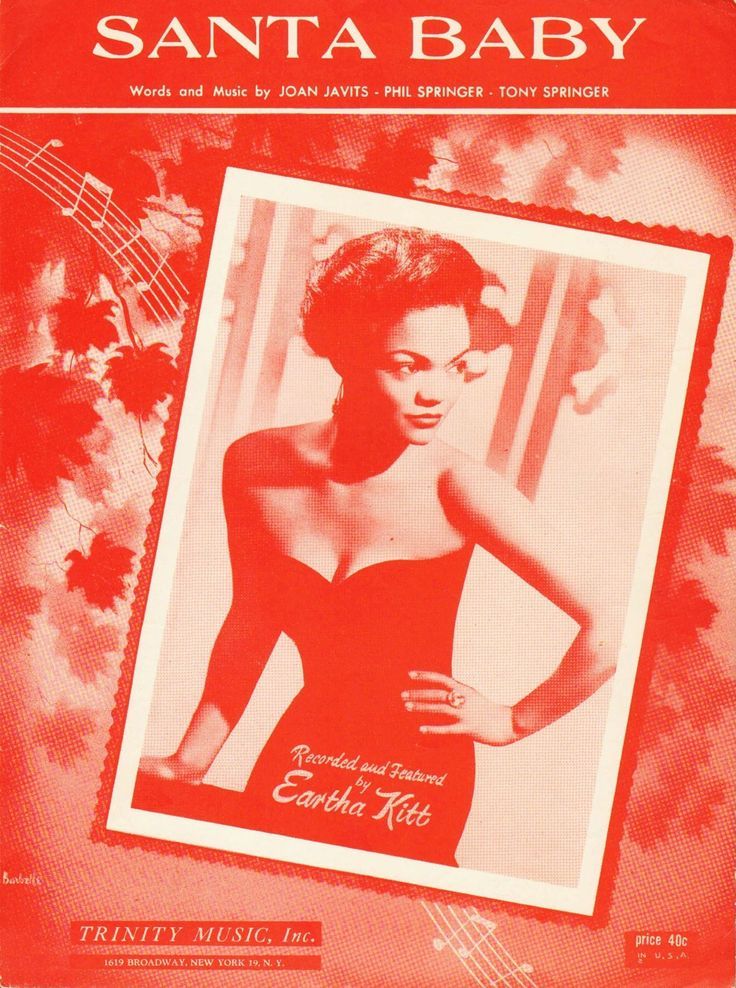
— AND Greg and Tom recount on of their favorite 1990s winter memories. An evening with Eartha Kitt!
PLUS: Earlier this week we asked our Patreon supporters for ideas for our first new show of 2021. We reveal the winner (or should we say, winners) of that poll.
Video of Eartha Kitt’s last performance at the Cafe Carlyle in 2008. She died on Christmas Day on 2008.
Here’s a rundown of some of my favorite books that I reviewed for this website in 2020.
As with any list formed from the reading list of an individual writer, it’s limited by the number of books I was able to put in front of my face this year — which given all my podcast research AND the 2020 lockdown, was quite a lot actually.
The list is broken down between New York City history books (where most of the action occurs in the city) and American history books (of general interest), although of course that’s a pretty arbitrary divide in some cases.
And the reviews for 2020 aren’t done yet! Check back in the next few days for a couple more book recommendations — and one very cool New York City book where I was a contributor.
Happy holidays.
— Greg Young
The Bowery Boys New York City History Book of the Year 2020
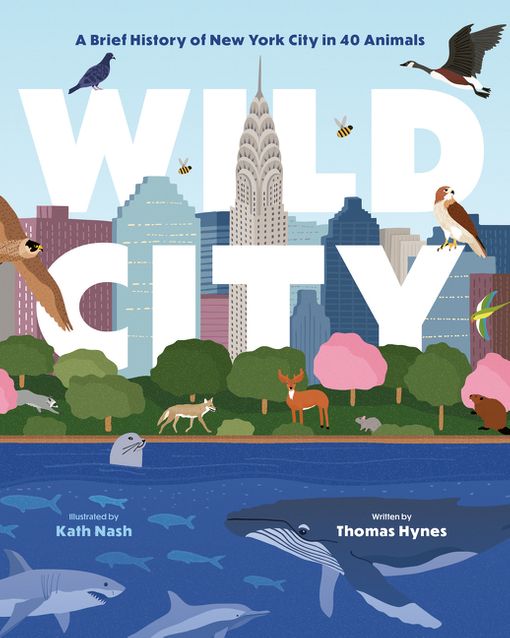
WILD CITY A Brief History of New York City in 40 Animals Illustrated by Kath Nash Written by Thomas Hynes
Couldn’t you use a little natural beauty in 2020? Yes squirrels and rats can be beautifultoo –– especially here.
“In Wild City, author Thomas Hynes and illustrator Kath Nash reveal an urban environment more exotic and thriving than any city of concrete and steel has right to be.
The creators focus on forty creatures — from the ancient mastodon whose skeletal remains presumably linger underfoot to the clever starlings who have bullied their way into the American habitat (to the detriment of other birds).”
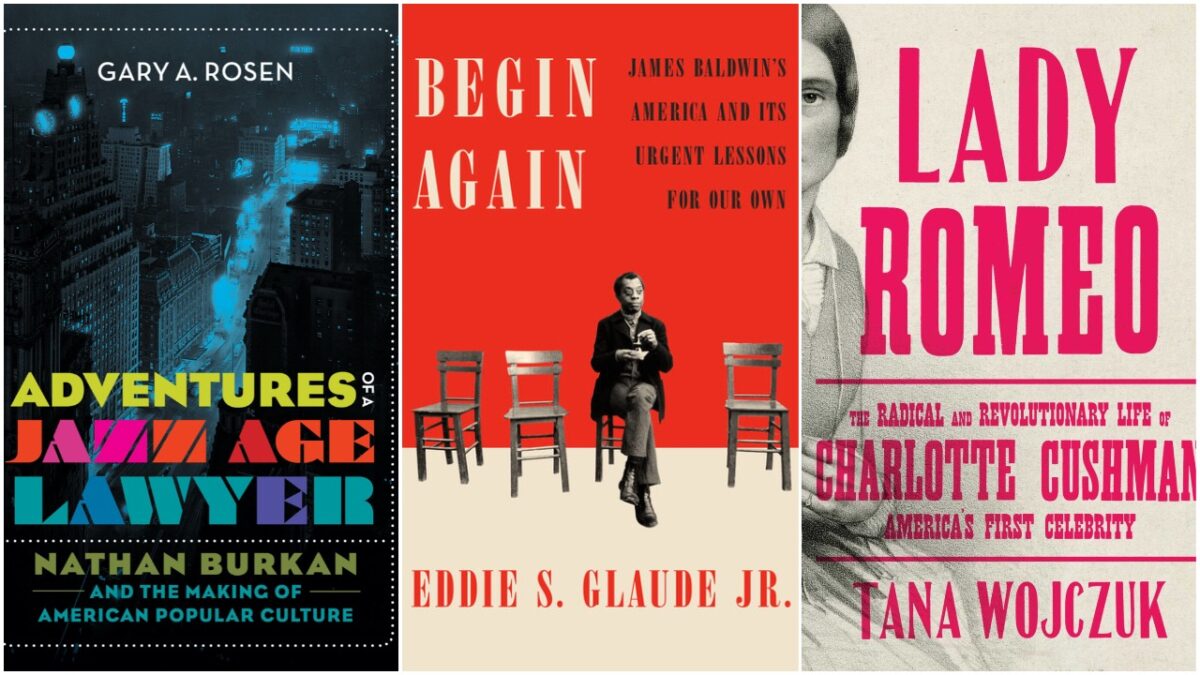
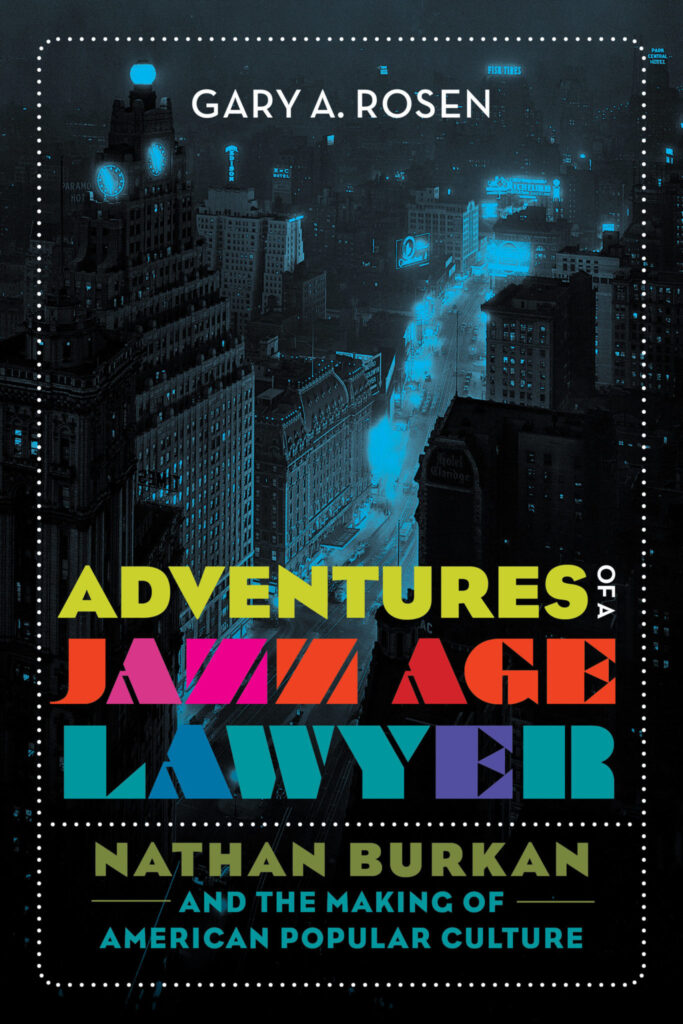
“In Rosen’s absorbing biography of Burkan, we find a somewhat enigmatic presence standing beside some of the most iconic figures of American culture — from songwriters to movie stars, from bootleggers to socialites.” [full review]
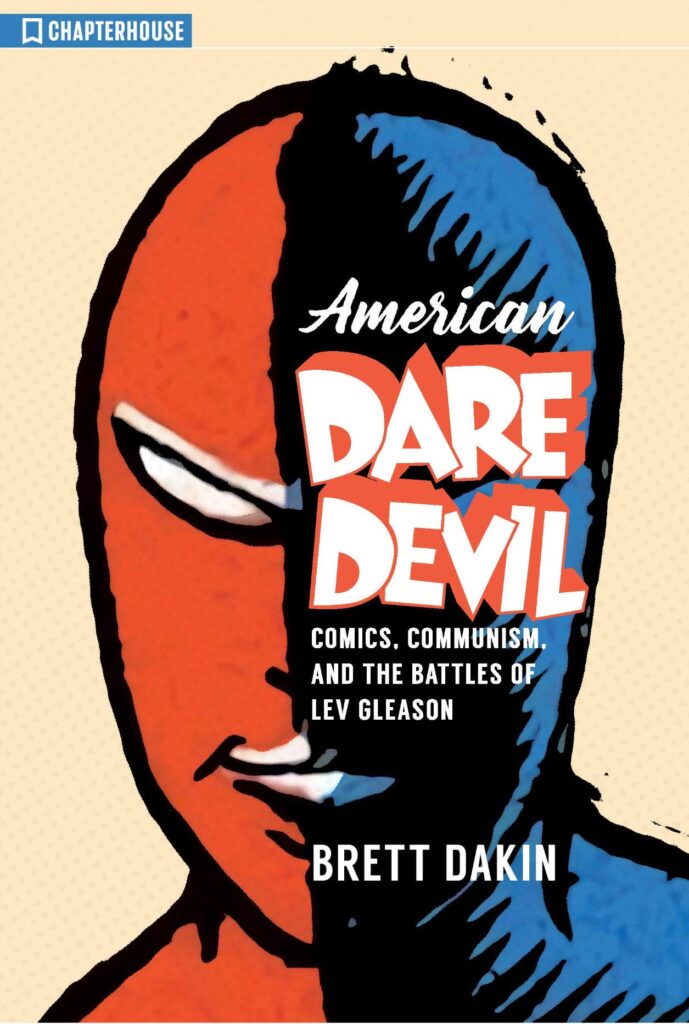
“Gleason was no ordinary comic book publisher; he was also a vibrant anti-fascist organizer, a suburban liberal who was eventually targeted by the federal government in the early years of the Red Scare.” [full review]
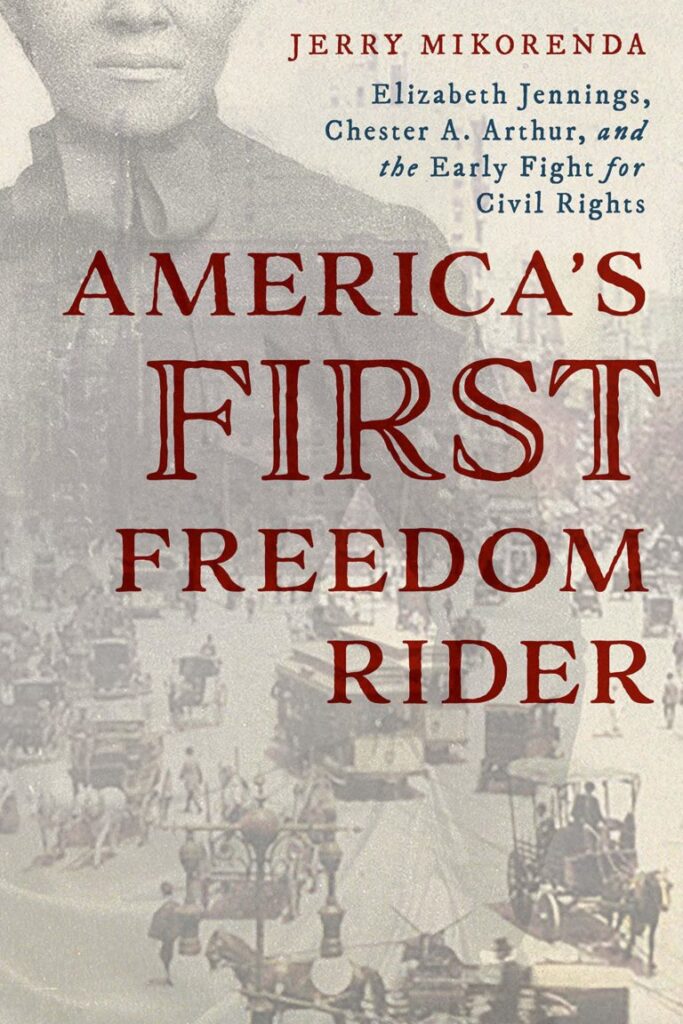
“In 1854 an African-American woman named Elizabeth Jennings (later Elizabeth Jennings Graham) was denied a seat on a lower Manhattan streetcar, forcibly removed due to the color of her skin…an electrifying show of bravery at the beginning of a long journey towards equality..” [full review]
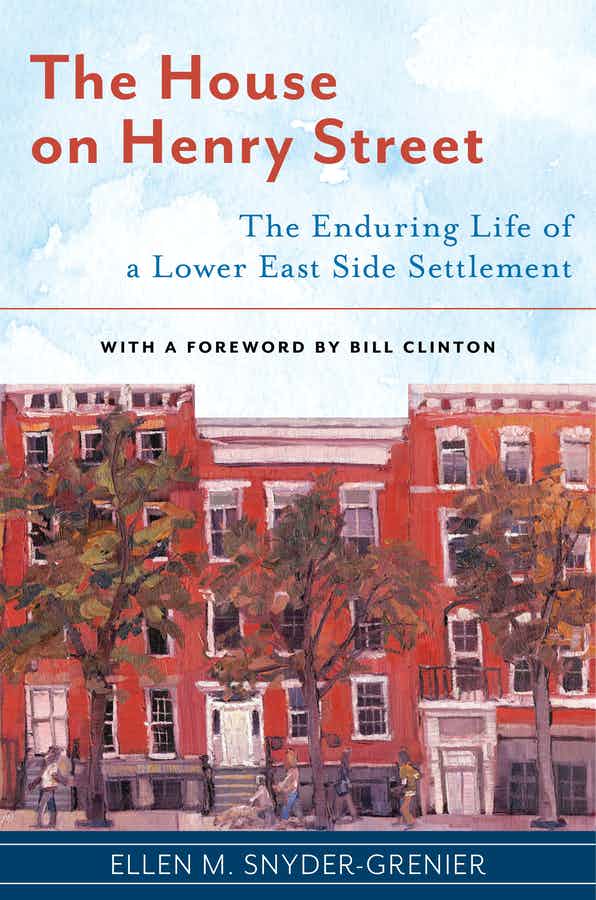
“The Henry Street Settlement became a testing ground for social reform. Every child in America has been positively affected by Wald’s crusades, local endeavors which took wing across the country — for playgrounds, for free school lunches, for special education, for child labor laws.” [full review]
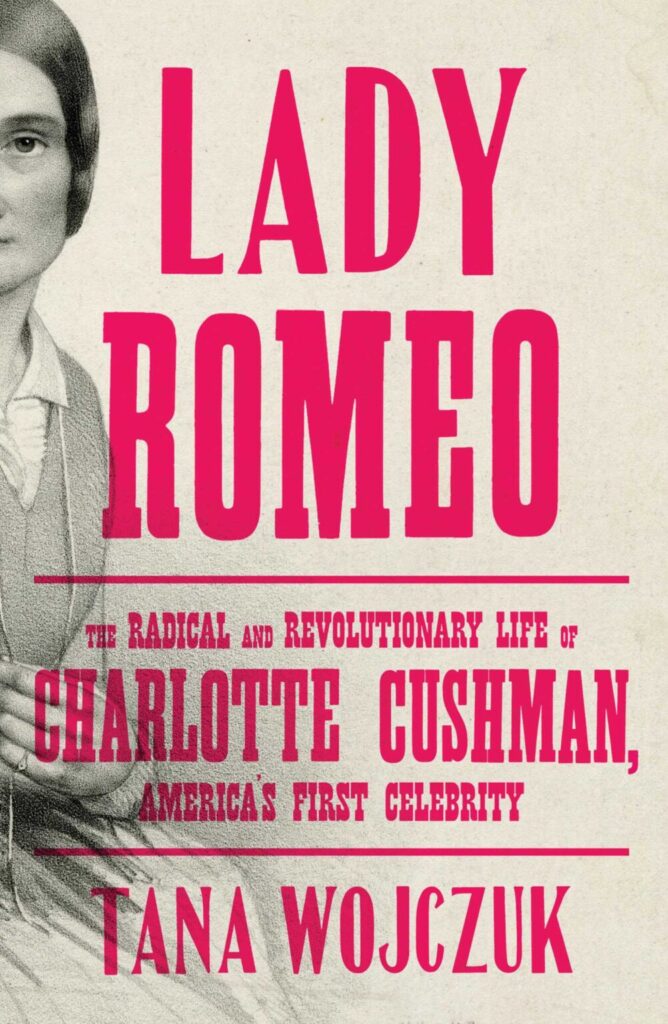
“The charming biography Lady Romeo has by circumstance become a truly fantastical read, more so than the author probably intended. Not only is Cushman’s life fascinating and almost unbelievable, but nostalgia for the theater itself in 2020 has become romanticized. Imagining anybody on stage performing Shakespeare gave me a thrill!” [full review]
The Bowery Boys American History Book of the Year 2020
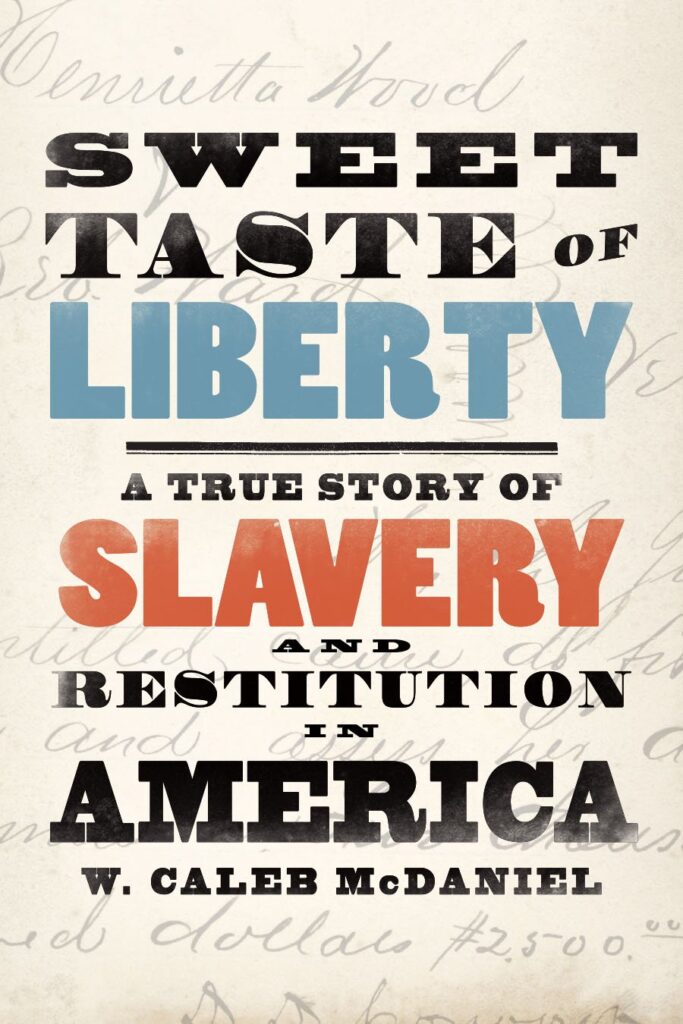
SWEET TASTE OF LIBERTY A True Story of Slavery and Restitution in America W. Caleb McDaniel Oxford University Press
A book that single-handedly proves that new American heroes can be found in the obscured corners of this country’s history.
“One hundred and fifty years ago, Henrietta Wood sued the man who kidnapped her and sold her back into slavery.
In his lifetime, that man — a prison warden and general scoundrel named Zebulon Ward — often bragged about losing the case, saying “he was the last American ever to pay for a slave.”
But Ward has become an ugly footnote. The woman who suffered that injustice, whose story has almost been lost in obscurity, will never be forgotten again — thanks in part to McDaniel’s brilliant historical detective work. “
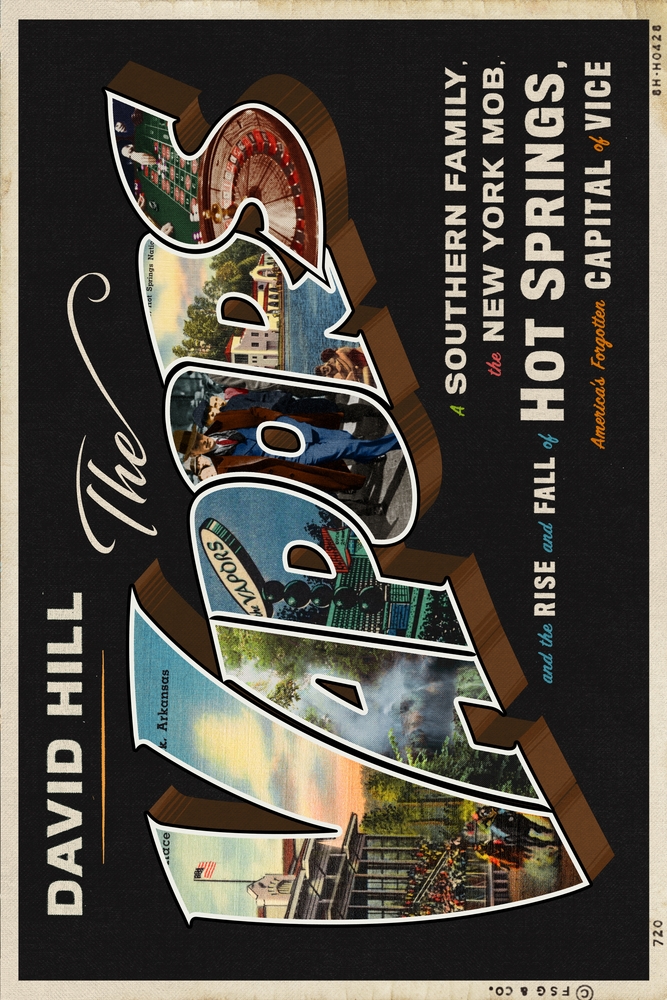
“For a time, it seemed that Hot Springs, not Las Vegas, would be the vice capital of the United States. In David Hill’s captivating and beautifully written The Vapors, we’re re-introduced to an overlooked corner of history, a historic spa town with troubling secrets and a sleazy underbelly.” [full review]
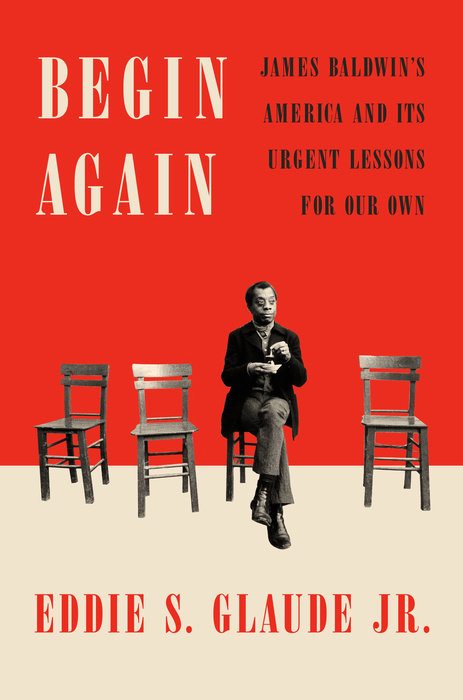
“In Begin Again, Glaude presents a selection of moments from Baldwin’s life and his writings from those moments, then a modern perspective of those views. Glaude and Baldwin are most often in a duet with one another, letting Baldwin’s past words underscore or sometimes even directly address a present situation.” [full review]
“Consider this one of the America’s strangest national landmarks — Fort Conger, a scientific research post originally built in 1881 by an American expedition in a remote and frozen area of Nunavit, Canada.
Some might call it the world’s most northern haunted house.
Over two dozen men — fronted by Civil War vet Adolphus Greely — lived and worked here for two years, battling a hostile environment to conquer the so-called Farthest North, an almost mystical destination that, if reached, would hold both international glory and economic possibility.” [full review]
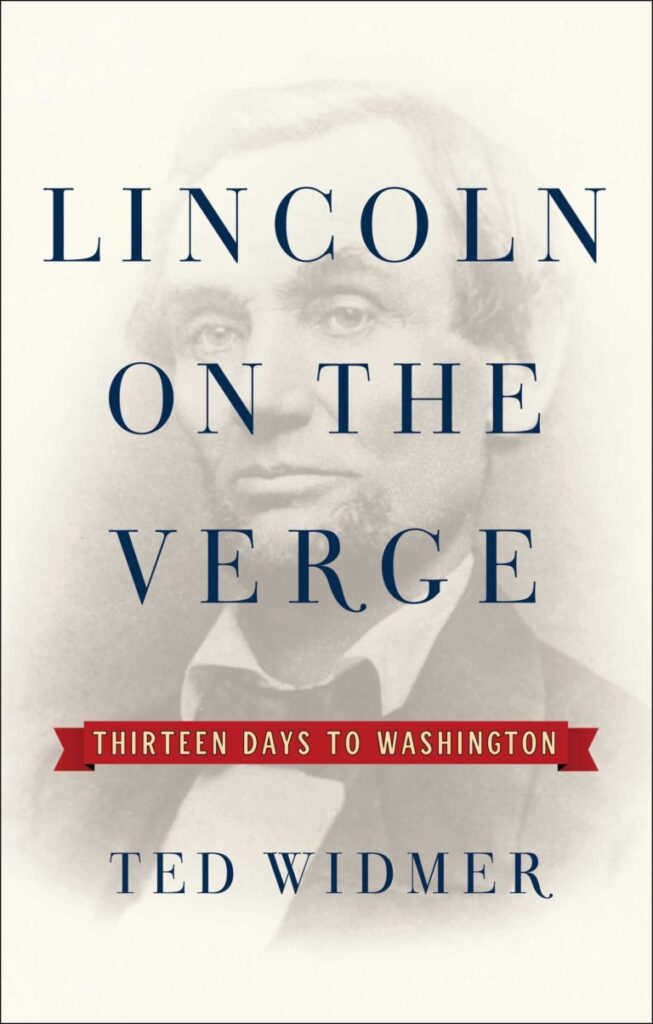
“Widmer takes the reader on Lincoln’s thirteen day journey to destiny — through Illinois, Indiana, Ohio, Pennsylvania, New York, New Jersey, Deleware and Maryland — on his way to lead a country at the precise moment it splintered apart.
This is also the story of the railroad and the telegraph as primary technologies of the day — but with their limits. The North’s comparatively sophisticated railway system allowed the president-elect quick passage to D.C. but not safe passage.” [full review]
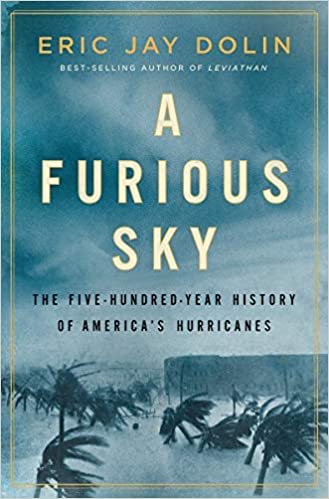
“In theory a book detailing a series of hurricane disasters might appear to be an exercise in gloom. And while each hurricane Dolin details does seem to be worse than the last, his tales are distinctly and vividly drawn, pulling from dozens of eyewitness reports — from doctors and housewives and police offices and even a few from famous folk (Ernest Hemingway, Katharine Hepburn).” [full review]
And for all the book reviews written for this website visit the BOWERY BOYS BOOKSHELF
PODCAST It’s hot in the city — even during the coldest winter months, thanks to the most elemental of resources: steam heat.
EPISODE 347 This is the story of the innovative heating plan first introduced on a grand scale here in New York City in the 1880s, a plan which today heats many of Manhattan’s most famous — and tallest — landmarks.
While most buildings in Manhattan derive heat from a private source (most often furnaces, boilers and radiators), some of the largest structures actually get heat from the city.
If you’ve worked in a large Midtown office building, visited the Metropolitan Museum of Art or had your clothes dry cleaned in Manhattan, you’ve experienced steam distributed through Con Ed’s steam service through a system known as district heating.
Because of steam, the city’s skyline isn’t filled with thousands of chimneys, belching black smoke into the sky.
FEATURING An interview with Frank Cuomo, the director of steam operations at ConEd, who will help explain to us how the city produces steam today and how customers use it.
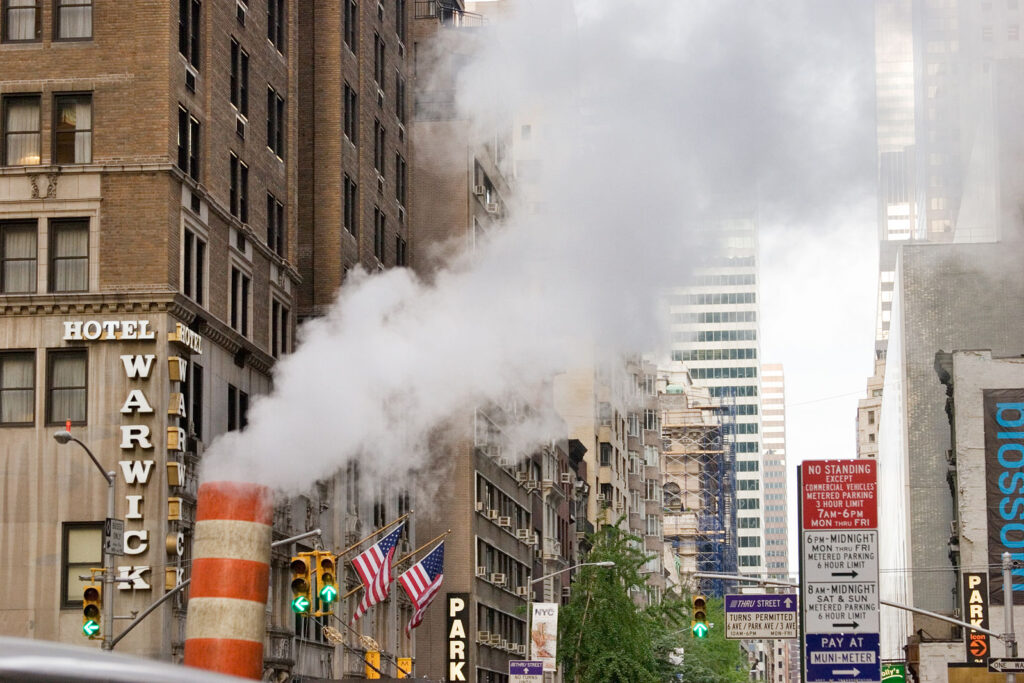
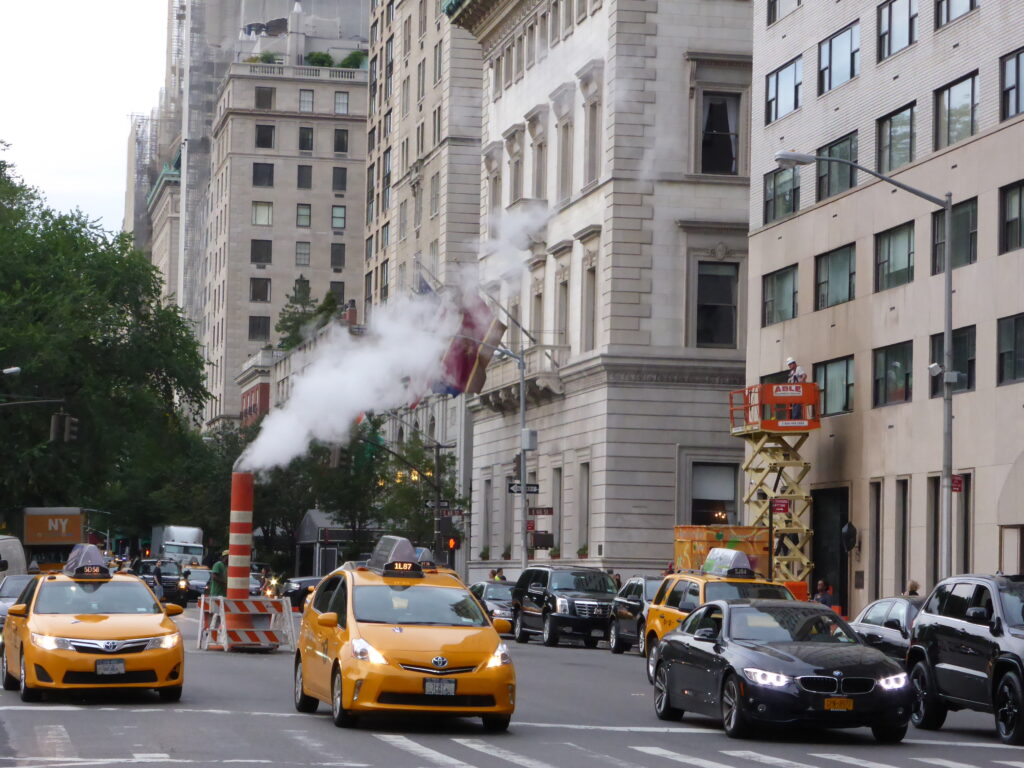
PLUS We answer some pressing questions about city heat. Why is there no steam service in the other four boroughs? Why does your radiator clang loudly at night? And what’s the function of those orange and white chimneys on the street?
Listen today on your favorite podcast player. Or play it directly from here:
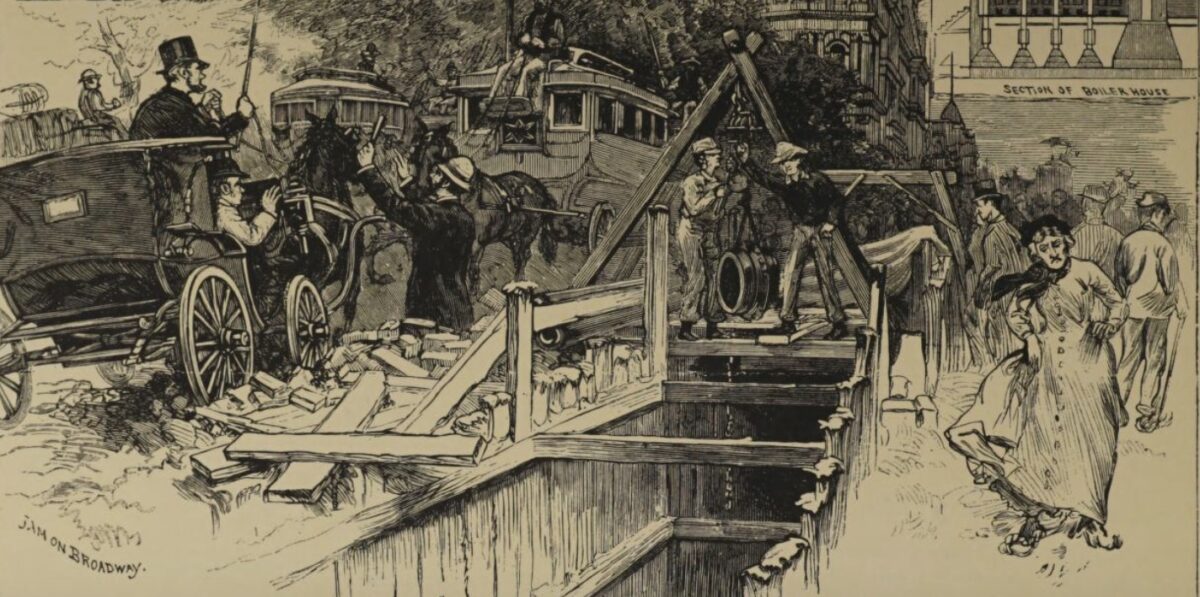
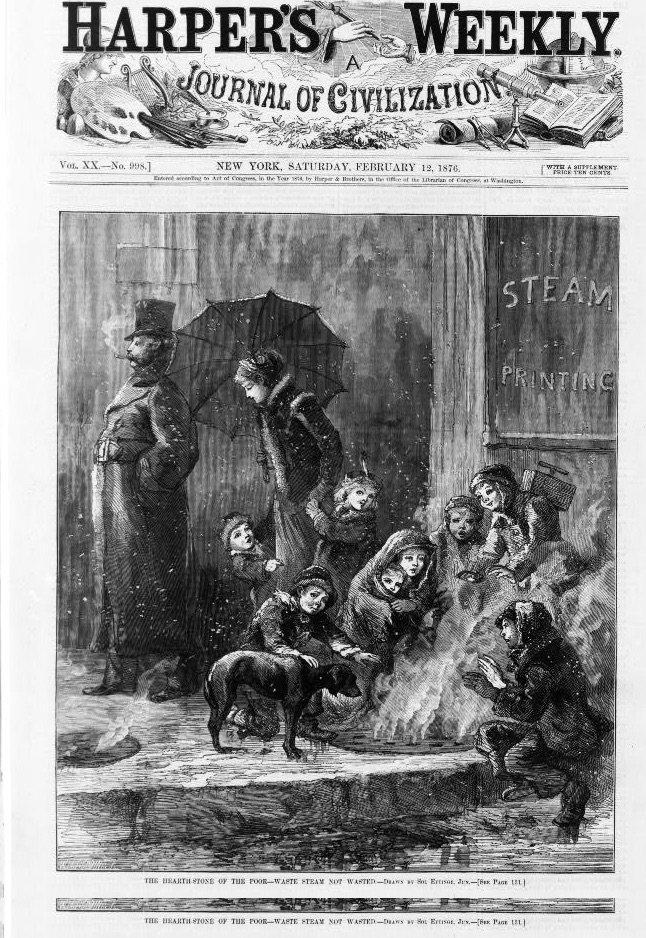
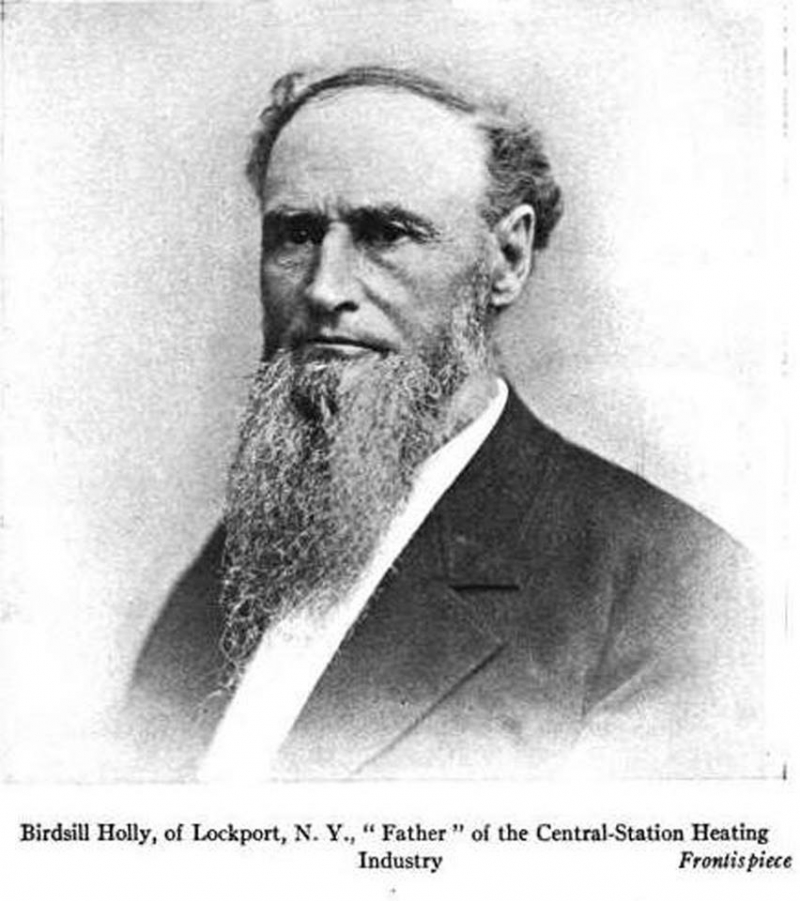
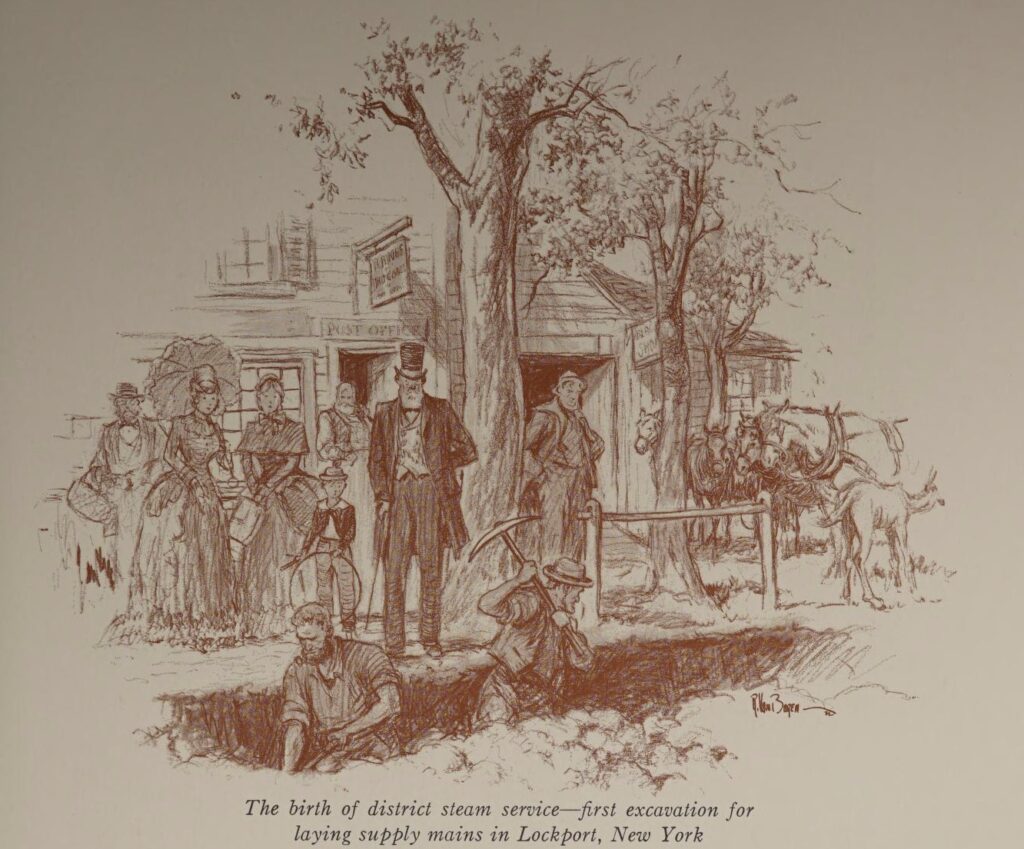
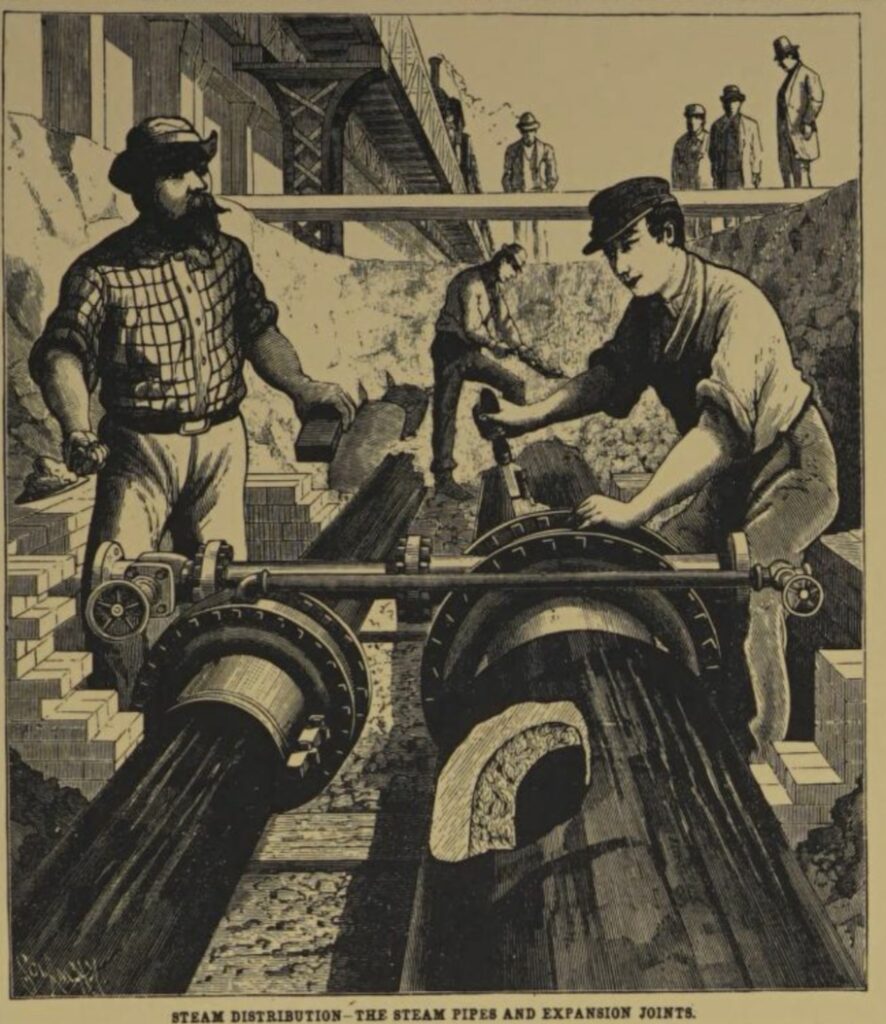
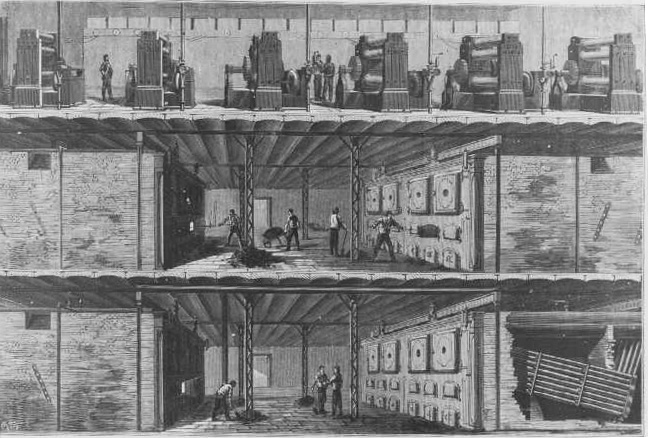
Harpers Weekly 1876 — An illustration of unfortunate people, warming themselves from steam coming out of a grate. The printing shop in the picture evidently has it own boiler system. An illustration of Birdsill Holly and the installation of the first steam pipe system in Lockport.
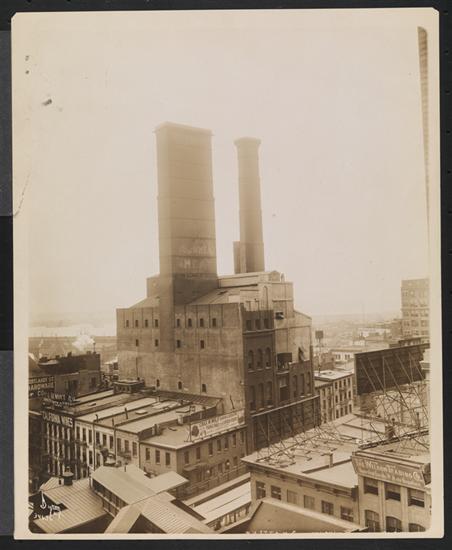
New York Steam Co., Cortlandt St. circa 1915. Courtesy Museum of the City of New York
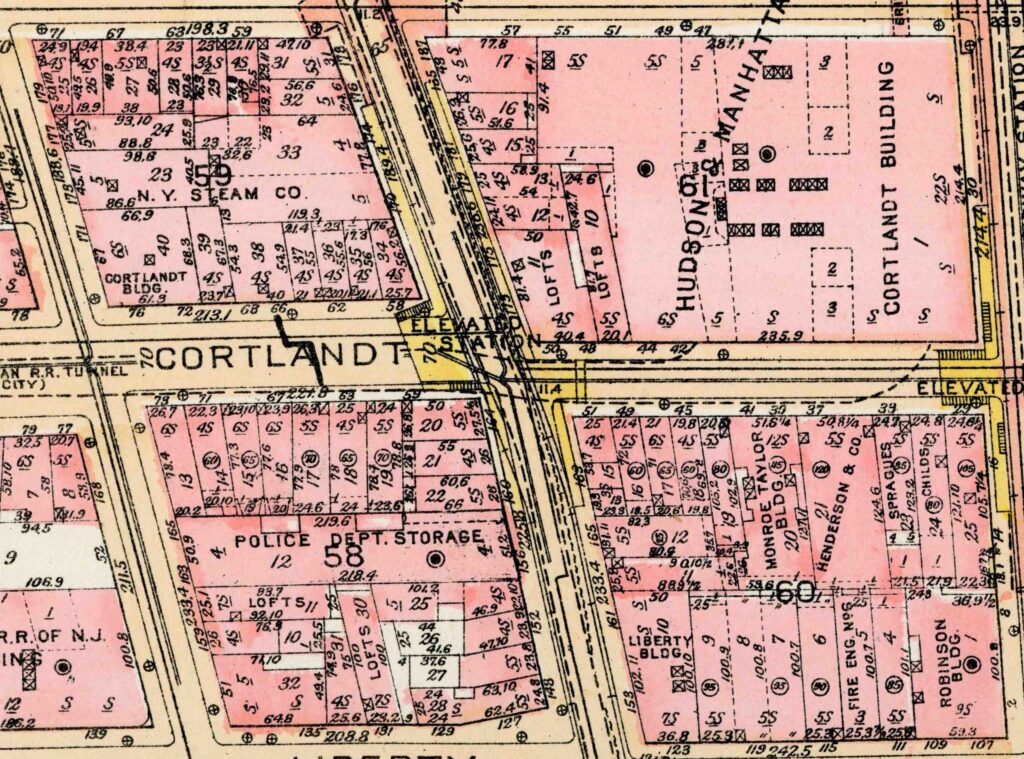
Location of the New York Steam Company. Today this area is occupied by the World Trade Center site.
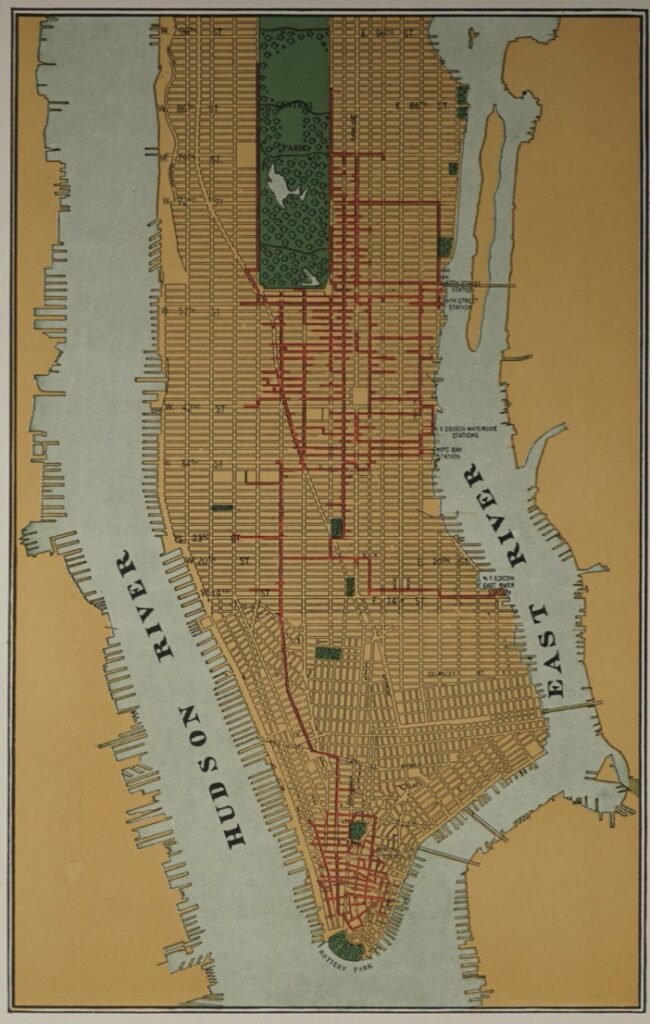
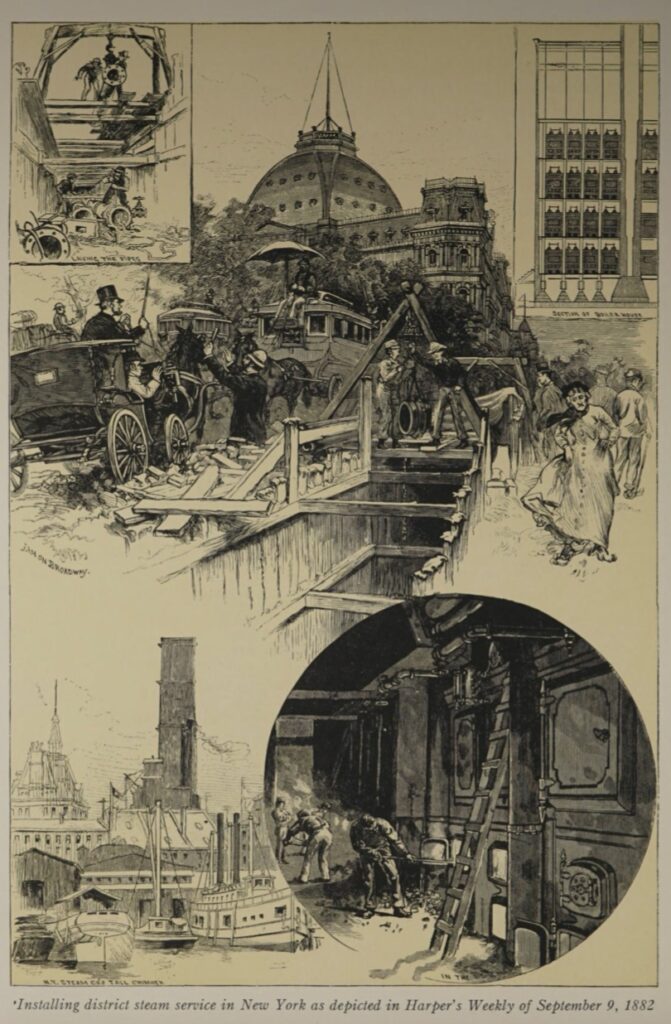
“Atlas of the Borough of Manhattan,” G. W. Bromley & Company (1921) via the New York TimesA steam pipe map from 1932Installing district steam heat service in New York as depicted in Harper’s Weekly of September 9, 1882
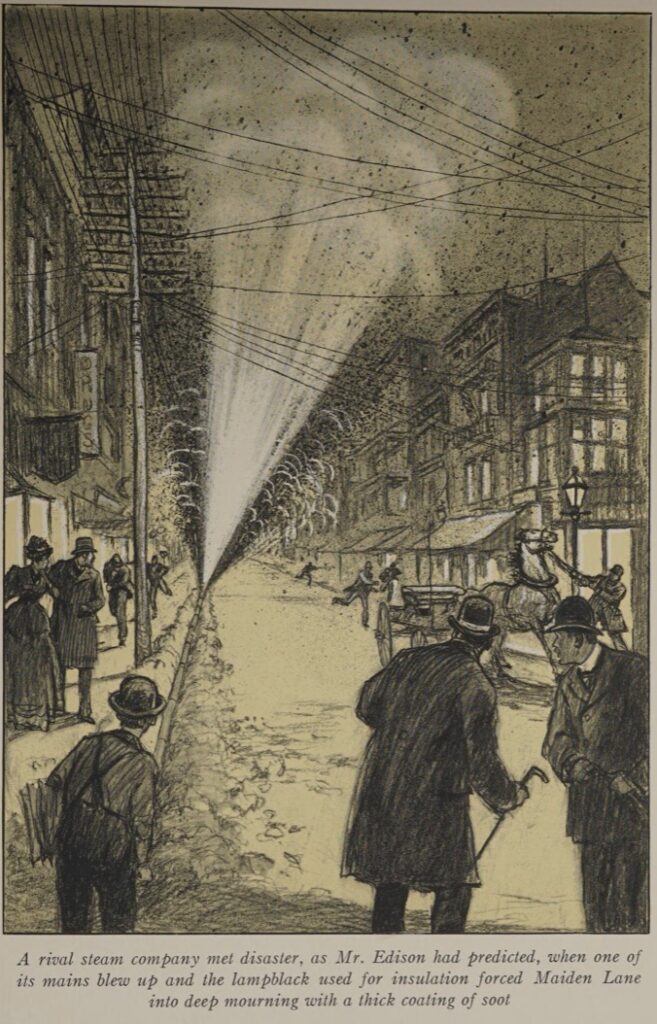
News reports from the 1989 Gramercy Park steam explosion:
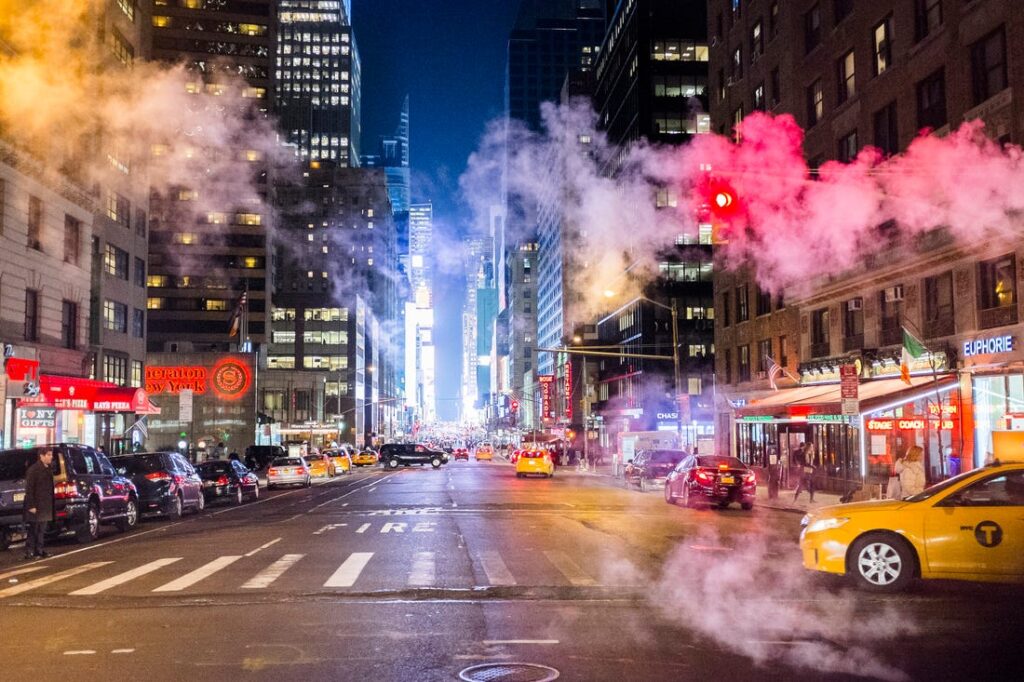
Steam vents in the street. New York City 2005/Jorge Royan, WikimediaThese ‘Seussian’ vents serve a valuable purpose. Photo by MartinThoma/Wikimedia
The Bowery Boys: New York City History podcast is brought to you …. by you!
We are now producing a new Bowery Boys podcast every week. We’re also looking to improve and expand the show in other ways — publishing, social media, live events and other forms of media. But we can only do this with your help!
We are now a creator on Patreon, a patronage platform where you can support your favorite content creators.
Please visit our page on Patreon and watch a short video of us recording the show and talking about our expansion plans.
If you’d like to help out, there are six different pledge levels.Check them out and consider being a sponsor.
We greatly appreciate our listeners and readers and thank you for joining us on this journey so far.
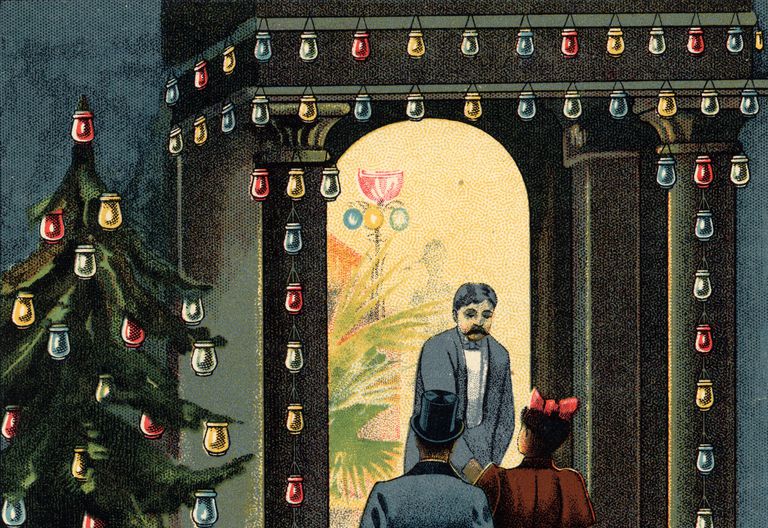
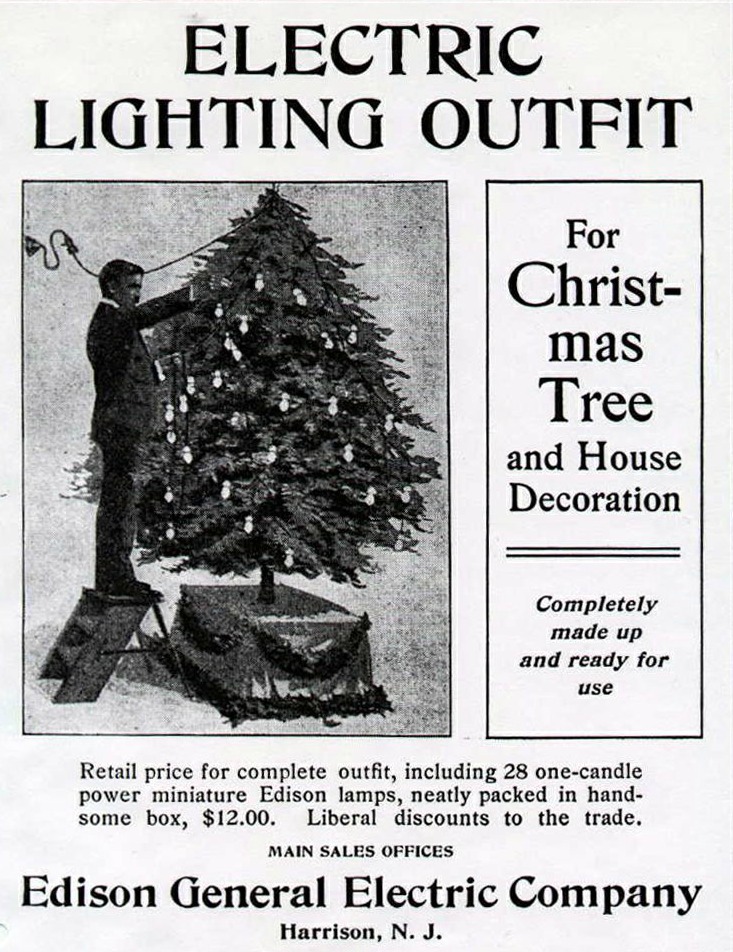
An electric Christmas lights advertisement from the 1890s. Getty Images
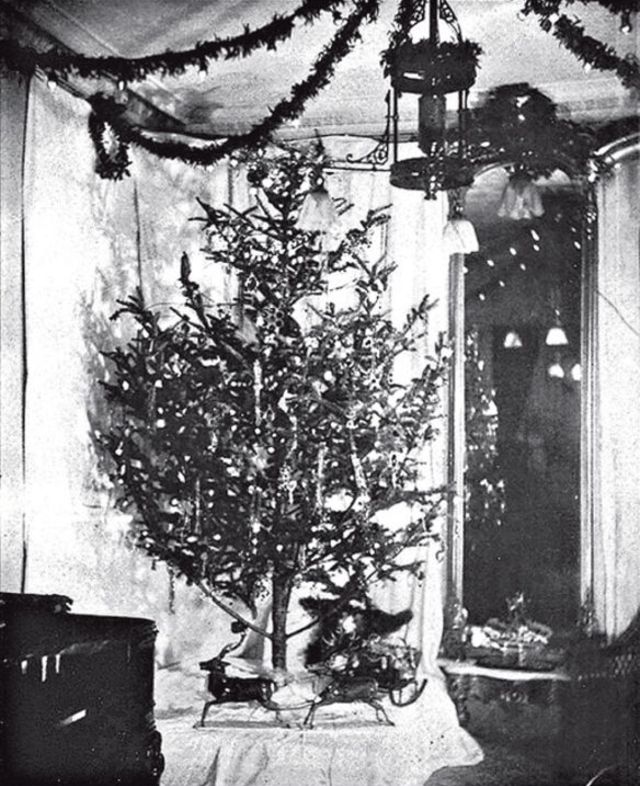
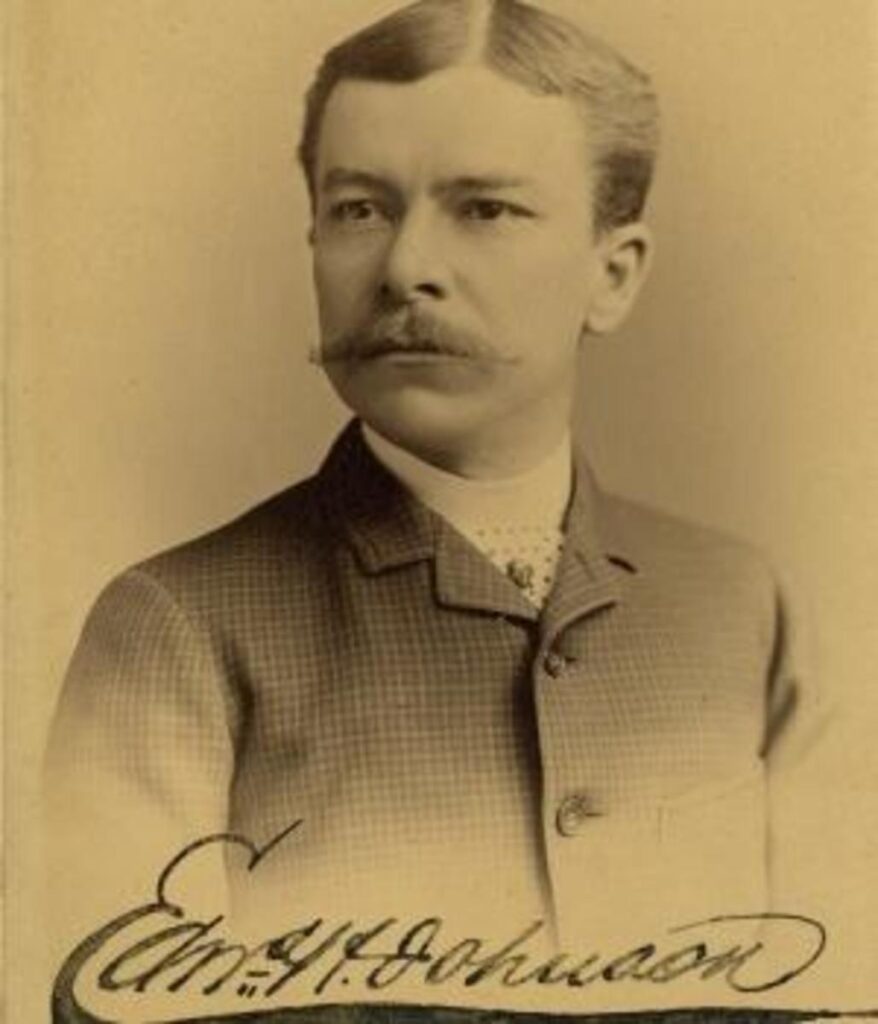
The world’s very first Christmas tree with electric lights was displayed in 1882 at the home of Edward Hibberd Johnson in the Murray Hill neighborhood of New York City.
Not only did it glow with this innovative new form of illumination, this Christmas tree also spun around, revolving like a flashy new car at an automobile expo.
The Christmas tree of Edward Hibberd Johnson
Two years later in 1884 the New York Times looked back fondly upon this greatly advanced version of the Christmas tree:
“The tree was lighted by electricity and children never beheld a brighter tree or one more highly colored than the children of Mr. Johnson when the current was turned and the tree began to revolve.
“It stood about six feet high, in an upper room, and dazzled persons entering the room. There were 120 lights on the tree, with globes of different colors, while the light tinsel work and unusual adornment of Christmas trees appeared to their best advantage in illuminating the tree.
“The set of lights were turned off and on at regular intervals as the tree turned around. The first combination was of pure white light then as the revolving tree tree severed the connection of the current that supplied it and made connection with the second set, red and white lights appeared. Then came yellow and white and other colors.”
The children of Mr. Johnson were witnessing a revolution. Yes an actual revolution – of the tree itself – but the beginning of an entirely new way of celebrating the holiday.
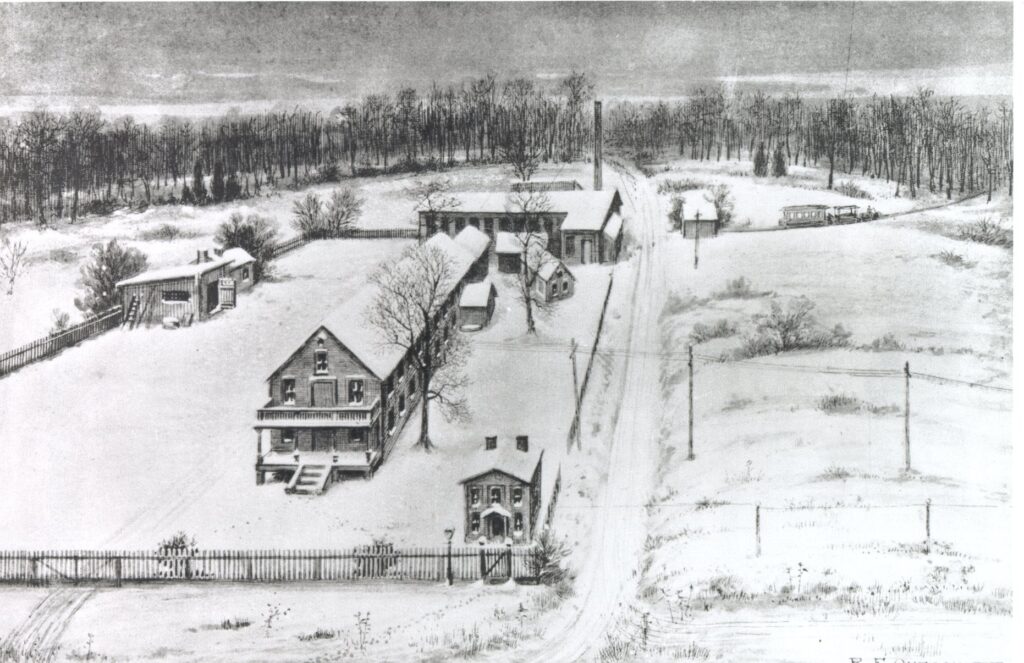
Snow covered Menlo Park
Surrounded by his wealthy investors, Thomas Edison gave the first public demonstraton of the incandescent lightbulb on December 31, 1879.
Now, believe it or not, New Yorkers were already accustomed to electric illumination during the Christmas season. The major Manhattan shopping districts were already exposed to stadium-like arc lighting, a primitive form of electric light that was too harsh and intense for everyday usage.
But Edison’s invention was vastly superior and it wouldn’t just drive away the dark. In its compact size, its durability and eventual convenience, the lightbulb would elaborate on one of candlelight’s most appealing components – mood.
The next year, on December 20, 1880, Edison had additional investors out to Menlo Park, and they were greeted with an extraordinary site.
From the NYT: “The train arrived at Menlo Park at 5:31. Darkness had settled down upon the bleak and uninviting place which Mr. Edison had chosen for his home, but the plank walk from the station to the laboratory was brilliantly lighted by a double row of electric lamps, which cast a soft and mellow light on all sides.
“The incandescent horseshoes gave out a yellow light which shone steadily and without the least painful glare and were beautiful to look upon.”
While this was not intentionally a Christmas lighting display, the arriving investors, in the holiday spirit, remarked upon the appropriate warmth and charm of the lights on the chilly December evening.
The light bulb would change the world but it would also make Edison a lot of money.
Soon Edison began aggressively promoting the various ways that electric lighting could be used to improve life – the more reasons, the more likely other investors would sign on and the more likely cities would hire Edison to install electrical power stations.
For the first time, the homes and offices of lower Manhattan would be able to light their interiors more pleasantly and conveniently than those homes with gaslight.
Whereas as the illuminations from gas would often create a sickly glow, the light from an electric glass bulb would seem romantic and alluring in comparison. Finally the candle had some competition.
Further uptown, at the home of Edison’s friend and the vice president of the Edison Electric Company Edward Hibberd Johnson (pictured above), electricity was taking the place of a rather hazardous form of decoration.
For Johnson’s electric-tree idea took his inspiration from traditional candle-lit trees.
Candles in Christmas trees
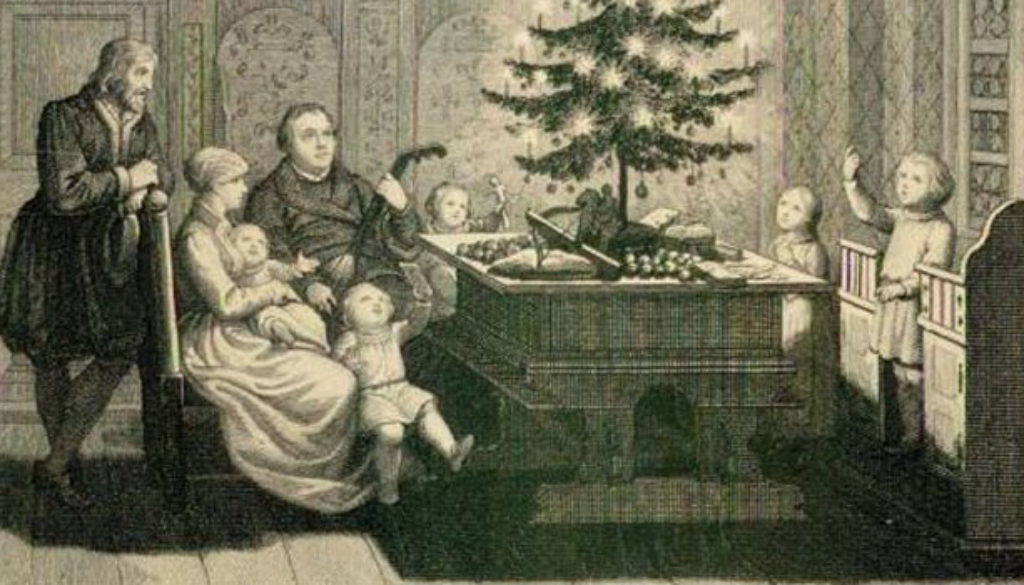
In the early 19th century a Christmas tree was considered a luxury of the urban rich who could afford to have a tree cut down for them and installed in their homes. But by the 1850s people could purchase trees at the market and carry them home to decorate for the season.
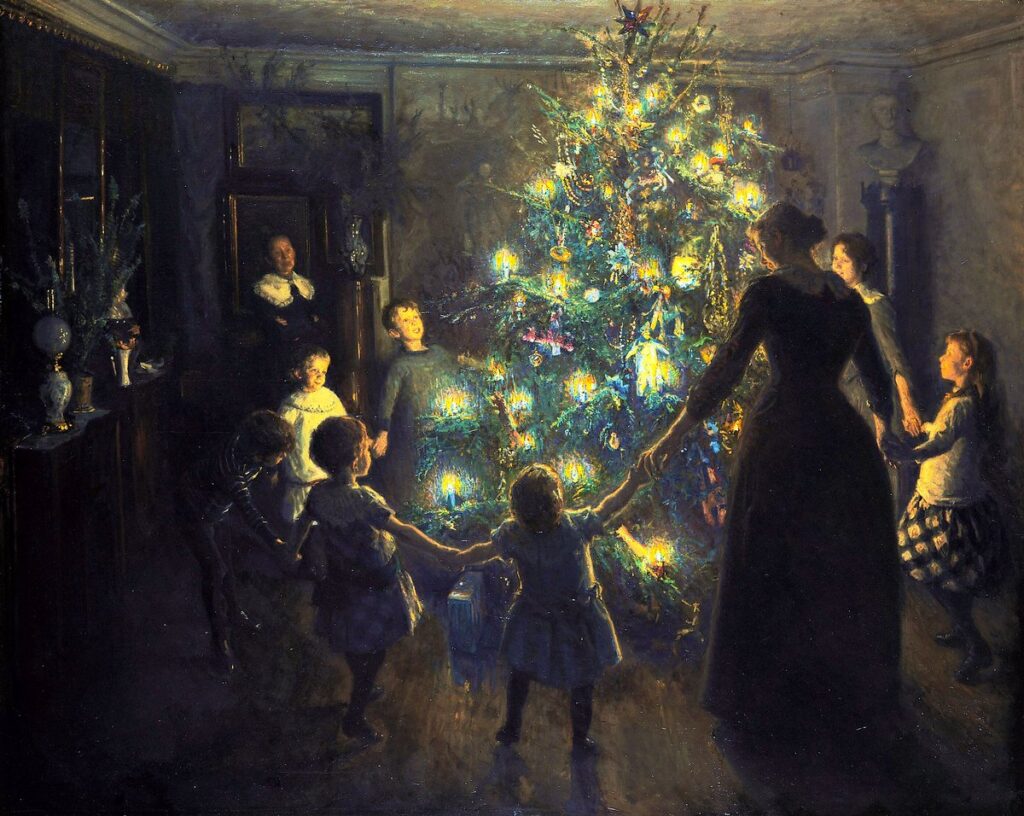
The most beautiful trees — the ones that seemed to fully embody the spirit of the season — were decorated with lit candles.
Getting a candle to stick in a tree was not easy. Some held the melted wax to branches, others pierced the candle with needles, tying them to the tree that way.
Happy Christmas (1891) by Danish artist Viggo Johansen
In 1878 an inventor named Frederick Artz devised a spring clip that could hold candles to the branches.
Now a family could attach lit candles to a Christmas tree and know — with just a touch more assurance — that the waxen dagger would not fall into the branches and burn the house down.
Keep in mind that in the 19th century Christmas trees were only installed in homes for only a few days. People did not lavishly decorate a month and a half before like we do today.
And trees were more closely monitored then. Next to the presents underneath the tree was a bucket of water.
By 1908, some insurance companies refused to cover fires started by candle accidents on Christmas trees, claiming they were a clear and knowing risk.
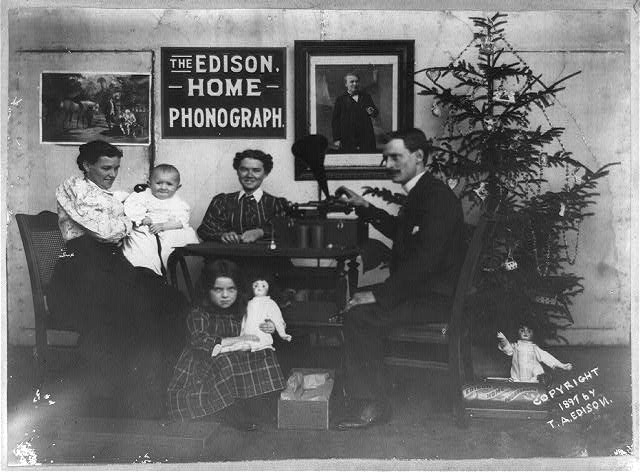
1897 Library of Congress
So you can understand why people absolutely lit up at the idea of a Christmas tree with electric lights.
In January 1883, the journal Electrical World called Johnson’s tree on Madison Avenue the handsomest tree in the United States.
Pictures would suggest otherwise, although photographic process of the early 1880s were hardly equipt to capture such a unique and peculiar things – a rotating, brilliantly and colorful lit object of natural art.
But of course it wasn’t art. It was promotion.
With each year, Johnson would continue to let in the press into his home to report his unusual holiday marvel.
In addition he would install similar trees in places where Edison electrical power would soon be made available.
For instance, for Christmas 1883, he put up a much larger display tree at the Foreign Exposition in Boston at Mechanics Hall in Boston’s Back Bay.
From a 1904 history of Edison lighting:
“At the Boston Foreign Fair, about 1,500 Edison lamps were employed and the Christmas tree took several hundred more.
“This tree was deisgned to be operated by an automatic device which would make the light of the lamps appear and disappear in time with whatever music might be played and it was manipulated by means of a keyboard of switches, the operator being concealed at the base of the tree.
“The effect was so pleasing that Christine Nilsson, the Swedish Nightingale, who was in the audience begged to be allowed to manipulate it.”
All these wondrous, grandious displays were all for the general promotion of electrical power and not for the production of Christmas home decorating products themselves.
For at least two decades after Johnson’s extraordinary display, electric Christmas sets for the home were sheer novelty and clearly for the richest participants of the Gilded Age, those who could afford electricians and personal generators.
Consumers wouldn’t get to affordably light their home Christmas trees until the 20th century. Well, affordably can be debated.
In 1903, General Electric would finally make strings or festoons of miniature incadesent lamps – with bulbs of all colors — available for home holiday decorating. 24 bulbs for just $12! In 1903 dollars. That’s about $325 dollars today.
To decorate a tree of any meaningful size would require holiday revelers take a small mortgage out on their house.
But of course, by this time, Christmas in America was already being defined by thresholds of wealth. Christmas meant spending.
So for some, spending a week’s paycheck on Christmas lights might have been worth the heartache.
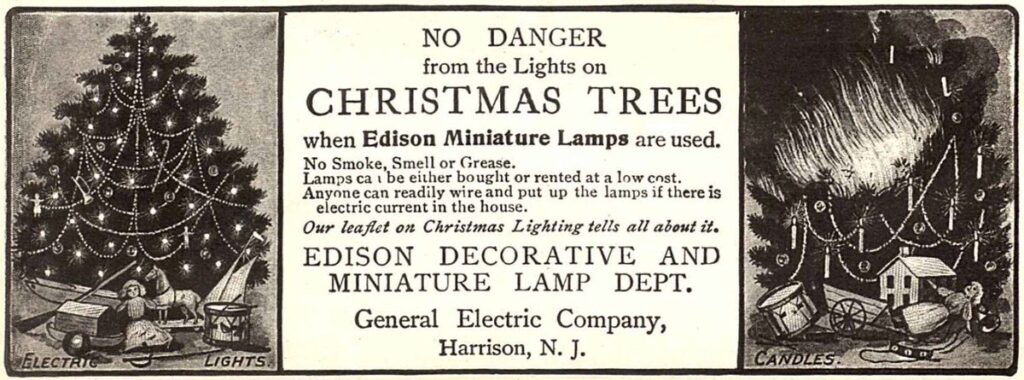
For some of course, it made more sense to RENT Christmas lights, a popular option in the year 1900.
From a General Electric Ad that year: “Edison Miniature Lamps for Christmas Treets. No Danger, Smoke or Smell. Lamps either rented or sold. Full directions furnished, enabling anyone to readily wire and put up the lamps.”
For more information, check out these Bowery Boys podcasts:
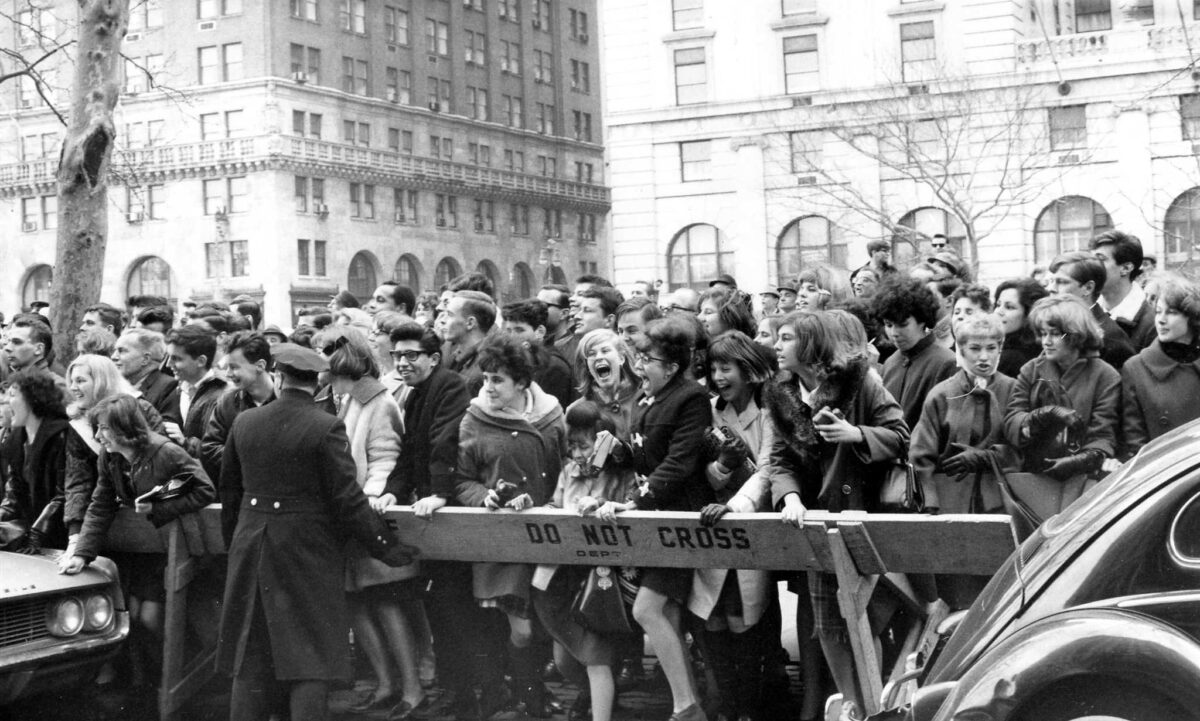
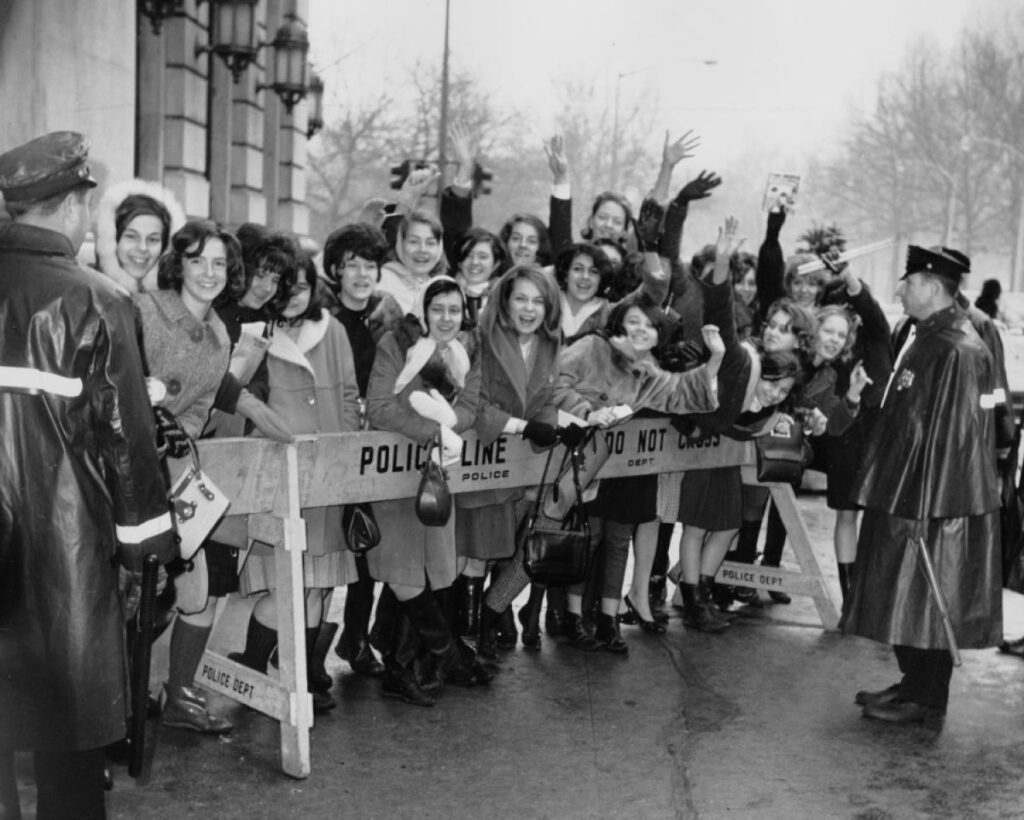
Police enforce the barricades outside New York's Plaza Hotel as fans push forward in hopes of a view of The Beatles after their arrival for an American tour on February 7, 1964. (AP Photo)
PODCAST: EPISODE 346 How Beatlemania both energized and paralyzed New York City in the mid 1960s as told by the women who screamed their hearts out and helped build a phenomenon.
Before BTS, before One Direction, before the Backstreet Boys and NSYNC, before Menudo and the Jackson 5 — you had Paul, John, George and Ringo.
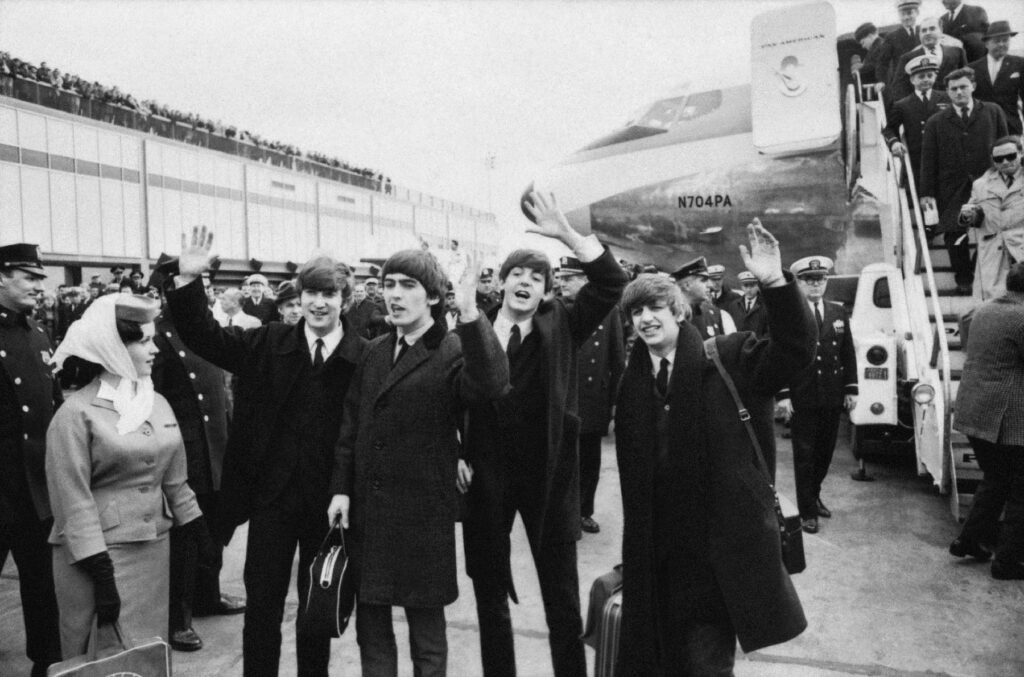
The Beatles were already an international phenomenon by February 9, 1964. when they first arrived at the newly named JFK Airport. During their visits to the city between 1964 and 1966, the Fab Four were seen by thousands of screaming fans and millions of television audiences in some of New York’s greatest landmarks.
And each time they came through here, the city — and America itself — was a little bit different.
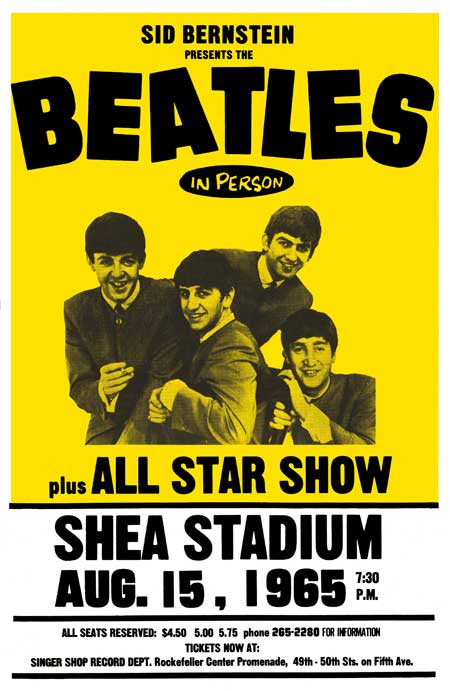
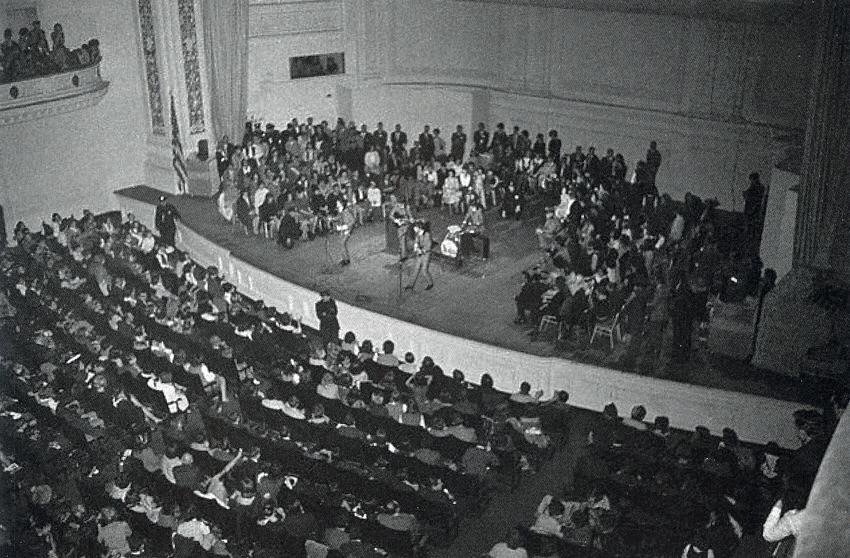
In this show, we present a little re-introduction to the Beatles and how New York City became a key component in the Beatlemania phenomenon, a part of their mythology — from the classic concert venues (Shea Stadium, Carnegie Hall) to the luxury hotels (The Plaza, The Warwick).
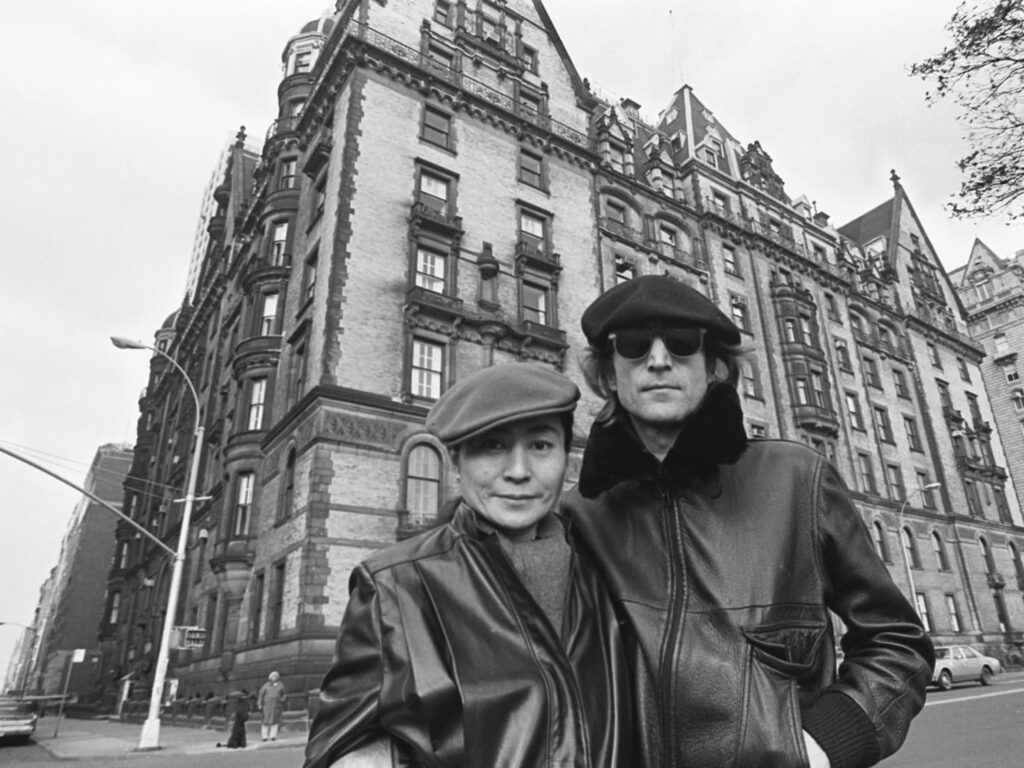
We’ll also be focusing on the post-Beatles career of John Lennon who truly fell in love with New York City in the 1970s. And we’ll visit that tragic moment in American history which united the world 40 years ago — on December 8, 1980
But we are not telling this story alone. Helping us tell this story are recollections from listeners, the women who were once the young fans of the Beatles here in New York, the women who helped built Beatlemania.
Listen today on your favorite podcast player:
A very big THANK YOU to the women who sent in recollections about their love of the Beatles in the 1960s.
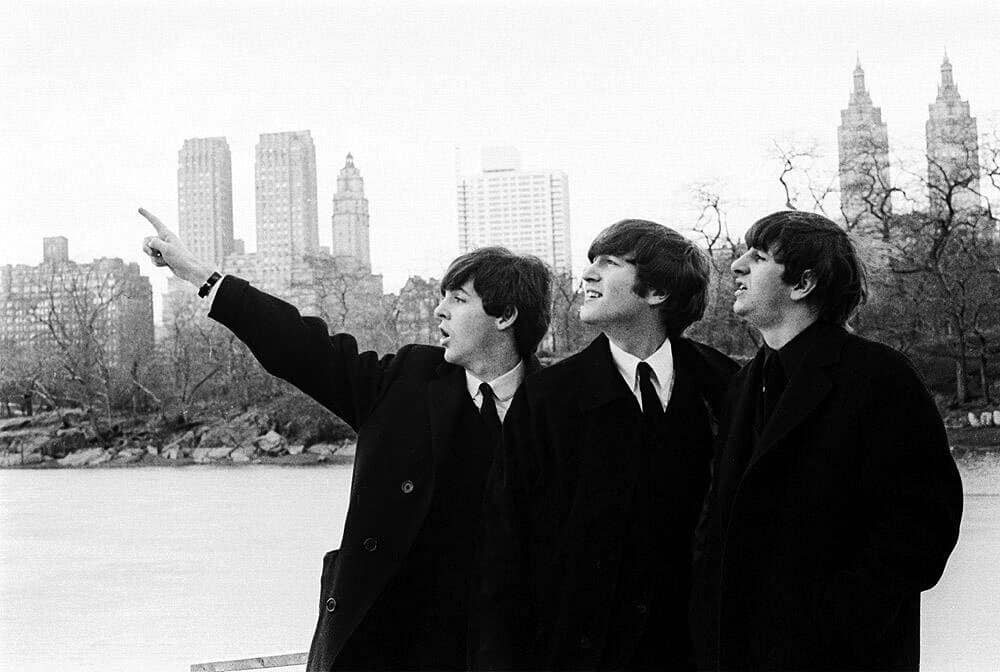
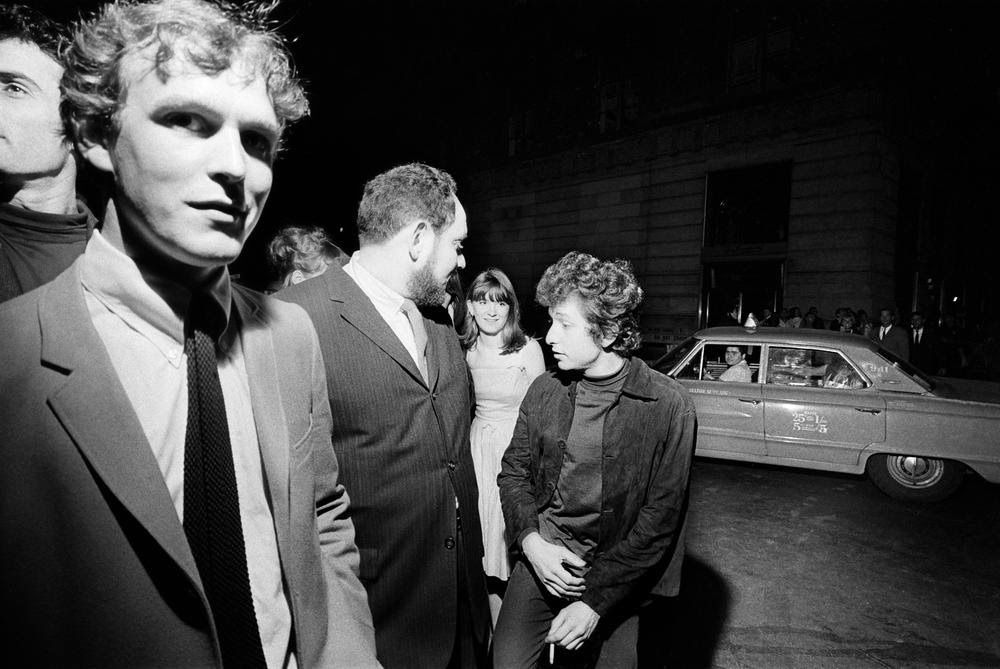
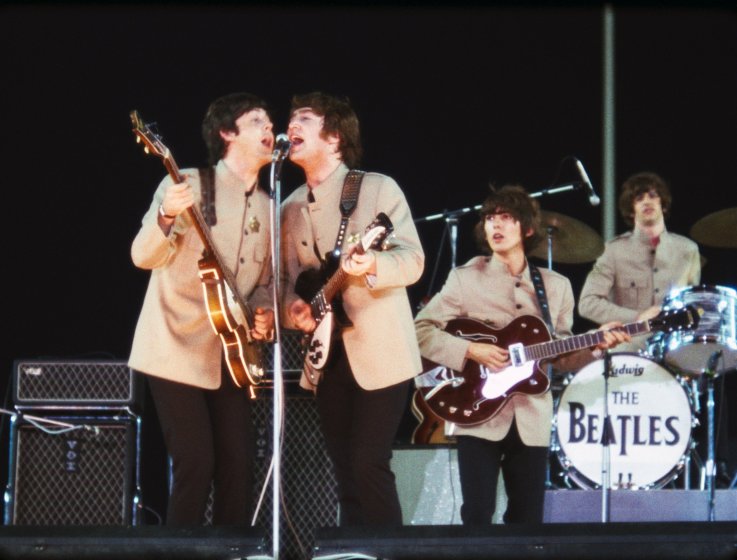
CBS via Getty ImagesNew York Daily NewsGalavanting around Central Park — sans George.The Beatles at Carnegie HallBob Dylan heading into the Delmonico Hotel to meet the BeatlesThe Beatles at Shea Stadium/SUBAFILMS LTDImage credit: Allan Tannenbaum, Getty Images
Historical clips used in this show:
https://www.youtube.com/watch?v=j3fDYM3GdcA
FURTHER LISTENING Related to this week’s show
Featuring a ghost story related to the Dakota Apartments:
FURTHER READING
Diary of a Beatlemaniac by Patricia Gallo-Stenman Can’t Buy Me Love: The Beatles, Britain and America by Jonathan Gould John Lennon: The New York Years by Bob Gruen The Search for John Lennon by Lesley-Ann Jones The Walrus & The Elephants: John Lennon’s Years of Revolution by James A. Mitchell The Beatles Are Here! by Penelope Rowlands Fab: An Intimate Life of Paul McCartney by Howard Sounes The Beatles: A Biography by Bob Spitz John Lennon 1980: The Last Days of His Life by Kenneth Womack
The Bowery Boys: New York City History podcast is brought to you …. by you!
We are now producing a new Bowery Boys podcast every week. We’re also looking to improve and expand the show in other ways — publishing, social media, live events and other forms of media. But we can only do this with your help!
We are now a creator on Patreon, a patronage platform where you can support your favorite content creators.
Please visit our page on Patreon and watch a short video of us recording the show and talking about our expansion plans.
If you’d like to help out, there are six different pledge levels.Check them out and consider being a sponsor.
We greatly appreciate our listeners and readers and thank you for joining us on this journey so far.
We echo our ancestors’ history everyday through our accents and spoken language. Accents are a filtered connection to how those before us spoke — well, for many people, that is.
As for me — born in the Ozarks with much of my life in New York City — you’d think I would have pretty bizarre accent. Instead I’ve somehow managed a mostly average, spice-less voice with few registers of the past.
The ‘newscasters’ voice, aka General American English, is perhaps the most frequently heard accent in the country, partly due to the influence of pop culture, partly with standardized American education.
But even devoid of specific New York, New England, or Southern influences, even my voice tells a story. And even my very generic voice, in a roundabout way, was born in New York.
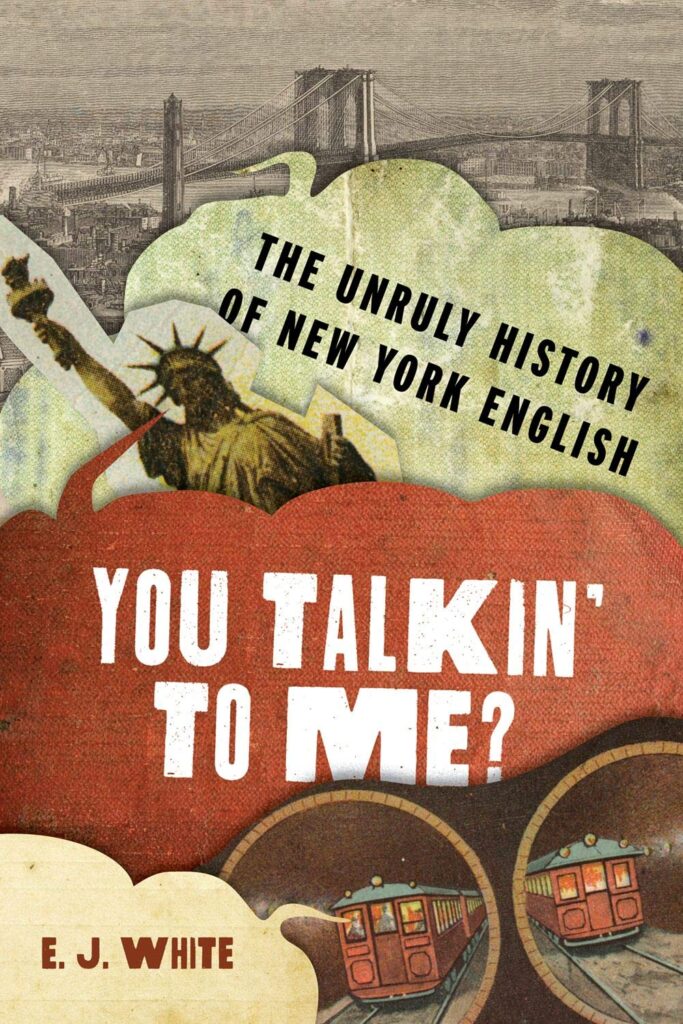
YOU TALKIN’ TO ME? The Unruly History of New York English E.J. White Oxford University Press
In the eye-opening (or is that ear-opening) You Talkin’ to Me, exploring the idiosyncrasies of New York City English, author and language educator E.J. White brings together the accents, vocabulary and place names of the modern city to illustrate the sophisticated ways in which we communicate here.
It might sound unusual to refer to accents as ‘sophisticated’ — we’ve been trained to consider them the opposite — but as White charts throughout her book, our ways of speaking are more expressive and rich when they reveal something about ourselves and our past.
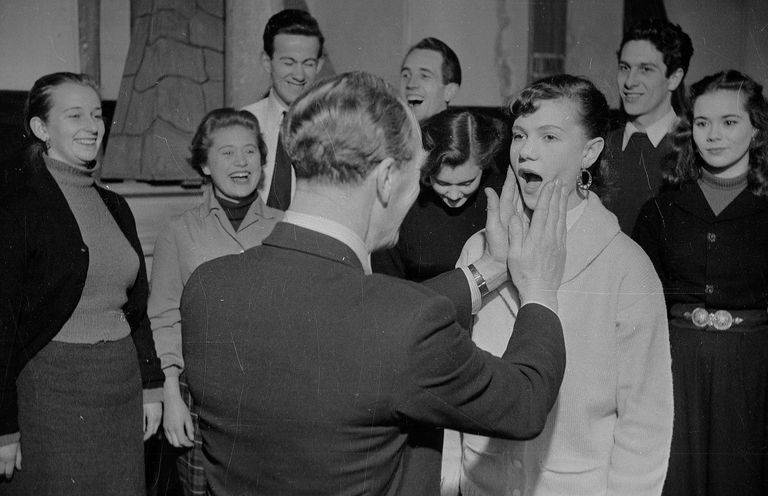
Below: Students in an elocution class
Kurt Hutton/Getty Images
Teaching the sound of English was a priority for New York City schools during the early 20th century when classes became filled with the children of immigrants. These young accented voices, according to some instructors, were un-American.
A 1931 textbook, for example, describes the “characteristic racial errors that students of various ethnicities are apt to make in their speech, using language that suggests that nonstandard speech derives from flaws of ethnic temperament.”
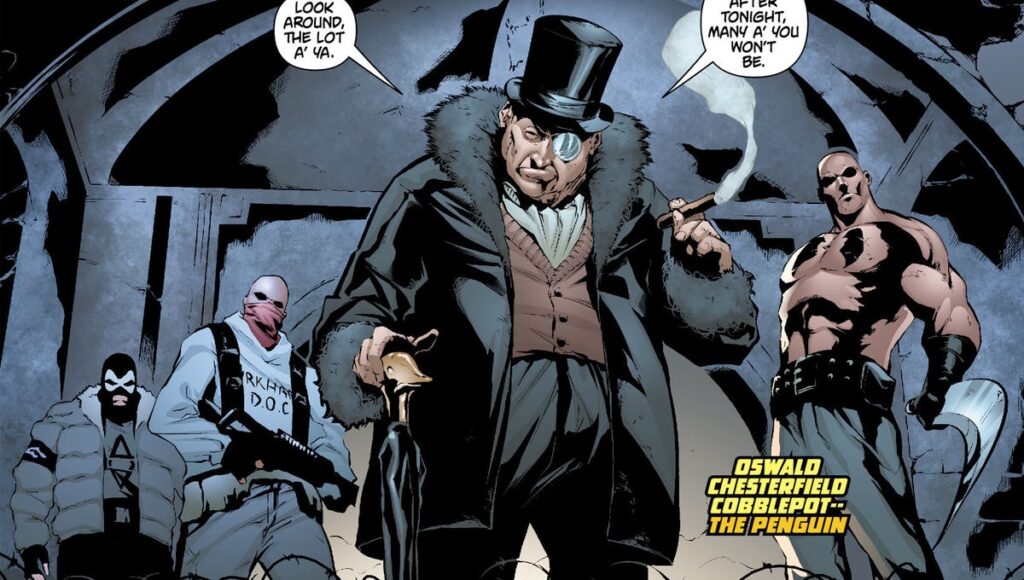
DC Comics
New York accents, borne from multiple ethnic influences, are often derided in culture to this day. “In all his iterations,” writes White, “Batman speaks Standard American English. Well, it’s to be expected; Bruce Wayne attended fancy prep schools and then Ivy League. But in every iteration, the thugs, mooks and henchmen who populate most of the city’s underclass use New York City features in their speech.”
Another interesting chapter explores code switching or the relationship of accents and speech patterns within New York City communities.
Here, too, you can find evidence of city’s immigration history, navigating arenas of status and class, especially in the richness of Puerto Rican English or in the dramatic intricacies of gay men’s speech.
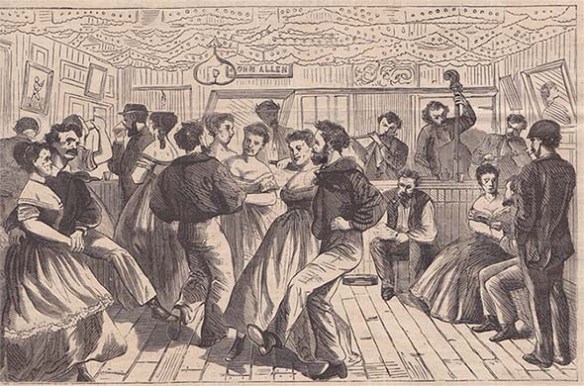
But New York English is a gift that the world enjoys. White entertainingly runs through dozens of phrases that have connections to Old New York. She even reenforces one of my favorite stories ever — that the word hooker comes from the old waterfront neighborhood Corlear’s Hook.
“In 1839, the Hook, as locals often called the neighborhood, held ‘thirty-two houses of assignation and eighty-seven brothels’ — this according to a guidebook published that year, which attests, at the very least, to the reputation the neighborhood had mad for itself.”
How could a neighborhood name — which few really reference today — have such influence upon language? “In short, the parceling of the city into districts, along with the crowding together of social and economic classes, led from the naming of places to the power of places to name.”
And as for the commonplace ‘general American’ accent — the accent you hear on news networks and Friends?
That stems from “newscasters, college graduates and actors in film and television” adhering to a rhotic standard, “a standard that signified Americanness in large part by distinguishing itself form the speech of America’s capital of immigration. American sound the way they do because New Yorkers sounded the way they do.”
Did you know the modern supermarket was created in New York City? The ways people purchased groceries in the first few decades of the 20th century had evolved very rapidly. And by the 1930s all roads to the grocery store would lead to Queens.
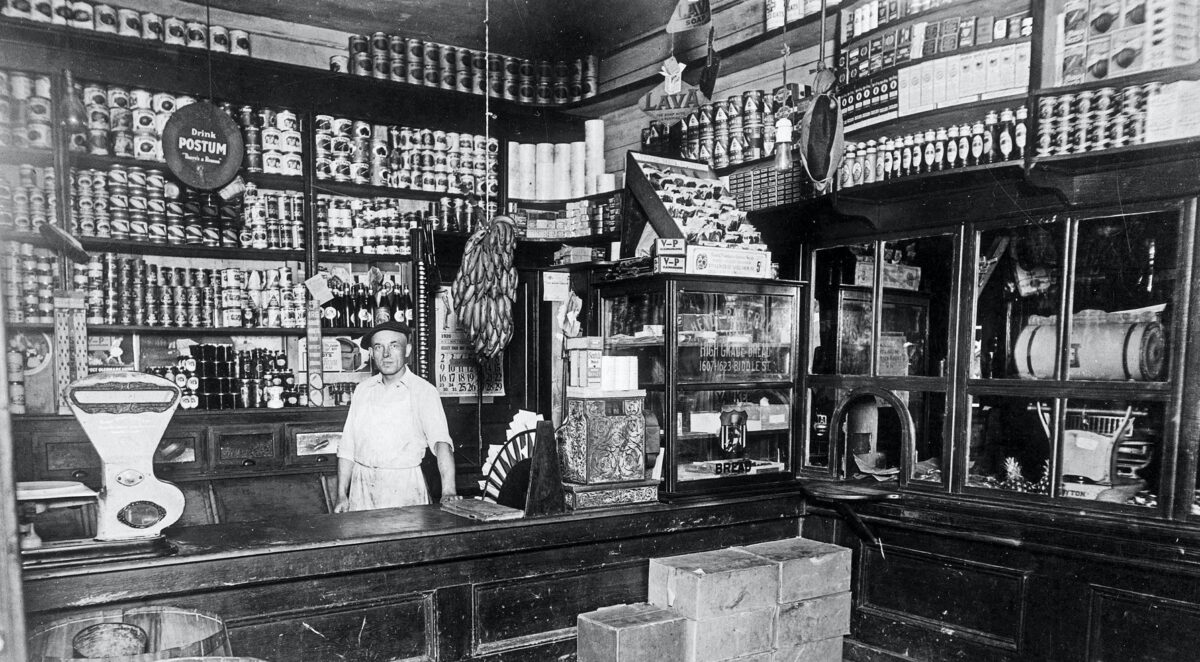
Seeman Brothers Grocery Store 1905 / Museum of the City of New York
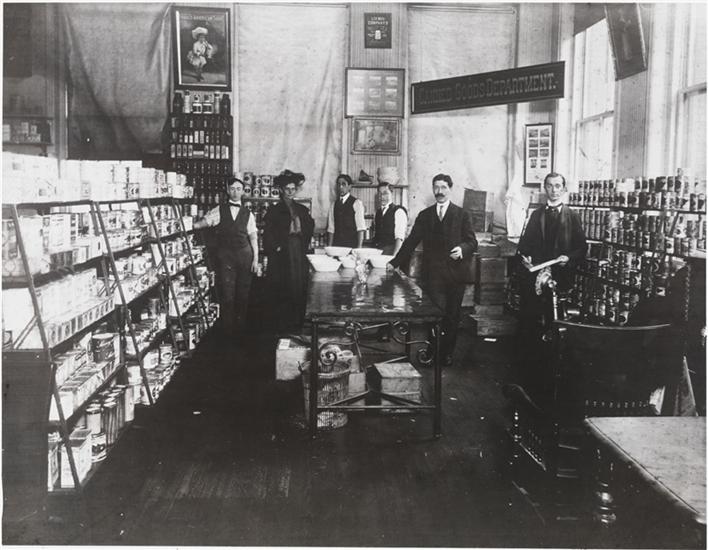
During the 19th century grocers provided shoppers with a limited number of items which the clerk procured for the customer from behind a counter. Items like meat and bread were often bought separately — at butchers and bakers.
There were of course outdoor markets, where customers would have greater flexibility in selecting their own produce. But markets with a truly fine and diverse selection were rarely available to most Americans outside of big cities.
Overall grocery shopping was a less dynamic affair than it is today with fewer options and an almost blatant disregard to convenience.
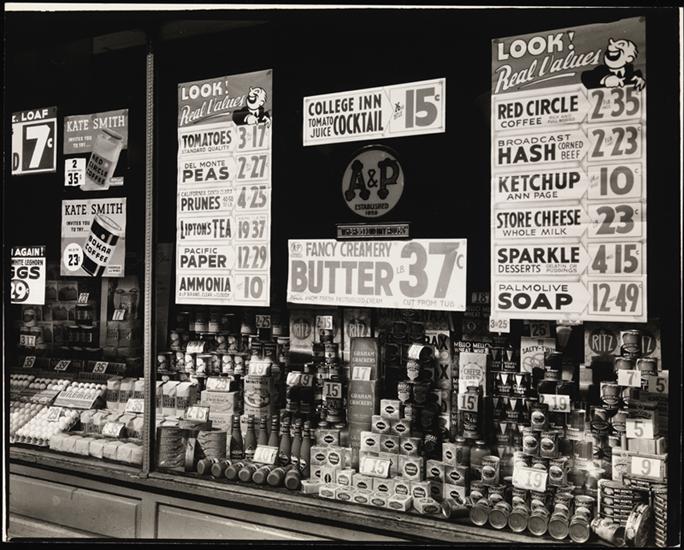
A&P Grocery Store 1936, photo by Berenice Abbott, courtesy Museum of the City of New York
Advent of the Grocery Chain
Successful merchants would branch out into several grocery stores in one city, using a trusted brand name as a lure to customers who looked for conformity and assurances in freshness and quality.
Those grocers could share resources among its many stores and even get into the manufacturing business themselves, creating branded products.
Many other famous grocery names familiar to New Yorkers got their start well over 100 years ago — including Charles and Diedrich Gristede (in 1891) and John and Walter Wegman (1916).
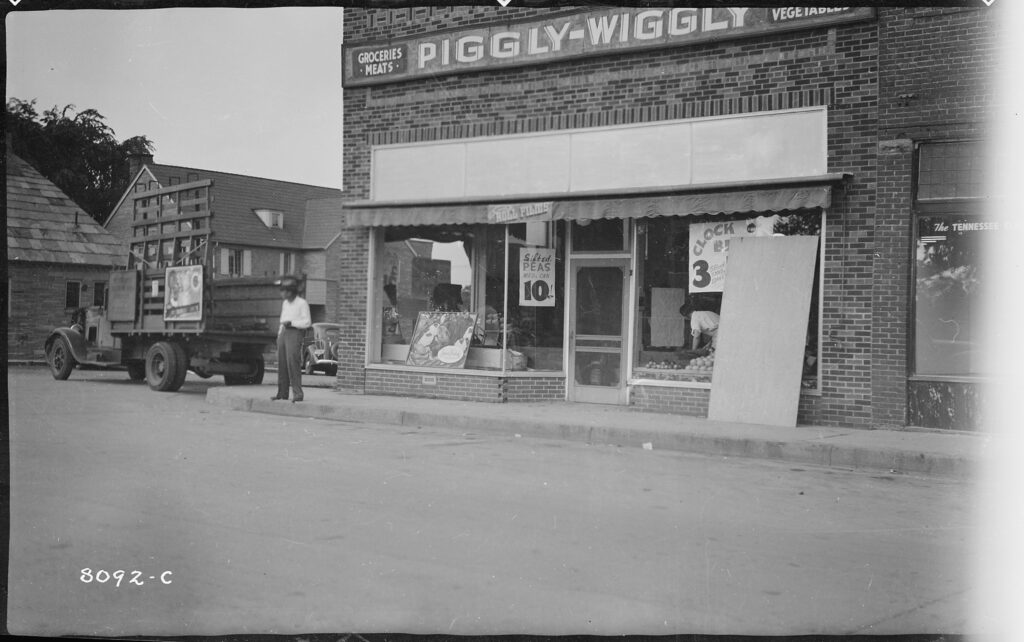
A Tennessee Piggly Wiggly, 1939, courtesy NARA’s Southeast Region (Atlanta)
Choose Your Own Food
Perhaps the most important grocery innovation in American history took place in 1916 at a Memphis, Tennessee grocery store called Piggly Wiggly.
To cut cost, the store got rid of the clerks and allowed customers to pluck items from the shelves themselves.
From Smithsonian Magazine: “Just like today, a shopper picked up a basket (though Piggly Wiggly’s were made of wood, not plastic) and went through the store to purchase everything. By the end of that first year there were nine Piggly Wiggly locations around Memphis.”
This seemingly simple idea of self-service shopping was too cost effective to ignore and soon other grocery chains across the country picked up on this novel concept.
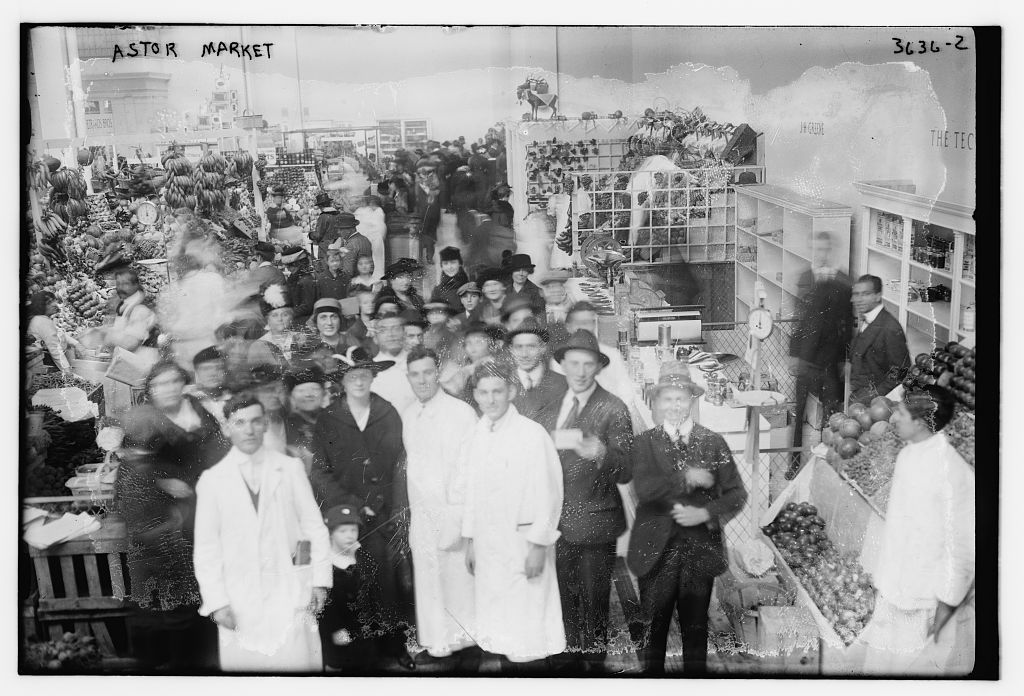
Astor Market, Library of Congress
Going Big
Experiments like the 1915 Astor Marketon New York’s Upper West Side were a bit ahead of its time. The market allowed multiple independent sellers to work under one roof, a massive army of food options creating a ‘super’ market experience (if not quite yet a supermarket).
Unfortunately a grocery store of great size was not yet a desirable experience for shoppers who preferred shopping in their own neighborhoods, and the experiment closed in 1917.
But perhaps the most important innovation put a truly royal stamp on the grocery store experience.
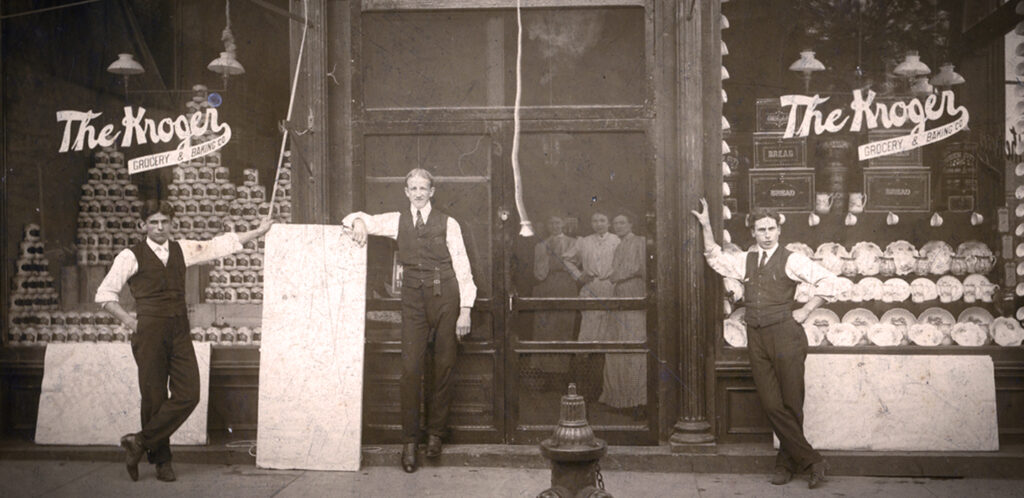
courtesy Kroger Stores
Everything In One Place
You also may be familiar with the name Kroger, still a thriving grocery store business in the United States today. That chain traces back to a small grocery story opened in 1883 by Cincinnati merchant Bernard Kroger.
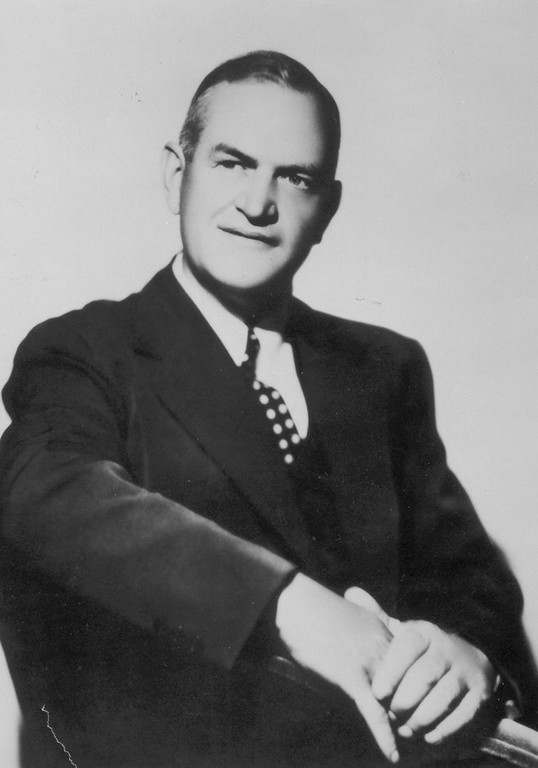
In 1929 a Kroger employee named Michael J. Cullen proposed to his boss an eye-opening expansion to the grocery store business. “Before you throw this letter in the wastebasket, read it again and then wire me, so I can tell you more about my plan and what it will do for you and your company.”
‘King’ Michael J Cullen, inventor of the supermarket
Cullen’s plan involved, according to Supermarket News, “stores that would be 80% self-service, located outside a city’s main business center” and involve a unique pricing scheme — “where 300 items would be sold at cost, 200 others at 5% above cost, 300 more at 15% above cost and another 300 at 20% above cost.” [source]
The idea was to immerse a customer with bargain selections so that it would be nearly impossible for somebody to run in to pick up one or two necessary items without picking up a half-dozen unnecessary ones.
As he wrote, “When I come out with a two-page ad and advertise 300 items at cost and 200 items at practically cost, the public would break my front doors down to get in.”
His boss wasn’t interested in this grocery revolution, so in 1930 Cullen instead moved to Long Island and partnered with a Brooklyn grocery executive Harry Socoloff to build his dream store.
The destination? The borough of Queens.
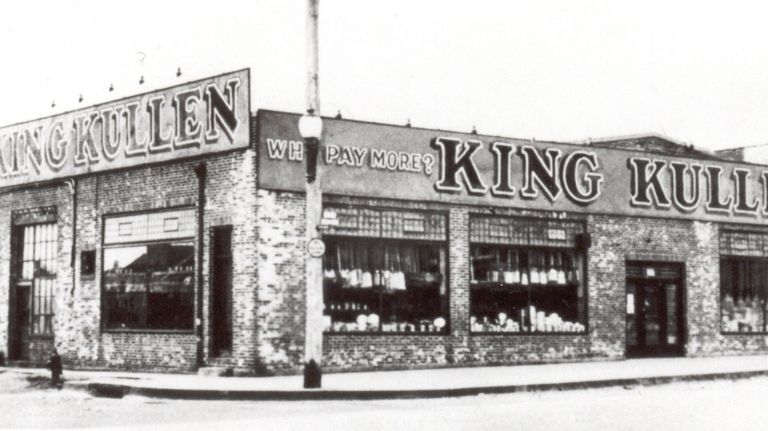
Credit: King Kullen/Bill Davis
A Queens Shopping Experience
Queens was an ideal place to try out something new in 1930.
The borough was experiencing a huge population boom and new, inventive housing developments were turning former farmland into sprawling new neighborhoods. In effect, eastern Queens was developing as a ‘suburb’ to the more developed regions of the borough, as well as the denser populations of Manhattan and Brooklyn.
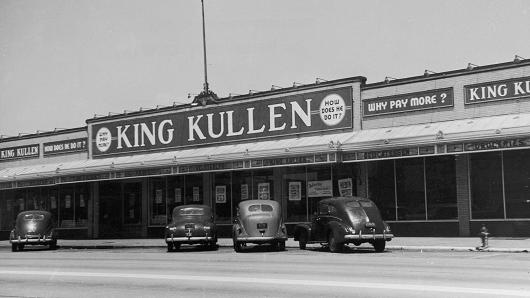
Cullen and Socoloff leased a garage at 171-06 Jamaica Avenue in the neighborhood of Jamaica Estates and opened his ‘super’ experiment on August 4, 1930 — King Kullen.
The name of the store came from a drawing made by his young son. “It was a picture of a globe, and on top of it was a man seated — Bobby’s idea of a man seated on top of the world. And across the bottom he had printed the title, ‘King Kullen.’” Cullen said. “Actually, it was because Bobby thought ‘Cullen’ was spelled with a K. But the title struck Mike at once.”
The Smithsonian declares King Kullen to be”the first to fulfill all five criteria that define the modern supermarket: separate departments; self-service; discount pricing; chain marketing; and volume dealing.”
According to the book Savoring Gotham, “The store stocked thousands of food products — about ten times more than other grocery stores — at prices that undercut those at local markets. There was also free curbside parking drawing in customers with cars, who tended to stock up rather than just buying a few items for immediate use.”
The automobile would be key. Customers could now buy more on one trip than they could at grocers near their homes and the spacious parking encouraged a leisurely adventure down the aisles.
More Stores
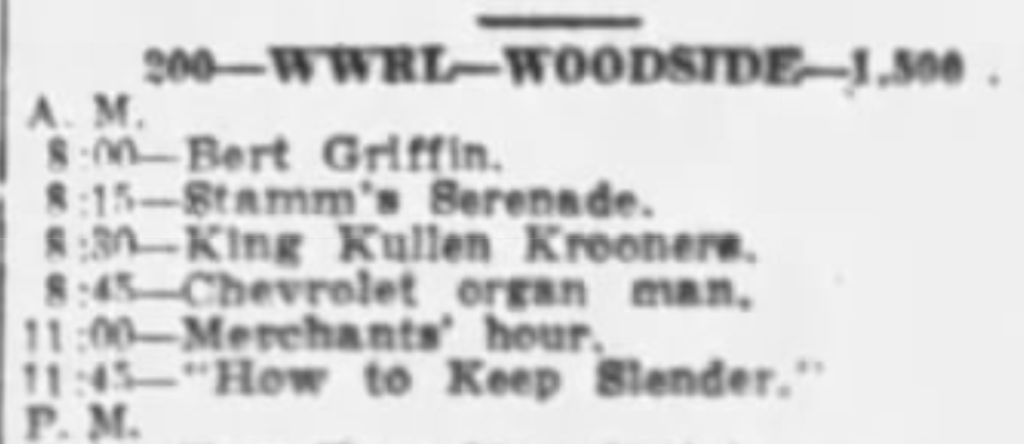
King Kullen’s early promotional opportunities included a foray into radio; in 1931 music lovers could turn into Woodside radio station WWRL to listen to the King Kullen Krooners. (Has there ever been a more unfortunate alliteration?)
But it was King Kullen’s reputation as “the World’s Greatest Price Wrecker” that soon assured several locations of the grocery store throughout Queens, Brooklyn and into Long Island.
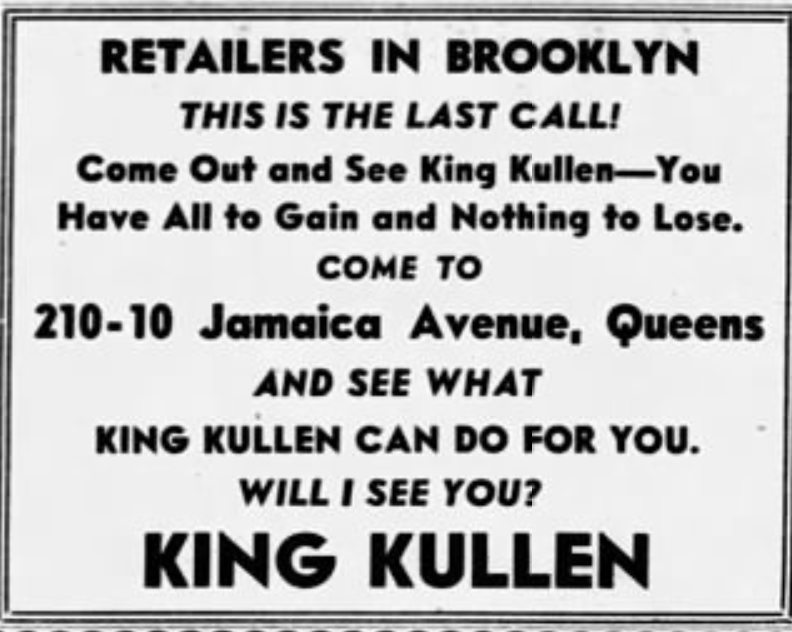
King Kullen was so popular that it almost immediately spawned imitators — sometimes with similar names! In 1932 Cullen took an Astoria competitor to court, a store with a very similar name of King Tuller which advertised itself as “America’s Greatest Price Wrecker.”
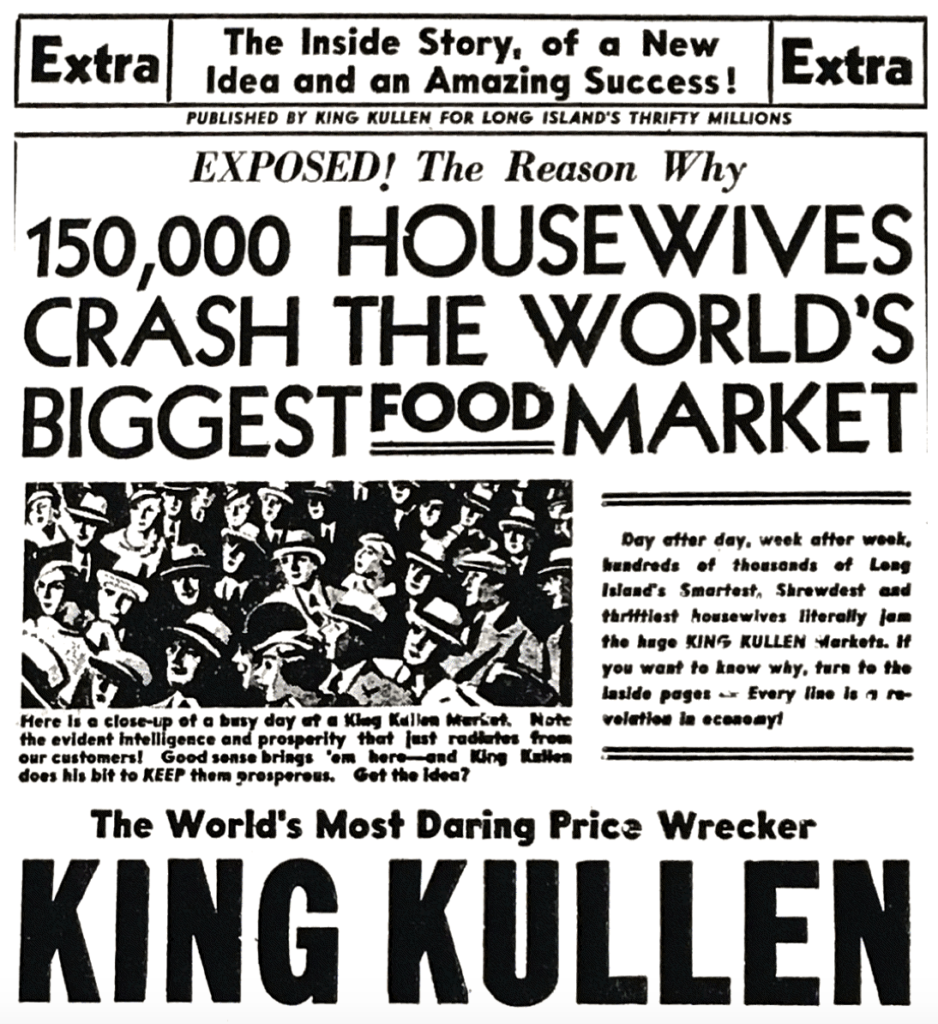
Below: A flashy newspaper ad for King Kullen, celebrating its appeal to housewives:
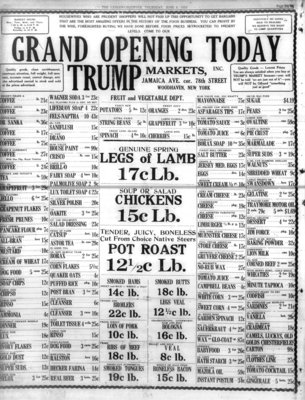
The following year, Cullen purchased a preexisting grocery store in Woodhaven, Queens, very much modeled after King Kullen. The store, Trump Market, was owned by Fred Trump. In keeping with Cullen’s slogan, Trump declared “Serve Yourself and Save!”
Trump sold to Cullen after only six month in business. The store became a King Kullen, and Trump used the money to launch his career in real estate.
(In another odd connection to King Kullen, the Trumps lived on Wareham Place, exactly one mile north of the original location of Cullen’s first supermarket on Jamaica Avenue.)
By 1936 there were 17 King Kullen supermarkets, each one larger than the last. (Sadly that was also the year Michael J. Cullen died at age 52 after an appendix operation.)
Below: A 1933 ad in the New York Daily News
Despite lofty ambitions to expand, Cullen’s death effectively sealed the grocery chain’s lofty fate to expand, but to this day King Kullen remains a very recognizable regional brand name.
There are currently 29 locations in New York State, along with several locations of its health-food offshoot Wild By Nature.
Today there are tens of thousands of grocery stores and supermarkets across the country, most of which likely dwarf the size of Cullen’s grand experiment. But there’s only King.
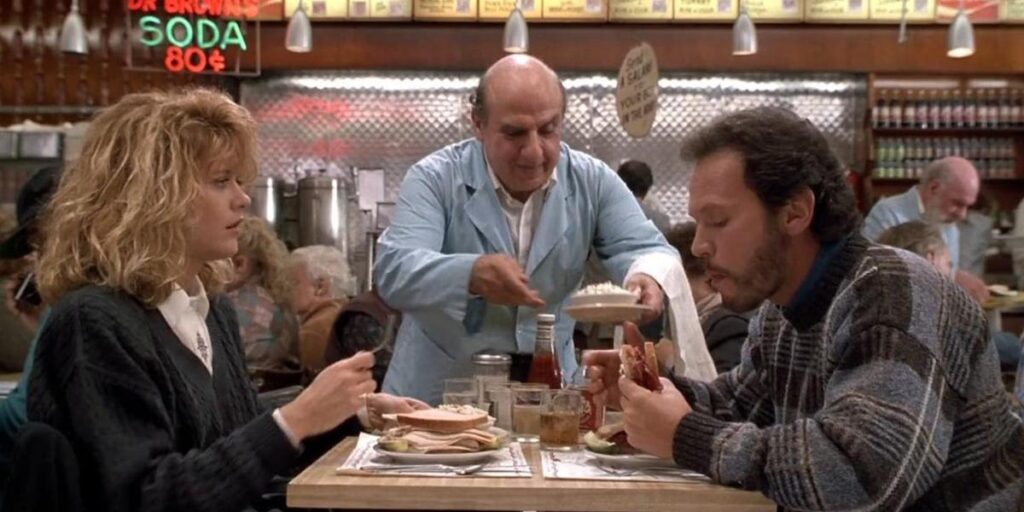
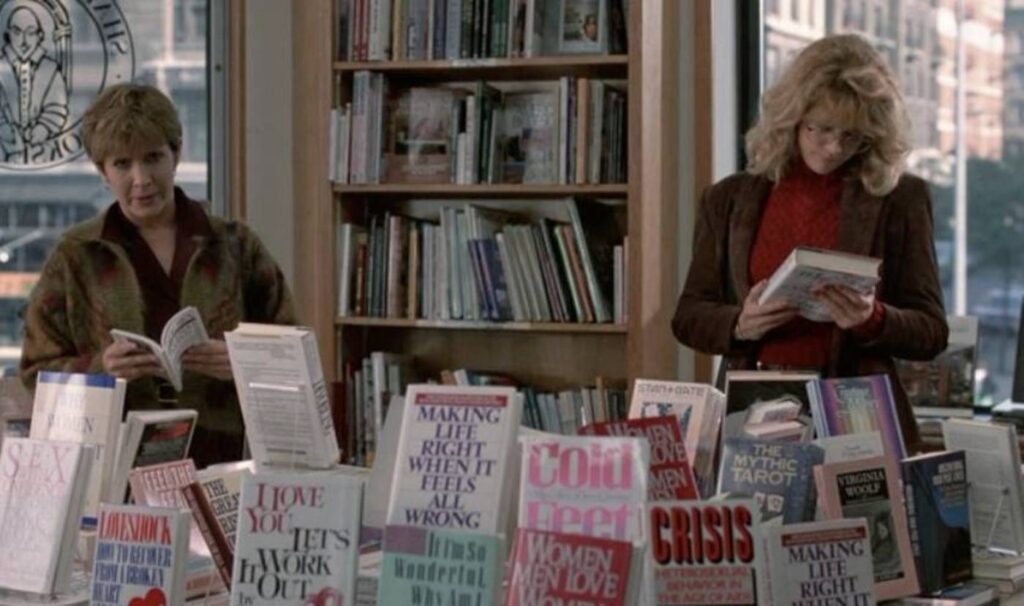
I’LL HAVE WHAT SHE’S HAVING.When Harry Met Sally, directed by Rob Reiner and written by Nora Ephron, is more than just a simple romantic comedy about opposites Harry (Billy Crystal) and Sally (Meg Ryan in a breakthrough performance).
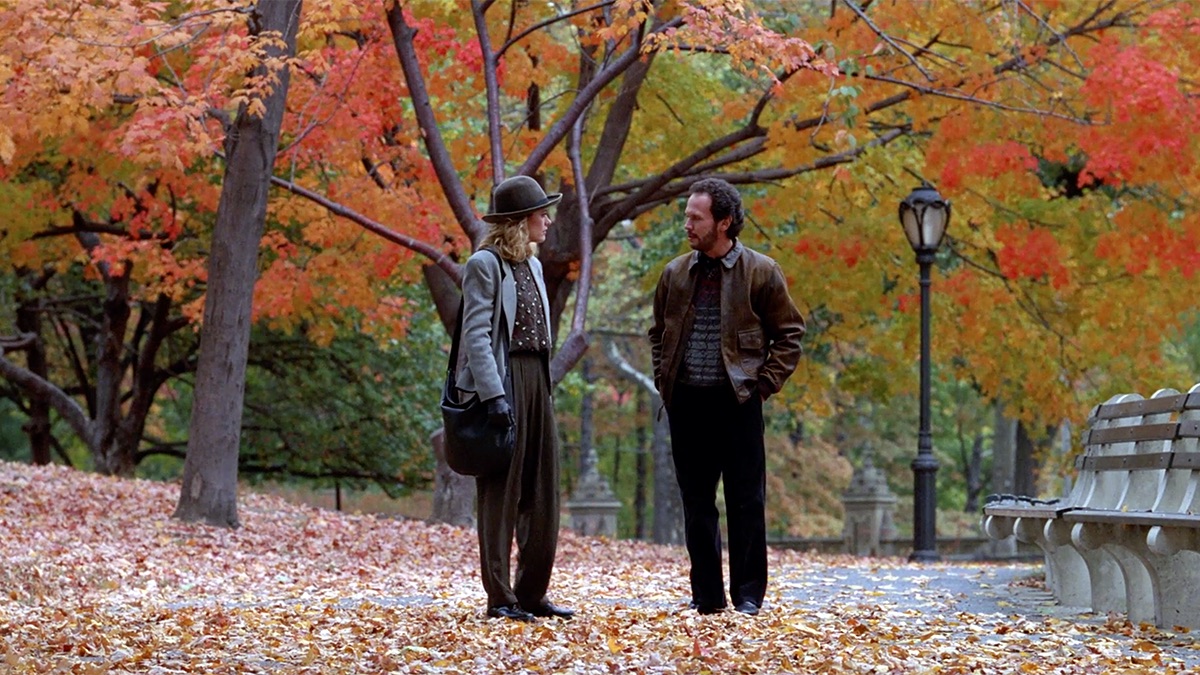
The film reinvents New York City for the screen. Its postcard-perfect scenes of autumn leaves in Central Parkand breathtaking walks through the Upper West Side would have been unheard of at the movies ten years before. When Harry Met Sally helped redefine the metropolis after almost two decades of dark, gritty depictions on screen.
Listen in as Greg and Tom recap the story and explore some of the historical context for the film. Featuring a glorious lineup of locations including the Central Park boathouse,the Metropolitan Museum of Art and the Puck Building.
HowdoIlistentheBoweryBoysMovieClub? Once you’re signed in on Patreon, you’ll see a private RSS link that can be put directly into your favorite podcast player. Even easier, it can also be played directly from the Patreonapp if you’re signed in.
Your support on Patreon assists us in producing our podcast and website and it helps as we endeavor to share our love of New York City history with the world.
Shouldyouwatchthemoviebeforeyoulistentothisepisode? This podcast can be enjoyed both by those who have seen the film and those who’ve never even heard of it.
We think our take on When Harry Met Sally might inspire you to look for the film’s many fascinating (but easy to overlook) historical details, so if you don’t mind being spoiled on the plot, give it a listen first, then watch the movie! Otherwise, come back to the show after you’ve watched it.
Where can you watch When Harry Met Sally? It’s available to rent on all movie streaming services and is free to watch on HBO Max.