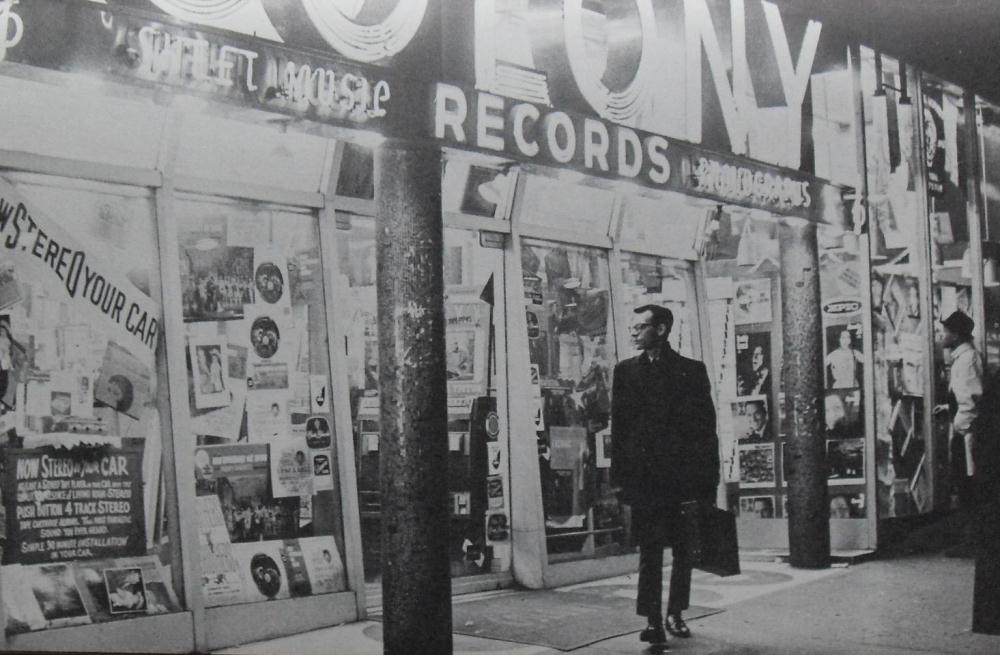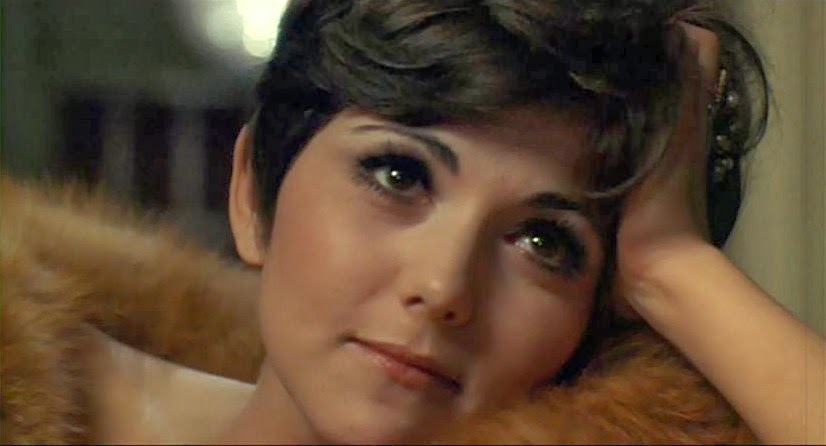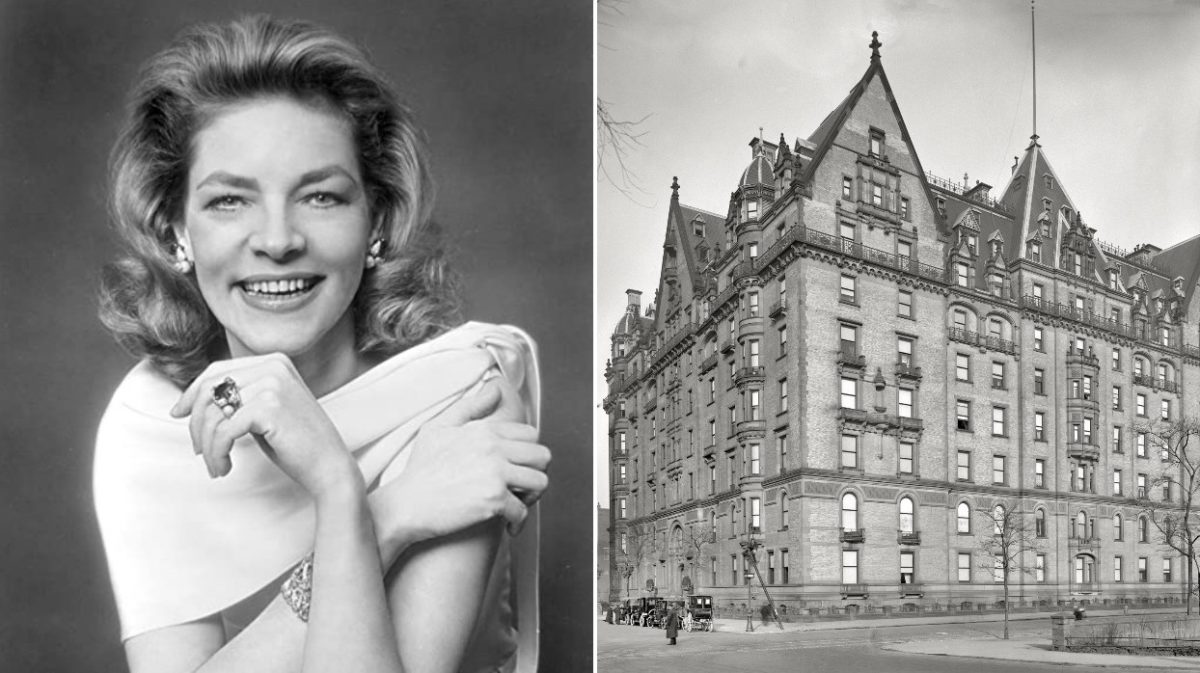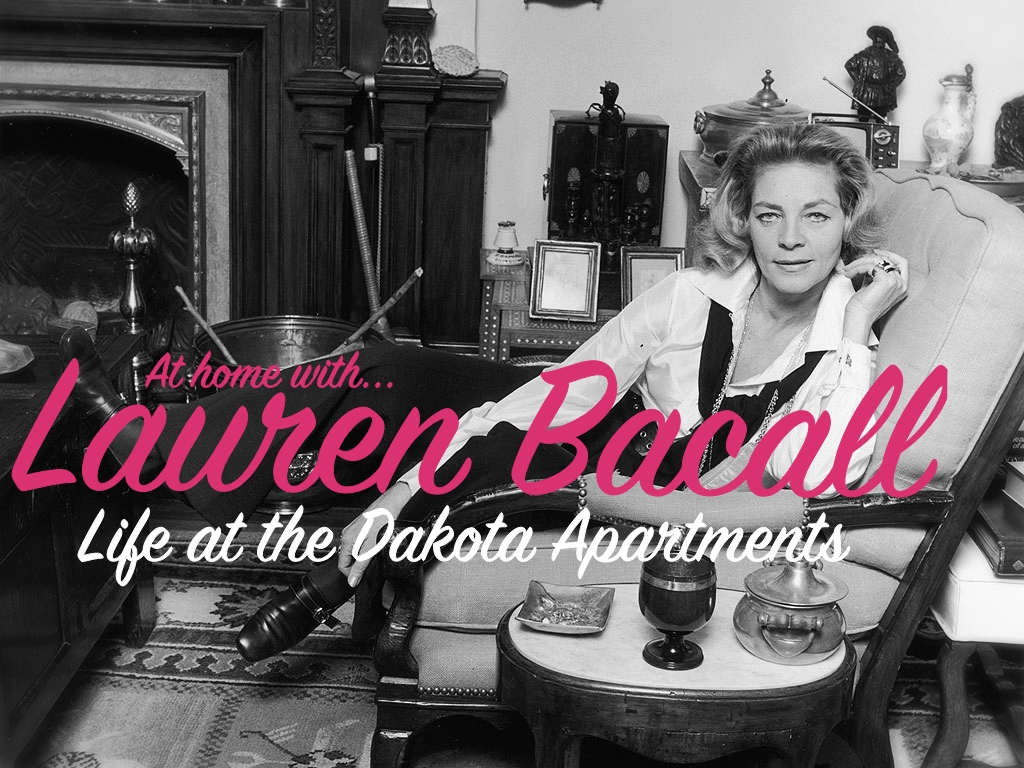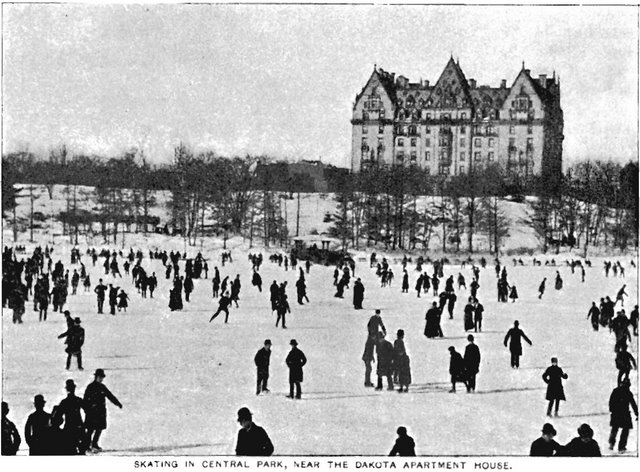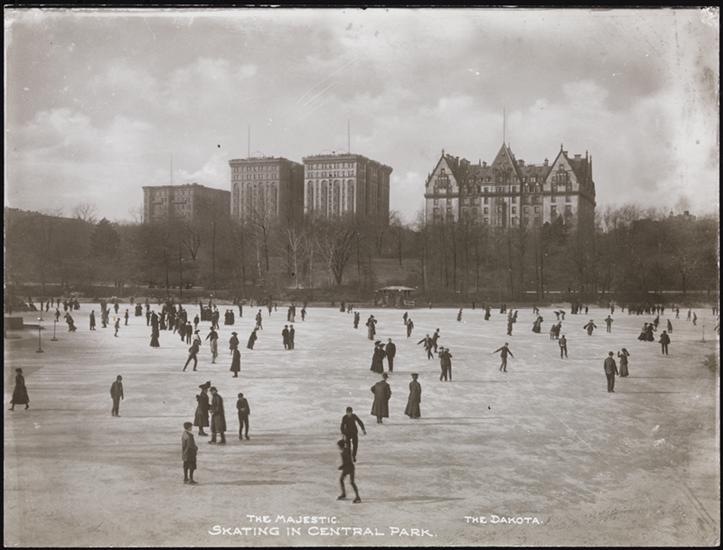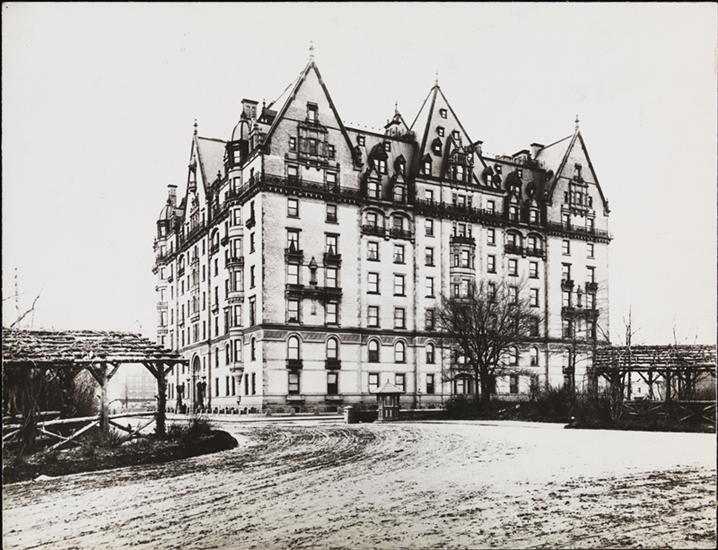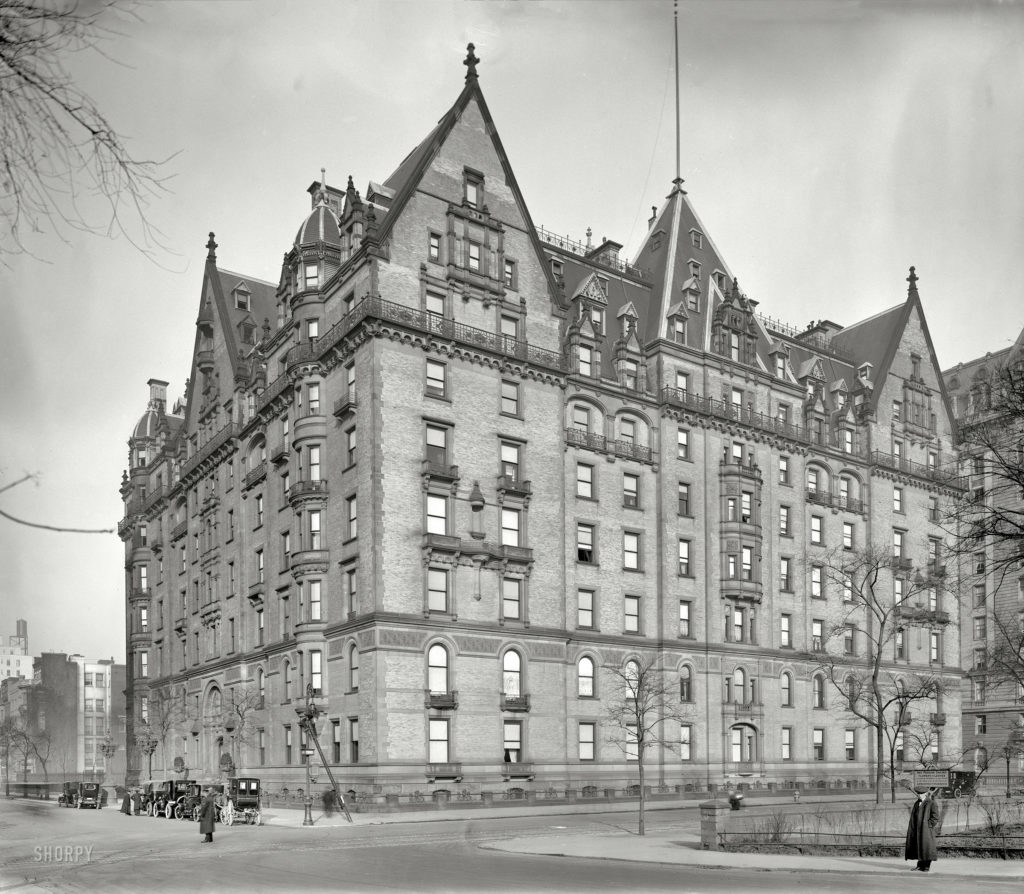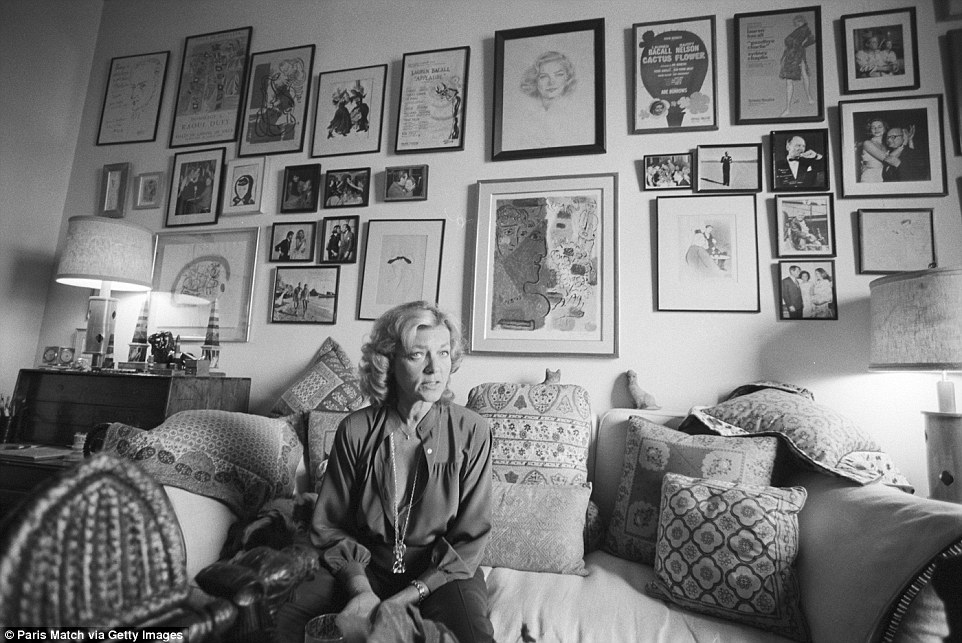
EPISODE 321 The Hollywood icon and Broadway star Lauren Bacall lived at the Dakota Apartments on the Upper West Side for 53 years. Her story is intertwined the Dakota, a revolutionary apartment complex built in 1884. In this episode, we tell both their stories.
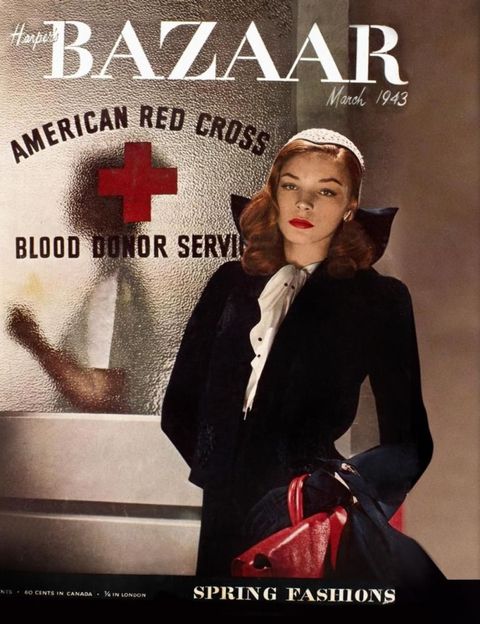
Bacall, born Betty Joan Perske, the daughter of Jewish Eastern European immigrants, worked her way from theater usher to cover model at a young age, then became a movie star before she was 20 years old. Her film pairings with husband Humphrey Bogart define the classic Hollywood era.
After Bogart died, she returned to New York City to reinvent her career, her sights aimed at the Broadway stage. And she chose the Dakota as her home.
Built by Singer Sewing Machine president Edward Clark, the Dakota was a pioneer of both apartment-style living and of living, generally speaking, on the Upper West Side.
This is the story of second and third acts — both for an woman of grit and independent spirit and for a landmark with a million stories to tell (and a million more to come).
LISTEN NOW — LAUREN BACALL … AT HOME AT THE DAKOTA APARTMENTS
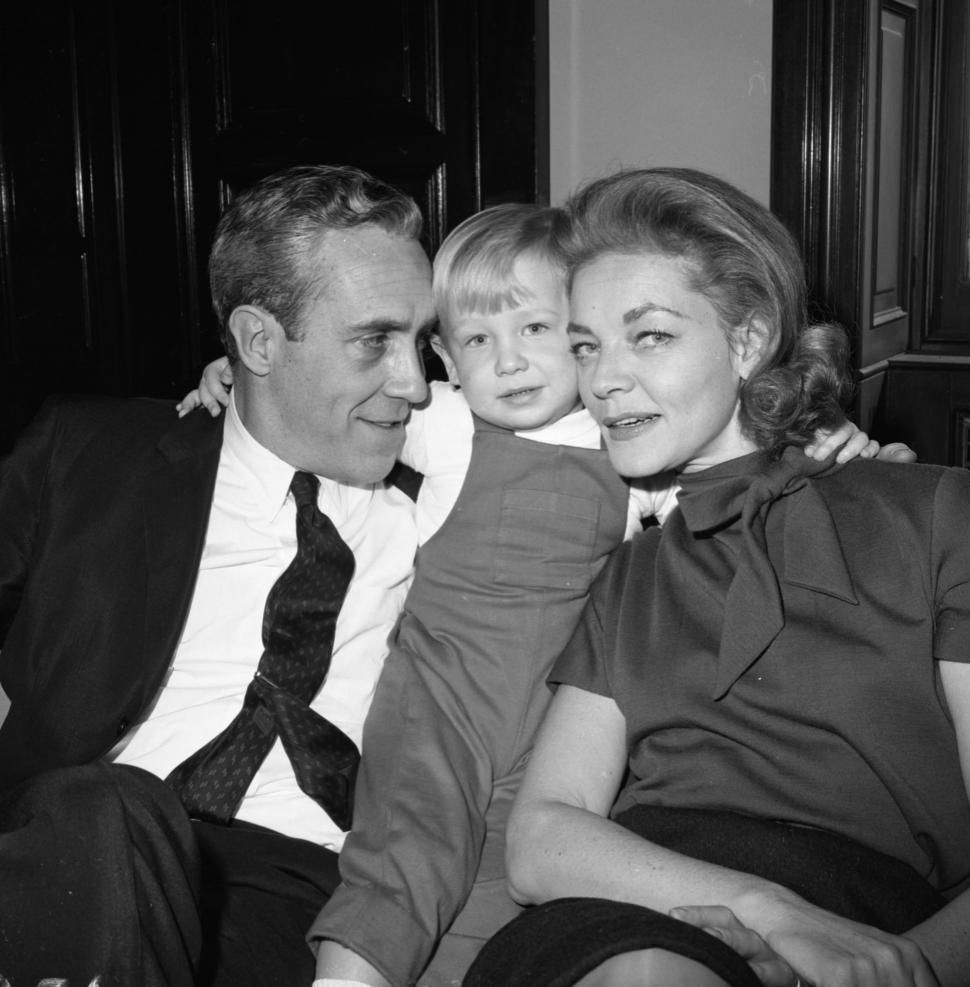
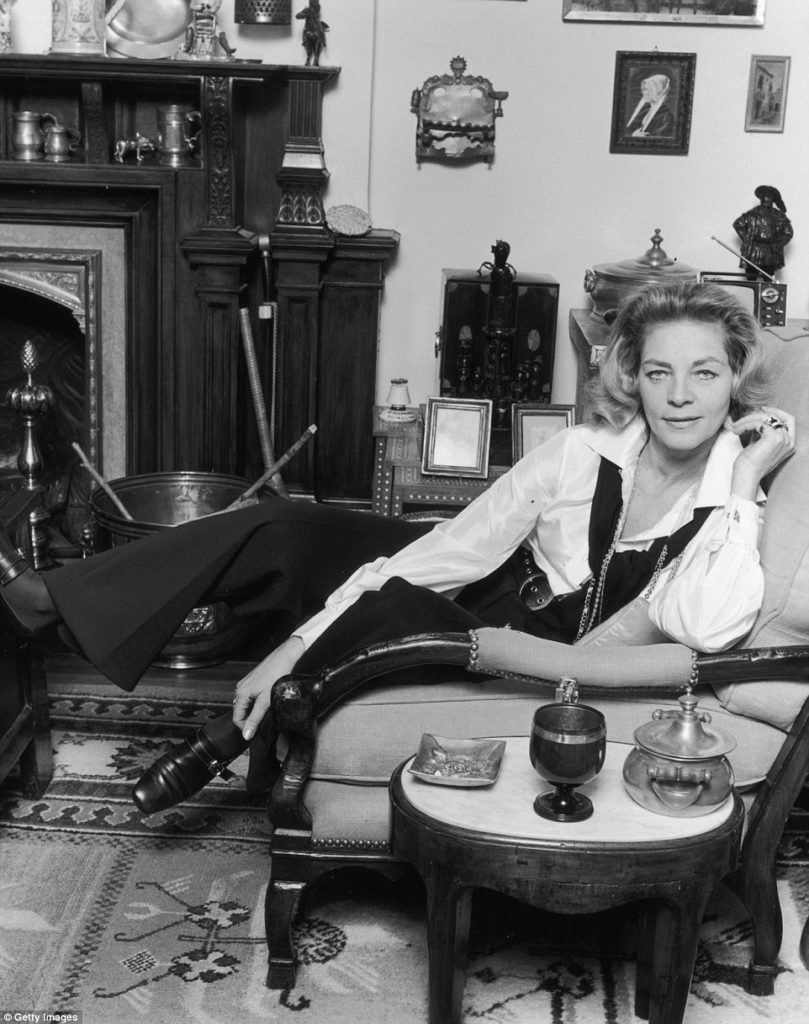
Jason Robards and Lauren Bacall with young son SamLauren Bacall 1979 in her apartment / Getty Images
FURTHER LISTENING After you’ve listened to this show on Lauren Bacall and the Dakota Apartments, check out these past episodes of the Bowery Boys: New York City History podcast with similar themes.
Another glamorous movie-star story with a not-so-happy ending:
The beginning of apartment living in New York City:
The trials and difficulties of maintaining a historic landmark:
… and is there a ghost at the Dakota Apartments?
FURTHER VIEWING Films referenced in this podcast: To Have And Have Not, The Big Sleep, Dark Passage, Key Largo, How to Marry A Millionaire, Designing Woman, Harper, Rosemary’s Baby, Applause (1973 TV version), The Mirror Has Two Faces
FURTHER READING The Dakota: A History of the World’s Best-Known Apartment Building by Andrew Alpern By Myself and Then Some by Lauren Bacall Life at the Dakota: New York’s Most Unusual Address by Stephen Birmingham
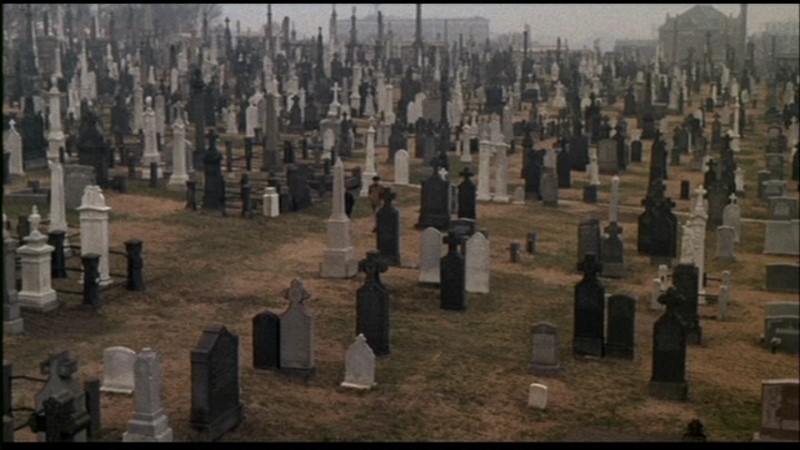
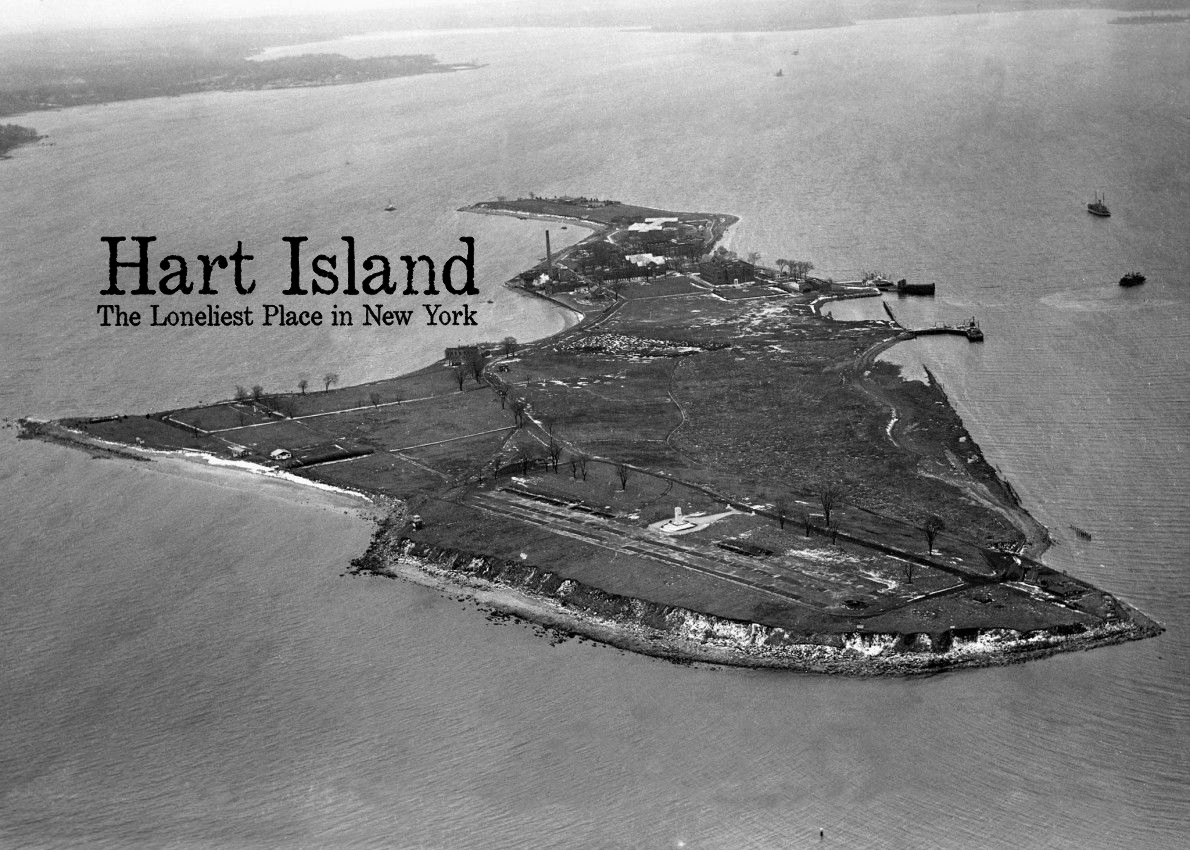
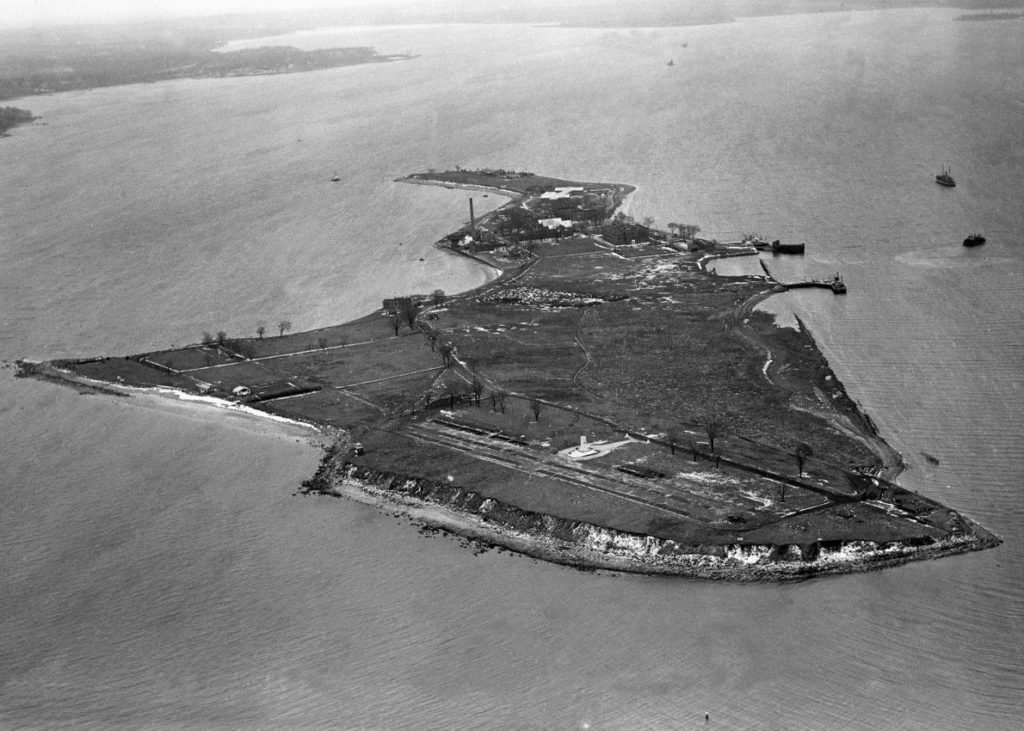
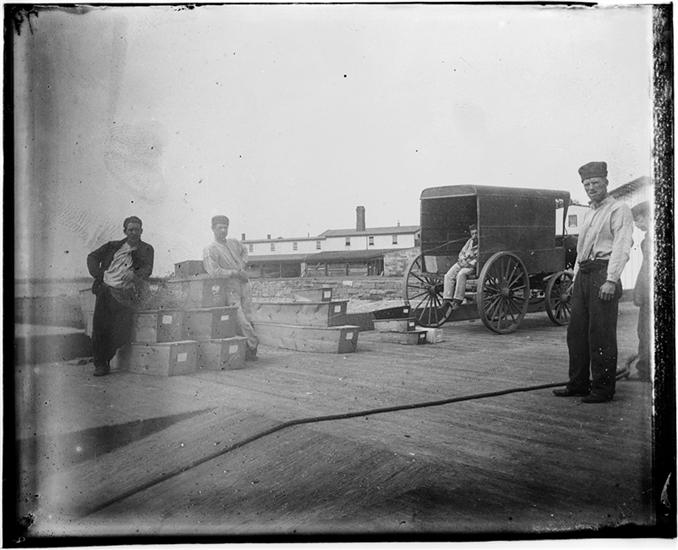
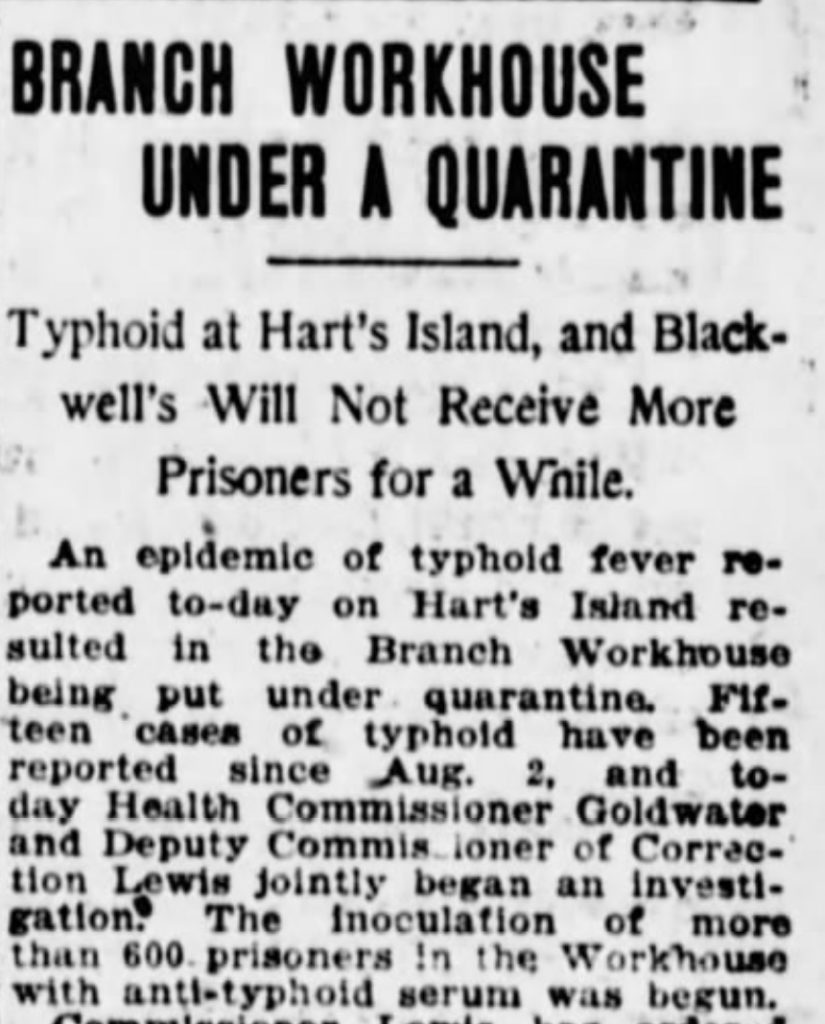
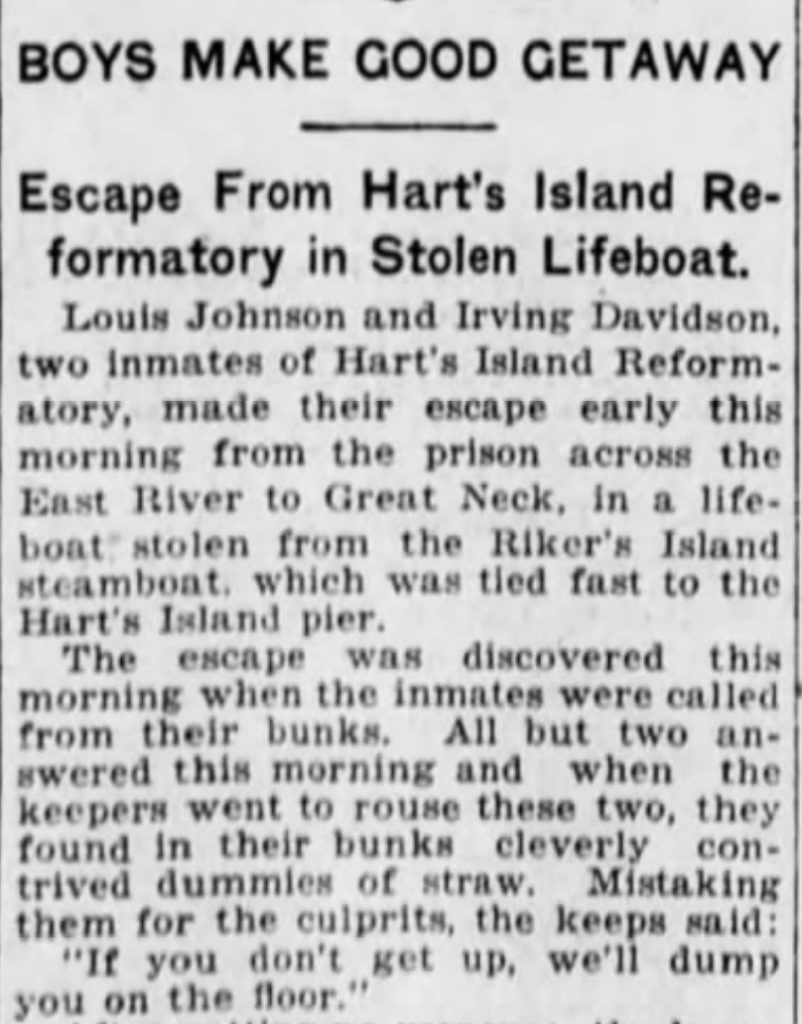
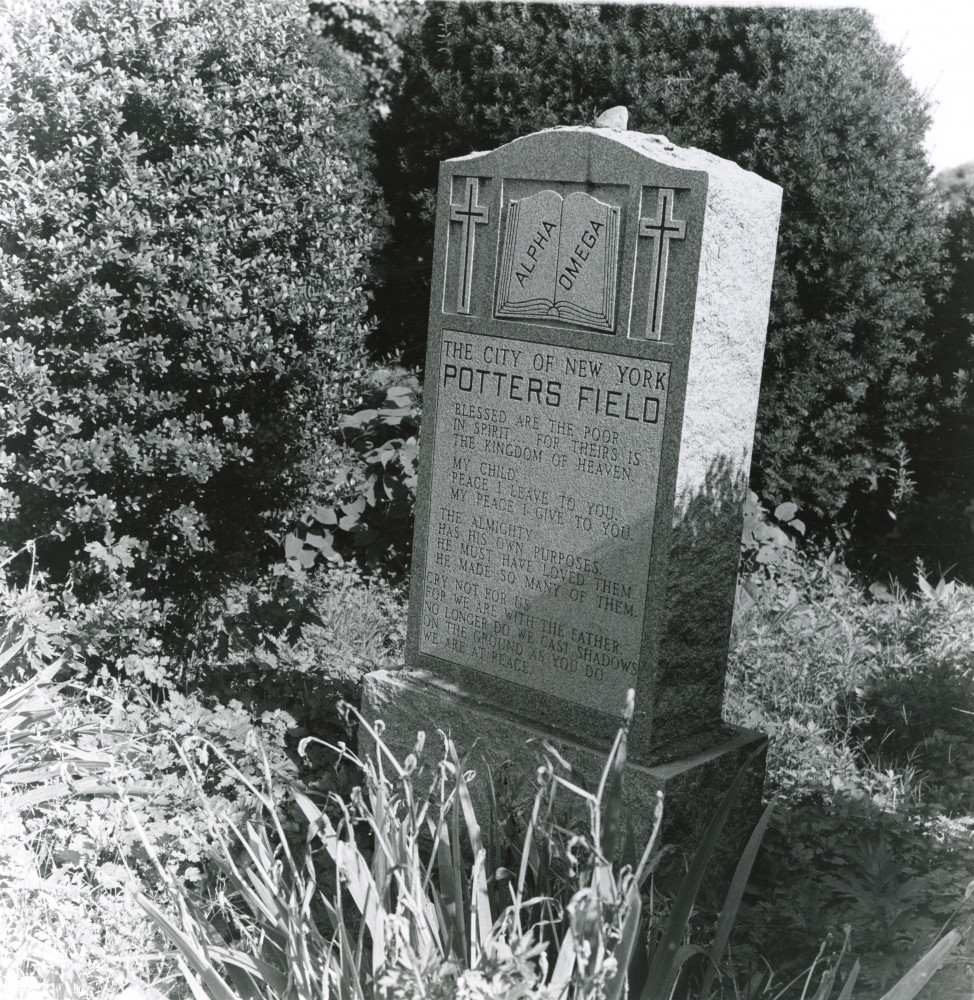
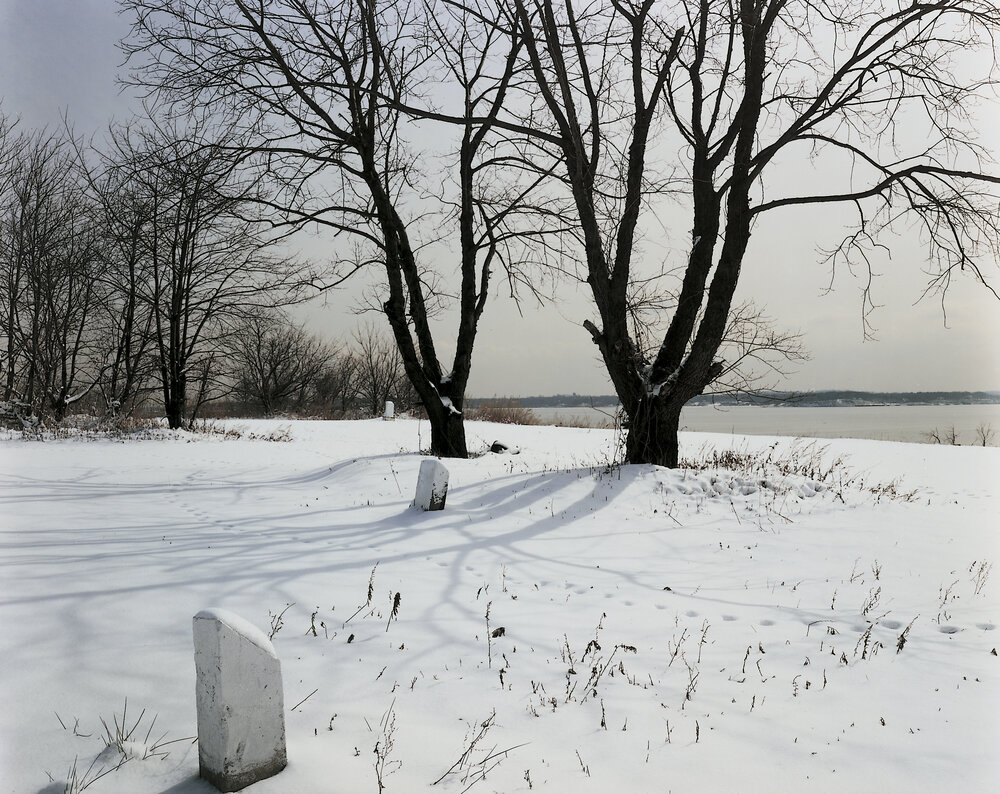
Few people are allowed to go onto Hart Island, the quiet, narrow island in the Long Island Sound, a lonely place in sight of the bustling community of City Island.
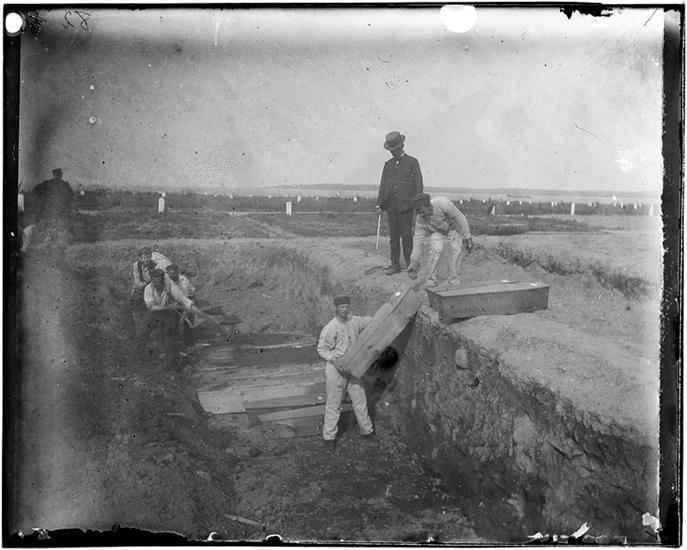
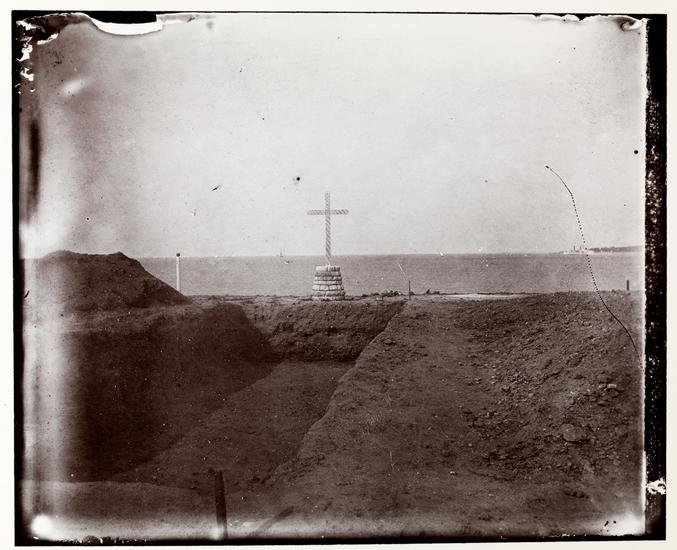
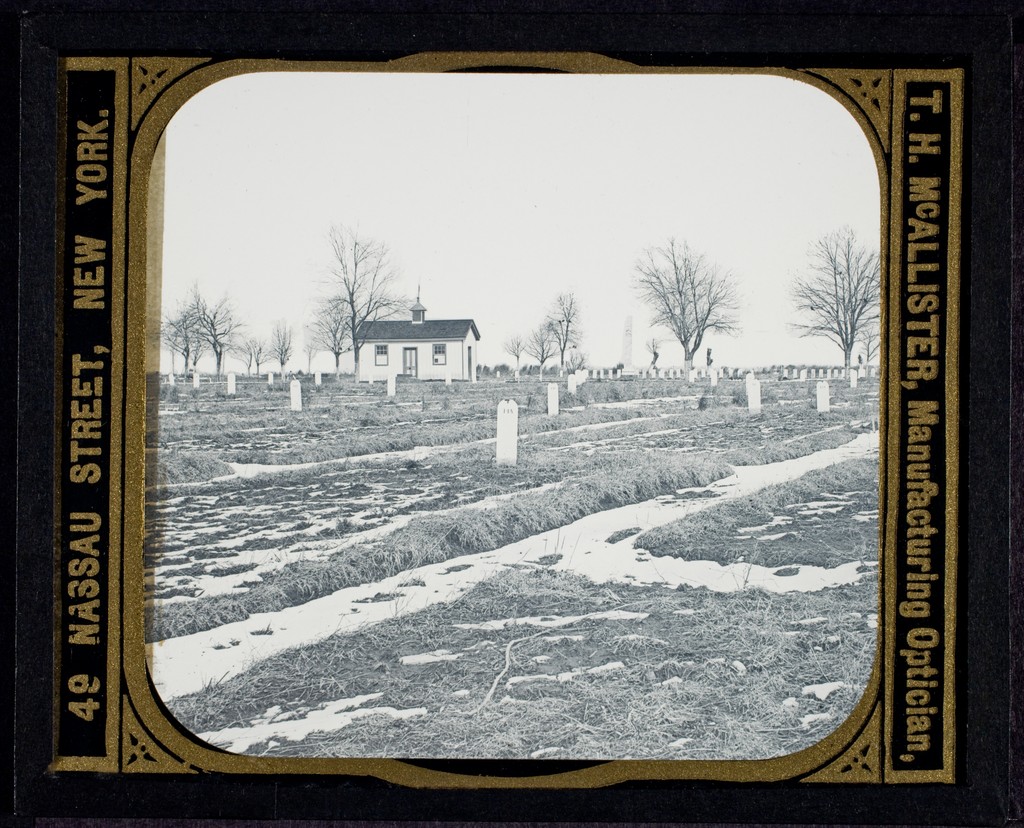
For over 150 years, Hart Island has been New York’s potter’s field, the burial site for over one million people — unclaimed bodies, stillborn babies, those who died of AIDS in the 1980s, and, in 2020, the location of burials of those who have died of COVID-19 coronavirus.
New York Daily News/Getty
Hart Island’s appearance in the international press this past week has drawn attention to the severity of the pandemic in New York City, but it has also drawn attention to the island itself.
By the early 19th century, this peaceful place — most likely named for deer which may have called it home — had already developed a violent reputation as a renegade site for boxing matches.
During the Civil War, black Union troops trained here and later Confederate soldiers were imprisoned in refitted prison barracks.
But in the late 1860s the city prepared the island for its eventual and longest lasting purpose. Today it is the world’s largest potter’s field. And thanks to groups like the Hart Island Project, New Yorkers may finally get a glimpse at this strange, forlorn place and the previously forgotten people buried here.
PLUS: That time that an amusement park was almost built on Hart Island.
LISTEN NOW — HART ISLAND: THE LONELIEST PLACE IN NEW YORK
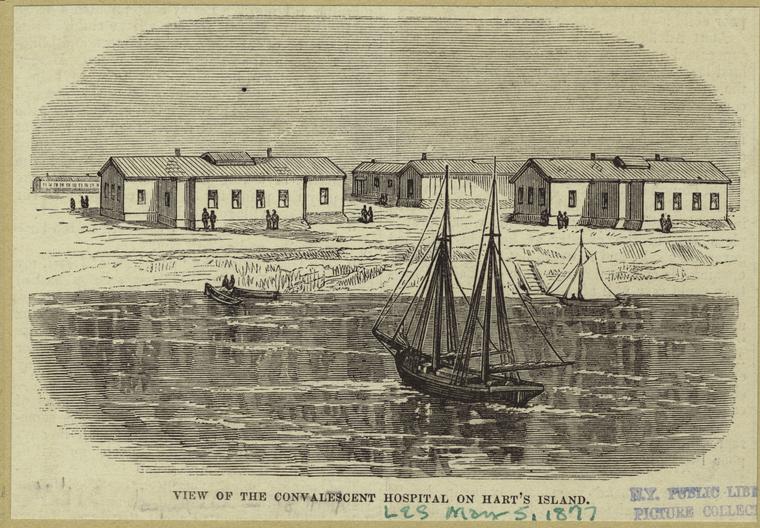
Hart Island 1877, courtesy New York Public LibraryHart Island 1890, photo by Jacob Riis/Museum of the City of New YorkHart Island 1890, photo by Jacob Riis/Museum of the City of New YorkHart Island 1890, photo by Jacob Riis/Museum of the City of New YorkThe Potter’s Field, Hart’s Island, 1898
August 18, 1914, New York Evening Post (courtesy Newspapers.com)
March 20, 1916, Brooklyn Daily Eagle (courtesy Newspapers.com)
Believe it or not, potter’s fields and cemeteries play a huge role in the development of New York City. This article lists several sites that have once been burials grounds.
The lesser known islands of New York have very fascinating histories that you may not be aware of — try these stories about North Brother Island and City Island, for instance.
And these older podcasts on other New York City islands:
Blackwell’s Island/Roosevelt Island
Rikers Island
Randall’s Island and Wards Island
The Bowery Boys: New York City History podcast is brought to you …. by you!
We are now producing a new Bowery Boys podcast every other week. We’re also looking to improve and expand the show in other ways — publishing, social media, live events and other forms of media. But we can only do this with your help!
We are now a creator on Patreon, a patronage platform where you can support your favorite content creators.
Please visit our page on Patreon and watch a short video of us recording the show and talking about our expansion plans. If you’d like to help out, there are six different pledge levels. Check them out and consider being a sponsor.
For the next several weeks, in addition to our new two-episodes-a-week schedules, all those who support us on Patreon will receive a BONUS EPISODE every other Sunday.
We greatly appreciate our listeners and readers and thank you for joining us on this journey so far.
On April 15, 1865, President Abraham Lincoln died from his injuries by the assassin John Wilkes Booth who shot the president the previous evening at Ford’s Theatre in Washington, D.C.
It was a fate promised to him by Southern sympathizers from the moment he was first elected on November 6, 1860.
At no point was Lincoln’s presidential life ever free from the specter of death. From the moment he left his home in Springfield, Ill., on February 11, 1861, on his cross-country journey to the White House, Lincoln was plagued with constant threats against his life.
And many thought he would never even make it to Washington alive in the first place.
LINCOLN ON THE VERGE Thirteen Days to Washington Ted Widmer Simon & Schuster
In one of the most fascinating history books of the year thus far, historian Ted Widmer takes the reader on Lincoln’s thirteen day journey to destiny — through Illinois, Indiana, Ohio, Pennsylvania, New York, New Jersey, Deleware and Maryland — on his way to lead a country at the precise moment it splintered apart.
This is also the story of the railroad and the telegraph as primary technologies of the day — but with their limits. The North’s comparatively sophisticated railway system allowed the president-elect quick passage to D.C. but not safe passage.
Lincoln in 1861, photographed by Christopher Smith German
Every stop along the way presented a new set of hazards, great and small, intensified each day with news of secession and Southern conspiracies.
“To survive a train trip was a low bar for success, but so much was up in the air in February 1861 that Lincoln’s safe delivery would become, over the next thirteen days, a powerful symbol for the survival of democracy in America.”
And yet Lincoln on the Verge balances its unavoidable dire tone with that of a historical travelogue, with every stop on the journey described in brisk and vivid detail. Fortunately Lincoln had journalist Henry Villard with him, providing a rare insider’s view of this historical moment.
Lincoln’s home in Springfield, Illinois, photographed 1908. Courtesy the Library of Congress
The whistle-stop nature of the story gives Lincoln’s journey an episodic feel, with a host of miniature dramas and foibles playing out in often amusing ways.
One anecdote plays in contrast to Lincoln’s stoic image. In Indianapolis, the president-elect delivers an off-the-cuff speech “comparing the South’s loose theory of union to ‘free love’ rather than a legitimate marriage,” a rather shocking reference for its time which repulsed those with “Victorian sensibilities.”
This is followed by a calamitous moment involving a missing speech in a cloakroom and the negligent behavior of Lincoln’s teenage son Robert. (This book is filled with such details of small, familiar setbacks. It’s been awhile since Lincoln has felt so human to me.)
Along the way, Widmer presents a very colorful and precise view of the cities and towns along the route — from Cincinnati’s slaughterhouse district to the “chaotic bog” known as the New Jersey Meadowlands.
And of course — New York City. On February 19, 1961, Lincoln’s train pulled into Manhattan’s Thirtieth Street Depot (near today’s Hudson Yards) to throngs of supporters. “When it entered the depot, the crowd surged, nearly beyond the ability of the huge police force to restrain it.”
Over four years later, on April 25, 1965, another train would pull into this station on a return trip to Springfield, Illinois, carrying the body of Abraham Lincoln.
EPISODE 319 In simpler times, thousands of tourists would flock to the northern tip of Bowling Green in Lower Manhattan to take a picture with a rather unconventional New Yorker — the bronze sculpture Charging Bull by Italian-American artist Arturo Di Modica.
Bull is a product of the 1980s New York art scene, delivered as a gift to the New York Stock Exchange (and to the American people, according to the artist) one late night in December 1989.
By the early 1990s, Charging Bull had become one of the most photographed pieces of art in America, beloved as both work of sculpture and a genuine, photo-friendly curiosity.
But in 2017, the bull faced down an unusual new neighbor — another bronze named Fearless Girl by Kristen Visbal. Girl soon became very popular with budding selfie-takers, but her proximity to Bull changed its fundamental meaning. An art scandal in lower Manhattan was brewing!
LISTEN NOW — THE TALE OF CHARGING BULL AND FEARLESS GIRL
Photos taken from Lower Manhattan on April 11, 2020 (courtesy Greg Young):
Bowling Green/April 11, 2020/photo by Greg YoungBowling Green/April 11, 2020/photo by Greg YoungBowling Green/April 11, 2020/photo by Greg YoungBowling Green/April 11, 2020/photo by Greg YoungBroad Street/April 11, 2020/photo by Greg YoungBroad Street/April 11, 2020/photo by Greg YoungBroad Street/April 11, 2020/photo by Greg Young
FURTHER LISTENING
In 1776, another Bowling Green statue evoked a very different reaction for New Yorkers. An equestrian statue of George Washington was violently torn down in the lead up to the Revolutionary War.
The story of Charging Bull begins with its creator Arturo Di Modica and the SoHo art scene of the 1970s and 80s.
We would have neither Charging Bull nor Fearless Girl without the tentpole of American finance — the New York Stock Exchange.
The Bowery Boys: New York City History podcast is brought to you …. by you!
We are now producing a new Bowery Boys podcast every other week.
We’re also looking to improve and expand the show in other ways —
publishing, social media, live events and other forms of media. But we
can only do this with your help!
We are now a creator on Patreon, a patronage platform where you can support your favorite content creators.
Please visit our page on Patreon
and watch a short video of us recording the show and talking about our
expansion plans. If you’d like to help out, there are six different
pledge levels. Check them out and consider being a sponsor.
For the next several weeks, in addition to our new two-episodes-a-week schedules, all those who support us on Patreon will receive a BONUS EPISODE every other Sunday.
We greatly appreciate our listeners and readers and thank you for joining us on this journey so far.
“Do you love him, Loretta?” “Aw, ma, I love him awful.” “Oh God, that’s too bad.”
Moonstruck, the 1987 comedy starring Cher and Nicolas Cage, not only celebrates that crazy little thing called love, but also pays tribute to the Italian working class residents of the old “South Brooklyn” neighborhoods of Brooklyn Heights, Cobble Hill and Carroll Gardens.
Listen in as Greg and Tom recap the story and explore the many real New York City settings of the film — from the glamorous Lincoln Center to the still-gritty streets of 1980s Little Italy.
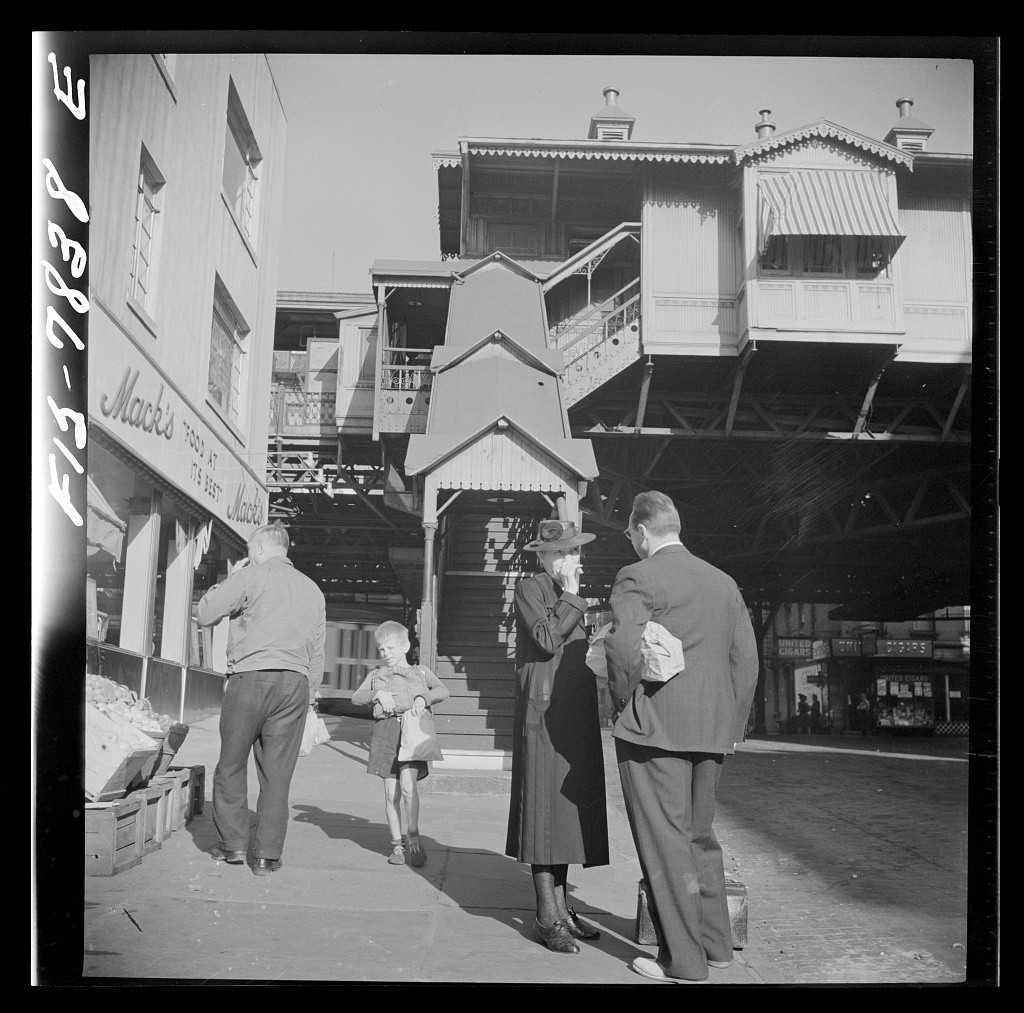
While the film’s most recognizable location (the mansion on Cranberry Street) is still with us, other places like the Cammareri Bros. Bakery are no longer with in business.
Shouldyouwatchthemoviebeforeyoulistentothisepisode? This podcast can be enjoyed both by those who have seen the film and those who’ve never even heard of it.
We think our take on Moonstruck might inspire you to look for the film’s many fascinating (but easy to overlook) historical details, so if you don’t mind being spoiled on the plot, give it a listen first, then watch the movie! Otherwise, come back to the show after you’ve watched it.
Because we could all use a little love and Cher, we’ve decided to release this episode of the Bowery Boys Movie Club (an exclusive to those who support us on Patreon) to the general listening audience.
But there are many more episodes of the Movie Club (and a new one to come next week). To get all the episodes, just visit our page on Patreon and consider being a sponsor.
We greatly appreciate our listeners and readers and thank you for joining us on this journey so far.
The Cranberry Street house used in Moonstruck
From the film Moonstruck, corner of Henry and Sackett. Screenshot courtesy On The Streets of New York
Over ten years ago, the New York Postand the New York Daily News were locked in a battle for tabloid dominance, wrestling and rolling around just as an apocalypse – the digital revolution — was descending upon American newsrooms.
Newspapers across the country have either folded or become absorbed into national conglomerates. America’s best-selling newspapers USA Today seems to speak to no particular region, a brand of quality, generalized journalism, aimed at frequent flyers and hotel guests.
That is what makes the Post and the Daily News such important, even comforting, artifacts of the newsstands today. They are unmistakably New York City in character – the good, the bad and the ugly.
America’s Last Great Newspaper War The Death of Print in a Two-Tabloid Town by Mike Jaccarino
In America’s Last Great Newspaper War, a memoir written by Mike Jaccarino, a journalist who worked at the Daily News, the grit and grind of bare-knuckle journalism plays out during a competitive period between two newspapers that today feels produced for a 1940s Hollywood film noir (only with tons of foul language).
Once upon a time, the Post and Daily News appealed to different audiences – not only in politics, but in their varying morning and afternoon editions.
And then Rupert Murdoch came along, purchasing the Post in 1976, transforming the once-liberal tabloid into a splashy daily filled irresistible stories of scandal and sleaze.
As journalism began to constrict in the early 2000s – as people began getting news from their computers and phones – the distinctions in their audiences disappeared.
So the Post and Daily News, already at competitive odds, went to war with one another.
Jaccarino, a writer with a vibrant, zingy style, presents the nitty gritty of tabloid journalism from the front lines, speeding down expressways, racing to the scenes of murder, fire and general mayhem. A typical chapter in Newspaper War is like a strong cup of coffee.
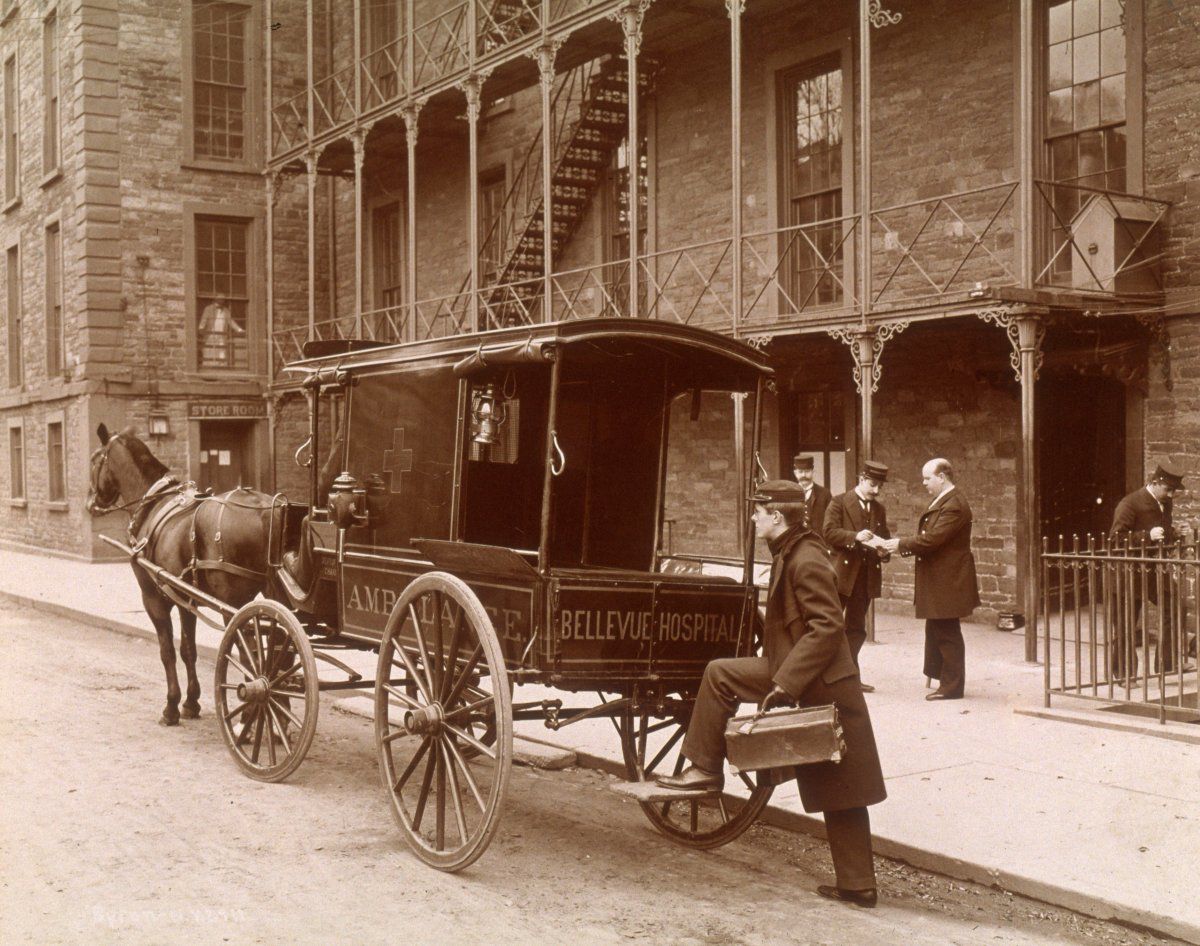
As a ‘runner’, Jaccarino was tasked with getting to breaking news first, almost always with a Post reporter nipping at his heels:
“Upon arriving at a scene, a runner’s first job is to attain a rudimentary understanding of the who, what, when and where of what’s happened, which will then be transmitted to the Desk for the composition of sked lines and online briefs.”
It’s a cringe worthy business most times, crashing into hospital rooms or comforting a mother whose child has been killed in order to get a good quote. The ‘stunt journalism’ popular at the tabloids often bordered on reality-television schtick.
But these journalists are keenly aware of the cynicism. And they often serve a public good; their subjects are rarely given a direct voice, and their plights are quickly forgotten. There remains a place in this city for both squabbling cousins.
The Hall of Fame for Great Americans, founded in 1900, was a precursor to the Nobel Prize and the Presidential Medal of Freedom, a vaunted tribute to those who have contributed greatly to the development the United States of America.
Located on the campus of Bronx Community College in the University Heights neighborhood of the Bronx, the Hall of Fame features the sculpted bronze busts of 96 individuals* considered worthy of renown in their day, arranged along a columned arcade designed by Stanford White.
It was so important in the early 20th century that the Baseball Hall of Fame and the Hollywood Walk of Fame derive from its example. The Hall of Fame for Great Americans even pops up in The Wizard of Oz!
But today it is virtually forgotten. And no person has been elected to the Hall of Fame since the 1970s.
This is the story of a university with lofty intentions, a snapshot of early 20th century optimism, and a look at a few questionable considerations of ‘greatness’.
*There were once 98 busts but two were removed in 2017.
LISTEN NOW — TILLIE HART, THE HOLDOUT OF LONDON TERRACE
Museum of the City of New YorkMuseum of the City of New York
The Hall of Fame in 1908, its niches empty and awaiting busts. Museum of the City of New York
The Hall of Fame in 1945, courtesy World Wide Photos/MCNYNew York Public Library
FURTHER LISTENING
We spoke about these subjects in this week’s episode. For more information, dive back into these older episodes:
The Bowery Boys: New York City History podcast is brought to you …. by you!
We are now producing a new Bowery Boys podcast every other week.
We’re also looking to improve and expand the show in other ways —
publishing, social media, live events and other forms of media. But we
can only do this with your help!
We are now a creator on Patreon, a patronage platform where you can support your favorite content creators.
Please visit our page on Patreon
and watch a short video of us recording the show and talking about our
expansion plans. If you’d like to help out, there are six different
pledge levels. Check them out and consider being a sponsor.
For the next several weeks, in addition to our new two-episodes-a-week schedules, all those who support us on Patreon will receive a BONUS EPISODE every other Sunday.
We greatly appreciate our listeners and readers and thank you for joining us on this journey so far.
EPISODE 314 — London Terrace, an English-inspired apartment complex, is a jewel of apartment living in the neighborhood of Chelsea. In 1929, a set of unusual townhouses — also named London Terrace — were demolished to construct this spectacular set of buildings.
That is, all townhouses but one — the home of Mrs. Tillie Hart, a tenacious tenant who refused to leave.
In a real-life example of the movie Up, Hart’s tale is a battle between urban development and an individual’s right to their longtime home — a genuine David vs. Goliath tale on the landscape of New York City real estate.
In her favor — the support of the public and the regular attention of the New York Daily News. Will Hart prevail?
PLUS: A history of the Chelsea neighborhood and its ‘godfather’ Clement Clarke Moore.
LISTEN NOW — TILLIE HART, THE HOLDOUT OF LONDON TERRACE
15 London Terrace, 1916-21, Museum of the City of New YorkLondon Terrace 1919 / New York Public Library
Most newspapers — including the Daily News — erroneously reported that Clement Clarke Moore (reduced to “the poet”) lived in the home. It may have been Mrs. Hart herself who kept the fiction going in an effort to save her home.
New York Daily News, September 27, 1929New York Daily News, October 9, 1929An Owensboro, Kentucky, newspaper, Oct 14, 1929 — Most people erroneously reported that Clement Clarke Moore lived in the home.New York Daily News, October 17, 1929New York Daily News, October 20, 1929London Terrace in 1931.London Terrace 2017 / Acroterion/ Wikimedia Commons
The Bowery Boys: New York City History podcast is brought to you …. by you!
We are now producing a new Bowery Boys podcast every other week.
We’re also looking to improve and expand the show in other ways —
publishing, social media, live events and other forms of media. But we
can only do this with your help!
We are now a creator on Patreon, a patronage platform where you can support your favorite content creators.
Please visit our page on Patreon
and watch a short video of us recording the show and talking about our
expansion plans. If you’d like to help out, there are six different
pledge levels. Check them out and consider being a sponsor.
For the next several weeks, in addition to our new two-episodes-a-week schedules, all those who support us on Patreon will receive a BONUS EPISODE every other Sunday.
We greatly appreciate our listeners and readers and thank you for joining us on this journey so far.
When it comes to artistic creation, we take many fundamentals of law for granted. Most people might not understand the particulars of ‘intellectual property’ but they sure benefit from it.
The very review you are reading — and the website that publishes it — are protected by laws that were hammered out and fought for one century ago.
Yet building the essential protections for free creativity is but one notable achievement in the life of a very busy man — the fabulous New York attorney Nathan Burkan.
ADVENTURES OF A JAZZ AGE LAWYER Nathan Burkan and the Making of American Popular Culture by Gary A. Rosen University of California Press
In Gary A. Rosen’s absorbing biography of Burkan, we find a somewhat enigmatic presence standing beside some of the most iconic figures of American culture — from songwriters to movie stars, from bootleggers to socialites.
Burkan was one of the most respected lawyers of the early 20th century. He even represented Gloria Morgan Vanderbilt in one of the most sensational (and tragic) trials of the 20th century.
And yet Adventures is not a shallow celebrity tell-all, but a thoughtful and in-depth look at the substance of many foundational cases in the history of entertainment history.
It’s hard to imagine what the music industry would even look like (or sound like) without Burkan’s involvement in the early years of Tin Pan Alley.
With his client Victor Herbert, he helped found ASCAP (American Society of Composers, Authors and Publishers), the organization that protects musical copyrights.
Burkan with Charlie Chaplin
But his most intriguing legal collaboration was with Charlie Chaplin and at a moment (during the mid 1910s) when his star was on the rise.
Charlie’s half-brother and manager Syd Chaplin chose Burkan due to his work with “legitimate theater’s leading comedienne and ingenue of the day Billie Burke,” just one detail that illustrates the attorney’s depth of involvement in the entertainment world.
Burkan with Mae West
And then there was his work in defending Mae West, whose provocative plays were being shut down by the police. His battle against “nightstick censorship” inspired some incendiary moments on the stand:
“Burkan put seven cast members [of the play The Pleasure Man] on the stand in the defense case-in-chief. They testified that the police had misunderstood dialogue and omitted important context….One cast member sang the offending songs with clasped hands and such exaggerated choirboy earnestness that ‘Mae West, at counsel table, covered her mouth with her black handkerchief to hide her laughter’.”
For the next several weeks, the Bowery Boys Podcast will be going live two times a week — every Tuesday and Friday. Read our announcement here.
EPISODE 313 “No man likes to have his hat snatched from his head by somebody he has not yet been introduced to.”
During the month of September 1922, as summer passed into autumn, large groups of rowdy ‘hoodlums’ swarmed the streets of New York City, grabbing straw hats off the heads of men, leaving the gutters filled with thousands of smashed lids.
Why in the world would so many people become outraged at the sight of a straw hat?
This is the story of the ultimate fashion faux pas, Jazz Age style, snd a look at the dangers of men’s wear uniformity.
NOTE: As this is our first remotely recorded episode, it’s a bit more goofy than others. Expect an extra dosage of puns.
LISTEN NOW — THE STRAW HAT RIOTS OF 1922
Straw hats is full display in this photo which shows crowd waiting in New York City for the arrest of lawyer Burton W. Gibson, in 1912. Library of Congress
Courtesy Vintage Dancer
Brooklyn Times Union, September 16, 1922Brooklyn Times Union, Sept 16, 1922The Buffalo Times, September 17, 1922
The Bowery Boys: New York City History podcast is brought to you …. by you!
We are now producing a new Bowery Boys podcast every other week.
We’re also looking to improve and expand the show in other ways —
publishing, social media, live events and other forms of media. But we
can only do this with your help!
We are now a creator on Patreon, a patronage platform where you can support your favorite content creators.
Please visit our page on Patreon
and watch a short video of us recording the show and talking about our
expansion plans. If you’d like to help out, there are six different
pledge levels. Check them out and consider being a sponsor.
For the next several weeks, in addition to our new two-episodes-a-week schedules, all those who support us on Patreon will receive a BONUS EPISODE every other Sunday.
We greatly appreciate our listeners and readers and thank you for joining us on this journey so far.
During this period of social isolation and the perpetual concerns of health and economic well-being that you might be feeling now, we here at the Bowery Boys: New York City History podcast want to make sure that we are doing our part in providing you with the distraction and camaraderie you might be looking for.
Quite honestly, there’s nothing more comforting than a good piece of history!
Because of this, starting this Tuesday, March 24, we’ll be bringing you the Bowery Boys podcast two times a week — every Tuesday and Friday.
These will be shorter shows, covering topics that were perhaps a bit too small-scale for a regular, full-length podcast. We might even take this chance to tell stories of the other places in the New York City area — New Jersey, Westchester, Long Island, we’re looking at you. The sky’s the limit!
We’re only able to increase our production because of generous support via Patreon. So if you like what we do, please consider becoming a member at one of the tiers listed on our page.
Make us a regular part of your Tuesday and Friday routine — starting next week! We’ll see you then .. and have a great New York week.
You can listen to the Bowery Boys podcast wherever you get your podcasts — all the players!
PODCAST It’s time for a Gilded Age murder mystery, true-crime podcast style!
The Whitechapel Murders of 1888 — perpetrated by the killer known as Jack the Ripper — inspired one of the greatest cultural hysterias of the Victorian era. The crimes were so publicized in newspapers around the world that many believed that the Ripper could appear anywhere — even in New York City.
The usual vicious crimes of gang members and roughs on the Bowery were not only compared to those of the Ripper, they were often framed as though they were the Ripper himself, an omnipresent specter of evil.
The sordid misdeeds of other criminals were elevated by the press in comparisons to Jack the Ripper.
But then, in April of 1891, a crime was committed on the East River waterfront that was so brutal, so garish, that comparisons to the London killer were inevitable.
The victim was named Carrie Brown. But people along the waterfront knew her by her nickname Shakespeare (or Old Shakespeare).
This is a tale of an infamous crime, a controversial detective and an unjust conviction of an Algerian immigrant named Ameer Ben Ali.
Who killed Old Shakespeare?
PLUS: A very special announcement at the start of the show!
The East River waterfront, South Street, 1890Frontispiece of Professional Criminals of America (1886), Thomas Byrnes; New YorkCarrie Brown, NYC Municipal Archives
New York Evening World, April 24, 1891
The East River Hotel, New York Evening World illustration
The key to Room 31, New York Evening World illustrationAmeer Ben Ali
New York Evening World, May 2, 1891
Further Listening
After taking in the story of the murder of Carrie Brown and the American Jack the Ripper hysteria, revisit these past Bowery Boys episodes for a fuller context of the events recounted on this program.
Who Killed Helen Jewett? A Mystery By Gaslight
Corlear’s Hook and the Pirates of the East River
Case Files of the NYPD
Further Reading
The American Murders of Jack the Ripper by R. Michael Gordon Big Policeman: The Rise and Fall of America’s First, Most Ruthless and Greatest Detective by J. North Conway The Five: The Untold Lives of the Women Killed by Jack the Ripper by Hallie Rubenhold Gotham by Edwin G Burrows and Mike Wallace Low Life by Luc Sante New York Exposed: The Gilded Age Police Scandal that Launched the Progressive Age by Daniel Czitrom Ripper Notes: America Looks at Jack the Ripper/”The New York Affair” by Wolf Vanderlinden
The Bowery Boys: New York City History podcast is brought to you …. by you!
We are now producing a new Bowery Boys podcast every other week.
We’re also looking to improve and expand the show in other ways —
publishing, social media, live events and other forms of media. But we
can only do this with your help!
We are now a creator on Patreon, a patronage platform where you can support your favorite content creators.
Please visit our page on Patreon
and watch a short video of us recording the show and talking about our
expansion plans. If you’d like to help out, there are six different
pledge levels. Check them out and consider being a sponsor.
ALL patrons at all levels will receive many benefits include the next episode of the Bowery Boys Movie Club, an exclusive podcast (released every 6-8 weeks) celebrating New York City in the movies.
And patrons at the Five Points ($5) level and up will get our other exclusive podcast — The Bowery Boys: The Takeout — released every two weeks.
We greatly appreciate our listeners and readers and thank you for joining us on this journey so far.
Looking for a good book? Here are a few recent releases I’ve enjoyed reading over the past few weeks. All are currently available at your local book retailer:
In what is easily the coolest New York City guide book of recent memory, Spy Sites of New York City tracks down and maps out the city’s marvelous and mysterious connections with espionage — from the Revolutionary War to very, very recent events.
The richly researched entries are arranged chronologically with a list of maps in the back to chart your own afternoon adventure. Fans of the AMC series of Turn and even The Americans might find themselves reliving their favorite episodes. (Americans producers Joseph Weisberg an Joel Fields wrote the book’s forward.)
Since the first penny presses in the 1830s, newsboys (and girls) have been a ubiquitous presence upon the urban landscape. It can be said that the American news media was developed on the backs of children, and in Crying the News, they are collectively exalted as the embodiment of American spirit.
DiGirolamo’s extensive examination of the junior trade reveals the real faces behind the gritty stereotypes. Most newsboys came from disadvantaged backgrounds, working their way into this frequently abusive occupation to carve out a scrappy street-born freedom.
And Crying the News is also a side view of American history itself, seen from the perspective of those who touted breaking news from every street corner with a loud, unmistakable cry. Extra! Extra!
AMERICA’S FIRST FREEDOM RIDER Elizabeth Jennings, Chester A. Arthur and the Early Fight for Civil Rights By Jerry Mikorenda
In 1854 an African-American woman named Elizabeth Jennings (later Elizabeth Jennings Graham) was denied a seat on a lower Manhattan streetcar, forcibly removed due to the color of her skin.
Her tale is often compared to that of Rosa Parks, but in America’s First Freedom Rider, author Jerry Mikorenda makes the case that Jennings story should be seen on its own terms, as an electrifying show of bravery at the beginning of a long journey towards equality.
Part of what makes Jennings’ saga so curious is a surprising supporting character — Chester A. Arthur, the young lawyer (and future president) who takes her case to court. Mikorenda presents their stories side by side, but it’s the determination of Jennings that will stay with you.
PODCAST (EPISODE 310):New York’s 369th Infantry Regiment was America’s first black regiment engaged in World War I. The world knew them as the Harlem Hellfighters.
On February 17, 1919, the Hellfighters – who had spent much of the year 1918 on the frontline – marched up Fifth Avenue to an unbelievable show of support and love.
The Harlem Hellfighters were made up of young African-American men from New York City and the surrounding area, its enthusiastic recruits made up of those who had arrived in the city during a profound period of migration from the Reconstruction South to (only slightly) more tolerant Northern cities.
They were not able to serve in regular American military
units because of segregation, but because of an unusual series of events, the
regiment instead fought alongside the French in the trenches, for 191 days,
more than any other American unit.
They were known around the world for
their valor, ferocity and bravery. This is the story of New York musicians, red
caps, budding painters, chauffeurs and teenagers just out of school, serving
their country in a way that would become legendary.
FEATURING the voices of World War I veterans telling their own stories. PLUS some brilliant music and a story from Barack Obama (okay it’s just a clip of the former president but still.)
LISTEN NOW — THE HARLEM HELLFIGHTERS
Photograph shows group portrait of men recruited for the 15th New York National Guard Regiment, later known as the 369th Infantry Regiment (the Harlem Hellfighters), wearing armbands. Library of Congress.James Reese Europe, who both fought on the front lines AND brought jazz to France.Henry Johnson, whose skills on the battlefield earned him the French Croix de guerre in his lifetime — and a U.S. Medal of Honor many decades later.
Horace Pippin (American, West Chester, Pennsylvania 1888–1946 West Chester, Pennsylvania) Self-Portrait, 1944. Courtesy the Metropolitan Museum of Art, New York, Bequest of Jane Kendall Gingrich, 1982 (1982.55.7) http://www.metmuseum.org/Collections/search-the-collections/482605
From the journal of Horace Pippin, featuring illustrations among his observations.US National ArchivesThe 369th were the first regiment to march beneath the Victory Arch, installed near Madison Square Park. Courtesy Museum of the City of New YorkUS National ArchivesUS National Archives
From the New York Times the following day after the parade:
“New York’s negro soldiers, bringing with them from France one of the bravest records achieved by any organization in the war, marched amidst waving flags and cheering crowds yesterday from Twenty-third Street and Fifth Avenue to 145th Street and Lenox Avenue.”
“At Thirty-Fourth Street the men marched under a shower of cigarettes and candy, and such tokens were pitched at them at other points in the line, but the files did not waver for an instant.”
US National Archives
The complete version of the 1977 film Men of Bronze, detailing the story of the Harlem Hellfighters, directed by Bill Miles, is available to watch on YouTube.
President Obama awards the Medal of Honor posthumously to two World War I veterans, Private Henry Johnson (featured in this show) and Sergeant William Shemin.
READING LIST From Harlem to the Rhine by Arthur West Little Harlem Rattlers and the Great War by Jeffrey Sammons and John Howard Morrow A Life In Ragtime: A Biography of James Reese Europe by Reid Badger Lost Battalions by Richard Slotkin A More Unbending Battle by Peter Nelson We Return Fighting from the National Museum of African American History and Culture When Pride Met Courage by Walter Dean Myers
FURTHER LISTENING
The Bowery Boys: New York City History podcast is brought to you …. by you!
We are now producing a new Bowery Boys podcast every other week.
We’re also looking to improve and expand the show in other ways —
publishing, social media, live events and other forms of media. But we
can only do this with your help!
We are now a creator on Patreon, a patronage platform where you can support your favorite content creators.
Please visit our page on Patreon
and watch a short video of us recording the show and talking about our
expansion plans. If you’d like to help out, there are six different
pledge levels. Check them out and consider being a sponsor.
ALL patrons at all levels will receive many benefits include the next episode of the Bowery Boys Movie Club,
an exclusive podcast (released every 6-8 weeks) celebrating New York
City in the movies. And patrons at the Five Points ($5) level and up
will get our other exclusive podcast — The Bowery Boys: The Takeout — released every two weeks.
We greatly appreciate our listeners and readers and thank you for joining us on this journey so far.
Before it closed in 2011, the Coliseum Cinema in Washington Heights proclaimed itself to be the ‘New York City’s oldest operating movie theater’. When it was first constructed in 1920, its stage would have hosted vaudeville acts as well as silent motion pictures.
But few films that ever premiered at the Coliseum would depict events as torrent or as dramatic as those that took place in the structure that stood on this spot many, many decades before.
An old stone tavern once stood high upon the bluffs of Upper Manhattan, in an area many years later referred to as Washington Heights.
The Blue Bell Tavern sat off Bloomingdale Road nestled in a grove of trees, a modest two-story dwelling alight at all hours with wanderers. New York travelers often passed it as they headed towards the King’s Bridge, a toll bridge over Spuyten Duyvil Creek.
To truly envision this gothic place in its natural environment, you have to picture Washington Heights before there was ever a Washington there — a lush, high ridge thick with trees, a natural vantage offering unobstructed views of the entire region.
Like the skyscraper observation decks today, a visitor could seemingly see the entire world from here.
One cold, stormy night some evening in November 1783, a damp and exhausted figure strode up to the door, a young woman who had escaped from her home many miles away.
She was there to meet her lover who had already arrived at the Blue Bell, a man soaked, in disarray and wearing what certainly would have been a common sight for the day — a British uniform.
This man was a sergeant in the British military stationed in the Hudson River Valley. But the army was now retreating. Indeed, they were leaving New York that very month.
The sergeant had fallen in love with this woman, a resident of colonial New York, who (as these sort of stories go) we know little about. We do know her parents disapproved of the British sergeant and would only relent to their marriage if he agreed to desert the army and remain in the United States.
On that rainy evening, the sergeant and his beleaguered love took each other in their arms and were finally married — here at the Blue Bell Tavern. As the story goes, it was a Quaker ceremony, for there were no other officiators that night at the tavern.
The Blue Bell, once situated at today’s intersection of 181st Street and Broadway, was built in mid 1720s as a home and renovated into the type of pleasant inn that, by 1753, the venerable Cadwallader Colden (not the former mayor, but his grandfather and later governor of New York) could find “very comfortable” food and lodging here with his friend James Delancey, the state’s lieutenant governor.
The tavern might have faded peacefully into oblivion if not for the Revolutionary War. When angry New Yorkers attacked the King George statue in Bowling Greenat the foot of the island, his stone head ended up on a pole in front of the Blue Bell.
A View of the Attack against Fort Washington and Rebel Redouts near New York on November 16, 1776
While the Continental Army fled from Manhattan during the month of September 1776, officers stationed here at the Blue Bell assessed their grim situation and coordinated the army’s next steps.
With the tavern located so close to a key pathway out of town, it also became a headquarters and lodging for British officers long after Washington’s army abandoned the city. At one point, even Colonel William Howe, head of the British forces, himself stayed here.
Flash forward to November of 1783 — Washington and his now victorious army were now preparing to re-enter New York, this time to push the British out of town and experience a new, free American nation from the vantage of the ravaged port city. “I remember well our march up the hill, and the noble appearance of George Washington as he sat on his big bay horse,” said a veteran of the war in Appleton’s Journal.
George would even stay for an evening at the Blue Bell, awakening early to prepare his army’s grand entry down Bloomingdale Road and into the city. (Another important tavern of the day, the Bull’s Head, would also play a prominent role in Washington’s arrival into the city.) But on that day, they would add two more people to their procession.
That British deserter and his new bride — the ones whose rendezvous at the Blue Bell led to their Quaker marriage — now emerged from behind the building and called out Washington’s name.
Given his rumpled British uniform, this certainly created quite an uproar among Washington’s attaché. The pair were taken into custody, and the British officer recounted his romantic tale to his captors. Washington and his men learned that:
“…the young man was a sergeant (which the chevron on his sleeve indicated) who had for some time loved and was betrothed to the young woman who was with him; that her parents, who lived in the city would not consent to her marriage unless he would stay in this country; that they had arranged a plan a few days before for a desertion on his part and an elopement on here; that they were to meet at the Blue Bell and be married, and there wait for the protection of approaching American troops. Their plan had worked well.
— Appleton’s Journal, 1873
The sergeant wished to desert the army and join the Americans if only they would provide protection for him and his young bride. Indeed, with so many Loyalists still in the city, the soldier’s betrayal would certainly have been met with retaliation.
In desperation, the sergeant and his new bride showed Washington’s men their newly inked marriage certificate and begged for mercy
In fact, the tale apparently amused Washington and his men, flush with the excitement of victory. “A bard” among Washington’s men even wrote a poem in the couple’s honor. You can read the whole thing here, though it begins:
“A soldier and a maiden fair,
Helped by shy little Cupid,
Fled from the camp and momma’s chair,
(Such guardians, how stupid!),
And to the Blue Bell did repair,
To have themselves a-looped.”
We can assume with the lighthearted tone of the poem that things turned out well for the happy couple. They were allowed to accompany Washington on his entry into the city the following day.
The Blue Bell miniature, displayed at the Museum of the City of New York when it opened the doors to its new Fifth Avenue home in 1930.
BThe old tavern passed through many owners (and many names) through the 19th century and eventually returned to its original purpose as a residence. One old source suggests that the building burned to the ground in 1876, though it may have survived this blaze into the new century.
Whatever structure stood here then was finally torn down by 1915. But tales of the Blue Bell entered nostalgic accounts of the Revolutionary War almost immediately, as 19th century historians struggled to piece together the American narrative from those who still remembered it.
The Blue Bell lived on long after its demolition in a most curious way — as a well-known miniature housed at the Museum of the City of New York.
An issue of Popular Science Magazine from 1930 observes the construction and installation of the Blue Bell exhibit, which made its debut that year in the museum’s new home on Fifth Avenue and 103rd Street.
The Coliseum in 1922, Museum of the City of New York
For many decades, you could go to the former spot of the Blue Bell Tavern and experience a Gothic romance of your own. Standing on that spot today is the abandoned RKO Coliseum, once one of Manhattan’s largest movie theaters.