Categories
American History

The doctor, the heiress and the accidental nanny: New York women who survived the Titanic

Over fifteen hundred people died the night the Titanic sank, April 14-15, 1912. The early reports from the New York newspapers, of course, spent their time mourning the city’s most connected figures to society.

Even from some of the most obsessive sources on the Titanic, the details on the lives of dozens of men and women who died below deck are sometimes hard to locate.

There’s always been something slightly unsettling about using primary news sources for Titanic research. The bias towards wealthy lives over poor ones — and of American and British lives to all others — can be a little unsettling.

For instance, an anecdote from an April 20, 1912, article in the New York Times: “…[I]t became known among those saved from the Titanic were six or eight Chinamen who were among the steerage passengers on the big liner. It seems that they climbed aboard one of the lifeboats without anybody making objection, despite the fact that many of the women in the steerage of the Titanic went down with the ship.

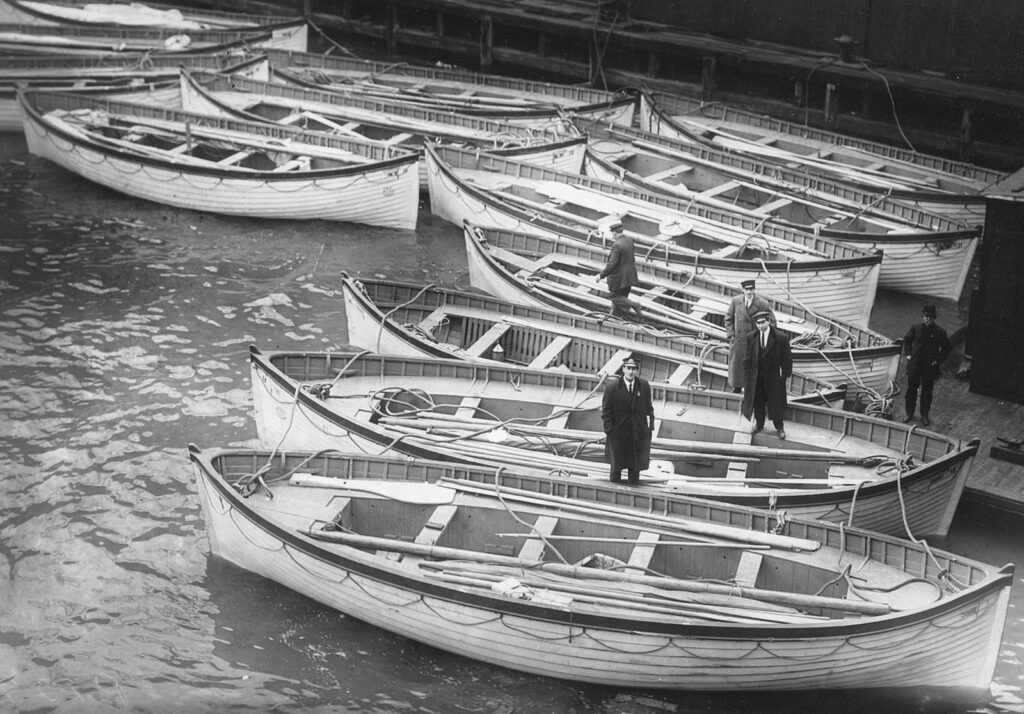
 Titanic’s Lifeboats at The White Star Lines Pier 54 in NYC after Sinking. [source]

Public displays of grief in New York City and nationwide often placed more focus on the well-connected members of high society. For instance, the city’s most beautiful Titanic memorial is actually just to two people — Isador and Ida Straus.

But this was indeed a tragedy that shook most of the entire world to its core and, in particular, changed the lives of many Americans, from tenements to townhouses.

The old-family names and the wizards of business (Astor, Straus, Guggenheim) have been well documented. But here I present the fates of five well-off but perhaps lesser-known New York women who survived the sinking of the Titanic with intriguing stories of their own to tell:
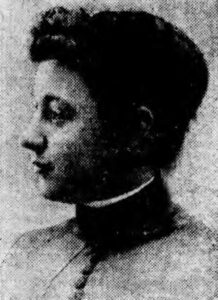
Dr. Alice Farnham Leader 
Born in New York, May 10, 1862

Alice would have been among the second generation of women trained in medicine, and a career in pediatrics was one of the few that a women of her day could ably progress towards. As late as 1907 she was employed at Bellevue Hospital as ‘a social service nurse‘.  

However she wasn’t a practicing doctor by the time she boarded the Titanic; the 49 year old had retired when her husband died in 1908.

She was rescued by lifeboat no. 8, commanded by one of the Titanic’s most famous names: Noël Rothes, the Countess of Rothes. “The countess is an expert oarswoman and thoroughly at home in the water,” Alice told the press, who sadly seemed more interested in the fate of the titled gentry than of this mysterious doctor who appears to have avoided the spotlight for the remainder of her life.

Afterwards: Dr. Leader is mentioned in a Utah newspaper in 1916, discussing the crisis of graying hair.  Her solution: “A head exercise for circulation is to lie on the couch with the head projecting beyond the couch. Bend the head forward, backward, to each side, to each side, then rotate.”
Died: April 20, 1944
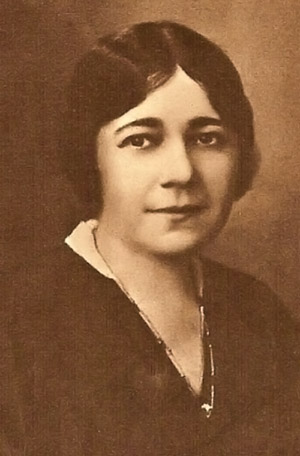
Irene (Rene) Harris
Born: June 15, 1876

A New York stage actress with some considerable credits to her name, Harris boarded the Titanic with her husband Henry Birkhardt Harris, the theater impresario and partner (with Jesse Lasky) in the Folies Bergere, which has just opened in midtown the year before.

Irene made it to a lifeboat but her beloved husband perished on the Titanic. The Times recounts her cable to the Hudson Theater: “Praying that Harry has been picked up by another steamer.”

Afterwards: Returning to the New York theater in grief, she sued the White Star Line for a large petition of damages, and perhaps with good reason; she discovered when she got home that her husband was nearly bankrupt from the Folies Bergere venture and other flops.

So she decided to make her own money, soon becoming one of Broadway’s first female producers with such shows as ‘Lights Out’ and ‘The Noose’ and buying a Park Avenue apartment.

But her wealth didn’t make it out of the Great Depression, and she spent her last days living in Manhattan hotels.  In 1958, she was subjected to a screening of the Hollywood film ‘A Night To Remember‘. “I think your film title is a mistake,” she said. “It was a night to forget.”
Died: September 2, 1969
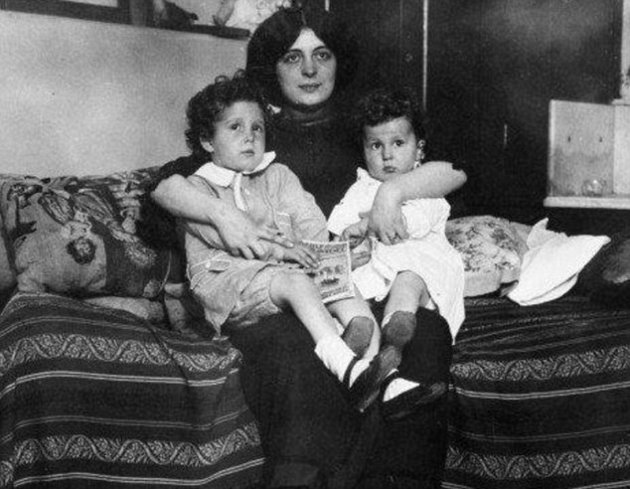
Margaret Hays
Born: December 6, 1887

If not for the tragic sinking of the Titanic, Margaret Hays’ fate might have made a charming family comedy. The young woman lived at 304 West 83rd Street and had gone to Europe with two school friends Olive and Lily.

And there was another lady with her on the Titanic that fateful night — Margaret’s Pomeranian dog.

All three friends and her little dog too made it to a lifeboat, but Margaret’s story was just beginning.

Onboard the rescue ship Carpathia were two small frightened French boys.
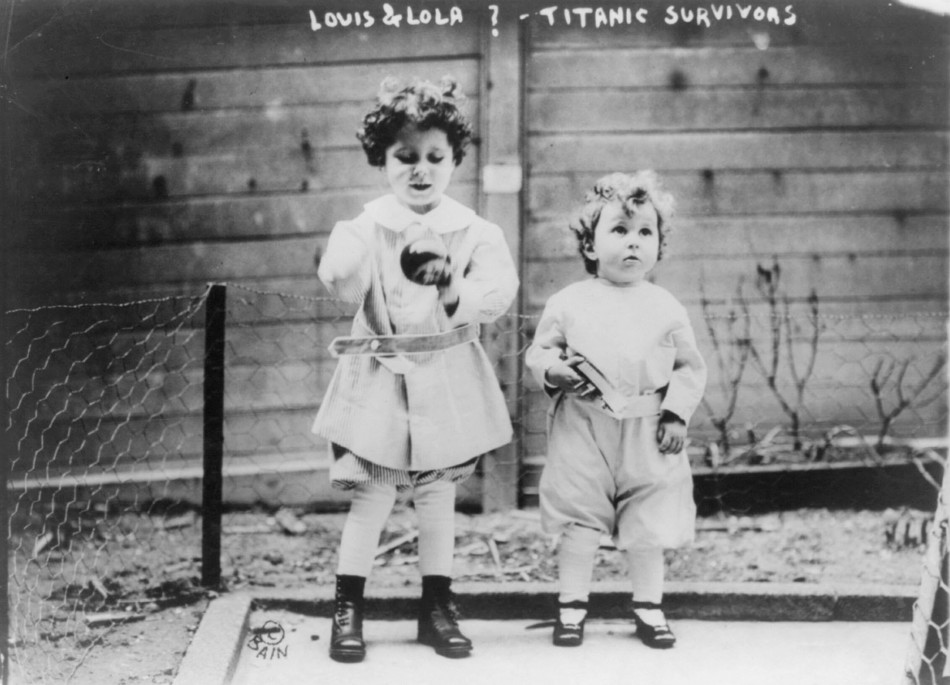
The ‘Titanic orphans’, named Michel and Edmond (not Louis & Lola!).

They had been separated from their father Michel who was never found. Hays, who spoke French, took the boys into her care during the somber voyage and well after they arrived in New York. They stayed at her home on West 83rd — she distracted the distraught boys with carriage rides up Riverside Drive — until their mother arrived from France.

On her arrival, it was revealed that their father had taken the two boys against their mother’s will during a bitter divorce battle.

Afterwards: Hays married a Rhode Island doctor and lived in relative comfort, dying during a vacation in Argentina.
Died: August 21, 1956
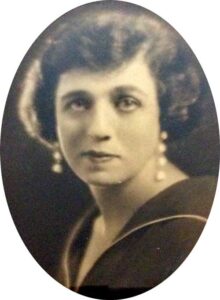
Leila Meyer
Born in New York, September 28, 1886

The young socialite and daughter of Andrew Saks (founder of Saks Fifth Avenue) met aspiring Wall Street broker Eugene Meyer and married him in 1909.

While traveling, Leila was wired the tragic news that her father had died. (Later, she discovered that a sizable part of their fortune had been willed to her.) Leila and her husband boarded the Titanic to return home. She made it to a lifeboat; her husband died aboard the ship.

Afterwards: She later remarried and lived the remainder of her life at 970 Park Avenue, rarely speaking to the press about her tragedy, although her spectacular jewelry collection was frequently remarked upon in women’s magazines.
Died: November, 27, 1957
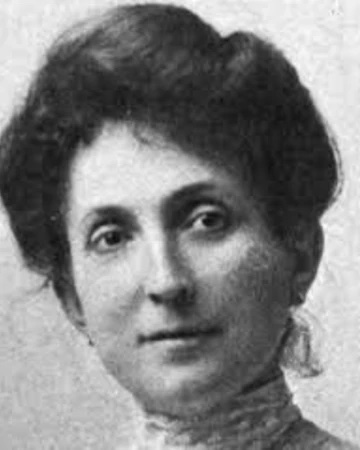
Mrs. Charlotte Appleton
Born in New York, December 12, 1858

Charlotte was well versed in the thrill of ocean travel. Her father, once a well-known dry goods importer, worked for the firm which operated the Black Ball Line, one of the oldest shipping companies in New York and no stranger to a few shipwrecks of its own.

She married into the prestigious Appleton publishing family and was on the Titanic with two sisters, returning from a funeral in England.

Afterwards: Mrs. Appleton’s name is familiar with Titanic buffs as she was an acquaintance of Col. Archibald Gracie IV, the great-grandson of the man who built Gracie Mansion and one of the more notable bold-faced names on the Titanic. Mrs. Appleton lived the remainder of her life at 214-33 33rd Road, the oldest house in Bayside, Queens.


Died: June 25th, 1924

Some pictures and many of the birth/death dates above are courtesy Encyclopedia Titanica. Top picture courtesy the Library of Congress.

This story was originally published on the 100th anniversary of the Titanic and refreshed the honor the 110th anniversary.
Categories
On The Waterfront Podcasts

American tragedy: The tale of the General Slocum disaster

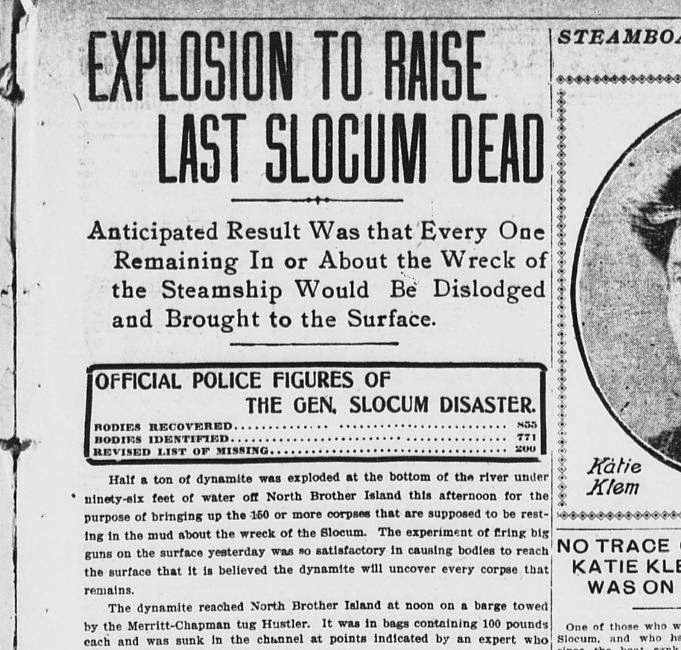
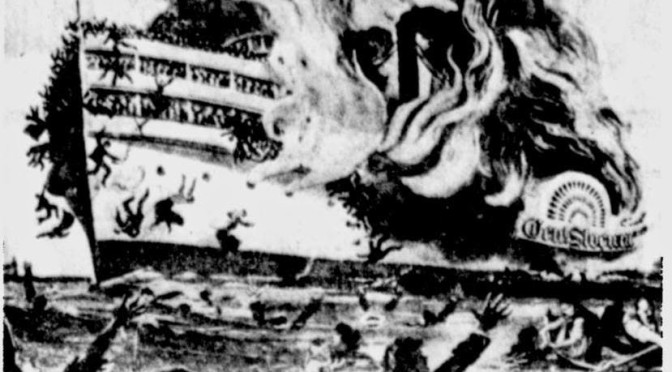
PODCAST On June 15, 1904, hundreds of residents of Kleindeutschland, the Lower East Side’s thriving German community, boarded the General Slocum excursion steamer to enjoy a day trip outside the city. Most of them would never return home.

The General Slocum disaster is, simply put, one of the greatest tragedies in American history. Before September 11, 2001, it was the largest loss of life of any event that has ever taken place here.

This is a harrowing story, brutal and tragic. The fire that engulfed the ship near the violent waters of the Hell Gate gave the passengers a horrible choice — die by fire or by drowning.

In the end, over one thousand people would lose their lives in an horrific catastrophe that could have been easily prevented. But there are also some surprising and even shocking stories of human survival here, real tales of bravery and heroism.

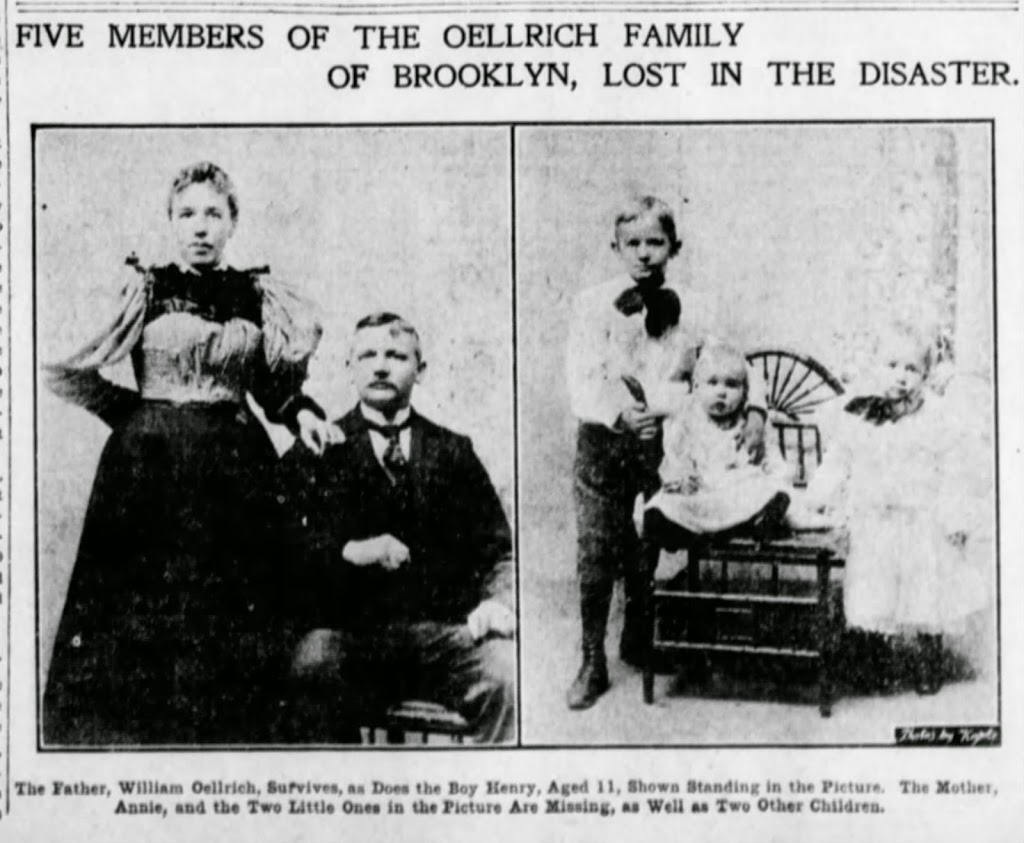
PLUS: The extraordinary fate of little Adella Liebenow Wotherspoon (at right)


And we would like to thank a new sponsor Audible, the premier provider of digital audiobooks. Get a FREE audiobook download and 30 day free trial at www.audibletrial.com/boweryboys. Over 150,000 titles to choose from for your iPhone, Android, Kindle or mp3 player Audible titles play on iPhone, Kindle, Android and more than 500 devices for listening anytime, anywhere.


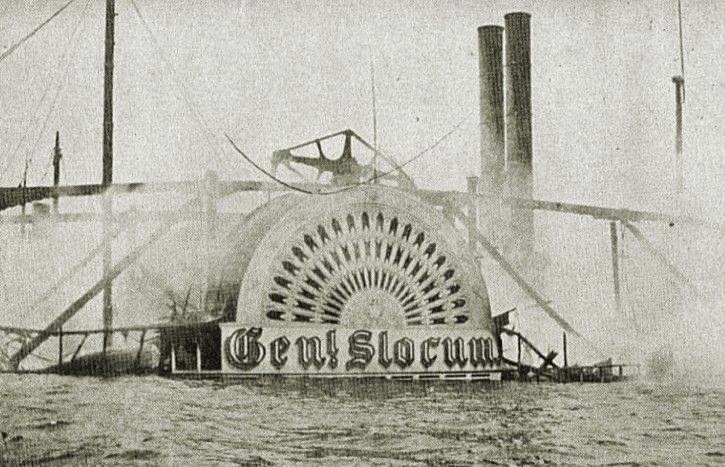
The General Slocum, in its glory days.  I believe this photograph was taken in the Rockaways.

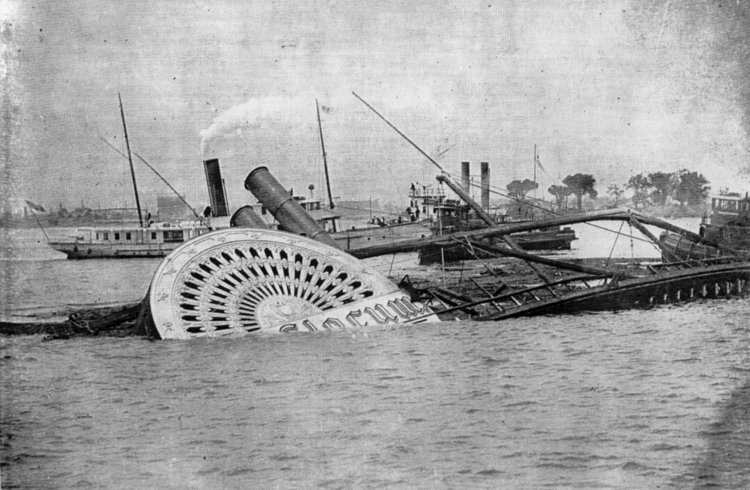
A tugboat attempts to put out the remaining flames of the Slocum, now a burning husk in the water.


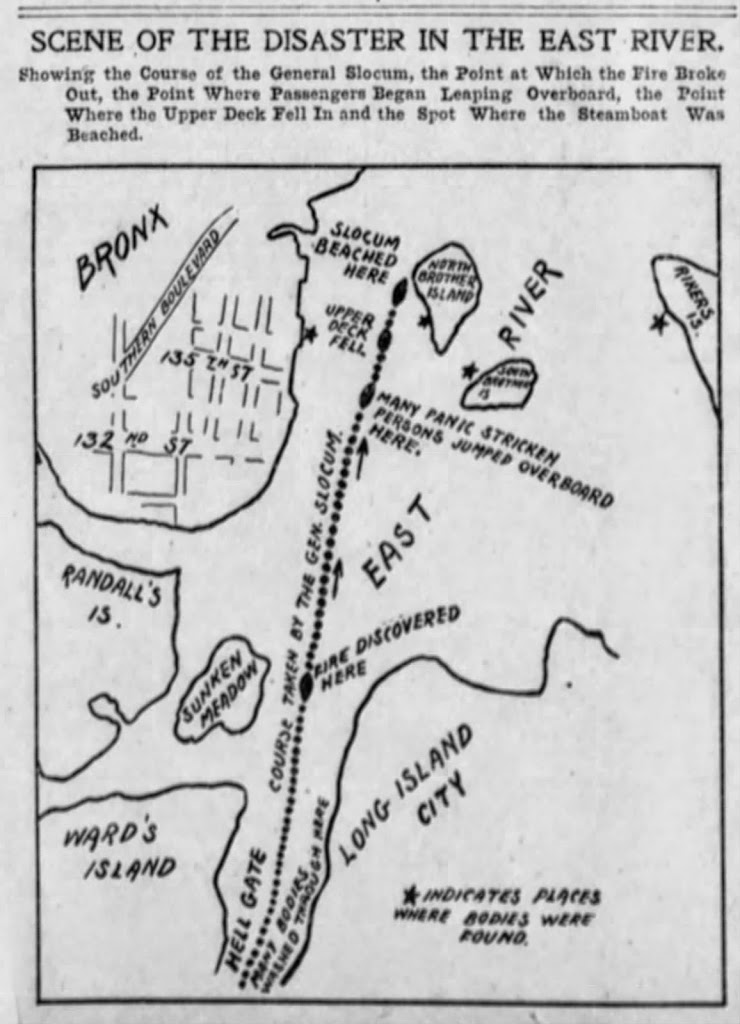
A make-shift map, from the Brooklyn Daily Eagle, June 15, 1904, late edition:

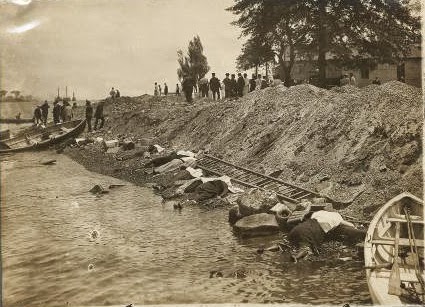
Bodies washed ashore on North Brother Island

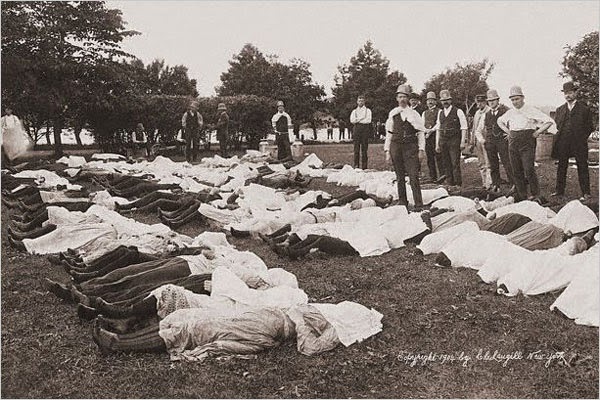
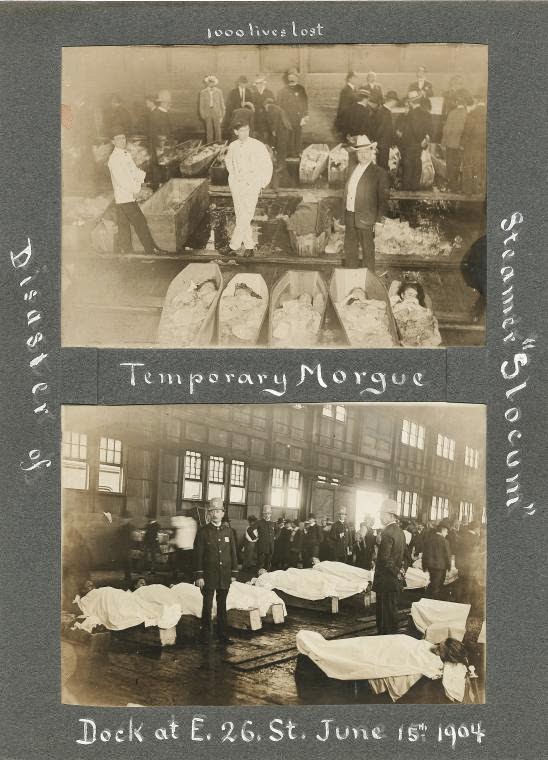
Two morbid photographs from Charities Pier:

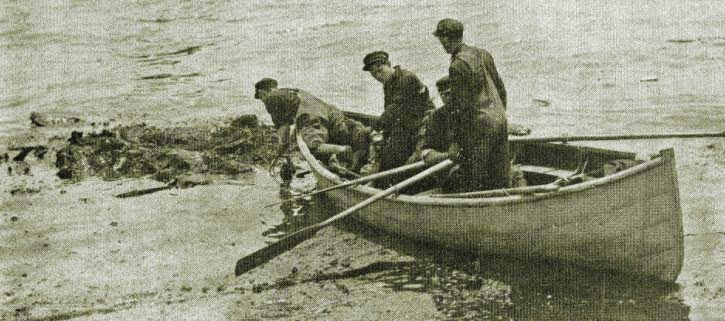
For days later, recovery workers sifted through East River debris, looking for additional bodies:

A funeral procession through the Lower East Side for some of the victims:

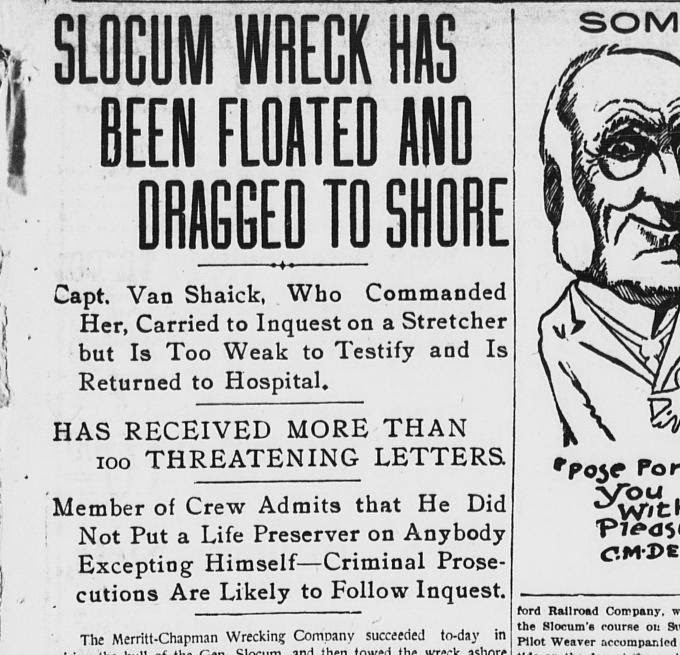
Two headlines from the New York Evening World, one week after the disaster:

The cover of Puck Magazine, one year after the disaster, wondering if justice would ever be served to those under indictment for the disaster. “Illustration shows an old and haggard “Justice” sitting in a chair on a rock in the East River, cobwebs have grown over her sword, scales, and an “Indictment” (Library of Congress)

From the Brooklyn Daily Eagle, the following day:

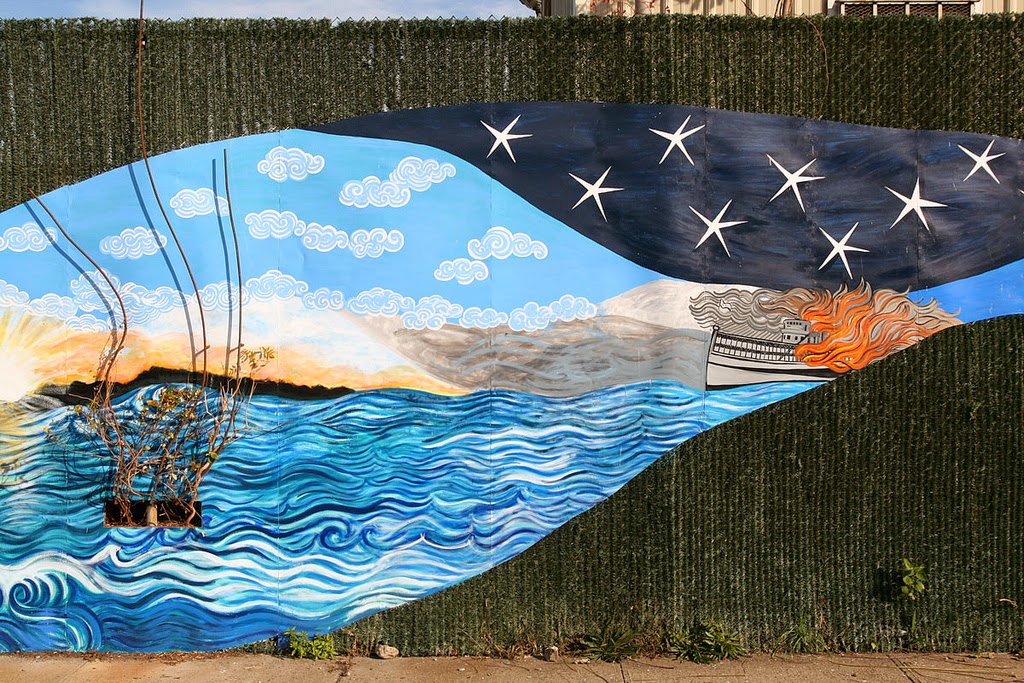
A mural in the Bronx that depicts the General Slocum disaster (courtesy Flickr/Joe Schumacher):

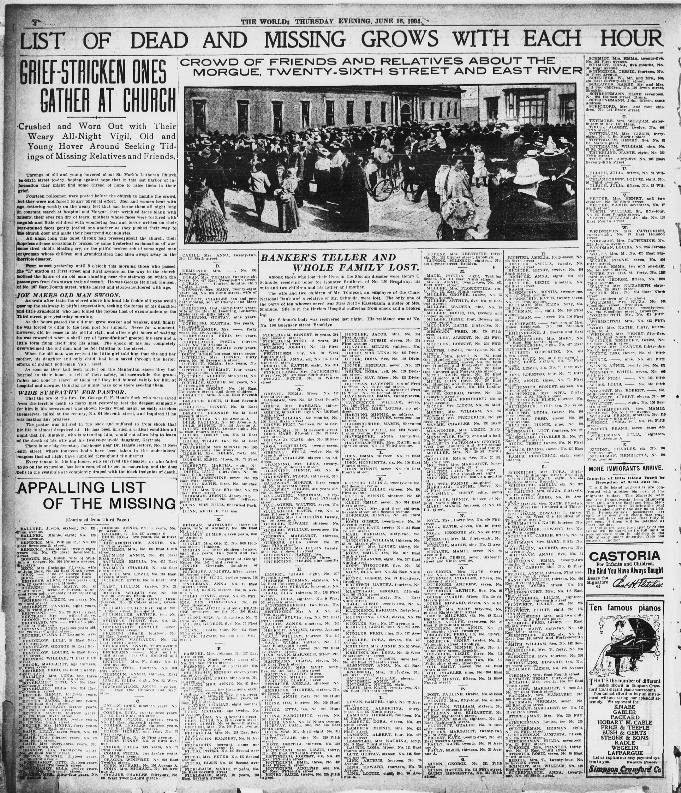
The initial list of the deceased, from the June 16, 1904 edition of the New York Evening World.  The number would increase over the coming days.


Categories
Health and Living Podcasts

The startling history of Bellevue Hospital, beyond the horror stories, the last resort for the New York unwanted

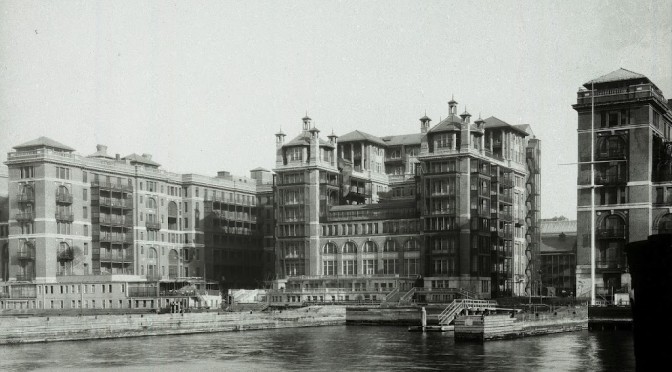
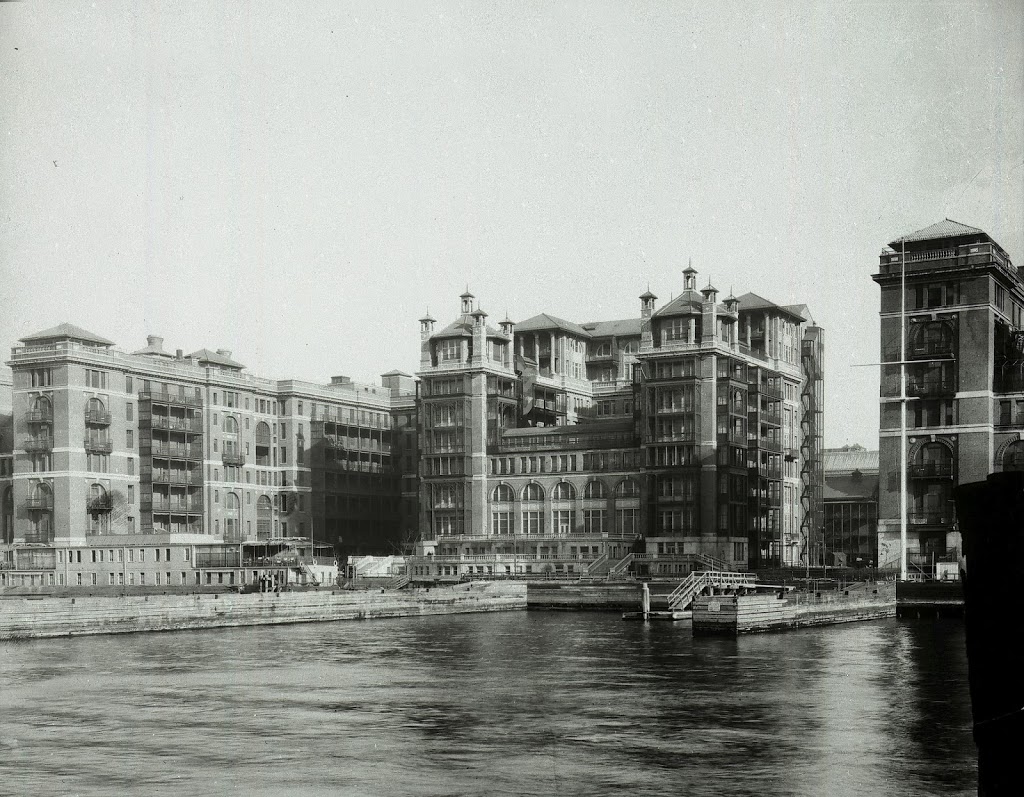
Bellevue from the waterfront, 1879.  Proximity to the shoreline — which once gave the original mansion here that ‘belle vue’ — was key in the early years of Bellevue, as sometimes it was the fastest way to get to the hospital when roads were less than ideal. (Courtesy NYC HHC)

PODCAST Bellevue Hospital, you might have heard, once had a very notorious psychiatric ward. But those horror stories have only distracted from the rather breathtaking — and heart-breaking — history of this historic institution, a lifeline not only for the sick, but for the poor, the incarcerated, the abandoned — even the dead!

The hospital traces its origins to a six-bed almshouse that once sat near the location of New York City Hall today. Despite its humble and (to the modern eye) confusing original purposes, the almshouse was miles better than the barbaric medical procedures of early New York, courtesy the ominous sounding ‘barber-surgeons‘.

A series of yellow fever epidemics moved care for the sick to a former mansion called Belle Vue near Murray Hill — and, in fact, with a strong connection to the Murray of said Hill.  Soon the institution fulfilled a variety of roles and in rather ghastly conditions, from ‘pest house’ to execution ground, from a Pathological Museum to New York’s first city morgue.

A great many medical advances came from Bellevue, not least of which the origins of the modern ambulance. But some of that progress has been obscured by the reputation of the Bellevue Psychiatric Hospital which opened in 1931 and ‘hosted’ a variety of famous people with disturbing issues.  And in the 1980s, Bellevue would take on another grim role — during the most distressing years of the AIDS crisis.

To get this week’s episode, simply download it for FREE from iTunes or other podcasting services, subscribe to our RSS feed or get it straight from our satellite site.

You can also listen to the show on Stitcher streaming radio and Player FM from your mobile devices.

Or listen to straight from here:

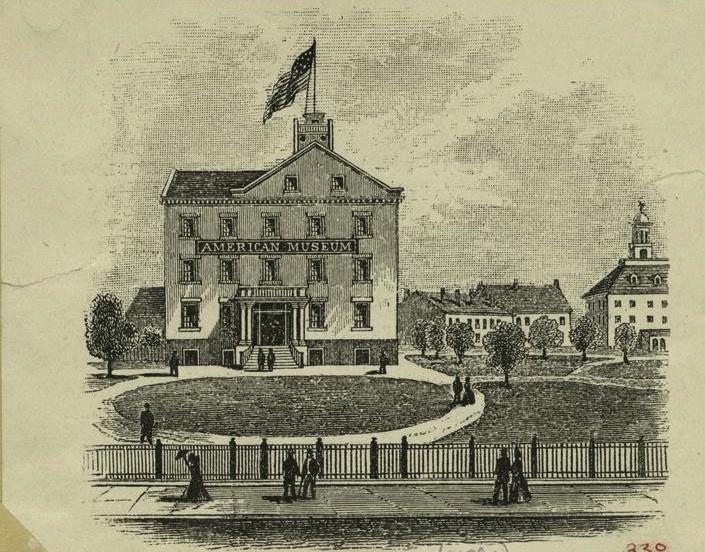
Bellevue traces its start to the original Almshouse which sat in the old common ground that is today City Hall and City Hall Park.  The first infirmary was on the second floor, a total of six beds and originally just one doctor.  When it moved to the Belle Vue mansion during the yellow fever years, this building became refashioned for several institutions, including (as seen below) Scudder’s American Museum, which became the basis for P. T. Barnum‘s museum of the same name. (Courtesy NYPL)

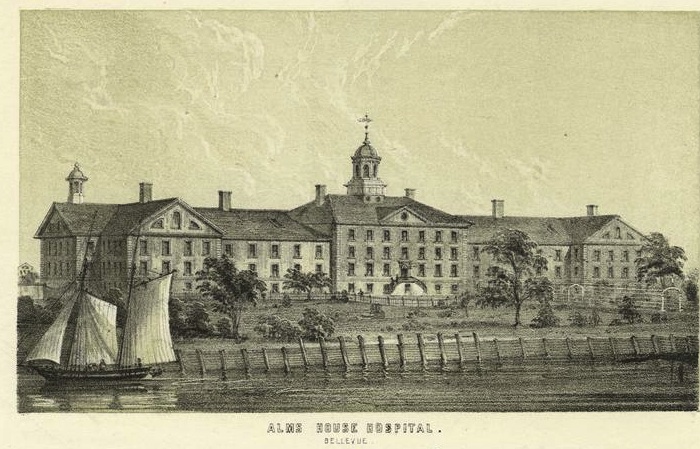
The first incarnation of the ‘almshouse hospital’ in 1852.  By this time, the city had expanded up to this area of Bellevue, and the hospital both farmed out services like its penitentiary and ‘pest-house’ to Blackwell’s Island and expanded its current site to serve the needs of thousands of newly arrived immigrants. (NYPL)

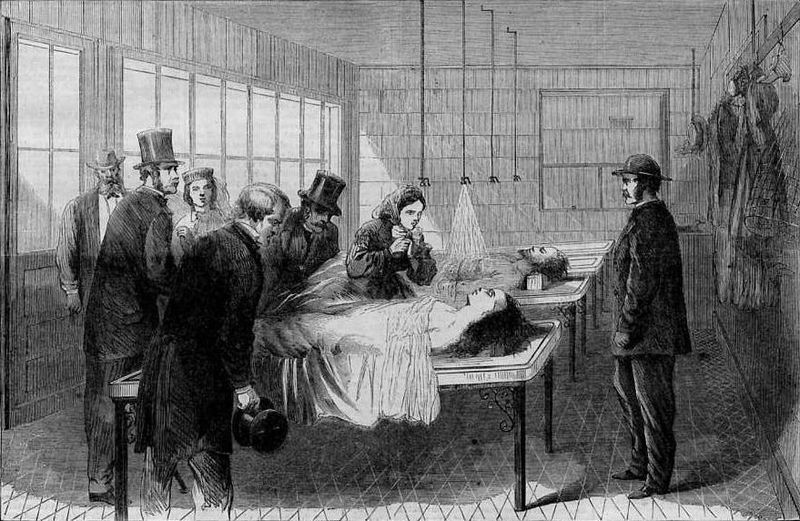
The hospital always had a morgue — its mortality rate, after all, was quite high in the 1830s-40s — but in 1866, it expanded to become New York City’s first city morgue.  Bodies had to be buried after a few days, but for identification and forensic purposes, clothing and other personal articles were kept on display for a month then put into storage.

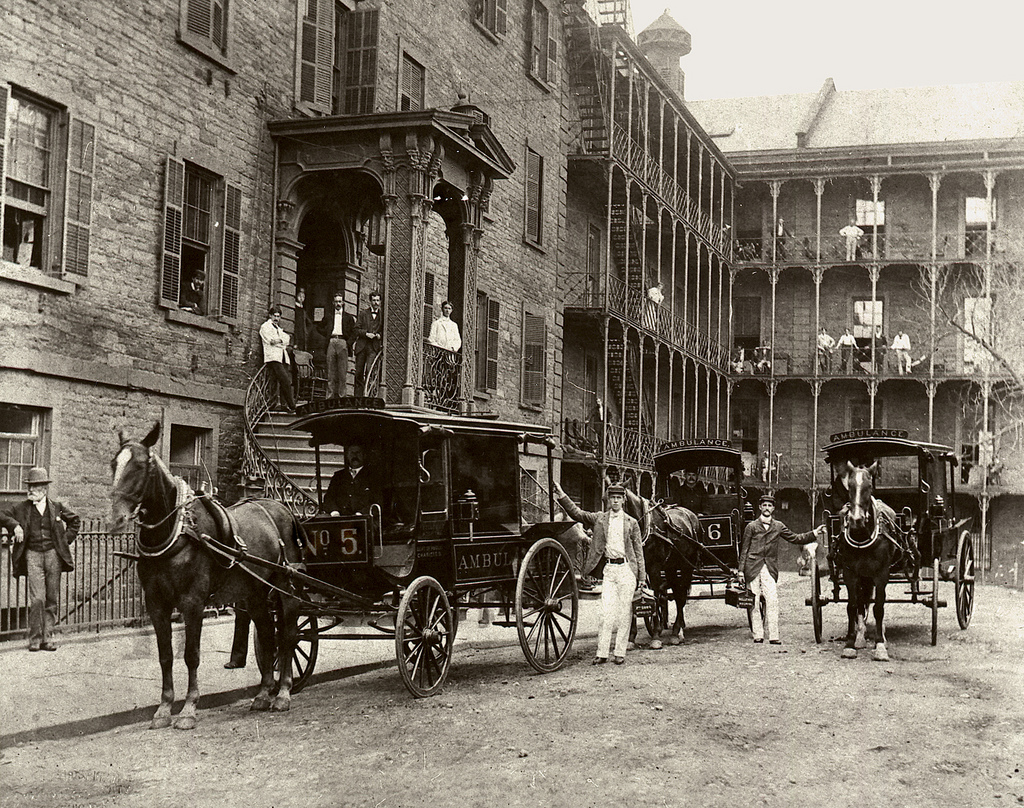
The first ambulance service ever started at Bellevue in 1869, thanks to the hospital’s connections to the Civil War. The fleet of horse-drawn ambulances features a gong to get through busy streets and a container of brandy as an early reliever of pain.

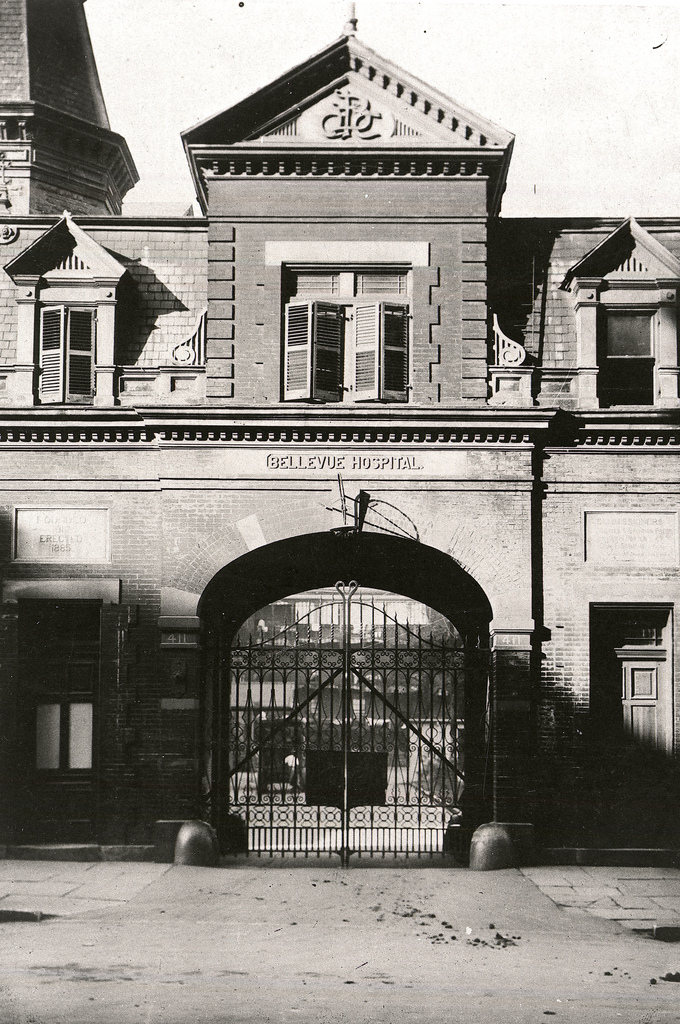
By the way, I read in one source that the railing of that spectacular entrance to the left was actually taken from the balcony of the demolished Federal Hall, where George Washington was sworn in as America’s first president! I’ll have to find out more about that…. (NYC HHC)

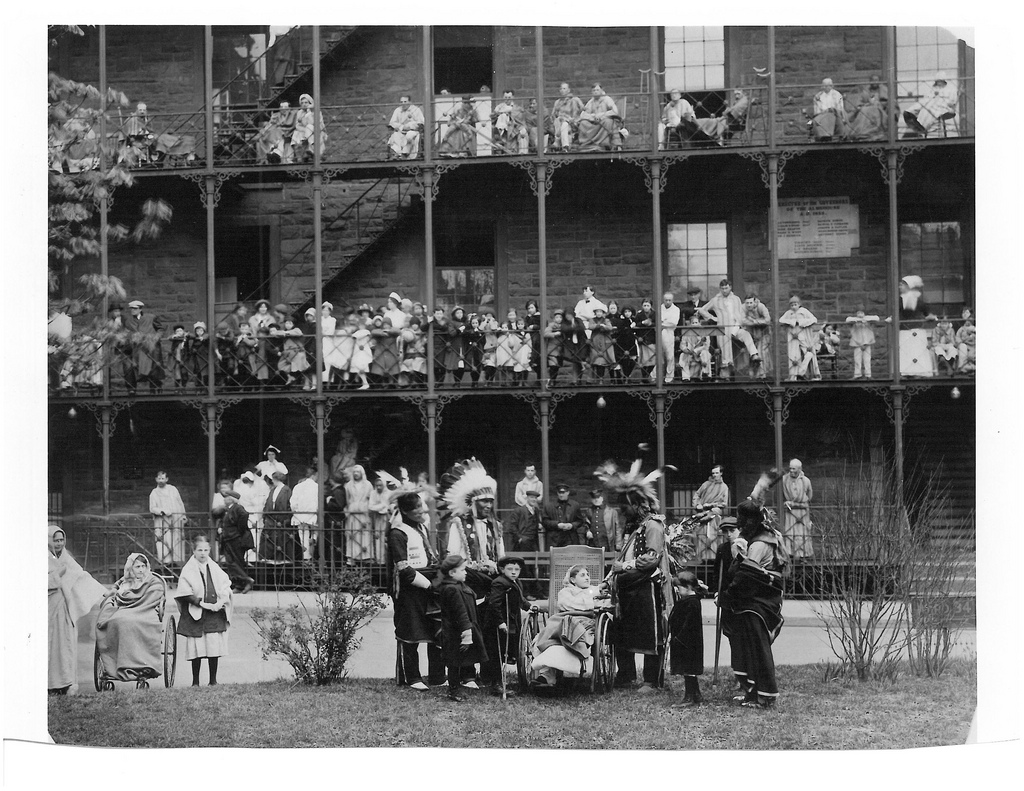
The circus of Barnum and Bailey annually visited the old hospital, entertaining the patients who watched from those glorious iron balconies.  This picture is from 1919 and featured some performers dresses as Indians. (Courtesy Bellevue Hospital Archives)

The hospital’s enduring reputation for treating alcoholics — and the less-than-glowing reputation of its psychiatric ward — were featured in the Billy Wilder film ‘The Lost Weekend‘, which won the Oscar for Best Picture.

Patients had to be evacuated in October 2012 during Hurricane Sandy and was only restored to full service in February of this year.

CORRECTION: In discussing early hospitals that moved into old mansions, I mention Long Island City Hospital, but meant Long Island College Hospital.

http://www.flickr.com/photos/hhcnyc/6507317011/