Categories
Film History Podcasts Side Streets

At The Movies with Meyers and Young: Celebrating New York City on the big screen

Greg and Tom have taken off their historian hats for a minute and have suddenly become — movie critics? Close but not quite!

This week we’re giving you a ‘sneak preview’ of their Patreon podcast called Side Streets, a conversational chat show about New York City and, well, whatever interests them that week.

In honor of the Academy Awards, the Bowery Boys hosts pay homage to the great Gene Siskel and Roger Ebert while looking at five award-worthy films with strong New York City connections:

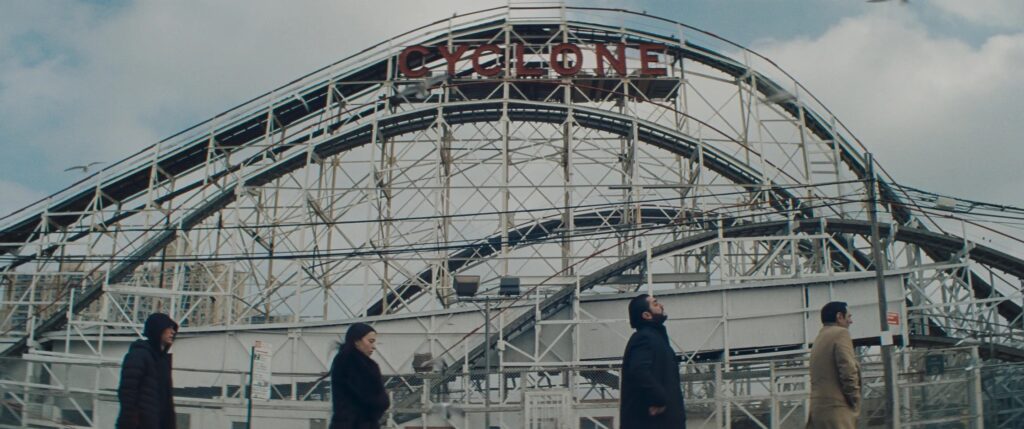
— Anora with its captivating south Brooklyn locations

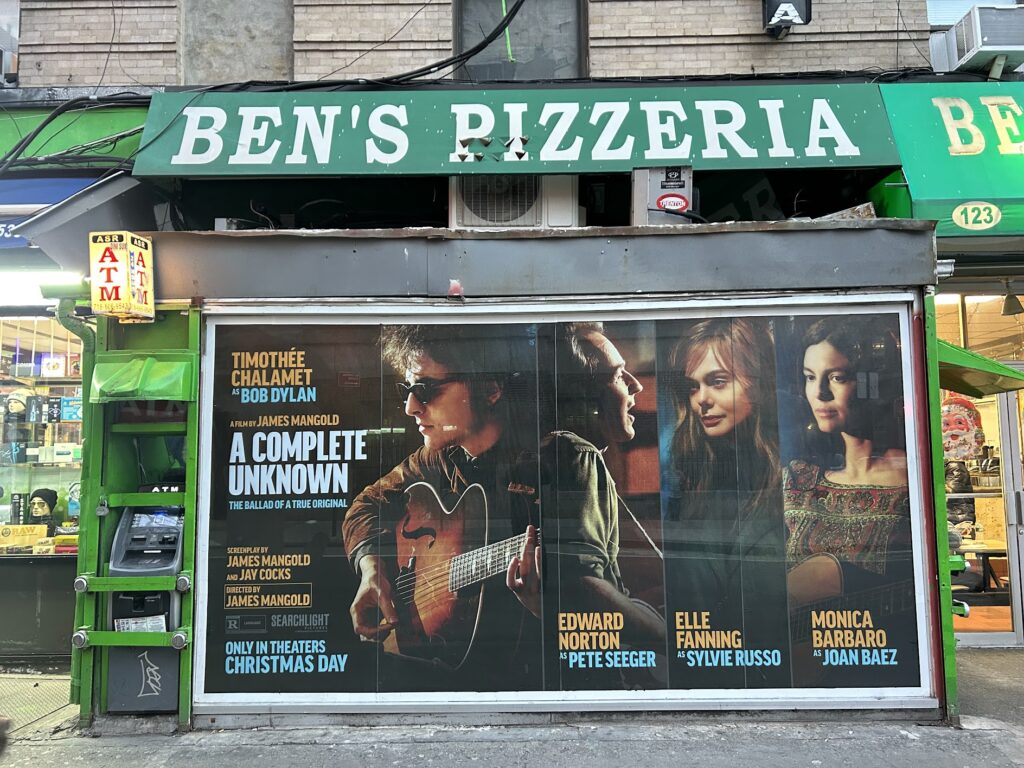
— A Complete Unknown, taking us back 1960s Greenwich Village 

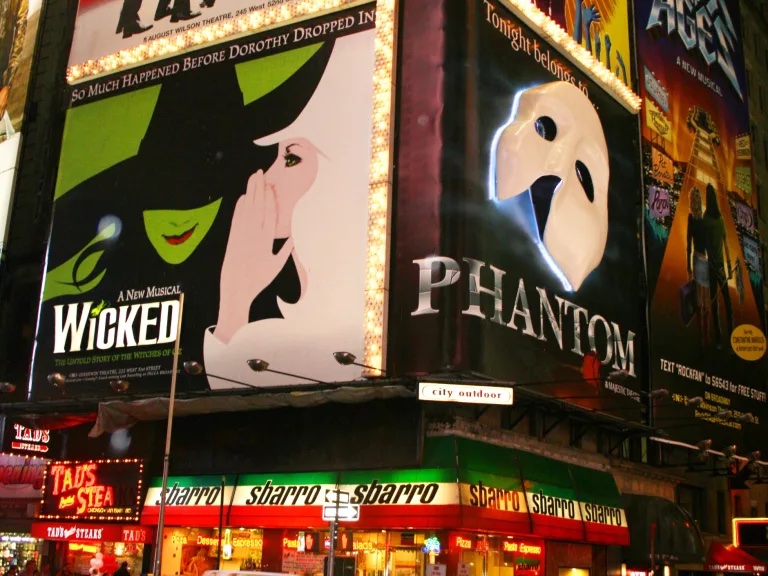
— Wicked, a spritely interpretation of the Broadway musical

— The Brutalist, an epic about more than just architecture

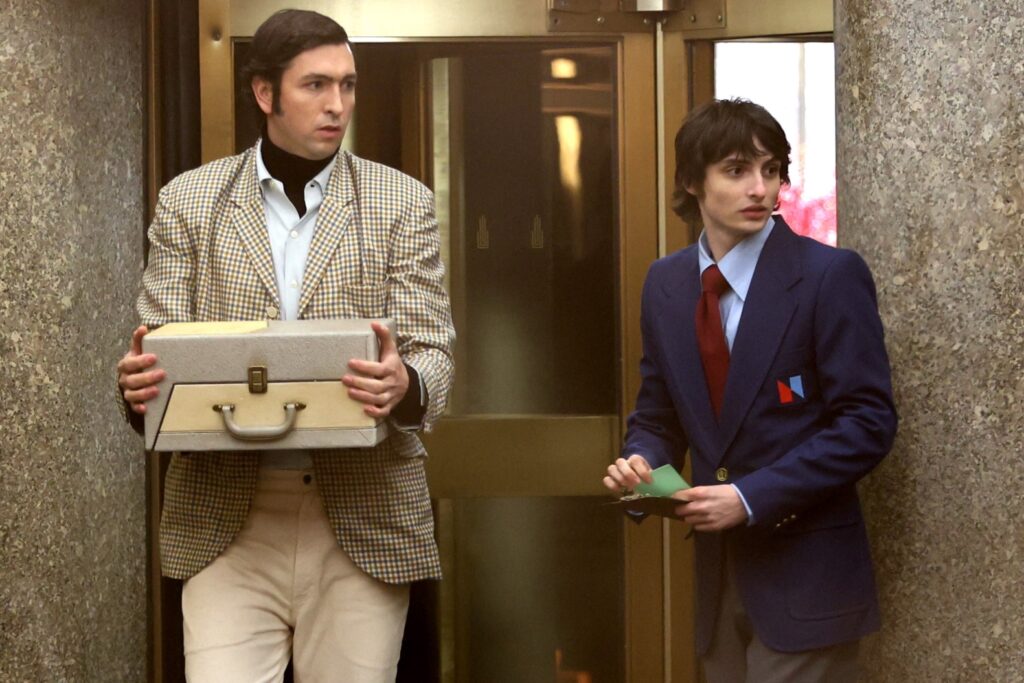
— Saturday Night, a frenetic tribute to the comedy-show icon which turns 50 years old this year

NOTE There are light spoilers (especially to locations used in some of these films) but nothing that will ruin your enjoyment of these movies.

LISTEN NOW: AT THE MOVIES

To listen to all episodes of Side Streets, support the Bowery Boys on Patreon 

This episode was edited by Kieran Gannon


FURTHER READING

Scenes from

ANORA

A COMPLETE UNKNOWN

WICKED

THE BRUTALIST

SATURDAY NIGHT

Categories
Amusements and Thrills Health and Living

The Bowery Boys New York City swimsuit edition, 1880-1920

 The notion of organized ‘ocean bathing’ — actually going into the water for health, relaxation and enjoyment — was really a 19th century invention, first popularized in the United States during the 1830s at the Marine Pavilion on the Rockaway Peninsula.

Bathing beauty: Diver Maggie Ward prepares for a jump into the waters of Coney Island, in the summer of 1888

For propriety’s sake, people would enter a bathing hut hitched to a horse and ride the container as it was backed into the water, exiting from the hut in their full-body swimming apparel only when safely immersed in the water. No risk of seeing wet fabric clinging seductively to the human form!

Fifty years later, bathers would dare walk to the beach sans horse-drawn hut. But their beach apparel still matched the modesty of their regular wear.

Here are a few examples of garments — for sunbathing, swimming or just relaxing — worn at some of New York’s most popular beaches of the late 19th-early 20th century.

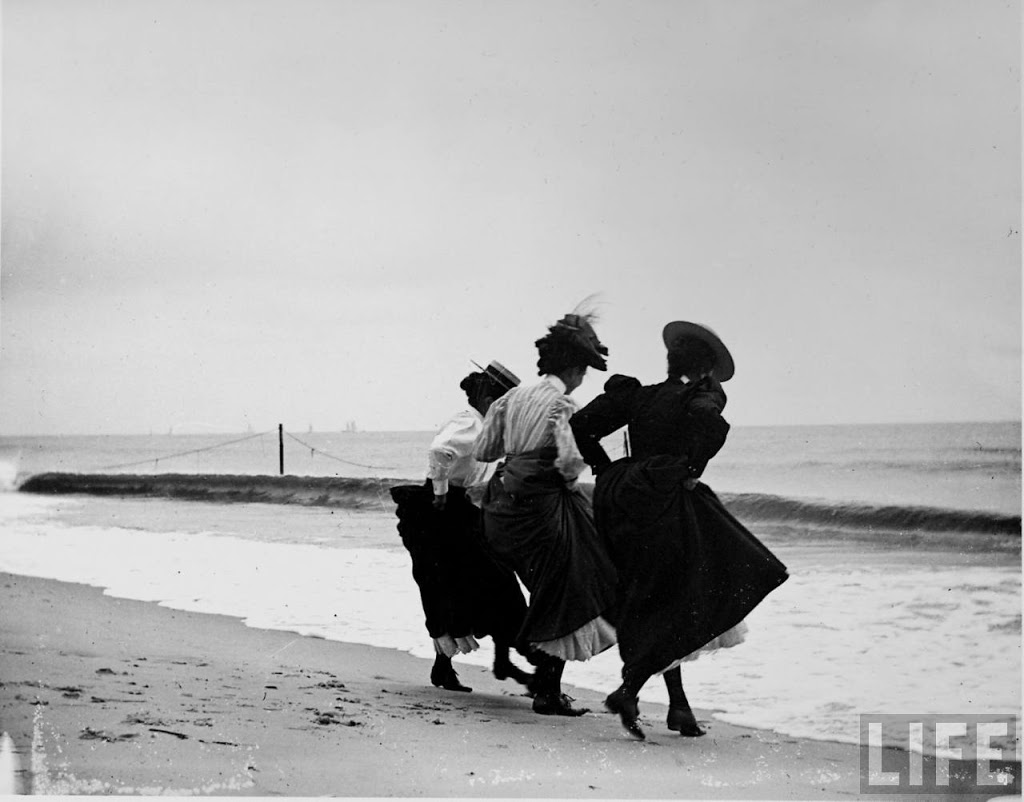
Why needs a bikini? Daring ladies risk the surf in regular wear on the Rockaway beachfront, 1897 (Courtesy Life Magazine)

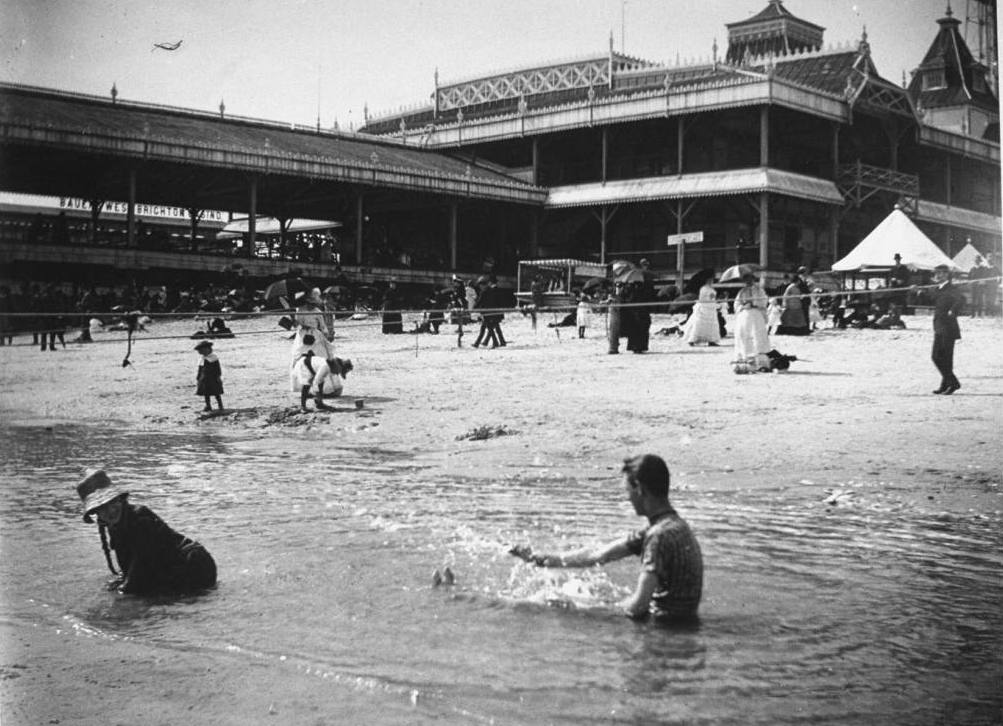
Serving up shenanigans in the waters of Brighton Beach, 1886
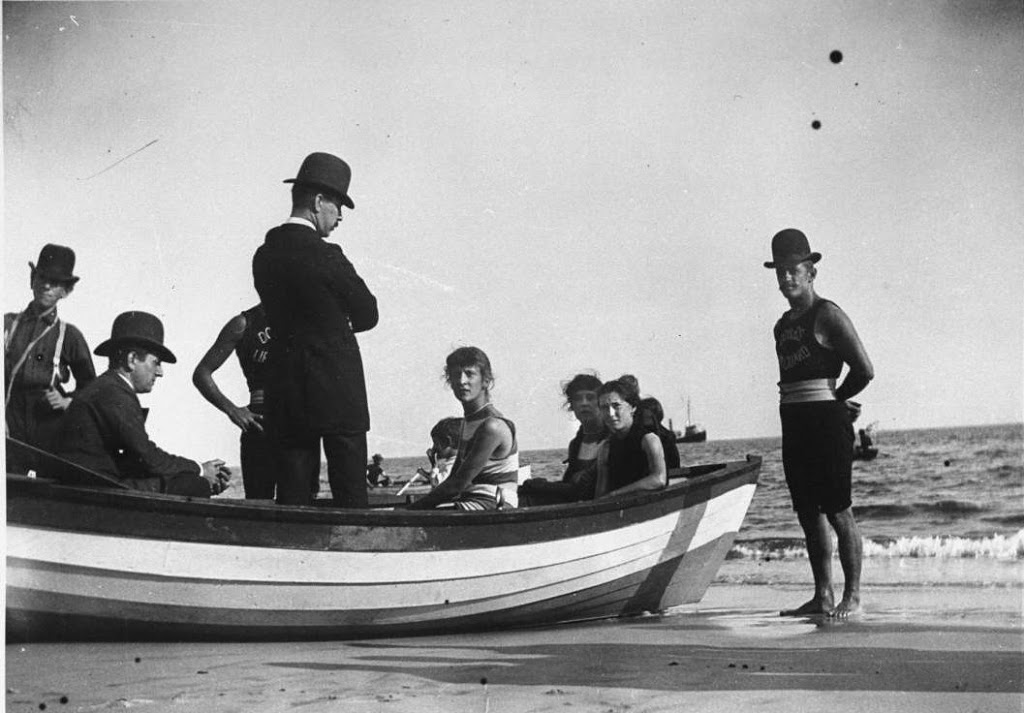
Three female athletes, readying for a ocean swimming match out at Coney Island, await the competition with a few oddly fully clothed men, 1887 (Life Magazine)
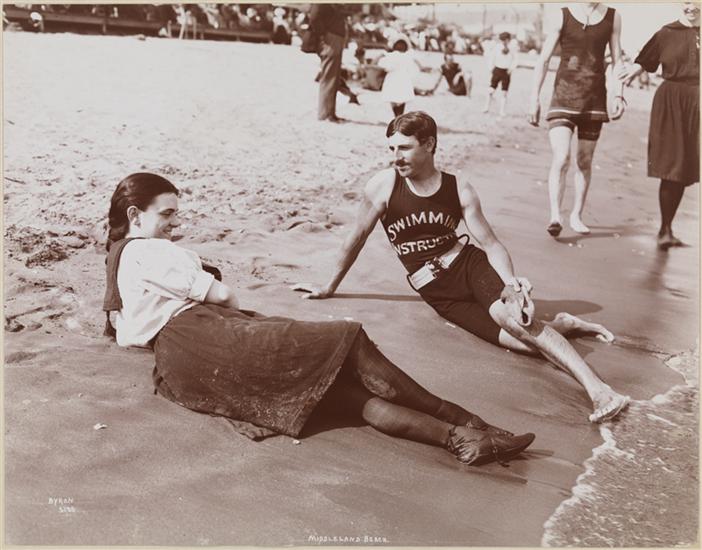
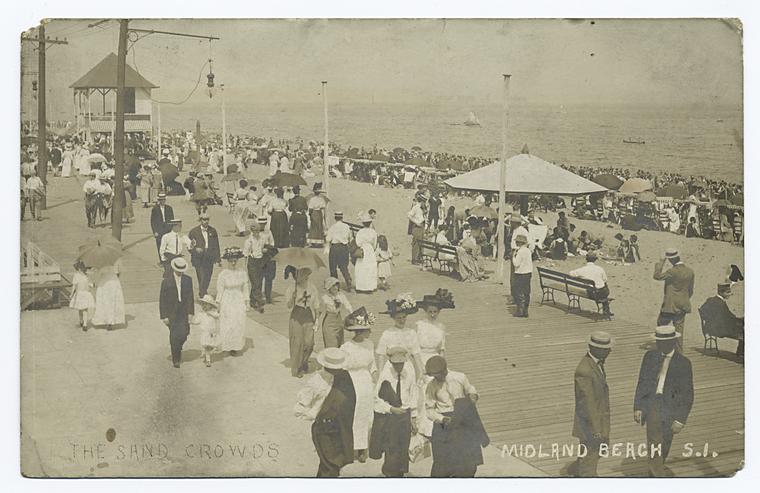
Classing it up a little with the ‘sand crowds’ along the Midland Beach boardwalk in Staten Island, no date, but probably between 1900-1910. (New York Public Library)
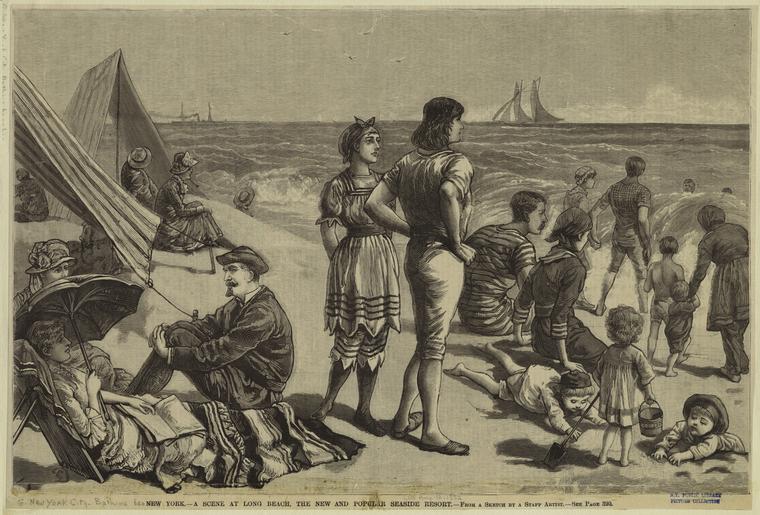
The dapper sea threads adorning the trendy beachgoers at Long Beach, 1882. Okay, this is technically in Nassau County, not New York City proper, but how could I not give these styles a showcase? (New York Public Library)
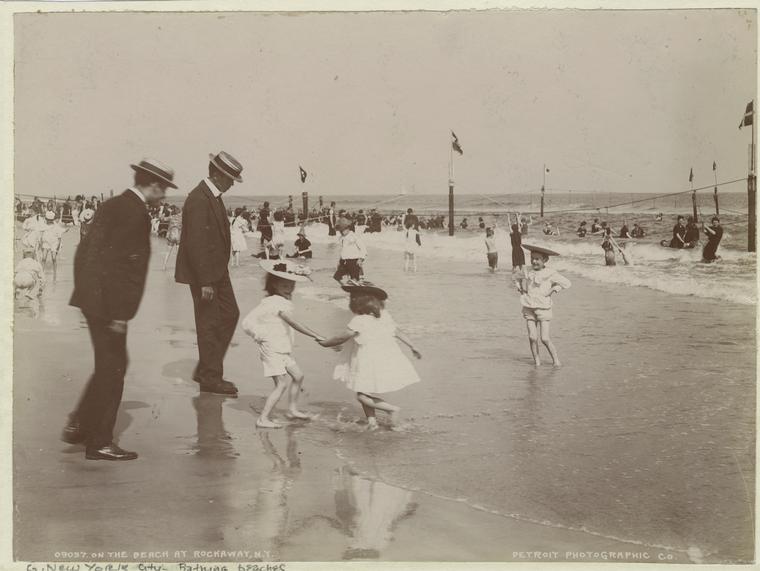
Check out little Minnie Pearl and her fine hatted friends at Rockaway, date unknown. (New York Public Library)
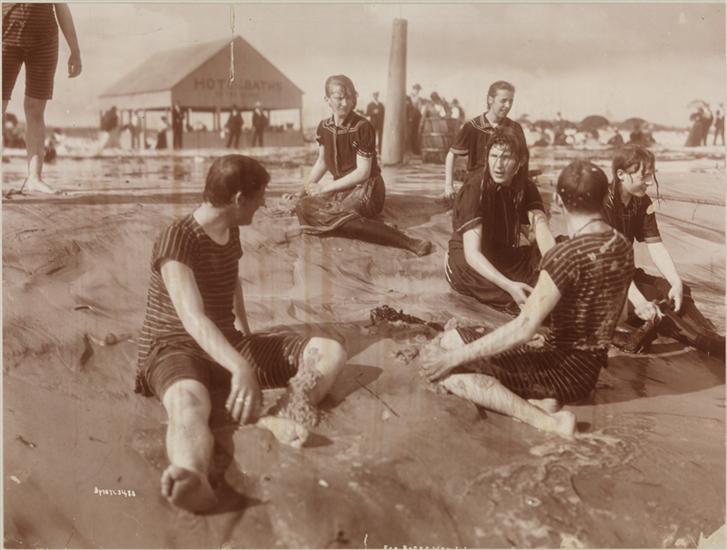
Frolicking in the sand in Far Rockaway, 1897. In the distance is a Hot Baths pavilion. (Courtesy Museum of the City of New York)
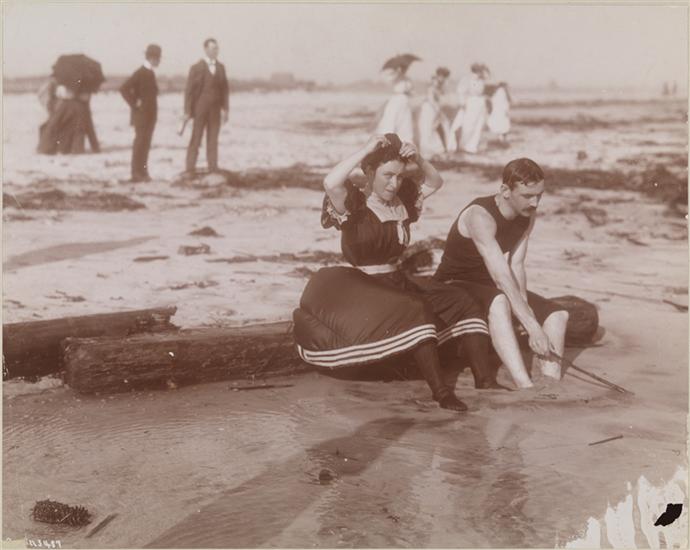
A dynamic duo hitting the beach of Far Rockaway, 1896. (Courtesy Museum of the City of New York)
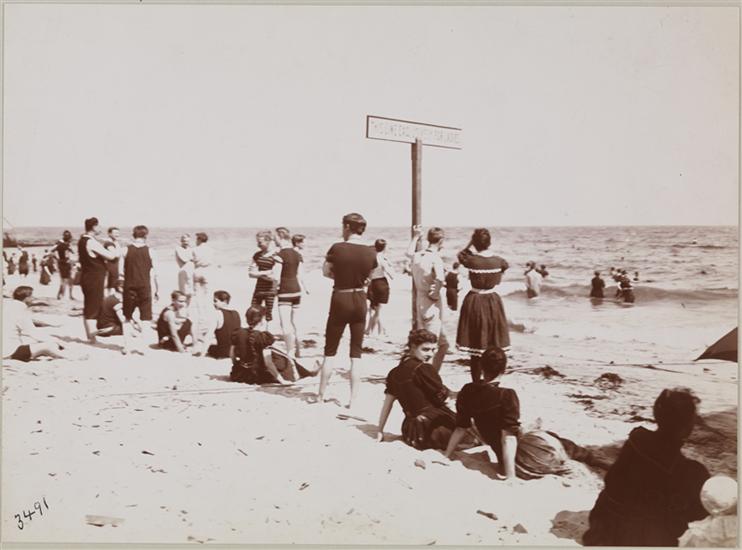
Another image of Far Rockaway, 1897. featuring a whole array of bathing-suit options. (Courtesy Museum of the City of New York)
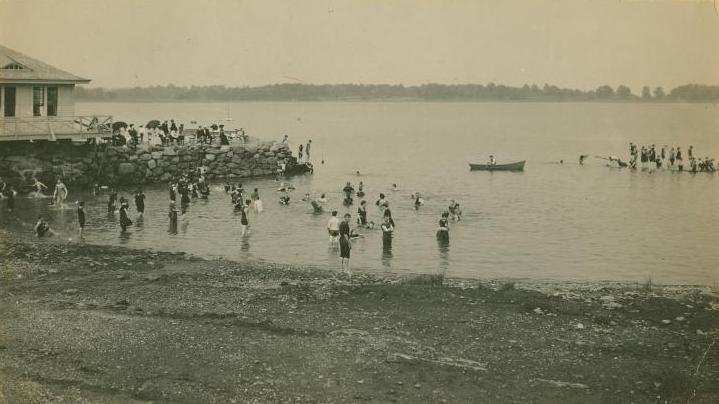
Bathers in black luxuriate in a swimming hole in Pelham Bay, 1903 (New York Public Library)
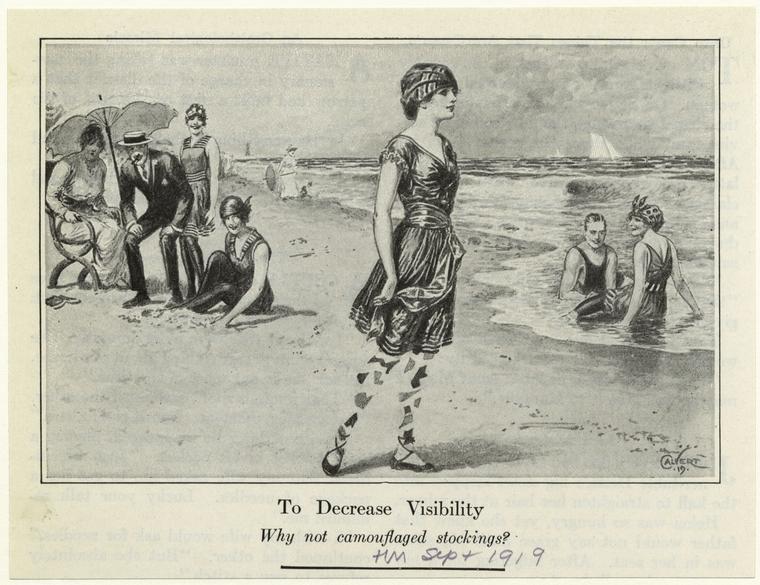
And finally, I’m not quite sure this avant garde look ever made it onto the beach. But if you want to look like you’re floating over the beach without legs, why not try these camouflage beach leggings, advertised in Harper’s Magazine in September 1919? (New York Public Library)
Basking in the surf at Midland Beach, 1898 (Courtesy Museum of the City of New York)
Categories
Amusements and Thrills

Don the Talking Dog, German vaudeville sensation, saves a drowning man in Brighton Beach

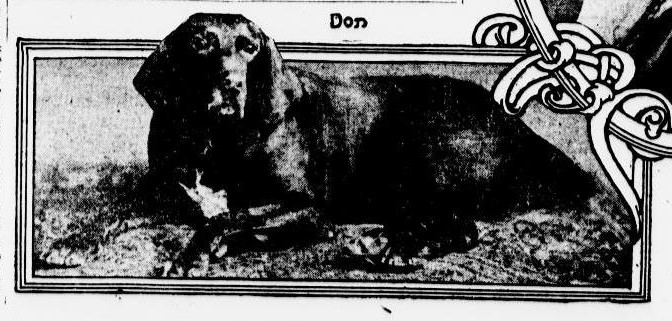
There once was a talking dog named Don.

One hundred years ago today, he saved a man from drowning in Brighton Beach.  Don shouted or barked the word ‘Help!’ then ran to the waters to save him.

But perhaps I should explain.

In December 1910, the New York Times ran a startling announcement that a dog in Germany had been discovered that could pronounce certain human words.  The setter from Theerhutte was owned by an eastern German gamekeeper and possessed several human qualities, not the least of which was the name Don.  The dog had beautiful eyes “sometimes almost human in their expression” and was an “uncommonly intelligent animal,” according to the Times.

Naturally, Don spoke only in German.  Being a dog, among the six words at his command were ‘haben’ (want), ‘kuchen’ (cakes) and ‘hunger’.  You had to use your imagination, of course, but one could detect a slight difference in Don’s barks that could be interpreted as separate words.

Despite some understandable cynics out there, Don was on his way to a career in the theater.

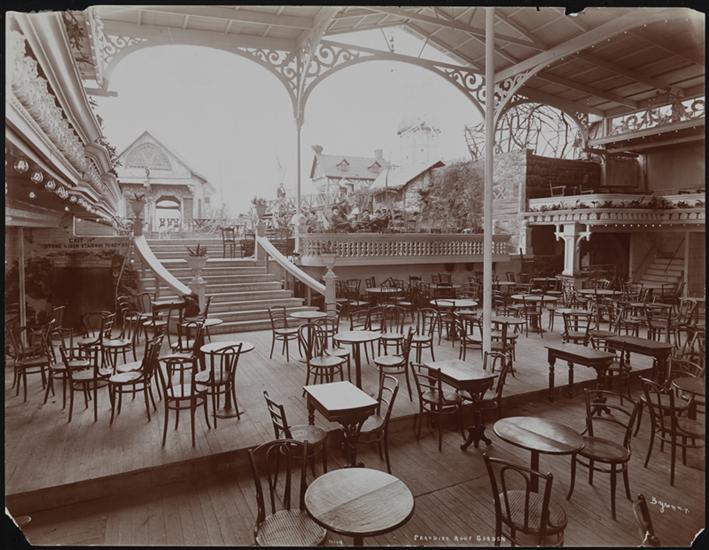
Above: Hammerstein’s rooftop garden at the Victoria Theatre in Times Square, the stage where Don the Talking Dog made his debut.

Generally speaking, dogs were a definite novelty among the stars of the vaudeville stage. A troupe of animals called Wormwood’s Dogs and Monkeys held court on the stages of Coney Island in the 1910s.  More renowned, perhaps, was the cross-dressing pooch Uno the Mind Reading Dog , who wowed theater crowds in 1910.

But the highest paid dog act up to that time was Dan the Drunken Dog, an animal who emulated the wobbling demeanor of an alcoholic, to the delight of audiences at the Oscar Hammerstein‘s Victoria Theater rooftop garden in Times Square.

None of these would reach the fame of Don the Talking Dog.  Hammerstein was so sure New Yorkers would love him that he posted a $50,000 bond to have Don brought to the United States.  The dog arrived in America on July 9, 1912 aboard the German steamship Prinz Friedrich Wilhelm, “absolutely refus[ing] to be interviewed at the pier, and indeed, had been too seasick on the way over to converse with anybody.” [source]

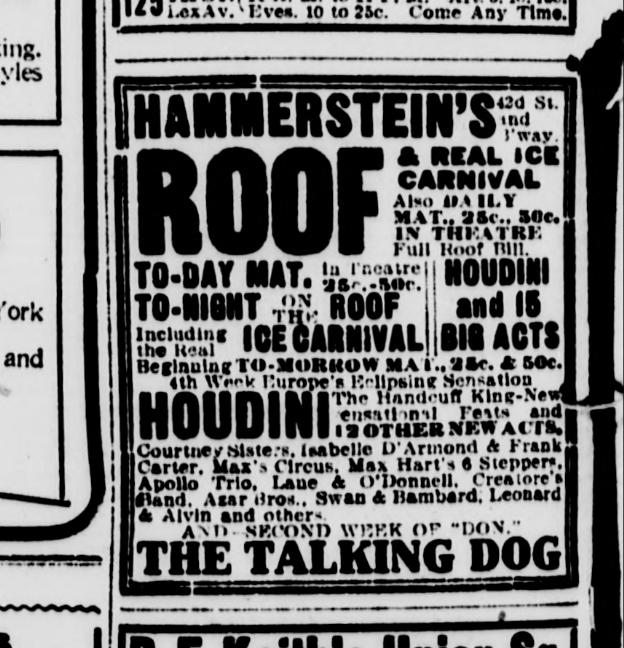
At right: On the bill with Harry Houdini, from the New York Sun, July 21, 1912

A few weeks later, the German canine would make his debut on Hammerstein’s rooftop garden, alongside master of ceremonies Loney Haskell.  “The trained growls which emanate from his throat can readily be mistaken for words,” claimed a Variety reviewer.  “On the roof the audience, skeptical in the first place, became more so at Loney’s [introduction], but after the dog had made its first try they became interested and later enthusiastic.”

His salary was allegedly $1,000 a week, paid, of course, to his owner Martha Haberland.  Like many temperamental divas, Don disliked the roof garden lifestyle due to the sounds of traffic, preferring to perform inside theaters, not atop them. But he was huge success that year, touring to other Hammerstein stages before returning to Germany that fall, a bonafide American star.

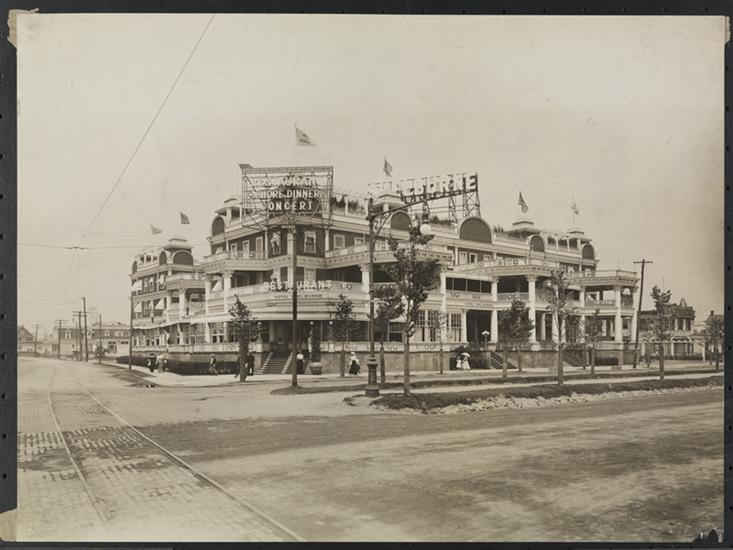
Above: The Hotel Shelburne in Brighton Beach, where Don the Talking Dog saved a man from drowning

Don returned to Hammerstein’s Times Square stage in 1913, this time performing alongside the likes of young comedian Sophie Tucker.  Later that summer he arrived in Brighton Beach to delight Brooklyn audiences.  It was here, on one of his afternoons off, that he rescued a drowning man with his famed ubiquitous voice.

The man was a waiter for the Hotel Shelburne who was actually out walking Don that afternoon.  The man jumped in the water for a swim and instantly lost his footing.  Don saw the man flailing in desperation in the ocean foam and, then, according to the New York Sun, allegedly unfurled one of his new words — “Help!” — startling everyone on the beach.*  The performer then swam over to the drowning man and began pulling on his bathing suit.

A passing policeman leaped into the water on his horse to rescue Don and the waiter.  This whole scene — dog, horse, waiter, policeman — was in turn rescued by three lifeguards in a boat. [source]

This was perhaps Don’s shining moment. He shortly retired from the stage and finally died in 1915 back in Germany.  His final words, according the Evening World:  “Say goodbye to my old pal Loney Haskell.”

*The Tribune reports the same event but does not mention this magical ‘Help!’

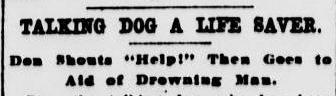
Top pic courtesy New York Evening World. Bottom two images courtesy Museum of the City of New York.


Categories
Podcasts

Brighton Beach and Manhattan Beach, at your leisure

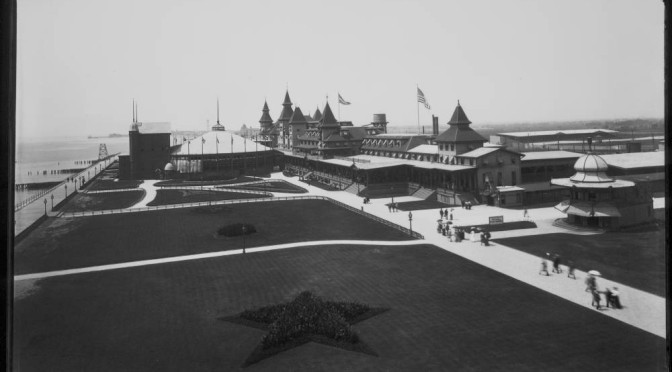
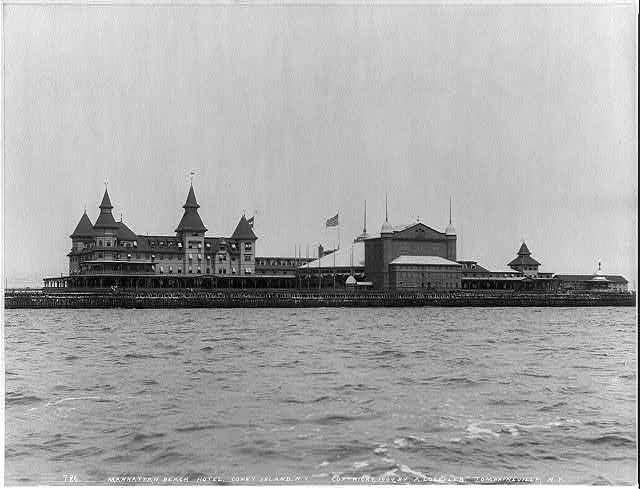
Above: Manhattan Beach Hotel

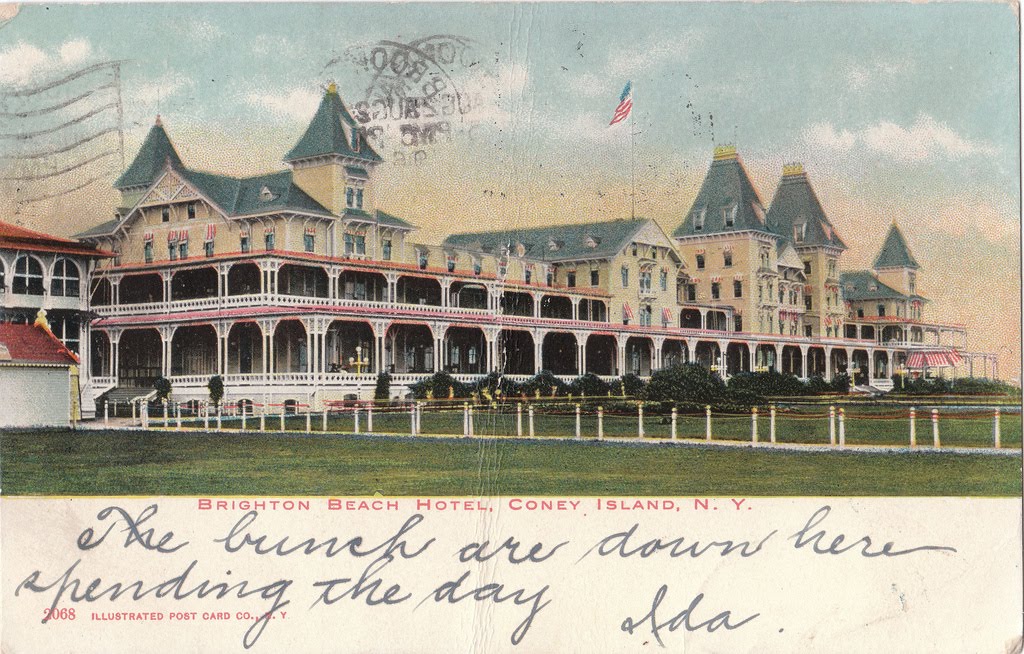
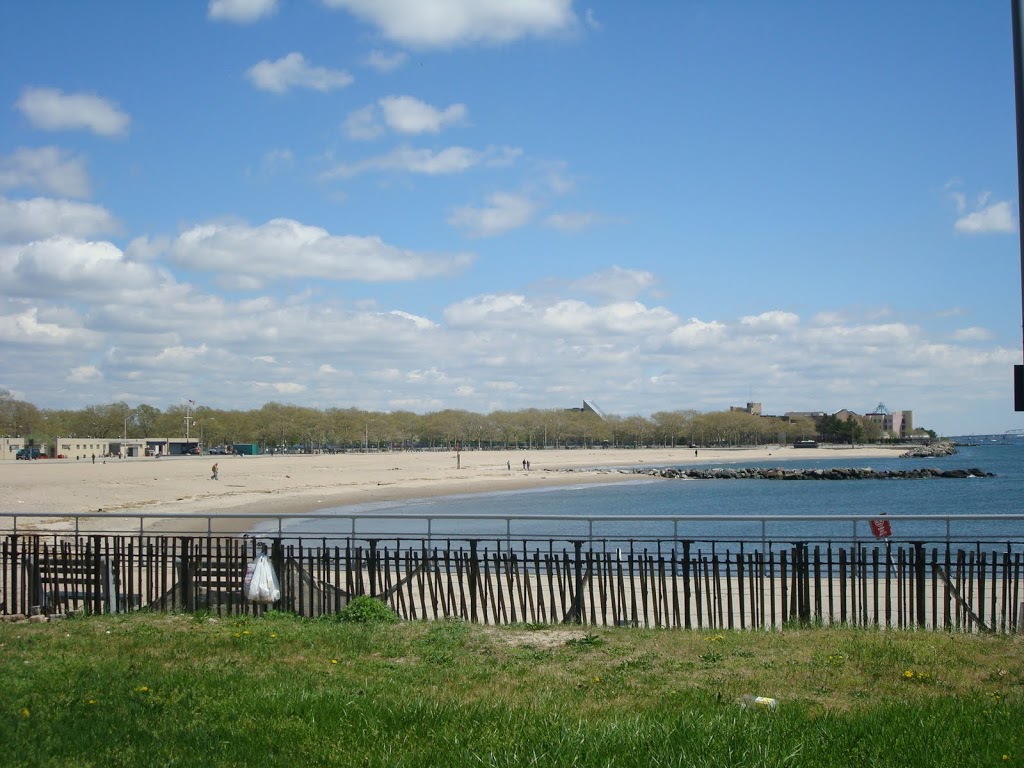
EPISODE 102 Today Brighton Beach is known for Brooklyn’s thriving Russian community, while its neighbor Manhattan Beach is calm and family oriented. But over a hundred years ago, these neighborhoods were the homes of giant, lavish hotels catering to the upper classes. While regular folk were playing at Coney Island’s Steeplechase Park, Dreamland and Luna Park, the wealthiest were enjoying ‘the tonic of sea bathing’ at three of the most toniest hotels on the East Coast — Brighton Beach Hotel, the Oriental Hotel and Manhattan Beach Hotel.
Find out the origins of these long-gone resorts and how they make their mark on the current neighborhoods of Brighton Beach and Manhattan Beach.

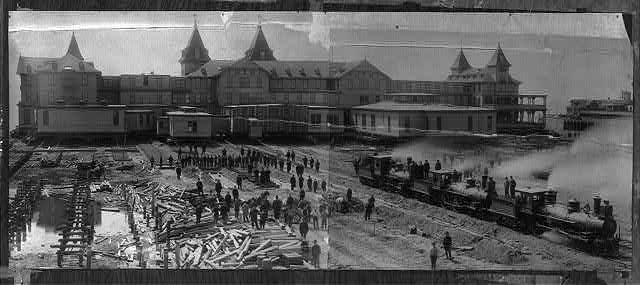
ALSO: Why should we care so much about one particular raging anti-Semite? And why did the Brighton Beach Hotel, several thousand tons of it, have to get dragged inland 500 feet?

Music in this episode is the “Manhattan Beach March” by John Philip Sousa!

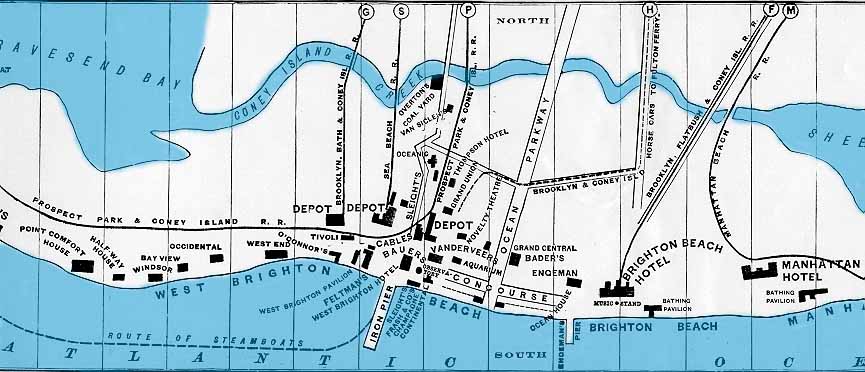
A map of Coney Island from 1879. Click into it to see the detail of the various train and horsecar lines traveling over bridges to the island. The Oriental Hotel was built in 1880 and is thus not listed. (Find the original here.)

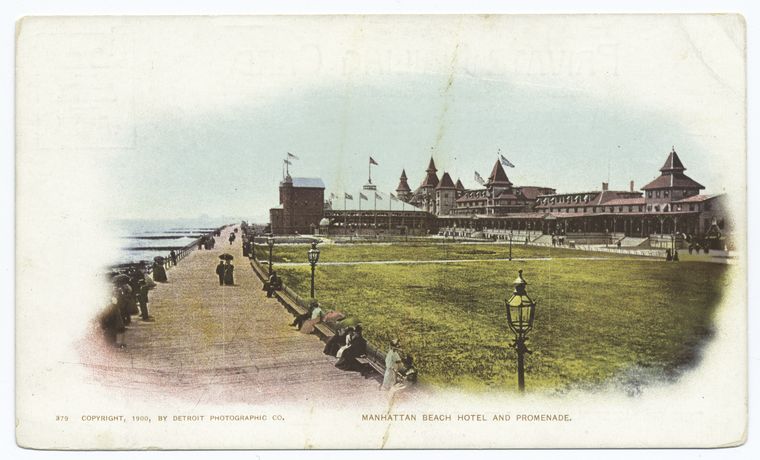
The Manhattan Beach Hotel by postcard

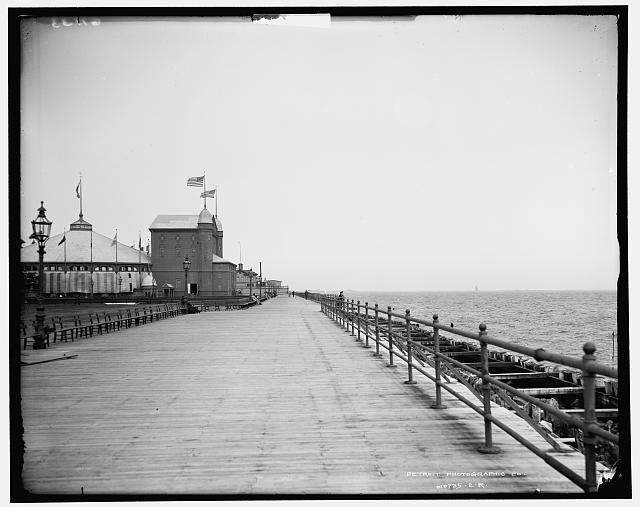
Facing the other way — the boardwalk of the Manhattan Beach hotel.

And from the water. The hotel was built in 1877 by railroad financier Austin Corbin. He would later scandalize progressive New Yorkers by prohibiting Jewish guests from staying at the resort.

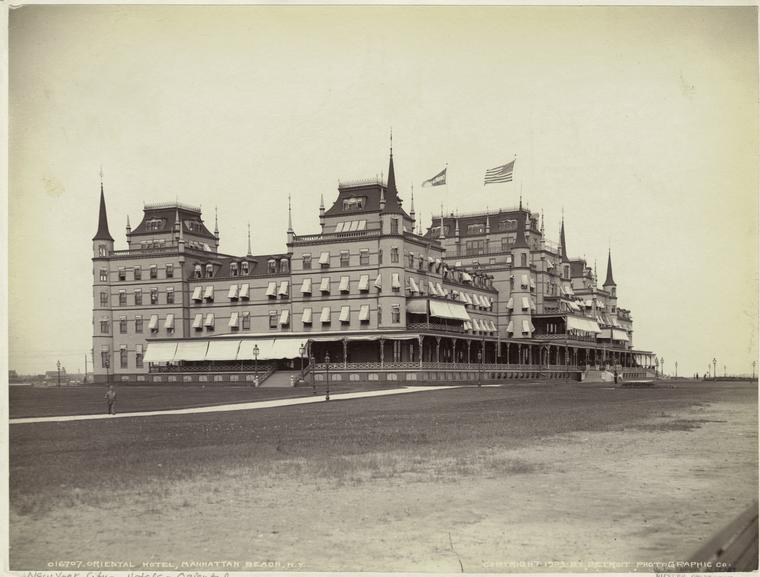
The Oriental Hotel, built in 1880. Click here for another view by George Bradford Brainerd.

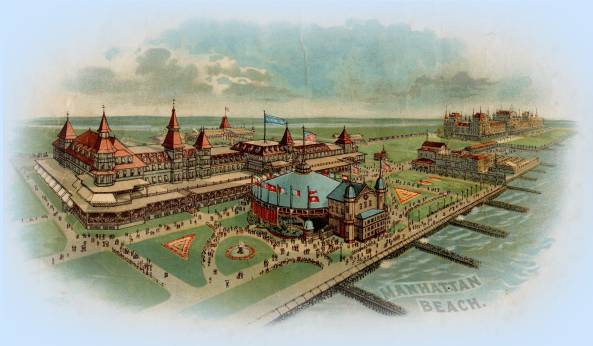
An illustration of the Manhattan Beach Hotel in the foreground, the Oriental in the distance. (Courtesy MMCSL)

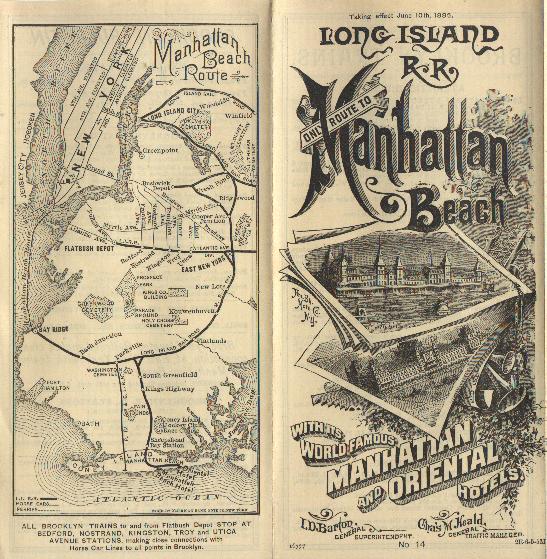
An illustrated train map for the New York and Manhattan Beach Railway, featuring the two Corbin hotels on the flap. (Courtesy LIRR history)

The Brighton Beach Hotel in 1906. Even as millions streamed into Coney Island to enjoy the frenetic rides and attractions, others could relax here, just a few hundred feet away.

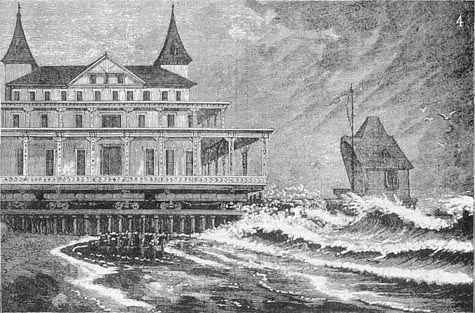
The Brighton Beach was moved — all 6,000 tons of it — in 1888 when the beach in front of it eroded. (Click into pic for better view.) Below it, an illustration of the hotel under siege by the sea. (Courtesy Weather blog)

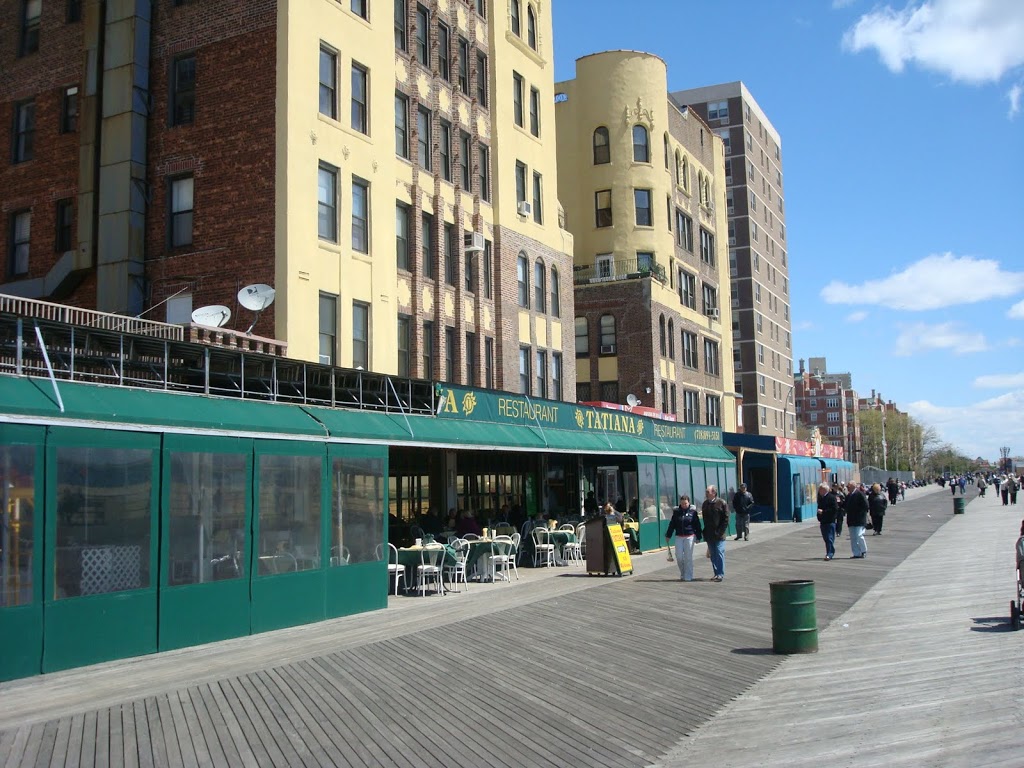
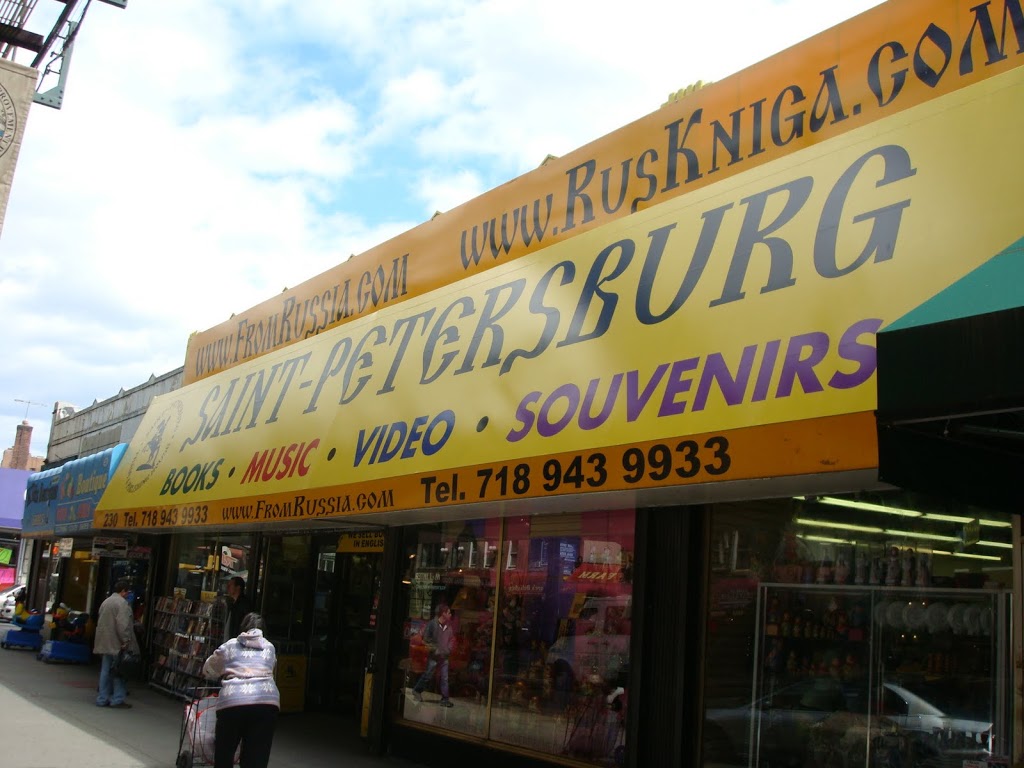
Along today’s Brighton Beach Avenue, you can find a host of shops and restaurants harkening to the tastes of old Russia.

The real fun lies along the boardwalk at night, a string of Russian restaurants and clubs where the action sometimes spills out to the beach. Up the street at Brighton Beach Avenue, you can find The National restaurant, the closest a New Yorkern can come to finding Atlantic City style dinner entertainment.

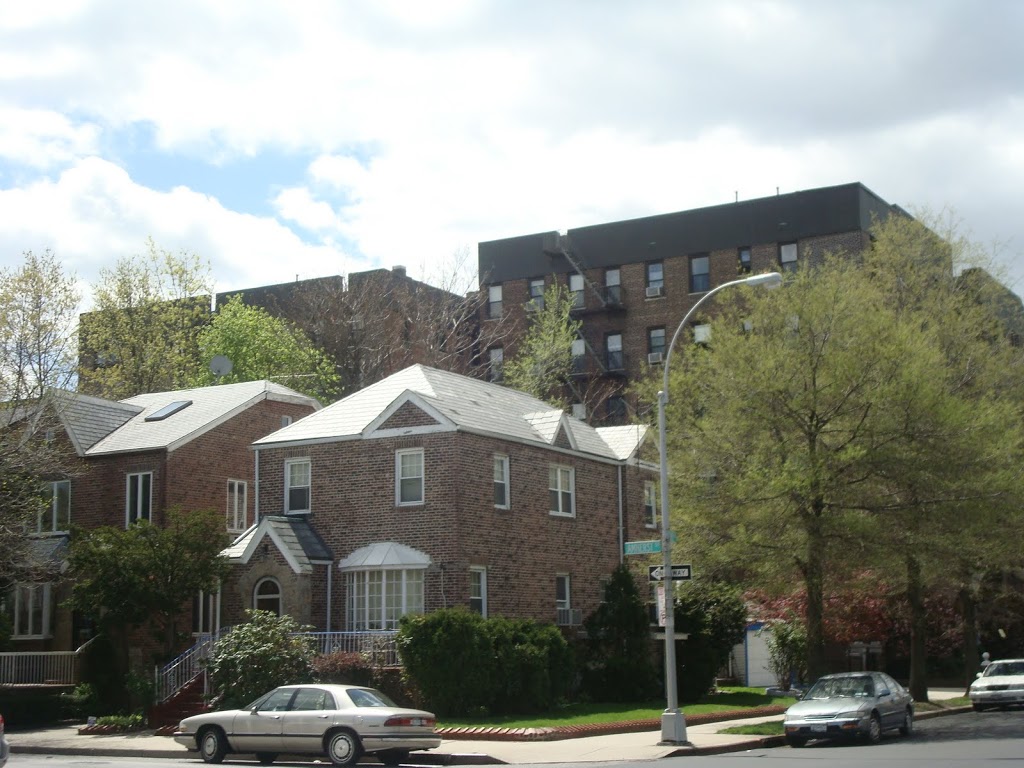
In places, you can almost see the line where William Engeman’s Brighton Beach property ends and Austin Corbin’s Manhattan Beach/Oriental Hotel property begins. Brighton Beach is distinguished by handsome pre-war apartment buildings; Manhattan Beach is more single-family homes, many recently built and some very ornate.

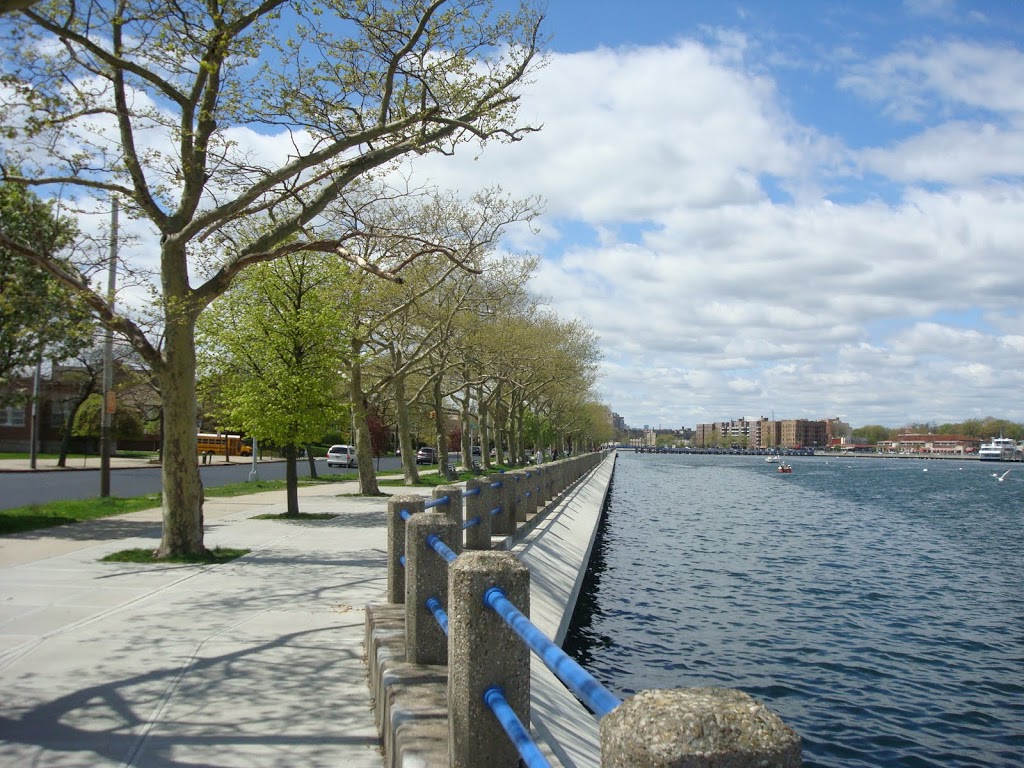
Sheepshead Bay, north of Manhattan Beach, is named for a fish which no longer swims here.

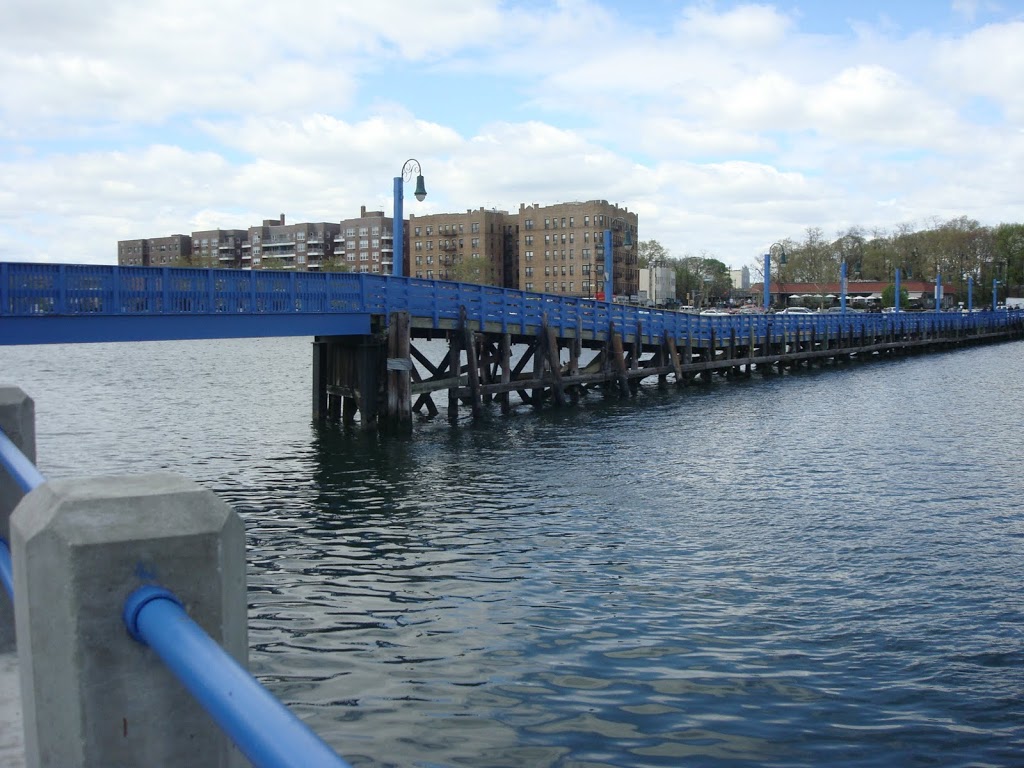
One of my favorite things in all of Brooklyn — the Ocean Avenue footbridge. Originally built in 1880, commissioned by Austin Corbin, the pedestrian bridge links the promenade in Manhattan Beach with the one in the neighborhood of Sheepshead Bay. According to Forgotten New York, Corbin kept closing the bridge, worried about ‘undesirables’ flocking to his precious upper-class hotel.

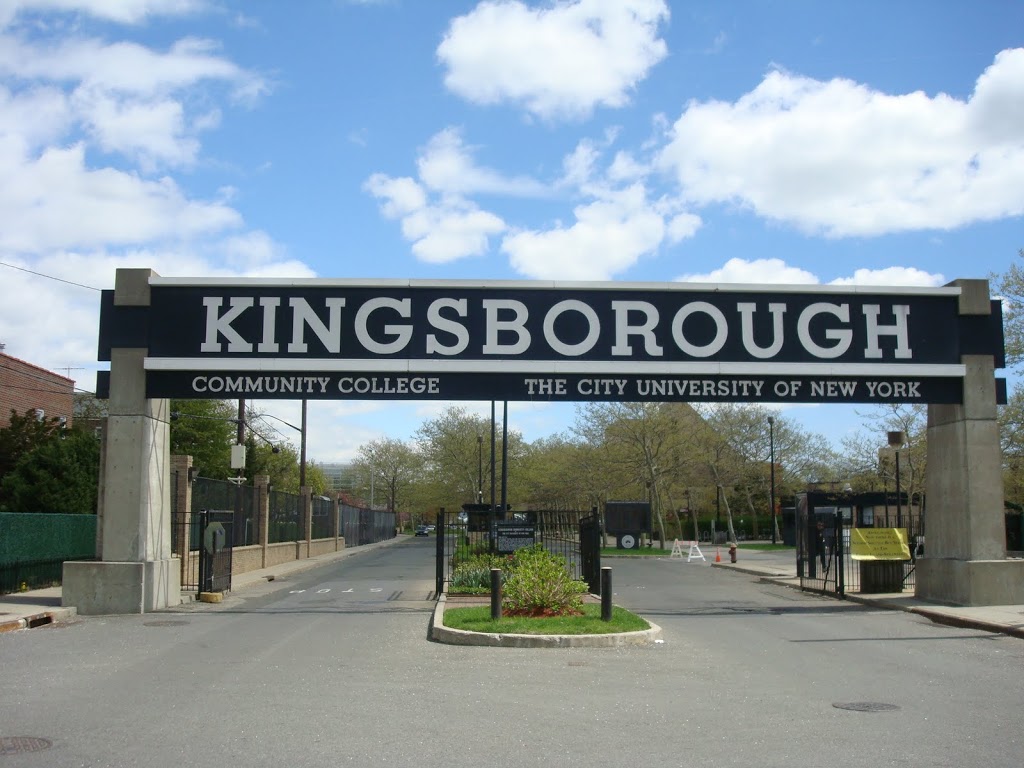
Kingsborough Community College at the far eastern end of the former island. If the college feels a bit like a military barracks, that’s because it was. After Corbin’s hotels were demolished, most of the land went to private home developments. But the far tip went to the Coast Guard and later served as a training base for the United States Maritime Service.


Manhattan Beach Park, a seemingly out of place sandy oasis in the quiet neighborhood of Manhattan Beach, is a remnant of the former resorts.