Categories
Uncategorized

Xenon and the strange journey of a Broadway theater: Noel Coward, Fellini, porn, disco, ‘Cabaret’, Dame Edna

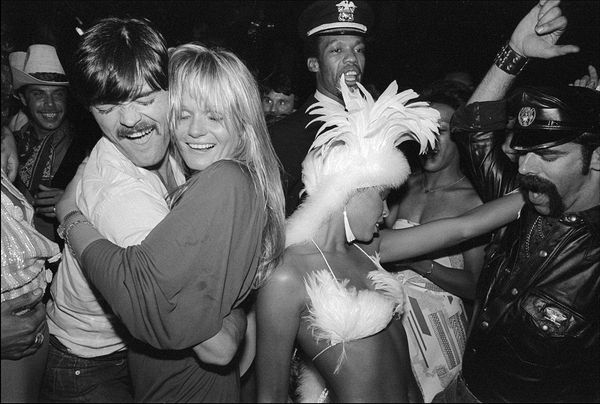
You know it’s a good night at Xenon when you’re drunk on the dance floor, and all of a sudden, the actress Valerie Perrine and the Village People appear (source)

FRIDAY NIGHT FEVER To get you in the mood for the weekend, on occasional Fridays we’ll be featuring an old New York nightlife haunt, from the dance halls of 19th Century Bowery, to the massive warehouse clubs of the mid-1990s. Past entries can be found here.

 LOCATION: XenonTimes Square, 43th Street and Broadway, Manhattan
In operation 1978-84
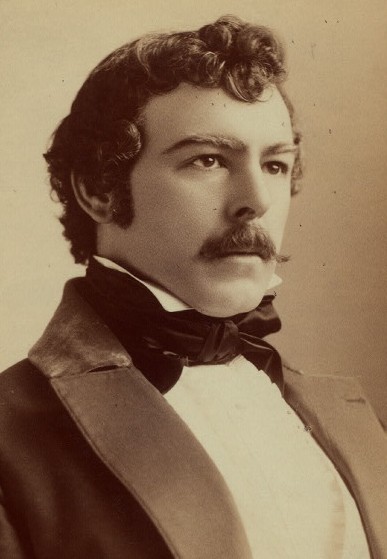
THIS, AT LEFT, IS HENRY MILLER. Clearly this is not the Henry Miller you more popularly know.

This Henry Miller would have never produced Tropic of Cancer. But his major contribution to the American stage would bring New Yorkers an iconic work of French cinema, a world famous theatrical revival, and one of the most successful Studio 54 knockoffs ever.

Miller was a minor theatrical star in the age of Sarah Bernhardt, who began dabbling as a director and stage manager at the same time that theater on 42nd Street began to flourish in New York. He became an early, respectable presence; from an early biography: “It was a foregone conclusion that a Henry Miller production must be in the best tradition of the theater.”

His timing was exquisite as well. The Broadway district in the 1910s was in full swing, with excitement at all hours. His patron (and progressive, feminist icon) Elizabeth Milbank Anderson assisted him in opening a stage in 1918 at 124 W. 43rd Street, a prime location near the theaters of Oscar Hammerstein, Klaw & Erlanger and Florenz Ziegfeld. The old New York Times building was half a block away, the nexus for New Years Eve celebrations for over a decade. Across the street rose the Hotel Metropole with its bustling late night antics; a few years earlier, in 1912, you could have stood in Miller’s lot and watched the bloody mob hit of gambler Herman Rosenthal — possibly ordered by New York cop Charlie Becker. (You can hear more about that in our Case Files of the NYPD podcast.)

There were no hits at Henry Miller’s theater, however, not the lucrative kind at least. In fact, the first show, The Fountain of Youth, was an unmitigated flop, opening in April 1918 and closing in May. (“This fountain of youth plays a very slender stream, and even that is of intermittent vigor,” claimed one review.) Famous names played here — George Gershwin, Billie Burke, Helen Hayes — but it wouldn’t be until Noel Coward debuted his scandalous, sex and cocaine-fueled comedy The Vortex in September 1925 that Miller’s theater would see its first in a string of major successes. Miller himself, however, would not enjoy these successes; he died a few months after Coward’s debut, in early 1926.

Below: Henry Miller’s theater, during its glory days. Photo courtesy NYPL
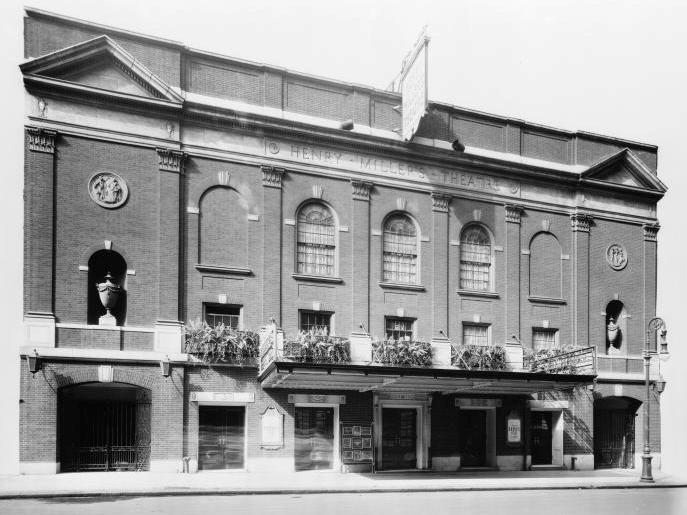
But Henry’s son Gilbert Miller had a knack for theatrical production even greater than his father. For three decades, he ushered countless box office hits through the Henry Miller’s Theatre, including the Tony winning T.S. Eliot play The Cocktail Party starring Alec Guinness. Most notably, Our Town would make its Broadway debut here in February 1938, and in 1957, a young British actress named Angela Lansbury would make her American stage debut here in Hotel Paradiso. Gilbert would win an honorary Tony in the mid-1960s for his contributions to the New York stage.

By then, however, the theater began flirting with a transition that many midtown stages had already made — into a legitimate movie house. Its first foray was also its most memorable, Federico Fellini‘s La Dolce Vita, premiering here in April 1961. The strangeness and theatricality of Fellini’s masterpiece fit the Henry Miller playhouse perfectly, even if the stage itself was technically ill-fitted for movies. The grumpy critic Bosley Crowther was even impressed: “Fellini’s “La Dolce Vita” (“The Sweet Life”), which has been a tremendous hit abroad since its initial presentation in Rome early last year, finally got to its American premire at Henry Miller’s Theatre last night and proved to deserve all the hurrahs and the impressive honors it has received.”

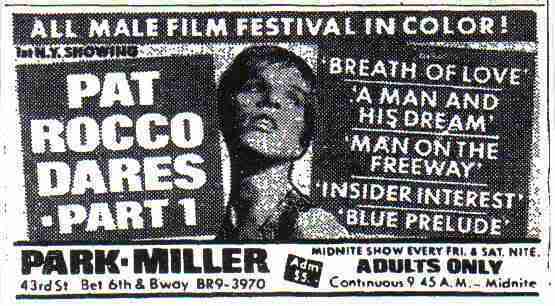
This might have been a harbinger for a fabulous future as an art house, however the theater was instead sold, renamed the Park-Miller, and entered the 1970s as one of Times Square’s most popular porno theaters, specializing in all-male features for gay audiences.

Although Henry Miller was certainly turning in his grave, the theater actually become quite successful, more so than most of Miller’s own productions during his lifetime.

According to author Hilary Radner, “the Park-Miller Theater on 43rd Street grossed in excess of thirty thousand dollars per week in the early 1970s….For a five dollar admission fee, audience members watched a mixed program that included shorts, slides, and a dubbed minifeature, such as Truckers — Men of the Road.” A long way from The Fountain of Youth, indeed!

Below: an advertising glimpse into the theater’s more prurient days
Everything changed in the spring of 1977 with the transformation of an old opera house into the superstar disco spectacular Studio 54, epitomizing the notion of nightlife as a headline-grabbing celebrity wonderland. One night at 54, music manager Howard Stein met Swiss restaurateur Peppo Vanini (the ex of actress Victoria Tennant), and the two cooked up a scheme to match the club’s glamour in another midtown location.

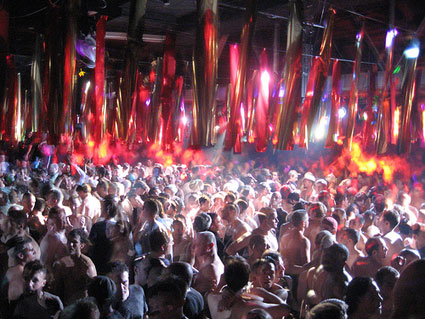
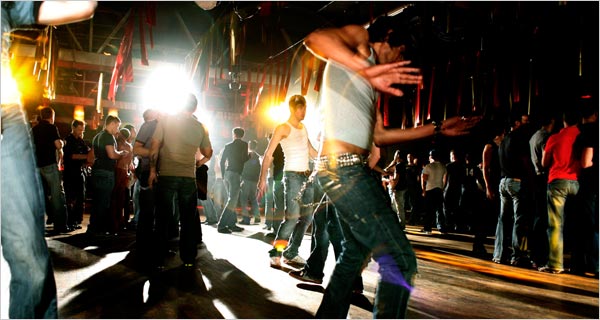
Stein purchased the old porn theater and remade it into the discotheque Xenon, although Xerox might have been a better name, for it adhered closely to the Studio 54 formula of flashy nights, big celebrities and kitschy showmanship (cannons with colored feathers, a neon X above the dance floor).

Being just slightly lesser a club than 54, you actually did stand a chance of getting in if you happened not to be a bold-faced somebody. But Stein would occasionally stand at the door himself “weeding out the detested middle class from the very rich and the colorful poor,” according to a New York Magazine profile.

Below: the club, during the day, in the 1970s:
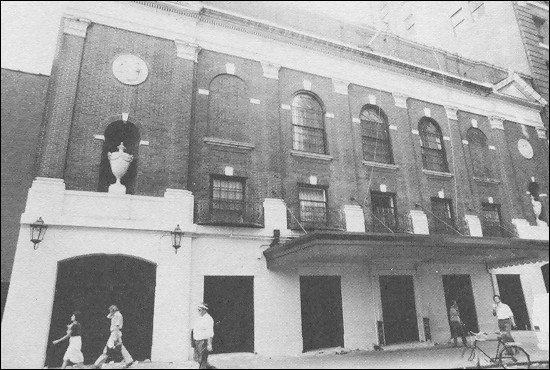
Still, Xenon had its day, and on a typical hot summer night in 1979 or 1980 you might stumble into private parties hosted by Michael Jackson, Woody Allen, Lauren Bacall, Ben Vereen, or Pele. Inside you might hear deejay Jellybean Benitez.

Although people often stripped down to bikinis on the dance floor, you had fewer naked Grace Jones moments; Xenon “combined the craziness of Studio 54 with the comfort of Regine’s” according to one source, Regine’s being the more elegant nightclub entree owned by French chanteuse Régine Zylberberg.

With the end of disco came the end of Xenon, in 1984, and a brief attempt at turning the space into a rock ‘n’ roll venue called SHOUT! It lay mostly dormant, hosting temporary parties, until the early 1990s, when in a flash of inspiration, the Roundabout Theatre renovated the worn, abused little stage, combining all eras of its history to transform it into the Kit Kat Club, a cabaret venue fit to re-stage, naturally, Cabaret. That version, starring Alan Cumming and the late, wonderful Natasha Richardson, would go on to win the Tony for Best Musical Revival in 1998. Incidentally, that same year, a devastating construction crane accident next door closed the block for weeks, and Cabaret would be forced to move uptown to the former Studio 54.

Suddenly, all its prior incarnations seemed to enjoin to create its most successful reinvention yet. After Cabaret left, the hot off-Broadway show Urinetown moved in; that bawdy musical took three Tonys in 2003.

And then, they demolished it.

Saving the landmarked front exterior — with Henry’s name emblazoned along the top — the rest of the building was scrapped in a massive construction project that eventually put the Conde Nast Building to its west side and the Bank of America building to its north, to which a new theater was attached, using that old exterior and renamed the Stephen Sondheim Theatre. In the fine tradition of Henry Miller himself, the stage has features two shows — a revival of Bye Bye Birdie, and the Dame Edna musical All About Me — both flops.

For some great recollections of the glory days of Xenon, check out the website Disco Music. Featuring one commenter who says: “There’ll never be a club like it again. Pinball machines would drop out of the neon heavens and land next to dancers gyrating to ‘Funky Town’ by Lipps. Not to mention the fake snow (clearly an homage to the abundant cocaine passing through nostrils by one and all) that dropped on you, sticking to your favorite nylon shirt.”
FRIDAY NIGHT FEVER: The Roxy

To get you in the mood for the weekend, every Friday we’ll be celebrating ‘FRIDAY NIGHT FEVER’, featuring an old New York nightlife haunt, from the dance halls of 19th Century Bowery, to the massive warehouse spaces of the mid-90s. Past entries can be found HERE.

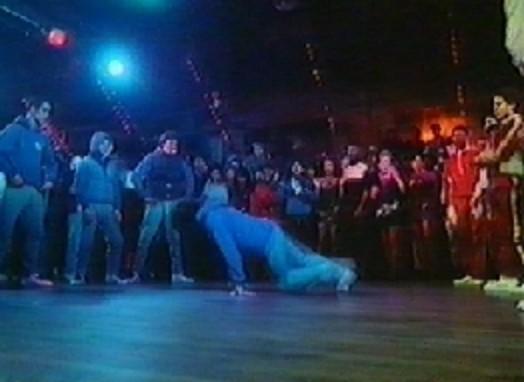
Most New York nightclubs rarely see get past one dance craze before shuttering, their popularity passed to another disposable club. The Roxy, however, kept the mirrorball turning for over 25 years, bringing to light world famous deejays, breakdancing motion pictures, and its biggest claim to fame — roller-disco.

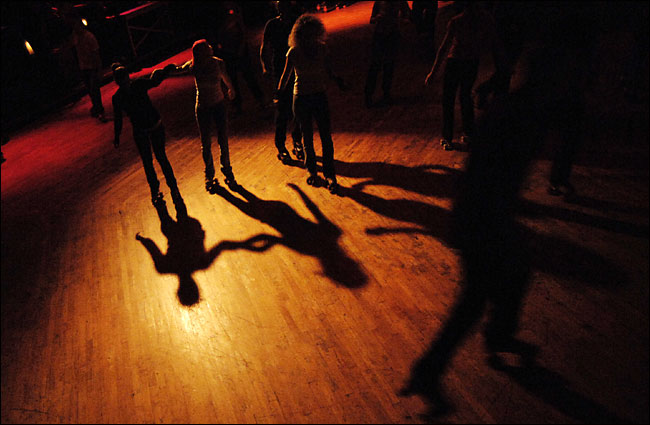
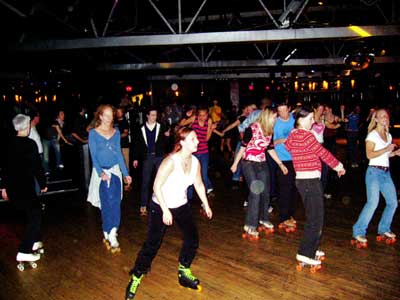
Roller-disco was disco dancing taken to the level of near-sport, tight pants and tube-tops whizzing by to the beat of Donna Summer. The Roxy was one of several roller-discos in late 70s New York, but Roxy was its finest — judging by its nickname ‘the Studio 54 of rollerdisco’ — and was destined to become the last one standing. Owner Steven Greenberg, who would later manage the storied Palladium, turned a 60-year-old warehouse into a hangar-sized fantasia for skaters. With very few other rooms to carry about in, all focus was on the massive floor, filled with people on wheels.

Roller-disco quickly waned, though most of the Roxy’s later history would feature at least one roller night, all the way up to the end. However during the 80s, the Roxy would be chiefly occupied by another dance craze — breakdancing. 

One of the many deejays of this period was Afrika Bambaataa who brought the style and energy of his Zulu Nation into the club. Known for breaking hip hop into white venues and creating the electro-funk sound, Bambaataa remade the Roxy as a centerpiece to freeform early 80s hip hop culture. Go out and rent the pivotal breakdancing film ‘Beat Street’ to see a performance of Bambaataa’s in the Roxy.

The late 80s saw its bleakest phase with a name change and frequent violence from rowdy crowds. It was saved, like so many dance clubs in New York, by the gay community.

New owner Gene DiNino, having experimented unsuccessfully by renaming the Roxy as 1018 (the combination of its cross streets), brought in promoters Lee Chappell and David Leigh and deejay Larry Tee to debut a gay night on Saturdays, one which eventually lasted sixteen years and would help shape from its partygoers the ubiquitous ‘Chelsea boy’ type, an aesthetic of well groomed, tightly muscled bodies squeezed into simple, often nonexistent clothing.

According to ‘Dirty Sexy Money’ star Candis Cayne: “[In the early ’90s] I was a kitty girl selling cigarettes and candy. It was amazing! There were drag queens in flawless costumes they worked all week long, and everyone seemed happy. Roxy is one of those ‘firsts’ kind of clubs—people did things for the first time there.”

The Roxy defined the modern dance music sound of big beats and wailing divas, woven into epic evenings of glittery debauchery. Party promoters such as John Blair and Marc Berkley would amp up the energy with lavish themed parties and deejays known the world over — Victor Calderone, Junior Vasquez, Peter Rauhofer. It was almost imperative for pop stars to sweep through for an ‘improptu’ performance — Beyonce, Cher, and Madonna singing (or syncing) just feet from hundred of frenzied, sweaty fans.

Lest anybody feel they still needed to strap on some roller-skates, never fear. The Roxy still hosted roller-disco one night a week. Skaters made their last pass under the disco ball the week of March 10, 2007. Like everything it seems these days, the Roxy will be turned into luxury condominiums, following the fates of the Tunnel, the Palladium and many other popular 80s and 90s dance spaces.

Categories
Uncategorized

FRIDAY NIGHT FEVER: Bond International Casino


To get you in the mood for the weekend, every Friday we’ll be celebrating ‘FRIDAY NIGHT FEVER’, featuring an old New York nightlife haunt, from the dance halls of 19th Century Bowery, to the massive warehouse spaces of the mid-90s. Past entries can be found here .

Bond International Casino — save for fifteen days back in 1981 — should not really be considered a “legendary” New York nightclub, by any means. But the space it occupies has a fascinating lineage, and as for those fifteen days, well…can any other nightclub in New York claim to have started what is called the ‘Times Square Riot of 1981‘?

The room was christened in the 1930s as the International Casino (the Bond would come in a bit), not a casino at all, but a swanky dinner club and cabaret that could cater up to 1,500 socialites, sipping on champagne while watching exotic shows featuring “novelties from five continents and the beauties of ten countries” on a motorized stage. Ads in 1936 proclaimed: `a Hollywood dream in theatre restaurants.’ Elaborate musical revue at 7.30 and 11.30 P.M. Minimum charge $2.50 — Saturdays $3.50.”

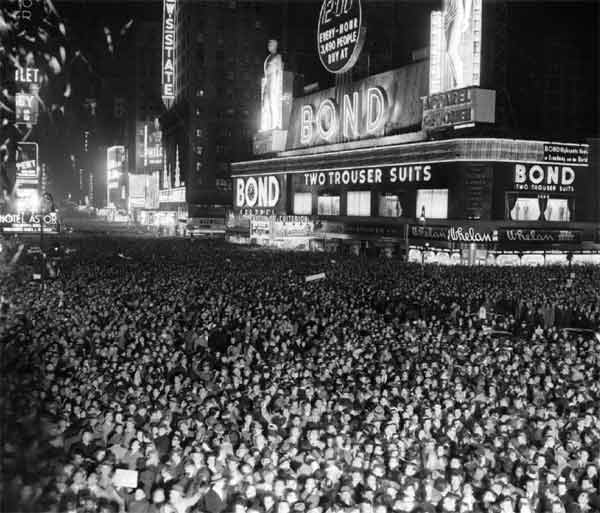
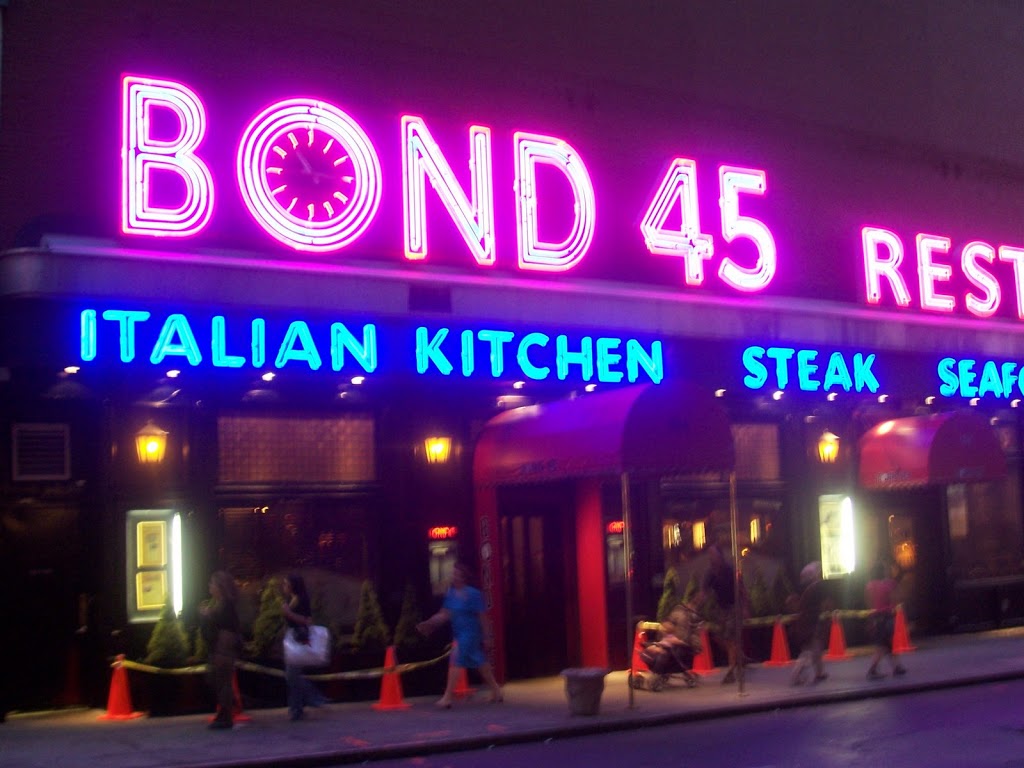
Such luxuriance was not to last, but the dazzle remained, from a most unlikely vector — men’s clothing. Bond Clothes took over the location as a men’s clothing emporium, and chose a flashy facade to match the rooms of garments inside. A huge neon sign held a clock in the O of BOND, alongside a 50-foot man and woman, an electronic waterfall and a news roll zipped along the front — all drenched in electric lights! It all looked especially dazzling at night, as the New York’s Eve ball drop pictures proves below:

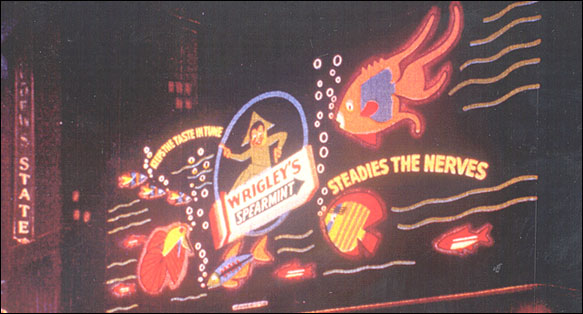
The elaborate sign gave way to a sponsor with bigger trouser pockets — Pepsi — placing gigantic soda bottles where the people once stood. Later the space was given over to a garish yet strangely hypnotic advertisement by Wrigley’s Gum:

The clothing store itself lasted until 1977. Sitting vacant for a couple years — at the true nadir of Times Square, the grit and garishness of 42nd street spilling over — it was finally reopened under a new name, incorporating both its prior incarnations. The ‘International Casino’ returned, the ‘Bond’ sign stayed, and Times Square had its own rock club.

This new incarnation Bond International Casino had interiors, at 9,000 square feet, as theatrical as those in the past. The staircase from the entry level to the dance floor glowed as you stepped on them and played musical notes, not unlike, I suppose, the gigantic piano in the movie Big. The dancefloor, one of the city’s biggest (much bigger than even Studio 54), was overseen by sumptuous on-stage water fountains and inflatable people who hovered above and would fill and deflate to the music.

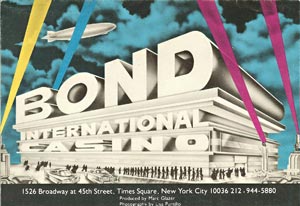
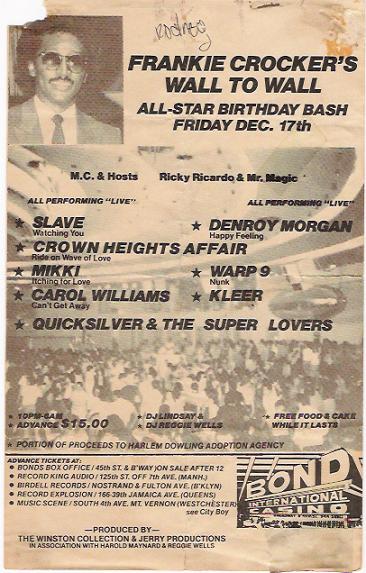
Cream Magazine called it “a shopping mall with bars and a dance floor… and telephone in the men’s room.” Here’s one of their flyers:


In this ad, you can get a sense of what the dance floor must have been like inside:

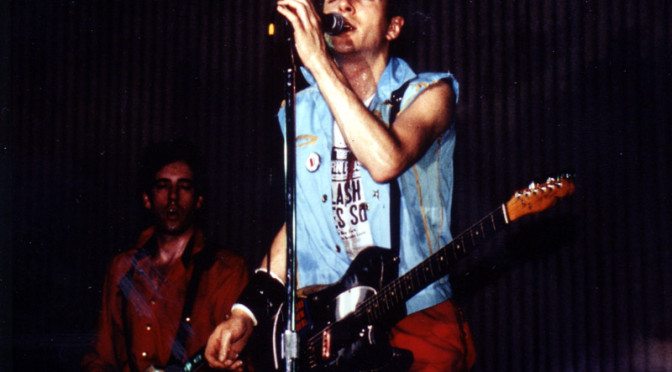
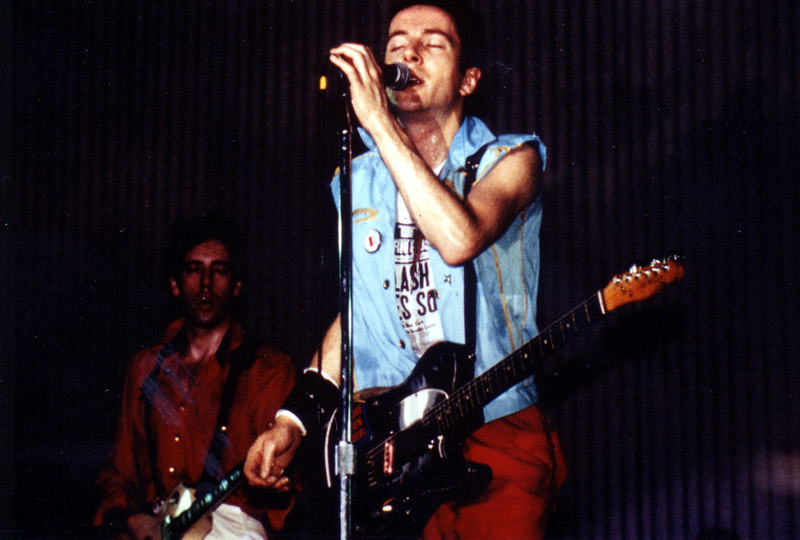
Over the course of its brief foray as a rock venue, Bond would see the likes of Blue Oyster Cult, the Plasmatics, the Dead Kennedys and Blondie. Always a slave to disco on regular nights, however, it would eventually give way to full-time usage as an early ’80s dance floor. But not before it saw The Clash.

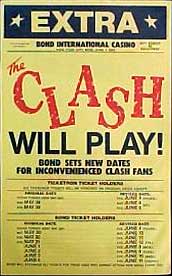
The hot punk group, who had just released one of rock music’s most important records (London Calling) in January 1980, were back in New York to do a series of shows at Bond in May of 1981. Originally they were supposed to play eight nights. The promoters however dangerously oversold the show — 3,500 tickets each night for a venue that could only hold about half that! 


Angry ticket holders rioted outside, filling the streets of Times Square, stopping traffic and drawing dozens of police officers to quell the rage. One website (with lots more information and more history on Bond and ‘the Clash riot’) claims Times Square “hadn’t seen that much commotion since … V-J Day.” The story made international news the next day.

Cream says, “There’s confusion over the numbers game, and inside it’s a sardine sauna. Fire marshalls count 3600 heads leaving the club in what has been a testy evening. Support acts suffered, being booed and hissed by the diehard fans impatient for the arrival of their heroes.”

To assuage the angry ticket holders, The Clash took the unprecedented step of extending their stay at Bond to seventeen shows over fifteen days, to cater to all those ticket holders who were not able to get in. Perhaps stress and the threat of violence and fire brought out the best in the group; the performances are supposedly their best ever, and a bootleg of one of the shows “Live at Bond’s Casino” is considered the finest ‘unofficial’ release in the band’s history. (All seventeen performances are available as bootlegs.)

For those polite enough and lucky (or unlucky? I can’t imagine how unpleasant and scary that club must have been) to have paid attention to the first show, they would have also caught opening act Grandmaster Flash and the Furious Five, the godfathers of rap music. Somebody actually booed them?

Ironically, Bond couldn’t fill the club on any of their other nights, being a discotheque trying to survive in the Reagan ‘disco is dead’ era. In the ’90s, the space was taken over by the Roundabout Theatre Company, who for several years brought some excellent shows into the space. 

It had two stages of different sizes, one classified a Broadway stage, the other off-Broadway. I saw a lot of great shows here back in the day, including Martin Short in ‘Little Me’ and an excellent revival of ‘1776’, starring Star Trek: Next Generation star Brent Spiner as John Adams. After several years, the Roundabout moved their stages to another former disco — Studio 54 — and another location on 42nd Street, the American Airlines Theatre.

Bond has a happy ending however. The space has reopened as Bond 45 restaurant and lounge, recreating the classic sign with some adjustments, and pomping up the front to resemble its ’30s glamour days. Of course, it sits between a Starbucks and a Swatch store, but you can run to the Virgin Megastore literally across the street and pick up some Clash CDs and memorabilia and start your own riot today. (45th Street, between 6th and 7th avenues)

 
Categories
Uncategorized

FRIDAY NIGHT FEVER: 2001 Odyssey

To get you in the mood for the weekend, every Friday we’ll be celebrating ‘FRIDAY NIGHT FEVER’, featuring an old New York nightlife haunt, from the dance halls of 19th Century Bowery, to the massive warehouse spaces of the mid-90s. Past entries can be found here

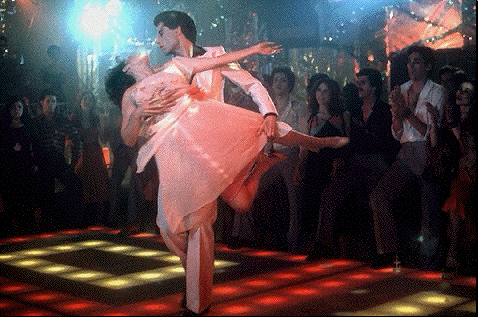
How can I continue to do this series without featuring the most iconic dance floor of all-time, the primary-colored, flashing plastic spectacle from 2001 Odyssey, best known as the dance club from “Saturday Night Fever”?

Recently minted drag queen John Travolta once took his iconic swagger to this club, formerly at 802 64th Street, Bay Ridge, Brooklyn.

That sparkly floor was actually built for the movie. Director John Badham was inspired by a similar floor at a private supper club in Birmingham, Alabama, seen by some Southern residents as a landmark.

However the club itself was a mainstay for disco dancers in the Brooklyn neighborhood, many of whom were brought on as extras in the film.

You can literally say disco saved this club. It was formerly the lounge act stage called the 802 Club that in its heyday spotlighted the likes of Jerry Vale and even Christine Jorgensen in her own cabaret act. Falling on hard times, the owner’s son took over the place, wrapped it in mylar and hung up a disco ball. 2001 Odyssey was ready to disco.

And in the process, it changed disco. On top of starring in the Citizen Kane of dance music films, 2001 Odyssey brought in all sorts of up-and-coming talents to perform, like Gloria Gaynor and the Trammps. The clientele itself defined what we might call one of the ‘disco archetypes’. Or as defined by the owner Chuck Rusinak:

[We used to call them cuigines.] A cuigine is somebody that would wear a huckapoo shirt, a pair of dance shoes. Very secure of himself, a womanizer, a little bit of a tough guy too. “Don’t mess my hair up, otherwise you got a problem. I get a baseball bat.”

If Manhattan disco was drug fueled, glitzy and celebrity driven, the Brooklyn disco scene — led by 2001 Odyssey, L’Amour, and other clubs — was the world of the ‘regular joe’, with the focus more on sex and appearance, less on glamour and notoriety. Or, according to 2001 Odyssey bouncer Vito Bruno:

The guys back in those days, even though they were broke, they were dripping with their gold chains. …. Back in those days, the girls got dressed up. They got decked. The girls liked the tough boys. The toughest, meanest guy always got the girl. It’s kind of like the animal kingdom.”

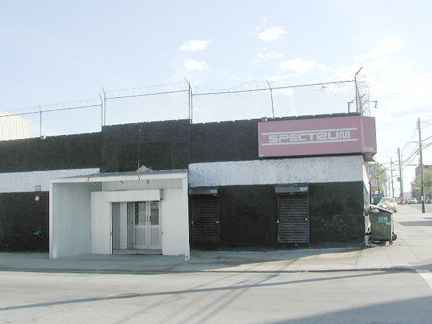
2001 Odyssey wained in the wake of the death of disco, and in the late 80s it became a gay club, Spectrum, which still kept the disco floor but catered to an entirely different audience. It eventually closed in 1995.

And the famous disco floor? The Spectrum tried to auction it off in 2005. (Could you just imagine trying to install it in your living room?) However, the aforementioned bouncer Vito Bruno claims that he won rights to the floor a few months previous, for the whopping sum of $6,000. A judge promptly stopped the auction, and as far as I can tell, Bruno is now the proud owner of a piece of cinema history.

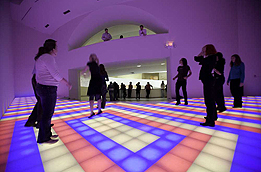
Don’t frown however; you can do your own moves on a very similar floor at the Guggenheim Museum! Their present exhibit The Shape of Space (through Sept 5) features an installation by Piotr UklaÅ„ski — Untitled (Dance Floor)– which emulates, in a far greater color palatte, the legendary dance floor. Needless to say, this is one of the museum’s most popular pieces. (See picture below.)

Nerve does an excellent job in digging up some of the old 2001 Odyssey crew for their recollections of the place. And if youre interested in checking out some other Brooklyn ‘Saturday Night Fever’ locations, check this out.