Categories
Podcasts

PODCAST: McSorley’s Old Ale House

Grab yourself a couple mugs of dark ale and learn about the history of one of New York City’s oldest bars, serving everyone from Abraham Lincoln to John Lennon — and eventually even women!

Listen to it for free on iTunes or other podcasting services. Or you can download or listen to it HERE

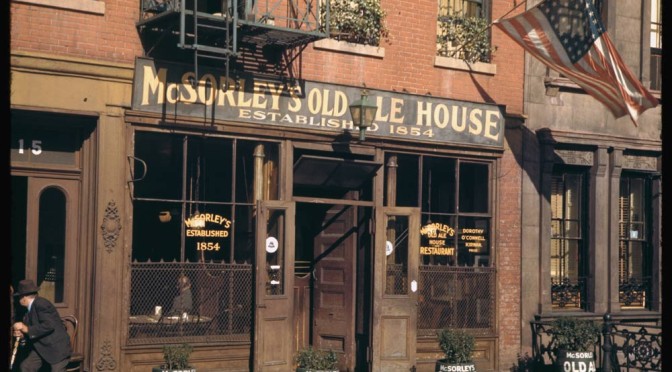
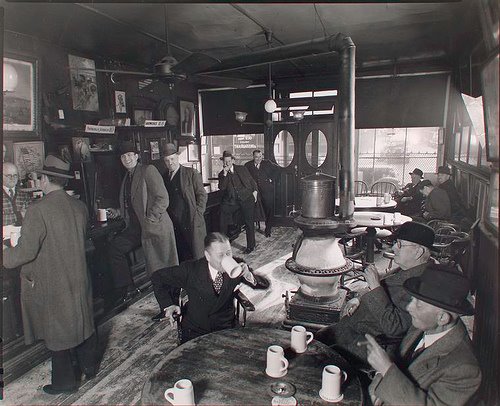
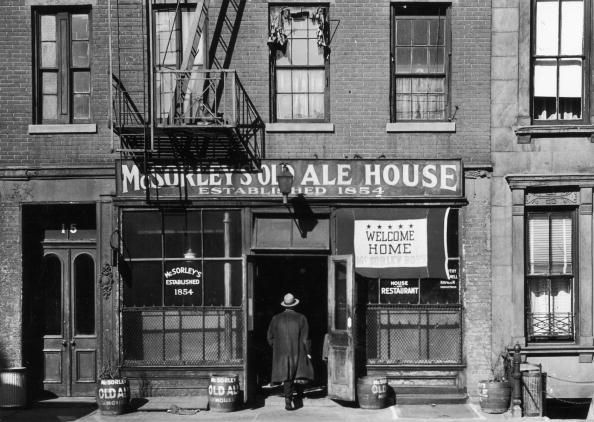
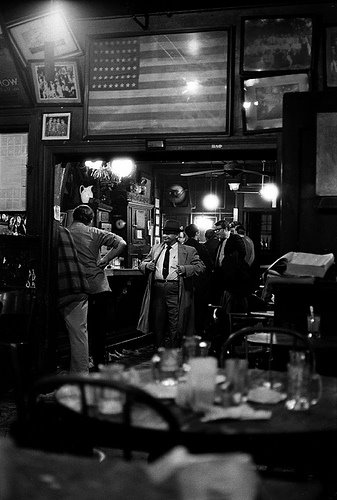
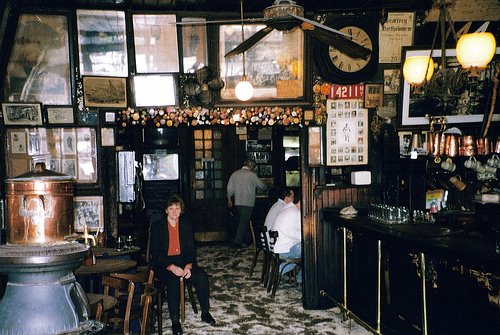
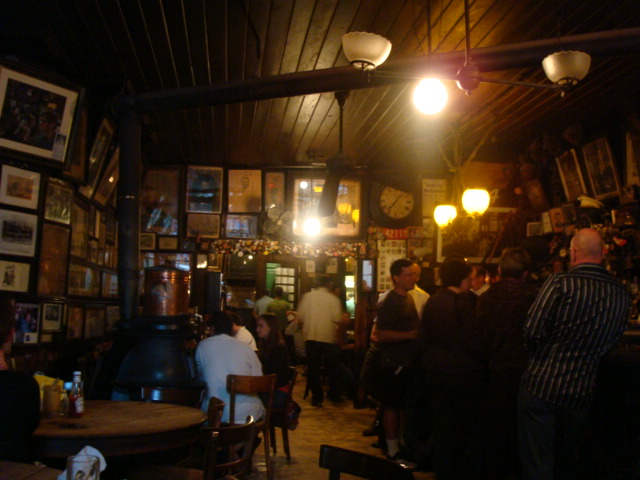
McSorley’s through the ages. Here’s one from 1937:

The outside from 1945

1969:

1998:

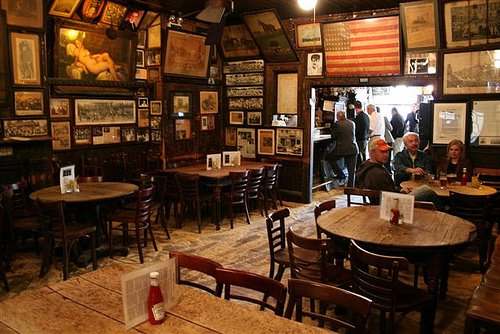
And McSorley’s today

The backroom:

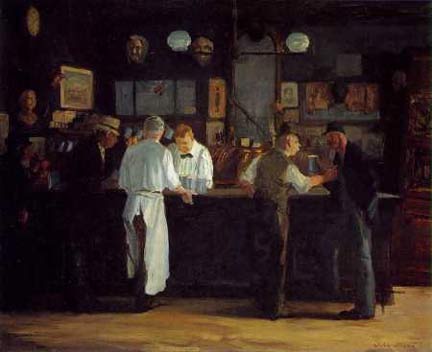
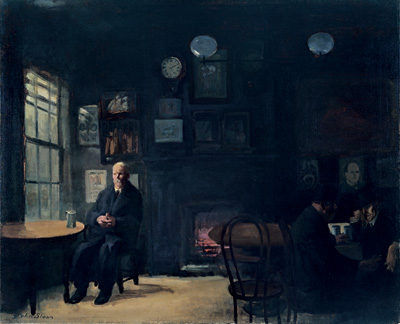
Two of John Sloan’s most famous works, with McSorley’s as its subject:

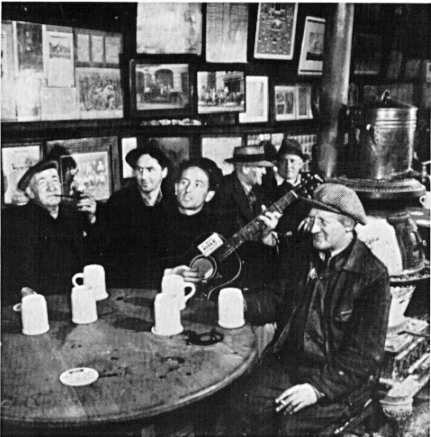
Woody Guthrie hams it up by the coal burning stove.

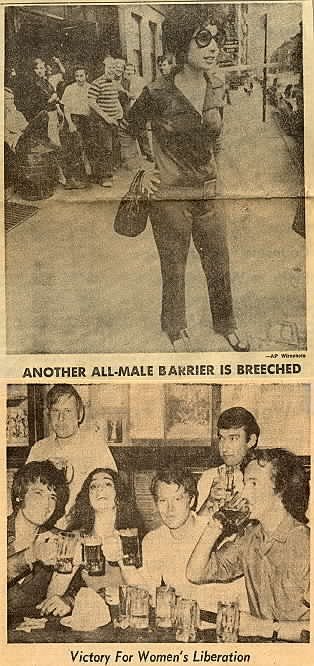
Women win the right to vote: dark ale or light ale!

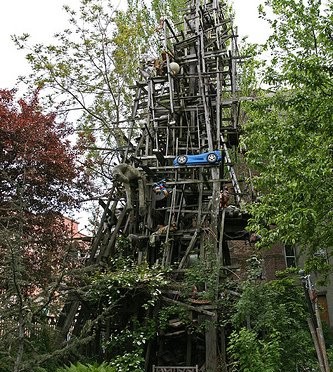
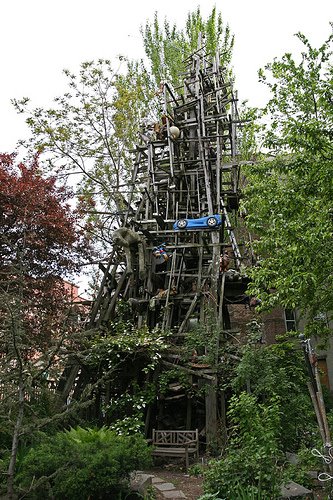
The Eiffel Tower of the East Village: R.I.P.


The East Village is loaded with great buildings, famous homes and pieces of New York’s history that reflect its ethnic diversity. But my favorite landmark has always been the Toy of Towers.

The corner of Avenue B and Sixth Street has looked almost the same as it did when I moved to Manhattan in the early 90s. The same, however, cannot be said of the East Village in general. Although trendy bars and restaurants had begun infiltrating the neighborhood then, it was only modestly gentrified. The East Village still had squatters, “Rent” seemed fresh and different, and ‘Seinfeld’ could still make jokes about Kramer getting lost there, as it if were a different world.

The Eiffel Tower of the East Village was always the peculiar found-art sculpture at the 6th Street Community Garden, a 65-foot tower of toys created by Eddie Boros, who lived a block away for most of his life. The garden opened in 1983, and Boros began building the massive homage to discarded toys a couple years afterwards.

The tower was precarious like the East Village itself, made of junk Boros found around the area and attached in various, sometimes tenuous ways. Dirty toys dangled like hanging fruit; one frequently expected that a teddy bear might fall to its death with a prevailing wind.

Although at first not a neighborhood favorite, it quickly became a beloved fixture. However Boros could only grow the monument so high, and when he died last year, he said he didn’t care if it were preserved or not.

This week, the Parks Department will slowly begin the process of tearing the Tower of Toys down. There was a memorial to the tower on Sunday.

Okay, so maybe it did look a little horrifically dirty. And maybe it would have even collapse at some point. Maybe preserving it was even a little beside the point. But anybody looking for a symbol to the changing character of the city need look no further

FRIDAY NIGHT FEVER: Coyote Ugly Saloon

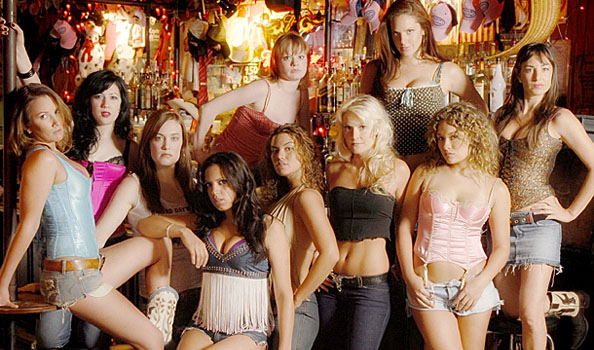
Above: From the official website — the girls of Coyote Ugly

To get you in the mood for the weekend, every Friday we’ll be celebrating ‘FRIDAY NIGHT FEVER’, featuring an old New York nightlife haunt, from the dance halls of 19th Century Bowery, to the massive warehouse spaces of the mid-90s. Past entries can be found HERE.

Studio 54. The Cotton Club. The Copacabana. Coyote Ugly.

If you’re thinking to yourself, “Is this a game of ‘one of these things is not like the other'”, you would be wrong. These four storied institutions have something very key about them — they are the four members of New York nightlife that have been the subject of their very own Hollywood film. (Please email me if I’ve missed any!)

In fact, of the four, only the Copacabana and Coyote had films made about them while the bars themselves were still in operation. The Copacabana film had Groucho Marx and Carmen Miranda. Coyote Ugly has Bud Cort and Leann Rimes.

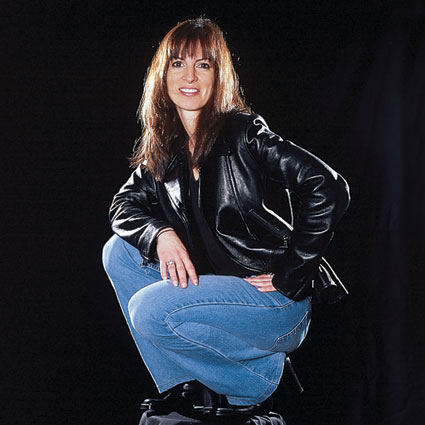
Okay, I may be giving a lot of credit to this East Village saloon, 1st Ave and 9th Street, named after the term for waking up with an unattractive partner after a raucous night of beer-goggled imbibing. But you have to admire the gumption and savvy of its creator Liliana Lovell (pictured below) in turning the traditional notion of a dive bar into a kerosene-soaked, carnival-like Hooters.

In the early 90s, Lovell was a two-jobber — an intern at an investment firm by day, a bartender at The Village Idiot by night. With a degree from NYU in psychology and communications, she soon found bartending more rewarding and lucrative. In particular, she admired the style of Village Idiot owner Tom McNeill; that bar, formerly a block away from the current location of Coyote Ugly, was known for loud 70s country music, swaggering drink contest and pretty bartenders in low cut tops — almost a camp variation on a Southern hard-drinkin’ saloon.

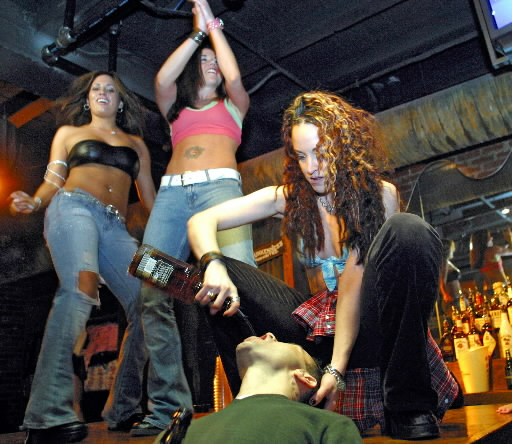
Lovell eventually saved enough to buy an Italian restaurant down the street and refit it with familiar Village Idiot decor but with a twist that would make P.T Barnum blush — a phalanx of female bartenders who could sing, dance and (most importantly) literally blow fire like a sideshow freak. The notion turned mid 90s feminism on its head — a surface objectification of themselves tied into their roles as circus masters — while making a steady profit from frat boys and curiosity seekers.

It would have remained a quaint anomaly of New York college fantasies if not for bartender and writer Elizabeth Gilbert, who turned her experiences into an amusing GQ article that was then quickly spun into a Hollywood feature in 2000, with Maria Bello as playing the brassy, sassy Lovell.

Lovell was quick to take advantage of the films rusty-glam depiction of her establishment. Not exactly the most austere or critically acclaimed concept to begin with, Lovell had no qualms about spinning Coyote Ugly into a franchise, starting (naturally) in Las Vegas in 2001, then to New Orleans in 2003, arguably two places where it could reach its fullest potential.

She’s now up to thirteen locations around the country (and one in Panama City) and thanks to a reality show the Ultimate Coyote Ugly Search, may continue to become America’s feisty madam of flaming cocktails. Although she might have gone corporate, she’s still an East Village institution whenever she’s in town (she lives in New Orleans now). Texas Guinan would be so, so proud.

Categories
Podcasts

PODCAST: Peter Stuyvesant

Back when New York was New Amsterdam, it was the domain of the bullheaded, pear-growing, peglegged Peter Stuyvesant, who cleaned up the city and gave us our most important street. Find out why he still matters and why he’s the king of the East Village.

Listen to it for free on iTunes or other podcasting services. Or you can download or listen to it HERE

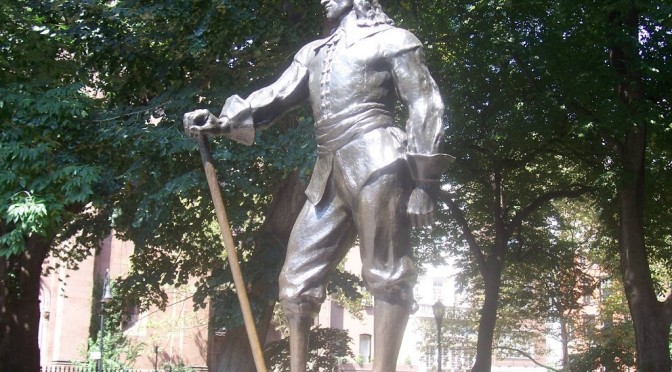
The picture above is of the statue of Peter Stuyvesant, created in 1941 by Gertrude Vanderbilt Whitney (as in the Vanderbilts and the Whitney Museum). Note how its posture and stance cleverly convey Stuyvestant’s stubborn character. (Click the pic to get a closer look at that peg leg.)

The park itself is a beautiful block of greenery lined with old churches and brownstones — and interrupted by 2nd Ave, part of the original design — in the approximate location of the original Stuyvesant family mansion.

Another of the neighborhood’s famous residents is also honored here with a statue nearby and a street named after him — composer Antonin Dvorak, who lived at 327 East 17th Street.
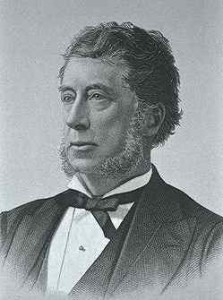
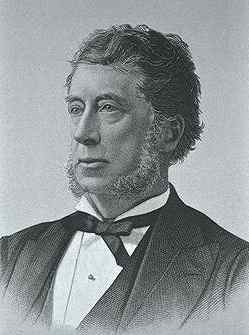
The legacy of Stuyvesant leadership would pass on through the generations. Peter’s great-great-granddaughter Elizabeth took the family in another historically significant direction when she married Revolutionary War hero Nicolas Fish. Their son Hamilton Fish (seen right, named after family friend Alexander Hamilton) would become an influential mayor of New York and later secretary of state under Ulysses S. Grant. Hamilton Fish II, Hamilton Fish III, and Hamilton Fish IV (who died in 1996) would all be New York congressmen. The current Hamilton Fish, we’re up to V I believe, once owned The Nation magazine.

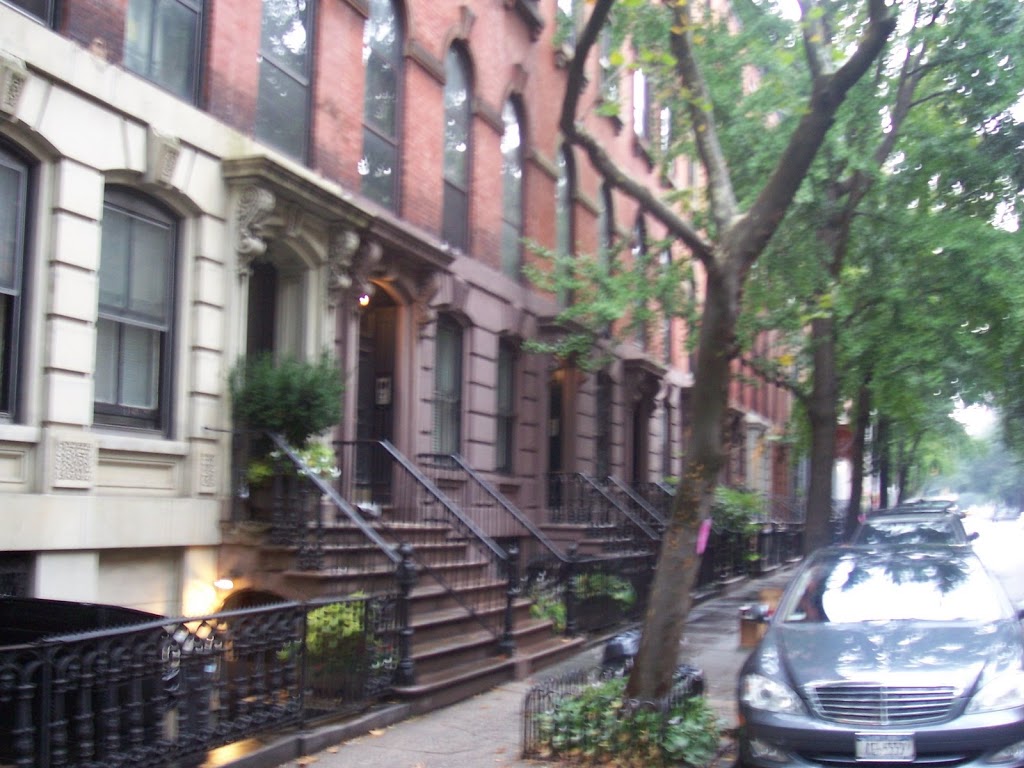
Hamilton I was born in the lovely Stuyvesant-Fish house at 21 Stuyvesant Street. Today its one of the loveliest streets in the East Village.
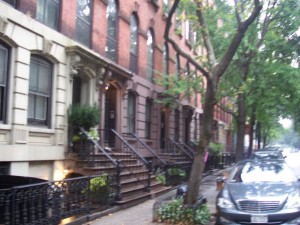
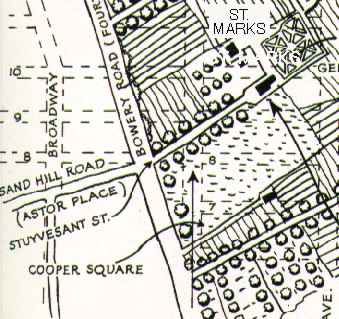
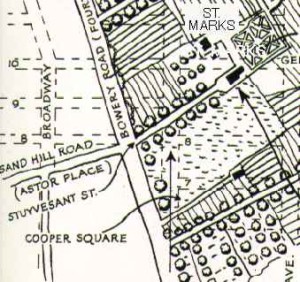
Its odd diagonal through the grid pattern of the Village is a vestige of its original path through Stuyvesant’s old farm.
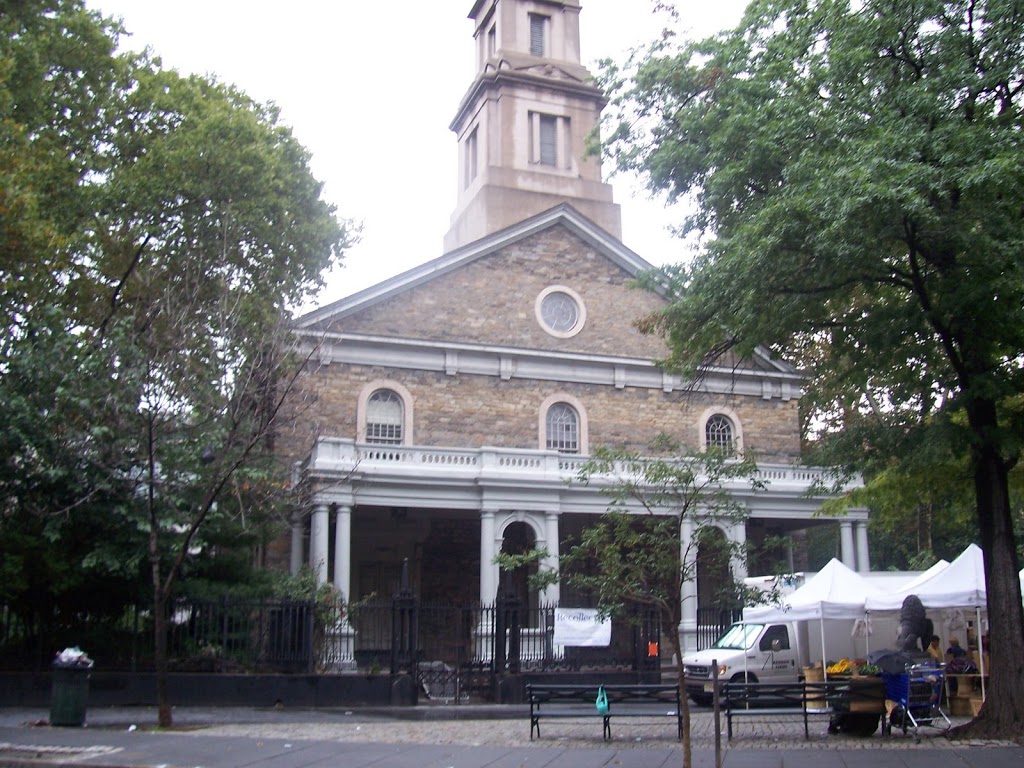
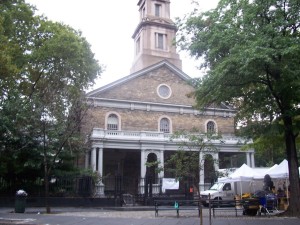
At the end of path, at Second Avenue, is St. Marks-on-the-Bowery, which is aswirl during the weekend with community activities and sometimes a farmer’s market outfront. St Marks contains the crypt of Peter Stuyvesant (marked Petrus Stuyvesant on the stone, to indicate the formalized version of his first name).
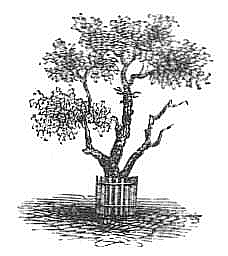
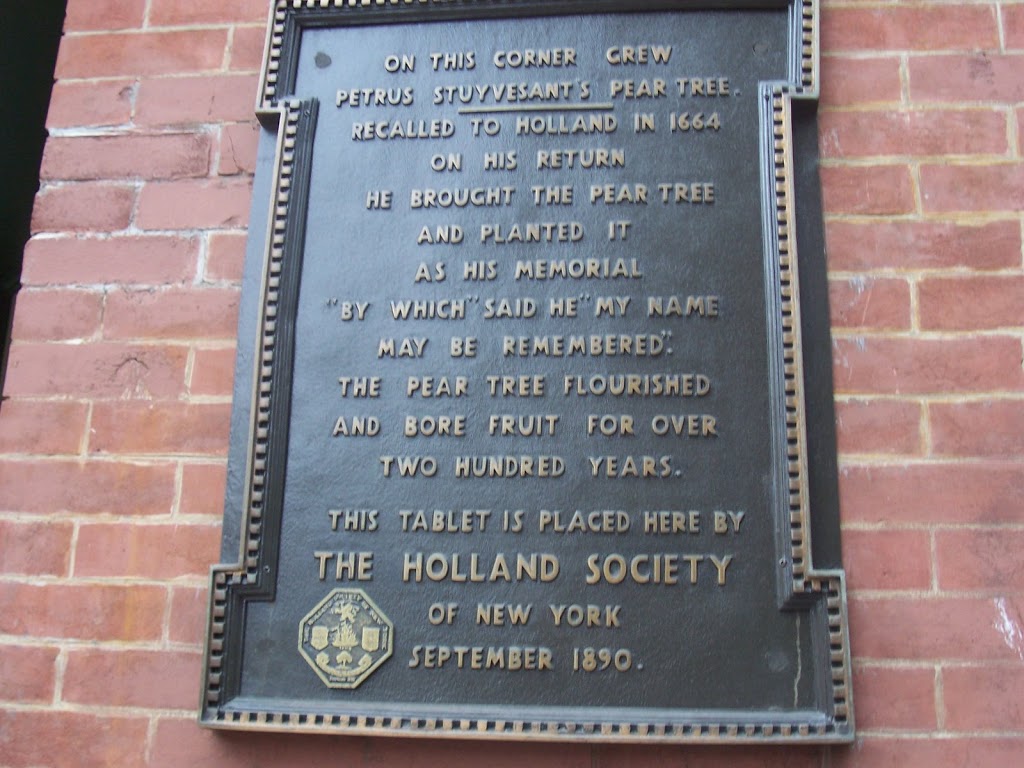
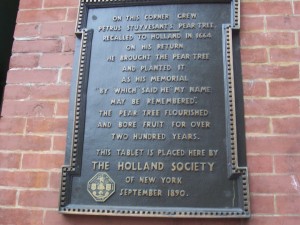
You’ll need to walk a short way to Third Avenue and 13th Street to the plaque honoring the site of Peter’s old pear tree, planted in 1647 from a Dutch seedling, which outlived him by almost two hundred years and drew curiosity seekers from miles around in the mid-19th Century. At the time it was considered the most famous tree in America until it was uprooted by an errant wagon in 1867. (It should be noted that the tree survived the New York Draft Riots, when the neighborhood nearby was in flames.)

Here’s the plaque that hangs in front of Keihl’s. Believe it or not, Keihl’s opened in 1851, the tree standing not far from its doorstep, and John Keihl may have even witnessed the arboreal tragedy. (Click into the picture for a closer look.)
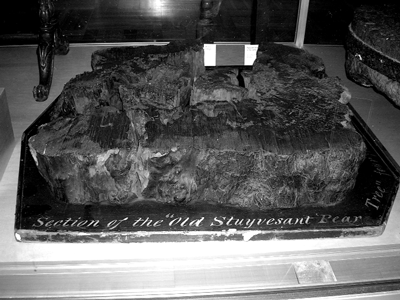
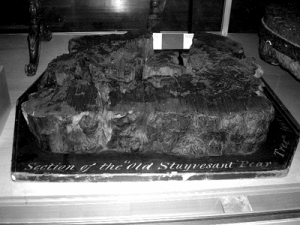
Believe it or not, a slab of the old pear tree can be viewed in the regular collection of the New York Historical Society.
The Stuyvesant family name also pops up in Bedford-Stuyvesant (comprising the Stuyvesant Heights neighborhood), once a cultural mecca for African-Americans, then a former notorious neighborhood — at one time called ‘the world’s biggest ghetto’ — BedStuy has transformed into a ‘hot’ real estate haven, thanks to its many beautiful brownstones. Stuyvesant High School in Battery Park is one of the most revered in the nation (it’s the alumni of several Nobel laureates).