Know Your Mayors: Fernando Wood

Our modest little series about some of the greatest, notorious, most important, even most useless, mayors of New York City. Other entrants in our mayoral survey can be found here.

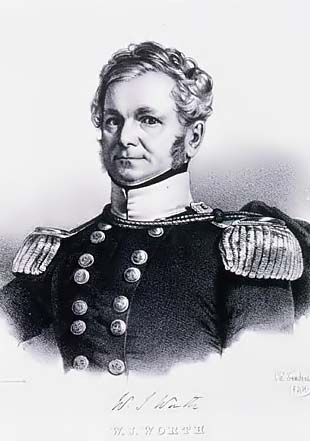
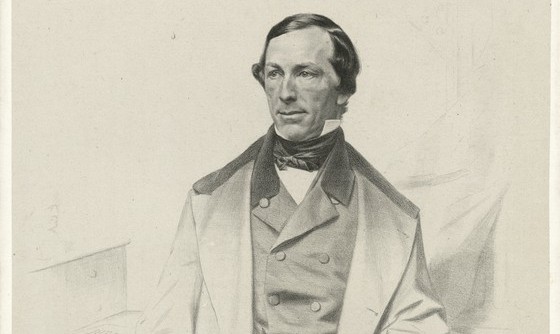
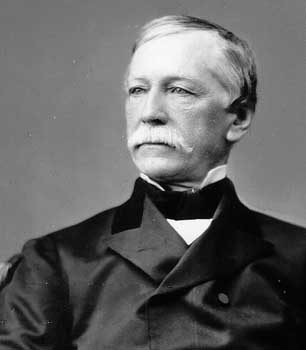
And now we come to one of New York’s most notorious, absolutely in the top 10% of the most corrupt mayors ever in our fair city — Fernando Wood. He was the first mayor ever to be forcibly dragged from City Hall and arrested. Even then, he was elected more than once, was seen at one point as a savior, and even received the unanimous votes of New York City’s dead constituents. We also have him to thank for one of New York’s most treasured landmarks.

The Philadelphia-born Wood had distinguished himself as a former merchant and then as a member of Congress from 1841-43. His meteoric rise came through the assistance of Tammany Society, the frequently corrupt Democratic machine which all but dominated New York politics. By 1855, the year Tammany placed Wood in the mayoral seat, the Society was at the height of their control.

During his first term, 1855–1858, he was initially seen as a moral reformer, who “closed saloons on Sunday, suppressed brothels, gambling houses and rowdism, [and] had the streets cleaned” according to Tammany historian Gustavus Myers.

But these tokens of fortitude were a facade to extort support from those very vice industries. By 1856, he abolished the Sunday saloon restriction in exchange for their support. The Municipal Police Force under Wood became corroded with graft and bribery, at times more fearful than the crime they were purportedly there to eliminate.

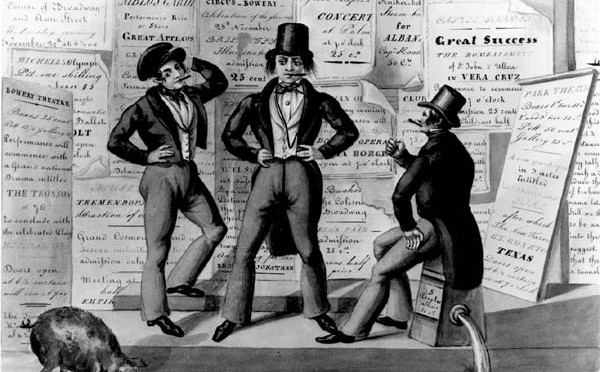
So it should come as no surprise that even nativist gangs like the Dead Rabbits were soon under Wood’s control, ensuring ‘fair’ elections — fair for Wood, that is — by destroying ballot boxes, tossing others into the river and even tallying votes from lists of voters in cemeteries. It helped that rival gangs like the Bowery Boys (the gang, not us) were in the pockets of the Republicans.
Fed up with New York’s culture of corrupt law enforcement, in 1857 the state legislature formed a rival police force the Metropolitan Police Force. Wood’s Municipal force, fat from its complex institution of graft that essentially left crime to fester unabated, were not interested in stepping aside, nor did Wood relinquish his power to the Republican-controlled state. When Albany-appointed State Commissioner Daniel Conover arrived at City Hall, Wood promptly threw him out. (Wood had hired his own state commissioner, Charles Devlin, who bought the position for $50,000.)

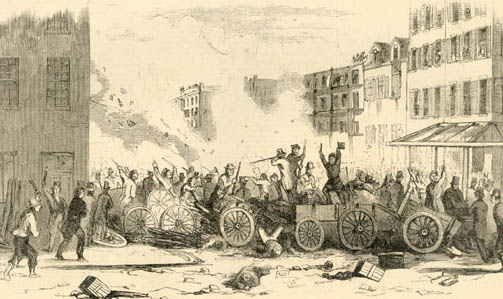
Conover returned with the Metropolitan police force and a warrant for Wood’s arrest. Wood’s Municipal men were waiting, and when the captain grabbed Wood and began dragging him from City Hall, the Municipal men pounced.

Soon Metropolitan police were battling Municipal men, a surreal conflict now known as the Police Riots of 1857. With the assistance of the National Guard, Wood was briefly arrested. The Metropolitans eventually disbanded, but not before a chaotic summer of two rival police forces, cancelling each others arrests and raiding each other jails. Ah, it was a great time to be a knife-wielding gang member. *sigh*

Disagreements with Tammany left Wood without his primary backers and out of office in 1858. (Industrialist Daniel Tiemann was mayor from then until 1860.) But under the aegis of a new political machine, called Mozart Hall, he swept back into office for another two year term.
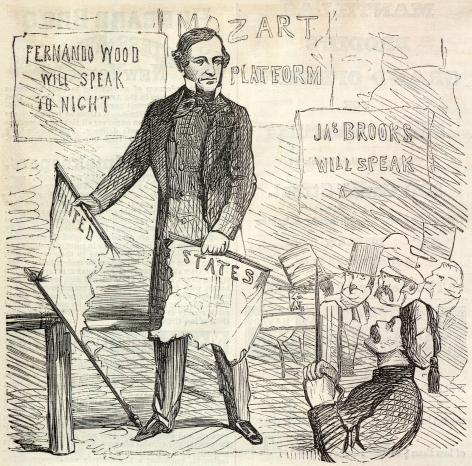
This time, his allegiances took on a Confederate tenor. A sympathizer with the Southern cause, especially as New York’s profits as a port city were tied closely to Southern plantations, Wood suggested that New York City secede with the South. In his official recommendation, he proclaims, “Amid the gloom which the present and prospective condition of things must cast over the country, New York, as a Free City, may shed the only light and hope of a future reconstruction of our once blessed Confederacy.”

“With our aggrieved brethren of the Slave States, we have friendly relations and a common sympathy,” he remarked, in statements made January 6, 1961.

He also had a prescient idea for all the wrong reasons — to merge Manhattan, Staten Island and Long Island into a new independent commonwealth, known as the Free City of Tri-Insula. Had Wood gotten his way — and his plan was greeted warmly by the corrupt Common Council — the city might have joined the South. Less than forty years later, of course, similar consolidation plans (with less anarchic pretentions) prevailed.

Unfortunately for his grandiose schemes, the Civil War erupted in April of that year at Fort Sumter and a huge outpouring of support in New York soon swept Wood’s ideas into obscurity. In fact, being a crafty politician, he was soon organizing troops for the Union cause, the eventual result of which would soon lead to New York’s draft riots in 1863.

By then, however, Wood was out of the mayoral office and onto other pastures — namely the U.S. House of Representatives. How this man could have been elected with his track record is personally beyond me, but thus is the way of the New York political machine.

He did, however, leave us with one lasting mark on the city — the present-day location of Central Park.
Categories
Podcasts

PODCAST: The Original Bowery Boys / B’hoys

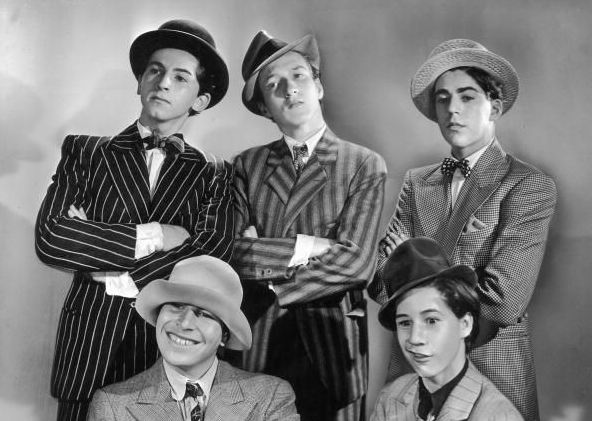
For our very special 25th episode, we give you all sorts of Bowery boys — the cultural and fashion trend of the 1840s, the notorious enemy of the Five Points gangs, and that slapstick bunch of New York actors from the 1930s and 1940s. And of course, a little bit about us!

LISTEN HERE:

The Bowery Boys, on their way to battle the Dead Rabbits (or is that the Roach Guards?)

The ‘Dead End Kids’, circa 1938, fresh from their fame in ‘Dead End’ and ‘Angels With Dirty Faces’

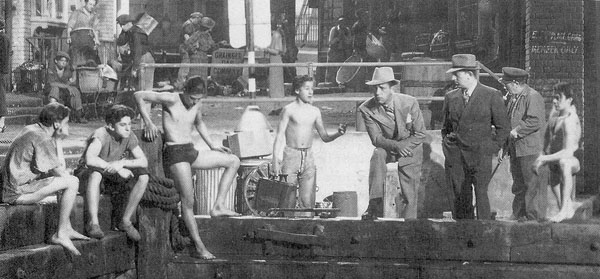
From the film ‘Dead End’

FRIDAY NIGHT FEVER: Hole-In-The-Wall

To get you in the mood for the weekend, every Friday we’ll be celebrating ‘FRIDAY NIGHT FEVER’, featuring an old New York nightlife haunt, from the dance halls of 19th Century Bowery, to the massive warehouse spaces of the mid-90s. Past entries can be found HERE.

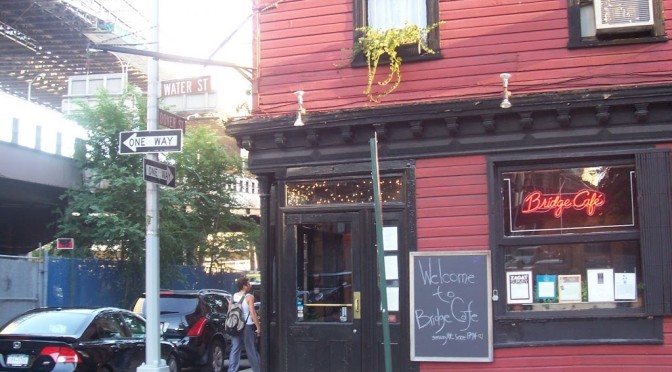
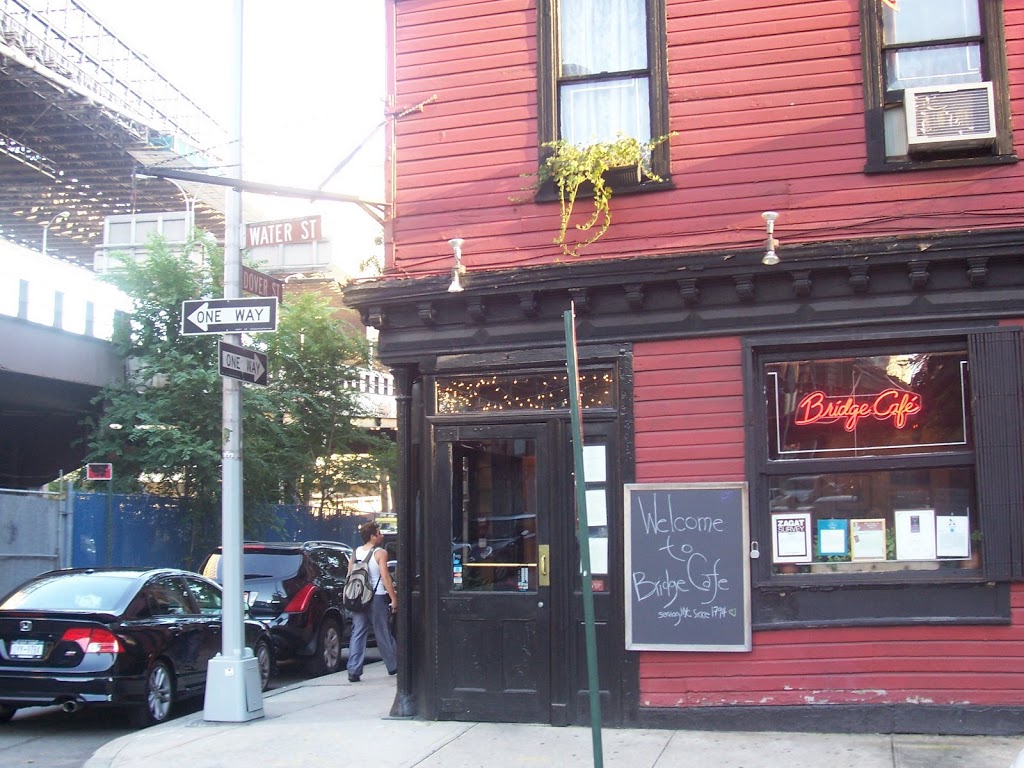
The Bridge Cafe, a quiet bar and brunch destination underneath the Brooklyn Bridge at the corner of Water and Dover streets, has a storied legacy as the oldest tavern in New York City. Although it does take a bit of imagination to envision the red wooden building as former home to the most despicable, most vile and — let’s face it — most fabulous characters in our fair city’s history.

The legend of the Hole In The Wall derives mostly from one place — Herbert Asbury’s infamous ‘Gangs of New York’, a dastardly inspection of New York’s 19th century criminal lowlifes and squalor. As such, given the books fanciful and exagerrated nature, you can’t exactly use it as faithful reference. When journalist Richard McDermott began doing research on the Bridge’s background, he didn’t even find the Hole In The Wall.

What he did discover was a tradition of booze swilling that began with a ‘wine and porter bottler’ in 1794. It was followed by a grocery — one that I guess technically sold liquor, thus keeping the ‘oldest tavern’ title precariously intact. But the date 1826 is most significant as the establishment fell into the hands of Charles G. Ferris, an attorney who leased the property to a host of saloons.

And there were patrons aplenty, for this was New York’s dangerous Fourth Ward; in particular, Water Street was festooned with brothels, boarding houses, dance halls and watering holes. In 1866, writer Bayard Taylor referred to it as “the only rival of the Sixth in its triple distinction of filth, poverty, and vice.” (The Sixth being the Five Points slum, about a half mile away.) ‘On The Town in New York’ by Michael Batterberry says, “Generally speaking, Water Street was a thoroughfare of vice and iniquity to challenge the imagination of the most graphic Victorian preacher.”

So although little evidence remains of a Hole In The Wall in the precise vicinity of the Bridge Cafe, it’s extremely likely such a place existed.

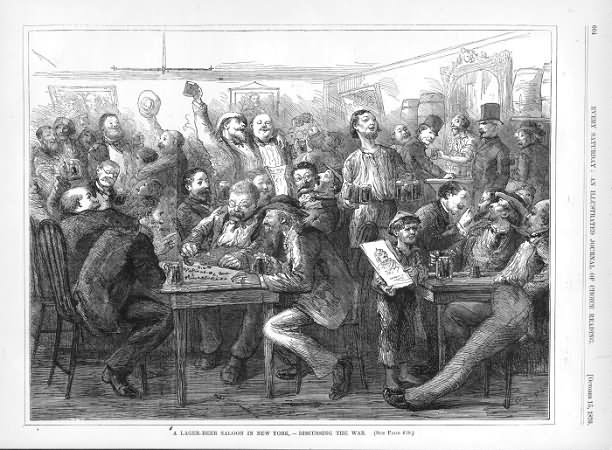
(The picture below is not of Hole In The Wall, or of any particular Water Street saloon, but a print of a New York ‘lager-beer saloon’ from 1870. Sorry, there aren’t a lot of photographic options from this period of time!)

Few tavern staffs today could compare to those of Hole In The Wall’s proprietor ‘One-Armed’ Charley Monell. We’re assuming that sobriquet wasn’t just a cute nickname. For security, he relied on two lovely ladies by the names of Kate Flannery and scrappy Gallus Mag. No ordinary bouncer, Mag kept a pistol at her waist, a club at her side and for good measure sharpened her teeth like a rodent. This was not just a fashion statement; she would need such sharpened incisors for when she would bite off the ears of unruly patrons, spraying blood with delight as she deposited the ear into a gigantic jar behind the bar. (Mag is immortalized in the film version of ‘Gangs of New York’ as well as virtually tributed in every horror movie from ‘Texas Chainsaw Massacre’ onward.)

Gallus (a word for men’s suspenders, which she would frequently wear) wasn’t always so cruel. After chewing off the ear of a female rival named Patsy the Goat, she later gave the body part back after the two mended ways. It’s a plot right out of ‘Sex And The City’, I tells ya.

Sex, sinful dancing and swill — sometimes drank right out of the spout for a small price — were orders of the day on Water Street, as was murder. The most famous brawl in perhaps all of Water Street occurred here between two thugs named Patsy the Barber and Slobbery Jim, both probably teenagers or in their early 20s. They were members of the gang the Daybreak Boys (ahem, I’m sure they were no match for the Bowery Boys), responsible for dozens of deaths in downtown Manhattan in the 1850s.

One day, Patsy and Slobbery casually robbed and killed a German and threw him into the East River. Settling down at Hole In The Wall with their booty (all of twelve cents), the pair fought over the amount, with Jim thinking he deserved more as he did single-handedly throw him into the river. 

Soon the boys were brawling, Mag and Charley stepping back to watch it play out. Patsy had a knife and stuck it into Jim; the knife changed hands and was soon lodged into Patsy’s throat. Patsy passed out from blood loss, and Jim finished the performance by stomping into his partner until he expired. Ten years later Slobbery would enlist in the Confederate Army.

According to Asbury, the Hole In The Wall was permanently closed after a string of seven murders were committed there in less than two months. However, if Bridge Cafe is indeed the former home of Hole In The Wall, it clearly didn’t stay closed for long. It passed through the hands of several saloon owners, including a city alderman Jeremiah J. Cronin in 1898. Even Prohibition couldn’t dry it out; a restaurant in the ’20s served beer on the down low from bootlegger Charlie Brennan.

The current incarnation opened in 1979 and was a favorite of former mayor Ed Koch. Today you can have a good brunch there and just stare down at the floor, picturing Patsy the Barber, pools of blood and a few loose ears lying around.

Worth Square: Madison Square’s cemetery for one

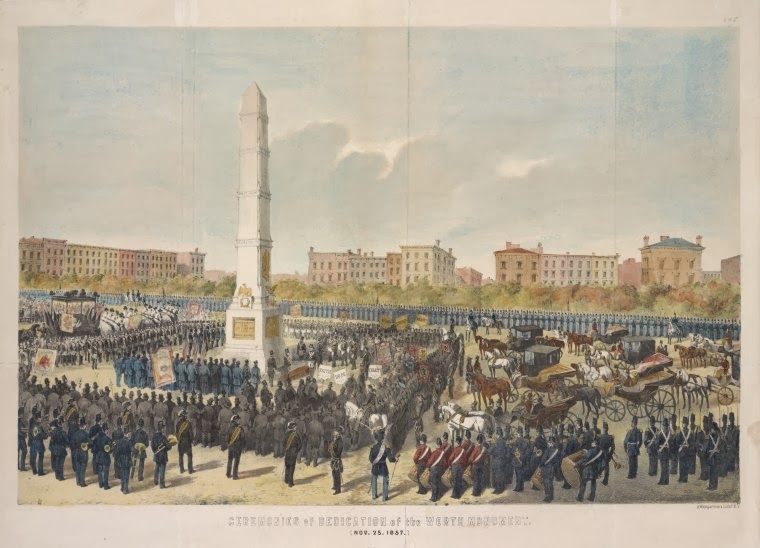
As you can tell from this lithograph of the Worth Monument dedication in 1857, it predates most of the development that surrounds it today. (NYPL)

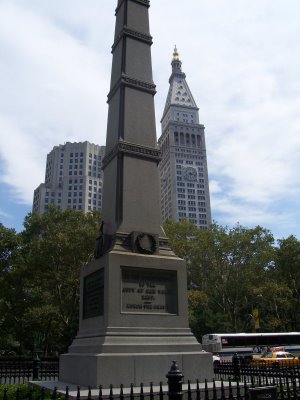
 Few Americans have been so honored by their country that their remains have been buried in the middle of the most famous street in America in their own personal cemetery.

William Jenkins Worth can say that. According to Roadside America, Worth’s is one of only three private graves in all of New York City.  Although exactly why he’s been singled out with this particular honor is a bit obscure.

Worth Square, next to Madison Square and just feet from the Flatiron Building, is one of those odd traffic islands that’s hardly a place of peace and repose.  Broadway and Fifth Avenue rush by on either side and the traffic of 23rd street hurls by on its south side.  But it’s here that a monument stands in honor of Worth, a general in the oft-forgotten Mexican-American War, which won for the United States the state of Texas and, eventually, President George W. Bush.

Worth served admirably in many battles of the conflict, becoming the first general in American military history to engage off the shores of Veracruz in ‘amphibious warfare’ — namely, the strategic usage of approaches from the water to engage in combat on land.  In 1847 he also personally hoisted the American flag above the palace in Mexico City after the US’s victorious conquest there.

Within two years he would be dead of cholera, transported to Brooklyn and buried in Greenwood Cemetery, the hotspot for dead celebrities in the 19th century.  A few years later, he was dug up, brought to Manhattan, and buried at this unusual spot underneath an impressive obelisk designed by James Batterson (later to be the go-to guy for Civil War monuments).  Forgotten NY says that the iron rod gate surrounding this solemn monument is a revered example of iron craftsmanship.

Worth’s remains were placed here in a solemn ceremony on November 25, 1857, involving almost 6,500 soldiers in march. Etched upon the monument is a listing of all the many battle Worth fought in.

Worth was born in Hudson, NY, and briefly moved to Albany, but he has no meaningful connection to New York City.  Although I have found no definite conclusion as to why he’s buried here, a couple points to consider don’t make it seem so odd:

— Worth served under then-general Zachary Taylor at the start of the Mexican-American War.  By the time Worth died, Taylor was the President of the United States.  Certainly some political favoritism was at play.

— The monument’s location was considered peaceful at one time. Adjacent Madison Square opened two years prior and the building boom that would give us Flatiron, the Met Life Tower and the other beautiful buildings surrounding the park wouldn’t occur for decades.  The obelisk would have towered over everything.  It would have truly been a sincere honor to be placed here.

The respect New Yorkers had Worth extended downtown to Worth Street, which was, incidentally, one of the five streets intersecting to create the notorious Five Points district.  Another of the Five Points intersection streets — Baxter Street — is named after Charles Baxter, who died in the Mexican-American War. Another example of a well-meaning gesture of honor distorted by the realities of urban growth.