Categories
Newspapers and Newsies Podcasts

The Trial of John Peter Zenger: New York and the Birth of the Freedom of the Press

A long, long time ago in New York — in the 1730s, back when the city was a holding of the British, with a little over 10,000 inhabitants — a German printer named John Peter Zenger decided to print a four-page newspaper called the New York Weekly Journal.

 This is pretty remarkable in itself, as there was only one other newspaper in town called the New York Gazette, an organ of the British crown and the governor of the colony. (Equally remarkable: Benjamin Franklin almost worked there!)

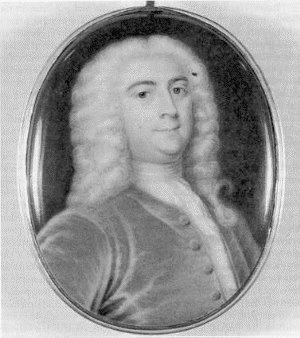
But Zenger’s paper would call to question the actions of that governor, a virtual despot named William Cosby (at right), and in so doing, set in motion an historic trial that marked a triumph for liberty and modern democratic rights, including freedom of the press and the power of jury nullification.

This entire story takes place in lower Manhattan, and most of it on a couple floors of old New York City Hall at Wall Street and Nassau Street. Many years later, this spot would see the first American government and the inauguration of George Washington.

But many could argue that the trial that occurs here on August 4, 1735, is equally important to the causes of democracy and a free press.

LISTEN NOW: THE TRIAL OF JOHN PETER ZENGER


CORRECTION: I can’t read my Olde English very well.  In reading from a page of the New-York Weekly Journal, I inadvertently say ‘Fulgom Panagenics’ instead of ‘Fulsom Panagenics’. Fulgom is not a word, fulsom(e) is, meaning very complimentary or flattering.
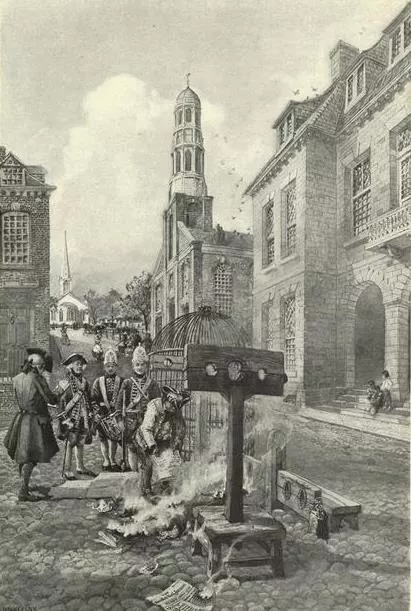

The burning of John Peter Zenger’s ‘New York Weekly Journal’ in Wall Street on November 6, 1734.

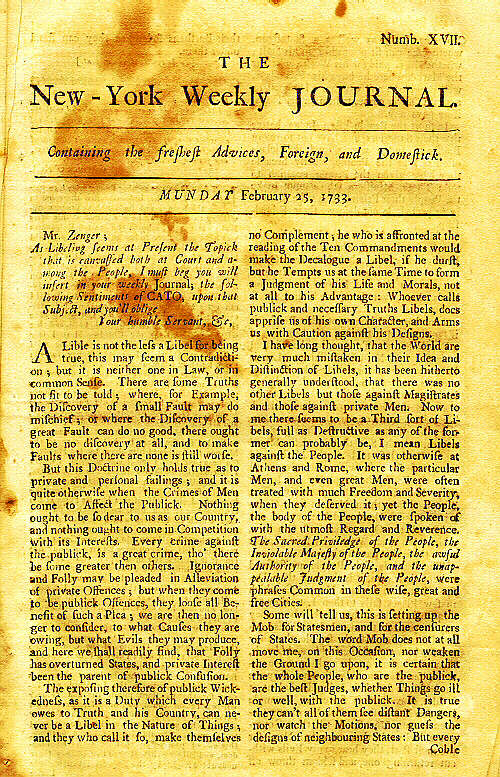
A stained copy of the New-York Weekly Journal from 1733
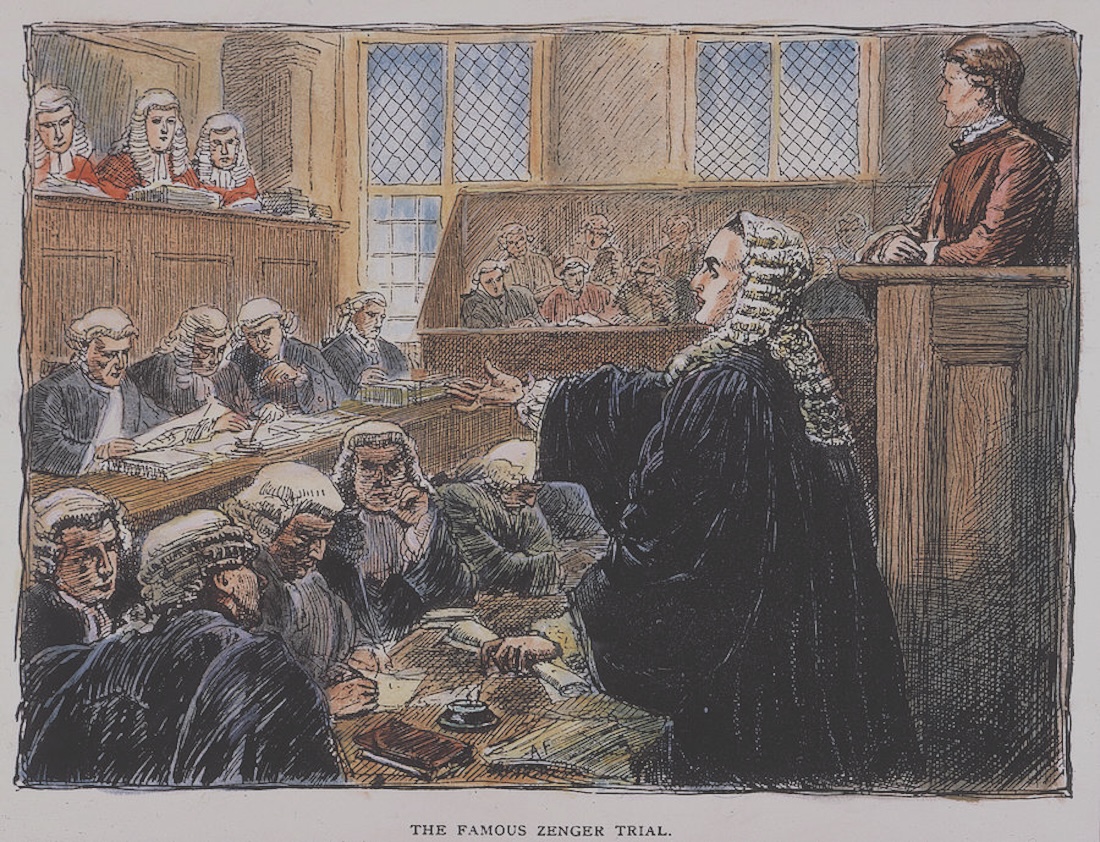
 Andrew Hamilton, the lawyer who saved the day in the John Peter Zenger trial. His eloquence and command of language helped win the day for lovers of free press.
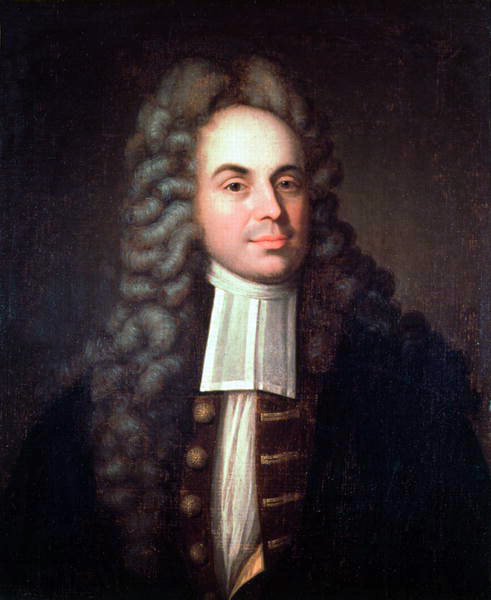
Adolf Ulrik Wertmüller – Portrait of Andrew Hamilton (1808).

New York’s first newspaper — the Gazette


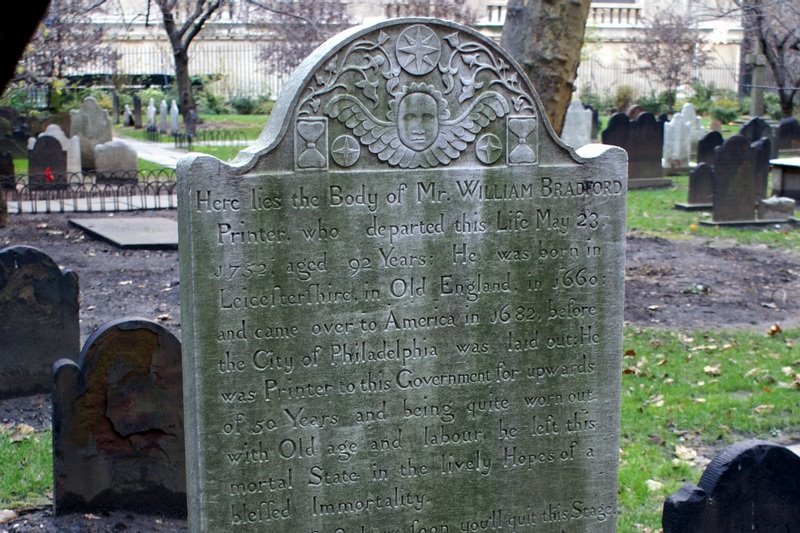
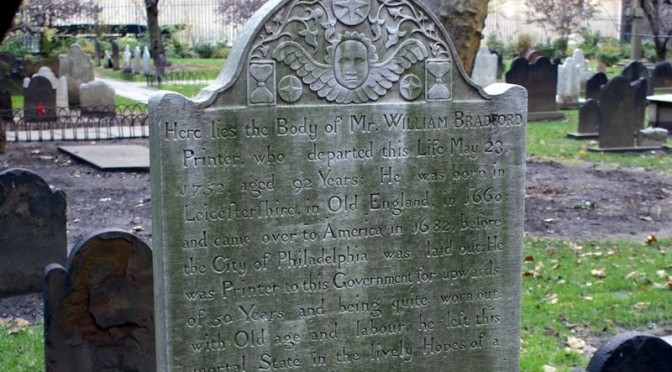
The Trinity Church grave marker of William Bradford, publisher of the New York Gazette.

Dusting off the cobwebs of your high school history curriculum, you might remember the tale of John Peter Zenger, the publisher of the New York Weekly Journal whose libel trial in 1735 marked the beginning of the American discussion of freedom of the press. However, if you were to remember the Journal as New York’s very first newspaper, you would be close, but wrong.

The German-born Zenger came to America in 1710 when he was 13 years old and quickly became an apprentice in the shops of William Bradford, public printer of the New York colony and the city’s best known — and, oh yes, only — real printer at the time. (It was so easy to climb the corporate ladder back in those days.)

The Quaker Bradford was a mouthpiece for the crown but had exhibited a rambunctuous side when he first settled in the spanking new town of Philadelphia in 1682. He was scandalized by the spiritual wanderings of the Quakers farther north in New England and published the political treatise of critic George David effectively denouncing them. For that he was jailed and his printing press taken away.

As a New Yorker, he was far better behaved. At his new press near Fort William (that’s the former Fort Amsterdam and the current site of the Custom House), Bradford took Zenger on as a partner and on November 8, 1725, published Manhattan’s very first newspaper — the New York Gazette.

It was an unspectacular piece of journalism. Author Frank Luther Mott describes it as a “small two-page paper, poorly printed, and containing chiefly foreign news from three to six months old, state papers, lists of ships entered and cleared, and a few advertisements.”

Bradford would continue publishing the Gazette until 1744, never wavering from official crown duties. (The colony would see many newspapers named the New York Gazette over the proceeding years.) But Zenger would start his own press in 1726 and would spawn the Weekly Journal in 1733, which would go on to criticize the oppressive policies of governor William Cosby (pictured above), who Zenger documents as infringing on the “liberties and properties” of the New York colonists.

Meanwhile, Cosby had installed a censor at the Gazette and, apparently, commanded heroic sonnets be published about him, such as this one:

“Cosby the mild, the happy, good and great,
The strongest guard of our little state;
….
He unconcerned will let the wretches roar,
And govern just, as others did before.”

So naturally, that same year Cosby accused Zenger of libel in the very pages of the Gazette, an accusatioin that eventually led to Zenger’s landmark trial in 1735 and eventual acquital.

By the way, believe it or not, you can visit William Bradford. He’s buried at Trinity Church. As for John Peter Zenger, it is believed that he too may also be buried at Trinity — but in an unmarked grave!