For more information on the history of Times Square’s New Year’s celebrations, listen to our show A New Year In Old New York:
One hundred years ago, Americans rang in the new year in an entirely new way — without legal liquor.
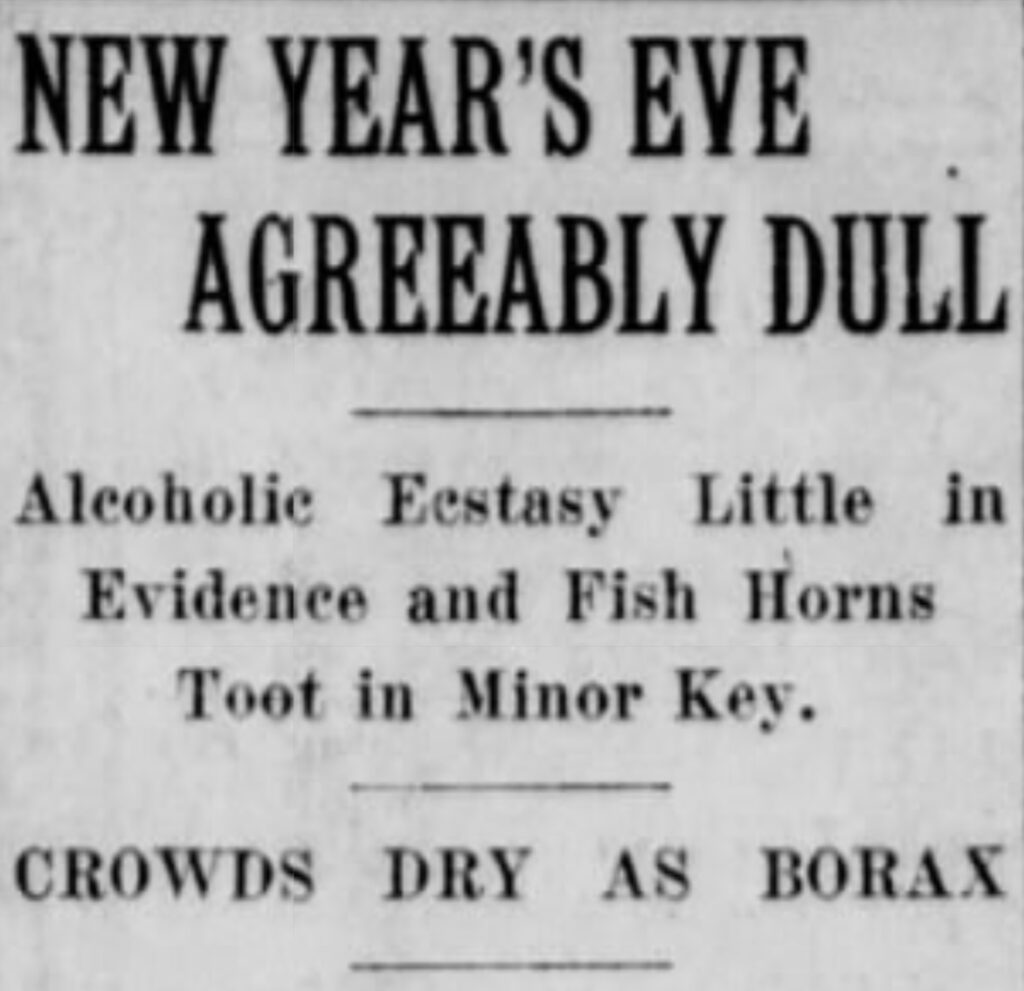
“New Year’s Eve Agreeably Dull,” declared the New York Herald. “Sober Crowds Jam Streets of City on New Year’s Eve,” observed the New York Times.
But look more closely and you’ll find the mad revelry was still there, sequestered in hotel rooms, brandished by defiant saloons or tucked away in a coat pocket.
The Eighteenth Amendment, prohibiting the production and sale of alcohol in the United States, had actually gone into effect almost 12 months before — on January 17, 1920.
Partygoers welcoming in the year 1920 knew that access to liquor would soon be shut down courtesy the Volstead Act, the law that enforced the new amendment.
According to the New York Herald, “A year ago the stuff could be toted around with perfect legality and in the course of the revelry thousands of bottles of it were given away to diners by restaurant men who took prohibition seriously and now curse their folly.”
Why “curse their folly”? Over the past eleven months, liquor manufacturing and distribution had gone underground.
The thirst for alcohol simply became more discrete. And hotels and restaurants could now charge extra for their secretive stashes of wine and champagne. (Not to mention their Manhattans and martinis.)
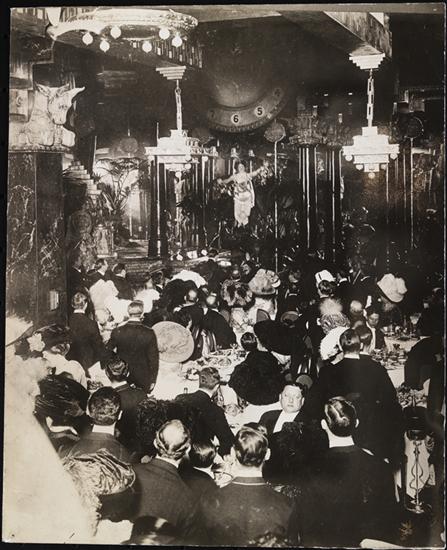
And so the last hours of 1920 saw the birth of an entirely different party — where the added element of secrecy and lawbreaking added a new, wilder dimension for many.
The new style of revelry become obvious early in the evening. Oddly enough, Prohibition killed off more conservative celebrations where the crowds tended to be older and speakeasies less available. Without champagne, what was the point of braving a crowd?
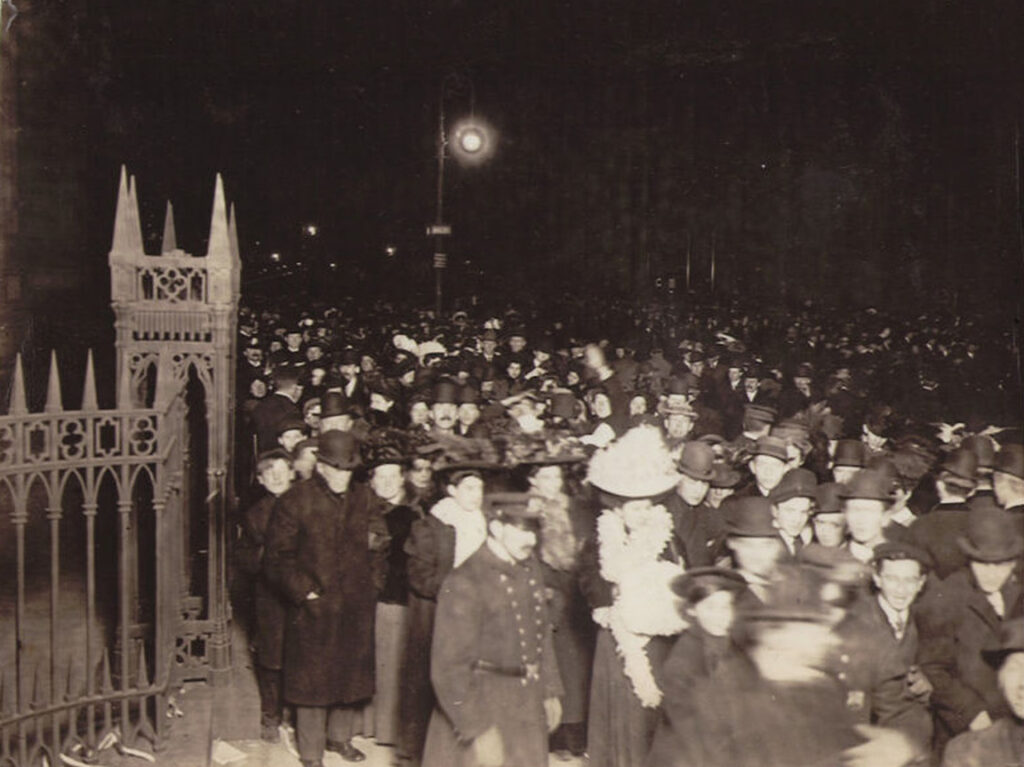
Witness the scene downtown at the ‘traditional’ celebration around Trinity Church:
“In past years Park Row and lower Broadway have been crowded paths for those who marched to Trinity early to hear the chimes. These crowds used to shriek with ratchet and horn and it took extra police to keep them in line.
“Last night the police were there and lonesome.” [source]
Below: In the early 1900s, before the popularity of Times Square, crowds flocked to Trinity to hear the midnight chimes.
As one headed uptown, further evidence seemed to suggest a dampened party vibe that year — even in Times Square:
“A policeman in Longacre Square said it was the smallest turnout he had seen in his fifteen years in the precinct. It almost reminded one of the storied past, when whole families stayed at home and played charades for New Year’s Eve, when friends went to friends’ houses for holiday dinner and when people drank little or no liquor, there being no law to violate.”
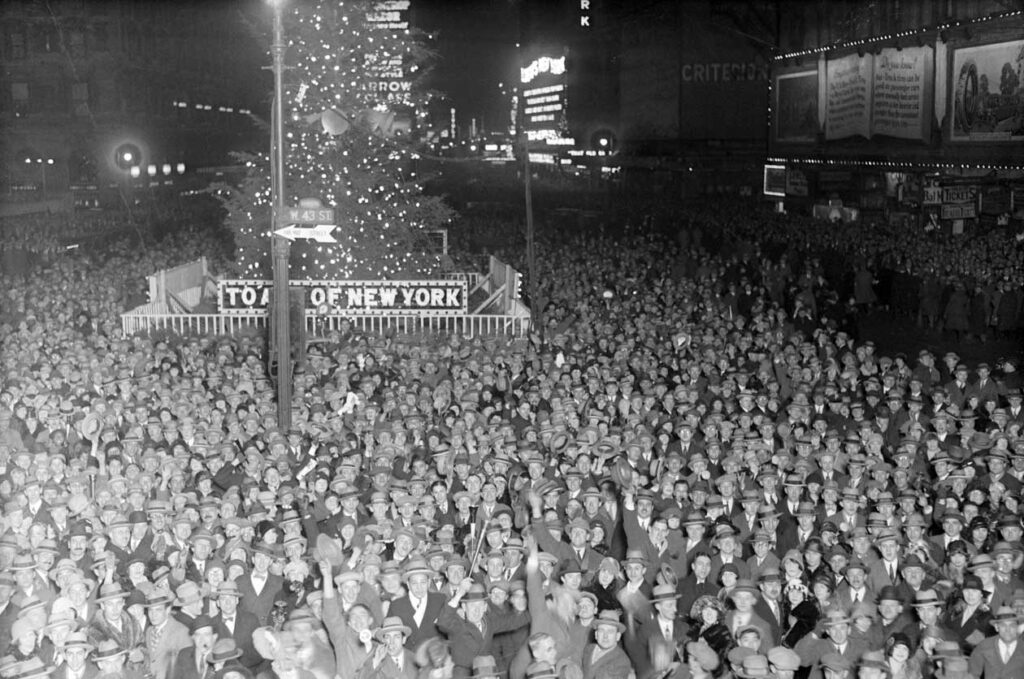
Yet as the clock drew near to the midnight hour, crowds did suddenly appear.
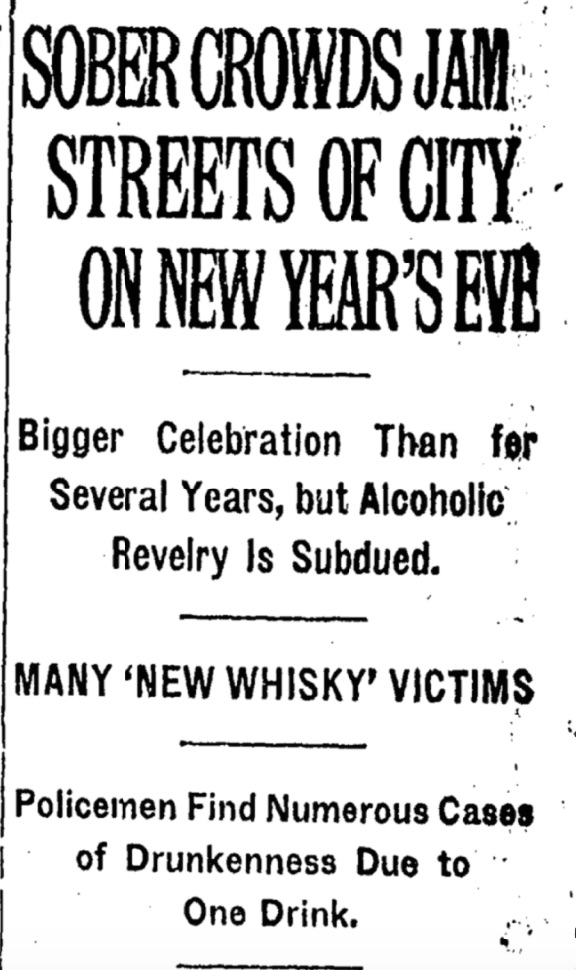
And many of those celebrants did express a certain glow found only from illicit and overly potent intoxicants.
“The throngs in the hotels and streets, probably the largest in the history of the city, saw an entirely new kind of celebration,” wrote the New York Times the following day. “The big crowd was roughly divided into two classes, the vast majority who were cold sober and a small minority who were hopelessly to the contrary.”
New York City was experiencing its first New Year celebration without legal liquor — which meant absolutely nothing.
Liquor had not vanished.
Due to rather lax enforcement of the Volstead Act among high-end establishments — poorly paid Prohibition officers were easily bribed — liquor sales actually flourished in the Times Square area if you knew where to look.
“All the restaurant, hotel and saloon managers said with affecting solemnity that they were not selling a thing, and wouldn’t allow a drop to be brought into the house on the hip or elsewhere. Some of them meant it.
“Yet the streets were full of walking bulges and where did the bulges go when they left the street but into the — some of the — hotels and restaurants?” [source]
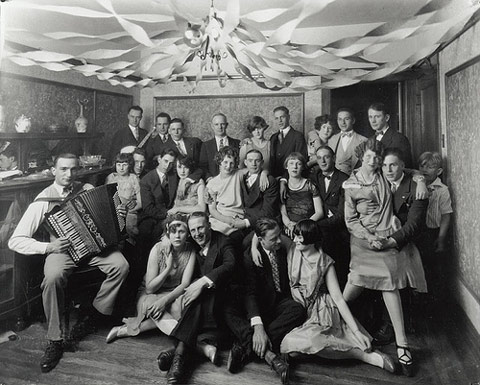
Celebrations carried on indoors in the finest hotels and restaurants as always but now the liquor stayed indoors as well, clandestine and under the counter. Champagne was just as likely sipped from coffee cups as from glamorous cocktail glasses. But it certainly tasted the same.
Many saloons boldly served alcohol out in the open. “The uninitiated would sometimes walk [into a saloon], look around timidly, see the backs of two or three policemen and then feel safe in demanding a glass of nice fresh whisky.” [NYT]
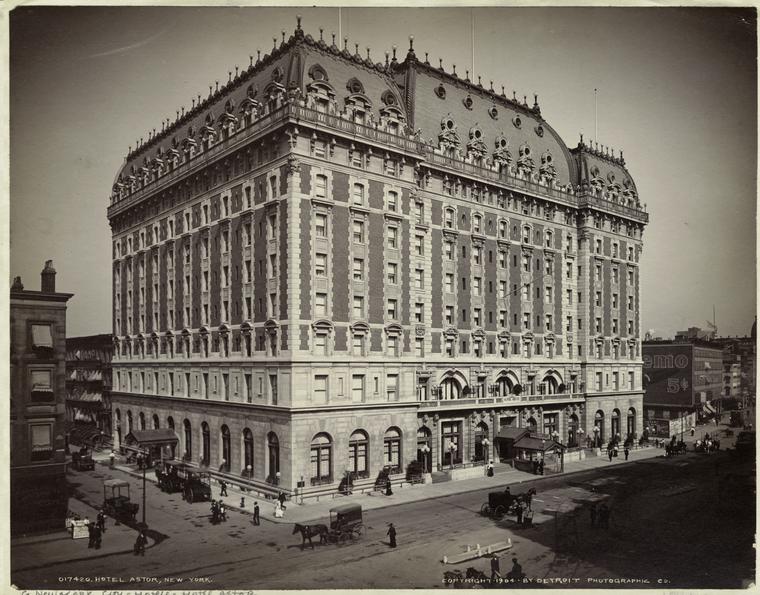
While some did risk a flask out in the street, many in Times Square preferred to revel within the walls of places like the Hotel Astor or the Hotel McAlpin until a few minutes before midnight — and, for many, why bother leaving at all?
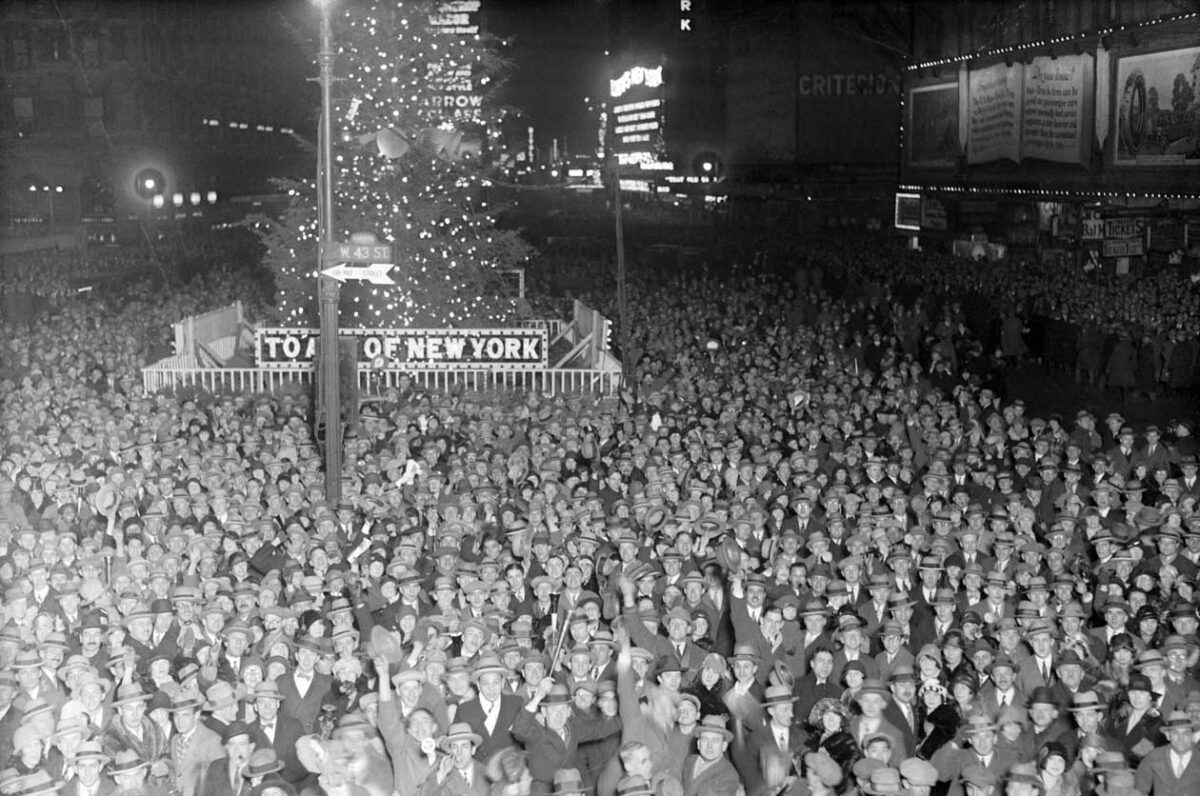
Below: Times Square on New Year’s Eve just a few years later, 1926 (Getty Images)
And then of course there was the abundance of medical services available.
“For some reason a dozen hotels, taking counsel from experience, established yesterday fully equipped medical stations with physicians and nurses in attendance. The nurses’ registry offices were besieged with calls all day for nurses for emergency duty, one hotel offering $2o as a bonus for a single night’s work.” [Herald]
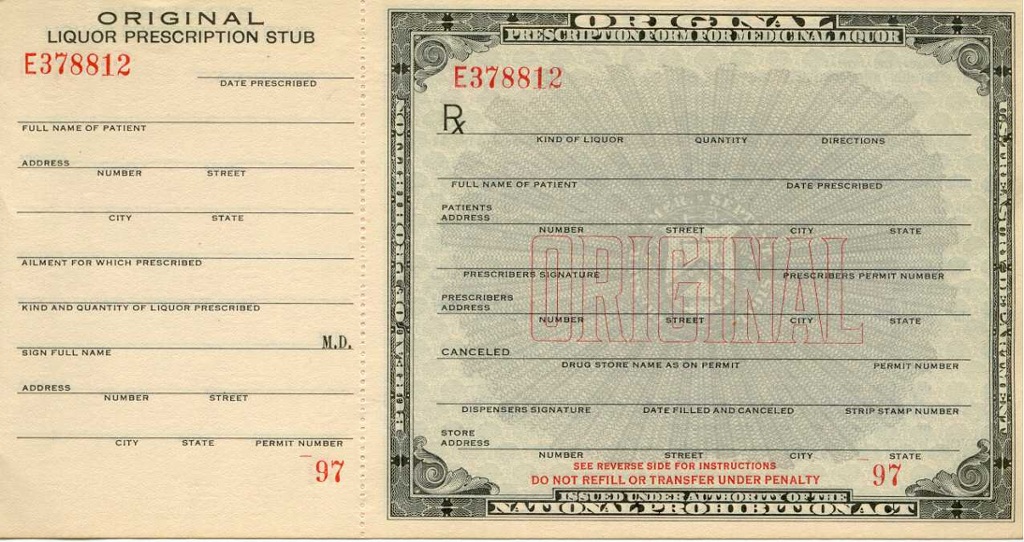
According to the Smithsonian, “during Prohibition, the U.S. Treasury Department authorized physicians to write prescriptions for medicinal alcohol. Licensed doctors, with pads of government-issued prescription forms, advised their patients to take regular doses of hooch to stave off a number of ailments—cancer, indigestion and depression among them.”
I imagine a few hastily written prescriptions were dispensed that evening. Curing whatever ailed you!
But some of that medical experience was put to good use as many partygoers drank poisoned, inferior alcohol — called ‘new whisky’ by the New York Times — to great excess, brought in from other places.
New York had never seen so many sloppy drunks.
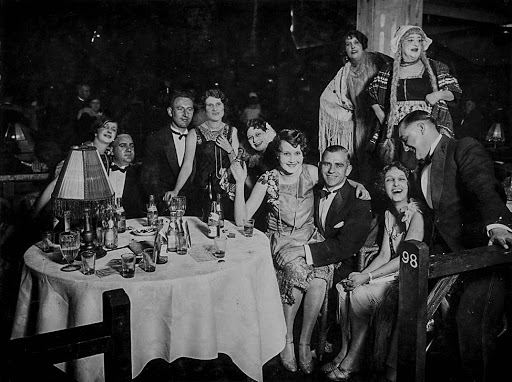
“The joy of being illegal became more intense than ever before.”
The act of ringing in the year 1921 easily proved that Prohibition was completely unenforceable in the biggest city in the United States — amid the centers of entertainment and vice, with law enforcement so used to looking the other way.
Between Greenwich Village, Midtown Manhattan and Harlem alone, thousands of speakeasies would operate without disruption over the next decade.
Writes Esad Metjahic: “It would be fair to say that New York City never truly accepted prohibition. Laws were passed, an amendment ratified, and even police task forces trained to enforce these laws, but the City of Immigrants never gave in.”
Happy New Year!
For more information, check out our podcasts on New Years Eve AND on the early days of Prohibition: