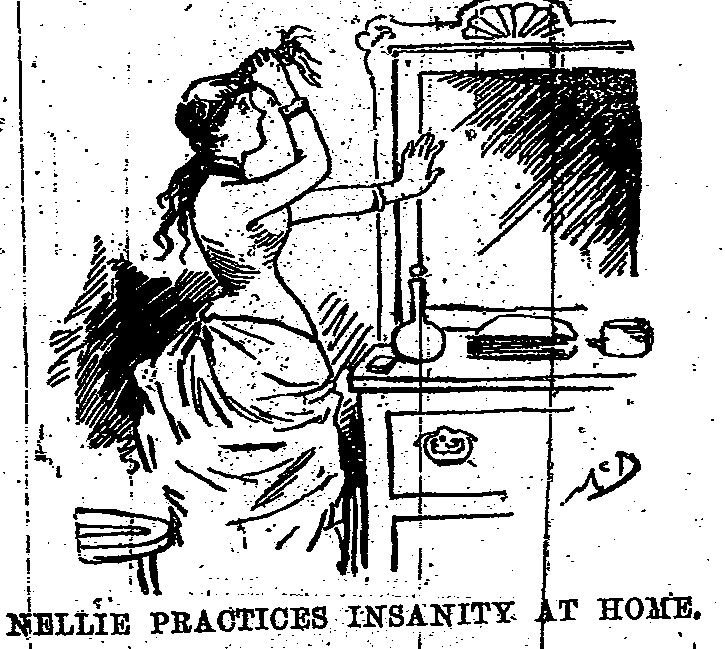
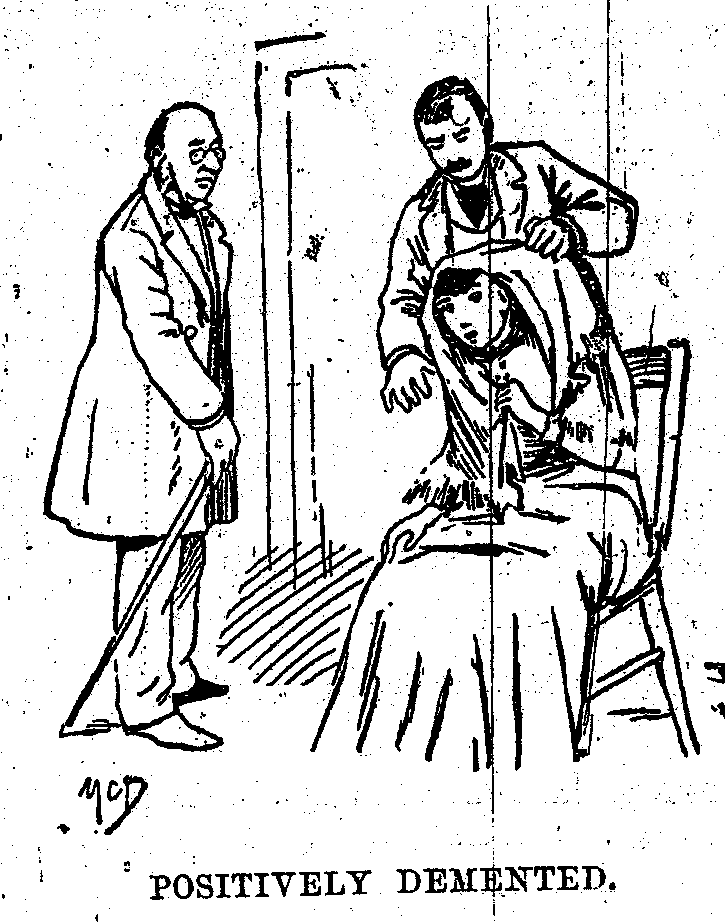
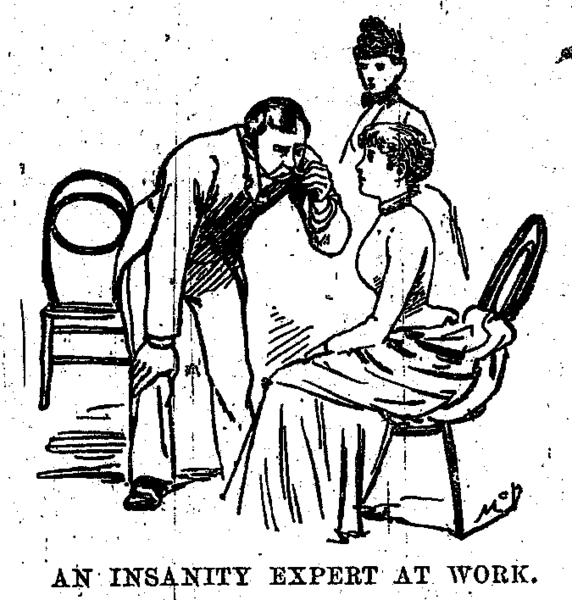
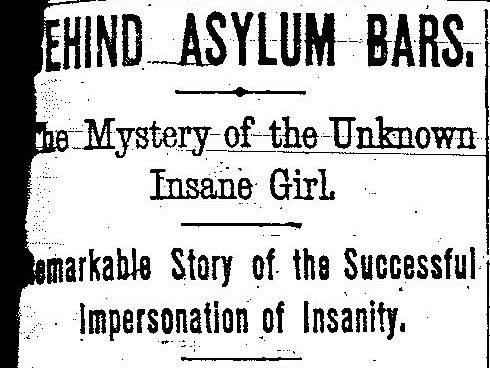
The story of New York World reporter Nellie Bly as she poses as a mental patient to report on the abuses of Blackwell’s Island’s Lunatic Asylum.
PODCASTNellie Bly was a determined and fearless journalist ahead of her time, known for the spectacular lengths she would go to get a good story. Her reputation was built on the events of late September-early October 1887 — the ten days she spent in New York’s most notorious insane asylum.
Since the 1830s Blackwell’s Island had been the destination for New York’s public institutions of an undesirable nature — hospitals for grave diseases, a penitentiary, an almshouse, even a quarantine for smallpox. There was also a mental institution — an insane or lunatic asylum — rumored to treat its patients most cruelly.
The ambitious young reporter decided to see for herself — by acting like a woman who had lost her mind. Her ten days in this particular madhouse — the basis of her newspaper articles and a book — would expose the world to the sinister treatment of the mentally ill and the loathsome conditions of New York institutions meant to care for the most needy.
But would the process of getting this important story lead Nellie herself to go a little mad? And once she got inside the asylum, how would she get out?
ALSO: Not only is a vestige of the asylum still around today, you can live in it!
The Bowery Boys: New York City History podcast is brought to you …. by you!
We are now producing a new Bowery Boys podcast every two weeks. We’re also looking to improve the show in other ways and expand in other ways as well — through publishing, social media, live events and other forms of media. But we can only do this with your help!
We are now a member of Patreon, a patronage platform where you can support your favorite content creators for as little as a $1 a month.
Please visitour page on Patreon and watch a short video of us recording the show and talking about our expansion plans. If you’d like to help out, there are five different pledge levels (and with clever names too — Mannahatta, New Amsterdam, Five Points, Gilded Age, Jazz Age and Empire State). Check them out and consider being a sponsor.
We greatly appreciate our listeners and readers and thank you for joining us on this journey so far. And the best is yet to come!
Nellie Bly, the bold journalist with extraordinary will and panache, tackled a number of strange assignments in her life, starting with her virtuoso performance getting into the Blackwell’s Island insane asylum.
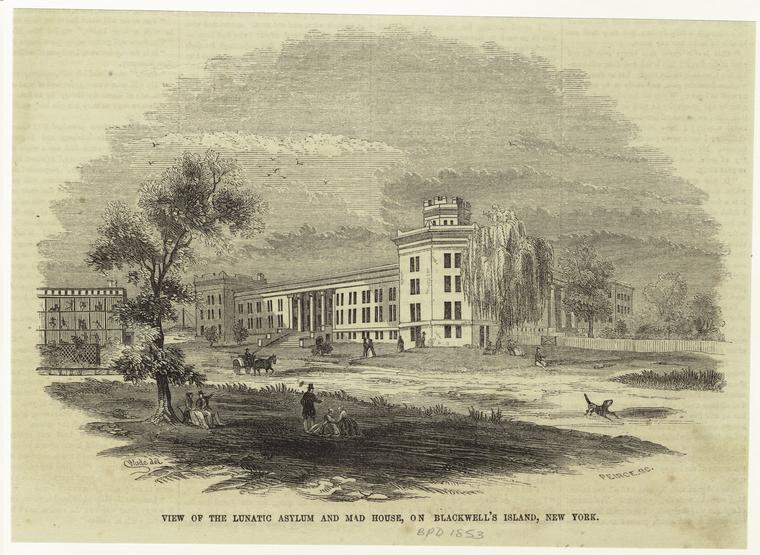
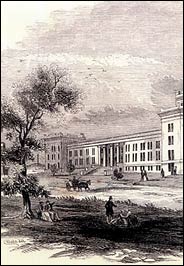
Blackwell’s Island Lunatic Asylum from 1853, rendered by William Wade
Courtesy NYPL
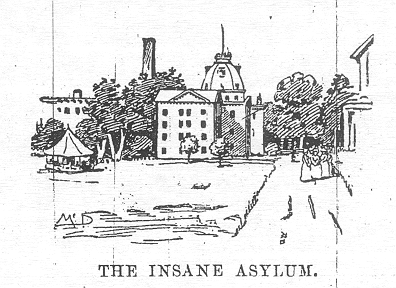
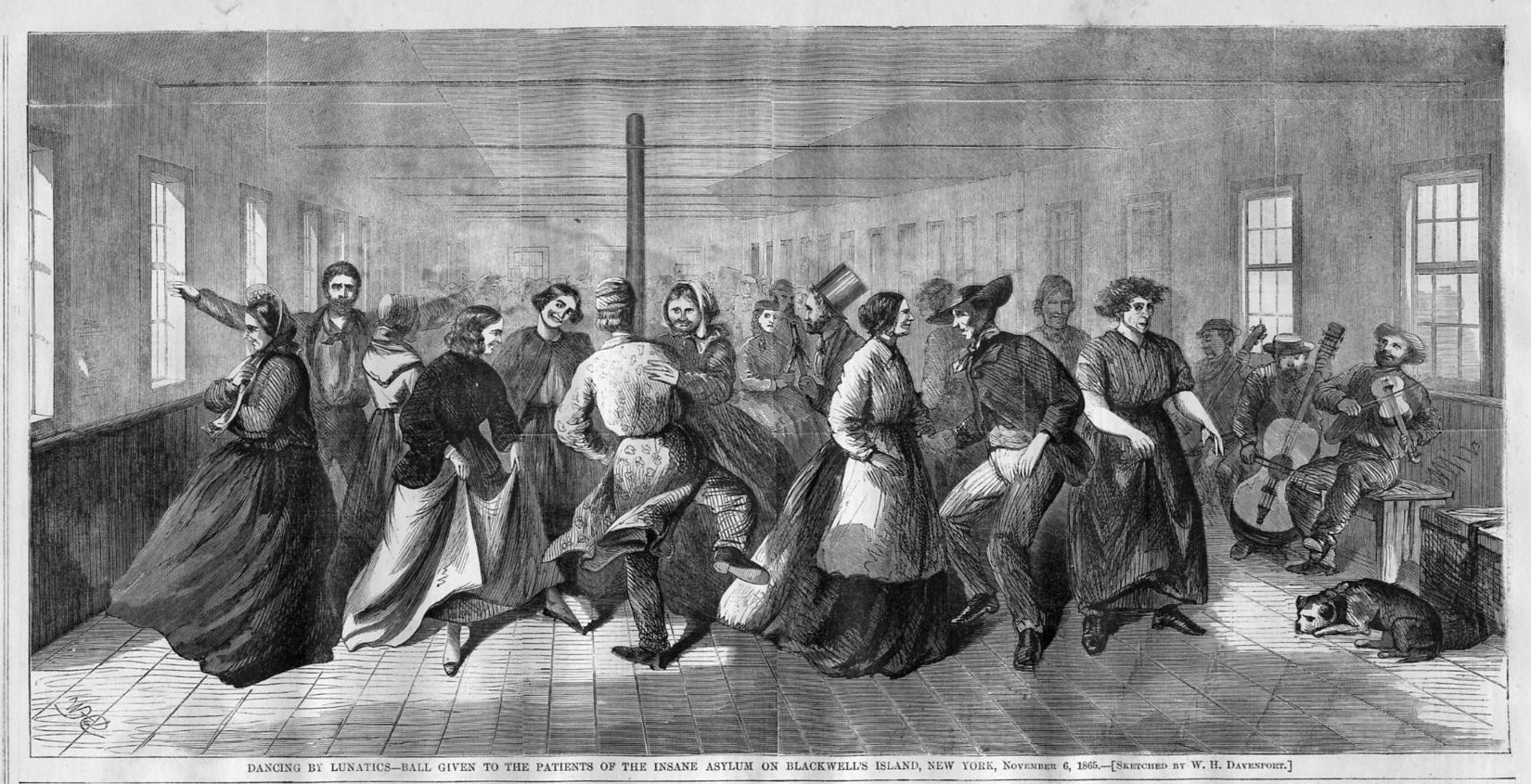
A newspaper clipping from 1865 — “Dancing by lunatics — Ball given to the patients of the Insane Asylum on Blackwell’s Island”
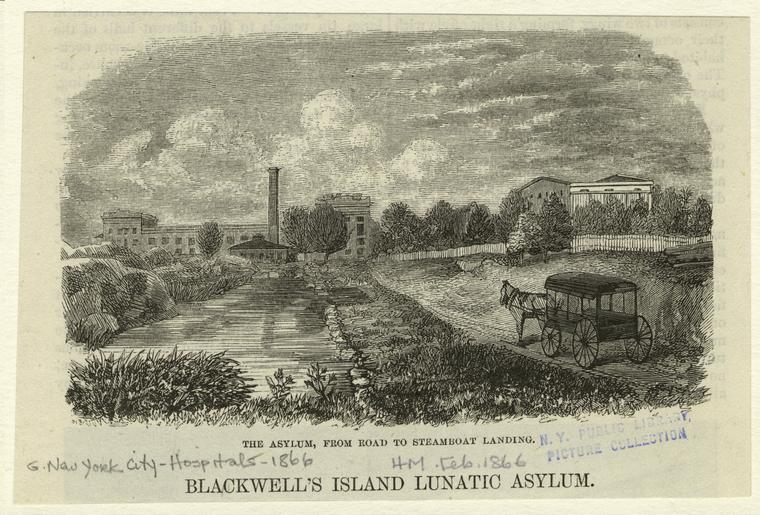
Another view of Blackwell’s Island Lunatic Asylum, pictured here in 1866 “from road to steamboat landing.”
Courtesy NYPL
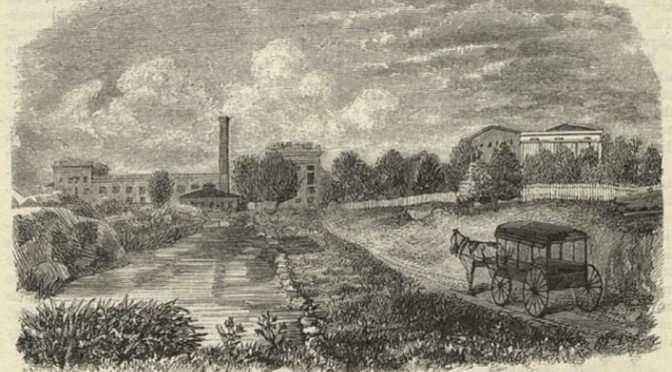
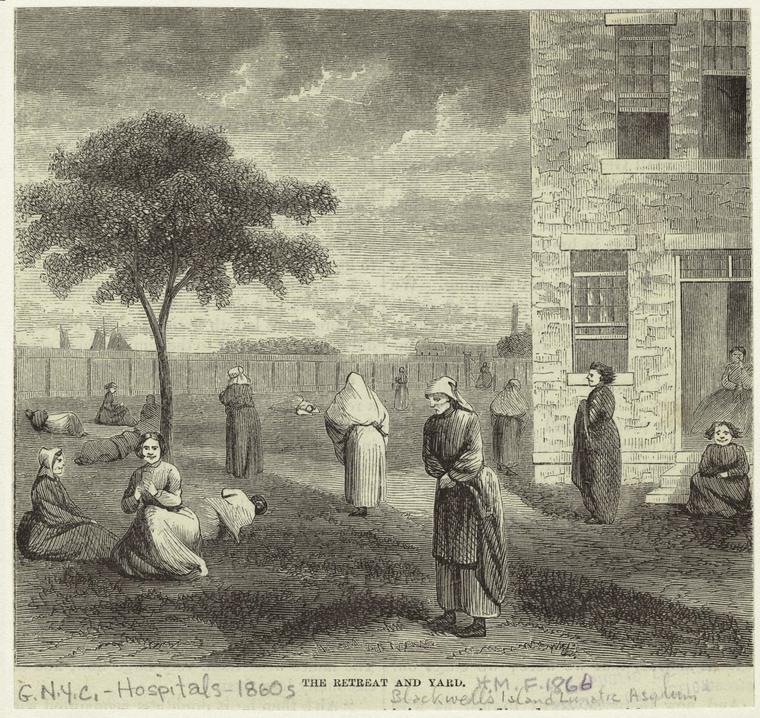
On the grounds of the asylum the ‘Retreat and Yard’, where Nellie would later roam with the other patients.
Courtesy NYPL
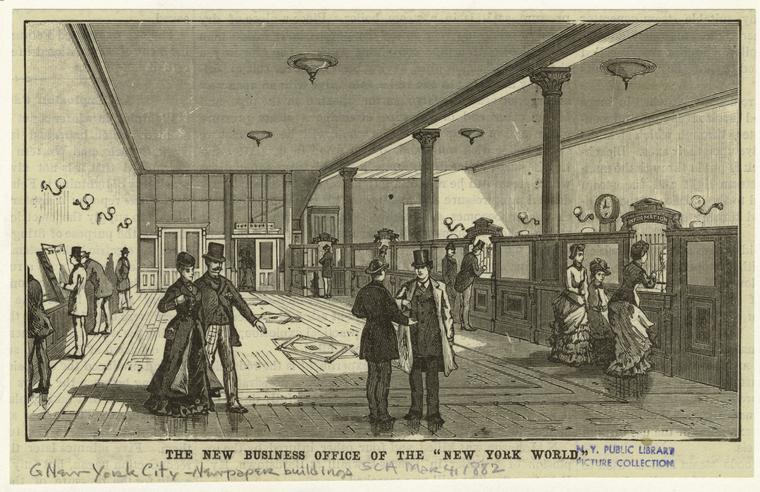
Inside of the offices of the New York World in 1882
From the first article which ran on October 9, 1887
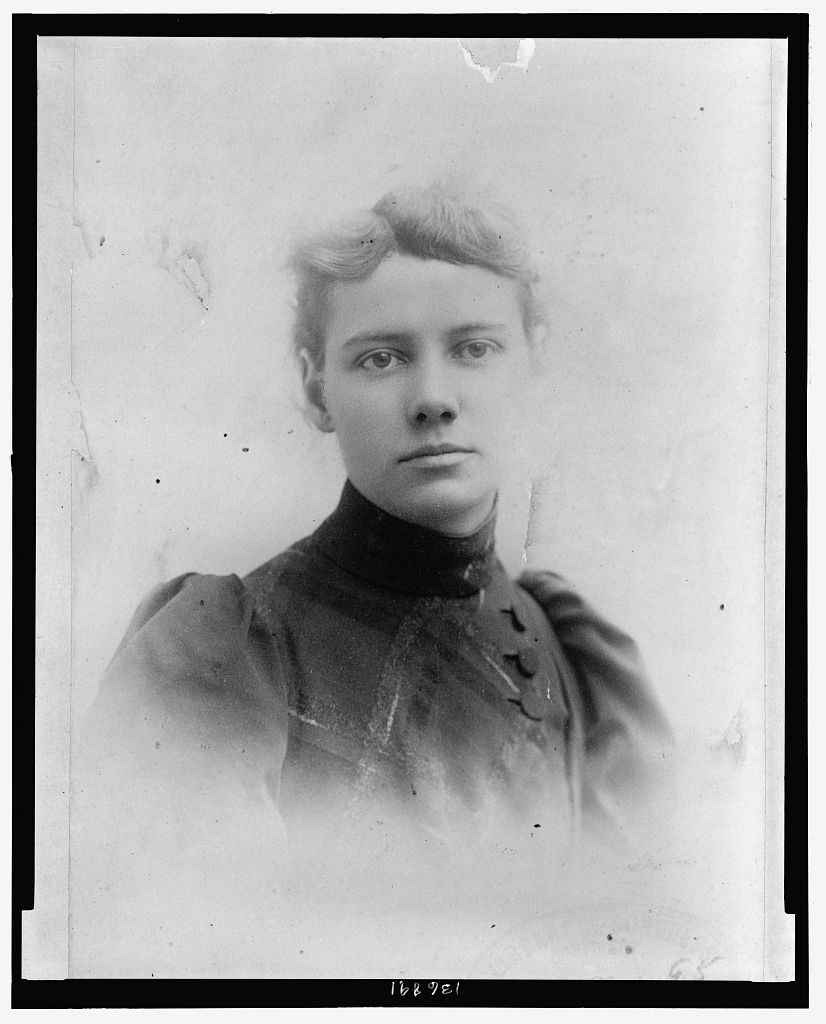
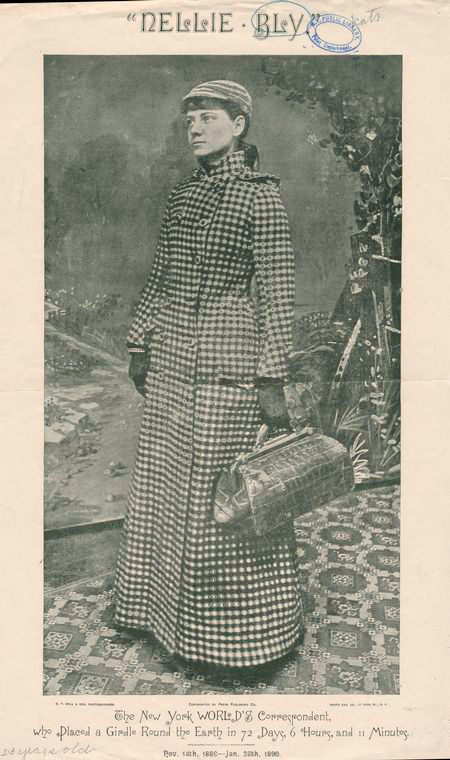
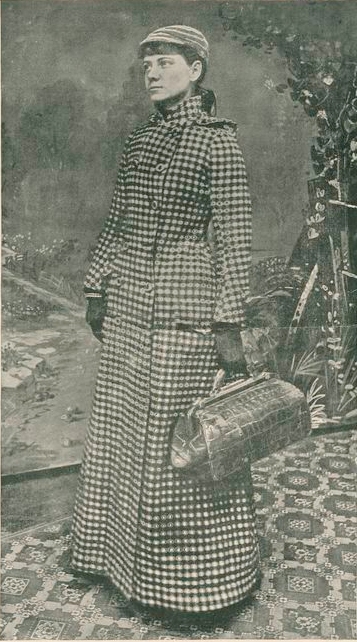
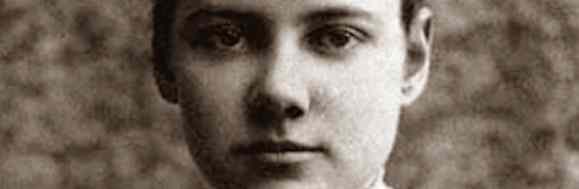
A famous photo of Nellie Bly taken during her trip around the world.
Courtesy New York Public Library
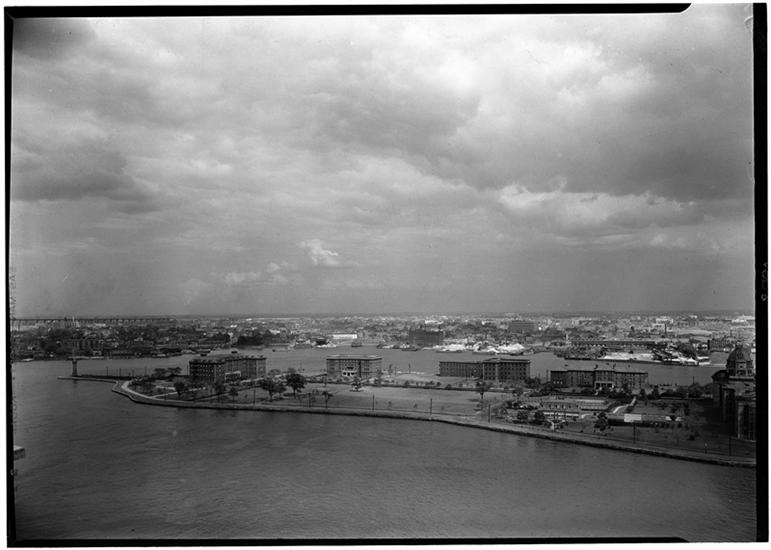
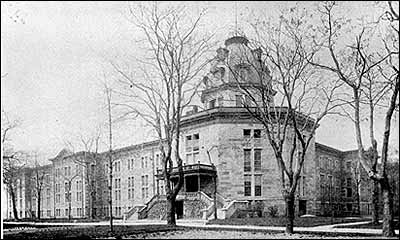
Blackwell’s Island was later named Welfare Island (before its following name change to Roosevelt Island in the 1970s). Below you can see the Octagon at the far right of this image.
Samuel H. (Samuel Herman) Gottscho, photographer, Courtesy Museum of the City of New York
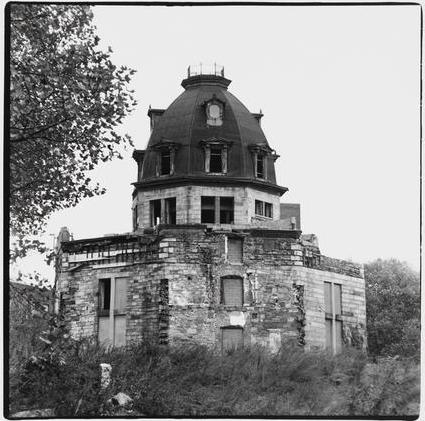
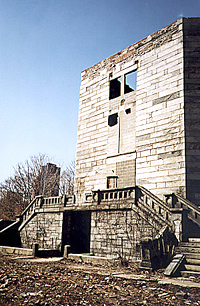
The remaining ruins of the mental asylum. It was later turned into a condominium and apartment building.
Edmund Gillon photographer. Courtesy Museum of the City of New York
Bowery Boys:So just how insane was it for a woman to travel alone around the world – not to mention two women, going in the opposite direction? How many traditions of propriety were they shattering by accomplishing this?
Matthew Goodman: By 1888 Nellie Bly had established herself as a star reporter for The World, Joseph Pulitzer’s widely read newspaper. But when she went to her editors to propose a solo race around the world to beat Phileas Fogg’s eighty-day mark, the idea was soundly rejected.
This was a time, after all, when male newspaper editors didn’t feel comfortable sending their female reporters across the city, much less around the world. Editors didn’t think it was appropriate for a female reporter to go out by herself out night, or in the rain, or into tenements or dancehalls or barrooms or wherever else a story might lead them, much less consort with criminals and policemen and other unsavory characters. Such behavior was considered improper, undignified, unseemly – in a word, unladylike.
Moreover, any woman attempting to travel around the world would surely require a battery of steamer trunks, to carry all of the ball gowns and so forth that, of course, she would require. And so, when Bly proposed her trip, The World’s business manager told her firmly, “Only a man can do this.†(To which Bly just as firmly replied, “Very well, then. Send your man, and I will start the same day for some other newspaper and I’ll beat him.â€)
A year later, when The World’s circulation had started to decline, Bly’s editors finally gave her permission to set out around the world. To do so, Bly insisted on carrying everything she would need for her trip in a single handbag, measuring sixteen by seven inches at its base. Not only did she want her travel to be as efficient as possible, she also wanted to give the lie to the time-worn notion that a woman required more luggage to travel than did a man. (That leather bag would eventually become iconic, and today it is on public display at the Newseum in Washington, D.C.)
BB: Nellie Bly is of course a classic figure of the Victorian era but Elizabeth Bisland is relatively unknown. Were there any challenges in bringing Bisland’s tale up to the pace of Nellie’s – the more familiar of the two tales?
MG: I knew right from the beginning that I wanted this to be a double narrative – half of it told from Nellie Bly’s point of view, half of it from Elizabeth Bisland’s. Which meant that Bisland’s story would need to be just as richly detailed and compelling as Bly’s – a challenge, as you point out, given that no one had ever written any substantial account of her life and she is today almost entirely unremembered.
So I set to work attempting to learn everything that there was to know about Elizabeth Bisland. Fortunately, Bisland had written a book about her race around the world (as had Bly), so I read that first. Then I read everything else she had ever written – which included a novel and several collections of essays, as well as many dozens of newspaper articles. On the Internet I tracked down a number of her descendants, and they generously shared with me unpublished family histories, letters, photographs, and newspaper clippings about their beloved ancestor.
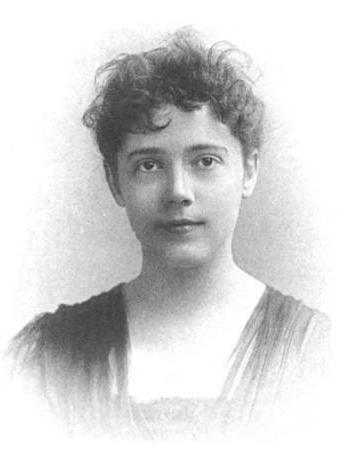
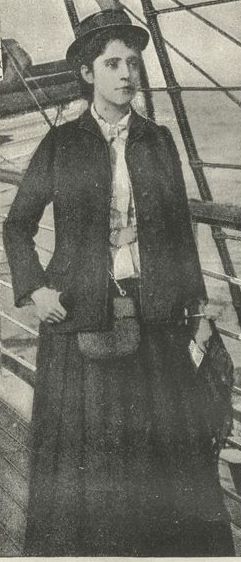
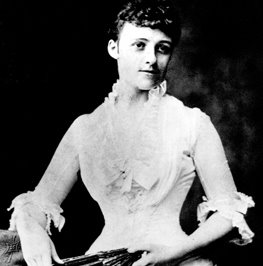
At left: Elizabeth Bisland, from her book written about her journey called A Flying Trip Around The World
At Tulane University I discovered a little-known trove of Bisland’s letters from the last years of her life, which filled in a lot of details that even her family members didn’t know. Over time I was able to develop a very strong sense of who this remarkable woman was; as it turned out, she was this incredibly erudite, cosmopolitan poet and essayist who had grown up on a ruined Louisiana plantation (where, for instance, she taught herself French as she churned butter so that she could read Rousseau’s Confessionsin the original language!), who wrote gorgeously but whose books are all, sadly, out of print.
She is someone who deserves to be far better remembered than she is, and if Eighty Days can bring her to the attention of a new generation of readers, then I’ll be extremely gratified.
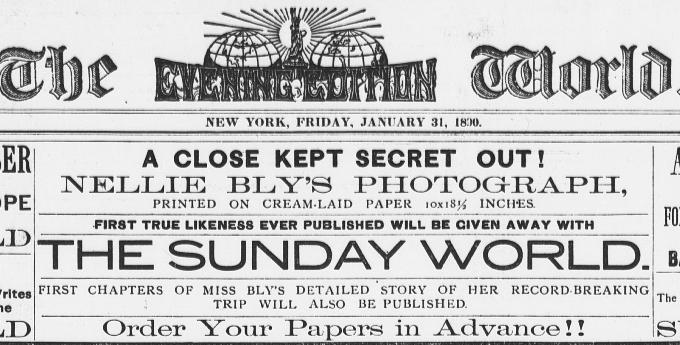
Above: One of dozens of issues of the New York World that used Bly and her adventures to sell papers — before, during and after the race!
BB: The two travelers take nearly the very same path across the world, from opposite directions of course. I love the exact moment in the book where their paths cross (although of course they never realize it). Were Bly and Bisland driven by similar desires – competition, fame, or the chance to make history perhaps?
MG: One of the things I loved about writing this book was that the two main characters – while both pioneering young female journalists – were so different from each other. Nellie Bly was this scrappy, ambitious, driven investigative reporter from coal country in western Pennsylvania, who always sought out the most sensational news stories; Elizabeth Bisland was a genteel, elegant poet from New Orleans who derided most newspaper reporting as “a caricature of life.†Bisland hosted literary teas in her little apartment on Fourth Avenue; Bly was a regular at O’Rourke’s saloon on the Bowery!
And their very different personalities were reflected in their attitudes toward the race itself. Bly was deeply competitive (it was part of what made her such a good newspaperwoman), and she was desperate to win the race – she was constantly worrying about schedules and departure times, and was constantly urging ships’ captains to make more speed. On more than one occasion she was heard to say that she would rather die than return to New York behind time.
For Bisland, on the other hand, the trip became an opportunity to see the world, which she would not have had otherwise. She fell in love especially with Japan, to which she returned twice later in life. In her subsequent book about the trip, she never once used the word “race†to describe it, preferring the word “journey.†Bly sought out the celebrity that came from the race, immediately embarking on a forty-city lecture tour; Bisland, wanting to escape the public’s attention, sailed to England, where she lived for a year. She later wrote that she wanted to live the rest of her life in such a way that her name would never again appear in a newspaper headline.
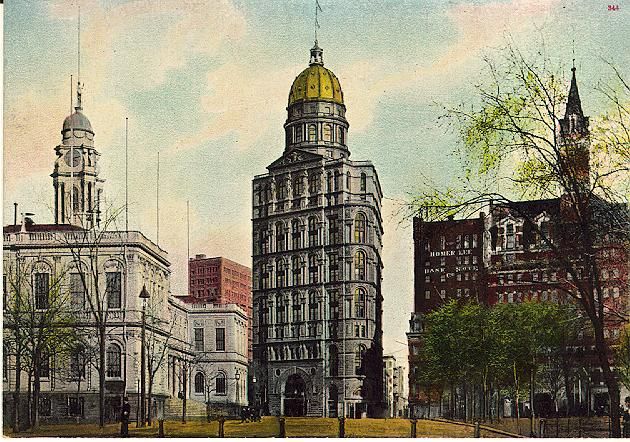
Above: The New York World Building, completed in 1890, the year Bly completed her trip around the globe.
BB: Your last book The Sun and The Moon was about a fabulous New York media hoax. In Eighty Days, the publications in question are in fact recounting real events. But I cannot imagine, given the ethics of the day, that everything you were discovering in them about Bly and Bisland was completely accurate. Did you find anything unusual in your research about these publications’ treatment of the race?
MG: Perhaps not surprisingly, a lot of the initial coverage of the race was rife with mistakes, as New York’s newspapers, caught unawares by the story, tried to pin down just who these two young women were.
For instance, one newspaper claimed, confusingly, that both reporters were being paid by The World (why that paper would send two competitors around the world was not explained). The Tribune even ran a story that claimed that not two but three reporters were racing around the world!
The more substantial inaccuracies, though, were to be found in The World’s own stories about Nellie Bly. Bly and The World jointly participated in a kind of mythologizing of their star reporter, creating an air-brushed portrait of a plucky, independent, light-hearted, pretty, energetic young American woman – just the sort of heroine the paper’s readers wanted. Indeed, the most egregious rewriting of Bly’s history came in a story – surely approved by Bly herself – that promised “an authentic biography of The World’s globe-girdler.â€
BB: There should be a side project where you yourself trace the steps of Bly and Bisland, approximating their forms of transportation (no airplanes!) Is that technically possible and how long do you think it take you – or would you have the stamina of your two heroines?
MG: My sense is that it would be technically possible. (I seem to recall a PBS series of some years ago in which Michael Palin, of “Monty Python†fame, traveled around the world in such a manner and accomplished the feat in just under eighty days.)
It would be possible, however, for someone other than I. I do love to travel, and would very much love to go to many of the places Bly and Bisland visited – such as Hong Kong or Sri Lanka, not to mention Jules Verne’s estate in Amiens, France – but after a few weeks spent aboard ship or in a railway carriage, I’m pretty sure I’d start planning my return to dear old Brooklyn.
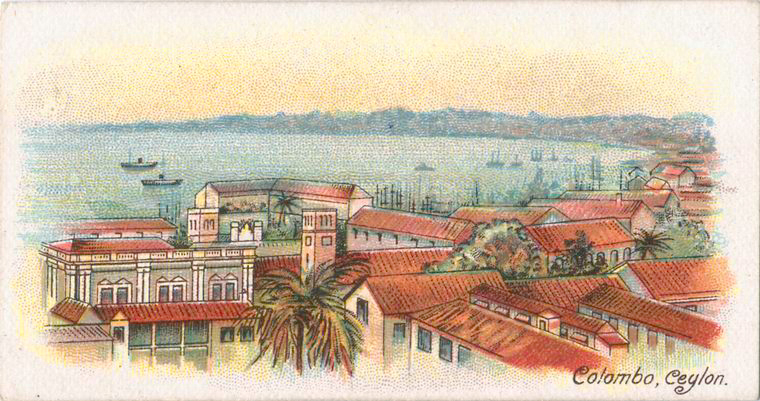
Greetings from Columbo, Ceylon, one of the many glamorous destinations you’ll visit in Matthew Goodman’s new book. BOWERY BOYS BOOK OF THE MONTH Each month I’ll pick a book — either brand new or old, fiction or non-fiction — that offers an intriguing take on New York City history, something that uses history in a way that’s uniquely unconventional or exposes a previously unseen corner of our city’s complicated past. Then over the next month, I’ll run an article or two about some of historical themes that are brought up in the selection.
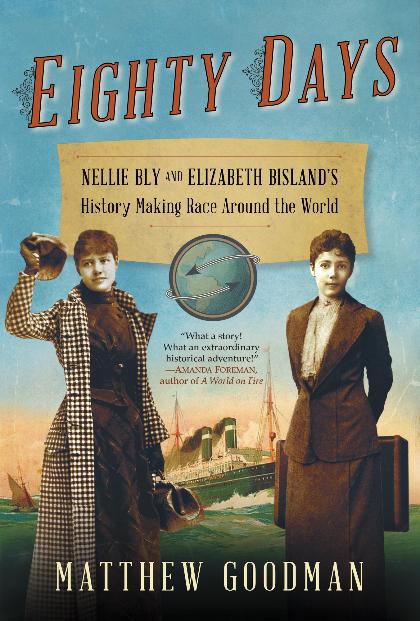
Eighty Days: Nellie Bly and Elizabeth Bisland’s History-Making Race Around The World by Matthew Goodman Ballantine Books
One under appreciated facet of the Gilded Age is Western civilization’s almost addictive need to push its innovations past their upper limits within the framework of a literal competition — not just in mere quest for improvement, but in a tangible victory over its lessers. Beauty, in a machine, meant winning.
The value of human life became secondary in the furious race of locomotives crossing vast plains of the United States, or of cross-country automobile competitions over terrain hardly suited for rubber tires, or later the famed air races of early aviation daredevils.
Speed was perfection, but it also came attached with cash prizes (from newspaper moguls or sponsors who benefited from the technology), ticker-tape parades and instant fame.
In 1873, well before the first automobiles and airplanes, one well-noticed gauntlet was thrown by the French writer Jules Verne, who created the character of Phileas Fogg, then sent him “Around the World In Eighty Days.” The hugely popular novel celebrated both primitive and modern forms of transportation, but a principal theme was the value of speed and modern man’s victory over distance. The world, already prevailed over by the interests of empire, could now be circumnavigated.
But could this feat be performed by an actual human? And, more daring still, could it be done by a woman?
In Matthew Goodman‘s breathless, exotic new history Eighty Days: Nellie Bly and Elizabeth Bisland’s History-Making Race Around The World, two extraordinary woman attempt to meet Verne’s challenge. Or rather, challenges made by their New York editors, inspired by Verne’s best-selling novel and dazzled by the possibilities of an impossible quest creating splashy headlines to sell newspapers in 1889.
You are most likely familiar with Bly, the vanguard young journalist best known for her daring exposes for the New York World. Posing as a patient in Blackwell’s Island’s lunatic asylum in 1887, Bly revealed deep-seeded abuses within the system. Almost as importantly, Bly helped define investigative journalism along the lines of stunt work. She was a Victorian era reality star of sorts, fearlessly defying conventions.
On November 14, 1889, Bly began her quest to beat Phileas Fogg, boarding a steamer for England on her way around the globe. What she did not know then is that the race to beat a fictional character had now been joined by somebody quite real — the journalist Elizabeth Bisland (pictured at left).
A native of New Orleans and a habitue of New York literary salons, Bisland was assigned to take a similar journey by her editor at The Cosmopolitan (precursor to today’s Cosmopolitan magazine). With less than a day’s notice, he sent Bisland on a trip around the world on the same day — and going in the opposite direction.
Eighty Days is a tale of stops and starts, of telegraph offices and train stations, of foreign places narrowly observed by its two competitors. Luckily, Goodman doesn’t leave you sitting with the two women, who are sometimes too tired, too rushed or too incurious to explore their surroundings.
With beautiful prose, like a craning camera, Goodman provides sumptuous detail to these fantastic and sometimes mysterious worlds — Hong Kong, Brindisi, San Francisco, Yokohama, the towns along the Suez Canal.
It becomes very clear that this is indeed a trip around the world, but along a fairly narrow band anchored by British ports. Bly cannot stand the British; Bisland comes to adore them. Their personalities are reflected in their empathy. Bisland mourns a nameless Chinese man who has died aboard her ship. Bly, at times surprisingly unconcerned of certain conditions, buys a rowdy monkey who accompanies her for the last leg of her trip, to the great alarm of baggage handlers. Bisland seems the more introspective, Bly the more entertaining companion.
I hate to conjure reality television for a second time in this review, but the competition within Eighty Days, so well paced by Goodman, really comes down to making connections, as often illustrated in CBS’s “The Amazing Race.” Again, it comes down to the alleged speed of certain vessels, whether they arrive on time, and the abilities of Bly and Bisland to maneuver through foreign countries — many times unaccompanied — to arrive at their next destination.
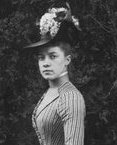
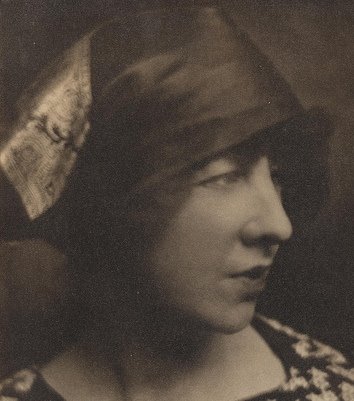
At right: Nellie Bly, ready for action!
Eighty Days is a romp around the planet, but it returns periodically to Park Row in New York, where Bly’s newspaper has turned her journey into a best-selling sensation. Thousands enter a contest to guess the exact time that she will finish her trip.
Like those many newspaper readers, you’ll be scrambling to guess which competitor will arrive in New York first — and, more importantly, what unfortunate event might prevent the other from victory.
Goodman’s latest tale expands upon themes he conjured up in his last book, The Sun and The Moon,another tale about fantastical journalism, regarding the Great Moon Hoax perpetrated by the New York Sun in 1835. Newspapers are perhaps more accurate in 1889 but no less sensational.
Jules Verne himself makes an appearance too, hosting one of the competitors at his home in Amiens, France. “She is trim, energetic, and strong,” remarks Jules’ wife Honorine. “I believe, Jules, that she will make your heroes look foolish. She will beat your record.”
COMING FRIDAY: An interview with Matthew Goodman, the author of Eighty Days!
Pictures courtesy New York Public Library. Book cover courtesy Ballantine
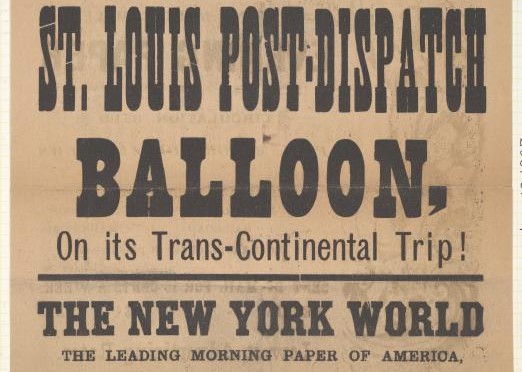
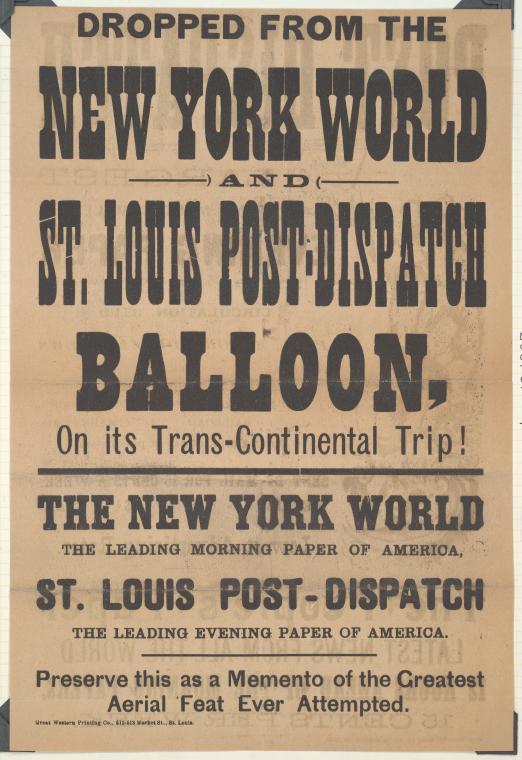
Collectors Item! If you lived in rural Illinois in 1887, you might have found one of these flyers on your roof or along the side of the road.
Joseph Pulitzer, that icon of late 19th century sensationalistic journalism, did everything imaginable to promote his popular newspaper the New York World. Not everything worked.
Pulitzer bought the paper in 1883 and immediately transformed the broadsheet into a juicy scandal sheet, the prop by which many of the tenants of yellow journalism were formed. The publisher had already purchased a share in the St. Louis Post-Dispatch and one day decided to loop the two possessions together in a wild, aerial promotion.
Jules Verne had published ‘Around the World In 80 Days’ in 1873, and Pulitzer hoped to render the excitement of that adventure novel into a promotional tool. So in 1887, he launched a hot-air balloon from St. Louis with an eventual destination of Manhattan. Each day, reporters at each paper would update captivated audiences as to the balloon’s progress using telegraphs sent along the balloon’s route.
Along that route, thousands of flyers like the one above would be thrown from the balloon to shower stunned individuals below, from Illinois and along the Rust Belt to Pennsylvania.
The voyage was vigorously hyped by Pulitzer and several name reporters wanted to ride in the balloon, including Nellie Bly, who would later get her scoop for Pulitzer exposing the sorry conditions at New York’s mental asylum on Blackwell’s Island.
Pulitzer rejected her, thinking the assignment too dangerous for a woman; however, after her success at Blackwell’s, she would get a more ambitious balloon voyage, embarking on a true around-the-world voyage for Pulitzer in 1889.
The vessel was launched with great fanfare on June 17, 1887. There was even an injury (“Prof. Moore Slightly Injured by A Falling Sand-bag.”) But public interest overall was muted at best and the stunt was eventually ignored. With no audience following its foray, the balloon never even completed its journey.
Perhaps that’s for the best as the balloon had a pesky time stying aloft anyway; on its first evening, it landed with a thud in Hoffman, Illinois, and had to be re-launced.
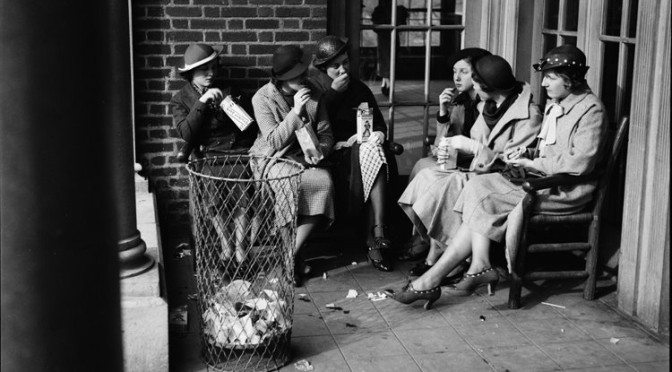
ABOVE: These are the ladies who lunch in Prospect Park 1935
We talk about a lot of white men on the Bowery Boys podcast. When
discussing the mainstream history of the city, it’s pretty unavoidable.
Men had the money, the power, the influence. Not to mention most of the
corruption, the crime, the scandal.
So as Women’s History Month draws to a close (okay, I’m one day
late), I thought I’d make a very opinionated list of the 25 women who
made the biggest impact to the city of New York, at least as seen by
this humble blogger and podcaster.
There have obviously been many, many New York-based women whose
contributions changed the country and the world. There are your
feminists (Elizabeth Cady Stanton), your activists (Ella Baker), your
entrepreneurs (Estee Lauder), your tastemakers (Diana Vreeland) and your
entertainers (Madonna).
But these 25 helped shape
the actual city itself. The neighborhoods, populations and culture, to
be sure. But most importantly, they each effected perceptions of the
city, both to its residents and outward to the world. (Thus, for
instance, you’ll note my heavy emphasis on preservationists.)
This is not an ultimate list. I obviously do not know the impact of
every woman who ever lived in New York City. Many women communicated
power through wealth and property; I don’t have the social register from
every season and cannot gauge the influence of every bold-faced name.
These are just 25 that have crossed my path since we started the Bowery
Boys that I just wanted to celebrate today.
I’ve obviously missed out on a few, so if you have a
particular favorite that’s missing, please put them in the comment
section. At the bottom I have a list of ladies that made my personal
honorable mention. So here we go!
Brooke Astor (1902-2007)
Philanthropist
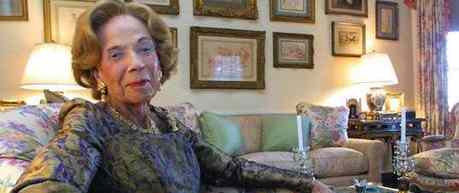
She was the last of the socialites, as they say. The queen of old
American money, for 105 years Astor ruled as the last official vestige
of one of Manhattan’s wealthiest families, setting a standard for
philanthropy and sadly leaving an uncertain legacy amid scandals
involving her heirs.
Power is the ability to do good things for others. — Brooke Astor
Alice Austen (1866-1952)
Photographer
Few saw the Gilded Age city quite as Austen did, a Staten Island
native who captured the beauties of New York, the horrors of Ellis
Island’s quarantine station, and the wonders of the world, but probably
took her best shots from her own backyard at Clear Comfort, in Rosebank,
SI.
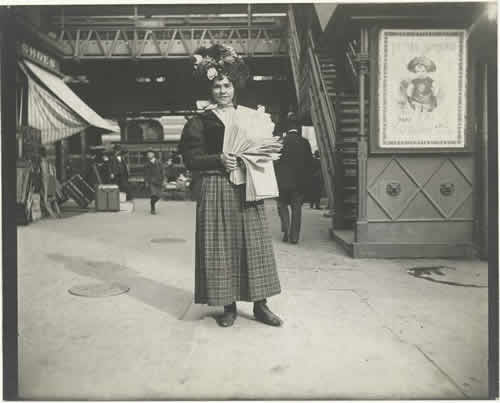
Below: a girl newsie in 1896, as captured by Austen
Nellie Bly (1864-1922)
Journalist
Her bravery, curiosity and outright nerve made her a writer of
international fame, one of the first investigative journalists in the
age of sensational journalism. But the story that put her on the map was
her undercover expose at Blackwell’s Island, ripping open the abuses of
New York’s island of untouchables, changing how the city thought about
both the infirm and the incarcerated.
Could I pass a week in the insane ward at Blackwell’s Island? I said I could and I would. And I did. — Nellie Bly
Margaret Corbin (1751-1800)
Revolutionary
Things were so precarious in the fall of 1776, the dawn of the
Revolution, that anyone who lived in New York might have turned the tide
of war. Many women did their part to battle the British, from Mary Lindlay Murray the to the mysterious Agent 355,
a shrouded spy among the British. But Corbin is notable not just for
particular bravery but for sacrifice; she continued to lob cannon fire
at the British from Fort Washington in today’s Washington Heights well
after her husband was killed. Corbin herself was later imprisoned by the
British. Today the street along Fort Tryon is named for her.
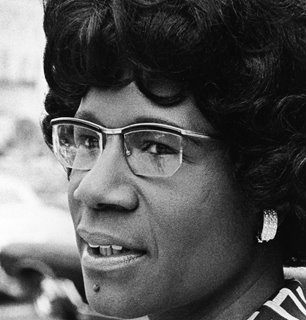
Shirley Chisholm (1924-2005)
Trailblazer
The pride of Bedford-Stuyvesant maneuvering through the precarious world
of New York politics, Chisholm won a seat in the state legislature in
1964 but always dreamed to represent Brooklyn on a national level, in
the U.S House of Representatives. She finally got her wish to represent
her neighborhood when redistricting lines were finally redrawn — finally
allowing a black candidate to run (and win) in a largely black
community — and won her seat in Congress in 1968. Shirley never
disguised her ties to her beloved Brooklyn neighborhood, even as a
candidate for president of the United States.
That I am a national figure because I
was the first person in 192 years to be at once a congressman, black
and a woman proves, I think, that our society is not yet either just or
free. — Shirley Chisholm
Margot Gayle (1908-2008)
Community leader
Gayle, who died last year at age 100, loved her Victorian
architecture and in particular cast-iron, the antiquated style of
downtown New York warehouses. Seeing destruction imminent, she decided
to save what she considered one of the city’s most neglected treasures.
Forming her first community group in the 1950s to save castle-like
Jefferson Market Courthouse, Gayle galvanized a grassroots architecture
movement.
There might be no SoHo without Gayle; as a campaigner, her work in
saving and preserving this heretofore disregarded part of downtown led
to one of Manhattan’s great neighborhood success stories. The SoHo Cast
Iron Historic District exists due to her efforts. And, more importantly,
her work became a template for how future neighborhoods could be
revitalized. (Read her Times obituary here).
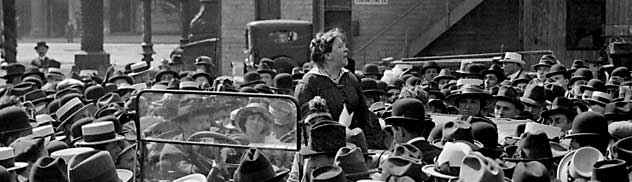
Emma Goldman (1869-1940)
Agitator
Probably the most influential anarchist in American history, Goldman
promoted the rights of workers and upended the role of women in New York
politics. The Russian-born activist made her name on the streets of
Manhattan, stirring Bohemia and workers alike, butting heads with most
of New York’s leading industrialists in the process.
Her views are controversial, often horrifying by today’s standards.
(She once ordered the assassination of Henry Clay Frick, for instance.)
But her powers as an orator and rabble-rouser are unquestioned; her
stirring words in Union Square (pictured above) during the panic of 1893
gave voice to the outrage of the city.
If voting changed anything, they’d make it illegal. — Emma Goldman
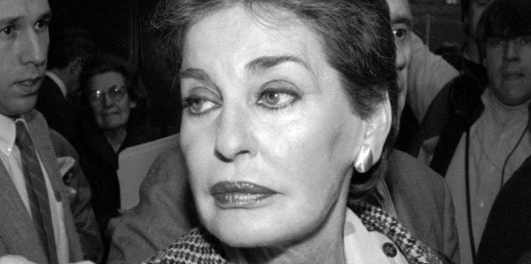
Leona Helmsley (1920-2007)
Magnate
Leona and her husband Harry reigned over a vast Manhattan empire of
highrises and hotels, permanently changing Park and Madison avenues,
helping transform New York into a city of condominiums. Her status as
the Queen of Mean also formed the modern caricature of overbearing and
out of touch wealthy elite. Later convicted of tax evasion, Leona died
in 2007 a laughing-stock. (That Suzanne Pleshette film
didn’t help either.) But her reach extends through many of the city’s
great iconic buildings, including the Empire State Building, which she
and her husband once managed.
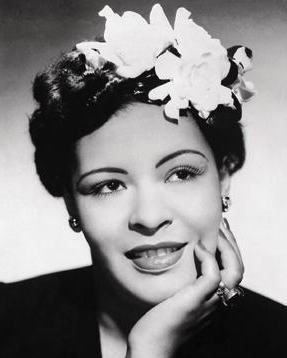
Billie Holiday (1915-1959)
Chanteuse
Of all the thousands of entertainers that have left their imprint on the
city, Holiday’s is the one that makes the deepest impact. Her entire
story — her birth, her rise to fame, her indiscretions and her tragic
death — takes place in New York. Her greatest performances electrified
and reshaped race assumptions in 1930s and 40s nightlife; legendary
nights at places like Cafe Society ensured entertainment would no longer
be strictly a black and white affair. Her performance style is emulated
nightly in cabarets and clubs throughout the city.
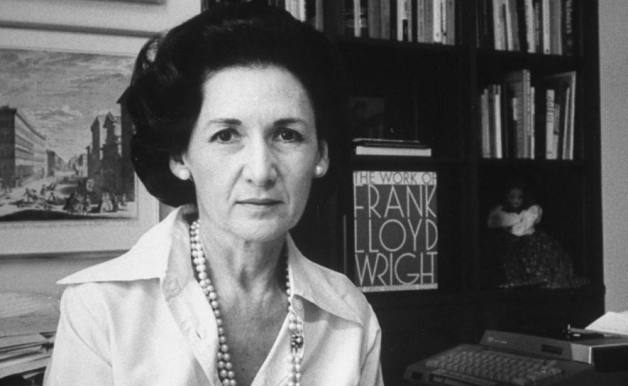
Ada Louise Huxtable (1921-2013)
Critic
She is the best known woman in twentieth century architecture, and she
isn’t even an architect. It’s hard to analyze the history of any
building without first checking in with Ada to see what she has to say
on the matter. Her writing is elegant, persnickety, direct and
affectionate to architectural aesthetic as a whole, and New York City in
specific. As a writer for the New York Times and Wall Street Journal,
Huxtable directed New York’s architecture scene from behind her desk,
excoriating designers for excess or dullness, praising beauty when it
improved the city’s legendary skyline.
I like old buildings that are
intriguing and quite wonderful but don’t make the history books. What
you discover is there’s a little group of people that have been admiring
them quietly by themselves all along. — Ada Louise Huxtable
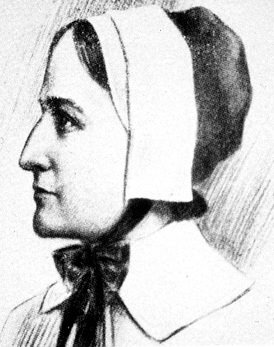
Anne Hutchinson (1591-1643)
Dissident
Escaping persecution in both Puritan Massachusetts and Rhode Island,
religious revolutionary Hutchinson and her followers settled in today’s
area of the North Bronx in the 1640s, one of two significant female
leaders in the early New York area. Although she was later murdered —
Lenapes wiped out the settlement in 1643, a victim of New Amsterdam’s
persistent conflicts with native tribes — she still leaves her mark
today. The Hutchinson River and Parkway both carry her name.
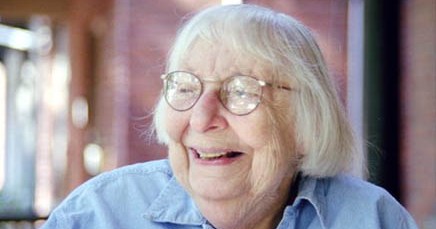
Jane Jacobs (1916-2006)
Community defender
Her theories on urban life have benefited many North American cities,
but it was her struggles to save neighborhoods from Robert Moses and
the rise of car culture in the 1950s and 60s that make her most
influential today. The entirely of downtown Manhattan has her to thank
for fighting back — and ultimately defeating — Moses’ destructive Lower
Manhattan Expressway proposal. The theories described in her classic
“Death and Life of Great American Cities” were shaped from observing
life from her window at 555 Hudson Street in the West Village.
Cities have the capability of providing something for
everybody, only because, and only when, they are created by everybody. —
Jane Jacobs
Lady Deborah Moody (1586 – 1659)
Founder
The British-born Moody, like Hutchinson, took to the unknown when
persecuted for her religious beliefs. With the permission of William
Kieft, the “dangerous” Moody set up the colony of Gravesend in 1645,
becoming the first female founder of an American colony. Gravesend was
one of the original towns of Brooklyn and is still the name of a south
Brooklyn neighborhood today.
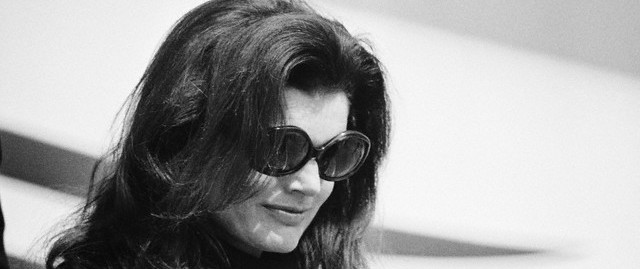
Jackie Kennedy Onassis (1929-1994)
Icon
Settling in New York after the deaths of two husbands, Onassis was
the biggest bold-faced name in the city, famously suffering the
intrusive effects of paparazzi. However she used her headline grabbing
name wisely as a member of the Municipal Art Society, helping defend
Grand Central Station, Columbus Circle and Staten Island’s Snug Harbor
from modification or outright destruction. The Central Parks reservoir
is named in her honor, and MAS gives out a yearly Jackie Kennedy Onassis
Medal to noteworthy New Yorkers. (Margot Gayle received it in 1997.)
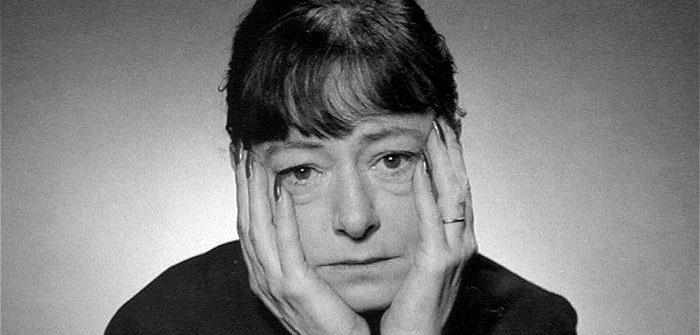
Dorothy Parker (1893-1967)
Wit
As doyenne of the Algonquin Round Table, Parker had the sharpest
friends in town in the 1920s. Her droll charm helped create the
archetype of New York caustic intellectualism, something Woody Allen,
Fran Lebowitz and an entire culture of New Yorker readers can well
recognize.
I’d rather have a bottle in front of me, than a frontal lobotomy. — Dorothy Parker
Abby Aldrich Rockefeller (1874-1948)
Collector
She could very well have stayed in the sidelines with the other
spouses of multi-millionares. But Abby’s tastes and passions for modern
art led her to an astonishing collection she kept on an upper floor of
her townhouse, away from her husband J.D. Rockefeller Jr., who didn’t
much care for those odd little pictures. Years later, that townhouse
would give way to Abby’s pet project, the Museum of Modern Art, one of
the most influential galleries for 20th Century art. Her memory is kept
alive at the museum with the Abby Aldrich Rockefeller Sculpture Garden.
Emily Warren Roebling (1843-1903)
Bridge Builder
Construction on the Brooklyn Bridge had barely begun when her husband
and master engineer Washington Roebling came down with crippling
symptoms of the Bends. Emily at first operated only as his eyes and
ears, but soon grew into the role of leading the completion of New
York’s first great bridge. Ceremonially, she was the first person to
cross it.
Eleanor Roosevelt (1884-1962)
World Leader
One of the most powerful American women to have ever lived was a New
Yorker through and through. Her aristocratic name may have opened doors
for her early on, but her compassion and ingenuity would soon set her
apart, first as a social worker in Manhattan slums, then as the spouse
of a governor and president. She returned to New York after FDR’s death
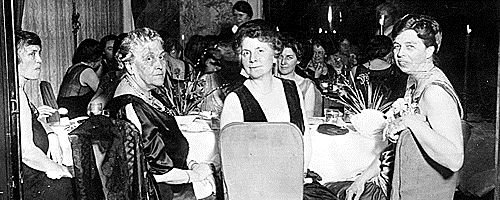
to become a U.S. delegate to the United Nations. (Above: Eleanor with
New York City society women.)
Beautiful young people are accidents of nature, but beautiful old people are works of art. — Eleanor Roosevelt
Margaret Sanger (1879-1966)
Rebel
Her influence in the fields of reproduction and birth control would
eventually go global, but all nurse Sanger really wanted to do at first
was help out women in the Lower East Side. From her work in the slums,
Sanger believed radical action was neccessary to control the rising tide
of pregnancies, leading to larger families and greater poverty. In 1917
she opened New York’s first birth control clinic in Brooklyn and was
promptly thrown in jail. Ten years later, her innovations as an educator
in birth control — she’s the mother of Planned Parenthood! — would
catch on worldwide.
During these years in New York more and more my calls began
to come from the Lower East Side, as though I were being magnetically
drawn there by some force outside my control. — Margaret Sanger
Verna Small (1916-2008)
Preservationist
Small is the queen of Greenwich Village, a fiesty, often poetic
community leader who provoked residents into lobbying for historic
preservation. She organized or led one group after another, all in an
effort to preserve the remainder of the Village before developers could
sweep it away. She succeeded. Today it seem impossible that the Village
was ever in that much danger at all. Her many years with the Landmarks
Committee in the 1980s assured the rest of the city would benefit from
her tender loving care.
The attitude of the Village was ‘We’ve got to catch up with Brooklyn Heights!’ —Verna Small
Dorothy Schiff (1903-1989)
Publisher
Native New Yorker Schiff owned the New York Post from 1939 to the 1970s
and eventually shaped its editorial policy as publisher, the first New
York woman to do so. Her stinging, left-leaning views and saavy tastes
for great writers turned the once tame newspaper into the city’s most
successful tabloid. Her sudden decision to sell it to Rupert Murdoch in
1976 led to the decidedly different, far more sensational Post we’re
familiar with today.
Lillian Wald (1867–1940)
Social Worker
The patron saint of the Lower East Side, devoted nurse Wald helped
found both the Henry Street Settlement and the National Association for
the Advancement of Colored People. Her desire to help New York’s poorest
consumed her life. Her altruism helped save thousands of lives and set
the standard modern social work and nursing. If that isn’t enough, her
innovations from everything to playgrounds and school lunch programs
redefined New York education and reverberated throughout America. Um,
what have you done today to help your fellow man?
Madam C.J. Walker (1867-1919)
Tycoon
Walker, a self-made entrepreneur and hair product queen, was the
richest and most powerful woman in Harlem, during the neighborhood’s
pivotal years of growth in the dawn of the Harlem Renaissance. (Some
sources say she was America’s first female millionaire.) She shattered
color and gender barriers, employing hundreds of other black women and
eventually leaving most of her wealth to notable African-American
organizations. Walker’s daughter A’Lelia was a patron of many great
writers of the Renaissance era.
And her name? She was once married to a man named Charles Joseph Walker; he left in 1910, but the C.J. — and the Madam — stayed.
Edith Wharton (1862-1937)
Observer
Wharton was a woman of ultimate privledge in Gilded Age New York but
had an uncanny ability to describe it. Our notions of what upper-crust
New York was at this time are shaped in part by her novels and short
stories. Her creations Lily Bart and the Countess Ellen Olenska are
still the best evidence we have of the absurdities and restraints
upper-class New York.
A New York divorce is in itself a diploma of virtue. — Edith Wharton
Gertrude Vanderbilt Whitney (1875-1942)
Patron
Gertrude, the daughter of Cornelius Vanderbilt, turned her powerful
name, untold wealth and fascinations with art into an endeavor that
would benefit the general public, eventually founding the Whitney Museum
in 1931. But unlike Abby Rockefeller, Whitney actually was an artist
herself, a sculptrress and a habitue of turn-of-the-century Greenwich
Village bohemia. Gertrude’s daughter Flora Payne Whitney would go on to
head her mother’s museum for decades.
And 25 more that I didn’t get to write about this time around:
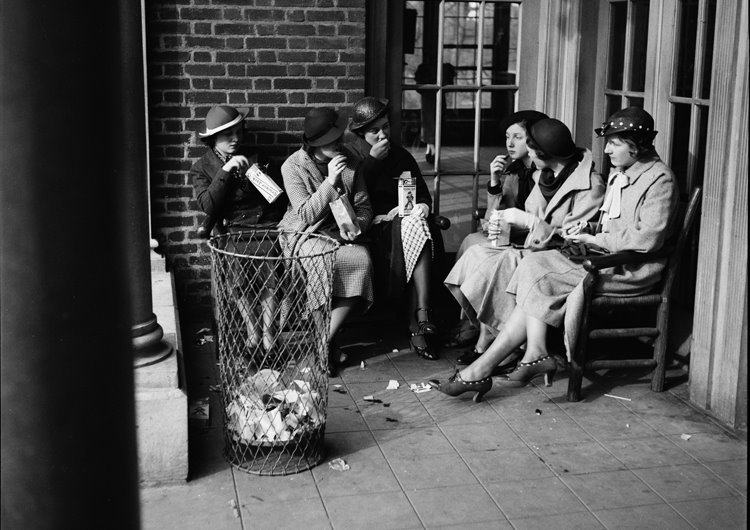
ABOVE: These are the ladies who lunch in Prospect Park 1935
We talk about a lot of white men on the Bowery Boys podcast. When discussing the mainstream history of the city, it’s pretty unavoidable. Men had the money, the power, the influence. Not to mention most of the corruption, the crime, the scandal.
So as Women’s History Month draws to a close (okay, I’m one day late), I thought I’d make a very opinionated list of the 25 women who made the biggest impact to the city of New York, at least as seen by this humble blogger and podcaster.
There have obviously been many, many New York-based women whose contributions changed the country and the world. There are your feminists (Elizabeth Cady Stanton), your activists (Ella Baker), your entrepreneurs (Estee Lauder), your tastemakers (Diana Vreeland) and your entertainers (Madonna).
But these 25 helped shape the actual city itself. The neighborhoods, populations and culture, to be sure. But most importantly, they each effected perceptions of the city, both to its residents and outward to the world. (Thus, for instance, you’ll note my heavy emphasis on preservationists.)
This is not an ultimate list. I obviously do not know the impact of every woman who ever lived in New York City. Many women communicated power through wealth and property; I don’t have the social register from every season and cannot gauge the influence of every bold-faced name. These are just 25 that have crossed my path since we started the Bowery Boys that I just wanted to celebrate today.
I’ve obviously missed out on a few, so if you have a particular favorite that’s missing, please put them in the comment section. At the bottom I have a list of ladies that made my personal honorable mention. So here we go!
Brooke Astor (1902-2007)
Philanthropist
She was the last of the socialites, as they say. The queen of old American money, for 105 years Astor ruled as the last official vestige of one of Manhattan’s wealthiest families, setting a standard for philanthropy and sadly leaving an uncertain legacy amid scandals involving her heirs.
Power is the ability to do good things for others. — Brooke Astor
Alice Austen (1866-1952)
Photographer
Few saw the Gilded Age city quite as Austen did, a Staten Island native who captured the beauties of New York, the horrors of Ellis Island’s quarantine station, and the wonders of the world, but probably took her best shots from her own backyard at Clear Comfort, in Rosebank, SI.
Below: a girl newsie in 1896, as captured by Austen
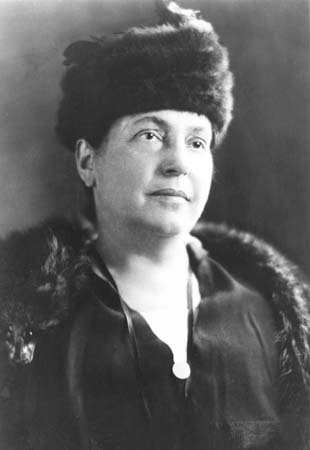
Nellie Bly (1864-1922)
Journalist
Her bravery, curiosity and outright nerve made her a writer of international fame, one of the first investigative journalists in the age of sensational journalism. But the story that put her on the map was her undercover expose at Blackwell’s Island, ripping open the abuses of New York’s island of untouchables, changing how the city thought about both the infirm and the incarcerated.
Could I pass a week in the insane ward at Blackwell’s Island? I said I could and I would. And I did. — Nellie Bly
Margaret Corbin (1751-1800)
Revolutionary
Things were so precarious in the fall of 1776, the dawn of the Revolution, that anyone who lived in New York might have turned the tide of war. Many women did their part to battle the British, from Mary Lindlay Murray the to the mysterious Agent 355, a shrouded spy among the British. But Corbin is notable not just for particular bravery but for sacrifice; she continued to lob cannon fire at the British from Fort Washington in today’s Washington Heights well after her husband was killed. Corbin herself was later imprisoned by the British. Today the street along Fort Tryon is named for her.
Shirley Chisholm (1924-2005)
Trailblazer
The pride of Bedford-Stuyvesant maneuvering through the precarious world of New York politics, Chisholm won a seat in the state legislature in 1964 but always dreamed to represent Brooklyn on a national level, in the U.S House of Representatives. She finally got her wish to represent her neighborhood when redistricting lines were finally redrawn — finally allowing a black candidate to run (and win) in a largely black community — and won her seat in Congress in 1968. Shirley never disguised her ties to her beloved Brooklyn neighborhood, even as a candidate for president of the United States.
That I am a national figure because I was the first person in 192 years to be at once a congressman, black and a woman proves, I think, that our society is not yet either just or free. — Shirley Chisholm
Margot Gayle (1908-2008)
Community leader
Gayle, who died last year at age 100, loved her Victorian architecture and in particular cast-iron, the antiquated style of downtown New York warehouses. Seeing destruction imminent, she decided to save what she considered one of the city’s most neglected treasures. Forming her first community group in the 1950s to save castle-like Jefferson Market Courthouse, Gayle galvanized a grassroots architecture movement.
There might be no SoHo without Gayle; as a campaigner, her work in saving and preserving this heretofore disregarded part of downtown led to one of Manhattan’s great neighborhood success stories. The SoHo Cast Iron Historic District exists due to her efforts. And, more importantly, her work became a template for how future neighborhoods could be revitalized. (Read her Times obituary here).
Emma Goldman (1869-1940)
Agitator
Probably the most influential anarchist in American history, Goldman promoted the rights of workers and upended the role of women in New York politics. The Russian-born activist made her name on the streets of Manhattan, stirring Bohemia and workers alike, butting heads with most of New York’s leading industrialists in the process.
Her views are controversial, often horrifying by today’s standards. (She once ordered the assassination of Henry Clay Frick, for instance.) But her powers as an orator and rabble-rouser are unquestioned; her stirring words in Union Square (pictured above) during the panic of 1893 gave voice to the outrage of the city.
If voting changed anything, they’d make it illegal. — Emma Goldman
Leona Helmsley (1920-2007)
Magnate
Leona and her husband Harry reigned over a vast Manhattan empire of highrises and hotels, permanently changing Park and Madison avenues, helping transform New York into a city of condominiums. Her status as the Queen of Mean also formed the modern caricature of overbearing and out of touch wealthy elite. Later convicted of tax evasion, Leona died in 2007 a laughing-stock. (That Suzanne Pleshette film didn’t help either.) But her reach extends through many of the city’s great iconic buildings, including the Empire State Building, which she and her husband once managed.
Billie Holiday (1915-1959)
Chanteuse
Of all the thousands of entertainers that have left their imprint on the city, Holiday’s is the one that makes the deepest impact. Her entire story — her birth, her rise to fame, her indiscretions and her tragic death — takes place in New York. Her greatest performances electrified and reshaped race assumptions in 1930s and 40s nightlife; legendary nights at places like Cafe Society ensured entertainment would no longer be strictly a black and white affair. Her performance style is emulated nightly in cabarets and clubs throughout the city.
Ada Louise Huxtable (1921-2013)
Critic
She is the best known woman in twentieth century architecture, and she isn’t even an architect. It’s hard to analyze the history of any building without first checking in with Ada to see what she has to say on the matter. Her writing is elegant, persnickety, direct and affectionate to architectural aesthetic as a whole, and New York City in specific. As a writer for the New York Times and Wall Street Journal, Huxtable directed New York’s architecture scene from behind her desk, excoriating designers for excess or dullness, praising beauty when it improved the city’s legendary skyline.
I like old buildings that are intriguing and quite wonderful but don’t make the history books. What you discover is there’s a little group of people that have been admiring them quietly by themselves all along. — Ada Louise Huxtable
Anne Hutchinson (1591-1643)
Dissident
Escaping persecution in both Puritan Massachusetts and Rhode Island, religious revolutionary Hutchinson and her followers settled in today’s area of the North Bronx in the 1640s, one of two significant female leaders in the early New York area. Although she was later murdered — Lenapes wiped out the settlement in 1643, a victim of New Amsterdam’s persistent conflicts with native tribes — she still leaves her mark today. The Hutchinson River and Parkway both carry her name.
Jane Jacobs (1916-2006)
Community defender
Her theories on urban life have benefited many North American cities, but it was her struggles to save neighborhoods from Robert Moses and the rise of car culture in the 1950s and 60s that make her most influential today. The entirely of downtown Manhattan has her to thank for fighting back — and ultimately defeating — Moses’ destructive Lower Manhattan Expressway proposal. The theories described in her classic “Death and Life of Great American Cities” were shaped from observing life from her window at 555 Hudson Street in the West Village.
Cities have the capability of providing something for everybody, only because, and only when, they are created by everybody. — Jane Jacobs
Lady Deborah Moody (1586 – 1659)
Founder
The British-born Moody, like Hutchinson, took to the unknown when persecuted for her religious beliefs. With the permission of William Kieft, the “dangerous” Moody set up the colony of Gravesend in 1645, becoming the first female founder of an American colony. Gravesend was one of the original towns of Brooklyn and is still the name of a south Brooklyn neighborhood today.
Jackie Kennedy Onassis (1929-1994)
Icon
Settling in New York after the deaths of two husbands, Onassis was the biggest bold-faced name in the city, famously suffering the intrusive effects of paparazzi. However she used her headline grabbing name wisely as a member of the Municipal Art Society, helping defend Grand Central Station, Columbus Circle and Staten Island’s Snug Harbor from modification or outright destruction. The Central Parks reservoir is named in her honor, and MAS gives out a yearly Jackie Kennedy Onassis Medal to noteworthy New Yorkers. (Margot Gayle received it in 1997.)
Dorothy Parker (1893-1967)
Wit
As doyenne of the Algonquin Round Table, Parker had the sharpest friends in town in the 1920s. Her droll charm helped create the archetype of New York caustic intellectualism, something Woody Allen, Fran Lebowitz and an entire culture of New Yorker readers can well recognize.
I’d rather have a bottle in front of me, than a frontal lobotomy. — Dorothy Parker
Abby Aldrich Rockefeller (1874-1948)
Collector
She could very well have stayed in the sidelines with the other spouses of multi-millionares. But Abby’s tastes and passions for modern art led her to an astonishing collection she kept on an upper floor of her townhouse, away from her husband J.D. Rockefeller Jr., who didn’t much care for those odd little pictures. Years later, that townhouse would give way to Abby’s pet project, the Museum of Modern Art, one of the most influential galleries for 20th Century art. Her memory is kept alive at the museum with the Abby Aldrich Rockefeller Sculpture Garden.
Emily Warren Roebling (1843-1903)
Bridge Builder
Construction on the Brooklyn Bridge had barely begun when her husband and master engineer Washington Roebling came down with crippling symptoms of the Bends. Emily at first operated only as his eyes and ears, but soon grew into the role of leading the completion of New York’s first great bridge. Ceremonially, she was the first person to cross it.
Eleanor Roosevelt (1884-1962)
World Leader
One of the most powerful American women to have ever lived was a New Yorker through and through. Her aristocratic name may have opened doors for her early on, but her compassion and ingenuity would soon set her apart, first as a social worker in Manhattan slums, then as the spouse of a governor and president. She returned to New York after FDR’s death to become a U.S. delegate to the United Nations. (Above: Eleanor with New York City society women.)
Beautiful young people are accidents of nature, but beautiful old people are works of art. — Eleanor Roosevelt
Margaret Sanger (1879-1966)
Rebel
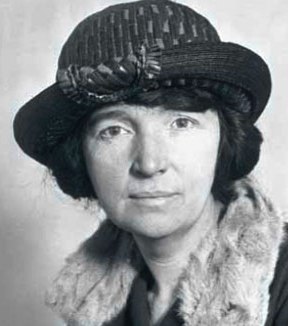
Her influence in the fields of reproduction and birth control would eventually go global, but all nurse Sanger really wanted to do at first was help out women in the Lower East Side. From her work in the slums, Sanger believed radical action was neccessary to control the rising tide of pregnancies, leading to larger families and greater poverty. In 1917 she opened New York’s first birth control clinic in Brooklyn and was promptly thrown in jail. Ten years later, her innovations as an educator in birth control — she’s the mother of Planned Parenthood! — would catch on worldwide.
During these years in New York more and more my calls began to come from the Lower East Side, as though I were being magnetically drawn there by some force outside my control. — Margaret Sanger
Verna Small (1916-2008)
Preservationist
Small is the queen of Greenwich Village, a fiesty, often poetic community leader who provoked residents into lobbying for historic preservation. She organized or led one group after another, all in an effort to preserve the remainder of the Village before developers could sweep it away. She succeeded. Today it seem impossible that the Village was ever in that much danger at all. Her many years with the Landmarks Committee in the 1980s assured the rest of the city would benefit from her tender loving care.
The attitude of the Village was ‘We’ve got to catch up with Brooklyn Heights!’ —Verna Small
Dorothy Schiff (1903-1989)
Publisher
Native New Yorker Schiff owned the New York Post from 1939 to the 1970s and eventually shaped its editorial policy as publisher, the first New York woman to do so. Her stinging, left-leaning views and saavy tastes for great writers turned the once tame newspaper into the city’s most successful tabloid. Her sudden decision to sell it to Rupert Murdoch in 1976 led to the decidedly different, far more sensational Post we’re familiar with today.
Lillian Wald (1867–1940)
Social Worker
The patron saint of the Lower East Side, devoted nurse Wald helped found both the Henry Street Settlement and the National Association for the Advancement of Colored People. Her desire to help New York’s poorest consumed her life. Her altruism helped save thousands of lives and set the standard modern social work and nursing. If that isn’t enough, her innovations from everything to playgrounds and school lunch programs redefined New York education and reverberated throughout America. Um, what have you done today to help your fellow man?
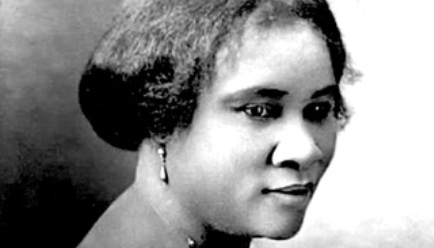
Madam C.J. Walker (1867-1919)
Tycoon
Walker, a self-made entrepreneur and hair product queen, was the richest and most powerful woman in Harlem, during the neighborhood’s pivotal years of growth in the dawn of the Harlem Renaissance. (Some sources say she was America’s first female millionaire.) She shattered color and gender barriers, employing hundreds of other black women and eventually leaving most of her wealth to notable African-American organizations. Walker’s daughter A’Lelia was a patron of many great writers of the Renaissance era.
And her name? She was once married to a man named Charles Joseph Walker; he left in 1910, but the C.J. — and the Madam — stayed.
Edith Wharton (1862-1937)
Observer
Wharton was a woman of ultimate privledge in Gilded Age New York but had an uncanny ability to describe it. Our notions of what upper-crust New York was at this time are shaped in part by her novels and short stories. Her creations Lily Bart and the Countess Ellen Olenska are still the best evidence we have of the absurdities and restraints upper-class New York.
A New York divorce is in itself a diploma of virtue. — Edith Wharton
Gertrude Vanderbilt Whitney (1875-1942)
Patron
Gertrude, the daughter of Cornelius Vanderbilt, turned her powerful name, untold wealth and fascinations with art into an endeavor that would benefit the general public, eventually founding the Whitney Museum in 1931. But unlike Abby Rockefeller, Whitney actually was an artist herself, a sculptrress and a habitue of turn-of-the-century Greenwich Village bohemia. Gertrude’s daughter Flora Payne Whitney would go on to head her mother’s museum for decades.
And 25 more that I didn’t get to write about this time around:
(ABOVE: Metropolitan Hospital, at the turn of the century, the former site of Blackwell Island’s asylum)
Is there anything more frightening than a insane asylum on fire? Nope.
Welcome to America’s first municipal lunatic asylum, its home — you guessed it — on Roosevelt Island in the 19th century. The 1839 facility was designed by Alexander Jackson Davis, one of the most influential architects of his day and best known for decorating the northeast with austere, ornate homes. His best known New York building is Federal Hall (actually the Custom House when it was finished in 1942). The center tower of the asylum with its two L-shaped wings created an internal campus and had more in common structurally with a university or hotel.
The early 19th century was not the best time to be labelled a lunatic. The medical profession was not terribly prepared to treat mental patients; however at the time of the asylum’s construction, attitudes were shifting somewhat. As Blackwell Island, its isolation and relative calm were seen as conducive to the treatment of the mentally ill.
Good intentions were overtaken by reality, overcrowding and rather poor managerial decisions, such as the notion to leave part of the care of the asylum’s patients to the attentions of the inmates at the neighboring penitentiary. (I’ll focus more on the Roosevelt Island’s prison life next week.)
The asylum swiftly entered the public imagination. Charles Dickens, on his tour of America, visited the asylum and found “…everything had a lounging, listless, madhouse air, which was very painful. The moping idiot, cowering down with long disheveled hair; the gibbering maniac, with his hideous laugh and pointed finger; the vacant eye, the fierce wild face, the gloomy picking of the hands and lips, and munching of the nails: there they were all, without disguise, in naked ugliness and horror.”
Part of the asylum was lost in an inferno in 1858. One can only imagine the pandemonium of evacuating mental patients without the modern medications and restraints of today. And the sounds of the blaze mixed with the shouts and howling of the patients.
It was swiftly rebuilt but the conditions were no better. Intrepid reporter Nellie Bly then steps into the story at this time, in a move that would inspire budding Geraldo Rivera’s well into the future. In 1887, already well known for evocative articles on social reform, Bly took an assignment for Joseph Pulitzer’s New York World newspaper to enter the asylum disguised as a patient. (Why some actress like Charleze Theron has not played her in a film is quite beyond me.)
Bly’s reporting of conditions there are as shocking today as they are melodramatic. “From the moment I entered the insane ward on the Island, I made no attempt to keep up the assumed role of insanity. I talked and acted just as I do in ordinary life. Yet strange to say, the more sanely I talked and acted, the crazier I was thought to be by all….” Laughably misdiagnosed, Bly was tormented with rotted food, cruel nurses and cramped and diseased conditions for ten days before released with Pulitzer’s help.
Her reporting did more than shine a light on poor conditions for the mentally ill; it apparently also spelled the end of Blackwell Island’s asylum. By 1893, the patients were transferred further up the East River to Ward’s Island and the building given to more traditional medical services, becoming Metropolitan Hospital. It made the former asylum home for more than fifty years, leaving in 1955 and essentially abandoning Davis building to deteriorate.
For years the only remaining vestige of the asylum was the Octagon, with the entrance tower and once spectacular spiral staircase. Certainly it must has inspired Batman writers to create Arkham Asylum, Gotham City’s home for the mentally insane and frequent home of most of the caped crusader’s rogue gallery.
Hmmm, ancient site of mental and physical horrors? I know, let’s build a condo! That’s exactly what the developers of The Octagon have done, completed last year. They have however preserved the octagonal tower and stairwell, leading me to suspect that at least they’re not hiding from the location’s wild, unsettling history, despite the promises of their website — “a Midtown venue with small-town values.” *shudders*
NEXT WEEK: More on Roosevelt Island’s peculiar and disquieting history