Categories
Podcasts The Jazz Age Writers and Artists

The New Yorker Magazine: Talk of the Town for 100 Years

The New Yorker turns one century old — and hasn’t aged a day! The witty, cosmopolitan magazine published its first issue on February 21, 1925. And even though present-day issues are often quite contemporary in content, the magazine’s tone and style still recall its glamorous Jazz Age origins.

The New Yorker traces itself to members of that legendary group of wits known as the  Algonquin Round Table — renowned artists, critics and playwrights who met every day for lunch at the Algonquin Hotel.

And in particular, to two married journalists – Harold Ross and Jane Grant – who infused the magazine with a very distinct cosmopolitan zest. High fashion, martinis and Midtown Manhattan mixed with the droll wit of a worldly literati.

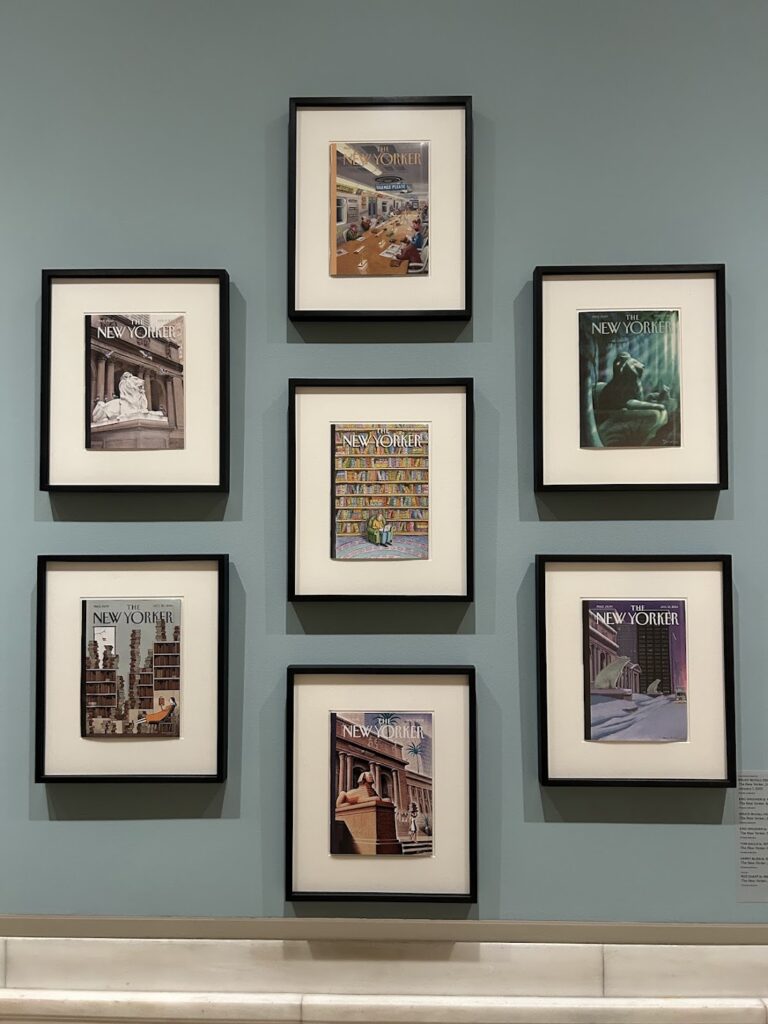
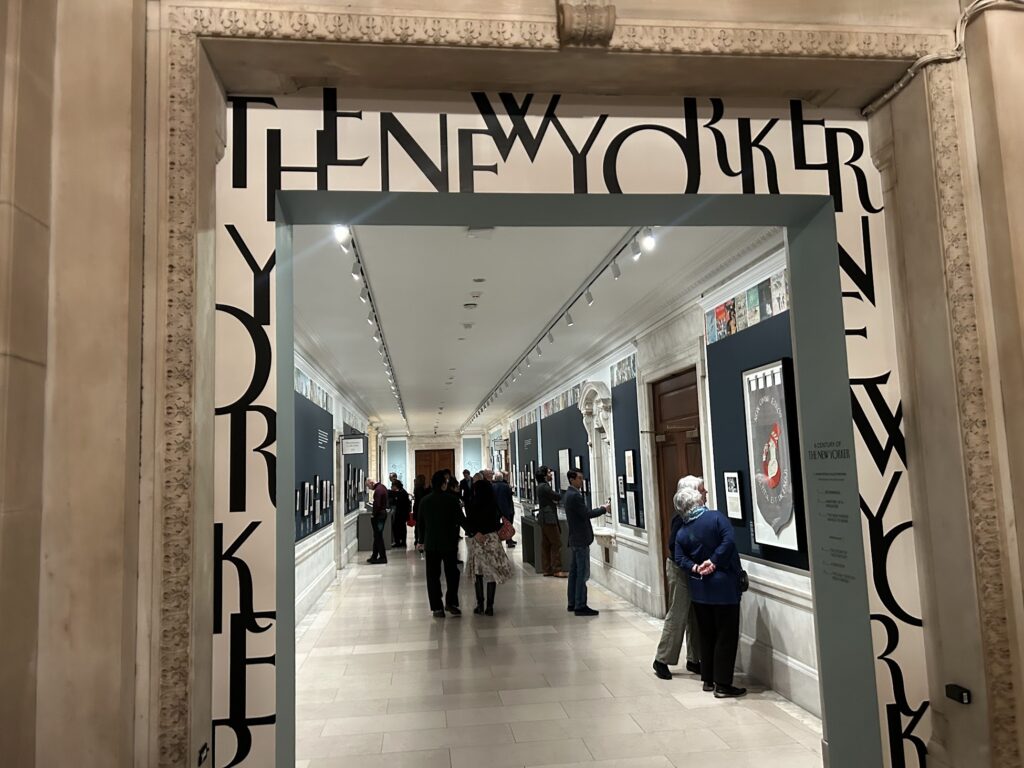
A new exhibition at the New York Public Library —  “A Century of the New Yorker” — chronicles the magazine’s history, from its origins and creation by Ross and Grant to its current era, under the editorship of David Remnick.

Greg and Tom interview the show’s two curators Julie Golia and Julie Carlsen about the treasures on display from the New Yorker’s glorious past — from the magazine’s first cover (featuring everybody’s favorite snob Eustace Tilly) to artifacts and manuscripts from the world’s greatest writers.

LISTEN NOW: THE NEW YORKER MAGAZINE


A Century of the New Yorker

Through February 21, 2026, third floor of the Stephen A. Schwarzman Building, 42nd Street and 5th Avenue

“The New York Public Library’s new major exhibition A Century of The New Yorker draws on NYPL’s collections, including the magazine’s voluminous archives and the papers of many of its contributors, to bring to life the people, stories, and ideas that made The New Yorker.”
FURTHER LISTENING

Categories
Film History

Does Pauline Kael like it? A new documentary looks at the New Yorker film critic’s tenacious career

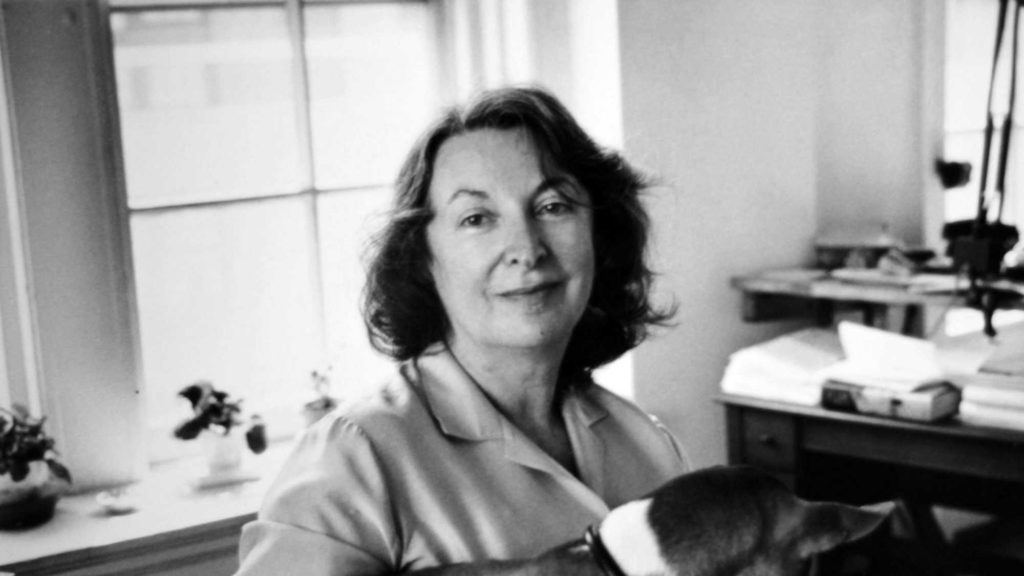
Could you imagine Pauline Kael‘s opinions of Netflix and Amazon growing influence over the motion picture industry? What would she say about watching The Irishman — made by one of her favorite film directors — on an iPhone? Would she be a fan of the Marvel Cinematic Universe? (I think we can predict that answer.)

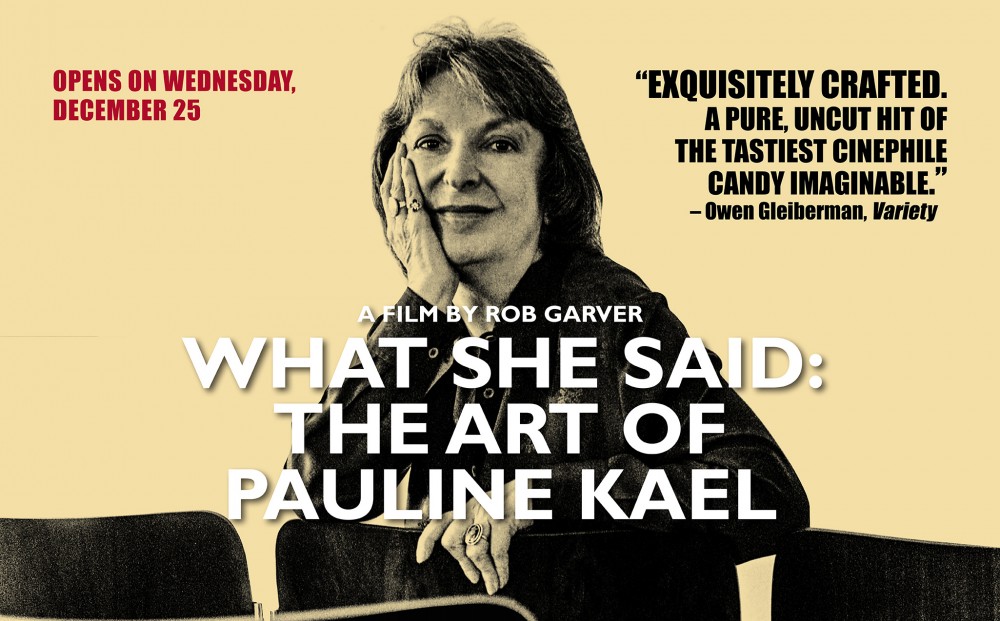
What She Said: The Art of Pauline Kael
Film Forum: Wednesday, December 25 – Tuesday, January 7

In the hugely entertaining new documentary What She Said: The Art of Pauline Kaelnow playing at the Film Forum, a venue the legendary film critic probably popped into one or two hundred times — the filmmaker Rob Garver invites the audience to imagine the presence of Kael in our modern world.

It’s a fun thought experiment as there is nobody quite like Kael — in film criticism or Twitter or any aspect of modern culture for that matter.

Kael got her start in film criticism in San Francisco — her first published review trashed Charlie Chaplin’s Limelight. From that review:

“The Chaplin of Limelight is no irreverent little clown; his reverence for his own ideas would be astonishing even if the ideas were worth consideration. They are not — and the context of the film exposes them at every turn.”

But it was her legendary run at The New Yorker magazine starting in 1967 that positioned her as the kingmaker of the modern American New Wave.

What She Said gives its audience a crash course in film history; its dozens of licensed film clips are reason enough alone sink back into your seat in pure delight. Kael celebrated both vanguard directors and celebrated so-called ‘trash’ cinema.

“Seeing trash can liberate the spectator. I don’t trust anyone who doesn’t admit having at some time in his life enjoyed trashy American movies; I don’t trust any of the tastes of people who were born with such high taste that they didn’t need to find their way through trash.”

Garver deftly balances What She Said between a sequences of nodding reverence (Kael would have had no problem with those, I suspect) and doses of hard-spun reality.

Many filmmakers and critics hated Kael; they hate Kael — to this day. And you hear from them. But nobody rejects her influence over the fate of American films.

She elevated the entire medium at the exact moment when Americans were finally responding the European New Wave. She championed the greats and even a few not-so-greats. (As the film notes, sometimes even her own taste was enigmatic.) She helped made American movies what they are today — for better or worse.

Here’s the trailer:

And after you see the movie, take a deep dive into Pauline’s columns, now posted on the New Yorker website.