Categories
Neighborhoods Podcasts

The Grand Tale of Orchard Street and Life on the Lower East Side

PODCAST The Lower East Side is one of the most important neighborhoods in America with a rich history as dense as its former living quarters. Thousands of immigrants experienced American life on these many crowded streets. In this podcast, we look at this extraordinary cultural phenomenon through the lens of one of those — Orchard Street.

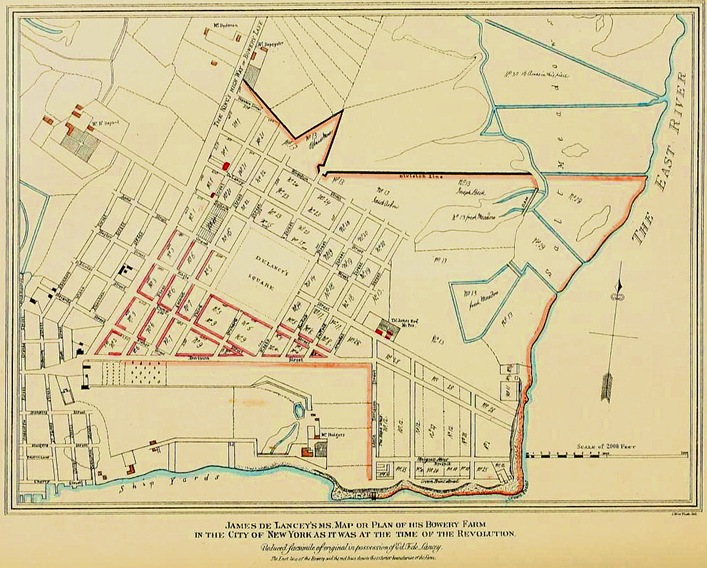
Its name traces itself to a literal orchard, owned by James De Lancey, a wealthy landowner and Loyalist during the Revolutionary War. By the 1840s the former orchard and farm was divided up into lots, and a brand new form of housing — the tenement — served new Irish and German communities who had just arrived in the United States.

A few decades later those residents were replaced by Russian and Eastern European newcomers, brought to the neighborhood due to its affordability and its established Jewish character.

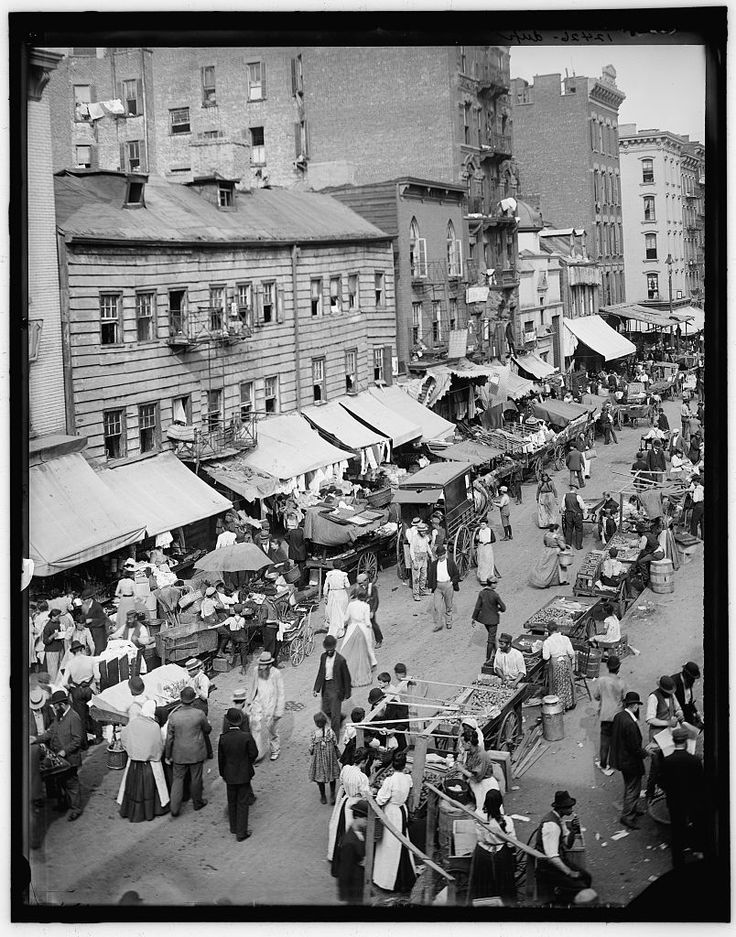
Living conditions were poor and most tenement apartment doubled as workspaces. Meanwhile, in the streets, tight conditions required a unique retail solution — the push cart, a form of independent enterprise that has given us some businesses that still thrive on Orchard Street today.

You can see this century-old life along Orchard Street today, if you know where to look. Luckily that’s what we’re here for! With some help from Adam Steinberg at the Tenement Museum, where the best place to interact with a preserved view of the old days.


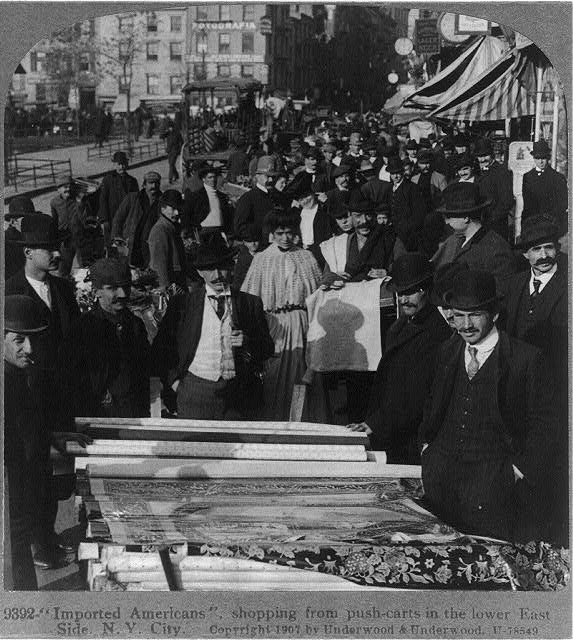
Below: “Imported Americans” — from a photo card, courtesy Library of Congress

imported

The Bowery Boys: New York City History podcast is brought to you …. by you!

Starting this month, we are doubling our number of episodes per month. Now you’ll hear a new Bowery Boys podcast every two weeks. We’re also looking to improve the show in other ways and expand in other ways as well — through publishing, social media, live events and other forms of media. But we can only do this with your help!

We are now a member of Patreon, a patronage platform where you can support your favorite content creators for as little as a $1 a month.

Please visit our page on Patreon and watch a short video of us recording the show and talking about our expansion plans. If you’d like to help out, there are five different pledge levels (and with clever names too — Mannahatta, New Amsterdam, Five Points, Gilded Age, Jazz Age and Empire State). Check them out and consider being a sponsor.

We greatly appreciate our listeners and readers and thank you for joining us on this journey so far. And the best is yet to come!


A look at the property of James De Lancey and his sophisticated plans to turn his farm into a wealthy neighborhood, probably in the spirit of St. John’s Park. The blog Manhattan Unlocked goes really deep into the story of De Lancey’s land holdings here.

1

I’m not sure where this picture was taken but it illustrates a cluster of buildings constructed before the advent of tenement construction.

11

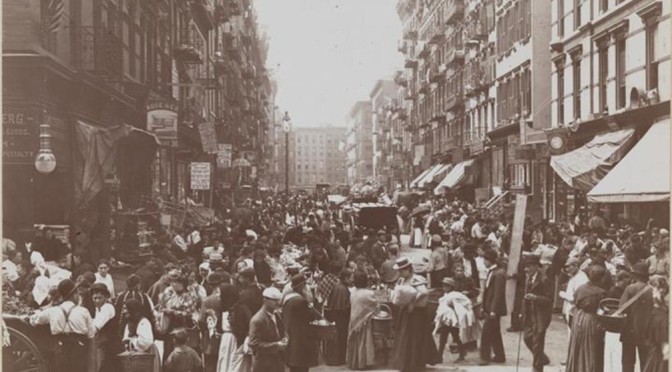
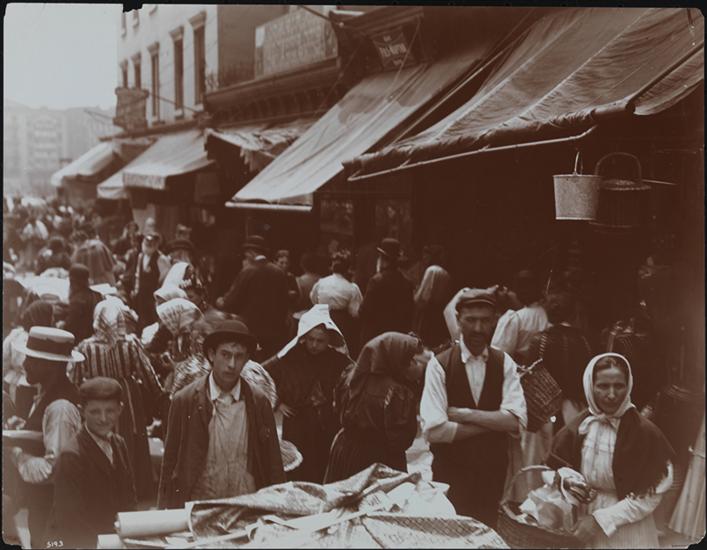
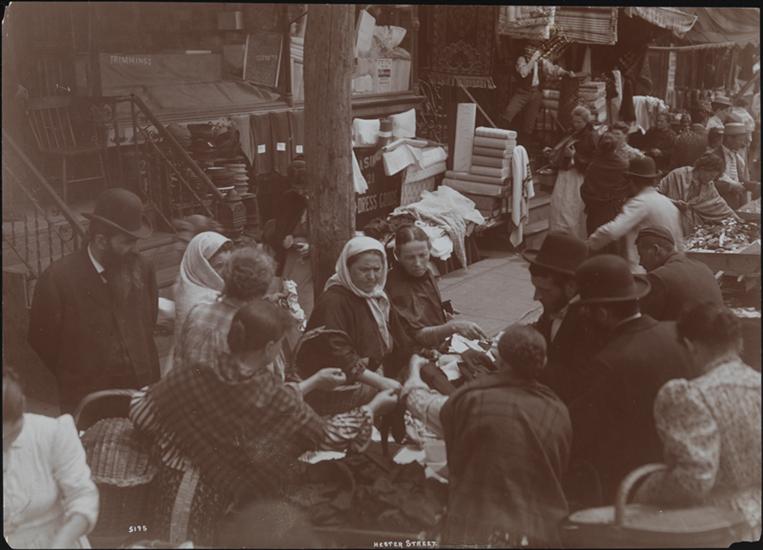
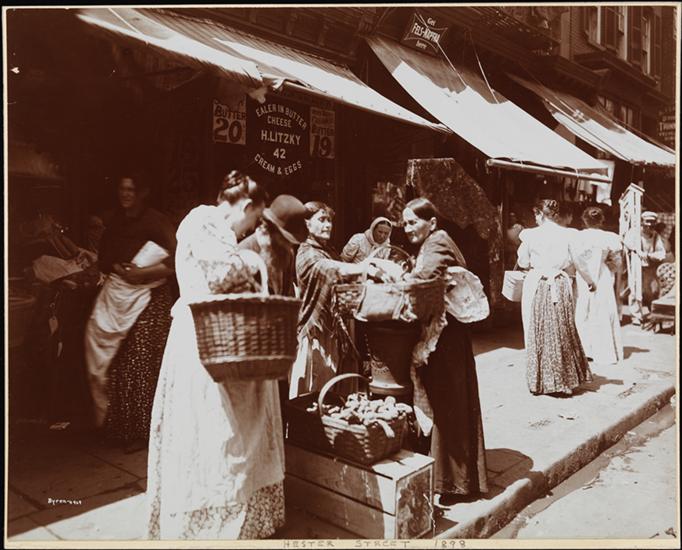
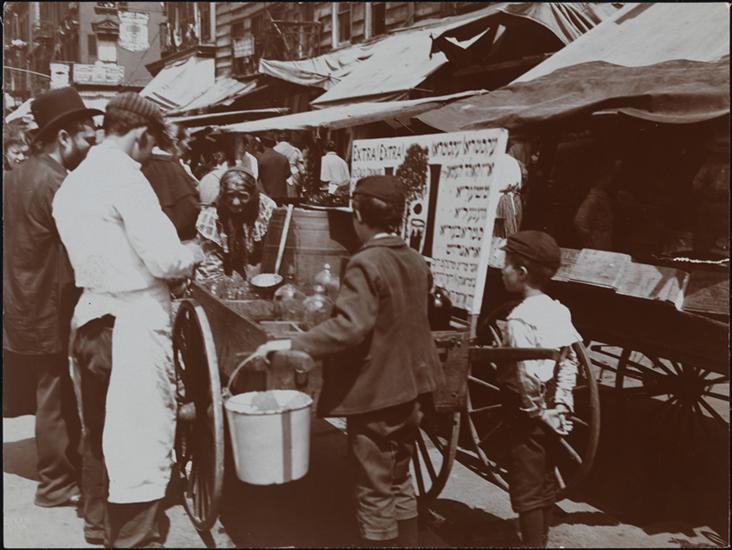
Here’s a selection of photographs from the archives of the Museum of the City of New York, illustrating the clogged streets of Orchard and Hester Streets, busy with the commerce of the day. All of these are from 1898.

1
2
3
5

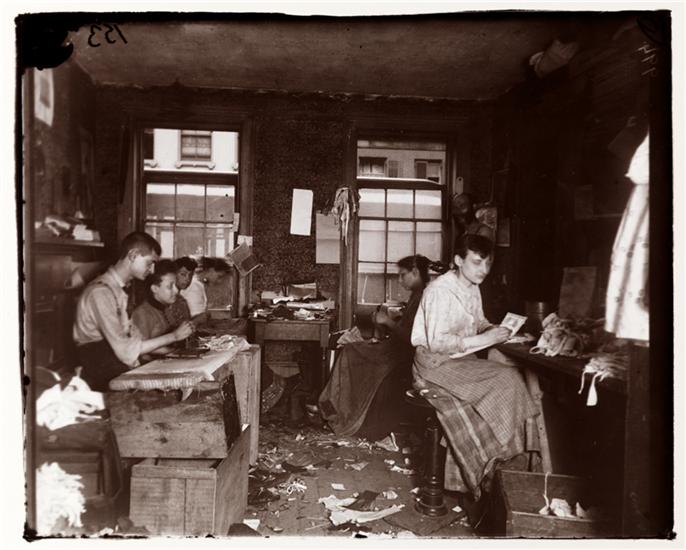
The home sweatshops, cramming an industry and several people into the parlor of a tenement building. Here’s a necktie ‘factory’ on Division Street in 1890.

Courtesy the Museum of the City of New York

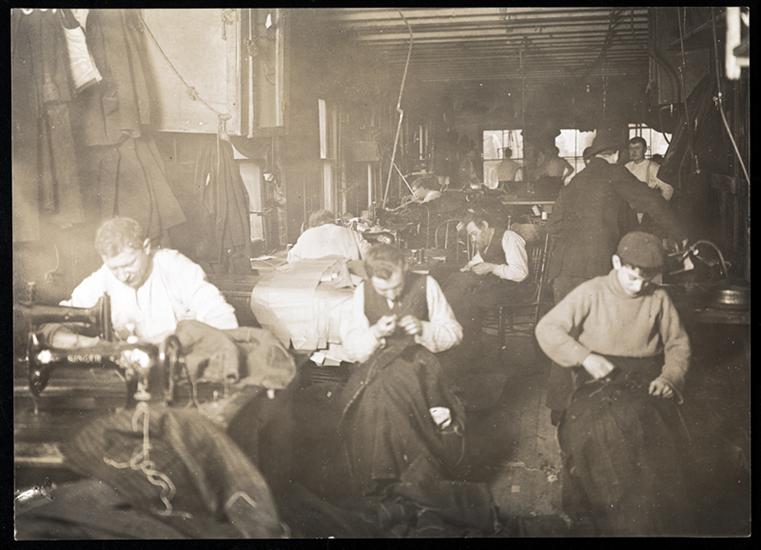
And another from 1911. Child labor in full view!

MNY8435

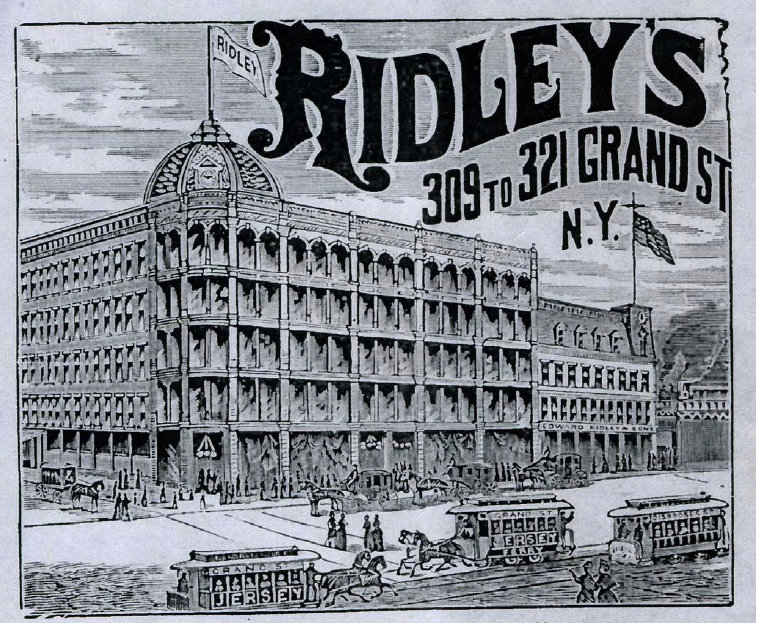
Ridley’s Department Store on the corner of Grand and Orchard Streets. They’ve really cleaned up the streets in this advertisement, haven’t they?

Courtesy the Tenement Museum

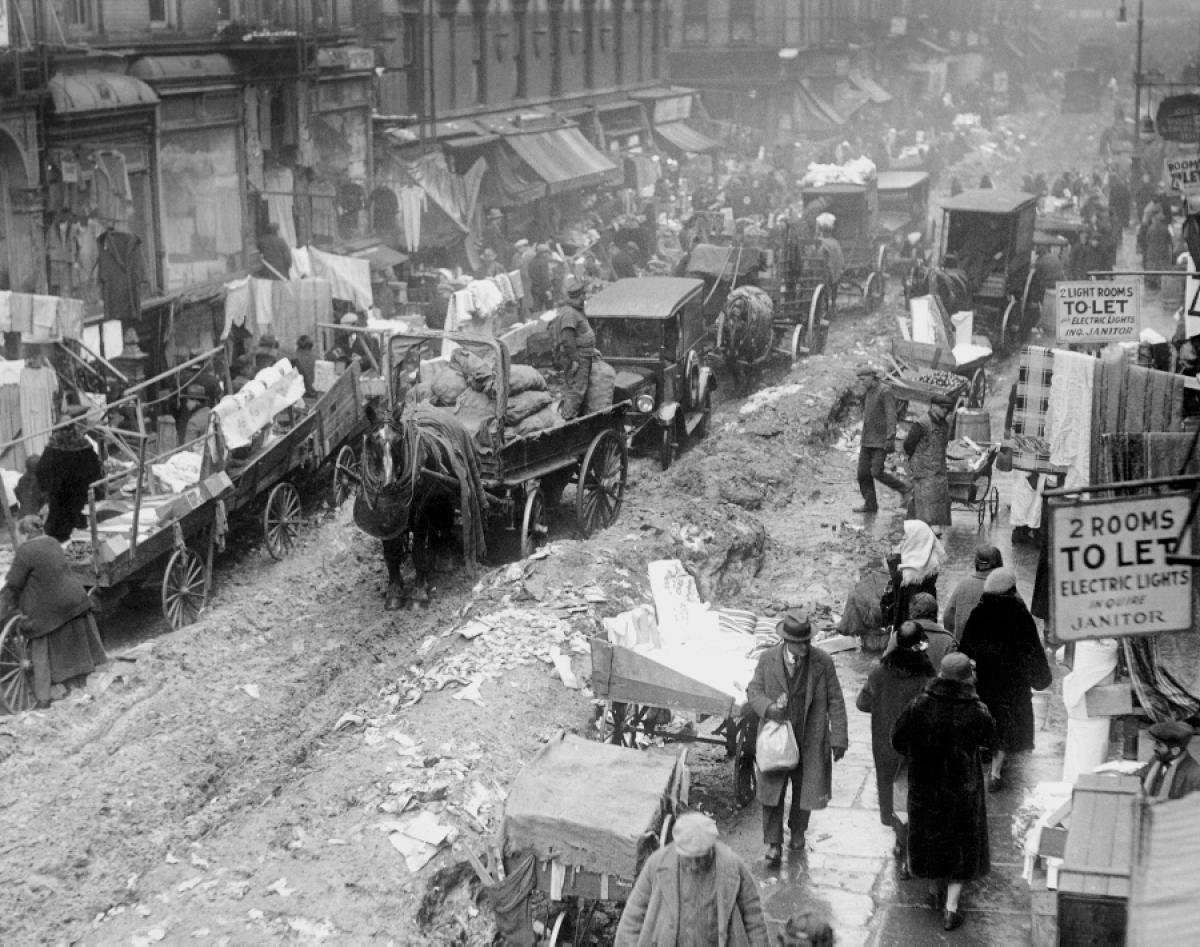
Here’s what all that mess on Orchard Street looks like in the winter! Pictured here in 1926.

Courtesy New York Daily News

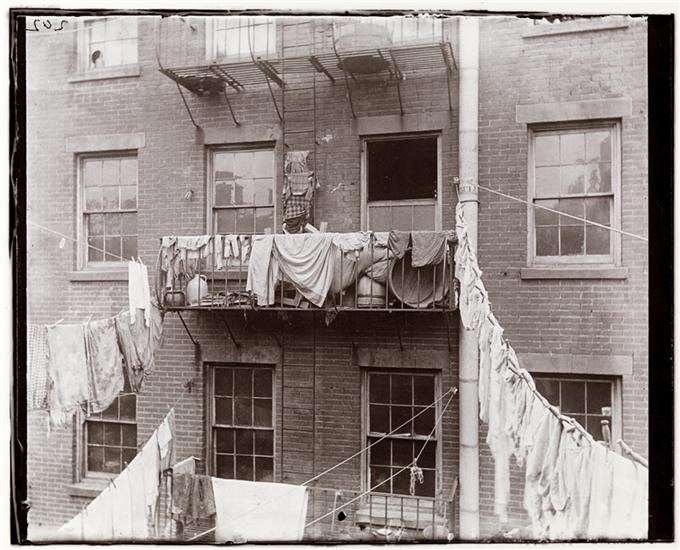
An Allen Street tenement fire escape from 1890, obviously used for more purposes than emergencies! [source]

Courtesy Museum of City of New York

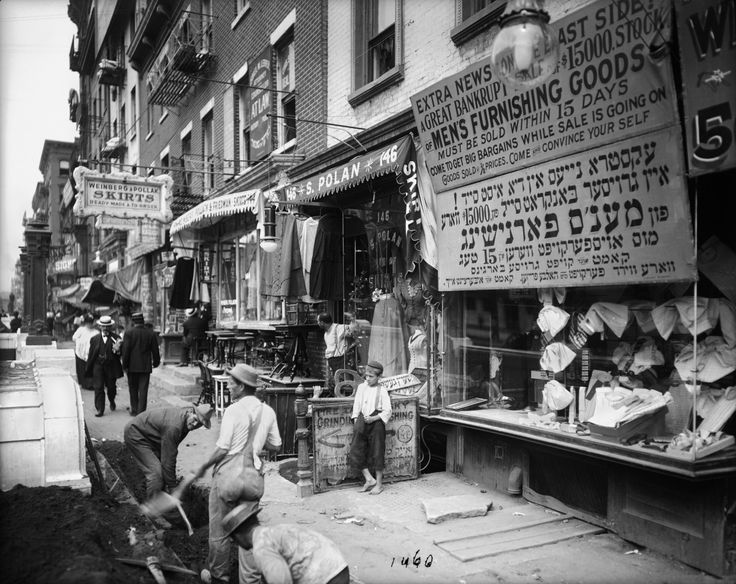
This photo was taken in 1908 (or somewhere around that date) showing a bit of the expansion of Delancey Street. Workers labor in the street while a Jewish boy looks on. (Department of Records)

12

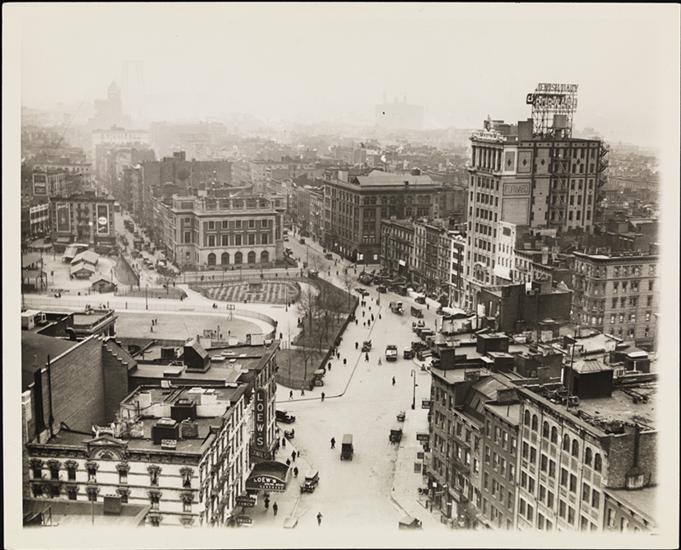
An overhead view of the intersection of East Broadway, Essex Street, Division Street and Canal Street, showing Seward Park and the library, both built to provide air and education to the Lower East Side. Photo is from 1928. [source]

9

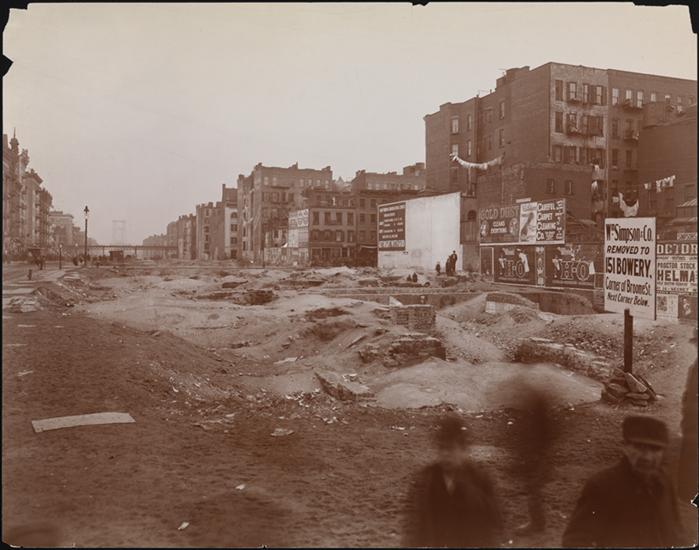
An extraordinary view of Delancey Street in 1904 during the widening process for access to the Wililamsburg Bridge.

Courtesy Museum of the City of New York

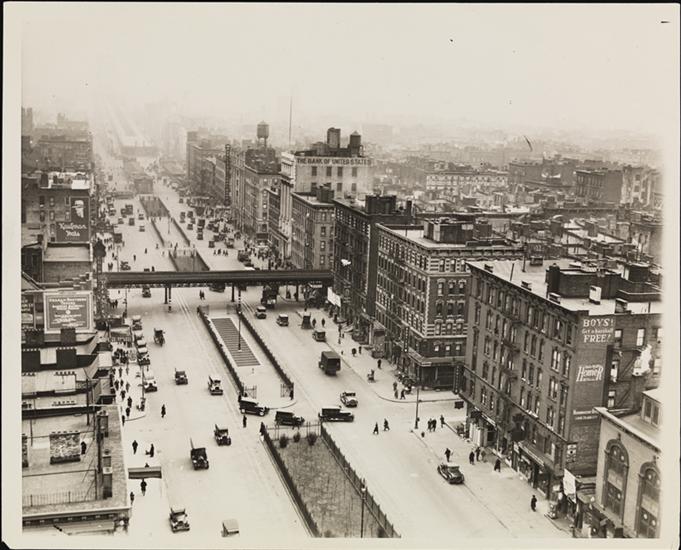
And here’s what Delancey looked like in 1928. This is from the top of a hotel from Delancey and Chrystie. You can see the elevated train that went down Allen Street. Orchard Street is the next block in the distance. Allen Street too was subject to expansion. And see the building labeled Bank of the United States? Here’s a little bit more about its fascinating history.

delancey

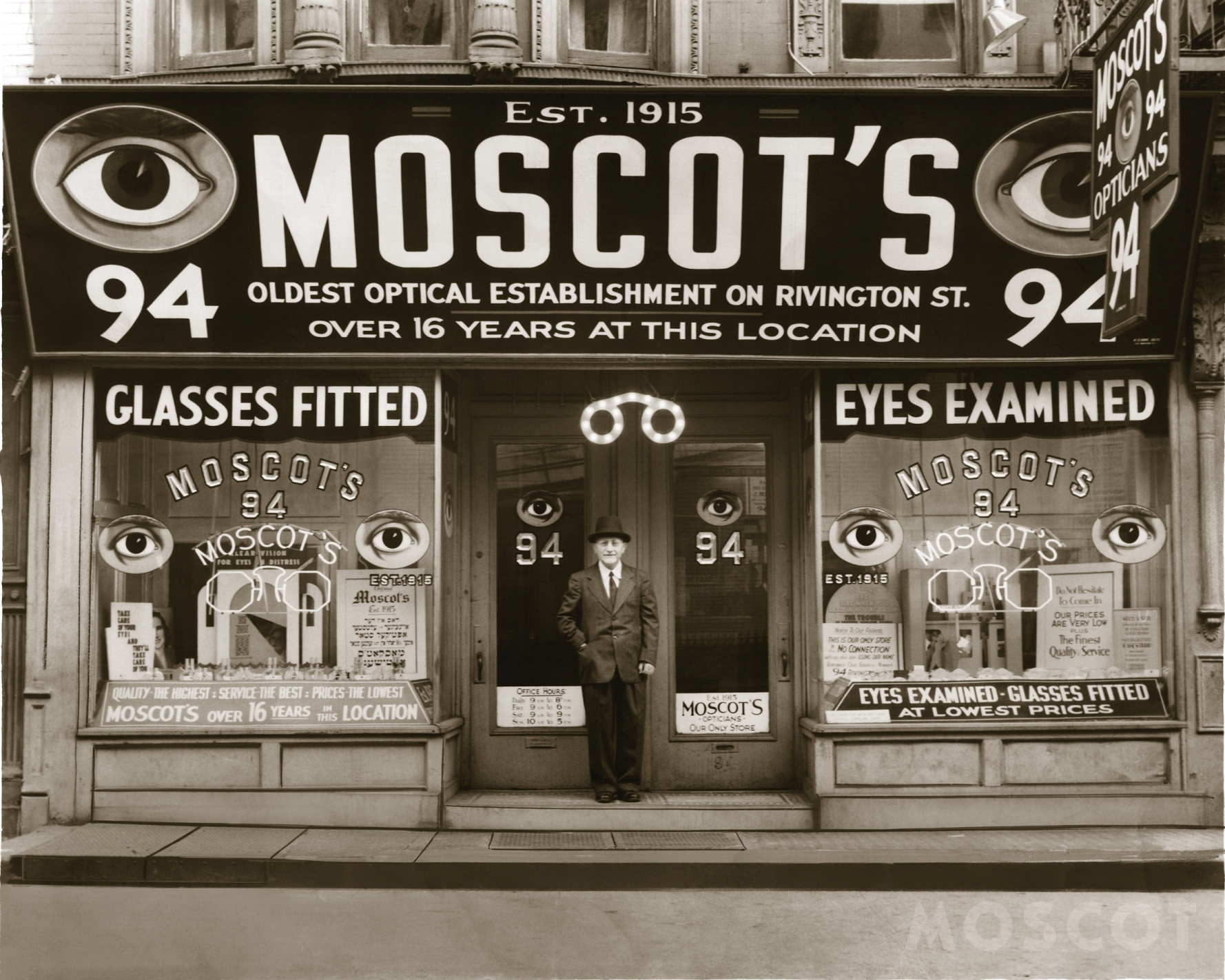
Hyman Moscot stands outside of his shop at 94 Rivington Street sometime in 1934. He began his business selling eyeglasses out of a pushcart.

Courtesy Sol Moscot
Courtesy Sol Moscot

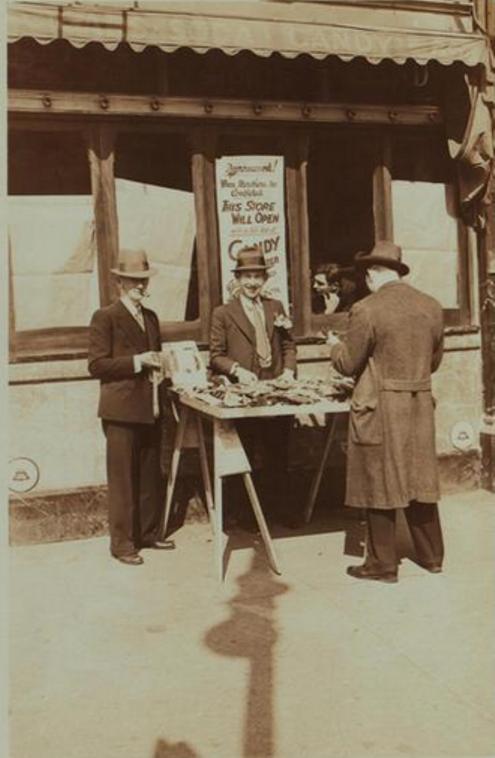
A men’s tie peddler has some success selling his ties on the street corner at Orchard Street and Delancey. Courtesy New York Public Library. Click here for more historic views of this corner.

Courtesy New York Public Library

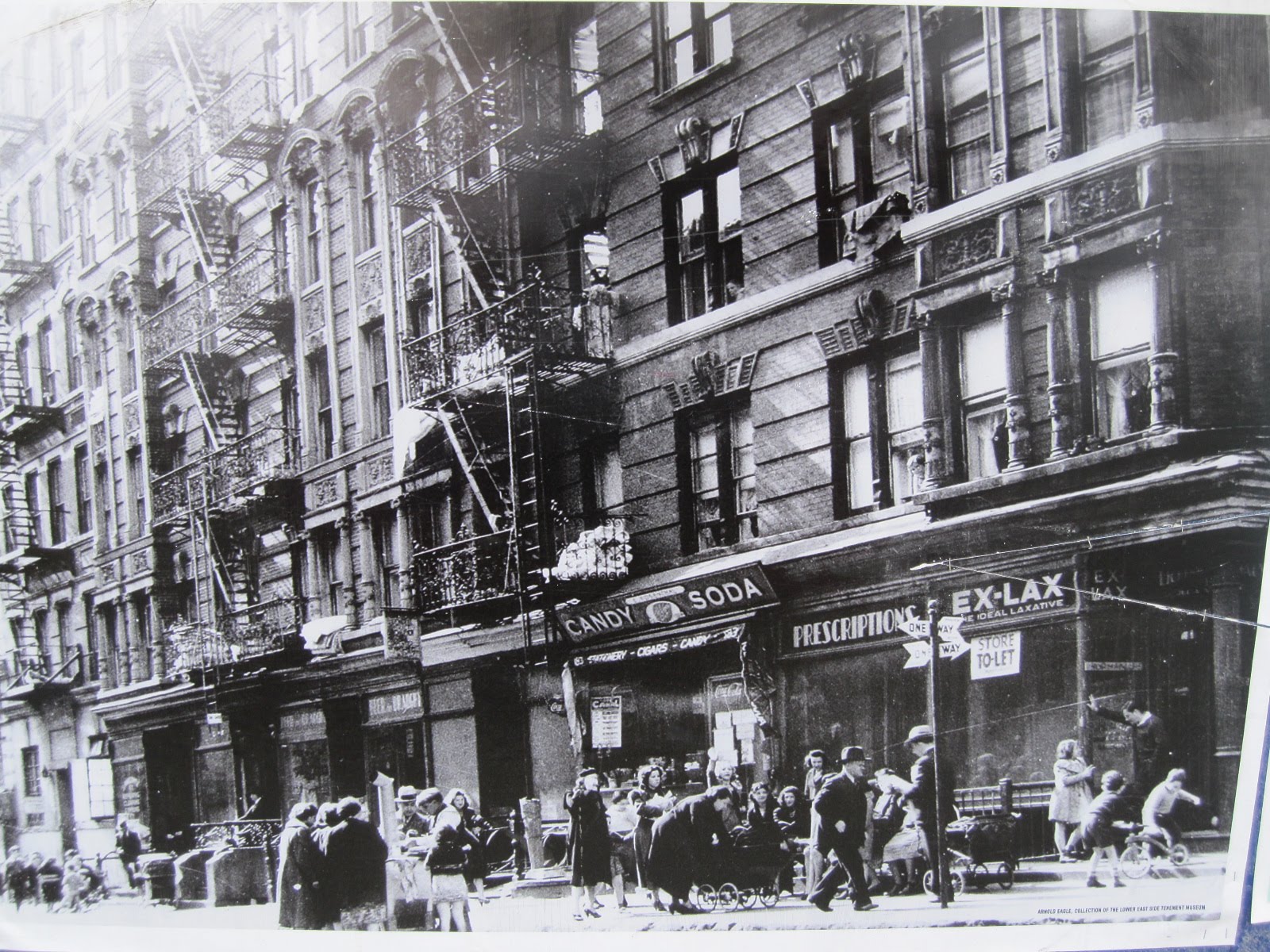
The Lower East Side in the 1930s — less crowded in the streets with very active storefronts.

Courtesy Trace Work
Courtesy Trace Work


Jarmulowsky’s Bank at Orchard and Canal. The perch at top is no longer on the building. It was originally built there because Sender Jarmulowsky wanted to have the tallest building in the Lower East Side.

bank

The interior of 97 Orchard Street (today’s Tenement Museum) in 1988.

Courtesy the Tenement Museum

A big thanks to Adam Steinberg at the Tenement Museum! Visit their website for more information.

Categories
It's Showtime Podcasts

Diamond Girl: How Mae West Brought ‘Sex’ and Scandal to Broadway

PODCAST Mae West (star of I’m No Angel and She Done Him Wrong) would come to revolutionize the idea of American sexuality, challenging and lampooning ideas of femininity while wielding a suggestive and vicious wit. But before she was America’s diamond girl, she was the pride of Brooklyn! In this podcast, we bring you the origin story of this icon and the wacky events of 1927 that brought her brand of swagger to the attention of the world.

1The Brooklyn girl started on the vaudeville stage early, inspired by the influences of performers like Eva Tanguay. She soon proved too smart for the small stuff and set her aim towards Broadway — but on her terms.

West’s play Sex introduced her devastating allure in the service of a shocking tale of prostitution. It immediately found an audience in 1926 even if the critics were less than enamored. But it’s when she devised an even more shocking play — The Drag — that city leaders became morally outraged and vowed to shut her down forever.

From Bushwick to Midtown, from the boards of Broadway to the workhouse of Welfare Island — this is the story of New York’s ultimate Sex scandal.


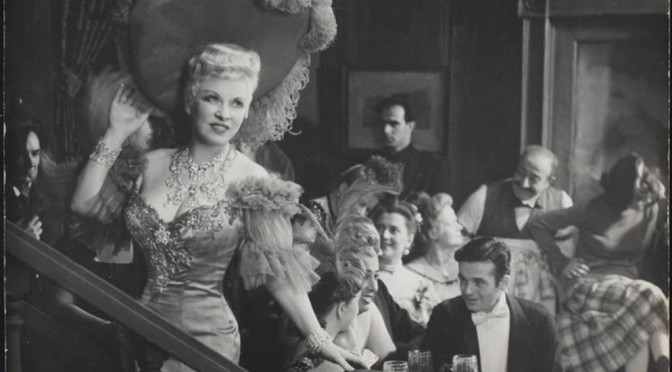
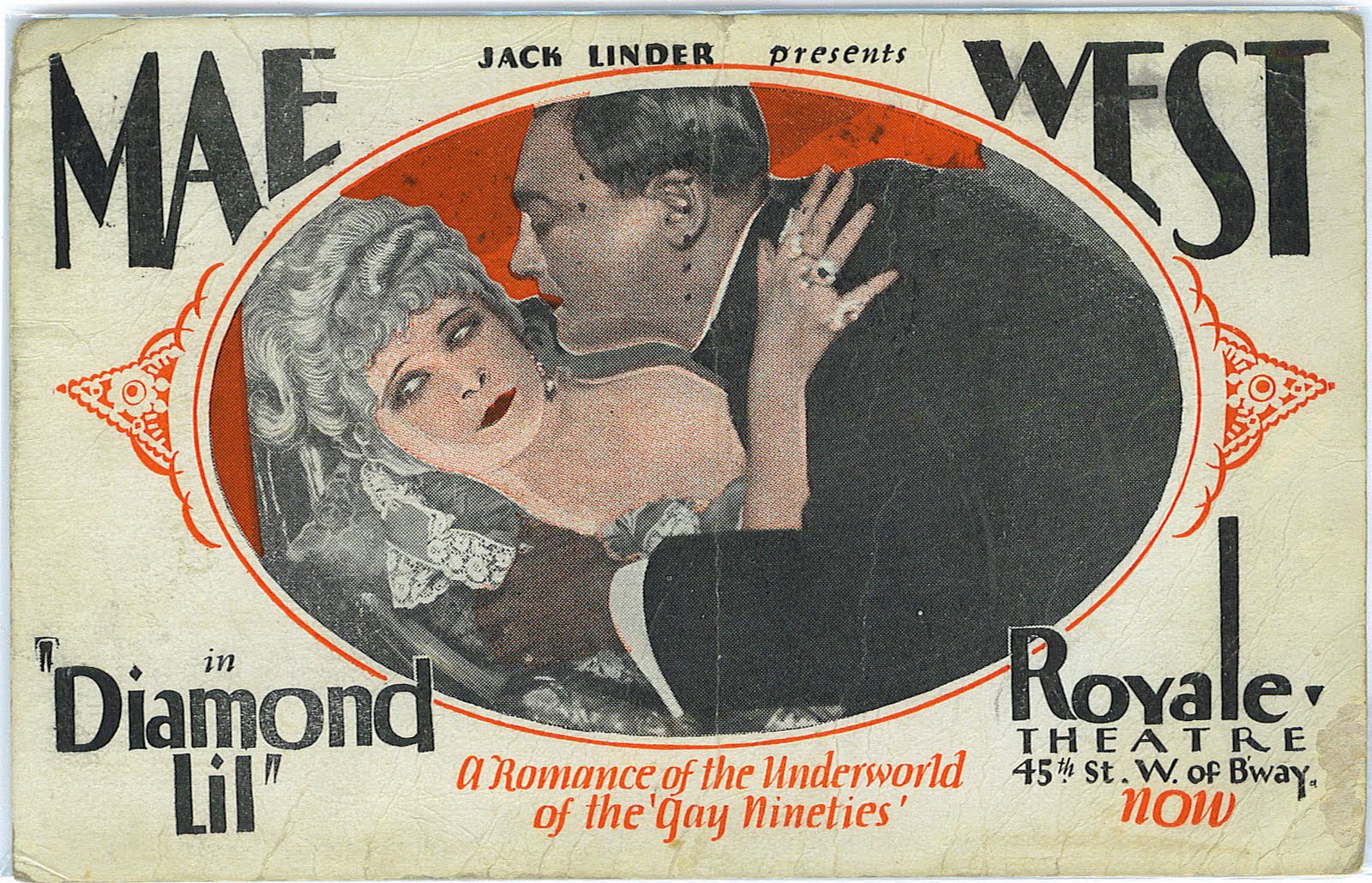
Picture at top: Mae West in a publicity still for her Broadway hit Diamond Lil. (Courtesy Museum of City of New York)

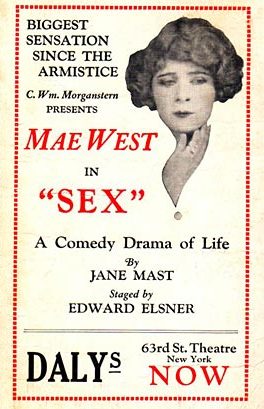
Inset: The poster for Sex by Jane Mast (aka Mae West)

Special thanks to Esther Belle from The West (a Mae West-inspired coffeehouse and bar in Williamsburg). We recorded an interview with her about the legacy of Mae West but weren’t able to use it. But it will be available for Patreon supporters!


The Bowery Boys: New York City History podcast is brought to you …. by you!

Starting this month, we are doubling our number of episodes per month. Now you’ll hear a new Bowery Boys podcast every two weeks. We’re also looking to improve the show in other ways and expand in other ways as well — through publishing, social media, live events and other forms of media. But we can only do this with your help!

We are now a member of Patreon, a patronage platform where you can support your favorite content creators for as little as a $1 a month.

Please visit our page on Patreon and watch a short video of us recording the show and talking about our expansion plans. If you’d like to help out, there are five different pledge levels (and with clever names too — Mannahatta, New Amsterdam, Five Points, Gilded Age, Jazz Age and Empire State). Check them out and consider being a sponsor.

We greatly appreciate our listeners and readers and thank you for joining us on this journey so far. And the best is yet to come!


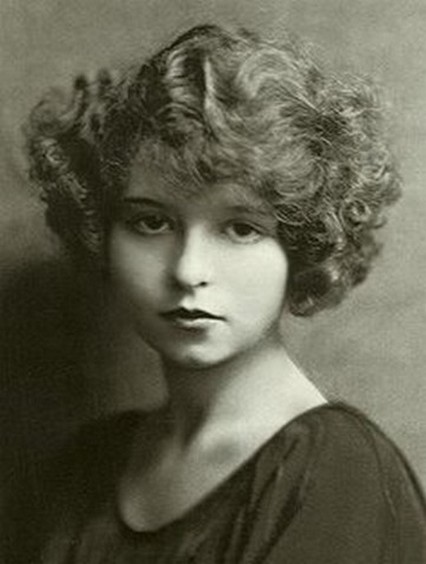
A young Mae West, already a seasoned performer by her teenage years.

Courtesy Notes On The Road

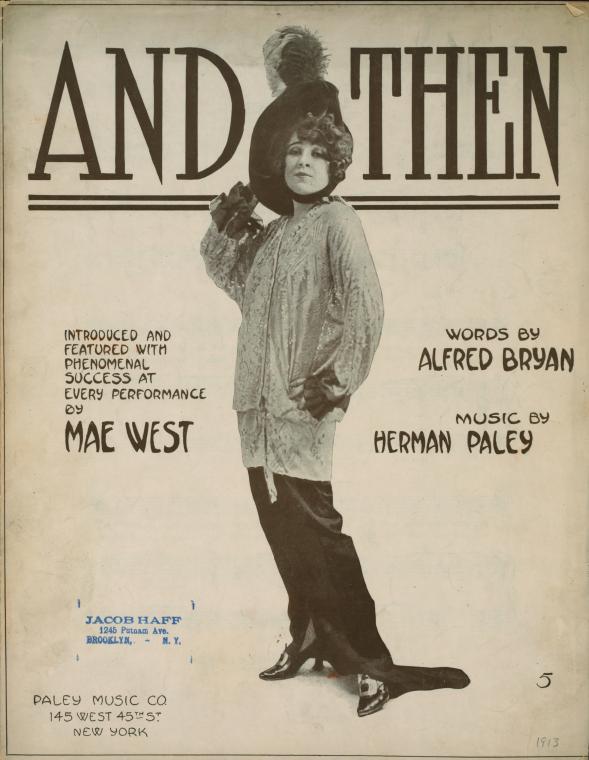
From Mae West’s vaudeville days, a piece of Tin Pan Alley sheet-music she performed in the stage:

Courtesy New York Public Library

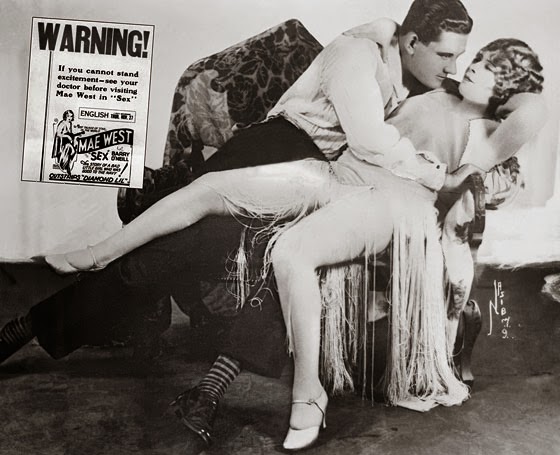
A saucy promotional still from Sex

4

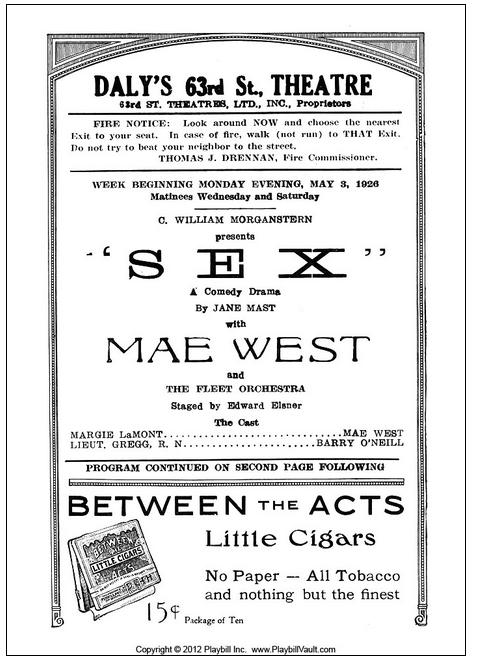
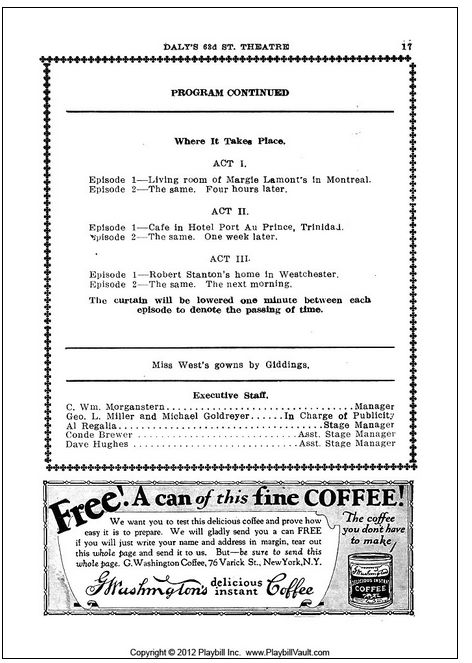
From the original program for Sex:

Courtesy Playbill Vault

1

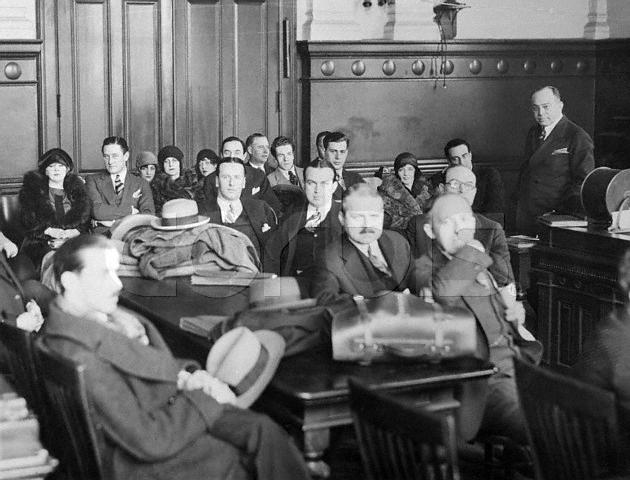
Mae West at the Jefferson Market courthouse:

Original caption: Cast of  Tried By Jury.  New York, New York:  Photo shows scene in courtroom of general sessions part II at start of members of  company.  Mae West and Barry O'Niel, in productions leading roles, can be seen at extreme left. March 28, 1927 New York, New York, USA
Original caption: Cast of Tried By Jury. New York, New York: Photo shows scene in courtroom of general sessions part II at start of members of company. Mae West and Barry O’Niel, in productions leading roles, can be seen at extreme left. March 28, 1927 New York, New York, USA

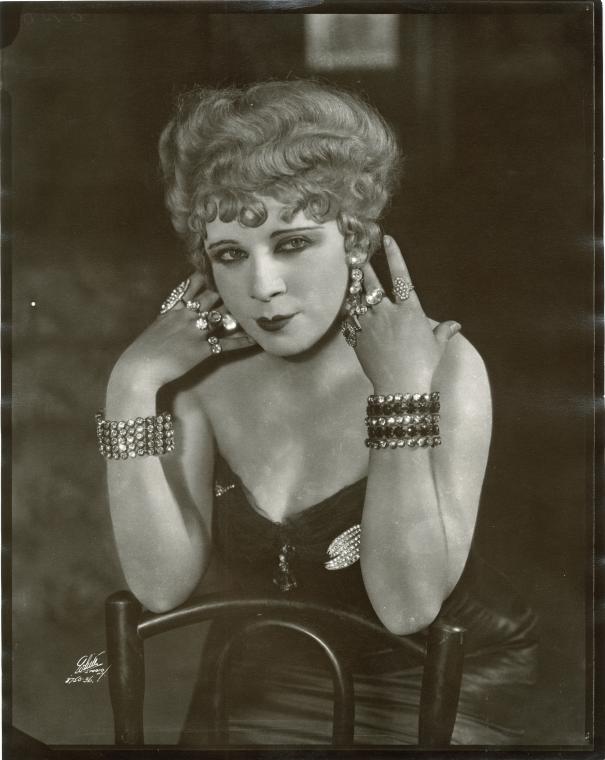
Mae West in the original photography for the 1928 production of Diamond Lil. She attempted during this period to open the controversial show The Pleasure Man but it was shut down after two days. (Courtesy New York Public Library)

1

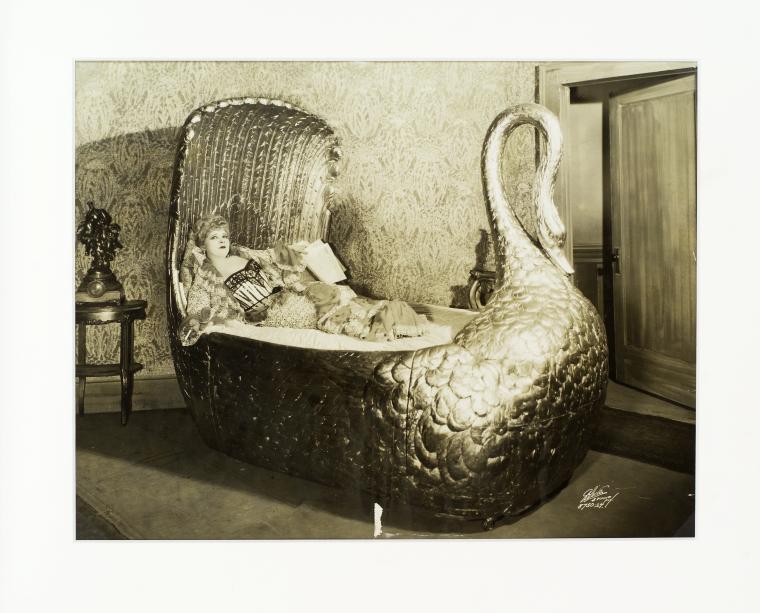
Another odd shot from Diamond Lil, of Mae reclining in a golden swan bed. (source)

Courtesy New York Public Library

5

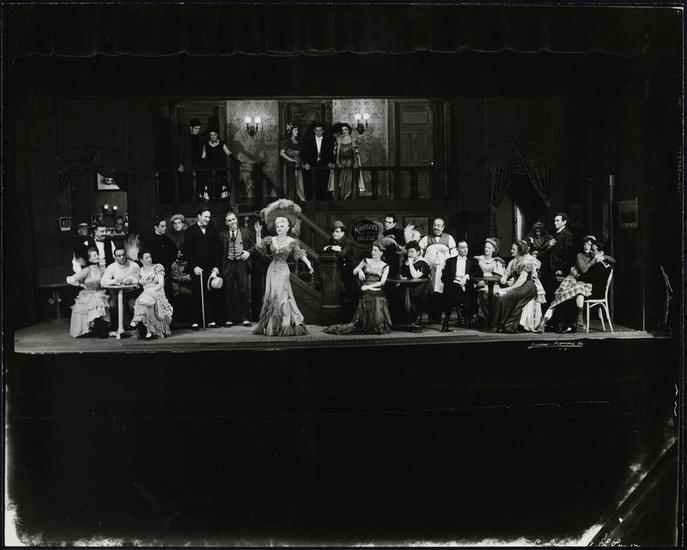
Mae West in the 1949 Broadway revival of Diamond Lil. Once a provocateur of the stage, she settled into her larger-than-life personae in later years, formed mostly from her successes in this role (and its film version She Done Him Wrong). (Courtesy Museum of the City of New York)

Courtesy the Museum of the City of New York

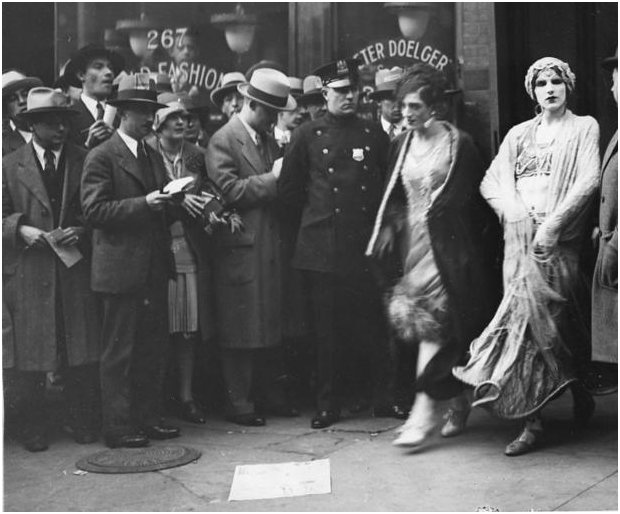
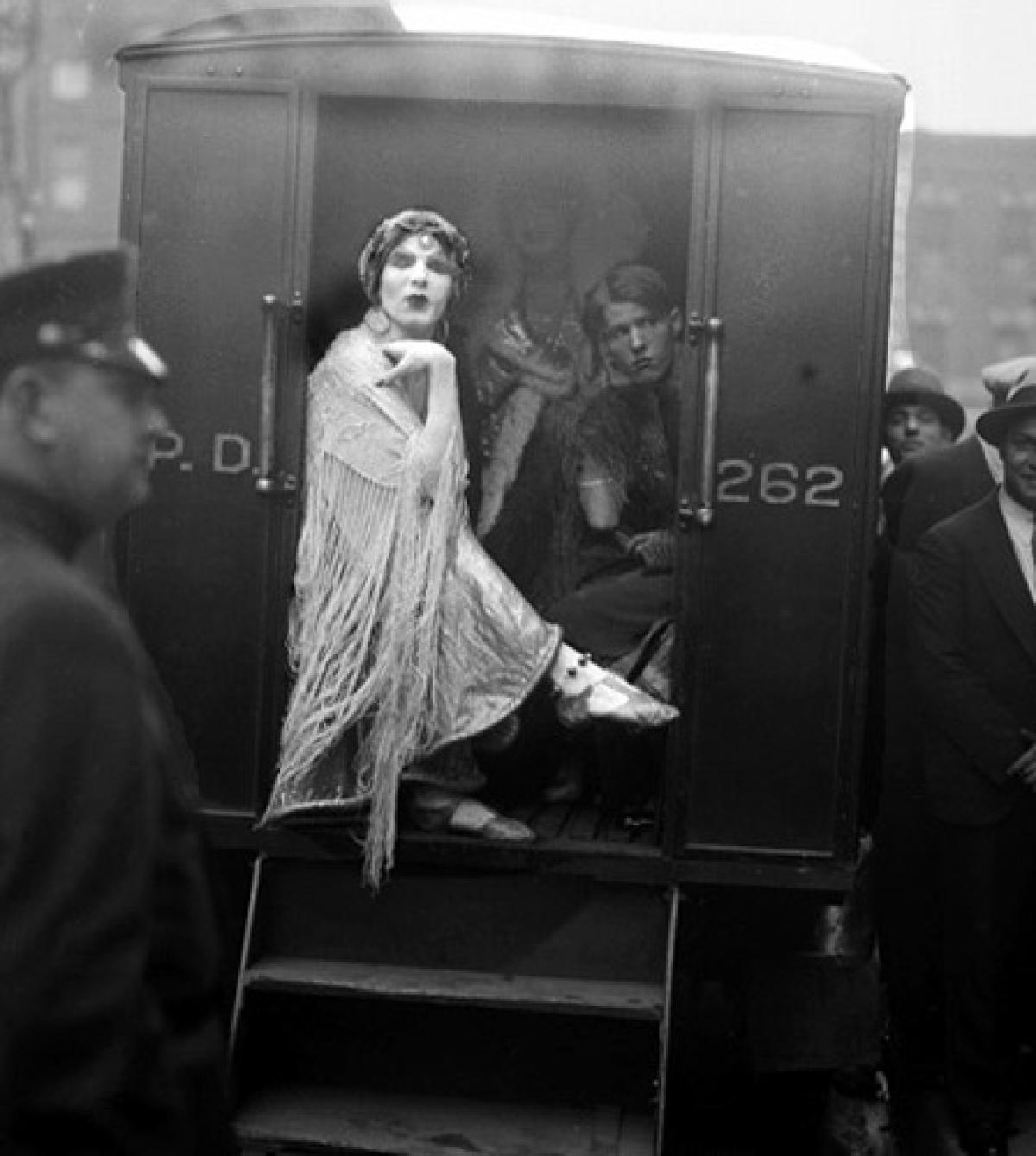
Members of the cast of The Pleasure Man being arrested by police, 1928.

Courtesy Queer Music Heritage -- http://queermusicheritage.com/fem-arts6.html
Courtesy Queer Music Heritage — http://queermusicheritage.com/fem-arts6.html

Courtesy New York Daily News

Mae West (and a young Cary Grant) in She Done Him Wrong

In the hilarious I’m No Angel:

Ladies and gentlemen, Mae West and Mr. Ed:

And her last film — the camp classic Sextette

Categories
Brooklyn History Podcasts

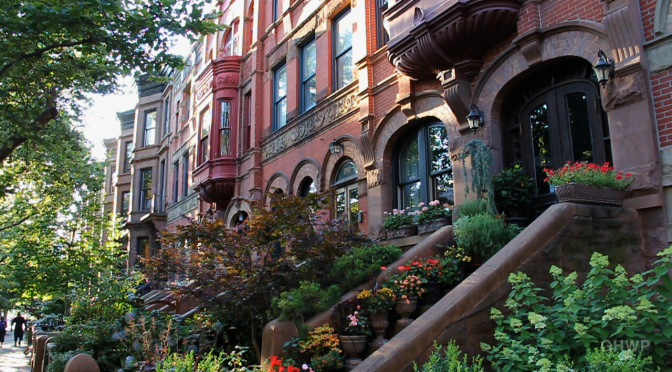
Park Slope and the Story of Brownstone Brooklyn

PODCAST Park Slope — or simply the park slope, as they used to say — is best known for its spectacular Victorian-era mansions and brownstones, one of the most romantic neighborhoods in all of Brooklyn. It’s also a leading example of the gentrifying forces that are currently changing the make-up of the borough of Brooklyn to this day.

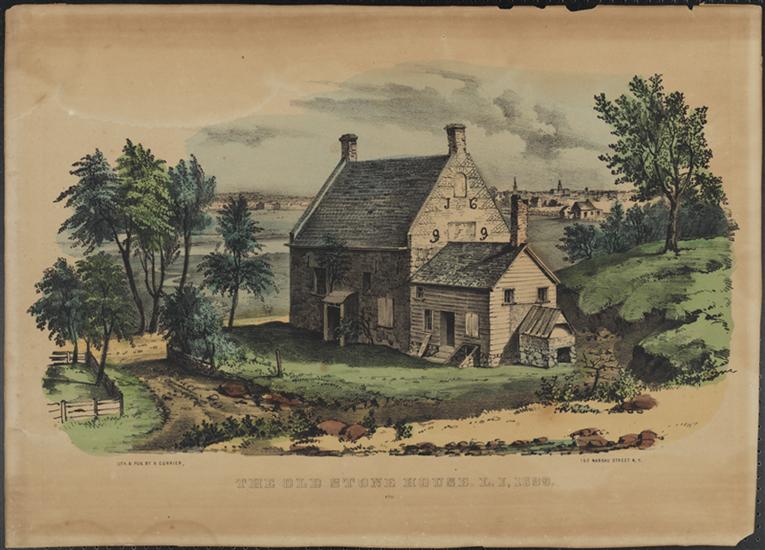
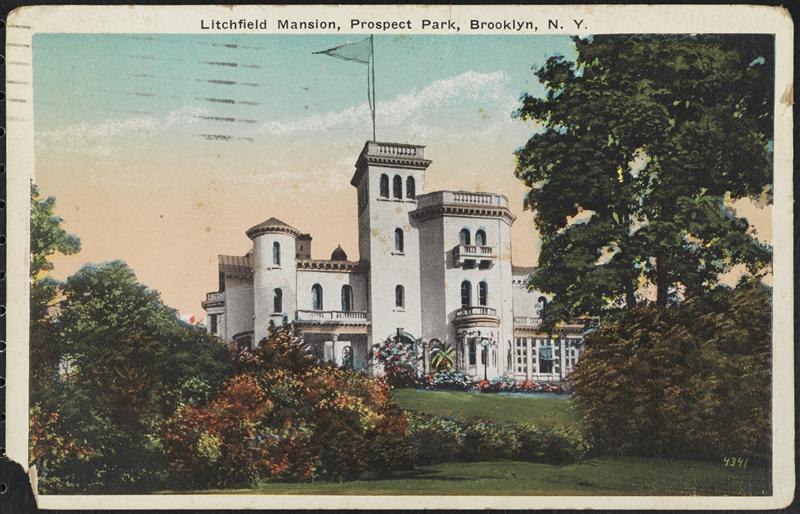
During the 18th century this sloping land was subject to one of the most demoralizing battles of the Revolutionary War, embodied today by the Old Stone House, an anchor of this changing neighborhood. In the 1850s, the railroad baron Edwin Clark Litchfield brought the first real estate development to this area in the form of his fabulous villa on the hill. By the 1890s the blocks were stacked with charming house, mostly for occupancy by wealthy families.

Circumstances during the Great Depression and World War II reconfigured most of these old (and old fashioned) homes into boarding houses and working-class housing. Then a funny thing happens, something of a surprising development in the 1960s: the arrival of the brownstoners, self-proclaimed — pioneers — who refurbished deteriorating homes.

The revitalization of Park Slope has been a mixed blessing as later waves of gentrification and rising prices threaten to push out both older residents and original gentrifiers alike.

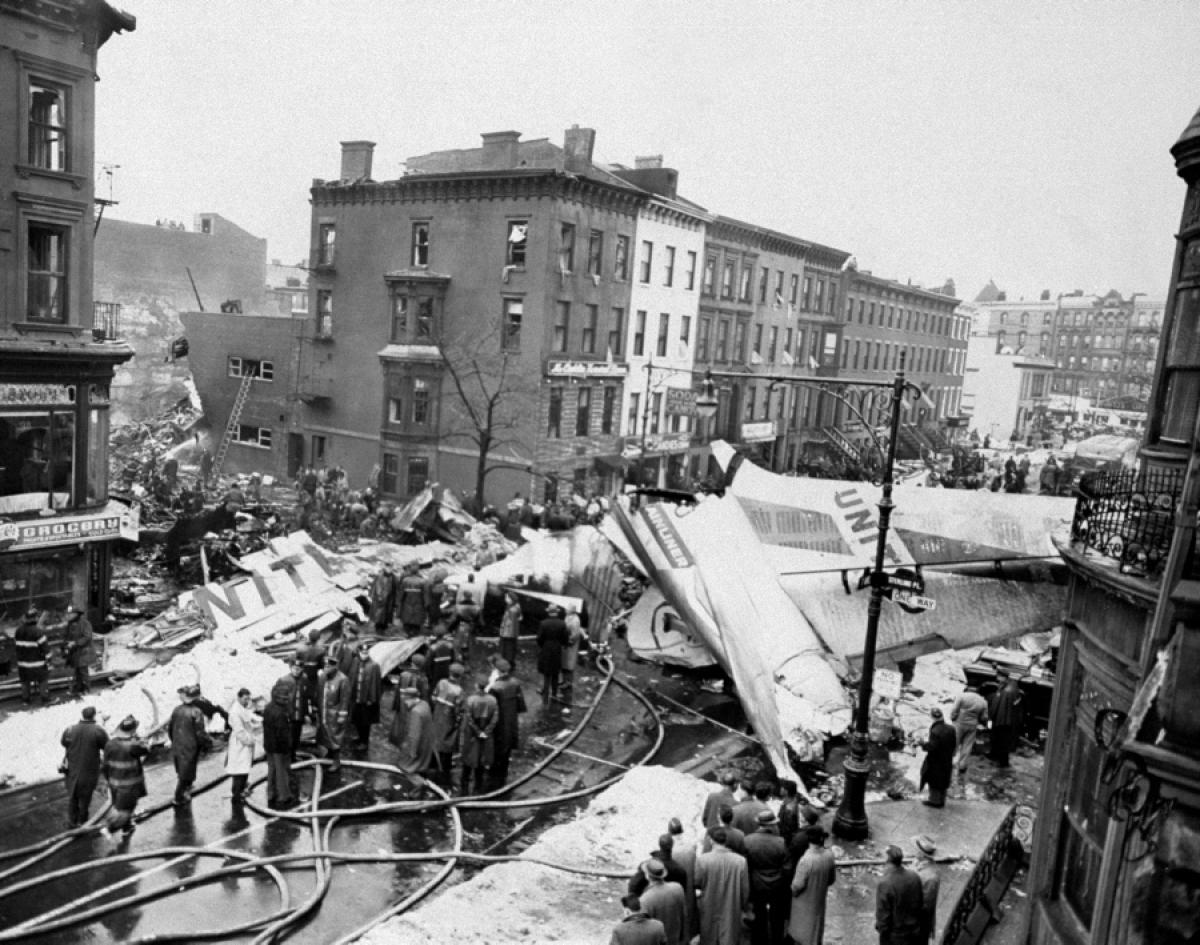
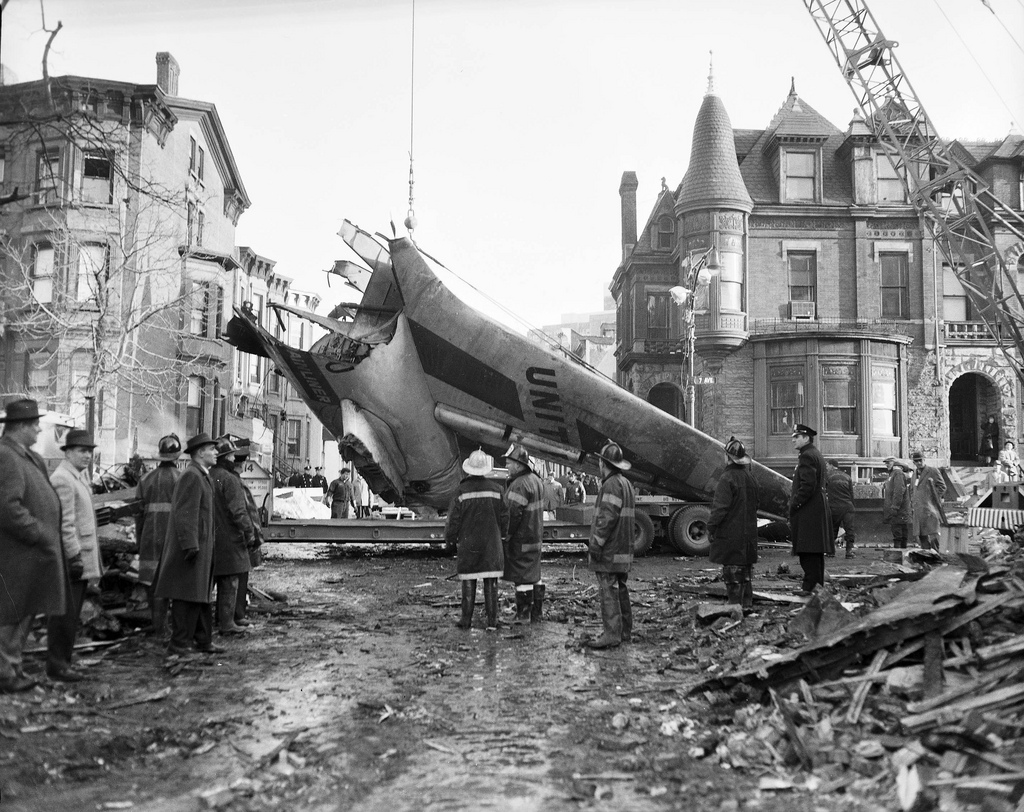
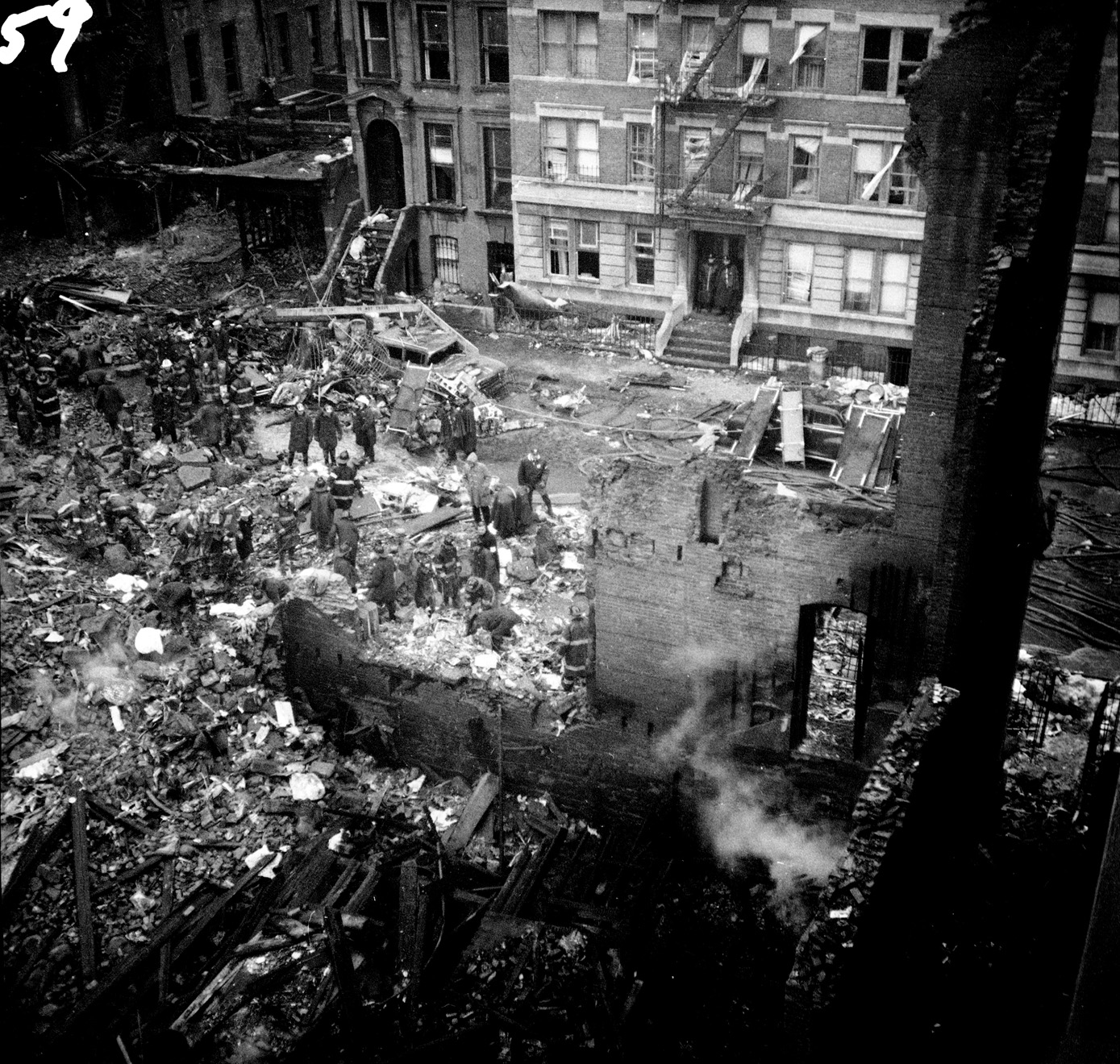
PLUS: The terrifying details of one of the worst plane crashes in American history, a disaster that almost took out one of the oldest corners of the neighborhood.

And a special thanks to our guests on this show — Kim Maier from the Old Stone House; Julie Golia, Director of Public History, Brooklyn Historical Society; and  John Casson and Michael Cairl, both of Park Slope Civic Council.


The Bowery Boys: New York City History podcast is brought to you …. by you!

Starting this month, we are doubling our number of episodes per month. Now you’ll hear a new Bowery Boys podcast every two weeks. We’re also looking to improve the show in other ways and expand in other ways as well — through publishing, social media, live events and other forms of media. But we can only do this with your help!

We are now a member of Patreon, a patronage platform where you can support your favorite content creators for as little as a $1 a month.

Please visit our page on Patreon and watch a short video of us recording the show and talking about our expansion plans. If you’d like to help out, there are five different pledge levels (and with clever names too — Mannahatta, New Amsterdam, Five Points, Gilded Age, Jazz Age and Empire State). Check them out and consider being a sponsor.

We greatly appreciate our listeners and readers and thank you for joining us on this journey so far. And the best is yet to come!


The Vechte Cortelyou House (aka the Old Stone House) depicted as it looked in 1699 (from a hand colored lithograph by the firm of Nathaniel Currier, MCNY)

MNY323785

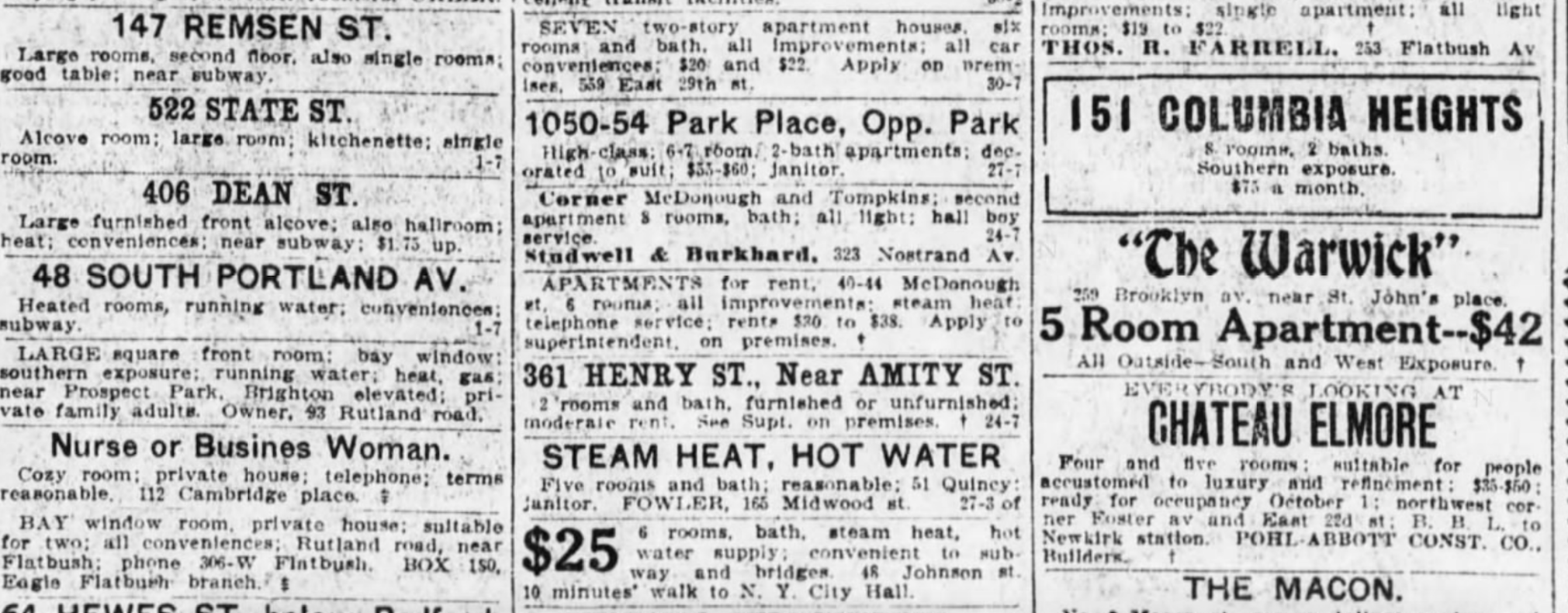
A collection of classified ads from the December 1, 1912 issue of the Brooklyn Daily Eagle, offering several living options in the park slope area.

Screen Shot 2015-05-01 at 9.03.50 AM
 
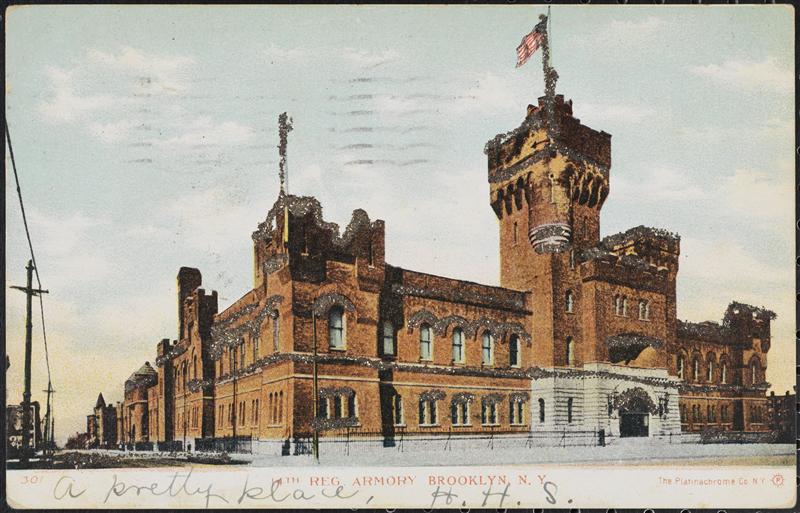
The stark Fourteenth Street Armory, located in the South Slope, depicted here as it looked in 1906 — “a pretty place” (MCNY)
M3Y44090
 
 
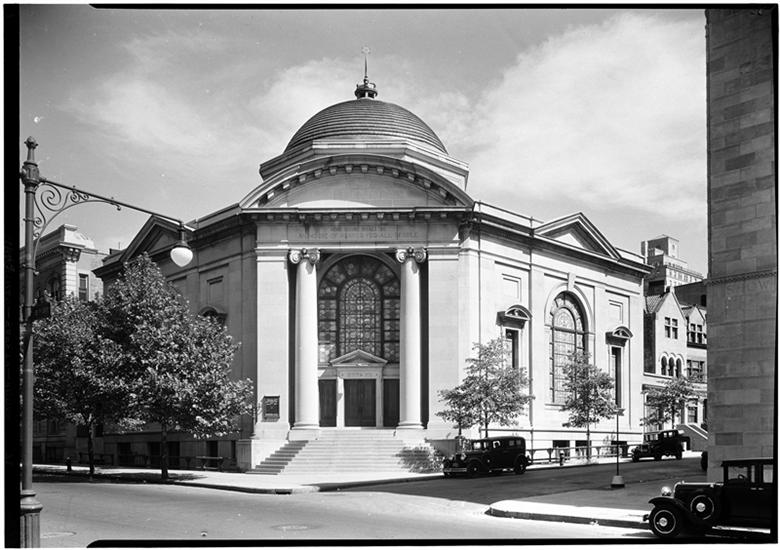
Congregation Beth Elohim, pictured here on September 16, 1929, located at Garfield Place and 8th Avenue. (MCNY)
MNY195546

The horrific place crash of December 16, 1960 — United Airlines Flight 826, bound for Idlewild Airport, colliding with Trans World Airlines Flight 266, heading to LaGuardia Airport. 128 passengers were killed, along with six people on the ground. (Top picture courtesy New York Daily News; the two after are from the New York Fire Deparment. You can find further images here)

park-slope-plane-crash-1960
6523090255_8a5f5ab891_b
6523086749_f7564b2665_o

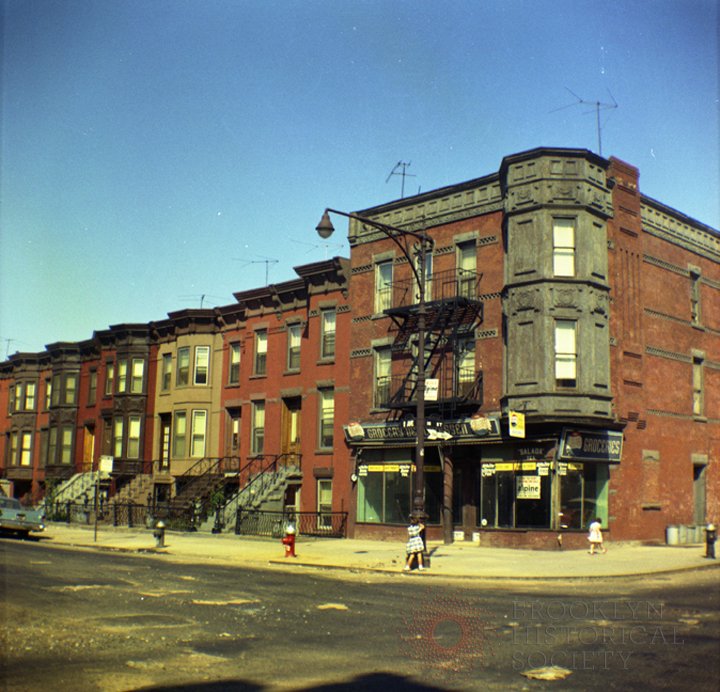
Some images from 1961 by John Morrell from the archives of the Brooklyn Historical Society:

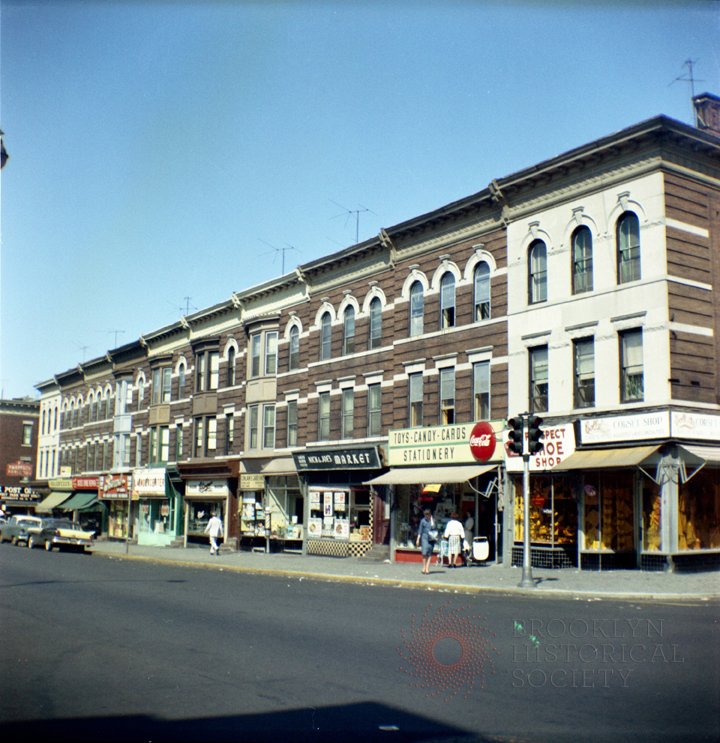
A view along Prospect Park West at and 16th Street and Windsor Place.

V19749246

View of east side of 8th Avenue between 15th and 16th Streets looking north. n.e. cor. 16th Street (right) & 8th Avenue.

V19749250

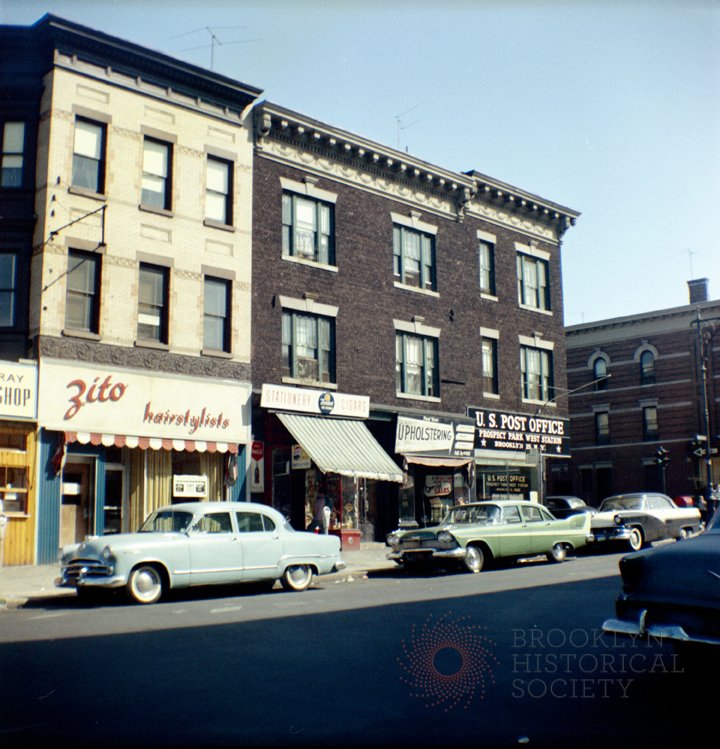
Prospect Park West looking south toward Prospect Park/branch, U.S. Post Office (at northeast corner of Prospect Park W. & 16th Street).

V19749245

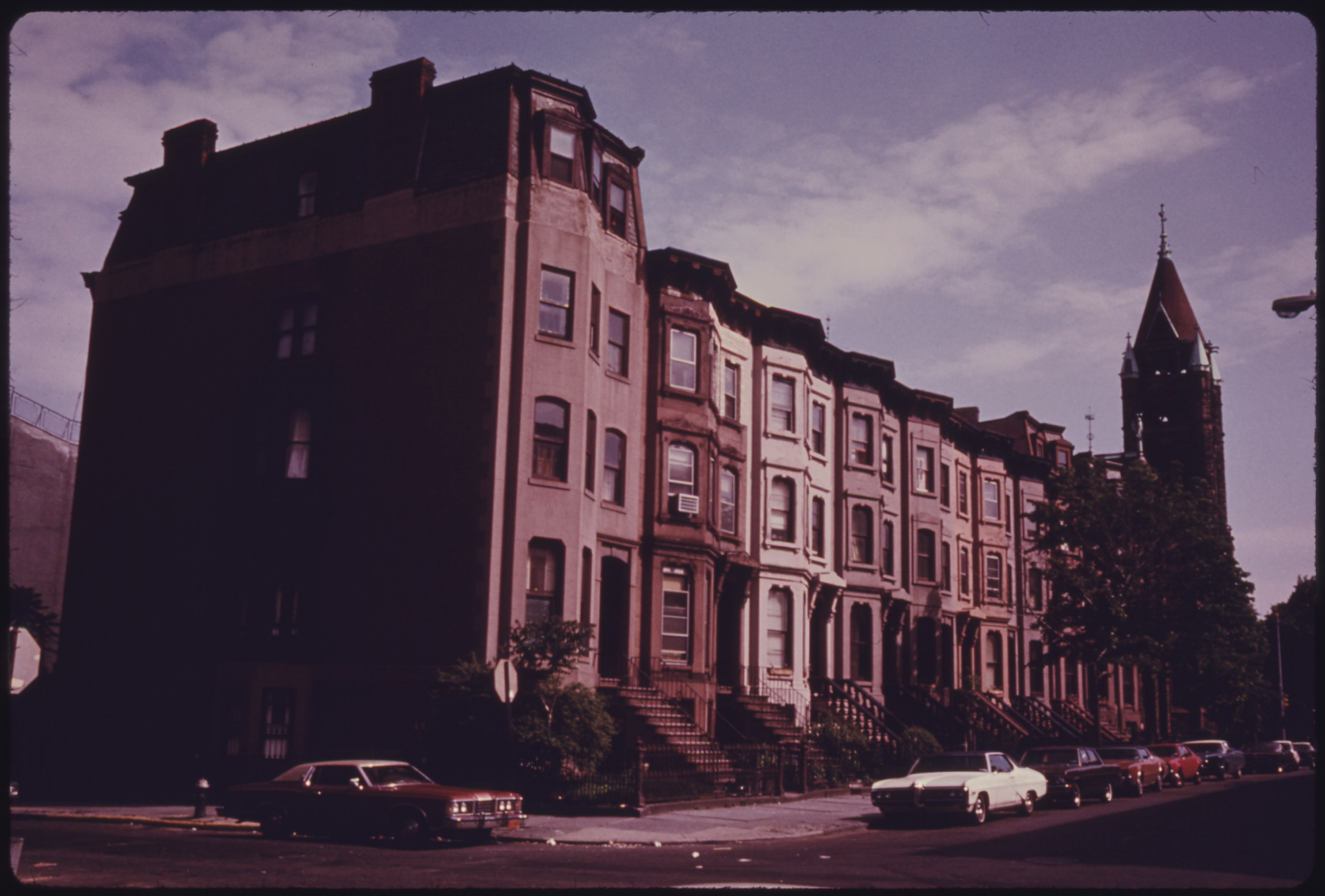
By the 1970s so mansions and brownstones close to the park were getting renovated by ‘pioneers’ with the means to restore these homes to their original splendor.

Landscape

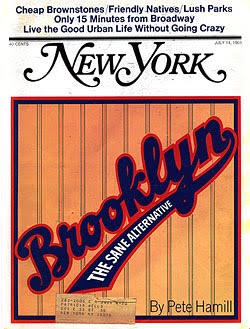
In 1969, New York Magazine touted the ‘radical’ alternative of moving to Brooklyn in an article by Pete Hamill:

1969-0714-cover-250

TOP PHOTOGRAPH by Luci West from Moving Postcard

Categories
Parks and Recreation Podcasts

Bryant Park: The Fall and Rise of Midtown’s Most Elegant Public Space

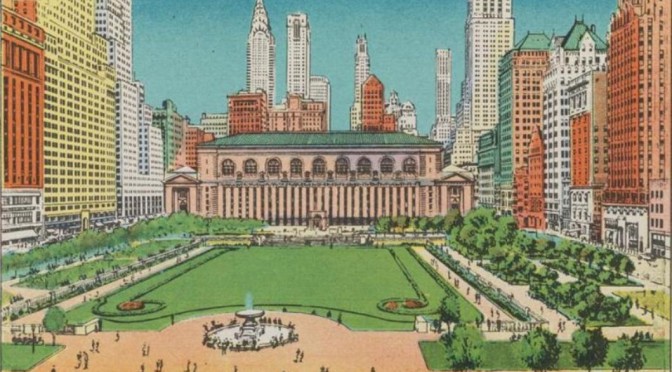
NEW PODCAST  In our last show, we left the space that would become Bryant Park as a disaster area; its former inhabitant, the old Crystal Palace, had tragically burned to the ground in 1858. The area was called Reservoir Square for its proximity to the imposing Egyptian-like structure to its east, but it wouldn’t keep that name for long.

William Cullen Bryant was a key proponent to the creation of Central Park, but it would here that the poet and editor would receive a belated honor in the 1884. With the glorious addition of the New York Public Library in 1911, the park received some substantial upgrades, including its well-known fountain. Over twenty years later, it took on another curious present — a replica of Federal Hall as a tribute to George Washington.

By the 1970s Bryant Park was well known as a destination for drug dealers and most people shied away from its shady paths, even during the day. It would take a unique plan to bring the park back to life and a little help from Hollywood and the fashion world to turn it into New York’s most elegant park.


The Bowery Boys: New York City History podcast is brought to you …. by you!

Starting with this episode, we are doubling our number of episodes per month. Now you’ll hear a new Bowery Boys podcast every two weeks. We’re also looking to improve the show in other ways and expand in other ways as well — through publishing, social media, live events and other forms of media. And we need your help to make these expansion plans happen.

We are now a member of Patreon, a patronage platform where you can support your favorite content creators for as little as a $1 a month.

Please visit our page on Patreon and watch a short video of us recording the show and talking about our expansion plans. If you’d like to help out, there are five different pledge levels (and with clever names too — Mannahatta, New Amsterdam, Five Points, Gilded Age, Jazz Age and Empire State). Check them out and consider being a sponsor.

We greatly appreciate our listeners and readers and thank you for joining us on this journey so far. And the best is yet to come!


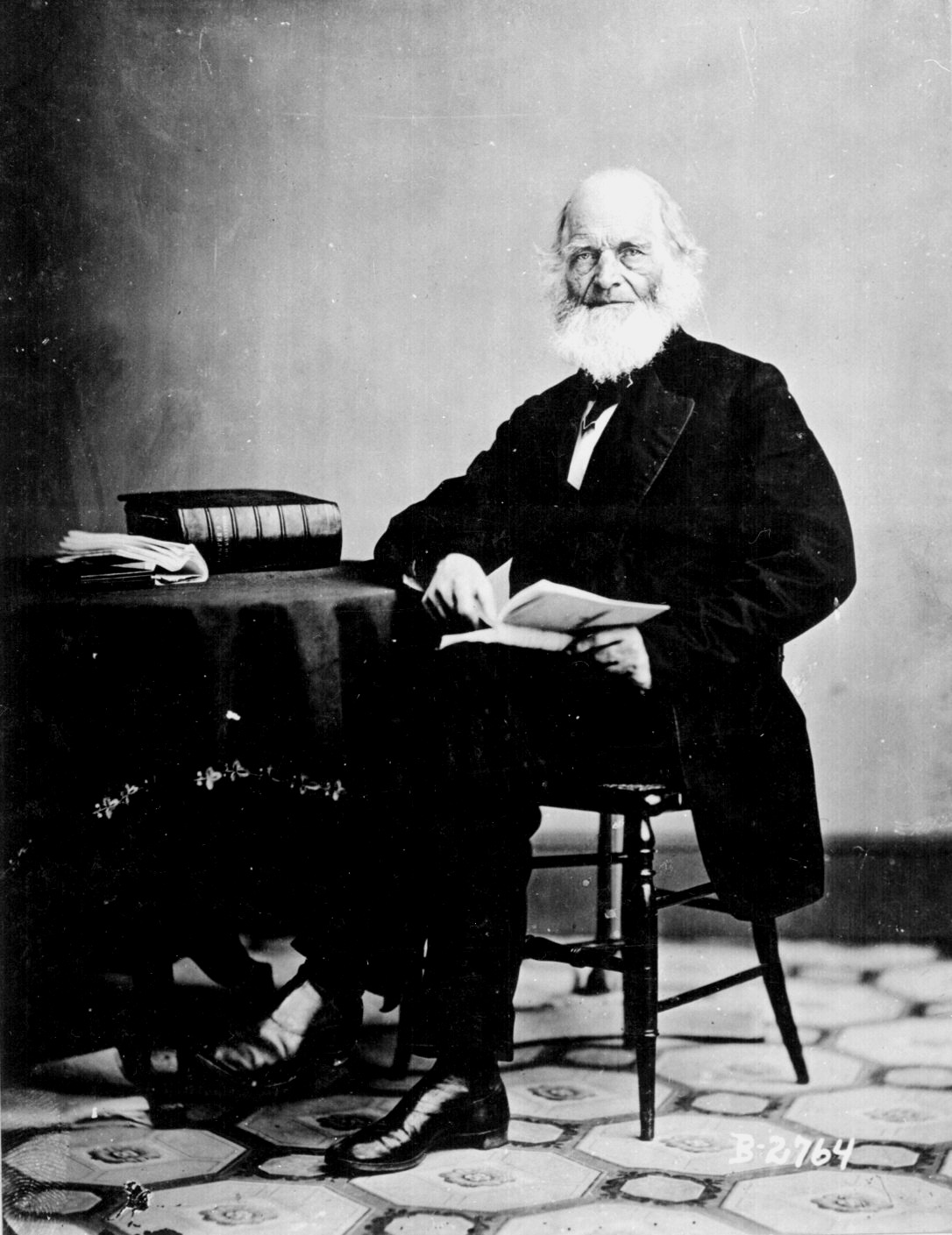
William Cullen Bryant, photo taken by Matthew Brady

2

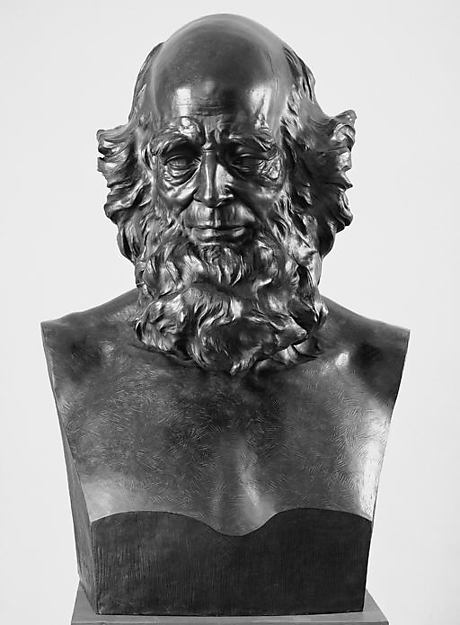
William Cullen Bryant in bust form, but Launt Thompson. It seems this bust has made its way back to the Metropolitan Museum of Art!

2

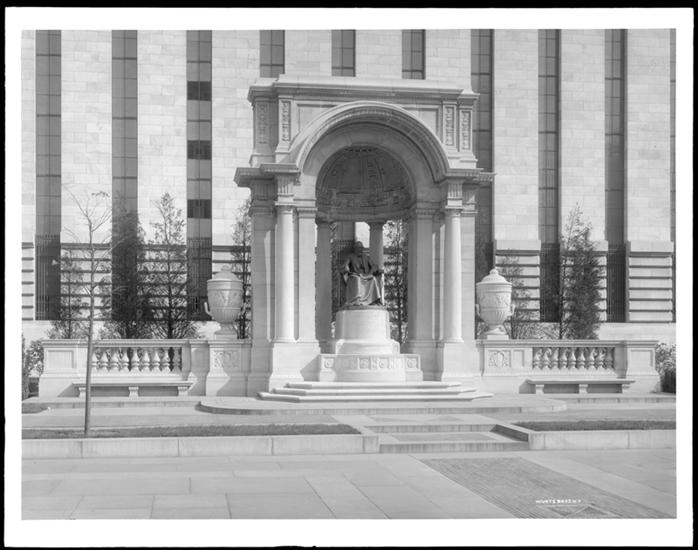
William Cullen Bryant installed in his marble niche behind the New York Public Library. This picture was taken in 1910, well before the radical redesign of the park in the 1930s. (Museum of the City of New York).

3

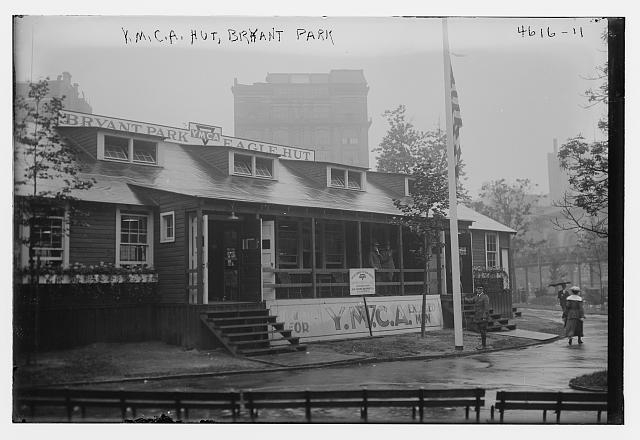
During World War I, the YMCA had a special ‘Eagle Hut’ built in the park for traveling servicemen. (Library of Congress)

2

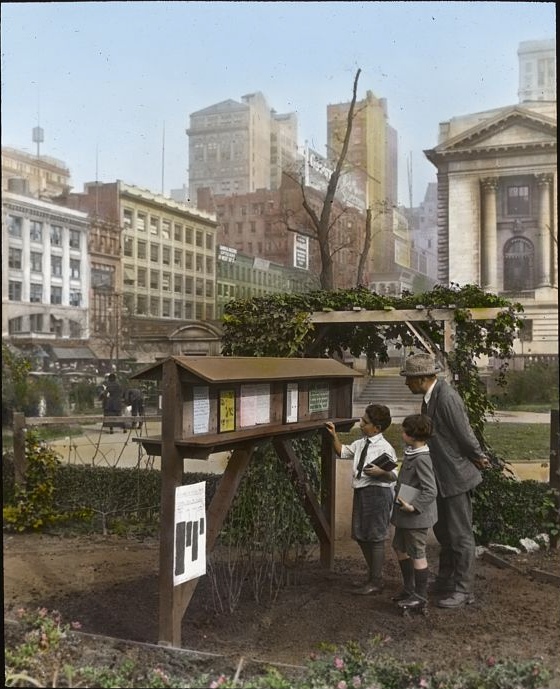
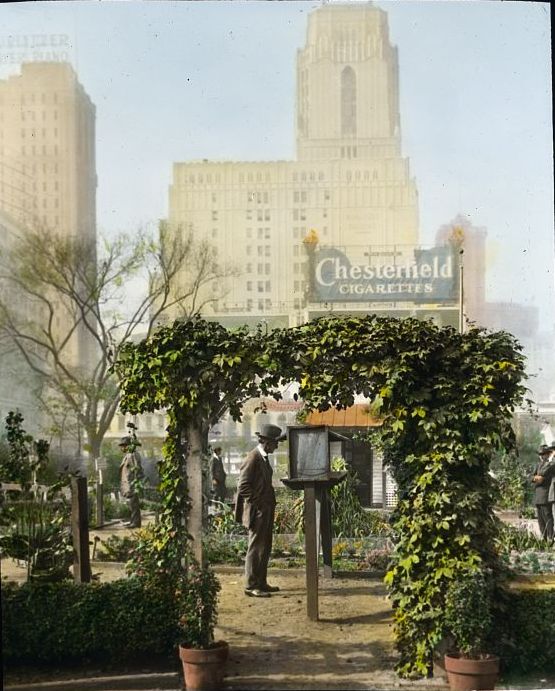
A colorful depiction of the Bryant Park ‘demonstration gardens’ that were planted during the war. (Library of Congress)

7096409143_3df8bc2aa4_b
2

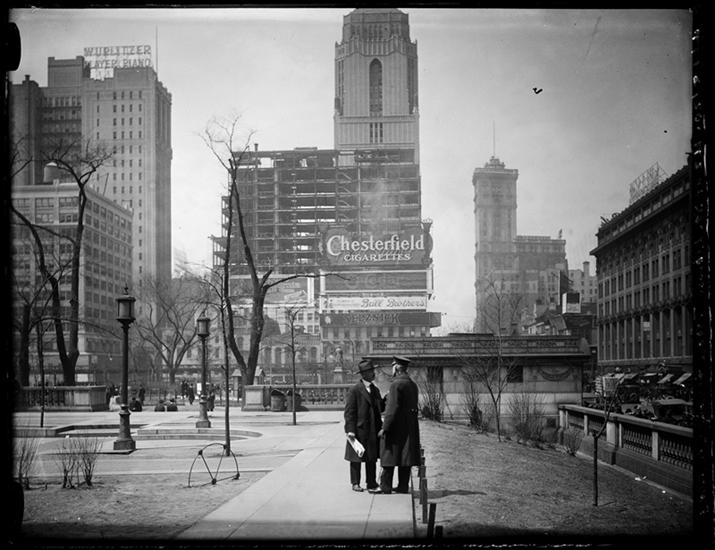
Bryant Park in 1920. Looking west on 42nd Street at 6th Avenue (you can see the elevated railroad!) In the distance is One Times Square. Note the reappearance of the Chesterfield Cigarettes billboard from the picture above. (Museum of the City of New York)

Bryant Park in 1920. Looking west on 42nd Street at 6th Avenue (you can see the elevated railroad!) In the distance is One Times Square. (Museum of the City of New York)

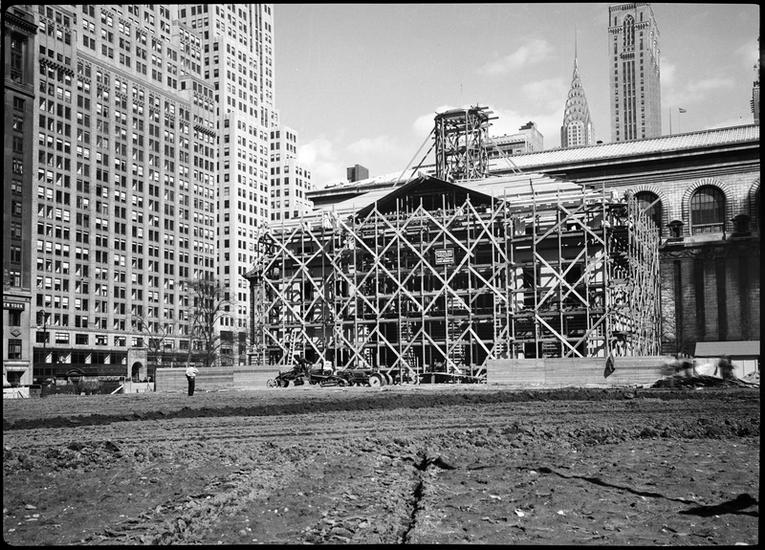
Constructing a replica of Federal Hall in a barren Bryant Park. (Picture taken by the Wurts Brothers, Museum of the City of New York)

8x11mm_X2010_7_1_ 703

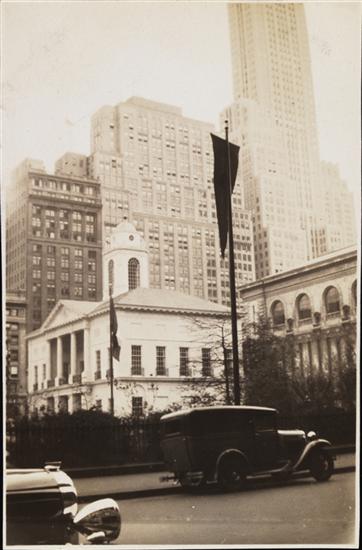
The Federal Hall reconstruction had a corporate sponsor — Sears Roebuck & Co. Here’s how it looked in better days. Believe it or not, the reproduction of Mount Vernon actually did get built in New York — in Prospect Park in Brooklyn! (Bryant Park Corporation)

2

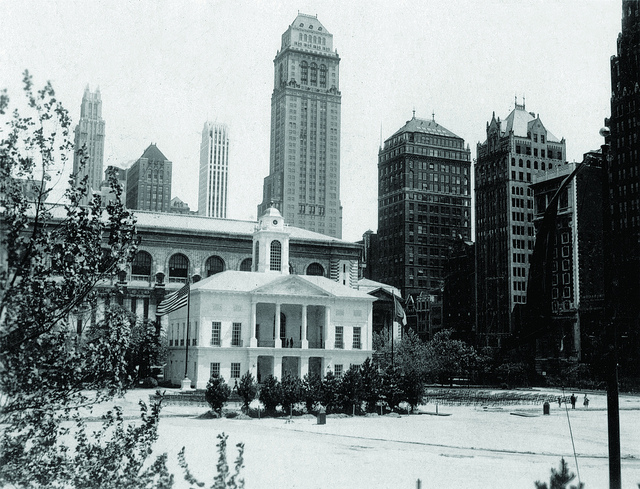
Bryant Park’s Federal Hall, May 1932. (Museum of the City of New York)

Bryant Park's Federal Hall, May 1932. Courtesy Museum of the City of New York

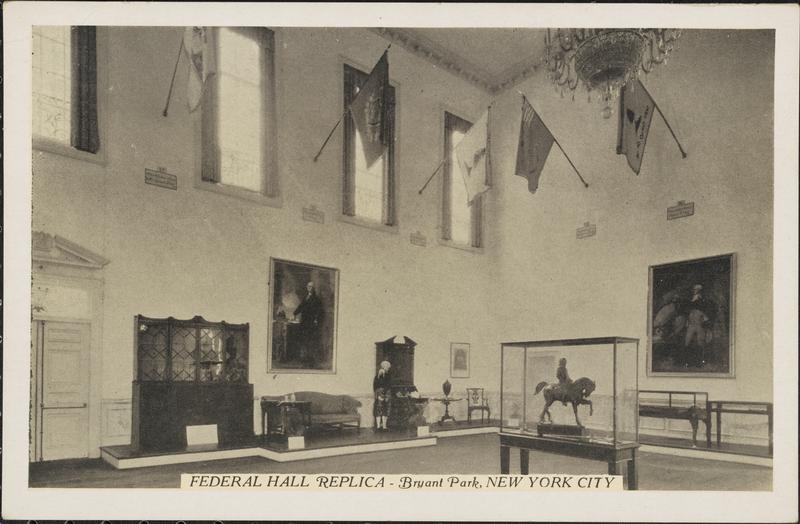
The interior of Bryant Park’s Federal Hall. (Museum of the City of New York)

The interior of Bryant Park's Federal Hall. (Museum of the City of New York)

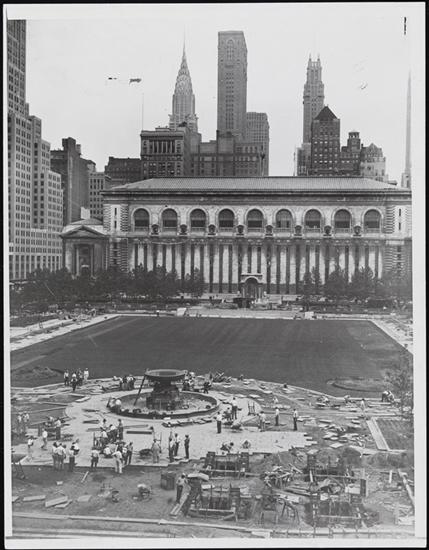
The reconstruction of Bryant Park in 1934, overseen by new Parks Commissioner Robert Moses

The reconstruction of Bryant Park in 1934, overseen by new Parks Commissioner Robert Moses

This photo was taken by Stanley Kubrick during his years as a photographer for Look Magazine. The caption reads “Park Bench Nuisance [Woman reading a newspaper, while a man reads over her shoulder.]” Courtesy Museum of the City of New York

This photo was taken by Stanley Kubrick during his years as a photographer for Look Magazine. The caption reads "Park Bench Nuisance [Woman reading a newspaper, while a man reads over her shoulder.]" Courtesy Museum of the City of New York

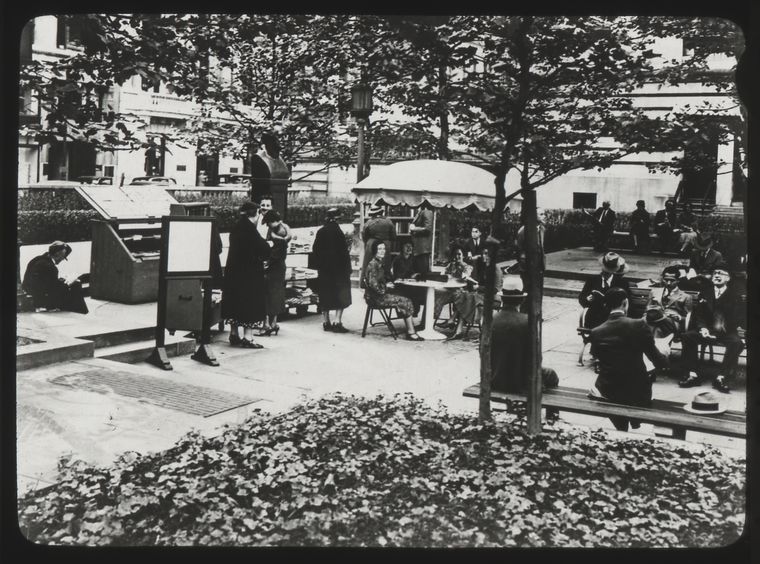
People enjoying the New York Public Library’s outdoor reading room, 1930s. (New York Public Library)

2

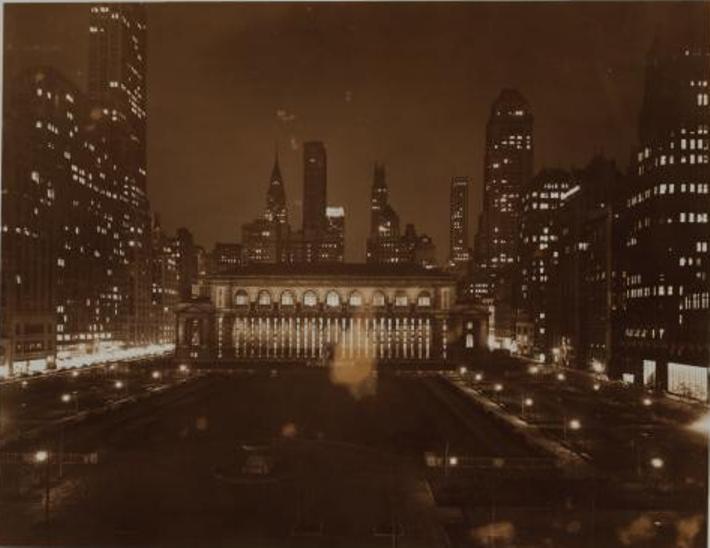
Bryant Park at night, photo by Nathan Schwartz, taken in 1938. (New York Public Library)

1a

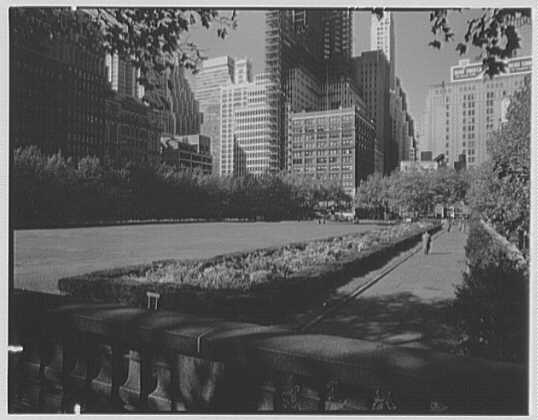
The hedges of the central lawn, photo taken in 1957. These were removed in the desperate effort to clean up the park in the late 1980s. (Library of Congress)

2

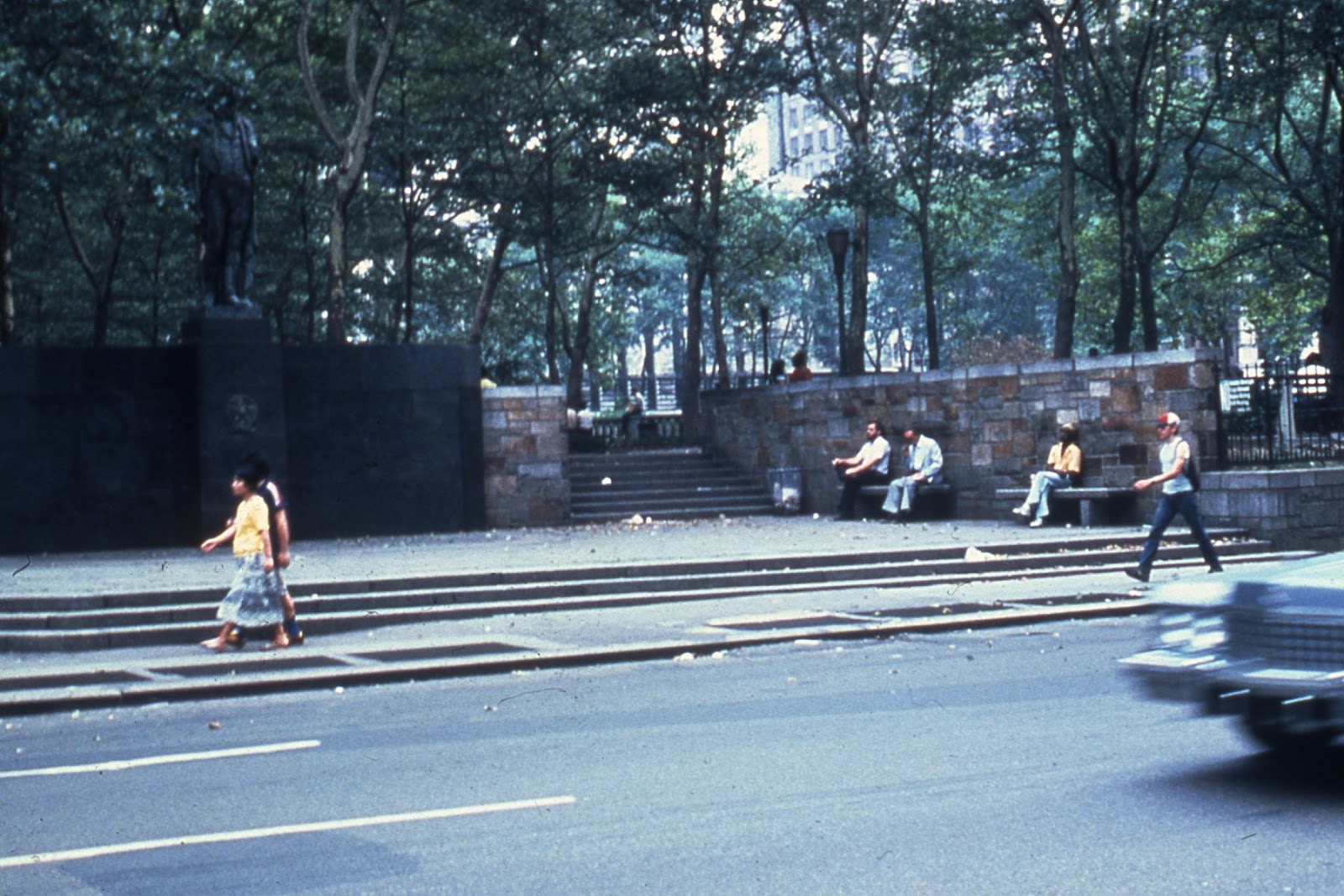
Bryant Park in the 1980s. High walls allowed for suspicious behavior to occur in the at all hours of the day. (Bryant Park Conservancy)

2

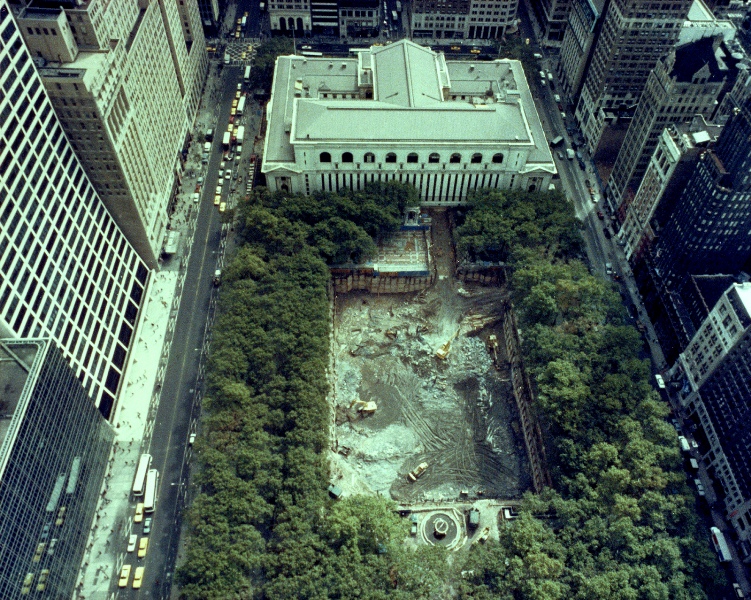
Overlooking the new renovations in the late 1980s (Bryant Park Corporation)

2

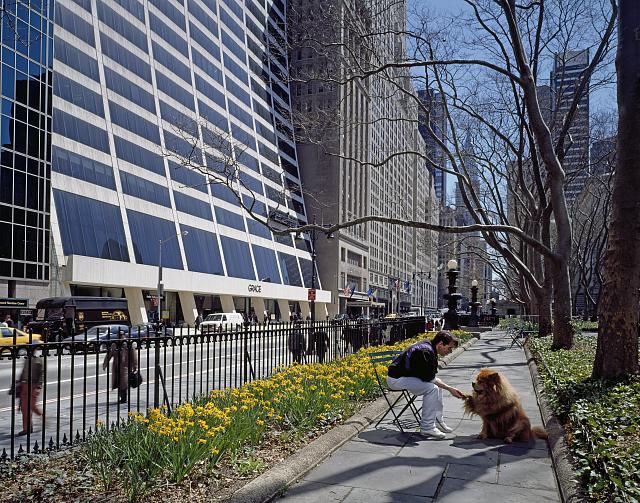
Bryant Park after the clean-up, taken sometime in the 1990s. Photo by Carol Highsmith (Library of Congress)

2

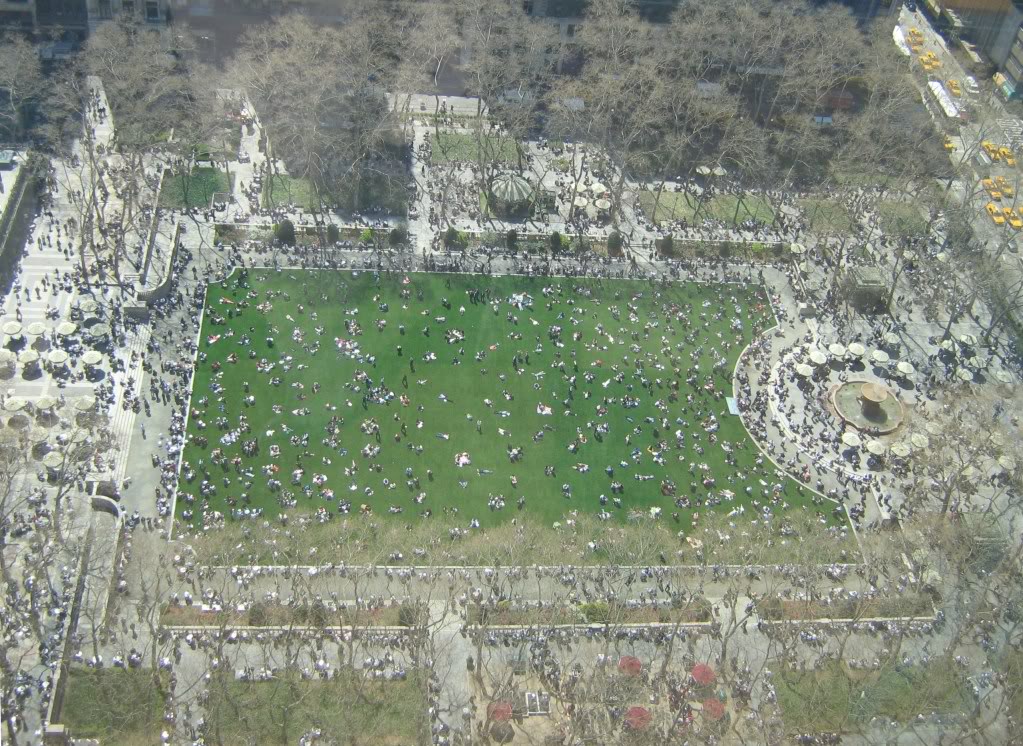
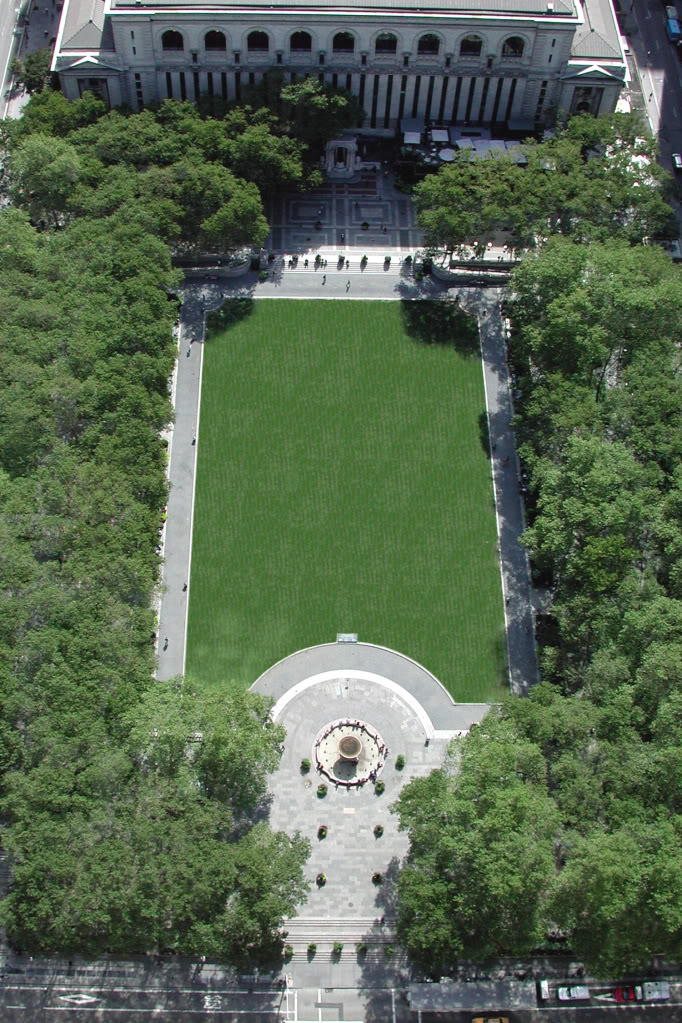
Great overhead shots directly from the Bryant Park Conservancy!

2
3
Categories
Amusements and Thrills Podcasts

The Crystal Palace, America’s first World’s Fair and bizarre treasury of the 19th century

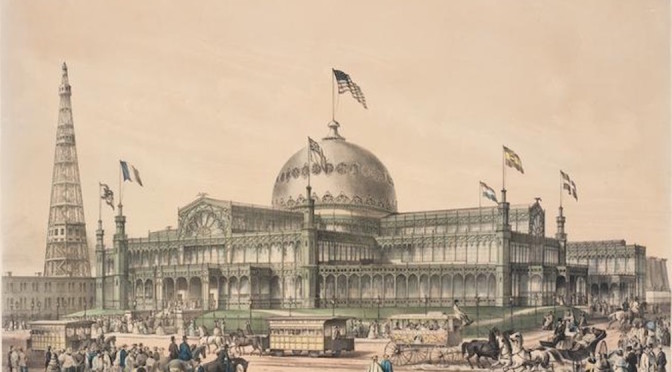
PODCAST New York’s Crystal Palace seems like something out of a dream, a shimmering and spectacular glass-and-steel structure — a gigantic greenhouse — which sat in the area of today’s Bryant Park. In 1853 this was the home to the Exhibition of the Industry of All Nations, a dizzying presentation of items, great and small, meant to exemplify mankind’s industrial might.

We take you on a breathtaking tour of the Palace and its legendary exhibition, including the Latting Observatory (the tallest building in New York!)

Whatever happened to the Crystal Palace? And what inventions contained within do we still benefit from today?

FEATURING: PT Barnum, Henry Ward Beecher, Elisha Otis and literally millions of items!

EDITOR’S NOTE – I mis-pronounced the name of the Fresnel light (actually pronounced fre-nell). Its modern ancestor is used in theatrical lighting today.


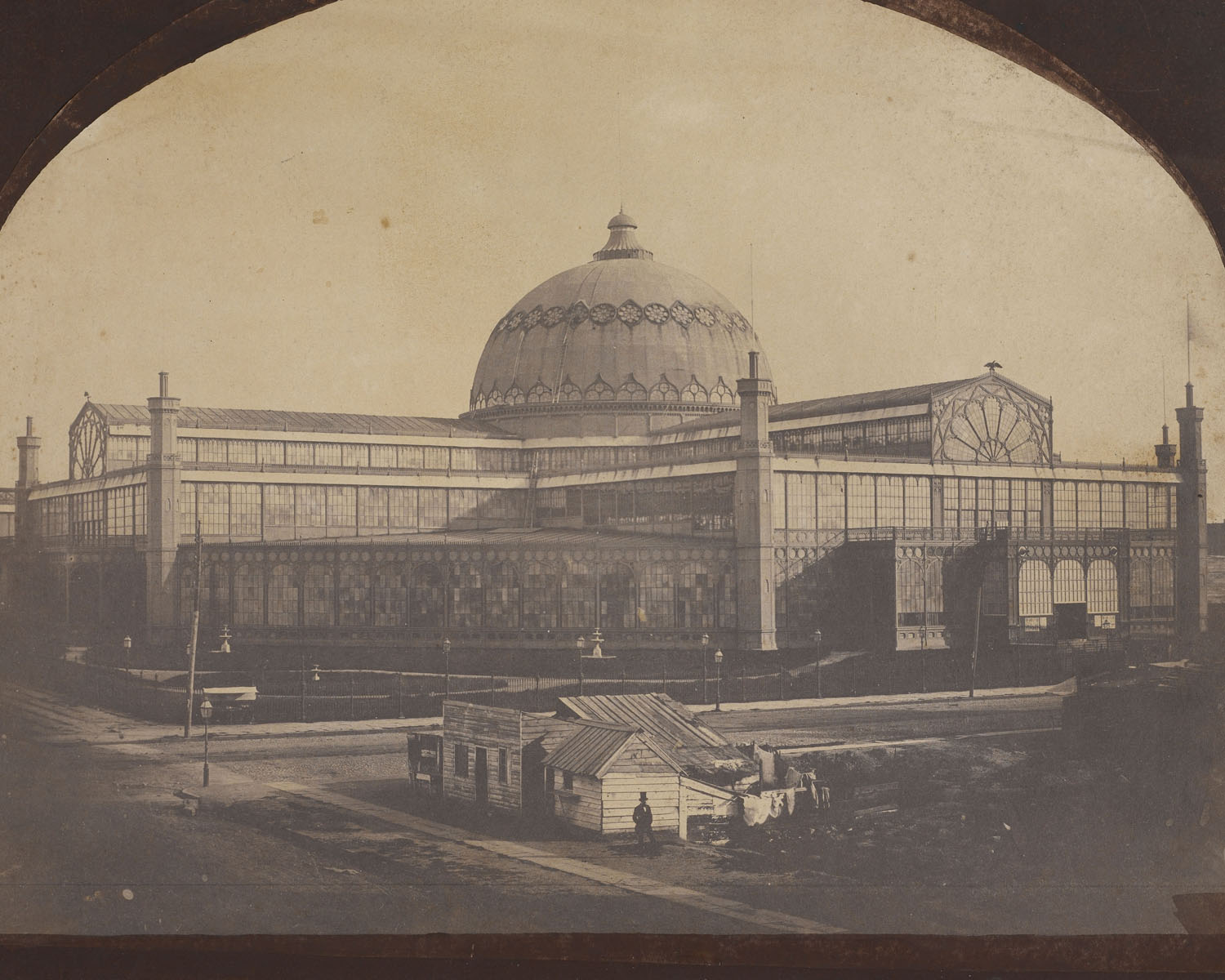
This is one of the earliest photographs of New York City ever taken. As the Crystal Palace hosted examples from the early days of photography, it’s no surprise that one of these early pictures is of the Crystal Palace itself.

A rare photograph of the New York Crystal Palace by Victor Prevost. Courtesy Avery Architectural & Fine Arts Library, Columbia University
A rare photograph of the New York Crystal Palace by Victor Prevost. Courtesy of the Avery Architectural & Fine Arts Library, Columbia University
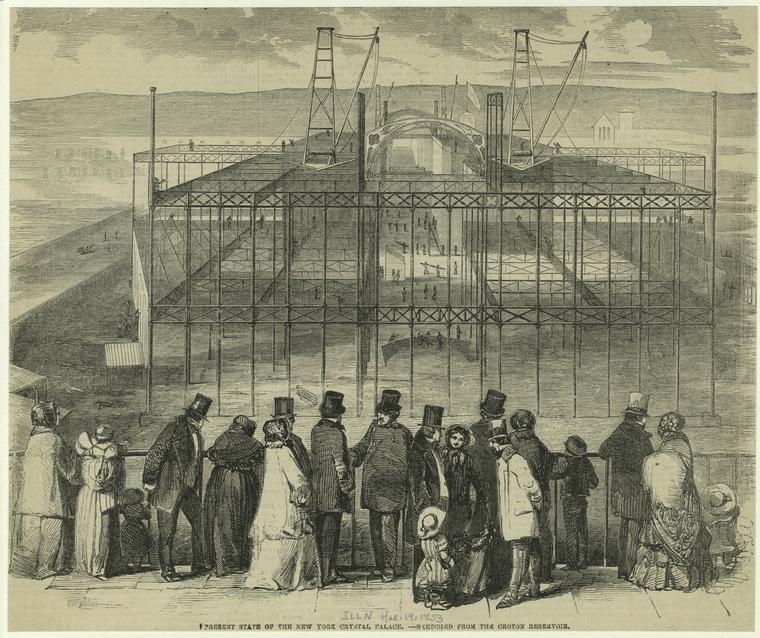
A look into the pit surrounding the Crystal Palace during construction. There were many delays, somewhat sullying the lofty ambitions of the project at the very start. Courtesy New York Public Library
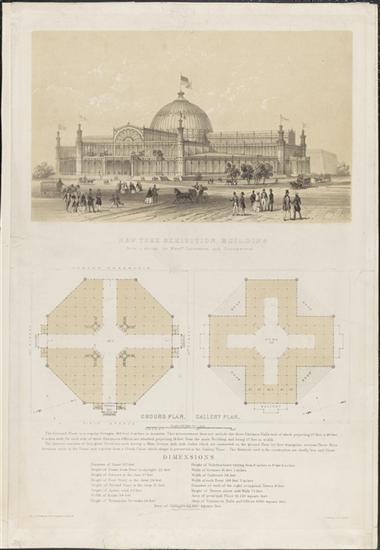
A very church-like plan of the Crystal Palace building by Petermann and Guildemeister. Courtesy Museum of the City of New York
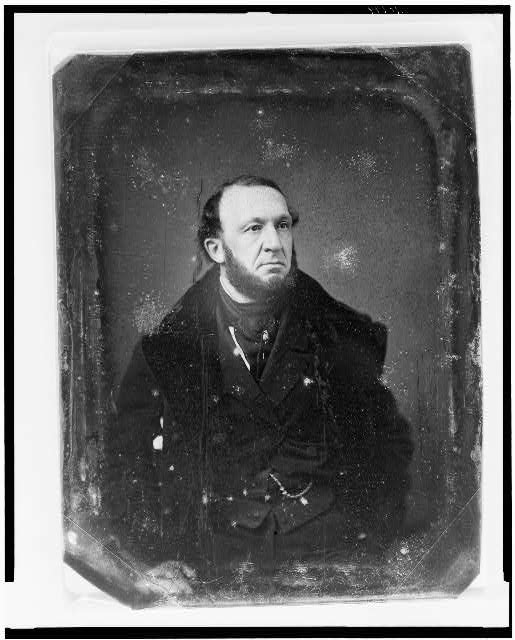
Theodore Sedgwick, who spearheaded the New York Crystal Palace -- and bore some of the criticisms of the Exhibition's rocky opening.
Theodore Sedgwick, who spearheaded the New York Crystal Palace — and bore some of the criticisms of the Exhibition’s rocky opening.
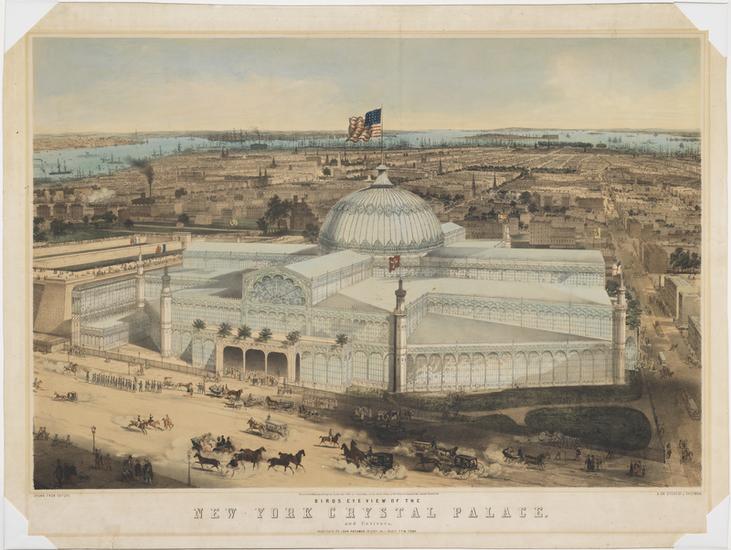
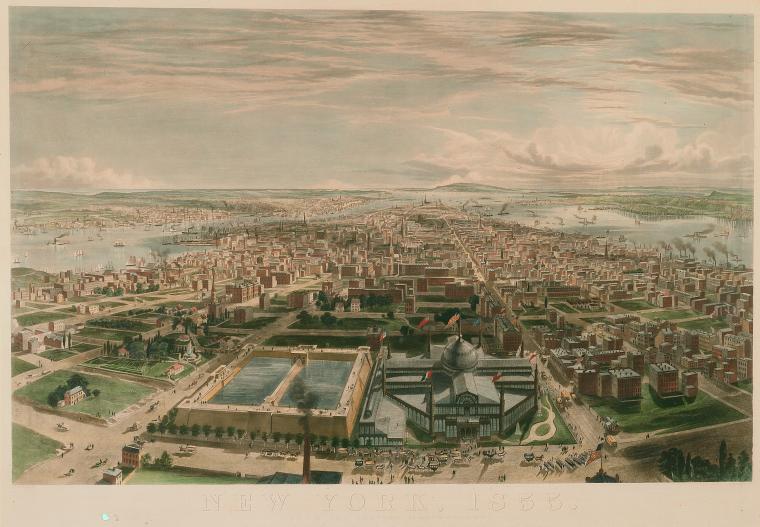
Birds Eye View of the New York Crystal Palace and Environs by John Bachmann. Courtesy the Museum of the City of New York
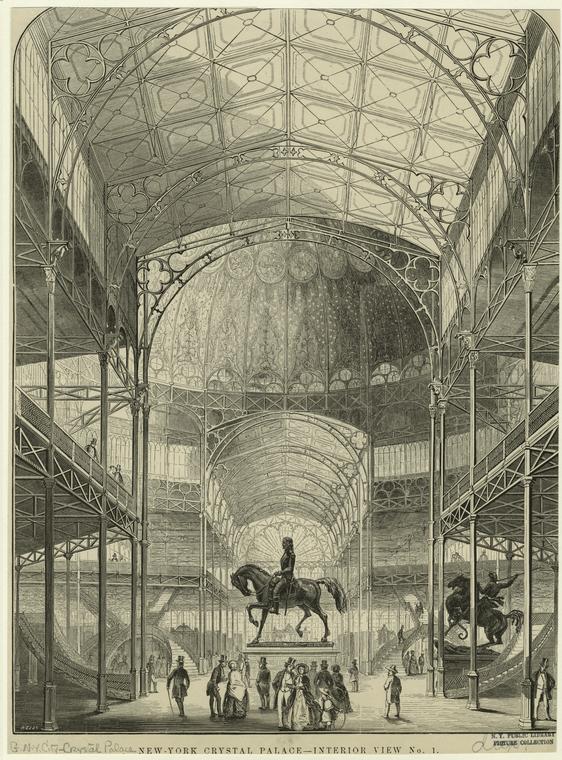
Illustration of the center of the Crystal Palace by J Wells. Courtesy New York Public Library
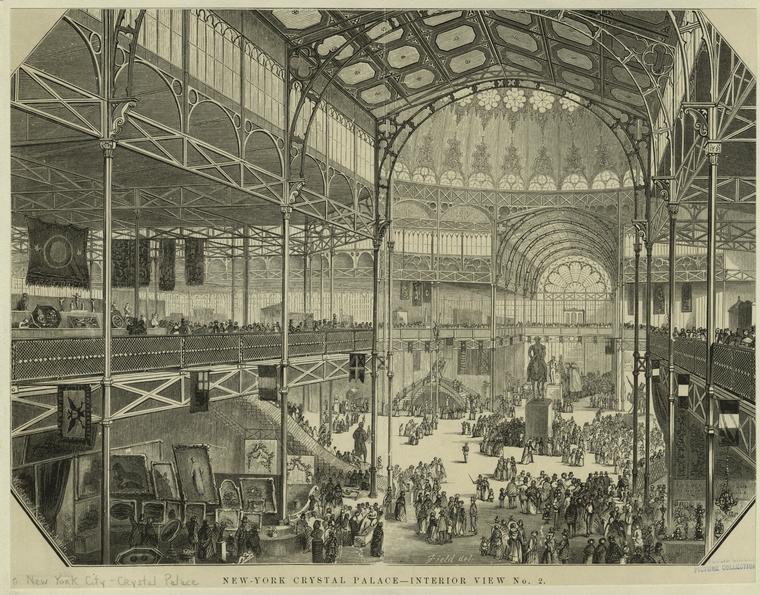
The view from one of the naves, looking towards the George Washington statue. Courtesy New York Public Library
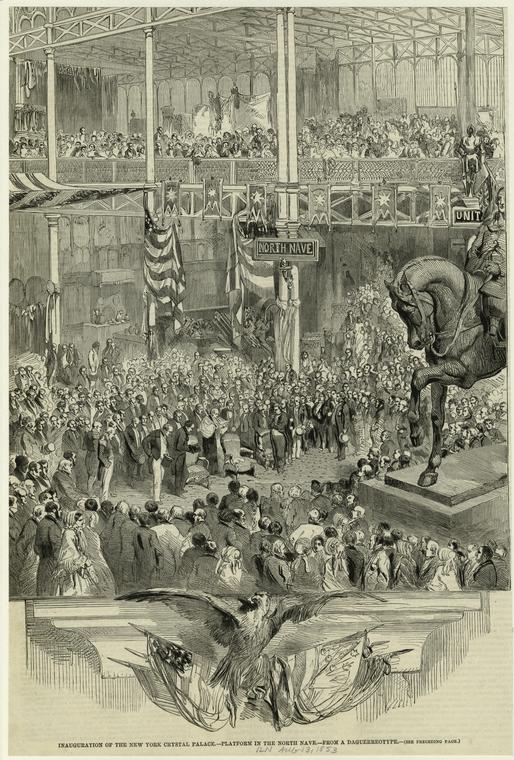
Another view of the inside, this time during the inauguration of the New York Crystal Palace in July 1853 -- looking at a platform in the north nave. Courtesy New York Public Library
Another view of the inside, this time during the inauguration of the New York Crystal Palace in July 1853 — looking at a platform in the north nave. Courtesy New York Public Library
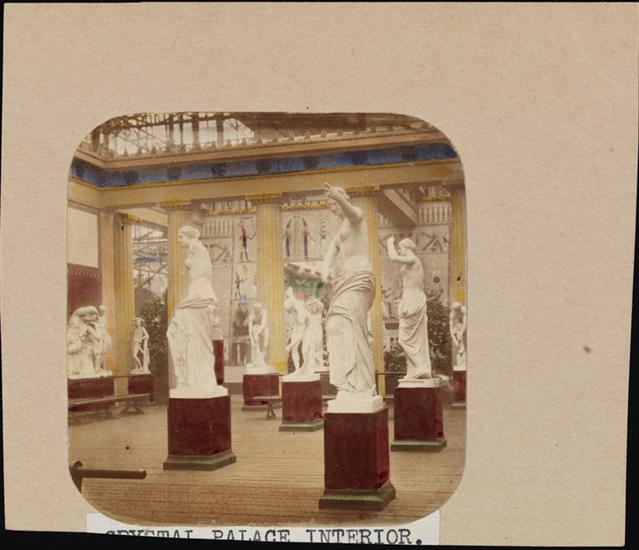
A hand-colored stereoscope of a selection of Crystal Palace statuary. There seems to be some kind of Egyptian thing going on in the background! Courtesy Museum of City of New York
e
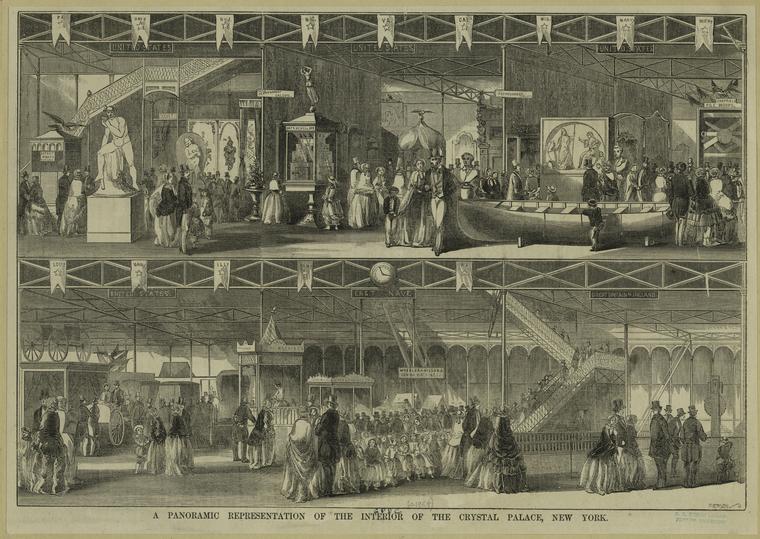
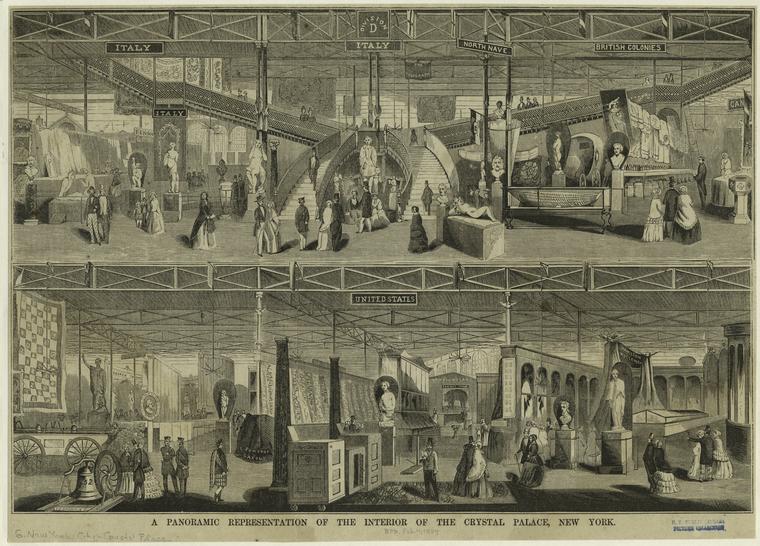
Busts, tapestries, machinery, weapons and various finery! A couple illustrations of the different divisions. Just rooms and rooms of items! Courtesy New York Public Library
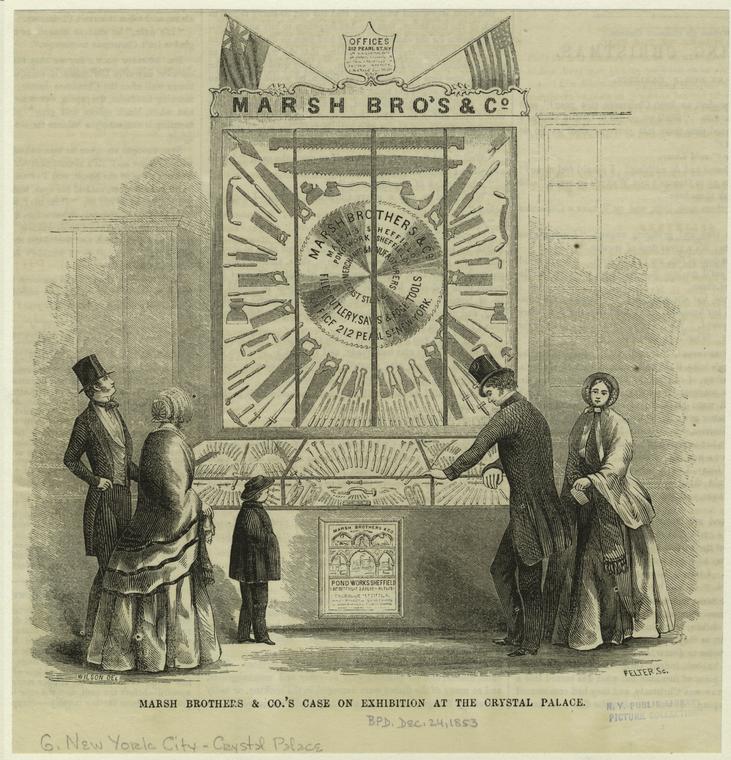
A selection of saws and tools from Marsh Brothers & Co. that one might have seen in the US section. Courtesy NYPL
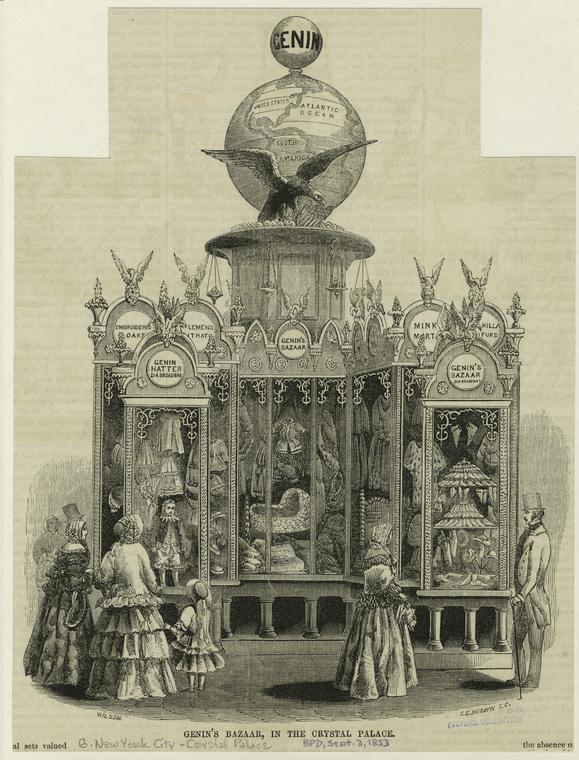
Genin's Bazaar, containing items for the infant. Courtesy New York Public LIbrary
Genin’s Bazaar, containing items for the infant. Courtesy New York Public LIbrary
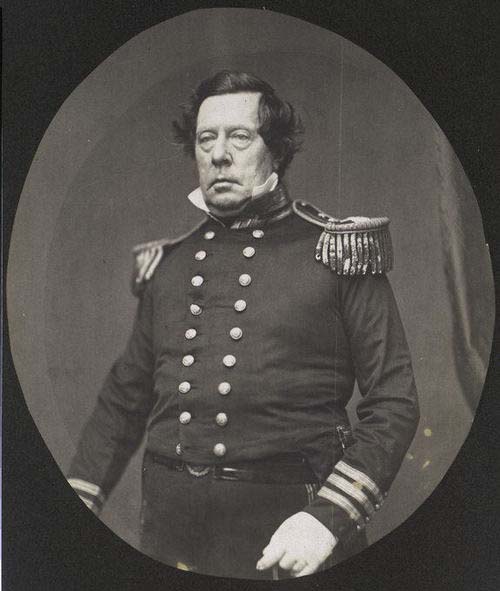
This photo of Commodore Matthew C. Perry was taken by Matthew Brady and displayed at the Crystal Palace, one of the first photographs many people may have seen!
A selection of saws and tools from Marsh Brothers & Co. that one might have seen in the US section. Courtesy New York Public LIbrary
f
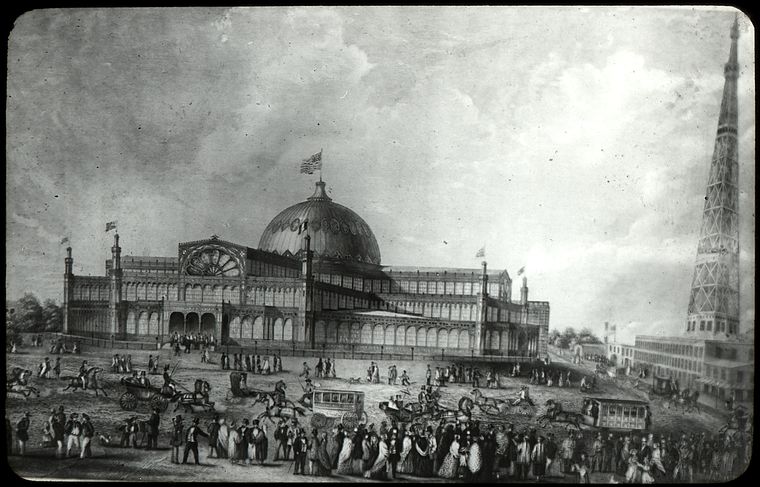
This engraving shows the Latting Observatory in relation to the Crystal Palace, separated by 42nd Street.
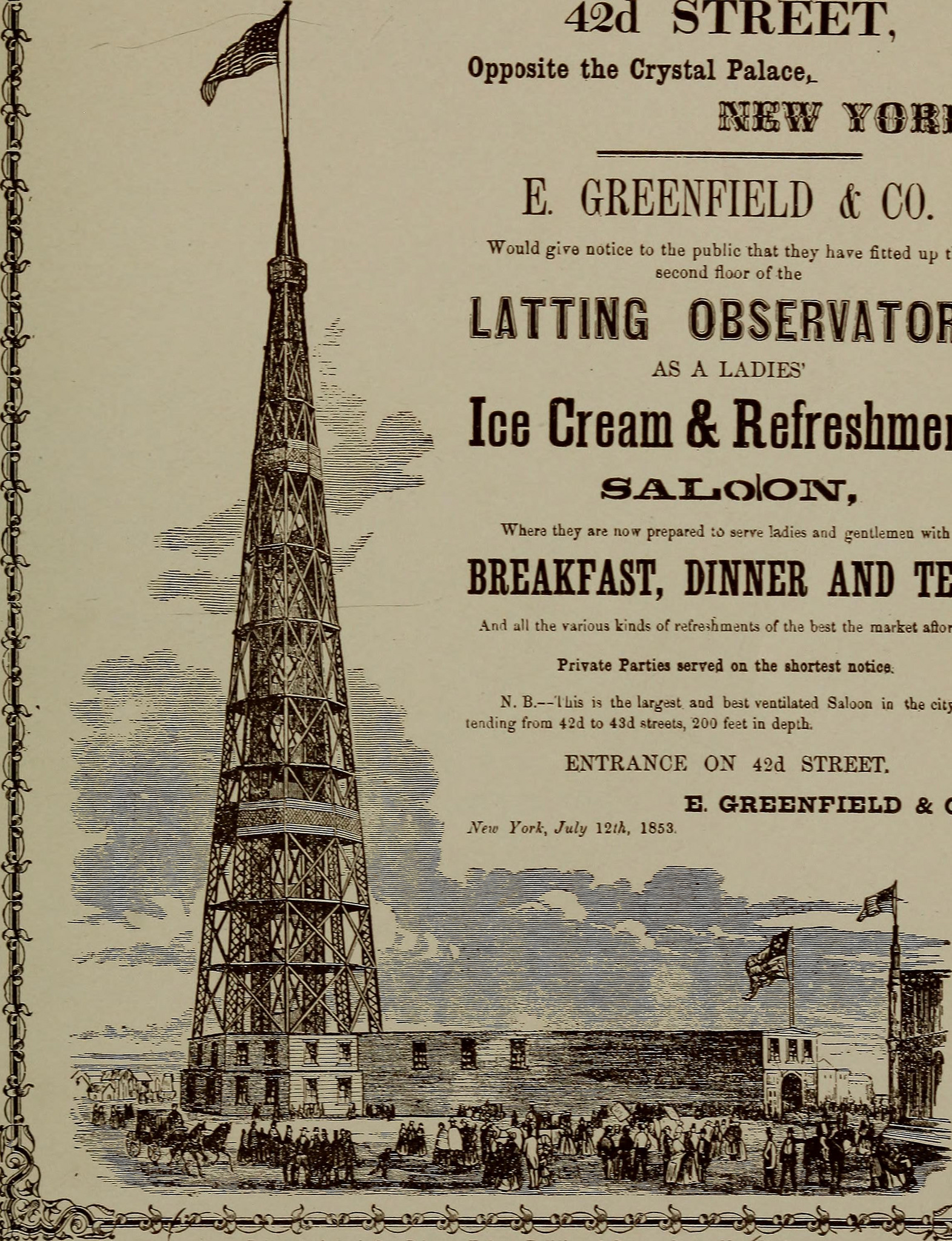
A reprinted advertisement from Valentine's Manual of old New York, outlining some of the charms of Latting Observatory
A reprinted advertisement from Valentine’s Manual of old New York, outlining some of the charms of Latting Observatory
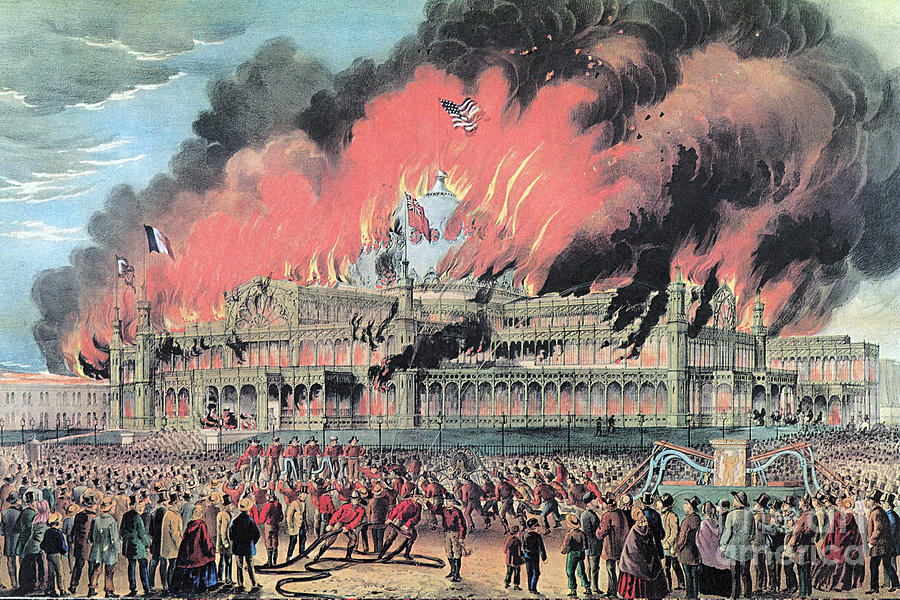
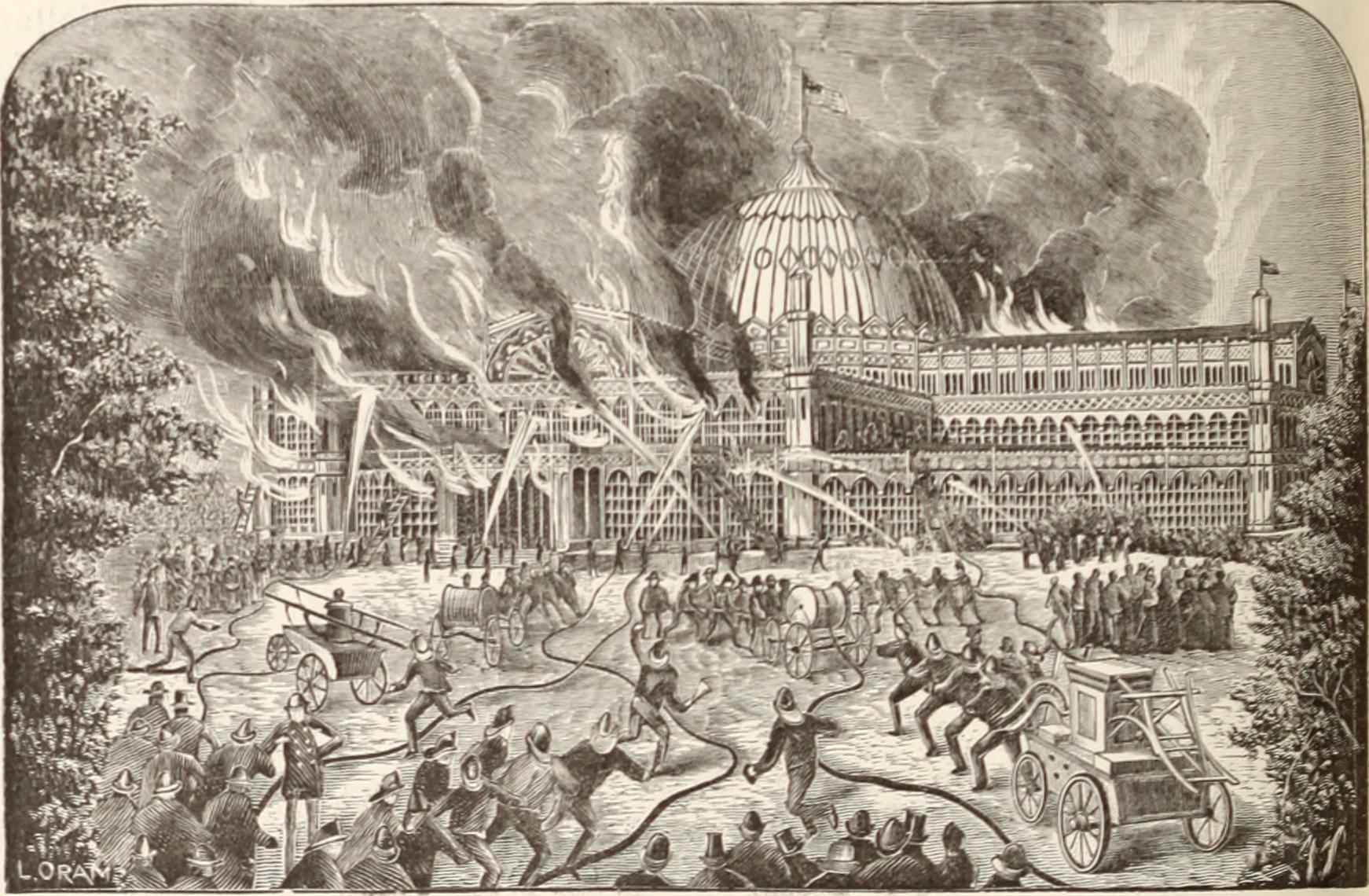
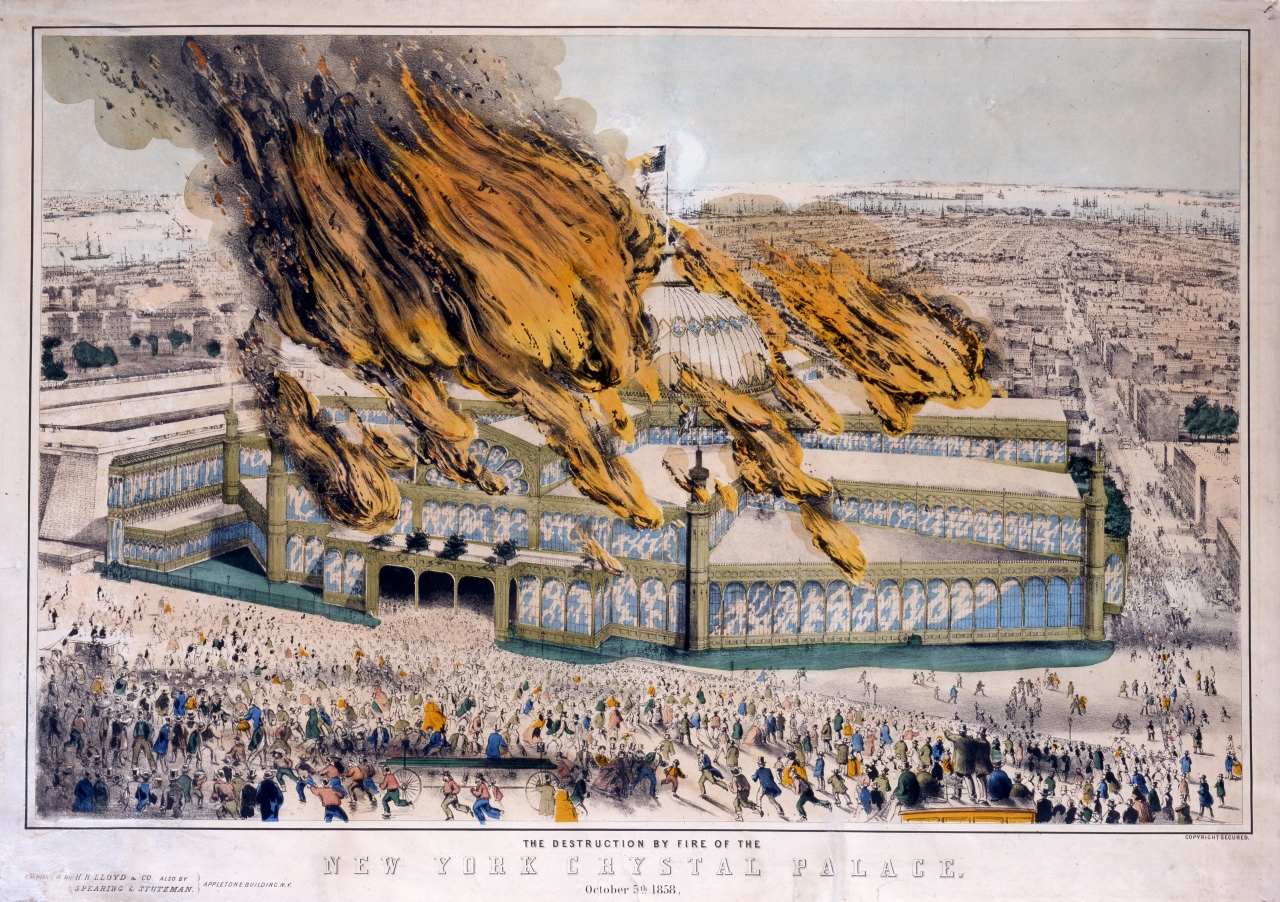
One of several illustrations of the Crystal Palace fire, a dramatic blaze that destroyed the building in under an hour.
An illustration from an 1887 book "Our firemen. A history of the New York fire department" Courtesy Internet Image Book Archives
An illustration from an 1887 book “Our firemen. A history of the New York fire department” Courtesy Internet Image Book Archives
Another view of the blaze, in perspective to the rest of New York to the south. Couirtesy New-York Historical Society
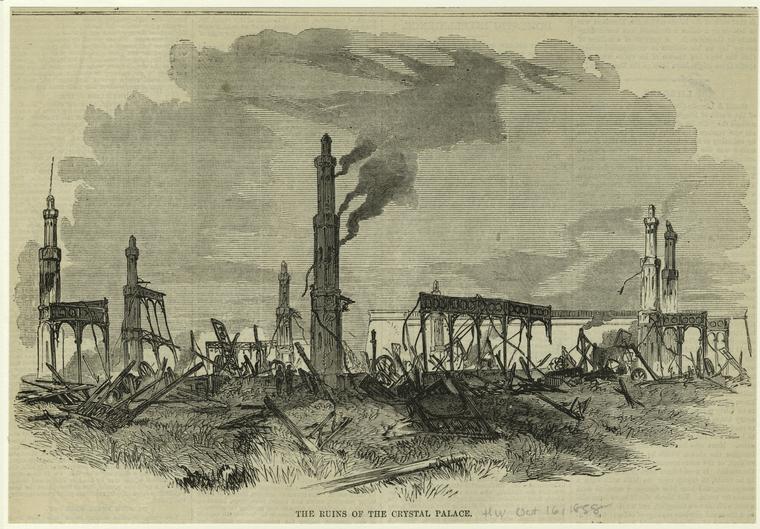
An illustration made in 1858, depicting the aftermath of the horrible fire that destroyed the Crystal Palace. NYPL

Some original documents that you may enjoy reading:

How To See the New York Crystal Palace: Being a Concise Guide to the Principal Objects in the Exhibiton

A Day in the New York Crystal Palace and how to Make the Most of It

And for some comparison, a guide to the London Crystal Palace can be found here.

Categories
Podcasts Queens History

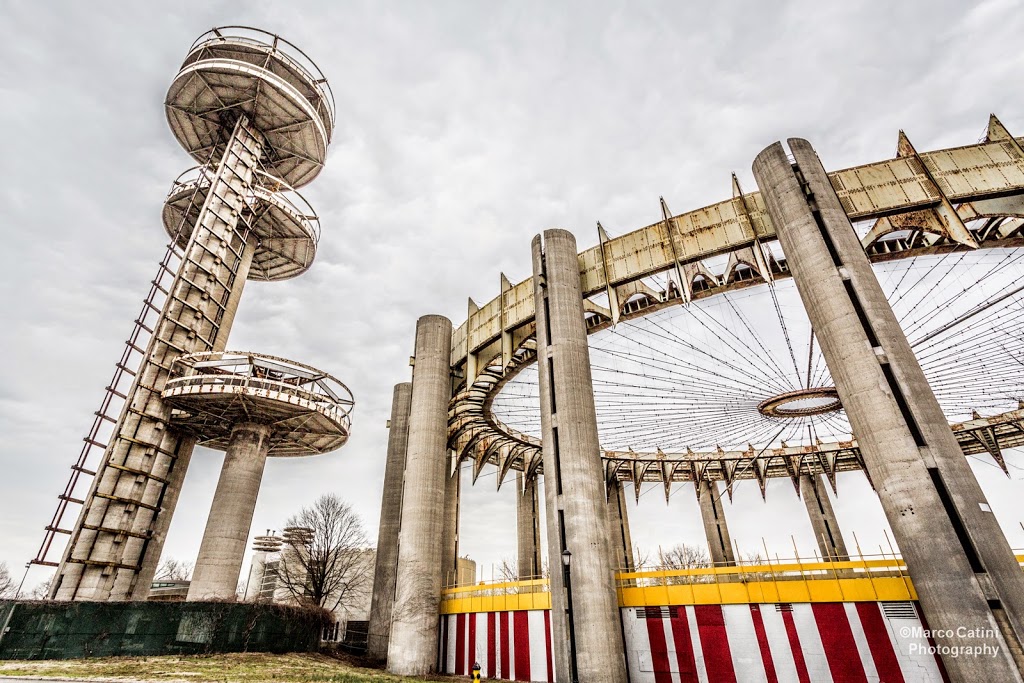
Ruins of the World’s Fair: The New York State Pavilion, or how Philip Johnson’s futuristic architecture was almost forgotten


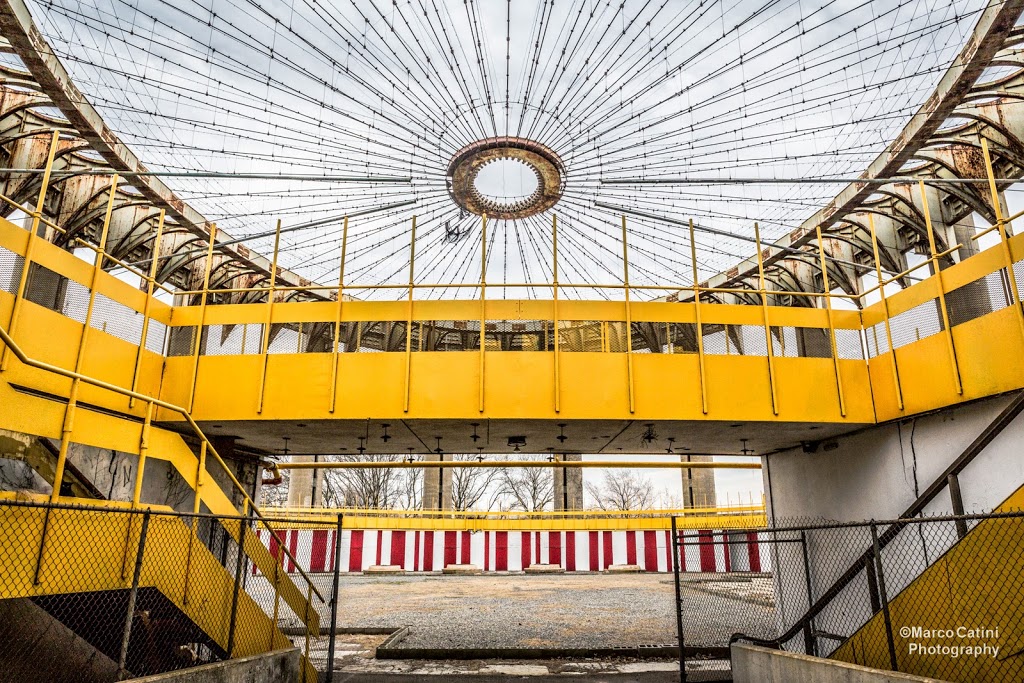
A little bit Jetsons, a little bit Gladiator, a little bit P.T Barnum. Photo/Marco Catini

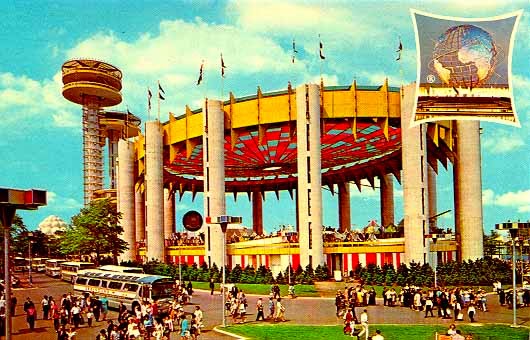
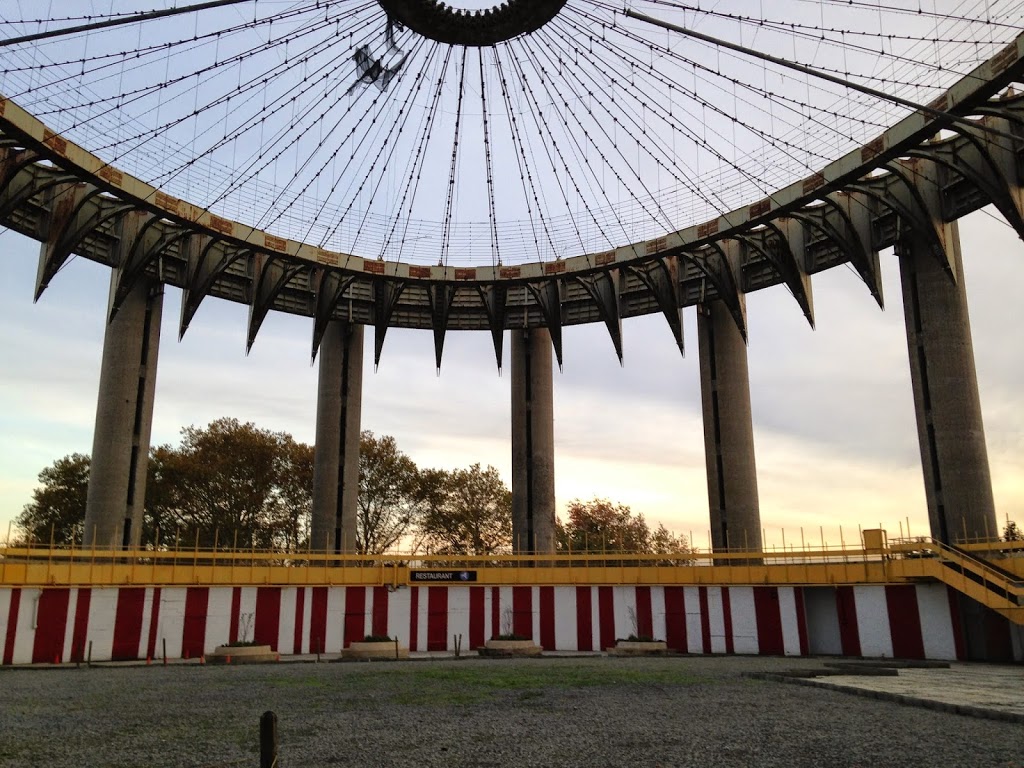
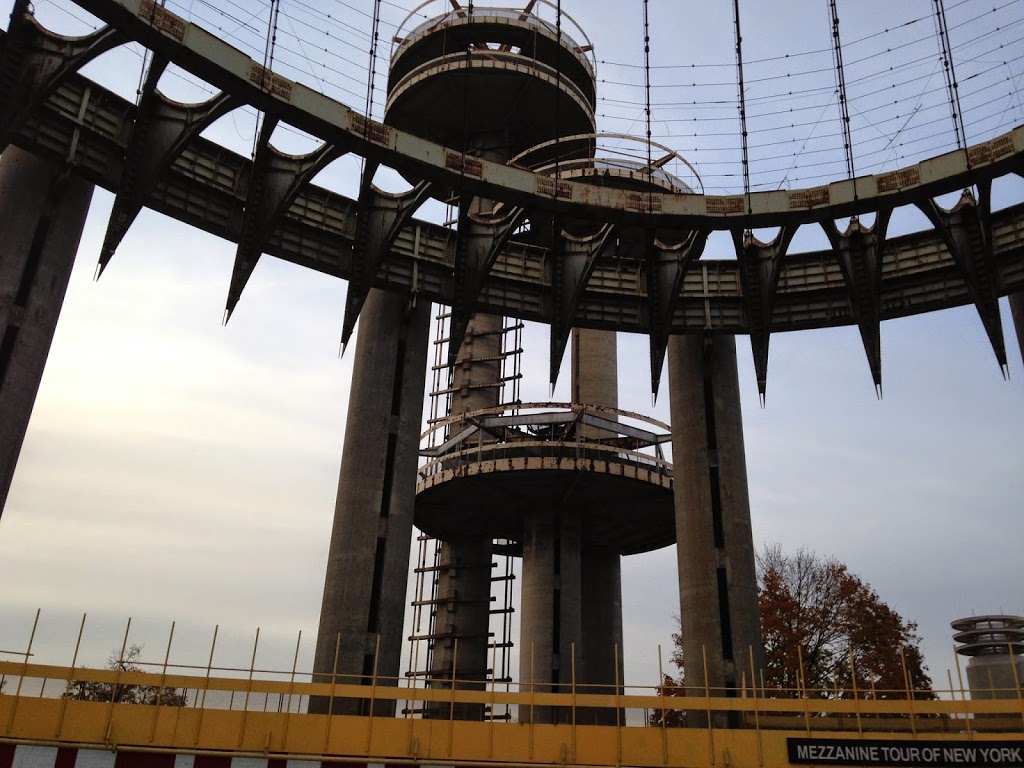
PODCAST The ruins of the New York State Pavilion, highlight of the 1964-65 World’s Fair in Flushing Meadows-Corona Park, have become a kind of unofficial Statue of Liberty of Queens, greeting people as they head to and from LaGuardia and JFK airports. Its abandoned saucer-like observation decks and steel arena have inspired generations of New Yorkers who have grown up with this oddity on the horizon.


The Pavilion holds a great many surprises, and its best days may be yet to come. Designed by modernist icon Philip Johnson, the Pavilion was saved from the fate of many of the venues in the World’s Fair. But it’s only been used sporadically over the past 50 or so years, and the fear of further deterioration is always present.

For the first part of this very special episode of the Bowery Boys, I take you through the pavilion’s presence in the World’s Fair, a kaleidoscopic attraction that extolled the greatness of the state of New York. In its first year, however, a battle over controversial artwork was waged, pitting Robert Moses and Nelson Rockefeller against the hottest artist of the day — Andy Warhol. Other controversies at the Fair threatened to derail the message behind its slogan ‘Peace Through Understanding.’

In the show’s second half, I head out to record at the Queens Theater — the only part of the New York State Pavilion that’s been rehabilitated — to explore the venue’s ‘lonely years’ with filmmaker Matthew Silva, a co-founder of People For The Pavilion, an organization that’s successfully bringing attention to this weird little treasure. Matthew gives us the scoop of the pavilion’s later years, culled from some of his interviews in the film Modern Ruin: A World’s Fair Pavilion.

This is crucial time in the history of this spectacular relic. With public attention at an all time high, we may now be at the right time to re-purpose the Pavilion into a new destination for New Yorkers. What do you think should be done with the New York State Pavilion?

An airplane passes over the park, its shadow captured inside the Pavilion. (Photo by George Garrigues)


And we would like to thank our sponsors:

Audible, the premier provider of digital audiobooks. Get a FREE audiobook download and 30 day free trial at www.audibletrial.com/boweryboys. Over 150,000 titles to choose from for your iPhone, Android, Kindle or mp3 player Audible titles play on iPhone, Kindle, Android and more than 500 devices for listening anytime, anywhere.


Here’s the trailer to Matthew’s film Modern Ruin: A World’s Fair Pavilion:


Modern Ruin: A World’s Fair Pavilion – Promo I from Matthew Silva on Vimeo.

Thank you Matthew for helping out with the show this week! He’s finishing his film. If you would like to help out, go over to the Modern Ruin GoFundMe page and donate. You just be helping out the film, but the Pavilion itself. The film will probably be the first time many people ever hear of the New York State Pavilion.

And for a different (fictional) film take on the Pavilion, try out these appearances from The Wiz, Men In Black and Iron Man 2:

And thank you to commenter Signed D.C. who points out that the venue was featured in an music video by They Might Be Giants who, generally speaking, who a bit obsessed with the World’s Fair. (It pops up in several of their songs, including a lyric to their song “Ana Ng.“) At one point, the lead singer floats over the Texaco map.


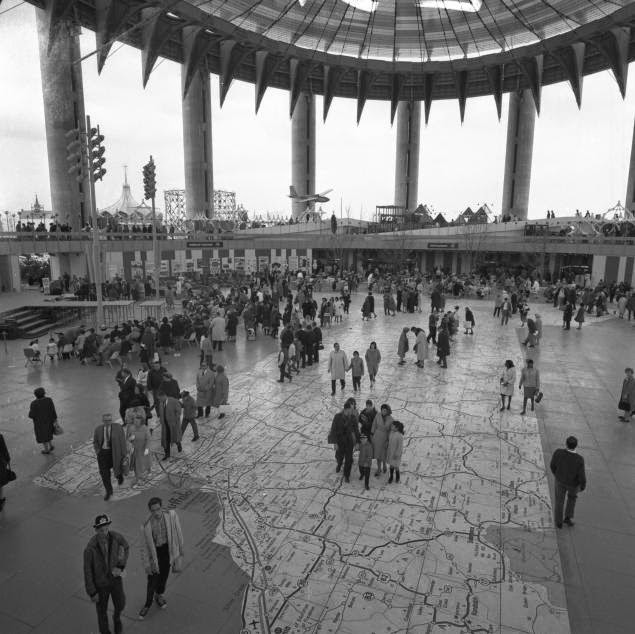
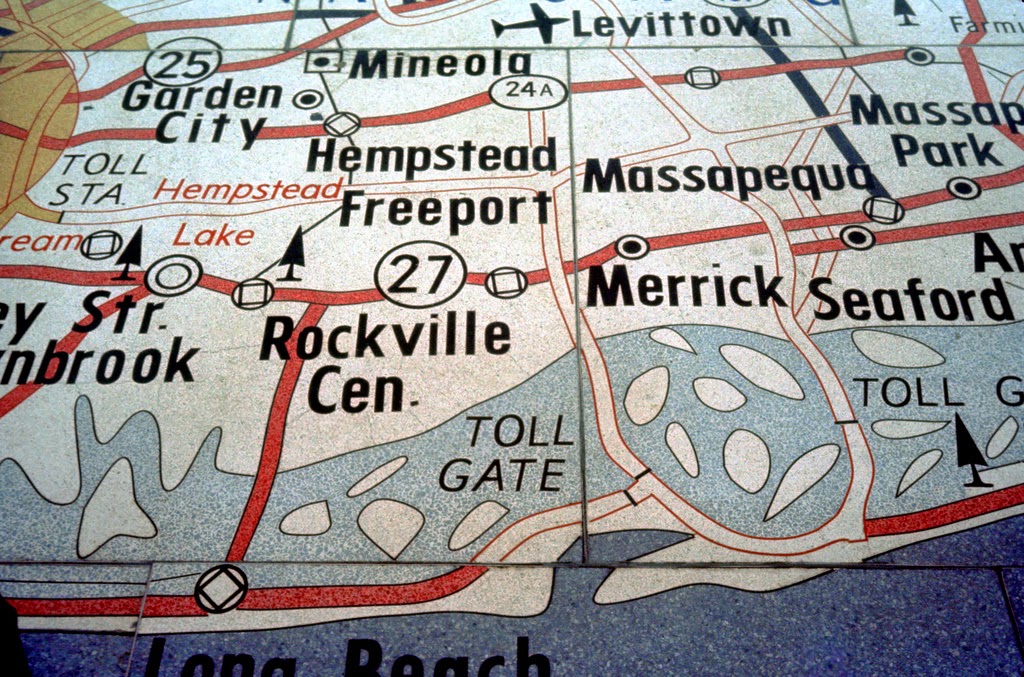
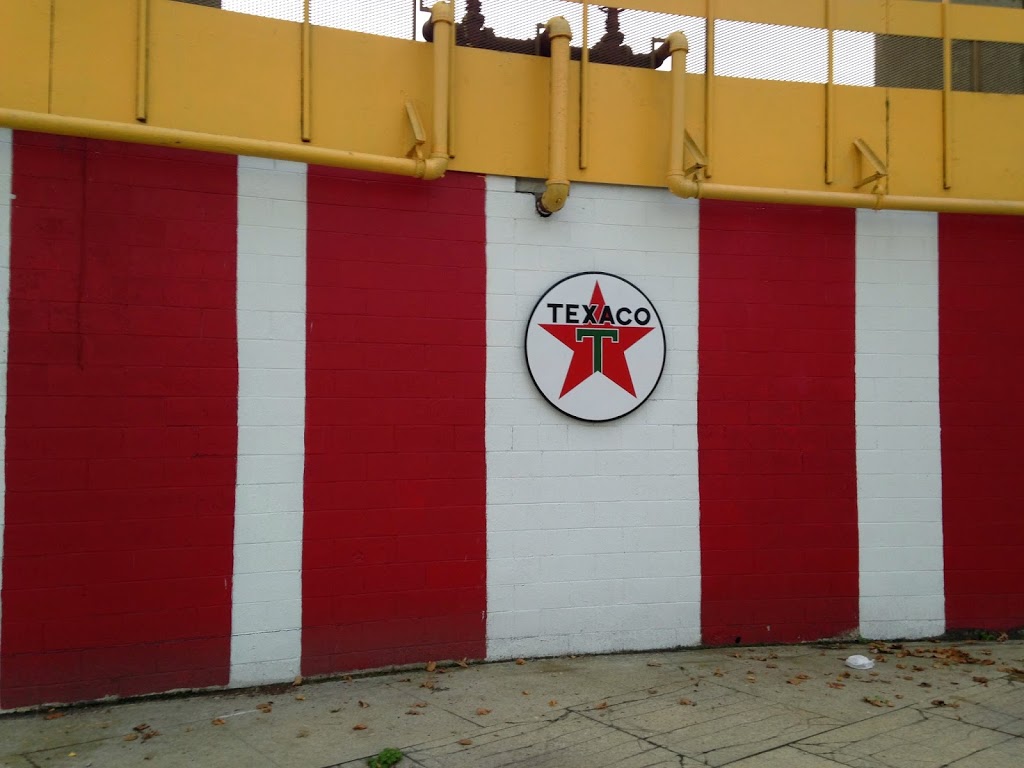
Looking down at the Texaco map of New York state. (Courtesy New York Daily News)


A close up of Long Island, photo taken in 1964. (Courtesy Flickr/Susan DeMark)

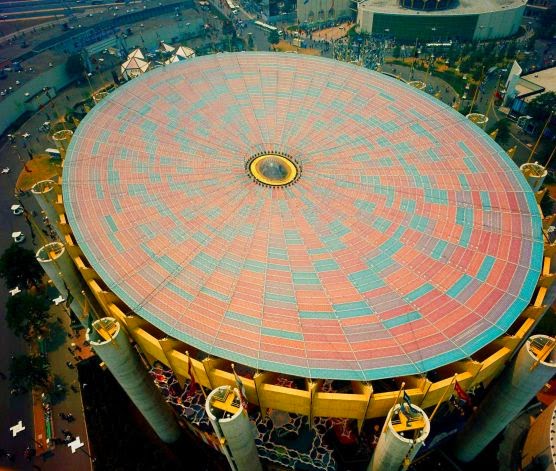
An overhead shot of Philip Johnson’s extraordinary rooftop, a stunning colorful ovoid that projected a rainbow of colors down upon fair-goers. (Courtesy AP)

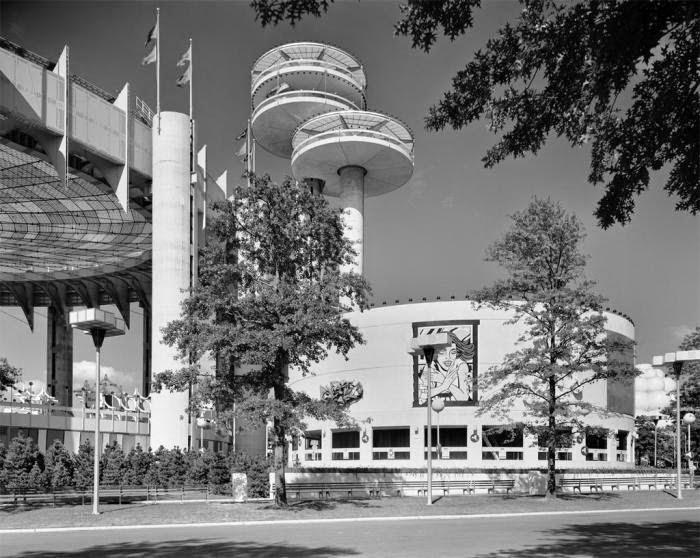
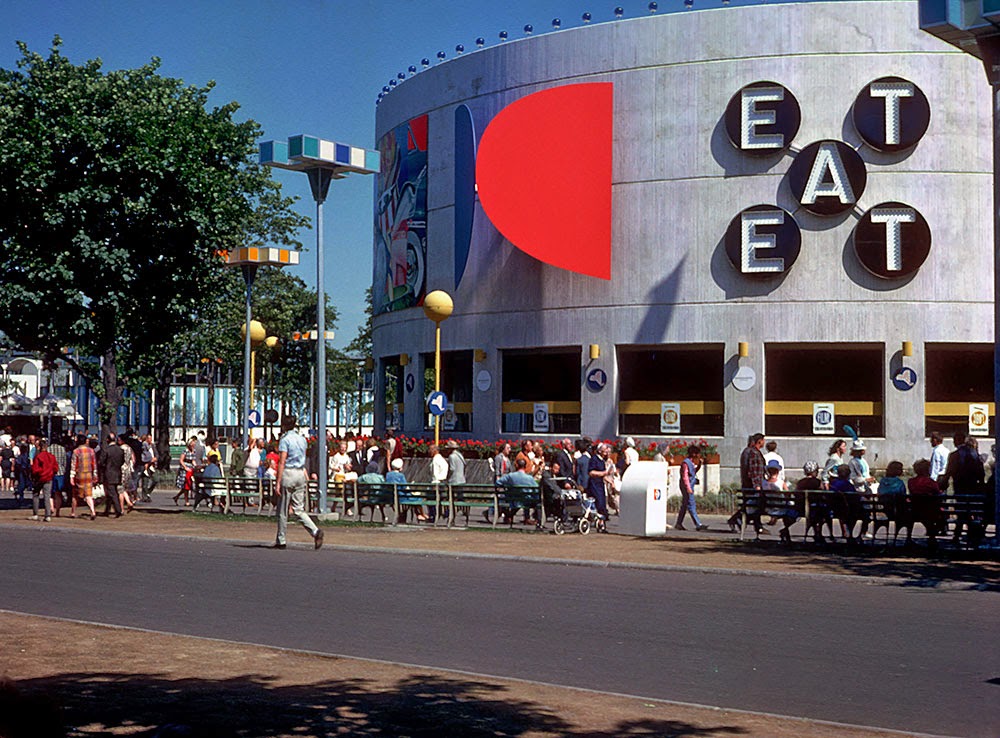
Theaterama, part of the New York State Pavilion, is today’s Queens Theater. Johnson commissioned the work of several pop artists to hang along the walls of the pavilion. (Courtesy Bill Cotter/World’s Fair Community)

A view of Theaterama showing the Roy Lichtenstein mural upon its side (Courtesy Jon Buono):

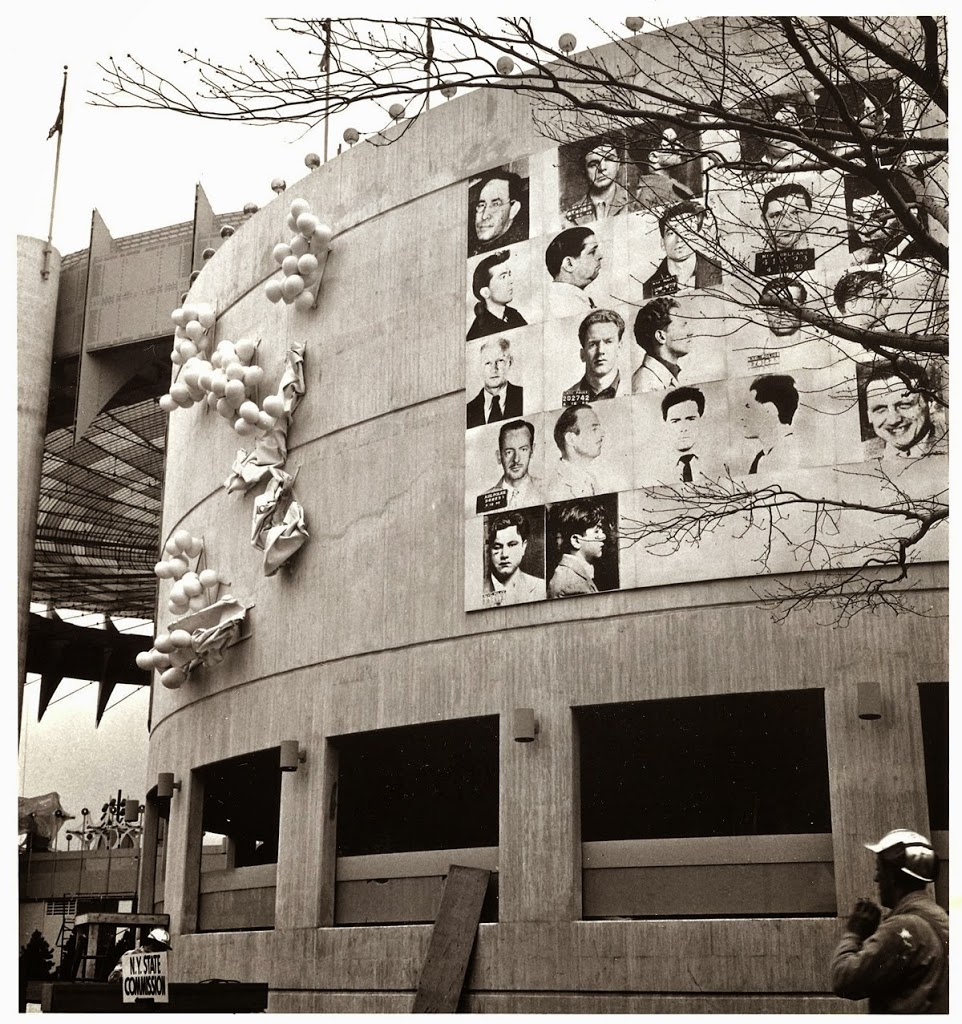
Andy Warhol‘s Ten Wanted Men on the side of Theaterama, with the Tent of Tomorrow in the background. Although we can almost guarantee that it was not beloved by Robert Moses, it’s believed it was taken down because of Governor Rockefeller.

Robert Moses beams from the sidewalk of Flushing Meadows-Corona Park. The mosaic is based on the work of Andy Warhol.

The Federal Pavilion — “the square donut on stilts” — was designed by Charles Luckman, who also designed the current Madison Square Garden.

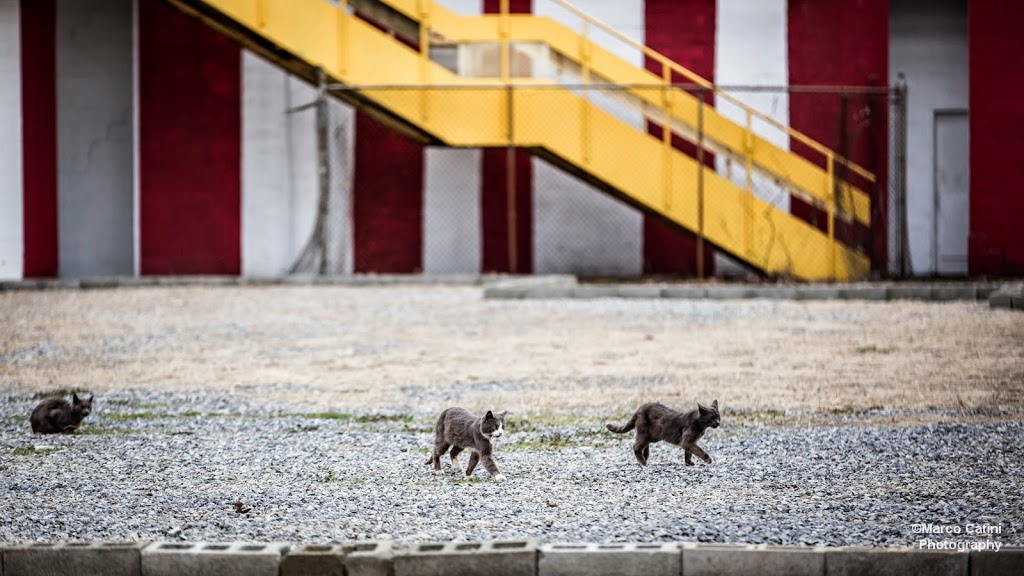
The photographer Marco Catini has taken some recent images of the Pavilion. You can find much more of his work here. Thanks Marco for letting me use your work here!

Here are a few of my photos taken on the afternoon of recording. The New York State Pavilion Paint Project is responsible for keeping the place is festive shape. The candy stripes are similar to the look of the 1964 pavilion.

MY THANKS AND GRATITUDE to the Queens Theatre in The Park for allowing us to record in the cabaret room! I know we went on and on about the observation desks and the Tent of Tomorrow, but you should really check out a show within the greatly renovated theater. Coming in December: Charles Dickens’ A Christmas Carol!

Visit the People For The Pavilion website for more information on upcoming events, news and fund-raisers. And a shout-out to the organization’s co-founder Salmaan Khan!

The New York Daily News just yesterday published an article about People For the Pavilion and its co-founder Christian Doran who passed away in February. There’s a fund-raiser tomorrow in his honor. [More info here]

ALSO: I didn’t get to plug this on the show, but historian Christian Kellberg has just released a book of photography of the New York State Pavilion, part of the Images of America series. Most of the pictures are exclusive to this book including some extraordinary shots of the pavilion construction.

And of course there’s Joseph Tirella‘s terrific book Tomorrow-Land: The 1964-65 World’s Fair and the Transformation of America, putting the entire fair within context of the rapidly changing America of the 1960s.

And since I mentioned it on the show, here’s a link for Robert Caro‘s The Power Broker as well!

Categories
Gilded Age New York Podcasts

Frozen in time: The Blizzard of 1888 knocks New York City off its feet, creating the deadliest commute in history

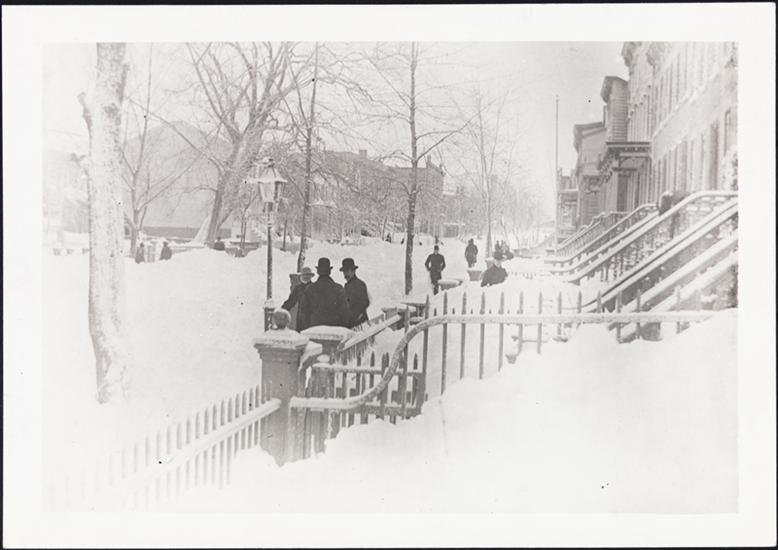
PODCAST This year is the 125th anniversary of one of the worst storms to ever wreak havoc upon New York City, the now-legendary mix of wind and snow called the Great Blizzard of 1888.

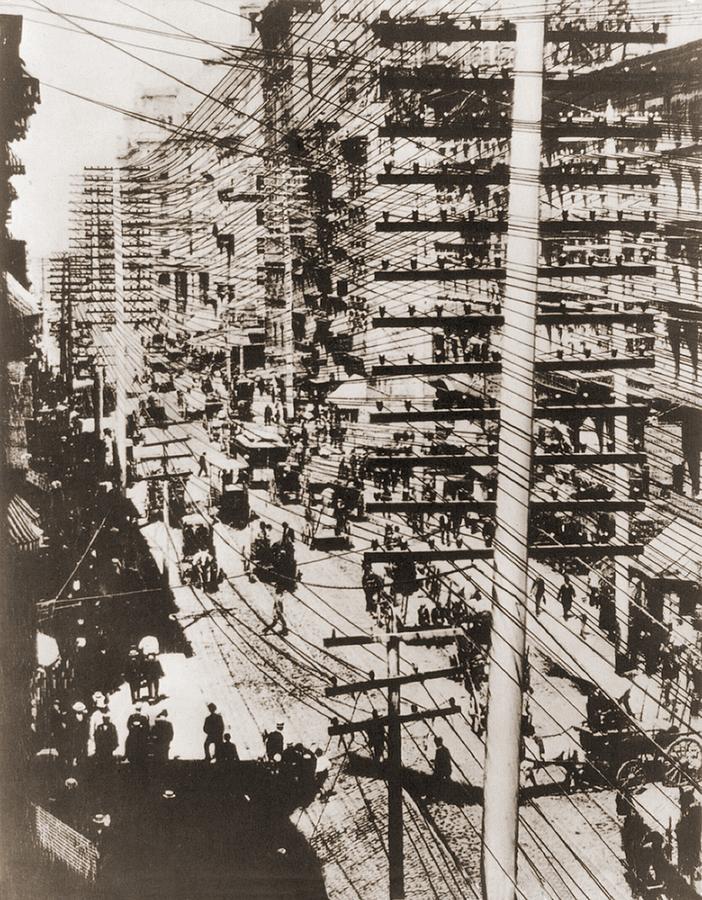
Its memory was again conjured up a few months ago as people struggled to compare Hurricane Sandy with some devastating event in New York’s past. And indeed, the Blizzard and Sandy have several disturbing similarities. But the battering snow-hurricane of 1888, with freezing temperatures and drifts three stories high, was made worse by the condition of New York’s transportation and communication systems, all completely unprepared for 36 hours of continual snow.

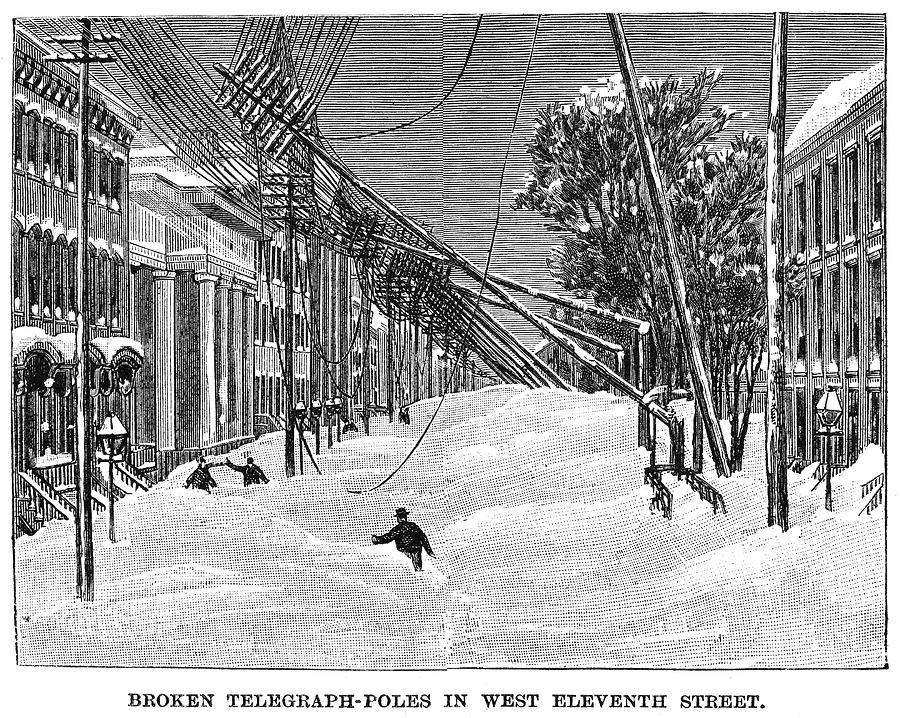
The storm struck in the early hours of Monday, and many thousands attempted to make their way to work, not knowing how severe the storm would be. It would be the worst commute in New York City history! Fallen telephone and telegraph poles became a hidden threat under the quickly accumulating drifts.

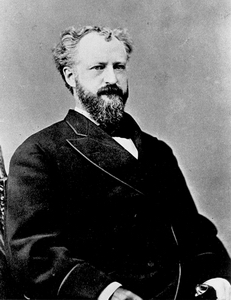
Elevated trains were frozen in place, their passengers unable to get out for hours. Many died simply trying to make their way back home on foot, including Roscoe Conkling (at right), a power broker of New York’s Republican Party.

But there were moments of amusement too. Saloons thrived, and actors trudged through to the snow in time for their performances, And for P.T. Barnum, the show must always go on!

STARRING: Hugh Grant (although maybe not the one you’re thinking)


NOTE: And, yes, we can’t believe the timing of this one, releasing on the same date of an ACTUAL blizzard. We really had this one planned for awhile, delayed it a bit because it seemed too eerie to do it so close after Hurricane Sandy.

So if you’re in New York or the northeast United States, stay inside, stay safe and let this podcast be the only dangerous snow drifts you experience this week!


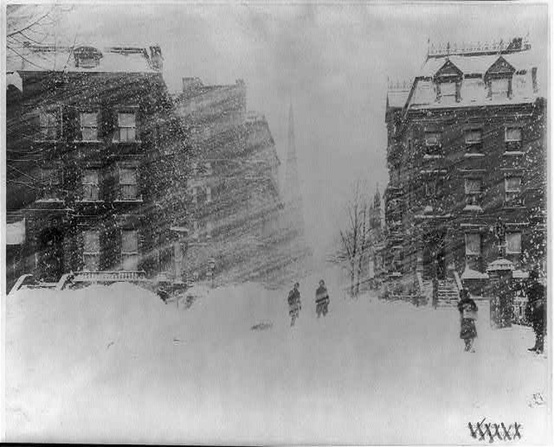
In the blizzard of 1888, the streets disappeared and the snow came down almost horizontally. Imagine being trapped at work, several miles from your home. This was the plight experienced by thousands of New Yorkers (and others throughout the northeast) that Monday. (Library of Congress)

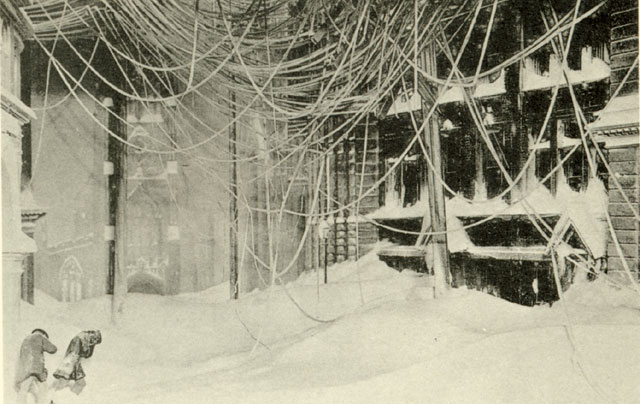
Why did the 1888 blizzard become such a hazard for New Yorkers? Let this picture be your first clue. The city was a cobweb of elevated telegraph, telephone and electric wires. This picture is from 1887. (LOC)


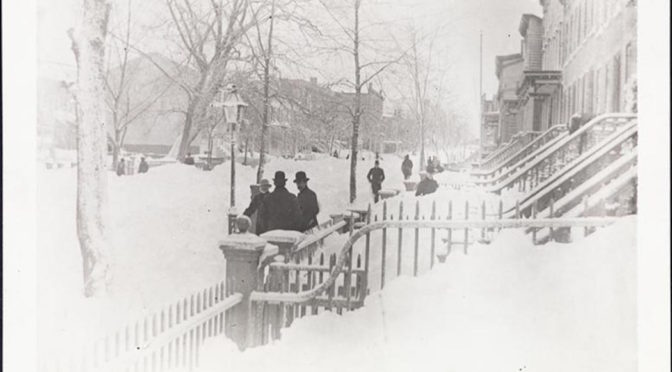
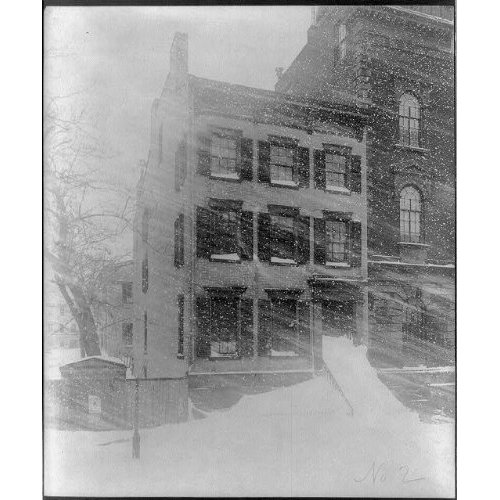
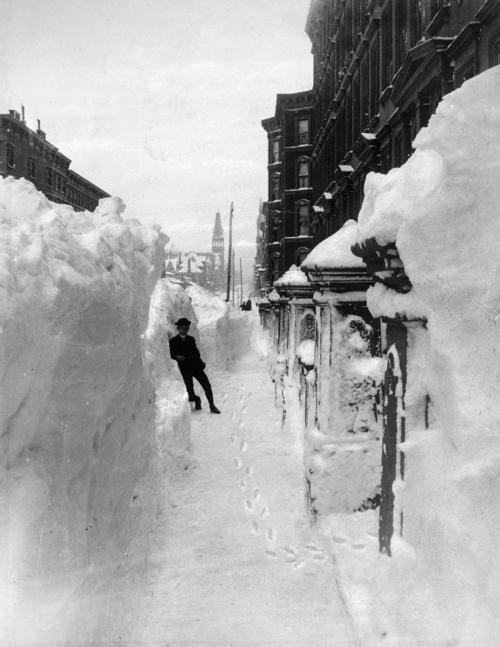
One example of a terrible (although minor) snow drift that might have kept this family in their home all day. Because of the unpredictable changes in wind, some houses might have been drift-free, while others close by completely locked in with snow. (LOC)

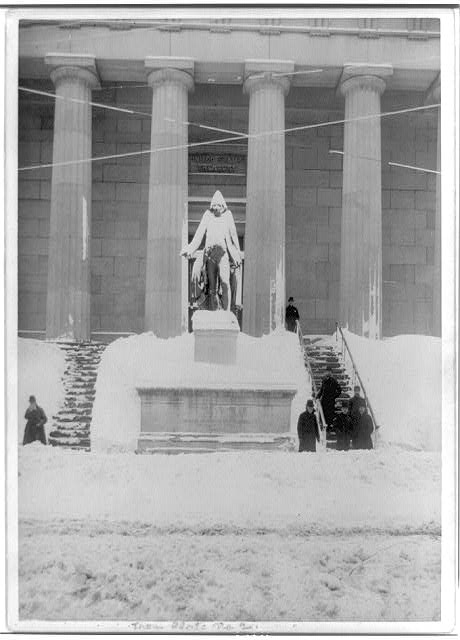
George Washington at the Sub-Treasury Building (today Federal Hall). I ran this photo a few weeks ago, but it’s so bizarre that I think it needs a second posting.

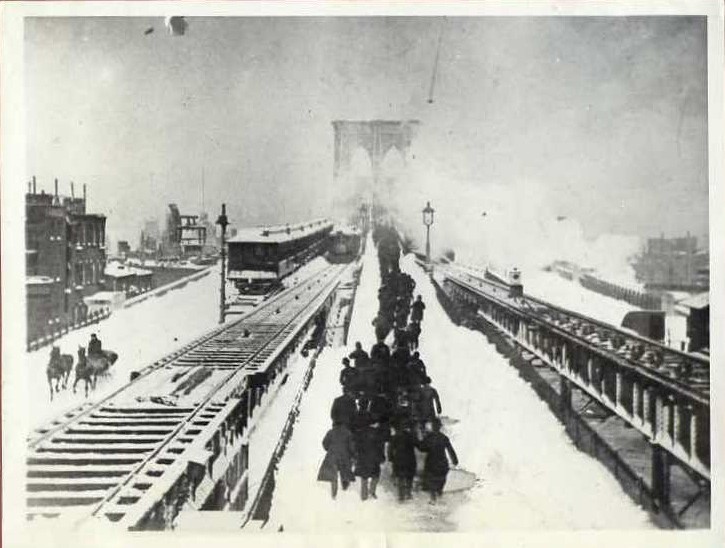
The Brooklyn Bridge, not even five years old, weathered the winds quite well, but became a hazard due to ice. In this picture, people are crossing over as there was no other way to get between Manhattan and Brooklyn. It’s not clear if any of the trains are operating in this picture.

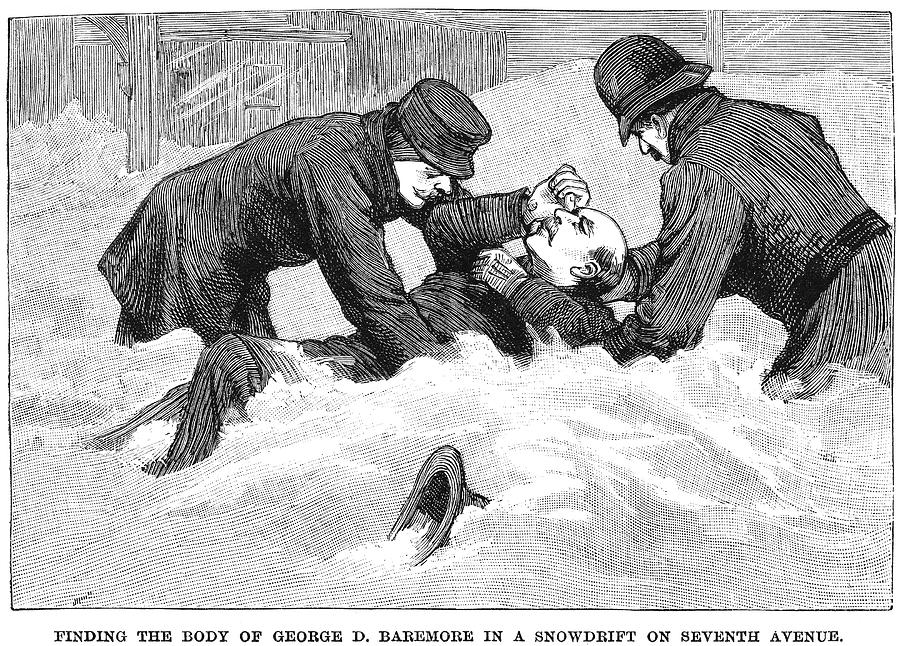
The biggest danger for those venturing outside were the hundreds of downed telegraph, telephone and electrical poles, no match for the intense gusts. The poles would quickly fall then get covered with snow, creating deadly hazards for people walking past. The snow would just as quickly cover over an unconscious individual; many New Yorkers froze to death when they fell and were instantly shrouded.


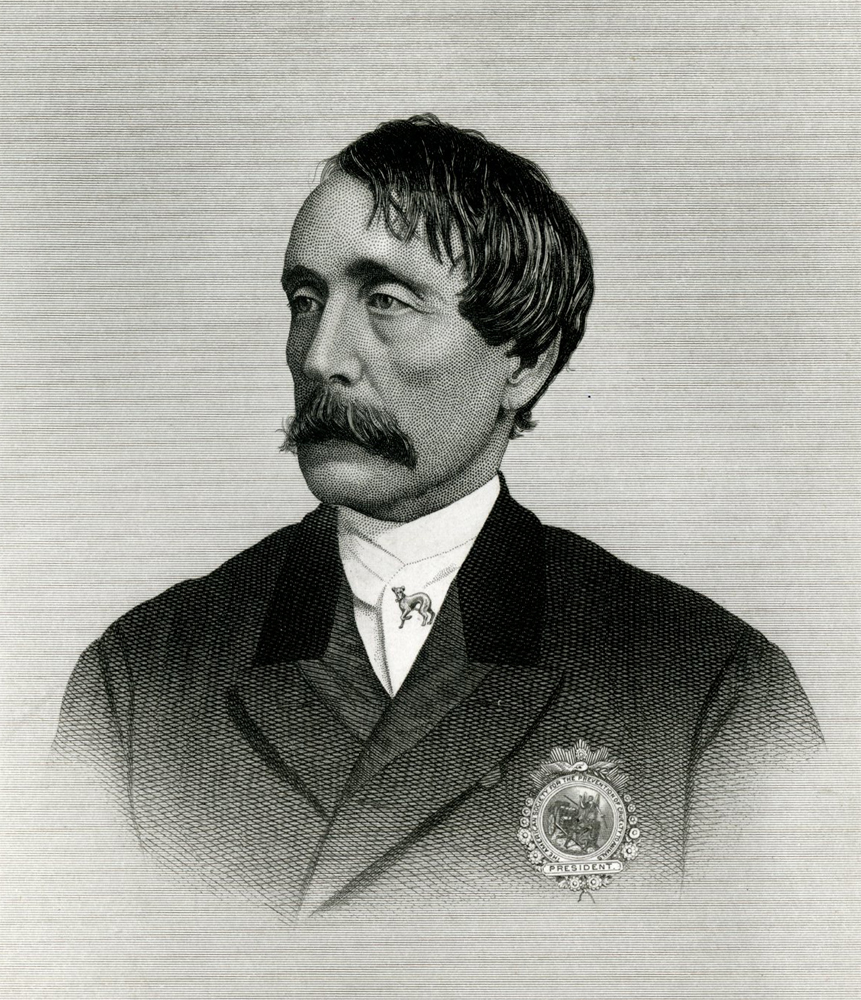
Henry Bergh, founder of the American Society for the Prevention of Cruelty to Animals. He did not survive the blizzard. (NYHS)

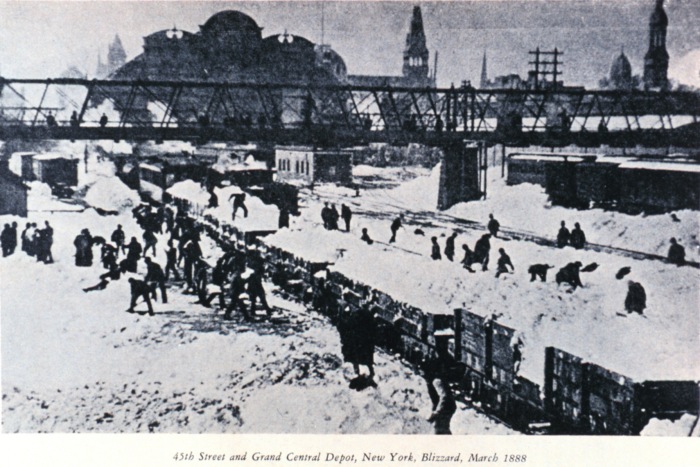
Transportation in and out of the city was at a complete standstill for half the week. Here workers frantically try to clear the way for trains going into Grand Central Depot.


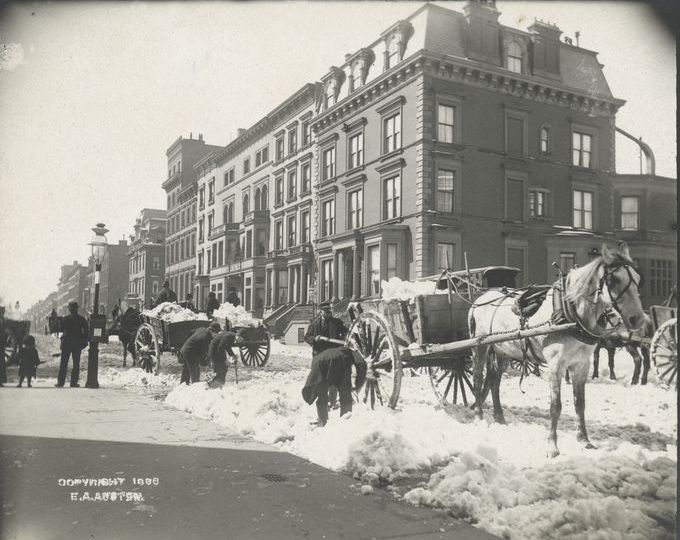
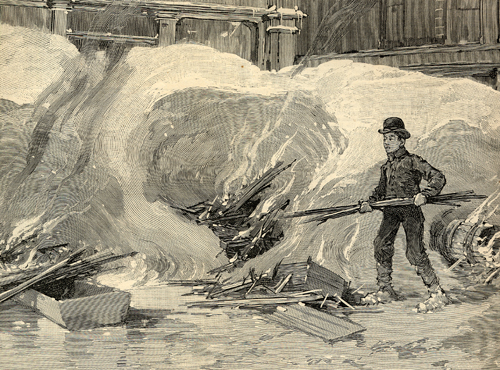
Clean-up was truly chaotic, a feeble effort by the city paired with private contractors with horses, shovels and carts. The piles of snow were taken to water’s edge and dumped, or, in a few less preferred cases, people just started bonfires and melted it away. (For a great picture of a snow dump in the river, see this photo at Shorpy of a blizzard from 1899.) Top pic courtesy LOC, at bottom Maggie Blanck.


The cover of Frank Leslie’s Illustrated Newspaper, usually one of the more sensational pieces of journalism people might have found at their newsstand.

Categories
Podcasts

A whirlwind tour of Herald Square: More than just Macy’s, the intersection of publishing, theater and debauchery

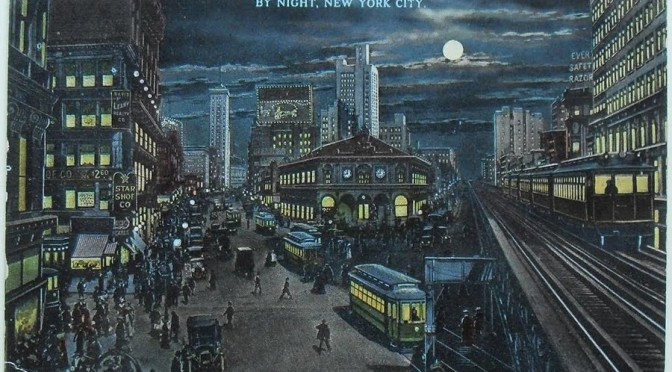
Herald Square at night, 1910, with the flurry of shoppers, the churn of printing presses, the clanking and soot exhaust of the elevated train, the rush of the streetcar. The theaters, the drinking, the dancing. (Courtesy the blog Ajax All Purpose Blog)

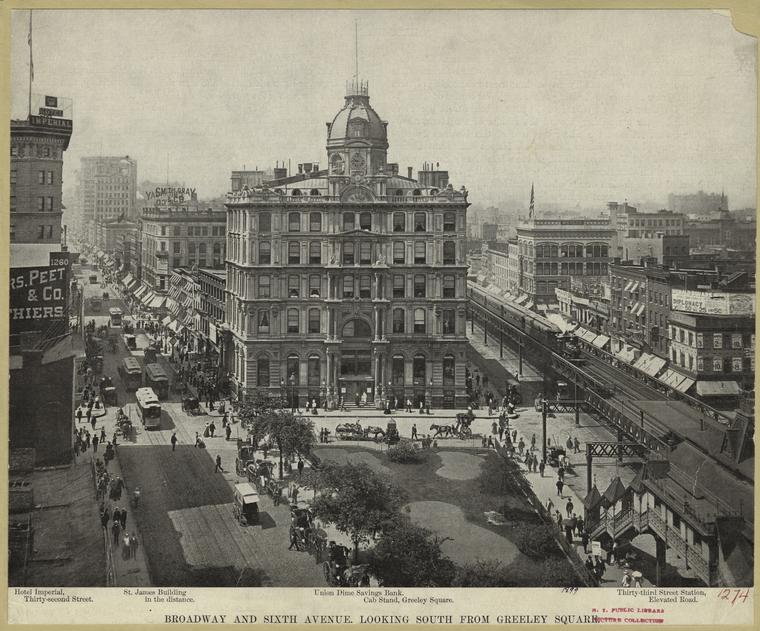
PODCAST Welcome to the secret history of Herald Square, New York City’s second favorite intersection — after Times Square, of course, just a few blocks north. But we think you may find this intersection at 34th Street, Sixth Avenue and Broadway perhaps even more interesting.

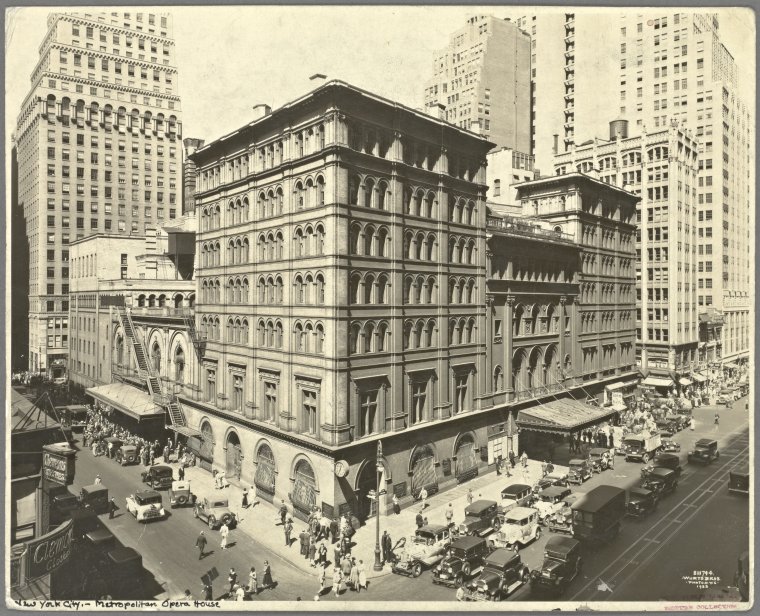
This is a tale of the Tenderloin, an entertainment and vice district which dominated the west side of midtown Manhattan in the late 19th century, and how it abutted the great cultural institutions that soon became attracted to Herald Square, from cheap aquariums to New York’s greatest opera house.

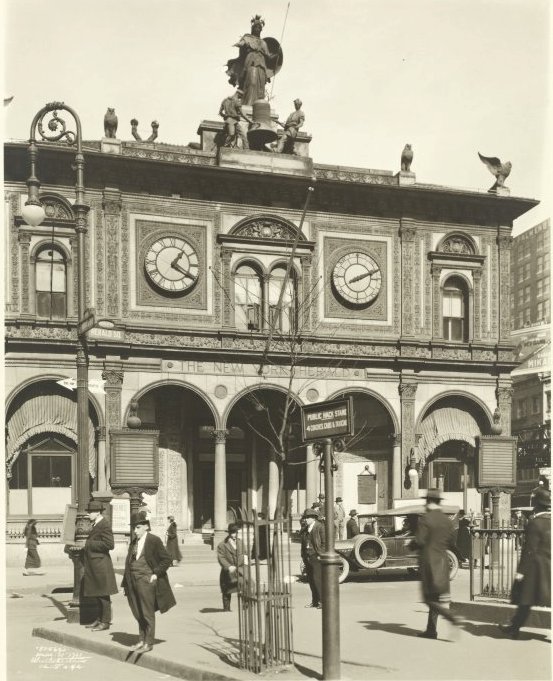
By the 1890s, newspapers arrived to the area, including the one that gives Herald Square its name. A remnant of the New York Herald Building still sits in Herald Square and is the cause of some serious conspiracy. (Especially if you’re afraid of owls!) But the Herald wasn’t the only publication that got its start here; in fact, one of America’s most famous magazines began in a curious office-slash-bachelor apartment facility just close by.

The department stores came at the start of the 20th century, and we bring you the tales of Macy’s, Saks and Gimbels, not to mention their later incarnations, the Herald Center and the Manhattan Mall.

ALSO: Where on 32nd Street were crazy parties featuring a who’s who of New York’s greatest freak show performers? Where did a silent fim stunt man meet his end? And where in New York can you get the best in Korean pop music?


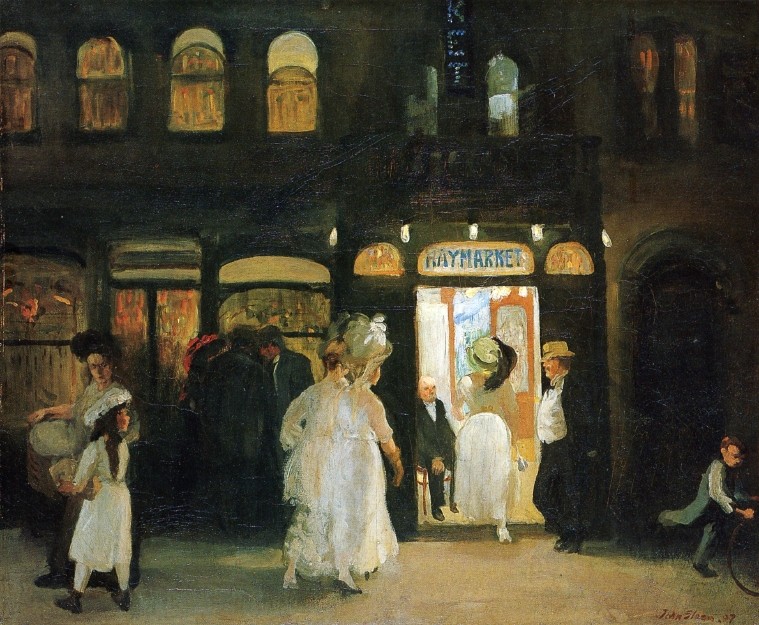
The bawdy Haymarket dance hall, at 30th Street and Sixth Avenue, in a magnificent painting by John Sloan (1907) that conjures up the glamour and winks at its secret pleasures. Several of Sloan’s works depict places located in the Tenderloin, a wide area of entertainment and vice west of Broadway. The original painting hangs in the Brooklyn Museum.

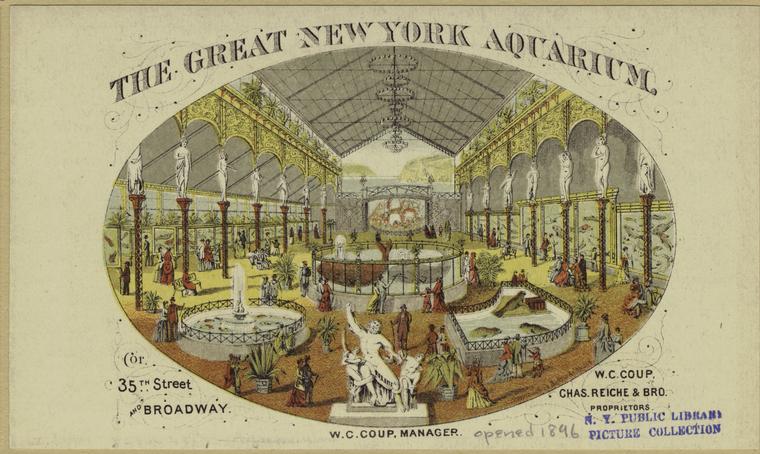
The Great New York Aquarium of W.C. Coup, bringing sea creatures to the corner of Broadway and 35th Street. (NYPL)

The character of Broadway between the intersections of 34th Street and 42nd Street (before they were known as Herald Square and Times Square, respectively) was changed forever with the construction of the Metropolitan Opera House, a vanity project for New York’s new wealthy class. It was all for show; there were plenty of loges for the rich, but so little backstage room that set pieces were stored on the street. (NYPL)

The front of the New York Herald building, with its ornate clock face and Minerva statue. Please note the owls on the corners. (NYPL)

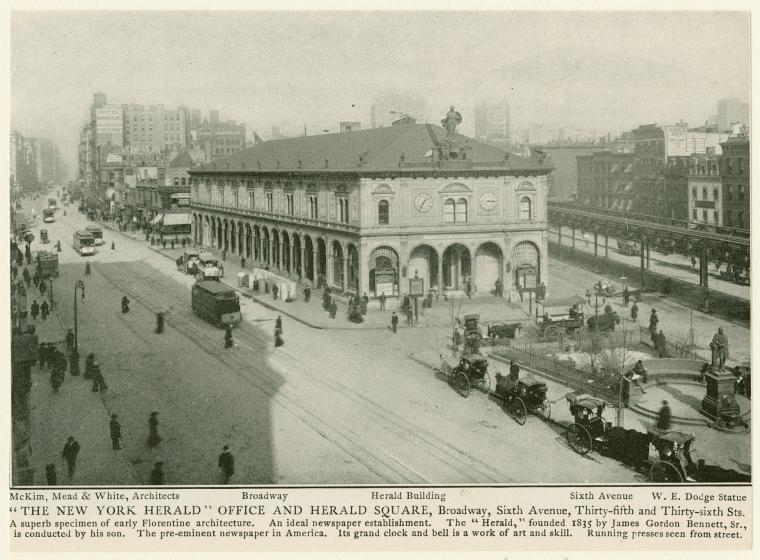
The two most dominant structures in Herald Square in the 1890s — the Sixth Avenue Elevated and Stanford White’s Herald building. “Running presses seen from street.” (NYPL)

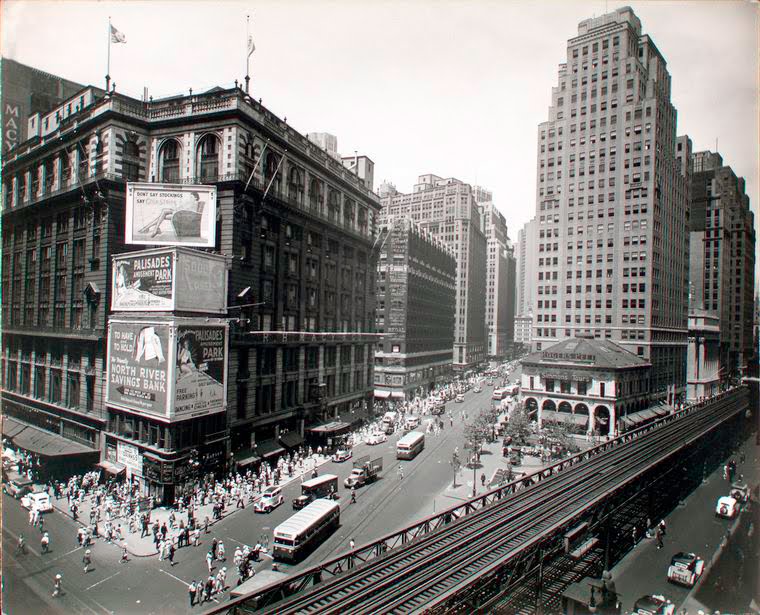
The Elevated and the Herald Building from another angle in 1936, with the new addition of Macy’s — and the little building which prevented Macy’s from taking up the entire block! Today, that’s still a Sunglass Hut. You can also see that the back of the Herald offices has already been demolished and replaced with an office building. The front would survive a bit longer and then too would be destroyed. (NYPL)

A view of Greeley Square, with the elevated to the right. This building is the Union Dime Saving Bank. The counting offices of the New York World were on the ground floor, however I’m not certain if they are there in the year this picture was taken (1899).

Now here’s a mystery for you — this is Greeley Square, named for the statue of Horace Greeley which was definitely installed in 1894. Hmm, but where is it?

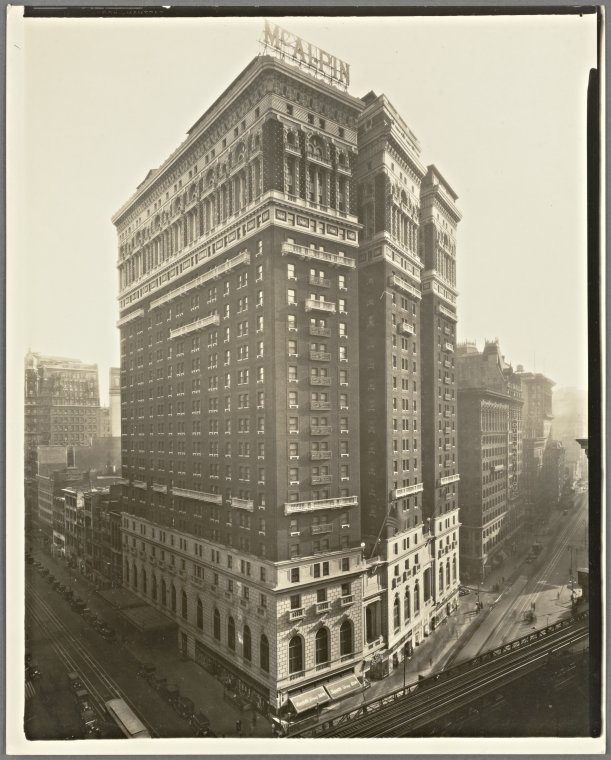
The Hotel McAlpin, at the southeast corner of 34th Street, the largest hotel in the world when it was built in 1912! Happy 100th anniversary to this accommodation, pivotal in New York City history.

Herald Square in an early (1896!) clip from Edison.

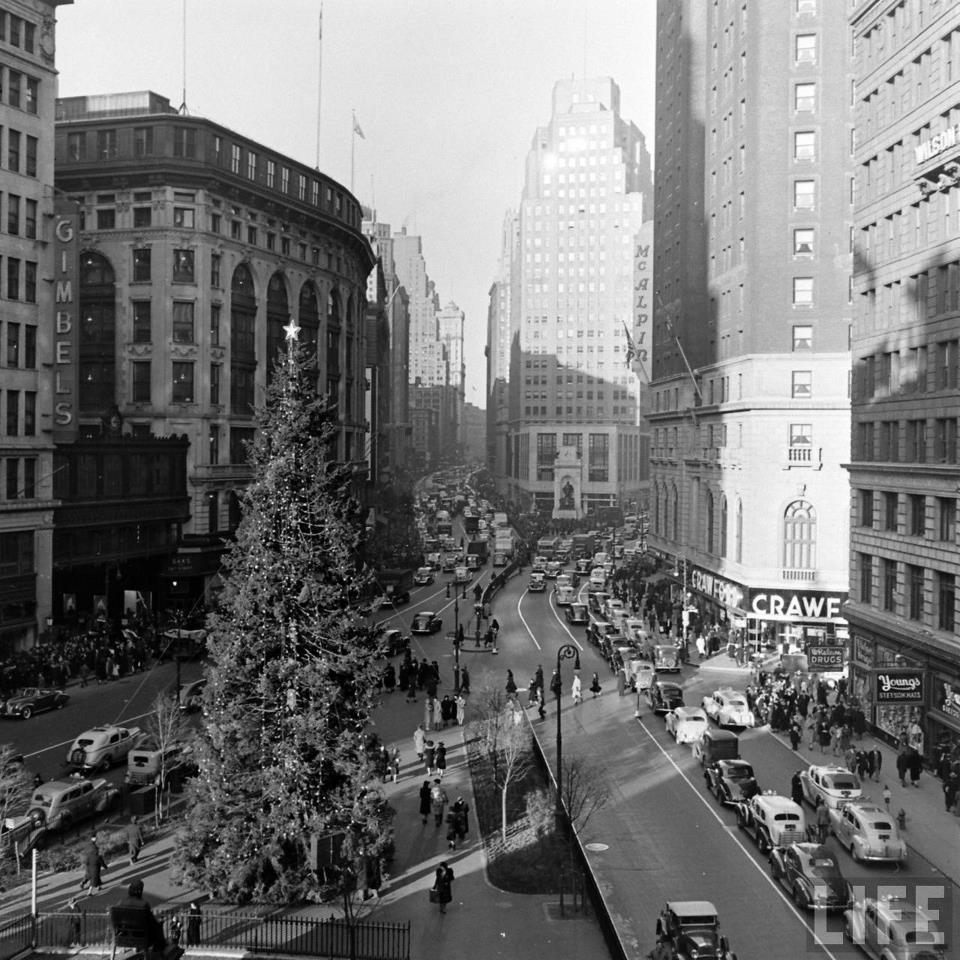
And an image for the holidays, from the 1940s! Courtesy Life Magazine

Categories
Podcasts

Bicycle Mania! The story of New York on two wheels, from velocipedes to ten-speeds — with women’s liberation in tow


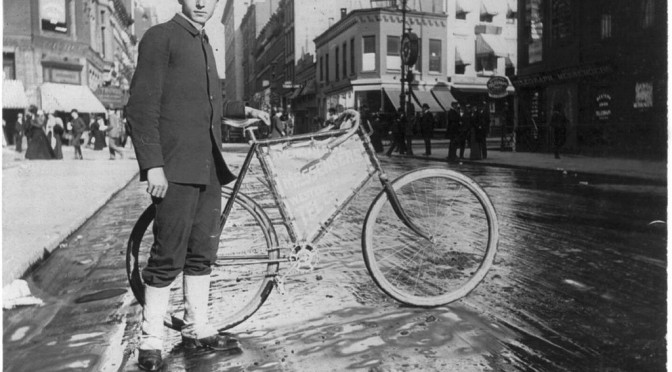
Alice Austen’s iconic photograph of a telegram bike messenger in 1896, a year where many New Yorkers were wild about bikes. Austen even rode one around with her camera. 

PODCAST The bicycle has always seemed like a slightly awkward form of transportation in big cities, but in fact, it’s reliable, convenient, clean and — believe it or not — popular in New York City for almost 200 years.

The original two-wheeled conveyance was the velocipede or dandy horse which debuted in New York in 1819. After the Civil War, an improved velocipede dazzled the likes of Henry Ward Beecher and became a frequent companion of carriages and streetcars on the streets of New York. Sporting men, meanwhile, took to the expensive high-wheeler.

But it was during the 1890s when New Yorkers really pined for the bicycle. It liberated women, inspired music and questioned Victorian morality. Casual riders made Central Park and Riverside Drive their home, while professionals took to the velodrome of Madison Square Garden. And in Brooklyn, riders delighted in New York’s first bike path, built in 1894 to bring people out to Coney Island.
FEATURING:  Robert Moses, Charles Willson Peale, Ed Koch, and New York’s bike thief in bloomers!


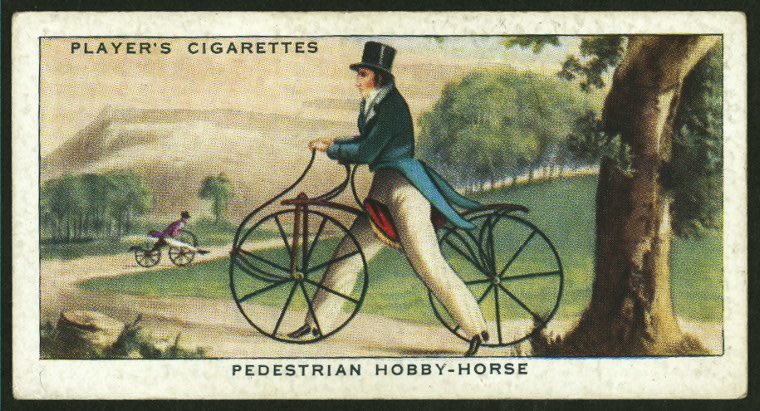
The early velocipede went by several names — the hobby horse, the dandy horse, the draisine. This device made a big splash in 1819 before they were effectively banned from the city. [NYPL]


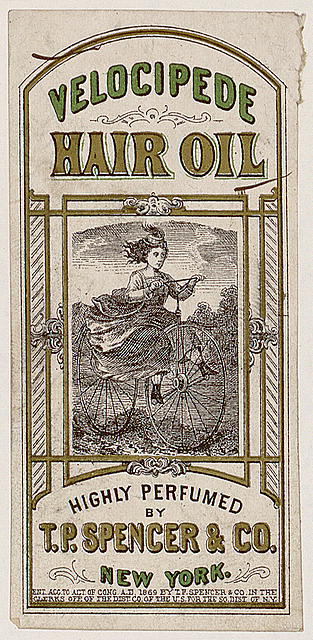
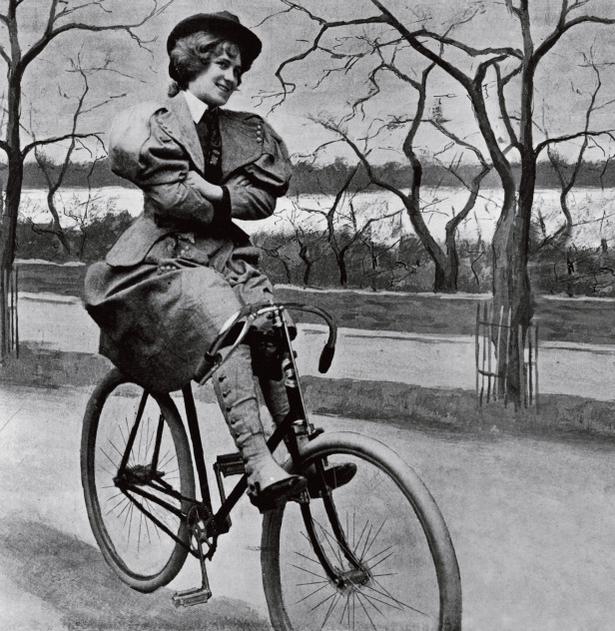
With the velocipede craze of the late 1860s, women attempted to conform to Victorian ideals of fashion with a host of bizarre products to maintain a ladylike presentation. By the 1890s, women riders chucked most of those conformities out the window, introducing more comfortable clothing and embracing the independence offered by the bicycle.

At top: An ad for a hair product, 1869. (LOC) Below: A radical change of costume in a photo illustration from 1890s (courtesy Brain Pickings, accompanying an amusing article of women’s bicycle do’s and don’ts from 1895)

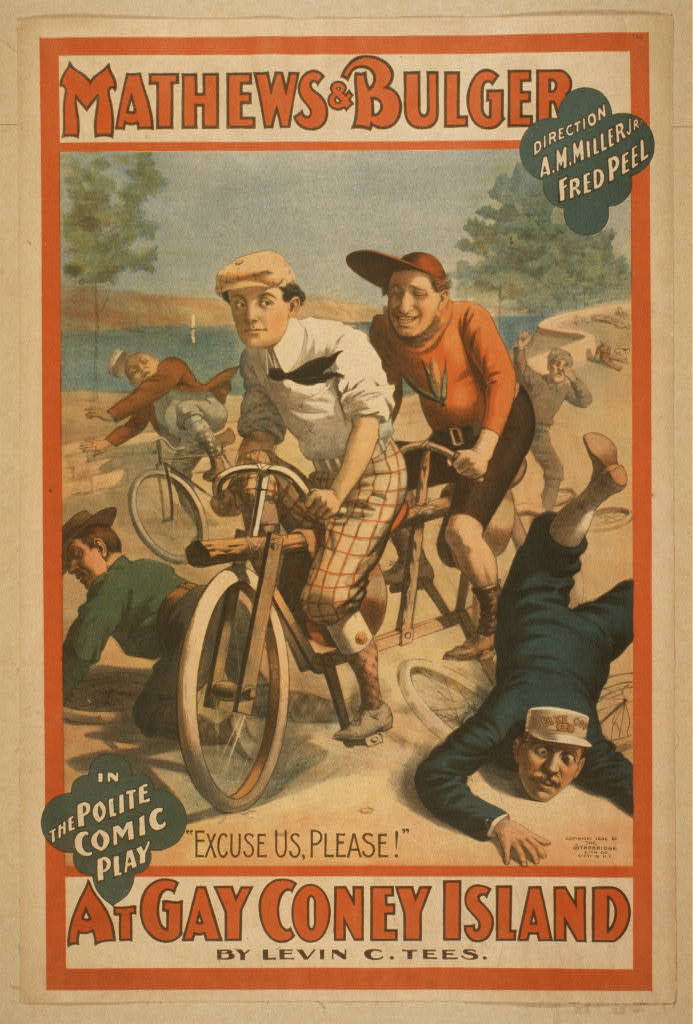
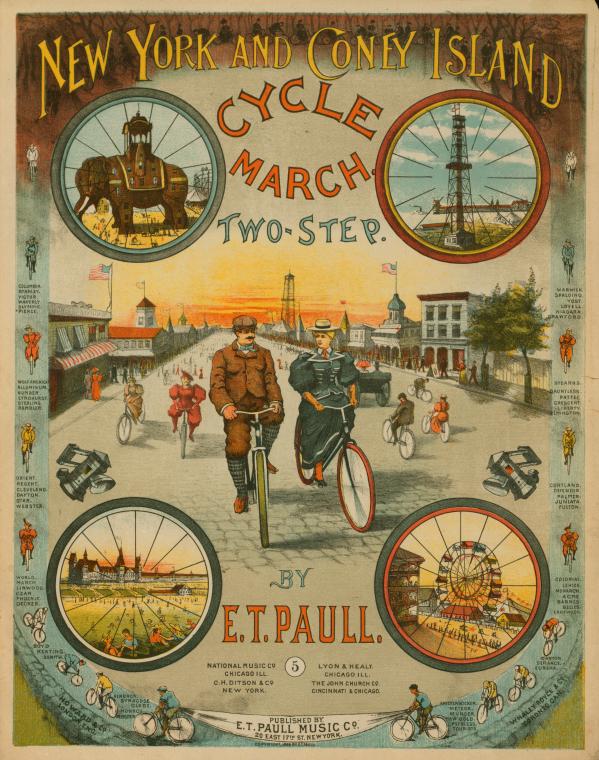
The bicycle didn’t just provide transportation and recreation in the 1890s. It influenced entertainment as well, through the songs of Tin Pan Alley. Below: A ‘comic play’ and a two-steph, both from 1896, and both inspired by the Coney Island Bike Path. (LOC)

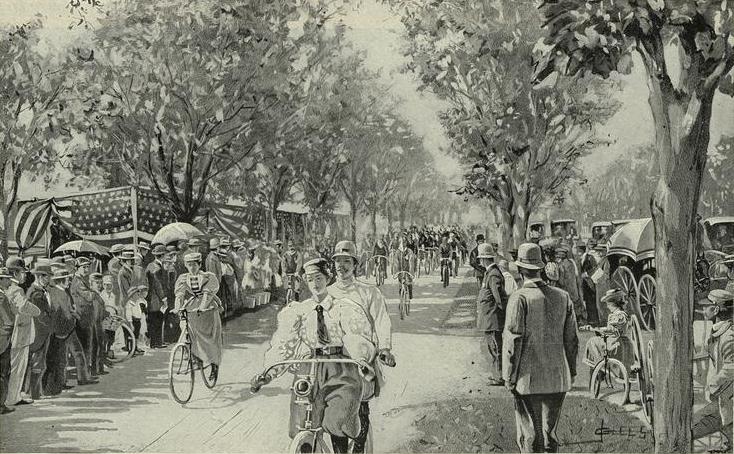
The Coney Island Bike Path in 1896, running up Ocean Parkway to Prospect Park. I believe this illustrates the opening of the return path, as the original path opened in 1894

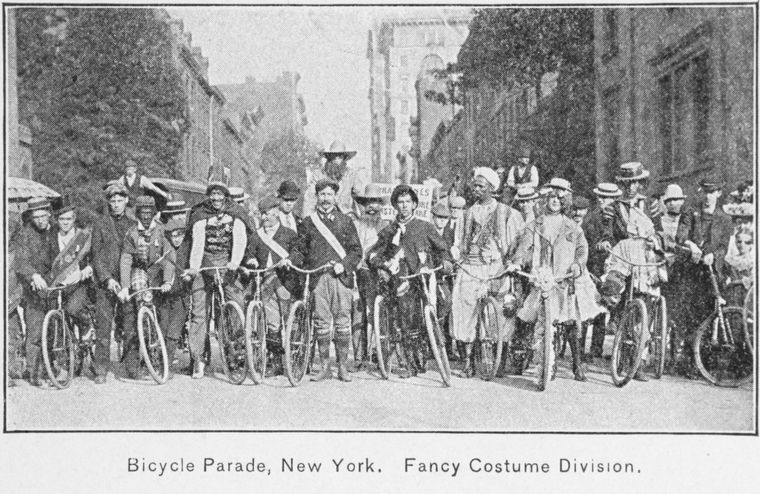
I have absolutely no context for this image, but I love it. Taken sometime between 1894-1901 [NYPL]

Categories
Mysterious Stories Podcasts

Mysteries and Magicians of New York: Whimsical spirits, scary legends, strange magic and the original ghost busters

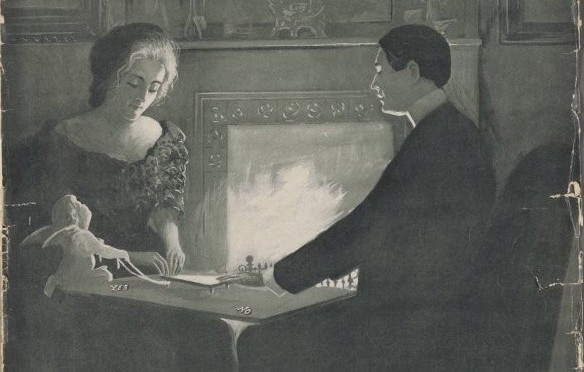
A session with a ouija board, a haunting illustration from a piece of 1901 sheet music ‘There’s A Charm About The Old Love Still’. (NYPL)

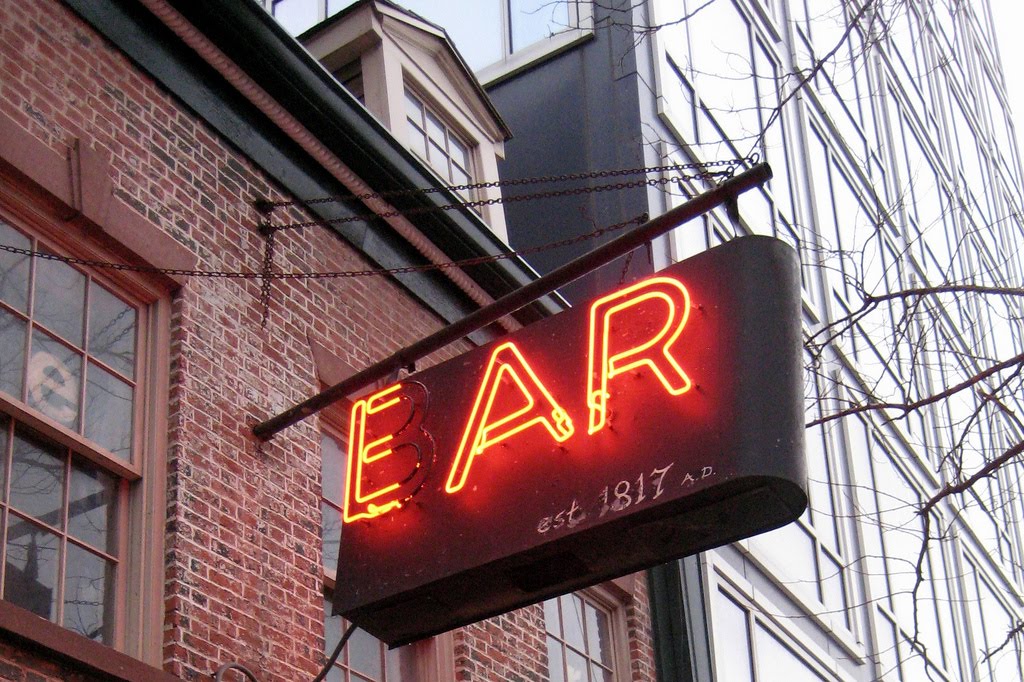
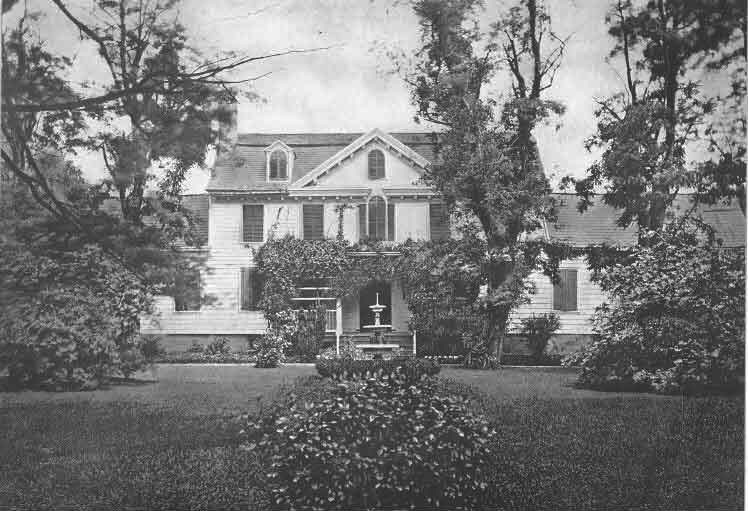
PODCAST Our sixth annual ghost story podcast takes a little twist this time around. Oh sure, we have two of New York’s most FAMOUS horror stories in our first part, beginning with a spirited sailor named Mickey who haunted a classic structure on the Lower West Side. Today it’s the Ear Inn, where you better watch your drink. Then we switch to a Colonial-era tale of obsession and entrapment in old Flatbush, the tale of Melrose Hall with its secret passages, stairwells and dungeons.

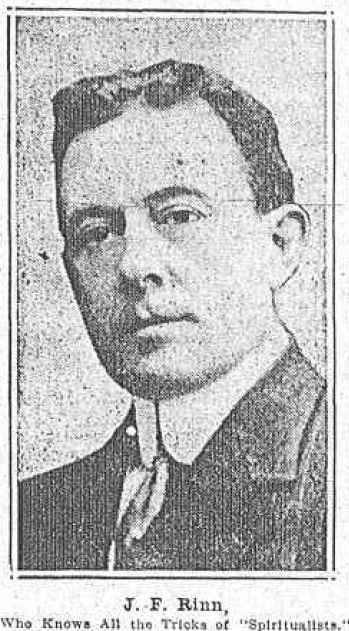
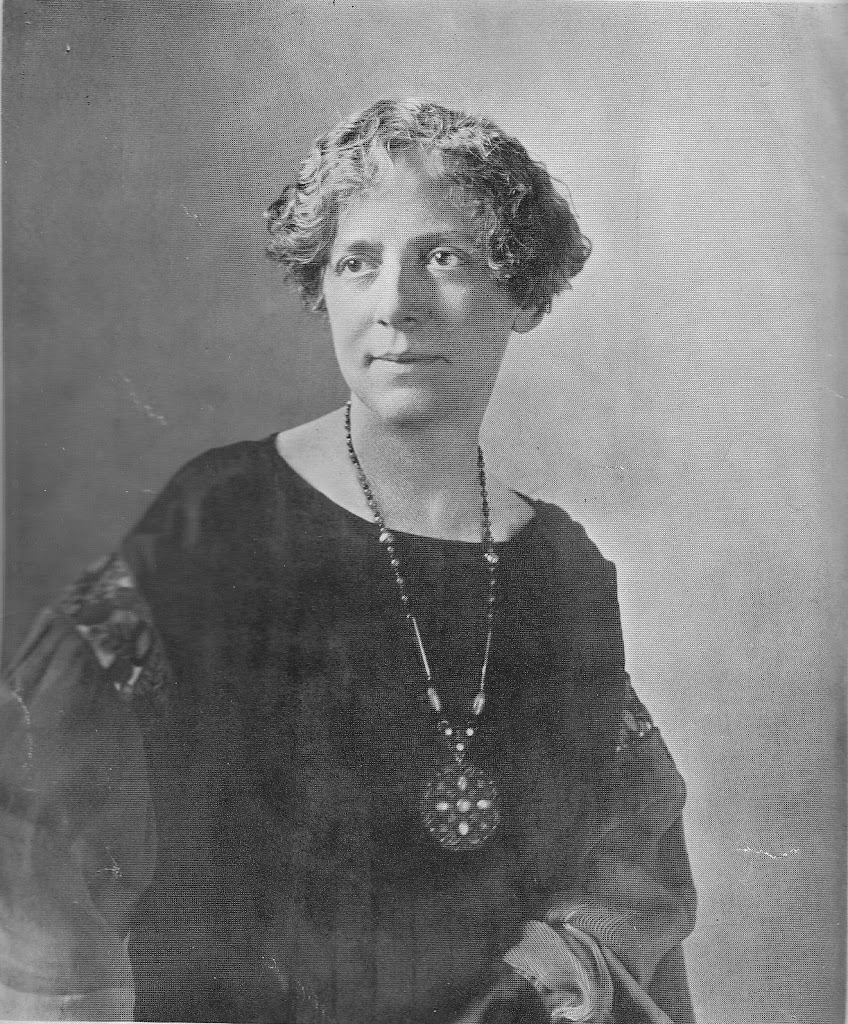
But in the second half, we observe New York’s spiritualism craze of the early 20th century through two frightening faceoffs. In the first, its the madame of the Ouija board, Pearl Curran, and her ghostly companion Patience Worth vs. one of New York’s original ghostbusters, the adventurer and conjurer Joseph Rinn (pictured at right). And in the final tale, Tom explores the secrets of Harry Houdini and what happens when a close confidante — in this case, the noted author Sir Arthur Conan Doyle — believes his powers are of a supernatural variety.

Featuring our annual ghost-story dramatics, a few sound effects, and the surprising haunted history of Carnegie Hall!


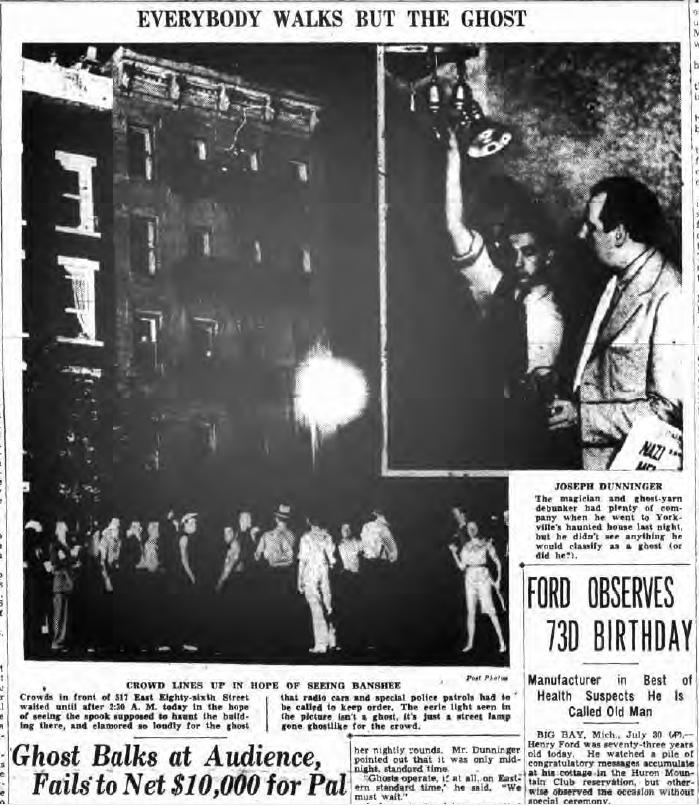
From the pages of the New York Post, July 1936. Crowds hunt for the spirit of Angelina, the Italian ‘banshee’. Crowds lined up to get a glimpse, so many that ‘special police patrols’ were called to control the search. [source]

The house of Revolutionary War veteran James Brown, today the worn and welcoming Ear Inn, is almost 200 years old, which means it has a great many ghosts, including a couple literal ones, including the randy spirit of a sailor named Mickey. (Picture courtesy Flickr/wallyg)
 
The haunted Melrose Hall in Flatbush, Brooklyn, the site of some improbable architecture and a terrible crime. Is that Alma peering from the third floor window? Do you dare enter?
 

Pearl Curran, the St. Louis woman who began conjuring the spirit of an 17th century English woman named Patience Worth, via the Ouija board. She was frequently questioned by prominent medium debunkers, including Houdini’s friend Joseph Rinn.

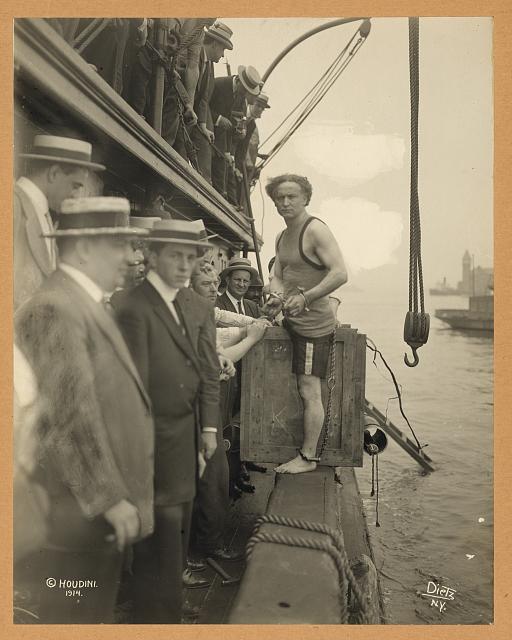
Harry Houdini in 1912, about to step in to a sealed sunken chest, which he will inevitably escape from. But what was his secret? Was Sir Arthur Conan Doyle — and his wife Lady Jean — onto something about Houdini’s secret powers? (Courtesy Library of Congress)
Categories
Podcasts

The Croton Aqueduct: How New York got its drinking water

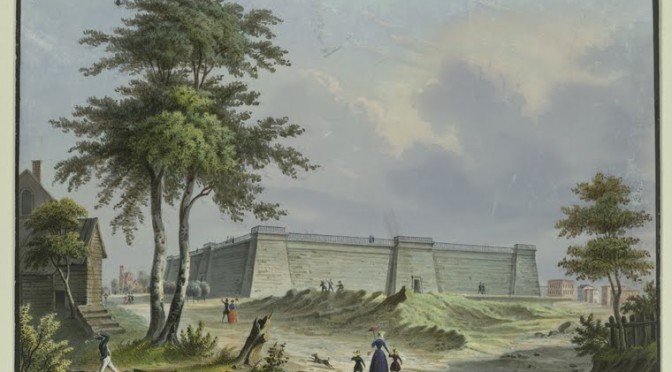
Above: The Croton Reservoir in 1850, in what would soon become Central Park. (NYPL)
PODCAST One of the great challenges faced by a growing, 19th-century New York City was the need for a viable, clean water supply.

We take water for granted today. But before the 1830s, citizens relied on cisterns to collect rainwater, a series of city wells drilled down to bubbling, underground springs, and, of course, the infamously polluted Collect Pond. But these sources were spreading disease and clearly inadequate for a city whose international profile was raising thanks to the Erie Canal.

The solution lay miles north of the city in the Croton River. New York engineers embarked on one of the most ambitious projects in the city’s history — to tame the Croton, funnelling millions of gallons of waters through an aqueduct down to Manhattan, where it would be collected and stored in grand, Egyptian-style reservoirs to serve the city’s needs.

This is the story of both the old and new Croton Aqueducts, and of the many landmarks that are still with us — from New York’s oldest surviving bridge to a former Bronx racetrack that was turned into a gigantic reservoir.

FEATURING: An entire town moved on logs, a famous writer’s strange musings on Irish laborers, the birth of a banking titan, and guest appearances by Isaac Newton, DeWitt Clinton, and Gouverneur Morris (or, at least, men who share those names).


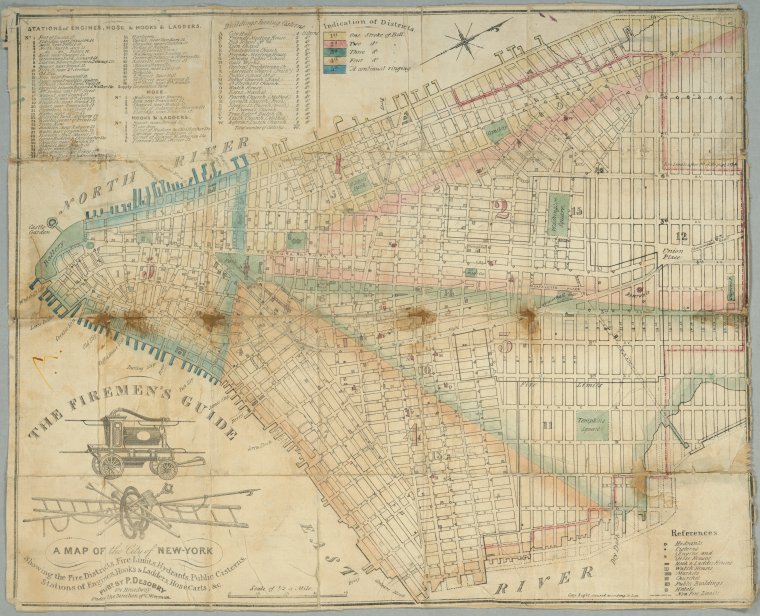
A fireman’s map of New York in 1834, detailing the location of the city water supply, in cisterns and hydrants fueled by the 13th Street Reservoir. (NYPL)

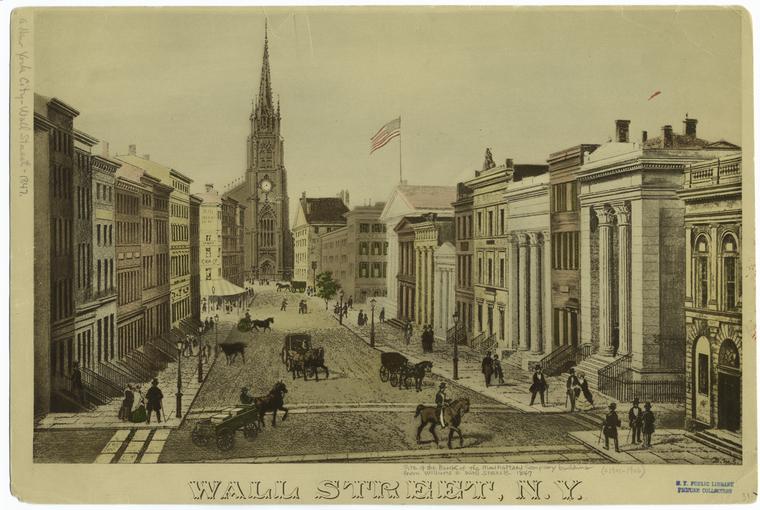
Wall Street in 1847. The Manhattan Company is at 40 Wall Street. Founded by Aaron Burr ostensibly as a public works to distribute water, the Company soon shed its water responsibilities to become a full-fledged financial institution.

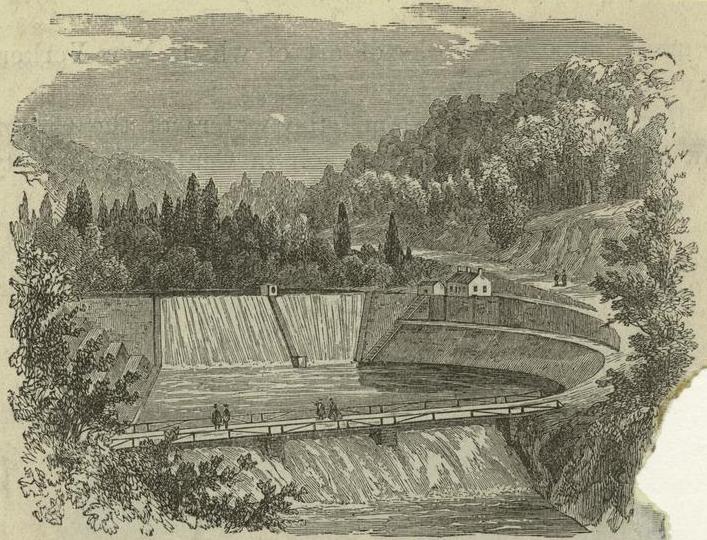
The Croton Dam and the start of the aqueduct system. After a partial collapse in 1841, the dam was quickly rebuilt for the opening of the entire system the following year. Today, the location of this dam is submerged under the current Croton. (NYPL)

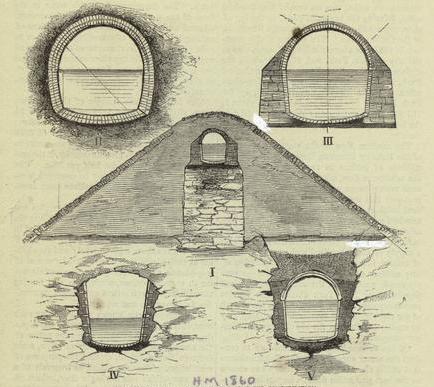
Examples of the various tunnels created to accommodate the various topographical challenges encountered during construction. Miles of these water tunnels were constructed by a team mostly comprised of Irish laborers. (NYPL)

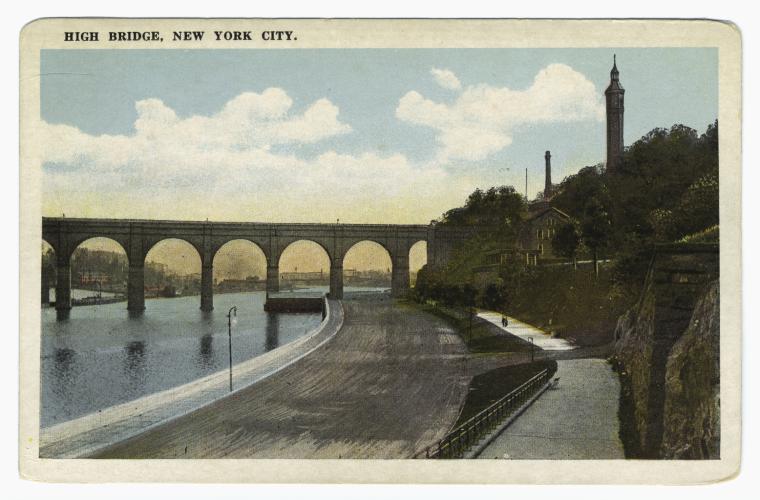
The glorious High Bridge, the oldest surviving bridge in New York — although much of it has been replaced and quite altered. (NYPL)

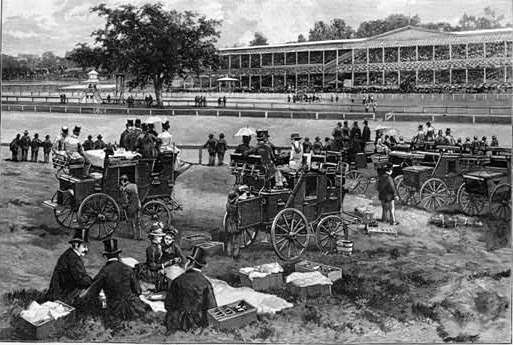
High society flocked to Jerome Park Racetrack on the weekends in the 19th century. But the park was turned into a reservoir at the beginning of the 1900s. (NYPL)

Also: please see my post from yesterday The Art of the Reservoir for pictures of some of the receiving and distributing reservoirs used in the Croton system and others through the New York region.

Categories
Podcasts

New York University: A noble idea takes root in the Village, a school for the metropolis, but not without growing pains

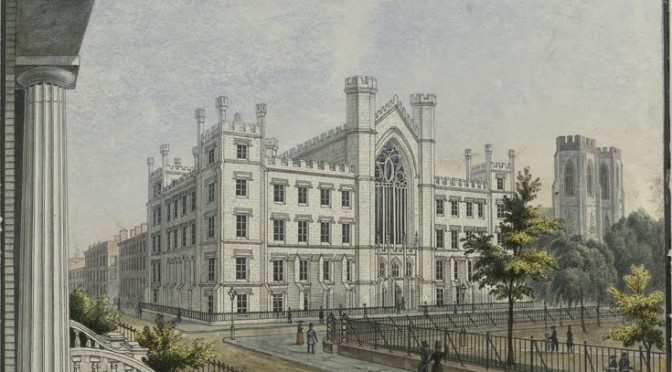
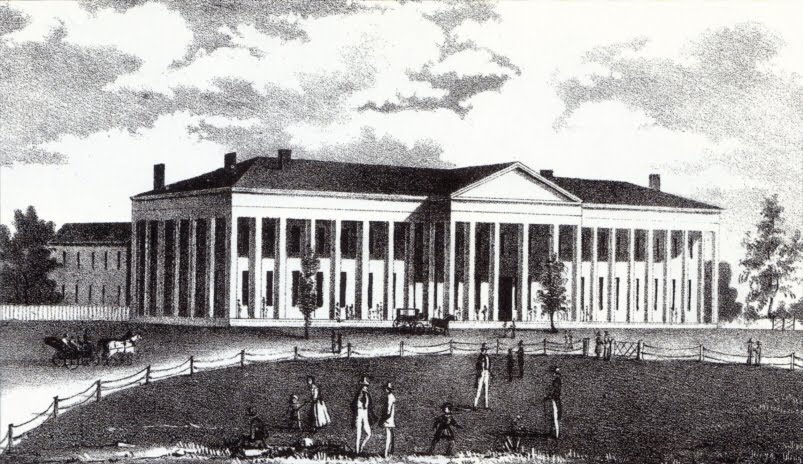
Hogwarts of Washington Square: The beautiful and supremely ostentatious University Hall at the northeast corner of the park, circa 1850. [NYPL]

PODCAST They once called it the University of the City of New York, an innovative, non-denominational school located in a intellectual castle on the northeast corner of the Washington military parade ground. Today it’s better known as New York University, one of America’s largest private schools of higher education, inhabiting dozens of buildings throughout the city.

Find out more about its spectacular and sometimes strange history, from the inventors among its early faculty to some of the more curious customs among its 19th century student body. But the story of NYU is often defined by its growth, the need for expansion, and conflicts with the community.

Featuring: The prisoners of Sing Sing Prison, the Hall of Fame for Great Americans, the usual controversial plans of Robert Moses, and a strange custom known simply as The Bun.


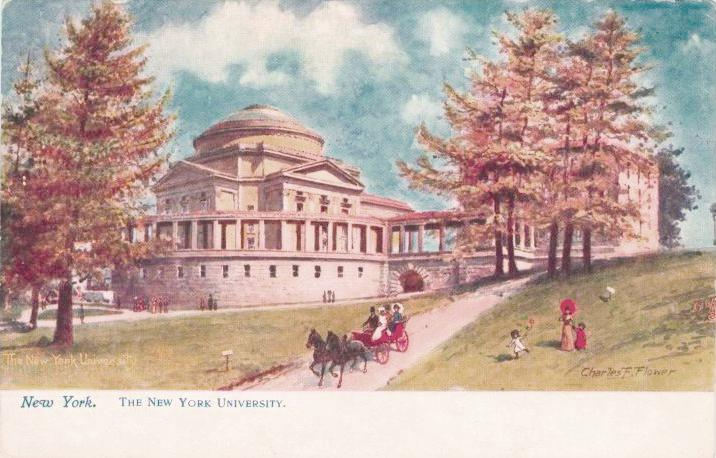
The Bronx campus of New York University was an attempt to affix the school into a more traditional campus. And a bucolic one too, from the looks of  this postcard. [NYPL]

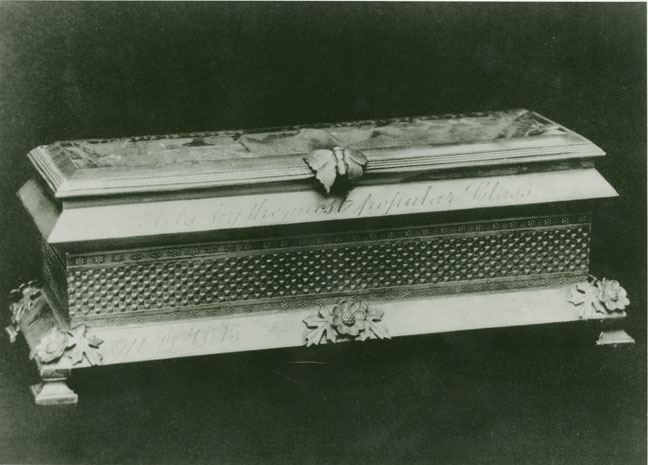
The silver casket (pictured here in 1915) which contained the remains of the coveted ‘Bun’. Who holds the Bun today? [Courtesy the NYU archives]

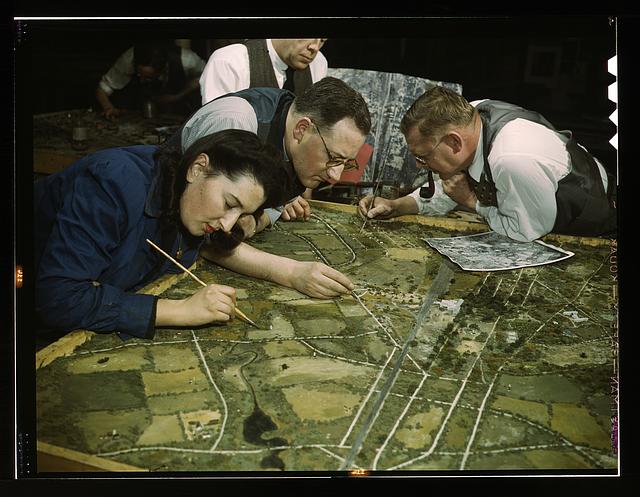
New York University’s Bronx campus became a critical training facility during the World Wars. According to the caption, this is a picture from 1943 of a ‘camouflage class’, with “men and women are preparing for jobs in the Army or in industry.” [LOC]

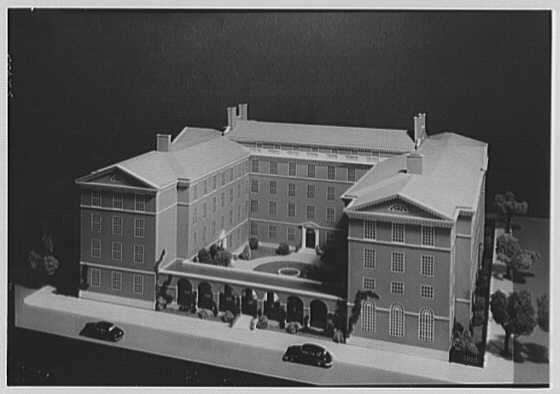
A 1948 model of the building that would become Vanderbilt Hall. Its construction on the northwest corner of Washington Square Park created tensions with the residents and activists of the neighborhood, one of many such conflicts NYU face in its expansion plans. [LOC]

Categories
Podcasts

On The House: A history of New York City beer brewing

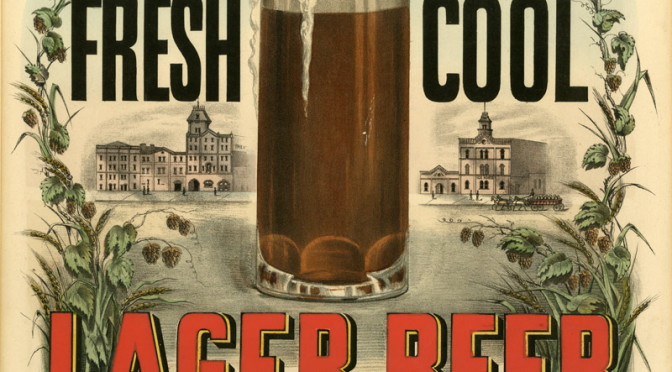
Behold the lager: A German variety of beer revolutionized American drinking, inspiring a new kind of drinking establishment (Courtesy the New-York Historical Society

Inspired by ‘Beer Here: Brewing New York’s History‘, the terrific summer show at the New-York Historical Society, the latest Bowery Boys podcast explores the story of one of America’s greatest, most treasured products– beer.

PODCAST New York City’s thriving craft brewing industry today hearkens to a time over a century ago when the city was one of America’s great beer-making capitals, the home to a robust industry of breweries and beer halls. In the 19th century, German immigrants introduced the lager to thirsty crowds, manufacturing thousands of barrels per year from breweries in Manhattan and Brooklyn’s ‘Eastern District’ (primarily Bushwick and Williamsburg). 

The top Manhattan brewers were Hell Gate Brewery and the Jacob Ruppert Brewing Company, situated right next to each other in the old German neighborhood of Yorkville. Both Ruppert and Hell Gate’s founder George Ehret rode the beer craze to become two of New York’s wealthiest businessmen. Meanwhile, out in Brooklyn, a phalanx of brewers clustered along Bushwick Avenue in fine red-brick factories.

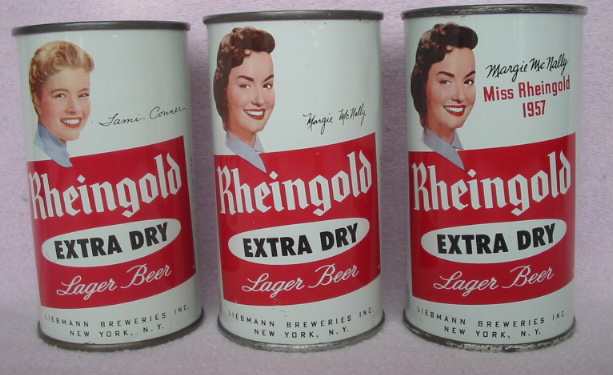
Following World War I and Prohibition, New York lost its hold over beer manufacturing to more savvy Midwestern beer makers. But a few local brands weathered the century with unusual marketing ploys — from sports sponsorships to the Miss Rheingold beauty pageant.

By the late 1970s, significant brewing had vanished from New York entirely. But somewhere in SoHo in the 1980s, a renaissance was about to begin…..

For a little extra ambiance, the show is recorded on location, live in Bushwick, Brooklyn, within a couple blocks of the original Brewers Row.


NOTE: It wouldn’t be a show without my vocal slipup o’ the month. Perhaps  I watched too much Buffy The Vampire Slayer when I was younger. I keep referring to Hell Gate as Hell’s Gate. Scott says it correctly. Both the turbulent confluence of waters and the brewery are called Hell Gate.  

Next Week: Some books, additional resources, a few more pictures and some more stories left out of this week’s podcast.

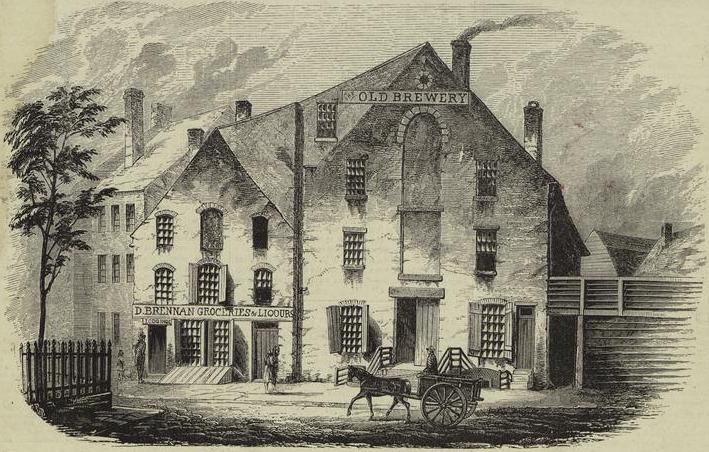
Perhaps the most notorious example of an early New York brewery was the Coulthard’s Brewery situated on the banks of Collect Pond. It survived the draining of that polluted body of water, only to survive as the center of the most disreputable elements of the Five Points neighborhood.  It was eventually demolished in 1853, replaced with a mission house.

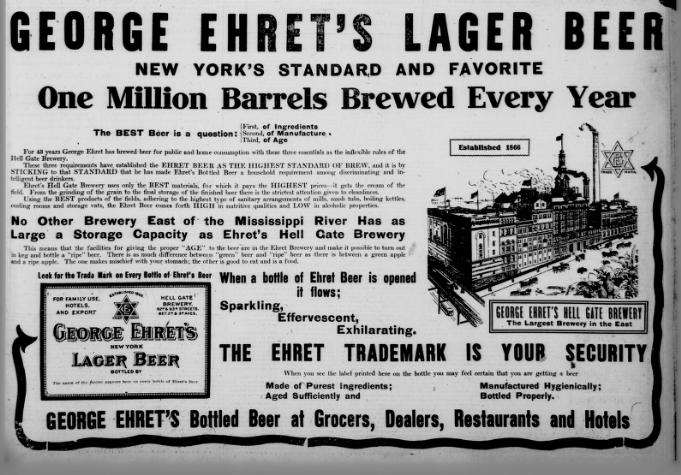
George Ehret was New York’s most successful brewer of the late 19th century. His assertion that ‘no other brewery east of the Mississippi River has as large a storage capacity as Ehret’s Hell Gate Brewery‘ was certainly accurate.  This ad from 1909 presents a company still at the top of its game. However Ehret would encounter serious opposition in the coming years, with both World War I and Prohibition cutting short the brewery’s meteoric success.

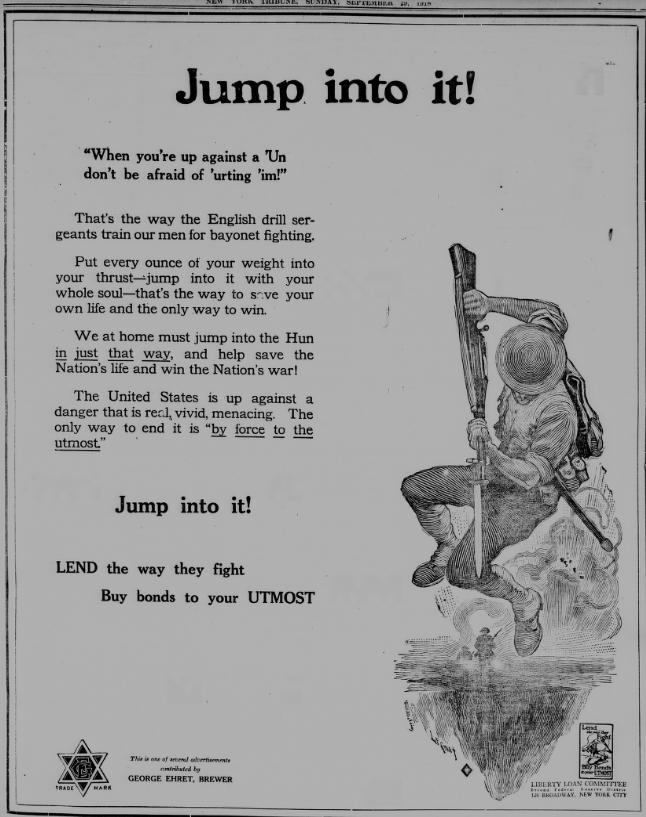
Ehret was stuck in Germany during World War I due to illness, not a great place to be during a war. His entire estate was seized by the government while he was away. When he finally returned, he threw his weight behind pro-American causes to banish any suspicions. This U.S bonds ad from 1918, the year Ehret returned to New York was one of many placed by the brewery.

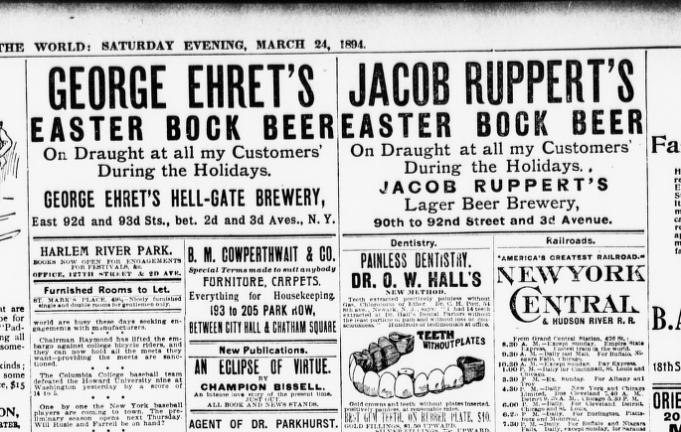
The brewery of Jacob Ruppert wasn’t just situated next to Ehret’s in this 1894 New York World newspaper; the buildings themselves were near one another, in the burgeoning neighborhood of Yorkville on the Upper East Side.  (Newspaper clippings courtesy the Library of Congress.)

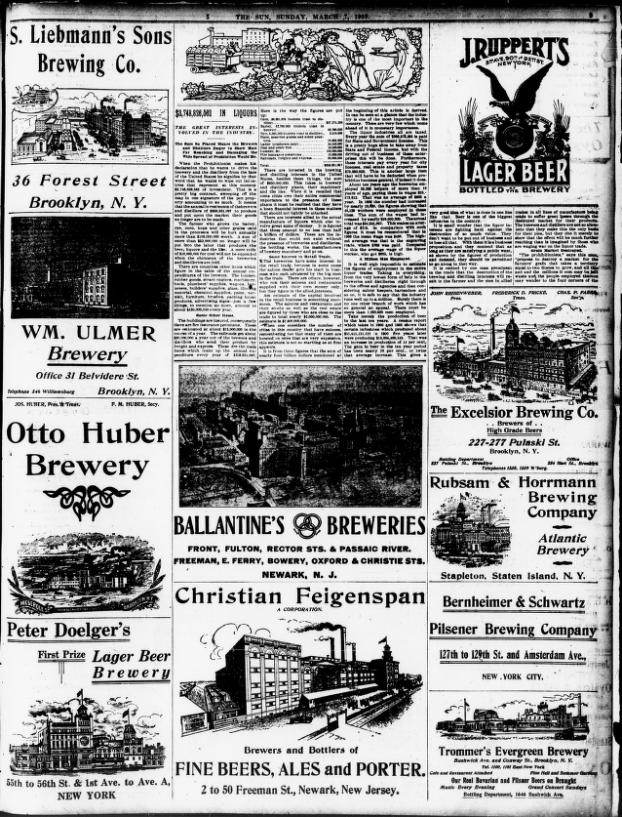
A sample page from a 1909 New York Sun newspaper illustrating some of the many breweries in the region.   Included here are the Liebmanns (who produced Rheingold Beer), the Otto Huber Brewery, William Ulmer, Trommer’s and the Excelsior Brewing Company — Brooklyn most prominent lager brewers.

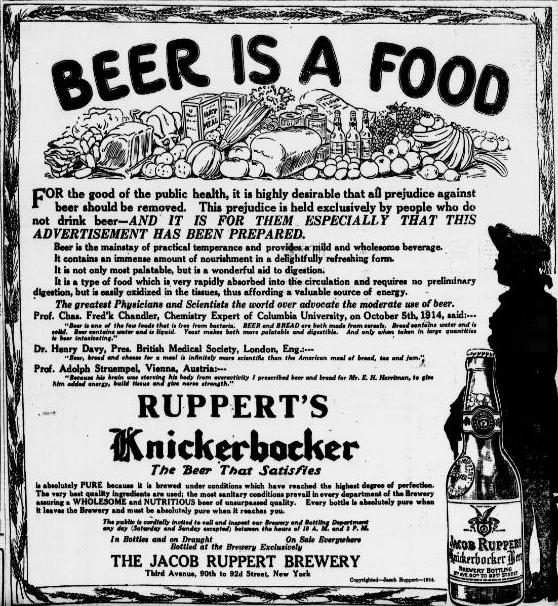
Temperance causes were greatly beginning to clamp down on the brewing industry, so beer makers attempted to market their product as true American beverages — with links to the Founding Fathers — or as products important to a person’s health. This Knickerbocker Beer ad from 1914 gamely attempts both.

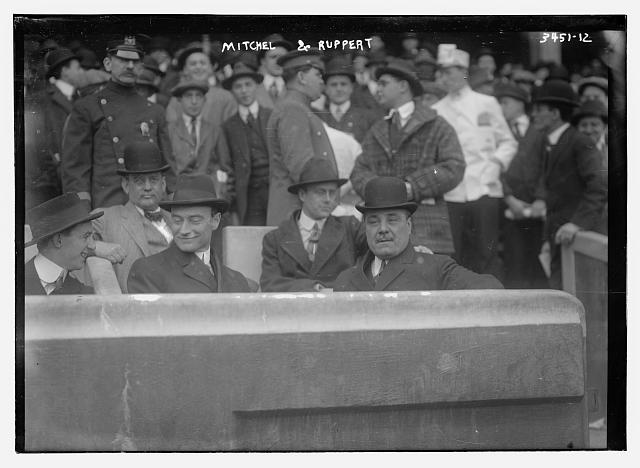
New York’s ‘boy mayor’ John Purroy Mitchell sits with Jacob Ruppert at the Polo Grounds in anticipation of a game by the team owned by the brew man, the New York Yankees. The Yankees would play at the Polo Grounds until 1923, when they moved to the newly built Yankee Stadium.

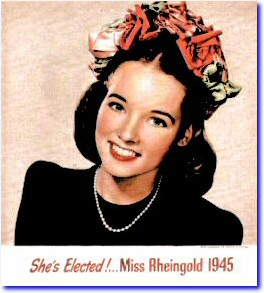
Rheingold Beer was one of the few remaining locally-based brewers to survive by the mid 20th Century, partially thanks to their annual Miss Rheingold beauty competition. [source]

This jingle, with true New York flavor, was featured in our podcast, but it really works better as a vintage television commercial!

And this Schaefer’s advertisement visualizes a world where robots are all-in-one bartenders.


I want to especially thank my guest host this week, Scott Nyerges, photographer, filmmaker and my old college friend! 

Oh, and do you need another reason to have a beer today? Well, it’s the birthday of Joseph Mitchell, born in 1908, the author of a great many profiles for The New Yorker. One of his best known collections is ‘McSorley’s Wonderful Saloon‘ from 1943, featuring a classic New York profile of the old ale house on East 7th Street.

Categories
Podcasts

The Rockaways and Rockaway Beach: The strange fortunes of New York’s former resort oasis and amusement getaway

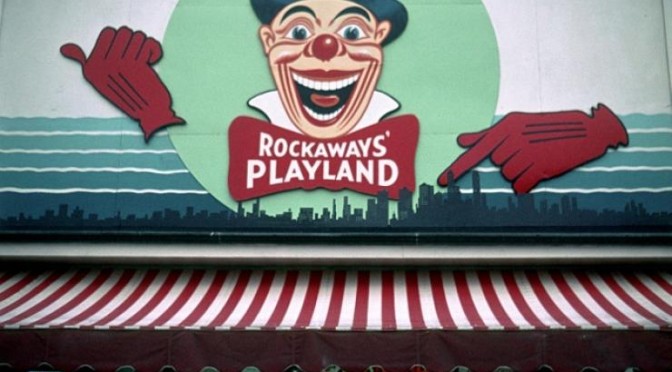
The entrance to Rockaways’ Playland in the 1960s, one of the more nostalgic reminders of an era in the Rockaways gone by. (Image courtesy the blog Sand In Your Shoes)


PODCAST The Rockaways are a world unto its own, a former resort destination with miles of beach facing into the Atlantic Ocean, a collection of diverse neighborhoods and a truly quirky history.

Retaining a variant of its original Lenape name, the peninsula remained relatively peaceful in the early years of New York history, aland holding of the ancestral family of a famous upstate New York university.

The Marine Pavilion, a luxury spa-like lodging which arrived in 1833 featuring the new trend of ‘sea bathing’, opened up vast opportunities for recreation on the peninsula, and soon Rockaway Beach was dotted with dozens of hotels, thousands of daytrippers and a even a famous amusement park.

Not even the fiasco known as the Rockaway Beach Hotel could drive away those seeking recreation here, including a huge population of Irish immigrants who helped define the unique spirit of the Rockaways.

The 20th century brought Robert Moses and his usual brand of reinvention, setting up the Rockaways for an uncertain century of decreased tourism, urban blight and uncommon solutions to preserve its unique identity.


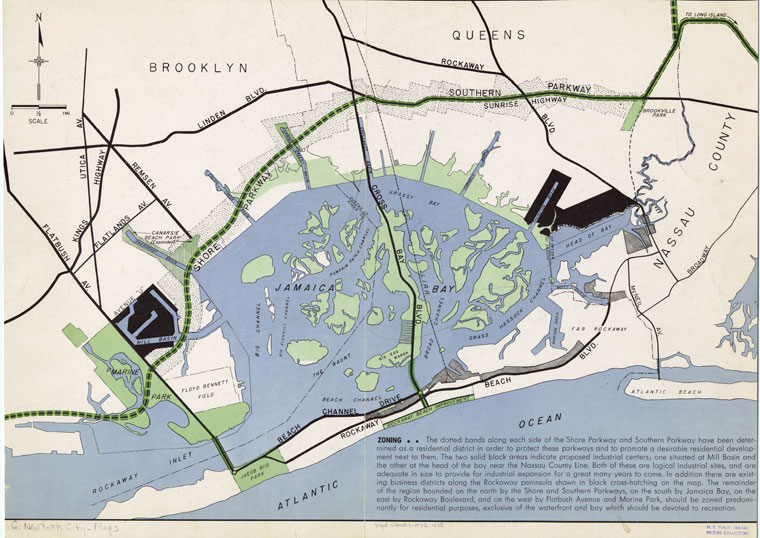
A zoning map of the Jamaica Bay region from 1937, featuring the Rockaway peninsula. A few interesting things to note about this, including: 1) no Idlewild Airport at this time, but Floyd Bennett Field was still in operation, 2) Rockaway Beach Improvement, 3) Everything west of Jacob Riis Park is basically ignored. [source]


The Marine Pavilion, the first significant resort destination in the Rockaways, introduced the notion of sea bathing to New Yorkers and attracted famous writers and actors to this peaceful area. [Courtesy Rockaway Memories]


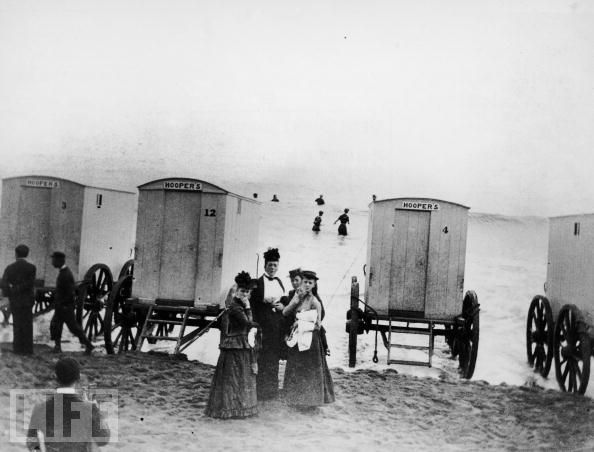
This is not an image from the Rockaways, but ‘bathing machines’ like these were most certainly used in the early days of Rockaway Beach.
 
 
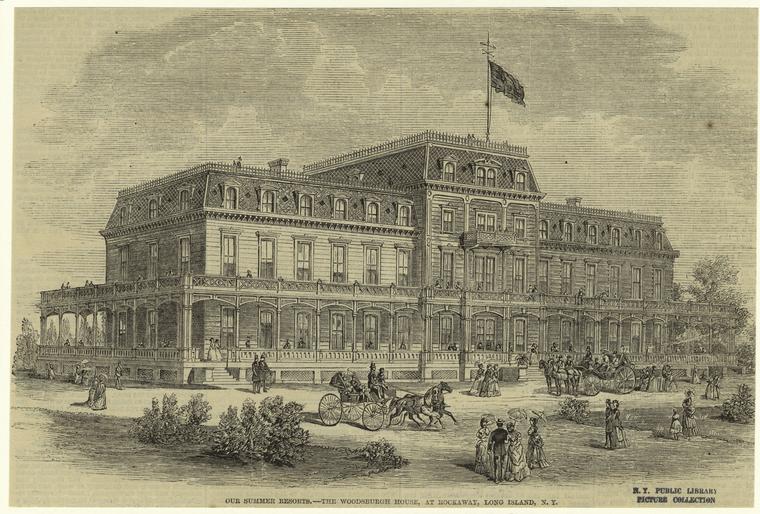
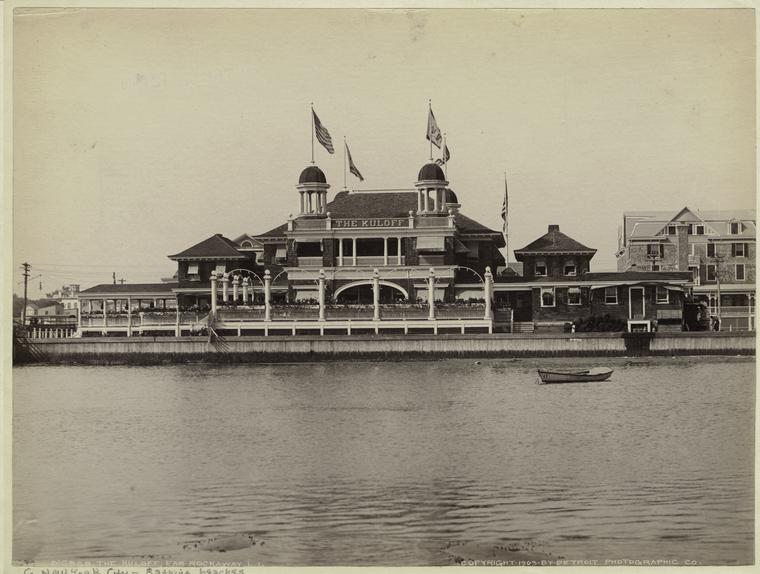
A couple examples of hotels that once filled the peninsula during the late 19th century, early 20th century, the Woodburgh House (at top) from 1870, the Kuloff (at bottom) from 1903.
 

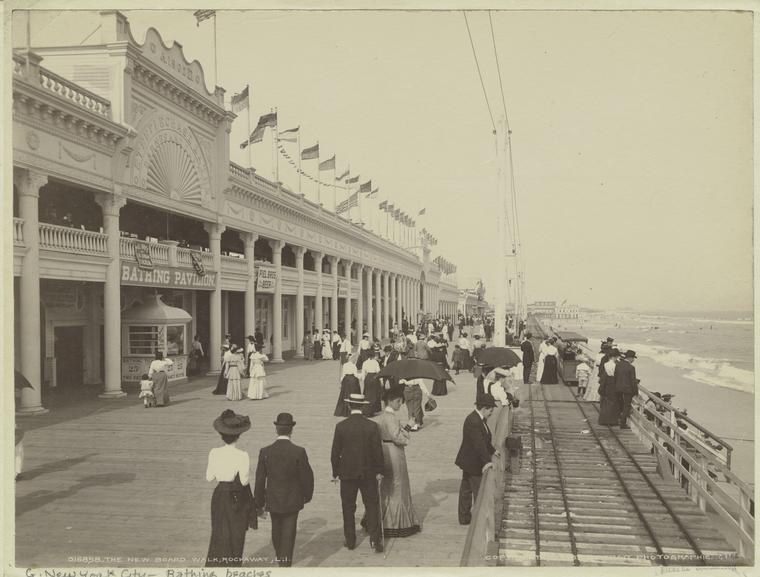
The boardwalk from 1903 in front of or near a section of Steeplechase Park, I believe, judging from the mini-railroad tracks along the side. [source]


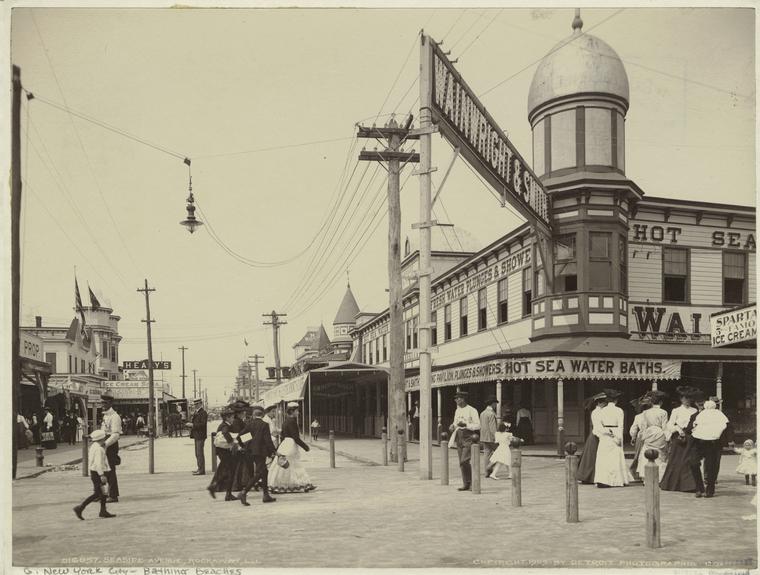
Along Seaside Avenue, possibly depicting an area of ‘Irishtown’, in 1903, rebuilt after a devastating fire the decade previous.

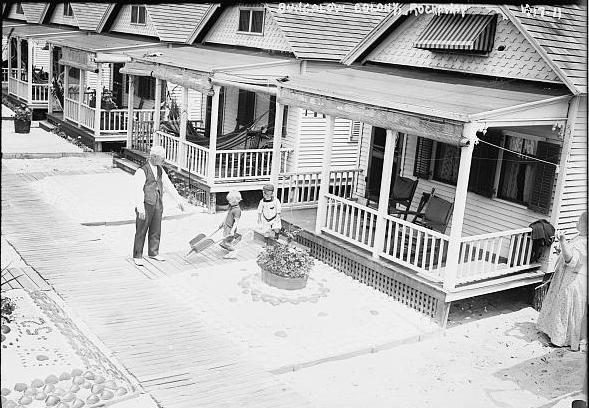
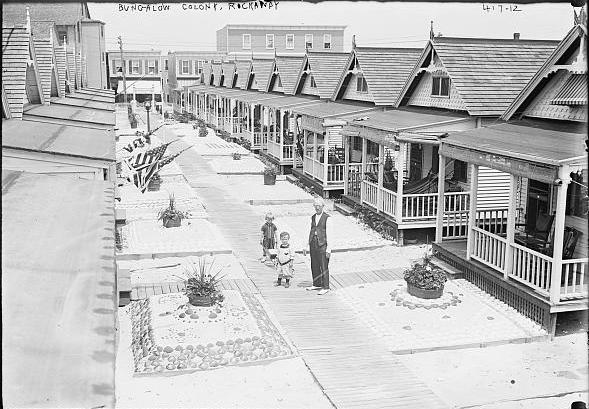
The bungalows of Rockaway. (Courtesy Library of Congress)


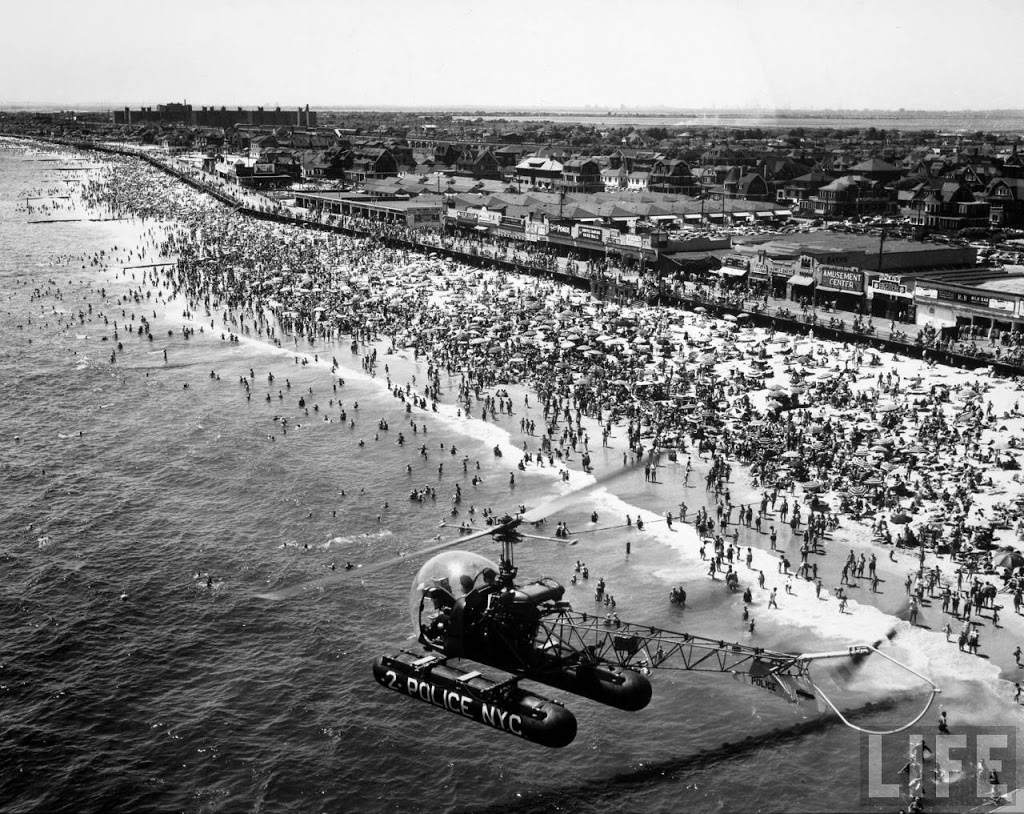
The 1950s began a long era of difficulties for the Rockaways, but you wouldn’t know it from this summertime Life Magazine photo from 1956. Click into the image to inspect some of the interesting and long-vanished shops and amusements along the boardwalk.


This almost-ghostly skeleton of a high-rise housing development never built stood for years as the residents of neighboring Breezy Point successfully fought to kill that project and other intrusive plans by the city in the late 1960s. Picture courtesy Arthur Tress/US National Archives.

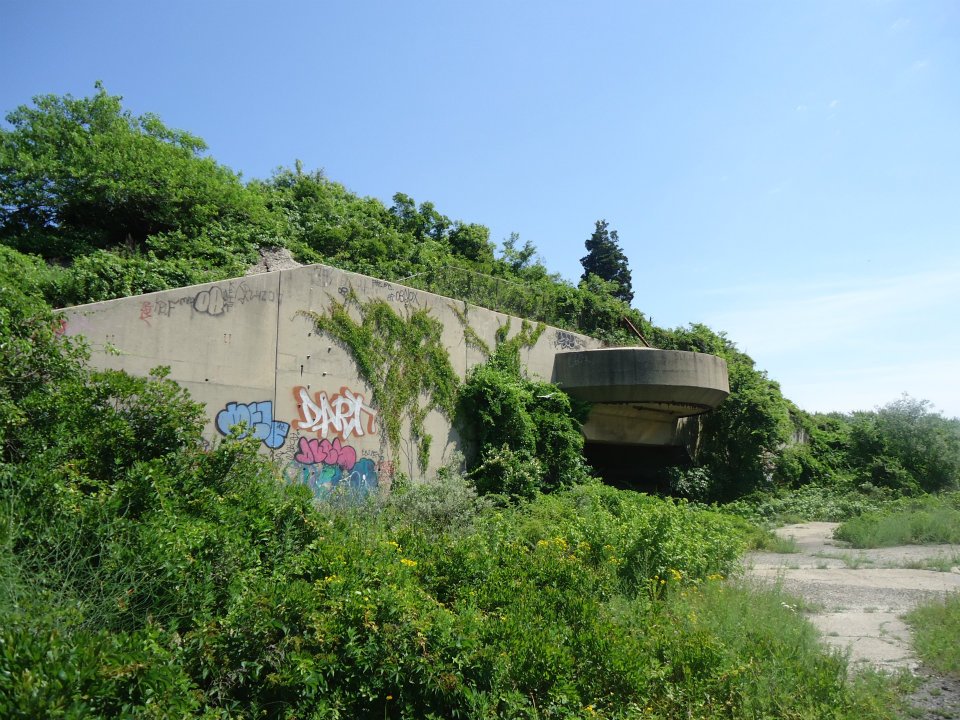
The mysterious remains of old Fort Tilden, now part of the Gateway Recreation Area and completely taken over by nature. For many more pictures of this area, please visit our Facebook page and check out my photo album on the ruins of Fort Tilden.

The thrashing waves of Rockaway make for good surfing:

And, what posting about the Rockaways would be complete without:

Categories
Podcasts

The Brooklyn Academy of Music: Enduring floods, fires and snobbery to become New York’s oldest home for the arts

PODCAST One of America’s oldest cultural institutions, the Brooklyn Academy of Music (or BAM) has an unusual history that spans over 150 years and two separate locations. We trace the story from the earliest roots of a Manhattan-Brooklyn rivalry and a discussion of high-class tastes to the greatest stars of the performing arts, including a couple tragic tales and a bizarre event involving the mother of modern dance.

Featuring horse tricks, French balls, a ‘flirtation’ post office, a bit of ski jumping.and a cavalcade of BAM’s greatest stars — Enrico Caruso, Merce Cunningham, Edwin Booth and his brother John Wilkes Booth!

ALSO: We uncover what may be the very first foreign films ever shown at the Brooklyn Academy of Music, many decades before the opening of their movie theaters.


The first Brooklyn Academy of Music, on Montague Street, nearby Brooklyn City Hall. Among the decades of great events here were Brooklyn’s Sanitary Fair, a speech by Booker T. Washington, an amusing lecture by Mark Twain and the final stage performance of Shakespearean actor Edwin Booth. (source)

The building was destroyed by fire in 1903, and not everybody was sad to see it go. Here’s actual film footage of the flames atop the old Brooklyn building:

Compare this to New York’s own Academy of Music, at 14th Street and Irving Place. Although this venue brought the American debuts of many famous operas (including Carmen), festivities deteriorated once the Manhattan wealth moved up to the Metropolitan Opera House. This building was demolished in 1926. [source]

Edwin Booth, in his signature role as Hamlet, 1870. If some at the original Brooklyn Academy of Music had had their way, Booth would never have performed there! [LOC]


Isadora Duncan, who brought modern dance to BAM, and it never left. (source)


BAM in 1978: After a few decades of hardship, the venue, at its new home on Lafayette Avenue, rebounded in the 1960s, serving the artistic passions of the neighborhood and fostering a provocative relationship with the biggest names in avant garde performance. (Pic by Dinanda Nooney, NYPL)

The fascinating directions that BAM executive direction Harvey Lichtenstein took the venue opened its stage up to new and exciting performances. And, often, a raucous good time as well, as with this 1989 rain forest benefit, featuring Madonna and Sandra Bernhard. (Photo by Albert Ferreira, LIFE)

MORE PICTURES ON THE WAY LATER THIS WEEKEND

For more information on their schedule, visit the BAM website. They also have a great history blog BAM 150 Years where we obtained some of our information.