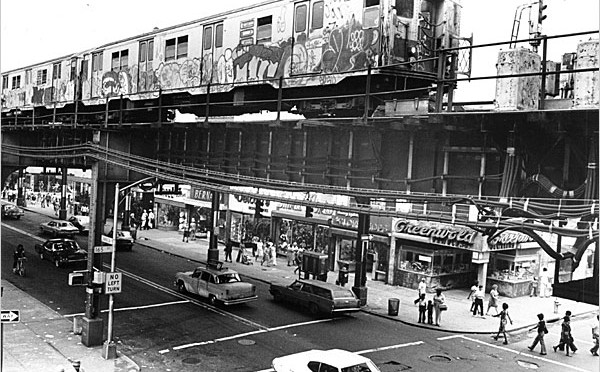
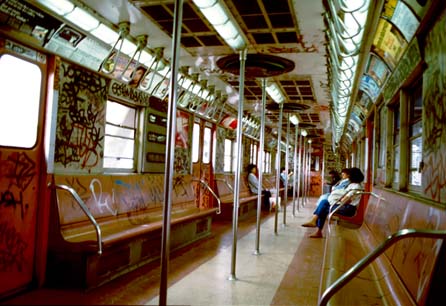
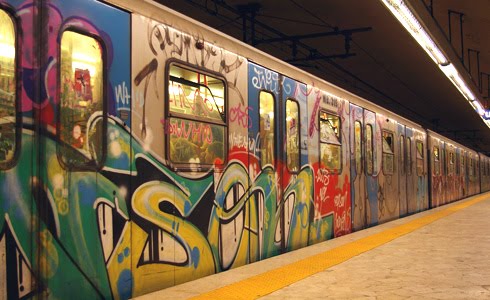
PODCAST #111 Art. Vandalism. Freedom. Blight. Creativity. Crime. Graffiti has divided New Yorkers since it first appeared on walls, signs and lampposts in the late 1960s. Its ascent paralleled the city’s sunken financial fortunes, allowing simple markings to evolve into elaborate pieces of art. The only problem? The best examples were on the sides of subway cars which the city promptly attempted to eradicate, their attempts thwarted by clever, creative artists and a downtown culture that was slowly embracing graffiti as New York City’s defining art form.
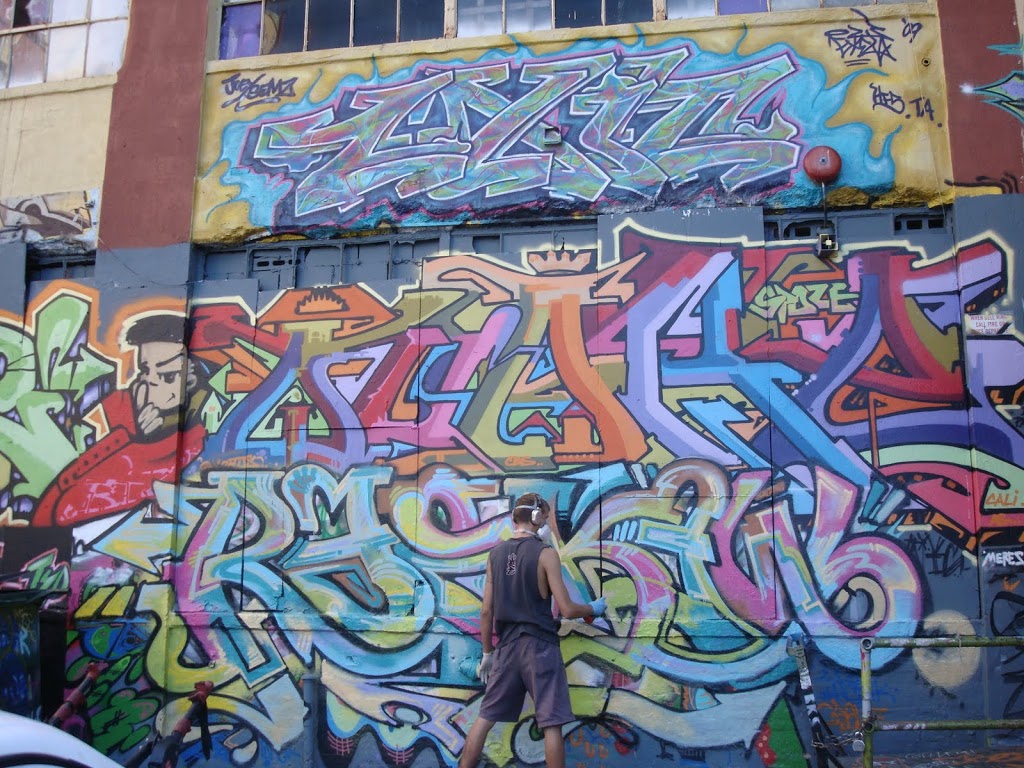
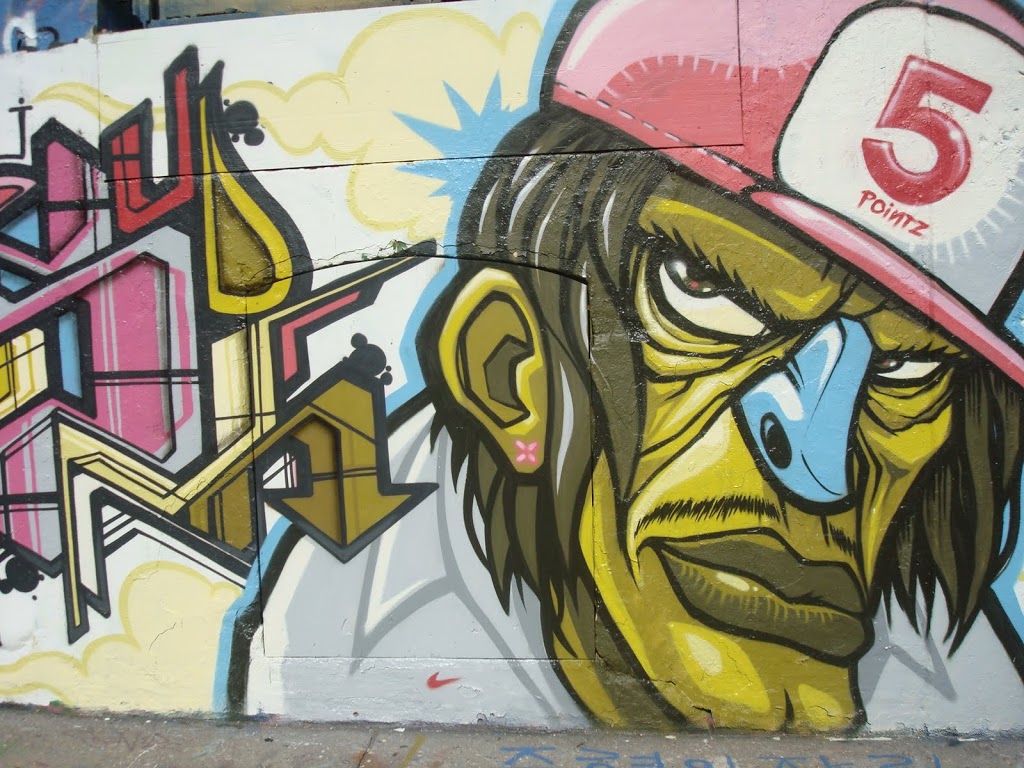
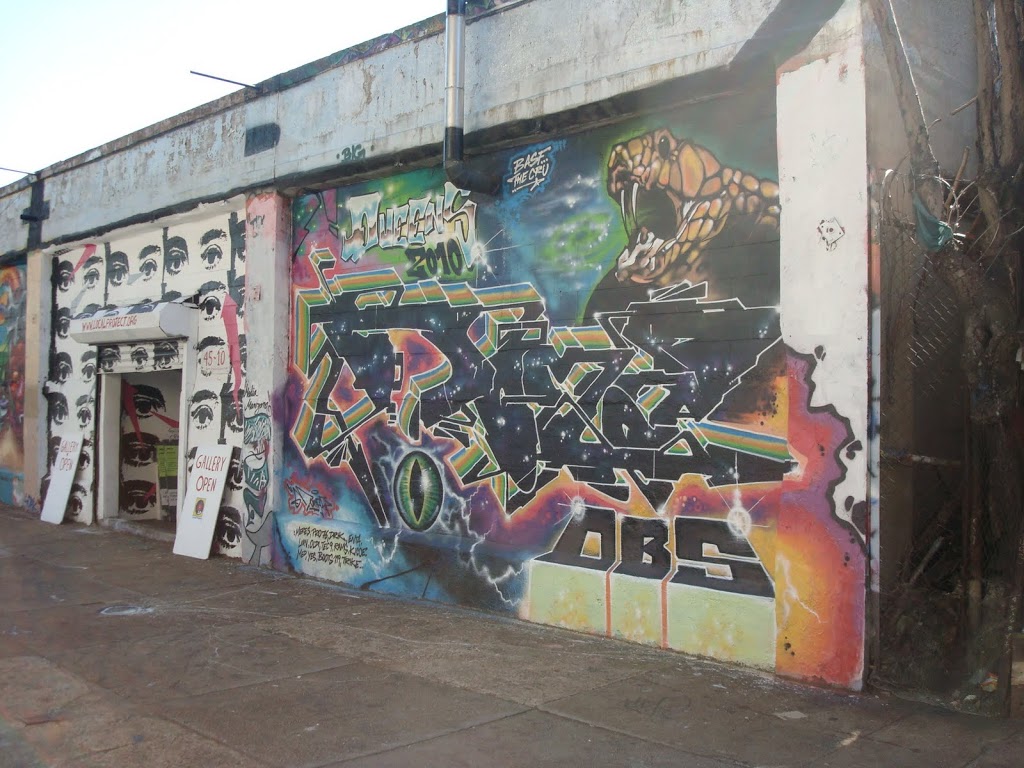
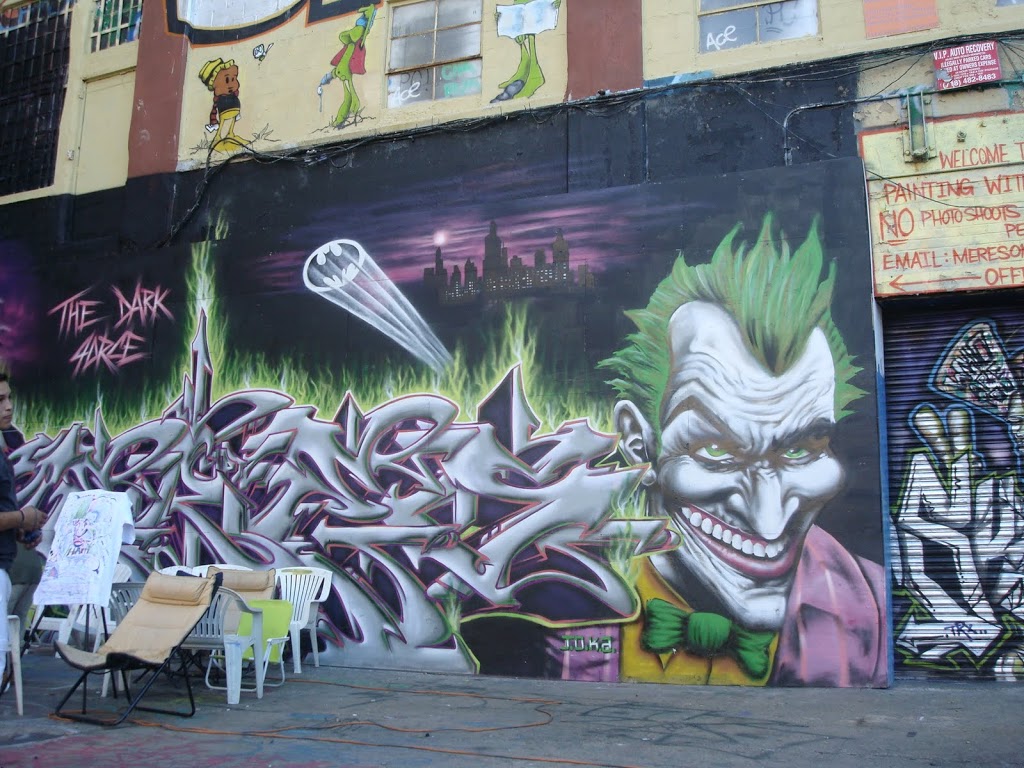
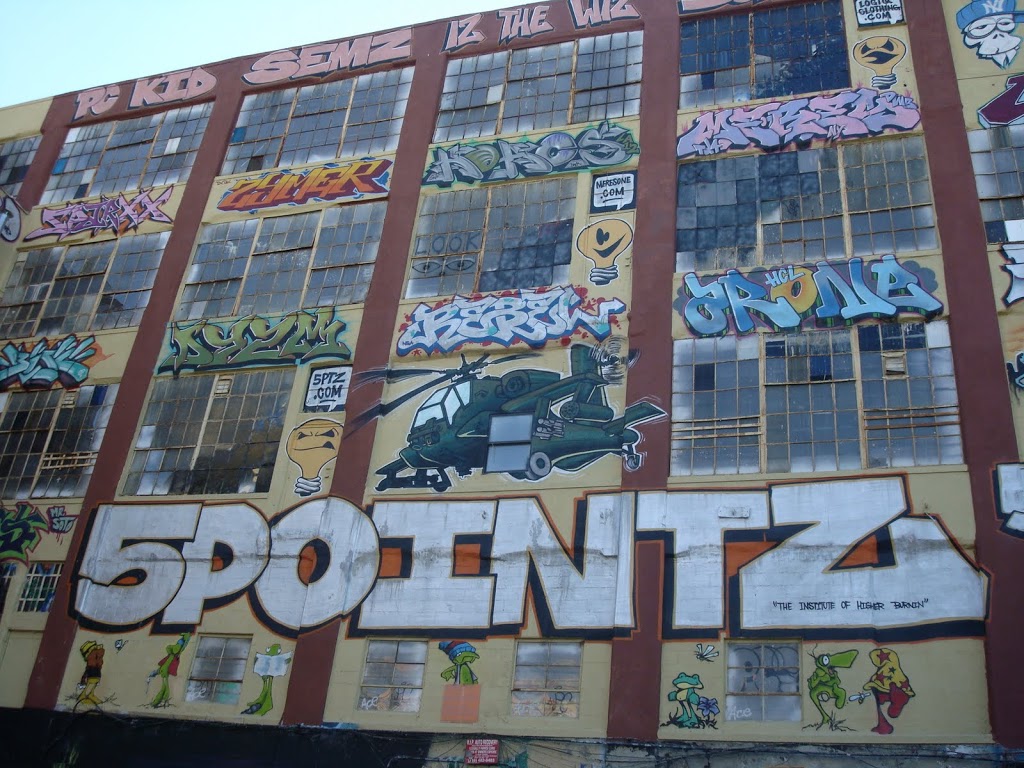
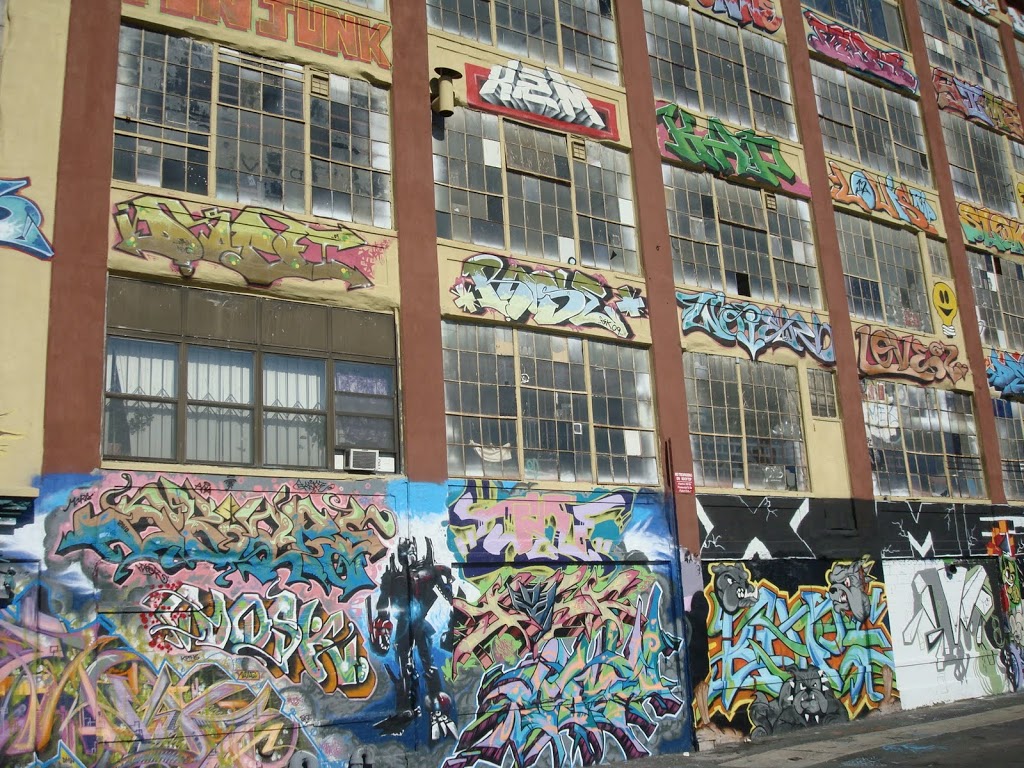
This is a history of the battle between graffiti and City Hall. And a look at the aftermath which spawned today’s tough city laws and a warehouse space in Queens called 5Pointz, where graffiti masterpieces thrive in abundance today.
You can tune into it below, download it for FREE from iTunes or other podcasting services, or get it straight from our satellite site.
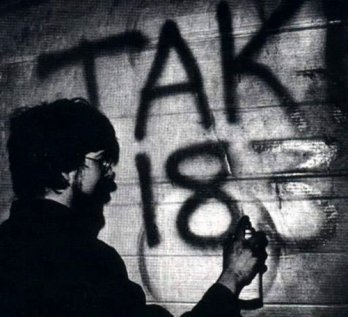
TAKI 183 — he didn’t create the graffiti art movement, but his tags throughout the city inspired a New York Times investigation into the mysterious 17 year old Greek teenanger’s antics, putting other taggers in the spotlight.
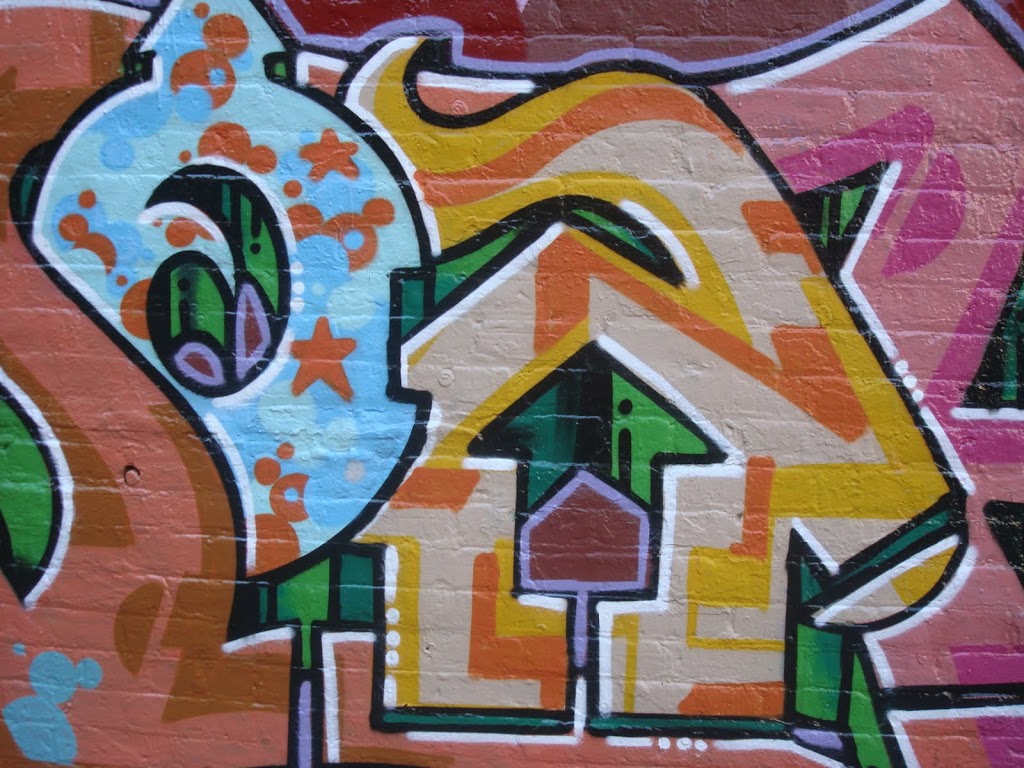
A ride on any subway during the 70s and 80s usually meant containment within a car coated in graffiti tags. The most artistic, colorful pieces (like the one below, by Lee Quinones, 1976) were hung on the outside. (Photo courtesy Second Avenue Sagas)
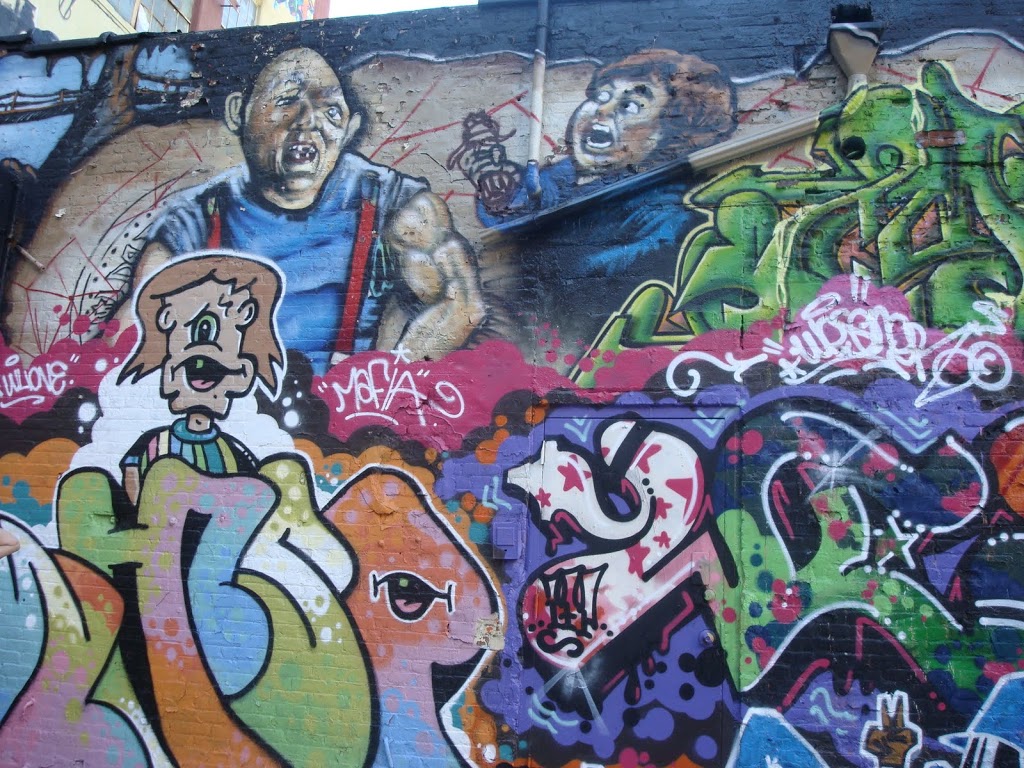
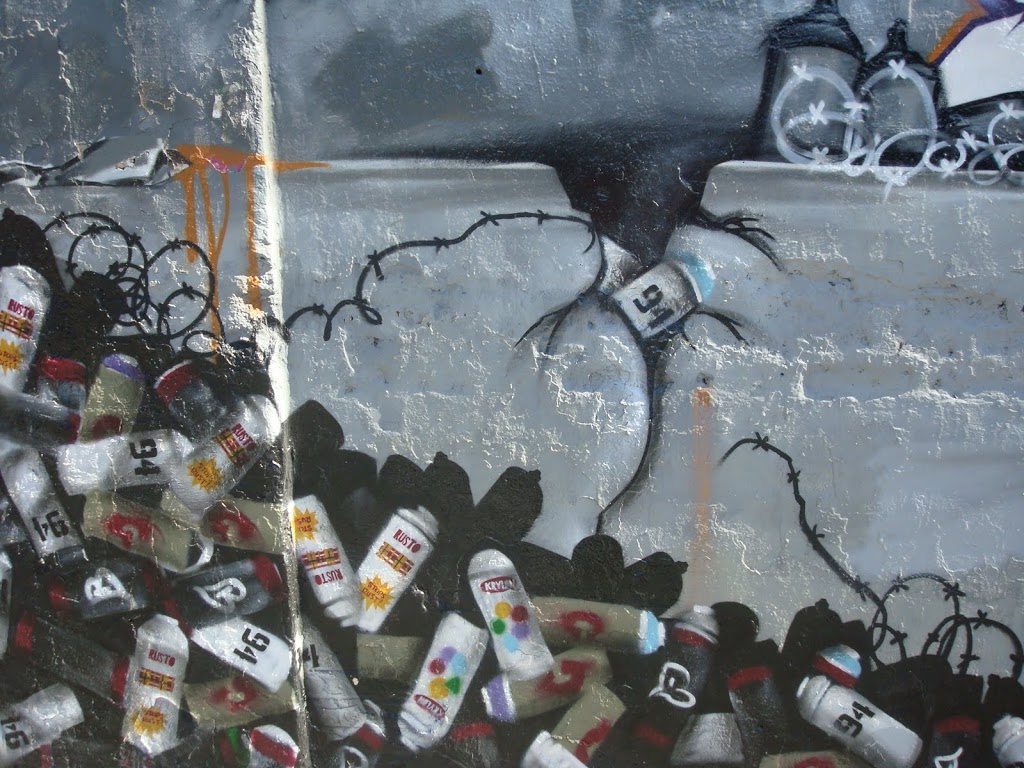
Below: Some of the astonishing work you’ll find out at 5Pointz Aerosol Art Center Inc., subtitled “The Institute For Higher Burnin’.”
For more tales of the 70s-80s graffiti scene, check out the blog @149st with individual profiles of dozens of period artists and taggers. Kings of New York is a spectacular photo blog of past and current work on walls and other surfaces throughout the city.
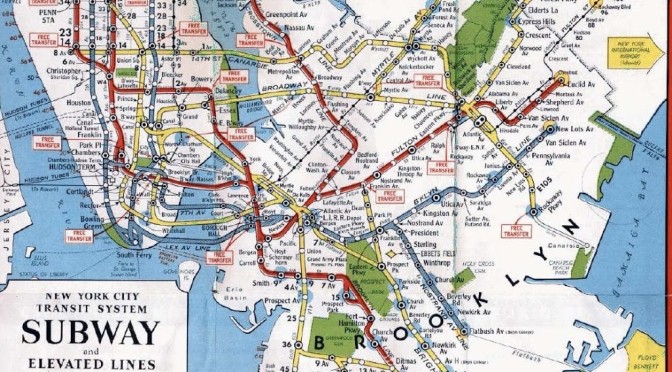
The subway in 1951, a bevy of new lines thanks to the unification of the IRT, the BMT and the IND, a consolidation we live with today. (Pic courtesy of NYC Subway)
PODCAST The amazing New York City subway system travels hundreds of miles under the earth and elevated through the boroughs. In this episode, we let you in on how it went from one long tunnel in 1904 to the busiest subway on earth.
This is our last episode in our series BOWERY BOYS ON THE GO, and we end it on the expansion of the New York City subway. Find out how some as innocuous sounding as the ‘Dual Contracts’ actually become one of the most important events in the city’s history, creating new underground rounds into Brooklyn, the Bronx and (wondrously!) and finally into Queens.
Then we’ll talk about the city’s IND line, which completes our modern track lines and gives the subway its modern sheen. After listening to this show, you won’t look at the Herald Square subway station the same way again.
ALSO: Bernhard Goetz, Mayor Jimmy Walker and the future present history of the Second Avenue Subway!
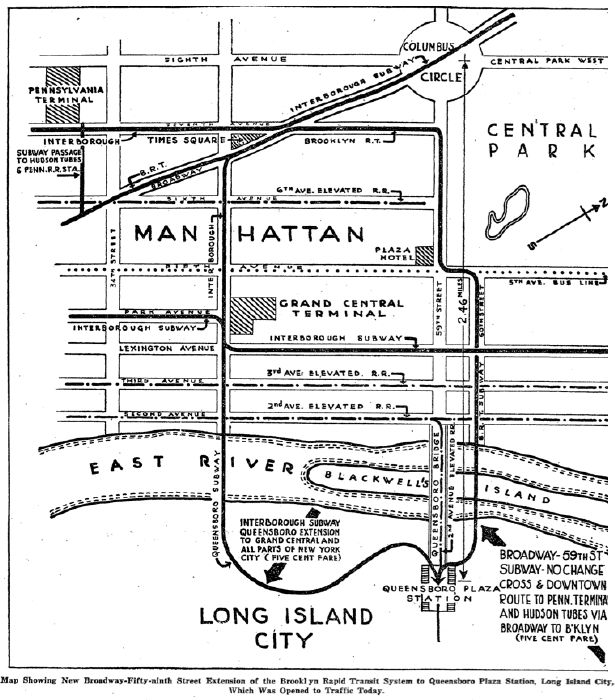
The Dual Contracts let the Interborough Rapid Transit (IRT) to expand its lines and opened Manhattan to Brooklyn Rapid Transit (BRT). And it allowed both companies to extend into Queens for the first time. Below is a simplified map from 1920 of extensions into midtown Manhattan and Queens. (Map below is from New York City Subway, the most invaluable resource on the web about subway history.)
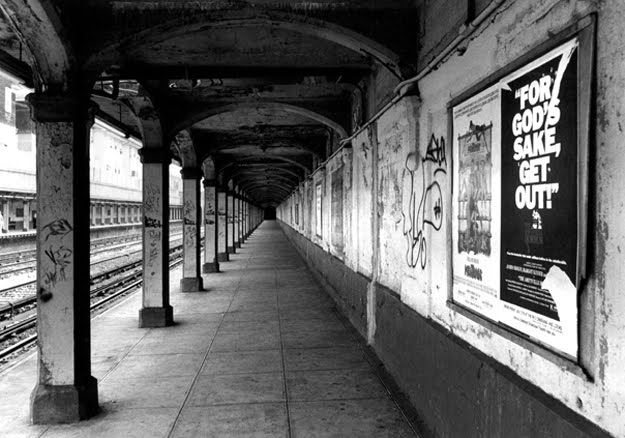
The mean tracks of the subway during the 1970s. The price went up, ridership went down, and the whole line fell into disrepair. In John Conn’s photograph below, a destitute station looks abandoned. (You can see a whole gallery of Conn’s subway photographs at the Daily Beast.)
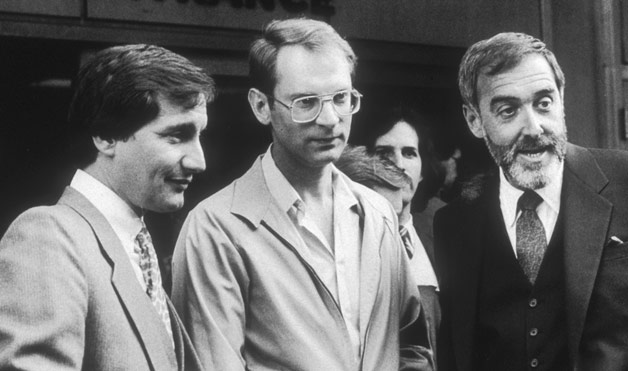
Bernhard Goetz, below at center, was labeled the ‘subway vigilante’ after shooting assailants on the subway in 1984, highlighting how dangerous New York’s subway had become. (Photo from here)
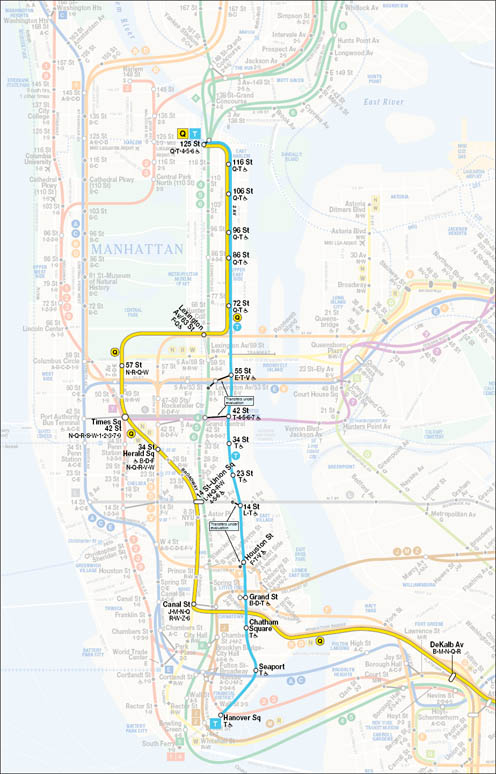
A map of the too-long-in-the-making teal Second Avenue Subway (the T line):
For a more visceral immersion into subway history, visit the New York Transit Museum and walk through the old subway cars contained in an actual, abandoned station. They also have an annex in Grand Central Terminal
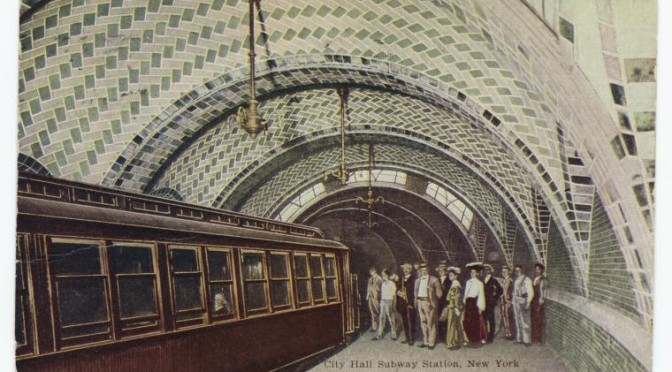
PODCAST In the fourth part of our transportation seriesBOWERY BOYS ON THE GO, we finally take a look at the birth of the New York City subway. After decades of outright avoiding underground transit as a legitimate option, the city got on track with the help of August Belmont and the newly formed Interborough Rapid Transit.
We’ll tell you about the construction of the first line, traveling miles underground through Manhattan and into the Bronx. How did the city cope with this massive project? And what unfortunate accident nearly ripped apart a city block mere feet from Grand Central Station?
ALSO: What New York City mayor had a little too much fun on opening day?
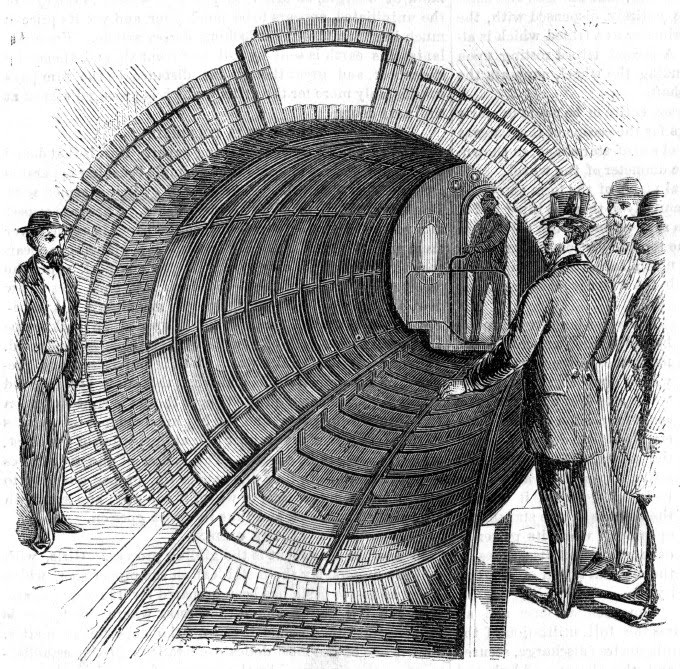
Below: An illustration of Alfred Beach’s pneumatic tube, built in 1870 a short distance from City Hall ran under Broadway from Warren Street to Murray Street. Although it’s little more than a footnote to the history of the New York City subway, it underscores that the technology was always available, even if public and political enthusiasm for such a project was not.
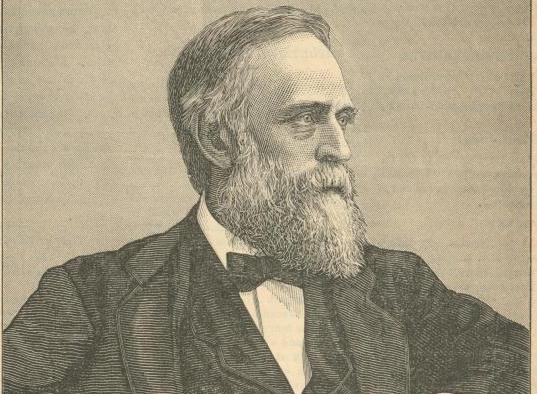
Abram Hewitt, mayor of New York in 1886, and an early proponent for an underground subway. (Pic NYPL)
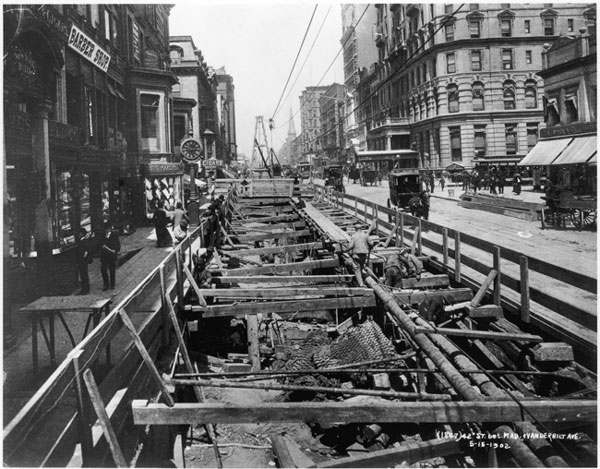
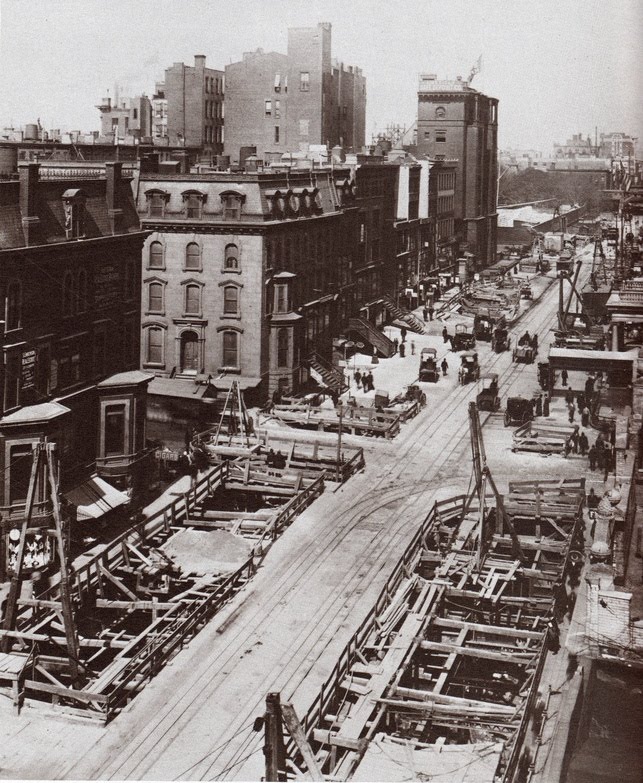
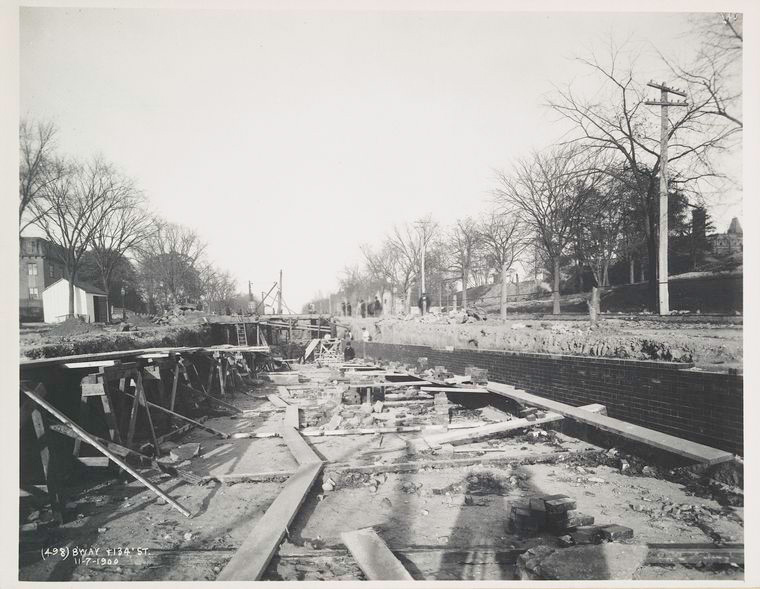
The cut and cover method chosen by subway engineers ensured that New Yorkers would be faced front-and-center with the daily slog of excavation and construction.
Forty-second Street during construction of the subway system, 1901.
Mayhem during subway construction at Broadway and 134th Street! (NYPL)
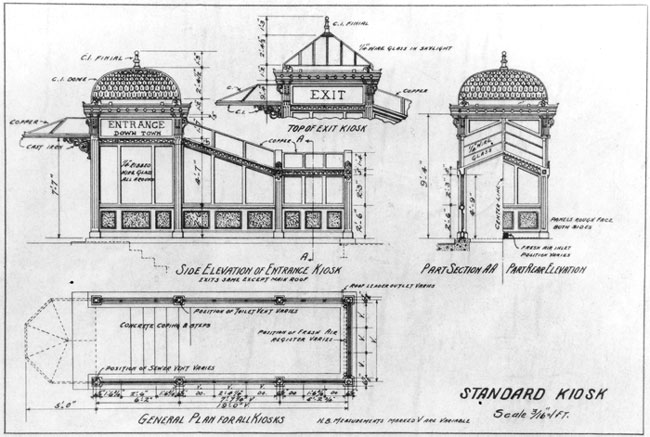
The plan for subway entrances, taking liberally from the design of kiosks in Budapest.
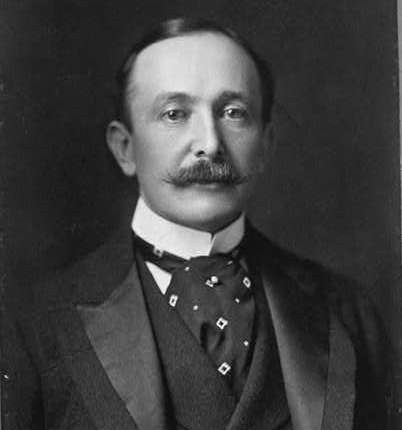
Thank this rich guy for your first subway, New York. August Belmont Jr., later known for his contributions to horse racing, founded the Interborough Rapid Transit Company to help operate the fledgling new subway system. (Pic LOC) FOR MORE INFO: We cannot begin to due justice to the birth of the subway in the way the good folks at the website NYSUBWAY.ORG have done. Hundreds of photos, original documents, and a wonderfully exhaustive list of stations, including many no longer in operation. Forgotten New York, of course, has several rich pages devoted to the subject.
And you definitely swing by the New York Transit Museum in Brooklyn, where you can actually sit in one of the original subway cars, among many, many more treasures of the original IRT.
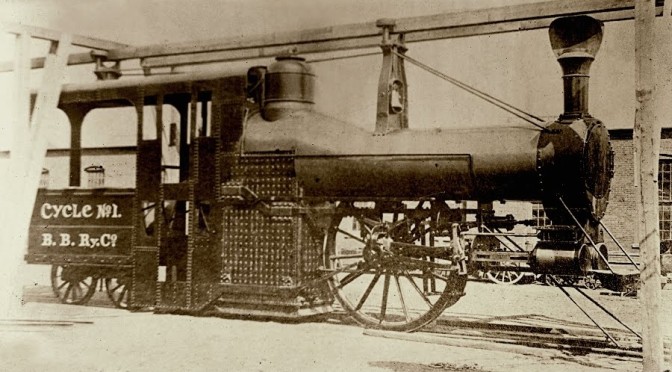
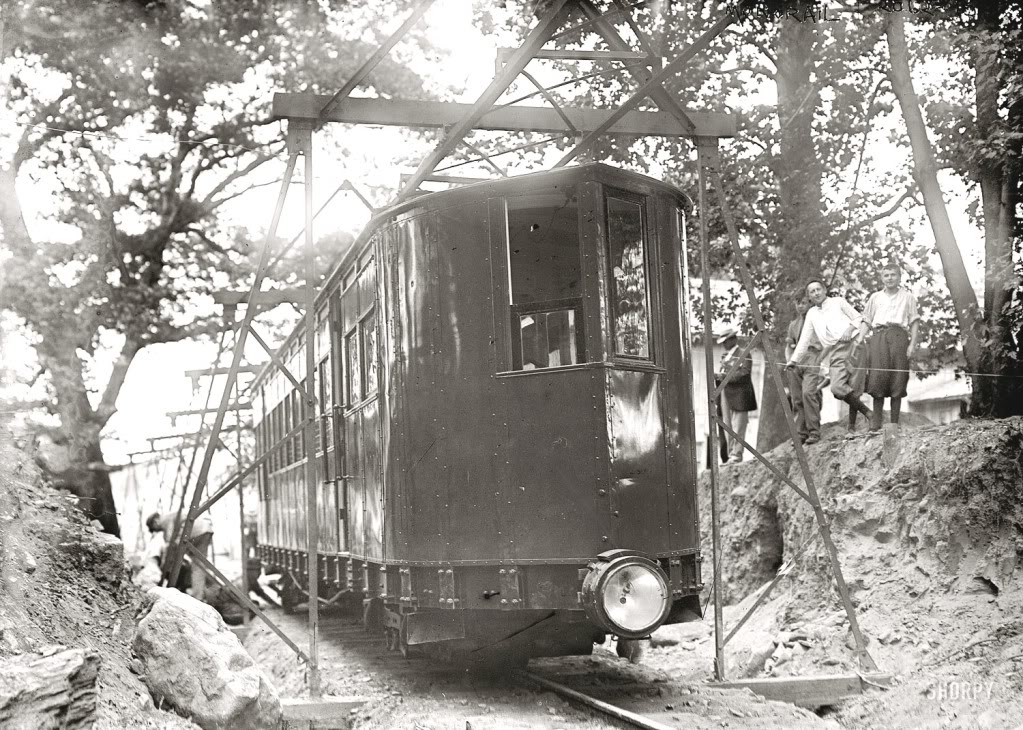
ABOVE: The Boynton Bicycle Railway, combining the best of the locomotive and the spinning wheel. This narrow little hot wheel took riders on a short ride through Coney Island.
For the third part of our Bowery Boys On The Gosummer series, looking back at the history of New York City public transportation, it’s a short ride on the long gone, forgotten methods of getting around the city. The streets were mostly dominated by horse-based transport, but this was smelly and slow — not to mention awful on the animals. So the city experimented with new ways of moving the masses: by cable car (exported form San Francisco), the trolley and the monorail.
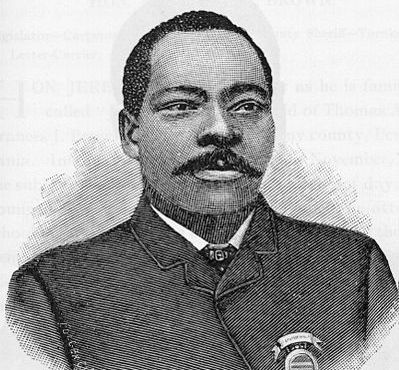
Along the way, you’ll find out the connection between the cable car and New York’s most famous art-house movie theater, discover the origins behind the name of a classic New York sports team, and hear the contributions of a man known as ‘the black Edison’.
ALSO: Find out about what may be the world’s worst monorail technology!
Click onto photographs for a larger view
Horse Drawn: New York City before the 1870s simply could not have survived without horse power, and the streets were filled with thousands of the animals pulling streetcars, omnibuses, carts and basically everything else that moved. As a result, life for a horse was pretty much appalling. Life span was relatively short. Although the city designated places along the waterfront to dispose of carcasses, it wasn’t unheard of to leave bodies in the street. This classic (but disturbing) photo from 1900, captioned ‘Close of a Career’, illustrates the absurdity. (Courtesy Shorpy)
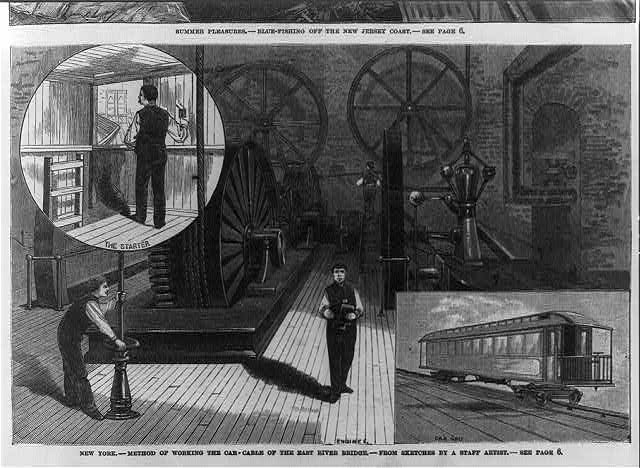
The first cable car system in New York was actually a steam-engine hybrid that ran over the Brooklyn Bridge in 1883. Engineers didn’t believe a regular steam locomotive could travel up an incline to get onto the bridge, so this dual steam/cable method was created. The powerhouses, pictured here, were situated under the approaches. (Read more about it here.)
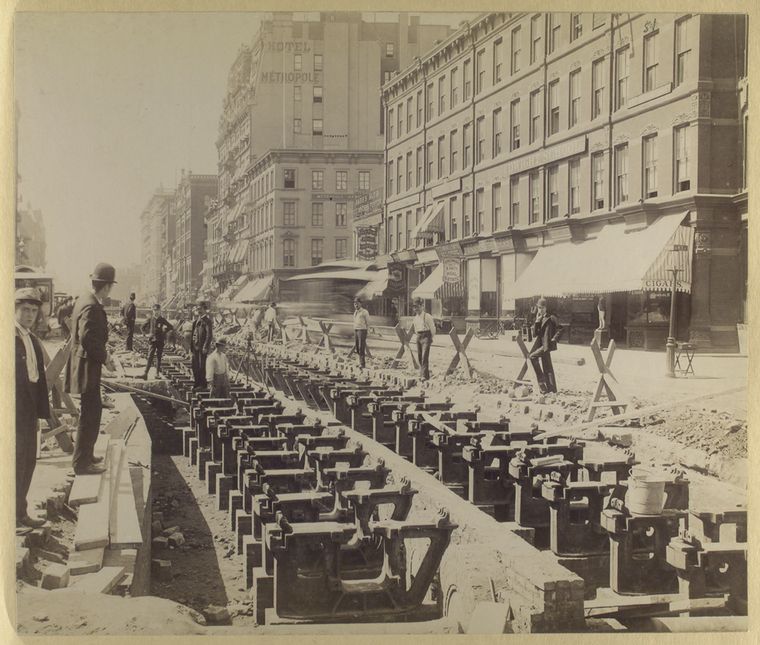
Cable Vision: How many times have the streets around Union Square been dug up? Here’s one of the very first times, in 1891, as workmen install a cable line for New York’s very first cable car system. Notable about this particular stretch is the fact that this would become part of the notorious Dead Man’s Curve, where cars would speed around the northwest corner of the park. (Courtesy NYPL)
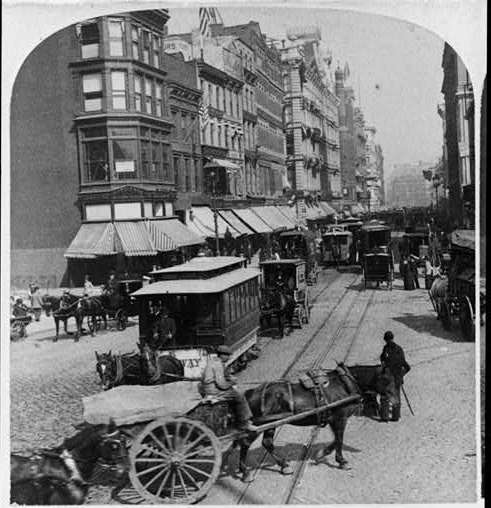
The frequent and frustrating traffic predicament on New York streets, a congested cluster of machines and horses, sometimes at a standstill. This picture, from 1892, depicts Broadway between Union Square and Madison Square.
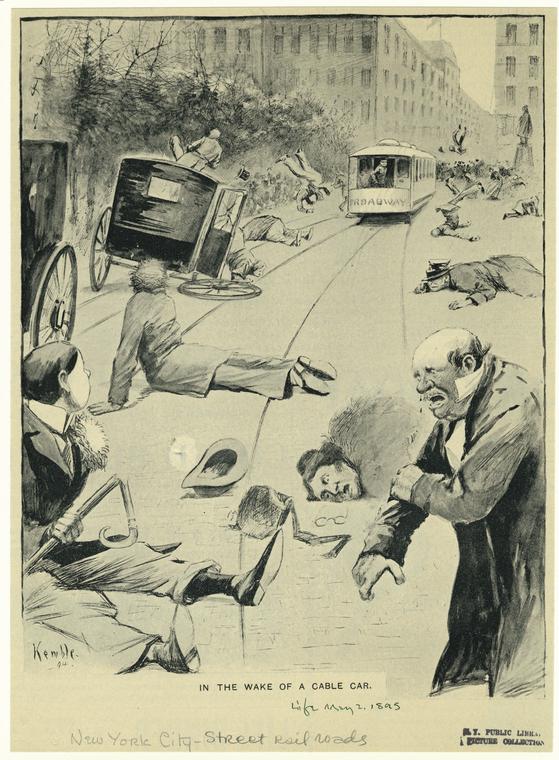
From an 1894 Life Magazine illustration, echoing the public sentiment over New York’s wily, dangerous cable car system. (Courtesy NYPL)
A video look at the Brooklyn trolley system, which by the 1930s had become the standard method of transit for most residents of the borough.
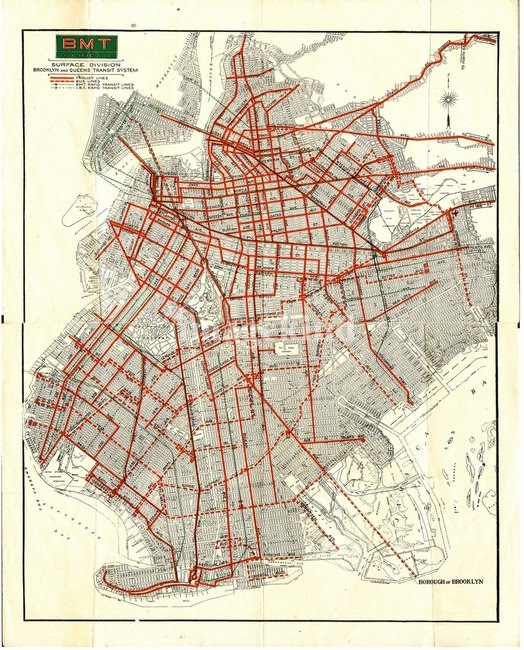
A map detailing the vastness of the Brooklyn trolley system by the 1930s, by this point a component of the Brooklyn-Manhattan Transit Corporation.
Inventor Granville Woods debuted his ‘multiple distributing station system’ — a sort of ‘wireless’ trolley system using electromagnetic induction — for the American Engineering Company in February 1892. Unfortunately, Woods had to sue the company for any sort of credit. In fact, this article in the Brooklyn Daily Eagle of the trial doesn’t even mention his name.
Monofail: The first riders of the monorail system provided by the Pelham Park and City Island Railroad were greeted with a nightmare voyage culminating in the entire car falling over on its side. “Flimsy Structure Supporting It Gives Way and Many Are Badly Hurt,” cries the New York Times. Despite this not insignificant hiccup, the monorail operated for a few years before being replaced with a trolley system.
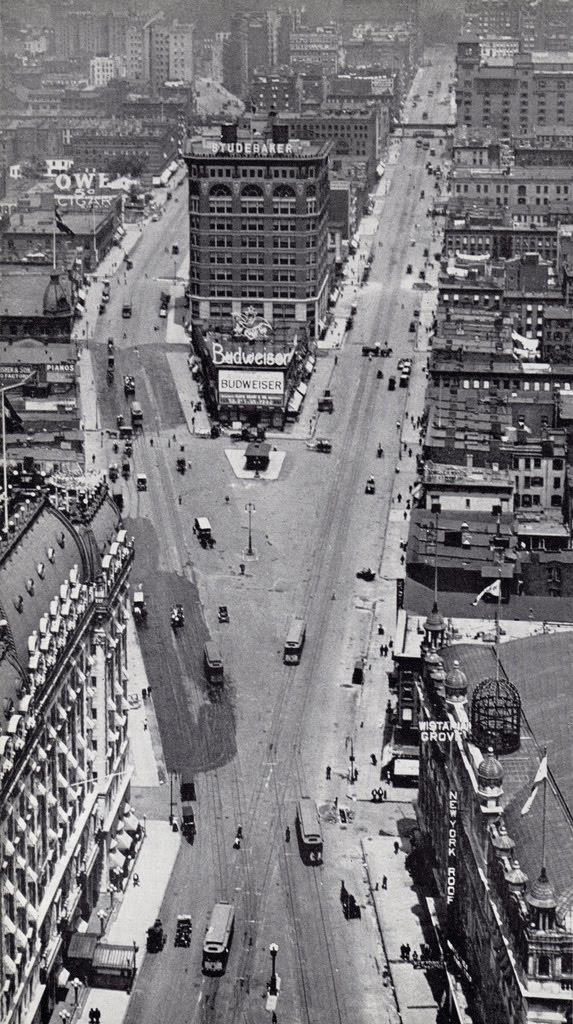
On Track: Looking down on Times Square from 1905, taken from the top of the Times Building. I’m putting this hear for a bird’s eye view on what the streets of New York looked like, grooved with trolley rails. You can still see several horse carts too, although most horses had been taken off of city streets by this time. (Please click on the photo for a close-up view)
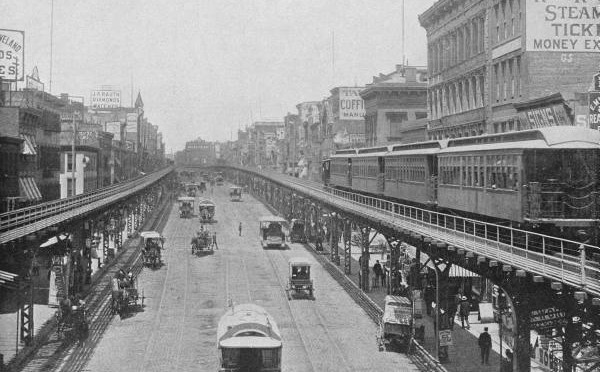
Above: The Third Avenue Line as it looked running along the Bowery, changing the nature of New York street life, even as its innovations helped expand the city.
PODCAST Before there were subways, New York City transported travelers up and down the length of Manhattan by elevated railroad, an almost unreal spectacle to consider today. Steam engines sat high above several avenues in the city, offering passengers not just a faster trek to the northern reaches of Manhattan, but a totally new way to see the city in the 19th century.
Welcome to our second podcast in our series Bowery Boys On The Go, a look at the history of New York City transportation. Before we get to those famous ‘El’ trains, we explore the earliest travel options in the city — the omnibuses and horse-drawn rail cars, the early steam successes of the New York and Harlem Railroad and Hudson River Railroads, and something affectionately nicknamed the one-legged railroad.
What were some of the more peculiar ideas for improving travel? And why was the idea of a subway immediately shot down by the city? Let’s just say — Boss Tweed and Jay Gould are involved.
ALSO: What were the different motivations driving transportation progress in the city of Brooklyn? Well, it has something to do with the beach.
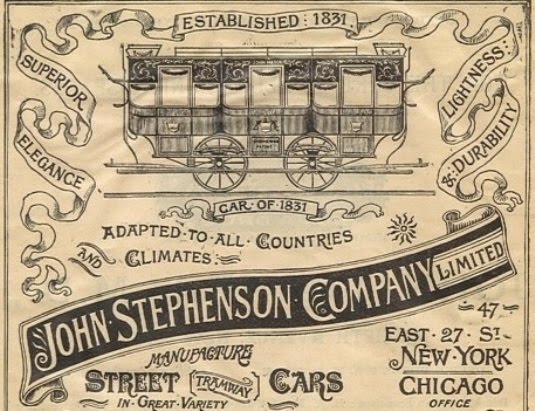
An illustration of the first traincar in the New York and Harlem Railroad system — the John Mason, named for the railroad’s president (Mason was also the president of Chemical Bank). It was designed by master engineer John Stephenson, who customized many of the New York and Harlem’s traincars.
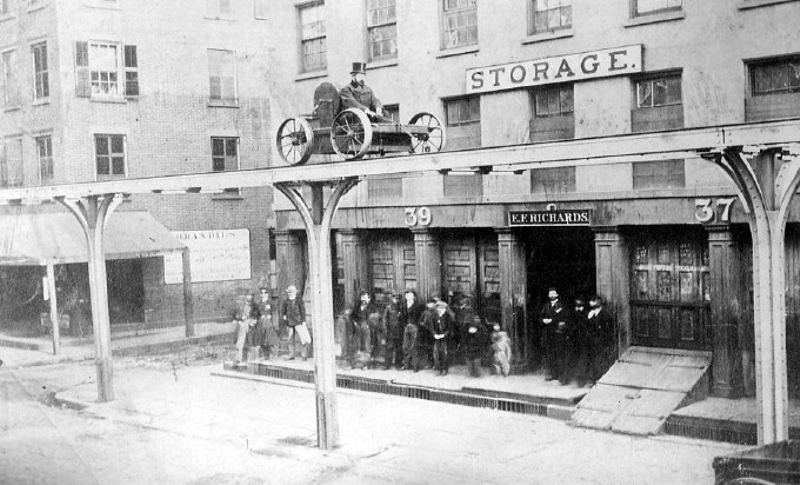
Charles Harvey developed the first elevated system for New York, essentially a cable/pulley system that stretched along the west side from the Battery. Below, Harvey gives his ‘one-legged’ line a tryout in 1867. (Pic courtesy Merritt Island Subway South)
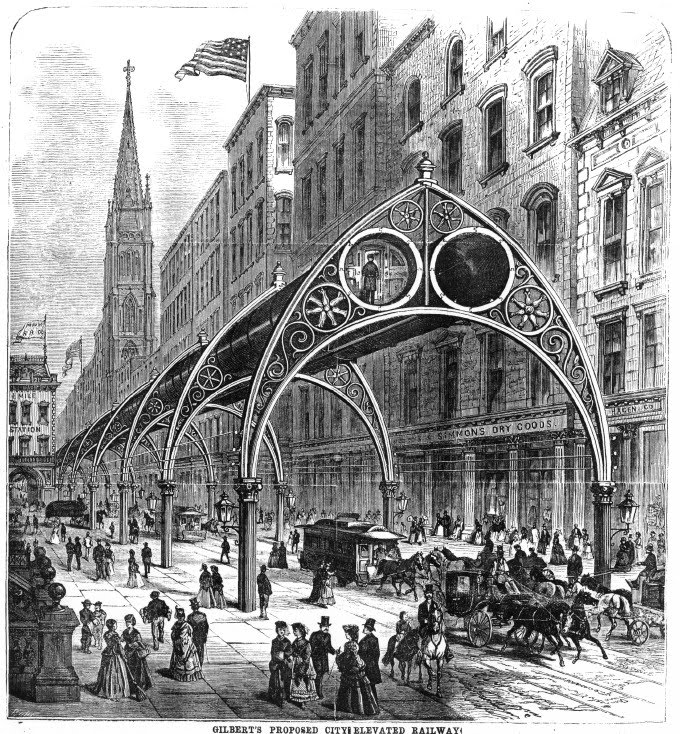
Rufus Gilbert, a Civil War physician, turned to trains after the war and dreamt up an imaginative pneumatic system, to zip passengers above the city in Gothic-themed arches. Gilbert was given the go-ahead to construct this oddity, but the love for steam and a financial crisis transformed the idea into a steam elevated line instead. (Courtesy Columbia U)
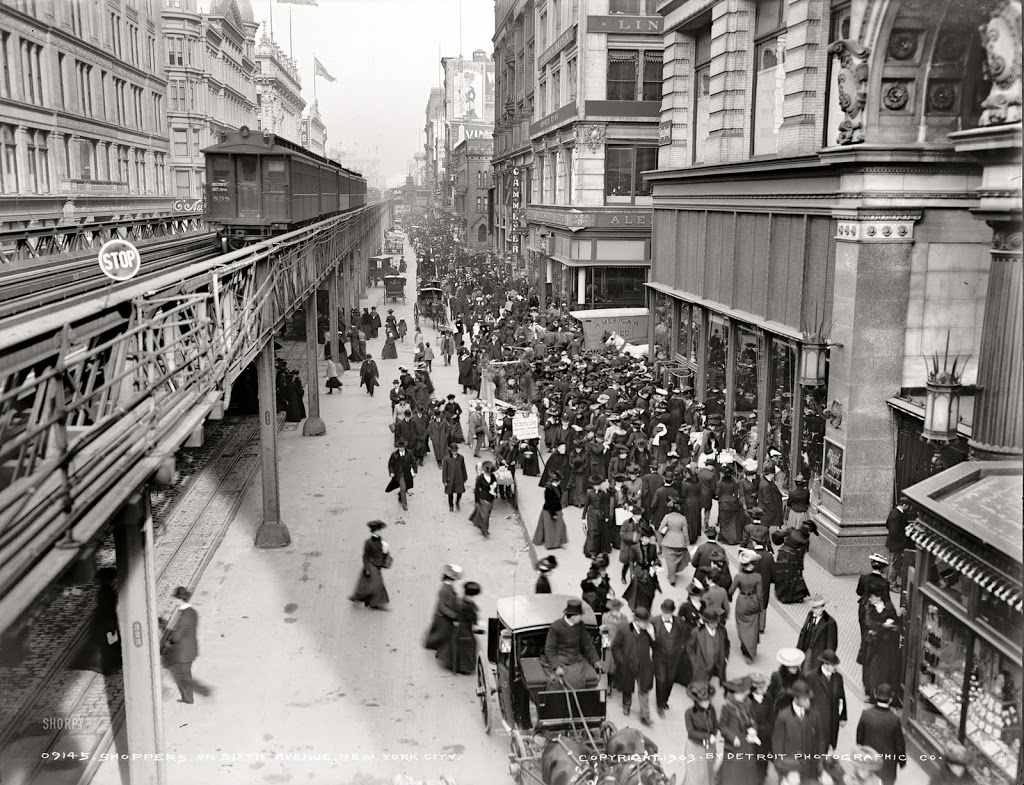
Ladies Mile along the Sixth Avenue elevated line. The trains might have made the city expand outwards, but it also made the streets smaller and darker. (Original pic from Shorpy)
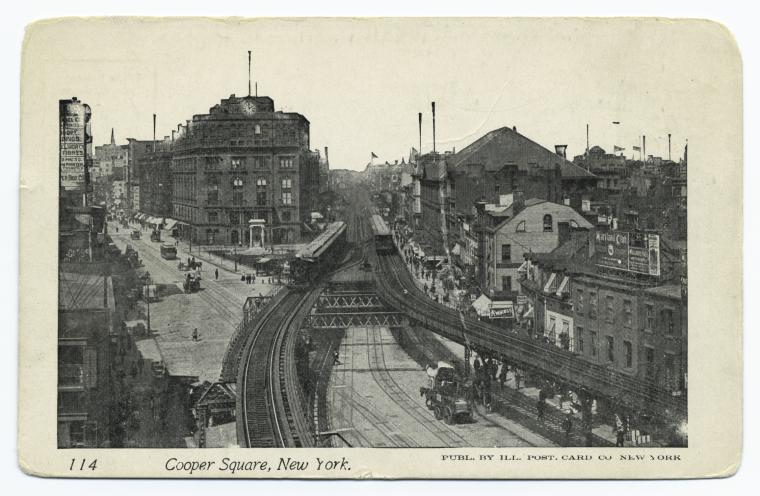
The Third Avenue line, where it ran alongside Cooper Union and traveled south down through the Bowery. This intersectioni today still sits rather wide and empty, a vestige of the days when tracks hovered above the roads. [NYPL]
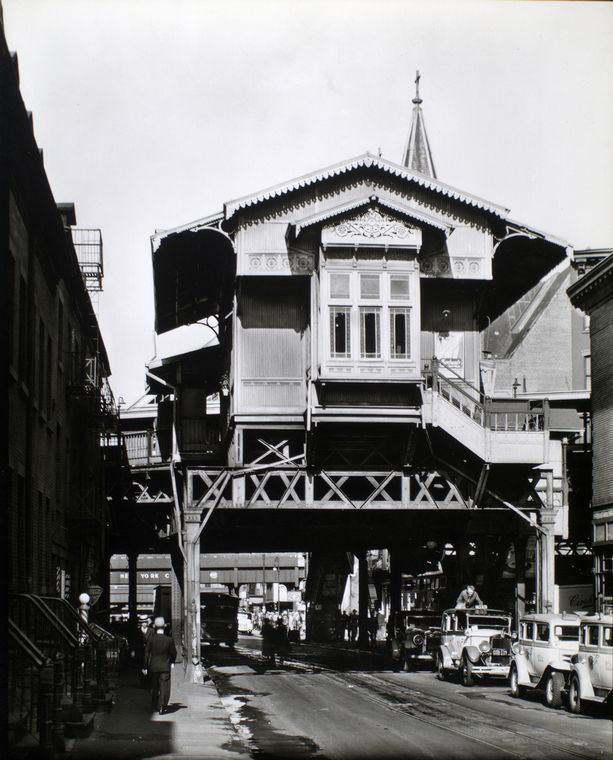
An ornate station for the Ninth Avenue line, at Christopher and Greenwich streets in the West Village.
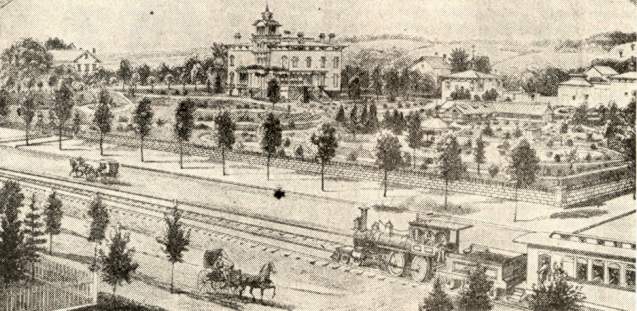
The Brooklyn and Jamaica Railroad, the precursor to the Long Island Railroad. The section illustrated here is along Woodhaven Boulevard, but much of the line went along Atlantic Avenue.
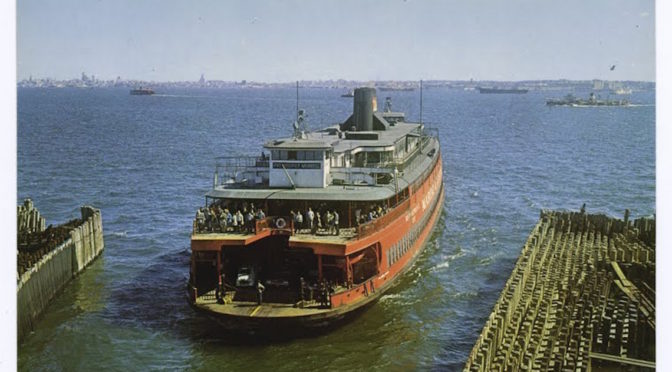
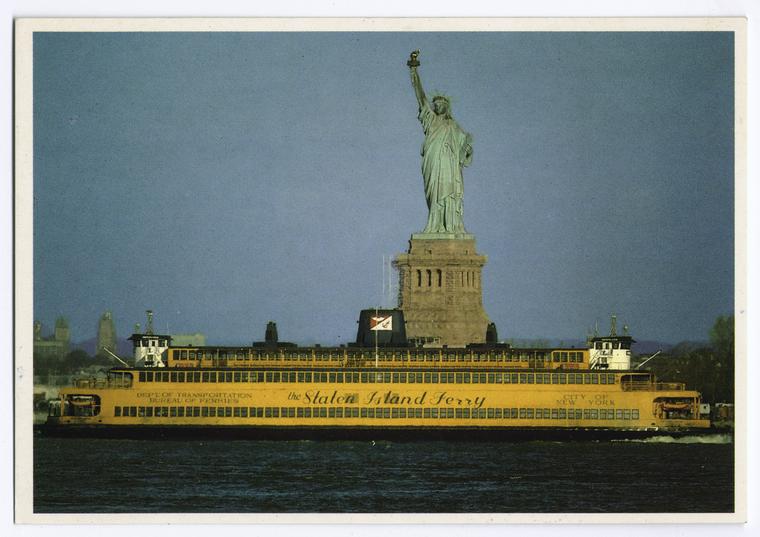
PODCAST The Staten Island Ferry is one of the last remaining vestiges of an entire ferry system in New York, taking people between Manhattan and its future boroughs long before any bridges were built. In Staten Island, the northern shores were spiked in piers, competing ferry operators braving the busy waters of New York harbor.
In the first of our summer-long podcasts BOWERY BOYS ON THE GO on New York public transportation, I look at the history of Staten Island’s famous ferry, its early precursors, its connection to Cornelius Vanderbilt and a Monopoly property, and its evolution when the city took it over in 1905.
ALSO: Find out the curious story behind the name of Victory Boulevard and the neighborhoods of St. George and Tompkinsville.
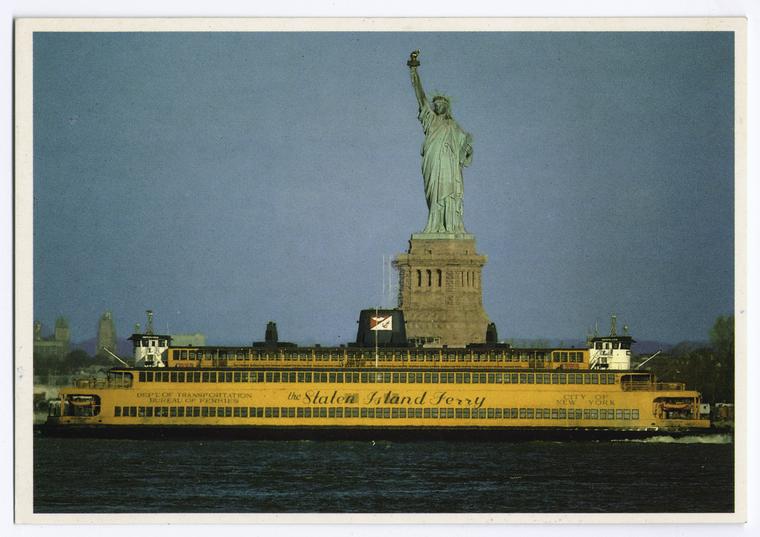
From an old postcard, illlustrating why the Staten Island Ferry has become more than just a way to get to and from work. [NYPL]
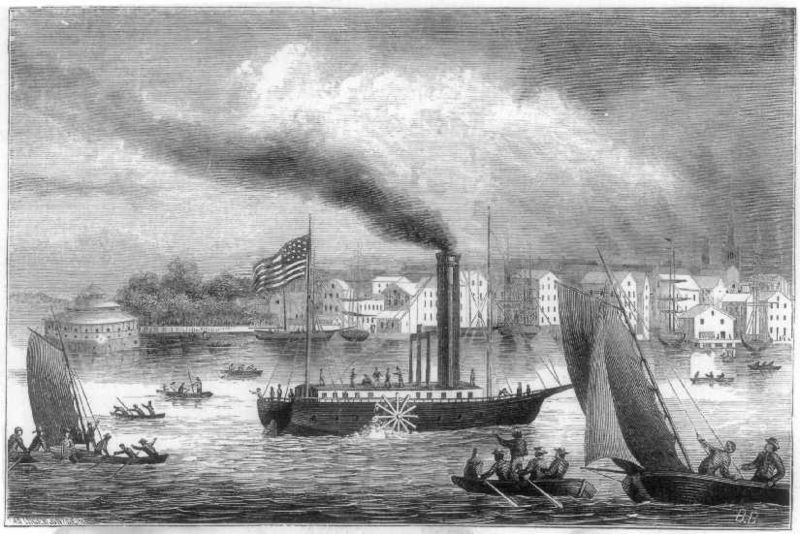
The Clermont in the waters of New York Harbor, 1807. Robert Fulton’s first steamship would revolutionize travel and change the rules of the ferry game. The first steamship off Staten Island waters would be the Nautilus in 1817, property of Daniel Tompkins. This Nautilus should not (obviously) be confused with Fulton’s famous submarine of the same name. Although the boat seems to have inspired a building, called Nautilus Hall, on Tompkins’ property. [Courtesy Gerald Massey]
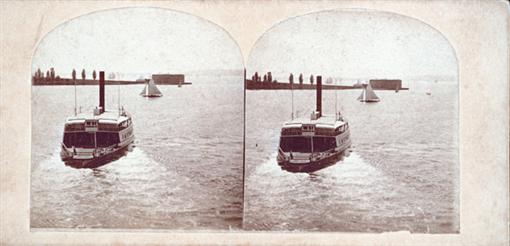
One of the earliest known photographs of a “Staten Island Steamboat”, taken in 1858 and about to chug by Castle William on Governor’s Island, one of “Anthony’s Instantaneous Views” from the George Eastman House archive.
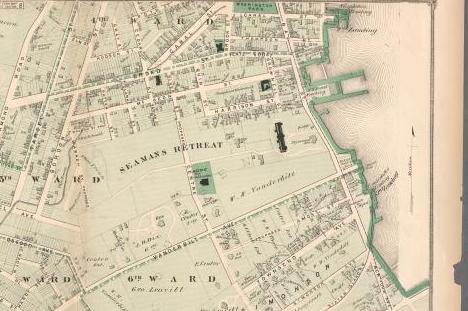
This is a detail from an 1874 map of Stapleton and Clifton along the northeast shore of Staten Island. The area in green along the waterfront is Vanderbilt’s Landing, at least the southern part of it. You can also find the Vanderbilt estate nearby. For a closer look, check out the map directly on the NYPL site and use the zoom in/out tools.
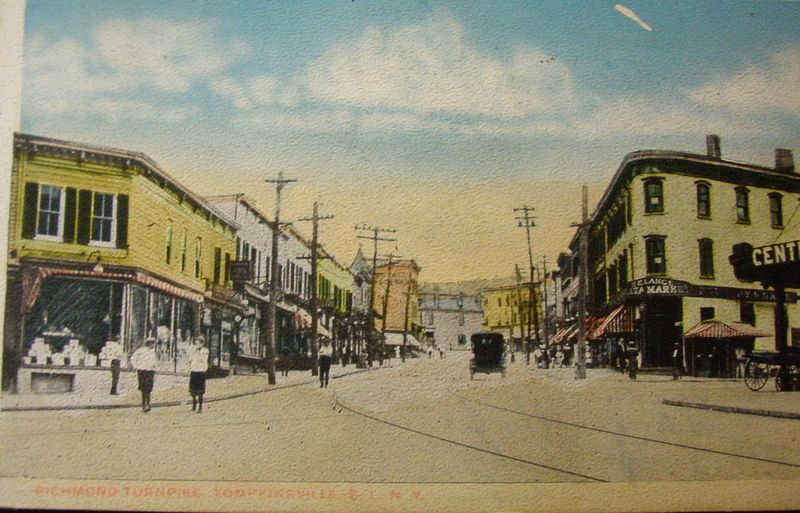
The Richmond Turnpike traveling through Tompkinsville, the town founded by Vice President Daniel D. Tompkins. The Turnpike, formerly a toll road and the basis of the Richmond Turnpike Company, would be renamed Victory Boulevard after World War I.
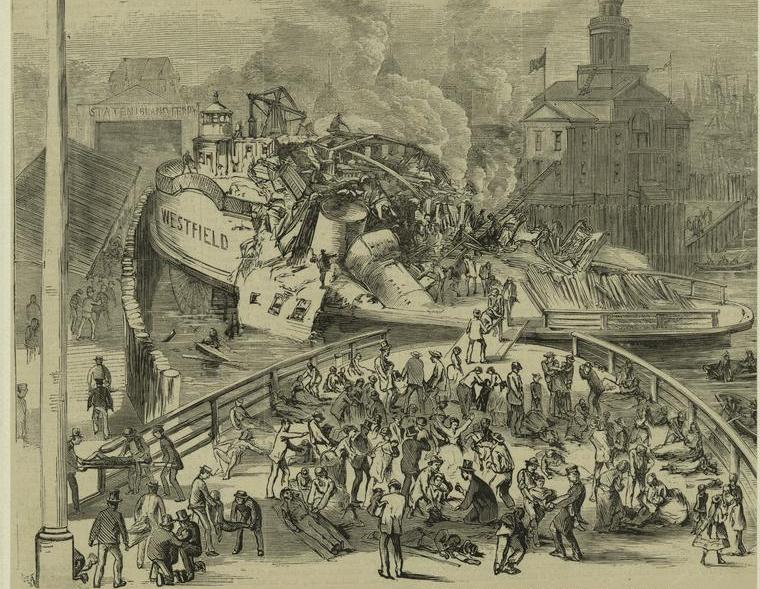
The Westfield disaster on July 1871, a boiler explosion that killed over 80 people, underscored the risks of early steam travel in the crowded waters of New York harbor. It remains the worst of several disasters in the Staten Island ferry’s long history.
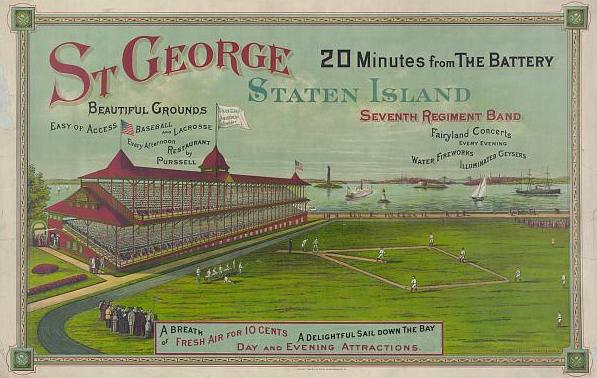
Named for George Law, the neighborhood of St. George was a bustling entertainment district, with hotels, light amusements and sports venues. This postcard is from 1886, illustrating the new St. George Cricket Grounds, built by developer Erastus Wiman.
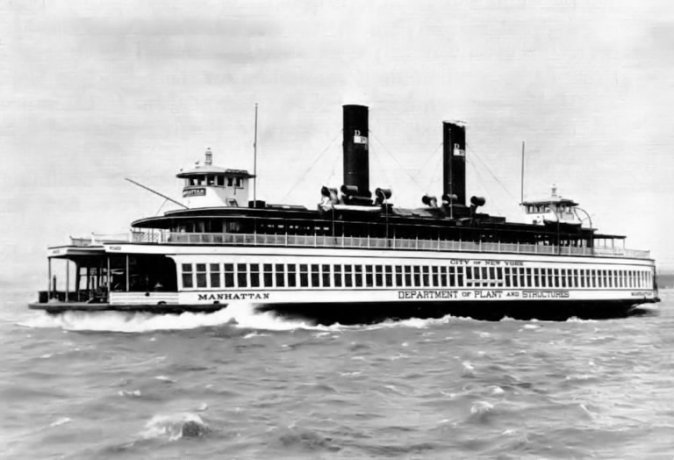
When the city took over operation of the Staten Island Ferry in 1905, they commissioned five new boats, each named for a borough. Here’s the Manhattan:
If you want to thumb through a spread of old photographs of prior ferryboats, check out this great site.
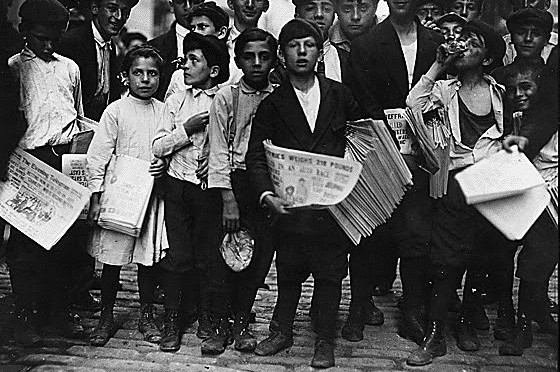
PODCAST Extra! Extra! Joseph Pulitzer and William Randolph Hearst vs. the newsboys! Pandemonium in the streets! One hot summer in July 1899, thousands of corner newsboys went on strike against the New York Journal and the New York World. Throngs filled the streets of downtown Manhattan for two weeks and prevented the two largest papers in the country from getting distributed.
In this episode, we look at the development of the sensationalist New York press — the birth of yellow journalism — from its very earliest days, and how sensationalism’s two famous purveyors were held at ransom by the poorest, scrappiest residents of the city. The conflict put a light to the child labor crisis and became a dramatic example of the need for reform.
Crazy Arborn, Kid Blink, Racetrack Higgins and Barney Peanuts invite you to the listen in to this tale of their finest moment, straight from the street corners of Gilded Age New York.
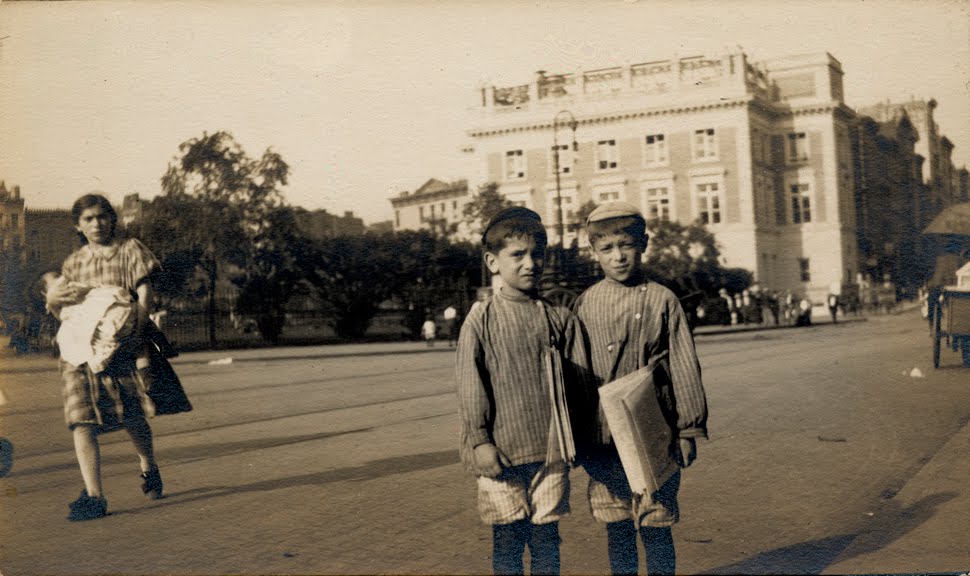
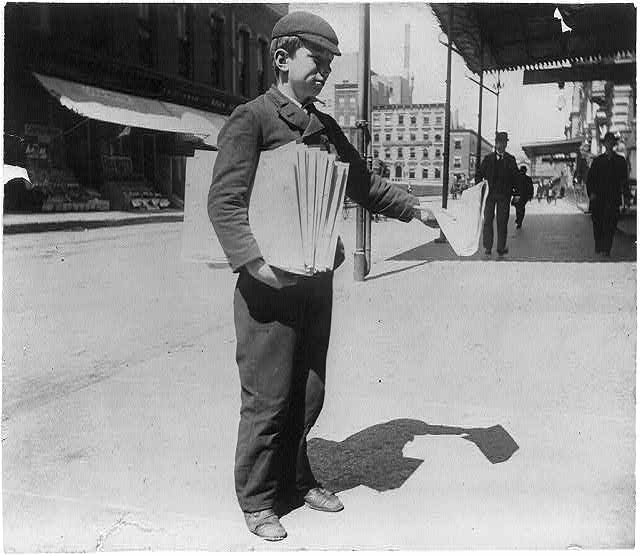
Newsboys in front of Seward Park. Caption: “Eisenberg Brothers, living at 27 Lewis Street. Benjamin, 8 years old, and John 10, selling Jewish papers [assumably the Forward] on East Broadway near Rutgers Street.” By Lewis Hine (Courtesy NYHS)
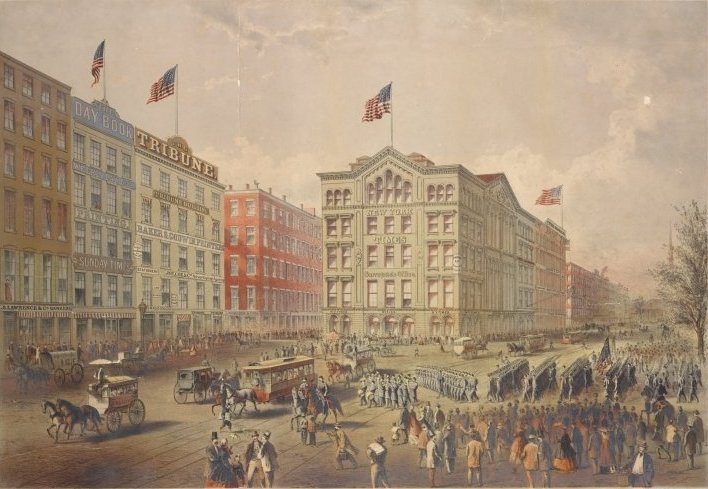
Printing House Square, in a print from 1866, and the world of newspaper publishing in the mid-19th century. This was the heart of journalism in New York, where the streets reeked of ink, reporters and editors darted back and forth from their offices, and newsboys gathered to pick up their morning bundles of hot-off-the-press editions. (NYPL)
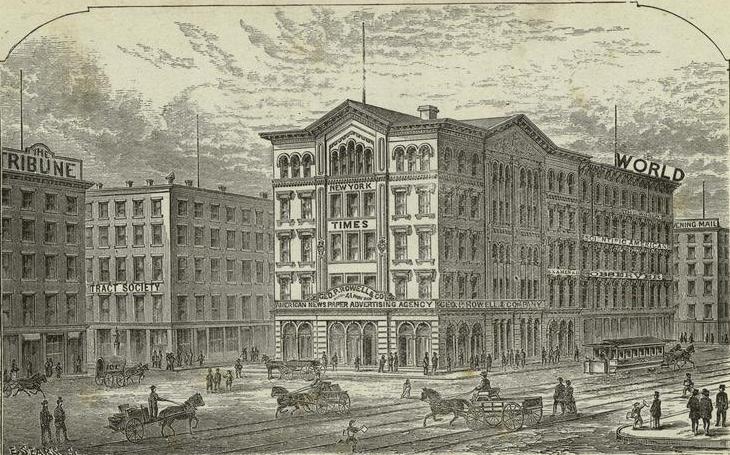
From another angle (print is labeled from 1870s) we see the offices of the Trubune, the Times and the World. The New York World at this time was under publisher Marble Manton was disreputable and unsuccessful.
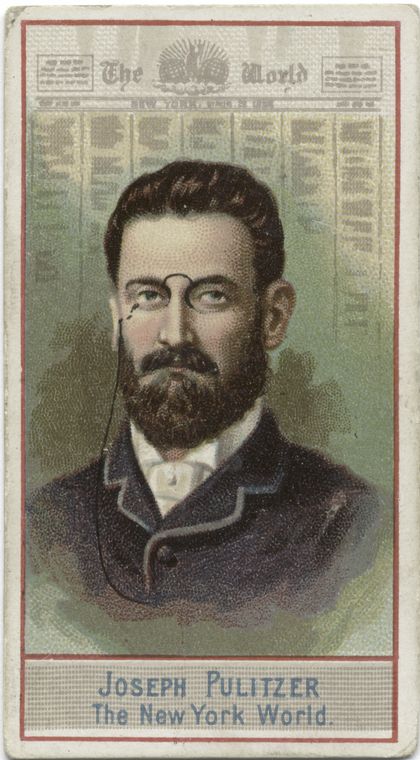
The fate of the New York World was transformed when it was purchased by innovator Joseph Pulitzer, who modernized the publication — introducing such staples of cover photographs and banner headlines — and increased its popularity through sometimes sensational articles. (NYPL)
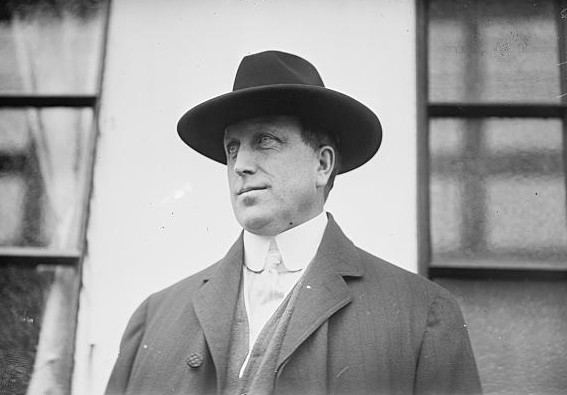
Not to be outdone, William Randolph Hearst stepped into the publishing fray in 1896 with the New York Morning Journal, matching the World head to head in pulling out the stops to increase circulation and ad revenue.
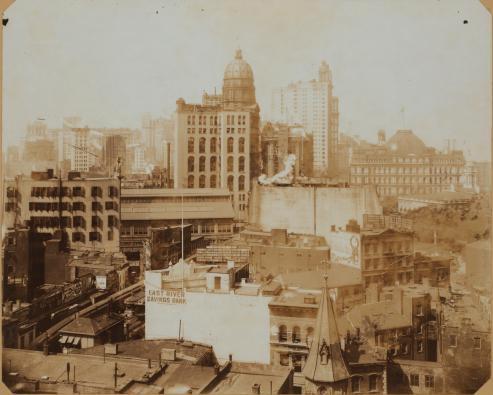
This is Duane Street in the early 1900s. I’m including this picture because the Newsboys Lodging House, where many of the strikers resided for a nickel a night, was located at 9 Duane Street, in the shadow of the World’s distinctive tower.
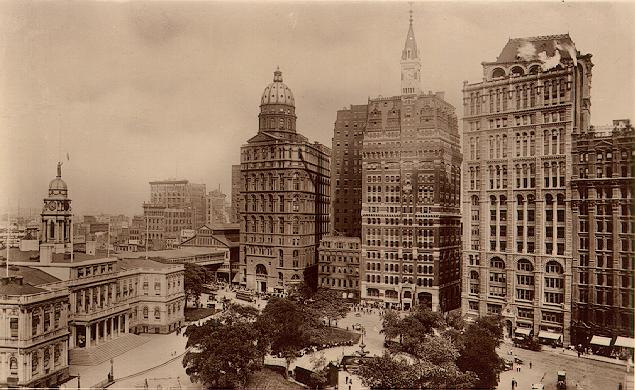
Pulitzer’s World Building from Park Row, designed by George Post, was at one time the tallest building in the world. It sits near the Tribune building, at center. Newsboys were not the ‘plucky’, can-do ambitious entrepreneurs that pop culture has made them out to be, although sometimes (like this guy) they come close.
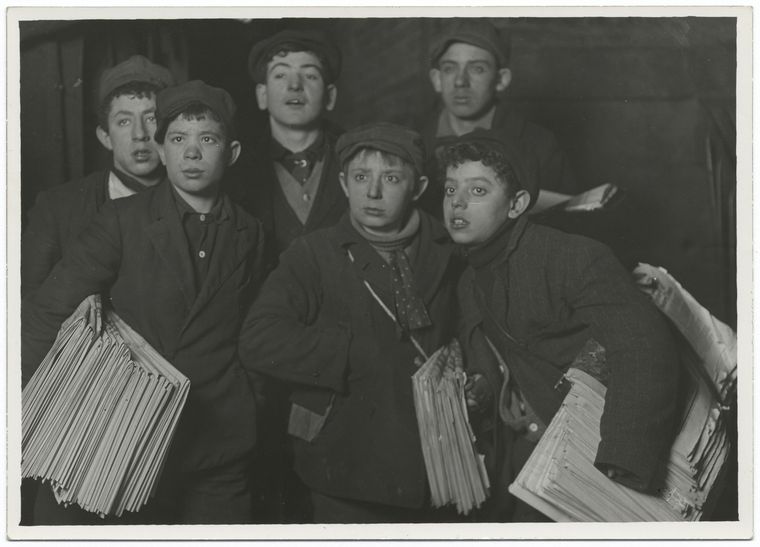
A Lewis Hine photograph with the caption “Group of newsboys starting out at Brooklyn Bridge early Sunday morning.” The newsies got up every morning to pick up their bundle of newspapers. New York newspapers raised the price of these bundles during the Spanish-American War, when circulation increased. When the war was over, many newspapers lowered the price. All but the World and the Journal. [NYPL]
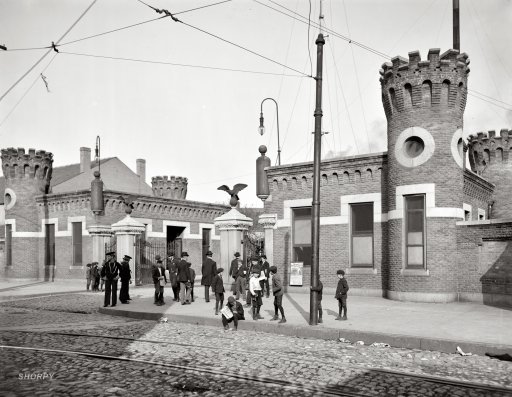
A cluster of newsboys, amongst sailors and businessmen, out at the Brooklyn Navy Yard, 1903. Brooklyn newsies had taken on the newspapers via a strike as far back as 1886 and joined their Manhattan counterparts in fighting back at Pulitzer and Hearst.(Courtesy Shorpy, who has a beautiful larger version)
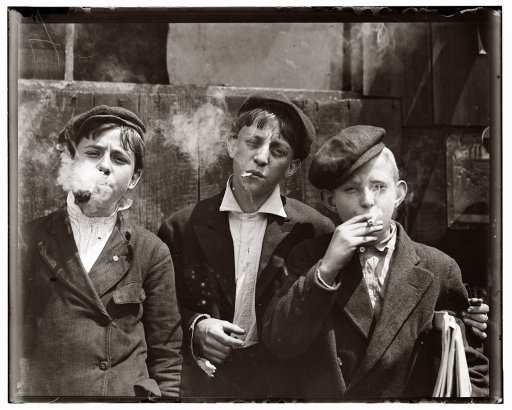
The life of the newsie aged children prematurely. Getting up early, staying up late, most of them homeless and scrounging for nickels and dimes to survive, the 19th century newsboy got by on emulating adulthood. The boys below were photographed by Lewis Hine in St. Louis. (from Shorpy, who have a larger view)
Hine and Staten Islander Alice Austen are the two most well-known photographers of everyday life in New York and captured life on the streets in all its unglamorized tarnish. Below, Austen captures a newsie hard at work in 1906.
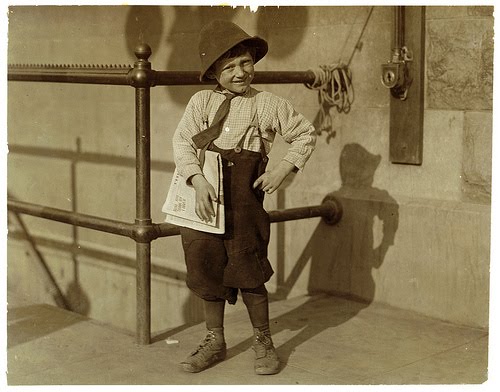
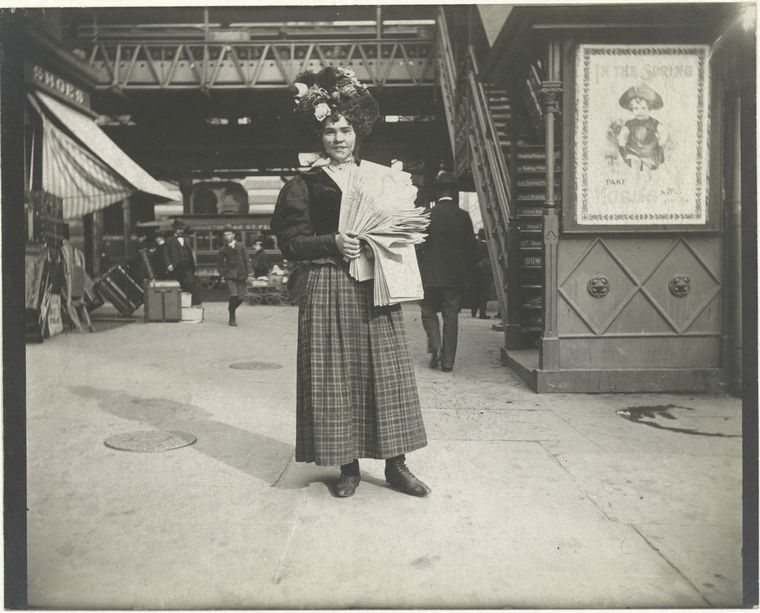
Although most newsies were boys, there were many newsgirls as well, such as this young lady in a fetching hat. Photo by Alice Austen. [NYPL]
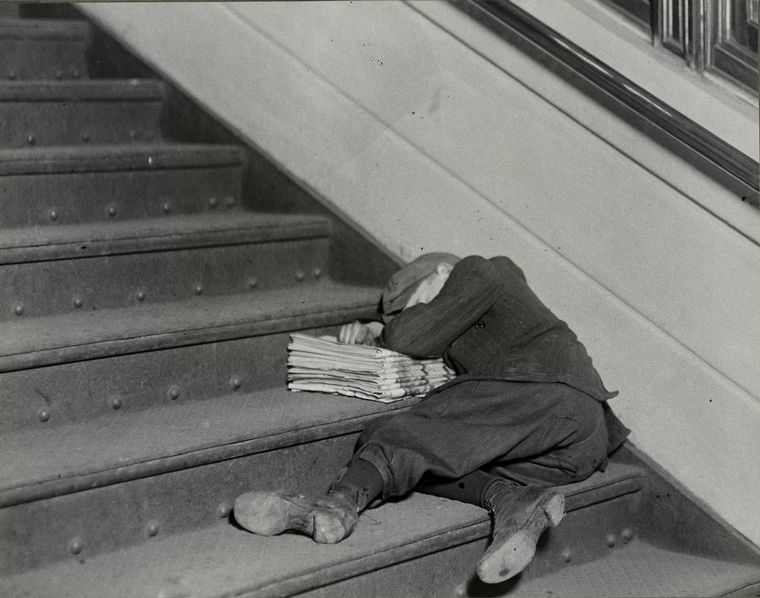
Even with aid organazations like the Children’s Aid Society and lodging homes for wayward waifs, many newsboys lived their entire lives on the streets. The picture below is from 1912, by Hine. (NYPL)
Why do photographs of young kids from this era seem to resonate so strongly? You can look at these pictures and see your own children, nieces and nephews and neighbors. As children — particularly poor ones– have few of the fashionable trappings of adults of this era, we’re able to recognize common expressions. I highly recommend checking out the collections of Lewis Wickes Hine and Alice Austen at both the New York Public Library Digital Collection and the Library of Congress.
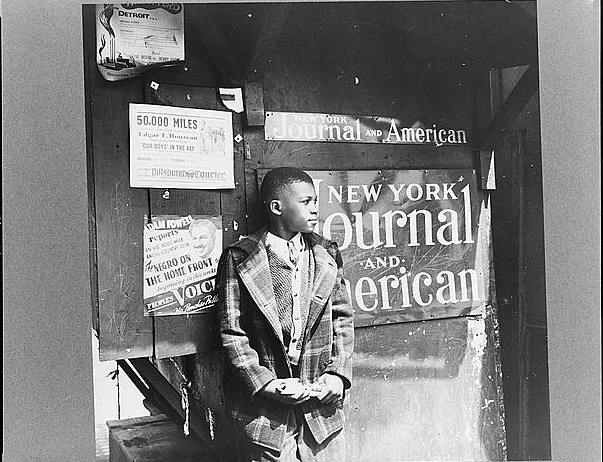
Finally, here’s a one more photograph from 1943 of a modern newsie, decades after the strike, by another great photographer Gordon Parks (yes, the director of Shaft). I like that he’s standing in front of a sign for the Journal-American, the newspaper that Hearst’s Journal morphed into. [LOC]
And I couldn’t close without a little nod to that oft-maligned, cult classic Newsies , featuring fictional portrayals of Racetrack Higgins, David Simmons and of course Kid Blink (in a reduced role from his actual participation in the strike) (Thanks to Pengo for the link suggestion)
Finally I deeply apologize: I’m sadly aware that my impersonation of a newsboy’s dialect had a bit of an Ozark twang in it! I was never meant for the stage, I guess….
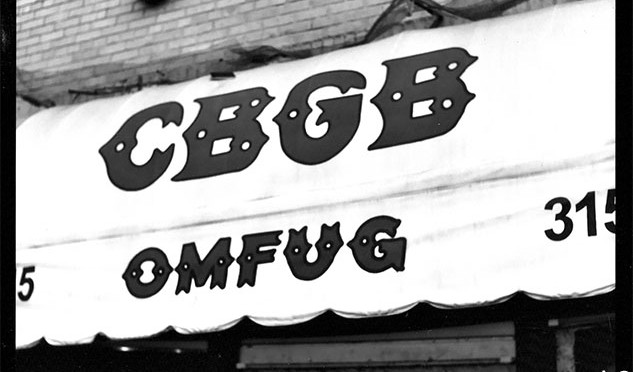
PODCAST Modern American rock music would have been a whole lot different without the rundown dive mecca CBGB’s, a beat-up former flophouse bar that made stars out of young musicians and helped shape the musical edge of downtown Manhattan. Owner Hilly Kristal may have initially envisioned a place for ‘Country Blue Grass and Blues’, but the music spawned by this little hole in the wall would define the contours of American punk and new wave.
The Ramones, Blondie, the Talking Heads and hundreds of others bands would never have been the same without this dank little club with the most notorious bathroom stalls in New York. Tune in to hear a tale of the club’s rather inauspicious start and find out why, even as a venerated music icon, it was forced to close its doors.
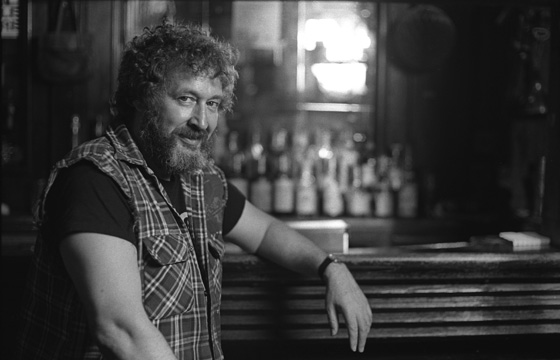
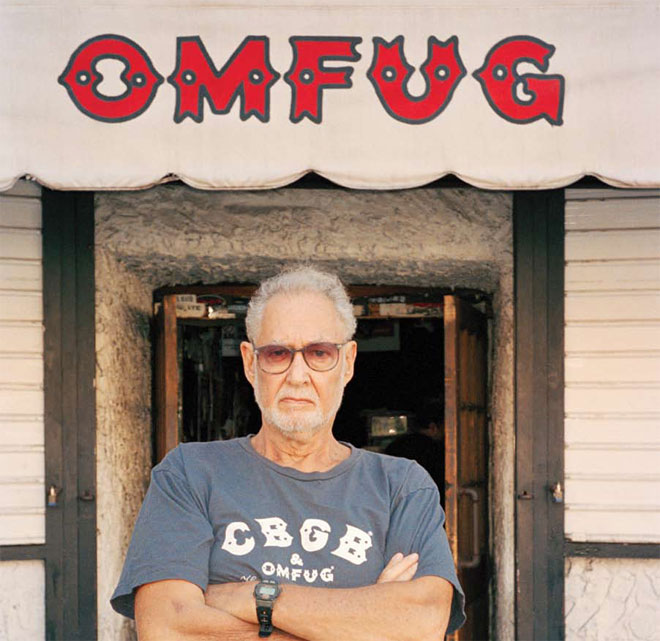
Hilly Kristal, back in the day. CBGB’s was originally Hilly’s On The Bowery, a spin-off of a far more successful West Village venue that frequently hosted performers like Bette Midler and Jerry Stiller. Hoping to draw a more music oriented crowd, Kristal changed the name to reflect broad tastes: Country Bluegrass Blues and Other Music For Uplifting Gormandizers.
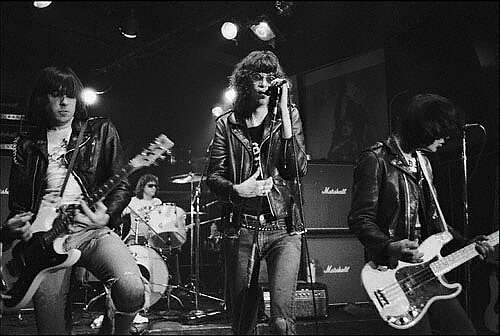
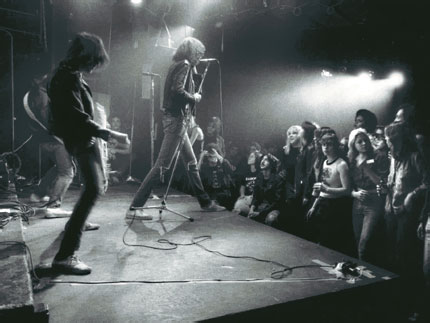
Initially unimpressive by any metric of musical quality, the scraggly group of guys from Forest Hills, Queens who formed The Ramones soon become a staple of the CBGB stage and the one of the most influential acts of the American punk style. If there’s a voice to 315 Bowery, most likely it’s that of Joey Ramone. (Photo by Allan Tannenbaum, from here)
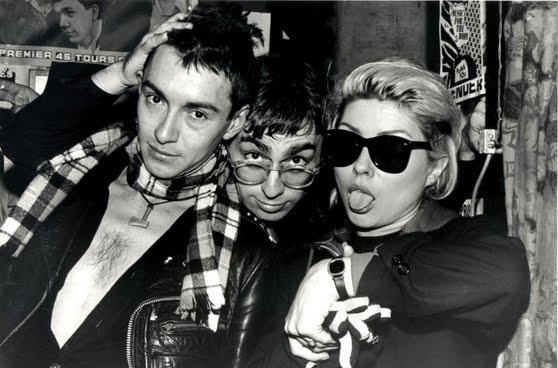
Deborah Harry and Chris Stein debuted on the CBGB stage as members of the Stilettos used the club to make their transformation into Blondie, the most successful group borne of Hilly’s Bowery club. Chris and Debbie are seen below with Arturo Vega, 1978. (Photo by Lisa J Kristal, photo from here)
Hilly in later years. The club become a high-profile victim of Bowery gentrification and had to shut its doors in 2006. It lived on briefly as a St. Mark’s clothing shop, even as its old location become home to a John Varvatos menswear boutique. Photo by Peter Sutherland (here)
Check out the official CBGB blog for lots of great stuff associated with the club, including lots of old photos and that full color ‘walk-through of the club. You might want to take a shower after viewing it.
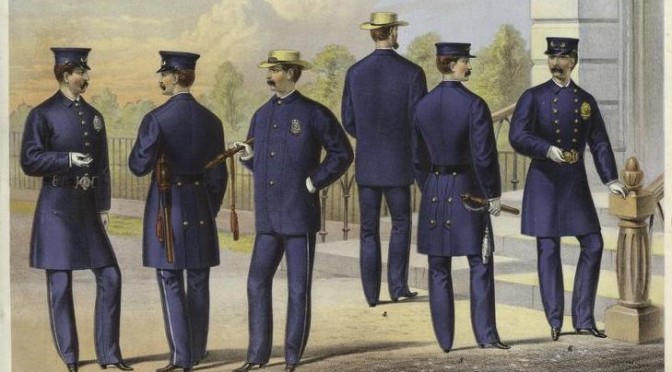
Uniformly chic: Law enforcement officers of the New York Metropolitan Police from 1871 show off their fancy blue threads. Twenty years previous, they weren’t even required to wear standardized apparel. (Courtesy NYPL Digital Library)
PODCASTWe’re playing Good Cop / Bad Cop this week, as we take a close look at four events from the early history of the New York Police Department. You’ll meet shining stars of the force like Jacob Hays, who kept the peace in the early 19th century armed with a mean billyclub — and the only man to ever hold the title of High Constable of New York. And then you’ll encounter Joseph Petrosino, the Italian immigrant turned secret weapon in the early battles against organized crime.
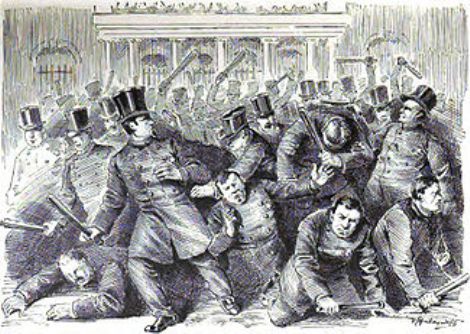
Not all the early men in blue were so recommendable. During the Police Riot of 1857, cop turned against cop while the city burned and “Five Points criminals danced in the streets.” And finally there’s the lamentable tale of officer Charles Becker, the only member of the New York Police Department to be executed for criminal misdeed.
But did he really commit the crime — commissioning the murder of a nervous gambler who was prepared to rat him out?
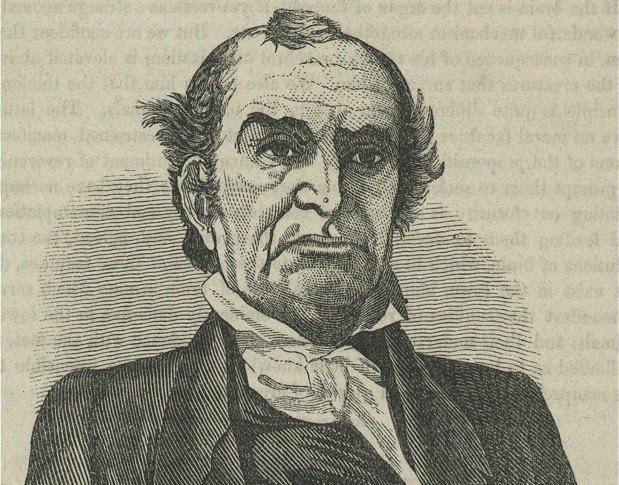
#1 The Saga of High Constable Hays Imagine encountering this face on a gaslit street at night! Jacob Hays watched over the streets of New York for over 40 years, one of the most dedicated men ever to watch over the city. Hays would become one of New York’s best known — and most feared — men, thanks to his agility with a billy club and his early skills of detection and crime solving. (NYPL)
This is the corner of Broadway and Grand Street in 1818. A wildly bustling street corner today, but quite a different story back in Hays’ day. The constable roamed over a much smaller city — this was at the northern outskirts — and a far different range of crimes. By 1818, he would have only had about a couple dozen officers in his employ, all of whom reported directly to him. (NYPL)
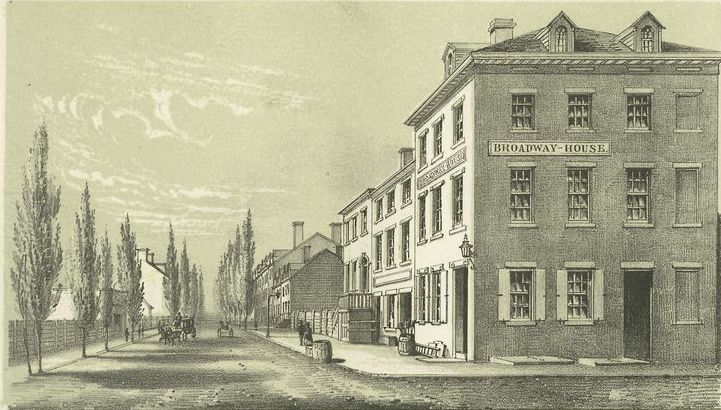
#2 The Police Riot of 1857 New York once had two different — and competing — police forces and boy they just did NOT get along. It all came to blows one June day in 1857, with state-sponsored Metropolitan police officers attacking the renegade men of the Municipal police force.
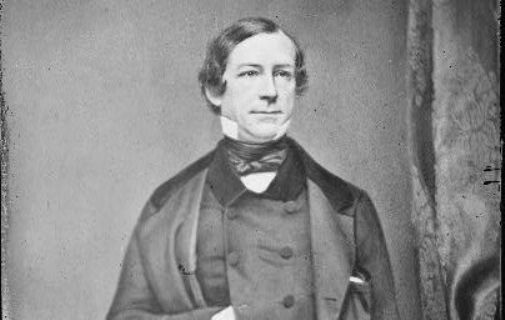
And it was because of Fernando Wood, the crafty mayor of New York in the 1850s who refused to comply to the state’s authority over city law enforcement. Wood used the police for his own political advantage and hastened its descent into corruption.
#3 Petrosino! The short Italian immigrant Joseph Petrosino, who become the NYPD’s most potent tool against the growing forces of organized crime during the first years of the 20th century.
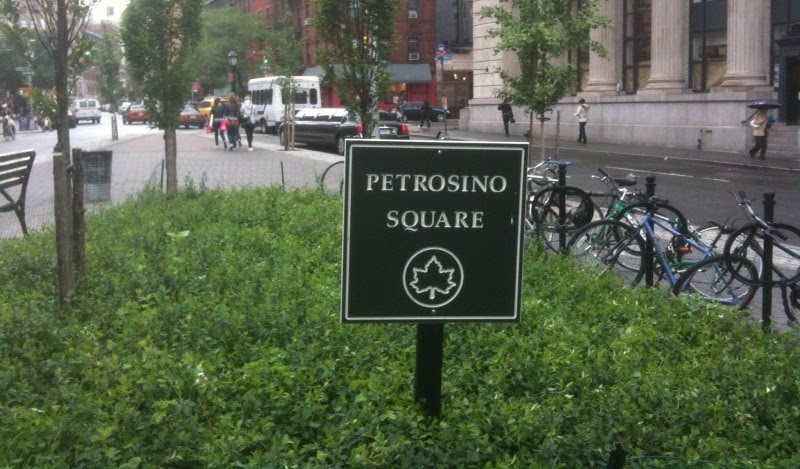
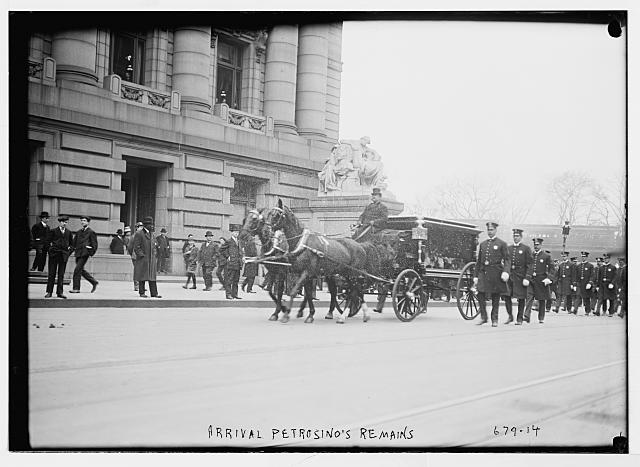
Petrosino was assassinated in Italy by the mob and his funeral procession through the city drew thousands of mourners. Today, you can visit the freshly refurbished Petrosino Square at Lafayette and Kenmare streets and see many artifacts relating to Petrosino at the New York City Police Museum.
Petrosino’s funeral procession passed by the U.S. Custom House, April 9, 1909. (LOC)
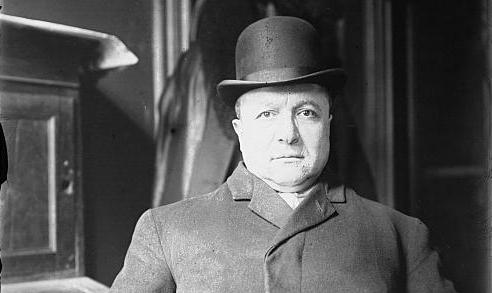
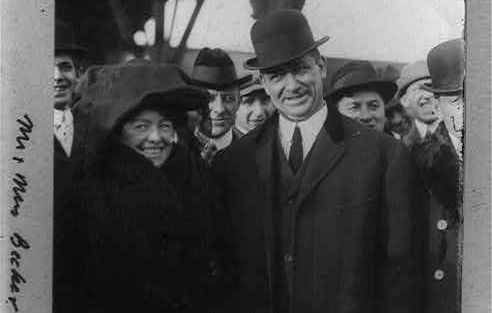
#4 Murder At The Metropole Charles Becker and his wife beaming to the press, although I don’t know what they’re smiling about. Becker was convicted of authorizing the murder of down-and-out gambler Herman Rosenthal. The disgraced cop was eventually sent to the electric chair.
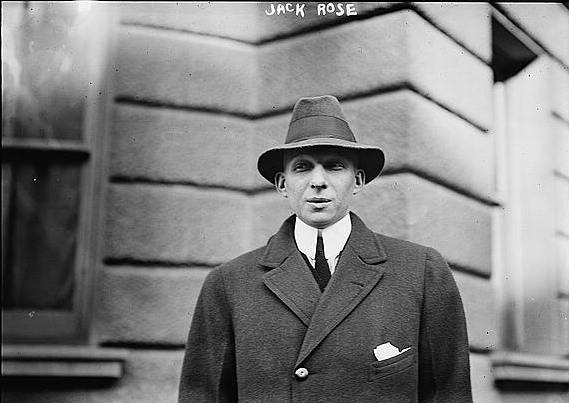
The prime witness against Becker was the otherworldly looking Bald Jack Rose, who claimed to have intimate details linking the officer to the vicious crime, which took place outside the Metropole Hotel in midtown.
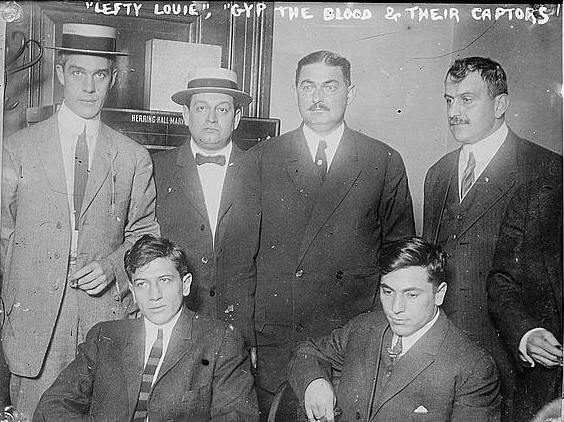
Two of the gunmen in the Rosenthal murder, nicknamed Gyp The Blood and Lefty Louie, pictured here with the men who brought them in.
CORRECTION: In referring to the new components of the Metropolitan Police, I mention the ‘city of Richmond’ when I meant the ‘county of Richmond’ — aka Staten Island.
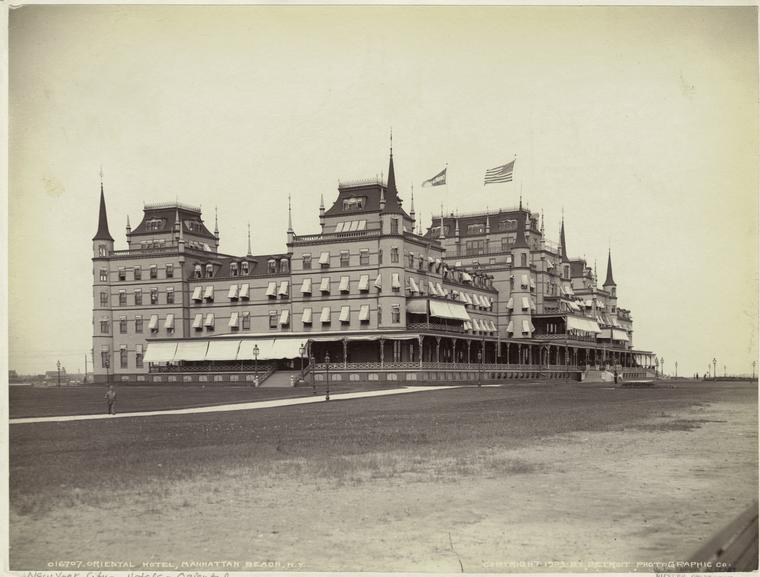
EPISODE 102 Today Brighton Beach is known for Brooklyn’s thriving Russian community, while its neighbor Manhattan Beach is calm and family oriented. But over a hundred years ago, these neighborhoods were the homes of giant, lavish hotels catering to the upper classes. While regular folk were playing at Coney Island’s Steeplechase Park, Dreamland and Luna Park, the wealthiest were enjoying ‘the tonic of sea bathing’ at three of the most toniest hotels on the East Coast — Brighton Beach Hotel, the Oriental Hotel and Manhattan Beach Hotel.
Find out the origins of these long-gone resorts and how they make their mark on the current neighborhoods of Brighton Beach and Manhattan Beach.
ALSO: Why should we care so much about one particular raging anti-Semite? And why did the Brighton Beach Hotel, several thousand tons of it, have to get dragged inland 500 feet?
Music in this episode is the “Manhattan Beach March” by John Philip Sousa!
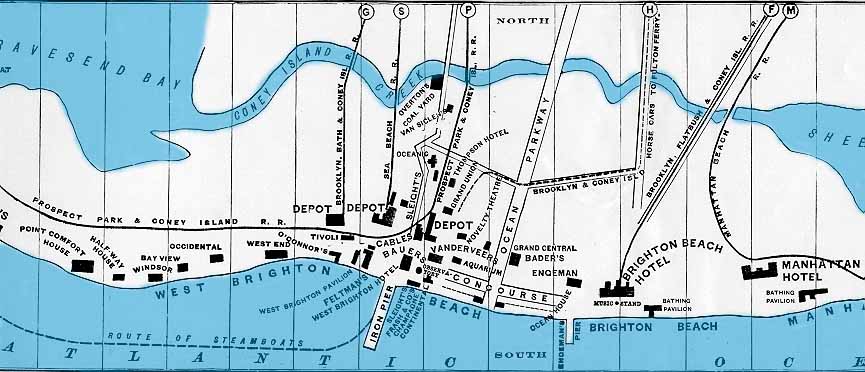
A map of Coney Island from 1879. Click into it to see the detail of the various train and horsecar lines traveling over bridges to the island. The Oriental Hotel was built in 1880 and is thus not listed. (Find the original here.)
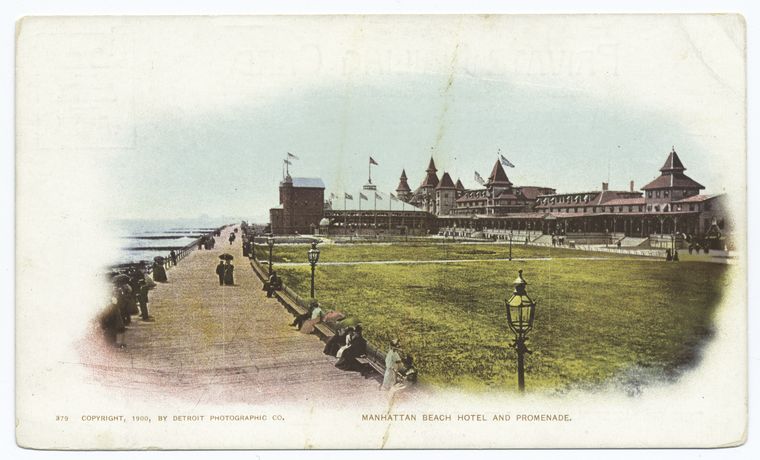
The Manhattan Beach Hotel by postcard
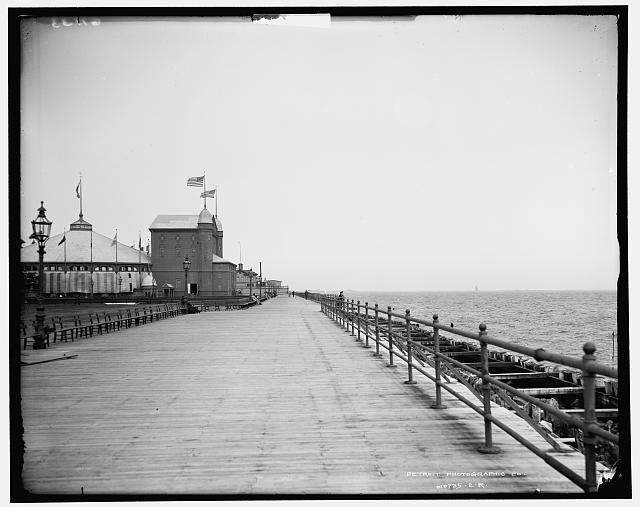
Facing the other way — the boardwalk of the Manhattan Beach hotel.
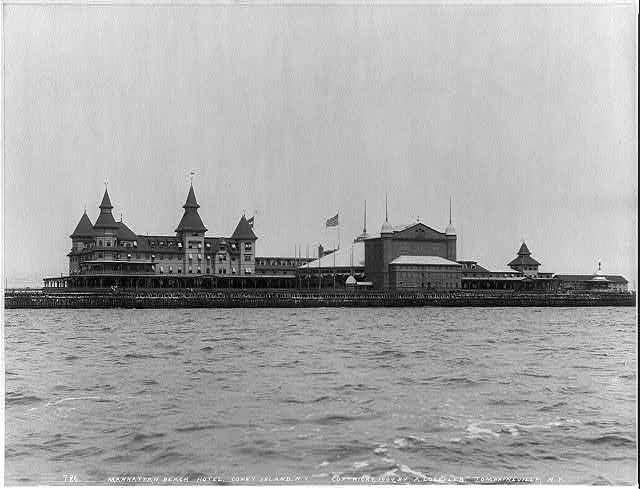
And from the water. The hotel was built in 1877 by railroad financier Austin Corbin. He would later scandalize progressive New Yorkers by prohibiting Jewish guests from staying at the resort.
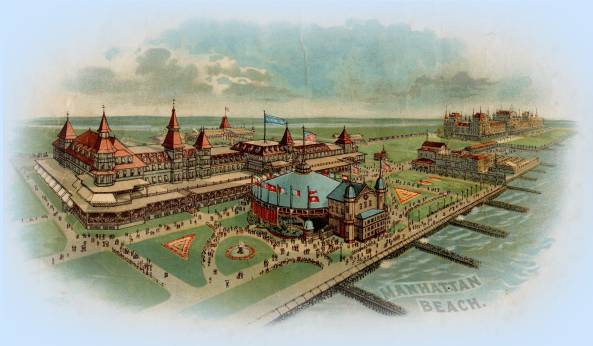
An illustration of the Manhattan Beach Hotel in the foreground, the Oriental in the distance. (Courtesy MMCSL)
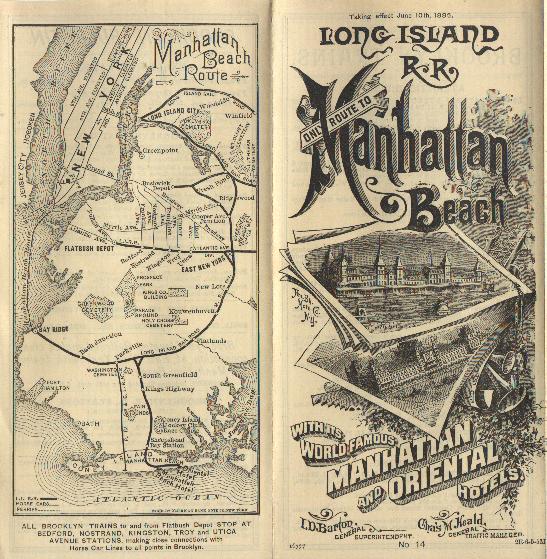
An illustrated train map for the New York and Manhattan Beach Railway, featuring the two Corbin hotels on the flap. (Courtesy LIRR history)
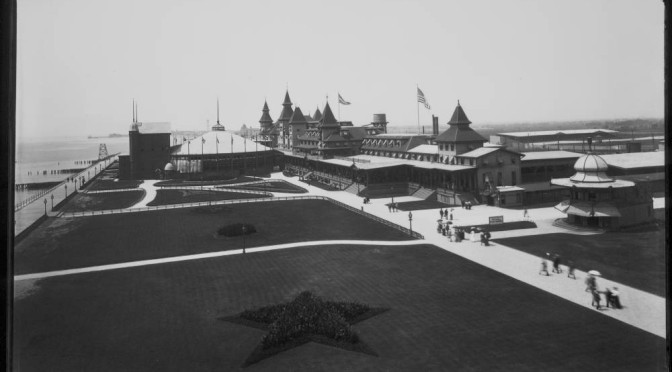
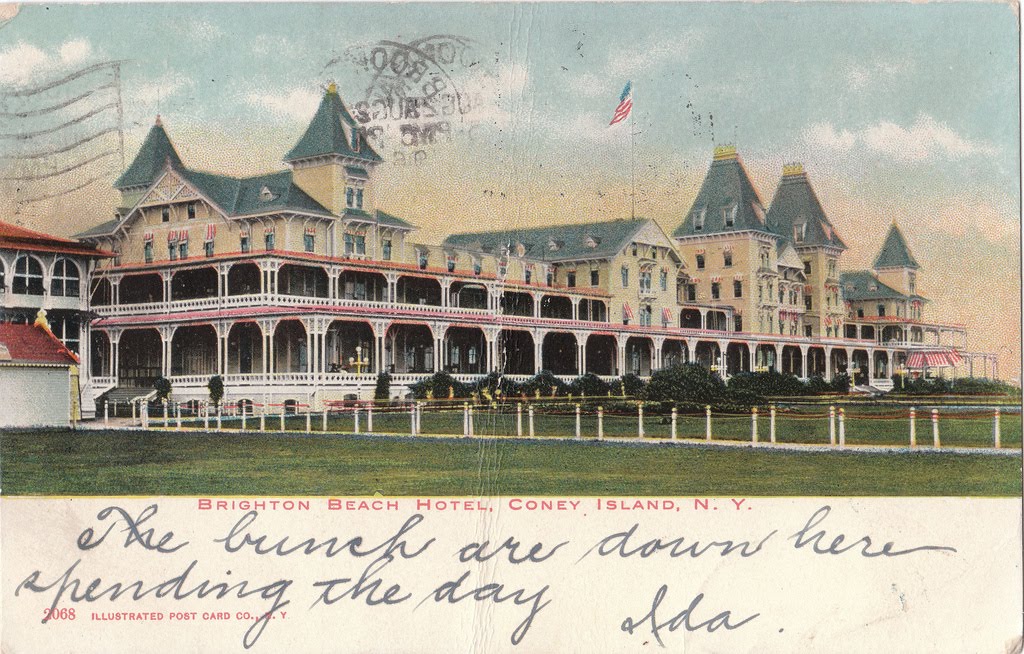
The Brighton Beach Hotel in 1906. Even as millions streamed into Coney Island to enjoy the frenetic rides and attractions, others could relax here, just a few hundred feet away.
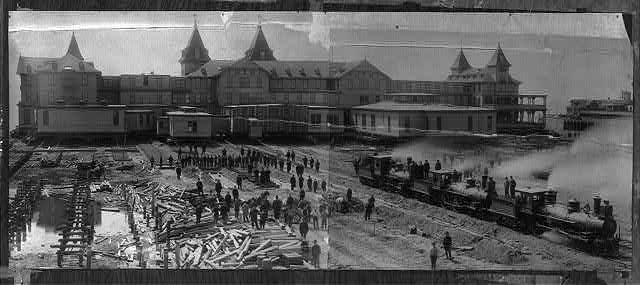
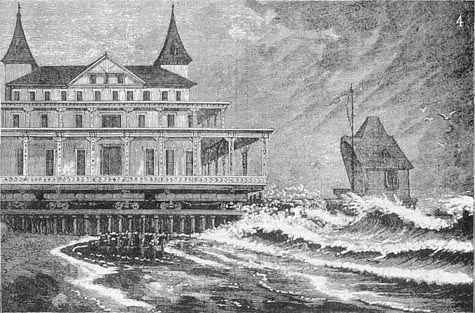
The Brighton Beach was moved — all 6,000 tons of it — in 1888 when the beach in front of it eroded. (Click into pic for better view.) Below it, an illustration of the hotel under siege by the sea. (Courtesy Weather blog)
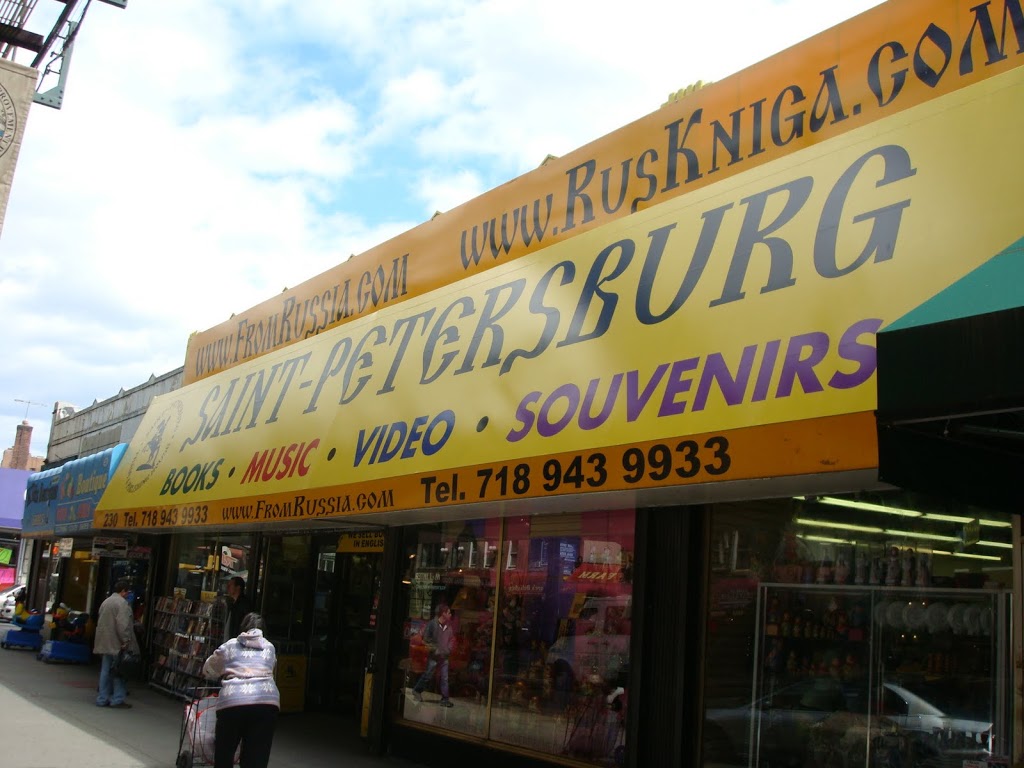
Along today’s Brighton Beach Avenue, you can find a host of shops and restaurants harkening to the tastes of old Russia.
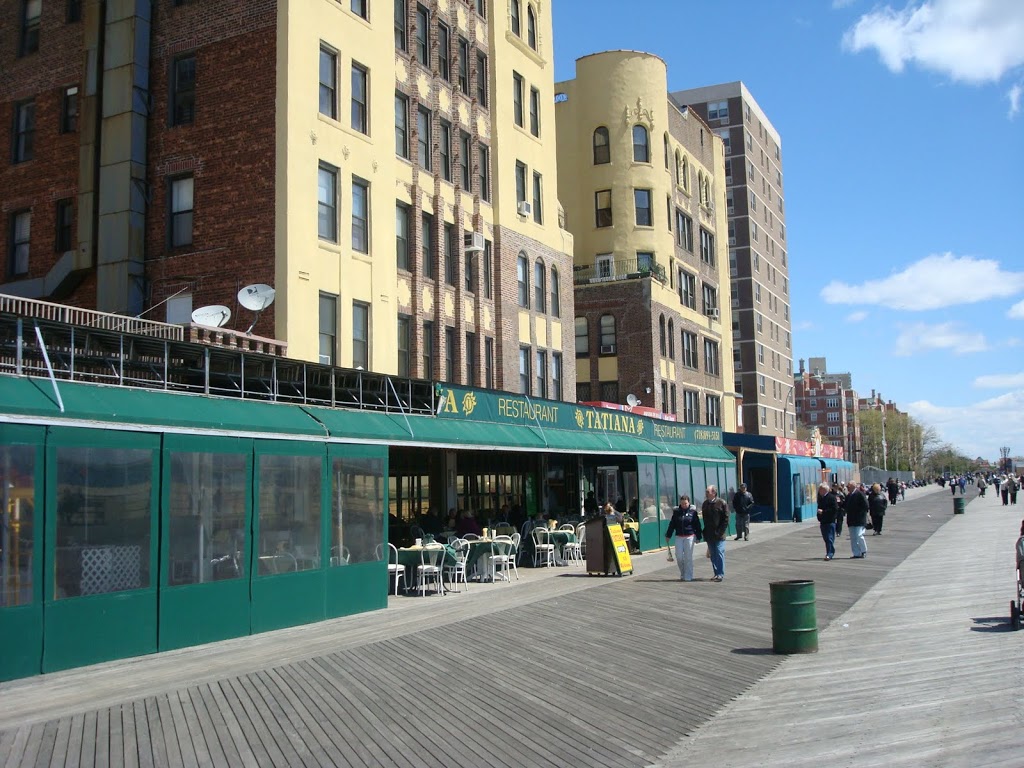
The real fun lies along the boardwalk at night, a string of Russian restaurants and clubs where the action sometimes spills out to the beach. Up the street at Brighton Beach Avenue, you can find The National restaurant, the closest a New Yorkern can come to finding Atlantic City style dinner entertainment.
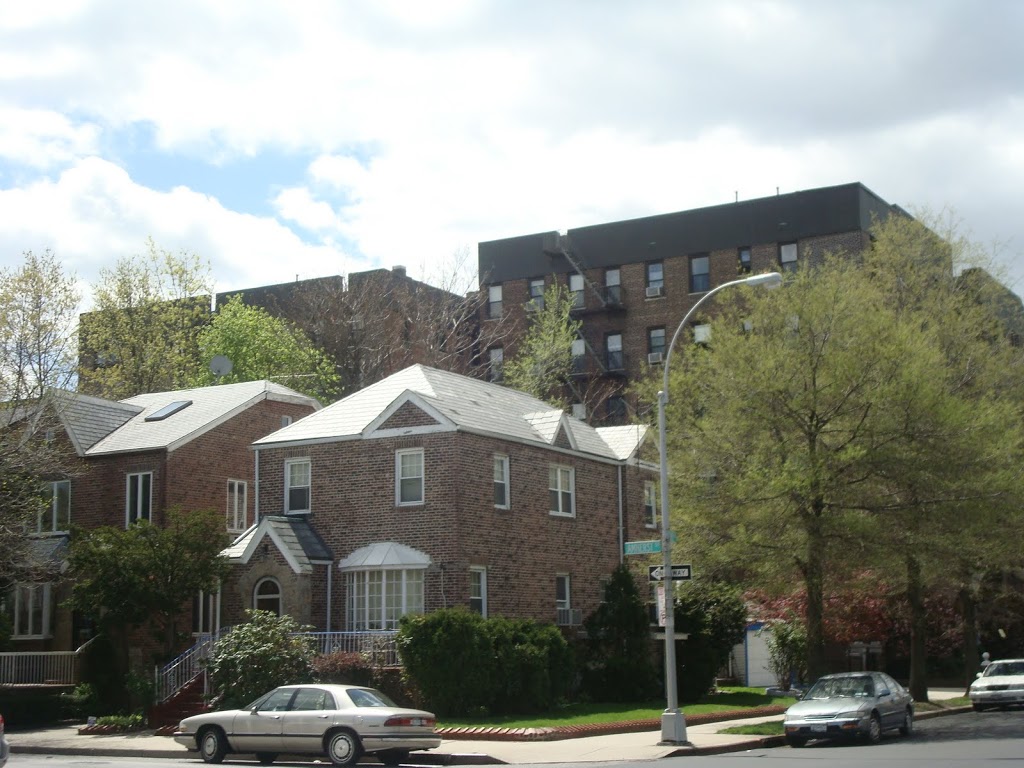
In places, you can almost see the line where William Engeman’s Brighton Beach property ends and Austin Corbin’s Manhattan Beach/Oriental Hotel property begins. Brighton Beach is distinguished by handsome pre-war apartment buildings; Manhattan Beach is more single-family homes, many recently built and some very ornate.
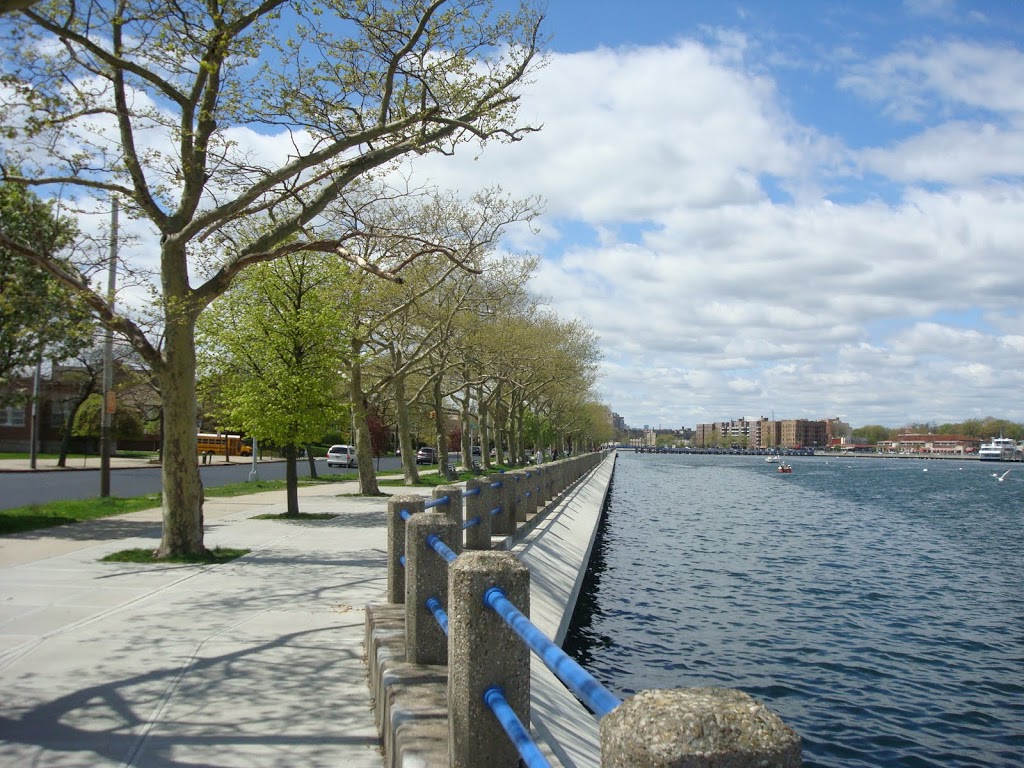
Sheepshead Bay, north of Manhattan Beach, is named for a fish which no longer swims here.
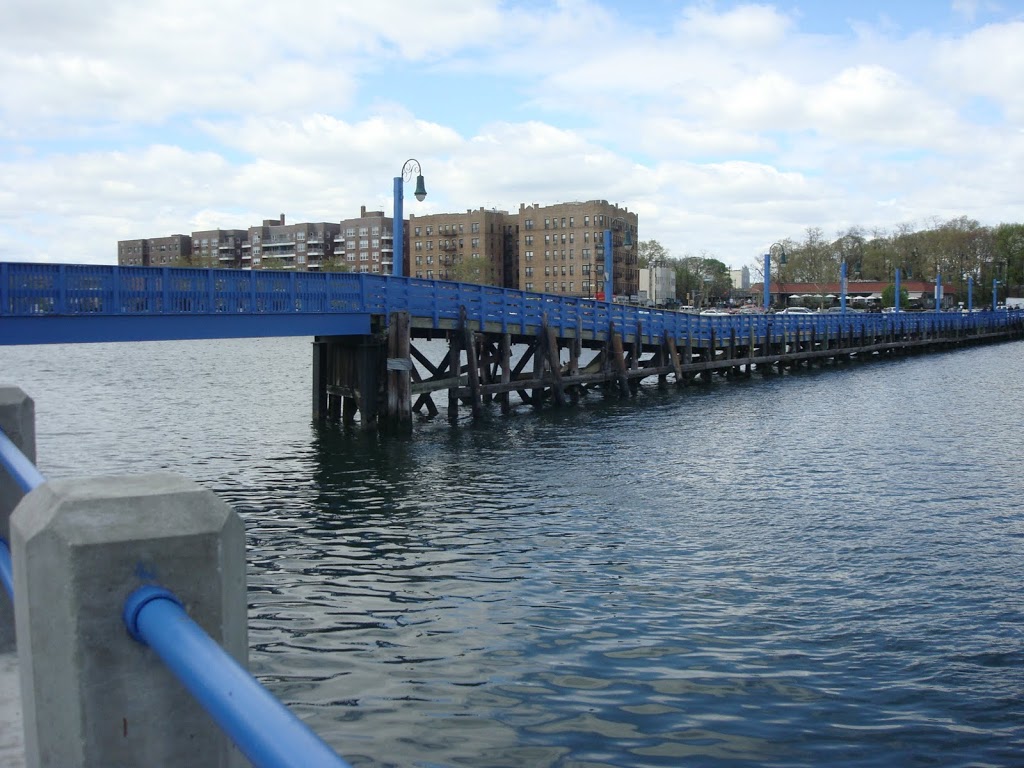
One of my favorite things in all of Brooklyn — the Ocean Avenue footbridge. Originally built in 1880, commissioned by Austin Corbin, the pedestrian bridge links the promenade in Manhattan Beach with the one in the neighborhood of Sheepshead Bay. According to Forgotten New York, Corbin kept closing the bridge, worried about ‘undesirables’ flocking to his precious upper-class hotel.
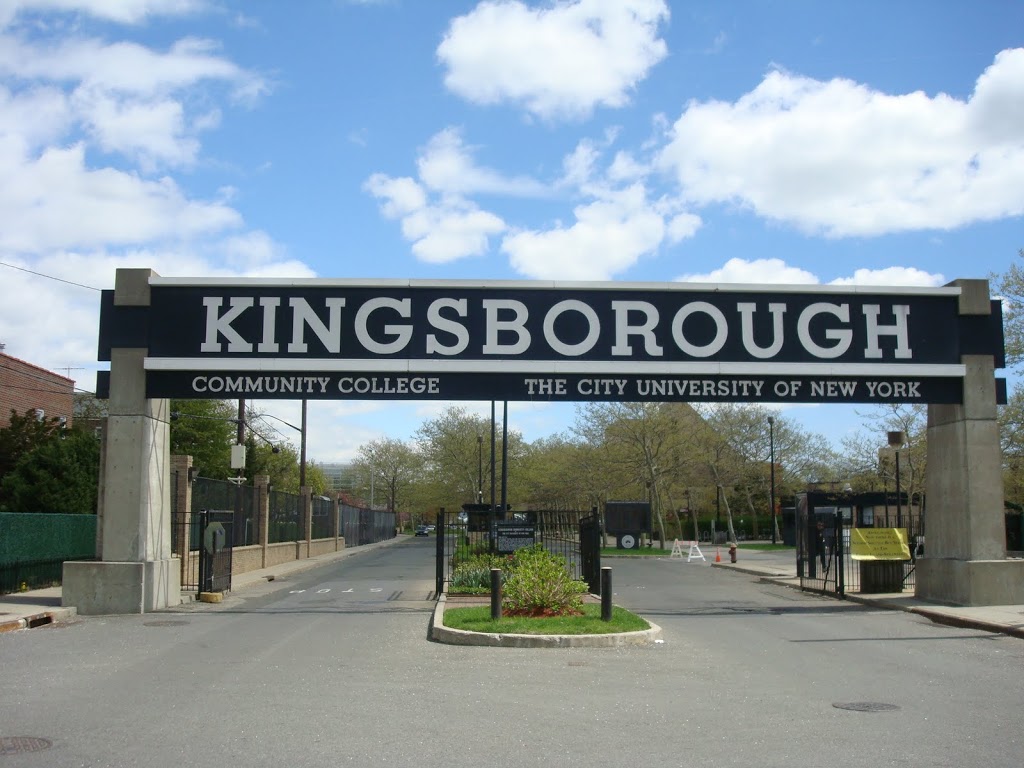
Kingsborough Community College at the far eastern end of the former island. If the college feels a bit like a military barracks, that’s because it was. After Corbin’s hotels were demolished, most of the land went to private home developments. But the far tip went to the Coast Guard and later served as a training base for the United States Maritime Service.
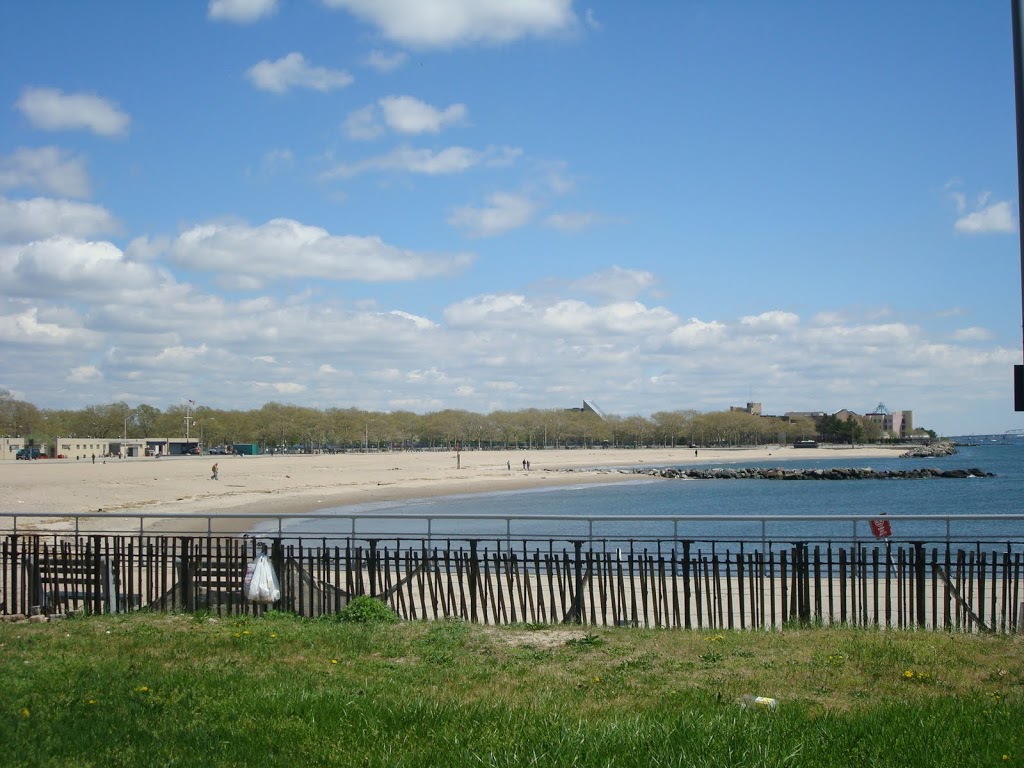
Manhattan Beach Park, a seemingly out of place sandy oasis in the quiet neighborhood of Manhattan Beach, is a remnant of the former resorts.
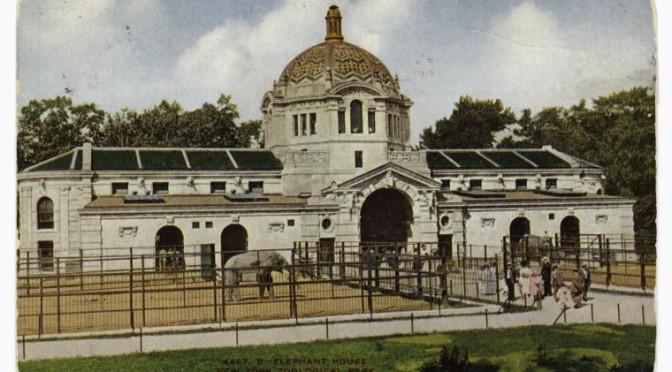
Postcard of the elephant house, now the central Zoo Center — and home today to a baby rhino below. (Courtesy NYPL)
PODCAST New York City’s most exotic residents inhabit hundreds of leafy acres in the Bronx at the once-named New York Zoological Park.
Sculpted out of the former DeLancey family estate and tucked next to the Bronx River, the Bronx Zoo houses hundreds of different species from across the globe, many endangered and quite foreign to most American zoos.
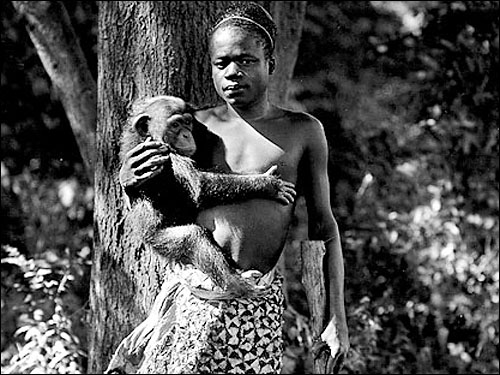
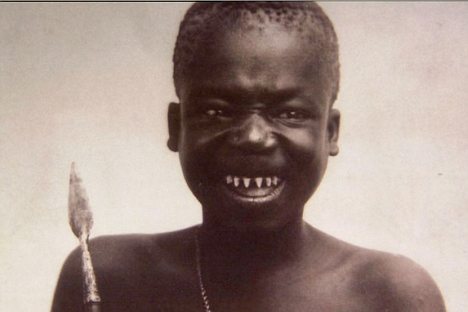
The well meaning attempts of its founders, however, have sometimes been mired in controversy. The highlight of the show — and the institution’s lowest moment — is the sad tale of Ota Benga, the pygmy once put on display at the zoo in 1906!
ALSO: We take you on a tour of the zoo grounds, unfurling over 110 years of historical trivia, from the ancient Rocking Stone to the tale of Gunda, the Indian elephant who may also have been a poet.
CLICK INTO PICTURES BELOW FOR GREATER DETAIL
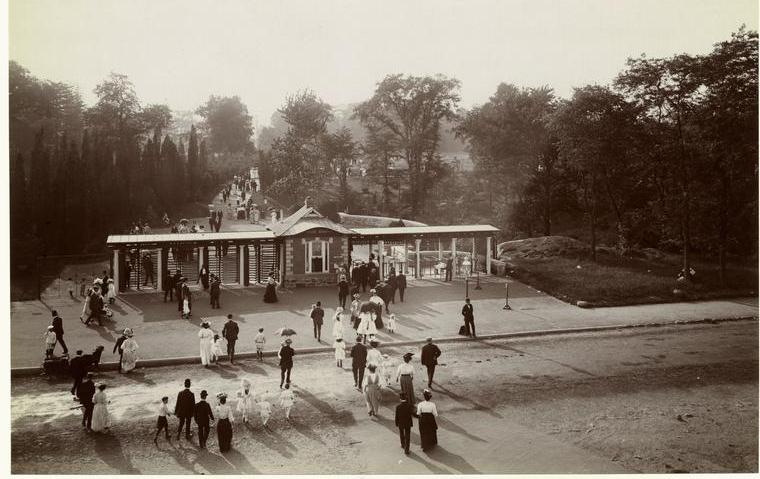
Well-dressed families arrive at the south zoo entrance in 1911. (NYPL)
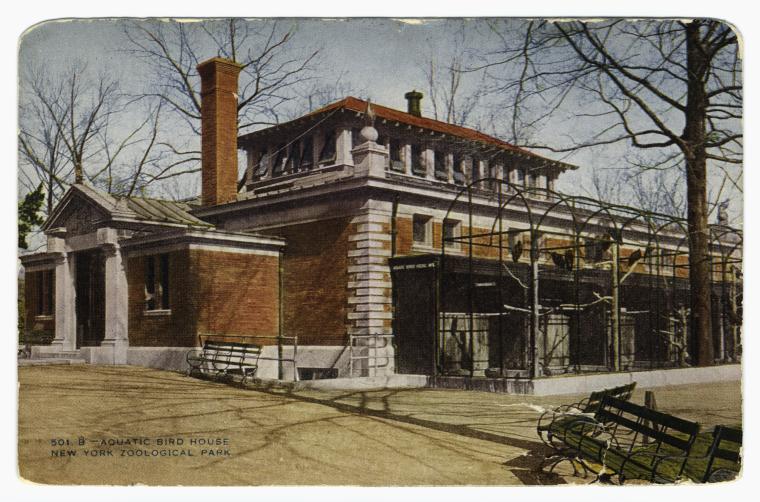
The aquatic bird house, one of the first buildings completed when the zoo opened in 1899. Another building from this date, the House of Reptiles, still stands and you can see it further below. (NYPL)
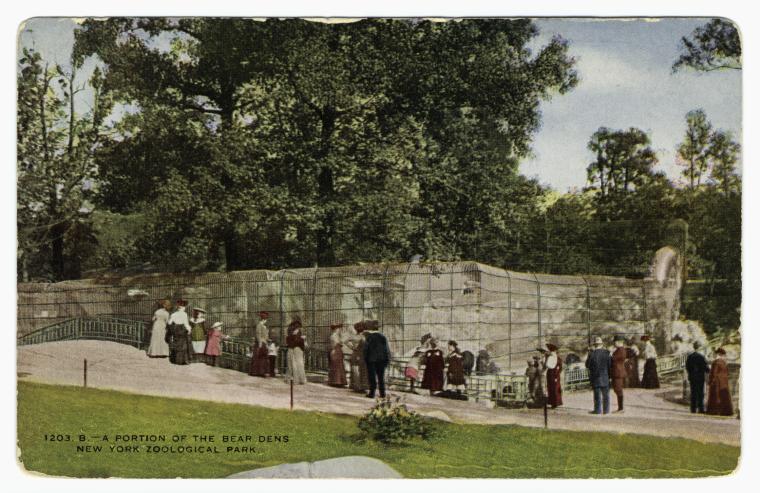
Bears behind fences. Zoo planners used Bronx Park’s natural topography to build enclosures into the very rocks themselves.
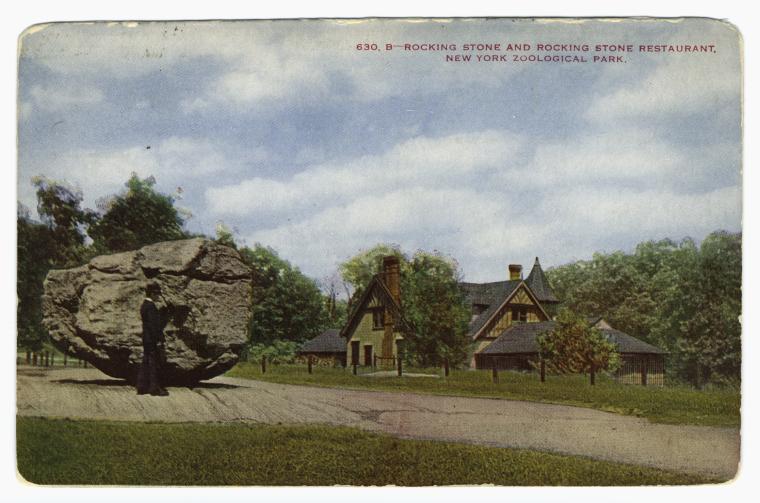
The mysterious Rocking Stone, next to the Rocking Stone Restaurant. Today there’s a World of Darkness exhibit there (presently closed to visitors).
Ota Benga at the Bronx Zoo. The Congolese pygmy once lived at the Museum of Natural History (where he was forced to wear a duck costume!) before being scandalously exhibited for a short time in the Bronx Zoo monkey house in 1906.
Part of his allure to shocked New Yorkers were his filed teeth and his size (4’11’).
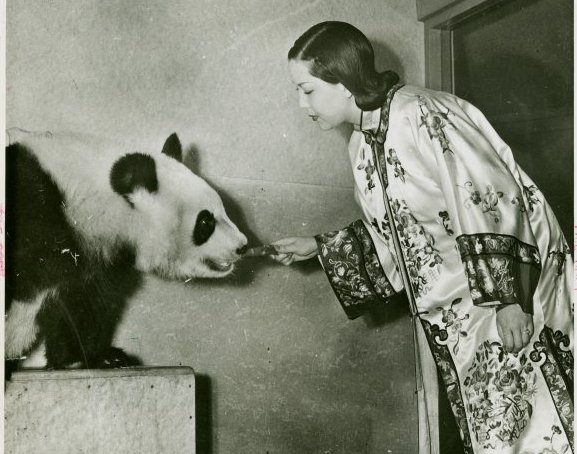
Pandora, the zoo’s first panda bear, from 1938. Pandas never lived for very long at the Bronx Zoo, and they stopped regularly keeping them. Pandas Ling Ling and Yun Yun were briefly housed here in the 1980s.
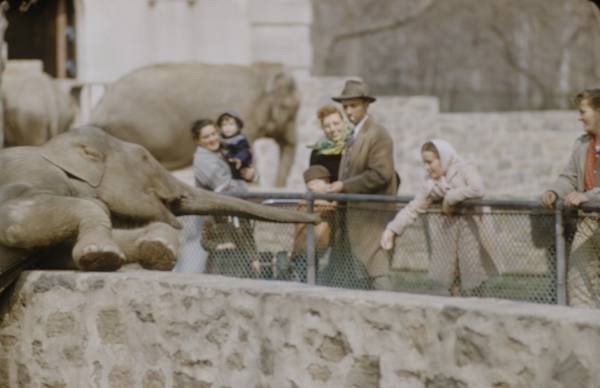
The elephant exhibit, circa the 1960s. The Bronx Zoo’s population of elephants has dwindled to just three animals. Very soon there may be none. (Photo courtesy Life Images, Nina Leen photgrapher)
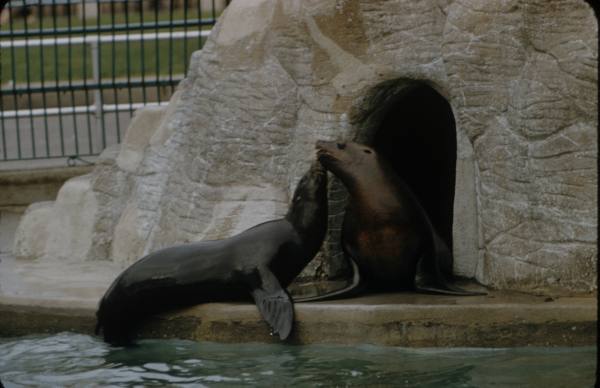
From the same time period as the picture above, but pretty timeless. The sea lions have been the centerpiece of the zoo since it opened in 1899. (Nina Leen)
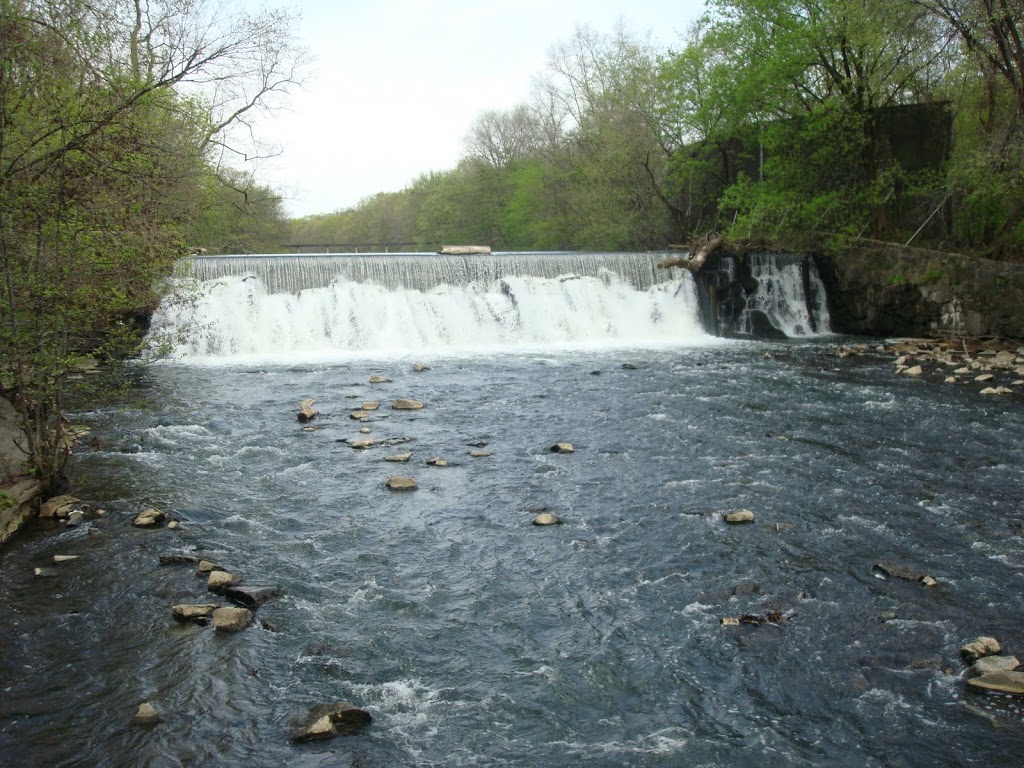
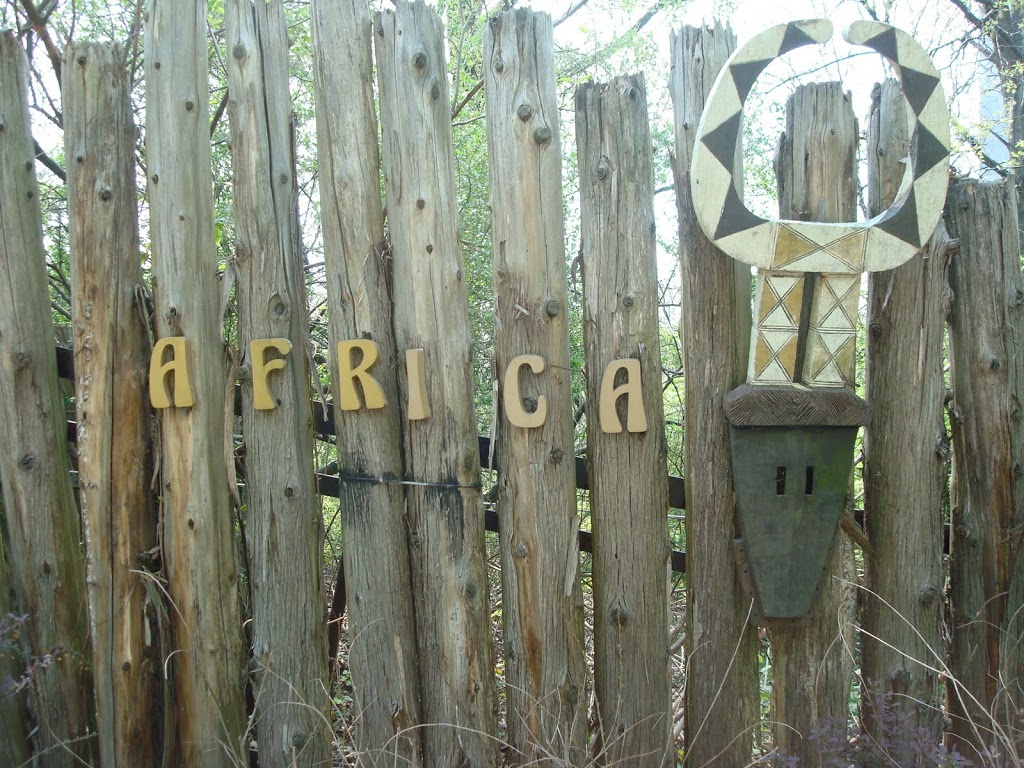
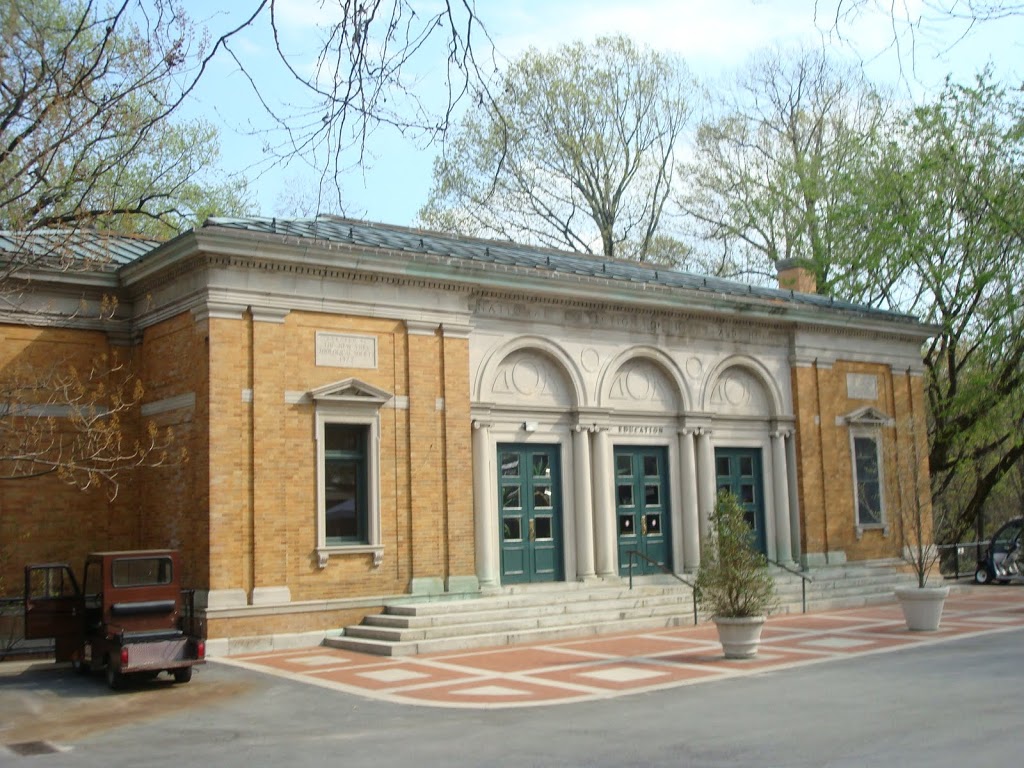
Some pics from my trip last week are below. The zoo is one of the greatest places to see the spectacle of the Bronx River. (Click into them to see the detail.)
The Butterfly Garden is one of the newer exhibitions, an intimate greenhouse featuring dozens of varieties of butterflies flying all around you (and sometimes, even on you).
American allligators, the small, unthreatening kind. For something more severe, visit the nile crocodile in the Madagascar exhibit.
A display of some of the zoo’s marvelous, cheeky fontage.
The House of Reptiles, one of the zoo’s oldest structures, from 1899.
The brutalist wonder that is the House of Birds.
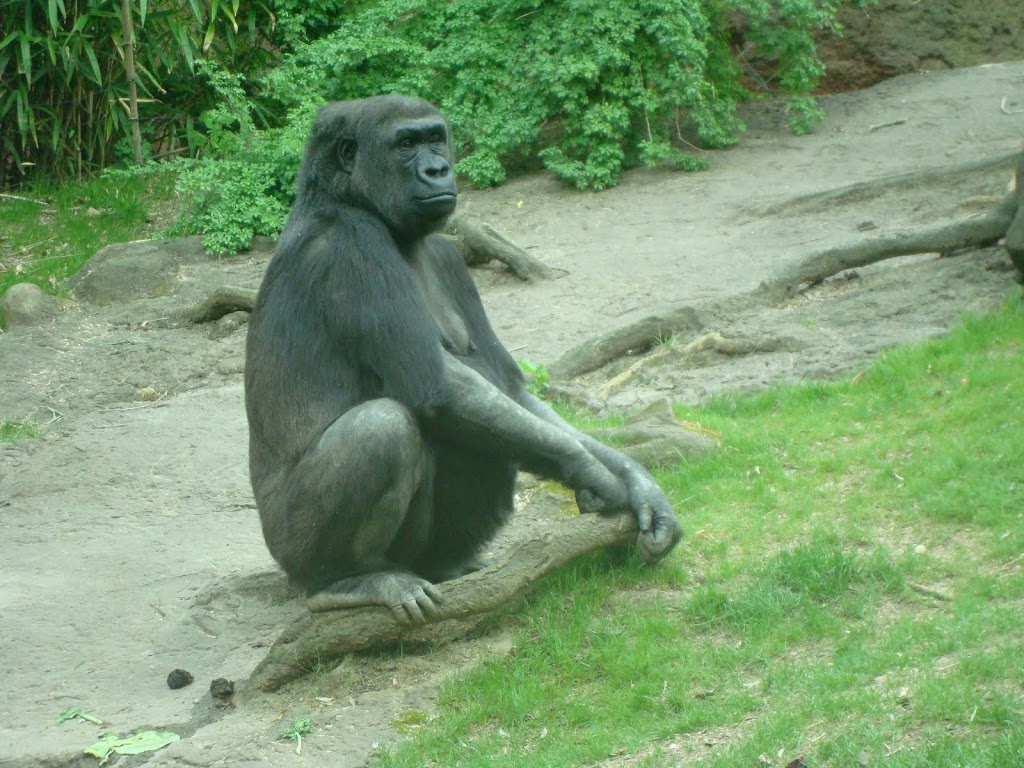
A young female gorilla, one of several who look on at gawking zoo visitors in curiousity and confusuion.
From the Madagascar exhibit:
You can find a baby Asian one-horned rhinoceros named Krishnan at the Zoo Center.
And finally, the Bronx Zoo movie star Andy the orangutan in his feature debut Andy’s Animal Alphabet:
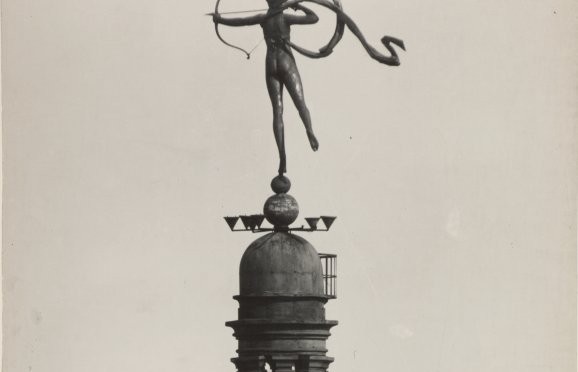
Augustus Saint-Gauden’s Diana twirling overhead on the second and arguably greatest version of Madison Square Garden
Madison Square Garden is certainly the recognizable name in arena entertaining, hosting Rangers and Knicks games, concerts, even political conventions. But it inherited that reputation from three other buildings which also called themselves ‘Madison Square Garden’.
The first, inspired by P.T Barnum and a popular bandleader, staked its claim in the hottest area of New York in the 1870s. The second, a classic designed by the city’s most famous architect, featured both trendy new sports and high society events. The third Garden, moving up town, stripped off the glamour and helped make the Garden’s sporting reputation.
We’ll also tell you about the most famous event to ever happen in any Madison Square Garden — a shocking and brutal murder which led to the ‘trial of the century.
Pre-Garden: It was all Barnum, with his spectacular tented Roman Hippodrome.
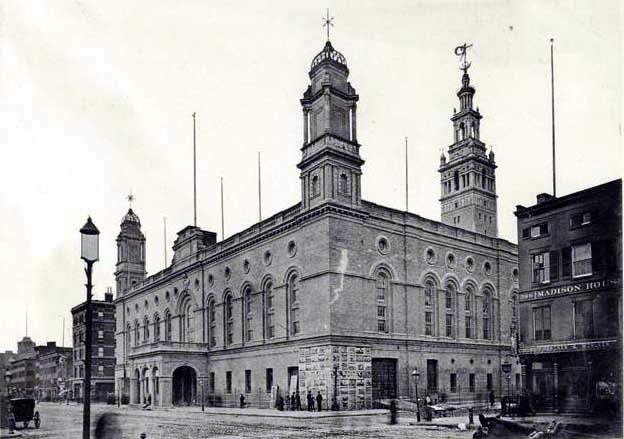
Madison Square Garden I, built for William Kissam Vanderbilt, grandson of Cornelius Vandebilt. Click for larger view. Photo courtesy NYPL
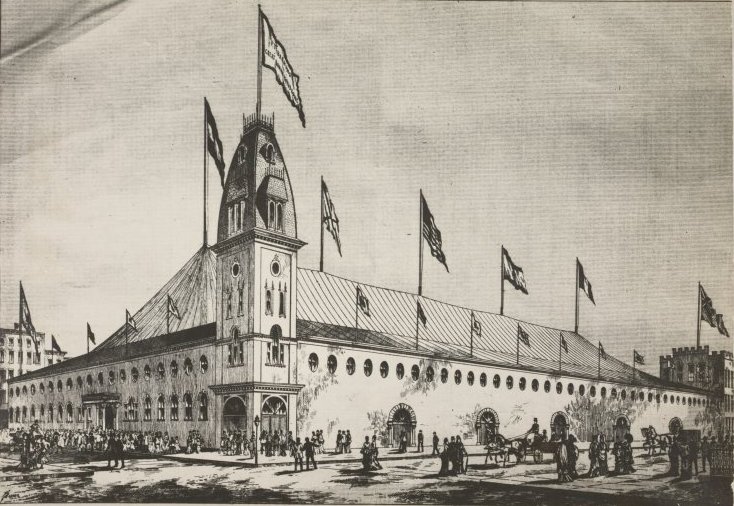
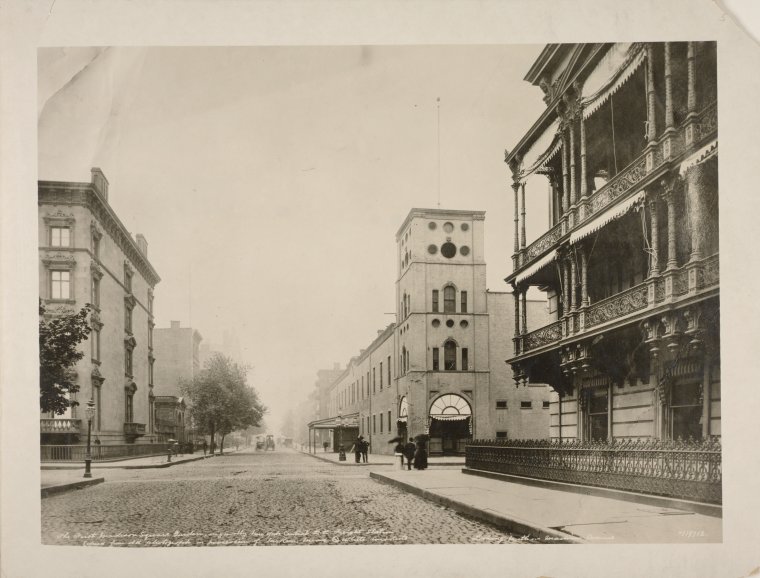
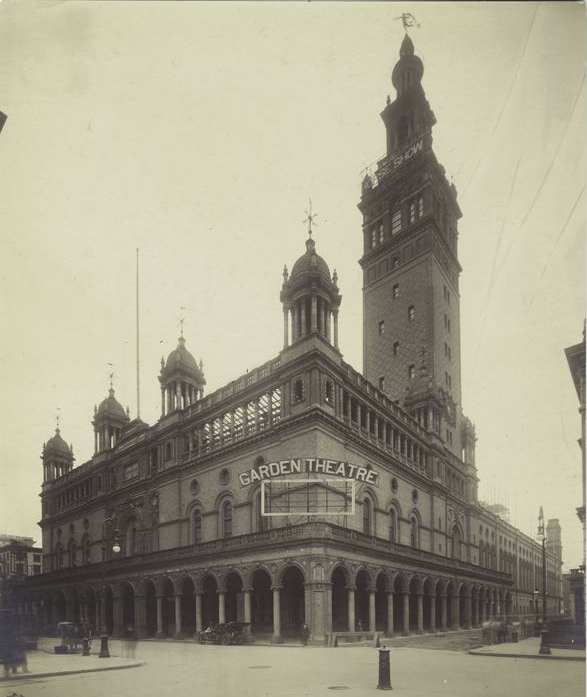
Madison Square Garden II, designed by Stanford White, studded with towers, weathervanes, grand arches and other Moorish touches. (Courtesy NYC Architecture, also a good place to find more information about the building’s design)
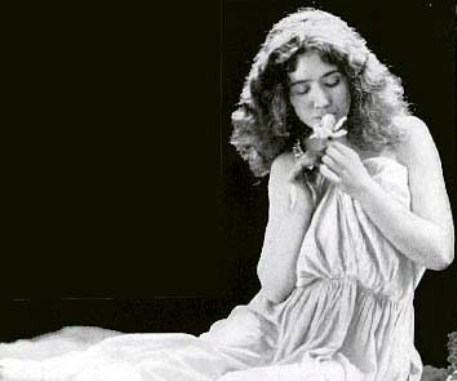
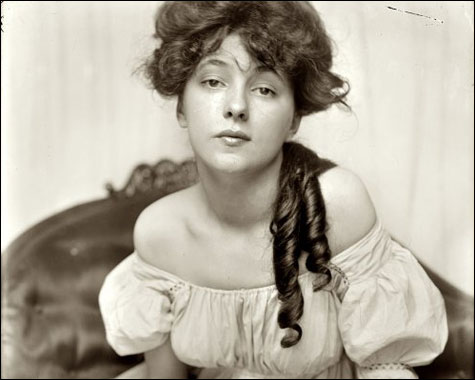
The two beauties of Madison Square Garden. The first, Julia Baird, was the model for Diana. Her nude exploits in its creation cause quite a fervor in the press. The tragic, beautiful Evelyn Nesbit, caught up between a powerful man and an insane spouse. Read here for an in-depth look at the murder and trial of Henry Thaw.
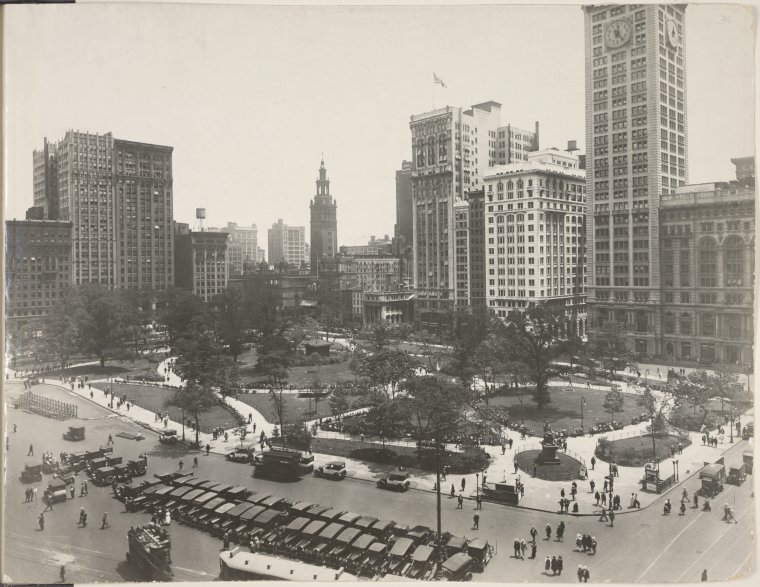
White’s Garden in context with the neighborhood in 1925, the year of its demolition. This one will require you to click into the picture for greater detail to see the full effect. (courtesy NYPL)
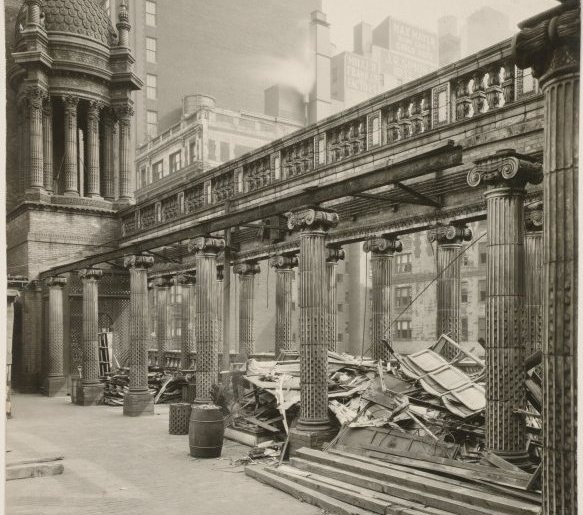
Madison II being demolished in 1925. (See full image here)
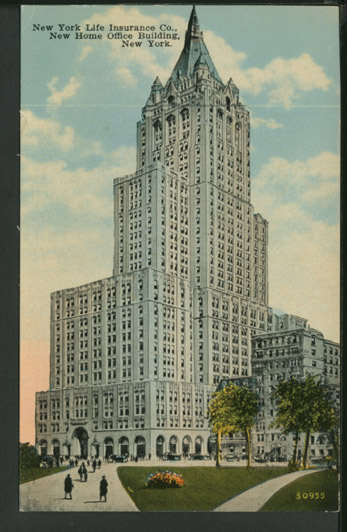
Unlike so many architectural calamities, at least it was replaced with something of equal beauty — namely the golden Cass Gilbert gem New York Life Insurance Building, looking here as though it were situated in California.
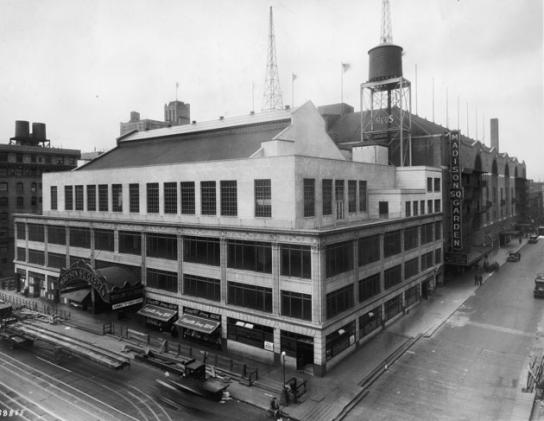
Madison Square Garden III. Why be fancy? Tex Rickard, moving the venue uptown to 50th Street, was more concerned with the entertainment inside than the flash and fancy outside. His glitz came from the lighted marquee and the big names blazing across it.
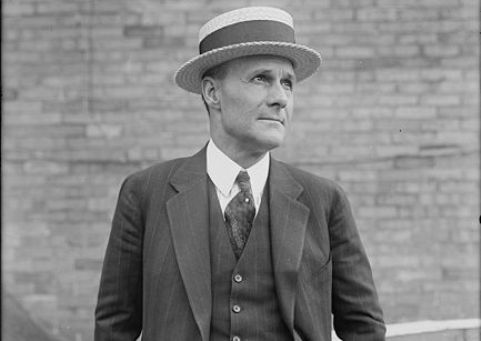
Promoter Tex Rickard, who helped form the New York Rangers and changed the sport of boxing forever with dozens of sell-out matches at his Garden.
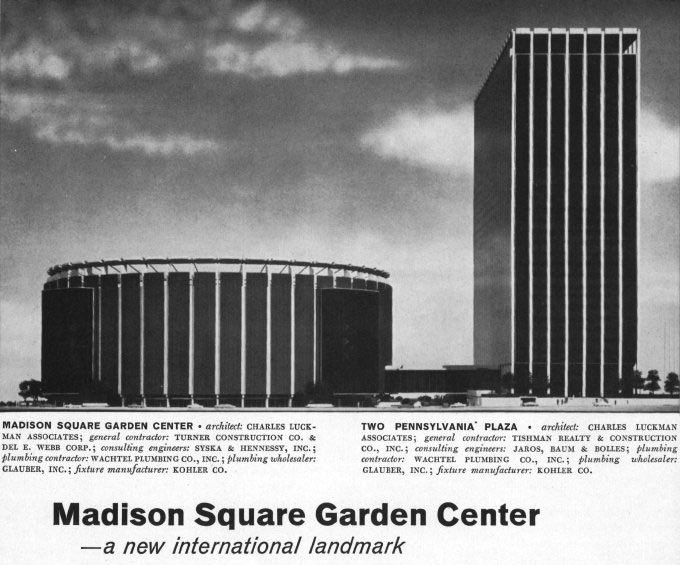
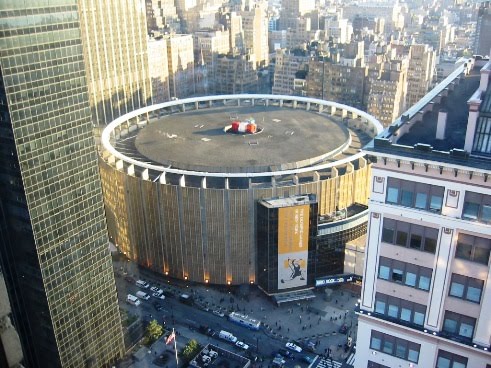
Madison Square Garden IV, designed by Charles Luckman Associates. This may surprise no one, but their other claims to fame include designing both Kennedy Space Center in Florida and Johnson Space Center in Texas. The firm also designed Los Angeles’s convention center which was partially demolished over a decade ago to make room for the Staples Center. (Pic from New Penn Station) Although I can’t say it’s aging well, the current MSG will have officially outlasted all others in a couple years. Photo courtesy here
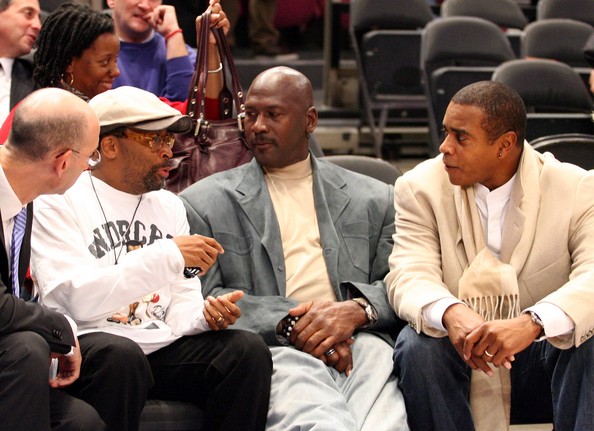
However, with the exception of Fashion Week, there may not be a fancier, more celebrity-laden row of seats than courtside during a Knicks game (below, Spike Lee, Michael Jordan and Ahmad Rashad, 2008).
Finally, some great events hosted by Madison Square Garden. First of all, some pro-wrestling from January 30, 1920 at MSG II. Very rough footage, but extraordinary to watch if you have the patience.
Marilyn Monroe sings to JFK on his birthday (and just a few months before her death) at MSG III.
Elvis Presley in 1972, during one of his last performances here, at MSG IV
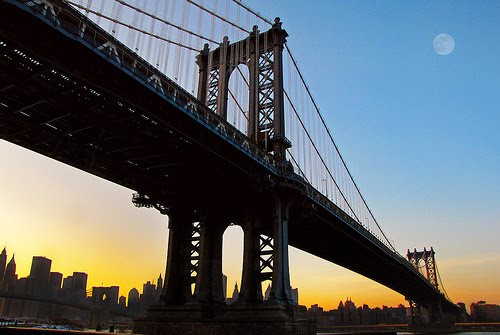
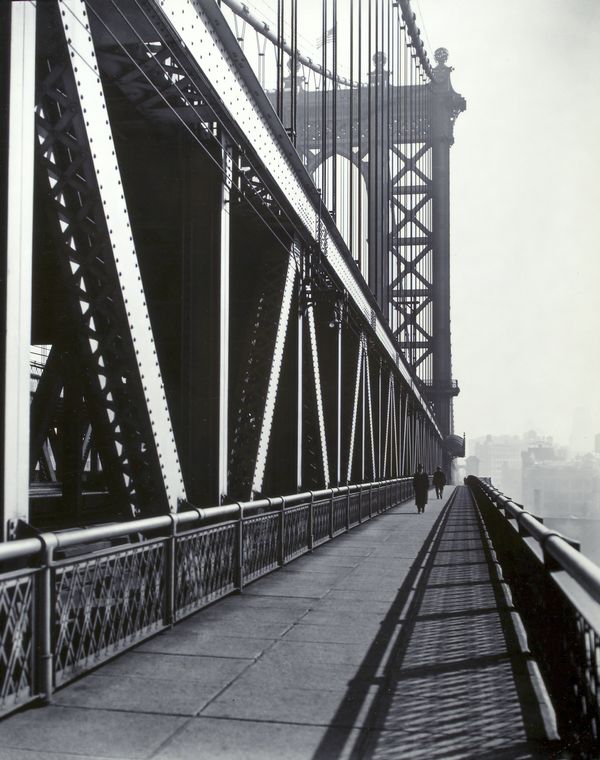
We love the Manhattan Bridge, but there’s no doubt it’s had a rocky history. For one hundred years, it’s withstood more than just comparisons to its far more iconic neighbor, the Brooklyn Bridge.
Built to relieve pressure on the East River’s best known bridge, the Manhattan Bridge went through two different engineers — and a couple different ambitious designs — before finally being completed by another architect, who then went on in 1940 to design one of the WORST bridges in America. And serious design flaw afflicts the bridge to this day?
Listen in and find something to appreciate in this seriously under appreciated marvel of the East River:
— I mention many bridge engineers in this podcast — Leffert Lefferts Buck, Gustav Lindenthal and Leon Moisseiff — but due to time constraints on the show this week, the contributions of Henry Hornbostel were left out. Hornbostel was instrumental in the work with Buck on the Williamsburg Bridge and with Lindenthal on the Queensboro. When we do podcasts on those bridges, he will get his fair due. —
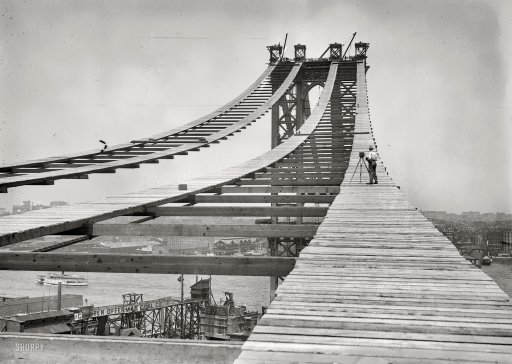
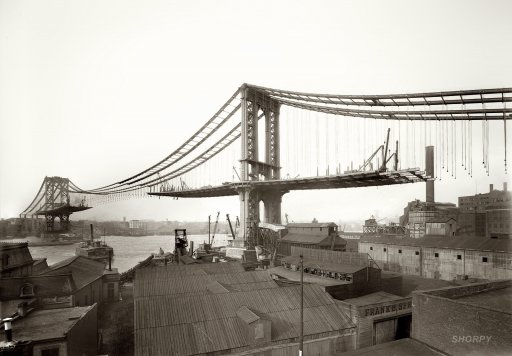
Preliminary work on the Manhattan Bridge began in 1901 under Buck, with Lindenthal taking reign of the project a year later. When Moisseiff was brought in to rework the bridge in 1904, construction kicked into high gear. Lindenthal’s innovative suggestion to use eyebars was discarded for a more conventional wire structure. [Pics courtesy Life Google images]
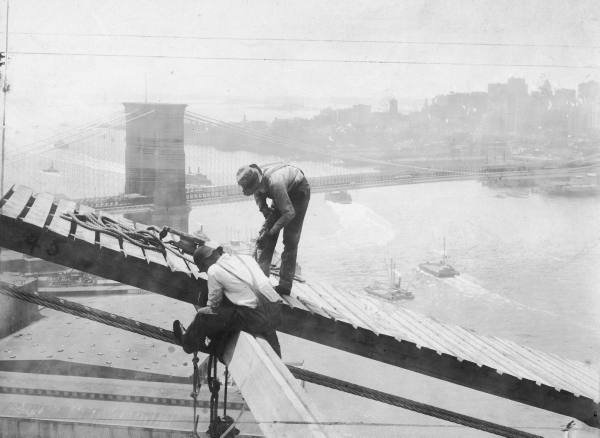
Stringing the cable across the East River took only four months in 1908. Indeed, the traffic snarls on the Brooklyn Bridge demanded them to work quickly. It was also mayor George McClellan’s intention to finish the bridge before he left office. [Photo by GG Bain and cleaned up by Shorpy, see a nifty close-up image here]
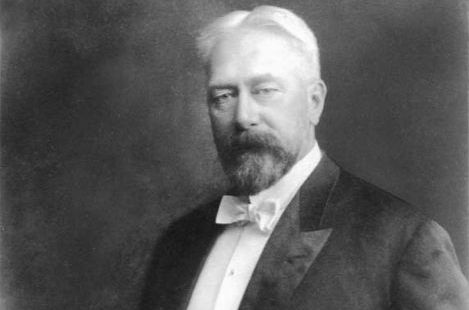
Gustav Lindenthal, born in Brno (now in the Czech Republic), came to the United States, built many bridges, and dreamt up many more that were never completed, like the North River Bridge, which would have spanned the Hudson River, and a monumental Manhattan Bridge designed with 14 lanes of traffic.
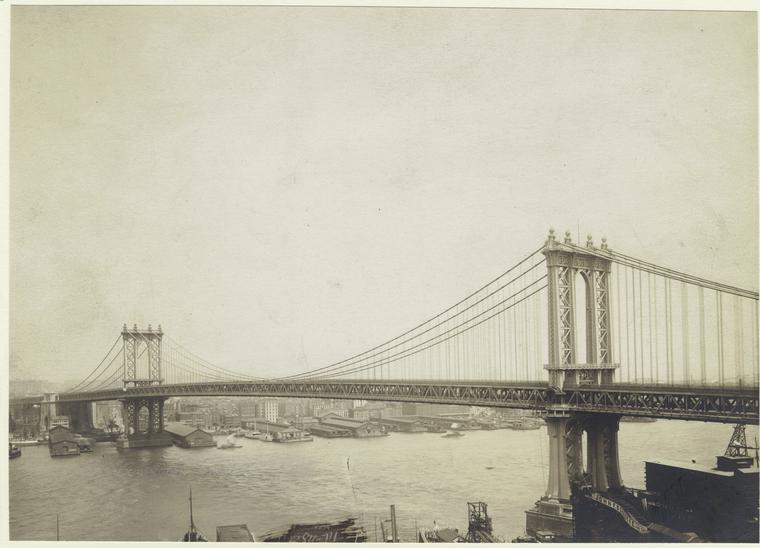
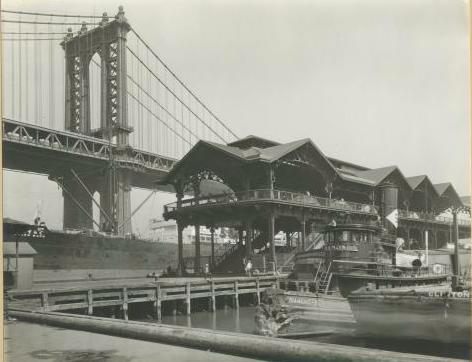
The bridge opened on December 31, 1909, although the pedestrian walkways were not completed and no trains were ready to go over it at that time. Setting it apart from its sister bridges was the flat, blue two-dimensional towers. As you can infer from this photo, facing both sides of the bridge were rows of docks and industrial ports. [Pic courtesy NYPL]
Berenice Abbott has some spectacular views of the Manhattan Bridge, taken in the 1930s. For crisp, dreamlike pictures of Manhattan, you can’t do better than Abbott. [courtesy NYPL]
Speaking of Berniece Abbott, Gothamist has some great shots taken by her of the area below the Manhattan Bridge on the Brooklyn side — today it’s DUMBO, known then as the strangely desolate Irishtown. [Flashback: Brooklyn 1936]
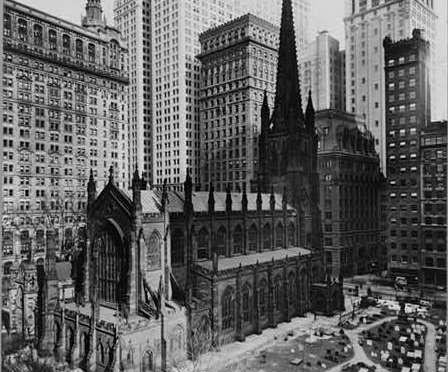
Above: The seemingly unchanged Trinity in 1916, already dwarfed by skyscrapers
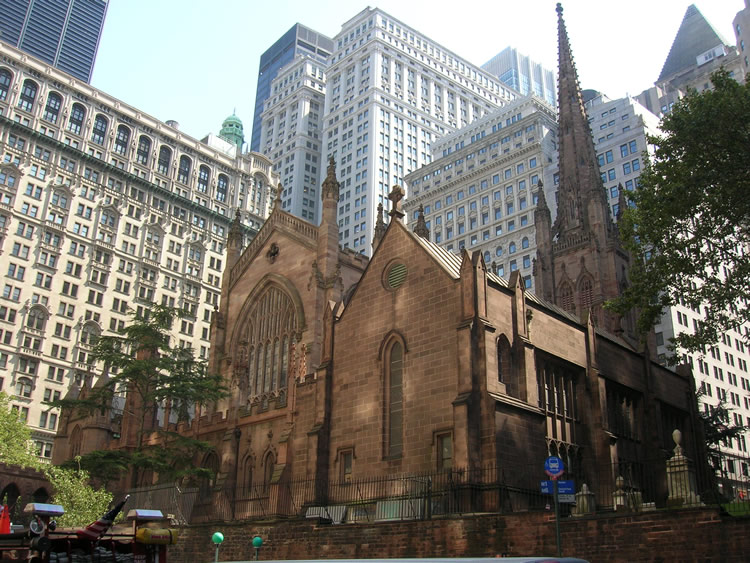
PODCASTTrinity Church, with its distinctive spire staring down upon the west end of Wall Street, is more than just a house of worship. Over three different church buildings have sat at this site, and the current one by architect Richard Upjohn is one of America’s finest examples of Gothic Revival architecture.
The church collected Manhattan’s upper crust for decades and functions as one of the city’s most powerful landowners. Listen to our short history on the New York institution and find out who’s buried in their famous churchyards — Founding Fathers, inventors and a whole lotta Astors.
___________________________________ Clarification: In discussing the religious make-up of late 17th century New York, we failed to clarify that there were many Anglicans that already lived in the city but were not associated with the Church of England. These “English dissenters” belief systems were similar to the Anglicans but they disagreed with state meddling into religious affairs. ___________________________________
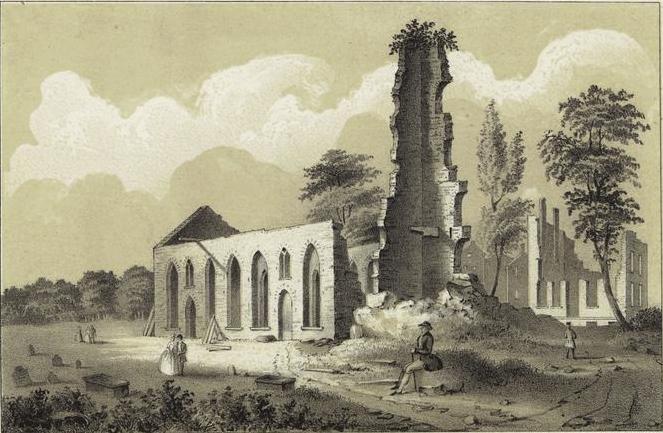
Fire Walk With Me: Below is a 19th century illustration of the ruins of the first Trinity Church, gutted in the fire of 1776 which subsequently destroyed one quarter of the entire city. The remains sat for many years undisturbed, and a second church would only be rebuilt after the British were expelled from New York. [NYPL]
___________________________________
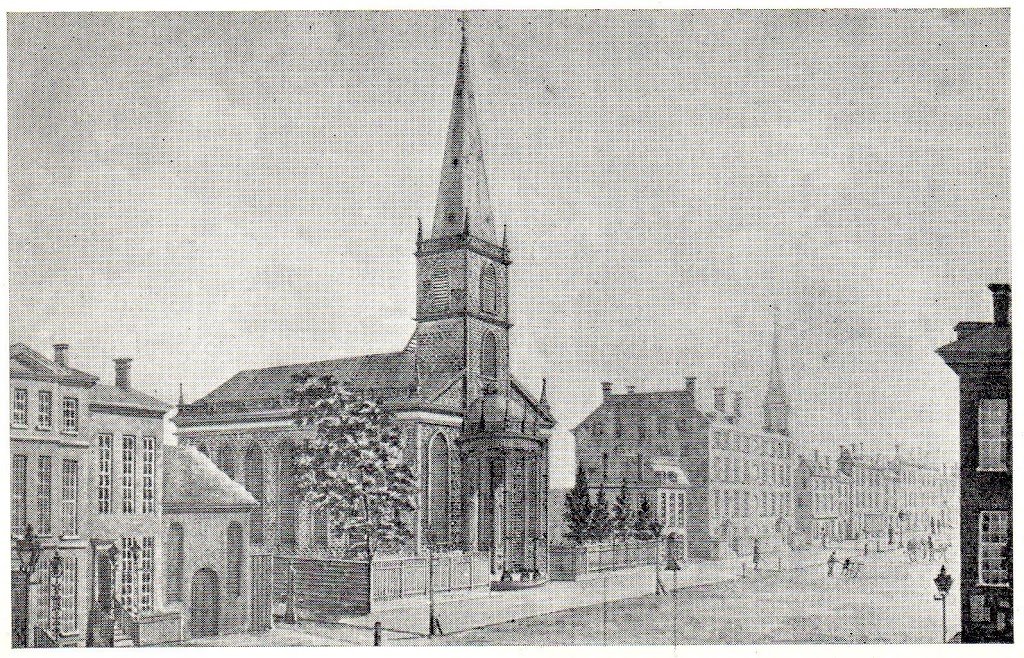
Snowed In: The second Trinity church, built on the same spot as the first, sat for over four decades until weight from massive snows during the winter of 1836 weakened the roof to such an extent that the entire structure had to be demolished. [NYPL]
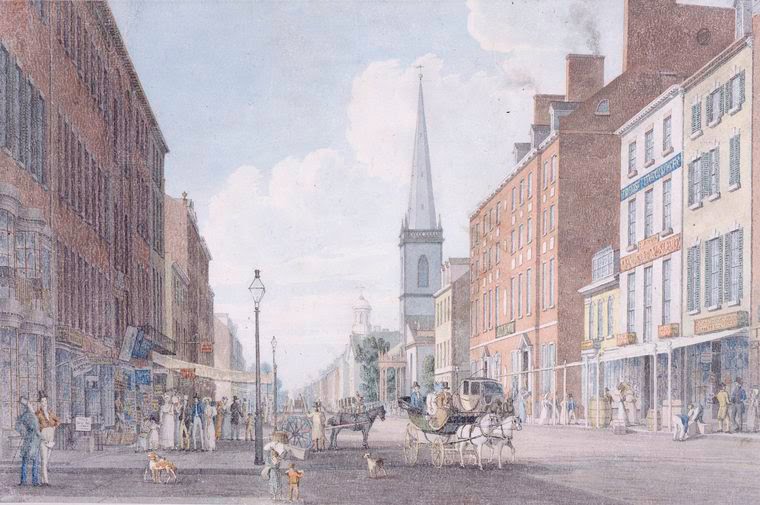
Another view of the second one (dated 1830), looking down Broadway. Trinity’s distinctive spire was already considered the city’s most recognizable landmark.
___________________________________
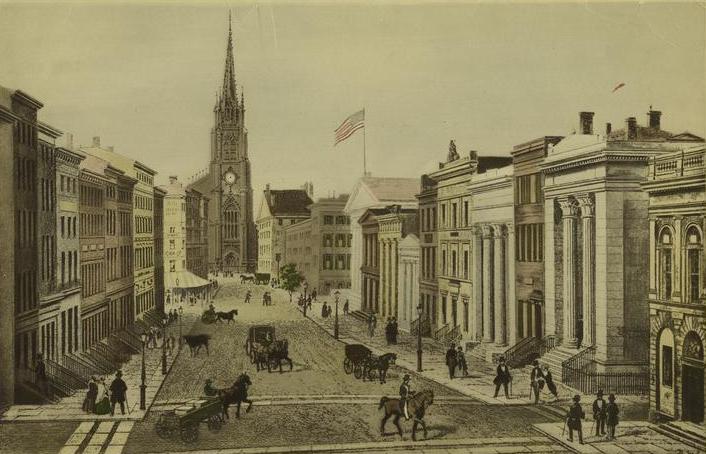
Third Times A Charm: Richard Upjohn’s Gothic Revival masterpiece was the tallest building in New York from the time it opened in 1847 (the date of this lithograph) until 1890, when it was finally usurped by the New York World building. [NYPL]
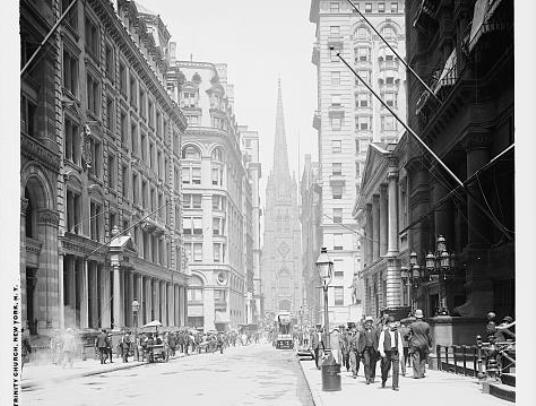
The same view, from 1903, as the city morphs rapidly around Trinity.
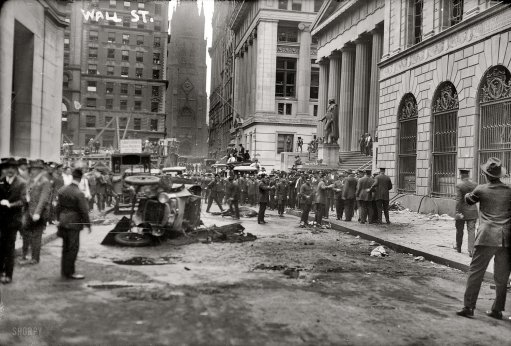
Witness to the September 16, 1920, terrorist bombing in front of JP Morgan’s….
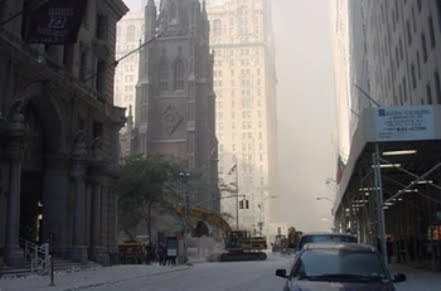
…and the World Trade Center attack on September 11, 2001. [courtesy Sacred Destinations] ___________________________________
Looking good from all sides. [Courtesy Sound Mind]
___________________________________
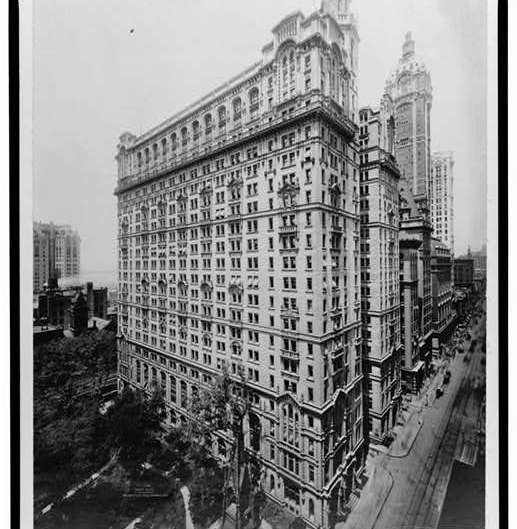
Below is the Trinity Building from 1911. This is the replacement of a building that once stood here that is commonly considered New York’s very first office building. That five-story building, also designed by Upjohn, stood here for about fifty years and was demolished in 1904 to make way for the Beaux-Arts beauty standing there today.
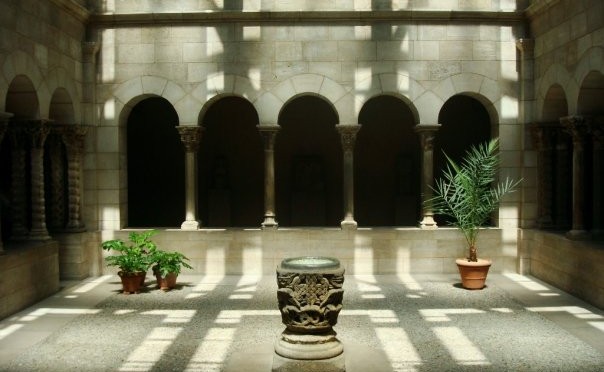
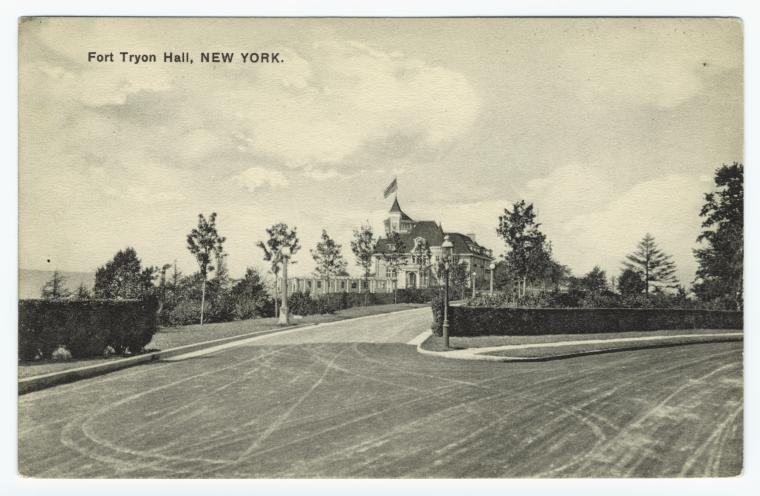
PODCASTThe Cloisters, home of the Metropolitan Museum’s repository for medieval treasures, was a labor of love for many lovers of great European art. In this podcast, I highlight three of the most important men in its history — a passionate sculptor, a generous multimillionaire and a jet-setting curator. Equally as fascinating is the upper Manhattan park that houses the museum, Fort Tryon Park, a site of a Revolutionary War fort of the same name and the exploits of the war’s most heroic women.
Download this show it for FREE on iTunes or other podcasting services. Or listen to the show here:
___________________________________
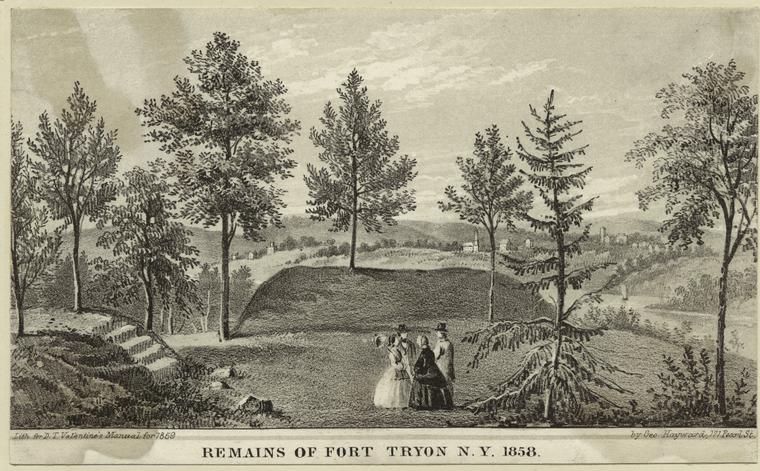
Fort Tryon circa 1858, after the war, before the millionaire mansions. (Courtesy NYPL)