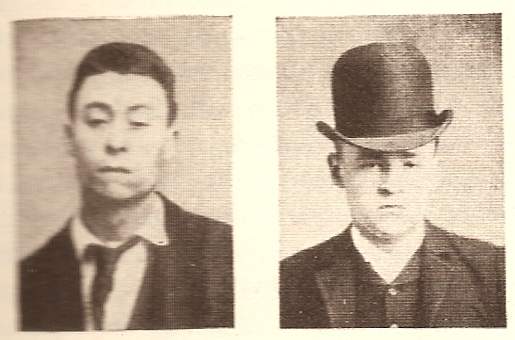
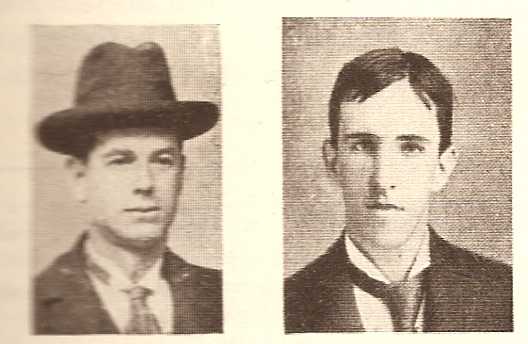
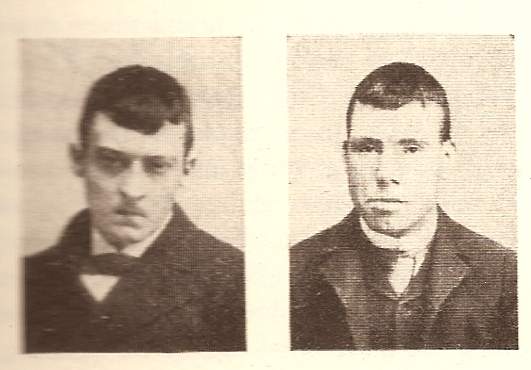
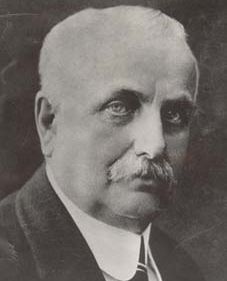
Faces of the Whyo Gang: Googy Corcoran, Clops Connolly, Big Josh Hines and Baboon Connolly
PODCAST: The Whyos (pronounced Why-Ohs)Â were New York’s most notorious gang after the Civil War, organizing their criminal activities and terrorizing law abiding citizens of the Gilded Age. Find out when they lived, how they broke the law and who they were — from Googie Corcoran to Dandy Johnny, as well as two particularly notable guys named Danny.
ALSO: How much does it cost to have somebody’s ear bitten off?
What is Freedomland U.S.A.? An unusual theme park in the Bronx, only in existence for less than five years, Freedomland has become the object of fascination for New York nostalgia lovers everywhere.
Created by an outcast of Walt Disney’s inner circle, Freedomland practically defines 60s kitsch, with dozens of rides and amusements related to saccharine views of American history. Along the way, we’ll take a visit to the Blast-Off Bunker, Casa Loca, and, yes, Borden’s Barn Boudoir!
NOTE: There’s nothing wrong with your speakers! I include a short clip in this podcast of an original Freedomland radio advertisement from 1960. The sound quality of the clip is extremely bad, however I thought it was important to include as it sets the tone for what Freedomland was all about (or, rather, wanted to be about).
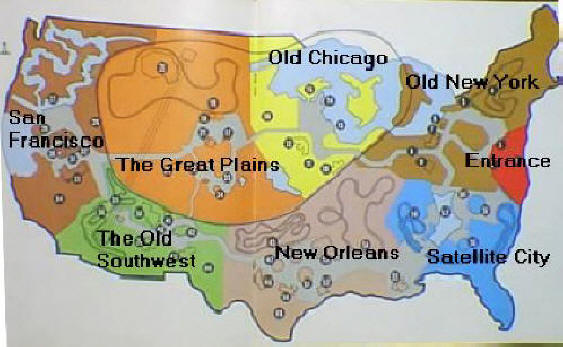
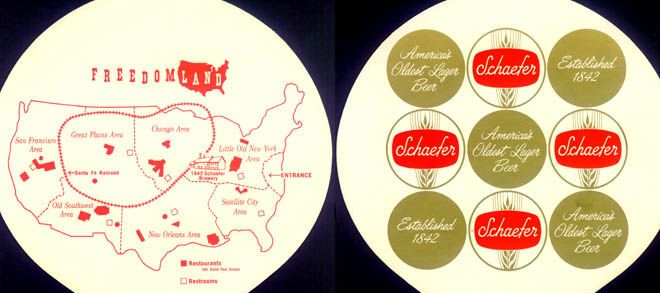
The map through Freedomland mimicked the outline of the United States. (Well, sorta.) Visitors entered through Washington D.C. and meandered through candy-coated interpretations of various national regions, ending up in the future (located in the American South).
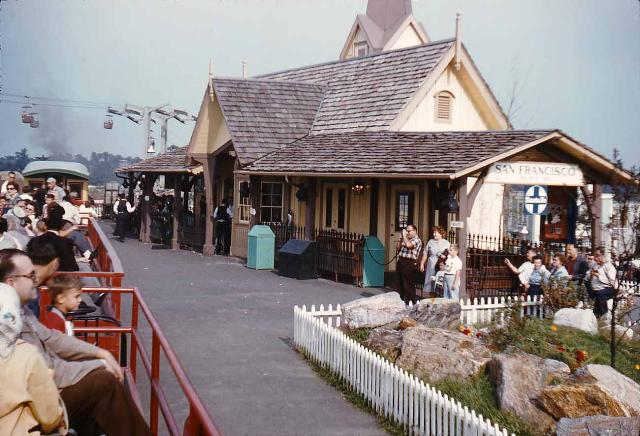
San Francisco in the Bronx, a Disney-like village served by the Santa Fe Railroad (pic courtesy Stuff From The Park)
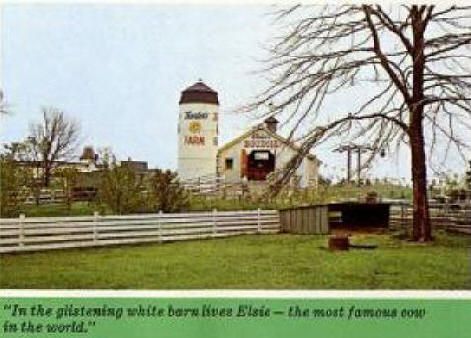
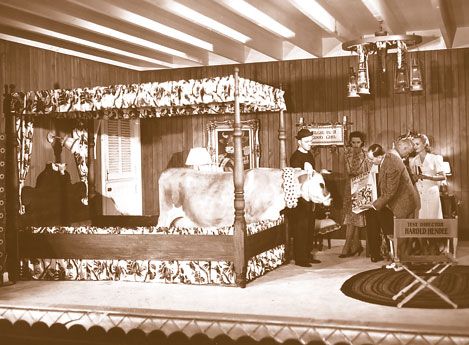
A rather blurry image — perhaps that’s best — of Borden’s Barn Boudoir, featuring the private rooms of one Elsie the Cow (Pic courtesty Benros, who has a great page on Freedomland.)
The picture below is NOT from Freedomland, but it gives you an idea of what Elsie’s bedroom might have looked like. Apparently, Bordens loved nothing more than putting their bovine mascot in this type of setting; she also had a bedroom at the World’s Fair of 1964-65 in Flushing Meadows, most likely transported from the failing Freedomland attraction.
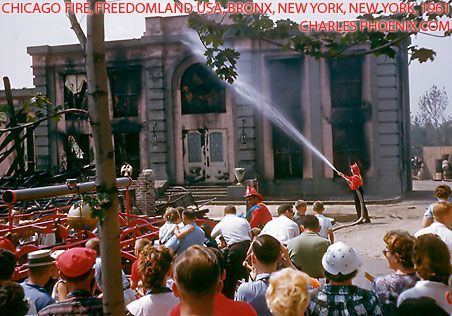
Why people are so entertained by this, I’ll never understand. But if fire was your game, Freedomland let you enjoy the re-burning of Chicago every day. And sometimes, the firemen actors would grab volunteers to help put out the blaze! (Pic courtesy God Bless Americana)
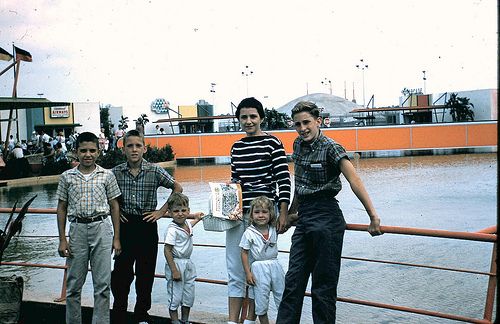
Freedomland was perpetually in debt and often a great inconvenience with long lines and unfinished rides. This family, visiting in July 1960, doesn’t seem to mind. (Flickr)
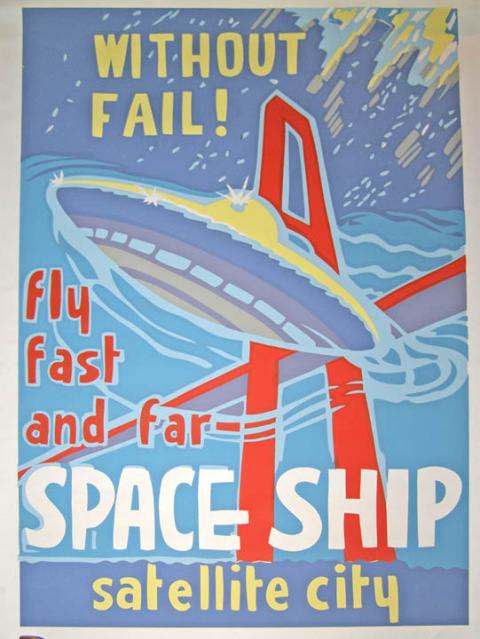
A promotional poster for Freedomland’s futuristic Satellite City, which wasn’t opened for a few days after the park’s opening, by which time crowds had died off considerably. (Pic courtesy Perky Pickle, who has other great poster images from the park’s heyday.)
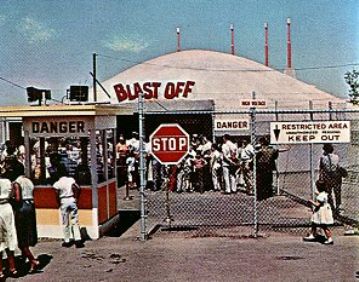
This frightening little attraction was the Blast-Off Bunker, because there’s nothing more fun than hanging out in a dark bunker on a nice summer’s day. In fact, inside you could enjoy the ‘tense excitement’ of a Cape Canaveral control room.
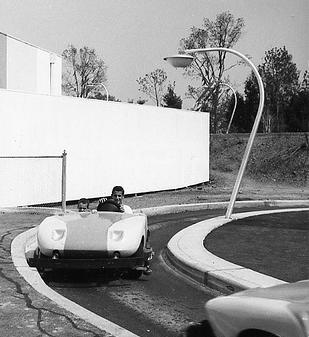
You could experience the joys of riding a ‘modern automobile’ in Freedomland’s knockoff future land. A sad way of marketing a go-cart, but at least this picture is pretty great. (Courtesy Flickr)
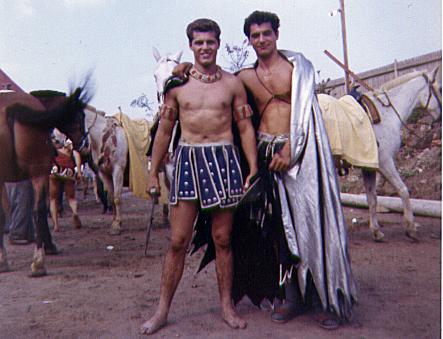
Freedomland was more than happy to abandon its themes if it meant more paying customers. Here are two stunt men from a ‘Colossus’ spectacular in 1961. (Benros)
Some detailing from a Freedomland souvenir fan, featuring a map of the park on one side, and beer advertisement on the other. This was, after all, a ‘family entertainment center.’ (Click it for a closer look.)
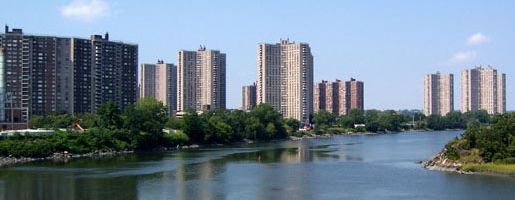
Freedomland was replaced by another oddity — the massive Co-op City, housing over 50,000 residents, and often referred to as a ‘city within a city’. Theoretically, one never need leave Co-op City.
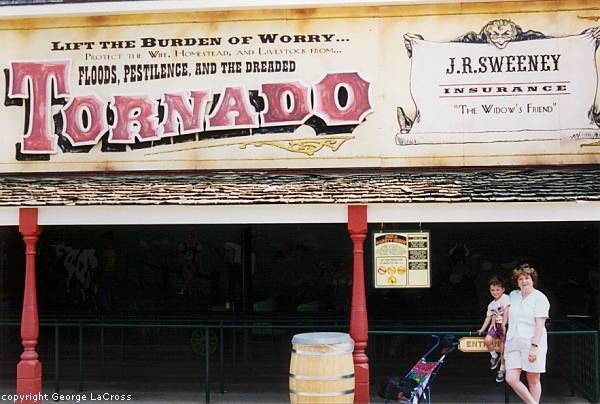
After the closing of Freedomland, some rides were rescued by other amusement parks, including the Tornado Adventure, seen here at Lake George, NY. It was eventually closed for good in 2003. If you really want to experience the delights of a tornado, you’ll have to go to the midwest! (Courtesy Laff In The Dark)
I tried to include a lot of link above to other great websites with more information on Freedomland. The most comprehensive tribute can be found on Rob Friedman’s old site on the park, with dozens of pictures, sounds and personal stories.
Any of you remember visiting this place? Leave a comment!
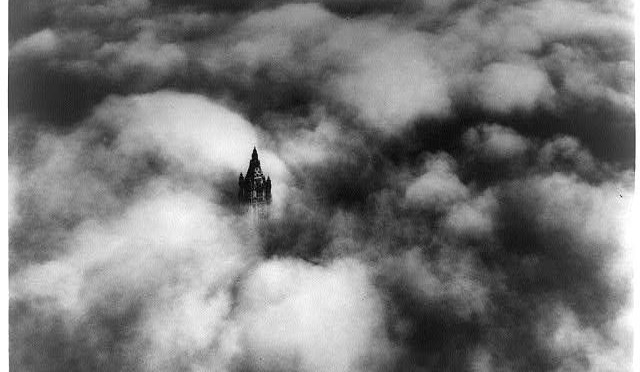
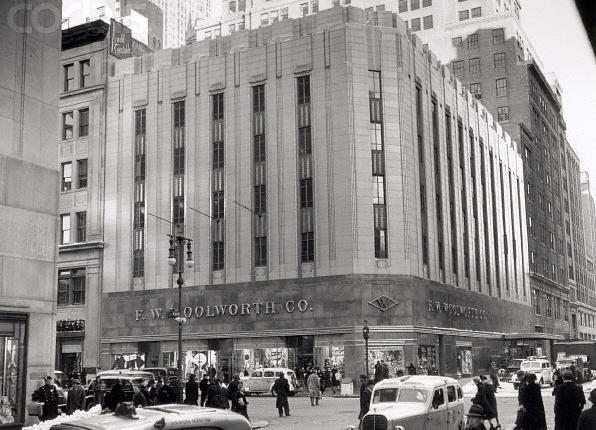
When this classic photo was taken in 1928, the Woolworth Building was still the tallest in New York
F.W. Woolworth was the self-made king of retail’s newfangled ‘five and dime’ store and his pockets were overflowing with cash. Meanwhile, in New York, the contest to build the tallest building was well underway. The two combine to create one of Manhattan’s most handsome buildings, cutting a Gothic profile designed by America’s hottest architect of the early century. So what exactly does it all have to do with sneakers and gym clothes?
Frank Winfield Woolworth was an upstate New York who worked in general stores in his youth before branching out into his own unique ‘five and dime’ retailers — places where customers could interact with the merchandise directly, without a store clerk.
Frank’s stores changed the way people shopped for everyday items. This fancy Woolworth location even had a lofty address — 5th Avenue and 39th Street (courtesy Corbis)
The tallest structure in New York for many years was the spire of the Trinity Church, on Broadway, at the foot of Wall Street. In 1890, its height was finally topped with the completion of the World Building by the influential publisher of the New York World newspaper, Joseph Pulitzer.
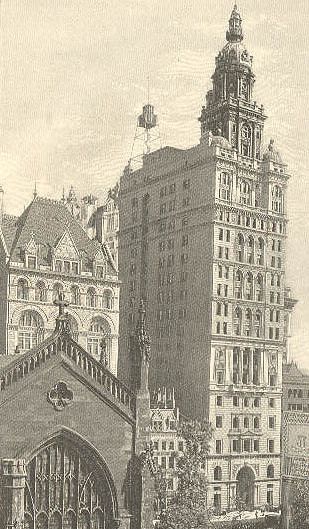
In 1894, Pulitzer lost the tallest building title with the completion of the Manhattan Life Building, a clever structure with two sides that top out with an iron bridge and a towering lantern at 348 ft. It was across the street from Trinity Church (today occupied by the domineering Bank of New York Building).
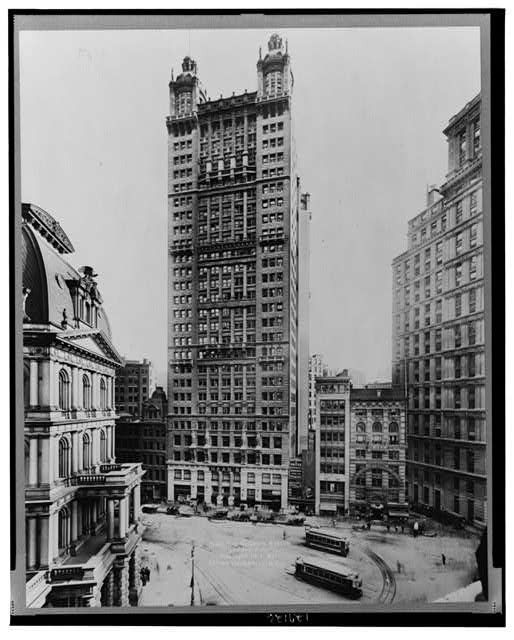
The Park Row Building came next, completed in 1899. It still stands today, with the Woolworth looking down on it. J&R Music World still occupies many of its floors today.
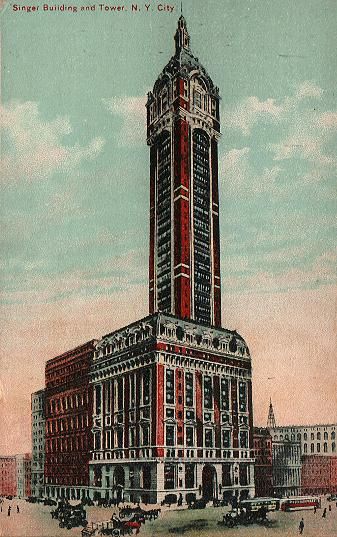
Perhaps the strangest building to become New York’s tallest was the Singer Building, built in 1908 at a then-staggering 612 feet. It has the very dubious distinction of being the tallest building in history ever to be purposefully demolished (in 1968, making way for the frustratingly bleak One Liberty Plaza).
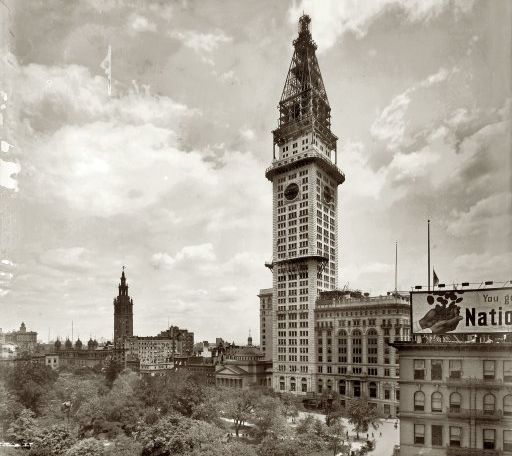
In order for Frank to build New York’s tallest structure, he need to beat the Metropolitan Life Tower, completed in 1909, still a beauty next to Madison Square Park.
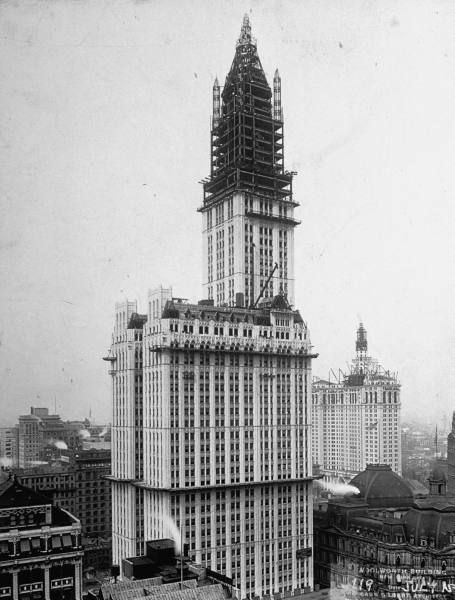
The Woolworth, nearly complete in this picture from 1913 (courtesy the Life archives)
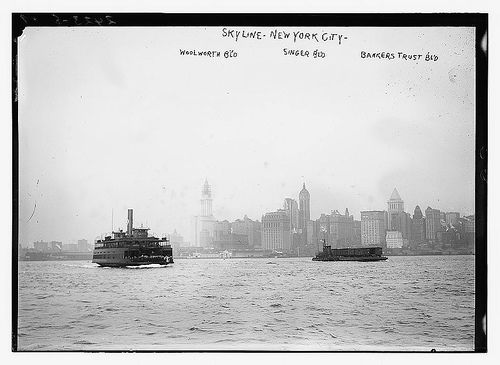
View from the Hudson, mid 1910s: three tallest buildings are the Woolworth Building, the Singer Building and the Bankers Trust Building (built in 1912) Pic courtesy Library of Congress
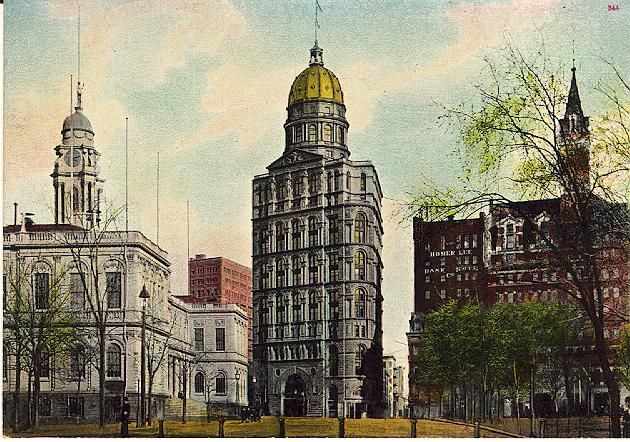
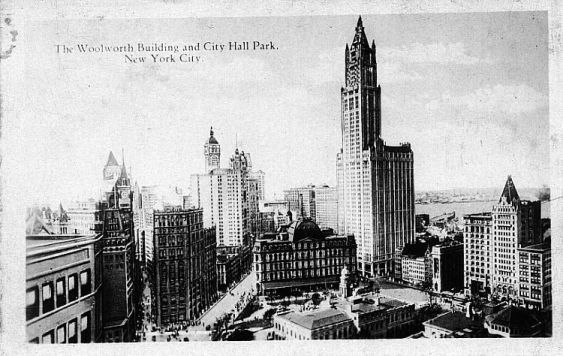
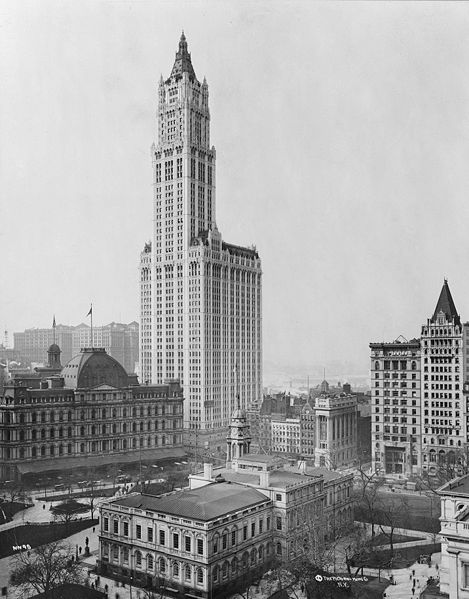
From this old postcard and photograph below, you can see the Woolworth’s proximity to City Hall and the old Post Office (later demolished to expand City Hall Park)
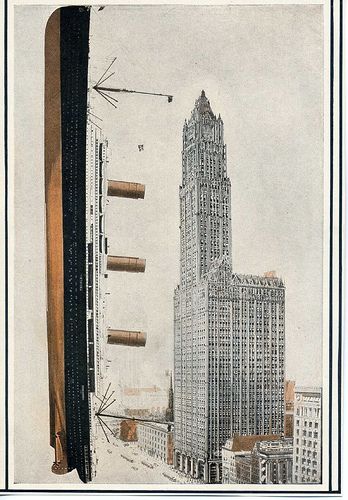
It’s height was enough of a marvel that this rather odd comparison was made in the book Our Wonder World Vol. IV, Geo. L. Shuman & Co., 1914 (Courtesy Flickr)
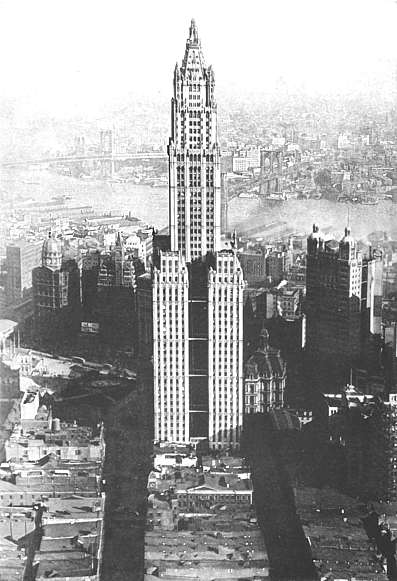
A view from the other side of the Woolworth, taken in 1920, reveals two other buildings that were once considered ‘the tallest building in New York’: the domed World Building to the left, the Park Row Building to the right.
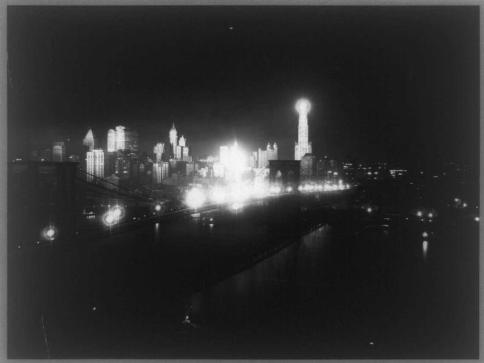
A remarkable and rather dreamlike nighttime shot of Manhattan in 1919, with the Woolworth building gleaming like a candle
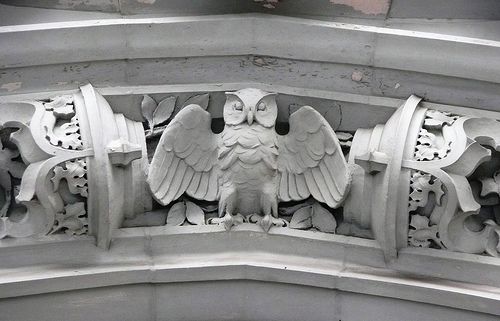
An owl ‘gargoyle’, one of many playful details Cass Gilbert incorporated into the building’s massive terra cotta face.
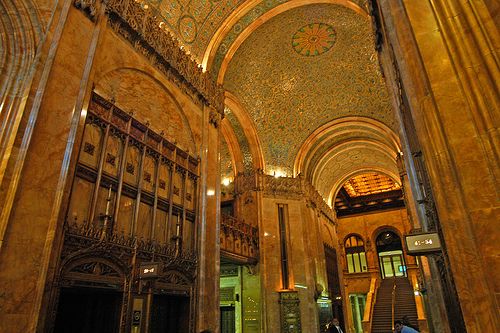
Inside the vaulted, gold-drenched lobby (courtesy Flickr)
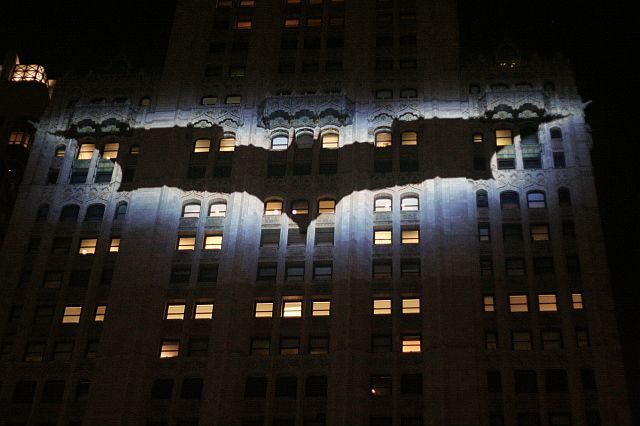
To promote the most recent Batman film The Dark Knight, the Bat Signal was projected onto the Woolworth Building.
Williamsburg used to have an H at the end of its name, not to mention dozens of major industries that once made it the tenth wealthiest place in the world. How did Williamsburgh become a haven for New York’s most well-known factories and then become Williamsburg, home to such wildly diverse communities — Hispanic, Hasidic and hipster? Find out how its history connects with whalebones, baseball, beer, and medicine for intestinal worms.
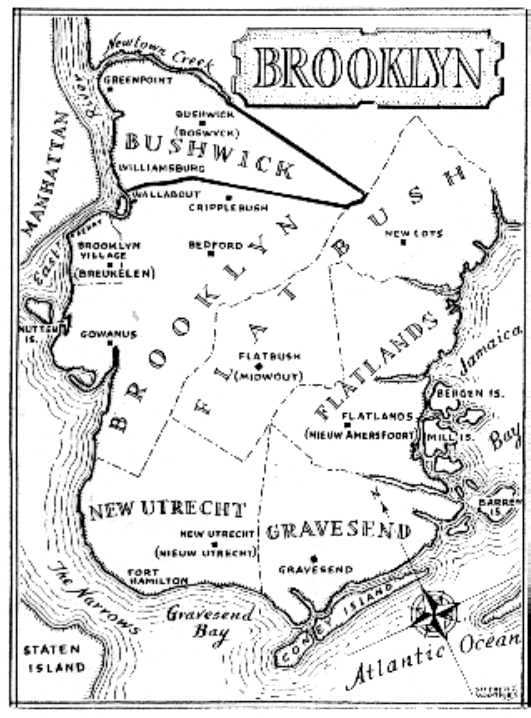
A modern map of the townships of Kings County. Cripplebush is listed here as a settlement in Brooklyn. The dense undergrowth that gave Cripplebush its name stretched well into the jurisdiction of Bushwick, which the Dutch actually called Boswijck.
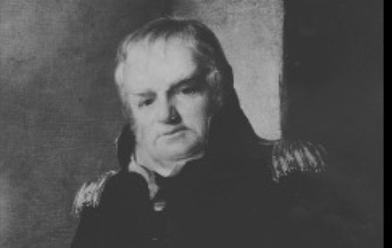
The esteemed Lt Col. Jonathan Williams, who surveyed the land along the Bushwick shore and eventually gave Williamsburg its name. You can also find his handywork at Castle Clinton and Castle Williams (also named after him).
Another father of Williamsburg, David Dunham, can still be found today on a very tiny street near the bridge called Dunham Place. (Forgotten New York has a great look at this odd little side street.)
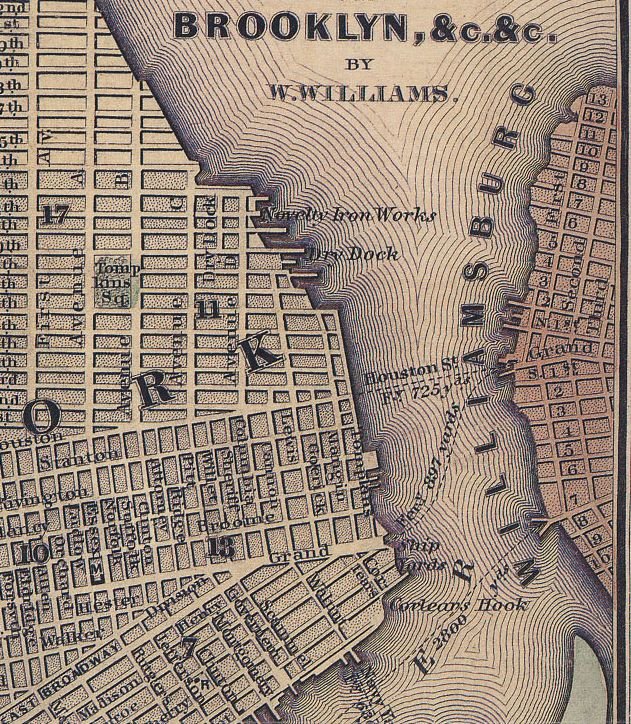
A detail from this mid-19th century map of New York and Brooklyn indicates the two ferry paths across the East River from the Grand Street dock in Williamsburg.
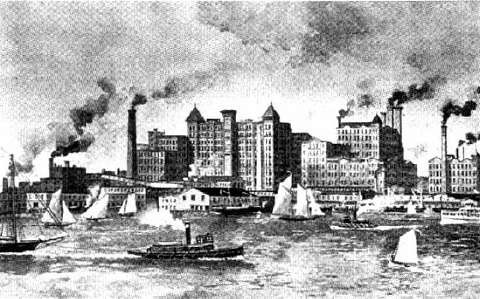
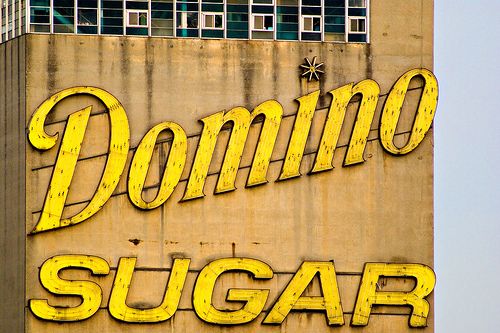
The Williamsburg waterfront during the 1880s. Havemeyer’s sugar refinery became one of the most profitable businesses along the East River. It became Domino Sugar in 1900.
While Havemeyer’s factory, closed in 2004, has been landmarked, its future could include a vast complex of condominiums — but with community opposition and a $1.3 billion dollar price tag, is it viable?
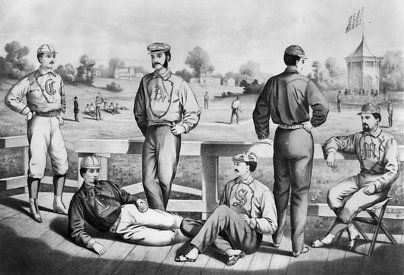
These fancy guys are relaxing after a vigorous game of baseball at the Union Grounds, the first to fence in the playing field and charge spectators. Check out our previous article on this historic place and where you can find its location today.
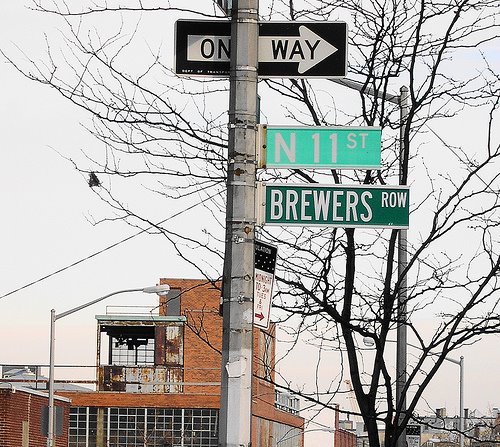
There are no more breweries along Brewer’s Row, but the once grand boulevard of beer makers that stretched from Williamsburg to Bushwick is still recognized on street signs.
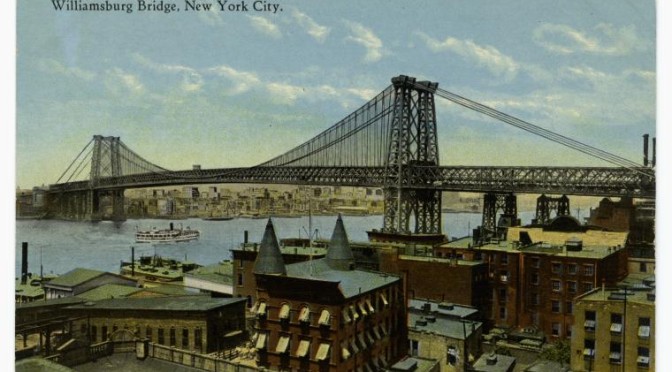
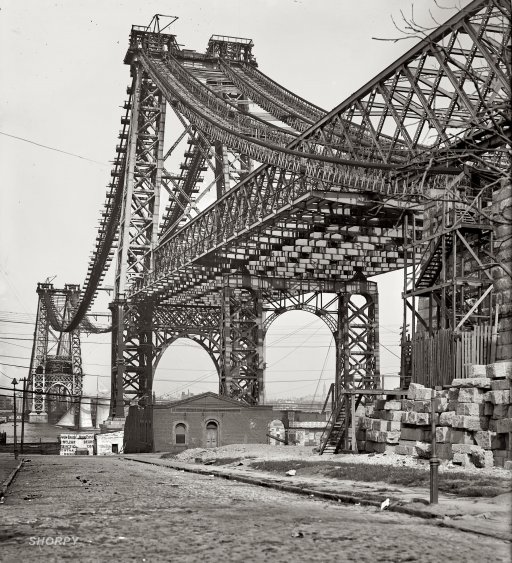
The East River Bridge (today the Williamsburg Bridge) in 1902. It would be opened a year later, opening the neighborhood to thousands of new residents fleeing overcrowded Lower East Side (pic courtesy Shorpy)
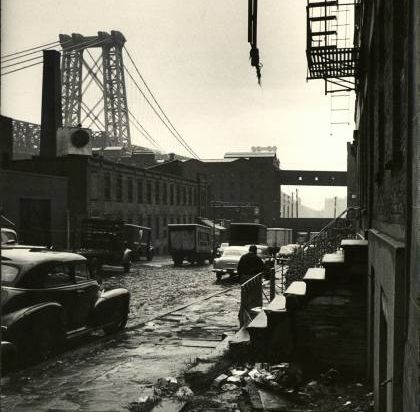
Williamsburg in 1954, not the sunniest place ever. Photo by Alfred Eisenstaedt (LIFE archives)
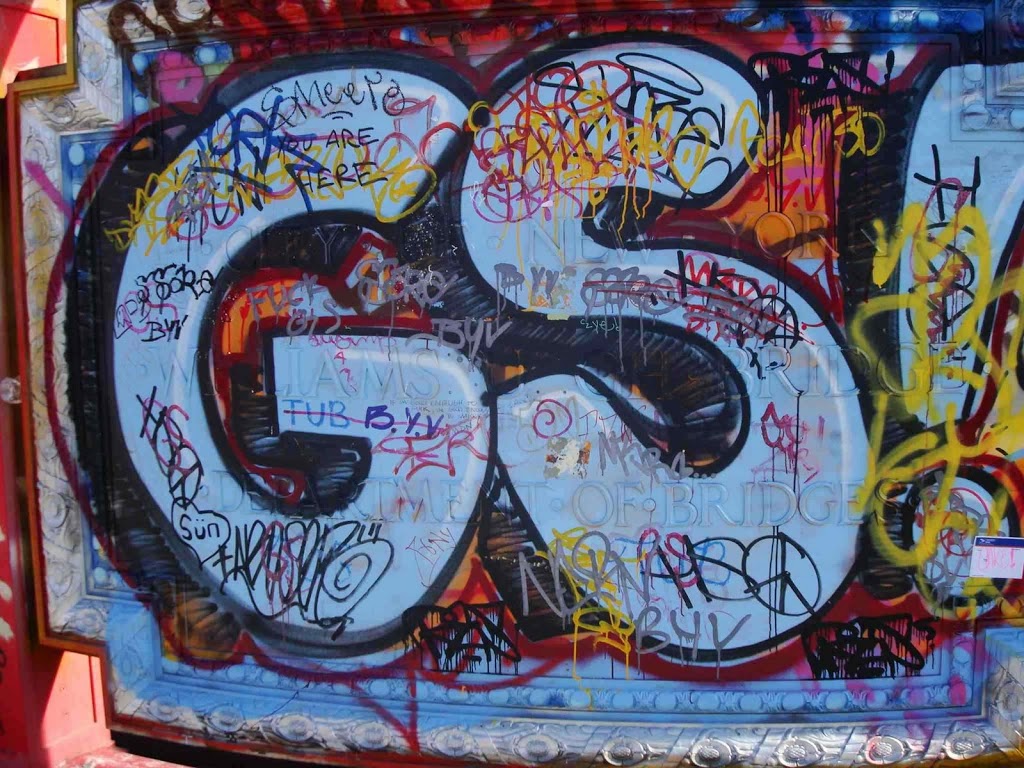
Look really closely at this dedication found at the pedestrian fork on the Williamsburg Bridge. If you scrape away the graffiti, you’ll see Williamsburg with an H on the end. (Click it to get a closer look.)
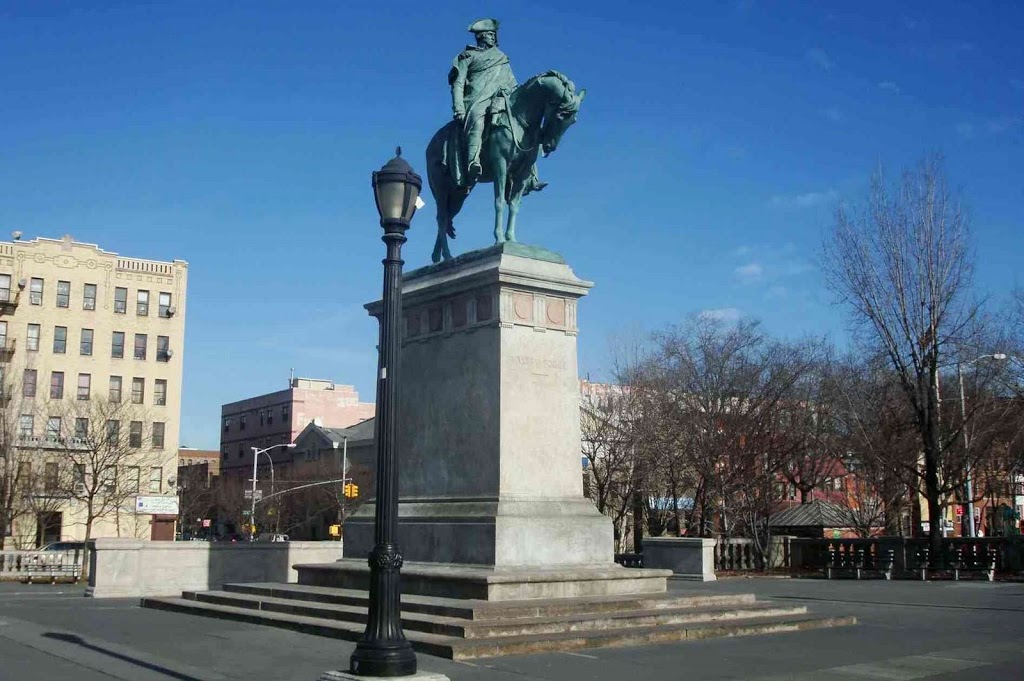
Continental Army Plaza, now overlooking the entrance and exit ramps of the Williamsburg Bridge. An engraving in the sidewalk points towards Valley Forge. The statue and the plaza were installed shortly after the opening of the bridge. So, in fact, this has pretty much always been George’s view.
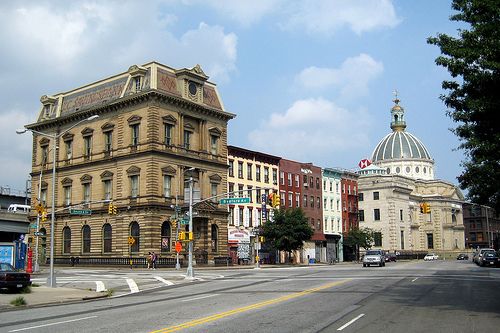
Two gorgeous examples of Williamsburg’s opulent past — the Kings County Savings Bank (built in 1868!) in the foreground, and the George Post’s domed Williamsburgh Savings Bank in the distance. (pic courtesy Flickr)
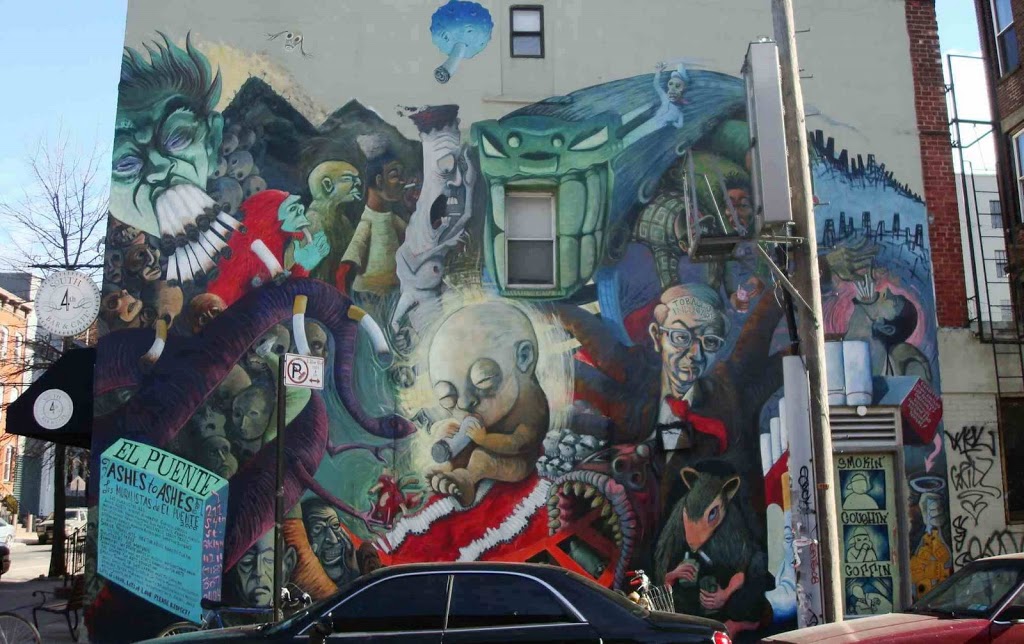
A mural just north of the bridge. Don’t smoke, kids!
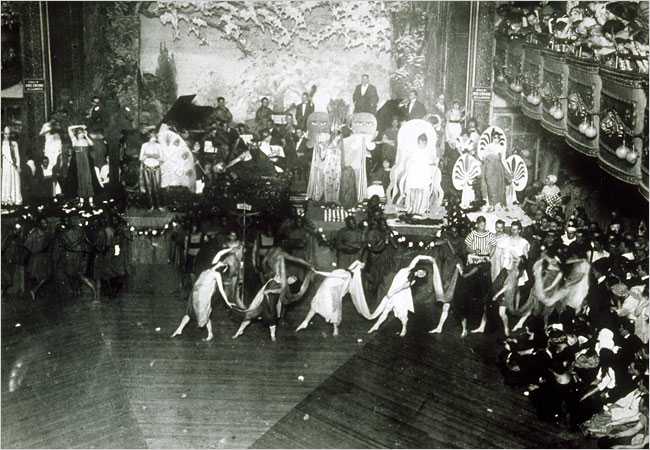
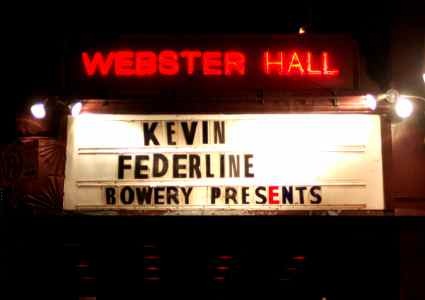
Webster Hall, as beautifully worn and rough-hewn as it was during its heyday in the 1910s and 20s, disguises a very surprising past, a significant venue in the history of the labor movement, Greenwich Village bohemia, gay and lesbian life, and pop and rock music. Its ballroom has hosted the likes of Emma Goldman, Marcel Duchamp, Elvis Presley, Robert F Kennedy and Madonna. Listen in to find out how it got its reputation as ‘the devil’s playhouse’.
Listen to it for FREE on iTunes or other podcasting services. Or click this link to listen to the show or download it directly from our satellite site.
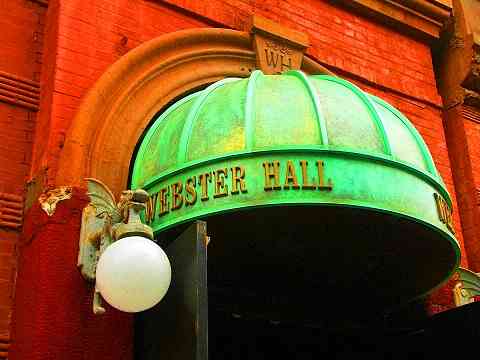
Webster Hall in its first decade of the 20th century….
…and the first decade of the 21st century
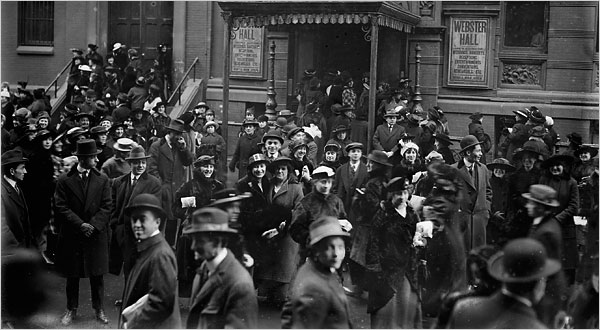
Outside the club during a labor rally in the 1910s (pic courtesy Library of Congress
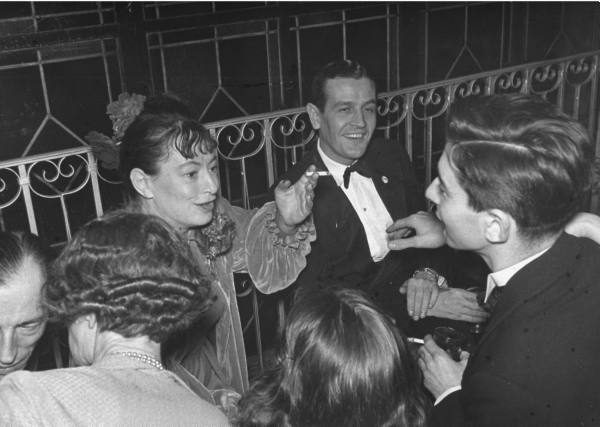
Dorothy Parker arrives at Webster Hall in 1938 with husband Alan Campbell
In its years as an RCA recording studio, Webster Hall saw most of the greats of pop, jazz, classical and Broadway making albums here.
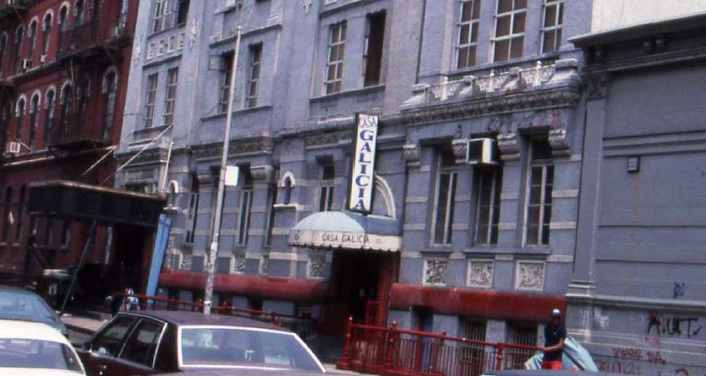
As the Casa Galicia during the 1970s
Elvis, Madonna, Lena Horne, Louis Armstrong, Frank Sinatra, James Brown, Jefferson Airplane, Run DMC, Prince, U2 — all the greats have performed at Webster Hall. And then there’s ….
You can also download it for free from iTunes and other podcasting services
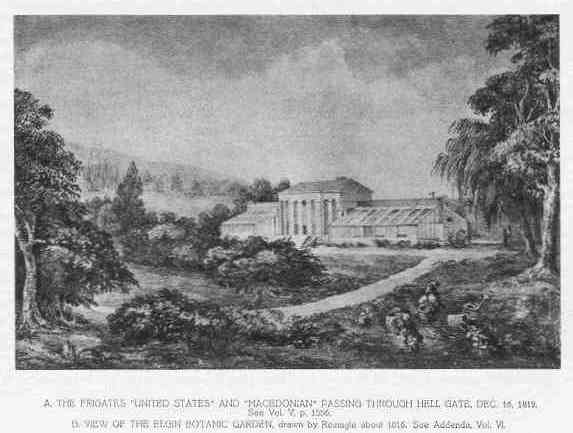
In the veritable wilderness that would become midtown Manhattan, Dr. David Hosack opens his Elgin Botanic Garden, the city’s first collection of exotic plant species that’s eventually sold to the state, who then passes the land fatefully over to Columbia University.
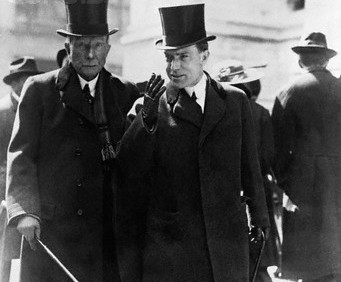
The John D.’s, Senior and Junior, the two richest men on the planet
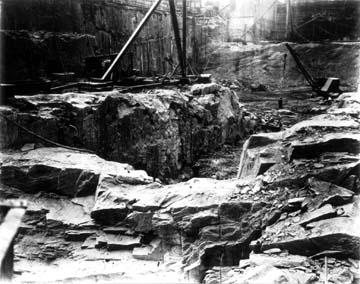
Excavation of the Rockefeller Center site, photo by Berenice Abbot taken in 1931. Materials taken from the site were used to fill in Central Park’s South Reservoir (making the Great Lawn) and helped create landfill for Brooklyn’s Shore Parkway.
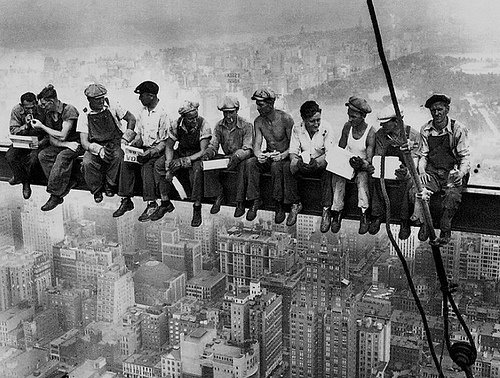
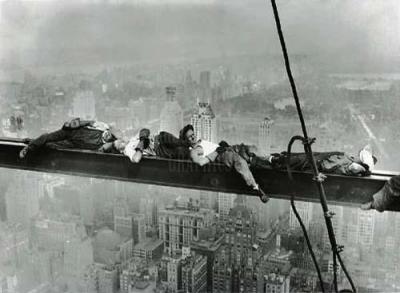
One of the most famous photographs ever taken, in 1932 by Charles Ebbets, features some nonchalant construction workers taking a break from work on the RCA Building.
I get sick just from looking at this picture.
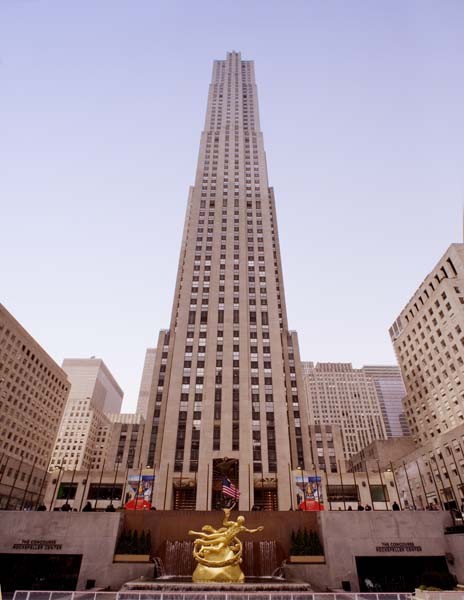
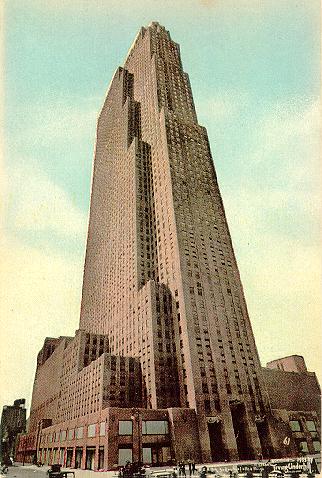
The majestic RCA Building (later the GE Building) was perfectly proportioned so that natural light would reach every square foot of office space
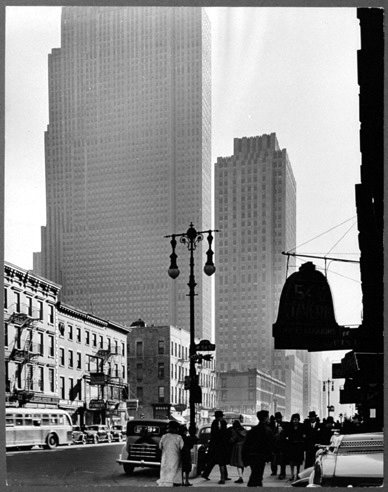
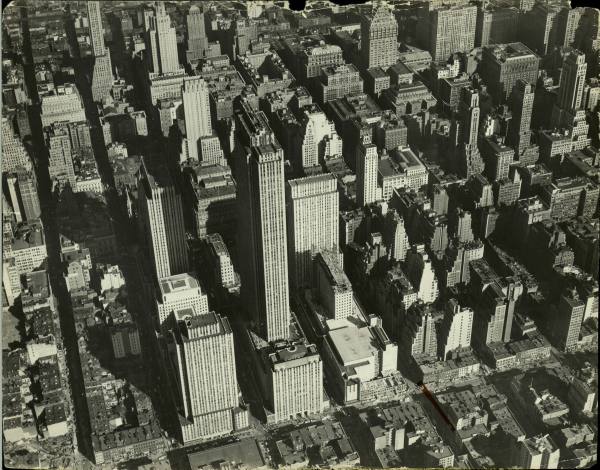
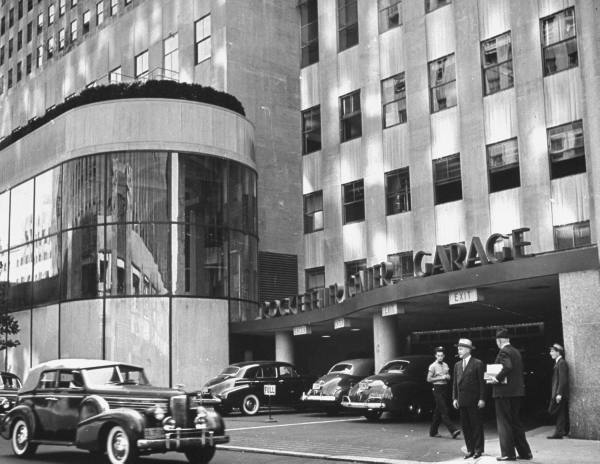
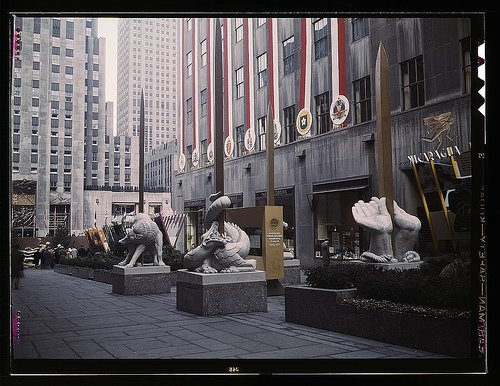
From this image, it’s easy to see how Rockefeller Center radically transformed midtown.
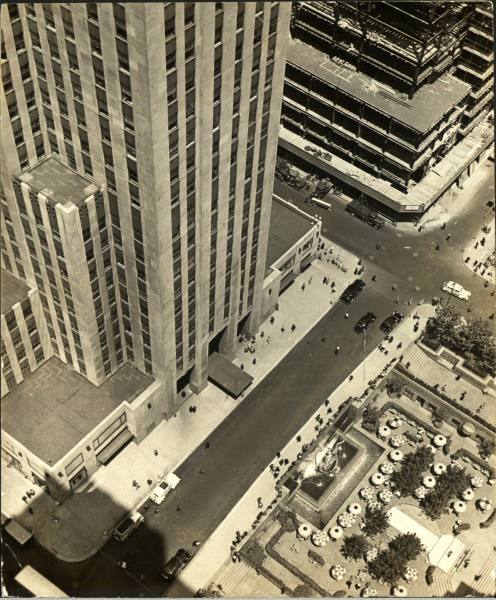
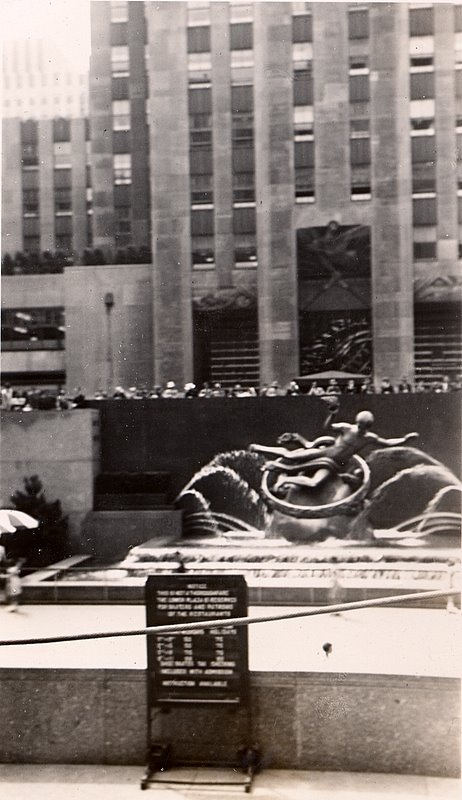
The plaza, seen in a view from 1937, allowed architect Raymond Hood much leeway in his design of the RCA Building
A classic overhead shot by Margaret Bourke-White taken in 1939
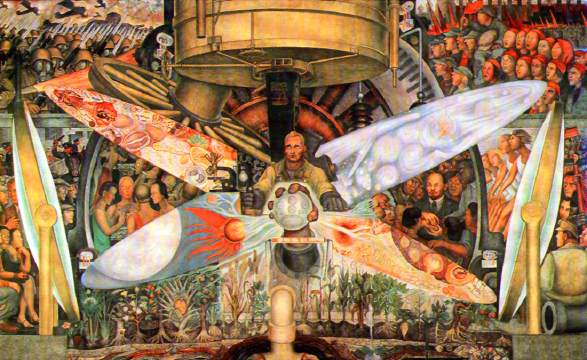
The offending Diego Rivera mural that briefly adorned the lobby of the RCA Building
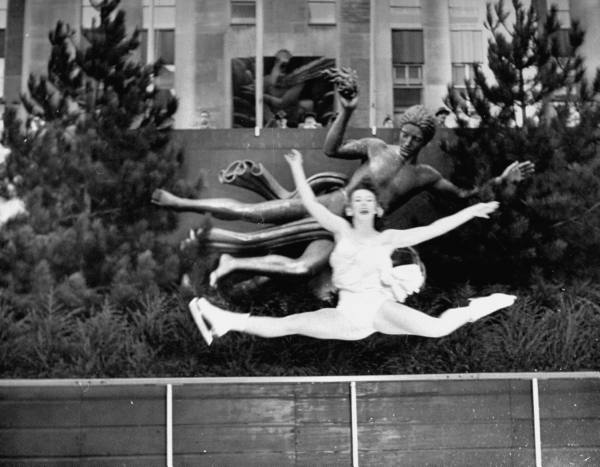
A spry ice skater in 1942 (photo by Wallace Kirkland, Life archives). The rink was not an original feature of the plaza, but soon became one of its most popular attractions.
In 1943, the Channel garden features an unusual wartime exhibit. Speakers on either end continually broadcast speeches by President Roosevelt, Winston Churchill and Chiang Kai-Shek. Fun! (Photo courtesy Library of Congress)
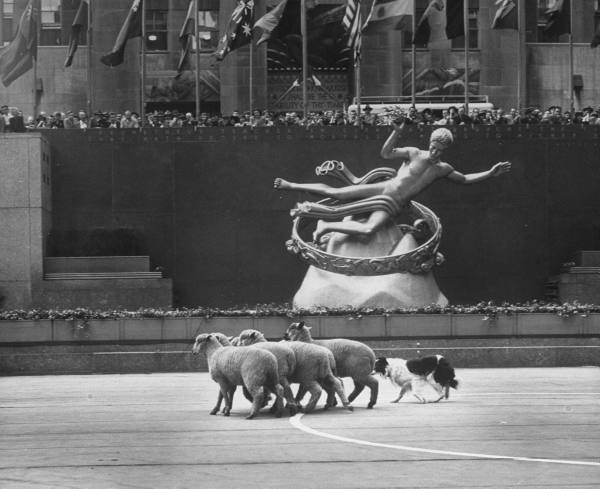
1948 — for some reason, ice skating and dining takes a backseat this day for a sheepherding demonstration
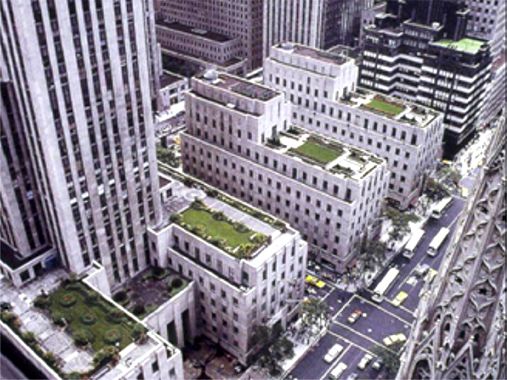
The roof gardens, now closed to the public, were originally a top tourist draw to Rockefeller Center and even enabled Rockefeller to raise rents on any offices that benefits from views that overlooked them.
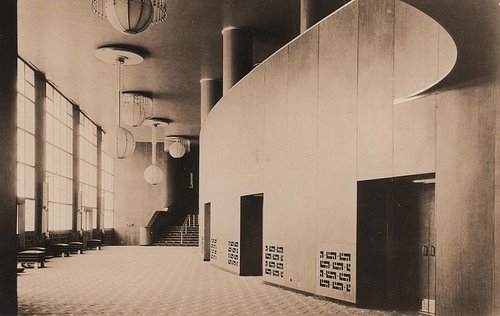
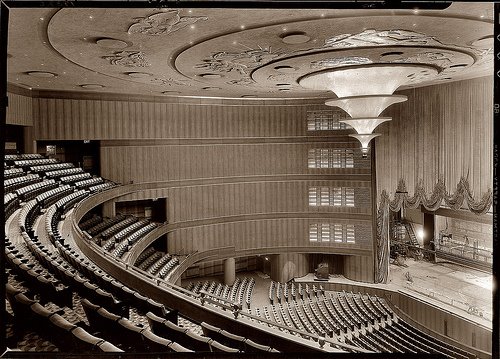
Two interior shots of the Center Theatre, formerly the RKO Roxy, Rock Center’s other big stage. It changed it named because of a lawsuit with the Roxy Theatre and changed its entertainment from films to ice spectacles in the 1940s. It was torn down in 1958 to make room for what is today the Simon & Schuster Building, also part of the Rockefeller Center complex.
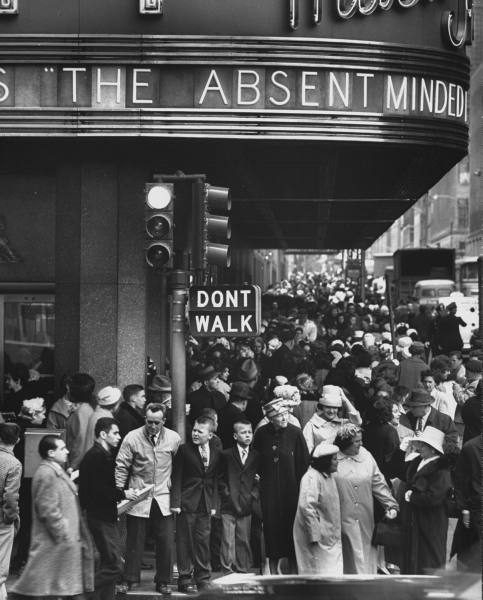
Wild crowds gather for Radio City Music Hall’s Easter show in 1961, and not, I’m assuming, to get into to see the Absent Minded Professor
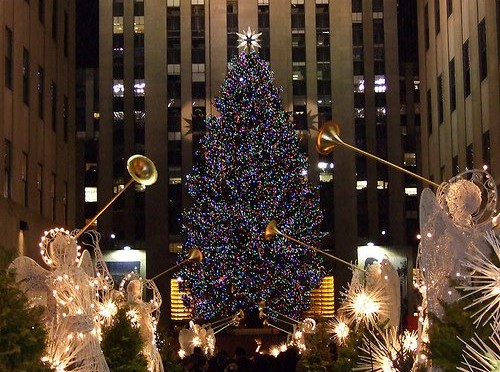
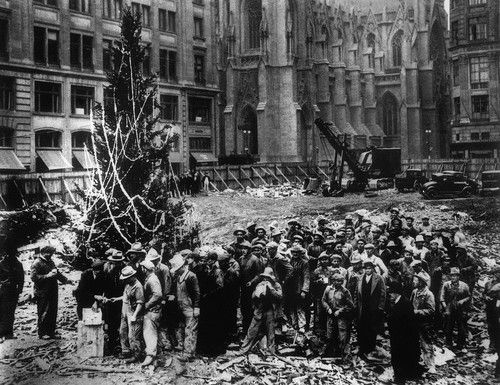
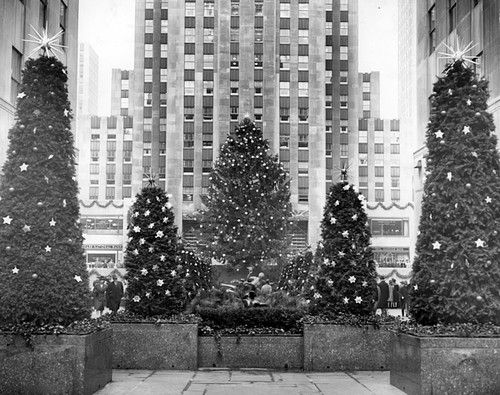
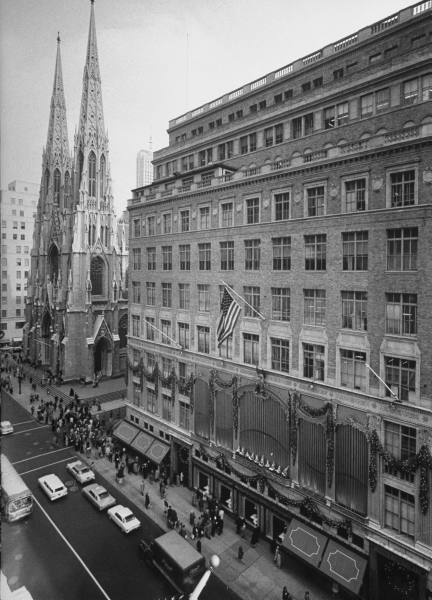
The first Rockefeller Center Christmas tree, in 1931, with Saks Fifth Avenue and St. Patrick’s Cathedral right across the street
The tree in 1943
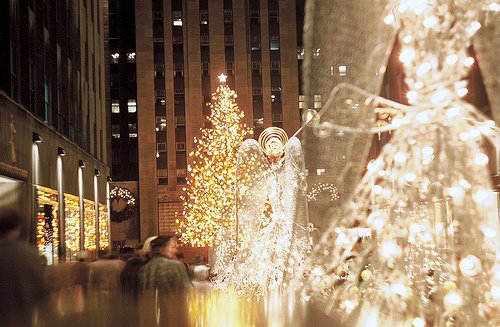
And in 1954, one of the first years that featured the illuminated angels (courtesy of PLCjr)
CHRISTMAS GIFT ALERT: One of my favorite New York City history books ever is actually about Rockefeller Center — Daniel Okrent’s Great Fortune: The Epic of Rockefeller Center. The writing is as stout and witty as many of its principal characters. Extremely readable.
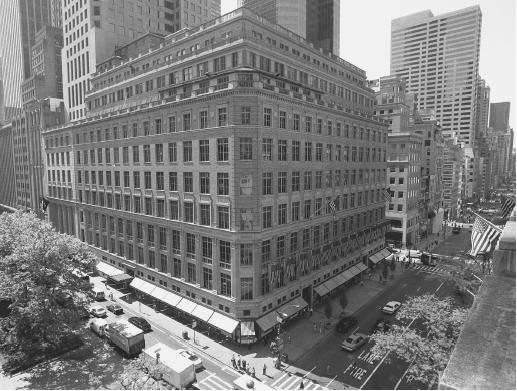
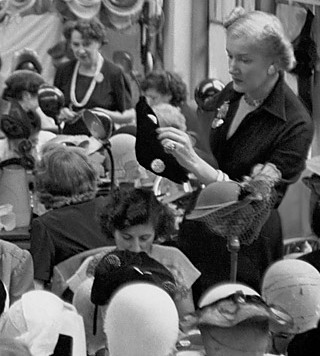
A podcast that’s “very Saks Fifth Avenue,” we get to the origins of the famous upscale retailer, follow its path from Washington D.C. to Heralds Square and then to “the most expensive street in the world,” and tell you a little about a glamorous milliner.
A slight clarification on this week’s episode: I describe one style used in the creation of Saks Fifth Avenue as Art Moderne, which is a variation of Art Deco using curved, streamlined surfaces. This clearly describes the inside of Saks, not the outside, which is a bit more formal.
A few historical pictures of old Fifth Avenue — back when it was primarily residential, on the cusp of becoming New York’s center for retail
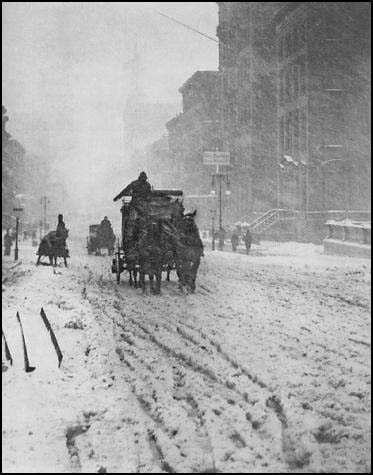
Alfred Stieglitz’s 1893 classic photo ‘Winter on Fifth Avenue’
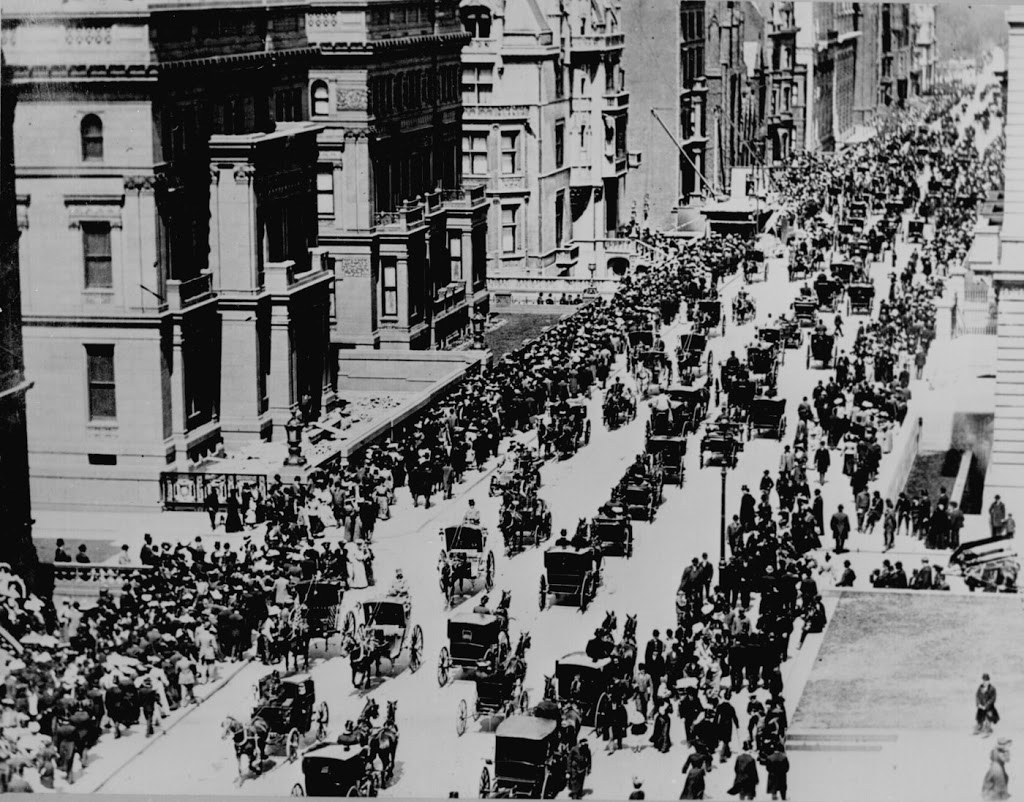
Glorious Fifth Avenue in 1901, Easter morning. The streets are filled with people on their way to church, passing block after amazing block of private homes. Although there is not a retailer in sight, the sidewalks look pretty much the same as they do today though!
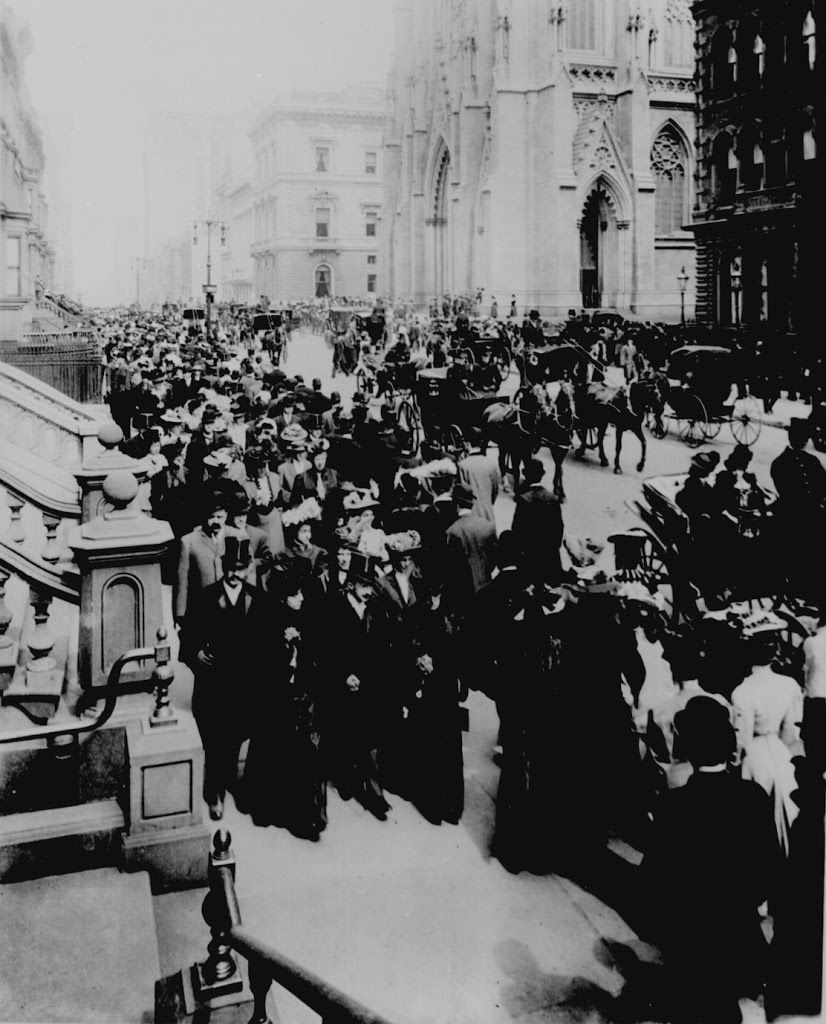
Fifth Avenue in 1906 — this is on the west side of the street to the lot that would soon hold Saks Fifth Avenue. (You can see St. Patricks Cathedral in the background.) Photos are from the National Archives.
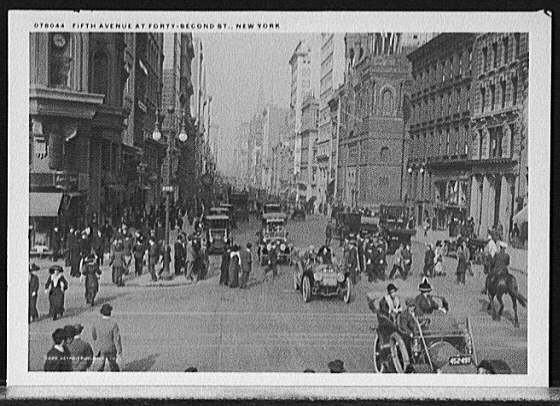
This is definitely the corner of Fifth Avenue and 42st Street, although I’m not to sure of the date, most likely around 1910.
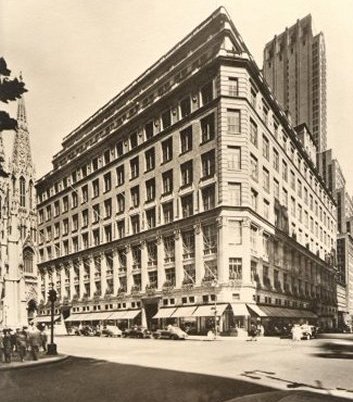
The Fifth Avenue store, circa the 1940s, designed by Starrett and Van Vleck
The glamorous workaholic Tatiana Du Plessix, who almost singlehandedly outfitted New York’s society ladies with hats. (Tatiana wasn’t glamorous to everyone, as a recent biography by her daughter takes pains to note.)
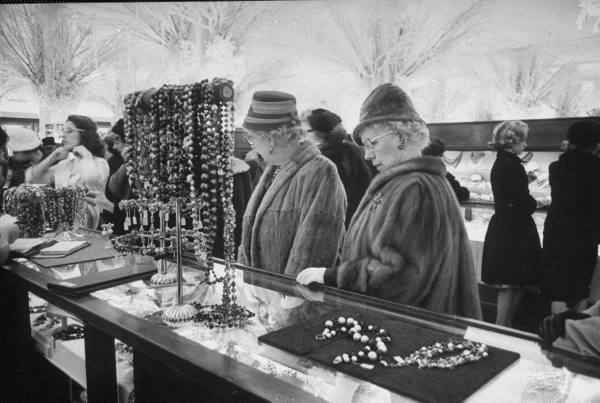
The following shots are from the Google Life archive of interiors of Saks from 1960 by photgrapher Alfred Eisenstaedt.
Adam Gimbel in 1962. He took over the company after the deaths of Horace Saks and Bernard Gimbel and helped create its mid-century upscale image. (Photographer Yale Joel)
A Saks window in 1937, employing subtlety and grace instead of cramming the window with items
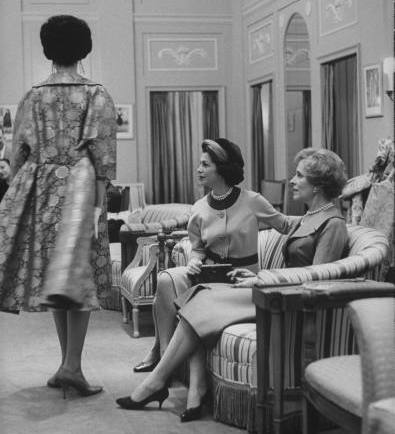
“Sophie of Saks,” Adam’s wife and the in-house designer for Saks Five Avenue, sits far right as a model displays a design to a customer. (1960/Peter Stackpole)
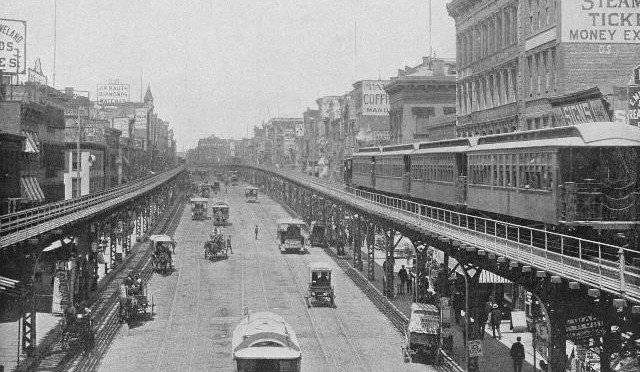
The Bowery of 1923, its livelihood segregated from the street by elevated railways.
This is our “potpourri” episode with a little bit of everything in it.
We open up some of our favorite readers mail, we take you behind the scenes of how we put together an episode, and we describe three of our very favorite history-related websites that you should check out.
But it wouldn’t be a podcast without some history, right? So we take a brief stroll down the Bowery, with over 200 years of history along this famous street. But has anything really changed? Listen to it for free on iTunes or other podcasting services. Or you can download or listen to it HERE
Since we’re in listeners and readers appreciation mode, here’s a few odds and ends that people have emailed us about that you might be interested in:
The New York Public Library just recently uploaded a new video featuring great footage from the 1939-40 World’s Fair. Organizers from the fair donated all documentation to the library and is the first place to start for anybody fascinated in its history.
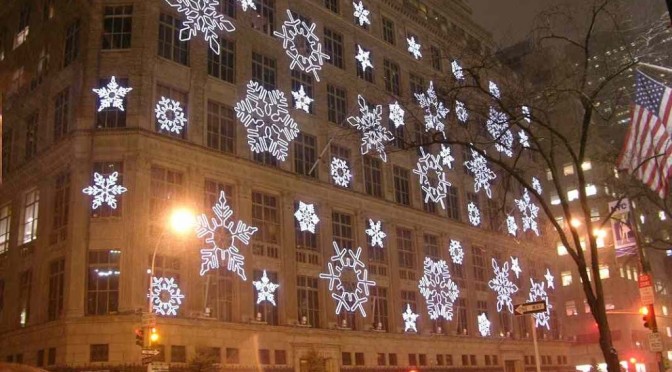
Last year on the blog I spotlighted that massive Douglas Leigh-designed snowflake that hung over Fifth Avenue and 57th Street. One of those who helped Leigh with the design, Hans Clausen, sent me a link to his website with more information. The snowflake will be going up soon!
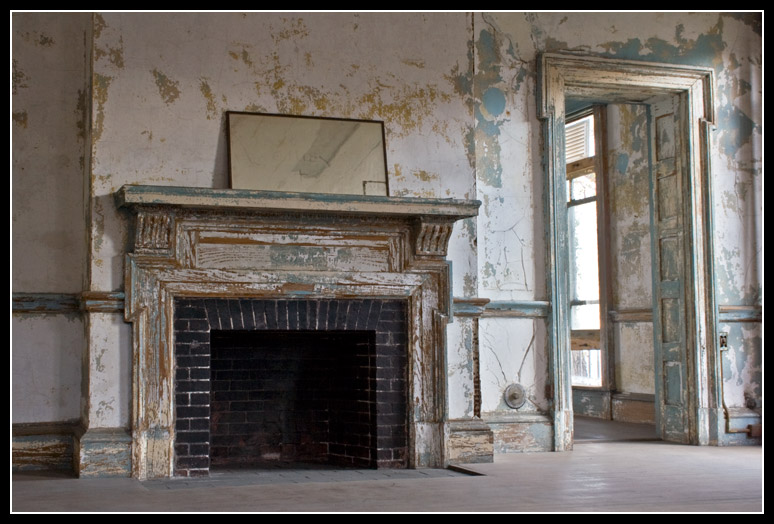
Jacques Pasilalinic-Sympathetic Compass(quite a name!) sent me a New York centric link from his blog, featuring some great pictures from the little-seen south side of Ellis Island, mostly off-limits and hauntingly abandoned. Including this shot:
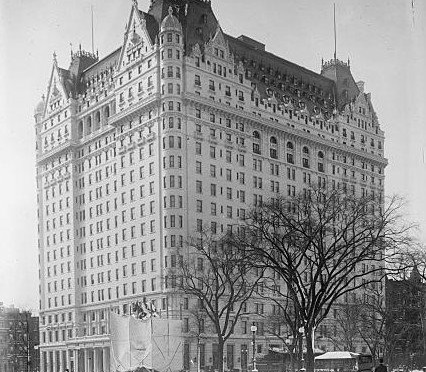
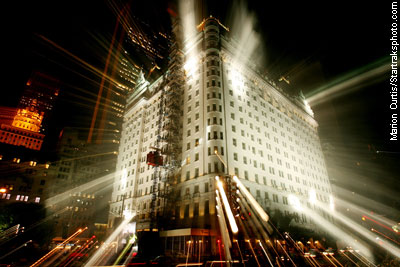
It got off to a rocky start, but the Plaza Hotel has become one of the most recognizable landmarks in New York City. We take a look at its kooky history, from its days as an upper class ‘transient hotel’ to a party place for celebrities. Starring: Henry Hardenberg, Eloise, Truman Capote and of course the unsinkable Mrs. Patrick Campbell.
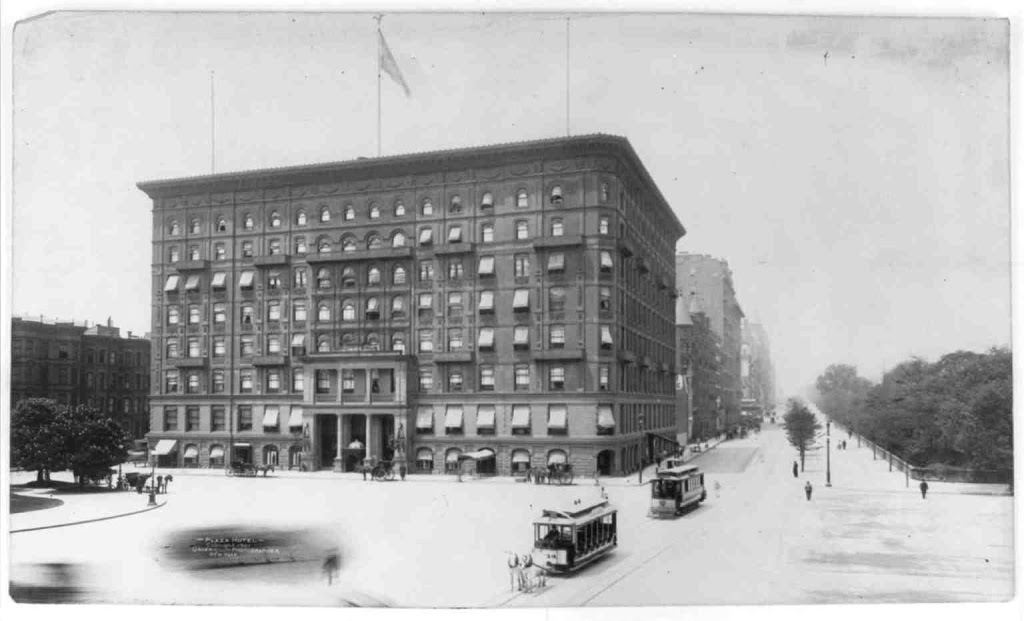
The first “Plaza,” as redesigned by McKim, Mead and White, was also a hotel, but it didn’t last long. Opened in 1890, it was demolished in 1905 to make way for the far grander vision of Henry Hardenbergh.
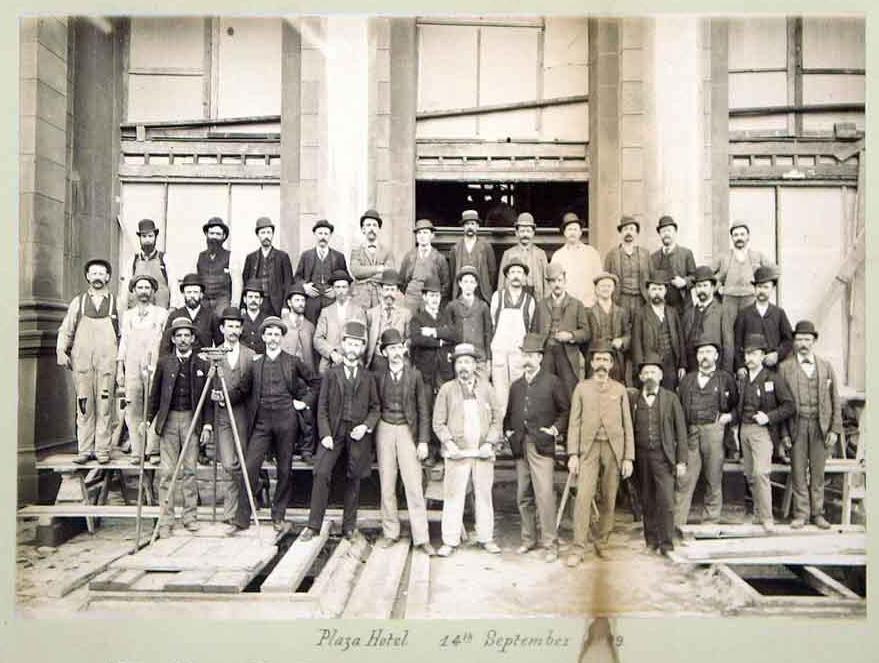
Workmen pause to stand in front of the first Plaza in 1889. Eventually the foundation of the building would not support the lofty plans for the new Plaza, so it had to be entirely torn down.
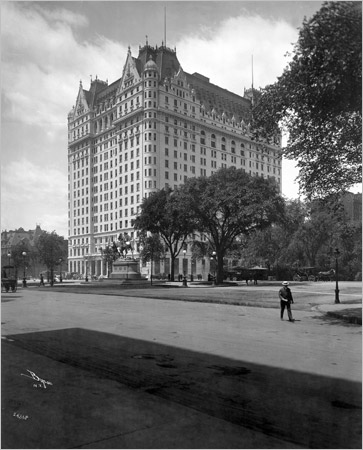
Believe it or not, here’s The Plaza in the year it opened, 1907! It looks like it’s in the countryside. Note the General Sherman equestrian statue in the foreground.
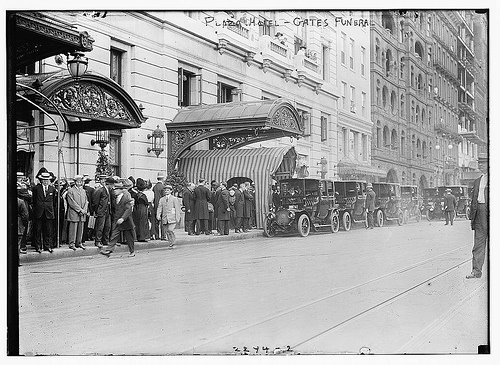
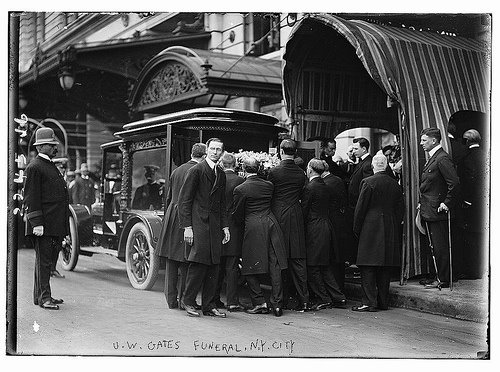
Two shots of the funeral of John “Bet-a-Million” Gates — who basically bankrolled the construction of the Plaza — pulls up to the entrance (on 59th street) of his famous hotel. It’s particularly interesting to see the development of buildings further west next to the Plaza. (Photo from Flickr, Library of Congress)
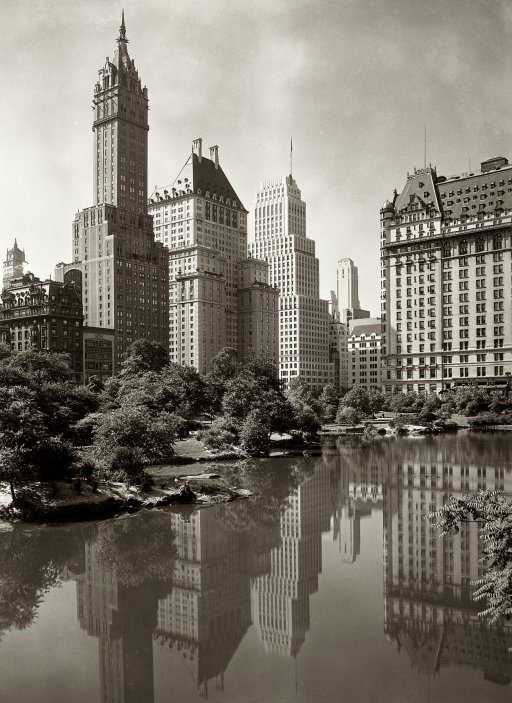
One of the Plaza’s immediate appeals was its proximity to both Central Park and the tony residents and luxury hotels of Fifth Avenue. (Picture courtesy of my favorite website Shorpy.)
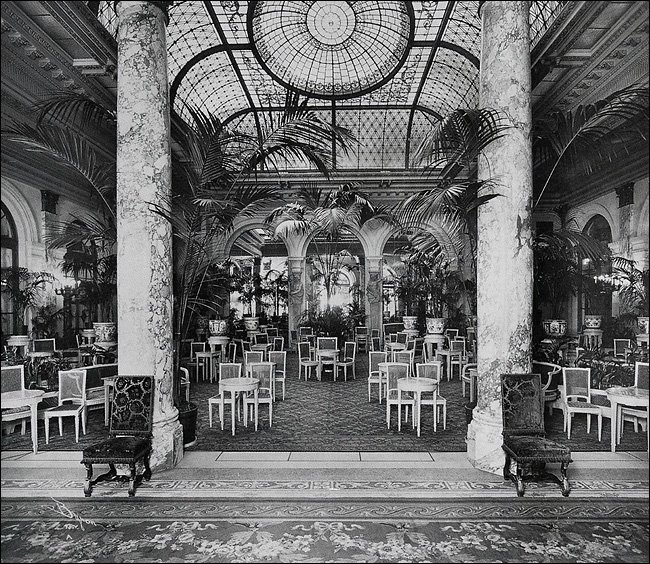
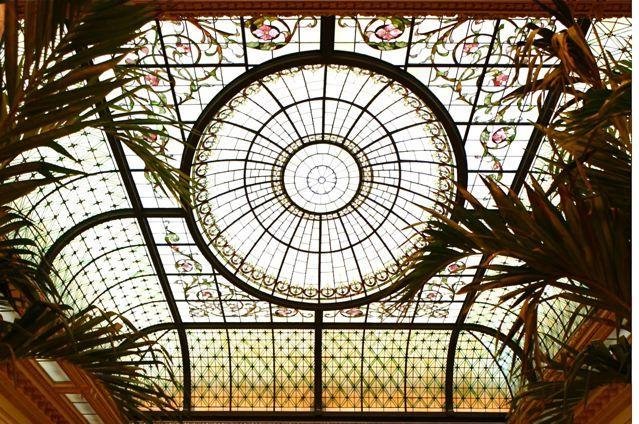
The elegant Palm Court, site of countless afternoon teas and the smoking rebellion of Mrs. Patrick Campbell. The ornate stained-glass dome would be removed in 1944, replaced with an air conditioning unit.
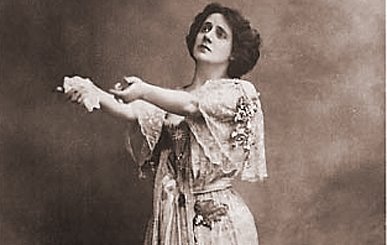
Mrs. Patrick Campbell, poster child for smokers and women’s rights everywhere
The fabulous Oak Room, probably the most unchanged of the Plaza’s public room, is festooned with Hardenburgh humor in the form of alcohol-related carvings. It was a popular drinking spot for the likes of F. Scott Fitzgerald, George M. Cohen, Bill Clinton and Harrison Ford.
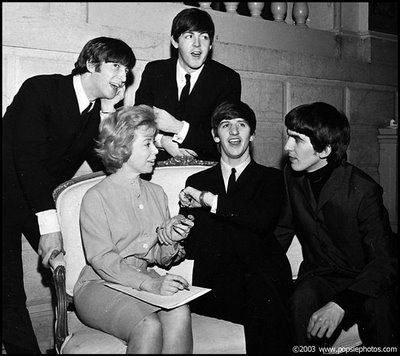
The Beatles and the Dr. Joyce Brothers enjoy a campy moment during an 1964 press conference at the Plaza.
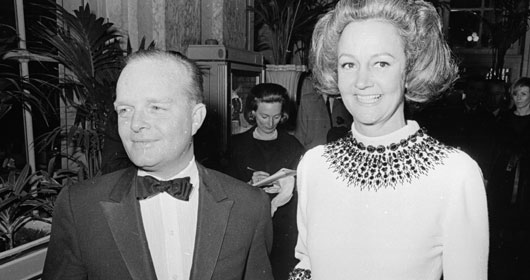
Truman Capote and Katharine Graham greet guests at the totally outrageous Black and White Ball.
Kay Thompson, later the author of the Eloise books, performs here at the Persian Room:
The Palm Court’s stained glass ceiling has returned in the modern renovation.
Check out the wonderful book At The Plaza: An Illustrated History of the World’s Most Famous Hotel by Curtis Gathje with many more details on the Plaza’s different and extraordinary rooms. And look below a couple posts for a picture of Barack Obama with the Plaza Hotel in the background!
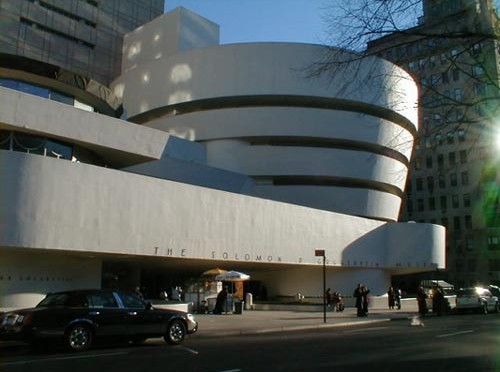
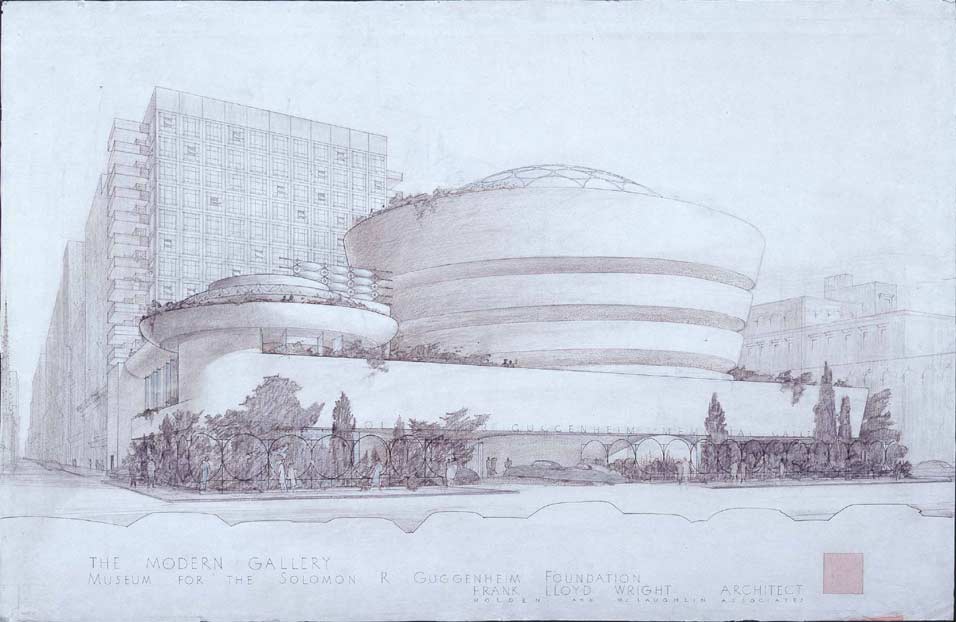
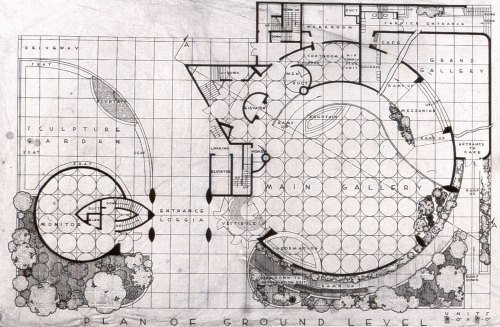
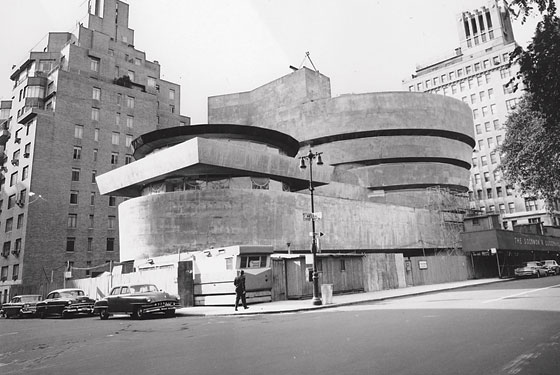
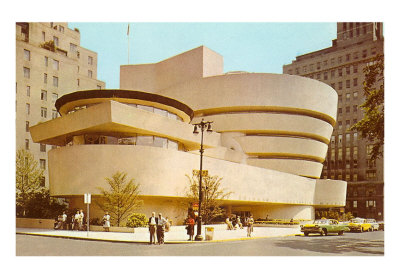
The spiral-ramped wonder that is the Guggenheim Museum began as the dream of two colorful characters — a severe German artist and her rich patron art-lover. So how did they convince the most famous architect in the world to sign on to their dream for a modern art “museum temple”? Come meander with us through the Guggenheim’s quirky history. Co-starring Robert Moses!
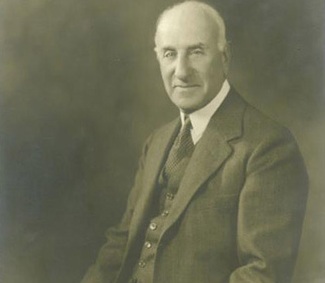
Solomon Robert Guggenheim — his love for artwork late in life culimated in one of the world’s most impressive collection of modern art
“Yellow Red and Blue” by Vassily Kandinsky, a particular favorite of Solomon’s who would end up owning over 120 paintings by the abstract artist.
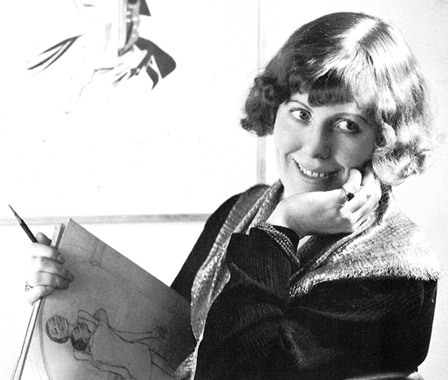
The enigmatic Hilla Rebay, muse and adviser to Solomon and the original curator to what would become the Guggenheim Museum — until she was unceremoniously dumped by the trustees after Solomon’s death
“Squares”, a work by Rudolf Bauer, whose relationship with Rebay and the Guggenheim would quickly sour
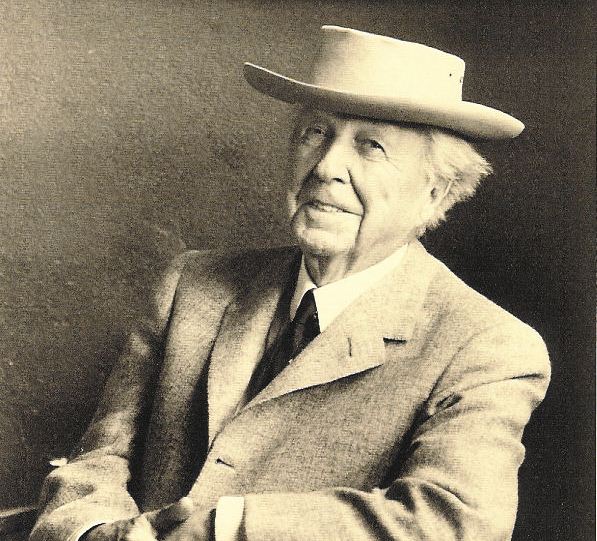
Photographer Alfred Eisenstaedt captures Frank Lloyd Wright in his final days, an iconic architect who would go out on top with the construction of the museum
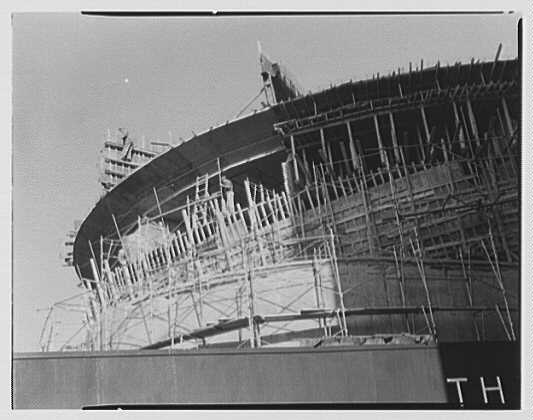
During construction: the distinctive curves were created by essentially creating a plywood mold and having the concrete sprayed from the inside.
The museum, right before its opening in 1959. (Pic courtesy New York Magazine.)
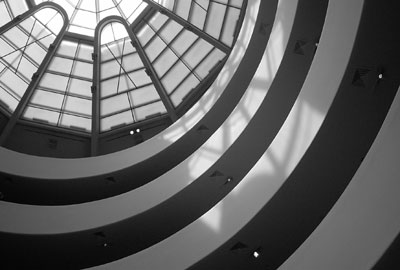
Like a typical Wright creation, the museum seems both natural and alien at the same time. Natural light streams in at unusual angles.
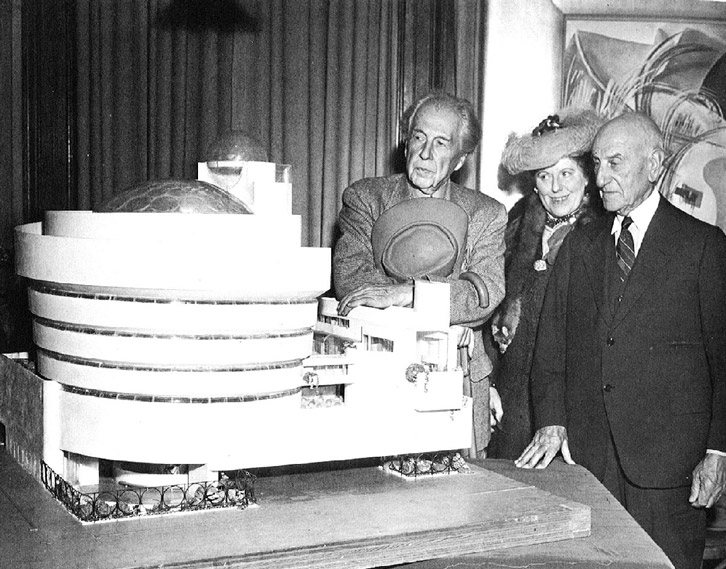
Solomon, Hilla and Frank stand admiring a model of their future museum.
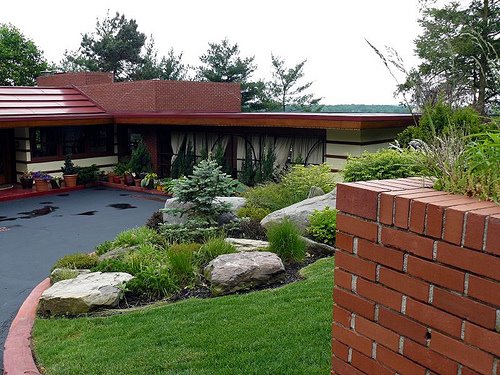
CORRECTION: In the podcast I incorrectly state that Wright had already built a house in Staten Island before getting the commission to build the Guggenheim. In fact, he was hired to build the private residence well after receiving the museum job. The home, called The Crimson Beech, is located in Lighthouse Hill. Apparently it leaks.
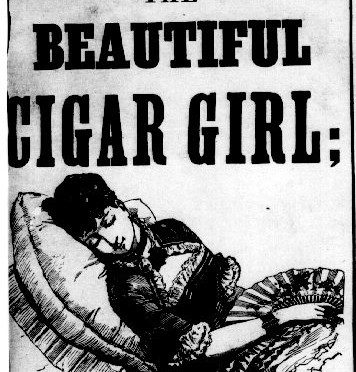
It’s a mystery! It’s 1841 and the most desirable woman in downtown Manhattan — the ‘beautiful cigar girl’ Mary Rogers — is found horribly murdered along the Hoboken shore. Hear some of the stories of this case’s prime suspects and marvel at the excessive attentions of the penny press.
Also: Edgar Allen Poe takes a crack at solving the case, and who is the mysterious Madame Restell?
NOTE: The sound quality is a little wobbly at first but it goes back to normal after the first few minutes. Sorry!
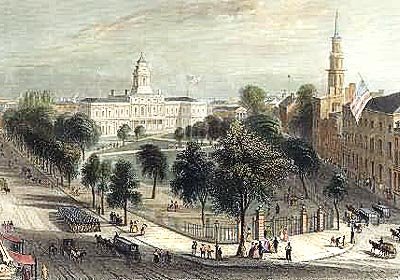
Many of the events of the story take place around the City Hall area — Anderson’s tobacco shop would have been just to the left of the picture, Mary’s boarding house to the right. (This illustration is actually from 1854, but you get the idea.)
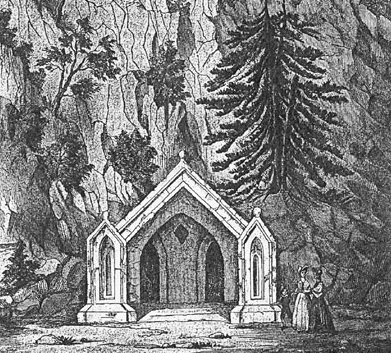
Sybil’s Cave, in an area along the Hoboken shore once called Elysian Fields — it’s here that the body was found … and another gruesome death related to Mary Rogers would occur just a couple month later
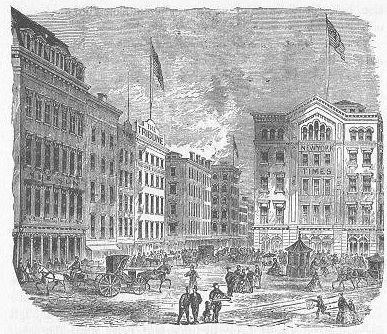
Printing House Square, across from City Hall and mere steps from Mary Rogers’ boarding house, got into the act by printing ever scandalous detail of the murder investigation
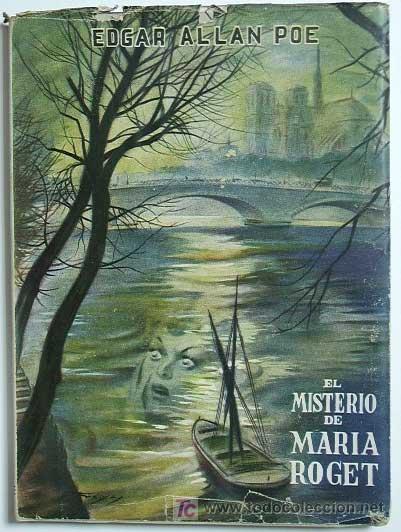
The murder inspired Edgar Allen Poe to write ‘The Mystery of Marie Roget’, changing the names and location but leaving the essential facts intact. But had Poe been paid to write the story by one of the case’s suspects, Mary’s former employer?
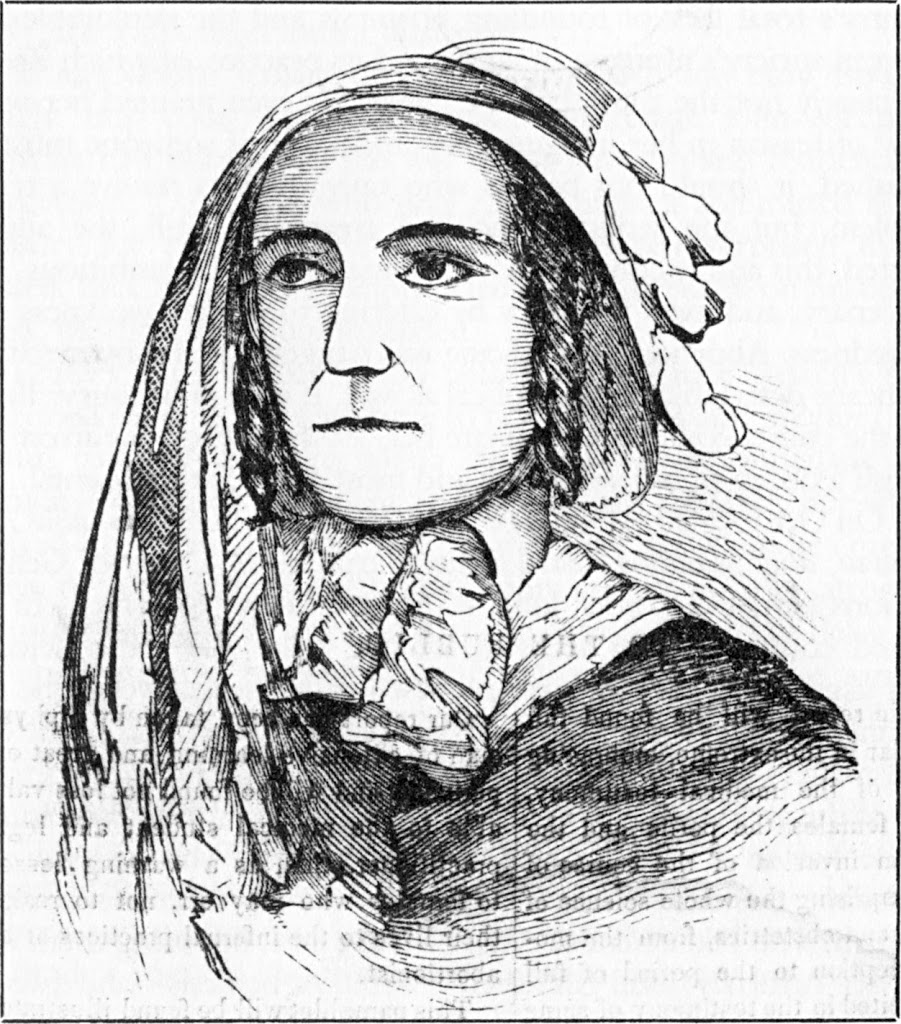
Madame Restell — what role did she play in the disappearance and death of Mary Rogers?
Mary Rogers lived at a boarding house run by her mother that once stood here, just a block from CIty Hall. It was here that Mary met most of the men who later became suspects in the case.
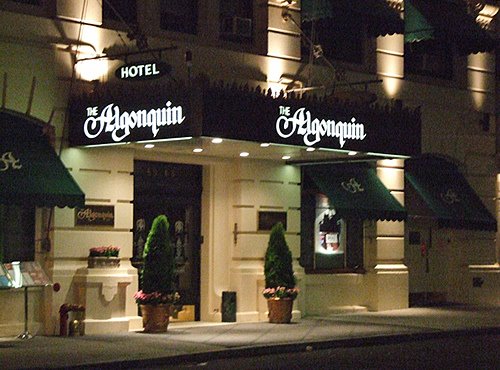
The Algonquin Hotel: the hippest haunt for the dead writer set
By popular demand, we return to the creepier tales of New York City history, ghost tales and stories of murder and mayhem, all of them at some point involving great American icons — Alexander Hamilton, P.T. Barnum, Dorothy Parker and Mark Twain.
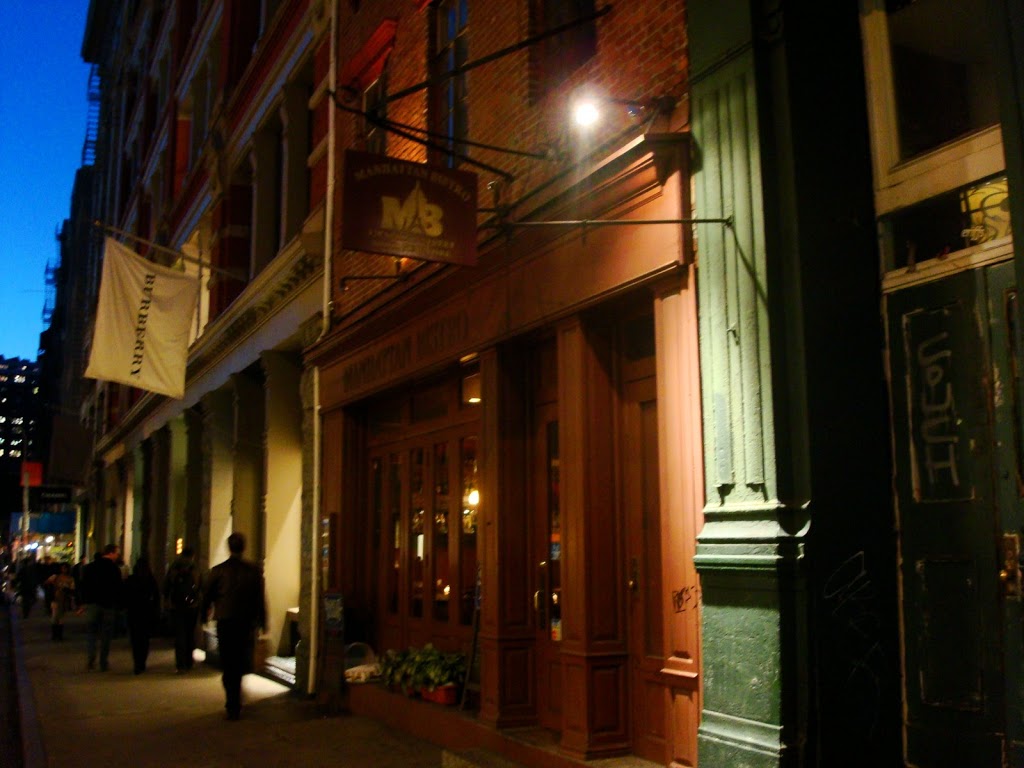
The Manhattan Bistro in SoHo hides a ghastly secret behind it — site of the Manhattan well, and the murder of Elma Sands
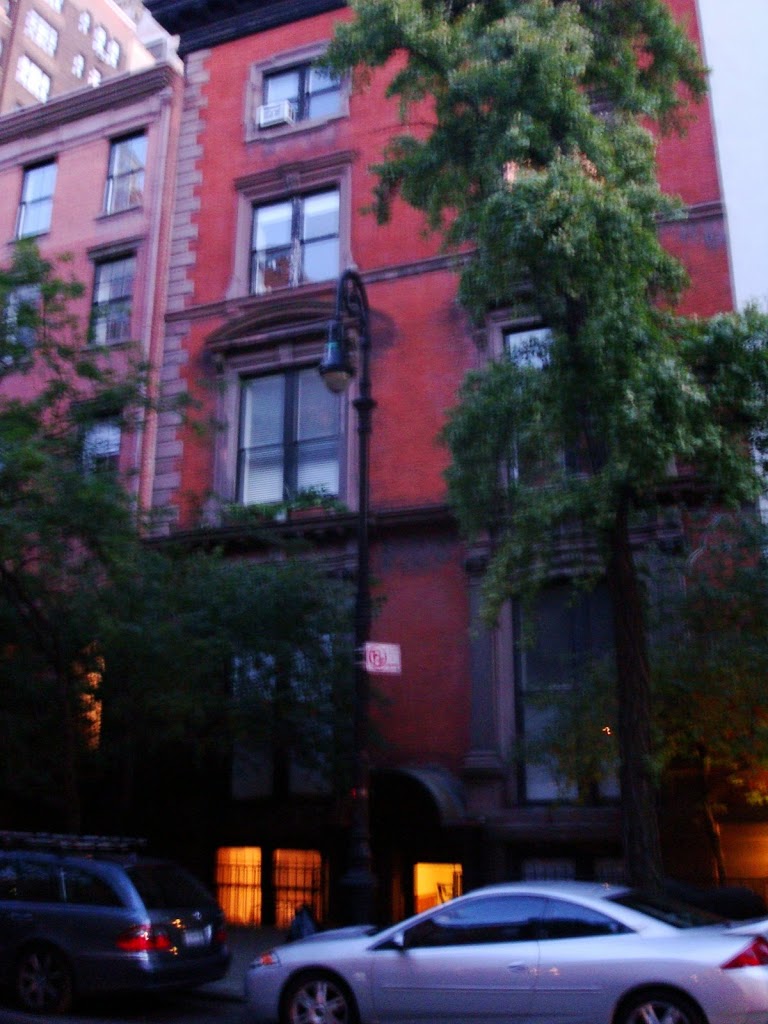
14 West 10th Street, the most haunted brownstone in the Village
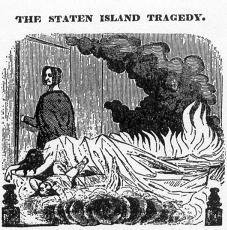
A macabre newspaper depiction of Polly Bodine, the ‘Witch of Staten Island’, fleeing from the burning bodies of her victims Emeline and Ana Eliza Housman
Our Ghost Stories of New York podcast from last year:
…
Starting next week on iTunes, our old episodes will be available for download, re-edited and with far great audio quality. Look for the feed titled ‘Bowery Boys Archive’ on Tuesday.
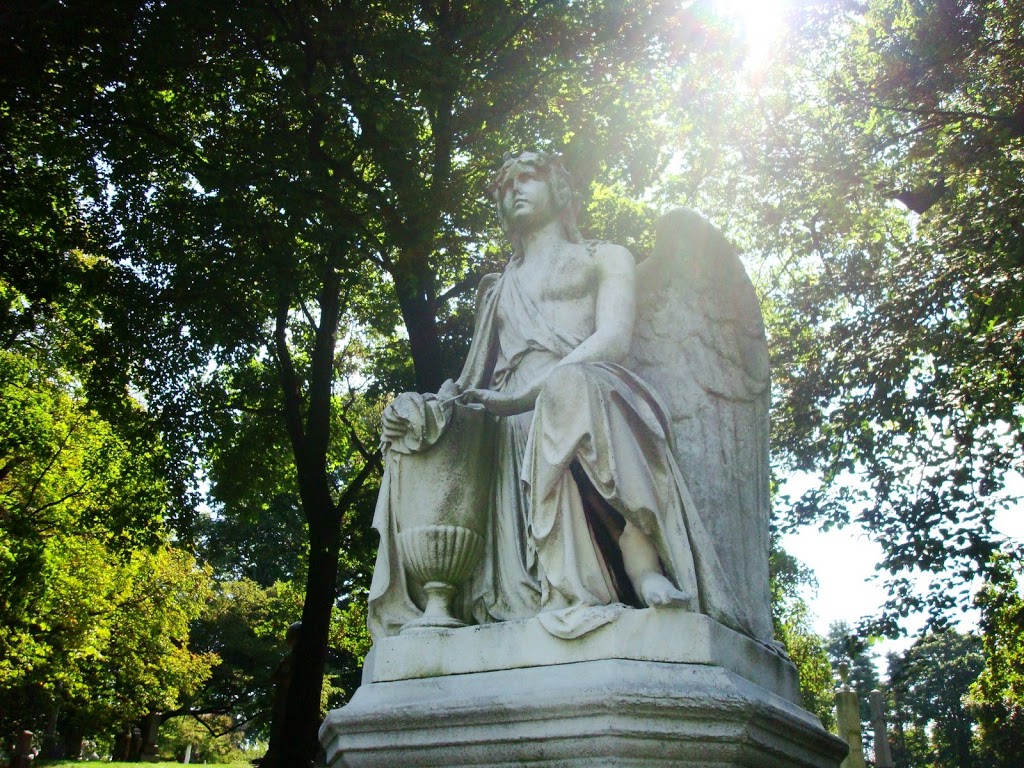
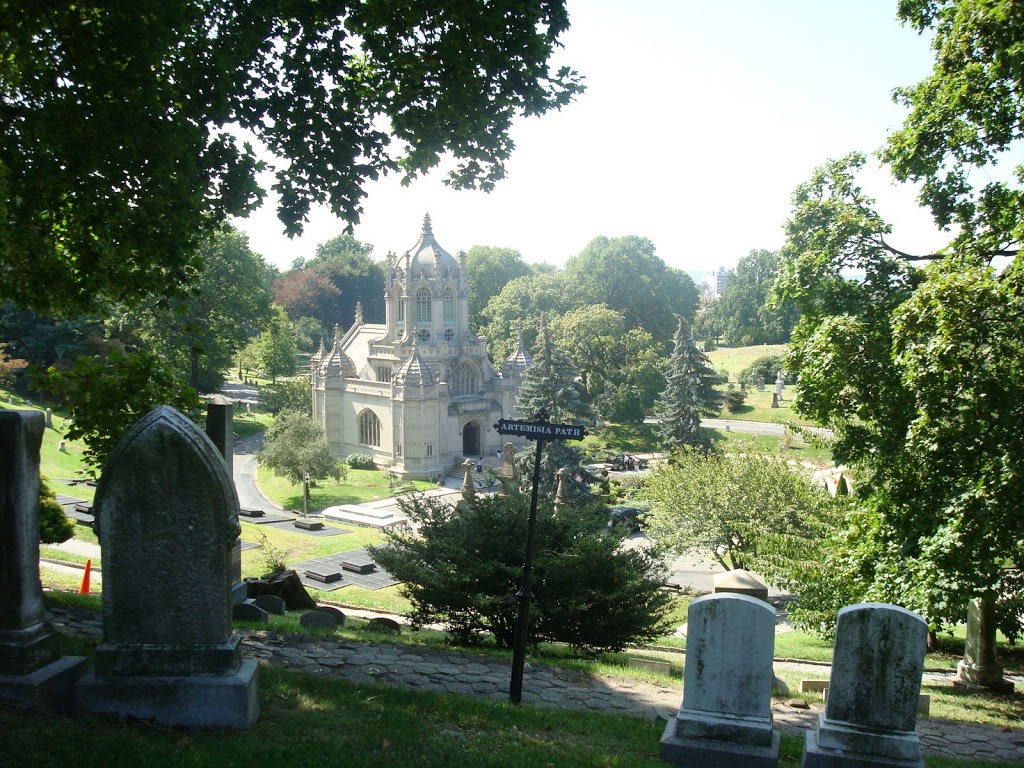
Green-wood Cemetery is one of New York’s oldest burial grounds, but its development reaches back all the way to the beginning of Brooklyn’s surprising history — in fact, to the founder of Brooklyn Heights.
Find out why it took an inventive city planner with a funny name, a dead New York icon, and a few errant parakeets to make this place a beautiful, richly historical place to visit today.
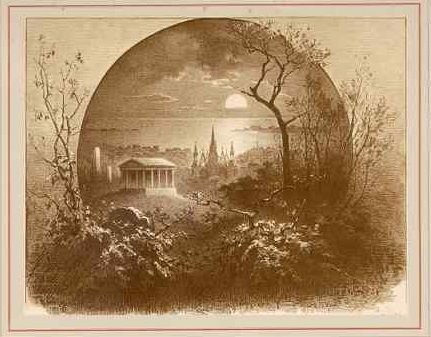
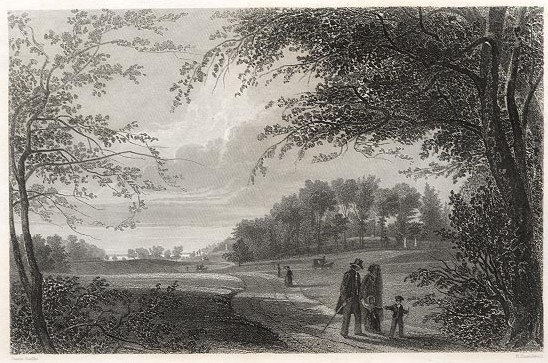
A romantic depiction of Green-wood, with the gate and a serene East River in the background
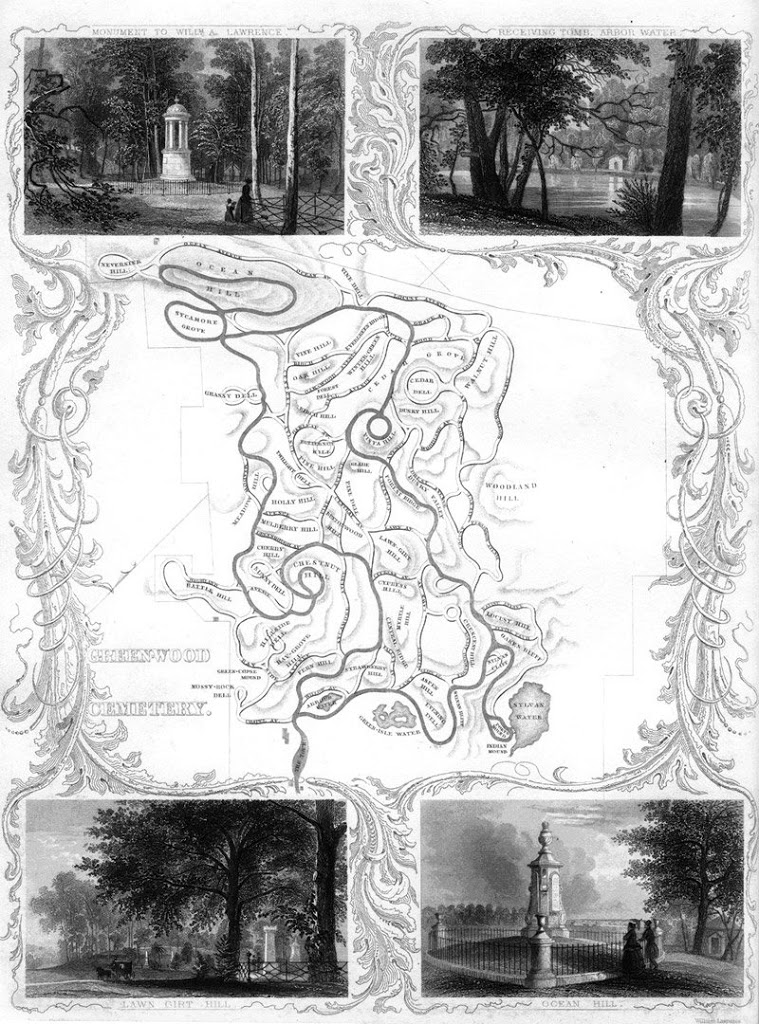
An old, original map of Green-wood. (Click in to see detail.)
Green-Wood was meant to be a place for the living as well as the dead. In fact, this engraving from 1855, I can’t even identify any gravestones! (Pic courtesy Ancestors at Rest)
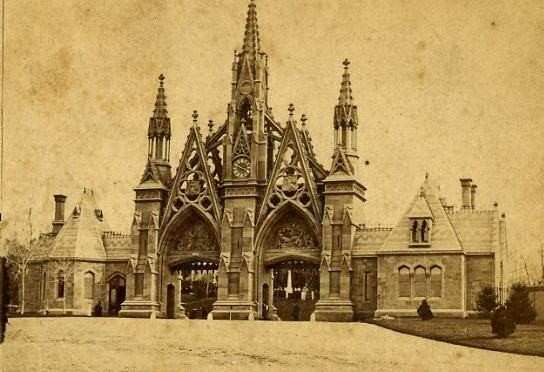
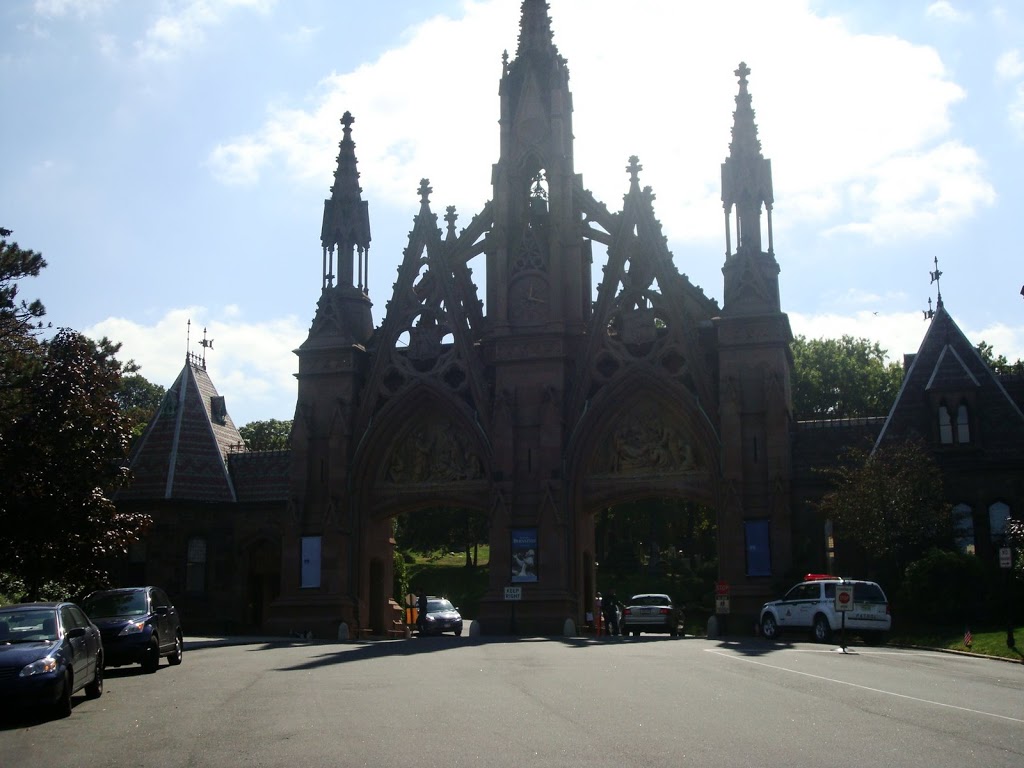
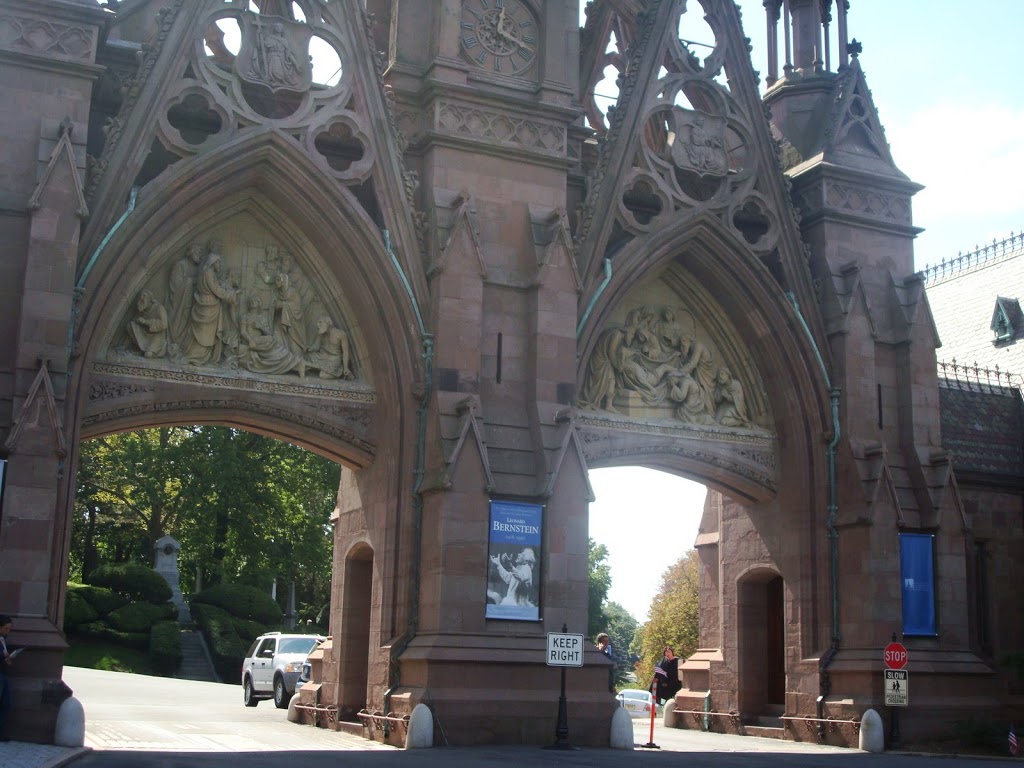
Richard Upjohn’s Gothic revival gate with those two dramatic arches
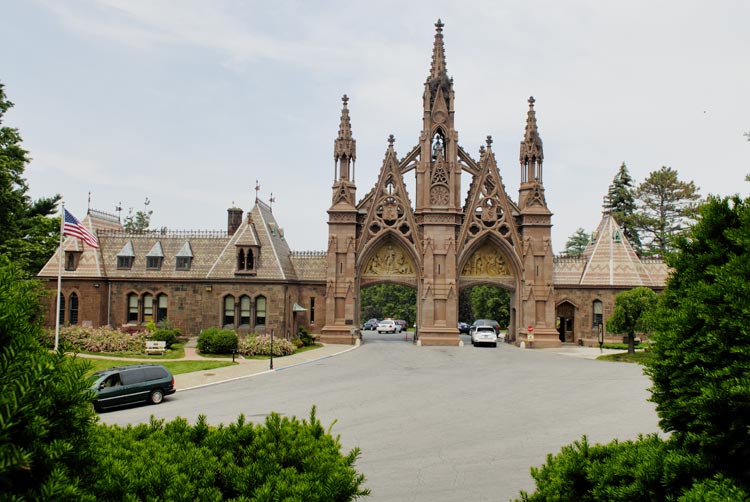
A great picture of the entire structure (courtesy here)
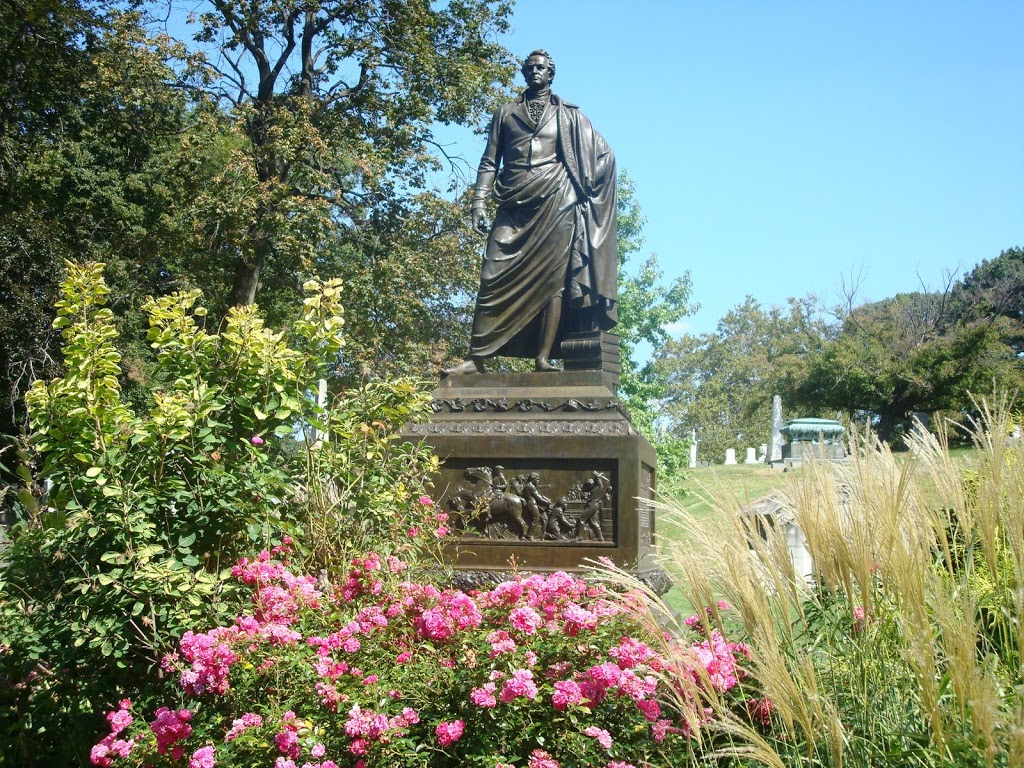
A bold statue marks the spot where DeWitt Clinton was moved in 1844, in an effort to draw the attentions of New Yorkers initially unwilling to be buried at Green-wood
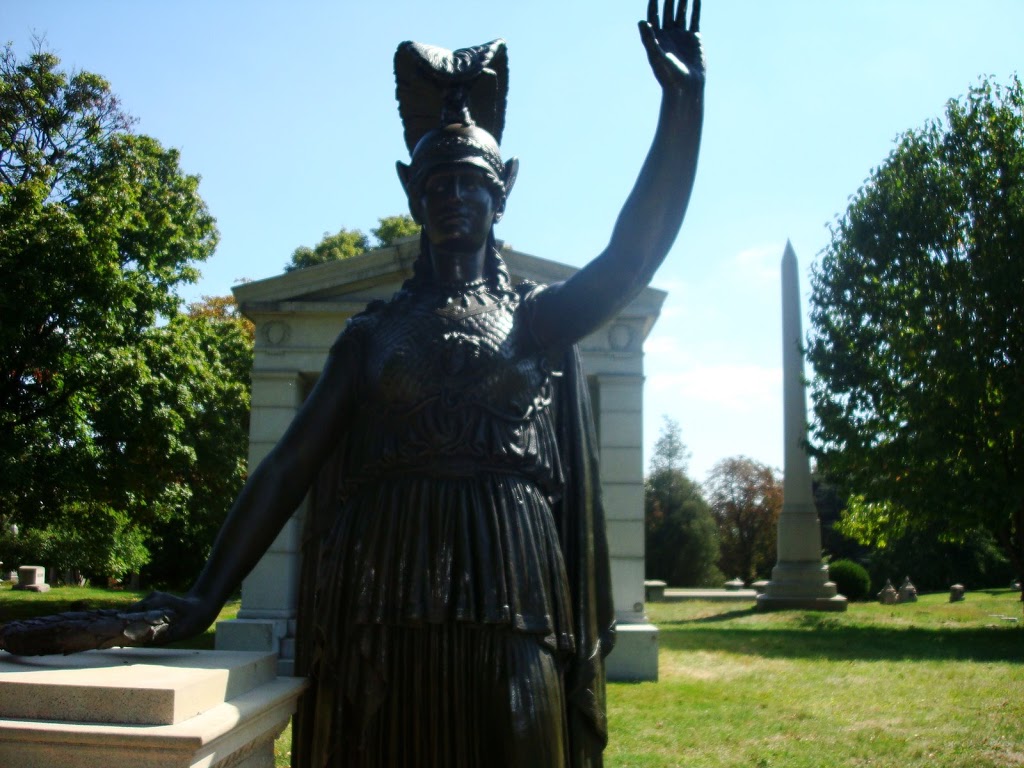
Minverva and the Altar to Liberty, a sculpture erected in 1920 and sculpted F. Wellington Ruxell, faces the East River, and a creative soul could imagine she’s waving at the Statue of Liberty
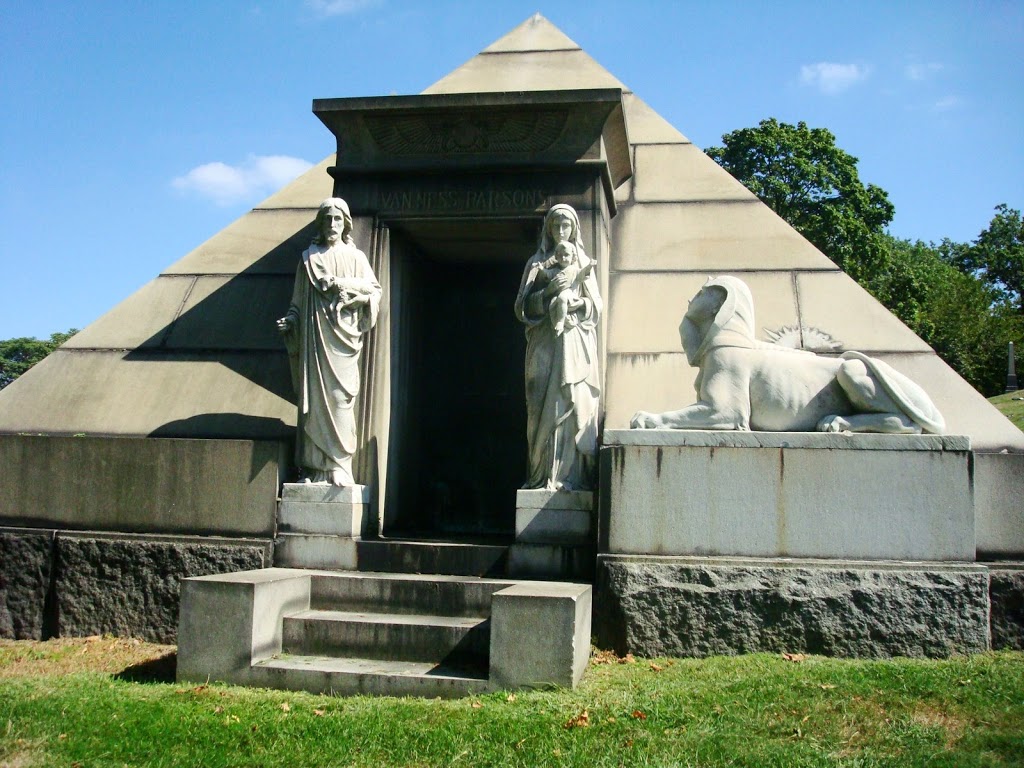
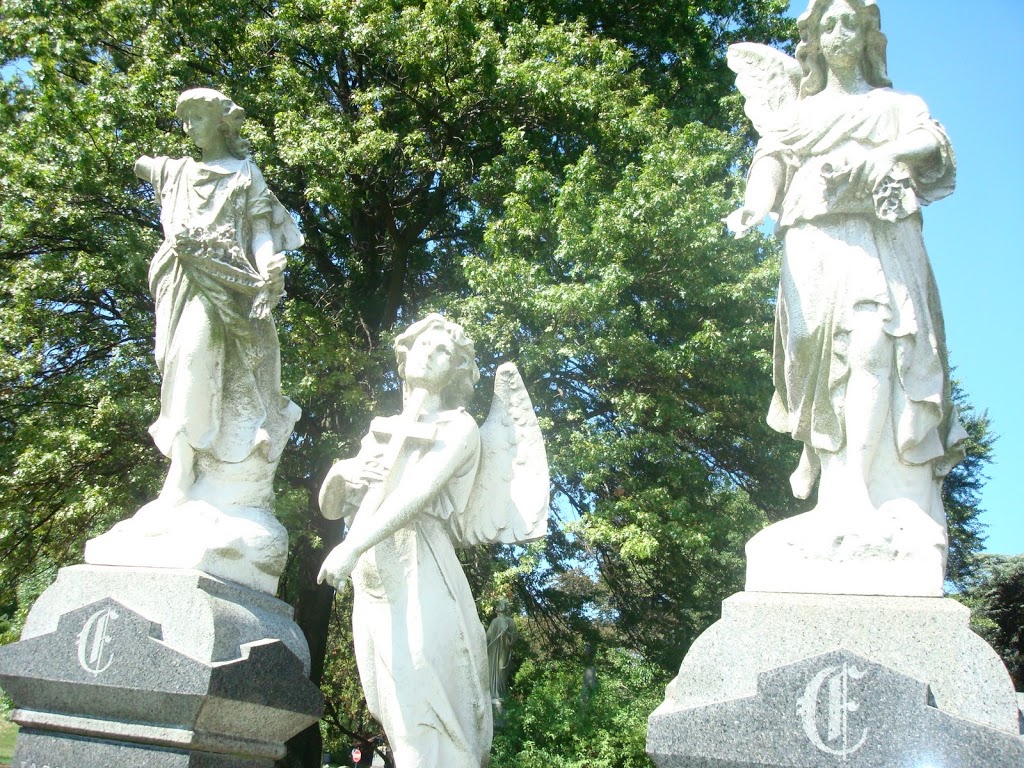
Some spend eternity in ornate, theatrical mausoleums; others are laid to rest in simpler settings.
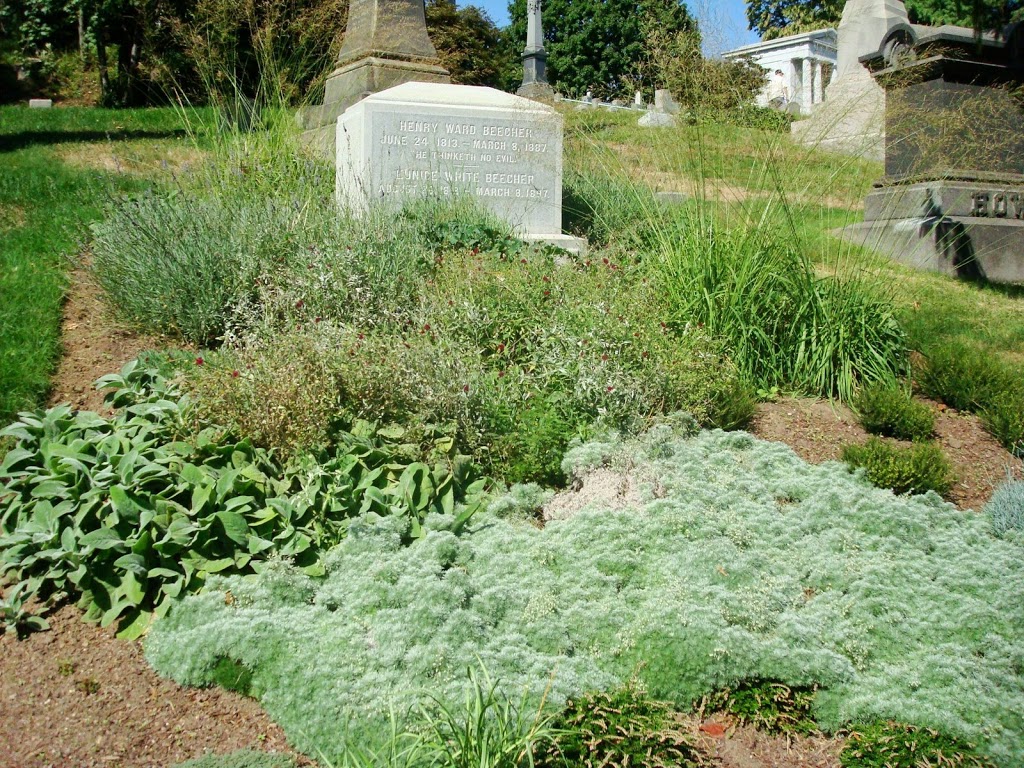
The lush plot of Henry Ward Beecher….
….while a simple stone marks the grave of his mistress Elizabeth Tilden
The hilly landscape makes from gorgeous scenery and very winding paths
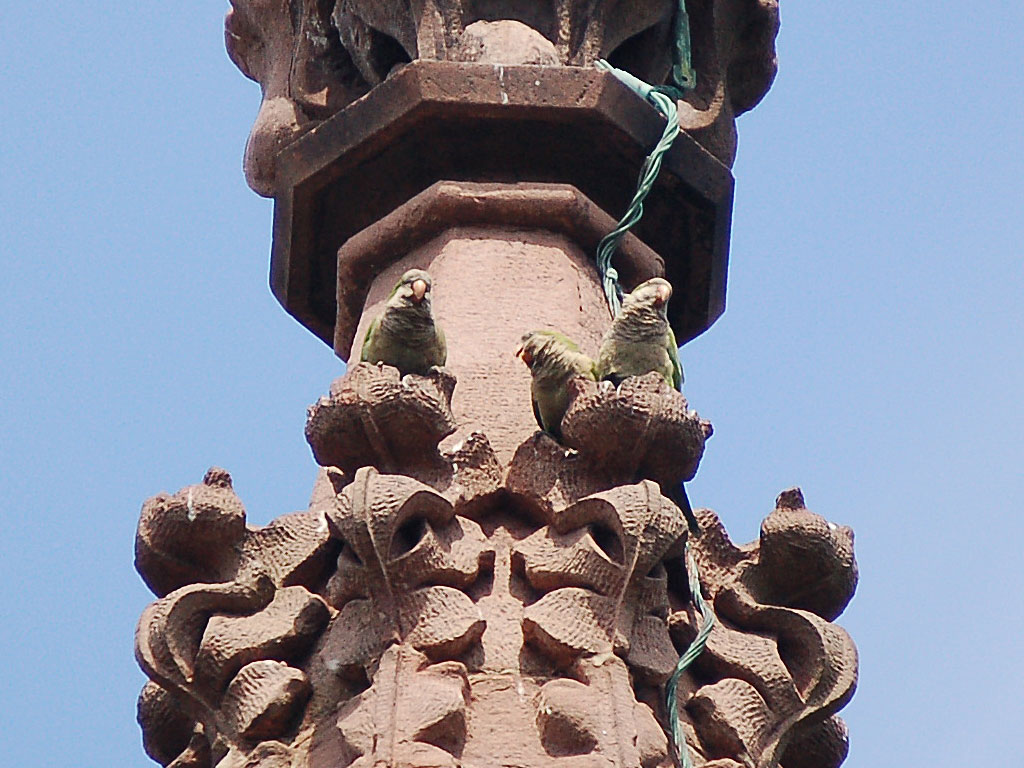
Contrasting the solemn mood at Green-Wood are the flocks of monk parakeets nesting in the Upjohn spires (picture courtesy Brooklyn Parrots, which has a lot of great information the unusual Brookly parrot phenomenon)
The official website has more information on upcoming tours and events at Green-Wood. Here’s what’s going on there next Saturday: “6:15 PM – SATURDAY NIGHT BY MOONLIGHT, FLASHLIGHT, AND FOOTLIGHTS – A WALK. Bring a flashlight, sign a waiver of liability, and you’re all set. This special walk features live accordion music, a visit to the Catacombs, and the light (weather permitting) of a full moon. No reservation necessary. Admission is $20 for the public; $10 for Historic Fund members”
They have great maps at the front gate which indicate some of the most famous residents. You can also try self-guided walking guides by Big Onion and Walking Brooklyn.
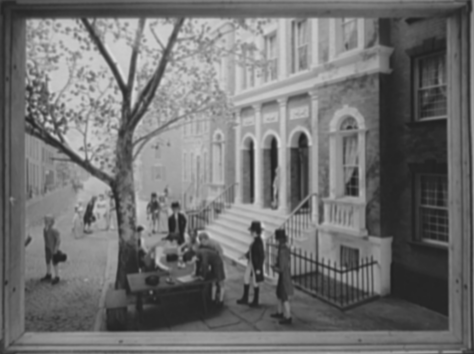
We steal this week’s topic straight for today’s headlines! We look at the early days of New York finance and the creation of the New York Stock Exchange, beginning with Alexander Hamilton, some pushy auctioneers, a coffee house and a sycamore tree.
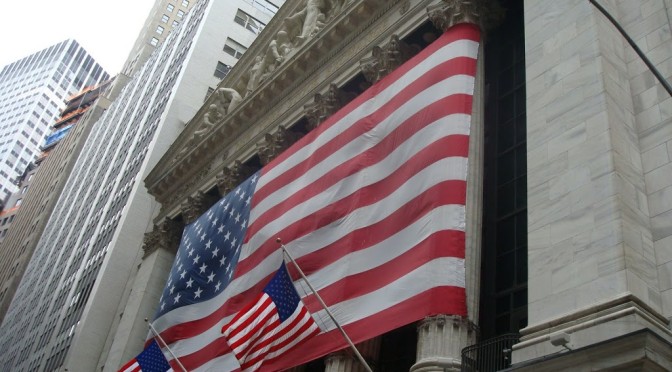
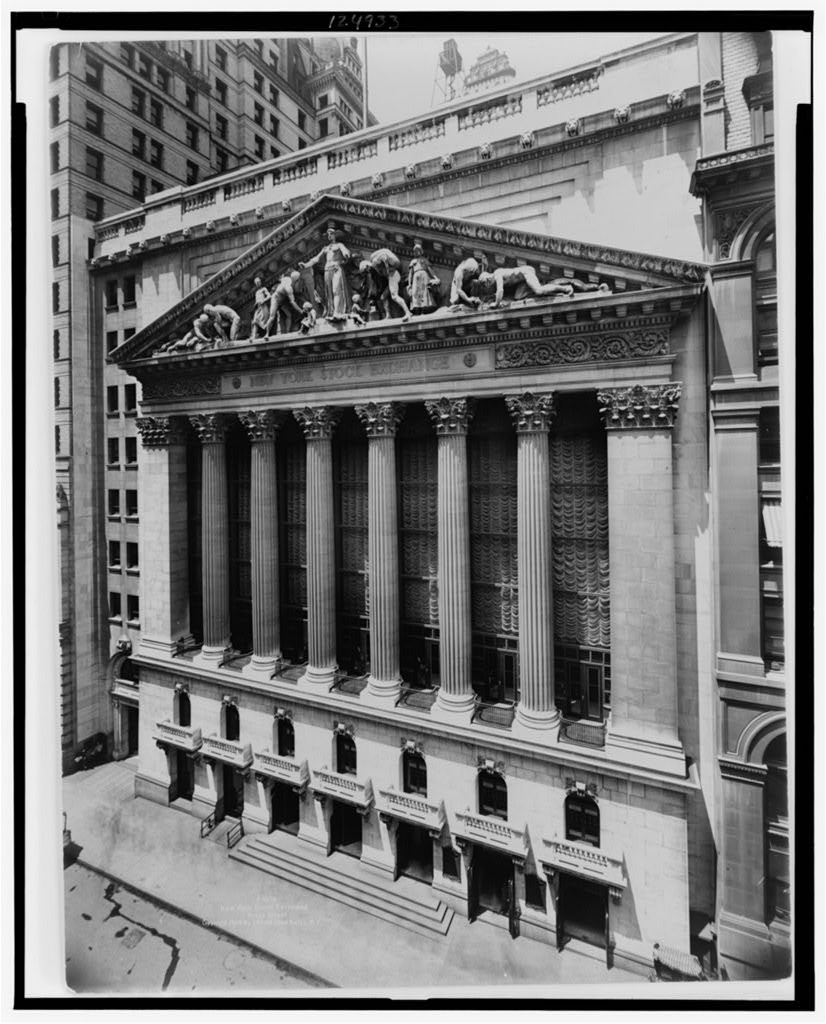
And find how this seminal financial institution ended up in its latest home — that beautiful, classically designed George Post building, with a marble goddess on top who was almost too heavy for her own good.
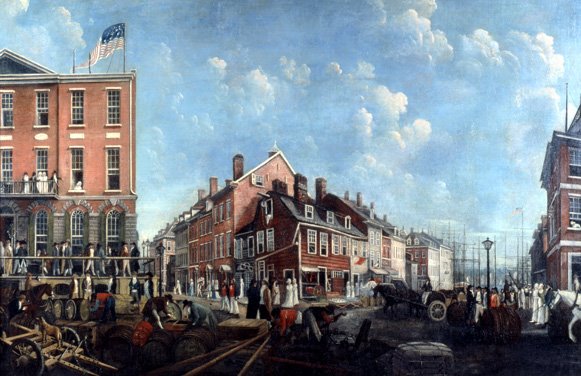
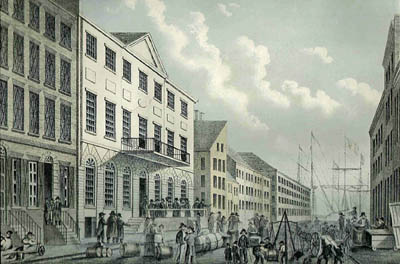
The streets and ports of New York in 1790s, setting for America’s first financial crisis and the birth of the New York stock trading system. At the far left is the Tontine Coffee House.
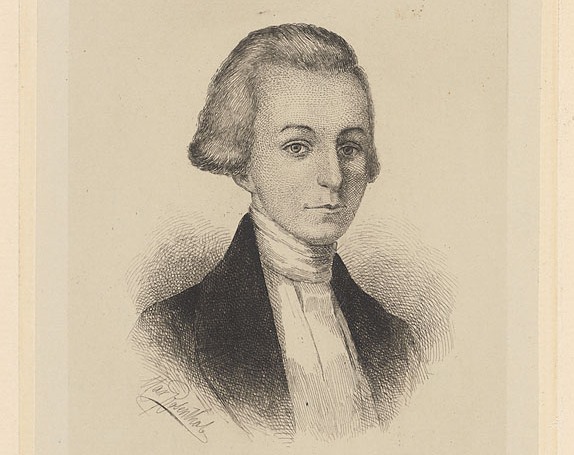
This slight little man is William Duer, former assistant secretary of the treasury, whose shiftless manipulation of the early American financial system got him thrown in debtors prison for life
An illustration of the Buttonwood Agreement, which formed the loose collection of brokers who would form the New York Stock Exchange
The Tontine Coffee House (that building with the balcony) where the stock market meets a good coffee bean
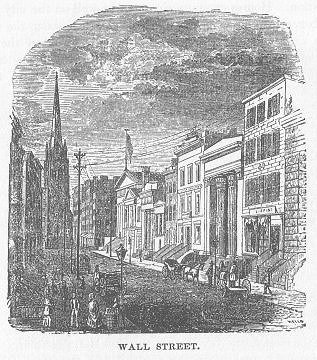
A sketch of Wall Street in the mid 19th century. (You can see Trinity Church and a hint of Federal Hall to your left.) The Stock Exchange headquarters floated around from place to place during this period until an elegant Italian Renaissance style building was built for it in 1863
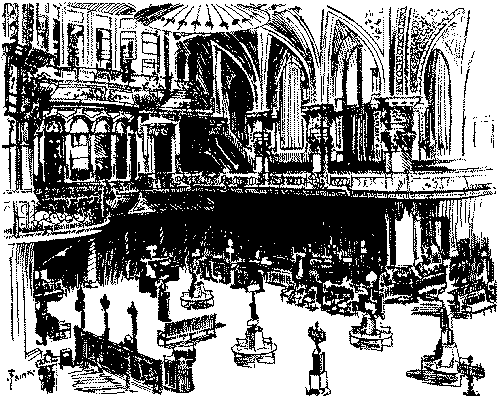
A kind of rough drawing to be sure, but this supposedly depicts the inside of the trading floor from the 1863 building. Sorry to say I couldn’t find any images of the outside, but the John Kellum designed building sounds like it was a beauty.
Another illustration of the new Exchange itself, taken from a membership note
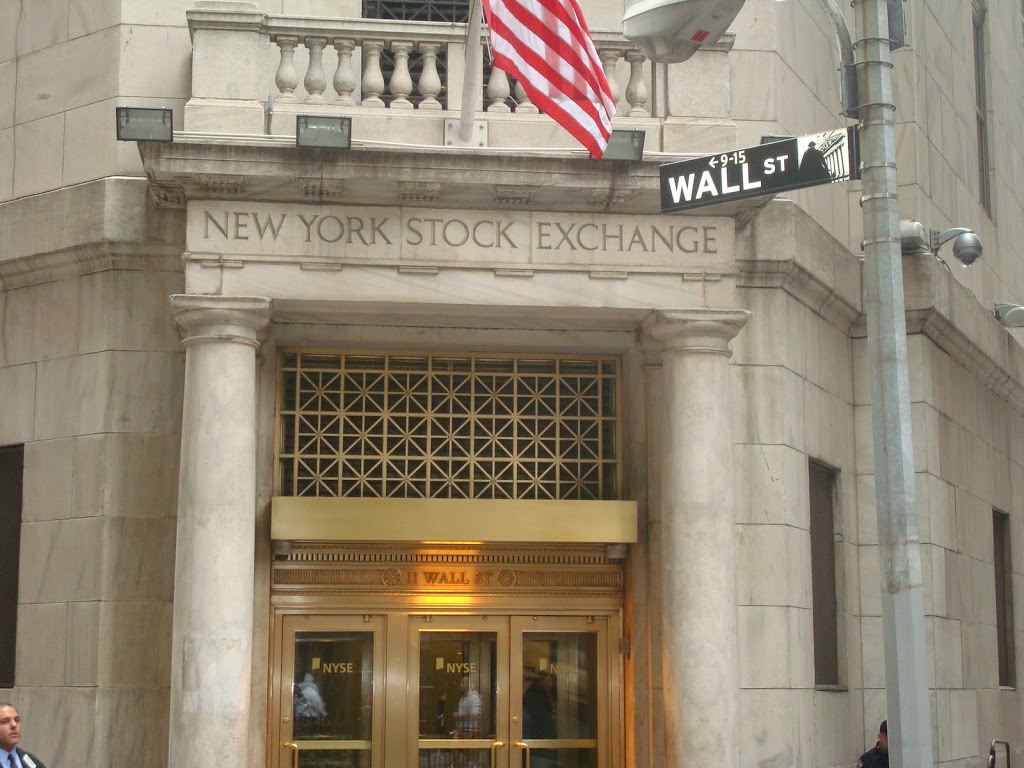
George Post’s masterful Stock Exchange building, mustering up his finest Beaux-Arts instincts in ways that created a solid, powerful structure for an institution sometimes without such stability
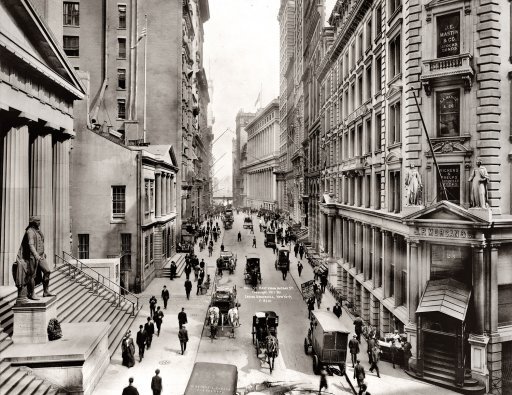
Looking down Wall Street in 1911. By this time a “financial district” was firmly in place as bank offices, brokerage firms and other moneyed interests flock around the Stock Exchange. (This awesome picture is courtesy Shorpy, quite possibly my favorite website in the world.)
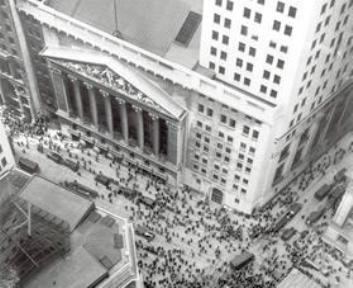
Looking down at the Stock Market as it was crashing in 1929.
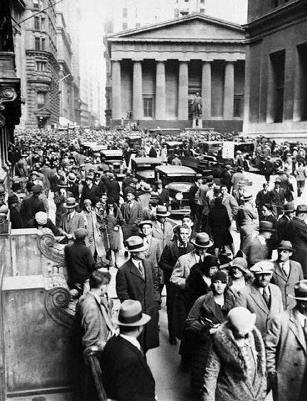
Crowds outside the Stock Exchange, with George Washington looking down from the steps of Federal Hall
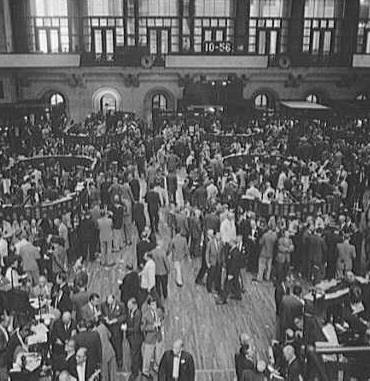
The trading floor from the 1950s
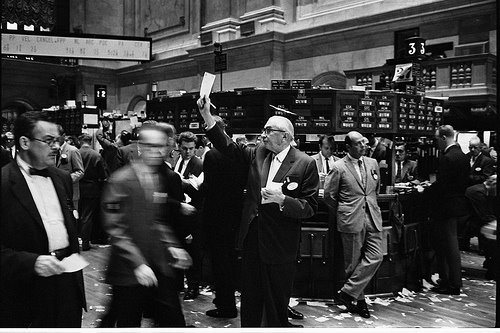
Crazed traders in 1963 (from photographer Thomas O’Halleran)
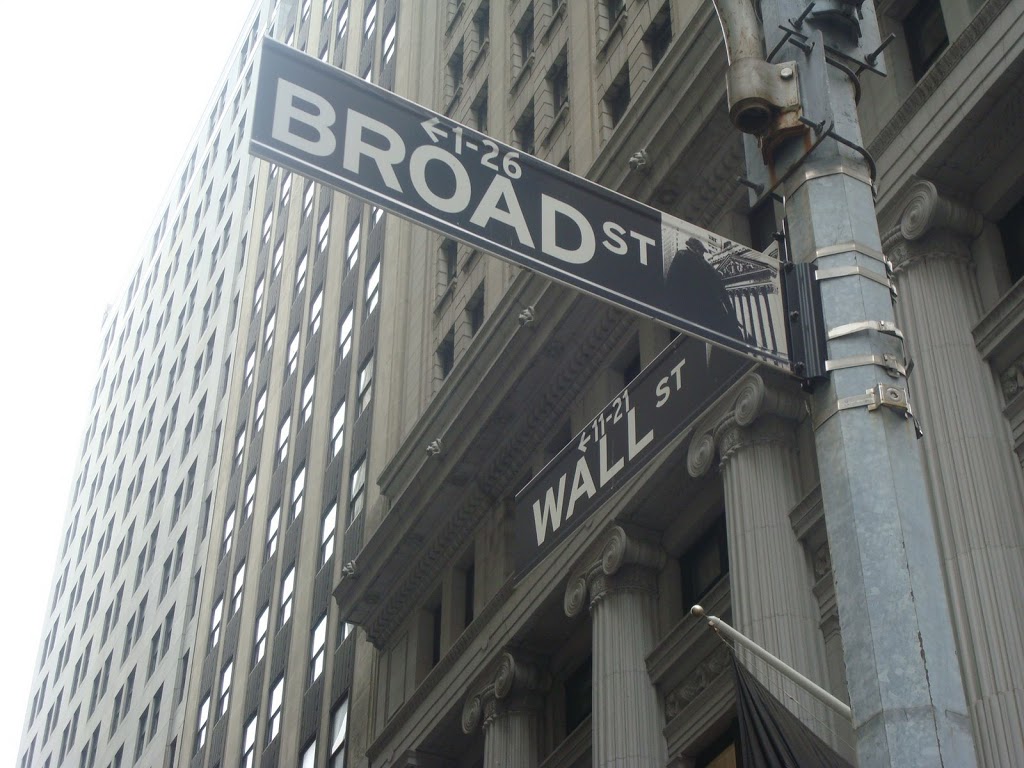
One of the most powerful street corners in the world
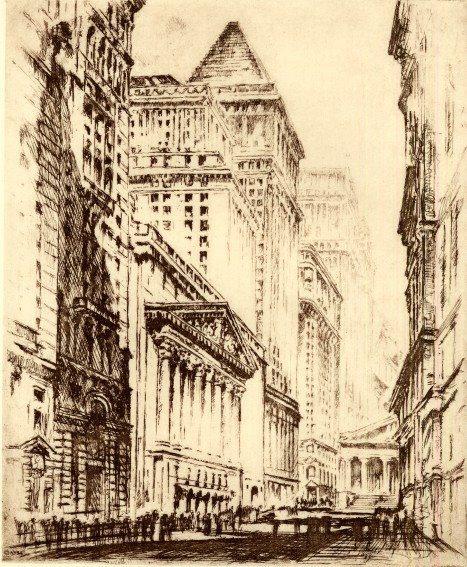
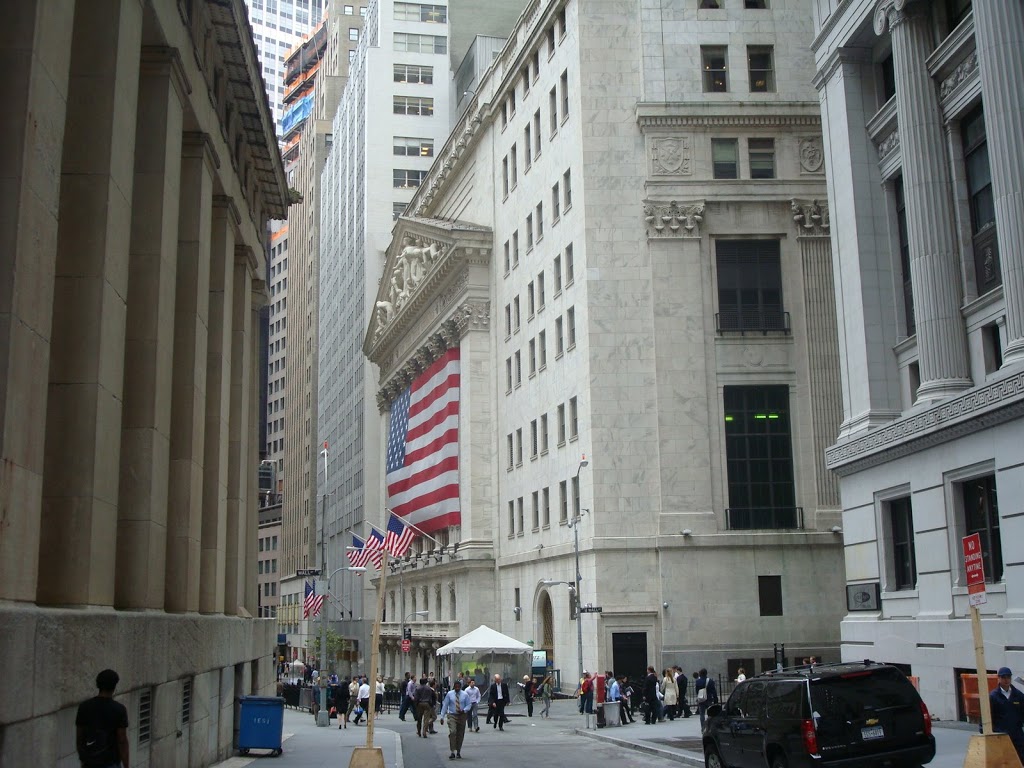
Due to the crush of monstrous buildings all around it, the Stock Exchange sits in a virtual canyon
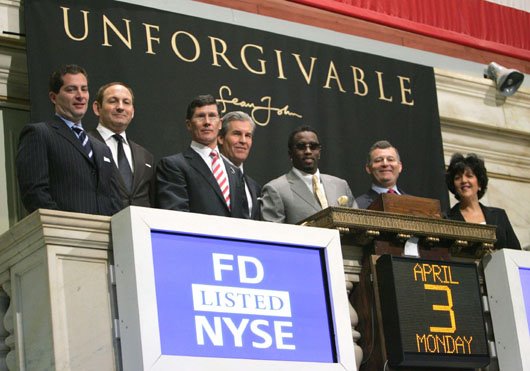
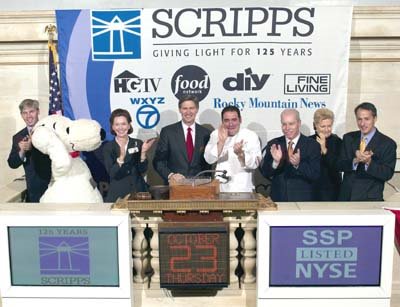
All sorts of people have rang the opening bell at the Stock Exchange, including P Diddy….
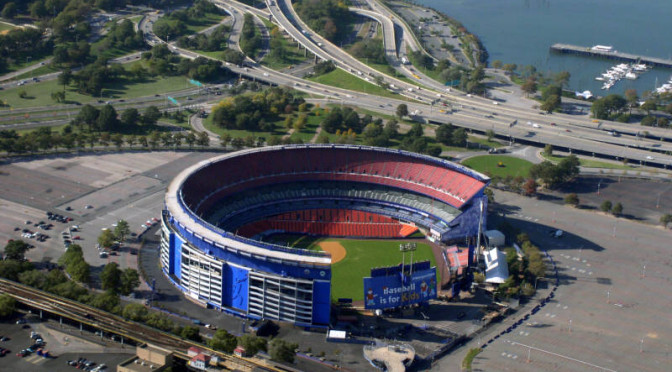
The Mets are movin’ out to Citi Field, but we can’t overlook the great stories contained in their old home, Shea Stadium, a Robert Moses project took years to get off the ground and has been populated with world class ball players, crazed Beatles fans, and one very mysterious black cat.
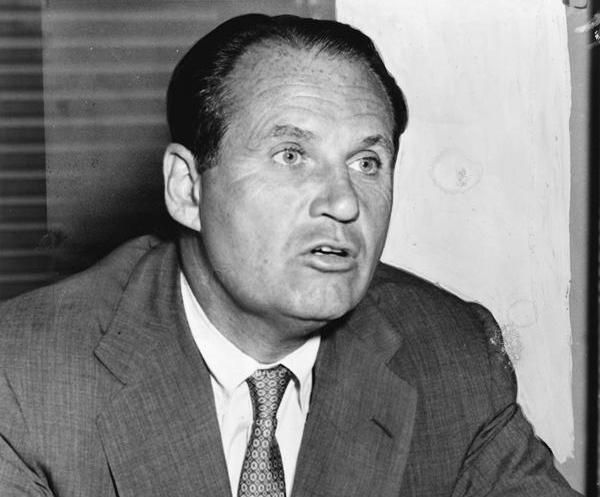
William Shea, who essentially bluffed the National League into creating a new team for the city — the New York Mets
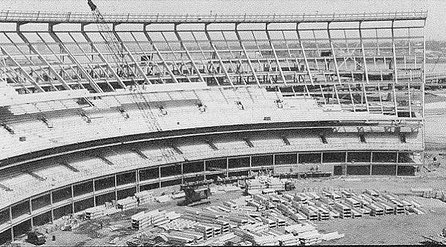
Shea under construction. Plans for a retractable done were abandoned, although many of the features that did make it were revolutionary at the time, including one of sports biggest scoreboards.
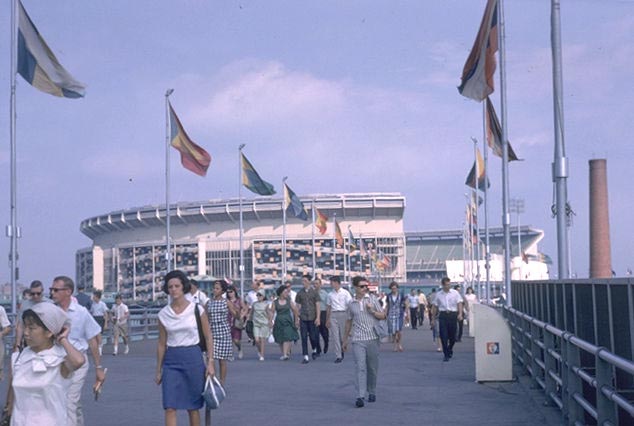
How the exterior of Shea Stadium looked back in 1964. (The photo above is from a great fan website from Carl Abraham, full of great old pictures. Check it out here.)
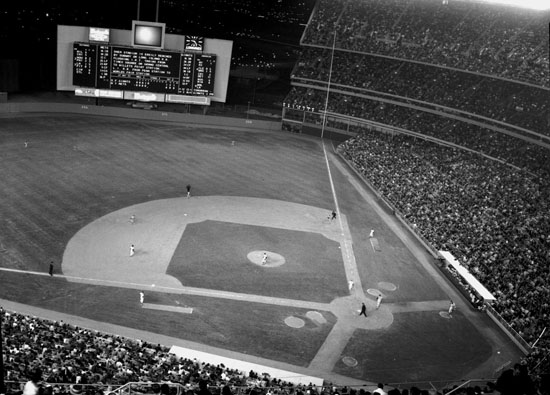
And inside, the same year.
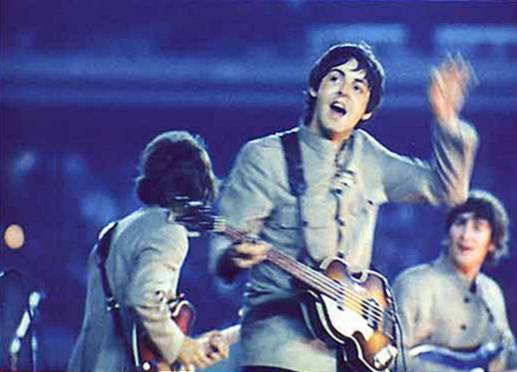
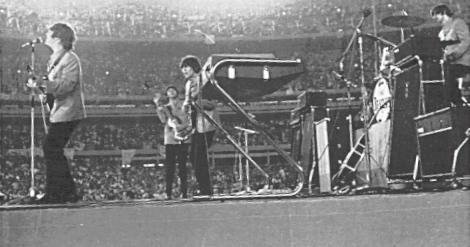
The biggest stars to play in Shea Stadium in the 1960s weren’t sports figures, but music heartthrobs — the Beatles.
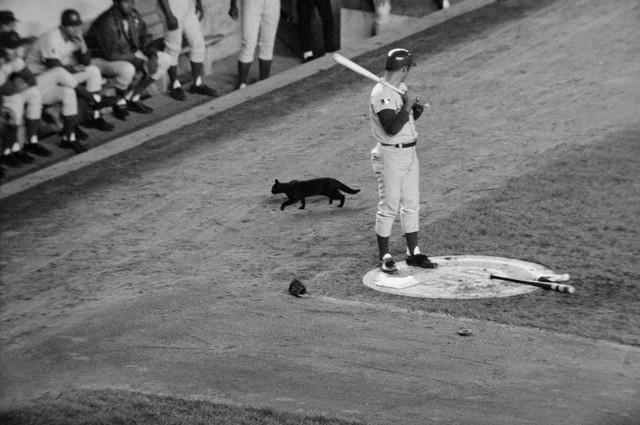
The infamous black cat from that acursed game in September 1969, jettisoning the hopes of the Cubs that year.
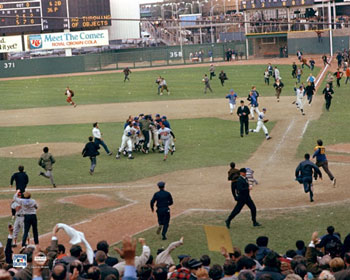
Fans literally stormed the field the moment the Mets clinched their very first Worlds Series title in 1969.
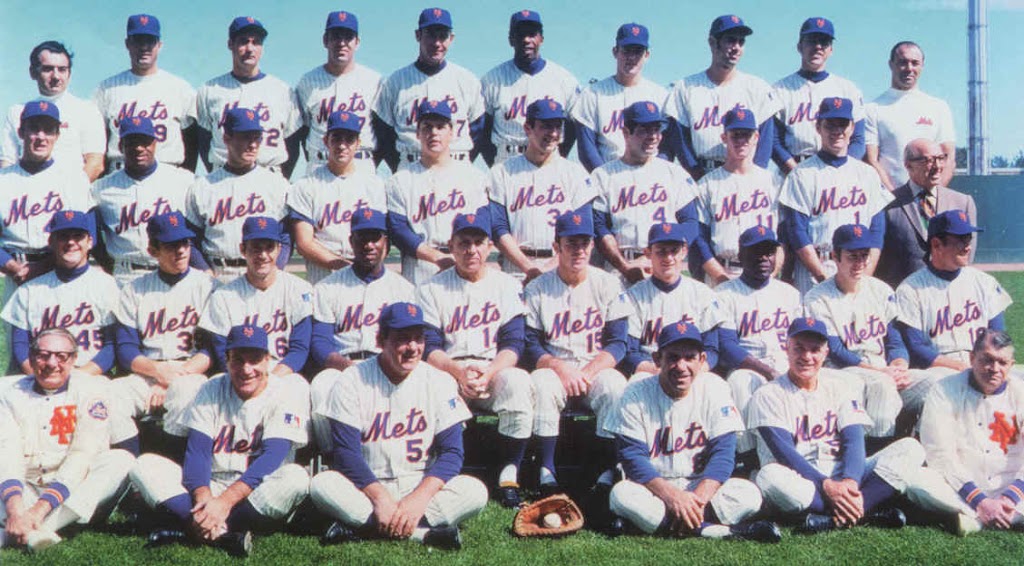
The proud lineup of the Miracle Mets of 1969.
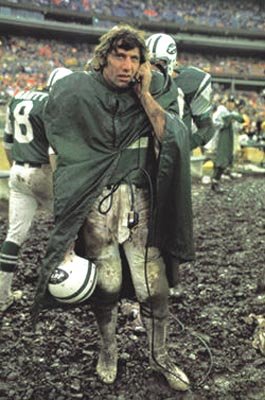
His notable performances and personal theatrics at Shea Stadium with the New York Jets turned quarterback Joe Namath (#12) into a Wheaties-box household name during the 1970s.
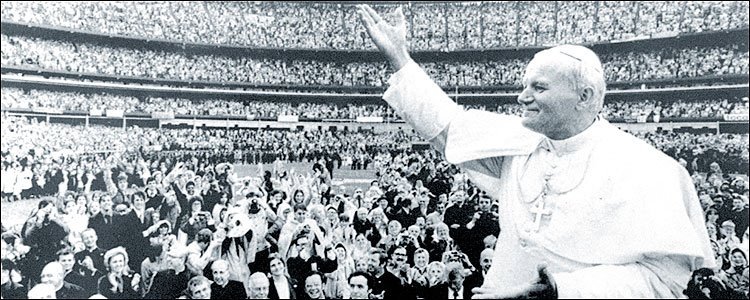
No less a star than Namath, Pope John Paul II finds a warm welcome for him at Shea in 1979.
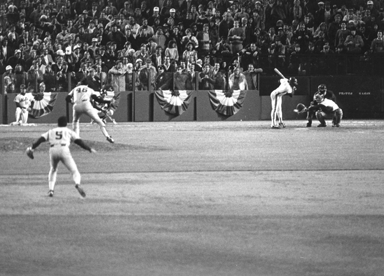
One of the Mets biggest stars of the ’80s, cheerful center fielder Mookie Wilson, was instrumental in the Mets World Series win of 1986 over the Boston Red Sox.
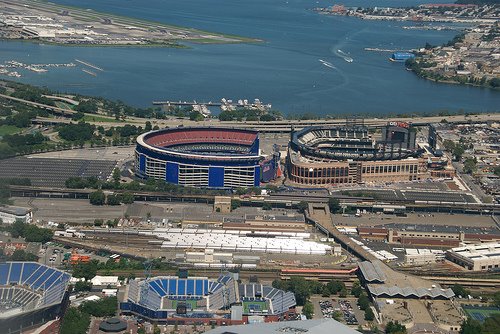
The new Citi Field sits within site of the stadium it will replace
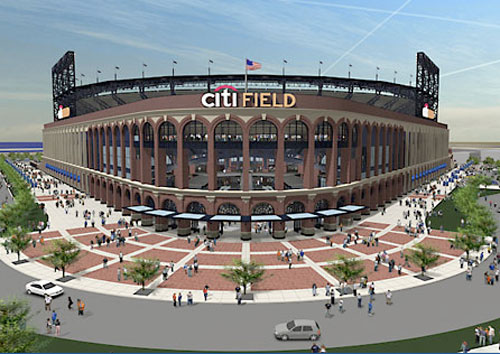
An illustration of what the new Citi Field will look like.
Ever wonder why the Mets team colors are blue and orange? Read one of our very early entries about it here.
However, a commenter below notes that the Mets website actually says: “The Mets’ colors are Dodger blue and Giant orange, symbolic of the return of National League baseball to New York after the Dodgers and Giants moved to California.” Which sounds very plausible — and amazingly coincidental, considering they’re also the official colors of New York. Perhaps the Giants and the Dodgers original sporting colors were based on the official colors, making both explanations correct?