Categories
Amusements and Thrills Podcasts

The Jersey Shore Shark Attacks of 1916

TERROR ON THE BEACH! Seaside resorts from Cape May, New Jersey, to Montauk, Long Island, were paralyzed in fear during the summer of 1916.

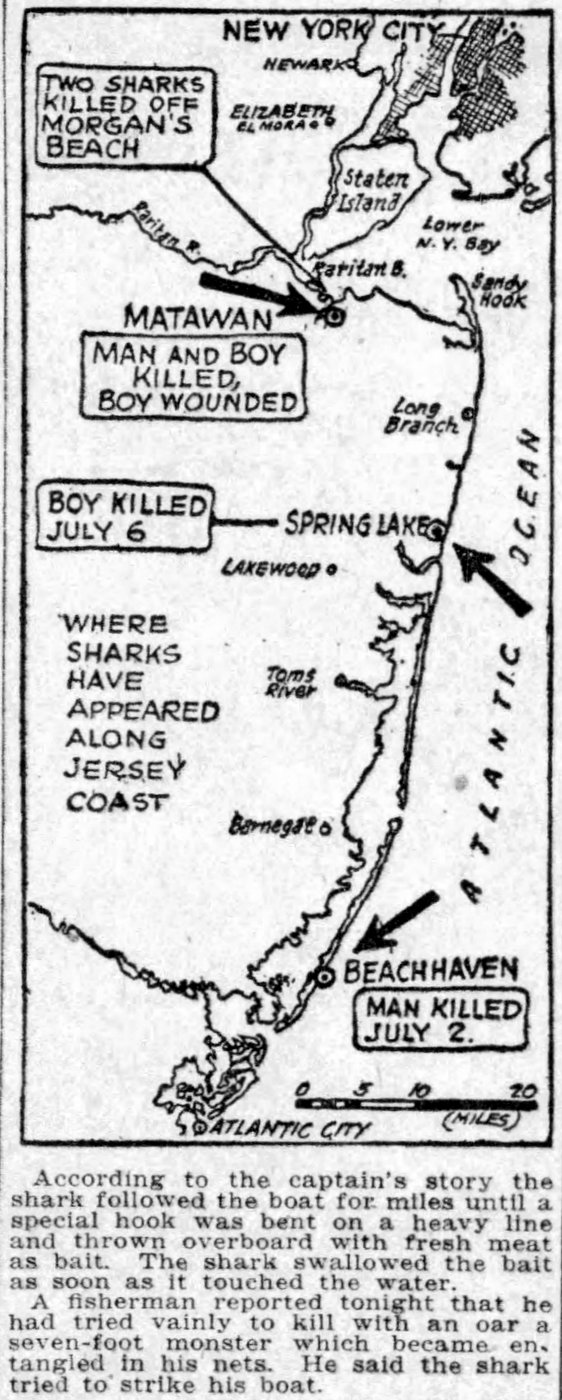
Not because of the threat of lurking German U-boats and saboteurs. But because of sharks.On July 1, 1916, Charles Epting Vansant was killed by a shark while swimming at a resort in Beach Haven, a popular destination on the Jersey Shore.

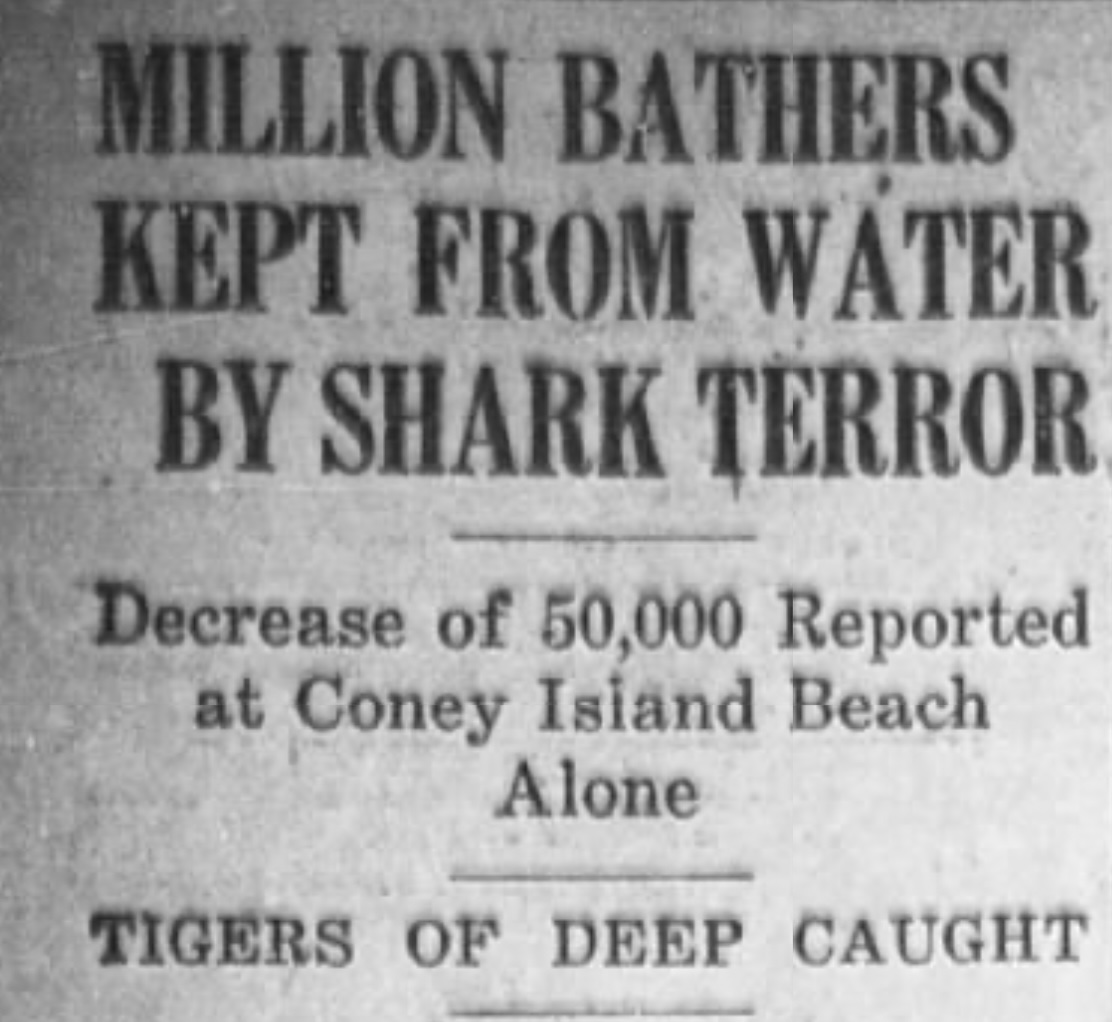
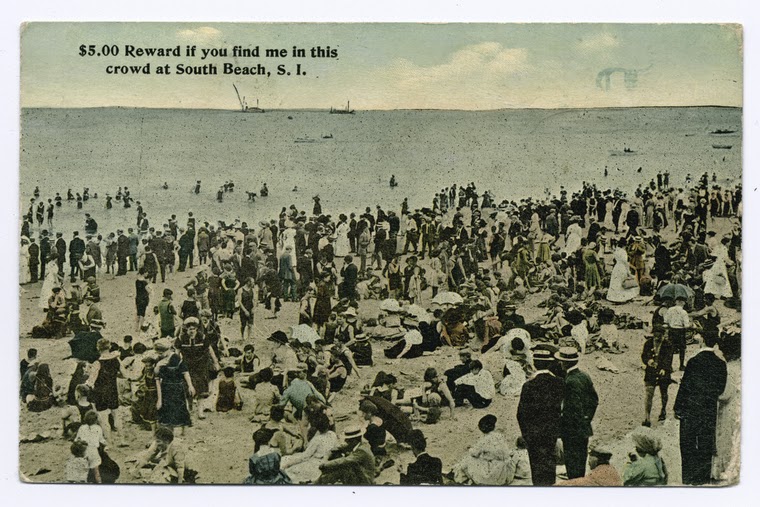
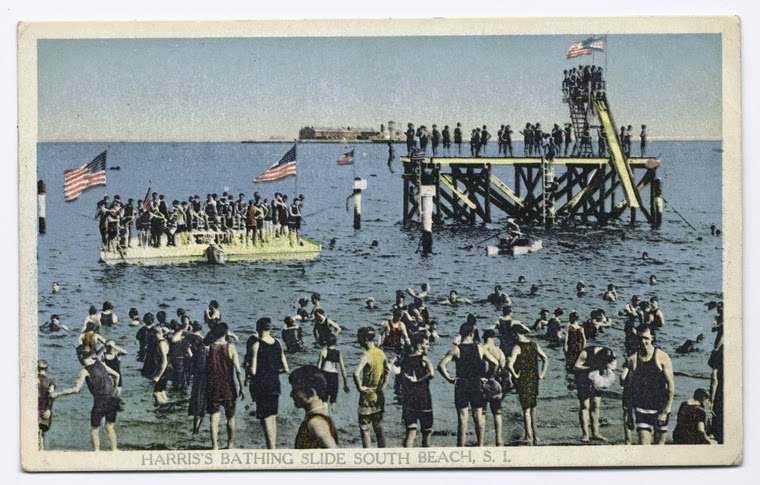
At first, this terrible tragedy received only limited attention. After all, millions were flocking to the beaches along the Jersey Shore and throughout the New York region — Coney Island, the Rockaways and Staten Island’s South Beach.

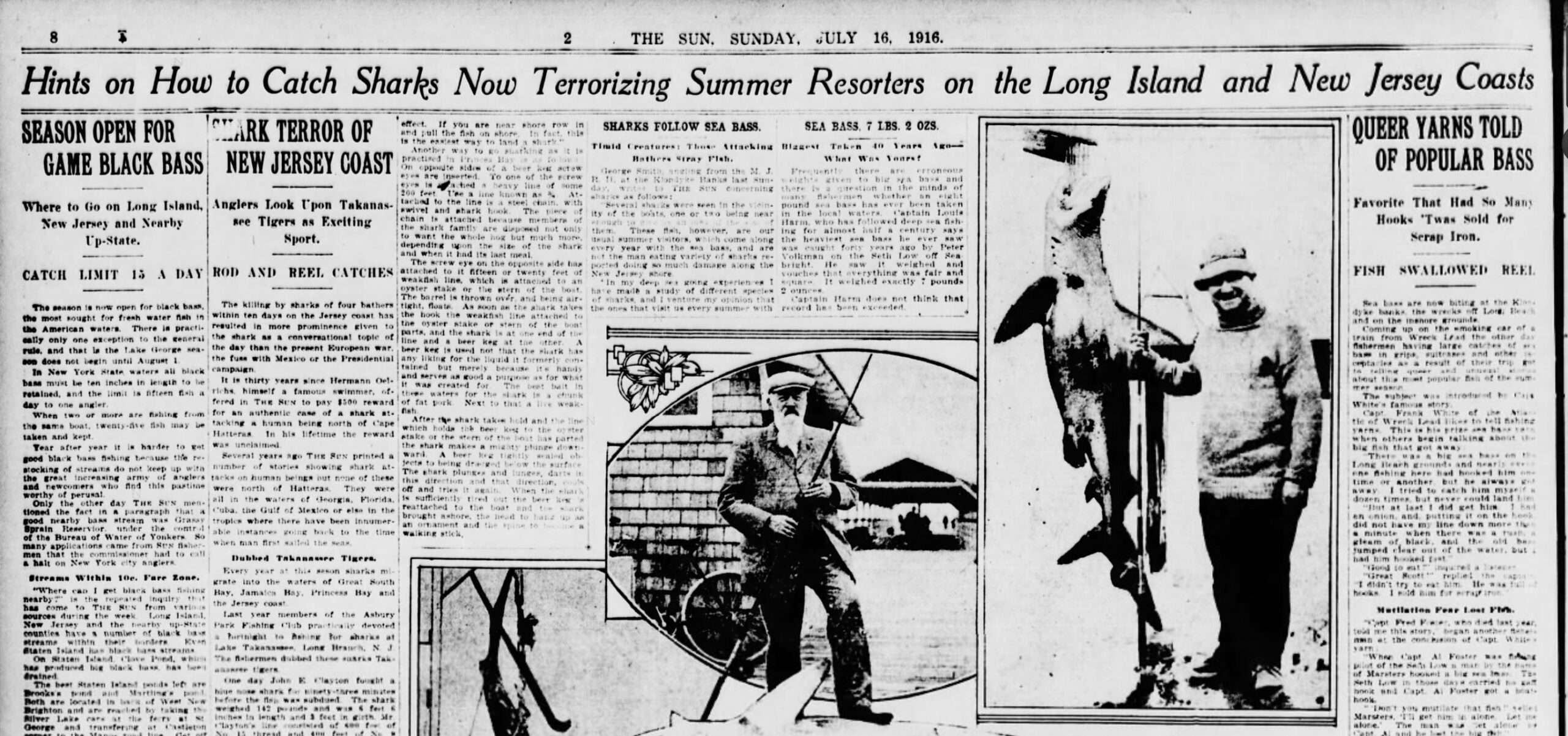
Shark attacks were the stuff of pirate legends and dramatic works of art. Most experts were skeptical that sharks were dangerous at all; the Maryland mogul Hermann Oelrichs offered $500 to any person with proof that sharks were dangerous to humans. Nobody claimed the reward.

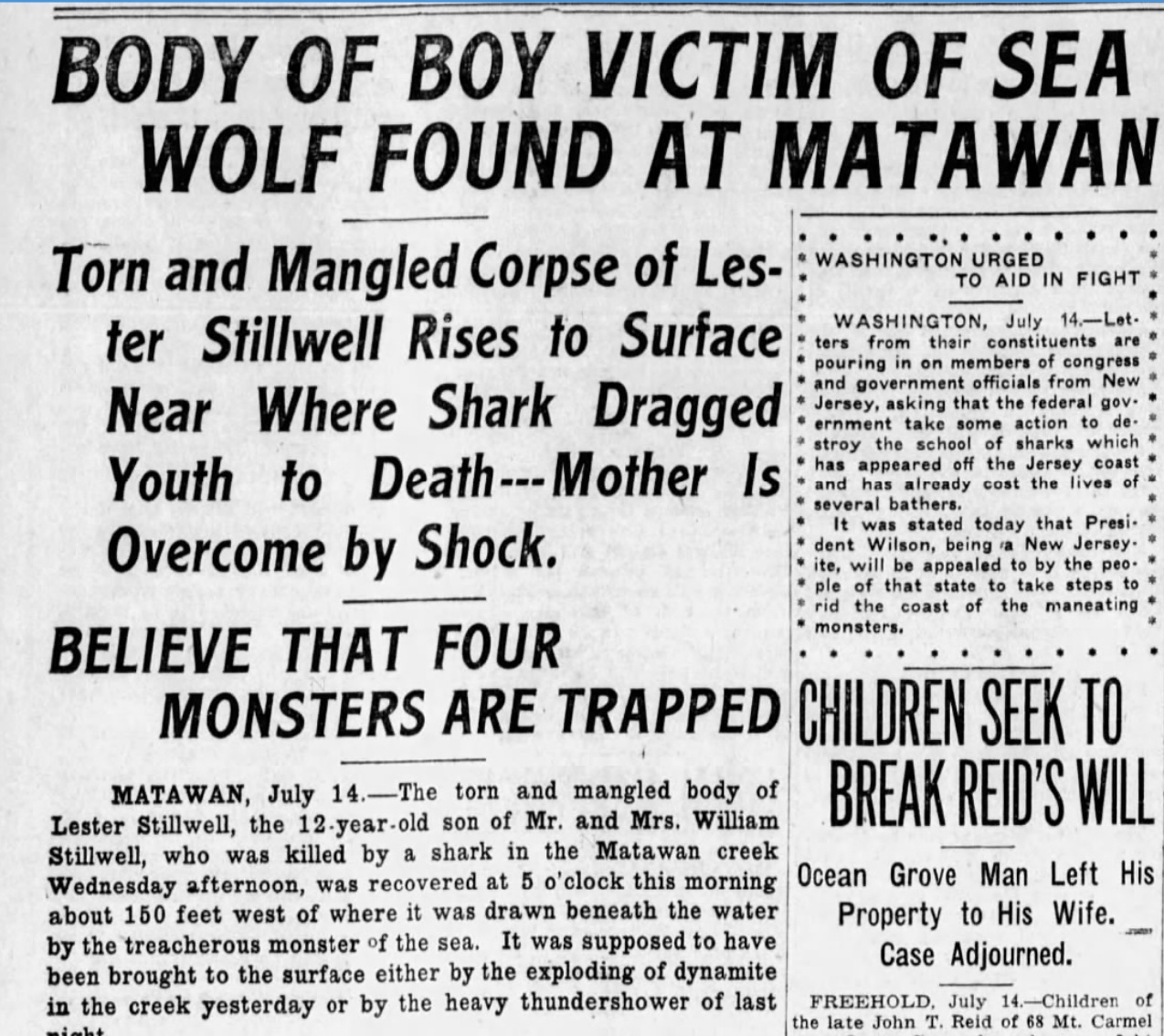
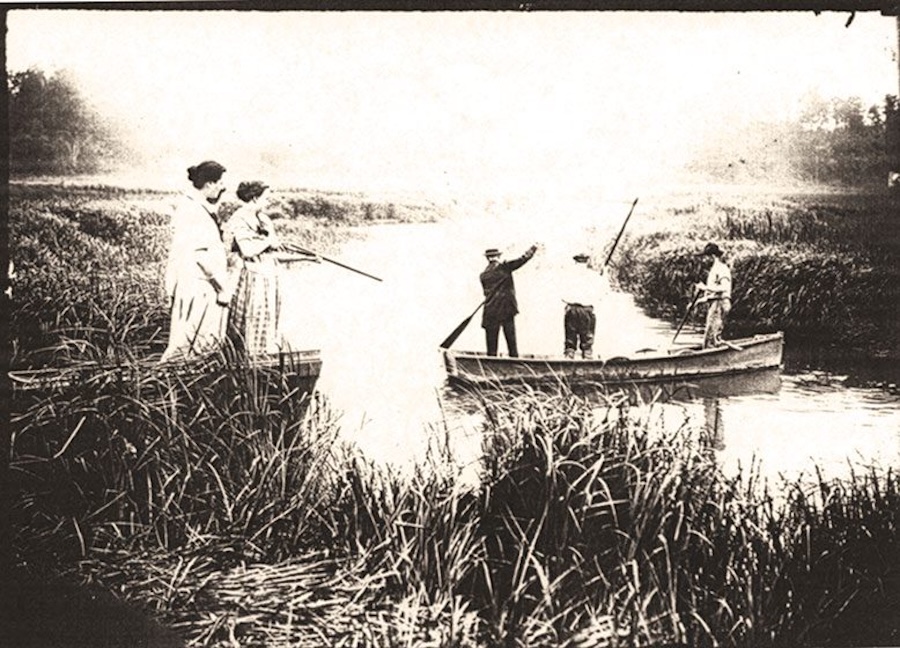
But during that July, sharks did threaten the lives of humans — not only on sandy beaches, but even in tranquil watering holes, several miles inland. What was in the water in July of 1916?

This show contains descriptions of violence related to shark attacks. You’ve been warned.

This episode was brilliantly edited and produced by Kieran Gannon.


The Bowery Boys Podcast is proud to be sponsored by FOUNDED BY NYC, celebrating New York City’s 400th anniversary in 2025 and the 250th anniversary of the United States in 2026. Read about all the exciting events and world class institutions commemorating the five boroughs legacy of groundbreaking achievements, and find ways to celebrate the city that’s always making history.  foundedbynyc.com

New York Herald, July 16, 1916
Evening Public Ledger, July 17, 1916
Asbury Park Press, July 14, 1916

FURTHER LISTENING

After you listen to this show, check out these episodes of the Bowery Boys podcast with similar themes.
Categories
Amusements and Thrills Health and Living

The Bowery Boys New York City swimsuit edition, 1880-1920

 The notion of organized ‘ocean bathing’ — actually going into the water for health, relaxation and enjoyment — was really a 19th century invention, first popularized in the United States during the 1830s at the Marine Pavilion on the Rockaway Peninsula.

Bathing beauty: Diver Maggie Ward prepares for a jump into the waters of Coney Island, in the summer of 1888

For propriety’s sake, people would enter a bathing hut hitched to a horse and ride the container as it was backed into the water, exiting from the hut in their full-body swimming apparel only when safely immersed in the water. No risk of seeing wet fabric clinging seductively to the human form!

Fifty years later, bathers would dare walk to the beach sans horse-drawn hut. But their beach apparel still matched the modesty of their regular wear.

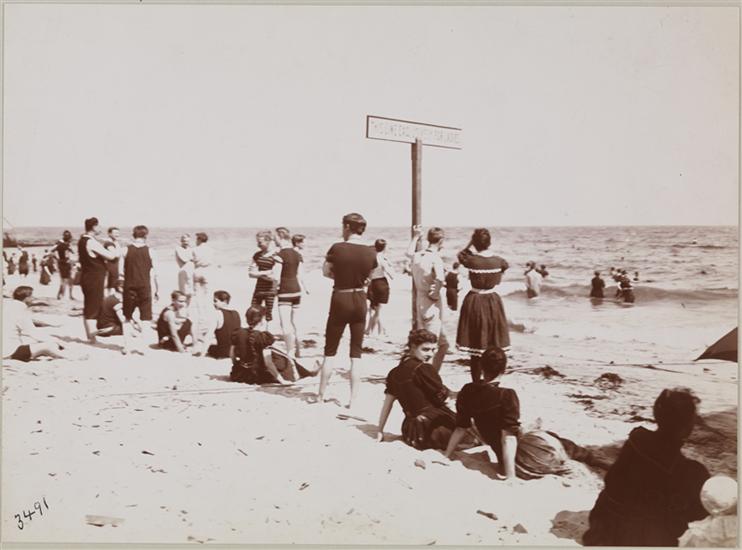
Here are a few examples of garments — for sunbathing, swimming or just relaxing — worn at some of New York’s most popular beaches of the late 19th-early 20th century.

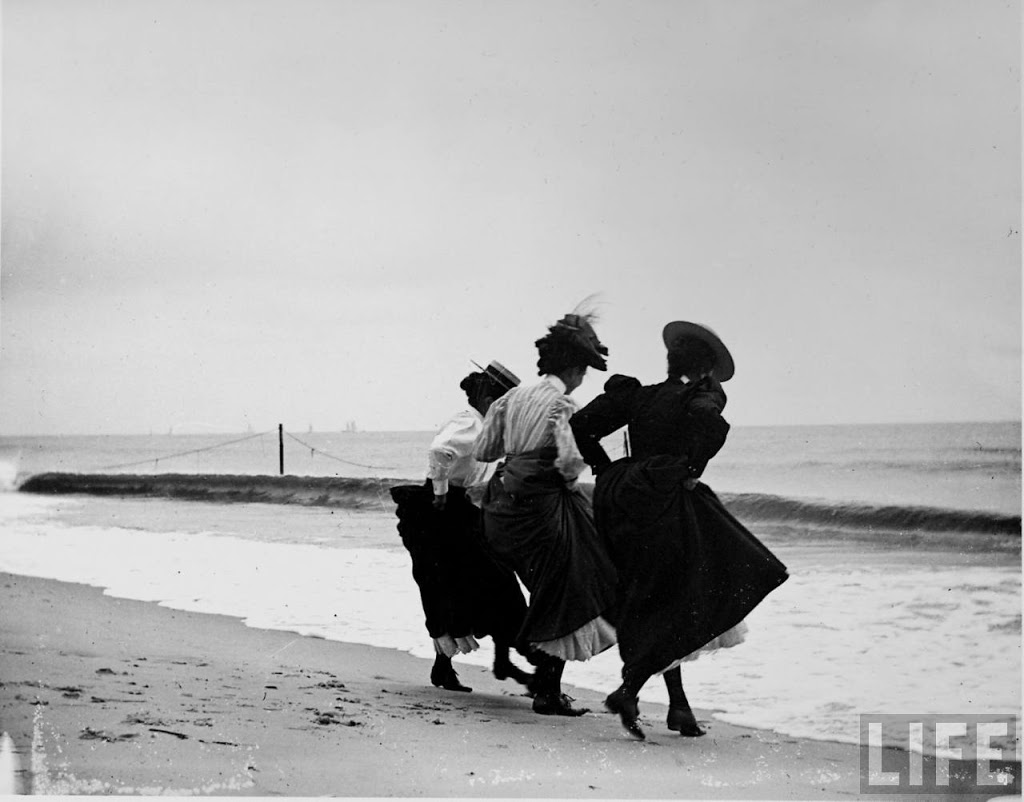
Why needs a bikini? Daring ladies risk the surf in regular wear on the Rockaway beachfront, 1897 (Courtesy Life Magazine)

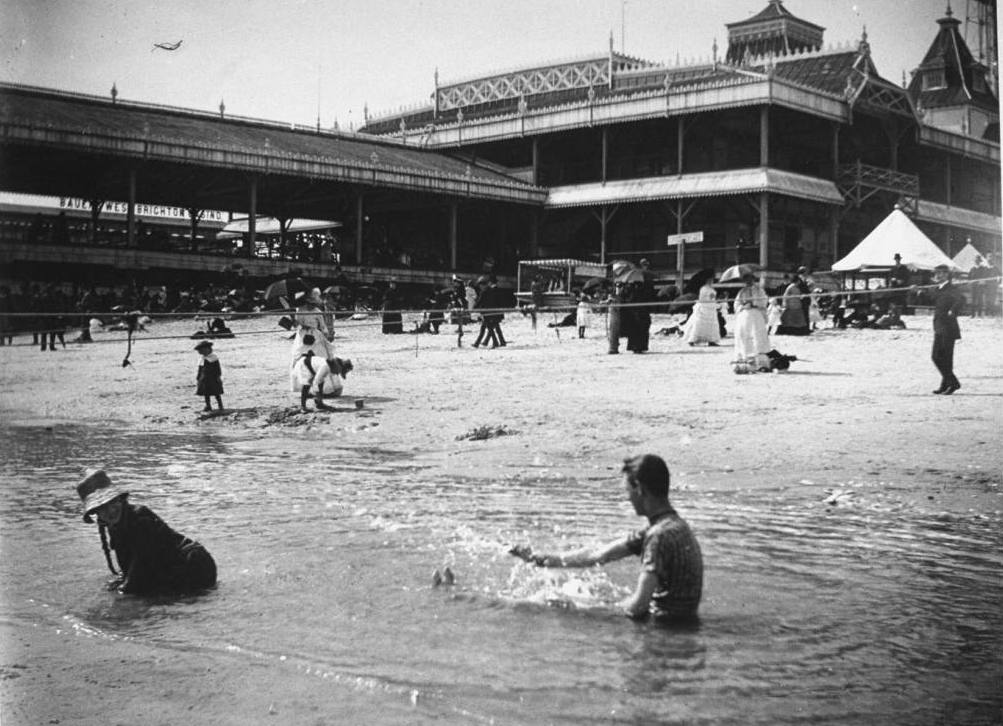
Serving up shenanigans in the waters of Brighton Beach, 1886
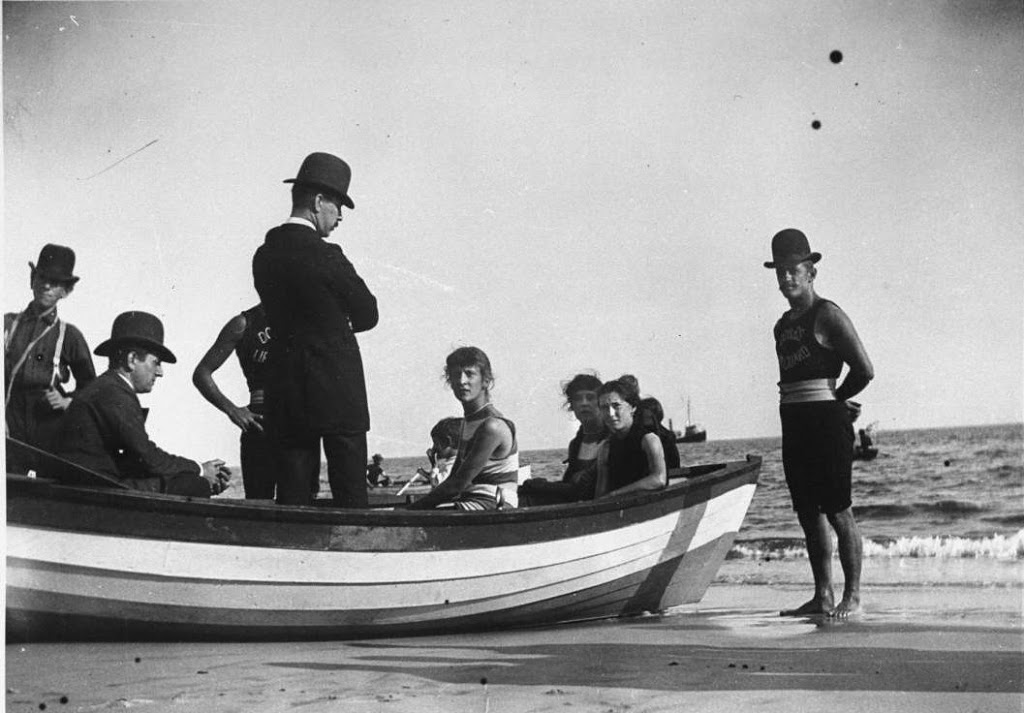
Three female athletes, readying for a ocean swimming match out at Coney Island, await the competition with a few oddly fully clothed men, 1887 (Life Magazine)
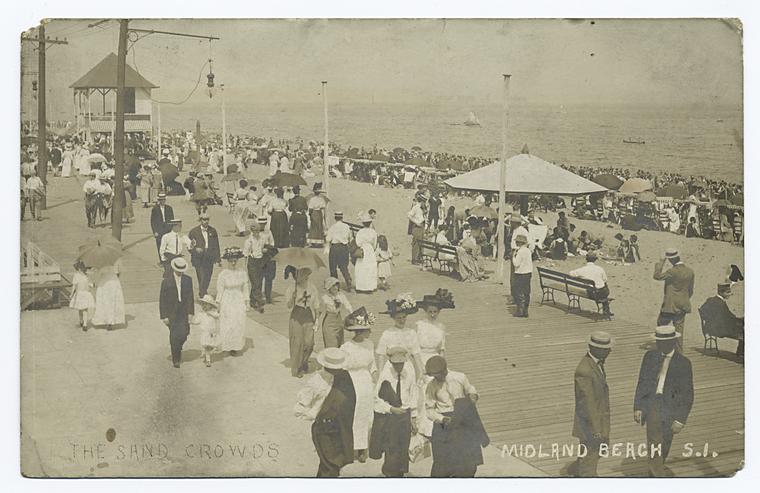
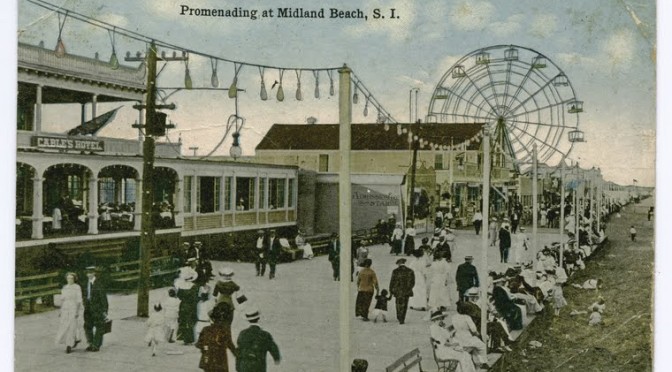
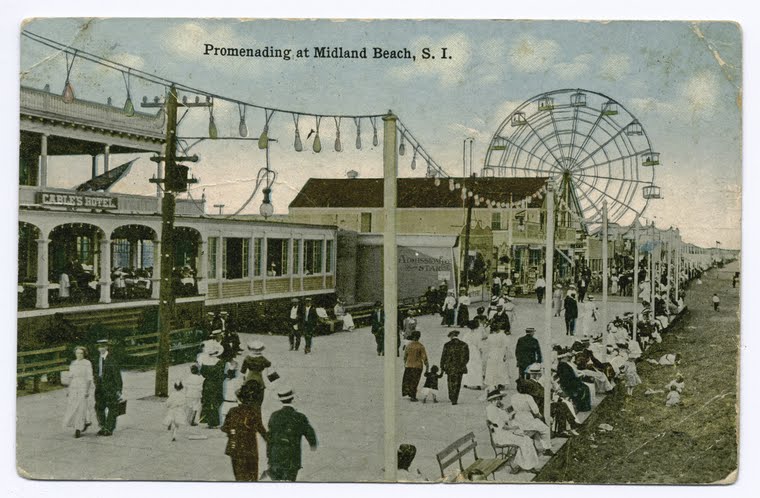
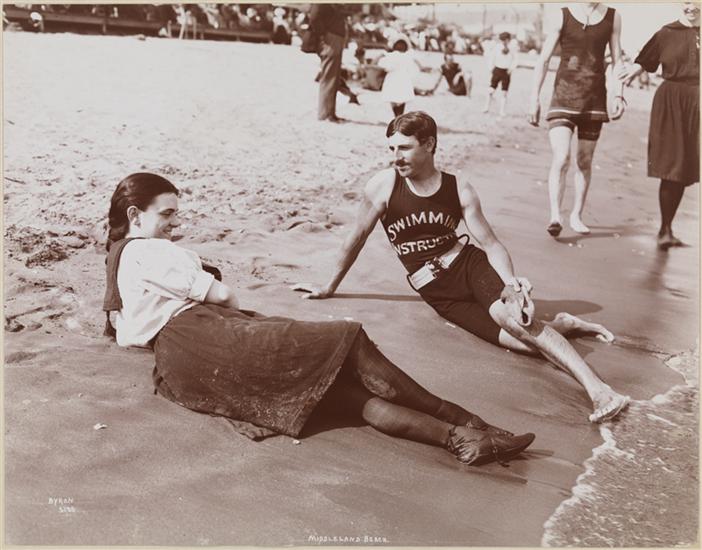
Classing it up a little with the ‘sand crowds’ along the Midland Beach boardwalk in Staten Island, no date, but probably between 1900-1910. (New York Public Library)
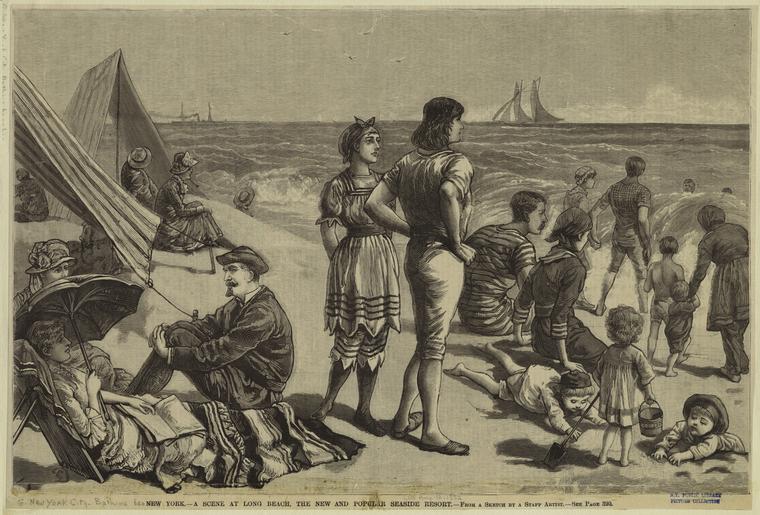
The dapper sea threads adorning the trendy beachgoers at Long Beach, 1882. Okay, this is technically in Nassau County, not New York City proper, but how could I not give these styles a showcase? (New York Public Library)
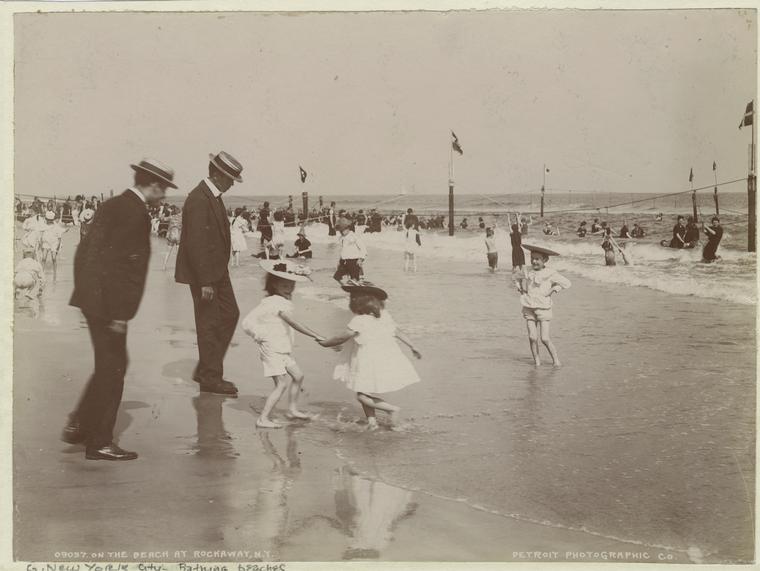
Check out little Minnie Pearl and her fine hatted friends at Rockaway, date unknown. (New York Public Library)
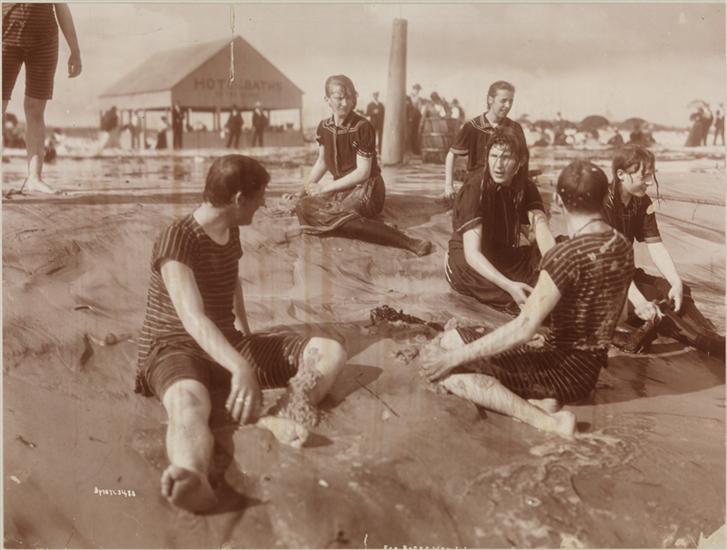
Frolicking in the sand in Far Rockaway, 1897. In the distance is a Hot Baths pavilion. (Courtesy Museum of the City of New York)
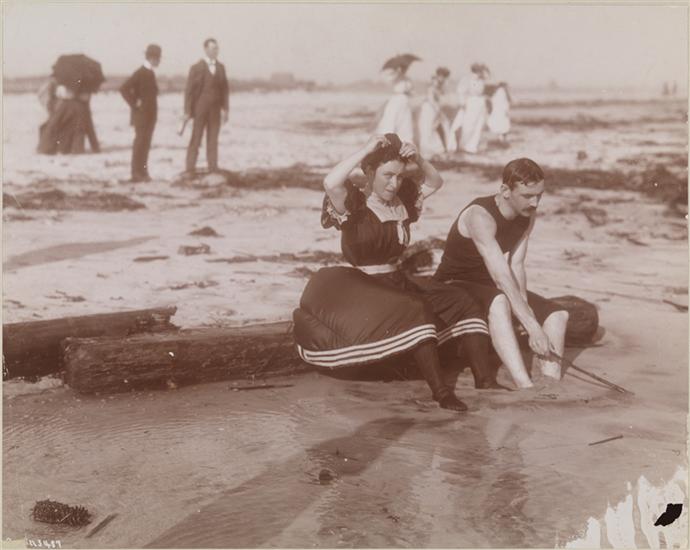
A dynamic duo hitting the beach of Far Rockaway, 1896. (Courtesy Museum of the City of New York)
Another image of Far Rockaway, 1897. featuring a whole array of bathing-suit options. (Courtesy Museum of the City of New York)
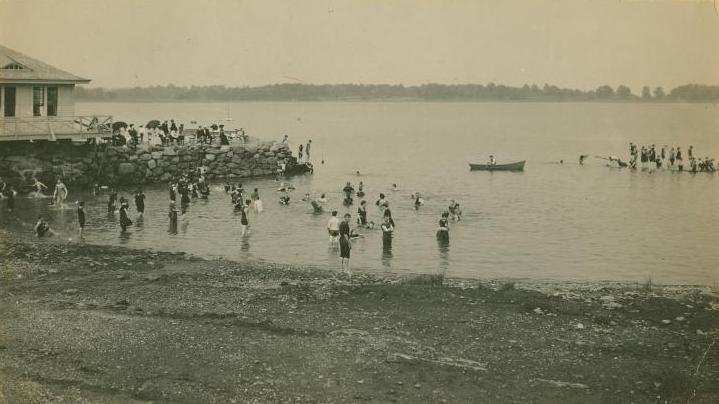
Bathers in black luxuriate in a swimming hole in Pelham Bay, 1903 (New York Public Library)
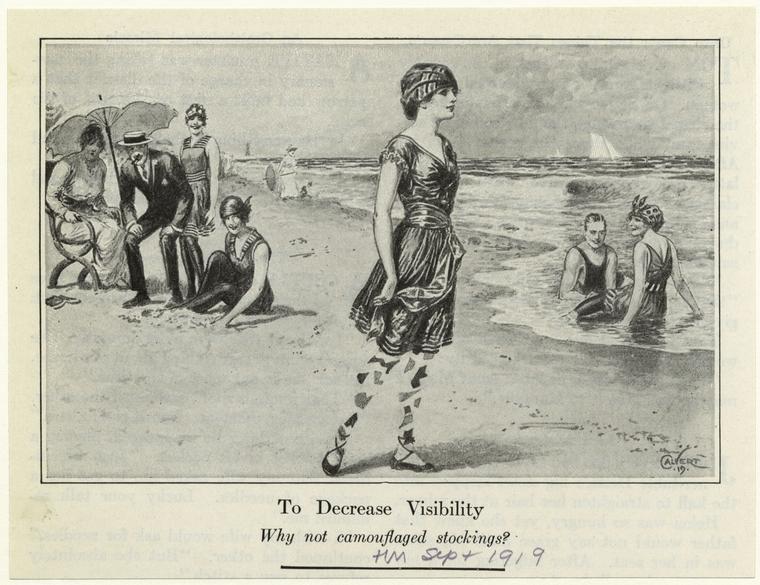
And finally, I’m not quite sure this avant garde look ever made it onto the beach. But if you want to look like you’re floating over the beach without legs, why not try these camouflage beach leggings, advertised in Harper’s Magazine in September 1919? (New York Public Library)
Basking in the surf at Midland Beach, 1898 (Courtesy Museum of the City of New York)
Categories
Staten Island History

Forgotten paradise: Welcome to South Beach, Staten Island

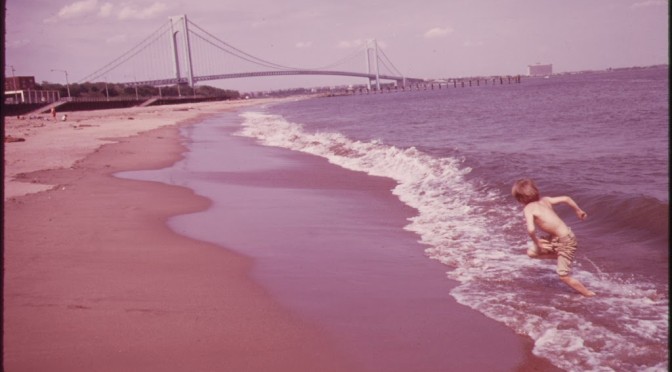
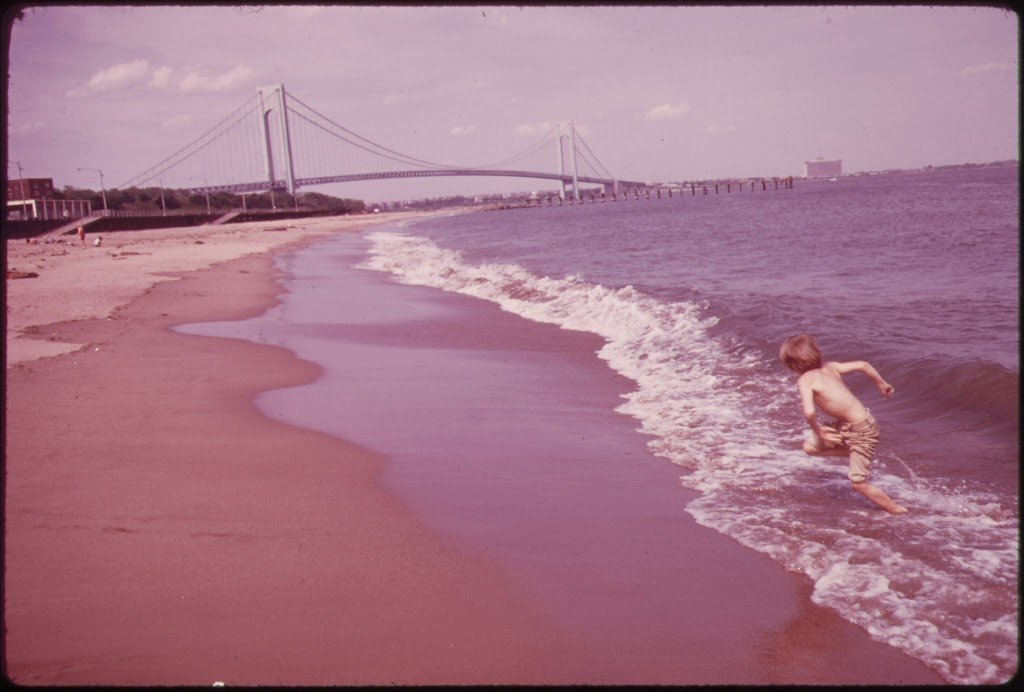
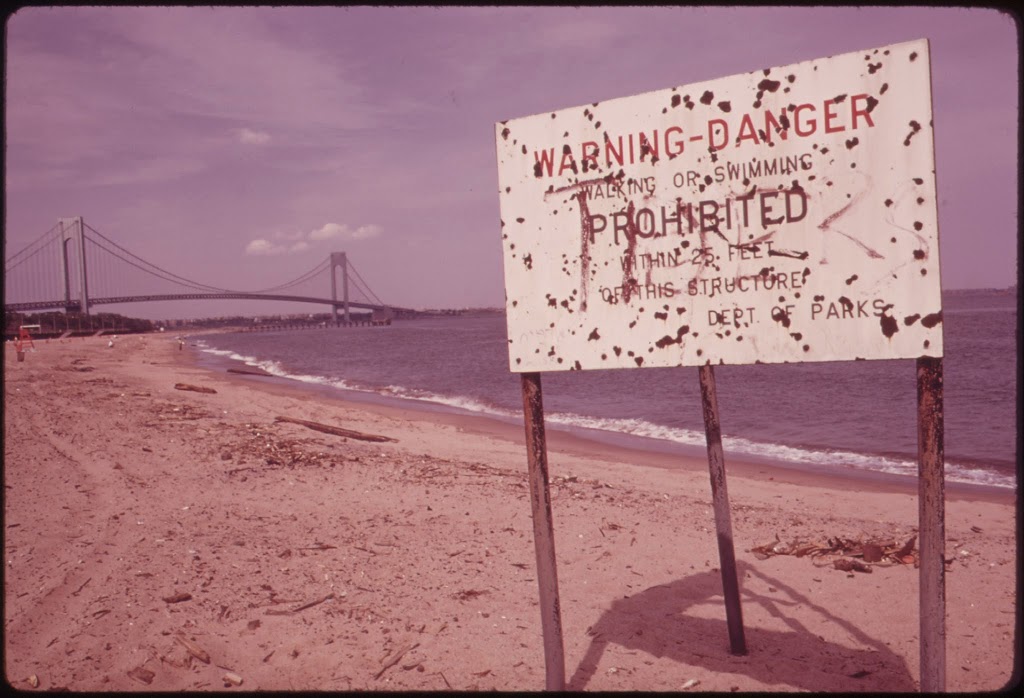
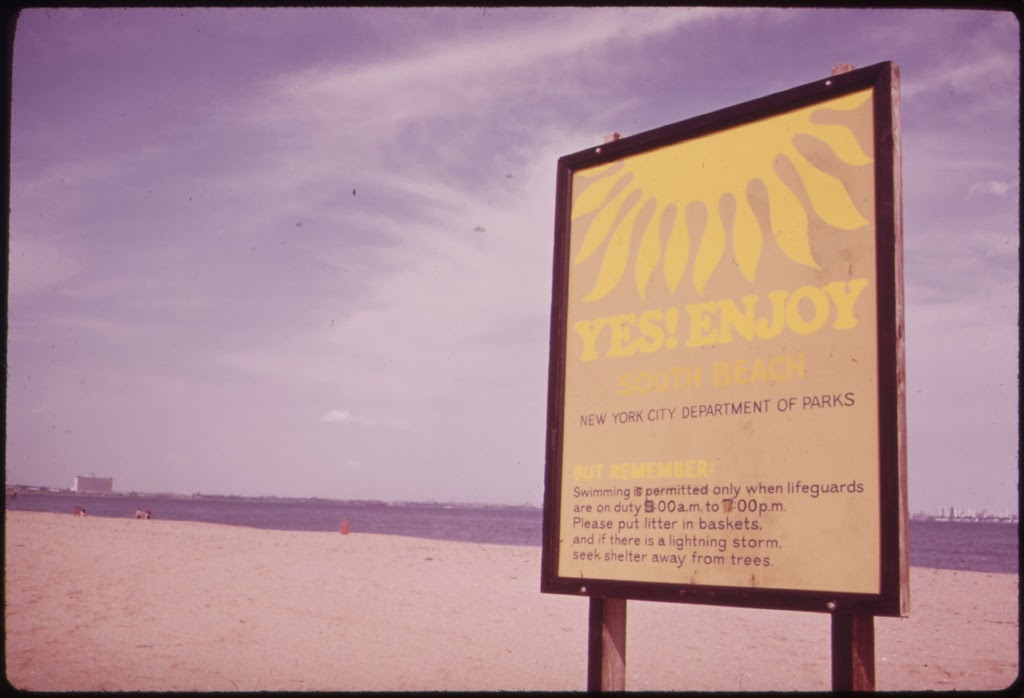
South Beach, Staten Island, 1973, photographed by Arthur Tress

As a resort and amusement mecca, the time of Staten Island’s South Beach has come and gone.  The waterfront community south of the Verrazano-Narrows Bridge still has a classic old boardwalk, built in 1935 as New Deal project and appropriately called the Franklin Delano Roosevelt Boardwalk.  And there are still recreational facilities for baseball and hockey found just off its old boards.

But priorities have changed here. Similar to the fate of Rockaway Beach, most of the amusements were gone by the 1970s,  Several sections of neighborhoods along the shore were gravely damaged in 2012 by Hurricane Sandy.

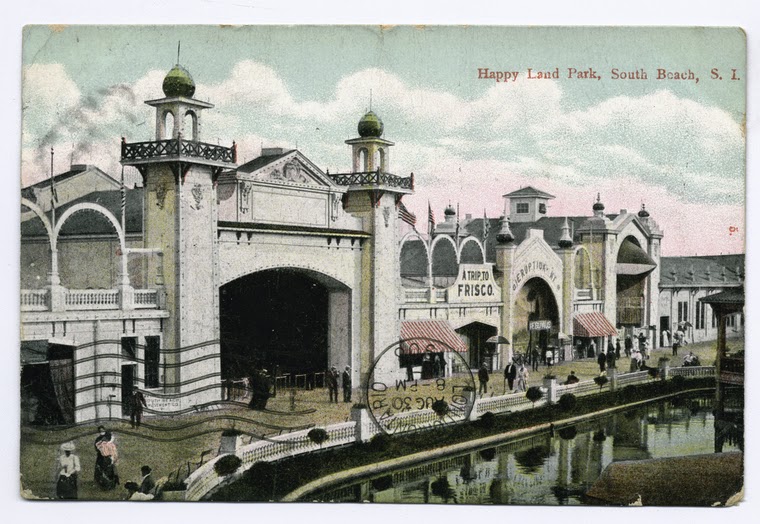
Its doubtful this area will ever return to its glory days of the early 20th century when Happyland Amusement Park brought a bit of Coney Island magic to the shore.  Further inland, real estate developers were changing the landscape with planned communities that eventually appealed to New Yorkers of Italian, Irish and Hispanic descent.

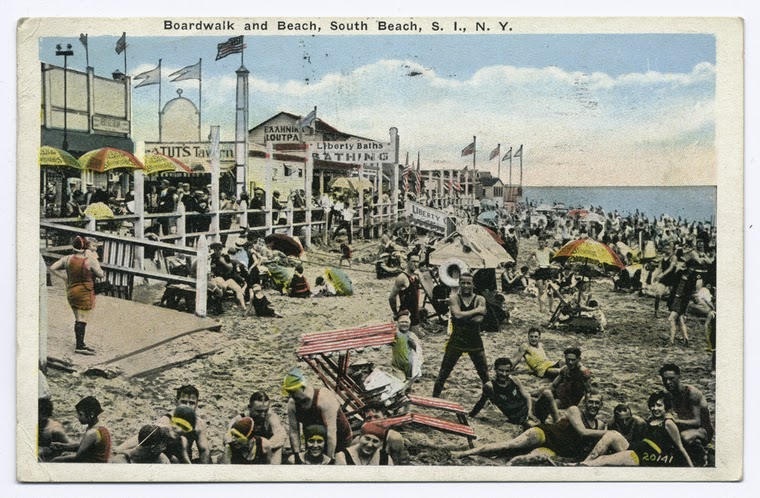
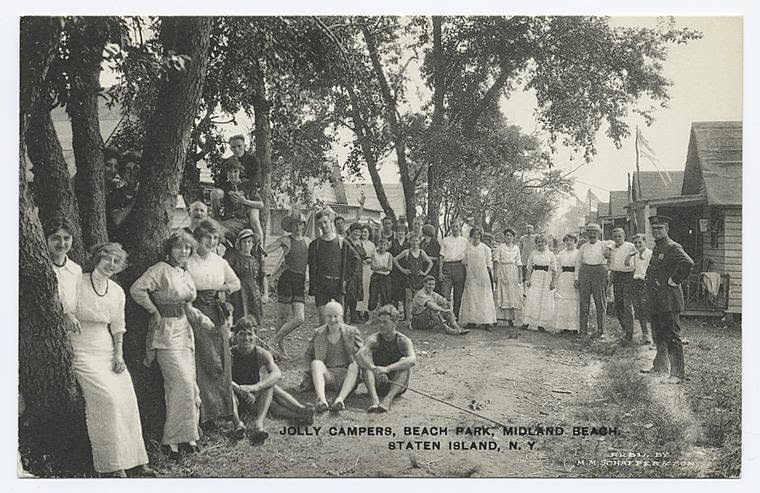
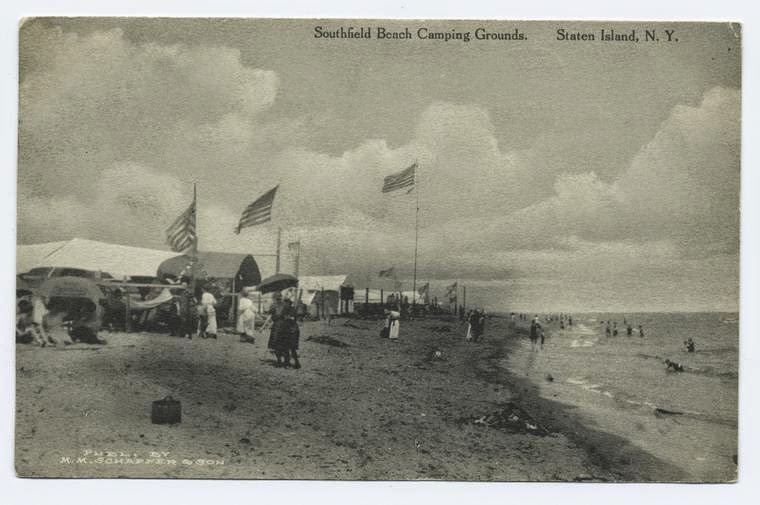
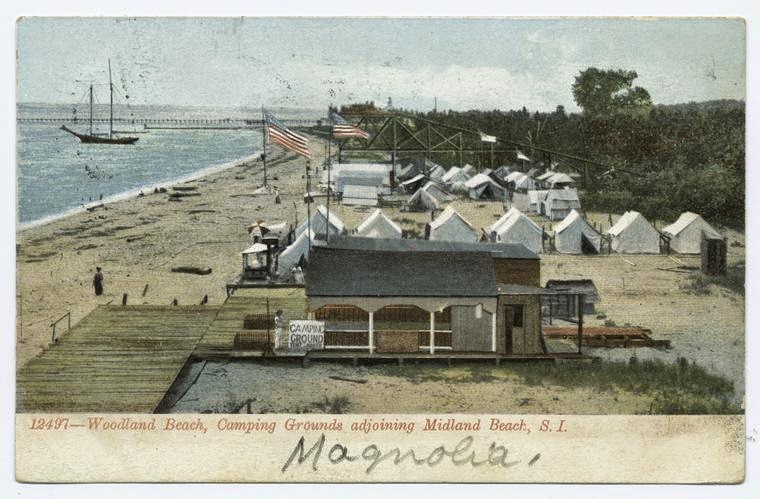
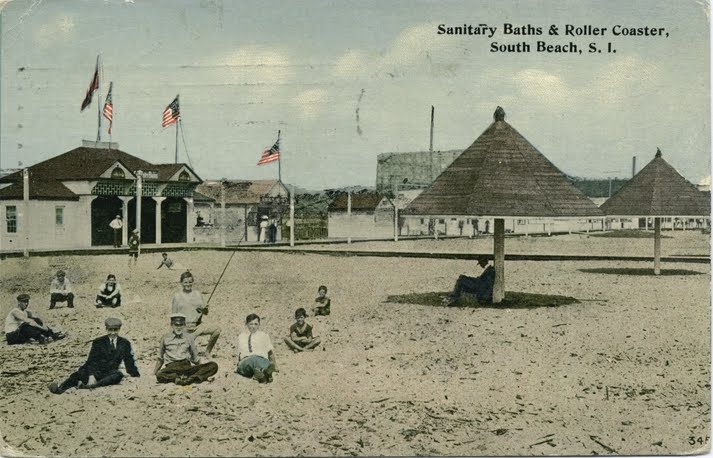
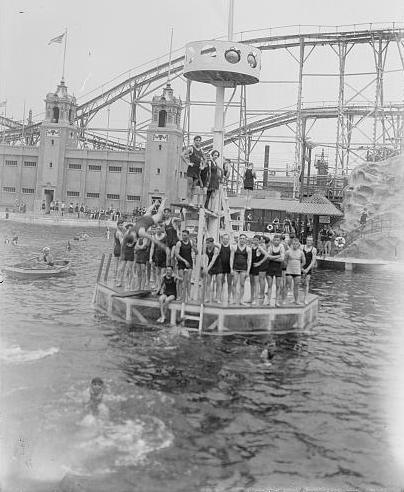
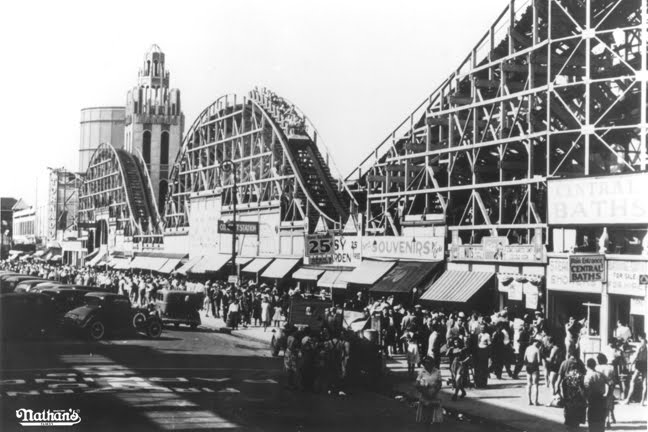
Here’s some views of South Beach and adjacent Midland Beach from early in the century and then some drastically different views from the 1970s. Photos are courtesy the Library of Congress and the New York Public Library:

From a 1908 advertisement: “A delightful ferry sail down the bay and trolley ride through Staten Island’s verdant hills will bring you to HAPPYLAND, on South Beach, looking out toward the ocean.  The new combination ticket feature provides, for a quarter, admission to the park, vaudeville, dancing pavilions, Bill’s Ladder, Paris by Night, Foolish House, Georgia Minstrels, Dib Dab Slide, Electric Slide, Hippodrome, Circle Swing, Fat Saidy and the Human Roulette Wheel.”

Brooklyn Daily Eagle ad from 1913 (courtesy the blog wagnerowitz)

Below the beaches in 1973, photographed by Arthur Tress

Staten Island already had a gigantic Ferris wheel — in 1893!

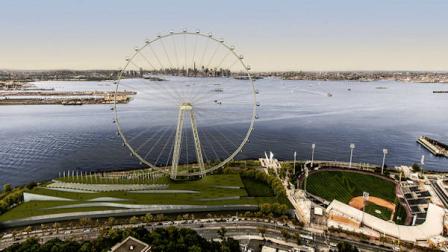
In the spirit of P.T. Barnum, Mayor Michael Bloomberg yesterday announced plans to build the world’s largest Ferris wheel next to the ferry terminal on Staten Island. The amusement, called the New York Wheel, will stand 84 feet higher than a similar Ferris wheel in Singapore and also nods towards the London Eye, a ride built in 1999 that quickly became a centerpiece of British tourism.

Obviously geared towards boosting tourism to Staten Island, the plan offers something for the residents of the borough in the form of a “retail outlet complex.” With the ballpark home of the Staten Island Yankees and the recently redesigned ferry terminal, the new projects will radically alter the face of the St. George neighborhood.

(At right: A rendering of the new wheel, courtesy ABC.)

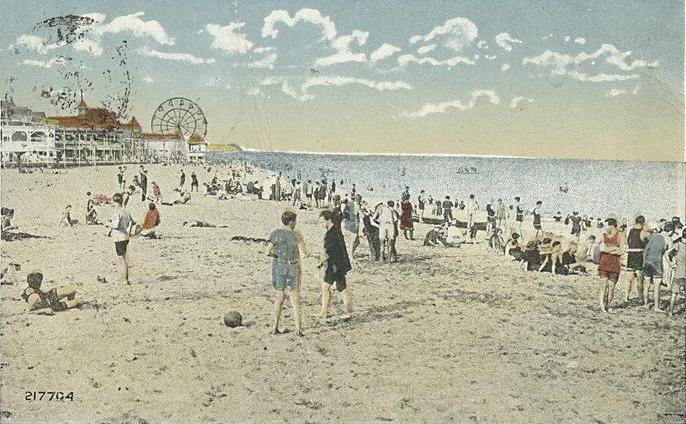
But the idea of a Ferris wheel drawing tourists to Staten Island isn’t a new one. The very first Ferris wheel in the borough was constructed back in 1893, on the opposite shore in the old Midland Beach resort area.

Midland Beach and adjacent South Beach were Staten Island’s answer to Coney Island and Rockaway Beach, back in the era before any of those amusement centers were officially a part of New York. The Staten Island resort area got its wheel the same year that George Washington Gale Ferris Jr. installed his most notable wheel — and thus giving the amusement its name — at the World’s Columbian Exposition in Chicago.

Staten Island’s ride — called an ‘observation roundabout’ — was built by Ferris’ rival William Somers after he was rejected a spot at the Chicago fair. It was probably similar to Somers over roundabouts built on Asbury Park and Rockaway Beach, of wooden construction, about 50 feet in diameter with approximately 16 passenger chambers. [Check out Norman Anderson’s history of Ferris wheels for more information.)

Thanks to Ferris and the fame of the Chicago World’s Fair, nobody was calling them roundabouts by the start of the 20th century. The Ferris wheel hovered over Midland’s rows of bathing pavilions and beer gardens along the boardwalk and was joined by the Happyland amusement park in 1906.

The New York Tribune sang praises of the amusement in 1904: “If they [the young of all ages] desire pleasure with an element of excitement, [they] may venture a ride in the great Ferris wheel, from the summit of whose broad circle they may enjoy an excelled view out over the broad bay to the open sea.”

The St. George Ferris Wheel is slated for completion in 2015. As for the old Midland Beach wheel, it appears to have been destroyed — along with a great many other amusements — in a devastating fire in 1924.

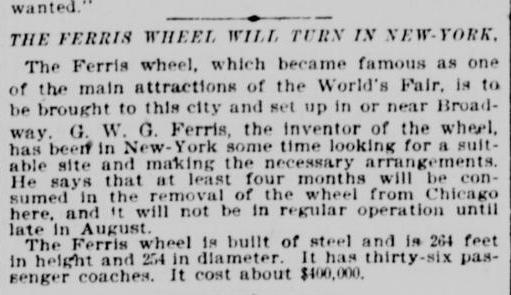
And by the way, Ferris’ original wheel, the one that was at the Chicago World’s Fair? There were actually plans to bring the wheel to Manhattan in 1894 and set it up — on Broadway! Sadly, these plans fell through.

Pictures courtesy NYPL

Eight forgotten roller coasters from all five boroughs!

If you’re ever attempting to make the case that New York isn’t as fun as it used to be, just use the following post as an illustration. The New York City area was once home to dozens of roller coasters, set up at major amusement destinations around the city, in every borough. Even Manhattan!

Coney Island’s Switchback Railway (1884) is often considered the first ‘real’ roller coaster. Not only was its size key to the stomach-churning thrill, but amusement parks soon relied on its proportions and sweeping shapes as a kind of branding backdrop, an immediate identifier as a destination of instant fun and relaxation. It was the first thing people saw as they approached the area; the cranking of the wheels and screams of its victims, heard from a mile away, set the rhythm for early 20th century beaches.
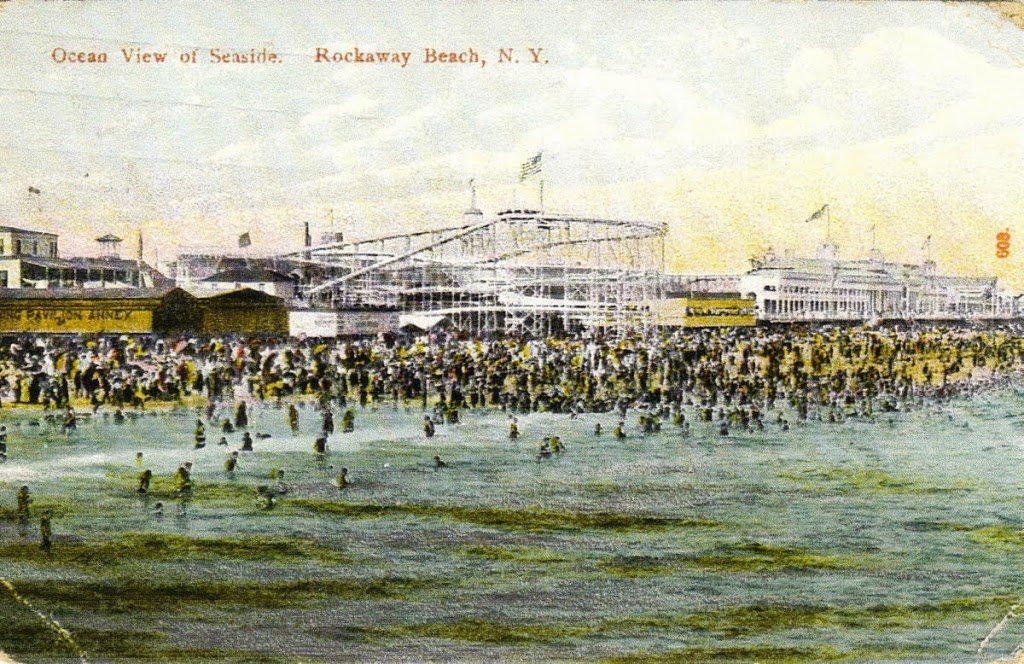
Not only are all these roller coasters gone, but the resort districts that hosted them have been radically transformed. Only Coney Island — the home to America’s very first roller coasters — remains.

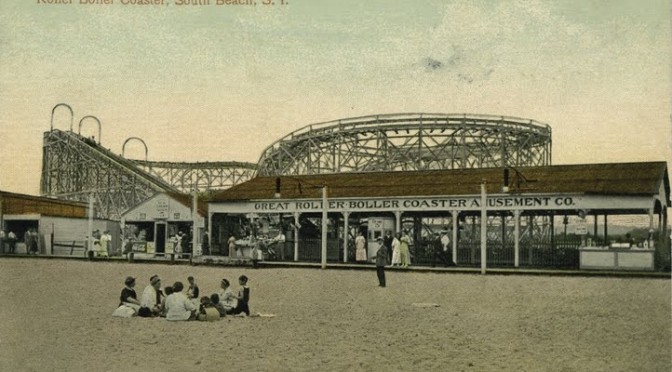
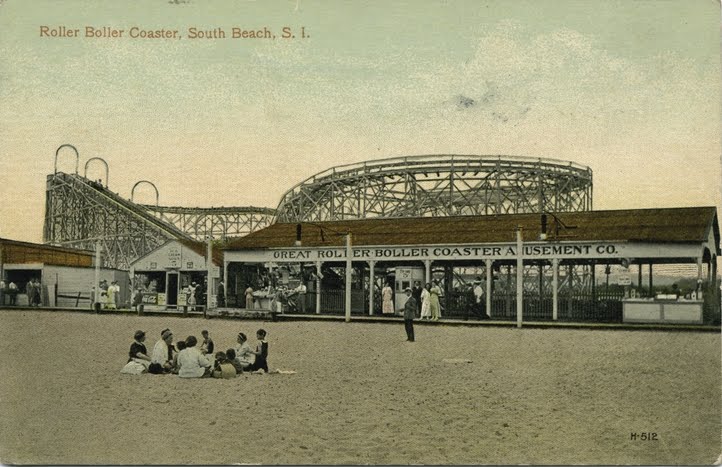
Roller Boller Coaster (seen above and in the background below)
Staten Island (South Beach)
In operation: Unknown, but probably lasted until late 1910s
South Beach popular thrived around the same time as Coney Island’s did. Likewise, its amusement parks (like Happyland) were similarly felled by fire.

Pic Courtesy NYPL

Starlight Park Rollercoaster 
The Bronx (West Farms)
In operation: 1918-early 1930s
Starlight’s rollercoaster was abandoned even the park limped along for most of the 1930s. In 1932, the coaster caught fire, the victim of rampant bonfires set along the Bronx River. (More information on my blog post about Starlight Park)

Wolz’s Thriller and the Atom Smasher
Queens (Rockaway Beach)
In operation: Thriller 1916-1937; Atom Smasher 1938-1985
A ‘dollar’s worth of ride for just ten cents’, the Thriller (top picture) was a backbone of Rockaway’s early amusement industry, one of ten rollercoasters eventually built for the resort area. Perhaps Rockaway’s most famous rollercoaster was the Atom Smasher (at bottom), the anchor of Playland. Rockaway lost all its amusements in the 1980s.

Courtesy Rockaway Memories


Thunderbolt and the Tornado
Brooklyn (Coney Island)
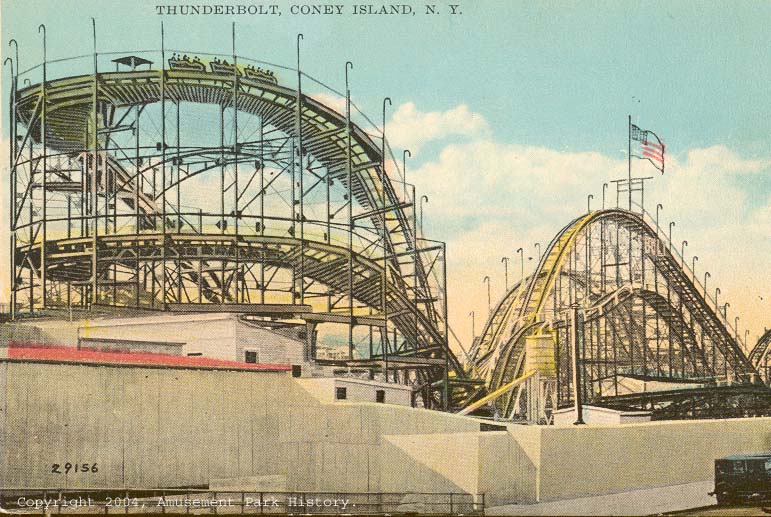
In operation: Thunderbolt 1925-1982; Tornado 1926-1977
Brooklyn has had more rollercoasters than any other borough. In fact, thanks to Coney Island, it’s had more coasters than most American states — 47 by the count of the Roller Coaster Database.

While the still-extant Cyclone is the granddaddy of them all, amusement lovers recall fondly the Thunderbolt , made famous in Woody Allen’s Annie Hall, which stood as a ruin for almost two decades. It outlasted its cousin the Tornado (at bottom), considered a marvel of engineering with its almost 3,000 feet of track undulating at a relatively low height.

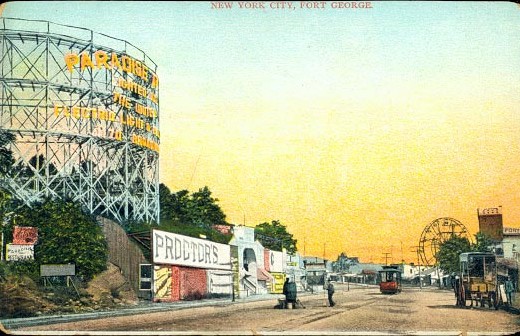
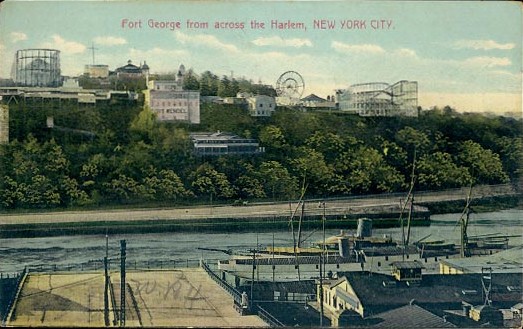
Paradise Park Roller Coasters
Manhattan (Inwood)
In operation: 1895-1914
Yes, there was a roller coaster in Manhattan! Although this appears to be the only place the island has ever had them, located in an amusement park camped out in today’s Highland Park. This amusement park actually had a couple roller coasters, according to one source. Yes, it eventually burned down as well, but its owners moved across the Hudson and opened the Palisades Amusement Park. (Courtesy myinwood.nethttp://myinwood.net/fort-george-amusement-park/)

Some dates above verified from the Rollercoaster Database