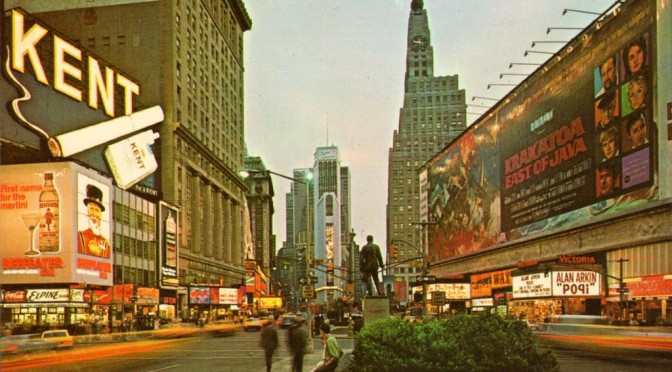
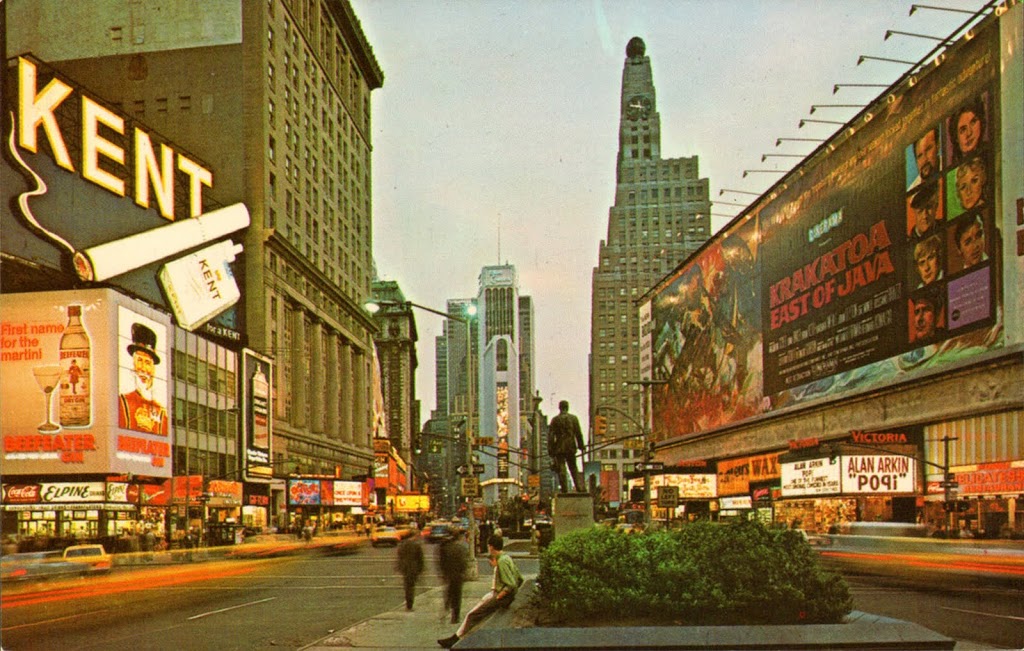
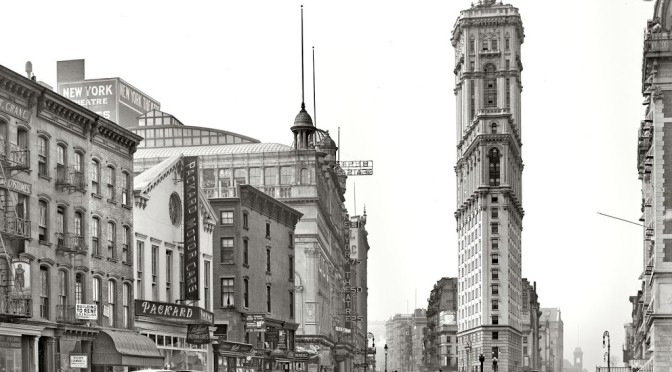
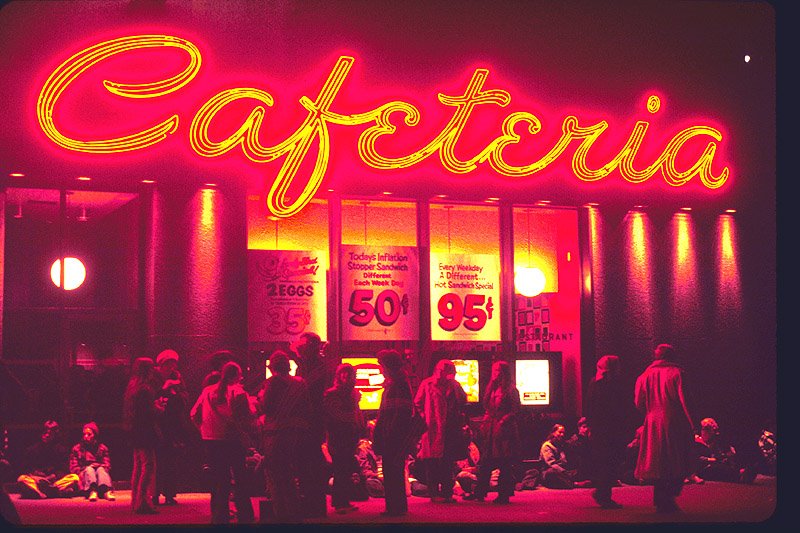
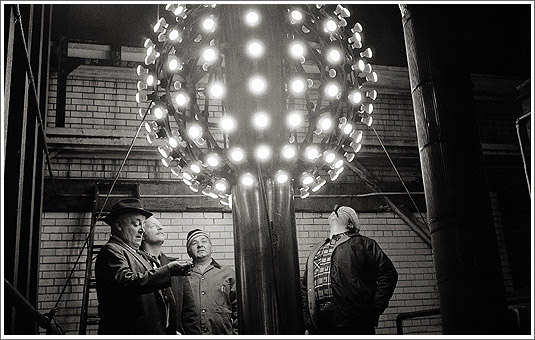
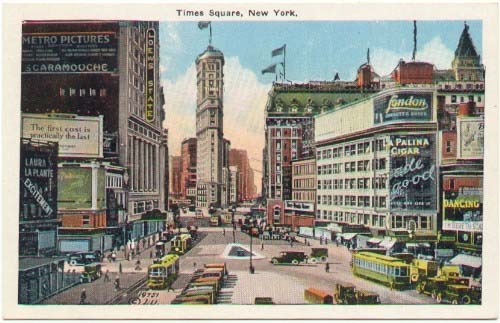
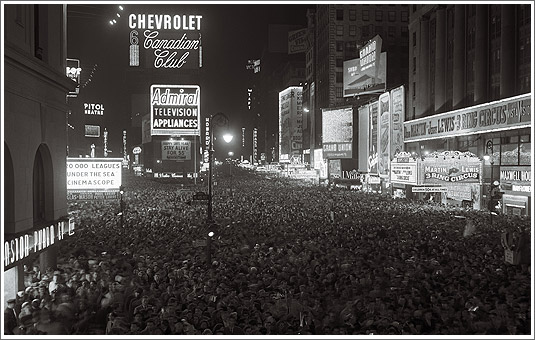
Sixty-five years after the birth of Times Square, it was apparent that things were taking a rather bizarre left turn. The old Times Building, a building so critical to the neighborhood that its address was now One Times Square, had been stripped of its architectural finery and encased in a banal concrete uniform, the property of Allied Chemical.
The outdated Hotel Astor was completely gone. In its place within a year or so would rise One Astor Plaza. From the angle of this postcard, there is simply nothing there.
The building that once housed the Packard Motor Cars showroom had also disappeared. In 1969, that address 1540 Broadway belonged to the Loew’s State Theatre. For a time, it was one of Times Square’s great destination theaters, a 3,327-seat behemoth that opened in 1921 and hosted the premieres of ‘Ben-Hur’, ‘Some Like It Hot’, ‘The Godfather’ and many others. It was essentially demolished (along with those structures below the Kent Cigarette sign) with the construction of the Bertelsmann Building in 1989; but for many years afterwards, the business on the ground floor, Virgin Megastore, hosted smaller movie theaters in its basement.
The flamboyant movie theater to the right has a more glamorous background. It was once the Gaiety Theater, a grand original from the early days of old Broadway, opened in 1906 by theater impresarios Klaw and Erlinger. The Gaiety was truly a variety house, presenting legit theater, burlesque and vaudeville (Gypsy Rose Lee and Abbott and Costello performed here), and then straight into legitimate films under its new name, the Victoria. Today the Marriott Marquis rises here, after the controversial demolition of it and several other theaters on the block in 1982.
Back under that Kent Cigarette ad is one for Beefeater gin — booze and smokes, good times. And underneath that is the refreshment stand Elpine Drinks, best known for its fruit juices. (Lost City has a nice write up about this forgotten establishment.)
The Paramount Building, its clock tower rising in the background, is one of the few structures virtually intact and looking close to how it did when it was built in 1926. In recent years, this building has been invaded by the Hard Rock Cafe.
Another survivor from this era — that tried, dependable statue of George M Cohan, standing in silhouette in the foreground. The statue was placed here at the tip of Duffy Square ten years before this postcard was made. Even then, in 1959, very little of Cohan’s Broadway remained to greet him.
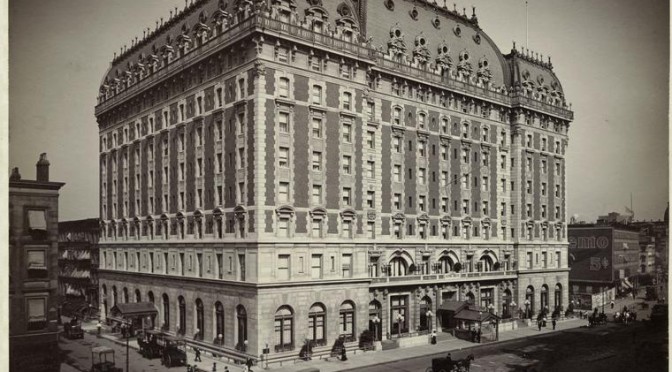
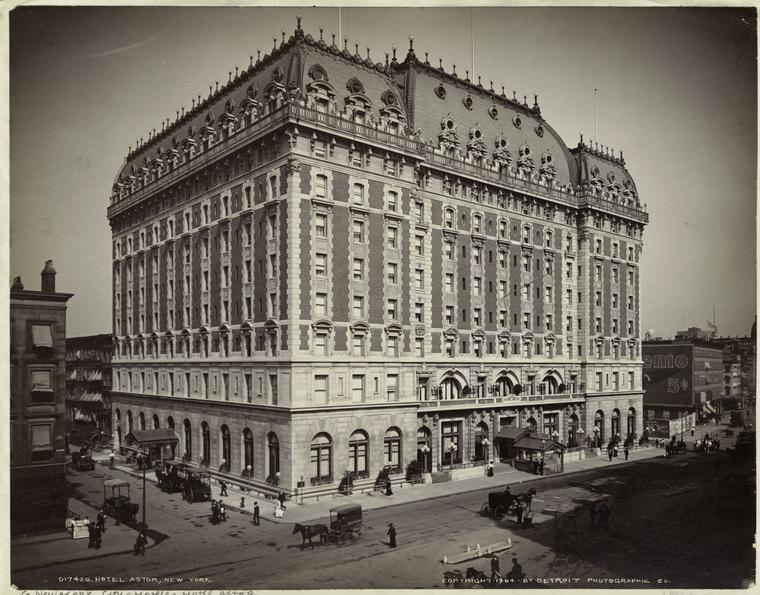
The Hotel Astor in its opening year, 1904. The Astor was a Waldorf; the Knickerbocker was an Astor. Makes sense? (Photo courtesy NYPL)
Longacre Square didn’t become Times Square without the Astor family making a lot of money. Much of the area had been farmland that had been purchased by John Jacob Astor in the 1830s. Later members of the family were not merely content to be landlords. In fact, the great family feud of the Astors and the Waldorfs brought the area its first two luxury hotels.
William Waldorf and his cousin John Jacob Astor IV were famously at odds with each other, but their disagreements produced a few striking landmarks. When Waldorf built a hotel next to the home of his old aunt, Caroline Webster Schermerhorn Astor, her son John moved her uptown and built an even bigger hotel. Voila! The two became one, the original Waldorf-Astoria on 34th Street.
A lesser known manifestation of this real estate feud waged in Times Square. Waldorf would build a spin-off of the Waldorf-Astoria at Broadway and 44th Street, an area once considered too far west for a luxury hotel. However, with the imminent arrival of a major subway station and a host of theaters, the time had arrived.
The Hotel Astor was the brainchild of German businessman William C. Muschenheim, a restaurateur and former proprietor of the New York Athletic Club. Muschenheim’s great dream was to build a hotel. Although planning one at Longacre Square seemed like a risk, it was Astor family property, and the Astors were known for their successful hotels.
With backing from William Waldorf, Muschenheim oversaw the construction of the Hotel Astor, an eleven-floor Beaux-Arts jewel stylistically related to the Waldorf-Astoria. When it opened on September 9, 1904, it seemed the gamble had paid off. Its lush ballrooms, lounges and restaurants would host the biggest soirees of Times Square’s inaugural year. A year later, its sumptuous roof garden would open, providing one of the most romantic views of the city.
John Jacob Astor IV would not be outdone by his cousin. He would soon take over a hotel project that was being constructed on the other side of the Times Building, at the southeast corner of Broadway and 42nd Street. His Hotel Knickerbocker would open in 1906.
An old McClure’s Magazine outlines the rivalry: “John Jacob also flatters William Waldorf by imitation. The latter can hardly make a move not obediently followed by his cousin. He builds the Waldorf and demonstrates his success; John Jacob follows with the Astoria. He goes up to Longacre Square and builds the Hotel Astor; John Jacob takes the hint and puts up the Knickerbocker.”
But John Jacob, who would perish on the Titanic in 1912, would have the last laugh. The Knickerbocker still sits in Times Square today, no longer a hotel but graced with a Gap clothing store on its ground floor. The Hotel Astor would vanish in 1967, to be replaced with the office tower known as One Astor Plaza today — the home of Viacom and The Lion King (in the third floor Minskoff Theatre).
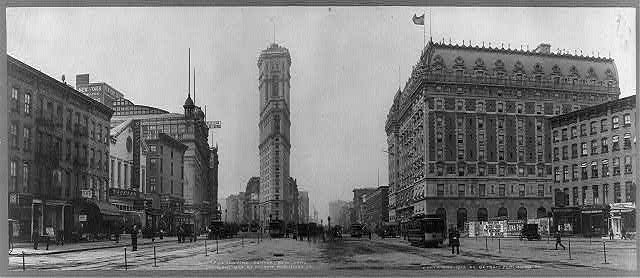
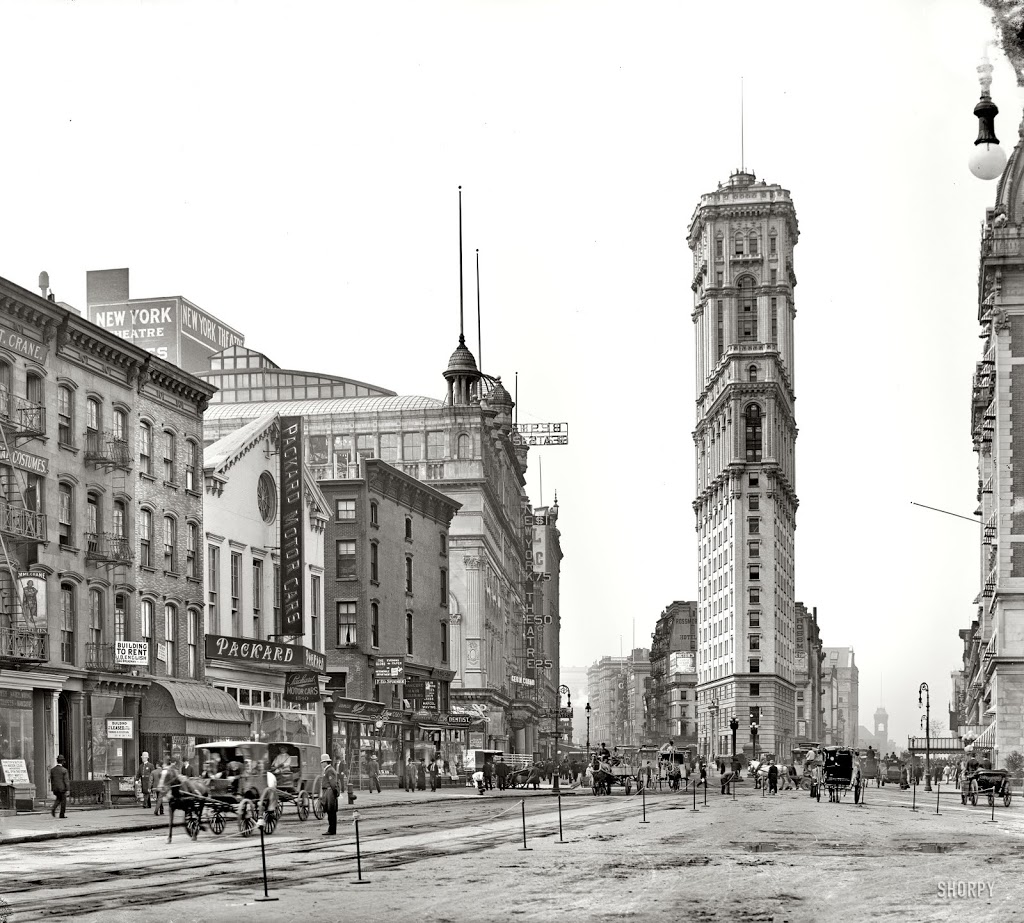
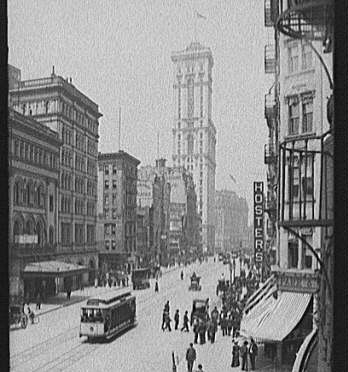
The scene so far: The Packard Motor Car store (which I wrote about Monday) is on the left. The new offices of the New York Times are in the middle. The Hotel Astor is at right. The photographer of this scene has his back facing the Trimble Whiskey written about yesterday.
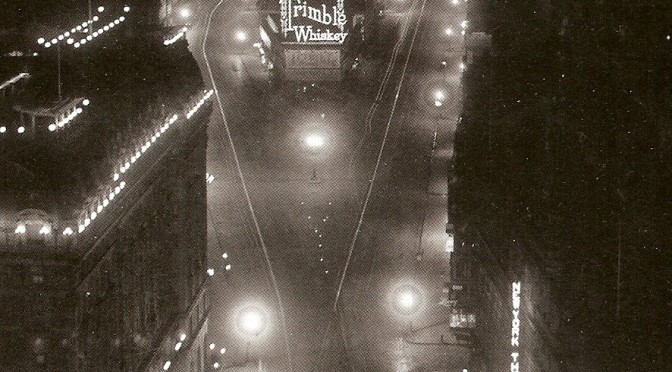
From atop the Times Tower, in 1904, another world lights up below.
The year that turned a ragged, uptown intersection into the place known as Times Square also brought an important work of advertising to the area, for a product that has been all but forgotten.
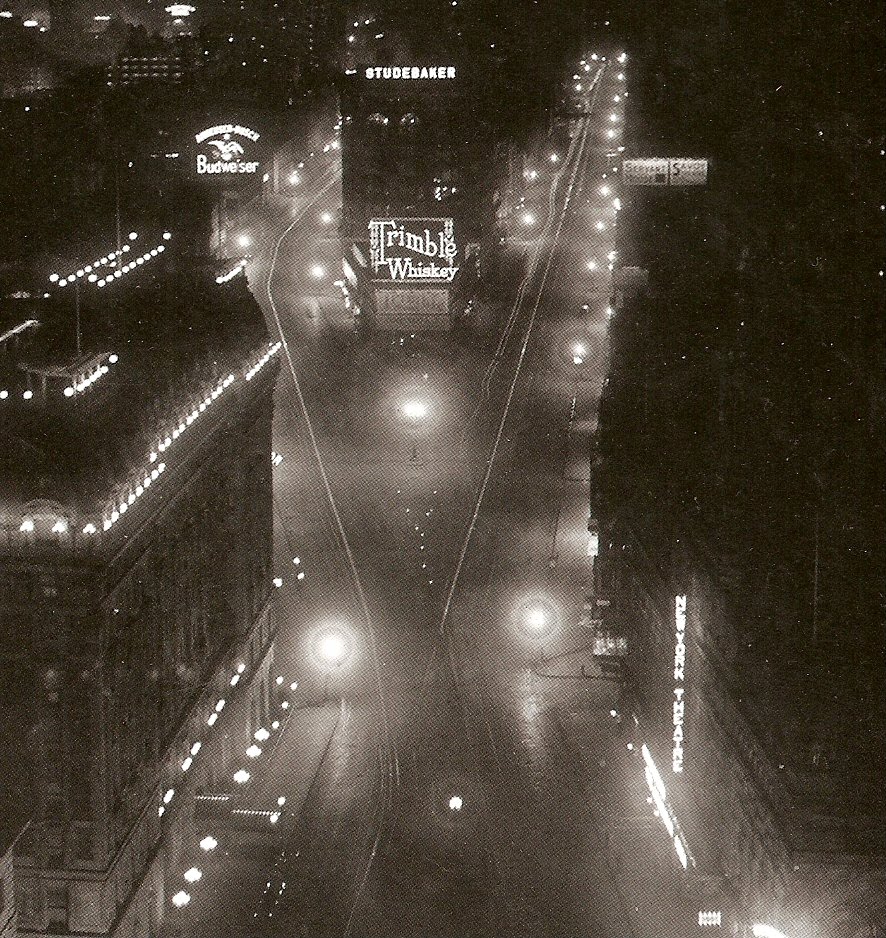
Oscar J. Gude was already a master of outdoor billboards and electric-light signs when, in 1904, his company installed a sophisticated advertisement for Trimble Whiskey, featuring two glasses in mid-toast nestled by the liquor’s fancy logo. (The glasses don’t seem to be on in the picture above.)
Gude had much better and more memorable ads throughout the city; his firm was perhaps best known for its Heinz pickle ad that hung above Madison Square. But the Trimble sign was placed on the north side of 47th Street, between Broadway and 7th Avenue, making it the first in a long line of dazzling electronic advertisements to be placed at this key intersection.
Times Square was already an advantageous place to hang things due to the sight lines created by long, even avenues. As one of the first electric signs, the Trimble name could be seen from almost a mile away down certain corridors. At night, the words ‘Trimble Whiskey’ could be seen reflecting into the new Times Square across the plaza. Theater goers leaving one of the new stages on 42nd Street stopped to take a gander at the glowing lights before boarding a trolley, or entering the crisp, new subway station.
As you can tell from the picture above, Trimble was quickly joined by a few other night lights. Bur for a time, only the street lamps, a couple small marquees and the haunting glow from the Hotel Astor were its competition.
Just a few years later, a bold corset advertisement would scandalously light that very wall. From the 1910 journal Printers Ink, the electric corset-wearer “stands out boldly against the night, at the spot where late a Trimble Whiskey sign has been wont to create thirsts by the thousand, which only the nearby gilded palaces could satiate properly.”
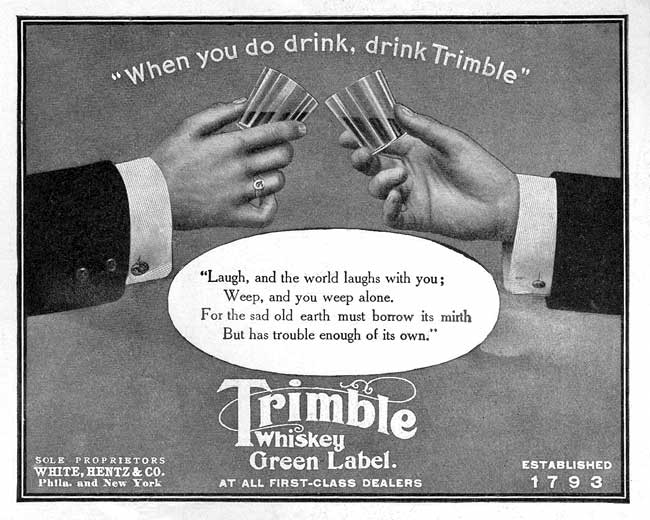
As for the liquor itself, it reportedly originates from one George Trimble who “brought this brand over the Allegheny Mountains on a Conetogas wagon” in the 1820s or ’30s. (The ad below dates its creation even further, to 1793.) It was distinguished by a green label and, despite its handsome advertisements, didn’t seem to last but for a few years more.
Below, a print ad for Trimble, featuring their signature clinking glasses, from an April 1904 issue of LIFE Magazine. [from Magazineart.org}
In 1904, the first year that Longacre Square tried on its new name Times Square, it was still populated with horse-related services like carriage shops and stables. But it seems the horse-less carriages were represented too. In the photograph above, the white building with the triangular roof, once a stable, was now home to the Packard Motor Car dealership, its address 1540 Broadway.
The Ohio-based car company would spread out several dealerships throughout the New York area, but made a go of it at this location from 1904-1907. As the fate of Times Square as New York’s entertainment focal point had not yet been solidified, it probably seemed natural to sell cars here. By 1907, they moved to the less chaotic corner of Broadway and 61st Street.
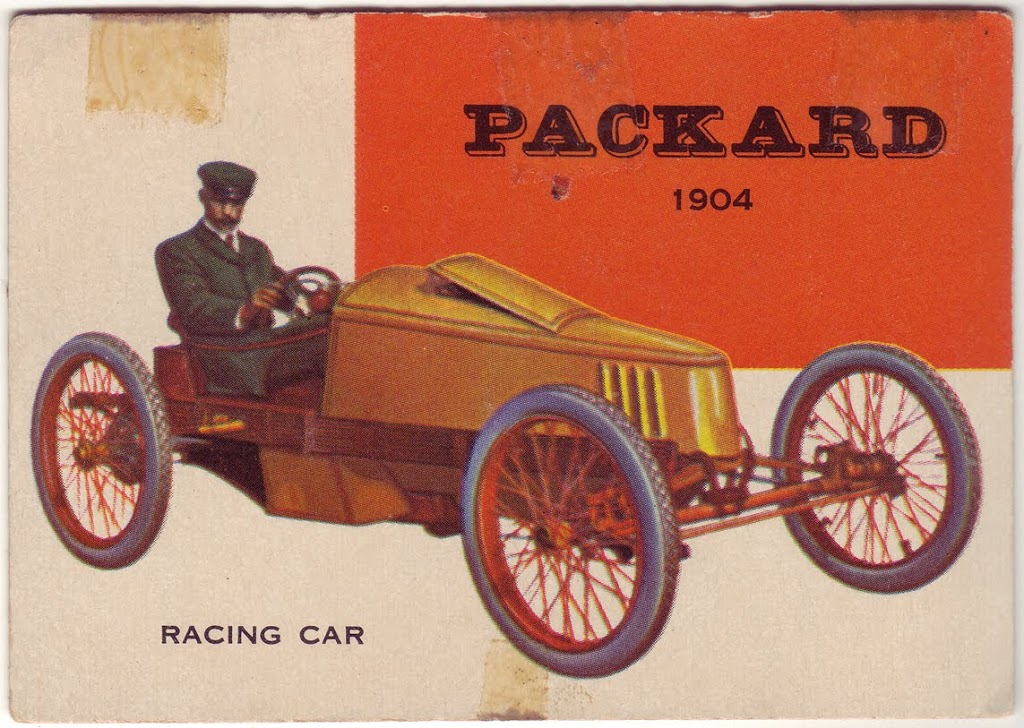
Below: one of the vehicles one might be able to purchase at the shop. And finally an advertisement from a ‘Horseless Age’ trade magazine, mentioning the Packard location:
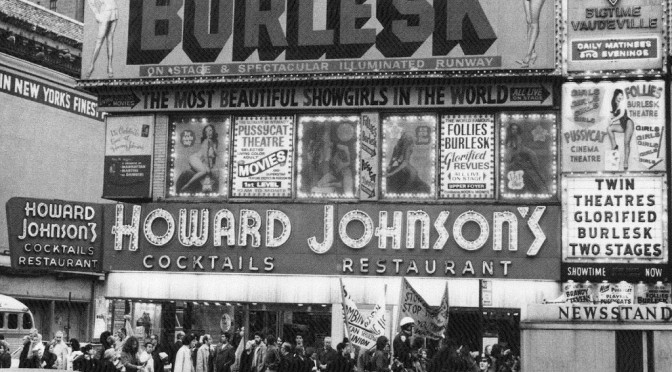
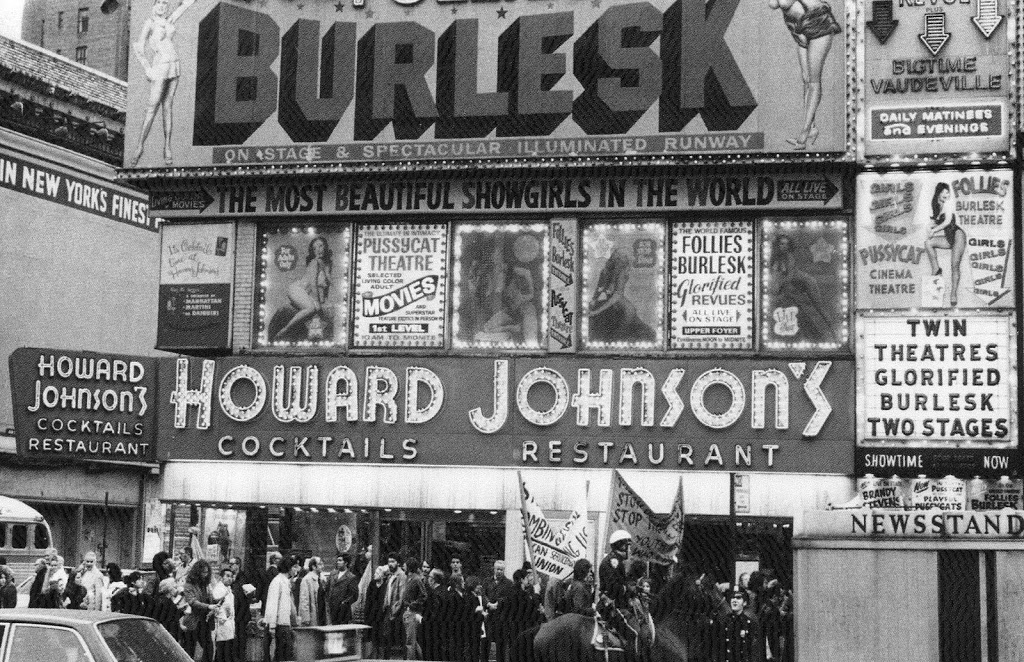
Howard Johnson at 46th Street: Dinner and a movie, all in one corner! There’s even Vietnam war protesters outside. (Photo by Bob Gruen, taken 1972, courtesy Ephemeral New York)
Every Monday I’ll try and check in with the Mad Men episode from the night before and focus in on one or two historical references made on the show. Spoilers aplenty, so read no further if you don’t want to know….
I was disappointed with last night’s season finale of Mad Men, not because of the out-of-nowhere shenanigans of Don Draper, but because a full half of the show took place in Los Angeles, leaving precious little opportunity for historical references. In fact, the two big references were L.A. originals, Disneyland and Whisky-a-Go-Go, which would have been only a year old in 1965.
But thankfully there was a brief mention (via Peggy’s hipster friend Joyce) of a treasured Times Square staple, and a place that most New Yorkers think of with great fondness — the Howard Johnsons restaurant at 46th and Broadway.
Nowhere on the planet could you find a more delicious plate of cheese fries or a dirtier martini. It stood for many years as the last remaining relics of the Times Square’s transitional period between glitz and grit, a stubborn throwback of authentic diner glamour. When it closed in 2005 — replaced with an American Eagle Outfitters — I’m was shocked that Time Square didn’t cave in on itself, as though HoJo’s and its greasy, glorious food were all that was holding it in place.
By the 1950s, the chain of hotels and restaurants founded by Massachusetts entrepreneur Howard Deering Johnson had spread throughout the United States, providing hearty and wholesome sustenance to mainstream, middle-class Americans. It was as ubiquitous and as recognizable with its orange roofs and friendly signage as McDonalds. So much so that Time Square alone had three of them, the first here at 49th and Broadway, a hole in the wall that had once employed up-and-coming actors Lily Tomlin and Gene Hackman. The HoJos here at 46th and Broadway, surviving the others, opened in 1955.
Nothing reflected the changes of Times Square more than this corner. Above the HoJo had been the glorious Orpheum Dance Palace, a once popular and rowdy dance hall that soon offered patrons their very own ‘private dancers’ and was closed down in 1964 for prostitution. It then became a porn theater called the New Paris — described as smelling “like decayed flesh in there, a lot of bodily fluids” — and later was later split into two spaces, housing a small legit theater (where A Perfect Crime ran for years) and the Gaiety male strip club.
And all the while, the Howard Johnsons below it retained its glittered-tile elegance, refusing to update their signs or menus. In the 1980s, it was an ideal spot to watch theater-goers and prostitutes. Penn Gillete (of Penn and Teller fame) had Friday night meet-ups here before heading off with a crowd for a weekly midnight movie screening.
In the ’90s, the now beaten but still thriving diner stood in contrast to the changing fortunes of Times Square, dwarfed by the multi-million dollar makeover. Eventually its corner real estate became too valuable for it to survive and it closed in 2005 — one of the last Howard Johnson’s restaurants in America. I miss it very much.
HoJoLand has a lovely tribute — full of photographs — of several former New York HoJos, including the Times Square locations.
ALSO: You might have heard a character mention the name Abe Beame, the city comptroller who ran for mayor in 1965, losing to John Lindsay (who’s also been name dropped on the show). Abe of course would get his chance to rule New York nine years later.
That’s it for Mad Men this year. Please go here if you’d like to go back and read prior articles based on references made on the show.
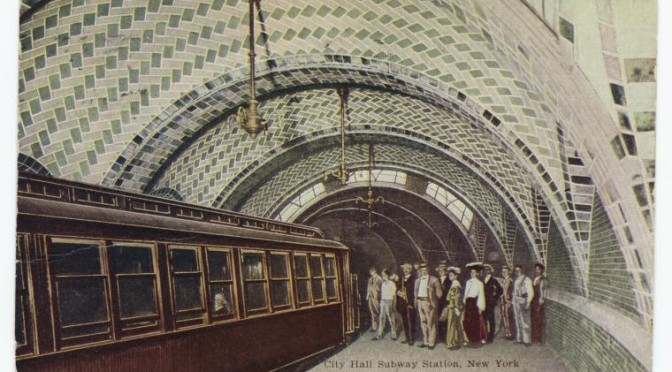
PODCAST In the fourth part of our transportation seriesBOWERY BOYS ON THE GO, we finally take a look at the birth of the New York City subway. After decades of outright avoiding underground transit as a legitimate option, the city got on track with the help of August Belmont and the newly formed Interborough Rapid Transit.
We’ll tell you about the construction of the first line, traveling miles underground through Manhattan and into the Bronx. How did the city cope with this massive project? And what unfortunate accident nearly ripped apart a city block mere feet from Grand Central Station?
ALSO: What New York City mayor had a little too much fun on opening day?
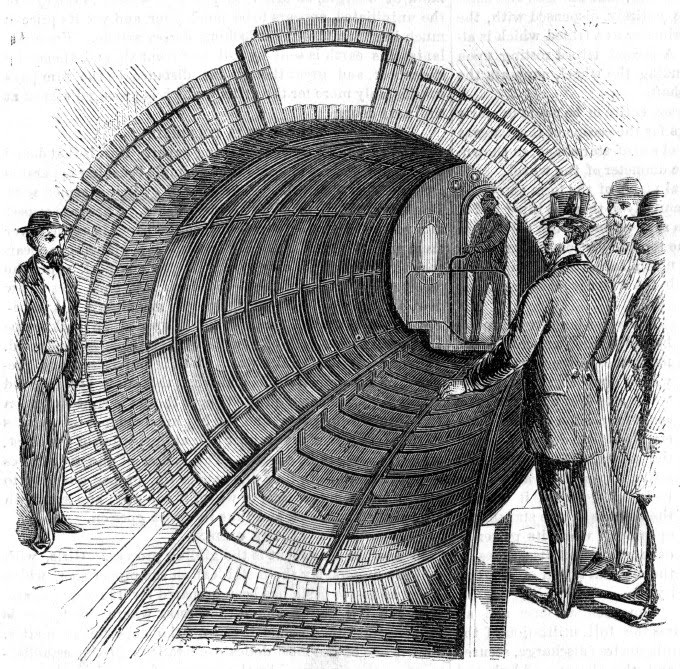
Below: An illustration of Alfred Beach’s pneumatic tube, built in 1870 a short distance from City Hall ran under Broadway from Warren Street to Murray Street. Although it’s little more than a footnote to the history of the New York City subway, it underscores that the technology was always available, even if public and political enthusiasm for such a project was not.
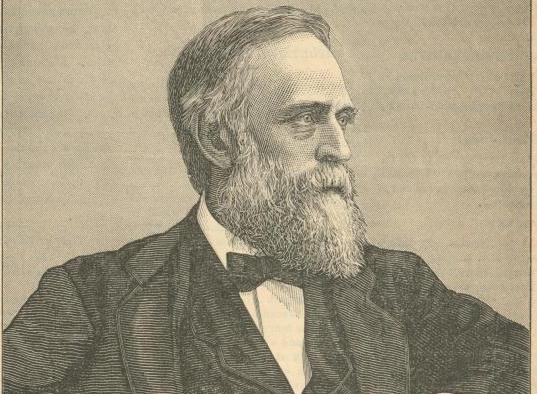
Abram Hewitt, mayor of New York in 1886, and an early proponent for an underground subway. (Pic NYPL)
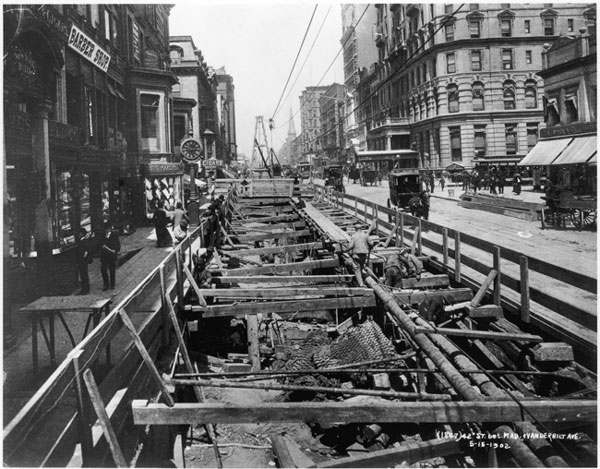
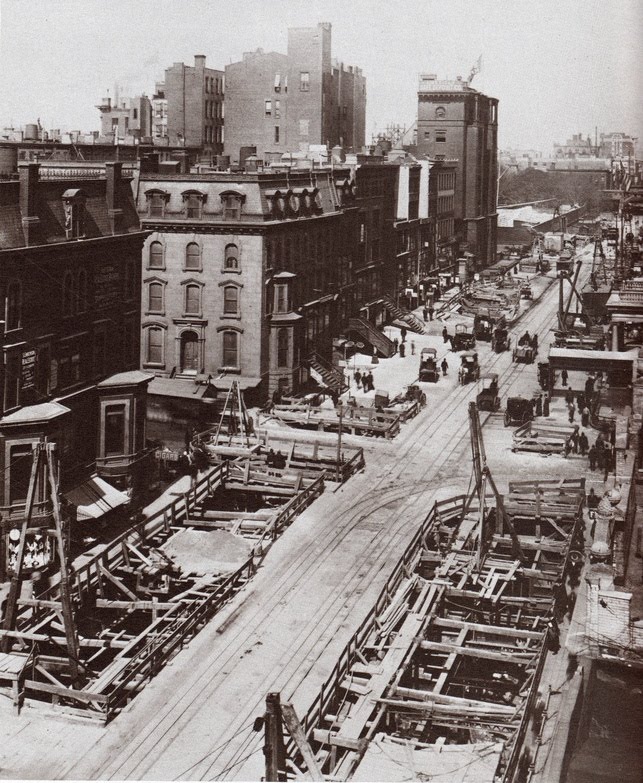
The cut and cover method chosen by subway engineers ensured that New Yorkers would be faced front-and-center with the daily slog of excavation and construction.
Forty-second Street during construction of the subway system, 1901.
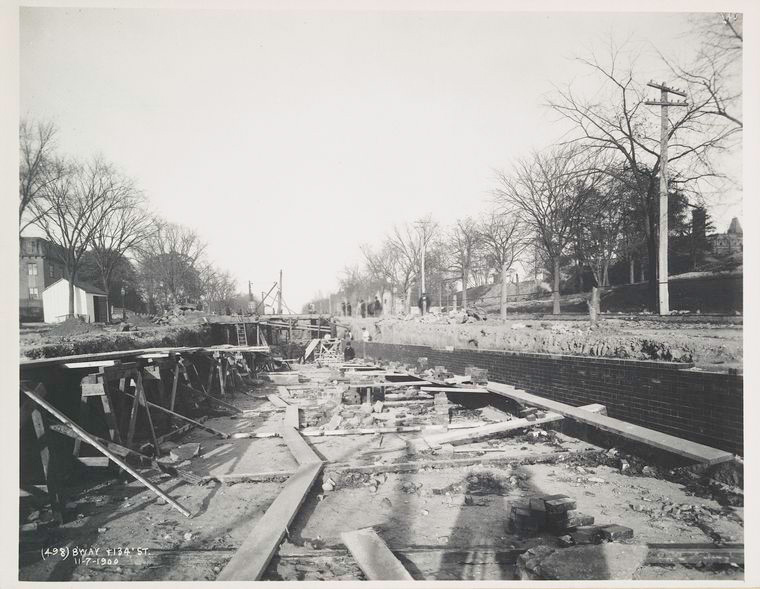
Mayhem during subway construction at Broadway and 134th Street! (NYPL)
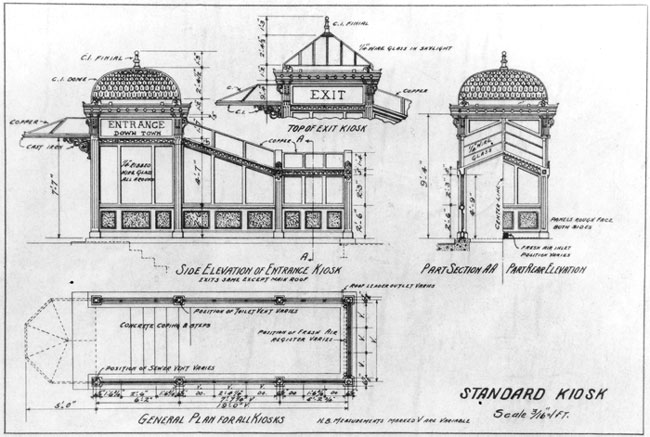
The plan for subway entrances, taking liberally from the design of kiosks in Budapest.
Thank this rich guy for your first subway, New York. August Belmont Jr., later known for his contributions to horse racing, founded the Interborough Rapid Transit Company to help operate the fledgling new subway system. (Pic LOC) FOR MORE INFO: We cannot begin to due justice to the birth of the subway in the way the good folks at the website NYSUBWAY.ORG have done. Hundreds of photos, original documents, and a wonderfully exhaustive list of stations, including many no longer in operation. Forgotten New York, of course, has several rich pages devoted to the subject.
And you definitely swing by the New York Transit Museum in Brooklyn, where you can actually sit in one of the original subway cars, among many, many more treasures of the original IRT.
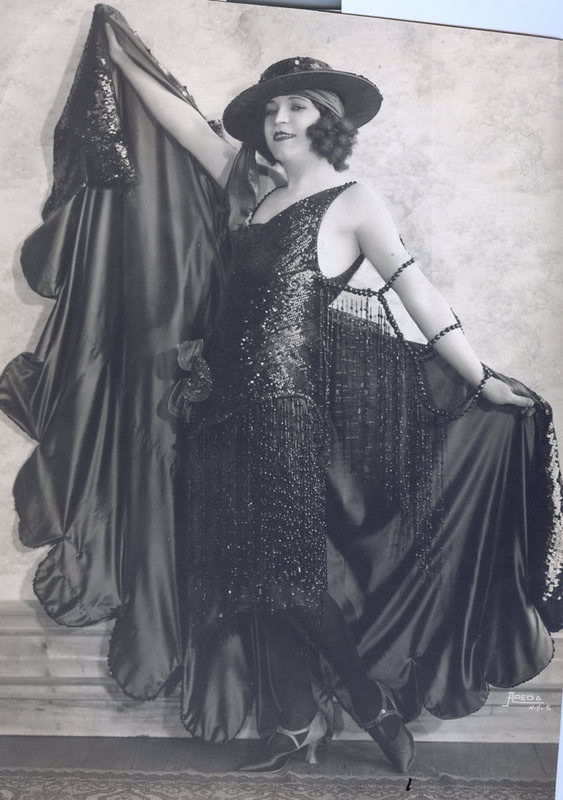
Above: Karyl Norman welcomes you to the Pansy Club! FRIDAY NIGHT FEVERTo get you in the mood for the weekend, on occasional Fridays we’ll be featuring an old New York nightlife haunt, from the dance halls of 19th Century Bowery, to the massive warehouse clubs of the mid-1990s. Past entries can be found here.
LOCATION:The Pansy ClubTimes Square, 48th Street and Broadway, Manhattan In operation December 1930-31
The moral crusaders who succeeded in banning alcohol sales via the Eighteenth Amendment must have wondered where it all went wrong. Instead of ushering America down a path of productivity and moral fortitude, Prohibition sponsored a decade of unwritten rules, creating a shadow economy and empowering a criminal underworld.
Norms were upended, and the fringes of New York were defined by experimentation and playful risk. Harlem and Greenwich Village became the centers of culture, women found new avenues for empowerment, and black musicians mixed with white to create the sophistication of jazz.
It’s in the light of this churning mix of invention that you have to approach one curious fad of the Prohibition era — the pansy craze, an appreciation of drag-queen worship cultivated in the heart of Manhattan.
I’m not sure a place called The Pansy Club would be popularly received today, but when it opened in late 1930 it was risque and cool. Its location at 48th and Broadway planted it firmly in the theater district where it truly belonged, of course. But given the entertainments it generously offered, it’s amazing to me it was allowed to open at all.
It makes sense that the speakeasy-fueled, white crowds, having fully sampled from black nightclubs of the 1920s, would venture into other subcultures on the fringe of bohemia. There were plenty of places in Greenwich Village for gay and lesbians to meet, and within them came camped-up forms of cabaret, with men in drag emulating the glamorous female stars of the day. It helped that some of those stars, like Sophie Tucker and Mae West, mixed with and borrowed from their costumed admirers.
It all built into a national, urban ‘craze’ in 1930 and 1931 for drag shows in a mainstream cabaret environment. Why it neatly fit on the nightclub circuit — and what made it somewhat more tolerable for conservative crowds — was partially due to drag’s close association with vaudeville. Although the term ‘pansy’ was a derogatory one for gay men, for this brief time ‘pansy clubs’ were the hottest ticket in town.
The Pansy Club, at 204 W. 48th, in heart of Times Square (and about where the M&M Store is today) was not the only nightclub of this type, but when it opened the week before Christmas in December 1930, it was the showiest of the lot.
The Pansy Club featured standard-era vaudevillian and cabaret acts, but with a decided gay (read: scandalous) twist — female impersonators, “a bevy of beautiful girls in ‘something different’ entitled ‘Pansies On Parade'” according to a newspaper advertisement, one of the few documents that verify the club’s brief existence.
Mistress of ceremonies was one Karyl Norman, known in drag as the ‘Creole Fashion Plate’. Born George Peduzzi from Baltimore, Norman became a star on the vaudevillian circuits in the US, Europe and Australia in a show that featured him both in and out of drag. As a published songwriter and a favorite of Tin Pan Alley, Norman would have been a big draw in 1930 and as a seasoned vaudevillian star would have brought a touch of credibility to a club with so shocking a theme.
According to Brooks Peters, the club was also “a haven for aging flappers and party-goers who liked “slumming.—
Down the street was an even more popular draw. At Club Abbey (46th and 8th Ave) was a young Jean Malin (at left, courtesy Flickr), a Brooklyn-born wit and sometimes ‘female impersonator’ who hosted drag performances while charming audiences with interludes that made no disguise of his homosexuality.
What distinguished these places is that they were not considered gay and lesbian bars of the sort in the Village. However they did have a similar thread in common with them — ownership by the mob, an association that led to the club’s swift closings.
A gang shooting closed Club Abbey in January, and the police raided the Pansy Club that same month. While the ‘pansy craze’ would live on in other cities — it made a more lasting impression in Hollywood, naturally — it retreated to the fringes again in New York.
And finally, for your Friday night celebration, here’s a look at Jean Malin, who made a brief appearance in Hollywood films before Malin’s untimely death in 1933. The film is ‘Arizona To Broadway’.
Social reformer Jacob Riis is one of the most important men to New York City history, exposing the ghastly living conditions of city tenements and using his connections to enact change that affected thousands of New York’s poorest residents. In spreading the word, he wrote a social history masterpiece ‘How The Other Half Lives’ and innovated multi-media techniques to inform and titillate crowds. But not all of his ideas were inspired.
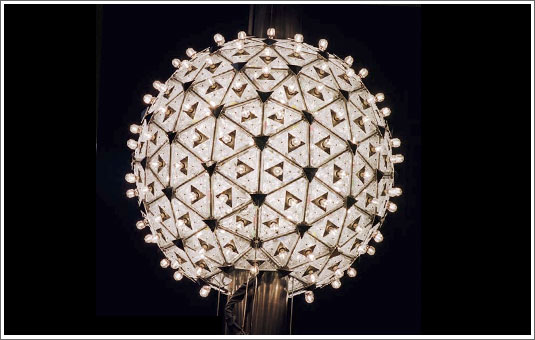
At the end of his life, Riis railed against corrupting influences like alcohol and their effects on poor communities. So imagine his disgust when the New York Times began sponsoring wild New Years Eve parties outside its new headquarters on 42nd Street. Inaugurated by a lavish firework display during the first seconds of 1905, the Times Square celebration eventually incorporated its famous balldrop in 1907. (Hear all about it in our Midnight In Times Square episode.)
As today, the outdoor celebration encourages revelry, drunkenness and chaos, things Riis did not believe benefited the city. To this extent, and with the help of former president (and good friend) Theodore Roosevelt, Riis proposed a ‘safe and sane New Years Eve’.
According to Riis, the good men of the city “have observed the licentious and riotous conduct of New Years crowds, with their tin horns, ticklers and bags of confetti. Anyone who has seen the crowds of rowdies on Broadway breaking hats and insulting women knows that a saner manner of celebration is desirable.”
The new celebration will feature organized singing at various city plazas throughout the city, including City Hall, Union and Madison squares, with Salvation Army singers, organized bands and bandstands, leading ‘civilized’ public outcries of celebration via “the singing of patriotic songs and New Years ballads,” per Riis.
It would be an uphill battle that evening of December 31, as the somber chorale of hymns and polite exaltation of the downtown rallies would be entirely drowned out by the throngs of cheers and music drifting from downtown. “SANE FESTIVAL SUBMERGED,” shouts a New York Times headline from the next day. “The choral hosts greeted the new year with song last night, but the songs were not heard for the very good reason that in each instance there were just enough horns, rattles and other noise-making apparatuses in the hands of the din-making contingent to render even the ‘Star Spangled Banner’ and ‘America’ unrecognizable.”
Such mass city-organized, end-of-year civility would never seriously be attempted again. And Riis would only live to see one more New Years Eve, dying on May 26, 1914.
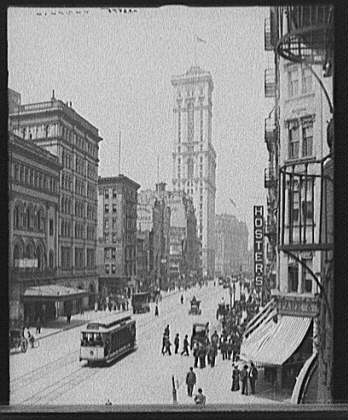
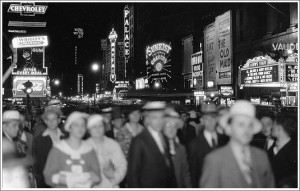
Top picture above: Time Square during the day, taken between 1903 and 1910. Courtesy LOC. Second picture, from the 1930s, courtesy Times Square NYC
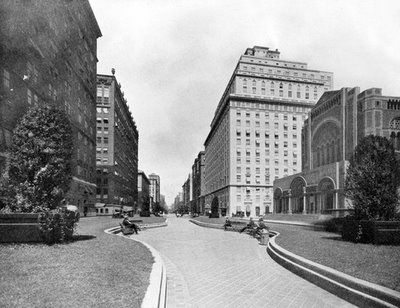
I’ve posted the extraordinary picture above of pre-1920s Park Avenue a couple times in the past, but I wanted to do so again in light of Michael Bloomberg’s recent proposal to turn Times Square and Herald Square into partial traffic-free plazas. His plan calls for “traffic lanes along Broadway from 42nd to 47th streets and from 32nd to 35th streets” to be “transformed into pedestrian lanes”, with the residual traffic flowing down a Seventh Avenue refitted for four lanes.
The notion of creating public space out of vehicular traffic areas in Manhattan flies in the face of what used to be called ‘progress’ — at least in the Fiorello Laguardia/Robert Moses definition of the word.
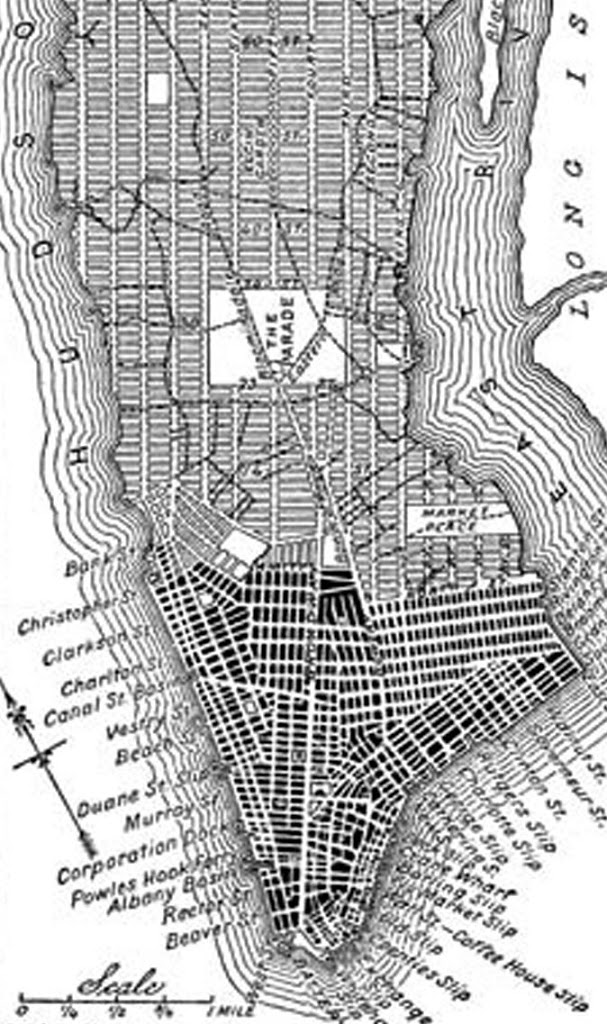
In a way, you can say this type of reversal for the benefit of pedestrians actually began in the 19th century, before the roads were paved. When the original commissioners plan of 1811 was initiated, the intention was to direct the city’s growth and organize a rational method of parcelling out the city to developers. In doing so, it sliced up Manhattan as though it were an ice tray, rows of uniform blocks in a cross-section of streets and avenues. However, there were few parks in that original plan (at right).
In practice, however, some virtual streets were transformed into public spaces once it seemed obvious that uninterrupted rows of development would cause for an unlivable city. Notably, Central Park was envisioned in the 1850s as a way to break up the grid. (The Parks Department actually has a nice short history on this 19th century struggle.)
Another major shift towards a pedestrian driven city occurred with the disappearance of the elevated trains and creation of the subway system, opening up darkened city streets and creating new public spaces. Additionally, as in the picture above, once Grand Central began hiding its train tracks underground, the newly created real estate above it became, you know, a park avenue.
Social activism at the turn of the century, led by Jacob Riis and others, made a play at eliminating decrepit slums in exchange for pedestrian areas. For instance, Most of Five Points was wiped from the map to become Columbus Park and various governmental buildings. Swaths of land in the Lower East Side were cleared of tenements to become open space, like the Sara Delano Roosevelt Park.
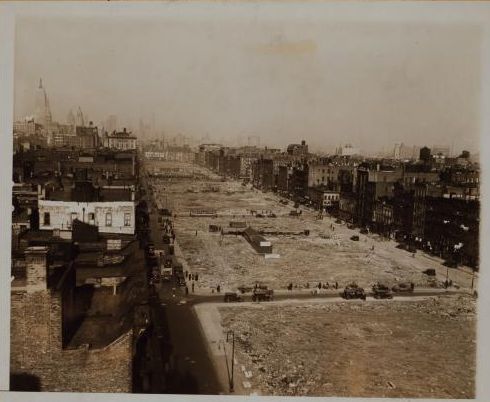
Below: In this picture from 1932, tenements between Chrystie and Forsyth have been eliminated to make way for the future Sara Delano Roosevelt Park.
Robert Moses liked his parks, but he also loved his expressways, and he created both at the expense of the neighborhoods they were supposedly to have served. But Manhattan was becoming a latticework of traffic congestion well before that; everywhere you looked, streets were widened to accomodate vehicles — first carriages and trolleys, later cars and buses.
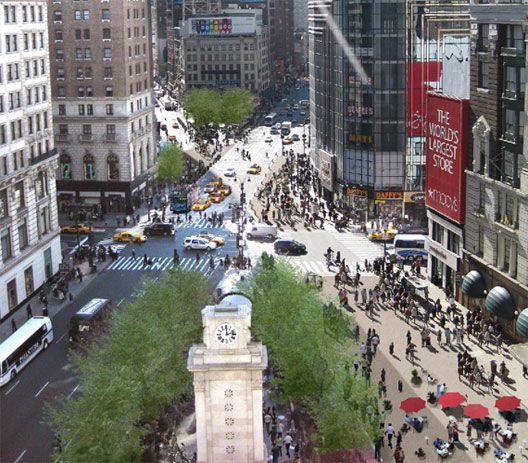
Bloomberg’s ambitions stem from a more environmental motivation, with newly installed bike lanes, pedestrian spaces in the Meatpacking District and Madison Square, and last year’s temporary no-traffic days on Park Avenue. His midtown plans, to be installed this summer, may become permanent. Below: A rendering of his virtual Herald Square:
After spending quite an amount of time in the Revolution, then taking you to church, I’m taking it easy on you (and me, for that matter) and focusing on New York in the movies.
New York City is without a doubt the most photographed and filmed city in the world. Even when filmmakers shoot in other cities — such as Toronto — it’s still New York.
For the week, I’m presenting my incredibly subjective list of the ten best movie scenes shot in New York City. This doesn’t quite equate to the ten best movies about New York. These are just the ten images that I think in total represent the reasons that people continue to turn NYC into the world’s largest back lot. I’ll reel out the first nine today through Thursday; the topic of my number one pick will also be the topic of this week’s podcast.
This list only features scenes that were actually filmed in New York without too much enhancement or special effects, so no sci-fi (King Kong, Ghostbusters, Men In Black, I Am Legend). I also avoid scenes that are obviously in New York City but are interiors with no distinguishing features (‘You talkin’ to me?’ and ‘I coulda been a contender’ both spring to mind.)
I’m obviously going to leave out a few favorites, so after Friday drop me an email of what I’ve left out. I’ll list the notable omissions next week.
FYI, I give 11th place, honorable mention to Marilyn Monroe’s dress-blowing scene in the zany sex comedy ‘Seven Year Itch’, But you’ll have to read here to find out the technicality that excludes it from this list.
In North By Northwest, he engineers a chase through Grand Central Terminal featuring Cary Grant in shades alluding capture, eventually finding himself on a train with Eva Marie Saint. What makes this scene so alluring is that it’s actually at Grand Central and prefaced by an awkward scene involving a fake United Nations. (Hitchcock couldn’t get permission to film there; nobody could until Nicole Kidman.)
By merits of it being a Hitchcock film, the scene is zippy and glamorous, all the more because Hitch uses a crane shot to follow Grant from one corner to the other, a gravity-less vantage that for a moment takes you above the busiest place in New York.
By the way, once Grant gets on the train, we’ve clearly gone back to a staid movie set. However Grand Central was not the only real location used; you also have some great old views of The Plaza Hotel and the Oak Room.
Drama 9. Vanilla Sky (2001) Times Square in dreamtime
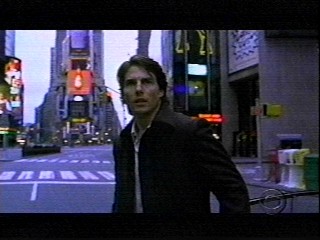
See, this list isn’t about good movies. Whatever you think about this Cameron Crowe remake, this fantasy sequence featuring Tom Cruise in a completely empty Times Square is remarkable by merits of them pulling it off at all.
The scene was filmed on an early Sunday morning in November 2000 and they had to shoot quickly. Their efforts to create an eerie setting were almost thwarted by the Dow Jones news ticker, in the background proclaiming details about the disputed Bush-Gore election. They were given permission to digitally erase the information.
Studio execs had also asked Crowe to digitally erase the World Trade Center, which by the film’s release date had been destroyed. This, Crowe did not do.
It’s not Taxi Driver’s best known scene, but it perfectly employs New York at night in a twisted noir-ish way. Travis Bickle (Robert Deniro, essentially silent during the scene) pulls up a passenger to the curb. That passenger happens to be played by Martin Scorsese himself, who argues with Bickle to leave the meter running.
We then see that classic of noir fixture — a woman’s silhouette in the window — and Scorsese goes off on a sick and disturbing explanation of what he intends to do to her, his estanged wife.
By the way, the scene that proceeds this one — of cabbies gabbing at a diner — is filmed at the Belmore Cafeteria, a classic old-style diner which once sat at 28th Street and Park Avenue South. This site has a great tribute to the old joint. Here’s a shot of its dazzling exterior:
The Times Square New Years Eve celebration would not be the same without One Times Square and its annual ball drop. But the quirky history of this sometimes abused building reaches all the way back to the naming of Times Square and its original tenent — the New York Times.
Download this show it for FREE on iTunes or other podcasting services. Click this linkto download it directly from our satellite site. Or click below to listen here:
To get you in the mood for the weekend, every Friday we’ll be celebrating ‘FRIDAY NIGHT FEVER’, featuring an old New York nightlife haunt, from the dance halls of 19th Century Bowery, to the massive warehouse spaces of the mid-90s. Past entries can be found here .
Bond International Casino — save for fifteen days back in 1981 — should not really be considered a “legendary” New York nightclub, by any means. But the space it occupies has a fascinating lineage, and as for those fifteen days, well…can any other nightclub in New York claim to have started what is called the ‘Times Square Riot of 1981‘?
The room was christened in the 1930s as the International Casino (the Bond would come in a bit), not a casino at all, but a swanky dinner club and cabaret that could cater up to 1,500 socialites, sipping on champagne while watching exotic shows featuring “novelties from five continents and the beauties of ten countries” on a motorized stage. Ads in 1936 proclaimed: `a Hollywood dream in theatre restaurants.’ Elaborate musical revue at 7.30 and 11.30 P.M. Minimum charge $2.50 — Saturdays $3.50.”
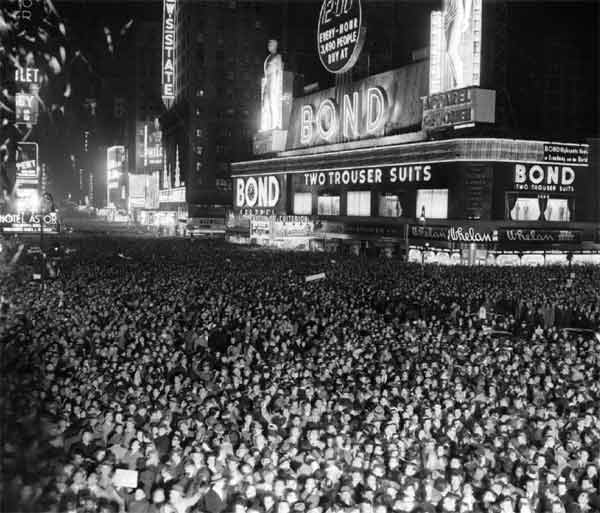
Such luxuriance was not to last, but the dazzle remained, from a most unlikely vector — men’s clothing. Bond Clothes took over the location as a men’s clothing emporium, and chose a flashy facade to match the rooms of garments inside. A huge neon sign held a clock in the O of BOND, alongside a 50-foot man and woman, an electronic waterfall and a news roll zipped along the front — all drenched in electric lights! It all looked especially dazzling at night, as the New York’s Eve ball drop pictures proves below:
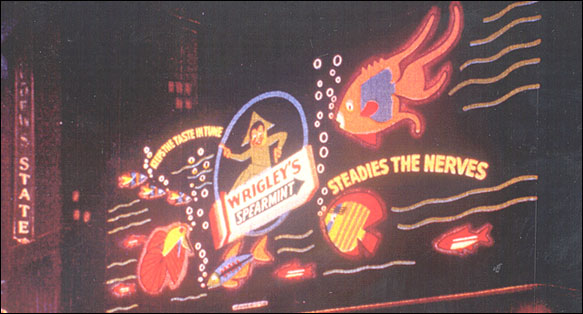
The elaborate sign gave way to a sponsor with bigger trouser pockets — Pepsi — placing gigantic soda bottles where the people once stood. Later the space was given over to a garish yet strangely hypnotic advertisement by Wrigley’s Gum:
The clothing store itself lasted until 1977. Sitting vacant for a couple years — at the true nadir of Times Square, the grit and garishness of 42nd street spilling over — it was finally reopened under a new name, incorporating both its prior incarnations. The ‘International Casino’ returned, the ‘Bond’ sign stayed, and Times Square had its own rock club.
This new incarnation Bond International Casino had interiors, at 9,000 square feet, as theatrical as those in the past. The staircase from the entry level to the dance floor glowed as you stepped on them and played musical notes, not unlike, I suppose, the gigantic piano in the movie Big. The dancefloor, one of the city’s biggest (much bigger than even Studio 54), was overseen by sumptuous on-stage water fountains and inflatable people who hovered above and would fill and deflate to the music.
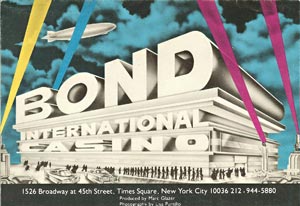
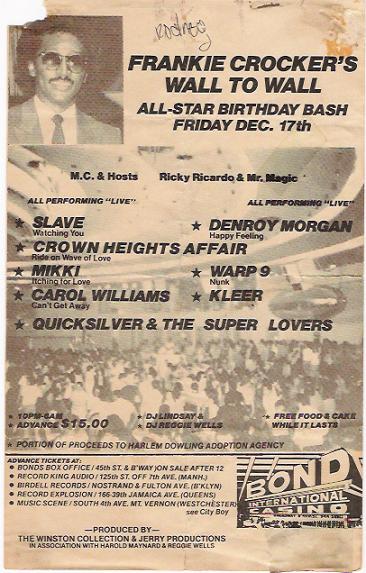
Cream Magazine called it “a shopping mall with bars and a dance floor… and telephone in the men’s room.” Here’s one of their flyers:
In this ad, you can get a sense of what the dance floor must have been like inside:
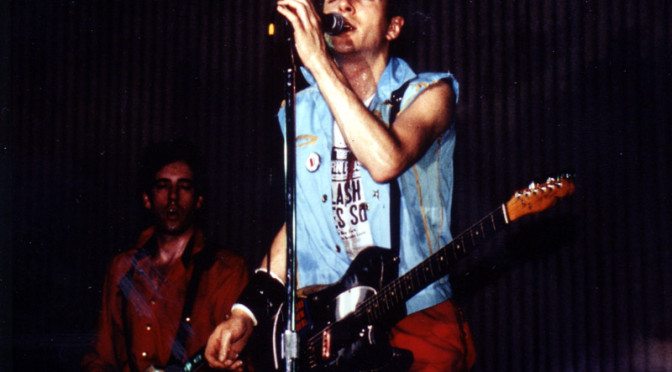
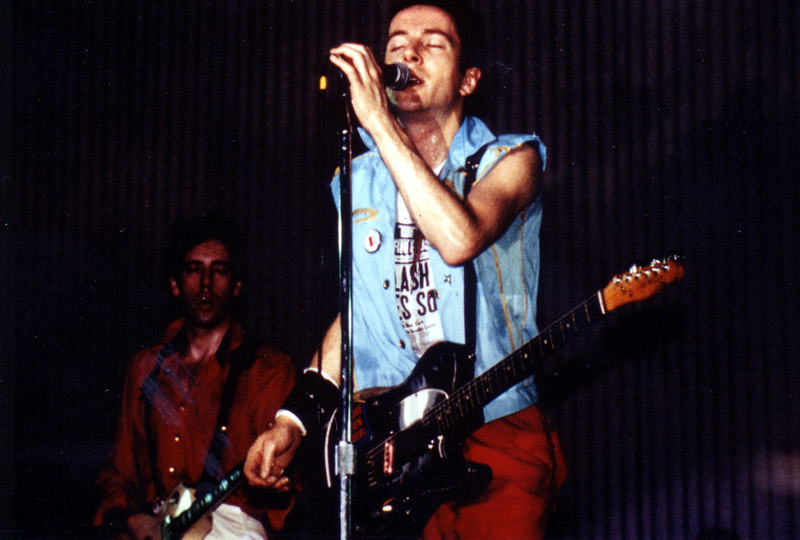
Over the course of its brief foray as a rock venue, Bond would see the likes of Blue Oyster Cult, the Plasmatics, the Dead Kennedys and Blondie. Always a slave to disco on regular nights, however, it would eventually give way to full-time usage as an early ’80s dance floor. But not before it saw The Clash.
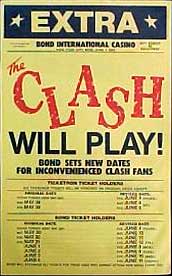
The hot punk group, who had just released one of rock music’s most important records (London Calling) in January 1980, were back in New York to do a series of shows at Bond in May of 1981. Originally they were supposed to play eight nights. The promoters however dangerously oversold the show — 3,500 tickets each night for a venue that could only hold about half that!
Angry ticket holders rioted outside, filling the streets of Times Square, stopping traffic and drawing dozens of police officers to quell the rage. One website (with lots more information and more history on Bond and ‘the Clash riot’) claims Times Square “hadn’t seen that much commotion since … V-J Day.” The story made international news the next day.
Cream says, “There’s confusion over the numbers game, and inside it’s a sardine sauna. Fire marshalls count 3600 heads leaving the club in what has been a testy evening. Support acts suffered, being booed and hissed by the diehard fans impatient for the arrival of their heroes.”
To assuage the angry ticket holders, The Clash took the unprecedented step of extending their stay at Bond to seventeen shows over fifteen days, to cater to all those ticket holders who were not able to get in. Perhaps stress and the threat of violence and fire brought out the best in the group; the performances are supposedly their best ever, and a bootleg of one of the shows “Live at Bond’s Casino” is considered the finest ‘unofficial’ release in the band’s history. (All seventeen performances are available as bootlegs.)
For those polite enough and lucky (or unlucky? I can’t imagine how unpleasant and scary that club must have been) to have paid attention to the first show, they would have also caught opening act Grandmaster Flash and the Furious Five, the godfathers of rap music. Somebody actually booed them?
Ironically, Bond couldn’t fill the club on any of their other nights, being a discotheque trying to survive in the Reagan ‘disco is dead’ era. In the ’90s, the space was taken over by the Roundabout Theatre Company, who for several years brought some excellent shows into the space.
It had two stages of different sizes, one classified a Broadway stage, the other off-Broadway. I saw a lot of great shows here back in the day, including Martin Short in ‘Little Me’ and an excellent revival of ‘1776’, starring Star Trek: Next Generation star Brent Spiner as John Adams. After several years, the Roundabout moved their stages to another former disco — Studio 54 — and another location on 42nd Street, the American Airlines Theatre.
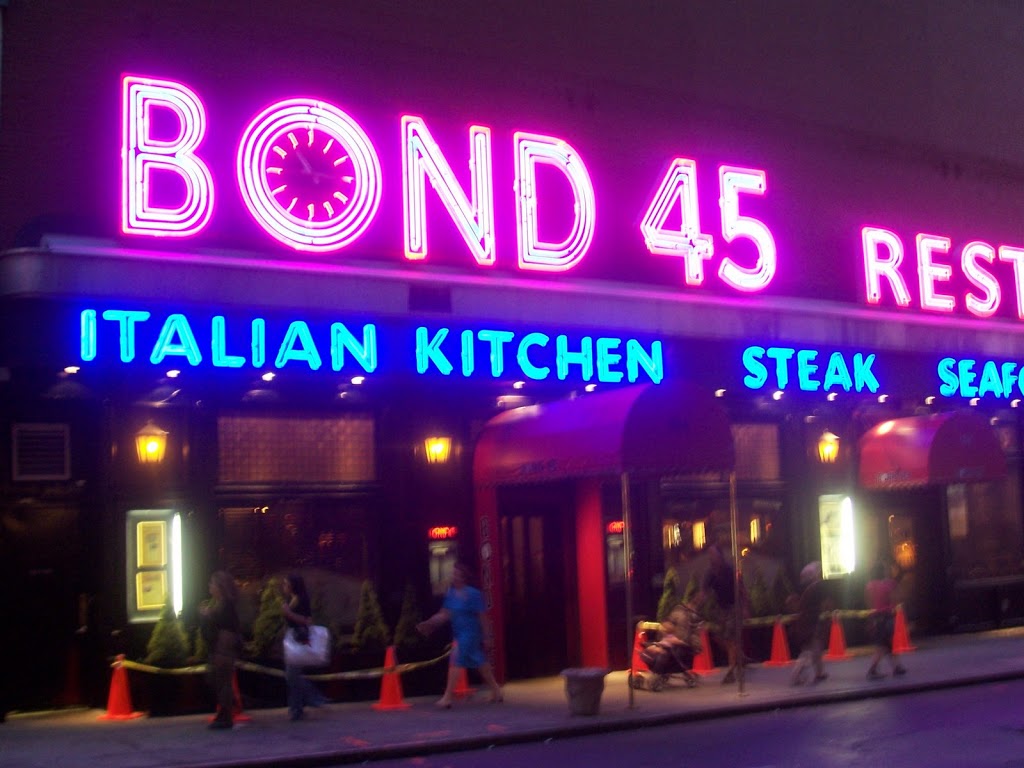
Bond has a happy ending however. The space has reopened as Bond 45 restaurant and lounge, recreating the classic sign with some adjustments, and pomping up the front to resemble its ’30s glamour days. Of course, it sits between a Starbucks and a Swatch store, but you can run to the Virgin Megastore literally across the street and pick up some Clash CDs and memorabilia and start your own riot today. (45th Street, between 6th and 7th avenues)