Categories
Parks and Recreation Podcasts

Heaven on the Hudson: How Riverside Park covered its tracks and became a breathtaking spot

PODCAST The highs and lows of the history of Riverside Park

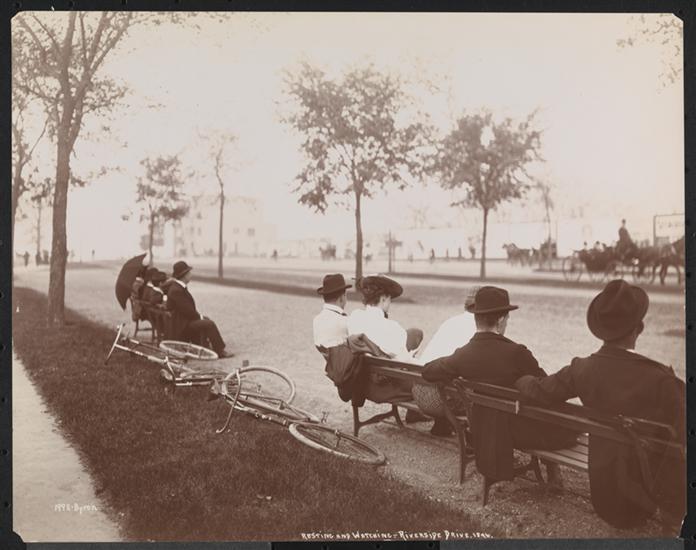
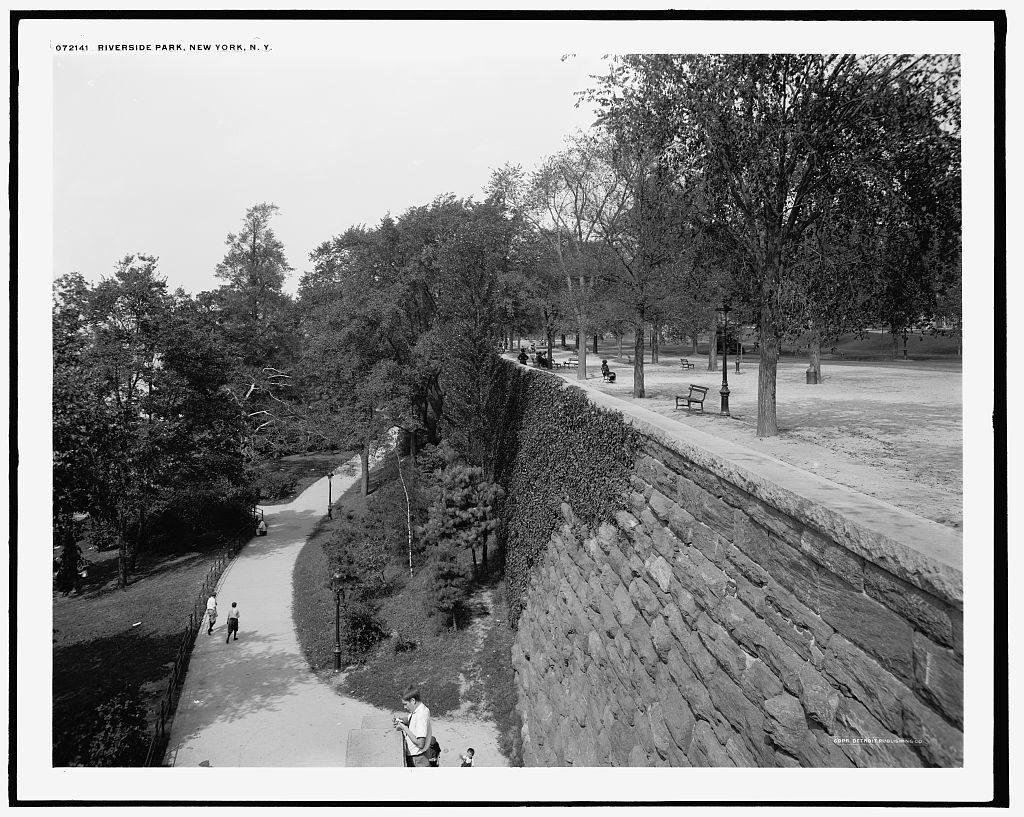
In peeling back the many layers to Riverside Park, upper Manhattan’s premier ribbon park, running along the west side from the Upper West Side to Washington Heights, you will find a wealth of history that takes you back to Manhattan’s most rugged days.

The windswept bluffs overlooking the Hudson River were home to only desolate mansions and farmhouses, its rock outcroppings appealing to tortured poets such as Edgar Allan Poe. But the railroad cleaved the peace when it laid its tracks along the waterfront in the 1840s.

To encourage development, the city planned Riverside Park as a respite with commanding views of the river and a swanky carriage way for afternoon excursions. But the original plan by Central Park designer Frederick Law Olmsted only went so far — right up to those pesky train tracks.

In the 20th century, residents along the newly chic Riverside Drive tired of the smoky mess. It would take the ‘master builder’ himself — Robert Moses — to finally conceal those tracks and create a new spot for recreational facilities. In doing so, he threaded his new park with a new noisemaker — the Henry Hudson Parkway.

We give you the grand overview history of this extraordinary park THEN we visit the park itself to give you the full dynamic sound experience, reviewing Riverside’s most spectacular attractions.

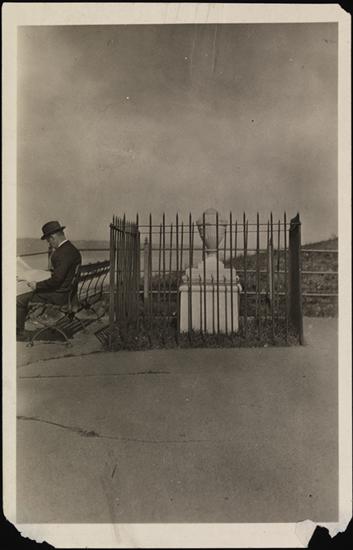
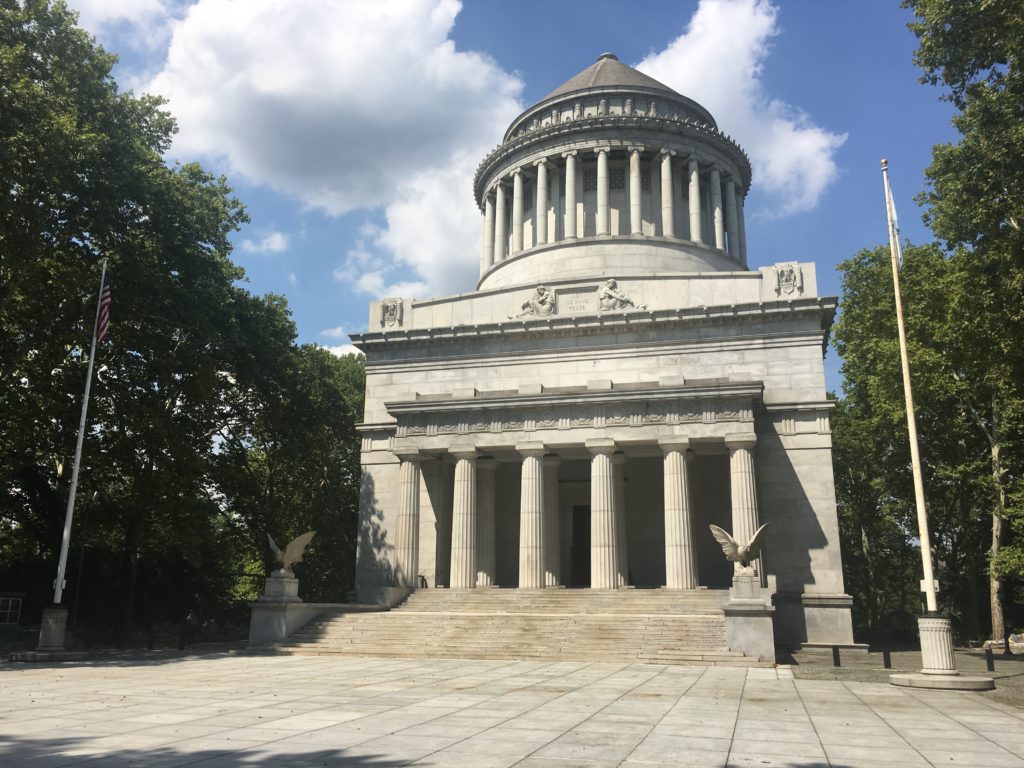
PLUS: The strange story of two great monuments at 125th Street, the final resting place for a great military leader and a five year old boy, whose tragic story has inspired generations of poets.

FEATURING: George and Ira Gershwin, Charles Schwab, Joan of Arc, Hillary Clinton and Donald Trump (in non political capacities!)

Listen Now: Riverside Park New York Podcast

________________________________________________________

The Bowery Boys: New York City History podcast is brought to you …. by you!

We are now producing a new Bowery Boys podcast every other week. We’re also looking to improve the show in other ways and expand in other ways as well — through publishing, social media, live events and other forms of media. But we can only do this with your help!

We are now a member of Patreon, a patronage platform where you can support your favorite content creators for as little as a $1 a month.

Please visit our page on Patreon and watch a short video of us recording the show and talking about our expansion plans. If you’d like to help out, there are five different pledge levels (and with clever names too — Mannahatta, New Amsterdam, Five Points, Gilded Age, Jazz Age and Empire State). Check them out and consider being a sponsor.

We greatly appreciate our listeners and readers and thank you for joining us on this journey so far.

________________________________________________________

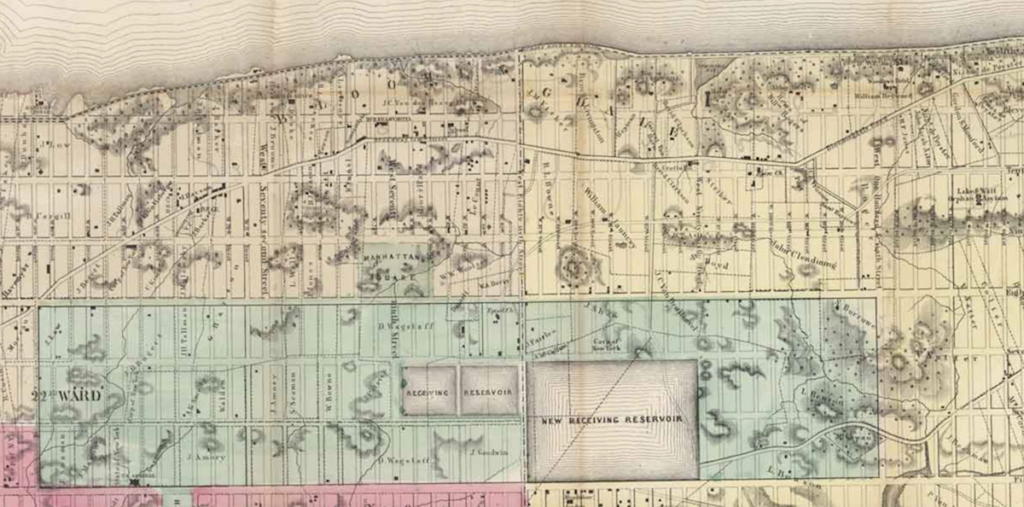
From an 1855 map of Manhattan, showing the still-rugged terrain of the area west of Central Park
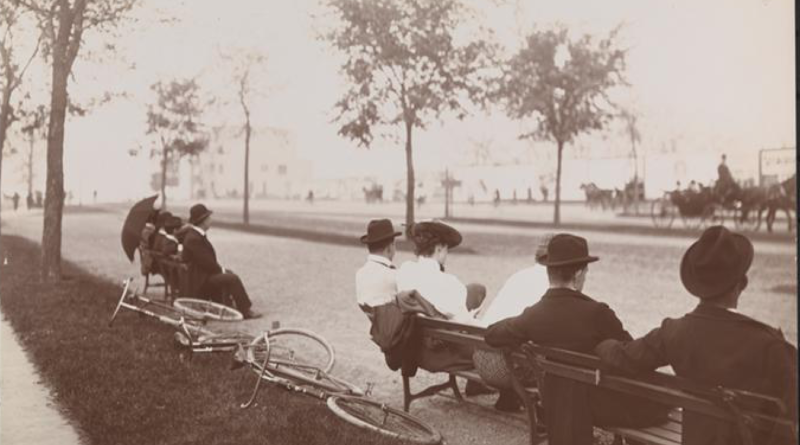
1896, Museum of the City of New York
Detroit Publishing Co.,Created / Published between 1910 and 1920 / Library of Congress

In the early 1900s, the park was extended further north. This depicts the scene near 148th Street, near a ‘bathing beach’ that couldn’t have been very pleasant to visit during construction.
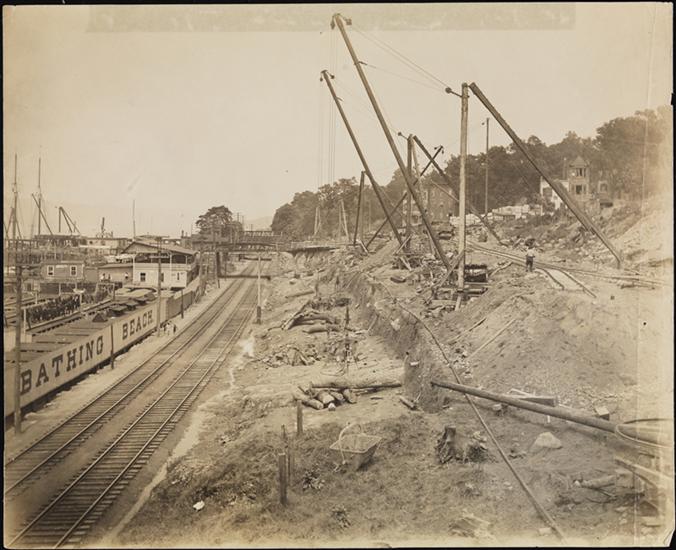
MCNY

Riverside Park and Drive in the 1920s — the park stops at the tracks.
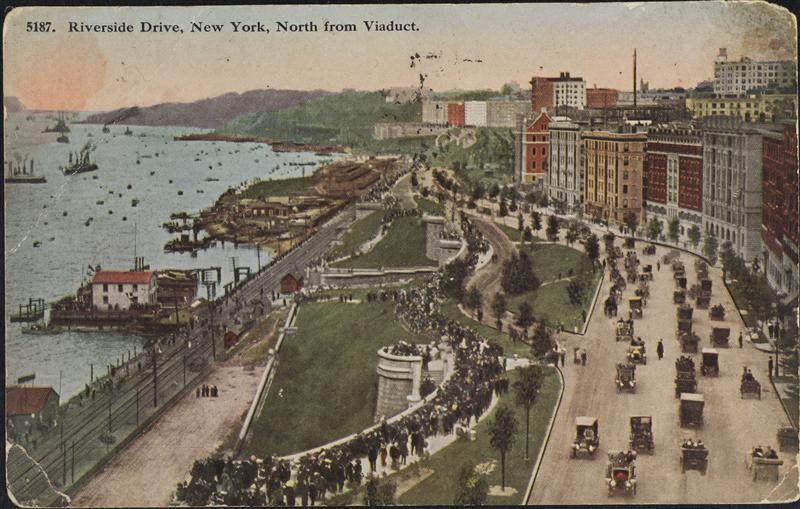
Another image from 1910, showing the exposed tracks and the waterfront.
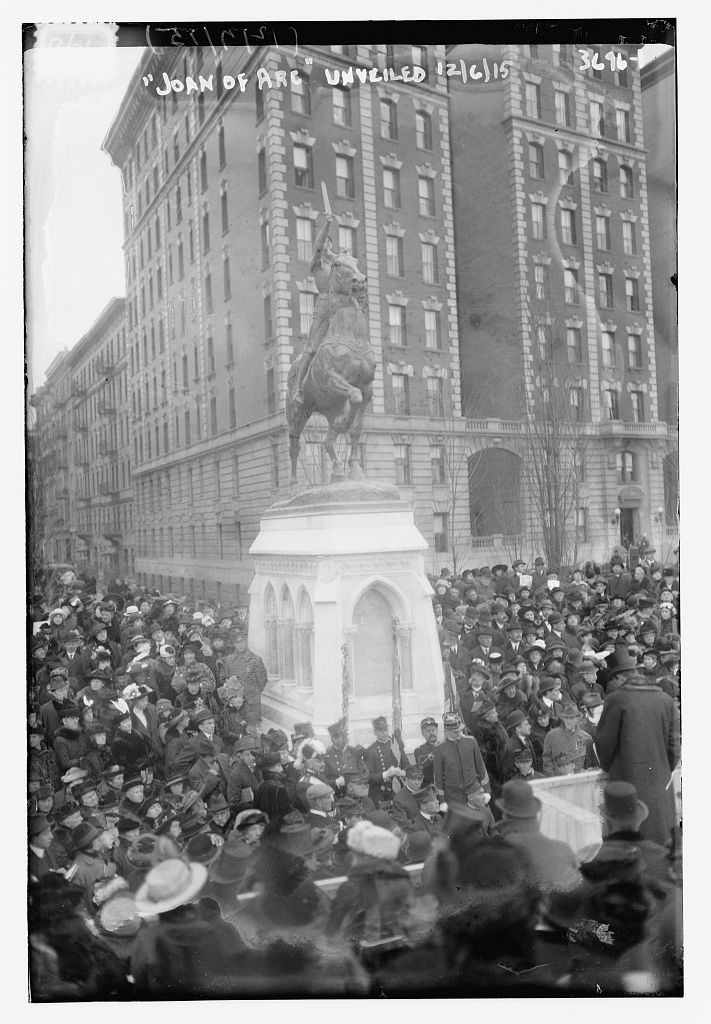
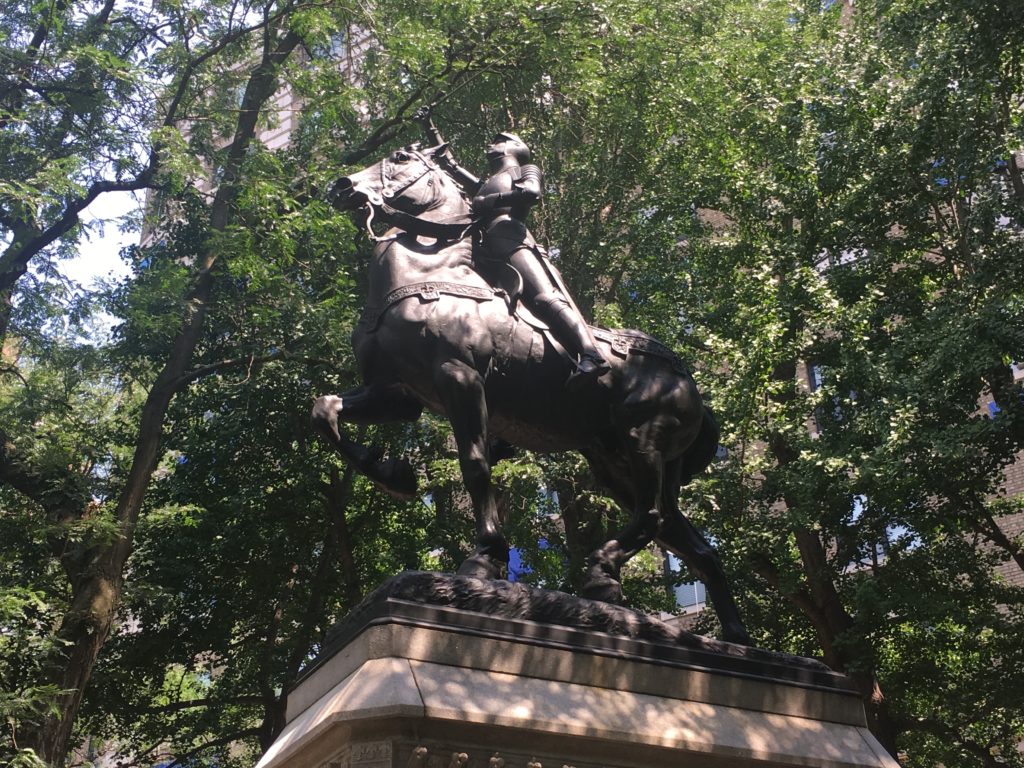
Photograph shows the unveiling of the Joan of Arc statue, Riverside Park, New York City on Dec. 6, 1915. (Source: Flickr Commons project, 2013)

The original tomb of Ulysses S. Grant, circa 1886….
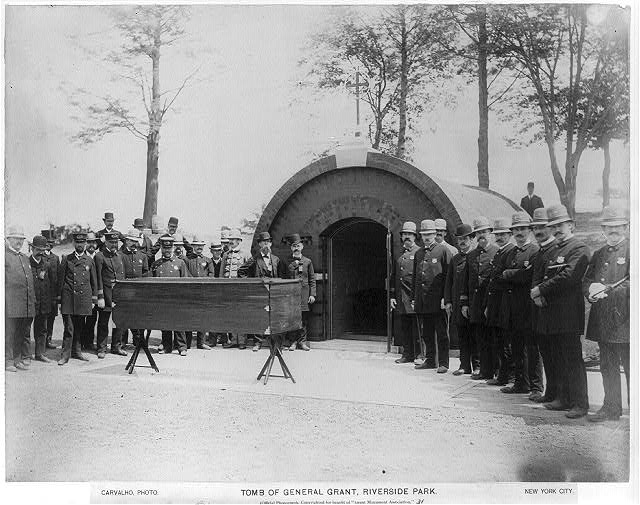
Library of Congress

Replaced by his more famous resting place in 1897, in Olmsted’s carriage loop. (Olmsted was no longer associated with Riverside Park or else he might have taken issue with its placement.)
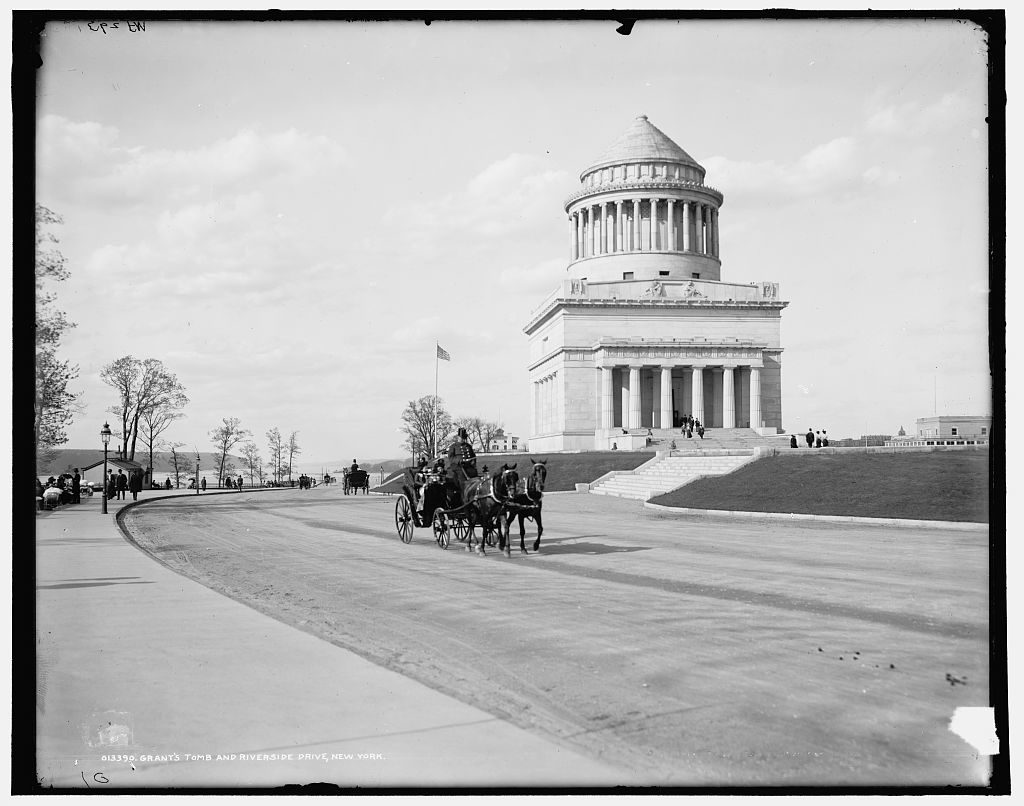
1901/Library of Congress

The fabulous Claremont Inn which drew thousands of weary New Yorkers after a long stroll in Riverside Park.
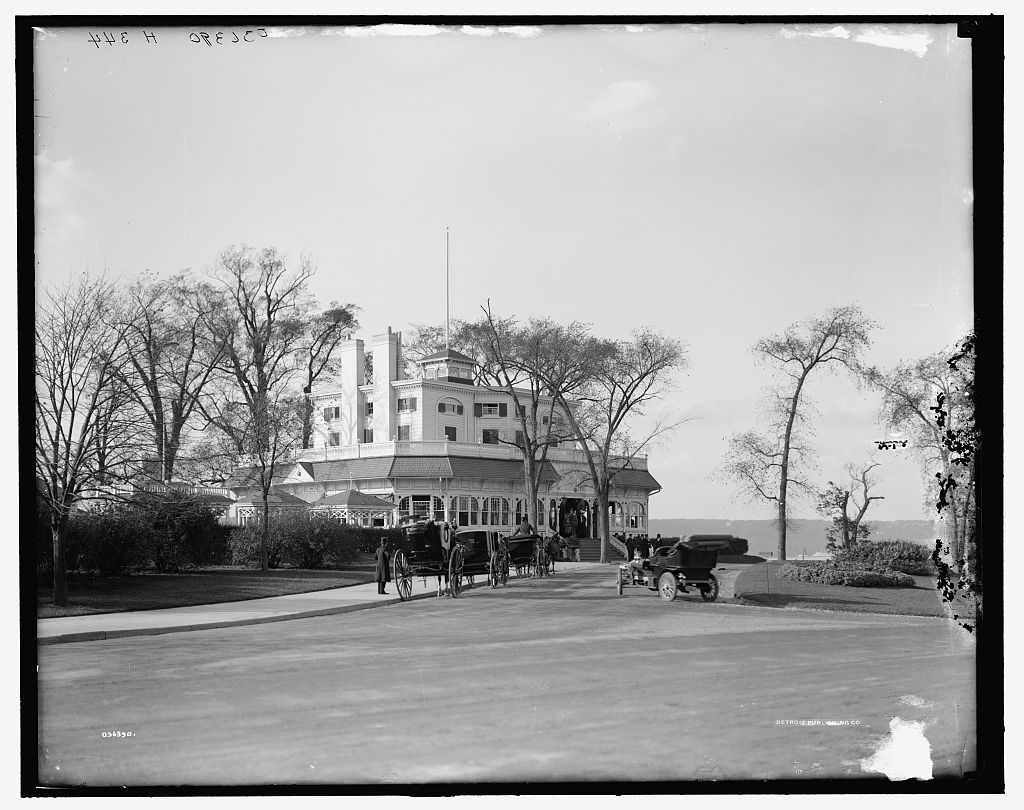
Detroit Publishing Co., 1900/ Library of Congress

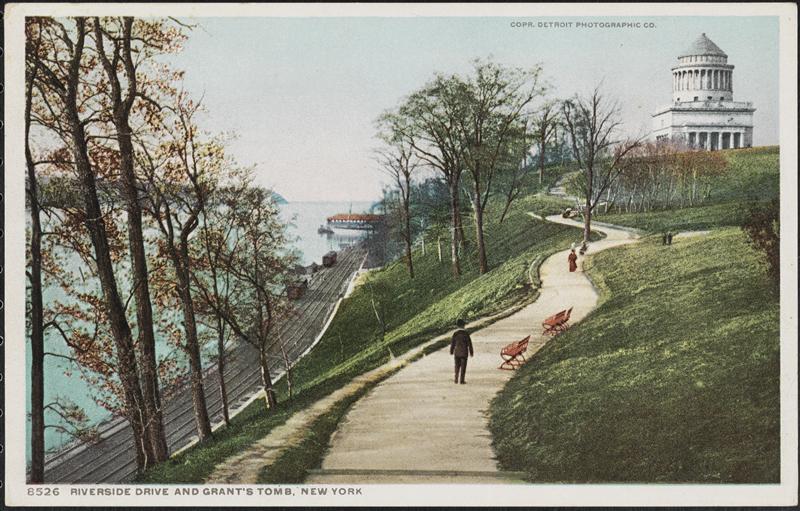
A view of Grant’s Tomb, Claremont Inn, the Manhattan Valley Viaduct and a glorious pier structure.
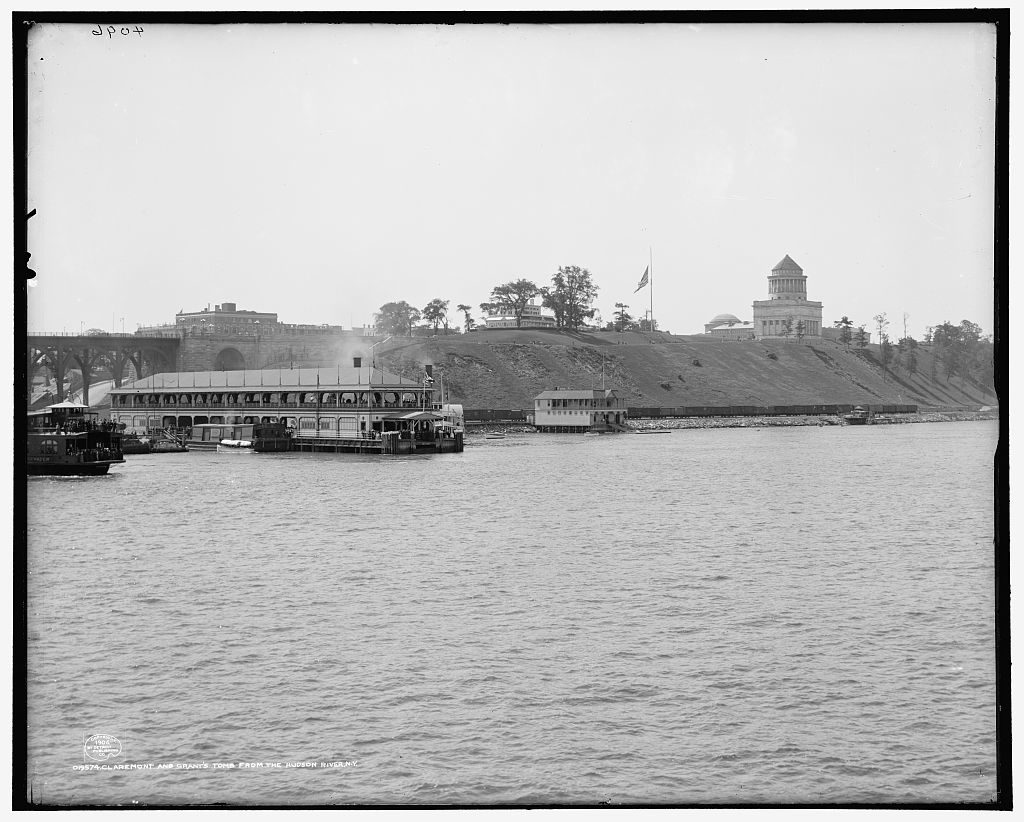
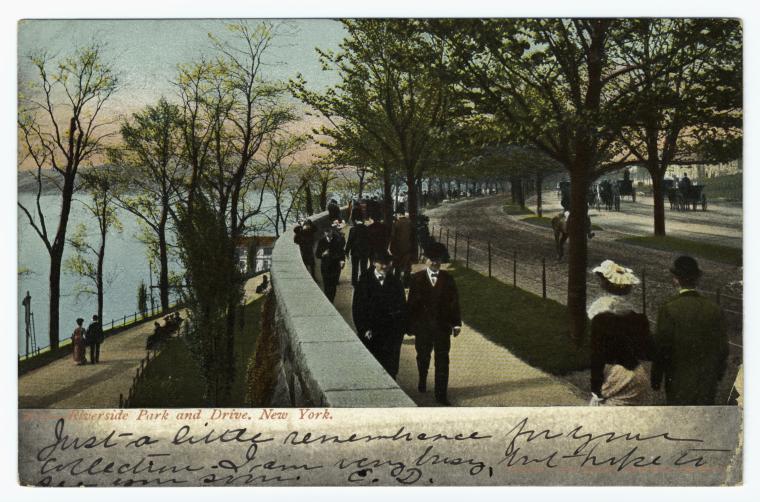
1906/Library of Congress
New York Public Library

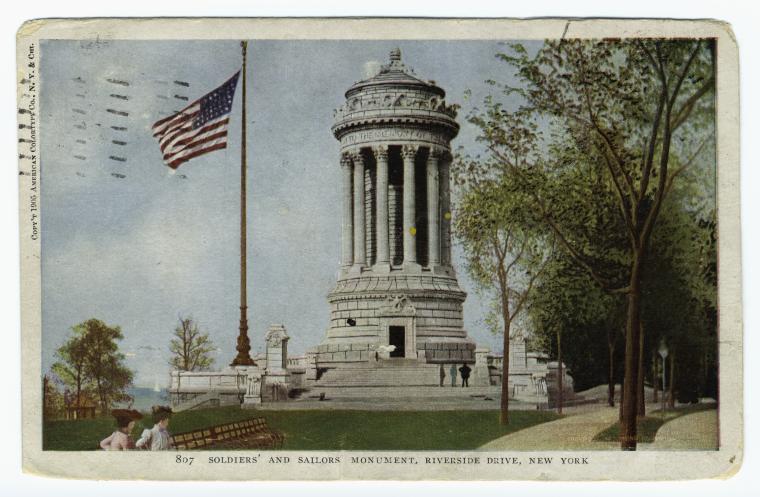
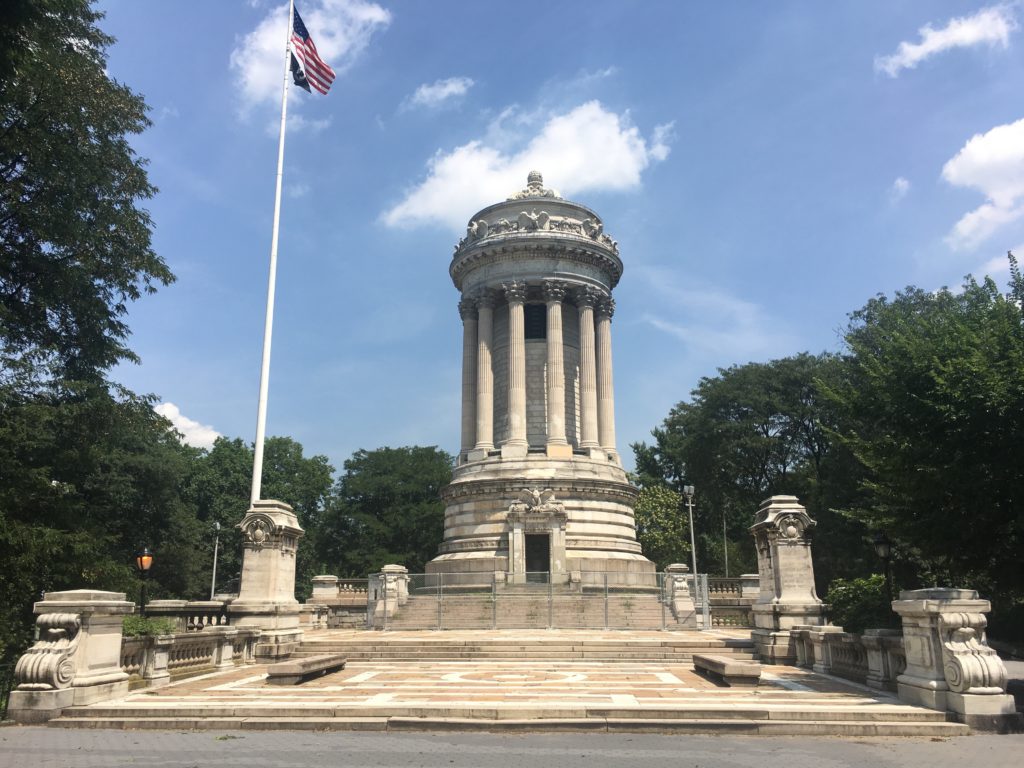
The Soldiers and Sailors Monument. (Read more about it here.)
New York Public Library

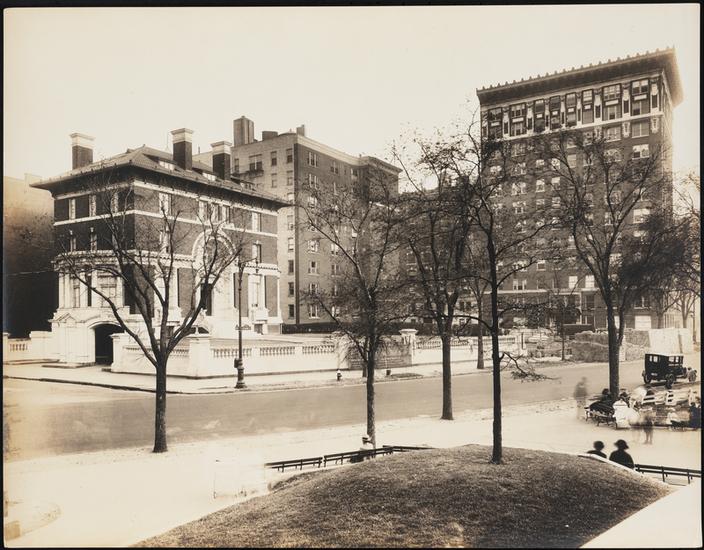
The Rice residence at West 89th Street and Riverside Drive
Wurts Brothers/MCNY

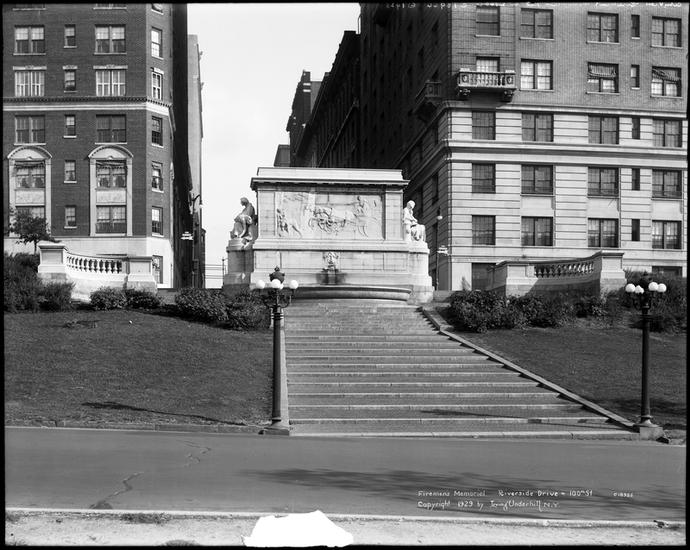
The Firemen’s Memorial, pictured here in 1929
MCNY

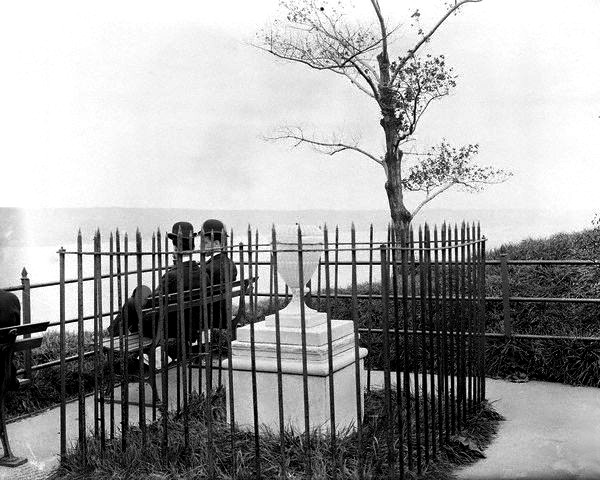
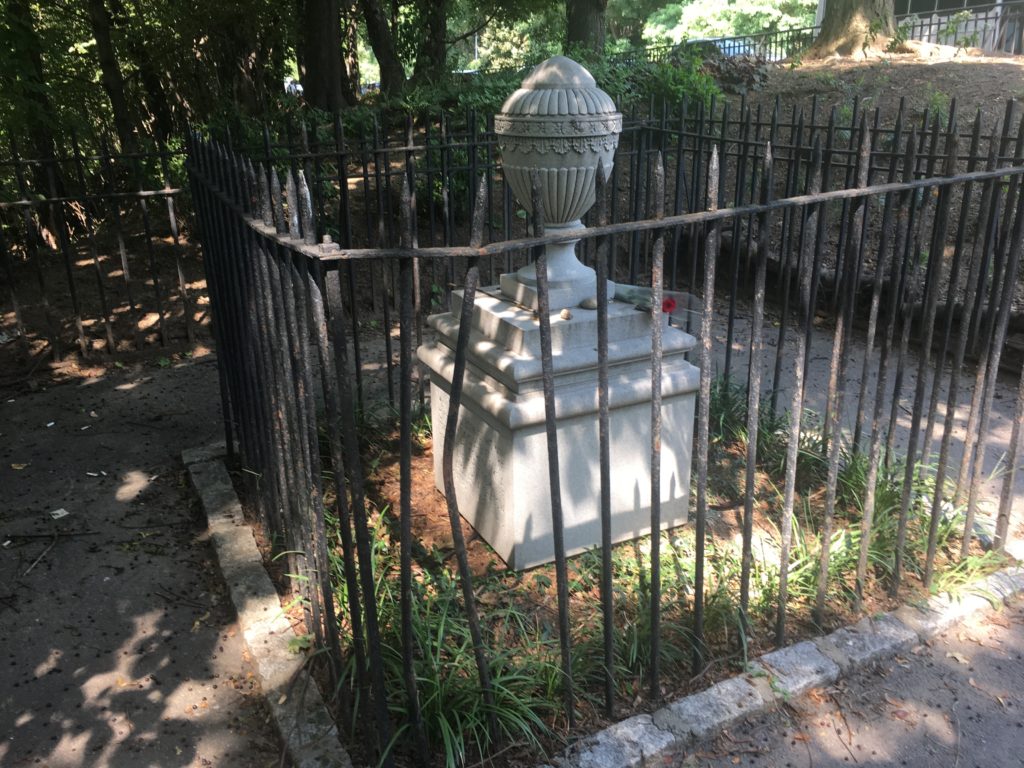
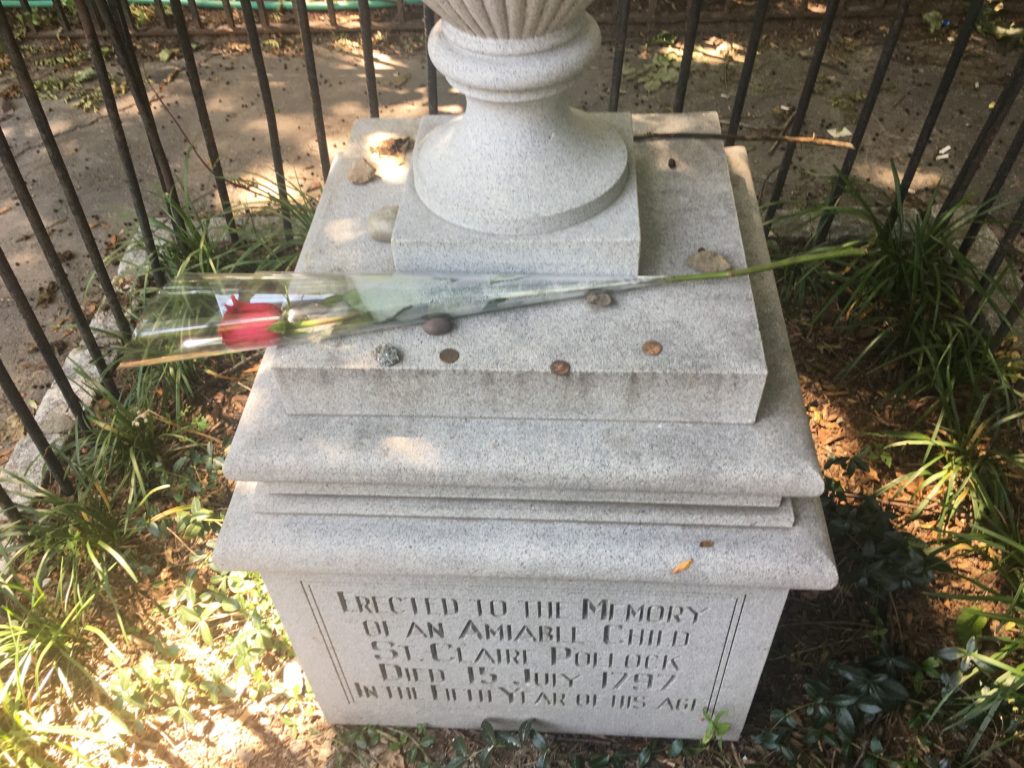
The tomb of the Amiable Child, 1900 and 1925
MCNY

The Henry Hudson Parkway and the Boat Basin, 1975
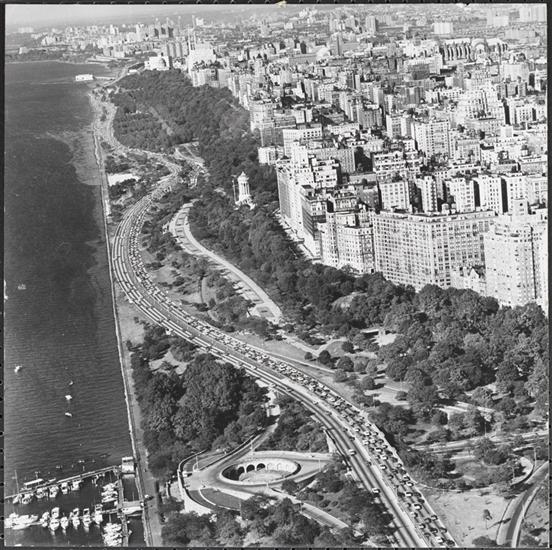
New York Times/MCNY

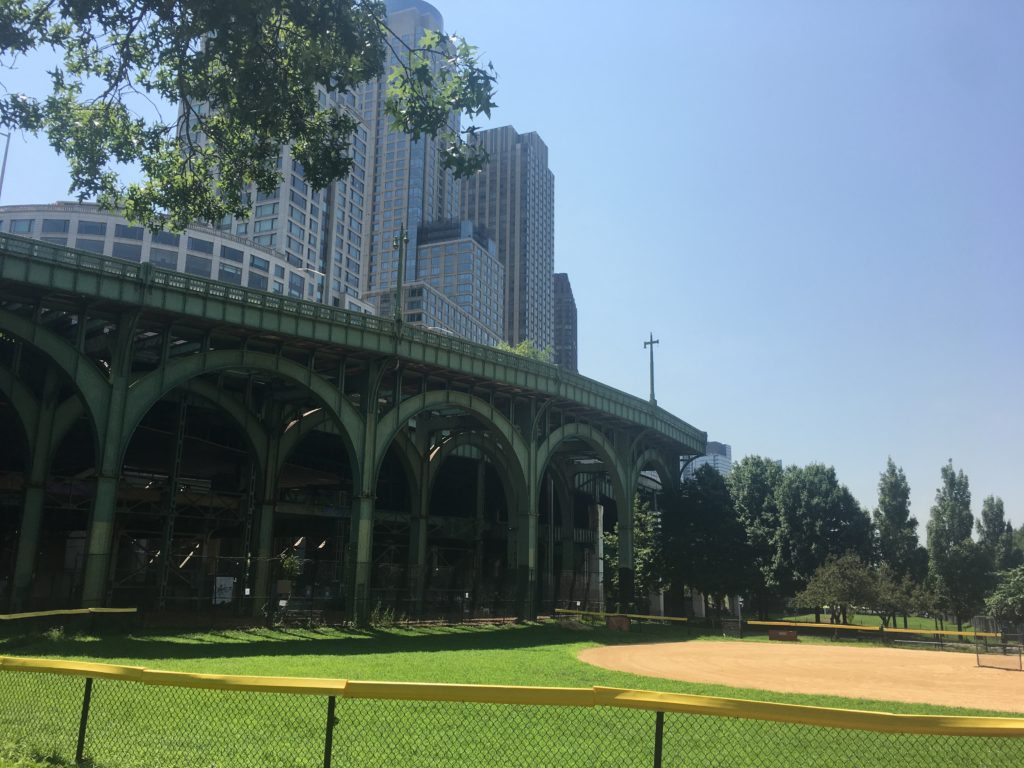
A portion of Riverside Park South, developed by Donald Trump.
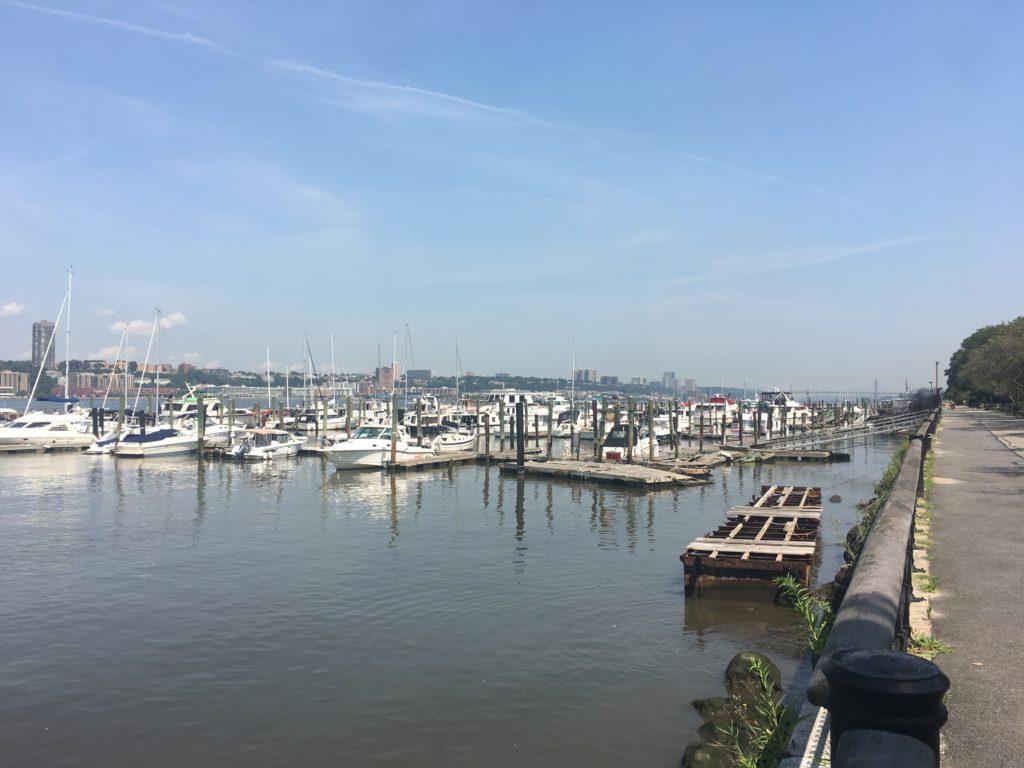
A glorious little marina sits in front of the Boat Basin.
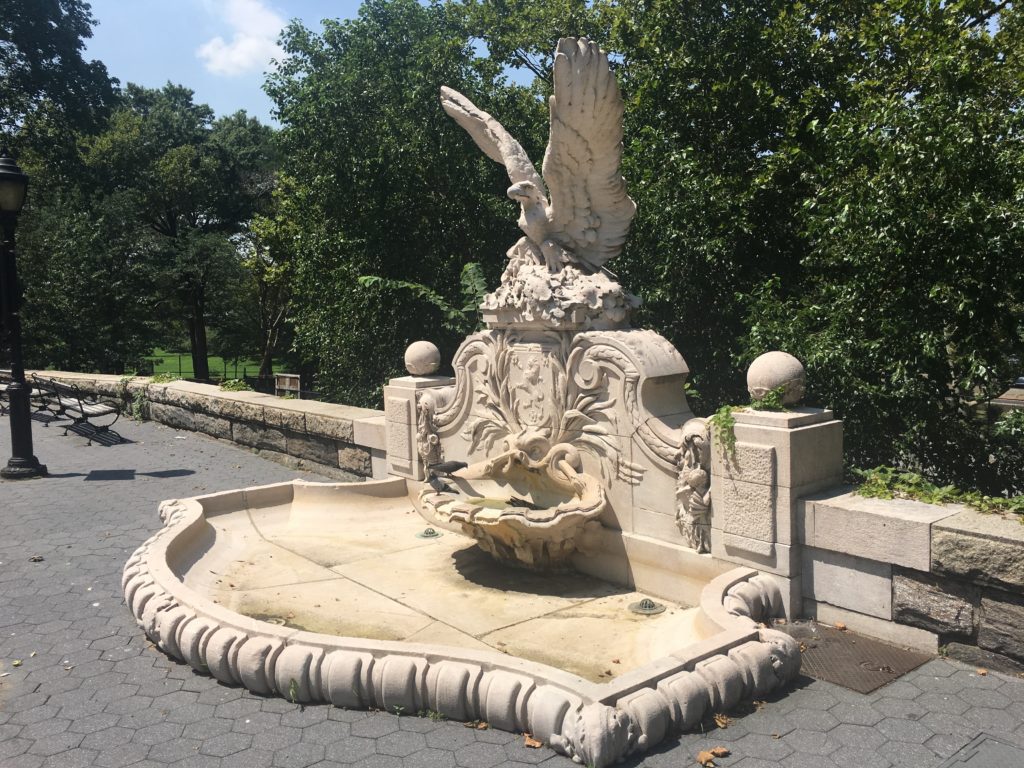
The Hamilton Fountain, at West 76th Street, named for the man who bequeathed it to the city — Robert Ray Hamilton, the great-grandson of Alexander Hamilton and Eliza Schuyler Hamilton.
Up the hill and through the trees, you will find the contemplation spot for one of America’s most famous writers.
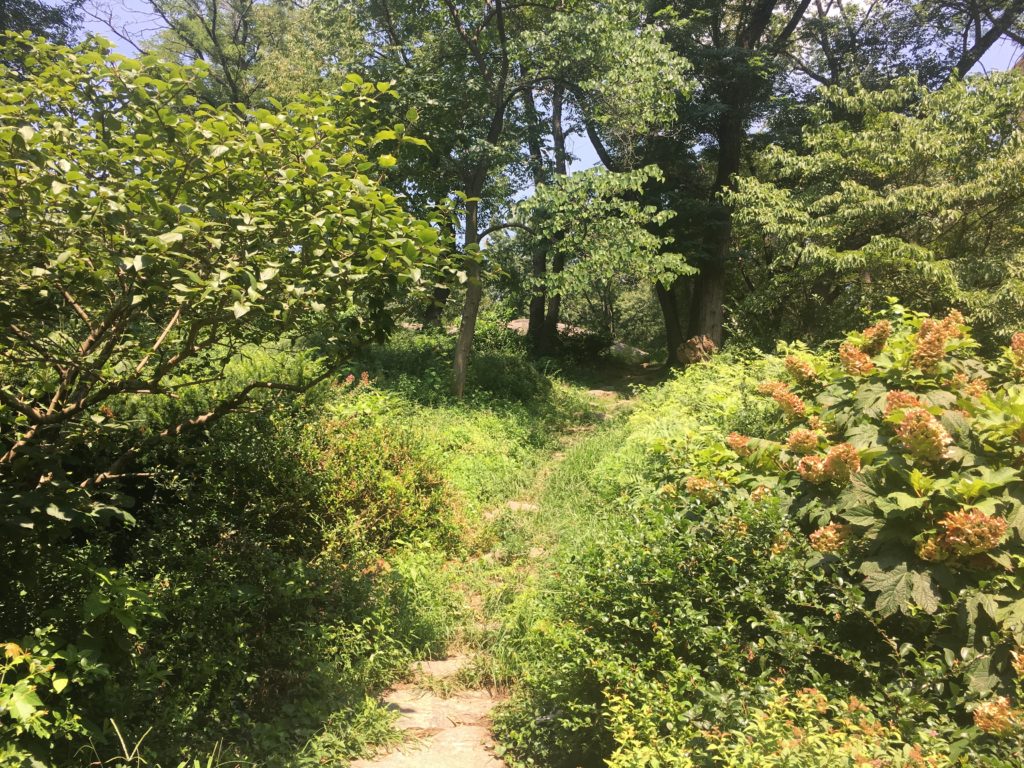
The Warsaw Ghetto Memorial — or rather, where a memorial should be.
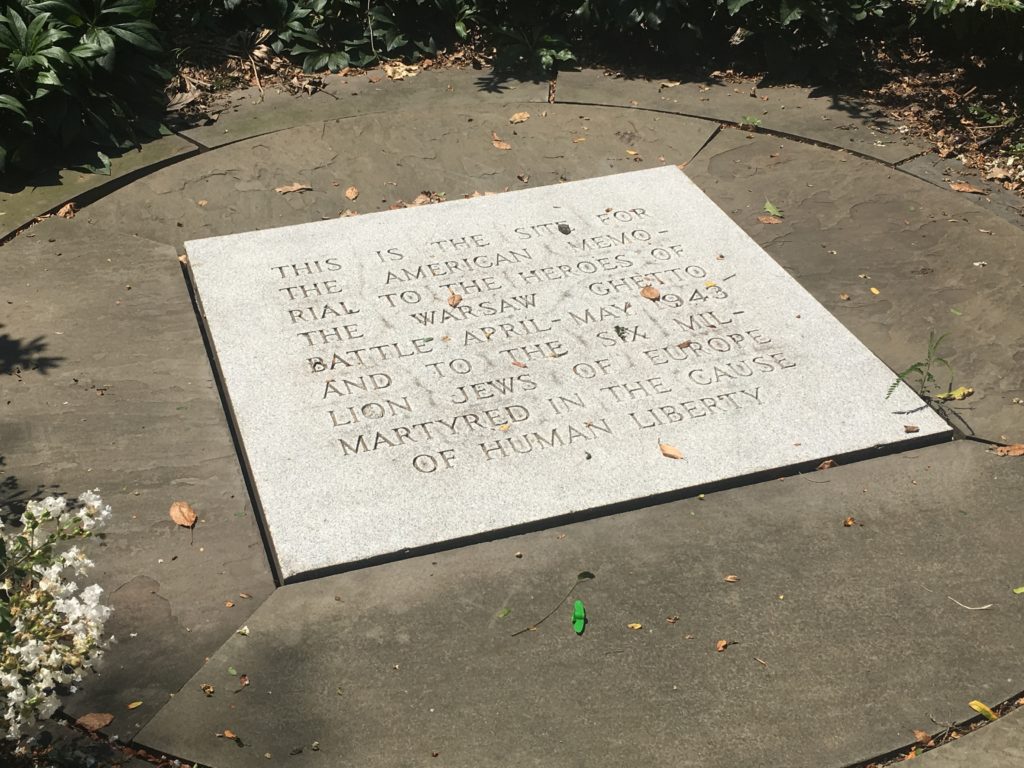
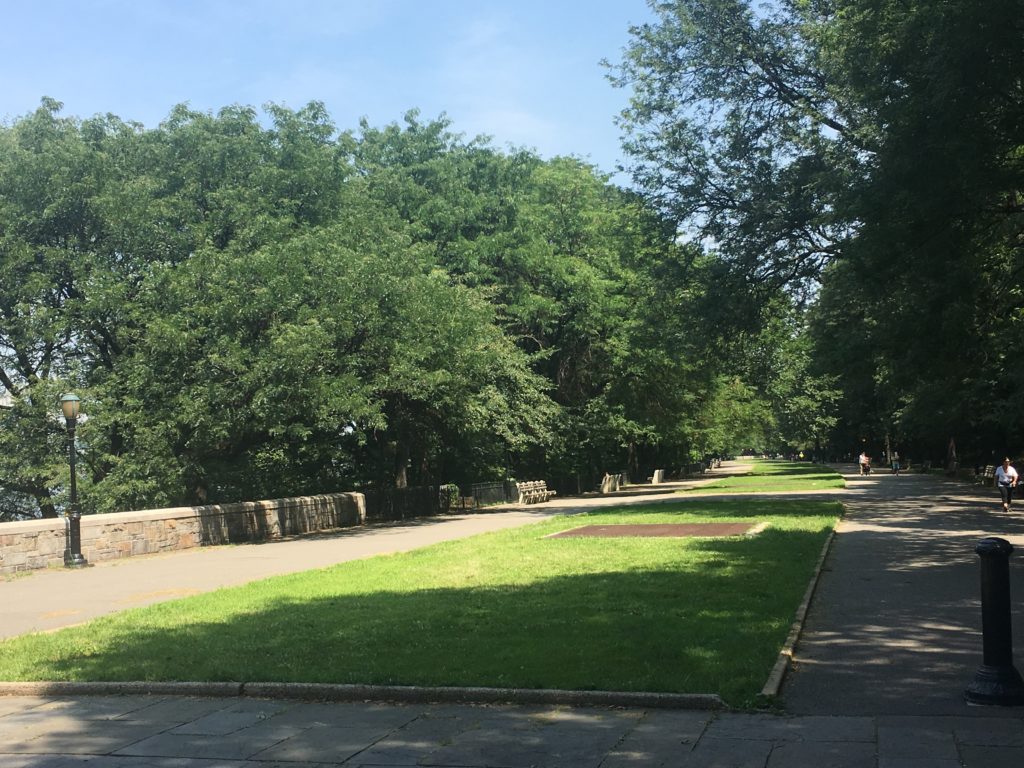
Just west of the peacefulness of Warsaw Ghetto Memorial Plaza:
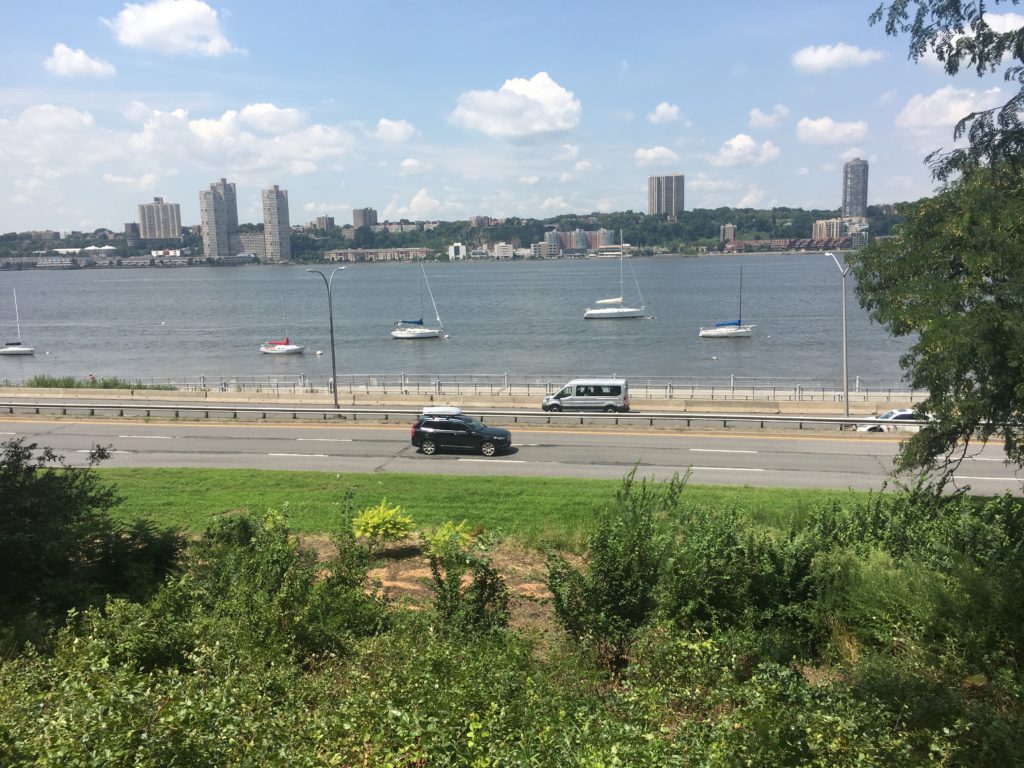
The Soldiers and Sailors Monument, completed in 1902.
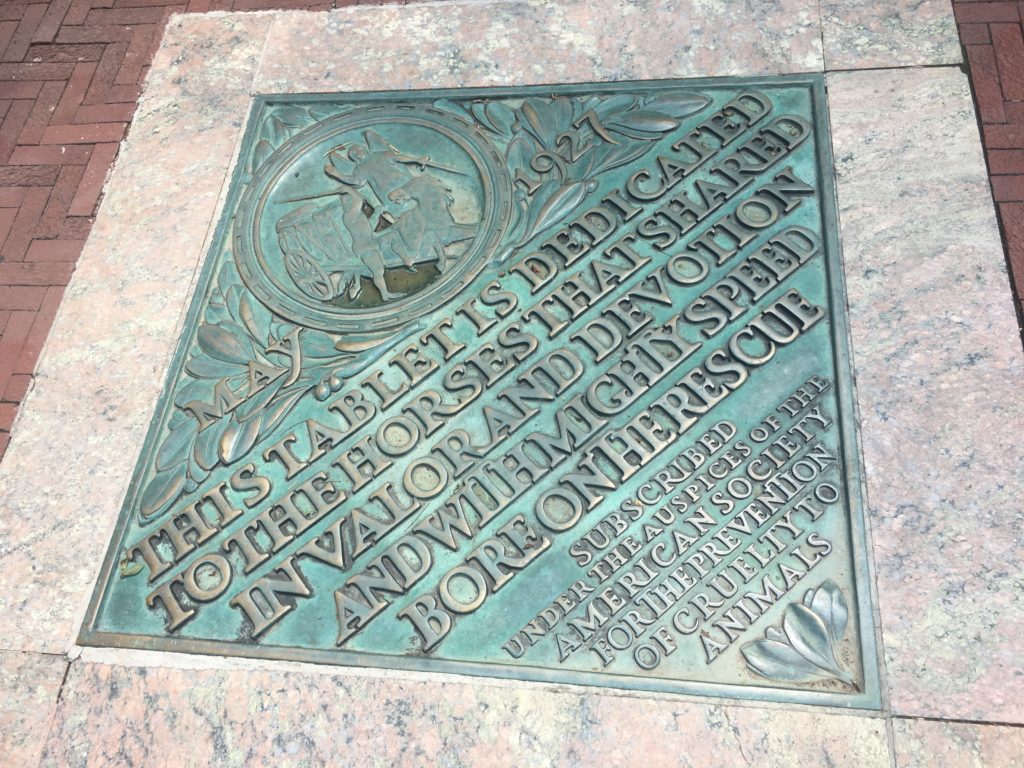
A message of thanks from the ASPCA….
The Amiable Child monument today…..
…just steps away from Grant’s Tomb.
All hail Joan!
FURTHER LISTENING

After listening to this story of Riverside Park, check out these related Bowery Boys podcasts —

For more information on Upper West Side development:

For more information on the westside railroad:

Listen to the podcasts

Looking for the latest episode of our podcasts? Listen now on iTunes to “The Bowery Boys” and “The First”.

Find recent podcast episodes here, and click to read more about listening options here.

Read the book
Bowery-Boys-Book-Cover-R6--revised

Our first-ever Bowery Boys book, “Adventures in Old New York” is now out in bookstores! A time-traveling journey into a past that lives simultaneously besides the modern city.

Bowery Boys Walking Tours

Are you ready to walk through time? We’re excited to announce Bowery Boys Walks, our new walking tours developed around our podcast. Join us in the streets — beginning in October 2018!
Categories
Newspapers and Newsies

Shameless Urchins and Mighty Frauds: 19th Century Views of April Fools Day

The celebration of April Fools Day traces back to the Middle Ages and possibly as far back as the Roman era. In the mid-19th century, the unofficial holiday for pranks provided a good excuse to attack political opponents.  Here are a couple samples of writing from New York publications from this period which I’m quoting at length because I’m a fan of the almighty air of jadedness that pervades these articles. Also — use of the words “operose” and “gew-gaws”:

1

From the New York Times, April 2, 1861:

“There is a time for all things, we are told. Every dog will have his day, and all fools must have theirs. All fools; and which are the wise ones? Let him among us who is most perfect in wisdom, play the first prank.

And the 1st of April in each year, is the day of all others by common usage consecrated to folly. If there are more senseless acts committed within its twenty-four hours than on any other single day of the three hundred and sixty-five, it has a record not much better than JAMES BUCHANAN’s.*

It is the anniversary on which half-witted people endeavor to make others appear to be so; and they labor to draw forth an ill-advised word or act from them much upon the principle that gave birth to the adage, “Set a thief to catch a thief.”

The custom of late years, it would seem, like an irreverent Dutchman, has more of breaches than observance. Little children honor it, and always will honor it, and may be excused for honoring it; but they who are at years of discretion should put away childish things.

We detest April Fool’s Day. We do not believe in it, and have not believed in it since — yesterday.

To be frank, the writer of this, in the pursuit of pabulum, yesterday, was “sold,” fooled, taken in, deluded, deceived, swindled at every step. He was sent on “Fool’s errands” to distant parts of the City by hypocritical friends whom he told to their double faces afterwards, when they taunted him, that if he had been on “Fool’s errands” it was their errands that he had gone to perform.

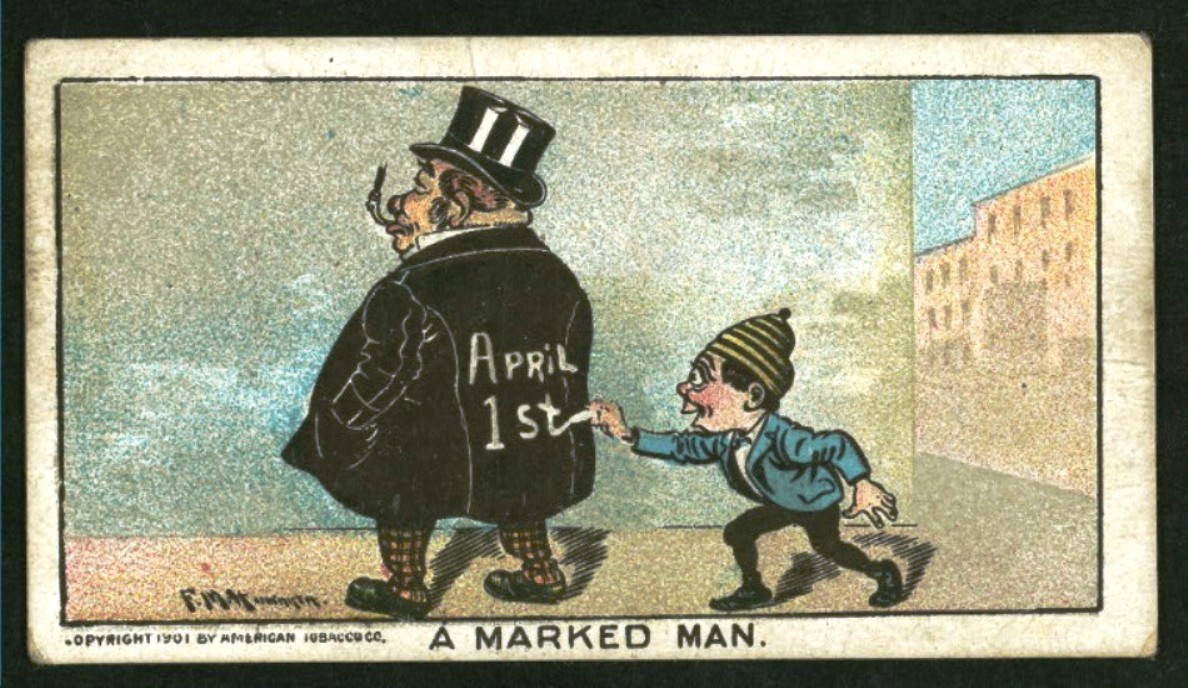
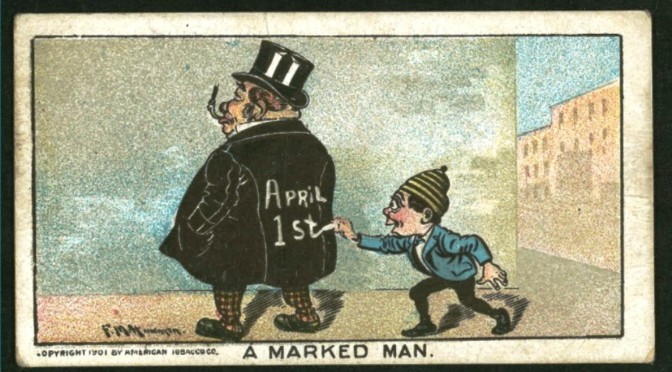
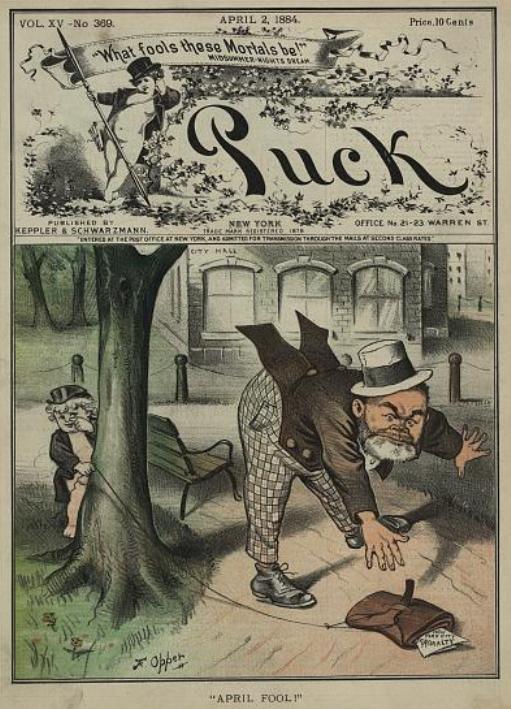
Then shameless little urchins threw tempting parcels in his path, and when he stooped to pick them up, behold! they were up before he could pick them, dangling high in air, pendant by cords from windows, from which deriding faces looked down upon him. And his pockets were turned inside out, and placards were hung on his back, or suspended from his coat-tails, and when, losing his way, he civily asked the name of a street. — “No you don’t,” was the answer. “April fool!”

And so, after a day spent in anxious but unrequited efforts to get leisure to write of it, he sat down late, and weary, and concluded to take revenge upon the reader, and say to him simply, “April Fool!””

* In 1861 James Buchanan was at the end of his presidency. He was also a Democrat and thus unfavored by the Republican-leaning New York Times of the mid-19th century.

1


Other newspapers used the holiday as cover to rail against political opponents.   On April 1, 1876, the New York Sun ran down a list of so-called April Fools, calling out some of the biggest names in politics. An excerpt:

“We cannot better celebrate this day dedicated to fools and folly, than by considering some of the principal frauds, humbugs, charlatans, hypocrites and fools who infest the country, and dwelling for a moment on their history and prospects.

They are a large and thoroughly self-satisfied company, recruited from various ranks of society and armed with impudence, pretension, cant or simple stupidity.  They like to be observed and entertain a low opinion of those who criticize them.   They think they out to be permitted to practice their trade  unmolested by impertinent scrutinizers of their shoddy materials, short weights and other tricks of deception.

Today let us celebrate the glories of their enterprising company, carefully abstaining from any word or suggestion to which they can fairly take exception.”

Among their list of the greatest fools in 1876:

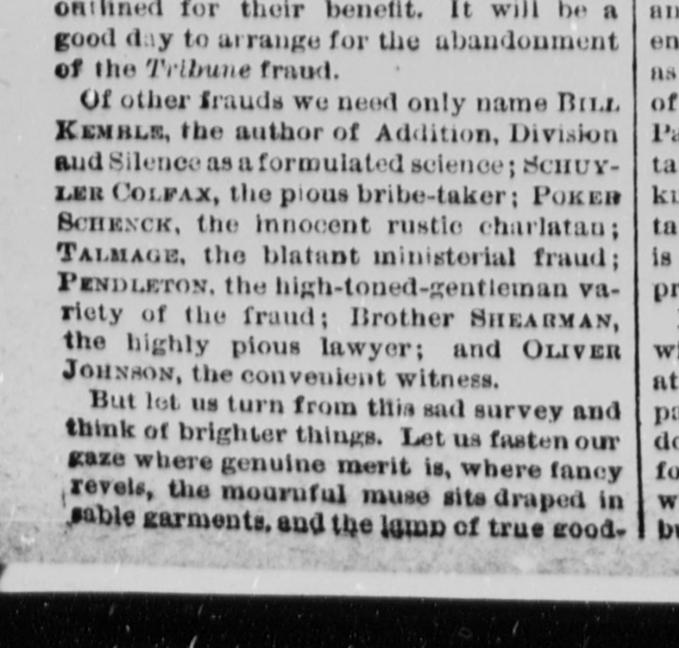
“Ulysses S Grant** — “cannot strictly be called a fraud. His practice of greed is open, and he believes in it.  Once of the very lowest estate, a social wreck and failure, he was lifted by a bloody war to the high ground of eminent position where all men could see him.  If ever a man had reason to be thankful for the happy fortune which enabled him to get out of the mire and to stand in clean places, it’s Grant.

Hamilton Fish — “is a pompous sailor, replete with the airs of an operose and ostentatious respectability …. and in fact, Fish is one of the hollowest of frauds.

Henry Ward Beecher*** — “the cheekiest fraud,” “old and unblushing in licentiousness, he takes the part of a manly fellow and a holy man, and with variations of buffoonery, plays it to the entire satisfaction of the brethren.  But paint and gew-gaws cannot cannot hide the foulness underneath.   His reputation is gone, and he lives on lies and perjuries.

Jay Gould — “is a great fraud, but he was a fool in buying the [New York]Tribune, hiring the young editor as a stool pigeon, and building the tall tower.****

There there’s this whole paragraph:

2

**He was at the end of a scandal-ridden presidency, and his cabinet was known for a bevy of corruption charges.

***His adultery trial had sullied his reputation the previous year. 

****Gould, his connections with Tammany Hall well publicized, had bought the Tribune, a rival to the New York Times, in the years before he began amassing railroad property.

Puck Magazine courtesy the Library of Congress

A Marked Man illustration courtesy New York Public Library